Thursday, December 25, 2025
Home Blog Page 482

US drops wording on not supporting Taiwan independence

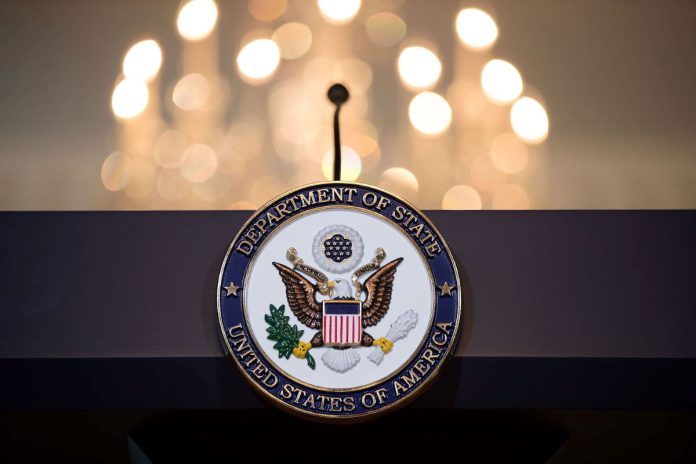
US State Department

The State Department latest “fact sheet” on its website about Taiwan, a self-governing island claimed by China, does not include the phrase “we do not support Taiwan independence,” which was previously featured on the page.

The fact sheet also modifies a passage about Taiwan’s inclusion in international organisations, by dropping references to “where statehood is not a requirement”, and adds that Taiwan’s dispute with China should be resolved “free from coercion, in a manner acceptable to the people on both sides of the Strait”.

A sentence has also been added describing the Pentagon’s cooperation with Taiwan’s National Science and Technology Council.

The State Department described the changes to the website as “routine” following queries from the media.

“As is routine, the fact sheet was updated to inform the general public about our unofficial relationship with Taiwan,” a spokesperson told multiple media outlets.

The spokesperson was quoted as saying that the US remains committed to its “One China Policy”, which acknowledges China’s position that there is only one Chinese government, and “preserving the peace and stability of the Taiwan Strait”.

“We oppose any unilateral changes to the status quo from either side. We support cross-Strait dialogue, and we expect cross-Strait differences to be resolved by peaceful means, free from coercion, in a manner acceptable to people on both sides of the Strait,” the spokesperson added.

Taiwan, whose formal name is the Republic of China, is a self-governed democracy, but is officially recognised by just a handful of countries, though it maintains unofficial ties with much of the international community, including the US.

Though Taipei considers itself to be a de facto independent state, it has never formally declared independence from Beijing, which has warned that doing so would lead to war.

Under the 1979 Taiwan Relations Act, Washington is obliged to help Taiwan defend itself, but the law does not stipulate that it would necessarily intervene militarily in the event of a Chinese invasion or blockade.

Even minor changes to how US officials refer to Taiwan are closely watched by both Beijing and Taipei.

Former US President Joe Biden stated several times that the US would “defend Taiwan” from China in the event of a conflict, but his remarks were walked back each time by the US State Department.

On Sunday, Taiwan’s Ministry of Foreign Affairs welcomed the State Department’s “positive and friendly” updated wording as a sign of the “close and friendly Taiwan-US partnership”.

Taiwanese Foreign Minister Lin Chia-lung also thanked the US for its “support and positive stance on US-Taiwan relations” and “commitment to peace and stability in the Taiwan Strait, Taiwan-US economic, trade, and technology partnership and Taiwan’s international space”.

Lin’s remarks followed a pledge by Taiwanese President Lai Ching-te on Friday to deepen Taiwanese investment in the US, in a move seen as a bid to keep US President Donald Trump from imposing further tariffs on Taiwanese goods.

Lai described Taiwan as an “indispensable partner” to help the US rebuild its high-tech manufacturing sector.
Israeli gunfire kills woman in Lebanon border town

Israeli Army

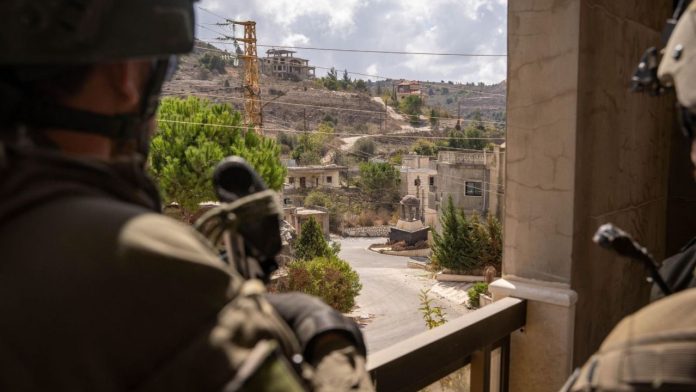
Lebanon’s National News Agency (NNA) reported that Israeli forces opened fire on residents returning to their neighbourhoods in Hula, killing a woman and wounding three others. Israeli troops also abducted four citizens, including a rescue worker, in the town.

A fragile ceasefire between Israel and Hezbollah took effect on 27 November following more than a year of fighting, including two months of full-scale war.

According to the agreement between Lebanon and Israel, Lebanon’s military was to deploy in the south alongside UN peacekeepers while Israeli forces withdrew over 60 days.

Hezbollah was also expected to retreat north of the Litani River, about 30 kilometres from the border, and dismantle any military infrastructure in the area.

The initial deadline was extended to 18 February after Israel failed to meet the original timeframe. Both parties have accused each other of violating the ceasefire terms.

In late January, when the initial ceasefire deadline passed, Israeli soldiers opened fire on residents returning to their border villages, killing 26 people over two days.

The Lebanese army issued a statement on X urging citizens not to head towards the southern regions where military deployment had not been completed, warning of dangers such as unexploded ordnance and the potential presence of Israeli forces.

On Saturday, an Israeli air raid on a vehicle in the Iqlim al-Tuffah region killed two people, the NNA reported.

Israeli Defense Minister Israel Katz stated on Sunday that the strike killed Abbas Hammoud, one the leaders of Hezbollah’s air unit that is responsible for launching drones into the occupied territories.

A senior Israeli security official said on Thursday that Israel was prepared to withdraw from Lebanese territory within the agreed timeline of the ceasefire deal.

However, Lebanese parliamentary speaker Nabih Berri stressed that the US had informed him that while Israel would leave by 18 February, it would retain a presence in five strategic points on high ground in southern Lebanon, a demand that Lebanese officials have rejected.

The five locations are spread along their shared border, including areas near the towns of Khiam, Odaisseh, Naqoura, and Ramyeh.

Israel receives shipment of heavy bombs amid regional tensions

Gaza War

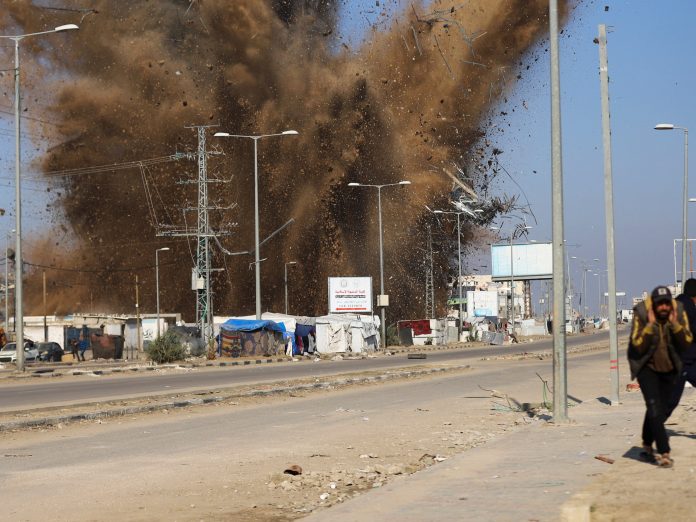
The MK-84 is an unguided 2,000 pound bomb, which can rip through thick concrete and metal, creating a wide blast radius.

The Biden administration declined to clear them for export to Israel out of concern about the impact on densely populated areas of the Gaza Strip.

The Biden administration sent thousands of 2,000-pound bombs to Israel after the Oct. 7, 2023 attack by Palestinian Hamas fighters from Gaza but later held up one of the shipments. The hold was lifted by Trump last month.

“The munitions shipment that arrived in Israel tonight, released by the Trump Administration, represents a significant asset for the Air Force and the IDF and serves as further evidence of the strong alliance between Israel and the United States,” Defence Minister Israel Katz stated.

The shipment arrived after days of concern about whether a fragile ceasefire in Gaza agreed last month would hold, after both sides accused each other of violating the terms of the accord to halt fighting to allow the exchange of hostages held in Gaza for Palestinian prisoners and detainees in Israeli jails.

Washington has announced assistance for Israel worth billions of dollars since the war began.

Iran’s Makran coast should become future economic hub in West Asia: FM

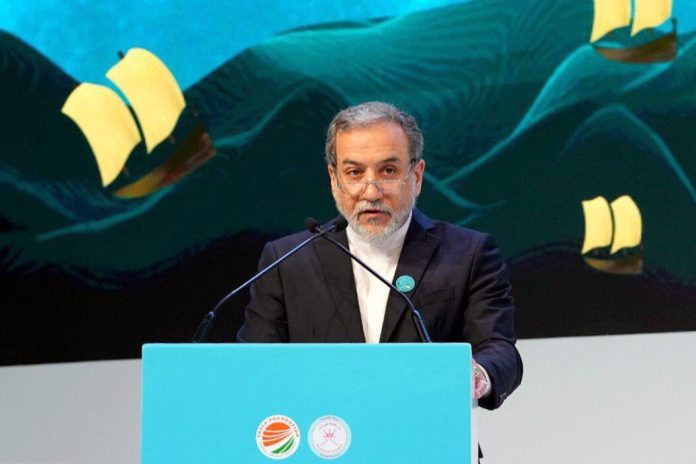
He made the remarks in an address to the 8th Indian Ocean Conference in the Omani capital of Muscat on Sunday.

“The Makran coast holds a special place,” said Arqaghchi during his speech.

“These shores, whose natural and economic potential had been overlooked for centuries, have now become a national development priority.

“The lost paradise of Makran must transform into the future economic hub of Iran and the region,” he added.

The foreign minister further stated that the Islamic Republic believes that its coasts are not merely natural borders but gateways connecting the country to the global economy.

Iran has placed a “maritime-oriented” policy at the forefront of its strategic development, he said, adding that the government has devised a plan for the development of ports, maritime transportation, and the establishment of a regional supply chain.

“A country with over 5,800 kilometers of coastline – 4,900 kilometers of which stretch across the south along this vast ocean – cannot remain indifferent to its future. Developing a maritime-based economy is not just an option for Iran; it is an imperative,” he noted.

As a member of the Indian Ocean Rim Association (IORA) and the Indian Ocean Naval Symposium (IONS), Iran emphasizes its commitment to multilateralism, as well as economic and security cooperation in the region.

In his speech, Araghchi also stressed the importance of ensuring maritime security through cooperation between the countries in the region, saying the issue should not be used as leverage by outside powers.

“We believe that maritime security should not be used as a lever for pressure or influence by extra-regional powers; rather it should be the outcome of cooperation among regional nations.”

He also noted that Iran’s Navy, in cooperation with regional states, has consistently played a part in anti-piracy operations, combating drug trafficking and organized crime, and ensuring navigational security.

The top Iranian diplomat further warned that certain extra-regional powers seek to exploit political, economic and security gaps in the region, and undermine natural cooperation among regional countries.

“We cannot allow the geopolitical rivalries of global powers to determine the future of this region,” he said, adding, “Decisions about the destiny of the Indian Ocean must be made by the countries of this region and shall serve the interests of their people.”

Hosting participants from over 60 countries and international organizations, the two-day conference began on Sunday under the theme “Voyage to New Horizons of Maritime Partnership,” aimed at highlighting the importance of inclusivity and building new partnerships in the maritime sector.

Araghchi stated that the theme of the conference is not a mere slogan and reflects a historical necessity for all countries in the region.

Israeli shelling kills 2 Palestinian police officers in Gaza despite ceasefire

Gaza War

In a statement, The Gaza Interior Ministry announced the casualties, noting that the officers were deployed to secure the entry of humanitarian aid in the Al-Shawka area, east of Rafah, when they were targeted.

The ministry strongly condemned the attack and called on “mediators and the international community to pressure the (Israeli) occupation to halt its targeting of the police force, which is a civilian body responsible for maintaining public security and organizing daily affairs.”

The Palestinian police officers were deployed to secure the entry of humanitarian aid into the besieged enclave as part of the ceasefire agreement between Hamas and Israel.

Palestinian officials have complained that Israel is failing to abide by the part of the agreement to let in more humanitarian aid.

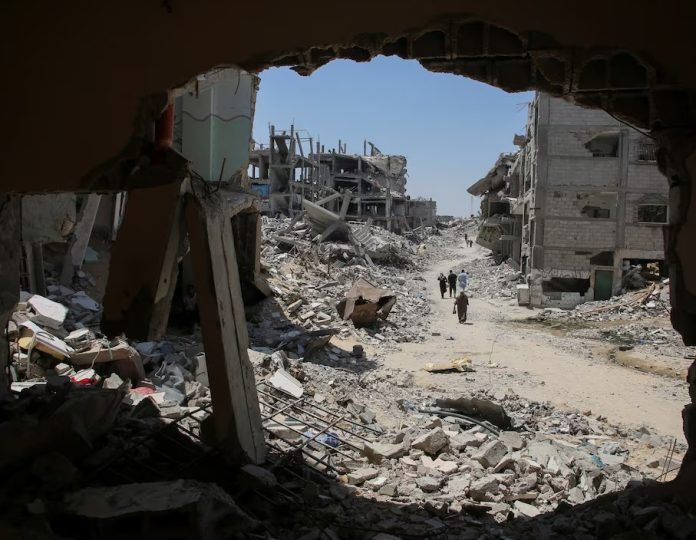
A ceasefire agreement took effect in Gaza on Jan. 19, halting Israel’s genocidal war, which has killed more than 48,200 Palestinians, most of them women and children, and left the enclave in ruins.

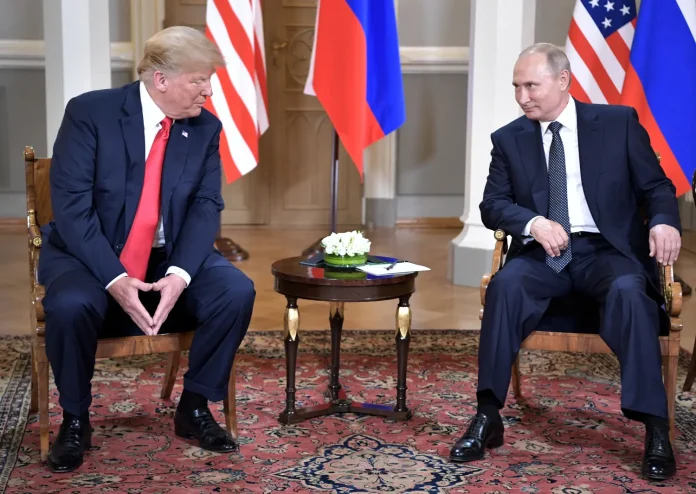
Putin-Trump summit expected in February: Bloomberg

The reports come just days after Trump and Putin held a phone conversation, which marked the first known direct interaction between the US and Russian heads of state since the escalation of the Ukraine conflict in February 2022. The two presidents agreed to continue dialogue and arrange in-person meetings in a third country as well as state visits going forward.

Speaking to the press hours after his phone call with Putin on Wednesday, President Trump stated that he and his Russian counterpart would “probably” meet in Saudi Arabia.

In its article on Saturday, Bloomberg, citing anonymous sources, alleged that the US delegation is likely to be comprised of national security advisers who are presumably tasked with securing a date for the top-level meeting before the Muslim holy month of Ramadan, which starts this year on February 28.

At around the same time, Politico carried a similar report, claiming that National Security Adviser Mike Waltz, Secretary of State Marco Rubio, and Steve Witkoff, President Trump’s Middle East envoy, will be heading to Saudi Arabia in the coming days. However, the publication noted that Trump’s special envoy for Ukraine-Russia talks, Keith Kellogg, will not be in attendance.

Politico quoted Congressman Michael McCaul as confirming the makeup of the US team. According to the media outlet, “there are no plans for representatives from other major European powers to join the talks,” with Bloomberg also reporting that officials from America’s European NATO allies have not been notified.

As for Ukrainians, Bloomberg alleged that while Kiev’s emissaries “are expected” to be present in Saudi Arabia, “they also don’t appear to be fully in the loop on the preparations.”

Fox News reporter Nana Sajaia, citing an unnamed senior Ukrainian official, claimed in a post on X on Saturday that the “Ukrainian side was ‘neither invited to, nor informed about’ coming US-Russia talks in Saudi Arabia.”

On Thursday, Kremlin spokesman Dmitry Peskov confirmed that the Russian and US leaders had agreed to first meet in a third country, with official state visits likely to follow.

The official added that while “Saudi Arabia indeed cropped up” in the conversation, “no decision has been made as to where [the meeting] will take place.”

Riyadh in turn stated on Friday that it “welcomes holding the summit in its territory.”

On Saturday, Rubio spoke with Russian Foreign Minister Sergey Lavrov on Saturday. According to Moscow, the two diplomats agreed to maintain regular contact in an effort to eventually lift unilateral sanctions that have hindered “mutually beneficial” economic cooperation.

According to a statement from the Russian Foreign Ministry, Lavrov and Rubio reaffirmed their commitment to restoring a “mutually respectful dialogue” and addressing “longstanding issues in Russian-American relations.”

“Their goal is to remove unilateral barriers inherited from the previous US administration that have hindered mutually beneficial trade, economic, and investment cooperation,” the ministry stated. The diplomats also discussed ways to resolve the tit-for-tat diplomatic expulsions and consulate closures of recent years.

A brief readout from the US State Department noted that Rubio reiterated Trump’s dedication to resolving the conflict in Ukraine. The statement added that the two officials explored potential cooperation on “a number of other bilateral issues.”

Moscow said Lavrov and Rubio agreed to maintain regular contact, including coordinating preparations for a meeting between Putin and Trump.

NATO chief urges Europe to ‘stop complaining’

NATO

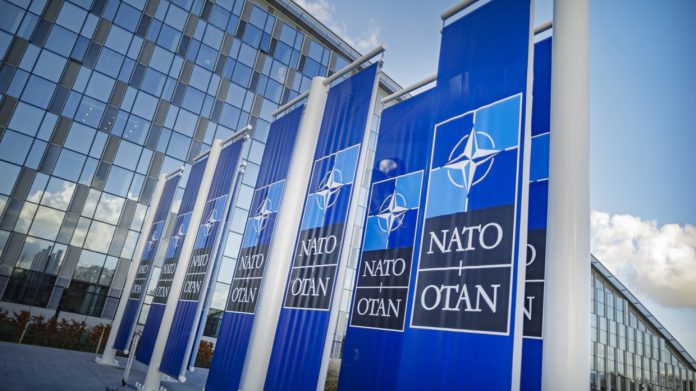
Speaking at the Munich Security Conference (MSC) on Saturday, Rutte emphasized the need for actionable ideas, including on the Russia-Ukraine conflict and the bloc’s effort to ramp up its defense spending.

“Get into the debate, not by complaining… but by coming up with concrete ideas,” he stated.

Rutte also urged the bloc’s members to ramp up their military spending, pointing out that despite previous commitments, many countries have yet to meet agreed-upon defense expenditure targets. The NATO chief also confirmed the US-led bloc was expected to reach a new agreement on spending targets during the upcoming summit of the organization scheduled for June.

European members of NATO have sounded the alarm over the possibility they could end up sidelined in potential peace negotiations to resolve the nearly three year-long Ukraine conflict following a phone call between Russian President Vladimir Putin and his US counterpart Donald Trump on Wednesday. It is the first publicly known top-level contact between the US and Russian leadership since the escalation of the Ukraine conflict in February 2022.

On Thursday, seven European nations and the EU Commission insisted they needed to be a part of any future negotiations on Ukraine, saying that their exclusion would make a lasting peace impossible.

“Our shared objectives should be to put Ukraine in a position of strength. Ukraine and Europe must be part of any negotiations,” they announced in a joint statement after a ministerial meeting in Paris, adding that a “just and lasting peace in Ukraine is a necessary condition for a strong transatlantic security.”

Washington, however, has signaled that European powers may not find a seat at the table. Trump’s special envoy on Russia and Ukraine, Keith Kellogg, said at the MSC on Saturday that Kiev would undoubtedly be present, but that Europe may not be.
“What we don’t want to do is get into a large group discussion,” he explained.

Iran reports significant increase in trade with neighbors

Iran Trade

Figures released on Saturday by a subsidiary of Iran’s ministry of trade (MIMT) showed that trade between the country and its 15 neighbors, including states with which Iran shares maritime borders, had increased by 19.2% year on year in April-January to reach $59.7 billion.

The figures showed that Iran’s trade with its neighbors had increased by 16.2% in volume terms to reach 93.5 million metric tons in the 10 months to late January.

Trade with neighbors accounted for nearly 60% of Iran’s total trade in April-January, according to the data.

Iran’s exports to neighbors rose by 28% to $29.7 billion in the 10 months to late January, said the MIMT department.

It said that Iraq had been the largest buyer of Iranian goods and commodities over the period with some $10.175 billion worth of purchases, followed by the United Arab Emirates (UAE) at $5.961 billion and Turkey at $5.535 billion.

Exports to Iraq, the UAE, and Turkey rose by 31%, 12%, and 43%, respectively, in April-January, the trade figures showed.

The data showed that Iran’s imports from neighbors had reached a total of $29.875 billion in the 10 months to late December, up 11.5% compared to the same previous period.

The UAE, which is the main re-exporting hub in the Persian Gulf, was the largest exporter to Iran in April-January with some $16.9 billion worth of shipments while imports from Turkey and Russia reached $9.9 billion and $1.2 billion, respectively, over the same period, according to the figures.

More than two dozen detained after attack on UN peacekeepers in Lebanon

UNIFIL

UN and Lebanese officials have condemned Friday’s attack, which came as Hezbollah supporters blocked the road to the country’s only international airport for a second night in protest against a decision barring two Iranian planes from landing.

“More than 25 people have been arrested by Lebanese army intelligence”, with another person detained by the security services, Interior Minister Ahmad al-Hajjar told reporters after an emergency security meeting Saturday.

“This does not mean these detainees carried out the attack… but the investigations will show who is responsible,” he said.

The United Nations Interim Force in Lebanon (UNIFIL) has demanded a “full and immediate investigation” after one of its vehicles was set on fire in the attack, which wounded outgoing Deputy Commander Chok Bahadur Dhakal and a second Nepalese peacekeeper.

President Joseph Aoun vowed “the attackers will receive their punishment” and said that “security forces will not be lenient with any party that tries to upset stability and civil peace”.

Tensions have been high this week since Lebanon halted Iranian flights to Beirut after the Israeli military accused Tehran of using civilian aircraft to smuggle cash to Beirut to arm Hezbollah.

The decision sparked protests in the Lebanese capital since late Thursday, with a crowd of Hezbollah supporters blocking the airport road and burning tyres.

Tehran has described Israel’s accusations as a pretext for potential attacks, while Hezbollah and Lebanese officials have denied that the airport is being used to arm the group.

Iran said on Saturday that it was ready for “constructive talks” with Lebanon on resuming Tehran-Beirut flights, a day after it barred Lebanese planes from repatriating dozens of nationals stranded in Iran.

On Friday, several areas around the airport saw demonstrations, acts of vandalism and clashes between protesters and security forces, according to the Lebanese army.

Hezbollah issued a statement on Saturday calling on its supporters to join a mass sit-in near the airport to protest “Israeli interference, diktats and the violation of national sovereignty”.

Lebanese security forces cracked down on the demonstration, firing tear gas and dispersing the crowd in the early evening.

US team heading to Saudi Arabia for talks with Russia: Politico

Ukrainian officials later denied reports that a Ukrainian delegation would participate in the meeting, as was initially reported, adding that the announcement came as a surprise to Kyiv, and that there are no plans to send a Ukrainian delegation.

Mykhailo Podolyak, an advisor to President Volodymyr Zelensky, echoed comments from officials, stating that Ukraine will not participate in an upcoming meeting between Russia and the United States in Saudi Arabia.

“There is nothing on the negotiating table that would be worth discussing,” Podolyak said on Ukrainian TV, adding that “Russia is not ready for negotiations.”

Bloomberg reported on Feb. 15 that the talks in Saudi Arabia will only include US and Russian officials as a means to pave the way for a potential leaders’ summit between US President Donald Trump and Russian President Vladimir Putin later this month.

Trump has previously said he is ready to meet Putin in Saudi Arabia for peace talks.

The two unnamed US officials did not provide to Politico specific details about timelines for the start of negotiation. However, Mike McCaul, a Republican congressman confirmed to Politico that National Security Adviser Mike Waltz and Middle East envoy Steve Witkoff will joining State Secretary in Riyadh in the coming days.

US special envoy for Ukraine and Russia Keith Kellogg will not be present. The official is currently at the top European security conference and is expected to visit Ukraine.

Earlier in the day, President Volodymyr Zelensky and Western leaders attended the Munich Security Conference focused on Ukraine.

During a meeting between President Volodymyr Zelensky and US Vice President JD Vance at the Munich Security Conference on Feb. 14, Zelensky stated that Ukraine was “ready to move towards real and guaranteed peace as quickly as possible.”

“We sincerely appreciate President Trump’s determination to help stop the war and provide Ukraine with justice and security guarantees,” Zelensky added.

European officials will not be present at the upcoming peace talks in Saudi Arabia, US officials noted, echoing previous statements by Kellogg.

Speaking at the Munich Security Conference earlier in the day, Kellogg said that Europe will not be directly involved in negotiations to end Russia’s war in Ukraine, but its interests will be considered.

Polish Foreign Minister Radoslaw Sikorski has announced European leaders are set to gather in Paris for an emergency summit over concerns that the US is advancing peace talks with Russia without Europe.