Saturday, December 27, 2025
Home Blog Page 4807

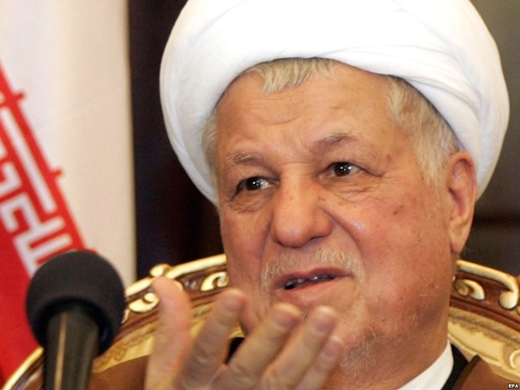
In an in-depth interview Rafsanjani talks politics, past and present (PART Three)

Hashemi Rafsanjani

Chairman of the Expediency Council Ayatollah Akbar Hashemi Rafsanjani has said although President Rouhani’s administration is in conditions tougher than those of his own government that took office after the end of the Iran-Iraq war in the 1980s, the performance of the Rouhani administration is satisfactory.

The following is part three of the translation of an exclusive interview Arman-e Emrooz daily’s Hossein Abdollahi conducted with the top councilor. The interview was published by the newspaper on March 15.

[What is your take on government’s ability to honor its promises?]

[…] Promises are made when officials take the podium; they say they keep their promises. In the long run, it is not good for the reputation of the government to say that it has not forgotten its promises, but fail in practice to make good on them.

[…] The problem is that when Mr. Rouhani was making promises he didn’t make them conditional, saying he would do this and that. He knew the government does not have at its disposal the tools it needs to get these jobs done.

What has Mr. Rouhani taken over [as the head of the government]? He has nothing at hand except the executive branch whose budget should be passed in a parliament that has its own issues; in other words, the government should obey [orders] when it comes to budget and is not the decision maker. The government can just implement the budget bill, its hands are tied.

The government is empty-handed when it comes to advertising; it’s unclear what is being done in that area. The performance of state media is rather vague, one cannot say if they are defending or criticizing the government! […] When it comes to IRIB, the issue is clear.

The Judiciary Branch is taking its own path. The Army steers clear of political issues. The government airs grievances more than others. It has expectations that remain unmet.

In all, a government has come to power which can only implement the orders. It cannot make or get involved in decisions. It can only make decisions in certain areas in which it faces nuisances. For instance, in state-run universities, the government can make good on part of its promises, something Mr. Rouhani has gone to great lengths to do. But any minister he proposed to parliament met with [the chamber’s] opposition.

The Ministry of Culture and Islamic Guidance belongs to the government, but there are some across the nation who claim they are engaged in guidance; [it seems] everyone has their own ministry of [Islamic] guidance, acting as they wish. Truly, the government’s hands are tied.

When the government praises and supports the [nuclear] negotiators who are involved in the talks with which the Supreme Leader is satisfied, you see what they do. In security issues, some are trying to create problems for people.

If people accepted the fact that the government wanted to keep its promises but it lacked the needed tools, such complaints would not arise. The government is trying to seriously pursue the [country’s] affairs, but the performance of those in the government is far from perfect. Generally, the promises the government has made are not practically implementable now. Next [Iranian] year will be a tough year [for the country] if sanctions remain in place, unless talks result in a deal.

Does Mr. Rouhani consult with you about certain key issues which have injected a sense of hopelessness and dismay into society? Ever since you have entered the scene for the elections, a sense of hope has been instilled in society and people say this government has close ties with you. […] All eyes are on you. Does Mr. Rouhani seek your counseling for solving the problems? […]

We are friends. I see him whenever I think it’s necessary. If I tell him that I want to have a word with him, either he comes to my office or I go to him. His ministers sometimes come to me and discuss the problems. Up to now Mr. Rouhani has not asked for talks, I have always stepped forward because I think it’s my duty to do something.

People may think that I have helped this government rise to power. I don’t want to see Mr. Rouhani say he has come to office with the help of others, he said it at the beginning though. I don’t want to hear people say this is my government. From the very beginning I told him, ‘My relatives should not hold posts in your government to avoid such speculations. I don’t propose anybody for ministries. You know the people I know. For the sake of consultation, I am quite ready to help.’

It was what we agreed on from the start. I know Mr. Rouhani has not retracted what he believed in and is willing to settle such issues, but there are problems. He was not allowed to act freely as far as the Cabinet lineup was concerned. He faced a parliament in which certain MPs were determined not to cooperate with the government in several areas. You can see that these problems persist.

Parliamentary elections are to be held next year. Are you going to support any special group or ticket?

I will only get engaged in election debates. It has been always the case and I will do it again. It is what I do because it is my responsibility and I won’t do it for special people. I will run for the Assembly of Experts because it has something to do with clerics; we all have to get involved.

Now we have an asset which should be protected. The Leader knowingly raised the question of people’s right. What we do about general policies in the [Expediency] Council is to honor people’s right. […]

Certain issues are passed in the council and some issues are voted down. We work freely in a democratic way in the council. I think what we pass there paves the way to some extent, especially because we should monitor the implementation of what we have passed.

All in all, I hope the next parliamentary elections can be held more easily than other elections. People should be vigilant. They should turn out to reclaim their rights and should not be disappointed. When sanctions are lifted, people will be more delighted and will participate [in the elections]. I am not disappointed because the young generation that is to replace the past generations will claim its own rights one day. They will not let the situation worsen.

Problems arising in the development process will be removed if issues between Iran and the US are settled and ties are reestablished. A onetime taboo has been somewhat shattered. As a case in point, we can mention the walk Mr. Zarif took with Mr. John Kerry [on the sidelines of nuclear talks in Geneva]. For years, you have said that issues between Iran and the US should be settled. It was one of the many issues you had asked the late Imam to agree to. You had asked Imam to settle the issue in his lifetime. Do you think that the stage is being set for a thaw in Iran-US ties?

Obama has apparently taken a positive attitude, standing up to Congress, although it is not easy for him to face up to the Israelis. The influence of Israelis is significant in the US [Congress]. The Jews and their friends are the main lobbyists there, but Obama is determined. His stance is clear. He says that they [the Americans] have an issue with Iran over its nuclear program and that it should be dealt with in a way that gives the US at least one year to prevent Iran if it ever decides to develop nuclear arms.

In case there is no bad intention, I think, this stance is acceptable by Iran because we do not possess atomic weaponry. We can accept the supervision [they have asked for] and have control over everything. […] Iran has no plan to go after nuclear weapons.

I think it [such an agreement] is viable and I believe the Americans are willing. It’s no secret that Republicans want to see the [Obama] administration fail in its efforts and want to get concessions from Iran through bullying. There is much hope that the issue is settled in this government. If Obama gets this job done, the stage will be set for the two sides to work together.

[…]

When was the last time you met the Supreme Leader?

One or two weeks ago!

What did come up for discussion?

The meeting focused on the nuclear issue. In the meeting, I asked the leader not to go tough on the issue, saying that the time is not ripe for tough attitudes. The leader replied, ‘Mr. Rouhani was here yesterday. He was satisfied when he was leaving the place’.

Is your relationship with the Supreme Leader like before?

It cannot be like it was in the past. Back then I held an executive position and we could talk, via phone or face time, about the country’s daily issues. It is not the case now. We do our job in the council and what we decided should be approved by the leader. But the emotional ties are still in place. Once in a month, we sit together talking about issues related to seminary schools.
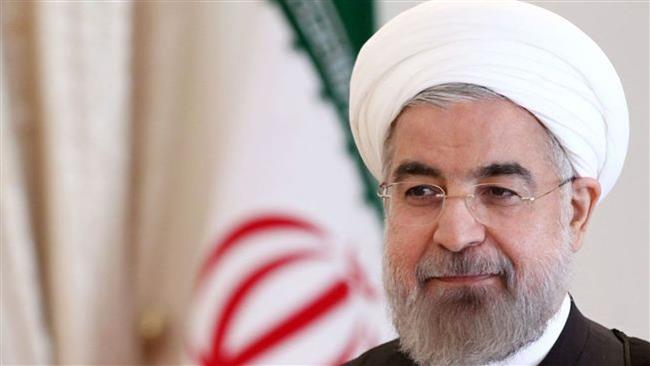
Rouhani congratulates leaders of regional states on Nowruz

President hassan rouhani

President Hassan Rouhani on Saturday congratulated leaders of Afghanistan, Tajikistan, Pakistan, Azerbaijan, Turkmenistan, Armenia, Turkey, Kazakhstan and Uzbekistan on Nowruz.

President Rouhani said in separate messages to the leaders of regional states that Nowruz is a manifestation of an ancient civilization and cultural affinities, adding it could help bolster friendly ties among nations which celebrate the occasion.

The president further said that spiritual and cultural capabilities of our nations throughout history, their glory, values, and arts of their intellectuals are examples of honors for regional nations and the entire people of the world.

Rouhani: Nuclear deal is accessible, other party should decide

President Hassan Rouhani has said that a nuclear deal is accessible, but the crucial decision should be made by the other party after all issues are resolved.

The president, who was speaking after a visit to a rehab center for the disabled war veterans on Saturday, said that Iran is determined to clinch a [nuclear] deal in line with the country’s redlines and criteria.

Negotiations are proceeding and some differences have been removed, he said, adding that the new common views would serve as a basis to clinch the final deal but there are still some differences.

The president said that the remaining issues could have been resolved in this round of talks, adding that the two sides postponed the meeting for the coming days because they felt they needed more time.

All problems could be resolved, but that the coming days or weeks will be very tough since the final step is somewhat difficult to take, he said.

It is quite natural that negotiations will never satisfy both sides completely because each side should mind their own redlines, he said.

President Rouhani further said that it’s easy to clinch a general deal, but when it comes to details it will be a very tough and complicated job and there will be many problems in the way.

Assuming a win-lose game in the contemporary world is wrong and no world power could be the absolute winner or think of annihilating the other party or trampling upon the rights of others, he said.

Rouhani then expressed hope that nuclear talks would bear fruit and bring blessings for the Iranian people, regional states and the entire world.

President Rouhani said that the nuclear deal will serve international peace, friendship, close relations and economic development of Iran and regional countries.

Iranian FM: Technical, political solutions found for unsolvable issues

Nuclear Talks

Iranian Foreign Minister Mohammad Javad Zarif said Tehran and 5+1 have found technical and political solutions to their differences.

“Proper technical and political solutions have been found for the issues which couldn’t be solved in the past,” Zarif wrote on his Facebook page on Saturday.

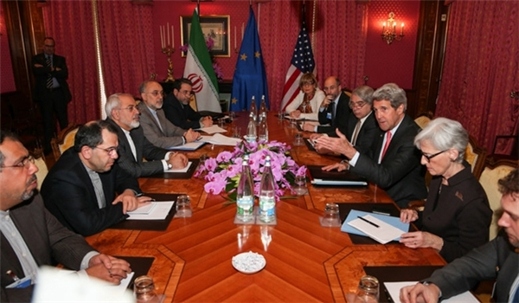
His comments were made after the ninth round of talks between the Iranian and US nuclear negotiators was held in Lausanne on Friday afternoon in the presence of Zarif, US Secretary of State John Kerry, their deputies, Head of the Atomic Energy Organization of Iran (AEOI) Ali Akbar Salehi, US Energy Secretary Ernest Moniz, and EU foreign policy chief Federica Mogherini and her deputy Helga Schmid.

“We were ready for negotiations, but the other sides needed more time for coordination,” he added.

“We have decided to return to Geneva on Wednesday to continue the talks, and God willingly, finalize the details of the solutions,” Zarif said.

Earlier, Iranian Deputy Foreign Minister and senior negotiator Abbas Araghchi said that the next round of nuclear negotiations with the world powers would start on Wednesday, March 25.

The US and European countries require more consultations and arrangements with their governments to continue talks with Iran, he said.

Talks between Iran and P5+1 were very serious and extensive, he said, adding that nuclear teams at this juncture are in need of more negotiations and coordination, Araghchi added.

To the same reason, foreign ministers of the European states and the US will meet in Berlin on Saturday and the next round of talks with Iran will be resumed on March 25, he said.

Iran and P5+1 are negotiating to narrow their differences over Tehran’s nuclear energy program ahead of a July 1 deadline.

[…]

Also on Tuesday, Salehi announced that Tehran and Washington had overcome their differences on technical issues with regard to Iran’s nuclear program in most of the cases, adding that both sides were trying to resolve the remaining technical problems.

“We have agreed on 90 percent of technical issues,” Salehi said after his second meeting with US Secretary of Energy Ernest Moniz in Lausanne, Switzerland, on Tuesday.

“There has only remained one very important point of difference that we will try to resolve in the evening talks,” he added.

[…]


Ayatollah Khamenei urges closer ties between nation, govt. to promote advances

Leader-1394

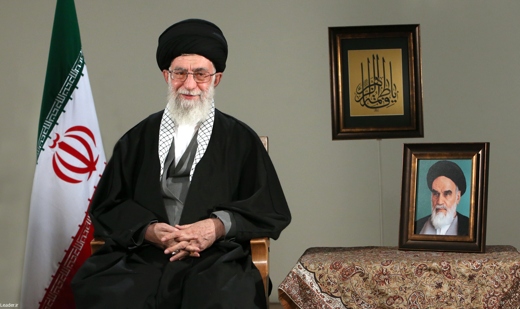
Ayatollah Khamenei made the statement in his annual message to the Iranian nation on the occasion of the Persian New Year early Saturday.

“If this friendly cooperation takes place on both sides, our wishes will certainly come true and our dear people will see the effects [of such a cooperation],” the Leader stated.

To achieve that goal, Ayatollah Khamenei added, the new Iranian year will be designated as “Government and Nation; Solidarity and Harmony.”

“The government is meant to serve the nation and the nation demands services from the government. The more cordial the nation-government ties, the more cooperation and solidarity [between them], the better jobs will go ahead,” Ayatollah Khamenei said.

The Leader of the Islamic Revolution also urged the Iranian nation and government “to trust one another.”

“The government should recognize the nation in the proper sense of the word and acknowledge the value, significance and capabilities of the nation. Reciprocally, the nation should trust the government… in the proper sense of the word,” the Leader added.

Ayatollah Khamenei also hailed the Iranian nation’s firm determination during the previous Iranian year, saying the nation manifested the determination by attending massive rallies in commemoration  of the anniversary of the Islamic Revolution’s victory, the International Quds Day and the Arba’een, the 40th day after the martyrdom anniversary of Imam Hossein (PBUH), the third Shia Imam.

The Leader also expressed hope that Iran will experience “economic development, regional and international might and dignity, scientific breakthroughs in the real sense of the word, judicial and economic justice as well as faith and spirituality” in the new year.

Queiroz: I will never say good-bye to Iranians for good

Carlos Queiroz

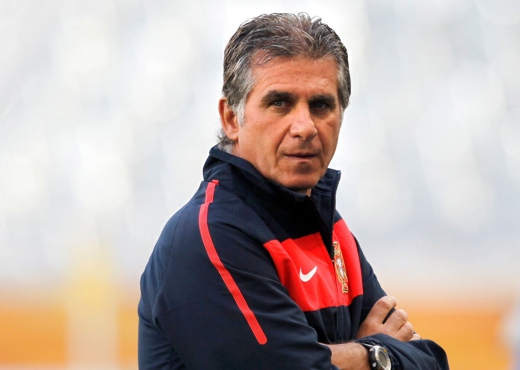
Iranian national football team coach Carlos Queiroz has said that he cannot say good-bye to the Iranians for good, citing the strong bond he has developed with the Iranian people.

Fararu, a news website, on March 21, published the coach’s remarks and news on his travel ban. The following is a partial translation of the report:

Queiroz said that he is going to peacefully quit his post after he learnt that certain people do not want him to stay in the job.

This comes after his decision to resign was announced on Friday following his meeting with Head of Iran’s Football Federation Ali Kafashian in which the two men agreed to terminate cooperation.

Before handing over the job, Iran’s Portuguese coach is expected to lead the Iranian squad in two friendlies it is to play against Chile and Sweden later this month.

Queiroz also congratulated the Iranians on Nowruz and said that he has a strong feeling for people in Iran and cannot say good-bye to them forever, adding the decision [to leave the national team] was not his to make.

He said that Iran has the potential to be the best team in Asia.

On Saturday, news agencies reported that Queiroz was barred from leaving Iran. The Iranian national team coach, who was to leave for Sweden and then to Austria to lead the Iranian team for warmup games before the two friendlies against Chile and Sweden, failed to accompany his team on its overseas tour.

Meanwhile, Ali Kafashian has said that he would come to Tehran [from Kish] to solve the tax problem of the Iranian coach and remove the ban on his travel.

Rouhani vows to increase job opportunities, non-oil exports

Rouhani-Iran-1394

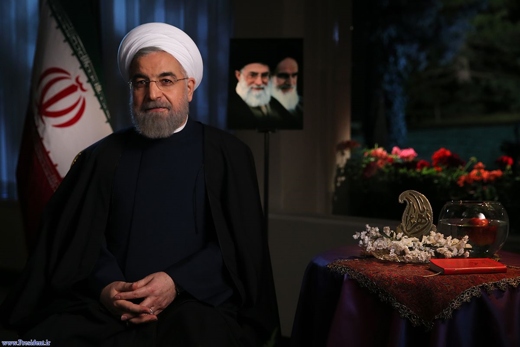
Rouhani made the statement in his annual message to the Iranian nation on the occasion of the Persian New Year early on Saturday.

He also hailed the Iranian nation for standing by the government in the implementation of the resistance economy.

Without the support of the nation, it was impossible for the government to reduce inflation, recession and the economy’s dependence on oil revenue.


What was Iran’s most important political event in 1393?

Iram Map

The year 1393 [March 21, 2014 – March 20, 2015] was full of different incidents and challenges for Iran on different fronts.

Alef, a news website, has carried out an online poll, asking the respondents to choose the most important events of the year on political, social, economic and cultural fronts.

The following is a translation of the online survey Alef released earlier in March:

The viewers were asked to choose the most important events in different areas and share them with other people. Those taking part in the poll are also asked to explain the reason(s) why they picked the event(s) from the following list:

* Extension of the Geneva deal and nuclear talks [between Iran and P5+1]

* The execution of Mahafarid Amir-Khosravi, convicted of massive corruption

* The Supreme Leader’s historical letter to the youth in the West

* An incomplete speech by principlist Tehran MP Ali Motahari in the Islamic Consultative Assembly [who was attacked by fellow MPs]

*The death of Ayatollah Mahdavi Kani, the chairman of the Assembly of Experts and the leader of the Combatant Clergy Association

* The conviction of former first vice-president Mohammad Reza Rahimi and his imprisonment

* Trial of Mehdi Hashemi, a son of Ayatollah Hashemi Rafsanjani, and his conviction

* The impeachment and ouster of the science minister, a first impeachment in the eleventh government

* The attack on the car carrying Ali Motahari, a Tehran MP, in Shiraz before his planned speech which was called off

* The popularity of Major General Ghasem Soleimani, the commander of the IRGC Quds force, in Iran and across the region

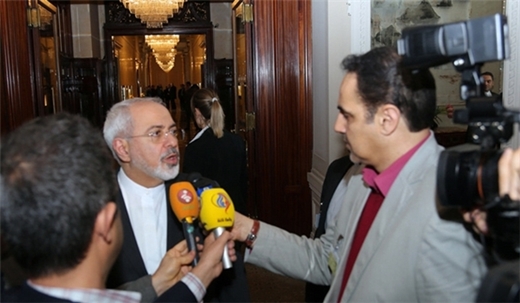
Zarif has described talks with Kerry as positive

zarif press

Iranian Foreign Minister Mohammad Javad Zarif said Friday nuclear talks are at a sensitive stage and that his negotiations with US Secretary of State John Kerry earlier in the day have been “positive”.

“On each front there are a couple of issues which have yet to be settled. Naturally these issues are the most difficult,” the Iranian top diplomat said.

Zarif’s deputy Seyyed Abbas Araghchi, meanwhile, said in light of the fact that the US and the European members of P5+1 need to coordinate things, nuclear talks are expected to resume on March 25.

In another development, Secretaries Kerry and Moniz paid a visit to Hossein Fereydoon [President Rouhani’s brother and special adviser] to offer condolences to him on the passing of his mother.

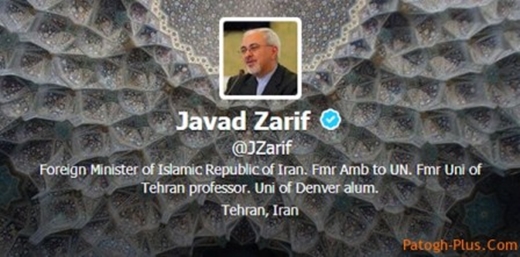
Iranians for engagement with dignity: Zarif to Obama

Mohammad javaz zarid twitter

Foreign Minister Mohammad Javad Zarif on Friday responded in his twitter account to the video message of US President Barack Obama to Iranians on the occasion of Nowruz.

Zarif tweeted, “Iranians have already made their choice: Engage with dignity.”

He also urged the US government to make the right choice saying that the US and its allies are expected to choose between two options: Pressure or agreement.

On Thursday, President Obama said that Iran has met its commitments under the interim nuclear deal and that there has been progress in nuclear talks between Tehran and P5+1.

“Just over a year ago we reached an initial understanding regarding Iran’s nuclear program and both sides have kept our commitments,” Obama said in a video message marking Nowruz, the Persian New Year.

Iran and P5+1 – the US, Britain, Russia, China, France and Germany – are currently negotiating to reach a comprehensive agreement on Tehran’s peaceful nuclear program as a deadline slated for July 1 draws closer.

On the fifth day of the latest round of negotiations in the Swiss city of Lausanne, a meeting was held between Iranian Foreign Minister Mohammad Javad Zarif and US Secretary of State John Kerry.

Following his talks with Kerry, Zarif said that the negotiations have reached an extremely complicated point.

The two sides have already missed two self-imposed deadlines for inking a final agreement since they signed an interim accord in the Swiss city of Geneva in November 2013.