Friday, December 26, 2025
Home Blog Page 4803

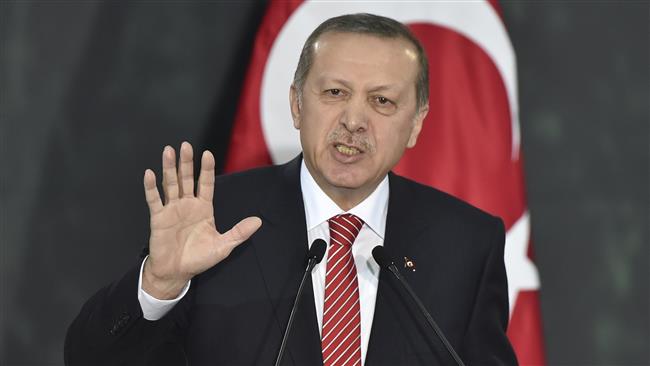
Iran protests Turkish president’s ‘improper’ remarks

Erdogan

Iran has summoned Turkey’s charge d’affaires to hear Tehran’s protest against Turkish President Recep Tayyip Erdogan’s “improper” remarks regarding the Islamic Republic.

Iran’s Foreign Ministry Spokeswoman Marzieh Afkham said on Sunday that following Erdogan’s recent remarks, Iran summoned the country’s charge d’affaires in the absence of the ambassador and demanded a “clear and convincing response.”

“The strategic approach of the Islamic Republic of Iran to the region and its ties with neighbors is based on peace, stability and cooperation on the basis of mutual respect,” Afkham said, adding, “We believe that cooperation between Iran and Turkey has the potential to achieve this goal.”

The Turkish president accused Iran on Thursday of “trying to dominate the region” and said Tehran’s efforts had begun annoying Ankara, as well as Saudi Arabia and Persian Gulf Arab countries.

Following Erdogan’s accusations, Iranian Foreign Minister Mohammad Javad Zarif urged regional countries to act responsibly to help restore calm to the Middle East and called on the states which have adopted wrong policies to abandon their erroneous strategies.

“Those who have caused irreparable damage with their strategic mistakes and ambitious policies had better adopt responsible policies and tap into the existing potential to ensure tranquility and convergence in the region,” Zarif added.

[…]

Waste no time; we must protect the environment from trash

Mahlagha Mallah

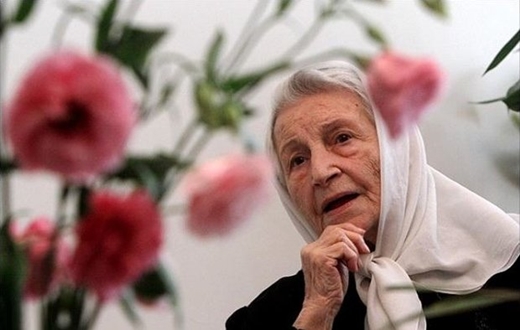
Mahlagha Mallah, 96, is an environmental activist who has not produced any waste over the past 60 years.

Earlier in March, Mehr News Agency ran a report on the founding mother of Iran’s environmental protection and her waste minimization efforts. The following is a partial translation of the report:

Hailed as an environment-friendly individual and a leading natural heritage figure, Mrs. Mallah says a book on the environment inspired her. Back from France where she got her Ph.D. and learned library science, she started to work in a Tehran University library.

“I asked all embassies [in Tehran] to provide me with the environmental information of their countries. After studying the issue, I came to the conclusion that collective measures are needed to do something for the environment. I wanted to teach people how to protect the environment.”

Dr. Mallah was not the first in her family who tried not to produce waste. “My mom would not place the waste outside the house. Back then people produced less garbage and each family would recycle –one way or another – their waste at home. They used to give food leftovers to the poultry.

A rural lifestyle helped people to use less paper and plastic and do less damage to the environment in the process. But today new sources of pollution cause new diseases. Something must be done about it.”

For the past 60 years, Mrs. Mallah and her family have not placed any waste in the garbage can to be collected unless it was recyclable. They bury the waste in a pit in their yard to let it turn into fertilizer.

“We still don’t use plastic bottles. In the past I used to take a cloth shopping bag to store to help the environment, and I’d encourage others to follow suit. We need to stop harming the environment so that future generations can use this natural heritage.”

Mrs. Mallah talks with people in different neighborhoods and teachers at schools about the need for waste sorting. […] We can run environmental programs to raise public awareness. We love nature and the environment and we do not work to get money in return.

Dr. Mallah has always offered great ideas about environment protection. “We can do more for a plan which segregates the [dry and wet] waste at households. We can teach women in this regard. […]

“Municipalities can separately collect disposable batteries, which leave a destructive impact on the environment. The used cooking oil – which harms the environment after entering the sewage system – can be collected, refined and reprocessed, exactly like used engine oil.”

[…]

Mrs. Mallah says the waste produced in Tehran is too much. Everyone can do their share and help reduce waste production. People can turn the waste to compost –a fertilizer for plants in organic farming – or Vermicompost – which is light and odorless. […]

 

Mahlagha Mallah, who holds a Ph.D. from Sorbonne in Sociology, is the founder and managing director of Women’s Society against Environmental Pollution. She was praised as the 2010 personality of the year in the field of “Natural Heritage and Environment” for her decades-old struggle to preserve the environment.

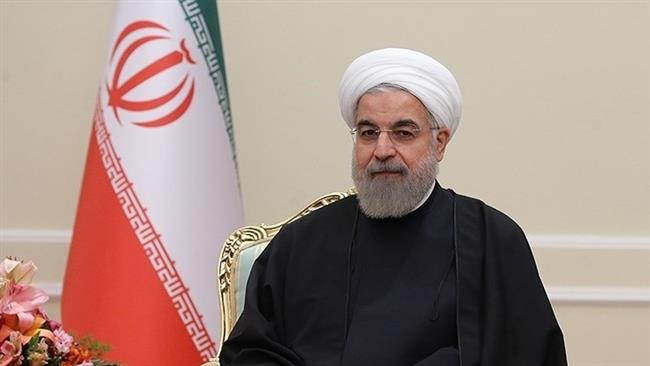
Rouhani: Country’s economy back on fast recovery track

Rouhani-Iran

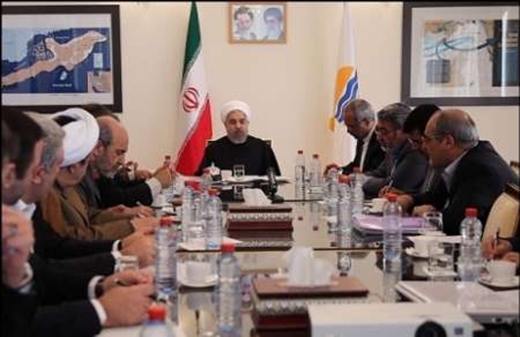
President Hassan Rouhani said on Sunday that free trade economic zones can turn into exemplary models for economic development as the country’s economy lands back on the fast recovery track.

Addressing the board of directors of free trade zones, President Rouhani said taking advantage of new technologies, absorbing investment and making use of experts are among top priorities of these regions.

General conditions of the country are now improving day by day, he said.

There is no doubt that Iran will attain economic prosperity this year and we should spare no effort to materialize this goal, he said.

“The era of recession is now over and we need some more time to reach satisfactory conditions through more efforts,” the president said.

To gain economic development, the general market conditions and employment opportunities should improve, he said.

To attain the goals, all domestic and foreign assets should be utilized and the country’s free trade zones play a very significant role to this end, Rouhani said.

The active role of people and the private sector has played a vital role in putting an end to recession, he said.

The tourism industry will create a large number of employment opportunities and help attain economic development, he said.

The free trade zones should focus their activities on export of non-oil products, absorbing foreign investments and tourists, protecting environment, preserving historical and religious sites and satisfying people residing in those regions, President Rouhani said.

Yemen invasion, a strategic mistake: Senior diplomat

Morteza Samadi

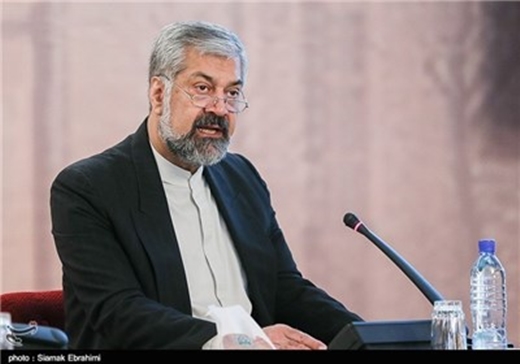
A top Iranian diplomat slammed Saudi-led air strikes against Yemen as a strategic mistake, urging an immediate halt to the bombings which he said only add to extremist moves in the region.

“It seems that, unfortunately, a very strategic mistake has been made in the aggression against Yemen,” Iranian Deputy Foreign Minister Morteza Sarmadi told reporters in Tehran on Sunday.

He called for an immediate end to the air strikes that a coalition of Arab countries, led by Saudi Arabia, has launched on Yemen, stressing the need for dialogue among different Yemeni groups as a way out of the conflict in the poor state on the Arabian Peninsula.

“Undoubtedly, the more this war lingers and the more killing of people and destruction of Yemen’s infrastructure continue, the more hatred, terrorism and extremism will spread in the region and that will be the biggest threat to regional countries that are highly vulnerable in this regard,” Sarmadi noted.

On March 26, Saudi Arabia began to militarily interfere in Yemen’s internal affairs by launching deadly air strikes against the Houthi Ansarullah movement in an attempt to restore power to fugitive Yemeni President Abd Rabbuh Mansur Hadi, a close ally of Riyadh.

Saudi Arabia’s King Salman said in an Arab summit in the Egyptian resort of Sharm el-Sheikh that the operation would continue “until Yemen achieved peace and security”.

A Persian Gulf diplomatic source, speaking on condition of anonymity, said the Arab alliance initially planned a month-long campaign, but it could last up to six months.

Zarif, Kerry open fifth day of nuclear talks in Lausanne

Iran Talks Lusanne

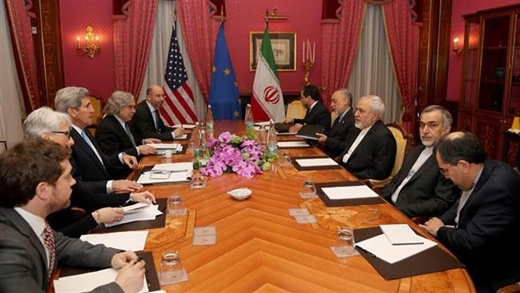
Iranian Foreign Minister Mohammad Javad Zarif and US Secretary of State John Kerry have held another meeting as the fifth day of a new round of talks over Tehran’s nuclear program kicks off in Lausanne, Switzerland.

The meeting between the Iranian and US top diplomats is part of broader negotiations between the Islamic Republic and the P5+1 countries aimed at clinching a final deal over Tehran’s nuclear program.

Following his meeting with Kerry, Zarif is also scheduled to sit down with his Chinese counterpart Wang Yi in the Swiss city.

Russian Foreign Minister Sergei Lavrov and British Foreign Secretary Philip Hammond are also expected to join the talks in Lausanne with separate talks scheduled between the two and Zarif on Sunday.

On Saturday, Zarif held separate talks with his German and French counterparts over the outstanding issues between the parties to the negotiations.

He described his talks with Frank-Walter Steinmeier and Laurent Fabius as “very good” and said, “We discussed all the issues that need to be resolved.”

Zarif said, “I think we can in fact make the necessary progress to be able to resolve all the issues and write them down in a text that will become the final agreement. It depends on how long it will take to do that but we are prepared to work diligently in order to move forward and I think that there is every indication that we can in fact move forward.”

Kerry also held trilateral talks with Steinmeier and Fabius on Saturday.

[…]

Saudi offensive against Yemen is a strategic mistake: Iranian diplomat

Abdullahian

A senior Iranian official has warned that the Saudi military strikes on Yemen can have serious consequences for the entire Middle East and the Muslim world, saying that the move to launch the military campaign against the Arab country is a strategic mistake.

On Saturday, Hossein Amir-Abdollahian, Iran’s deputy foreign minister for Arab and African Affairs, described as unacceptable the Saudi attacks on the Yemeni people and infrastructure.

“It is unacceptable that Saudi Arabia is attacking the infrastructure and people of this country (Yemen), and unfortunately, the consequences of this Saudi move will be to the detriment of the region and the Islamic world,” Amir-Abdollahian said.

The senior Iranian diplomat advised the new Saudi leadership to deal with the developments in Yemen with “respect and peace.”

Amir-Abdollahian pointed to a similar move by Riyadh in 2011, when Saudi troops were deployed to Bahrain to help the Manama regime in its crackdown against peaceful protests there. He said Riyadh’s military intervention in Bahrain did not end the protests there but, rather, worsened the situation and caused further instability.

The Iranian diplomat advised Riyadh against relying on US support, adding that Tehran will continue to support the political process in Yemen and will urge the political factions in the Arab country to return to national dialogue.

On March 26, the Al Saud regime unleashed deadly air raids against Yemen’s Houthi Ansarullah movement in an attempt to restore power to fugitive Yemeni President Abd Rabbuh Mansur Hadi, a close ally of Riyadh.

[…]

P5+1’s turn to show flexibility in nuclear talks, President Rouhani says

President Rouhani

Iranian President Hassan Rouhani says the Islamic Republic has exhibited the necessary flexibility during the course of nuclear negotiations, calling on the P5+1 countries to take the turn and the final steps.

“We have come close to sensitive days. Iran has shown the crucial flexibility during the talks, and now it is the opposite side’s turn to take the final steps,” Rouhani told German Chancellor Angela Merkel during a telephone conversation on Saturday.

President Rouhani added that the removal of sanctions imposed on Iran will be the keystone of a nuclear agreement between the Islamic Republic of Iran and the five permanent members of the UN Security Council – the United States, France, Britain, Russia and China – plus Germany, stressing that the deal will chiefly seek to build trust and confidence between the two sides.

“We have always sought a win-win accord and this will serve the interests of all sides,” Rouhani stated.

Merkel, for her part, voiced Germany’s content with the progressive negotiations, saying her country will constructively support the talks.

The German chancellor noted that Berlin believes in the abolition of anti-Iran sanctions, and spares no effort for a comprehensive deal.

On Saturday evening, High Representative of the European Union for Foreign Affairs and Security Policy Federica Mogherini said the P5+1 countries have never been closer to a deal.

“As you know, we have never been so close to a deal. We still have some critical points that need to be solved, and we are working over the hours, over the weekend to bridge the gaps. I will not go into the details of the negotiations. It’s not the right time to do it. I hope we manage to do it in the coming days,” Mogherini told reports in Lausanne, Switzerland.

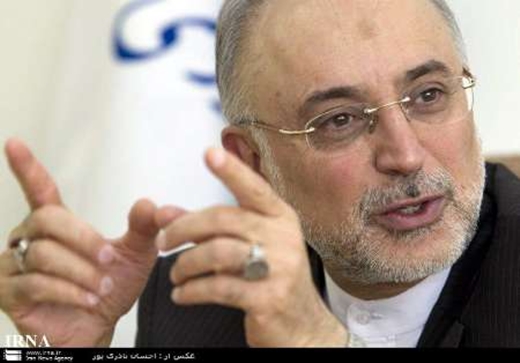
Salehi: One or two technical issues still to be resolved

Salehi

Director of the Atomic Energy Organization of Iran (AEOI) Ali Akbar Salehi said one or two technical issues still remain complicated in the nuclear negotiations.

Talking to reporters in Beau Rivage Palace Hotel in Lausanne on Saturday, he said parties to the negotiations could claim they have come to a common understanding on technical issues only when these complicated issues are settled.

In answer to a reporter who asked about the reason for his anger during the past two days, he said he was neither angry nor unhappy. “The process of the negotiations is quite tough but we are moving ahead with strength and reliance on the Almighty as we have the support of both the nation and officials.”

When asked about reports that talks are only a few steps away from producing an agreement, Salehi said negotiations have two dimensions: technical and legal which are interconnected. It will be of no use if technical issues are settled but sanctions still remain in place.

Salehi noted that only when the one or two outstanding technical issues are settled, one can say there is a “common understanding”. Even that does not mean necessarily mean an agreement has been reached.

On the arrival of foreign ministers in the Swiss city he said, the ministers won’t get involved in details, we need to see whether we can conclude things before their arrival.

Mahak Charity among world’s top 10 NGOs

Mahak

Mahak Charity is one of the world’s top ten Non-Governmental Organizations (NGOs). This was announced in a ceremony entitled “Be Kind to Kids with Cancer”” which was attended by musicians, and big names of stage and screen.

Sayeh daily has filed a report on the ceremony. The following is the translation of the report:

Mahak’s Managing Director Arasb Ahmadian said in the ceremony that stem cell transplant – the most advanced cancer treatment – is carried out at Mahak Hospital. He said that children suffering from cancer can be treated in Iran – at Mahak Hospital – and there is no need to send them abroad.

He pointed to the global ranking of the NGOs in 2013 and said Mahak stood 10th among 263 NGOs in the world.

Over the course of history, Ahmadian went on to say, Iranians have always been involved in charitable and humanitarian activities. Well-wishers in the past were engaged in building schools, mosques, bridges and rural roads. Today people’s lifestyles have changed and these activities are pursued by the NGOs.

He further said that Mahak’s turnover this year [starting March 21, 2014] stood at 131 billion tomans (about $43.5 million), of which 110 billion tomans (around $35 million) has been dedicated to the treatment of 9,500 children with cancer in 32 hospitals across the nation.

About 710 people work in three working shifts in hospitals and 300 volunteers are active in Mahak.

Mahak Society to Support Children with Cancer is a non-governmental organization in Tehran dedicated to helping children with cancer. Mahak Hospital and Rehabilitation Complex is a Pediatric Cancer Research and Hospital Center built and organized by Mahak charity. The 120-bedroom complex focuses on the treatment and rehabilitation of children and providing support to their families during treatment.

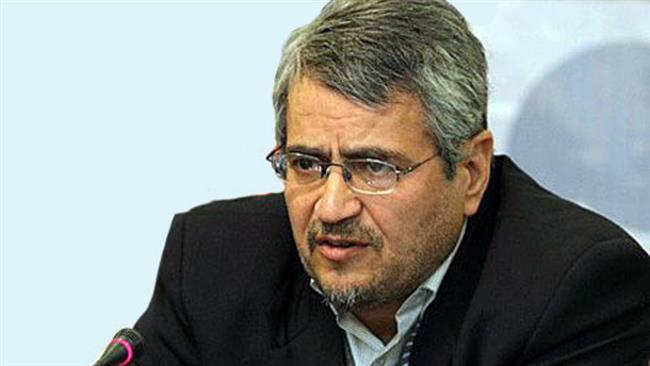
Iran’s UN envoy calls for serious approach to extremism

Ali Khoshrou

The Iranian ambassador to the United Nations has warned about the threat of extremism to global security, urging the international community to work out a “serious and comprehensive” approach against such threats.

“A genuine commitment by the international community to a serious and comprehensive approach to challenge extremism is imperative,” Gholamali Khoshroo said on Friday in an address to a UN Security Council meeting in New York.

He added that extremist and terrorist groups will continue to pose the gravest threat to the world unless they are fully dismantled.

Khoshroo emphasized that the international community’s “inconsistent and incoherent” policy on the battle against extremist groups has undermined efforts to confront them and resulted in their emboldening.

The Iranian diplomat reiterated that any failure in the international fight against extremism would doom efforts in ridding the region of “this malicious force.”

Khoshroo also noted that a comprehensive strategy against the ISIL Takfiri terrorists must “address ideological, social, political and economic dimensions of violent extremism.”

Any genuine resolve against extremism must translate into specific and effective actions, he added, stressing that adoption of a united front with a clear message and a coordinated strategy would be imperative.

“The disruption of financial and logistical support and sharing of relevant information and intelligence as well as enforcing effective and coordinated border control are critical to the success of this campaign,” the Iranian ambassador pointed out.

He further warned that failure to disrupt support for terrorists and destroy their networks would lead to more bloodshed and destruction.

Khoshroo said violent extremism has emerged as an unprecedented composition of “narcissistic, dogmatic and violent entities” with a global agenda.

He added that Iran strongly condemns widespread targeting and killing of ethnic and religious minorities by the ISIL Takfiri terrorists and all other extremist groups.

Iran also condemns the destruction of mosques, holy shrines, churches, temples, artifacts and archeological treasures representing the rich cultural heritage of humanity, he said.

[…]