Saturday, January 3, 2026
Home Blog Page 4803

Iran’s Zarif calls for global nuclear disarmament

Mohammad-Javad-Zarif1

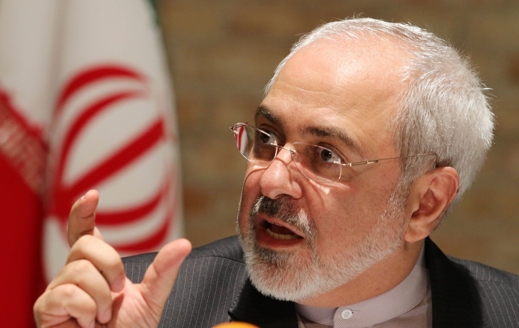
Iran’s Foreign Minister Mohammad Javad Zarif has called on nuclear weapons states across the world to give up their nuclear stockpiles.

“I sincerely believe that the nuclear agreement between my country – a non-nuclear-weapon state – and P5+1 (which control almost all nuclear warheads on Earth) is symbolically significant enough to kick-start this paradigm shift and mark the beginning of a new era for the non-proliferation regime,” Zarif wrote in an op-ed published in The Guardian on Friday.

“One step in the right direction would be to start negotiations for a weapons elimination treaty, backed by a robust monitoring and compliance-verification mechanism,” he added.

Iran and P5+1– the United States, Britain, France, China and Russia plus Germany – finalized the text of a nuclear agreement, dubbed the Joint Comprehensive Plan of Action (JCPOA), in the Austrian capital Vienna on July 14.

Under JCPOA, limits are put on Iran’s nuclear activities in exchange for a set of commitments by P5+1, including the removal of all economic and financial bans against the Islamic Republic.

In his article, Zarif also criticized states having nuclear arsenals, because they “have hardly even talked the talk, while completely brushing off their disarmament obligations under NPT (nuclear Non-Proliferation Treaty) and customary international law.”

He further slammed Israel’s non-compliance with the NPT and its long-standing aggressive campaign against diplomatic efforts by Iran and P5+1 to find a solution to the Western dispute with Tehran over its nuclear program.

“That is to say nothing of countries outside the NPT, or Israel, with an undeclared nuclear arsenal and a declared disdain towards non-proliferation, notwithstanding its absurd and alarmist campaign against the Iranian nuclear deal,” the Iranian minister wrote.

Israel is widely believed to be the sole possessor of a nuclear arsenal in the Middle East and has so far blatantly violated the international rules regarding nuclear non-proliferation.

In December 2014, the United Nations General Assembly adopted a resolution urging the Tel Aviv regime to join the NPT and put its nuclear facilities under the safeguards of the International Atomic Energy Agency. Tel Aviv reportedly maintains between 200 and 400 atomic warheads.

Zarif also called for the establishment of a zone free of weapons of mass destruction in the Middle East, and expressed the Islamic Republic’s willingness to cooperate with the international community in this regard.

He added, “Iran, in its national capacity and as current chairman of the Non-Aligned Movement, is prepared to work with the international community to achieve these goals, knowing full well that, along the way, it will probably run into many hurdles raised by the skeptics of peace and diplomacy.”
 

Iran rejects report of confidential annexes to JCPOA

araghchii

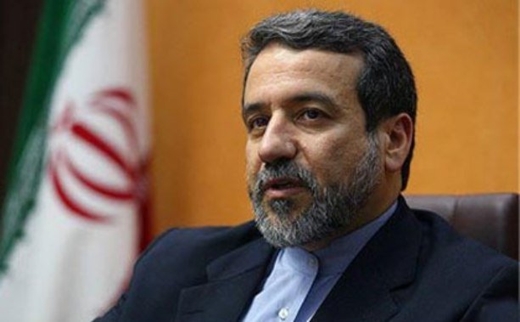
A senior Iranian nuclear negotiator says there is nothing confidential in the Joint Comprehensive Plan of Action (JCPOA) on Tehran’s nuclear program and its annexes.

Abbas Araghchi further said that the content of a roadmap signed by Iran and the International Atomic Energy Agency and its related documents are secret, and that the agency is obliged to protect them under international law.

The two sides agreed on July 14 to clarify some outstanding issues regarding Iran’s nuclear program. Araghchi also said Tehran will only allow IAEA inspectors from nations that have diplomatic relations with Iran, which does not include the US and Canada. He also said the inspectors will have no access to classified military documents.

After signing the roadmap, IAEA Director General Yukiya Amano said it “sets out a clear sequence of activities over the coming months, including the provision by Iran of explanations regarding outstanding issues. It provides for technical expert meetings, technical measures and discussions, as well as a separate arrangement regarding the issue of Parchin site.”

In his latest meeting with members of the parliament’s National Security and Foreign Policy Committee on Sunday, Araghchi said European foreign ministers have lined up to visit Iran, but that does not mean we will offer whatever they want, we are the one who chooses.

“We will decide how to treat each country on the basis of national interests,” Araghchi stressed.

During the meeting, Araghchi answered the questions raised by some MPs on topics including the conditions for lifting of sanctions, inspection of military sites, West’s contradictory statements about JCPOA, confidential agreement with the IAEA, conditions of providing 20% of fuel for Tehran reactor’s operation, inspections of nuclear facilities, conditions for sanctions return, US selective approach to human rights and support for terrorism, uncertainty about the cancellation or suspension of sanctions, arms and missile embargo as well as financial and banking sanctions.

He explained that the nuclear deal between Iran and P5+1 stipulates that Iran would voluntarily execute the Additional Protocol until the US sanctions against Tehran are removed.

He noticed that a new roadmap has been signed between the IAEA director general and the Iranian nuclear chief to settle points of differences and that roadmap includes confidential contents.

Iran’s seeks removal of all sanctions, including economic and financial sanctions, on the very first day of implementing the deal, Araghchi said.


Italy returns large haul of Iran’s stolen artifacts

cb93c4a8-1272-4511-8f5c-2a48f0a6754e

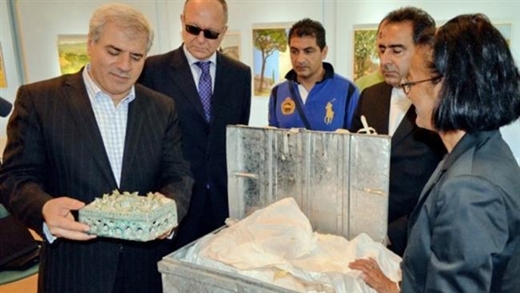
Italy has returned to Iran some 30 stolen artifacts that had been smuggled to the European country during the past 10 years.

After years of hard-fought legal battle with the Italian art authorities, the Iranian legal team managed to win back the stolen artifacts following a restitution order by an appellate court in the northern Italian city of Milan, IRNA reported on Friday.

The haul, comprised of items belonging to Iran’s pre- and post-Islamic era, had been recovered by the Italian art police and was handed over to a representative from the Iranian Embassy in Italy during a ceremony held at the National Museum of Oriental Art in Rome.

Paola Piacentini, from the administrative office of the museum, and Mohammad Hassan Talebian, the deputy head of Iran’s Cultural Heritage Organization, were present in the ceremony.

The artifacts have been delivered to the Iranian Embassy thanks to the UNIDROIT Convention on Stolen or Illegally Exported Cultural Objects, an international treaty on the subject of cultural property protection signed in 1995 in Rome, Talebian said on Friday. The convention aims to reduce illegal traffic of cultural property by obligating buyers to check the legitimacy of their purchase.

He added that the procedure to transfer the art pieces to the Iranian National Museum would start in an official ceremony scheduled to be held in the Iranian Embassy in Rome in September.

Duilio Cortassa, a lawyer with the Iranian Embassy in Rome, also said that the Italian art police seized the haul of pre- and post-Islamic era artifacts in the northern Italian city of Monza in 2007.

Shell, Eni say look to return to Iran

a1940782-1f13-4e3e-b99b-3887bf12cc37

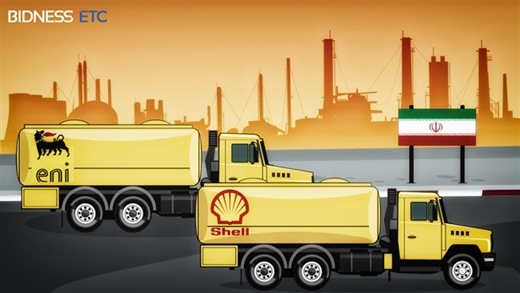
Royal Dutch Shell and Italy’s largest oil producer Eni say they are looking to return to projects in Iran’s upstream oil and gas sectors.

“For us, (Iran) is a huge gas province so it would be good to be there — in conventional gas — at the right terms,” Shell’s financial chief Simon Henry said in London.

The company has a history of activities in Iran’s upstream projects, including in South Pars, but the firm pulled out of the world’s largest gas field’s Phase 13 development in 2008.

Shell also operated Iran’s Soroush and Nowruz oilfields in the Persian Gulf at a capacity of 200,000 barrels per day. An outstanding debt to the tune of $2.3 billion remains unpaid by the company to Iran since 2012.

The energy news provider Platts quoted Henry as saying Thursday that Shell was interested in returning to Iran ‘in the fullness of time’ but did not expect any quick, easy deals.

“Anybody who thinks that we are going to suddenly swan in and end up with great contracts that make a difference within 12 months, I think is a little naive. It’s not going to be easy, it will take time,” he was quoted as saying.

Iran wants to unveil its new energy contracts at a conference planned for December in London.

Deputy Oil Minister Amir Hossein Zamaninia told a Vienna conference last week that Iran has identified nearly 50 oil and gas projects worth $185 billion up for grab.

Shell and other European energy giants such as France’s Total, Italy’s Eni and BP had built strong relationships with Iran through work in the country’s oil and gas fields as well as crude oil purchases before halting them under sanctions.

Shell was Iran’s second biggest corporate client along with Total in 2012 when the Anglo-Dutch company lifted 100,000 barrels of crude oil per day.

Executives from Eni and Shell traveled to Tehran in June and May to discuss new opportunities in the resource-rich country and outstanding debts.

On Thursday, Eni’s Chief Executive Officer Claudio Descalzi said his company was interested in returning to Iran once the sanctions ended.

“Iran in terms of oil and gas is a huge and big country, very interesting, but we need to wait,” he said in a Bloomberg Television interview.

Meanwhile, BP Chief Executive Bob Dudley said his company was looking for opportunities in Iran’s upstream oil industry.

Iran’s Minister of Petroleum Bijan Zanganeh said he looked to “a new chapter” in cooperation with Total as French Foreign Minister Laurent Fabius visited Tehran.

Nuclear deal does not require parliament approval

Salehi

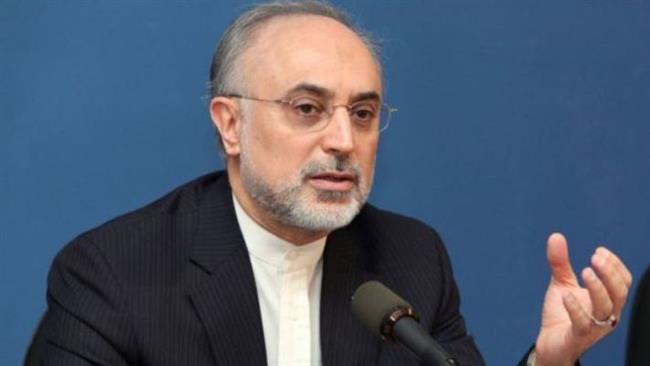
Director of the Atomic Energy Organization of Iran (AEOI) Ali Akbar Salehi said on Friday that since the nuclear deal between Tehran and P5+1 is not an international agreement, it does not need to secure the approval of parliament.

“The text is not regarded as an international agreement, convention or treaty. Therefore, it has been named the Joint Comprehensive Plan of Action (JCPOA),” he said in reply to a demand by lawmakers who want to ratify it in the chamber.

The Foreign Ministry is responsible for nuclear negotiations and has to decide about it, he was quoted as saying by the parliament’s News Agency (ICANA).

As for the quality of an unofficial translation of JCPOA, he added that based on the announcement of the Foreign Ministry, the English version is the valid and authorized text.

Leader’s aide: Israel never dares to attack Iran

13940509000307_PhotoI

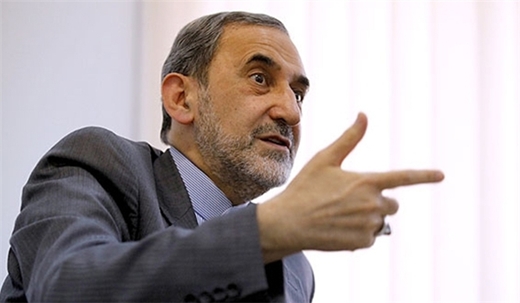
The Supreme Leader’s top adviser for international affairs has played down the war rhetoric of Tel Aviv against Iran, and said that in case of the slightest mistake by Israel it will receive Iran’s most crushing response.

Ali Akbar Velayati’s remarks came in reaction to the war rhetoric of Israeli Prime Minister Benjamin Netanyahu and other Tel Aviv officials against Iran.

“Israel does not dare to attack Iran; as soon as the Israeli regime begin to do so, its most important cities will be leveled to the ground,” Velayati said in response to a question by reporters on Israel’s possible attack on Iran to ruin the nuclear agreement between Iran and the world powers.

The Supreme Leader’s top aide, meantime, stressed that Iran will never allow any outsider to inspect its military sites.

“I reiterate that the issues of Iran’s missiles and defensive capabilities have never been included in the nuclear talks,” Velayati said.

Earlier this month, Foreign Minister Mohammad Javad Zarif underlined that Tehran’s ballistic missile production and use is no violation of the nuclear agreement between the country and the world powers.

“Using ballistic missiles doesn’t violate the Joint Comprehensive Plan of Action (JCPOA); it is a violation of a paragraph in the annex of the (UN Security Council) Resolution (2231) which is non-binding,” Zarif said in response to questions by legislators in an open session of parliament in Tehran on Tuesday.


“This paragraph (of the annex) speaks about missiles with nuclear warheads capability and since we don’t design any of our missiles for carrying nuclear weapons, therefore, this paragraph is not related to us at all,” he added.


Iran and the six powers struck a nuclear agreement in Vienna on July 14. A week later, the UN Security Council unanimously endorsed a draft resolution turning into international law the Joint Comprehensive Plan Of Action (JCPOA) reached between Iran and 5+1 (the US, Russia, China, Britain and France plus Germany) over the Islamic Republic’s nuclear program.

Iran halts Tehran-Ankara train services for security reasons

139405081727385625781704

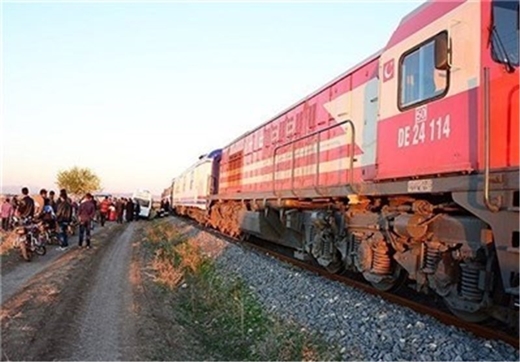
Iran on Thursday cancelled all trains to the Turkish capital in a bid to ensure the safety of passengers. This comes following a bomb attack on a railroad used by a train traveling from Turkey’s Ankara to the Iranian capital, Tehran.

Iran’s Rail Transportation Company (Raja) announced in a statement on Friday that it cancelled its train services to the neighboring country on Thursday, and will not dispatch any train to Ankara until Turkish authorities make official comments.

The statement came after a remote-controlled mine was detonated on a railroad line east of Turkey on Thursday, causing damage to a train traveling from Ankara to Tehran.

In its statement, Iran’s Raja has declared that the incident had no casualties and all passengers are safe and are returning to the country.

The Trans-Asian service was travelling between Genc in Turkey’s eastern province of Bingol and Suveren, Igdir province, when it was “targeted by suspected (Kurdistan Workers’ Party) PKK militants,” Bingol Governor Yavuz Selim Kosger told the Anadolu Agency.

The PKK has increased its operations inside the Turkish soil after Ankara’s air force attacked the Islamic State in Iraq and the Levant (ISIL) positions in Syria and Kurdish PKK militants in Northern Iraq over the last few days.

After the attack, an explosion hit the Iran-Turkey natural gas pipeline in the eastern Turkish province of Agrı on Monday. Iran stopped gas flow to that country immediately after being informed of the incident.

Iranian cleric raps US war rhetoric as “worn-out”

139404191740243305671264

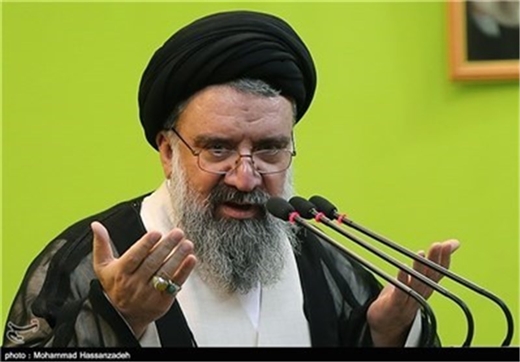
Tehran’s Friday Prayer Leader Ayatollah Ahmad Khatami slammed US officials for their repeated military threats against Iran, saying that Tehran’s response to such aggression would be crushing.

Back on July 25, US Secretary of State John Kerry said that US President Barack Obama “has made it pretty clear that Iran will not get a nuclear weapon. He’s prepared to use military force, if necessary, in order to prevent that.”

Speaking to a large congregation of worshippers in Tehran, Ayatollah Khatami referred to the remarks as “worn-out”, adding that the US officials have repeatedly made similar threats since the victory of the Islamic Revolution in 1979.

“We would not welcome any war, but if Americans want to try their chance once again, they should not hesitate,” he said, adding, “They may bring their warriors with aircraft, but they would return to their cities with coffins.”

“Even in ground offensive,” the Iranian cleric added “they (enemies) should know that the Islamic Republic of Iran would chase enemies deep into the enemy’s territory”.

Earlier in May, Supreme Leader of the Islamic Revolution Ayatollah Seyyed Ali Khamenei reaffirmed that the Iranian nation will not let any possible act of aggression against the country go unanswered.

The Leader said he has already made it clear, even when the former US president was in power, that “the era of hit and run has ended”, and that the Iranian nation will chase aggressors.

Taliban have no place in Iran security strategy: Envoy

bahrami

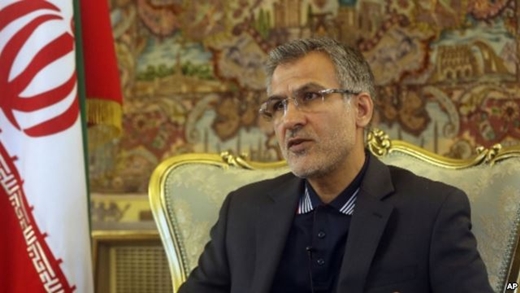
Iran’s Ambassador to Kabul has firmly denied claims that Tehran is cooperating with the Taliban to connect them with Russian officials in a bid to use the militia in the fight against IS terrorist group.

“Taliban have no place in our security strategy,” he told a meeting in Afghanistan Strategic Studies Center in Kabul on Thursday.

Bahrami said Iran does not accept words that “Enemy of your enemy is your friend”, and has many times announced it is not going to support extremism under any condition, because extremism is not controllable.

The dossier of IRNA’s martyred correspondent and eight Iranian diplomats in Mazar-Sharif is not closed yet, the envoy said, so it is evident that we have to maintain intelligence control and supervision on the Taliban.

As for Iran’s concern regarding filling of Salma dam’s reservoir, Bahrami said that all existing issues in bilateral relations between Iran and Afghanistan, including water, could serve as an element of joint cooperation.

He said, “We use this natural phenomenon and other issues as a tool to strengthen ties. We need to cooperate on different issues, among them water, transit, trade, electricity and fossil fuels.”

All these issues, he stressed, should be considered an opportunity; otherwise the game would not end in a win-win result.

When an Afghan reporter asked about Khuff-Herat railway project, Bahrami answered that the budget for the project has been approved and its construction has started, but tracks-laying has yet to be done.

Asked about a scenario in which the Iran nuclear deal is not executed and relations between Iran and the US move toward a conflict, and whether Iran would consider IS a threat and will cooperate with Afghanistan to fight against the group, Bahrami said, “Even if the agreement is not executed, we still consider the terrorist group a threat.”

On Tehran-New Delhi ties, Bahrami said that India will cooperate in developing Chabahar Port and that negotiations on Zahedan-Chabahar railway are underway, adding that the Chabahar project is not in contrast with any country’s interests.


The 11th government is landscaping Iran’s front yard, not the US backyard

20150616090233-1

The message the European officials’ Iran visits – following the conclusion of the Iran nuclear deal – carry is more political than economic: Europe has re-established its trust in Iran even before verifying Tehran’s compliance with the Vienna accord.

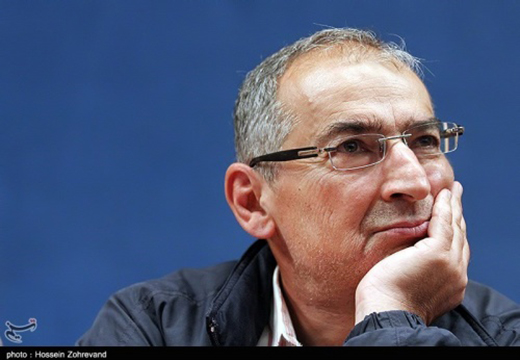
Sharq daily on July 30 published an opinion piece by Sadegh Zibakalam, a university professor and political analyst, on Iran’s growing international credibility following the conclusion of the historic Iran nuclear deal on July 14, saying that the world has started to develop trust in Iran thanks to the eleventh government’s sensible foreign policy.

In his piece, Zibakalam has taken a closer look at the reason behind trips by a number of high-ranking European officials to Tehran over the past weeks and the future visits by economic and trade delegations of Western countries, saying that it shows the Western side has rebuilt its trust in Iran.

Zibakalam, who is a fierce critic of former President Ahmadinejad’s policies and an active supporter of rapprochement with the West, refers to trips by German and French officials and the EU foreign policy chief to Iran and writes in his analysis that such trips – at this juncture – are not merely aimed at verifying how Iran honors its commitments under the deal it has clinched with P5+1 before the Implementation Day.

He says the political message of such trips is more important than their economic outcomes: Europe has trust in Iran even before the implementation of the Vienna accord and verification of Iran’s compliance with its end of the bargain. The following is the translation of excerpts from the piece:

Economic outcomes or political considerations

“Economy is an important factor, but the fact of the matter is that it is not all that matters. No doubt, enthusiasm by Westerners to resume ties with Tehran shows that they have other diplomatic considerations, chief among them, worsening security situation in the region. If we hypothetically consider the Middle East as a region between Afghanistan, to the east of Iran, and North Africa, we’ll see that stability and security are absent in so many places within the [hypothetical] borders of this vast expanse.

“Afghanistan has been hit by insecurity. Iraq is worse than Afghanistan. The situation in Syria is alarming. Saudi Arabia is grappling with a crisis sparked by the adventurism of the kingdom’s new generation of rulers. The future of Lebanon hangs in the balance. Egypt has been caught in an intense battle between its two main political and social columns: the Army and the Muslim Brotherhood.

“Libya – which is no longer like a [sovereign] country after the collapse of Muammar Gaddafi [its deposed dictator] – has been divided into several military, tribal and communal sections. Even in Turkey, clashes with ISIL terrorists and radical members of the Kurdistan Workers Party (PKK) are the only cloud on the horizon.

“Iran is the only country which enjoys remarkably high stability and security despite its domestic problems. It is the only country [in this region] where Western and non-Western travelers can peacefully visit historical sites and tourist attractions without fearing that their bus might go off any moment or that they may be targeted by suicide bombers.

“Regardless of Iran’s security and stability, Westerners have woken up to the fact that they have no other option but enter partnership with Iran if they really seek to work out a serious, long-term solution to regional problems. Or they have realized that in the absence of Iran, restoration of stability and security to Iraq, Syria and Yemen would be too costly – if not outright impossible.

“The emergence of radical groups which claim to seek to establish an Islamic caliphate in the Middle East has blurred the past demarcations. Not only does Iran not pose a threat to the West, but the West can and should count the blessings of Iran’s powerful presence in the region”.


In conclusion, Zibakalam once again makes a scathing review of the Ahmadinejad administration’s foreign policy and its international relations and says, “Instead of establishing a strong presence in the region, extending an olive branch to the world and holding out a hand of friendship to our neighbors in the region, the previous government insisted on establishing ties with nations thousands of kilometers away such as Venezuela – and the late Comrade Chavez – Bolivia, Nicaragua, El Salvador and the revolutionary Zimbabwe.

“By so doing, the previous government argued, ‘Iran has made it into the US backyard and denied the White House occupants a good, sound sleep!’ Despite its downsides, the eleventh government has – at least – displayed a good sign of realism and pragmatism on the foreign policy front.

“[President] Rouhani and [Foreign Minister] Zarif believe Iran belongs in this part of the world, not half a world away. They are trying to keep Iran’s own front yard neat and clean without any claim of ‘global management’ [a reference to Ahmadinejad’s catchphrase in criticizing the existing world order and calling for a new world order as well as insisting on Iran’s determining role in managing the world]”.