Friday, January 2, 2026
Home Blog Page 4794

Iran’s top commander supports JCPOA, UNSC resolution

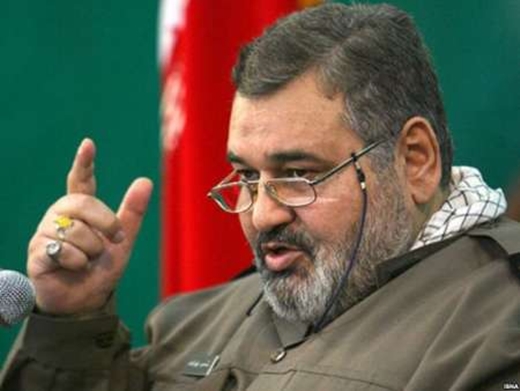
A top Iranian military official has enumerated over a dozen positive points of the nuclear conclusion reached between Iran and P5+1, and the related UN Security Council (UNSC) Resolution 2231, despite voicing concerns about possible “misinterpretations.”

In a statement on Saturday, Chief of Staff of the Iranian Armed Forces Major General Hassan Firouzabadi listed 16 advantages of the Joint Comprehensive Plan of Action (JCPOA) agreed by Iran and P5+1 – the United States, Britain, China, France, Russia and Germany – in the Austrian capital Vienna on July 14, and Resolution 2231 (2015) approved by the UNSC on July 20.

Firouzabadi, however, said Iran’s armed forces are profoundly concerned about the possible impacts of JCPOA and the resolution on Iran’s defense capabilities, and about the US officials’ “misinterpretations” of the texts to impose non-nuclear-related sanctions on Iran.

Referring to a positive point of the resolution, he said it asks all governments and regional and international bodies to “cooperate in facilitating the implementation of JCPOA” and do not hinder its enforcement.

He further noted that non-military cooperation between Iran and other countries is one of the issues included in JCPOA that has been neglected by those who criticize it.

The top commander also stressed that JCPOA and the resolution have recognized Iran’s right to enrich uranium, which was one of the sticking points between the Islamic Republic and its negotiating partners.

He also considered the removal of anti-Iran sanctions another positive aspect of JCPOA.

Under JCPOA, limits will be put on Iran’s nuclear activities in exchange for, among other things, the removal of all economic and financial bans against the Islamic Republic.

Pointing to another positive point, Firouzabadi said the principle of reciprocity of voluntary commitments has been observed in JCPOA.

He also praised members of the Iranian negotiating team for their honesty and sustained efforts during the marathon talks.

Judiciary chief underlines broadening judicial cooperation with Belarus

1788140

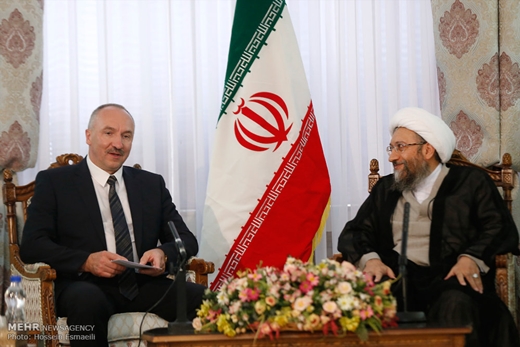
Judiciary Chief Ayatollah Sadegh Amoli Larijani on Saturday stressed the need for development of cooperation between Iran and Belarus in the field of human rights and fight on terrorism.

In a meeting with Prosecutor General of the Republic of Belarus Alexander Vladimirovich, he said that Iran-Belarus ties have posted good progress in recent years and they can further improve through mutual cooperation and proper planning.

Iran’s judiciary chief further said that the two sides should get familiar with each other’s judicial systems so that they can promote judicial and legal ties, calling for an exchange of specialized judicial delegations.

He also said that independence is the main feature of Iran’s judiciary.

Human rights and the fight against terrorism can be among the main areas of cooperation between the two countries, he said, noting that Belarus was also under pressure by the West for its independence and was accused of failure to accept human rights principles.

Amoli Larijani said that the Western governments have sought to impose the Western values such as human rights principles on independent nations.

Vladimirovich, for his part, voiced his country’s readiness to promote judicial and legal ties with Iran.

Congratulating Iran on its success in nuclear talks, he hoped that the two countries’ ties will further improve.

The Belarusian official expressed his government’s preparedness for removal of legal and judicial obstacles to boost bilateral economic cooperation.

France’s ADPI to invest in Iran airport projects

33ec4b03-18a0-447b-a288-d38385aafa1b

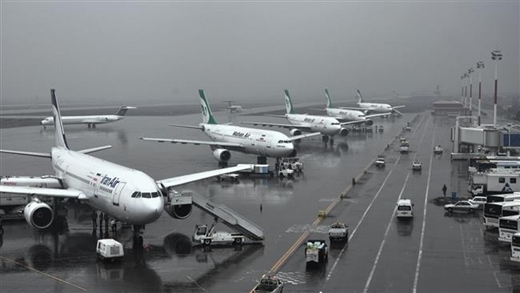
Iran says a leading French company specializing in airport architecture and engineering has voiced interest in the development of three key airport projects in the country.

Mohammad Khodakarami, the acting director of Iran’s Civil Aviation Organization (CAO), has told the domestic media that ADPI Group is already engaged in talks with Iranian officials over the expansion of Tehran’s Imam Khomeini International Airport (IKIA) as well as the development of Mashhad and Shiraz airports.

Khodakarami said a delegation from ADPI will soon arrive in Tehran to discuss the technicalities of the company’s planned investments in Iran.

The official added that Iran has already presented the investment potential of the three airport projects to the experts of the company who were in the country last week.

He said ADPI is accordingly expected to study the three projects and submit its proposals to the related aviation authorities.

Last October, the media reported that Iran plans a $2.8 billion expansion of IKIA and that France’s Bouygues SA and ADPI are among companies to express interest.

IKIA, about 40 kilometers southwest of Tehran, has a capacity for 6 million air travelers a year. Iranian officials say a plan to expand the airport envisages the construction of a new terminal with the capacity to handle 20 million passengers in a year.

This is seen as part of wider plans by Iran to position itself as the leading hub for cargo transportation and the second in passenger transportation in the Middle East.

A look at Iranian newspaper front pages on August 9

Iranian Newspapers Headlines

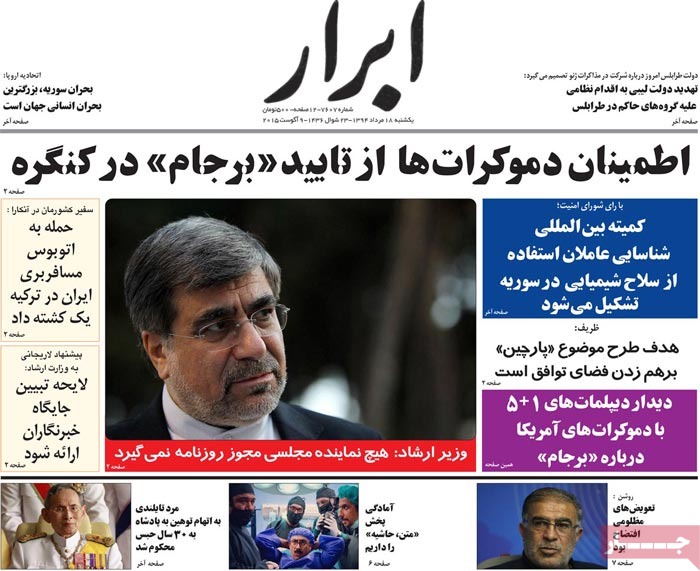
The comments the minister of culture and Islamic guidance made at a ceremony to mark Reporter’s Day dominated the front pages of Iranians newspapers on Sunday. Reformist-leaning dailies also gave front-page coverage to the “propaganda blitz” launched by hardliners against Ayatollah Hashemi Rafsanjani for his announcement that he is running for the Assembly of Experts.


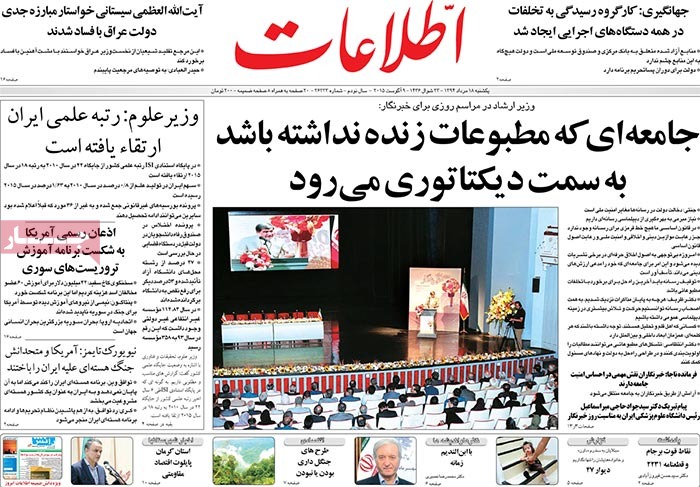
Ettela’at: “In the absence of lively media, societies drift toward dictatorship,” the minister of culture and Islamic guidance told a ceremony marking Reporter’s Day.

Ali Jannati further said that government intervention in media outlets runs counter to national security.

The police chief, meanwhile, said reporters play a very important role in promoting a sense of security in society.


Abrar: “Parliament deputies won’t be issued a license to launch their own newspapers,” said the minister of culture and Islamic Guidance.
 

A look at Iranian newspaper front pages on August 9


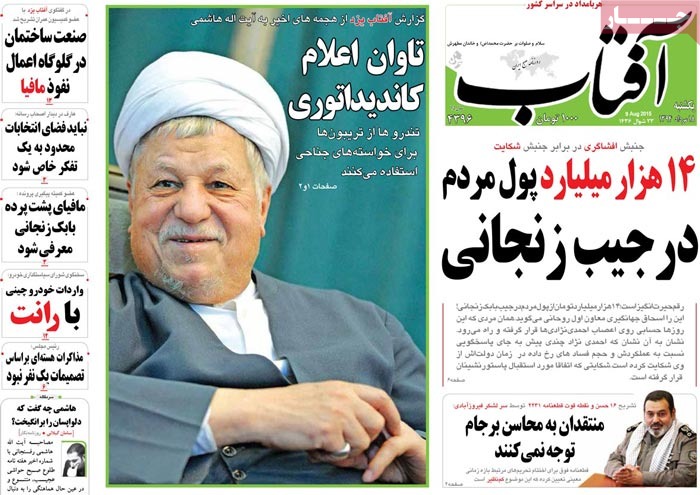
Aftab-e Yazd: The price [Ayatollah Rafsanjani has to pay] for fielding his candidacy [for upcoming elections for the Assembly of Experts]

The daily has a report on the propaganda blitz launched against the chairman of the Expediency Council after he said he would run for the assembly.

Aftab-e Yazd: “One single individual did not make decisions on nuclear talks,” Parliament Speaker Ali Larijani said.

Aftab-e Yazd: “The critics of the Joint Comprehensive Plan of Action fail to pay attention to positive aspects of the deal,” said the chief of staff of the armed forces.
 

A look at Iranian newspaper front pages on August 9


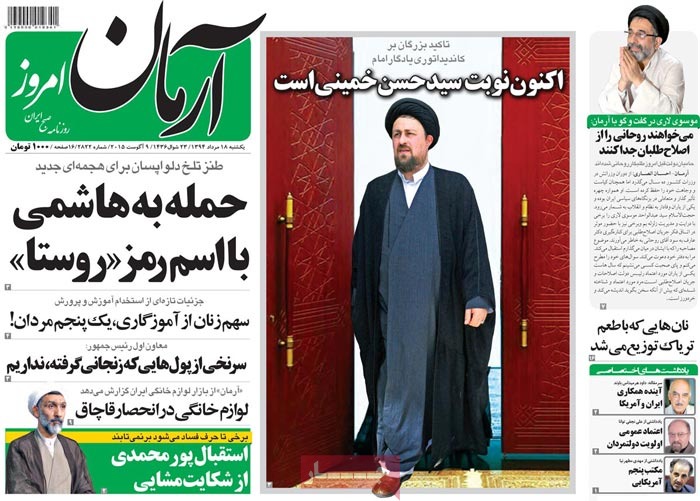
Arman-e Emrooz: The first vice-president has said that there are no leads about the money received by Babak Zanjani [a young billionaire who stands accused of committing massive embezzlement when Ahmadinejad was in office].

Arman-e Emrooz: The justice minister has welcomed the lawsuit Rahim Mashaei [a close confidant of Ahmadinejad] has filed against him.

Mostafa Pourmohammadi said some individuals do not tolerate others talk about corruption.
 

A look at Iranian newspaper front pages on August 9


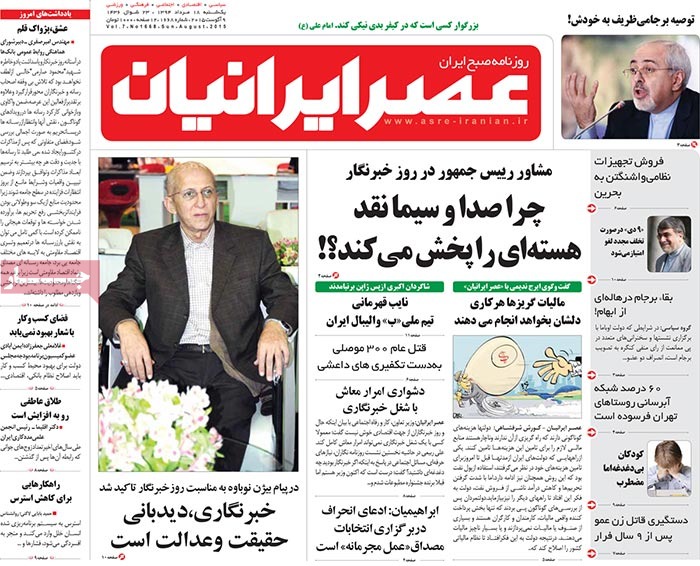
Asr-e Iranian: “Why does IRIB [state-run radio and TV organization] air programs critical of the nuclear deal?” asked an aide to President Rouhani.
 

A look at Iranian newspaper front pages on August 9


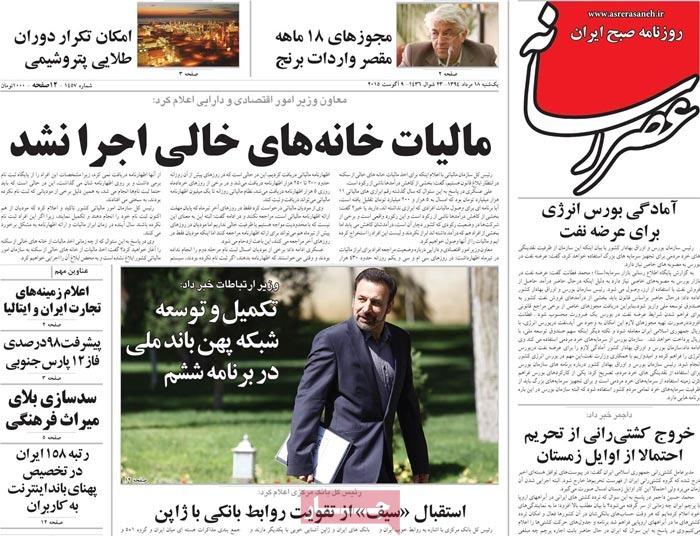
Asr-e Rasaneh: Phase 12 of South Pars gas field is 98 percent complete.
 

A look at Iranian newspaper front pages on August 9


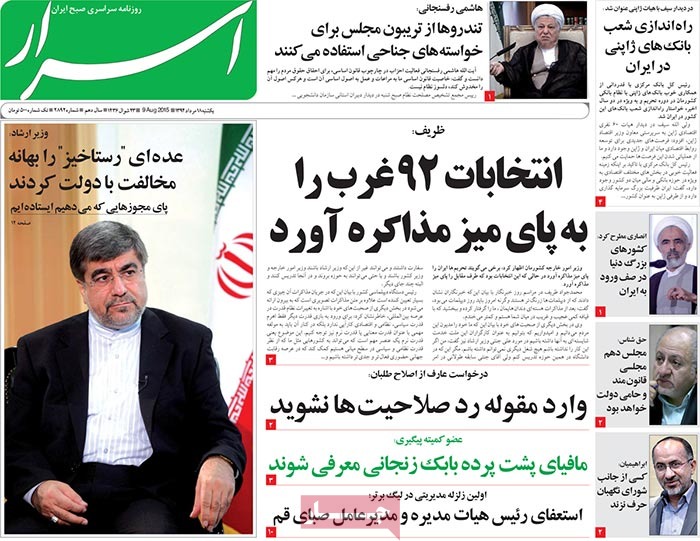
Asrar: “Hardliners are using parliament floor to push their factional agenda,” said the chairman of the Expediency Council.

Asrar: A meeting between the governor of the Central Bank of Iran and a visiting Japanese delegation has looked, among other things, into the issue of Japanese banks setting up branches in Iran.

Asrar: “It was the 2013 election [which saw Hassan Rouhani elected as president] that brought the West to the negotiating table,” Foreign Minister Zarif said.
 

A look at Iranian newspaper front pages on August 9


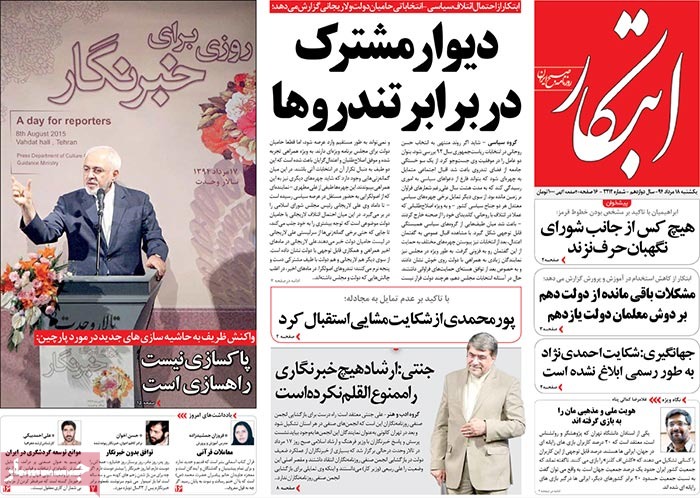
Ebtekar: A jointly-built wall against [principlist] hardliners

The supporters of the Rouhani administration may form a political-electoral coalition with Parliament Speaker Ali Larijani [a principlist himself].

Ebtekar: “No one has the right to speak for the Guardian Council,” said the spokesman of the council which vets candidates for general elections.

Nejatollah Ebrahimian further said that the red lines are well defined.
 

A look at Iranian newspaper front pages on August 9


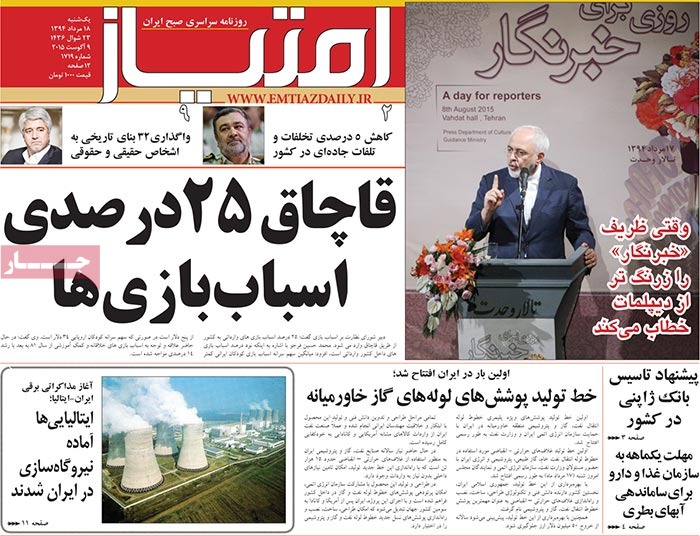
Emtiaz: The Italians are ready to build power plants in Iran.

Emtiaz: The police chief has said that road fatalities are down by five percent.
 

A look at Iranian newspaper front pages on August 9


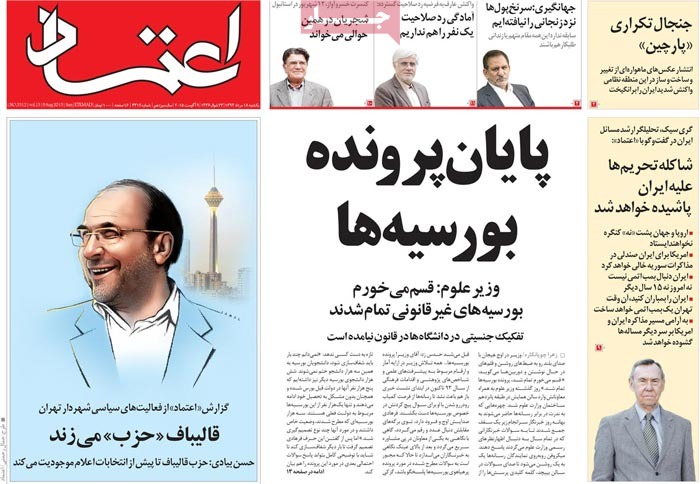
Etemad: Tehran Mayor Mohammad Bagher Ghalibaf is to launch a new political party.

Etemad: The case involving scholarships granted to unqualified individuals [when Ahmadinejad was president] is now closed.

The science minister has said he swears unauthorized scholarships no longer exist.
 

A look at Iranian newspaper front pages on August 9


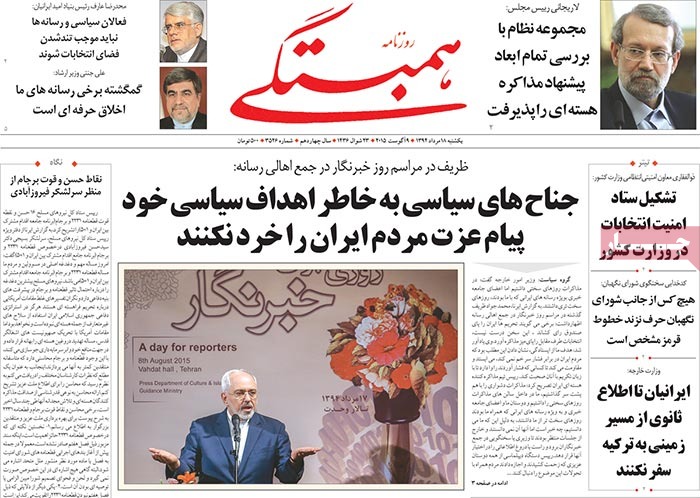
Hambastegi: Foreign Minister Zarif has advised political parties against trampling on the message of the Iranian nation’s glory simply for their own political goals.
 

A look at Iranian newspaper front pages on August 9


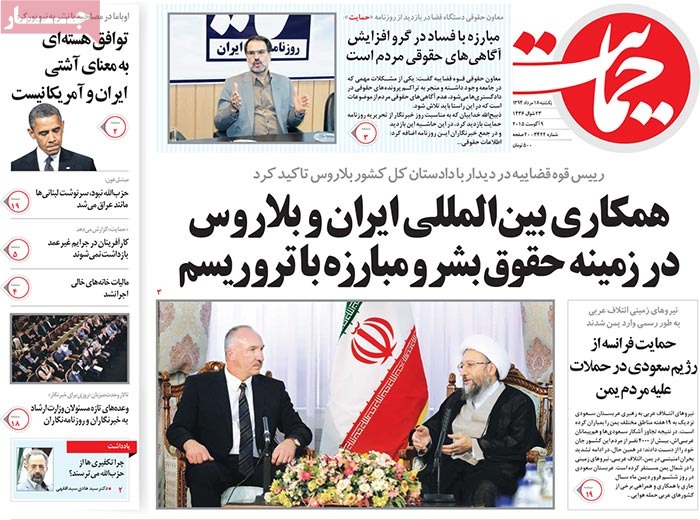
Hemayat: At a meeting with the Belarusian attorney general, the Iranian Judiciary chief has underlined bilateral cooperation on human rights and the fight against terrorism.
 

A look at Iranian newspaper front pages on August 9


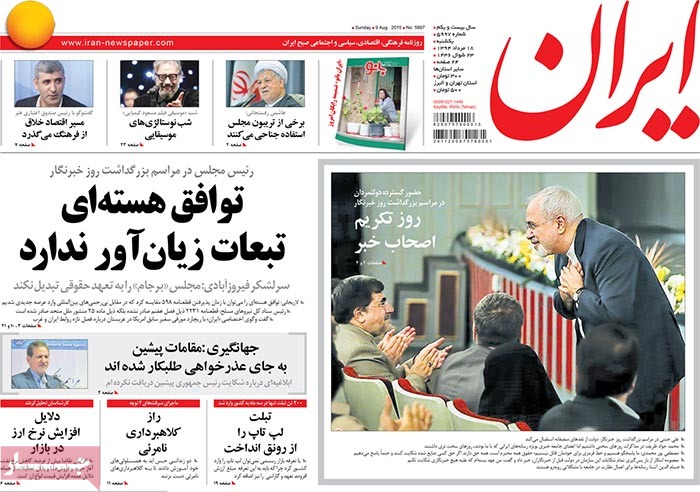
Iran: “The nuclear deal is not going to have harmful consequences,” said Parliament Speaker Ali Larijani in a speech at a ceremony to mark Reporter’s Day.
 

A look at Iranian newspaper front pages on August 9


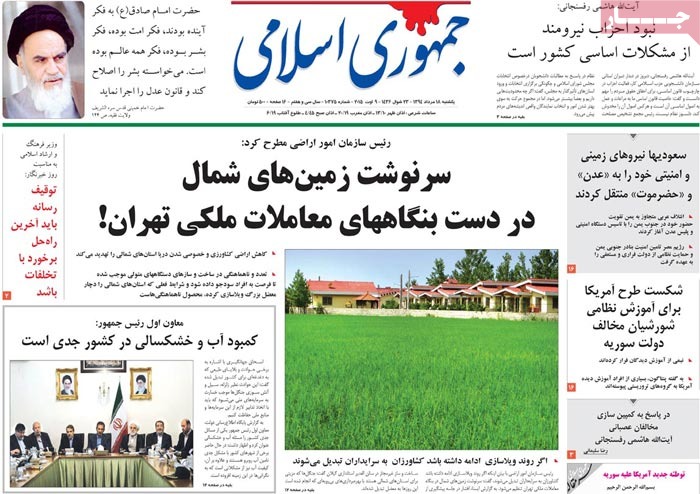
Jomhouri Islami: “Absence of powerful parties is a major problem the country is suffering from,” said Ayatollah Akbar Hashemi Rafsanjani.

Jomhouri Islami: “Water scarcity and drought are very serious problems,” said the first vice-president.
 

A look at Iranian newspaper front pages on August 9


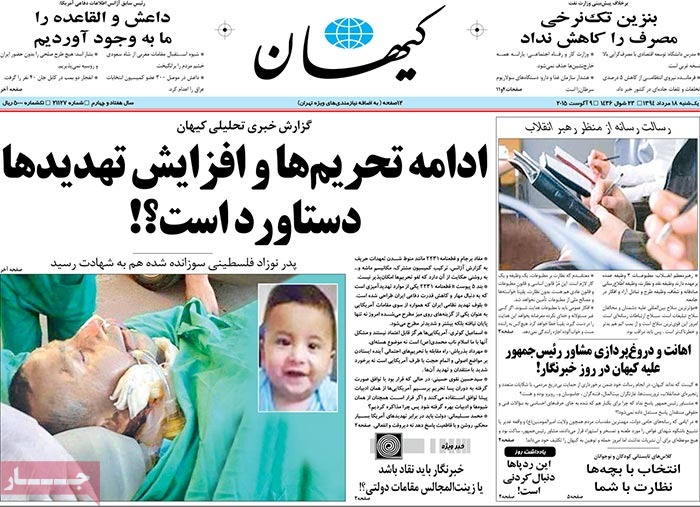
Kayhan: You call continued sanctions and an uptick in threats an achievement?

[The daily has come out swinging again, targeting the nuclear deal Iran and P5+1 struck in Vienna last month.]
 

A look at Iranian newspaper front pages on August 9


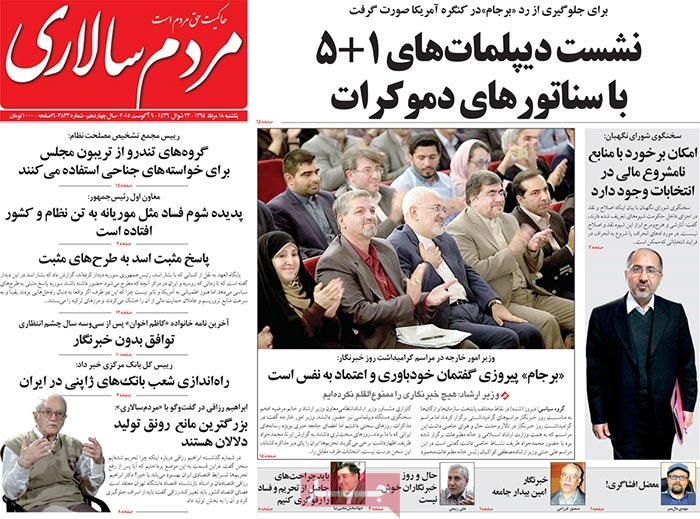
Mardomsalari: “The Joint Comprehensive Plan of Action was a victory for the discourse of self-confidence,” said Foreign Minister Mohammad Javad Zarif.
 

A look at Iranian newspaper front pages on August 9


Rooyesh Mellat: Reports that [the commander of IRGC’s Quds Force Major General] Ghasem Soleimani has visited Russia have proved controversial.
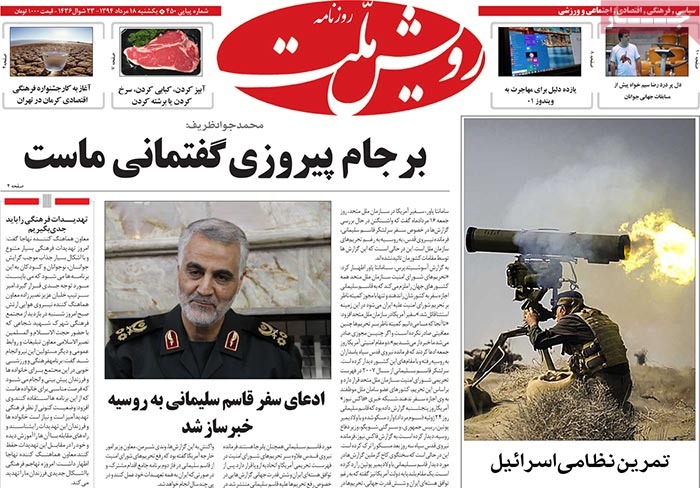
 

A look at Iranian newspaper front pages on August 9


Setareh Sobh: Iran lost to Japan 3-1 to finish second in the Asian Volleyball Championships.
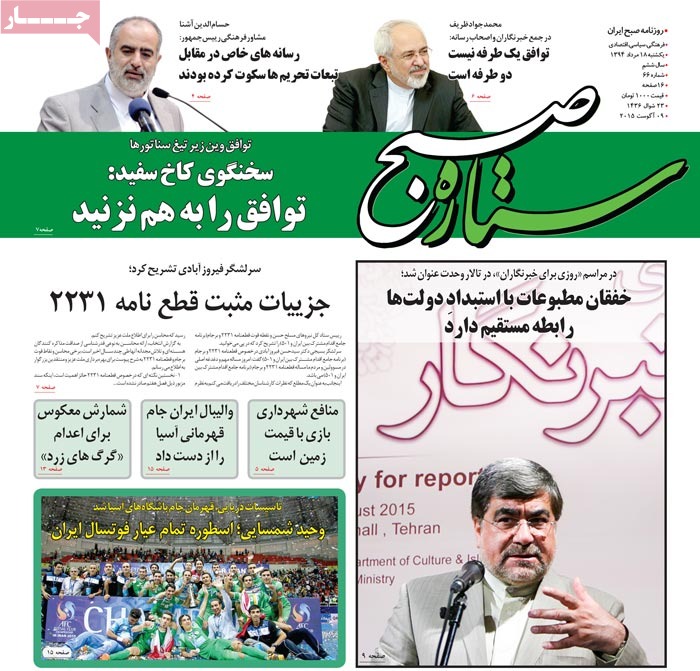
 

A look at Iranian newspaper front pages on August 9


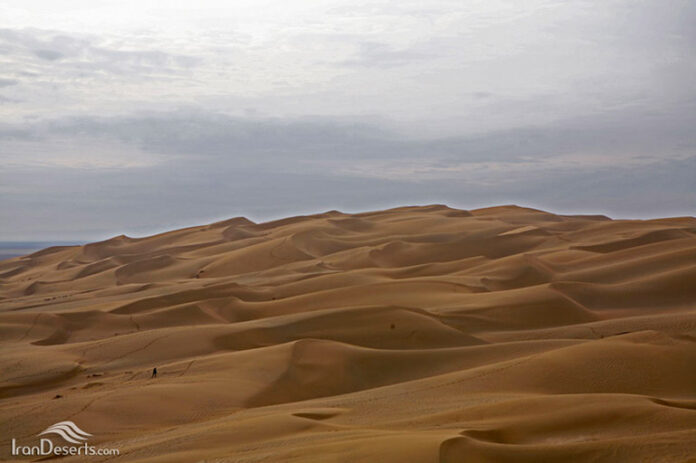
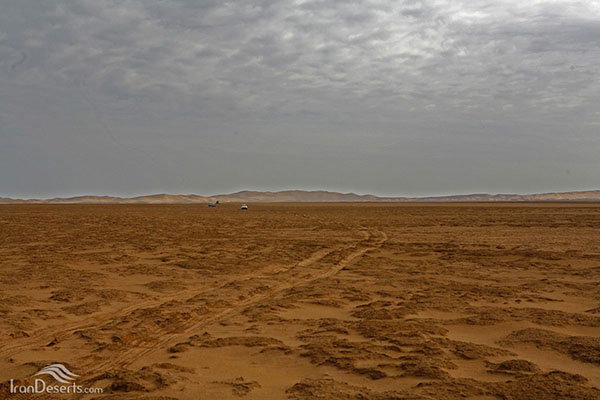
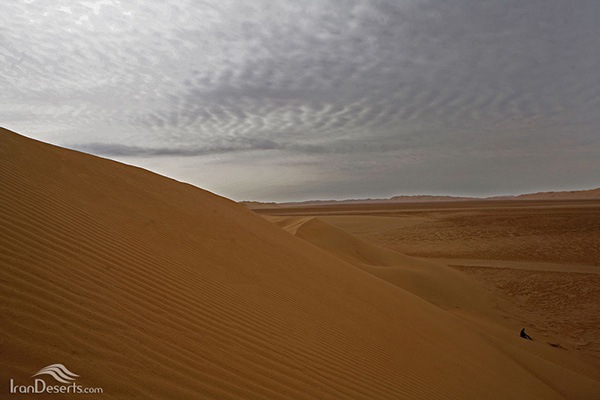
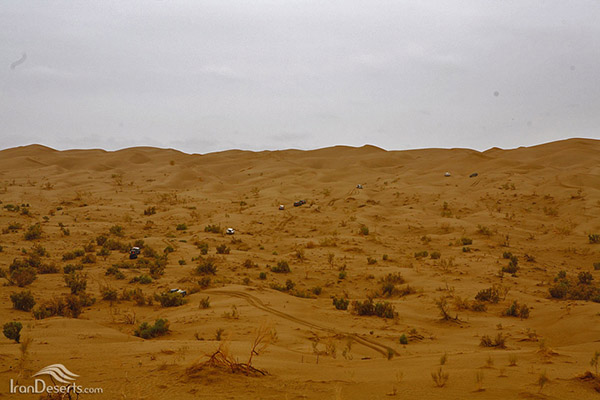
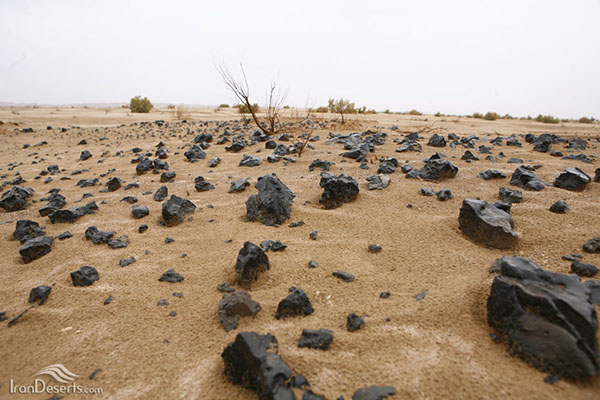
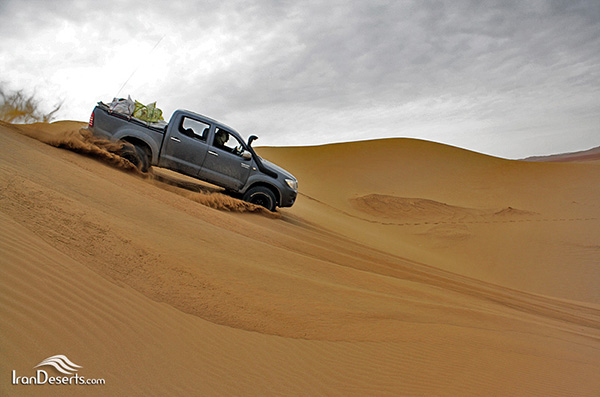
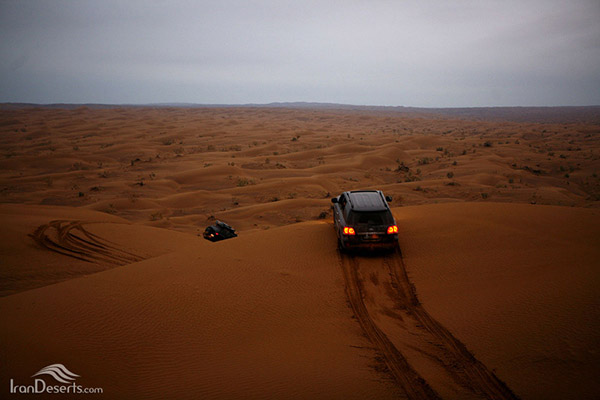
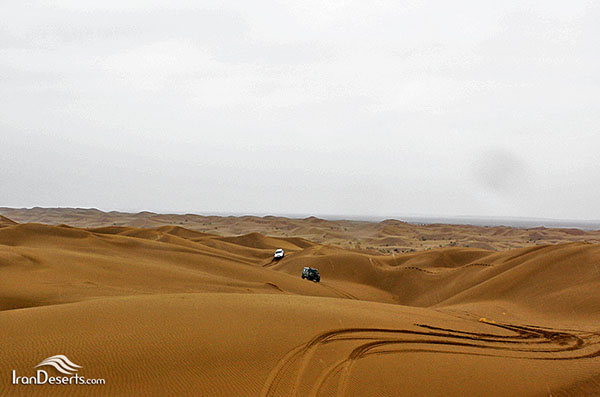
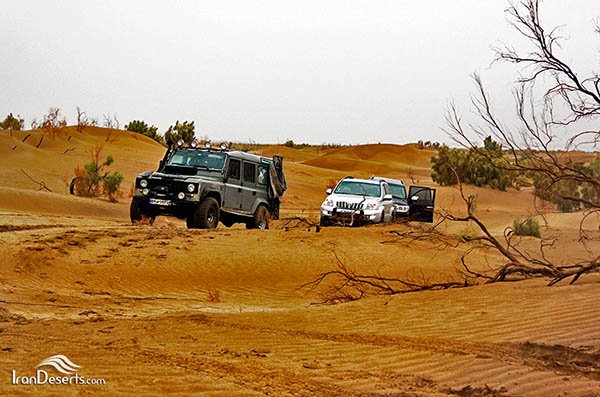
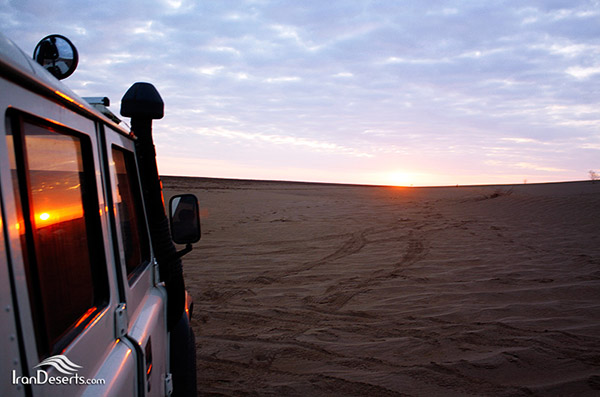
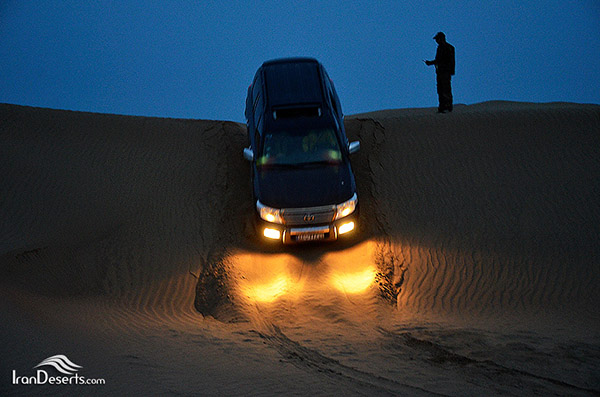
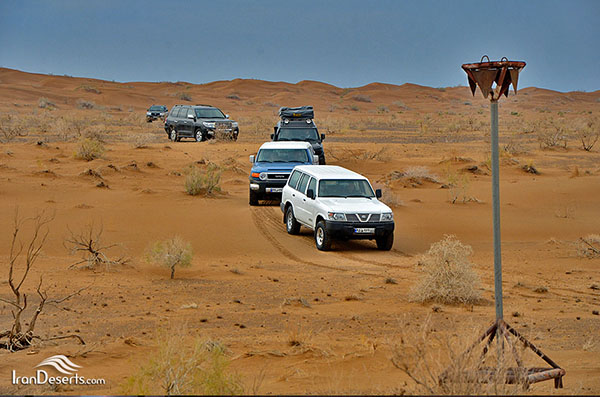
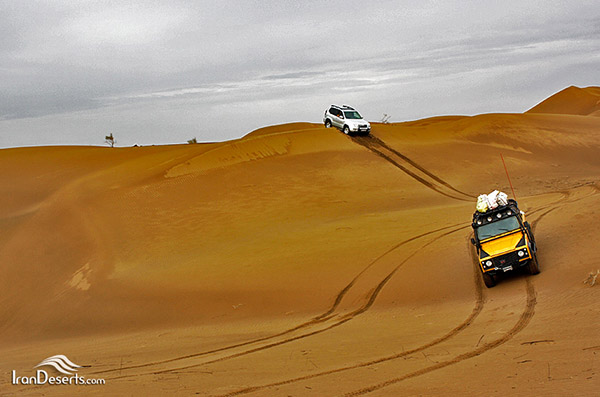
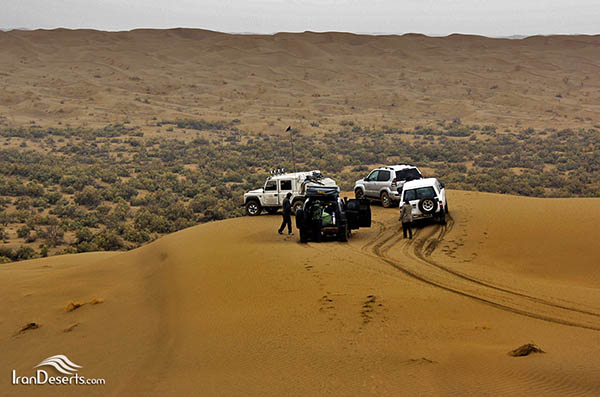
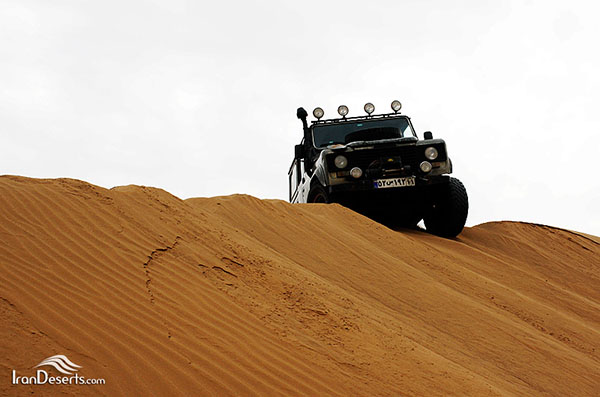
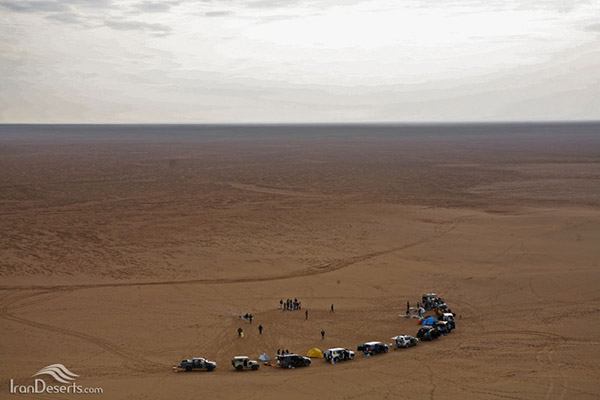
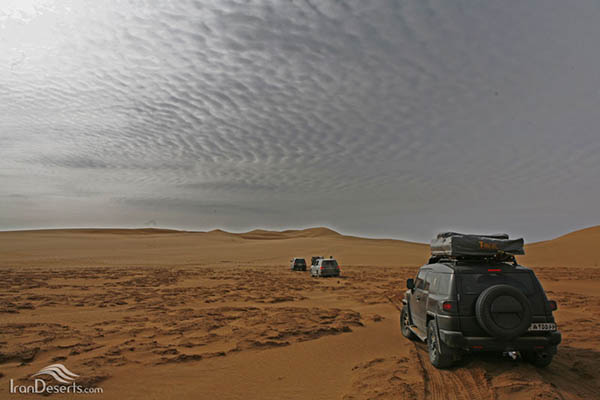
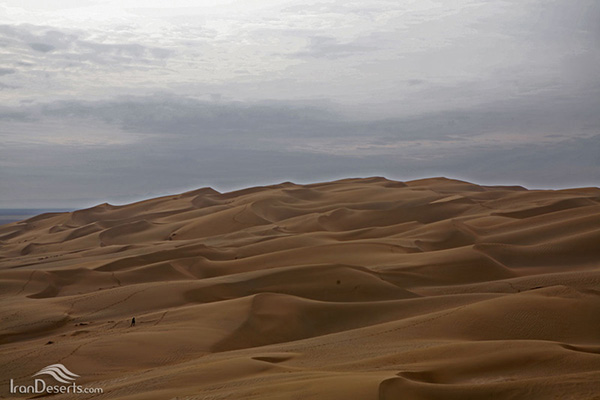
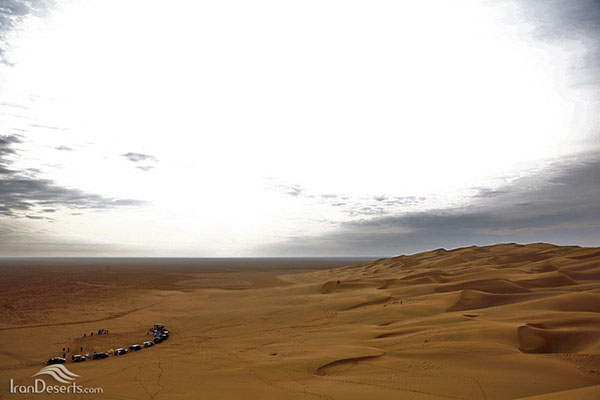
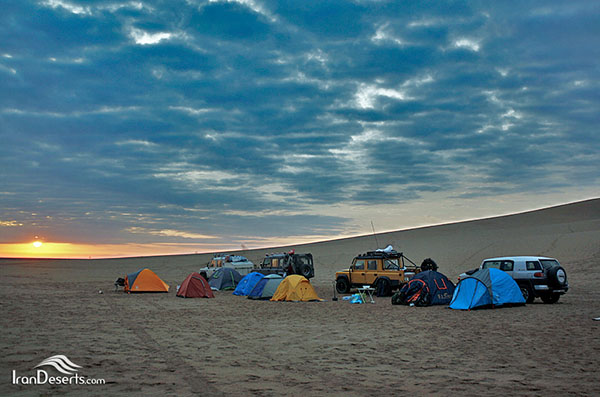
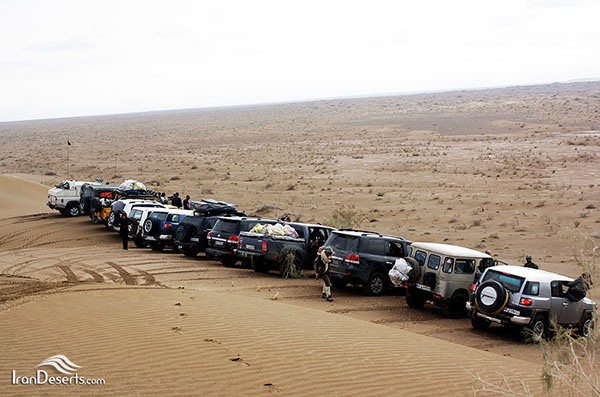
Mystery of Rig-e Jenn, Iran’s most unknown spot (PHOTOS)

Rig-e Jenn00

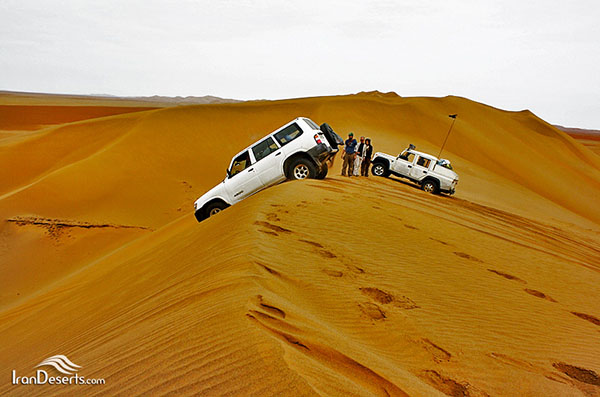
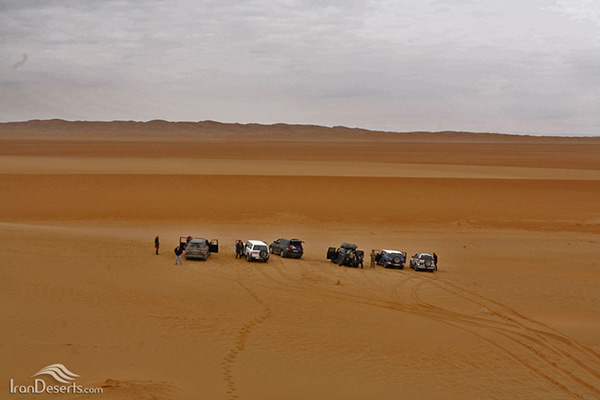
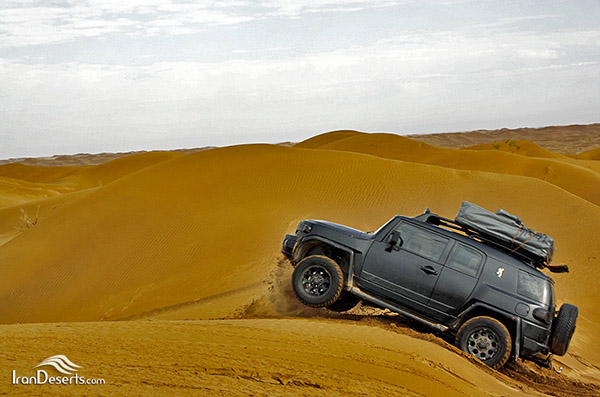
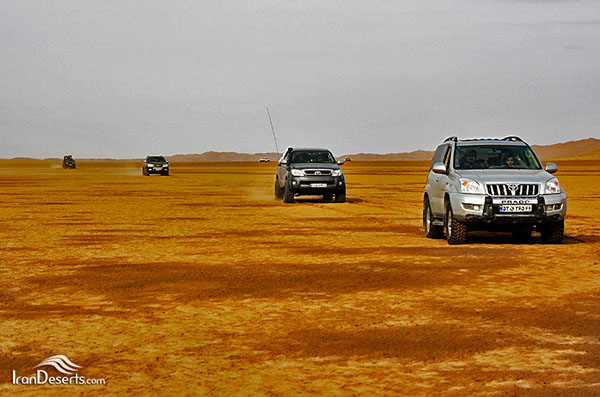
Rig-e Jenn is a vast area [3,800 square km] of sand dunes and salt marshes at the heart of Dasht-e Kavir, a large desert in the middle of the Iranian plateau.

The area is one of the most impassable areas in the world. That’s why it was avoided by caravan travelers in the past. There are no routes or villages in Rig-e Jenn and except for a handful of researchers, no one has ever traveled there.

The area was believed to be a cursed region which housed demons and evil spirits; residents of nearby towns and villages still hold similar ideas about the place and narrate stories about its mystery. It is widely believed that whoever sets foot in Rig-e Jenn will die or disappear.

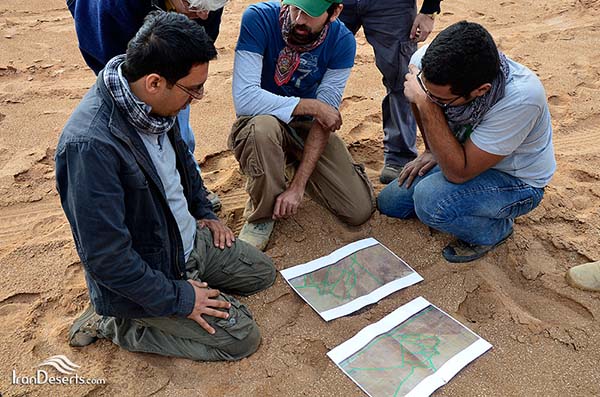
Sven Anders Hedin, a Swedish topographer and explorer, who visited Iran in 1900, avoided Rig-e Jenn. But, Alfons Gabriel, an Austrian geographer and travel writer, traveled across the area in 1930.

Ali Parsa, a Sharif University of Technology graduate in computing science, succeeded in passing through the area with a small group of companions ten years ago.

Although such trips have unraveled some of the mysteries about the area, there is still a lot left to be explored.

Rig-e Jenn is covered with salt marshes which have probably swallowed up many who wished to explore it.

A vast surface of the area is devoid of flora and fauna. Although little information is available about its plants and wildlife, sightings of scorpions, phrynocephaluses [medium-sized agamid lizards], chinkaras and Persian onagers in nearby areas have been reported.

Snapshots of Rig-e Jenn by Mehdi Najari posted online birandeserts.com:

Iran’s foreign minister dismisses US media claim on Parchin site

d490b1e9-d9f3-46ff-9b55-51b7ec95dd3c

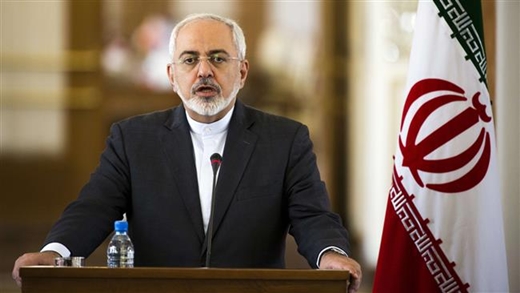
Iranian Foreign Minister Mohammad Javad Zarif has dismissed recent reports in the US media about nuclear-related activities at the Parchin military site, located near the capital, Tehran.

On August 5, the US intelligence community claimed that Iran has been working to clean up Parchin military site to remove traces of alleged nuclear activities there, Bloomberg View reported. The report said satellite imagery showed that Iran had deployed bulldozers and other heavy machinery to the site.

The Iranian foreign minister on Saturday rejected the claim as “false,” saying such reports are aimed at “disrupting the climate of understanding” between Iran and the P5+1 group of countries on the Islamic Republic’s nuclear work.

“We have announced that road construction has been carried out at the site,” Zarif said, adding that the “lie” by the US media will be exposed to the world public opinion in the near future.

In a statement released in New York on August 6, Iran’s Permanent Mission to the UN also dismissed the claim as “ridiculous.”

“Parchin military site is a vast area which includes various military, industrial, administrative and residential divisions, and thus construction operations are naturally and frequently conducted there,” read the statement.

The mission said recent construction work in the area has nothing to do with the military site, adding that heavy machinery had been deployed near Parchin in order to repair the adjacent road.

On July 14, Iran and P5+1 – the United States, Britain, France, Russia and China plus Germany – finalized the text of an agreement, dubbed the Joint Comprehensive Plan of Action (JCPOA), in Vienna.

On the same day, Iran and the International Atomic Energy Agency (IAEA) signed a roadmap for “the clarification of past and present issues” regarding Iran’s nuclear program in the Austrian capital.

Highlights of Ettela’at newspaper on August 9

Ettelaat

 “In the absence of lively media, societies drift toward dictatorship,” the minister of culture and Islamic guidance told a ceremony marking Reporter’s Day.

Ali Jannati further said that government intervention in media outlets runs counter to national security.

The police chief, meanwhile, said reporters play a very important role in promoting a sense of security in society.

 The first vice-president has said that a workgroup has been formed to look into offenses committed in executive bodies.
Eshagh Jahangiri further said that government has worked out plans for the post-sanctions era.

 In Iraq Grand Ayatollah Al-Sistani has called for a serious fight against corruption.

Following the appeal by the senior Shiite cleric, the Iraqi prime minister said he would comply with instructions issued by the sources of emulation.

 “Iran’s scientific ranking has improved,” said the minister of science, research and technology.

Iran’s share of science production has risen from 0.8 percent in 2010 to 1.63 percent in 2015, he said.

 The US has officially admitted that its plan to train Syrian opposition terrorists has failed.

The White House press secretary has said the US spent $42 million on training 60 Syrian opposition fighters, but the plan failed.

 The New York Times has reported that the US and its allies have lost the nuclear war to Iran.

The daily has said the Vienna accord slows down Iran’s nuclear program, but does not end it.


Iran loses to Japan in Asian Volleyball Championship final

13940510135554645793294

Iran lost to Japan 3-1 (17–25, 22–25, 25–18, 22–25) in the 18th Asian Senior Men’s Volleyball Championship final matchon Saturday.

Iran took part in the competition with its second team as the main team is preparing for the 2015 FIVB Volleyball Men’s World Cup which will be held from September 8 to 23 in Japan.

“First of all, I congratulate Japan for the title. We are not here to win the title. We wanted to field our young players to gain experience for the upcoming events,” Iran coach Peyman Akbari said after the match.

“I am satisfied with our performance in the competition. It’s Iran’s third team and we had just 20 days to prepare the team,” he added.

China finished in third place after defeating Qatar 3-2 (25–23, 25–19, 21–25, 24–26, 15–9).

A total of 18 editions have already been held, Japan has won eight titles, followed respectively by Korea (4), China (3), Iran (2) and Australia (1).

Italy’s Fata inks $543 million Iran power deal

Engineering unit of Finmeccanica

According to a spokesman for the Italian defense group, the deal was signed during Italian Foreign Minister Paolo Gentiloni’s visit to Tehran earlier this week at the head of a delegation of government officials and business leaders.

During the visit, Italy agreed to provide funding and insurance coverage for industrial, construction and infrastructure projects worth at least 3 billion euros in Iran.

“By the next three years, a credit line of at least 3 billion euros will be opened for the implementation of important projects in Iran,” Italy’s Economic Development Minister Federica Guidi said in Tehran.

For the projects, Italy’s investment bank Mediobanca and its development ministry and export credit agency SACE signed an MoU with Iran’s economy ministry and central bank.

The memorandum will be executed upon the removal of the sanctions, with Mediobanca providing credit and SACE insurance for projects in Iran.

On Saturday, Eni Chief Executive Claudio Descalzi was quoted as saying that his company was looking to resuming oil sales from Iran.

“Iran’s oil is highly desirable for our refineries and Eni welcomes purchasing crude from Iran after the annulment of sanctions,” the Iranian Ministry of Petroleum’s Shana news outlet quoted him as saying in Tehran.

Descalzi accompanied FM Paolo Gentiloni and Italy’s Economic Development Minister Federica Guidi in the visit to Tehran.

Eni reportedly seeks to return to the Darkhovin oilfield which it left in 2010 to avoid US sanctions for business with Iran.

“We are currently examining the situation and awaiting the annulment of the sanctions. But it is still early to talk about which projects we want or which companies we want to cooperate with,” Shana quoted Descalzi as saying.

Different things led to conclusion of the deal: Diplomat (PART TWO)

farhangnews_136159-389575-1437800893

Iran and P5+1 know, beyond a shadow of a doubt, that nuclear talks, especially the home stretch of the talks over the past two years, are unprecedented in relations between Iran and world powers, Hamid Baidinejad, an Iranian diplomat who was part of the expert team representing Iran in grueling talks with P5+1 said.

He went on to say, “If someone other than President Rouhani had been in charge of the talks, we wouldn’t have been able to come this far.”

The following is the translation (PART TWO) of an excerpt of the comments made by this Iranian diplomat – who spent the two months leading to the July 14 deal away from Iran – in an interview with the Iranian Students’ News Agency (ISNA). The original story was headlined “It was only Rouhani who could lead the talks this way.”

– The ten-year period was important to us. We wanted to know from the very beginning when Iran’s nuclear case will be taken off the agenda of the UN Security Council. We are happy to see that the period is close to what we wanted; it was not an easy job, though. They [P5+1] insisted on a 20-year period, putting forward a 20+10-year-period proposal: 20 years for the agreement and 10 years for transparency measures. In all, that would have added up to 30 years.

We wanted a single-digit figure [for this period]. Logically, we thought we needed such a period to get prepared for going through the industrial phase. We saw nothing wrong in the inspections [regime] and the timeframe for taking transparency measures, because in the Additional Protocol too inspections have no time limits. As long as you are a member of the Safeguards and the Protocol, you have to accept inspections. What mattered for us was a limited time for enrichment restrictions.

– The fact is that the nuclear industry has undergone enormous change over the past 10 to 15 years with many nuclear states changing their policies. Russia has turned into a powerhouse in production of reactors, making many nuclear reactors, including for European countries. Conversely, a number of European countries, France included, are dumping the production of reactors and investing in other areas instead. Some European countries such as Germany, Switzerland and Austria have adopted policies to get rid of nuclear energy.

Cooperation on the nuclear front is tough because of restrictions [in ties] between Iran and the US. Iran-US nuclear cooperation seems likely within the framework of Iran-P5+1 relations, because of [severed] diplomatic ties between the two countries.

– Iran has proposed that it discuss the settlement of the so-called PMD [possible military dimensions] with the IAEA outside the Joint Comprehensive Plan of Action (JCPOA) but in close consultation with P5+1 members, because it is an issue between Iran and the UN nuclear agency.

There is a reference to November 2011 [IAEA] report in JCPOA, something which has been raised in the agency’s reports over the past few years. Iran has never accepted the IAEA’s claims [in this regard], but the agency is now ready to put an end to this question and have an eye to the future.

To settle this question, we follow the model set in Resolution 2231. Iran and the IAEA have agreed to continue cooperation; the agency’s director general reports the result of cooperation to the Board of Governors which will issue a resolution to close the chapter on the issue by the end of 2015.

What Iran has agreed to as far as the question of Parchin goes has been under the direct supervision of the Supreme National Security Council whose decisions will be ultimately communicated to relevant institutions. As high-ranking Iranian officials have put it, Iran will not agree to inspection of its military sites; the arrangements made to solve the past and present [outstanding] issues do not constitute a go-ahead for inspections in Parchin.

– Based on the available information, chances are not high for rejection of the deal in the US Congress at this stage, because Congress needs a two-thirds majority of the votes if it seeks to override Obama’s veto. This seems unlikely thanks to the current political makeup on Capitol Hill. If this [an override of the president’s veto] happened, we need to wait and see how other members of the UN Security Council and P5+1 would react. The US administration has shown that it believes in and supports the Iran deal. If it fails to form the consensus it needs at home, we should wait and see what approach it will adopt [down the road].

The Europeans always said they would not follow the decisions of the US Congress if it tried to undermine such a consensus. How the Europeans will react to the US failure to build a consensus remains to be seen. Iran’s stance will be tied to such parameters and we cannot talk about it now. What matters is the fact that all political and legal tools are available for Iran to show the proper reaction.

– The Americans used to say that Iran should not expect them to lift the sanctions on airplane purchases, which is a non-nuclear sanction. European companies too were not allowed to sell planes to Iran because the plane engines were made in the US. The Iranian negotiating team took this issue [plane purchase] into account from the beginning of the talks and dedicated a space to it in the Geneva agreement. During the talks, Mr. Kerry promised to raise this issue with his respective government and solve it. The question was solved due to Iran’s serious efforts.

– The US team was the strictest member of P5+1 [in nuclear talks]. The Americans had become familiar with Iran’s stances following different rounds of lengthy talks and had learned about Iran’s red lines.

They repeatedly tested Iran’s stance. As a result, the talks were extended several times and dragged out, with the Americans hoping that Iran would budge at the eleventh hour. But they realized that we remained steadfast in our stances and this helped them develop a more tangible understanding of Iran’s stances. All things considered, I should say that professional negotiators were on nuclear teams from different [P5+1] countries who were trying to push the agenda of their respective countries.

France pursued its national principles and stances as far as certain questions were concerned. In some cases, they would strongly defend their positions and this caused delays [in the conclusion of a deal], but it is far from real if we assume that France derailed the Geneva agreement, for example. France was acting within the framework of P5+1 and the European Union. By and large, a collective mindset prevailed in P5+1.

– It was around 23:00 p.m. on Monday (July 13) that almost all main parts of the deal had been decided upon, but there were still some details which had to be included in the text. There were discussions between the two sides on the very details and this placed added strain [on the parties to the talks]. An arms embargo was the question which had been finally decided on [with the negotiators] agreeing to turn the embargo into five-year restriction. It was also decided that the Security Council give the green light for [Iran’s] arms purchases if needed. With this formula and a few basic questions at hand, everything was almost done for reaching an agreement.

Other issues together with piecing together a joint statement of Iran and P5+1 were left to be dealt with the following day, and finally at 10:00 a.m. [local time] on Tuesday (July 14) the participating teams headed for the European headquarters of the UN in Vienna for the announcement of the result of nuclear talks [the Iran nuclear deal].