Thursday, December 25, 2025
Home Blog Page 4778

Iran’s dependence on oil hitting record low: Rouhani

Rouhani-Iran

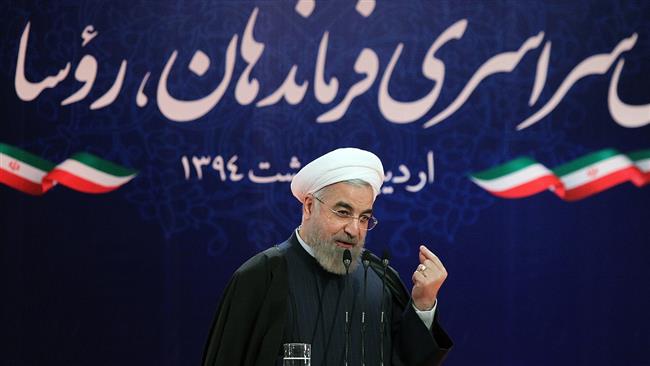
Iranian President Hassan Rouhani says the country’s dependence on oil revenues will drop to its lowest level ever in the current Iranian year (which began on March 21).

Addressing commanders of police and security forces in Tehran on Saturday, Rouhani said that his administration succeeded in fulfilling its commitments over the past two years despite financial problems caused as a result of sanctions imposed on the country over its nuclear program and a slash in oil prices.

He added that some neighboring countries have hatched a plot to reduce oil prices, but their move has backfired on them.

The Iranian president noted that his administration has also managed to increase the budget for the country’s development over the past two years.

Iran holds the world’s fourth-largest proven crude oil reserves and the second-largest natural gas reserves.

Oil prices have nearly halved since the summer of 2014, and currently stand slightly above 60 dollars per barrel.

Rouhani further said poverty and unemployment are major causes of insecurity in society and called for eradicating them.

He added that all Iranian citizens are equal before the law, saying, “Civil rights are the same for all. All are Iranians and equal to the law.”

Rouhani emphasized that all those who are residing in Iran, including tourists, enjoy safety thanks to efforts by the Iranian police personnel.

He called on the police to cooperate with the administration in achieving economic prosperity and progress.

The president went on to say that it is not the police’s responsibility to enforce Islam, but that the force should implement the law. Otherwise, police will get mired in mental trouble and will entangle people in trouble too, the president added.

In comments aimed at police officials, the president said, “Try to see all people as equals and treat them equally in order to raise you favorability in society. This can also earn you divine consent and public satisfaction”.
Disputes can be solved through negotiations: Larijani

US, reactionary allies behind ISIL crimes in Iraq: Larijani

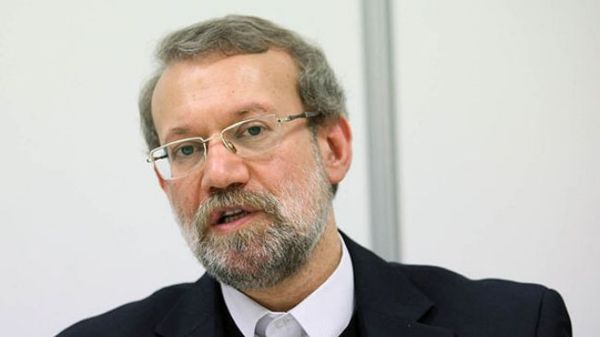
Parliament Speaker Ali Larijani said in Shahrud on Thursday that negotiations will iron out ambiguities in nuclear issue.

Addressing a ceremony to commemorate 1,027 martyrs, Larijani said it is for 10 years that Iran faces Western adventurism in the nuclear issue despite its demand to settle disputes through talks.

He said Westerns should admit they had made a mistake and Iran does not deserve getting treated this way.

He went on to say that nuclear talks are complicated, needing maximum care.

Iran blasts Saudi obstruction of aid to Yemen, plane interception

Iran Foriegn ministery

Iran’s Foreign Ministry has summoned Saudi Arabia’s chargé d’affaires in Tehran to express its protest over Riyadh’s interception of an Iranian aid flight to war-wracked Yemen.

Saudi Arabia’s most senior diplomat in Tehran was summoned on Friday after Saudi fighter jets prevented an Iranian plane, which was carrying medical aid, from entering the Yemeni airspace.

This is while the Iranian Red Crescent Society (IRCS) had obtained the necessary permission to fly in the Oman-Yemen route and send a plane in coordination with the International Committee of the Red Cross (ICRC) in order to fly Yemeni patients back to Iran and distribute medical aid to the injured in the impoverished Arab country, an Iranian Foreign Ministry official said.

He added that the Saudi fighter jets intercepted the Iranian plane and forced them to return to Iran.

The official described the move as a blatant interference in Yemen’s internal affairs and said the Islamic Republic would proceed with its efforts to help the Yemeni people and treat those wounded in the Saudi aggression against Yemen.

In another development, Iran’s Deputy Foreign Minister for Arab and African Affairs Hossein Amir Abdollahian has reprimanded Saudi Arabia for refusing to allow the delivery of humanitarian aid to the Yemeni people who sustained injuries during the kingdom’s airstrikes on its impoverished neighbor.

“Saudi Arabia does not help with efforts to deliver humanitarian aid and transfer of injured Yemenis for treatment,” Amir Abdollahian said in a telephone conversation with President of the International Committee of the Red Cross (ICRC) Peter Maurer on Friday.

The Iranian official called on the international community to take stronger action to dispatch humanitarian aid to Yemen, given the deteriorating human situation in the impoverished Arab country.

He added that Saudi Arabia has continued its military campaign against the country.

The senior Foreign Ministry official noted that two Iranian airplanes carrying humanitarian aid and medicine as well as the injured Yemenis, who have been treated in Iran, left for Yemen over the past two days after obtaining legal permission, but they were forced to turn back following Saudi Arabia’s “illegal interference.”

The official once again expressed the Islamic Republic’s readiness to cooperate with international organizations and send humanitarian aid and medicine to the “defenseless” Yemeni people.

Maurer, for his part, said the ICRC has made great efforts to deliver aid to the Yemeni people and held close consultations with Saudi Arabia after the announcement of the end of war in Yemen.

The ICRC president, however, added that the distribution of aid in Yemen requires the complete end of military operation in the crisis-hit country.

He noted that the ICRC is seeking a secure way to channel aid to Yemen and transfer the injured.

The phone conversation came after Saudi fighter jets intercepted an Iranian airplane with humanitarian aid to Yemen and prevented it from entering the Yemeni airspace.

Saudi Arabia launched its aerial campaign against Yemen on March 26 – without a United Nations mandate – in a bid to undermine the Houthi Ansarullah movement and to restore power to the country’s fugitive former president, Abd Rabbuh Mansur Hadi, a staunch ally of Riyadh.

On April 21, Riyadh announced the end of the first phase of its unlawful military operation, which claimed the lives of nearly 1,000 people in 27 days. However, airstrikes have continued with Saudi bombers targeting different areas across the country.

The Saudi aggression against Yemen has claimed the lives of more than 100 children over the past month, according to the United Nations Children’s Fund (UNICEF).

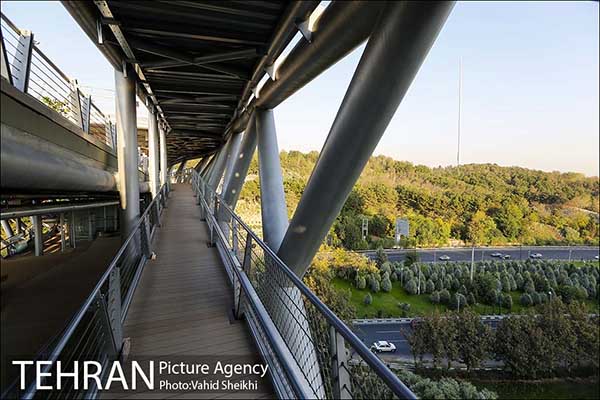
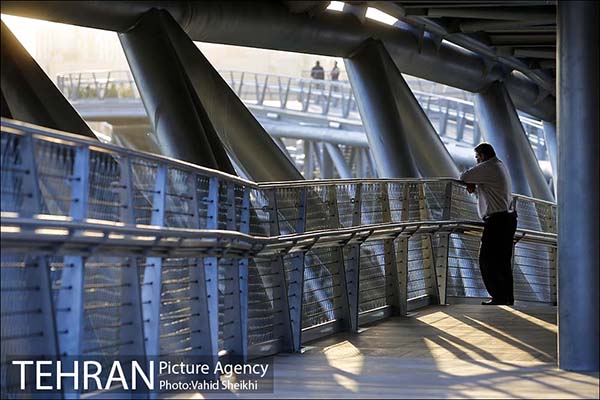
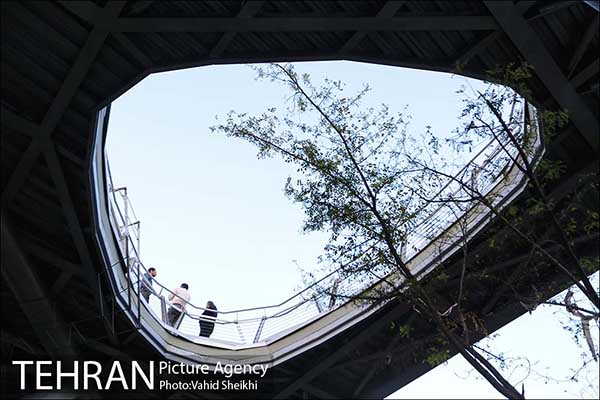
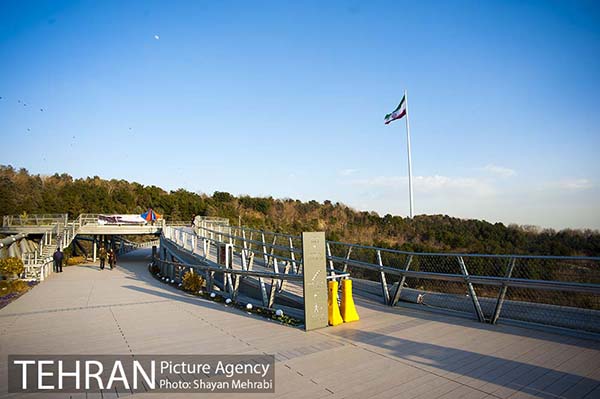
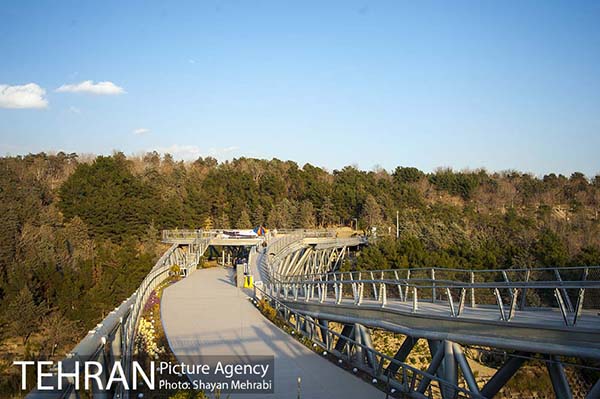
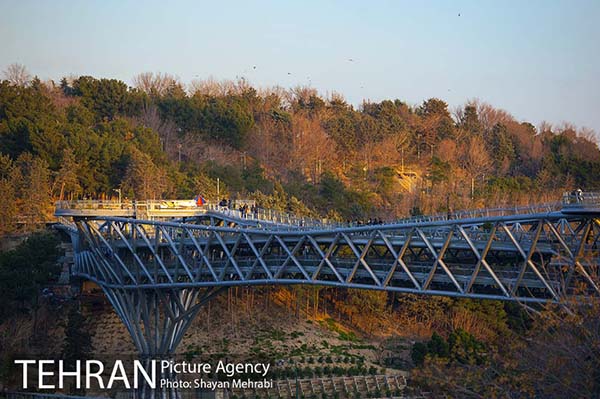
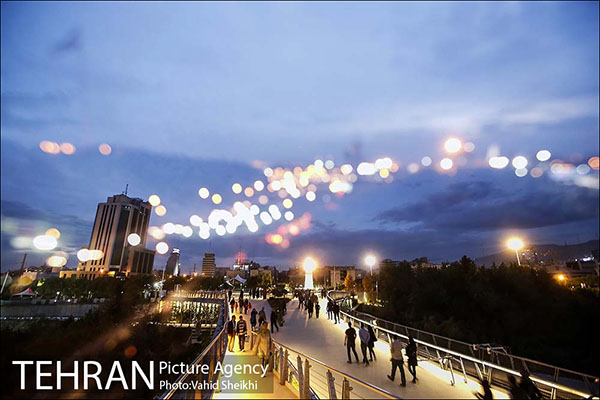
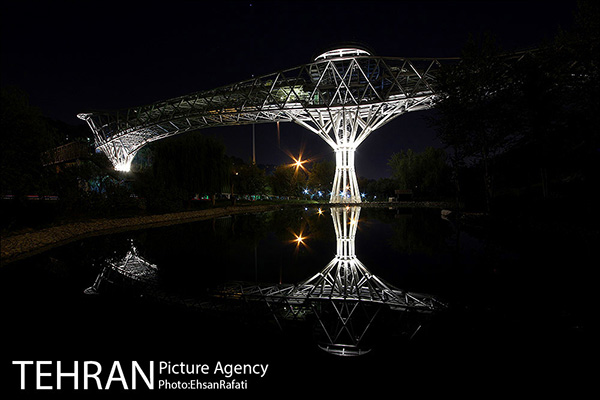
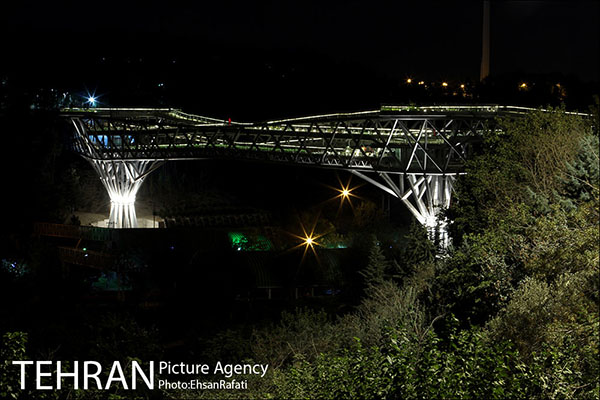
Nature Bridge in Tehran; the awarded structure of 2015

Nature Pedestrian Bridge

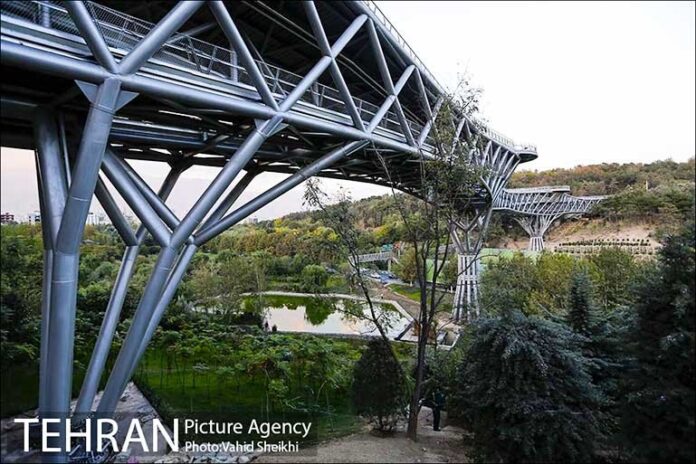
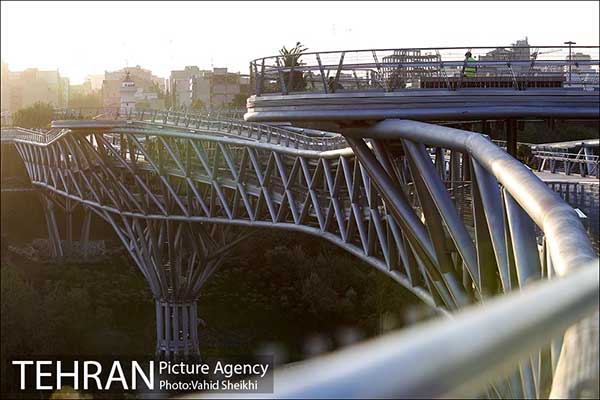
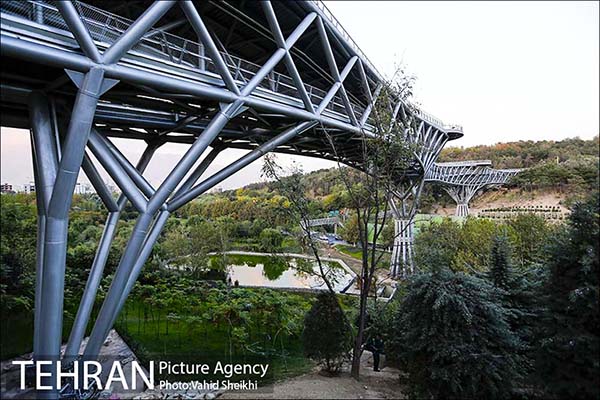
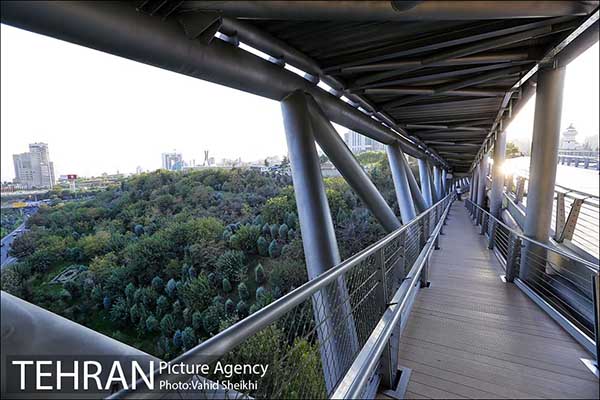
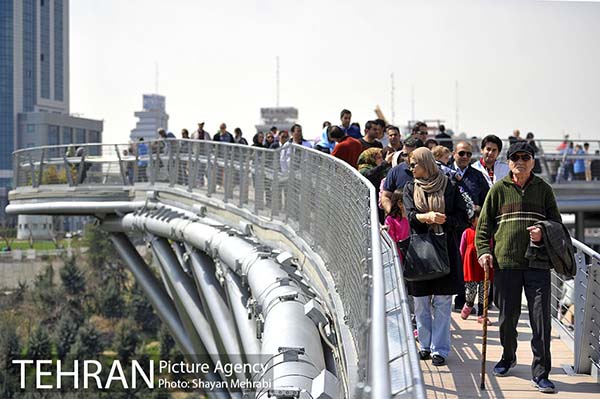
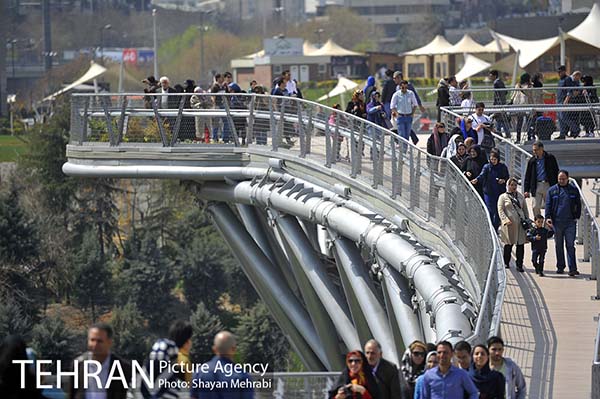
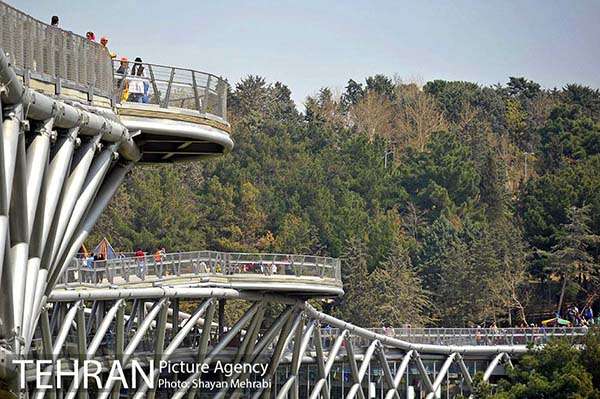
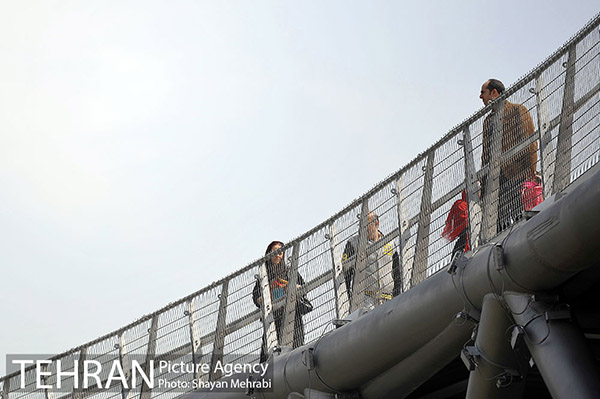
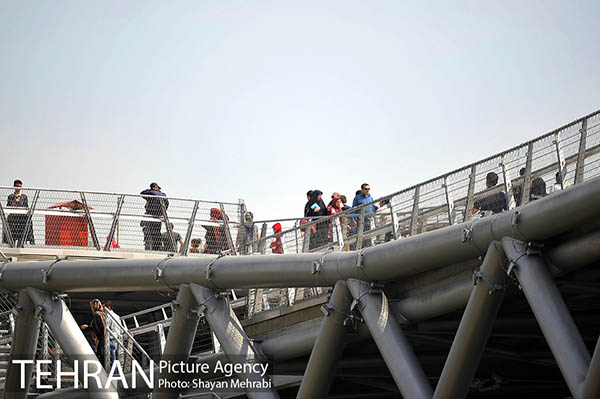
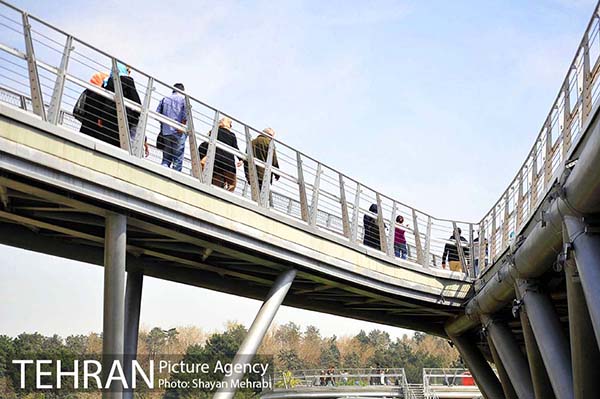
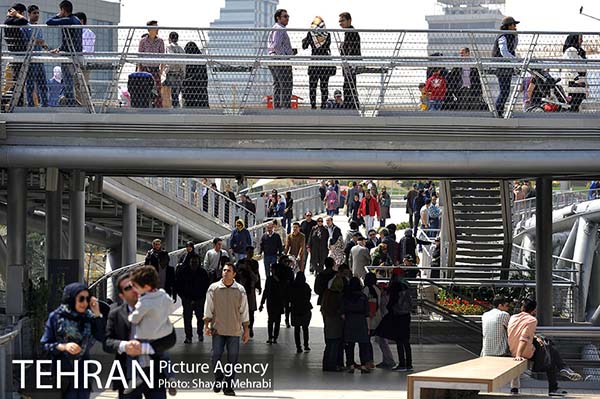
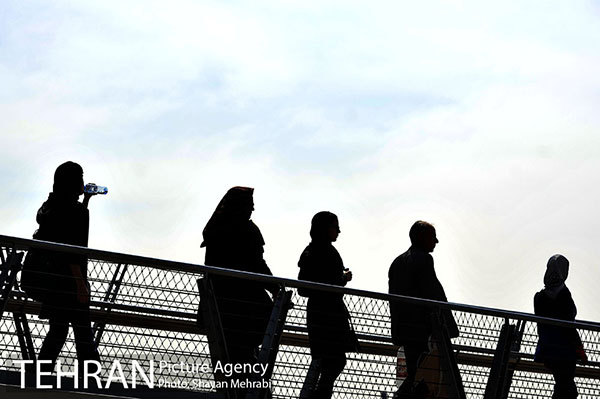
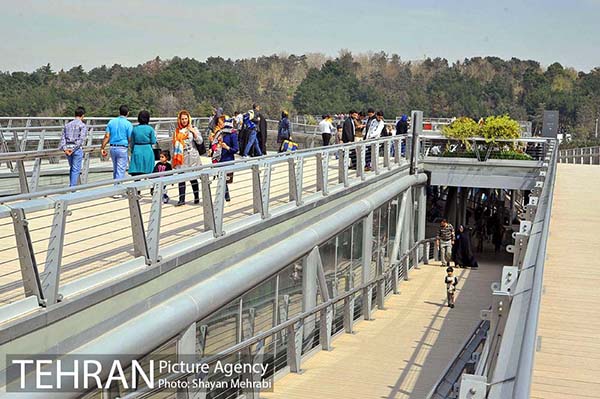
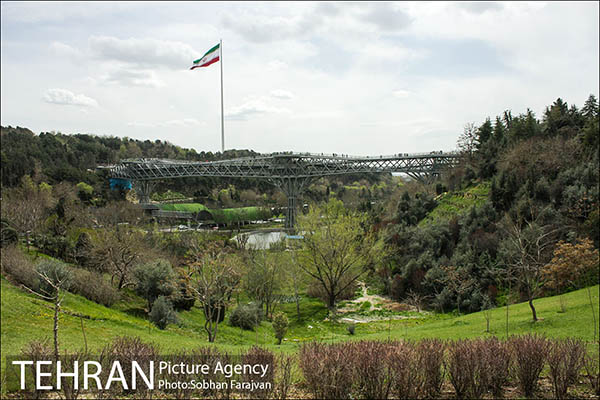
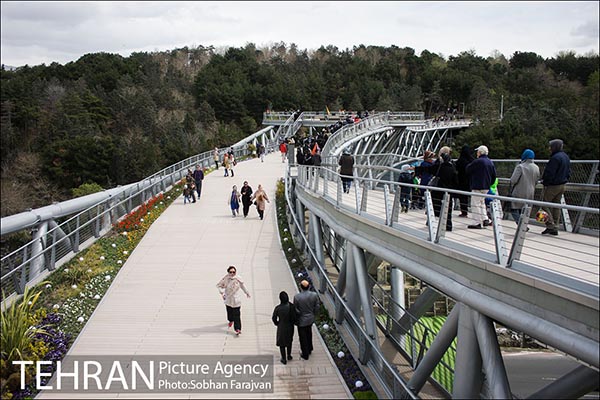
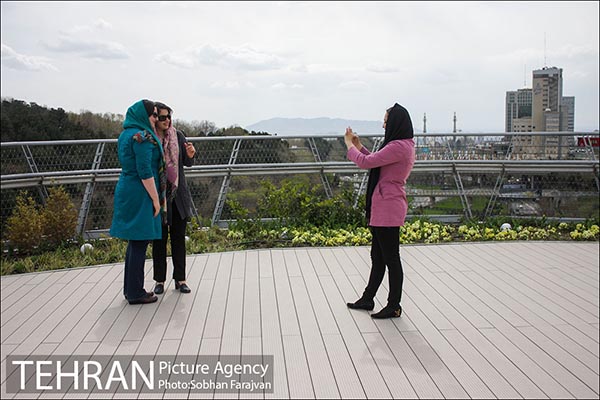
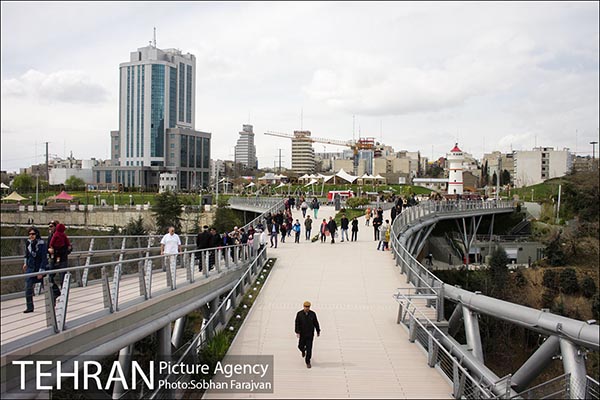
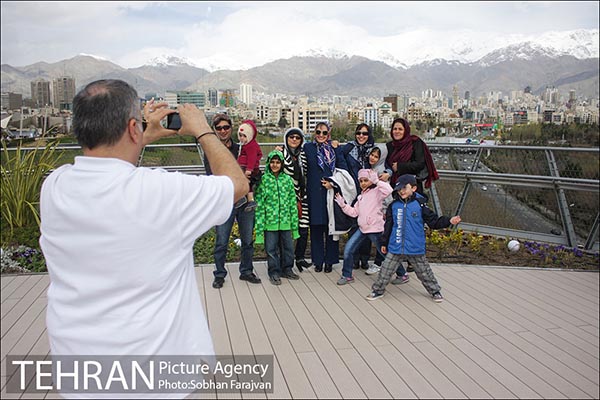
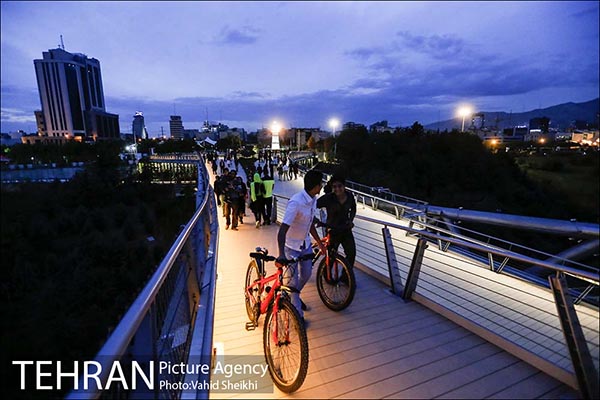
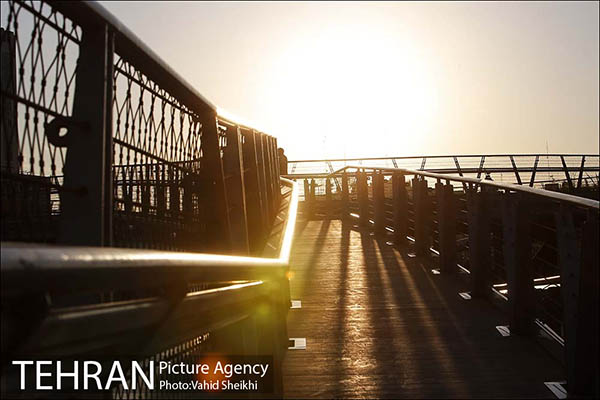
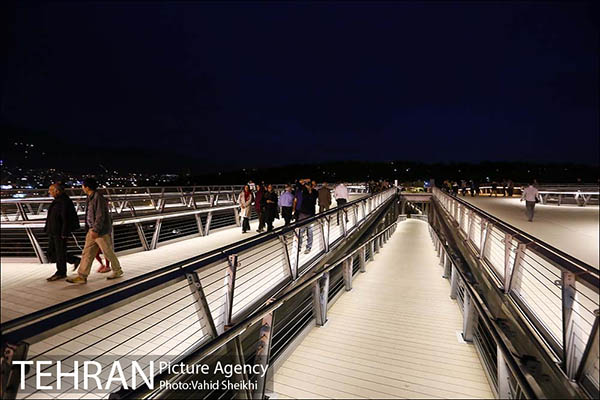
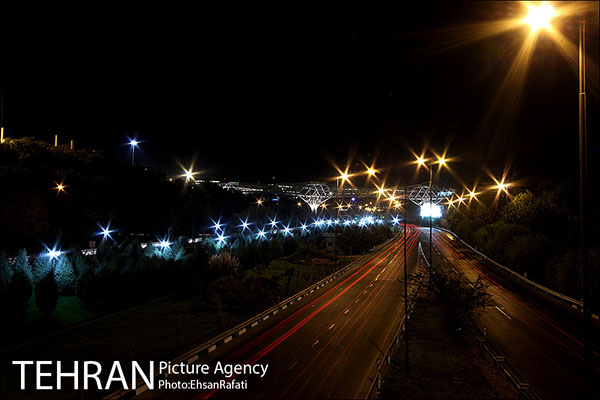
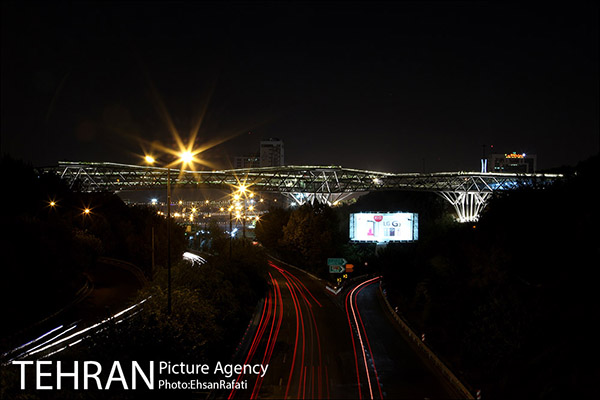
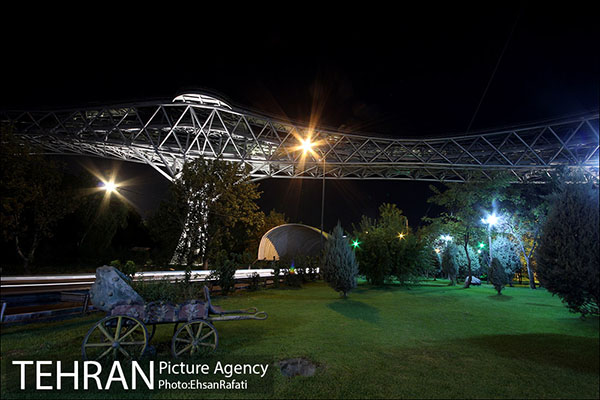
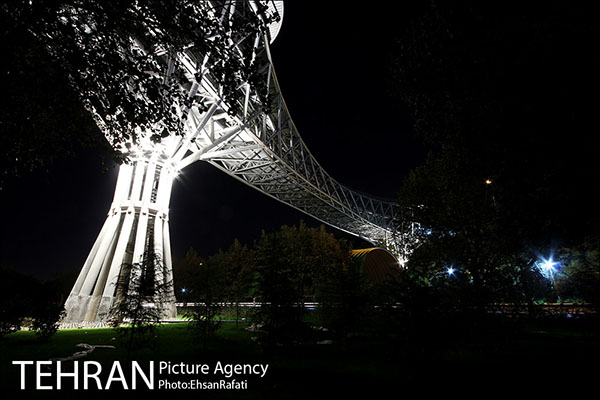
Nature Pedestrian Bridge designed by Iran’s Diba Tensile Architecture Company has been picked as a 2015 winner in the category of Highways and Bridges along with four other structures by the Architizer A+ Awards.

The international competition is the definitive global architectural and product award program –90-plus categories and over 300 judges – which tries to introduce structures contributing to the enhancement of quality of life.

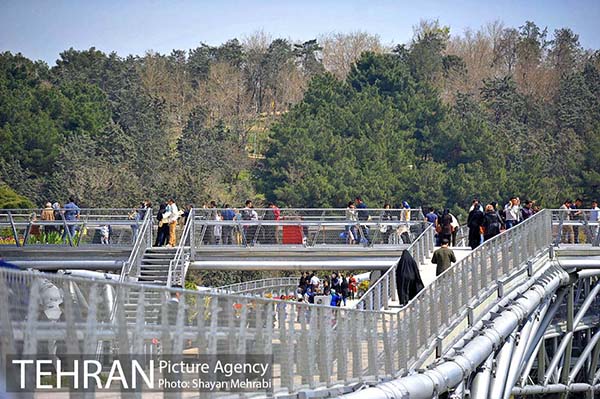
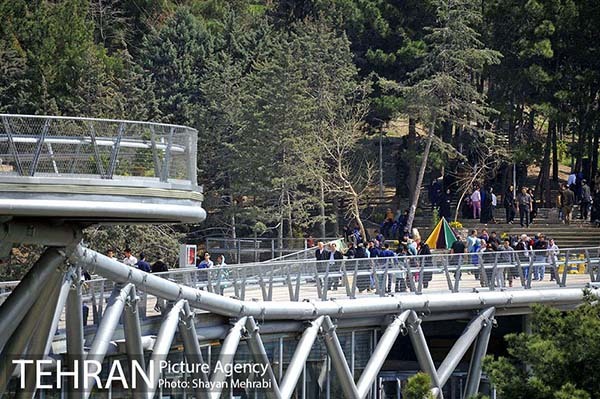
The bridge is designed to improve access for pedestrians in Tehran between two public parks, which are divided by a highway.

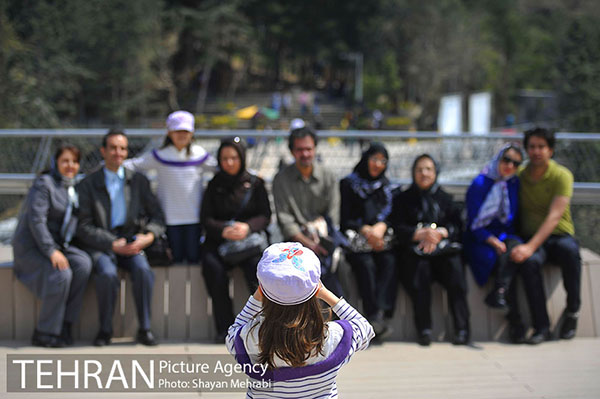
This bridge is a place to linger rather than just to pass, so there are seating areas and green spaces on all parts of the bridge, also restaurants on either side of the lower level, to have enough facilities to encourage walkers to stay on it.

Photos of the bridge by Tehran Picture Agency:

Ansar al-Forqan political leader killed: intelligence source

3

Iran’s deputy-Intelligence Minister for home security has said their forces killed the political leader of a terrorist group in south-eastern province of Sistan and Baluchistan.

The intelligence official said that the clandestine operations by intelligence forces on Wednesday in the province was productive against terrorist groups, where Hesham Azizi, also known as ‘Abu Hafas al-Baloushi’ the political leader of Ansar al-Forqan and his two companies had been killed.

The intelligence official also said that Ansar al-Forqan received logistic and financial support and guidance from an ‘Arab-Western’ conspiracy axis to spread insecurity, violence, assassinations and blast in south-eastern regions; “hard work and clandestine surveillance and intelligence operations of their foreign as well as domestic activities provided our agents information conducive to destroy and kill an important member of the group, with some other members managing an escape, however tracked and arrested in southern provinces,” he said.

“The Islamic Republic of Iran’s security strategy is to restore sustainable security in the region; in this path, it would not tolerate even the smallest destabilizing player; we warn that only close cooperation of countries in the region would help meet the security challenges rampant in the Middle East,” the source said.

“The Islamic Republic of Iran keeps the right for itself to address the issue in the international security institutions; our sustainable security is a product of cooperation of different parties inter alia, local people, religious leaders, and local government officials; assassination, attack on government centers and military posts have been the major terrorist acts by al-Forqan group,” said the intelligence source.

As for the speculations in the media that a Jaish al-Adl member had also been killed, the intelligence official said that the Jaish member Saeid Torkman Zehi, also known as Molla Ma’adh, the group’s spokesman, had been killed in Karachi, Pakistan, in his house on April 8. The source also added that the same day, Torkman Zehi had taken the responsibility for killing 8 Iranian border guards the day before.

Tehran police seize narcotics, arrest dealers (PHOTOS)

Iran-Police

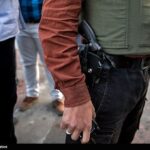
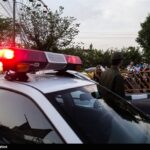
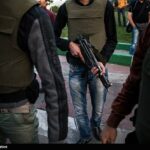
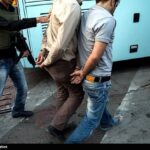
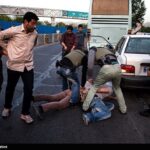
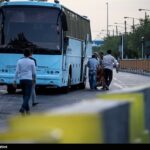
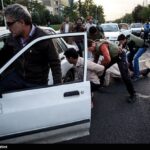
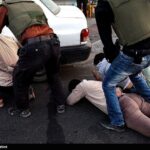
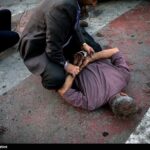
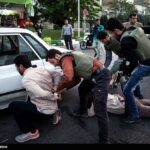
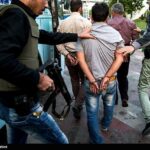
Police in Tehran have discovered around 100 kg of narcotics and arrested 90 drugs dealers.

The following are the pictures Tasnim News Agency posted online of the operation by the anti-drugs police on Tehran streets on Wednesday:


Iran sees growth even under sanctions

Valiollah Seif

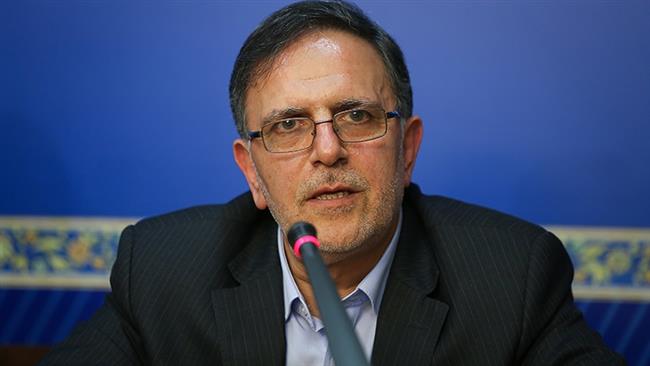
The governor of the Central Bank of Iran says the country’s economy will continue to improve no matter what happens in the nuclear negotiations.

“Regardless of what the outcome of the negotiations will be, we have planned our economy in such a way that its gradual improvement will continue,” Valiollah Seif has told China Central Television (CCTV).

Iran’s economy turned a corner in 2013 and started to experience modest growth after two years of recession and runaway inflation.

The governor, who is in Washington to take part in the seasonal meetings of the World Bank and the International Monetary Fund, said Iran’s economy is “on the right track”.
“We have a highly-educated young population. We are sure that we can create capacities in the economy which will make the situation much better than it is,” he said.
Seif touted the “big achievements” under President Hassan Rouhani, saying the government had managed to bring the inflation rate down to 15% from 40% by applying “appropriate monetary policies and fiscal discipline”.

The administration is now working to bring the inflation further down to single digits.

“This may not be achieved next year, but we are pretty confident that we will be able to bring it down to single digits in two years,” Seif said.

The government, he said, has planned for the scenario of the economy under sanctions as the fate of the ongoing negotiations between Iran and P5+1 remains unclear.

The two sides hope to reach a final agreement by the end of June but the pace of lifting sanctions on the Islamic Republic remains a bone of contention.

“Of course, we have to admit if we have a successful conclusion to these negotiations, we would see more of a positive impact in terms of higher growth, lower inflation and lower unemployment,” Seif said.

Lifting sanctions will also benefit others, including the Middle East, helping return stability to the highly volatile region.

“Iran has a high capacity to interact with its neighbors. Lifting of sanctions could bring stability to the region. Any delay will have negative consequences for the region as a whole,” Seif said.

The central bank governor also invited Iranians abroad to bring home their investments and expertise.

“I want to give the assurance that we have the potential to encourage Iranians abroad to return to their country.

“It’s good to have these people in our country so that they could put their capacities at the service of their country,” Seif said.

A cleric? A pilot? Both!

Noureddin Hosseini

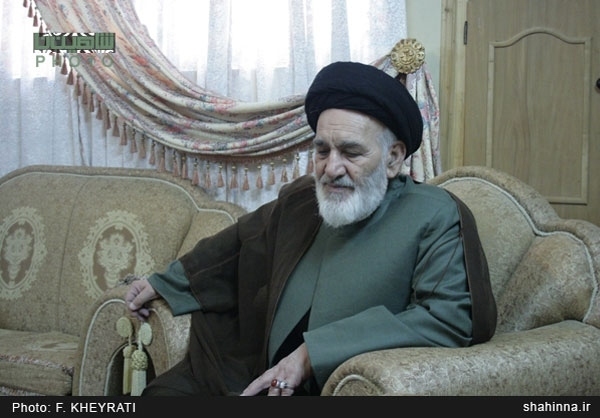
During the Iran-Iraq war, Colonel Seyyed Noureddin Hosseini juggled two jobs: He flew a Cobra helicopter and promoted Islam as a cleric.

Hosseini, who suffered 53 percent disability in the Iraqi-imposed war, has a liking for poetry and has written some Ruba’is [Persian quatrain] about the Prophet Muhammad’s household.

On April 18, Iran’s Army Day, Shahinna.ir, a news website, posted online an interview with Hosseini. The following is a partial translation of the interview:

[…]

Noureddin Hosseini-2“I joined the Army Air Force in 1975 because I was passionately interested in flying. I became a Cobra helicopter pilot after completing a training course. However, my father did not want me to serve the Pahlavi regime, so he asked me to give up the force and sign up at the seminary.
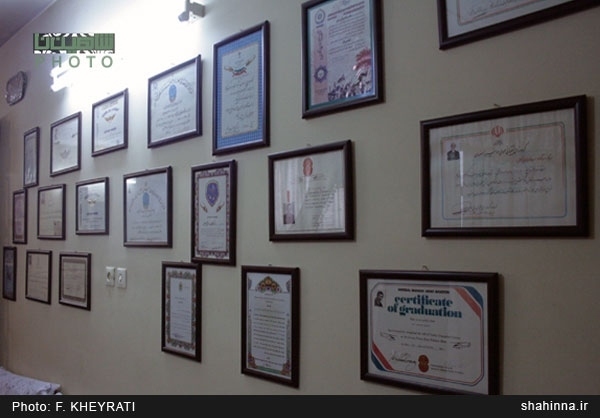
Following the Islamic Revolution, I was about to abandon my flying career and start studying religion at a seminary, when the war erupted. Given the country needed pilots to defend itself in the face of Iraqi aggression, I stayed with the Army on the advice of my father.

However, I did not give up the seminary. Whenever, there was no military operation and I was free, I studied. Finally I was bestowed the clerical garb in 1982,” the retired colonel said.

As for his retirement plans, he said “A cleric never gets retired”, adding after his retirement from the Army, he set up 23 religious congregations and still runs some of them. He also teaches ethics courses to the youth.

He said that he had two sons and five daughters who are all highly educated and have done courses at the seminary.

When asked about his advice to the youth he said, “The world is heading toward purity and every one should try to purge his/her soul of impurity and try to reform society.”


Noureddin Hosseini-1

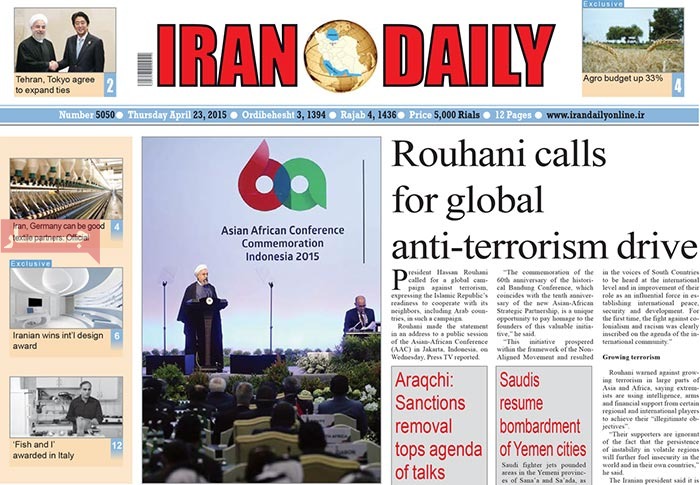
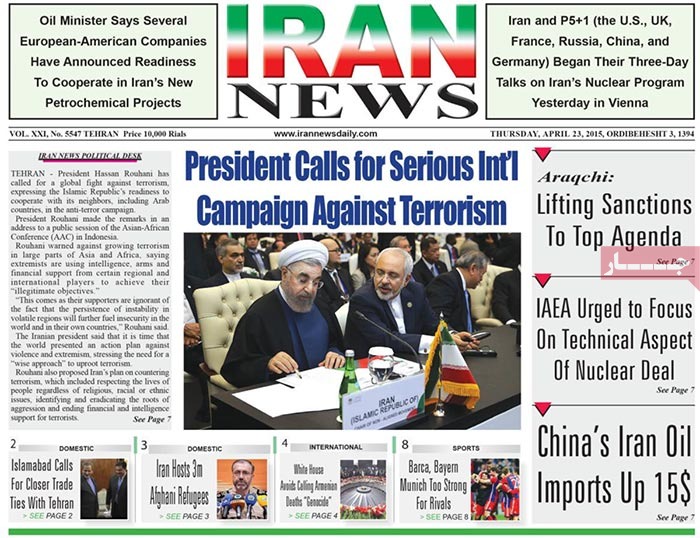
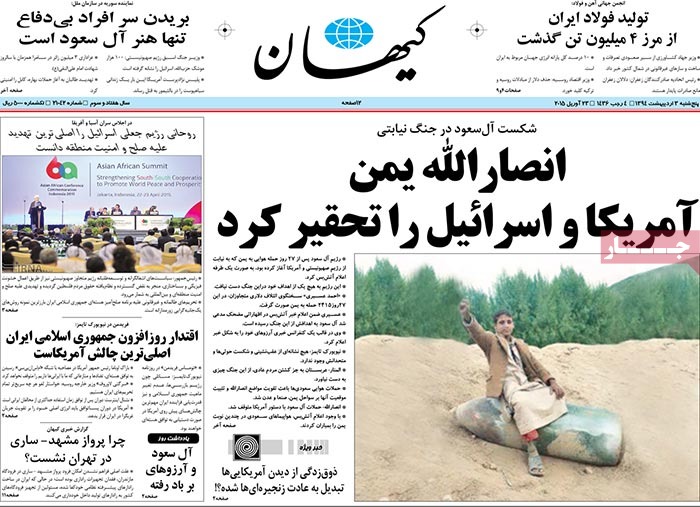
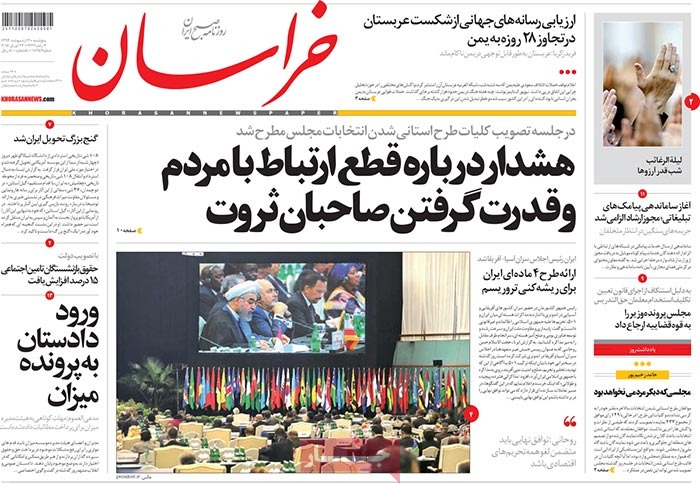
A look at Iranian newspaper front pages on April 23

Iranian Newspapers Headlines

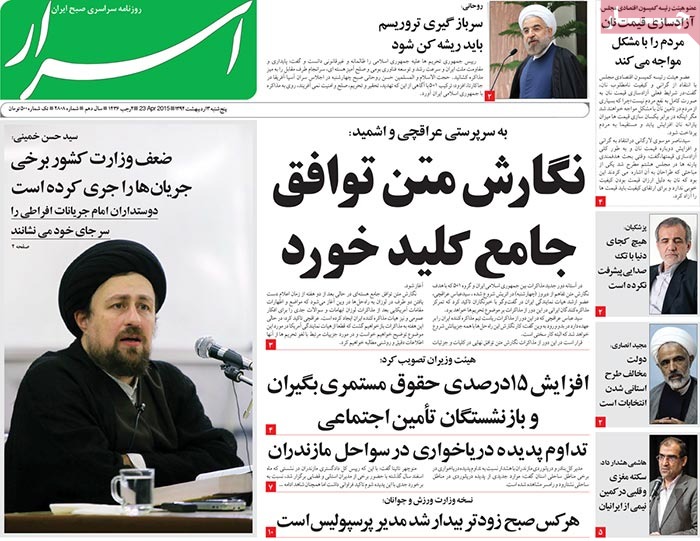
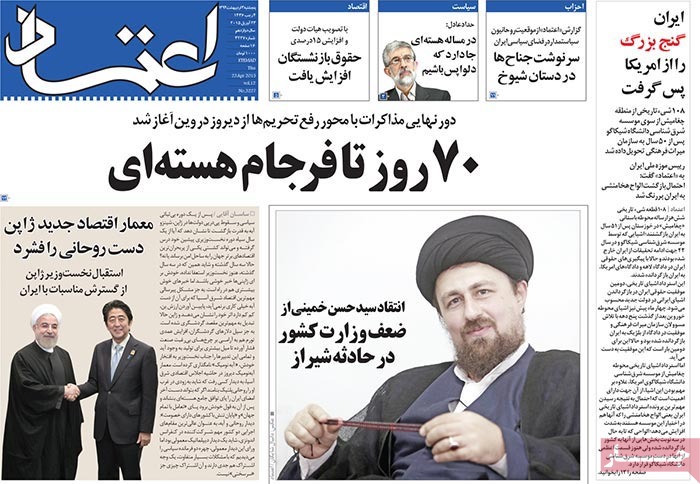
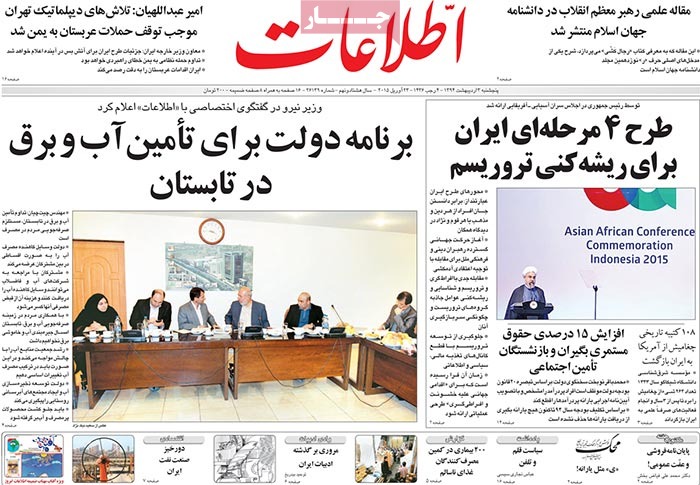
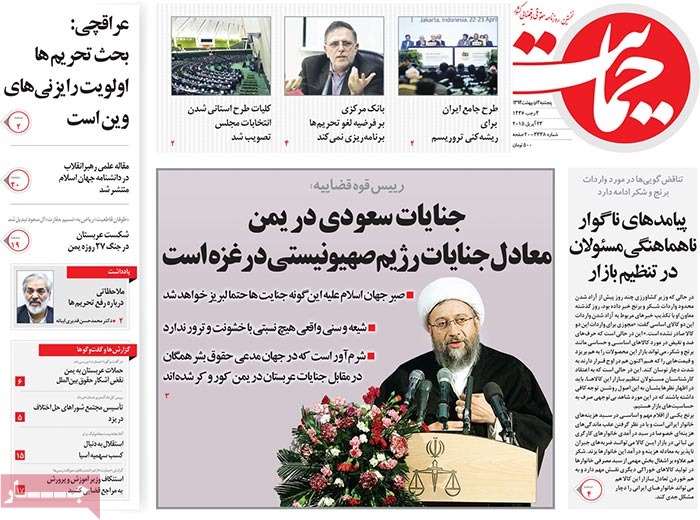
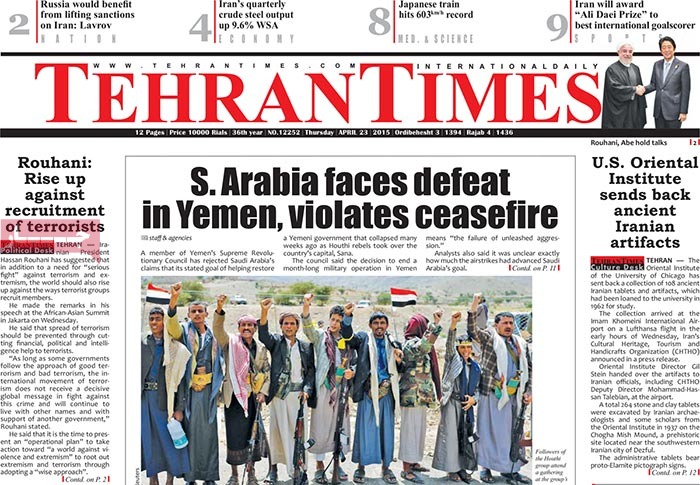
Comments by President Rouhani in Indonesia on Iran’s nuclear talks and his call for a serious international campaign against terrorism dominated the front-page headlines of Iranian newspapers on Thursday. Nuclear talks between Iran and P5+1 and their efforts to draft a final nuclear agreement were in the spotlight too. Also in the news was the defeat of the Saudi-led coalition in Yemen.


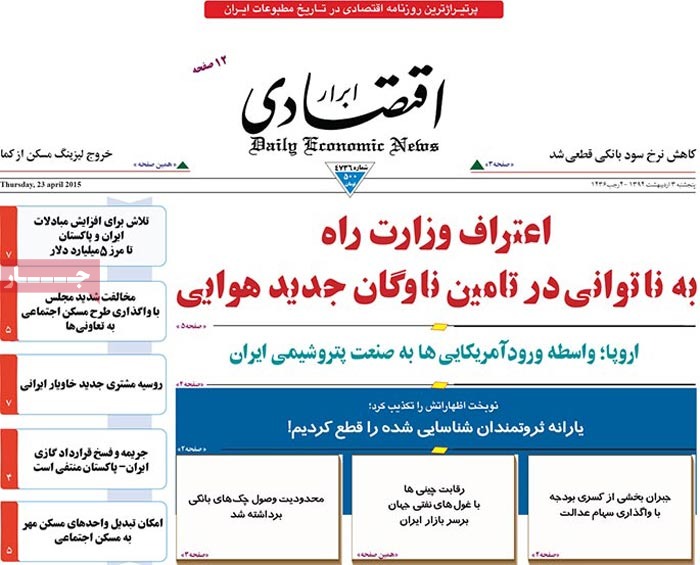
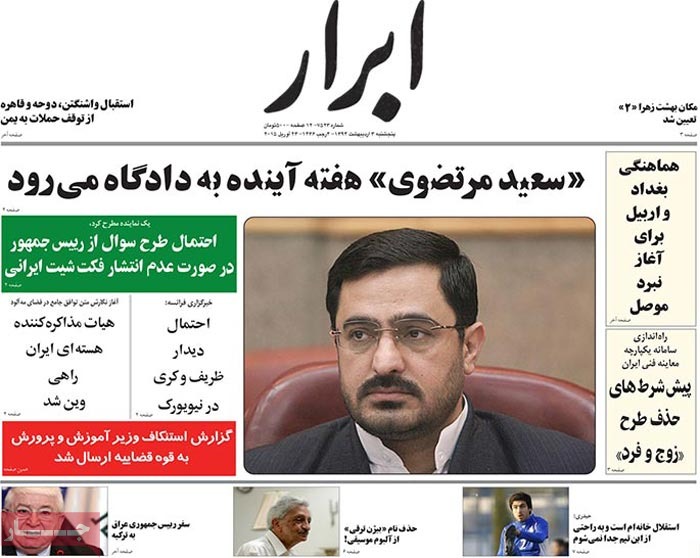
Abrar: [Former Tehran Prosecutor] Saeed Mortazavi will appear in court next week [as a defendant, though].

Abrar: “A motion to question the president is likely to be floated if the Iranian fact sheet is not released,” said an MP.


A look at Iranian newspaper front pages on April 23


Abrar-e Eghtesadi:European companies are paving the way for Americans to return to Iran’s petrochemical market.


A look at Iranian newspaper front pages on April 23


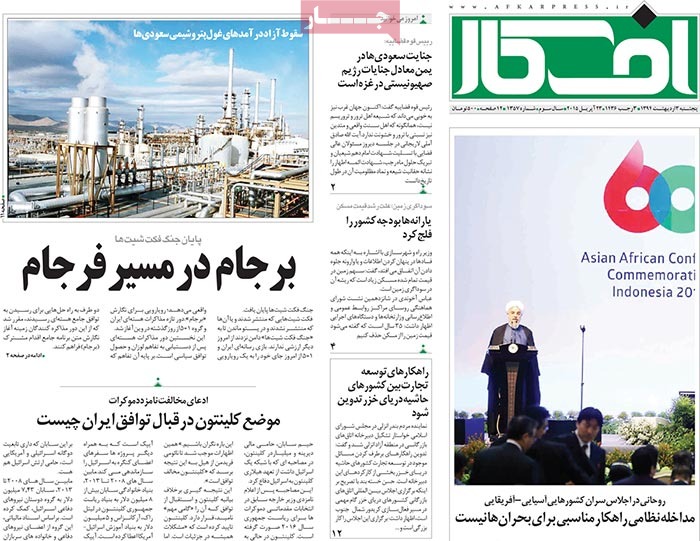
Afkar:“Military intervention is the not the right mechanism to defuse crises,” President Rouhani told an Asian African Conference meeting in Indonesia.


A look at Iranian newspaper front pages on April 23 


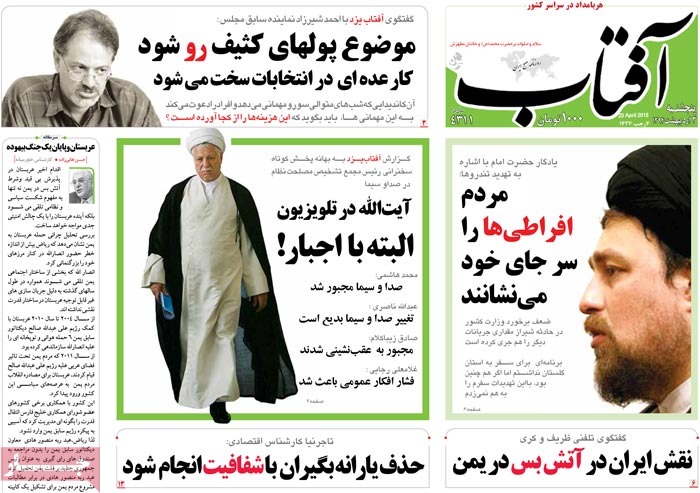
Aftab-e Yazd:“People will put radicals in their place,” said Seyyed Hassan Khomeini, the grandson of the architect of the Islamic Republic.

Aftab-e Yazd: Ayatollah reappears on a program on IRIB [national broadcaster]. Experts weigh in.

Mohammad Hashemi: IRIB was forced to air his comments.

Abdollah Nasseri: The change at IRIB is novel.

Sadegh Zibakalam: IRIB was forced to retreat.

Gholamali Rajaei: It was thanks to pressure in the court of public opinion.


A look at Iranian newspaper front pages on April 23


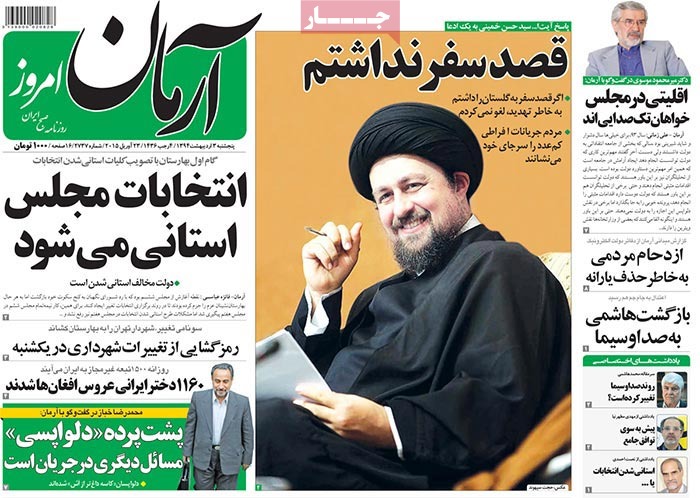
Arman-e Emrooz:The Islamic Consultative Assembly took the first step toward holding the [early 2016] parliamentary elections at a provincial level.

The executive branch is opposed to the move.

Arman-e Emrooz:Some 1,160 Iranian girls married Afghan nationals.

Around 1,500 illegal Afghan migrants enter Iran on a daily basis.


A look at Iranian newspaper front pages on April 23


Asrar:The drafting of the final nuclear agreement got underway.


A look at Iranian newspaper front pages on April 23


Etemad:“We are entitled to be worried about the nuclear case,” said [principlist MP] Gholamali Haddad Adel.

Etemad: The architect of Abenomics [Shinzo Abe] has welcomed expansion of Japan’s ties with Iran.

It came at a meeting between the Japanese PM and Iranian President in Jakarta, Indonesia.

Etemad:Seyyed Hassan Khomeini [the grandson of the founder of the Islamic Republic] has criticized the Interior Ministry for its weakness in dealing with those behind the Shiraz incident.

[In March, Tehran MP Ali Motahari was in the southern city to deliver a speech when he was attacked by hardliners].


A look at Iranian newspaper front pages on April 23


Ettela’at:A scientific article penned by the Supreme Leader has been published by Encyclopedia Islamica [the Encyclopedia of Islam].


A look at Iranian newspaper front pages on April 23


Hemayat: “Sanctions are our top priority in the Vienna talks,” said Iranian nuclear negotiator Abbas Araghchi.

Hemayat:“The crimes Saudis are committing in Yemen are similar to Zionist crimes in Gaza,” said Judiciary Chief Ayatollah Sadegh Amoli Larijani.


A look at Iranian newspaper front pages on April 23


Iran Daily: Saudis resume bombardment of Yemen cities.


A look at Iranian newspaper front pages on April 23


Iran News: IAEA urged to focus on technical aspect of nuclear deal.


A look at Iranian newspaper front pages on April 23


Kayhan: In the Asian-African Conference, President Rouhani has described the fake Israeli regime as the gravest threat to regional security and peace.

Kayhan: The defeat of the House of Saud in a proxy war

Ansarullah in Yemen humiliated the US and Israel.


A look at Iranian newspaper front pages on April 23


Khorasan: Iran has taken the presidency of the Asian-African Conference; Iran has put forward a four-point plan on elimination of terrorism.


A look at Iranian newspaper front pages on April 23


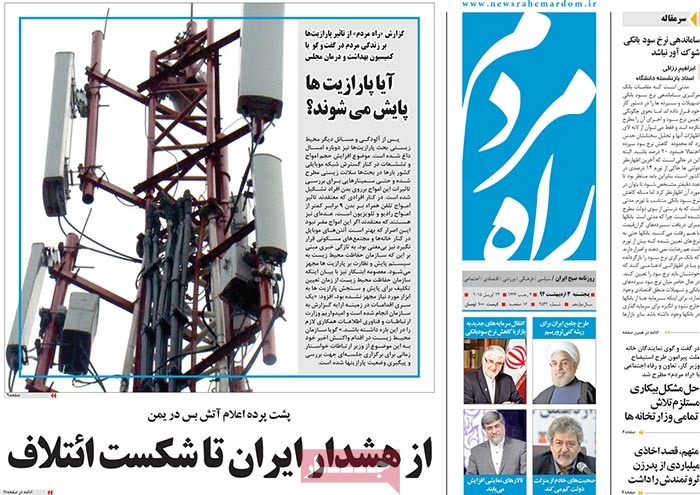
Rah-e Mardom: Behind the scenes of ceasefire in Yemen

From Iran’s warning to the failure of the [Saudi-led] coalition


A look at Iranian newspaper front pages on April 23


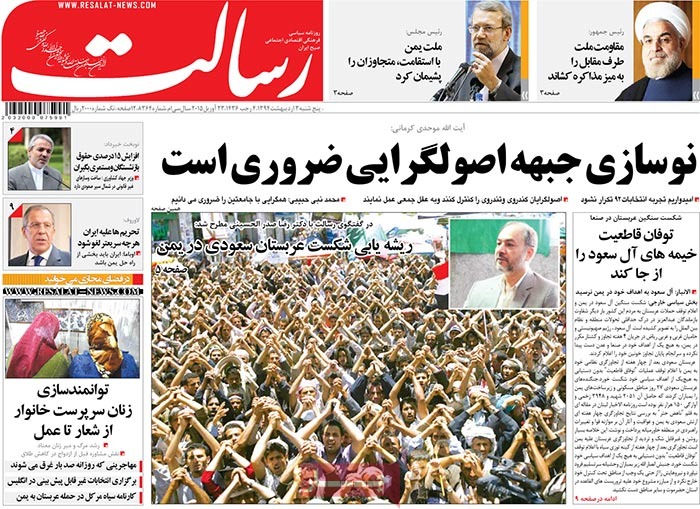
Resalat: The empowerment of women breadwinners, from talks to action


A look at Iranian newspaper front pages on April 23


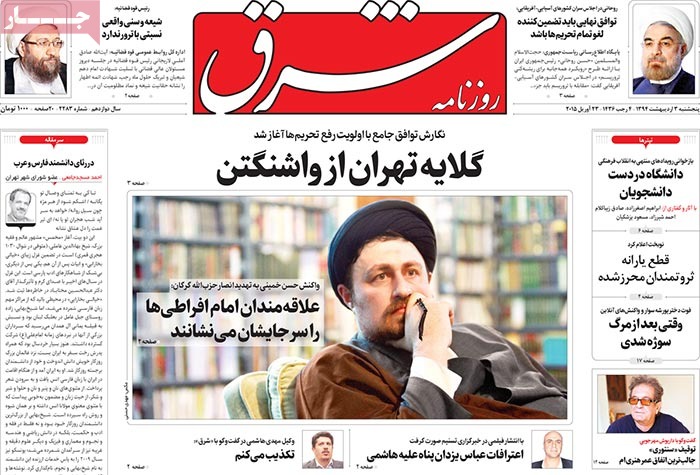
Sharq: “True Shiites and Sunnis have no links with terror,” said Judiciary Chief Ayatollah Sadegh Amoli Larijani.


A look at Iranian newspaper front pages on April 23


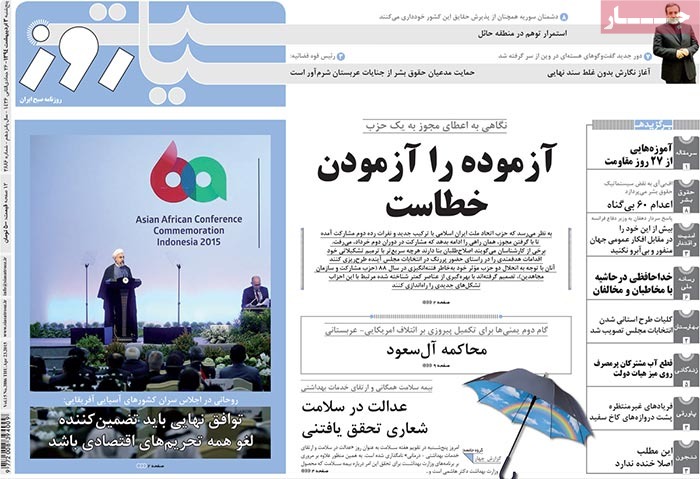
Siasat-e Rooz: “The final deal should guarantee the lifting of all economic sanctions,” said President Rouhani in the Asian-African Conference in Jakarta.


A look at Iranian newspaper front pages on April 23


Tehran Times: Iran will award “Ali Daei Prize” to best international goal scorer


A look at Iranian newspaper front pages on April 23


Iran, Indonesia presidents discuss mutual, international issues

Rouhani-Indonesia

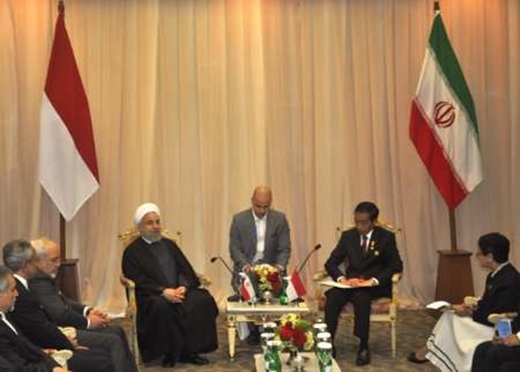
President Hassan Rouhani and his Indonesian counterpart Joko Widodo discussed issues of mutual interest as well as international developments on Thursday.

In a meeting on the sidelines of the 60th Asia-Africa Summit Meeting in the Indonesian capital, the two presidents discussed issues of mutual interest, as well as the latest regional and international developments.

Rouhani and Widodo called for enhanced cooperation between Tehran and Jakarta on economic issues.

According to the statistics, Iran-Indonesia trade hit $2 billion in 2012 from $600 million in 2010.

Trade between Tehran and Jakarta once again shrank to $600 million in 2013 as a result of imposition of illegal Western sanctions on Iran.

Iranian and Indonesian officials hope that an emerging comprehensive deal between Iran and the six world powers over Tehran’s nuclear program that guarantees Iran’s right to peaceful nuclear technology and results in the lifting of all sanctions, would lead to a significant rise in trade between Tehran and Jakarta.