Friday, May 1, 2026
Home Blog Page 4762

Ebtekar: I think President Rouhani knows how to play chess

ebtekar

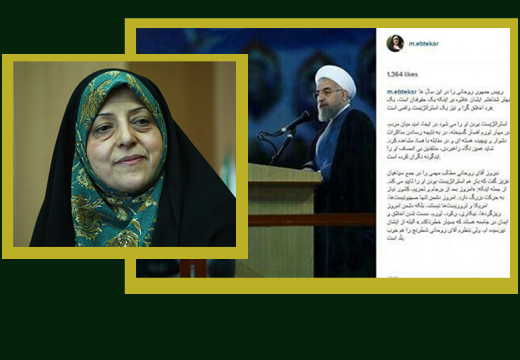
The director of the Environment Protection Organization has said that President Rouhani is a lawyer, ethical person and a real strategist.

This is the caption Masoumeh Ebtekar put on a picture of President Hassan Rouhani on her Instagram page, saying that she has gotten to know the president better over the years. The following is the translation of what the Islamic Republic News Agency (IRNA) quoted the environment chief as writing on her page on September 17:

Masoumeh Ebtekar wrote, “I got to know the president better over time. In addition to being a lawyer, the president is a real strategist and an ethical individual. ”

She went on to say that the president is a strategist and that is clearly evident in his efforts to instill a sense of hope among people, curb the runaway inflation, render complicated nuclear talks conclusive and counter corruption. Perhaps this strategic approach of the president has concerned his unfair critics, she added.

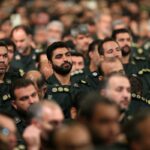
Ebtekar further said, “On Tuesday Mr. Rouhani made important comments in a meeting with the dear [members of the Islamic Revolution] Guard corps. His remarks confirm the fact that he is a strategist.

“Remarks such as ‘After [the conclusion of] the Joint Comprehensive Plan of Action and [removal of] the sanctions, the country needs to take a big step. Today the Zionists, the US and terrorists are not the only enemies [of Iran]; rather, the questions of dust particles, unemployment, recession, inflation, the weakening of ethical norms and faith are our enemies in society which are very dangerous’.

“I have not asked the president, but Mr. Rouhani seems to know how to play chess [and have a good command of chess strategies]” prove that he has a strategist’s mind.

A look at Iranian newspaper front pages on September 17

Iranian Newspapers Headlines

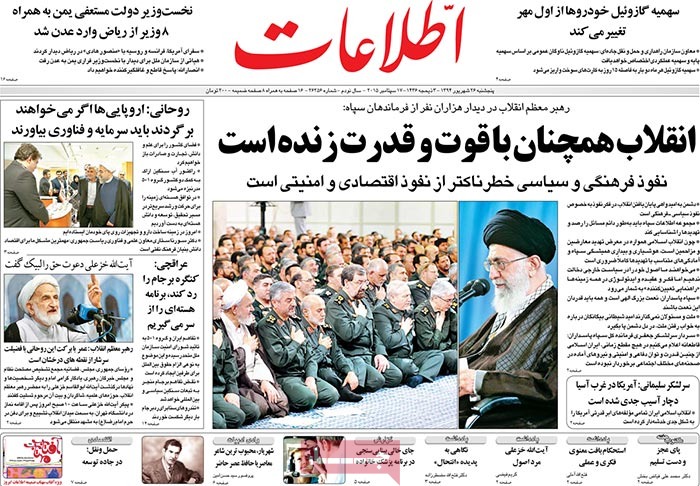
The comments of the Supreme Leader at a meeting with commanders of the Islamic Revolution Guard Corps (IRGC) dominated the front pages of Iranian newspapers on Thursday.


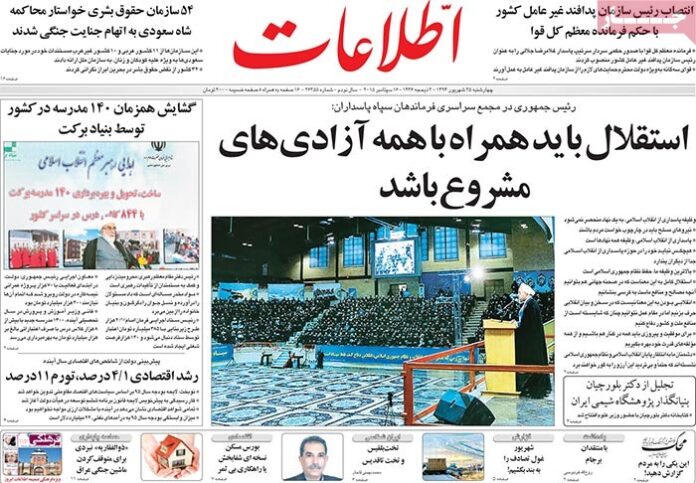
Ettela’at: “The revolution is still powerful and in good shape,” the Supreme Leader said at a meeting with thousands of IRGC commanders.

“The cultural and political infiltration is more dangerous than economic and security infiltration,” Ayatollah Khamenei further said.


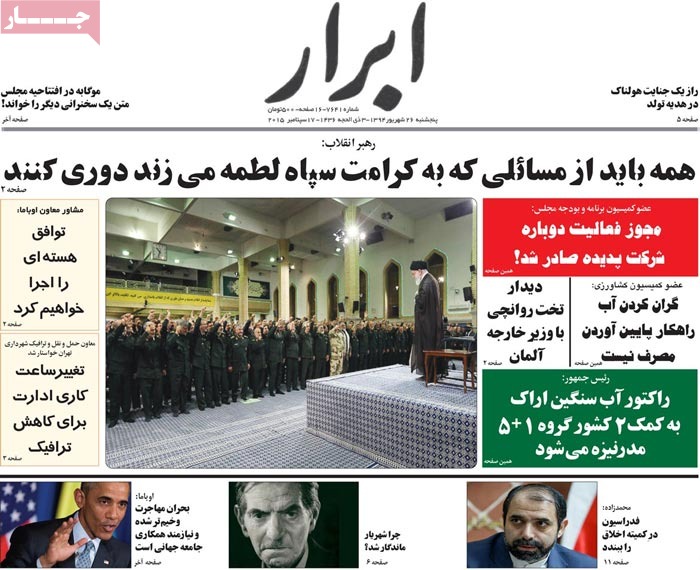
Abrar: Majid Takht-e Ravanchi, Iran’s deputy foreign minister, has met with the German foreign minister.

Abrar: “Arak’s heavy water reactor will be modernized with the assistance of two members of P5+1,” President Rouhani said.       
 

A look at Iranian newspaper front pages on September 17


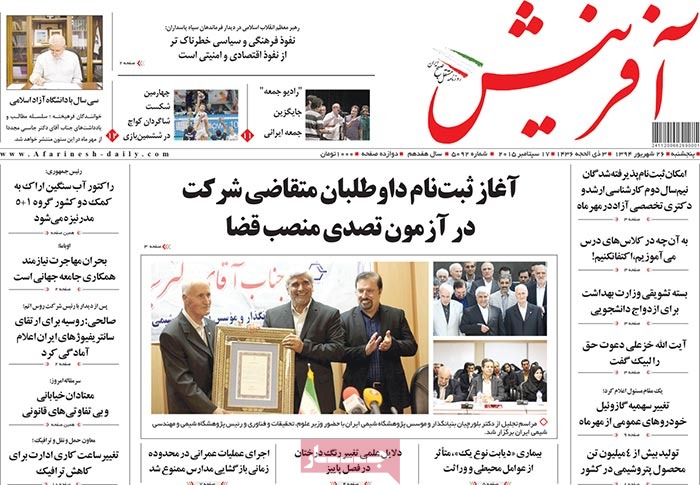
Afarinesh: “Russia has expressed readiness to help upgrade Iran’s centrifuges,” said the director of the Atomic Energy Organization of Iran.

Afarinesh: To ease traffic congestion the working hours of government offices will change.
 

A look at Iranian newspaper front pages on September 17


Afkar: The commander of the Islamic Revolution Guard Corps has said that his men won’t allow the enemy to infiltrate the country.
 

A look at Iranian newspaper front pages on September 17


Aftab-e Yazd: Ali Akbar Velayati [an advisor to the Supreme Leader] has failed to show up for a session of parliament’s JCPOA Review Committee.
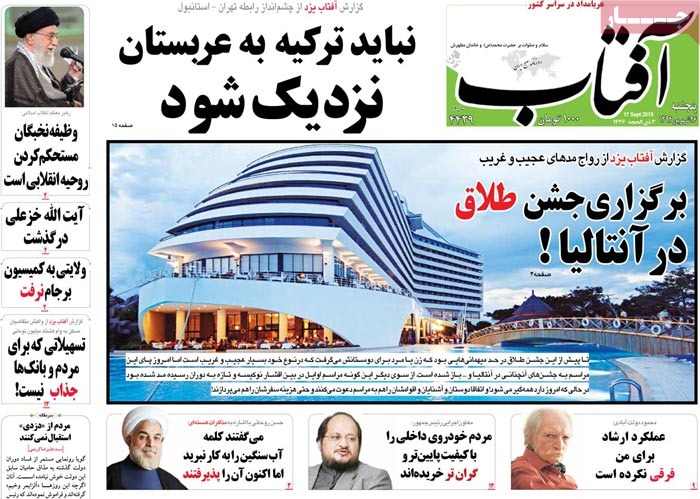
 

A look at Iranian newspaper front pages on September 17


Arman-e Emrooz: The minister of communications has said that Facebook is likely to be unblocked.

Arman-e Emrooz: “In the [upcoming] parliamentary elections hardliners will be set aside,” predicted the chairman of the Expediency Council.

Ayatollah Akbar Hashemi Rafsanjani further said that people will vote the opponents of the nuclear deal out of office.
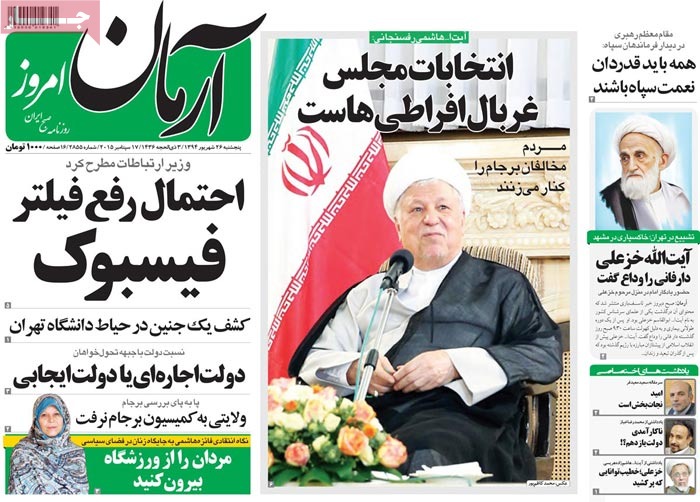
 

A look at Iranian newspaper front pages on September 17


Asrar: Saudi Arabia has blamed the Bin Laden Company for the deadly construction crane collapse in Mecca.
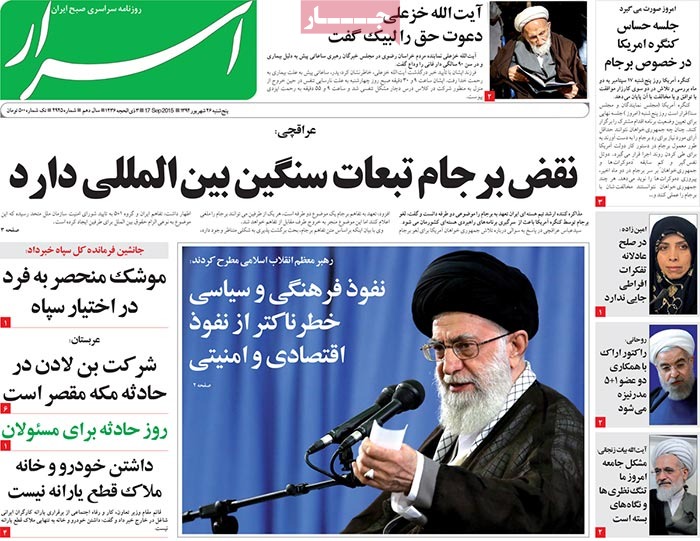
 

A look at Iranian newspaper front pages on September 17


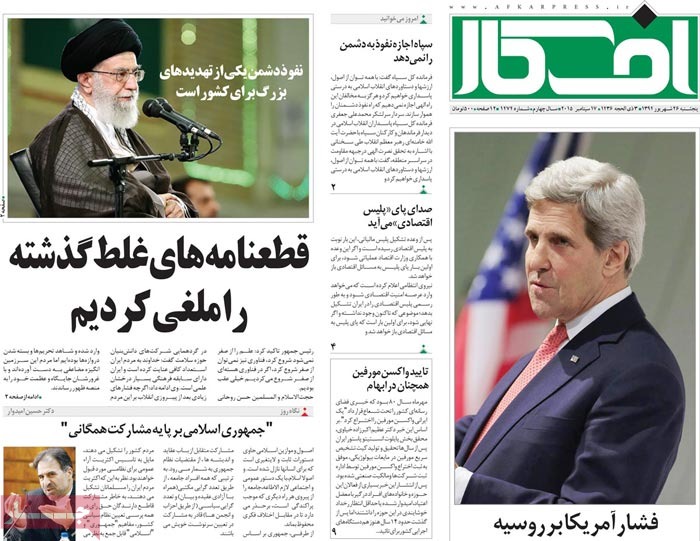
Ebtekar: The Supreme Leader has urged Revolution Guards commanders to shun things that might damage the dignity of the Islamic Revolution Guard Corps.

Ebtekar: The economy minister had a heart problem during a Cabinet session.
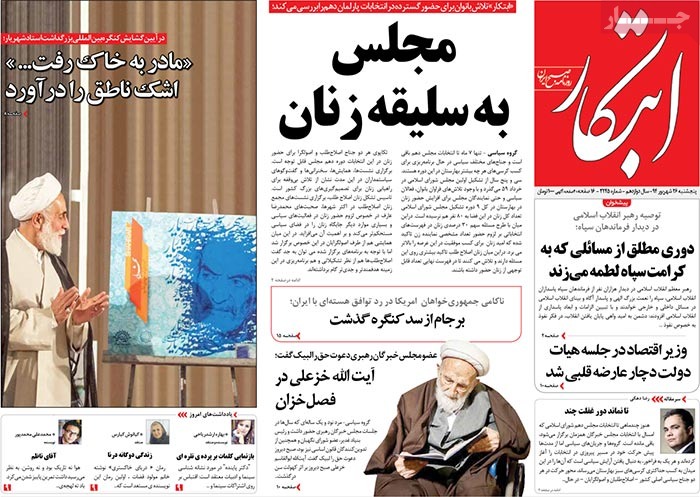
 

A look at Iranian newspaper front pages on September 17


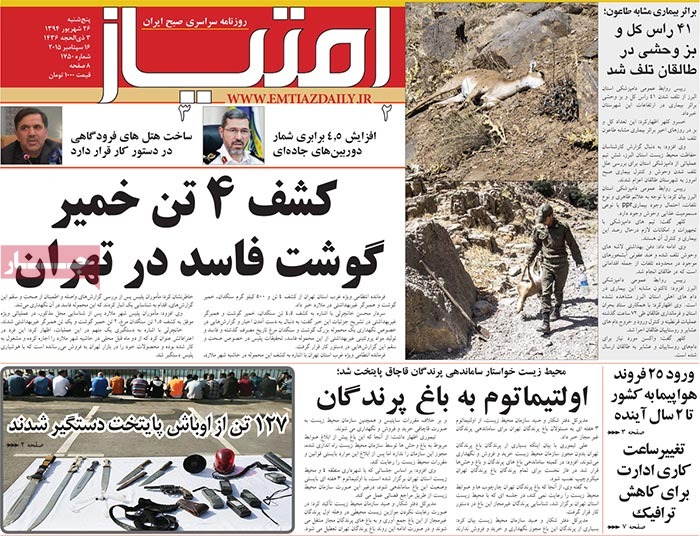
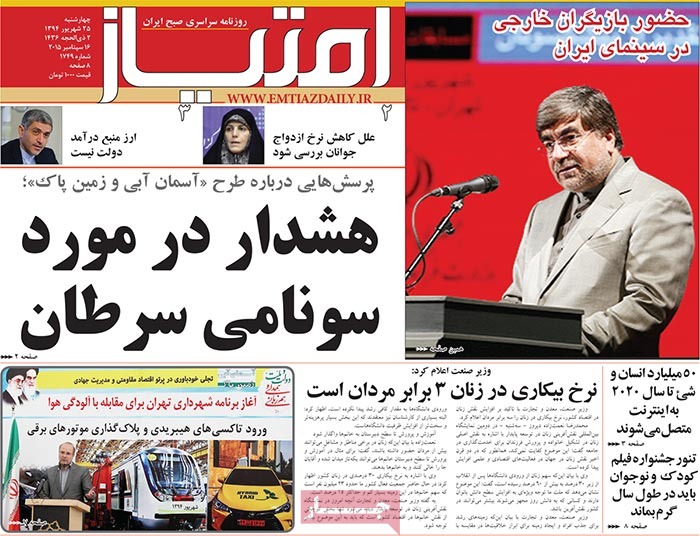
Emtiaz: Twenty-five aircraft will join the Iranian fleet within two years.
 

A look at Iranian newspaper front pages on September 17


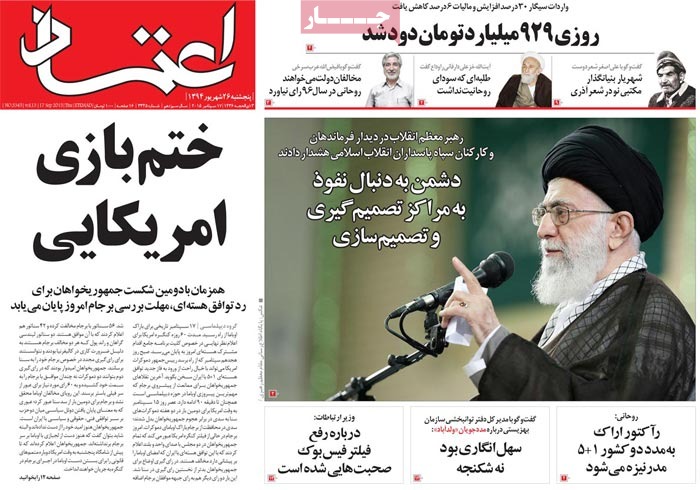
Etemad: End of the American game

Republicans have suffered a second setback in their bid to reject the Joint Comprehensive Plan of Action. The deadline for review of the deal is today.

Etemad: Each day around $310 million goes up in smoke.

Cigarette imports went up 30 percent and taxes were down six percent.
 

A look at Iranian newspaper front pages on September 17


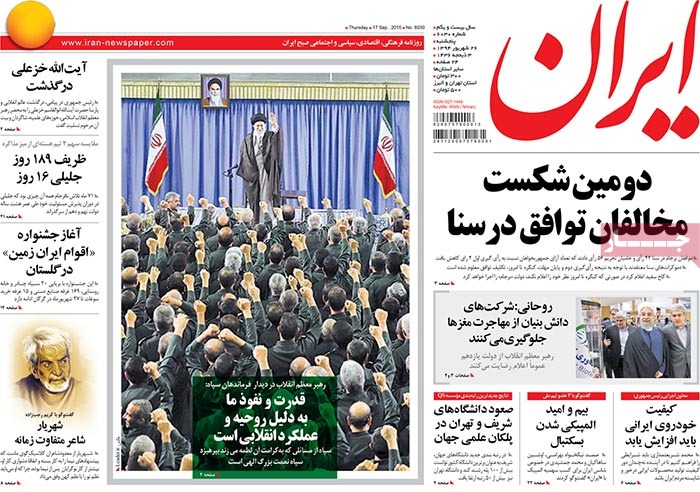
Iran: The global ranking of the University of Tehran and Sharif University of Technology has improved.

Iran: Foreign Minister Mohammad Javad Zarif has spent 189 days talking to P5+1 over the nuclear issue. His predecessor Saeed Jalili was at the talks for no more than 16 days.
 

A look at Iranian newspaper front pages on September 17


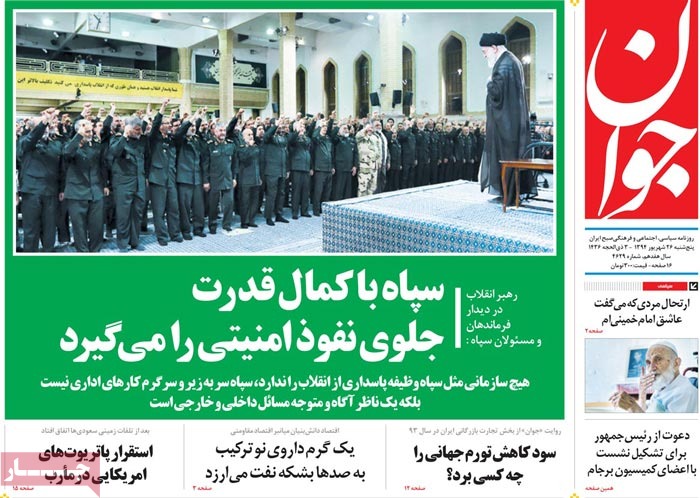
Javan: “The Islamic Revolution Guard Corps will stop security infiltration with a vengeance,” said the Supreme Leader at a meeting with IRGC commanders.
 

A look at Iranian newspaper front pages on September 17


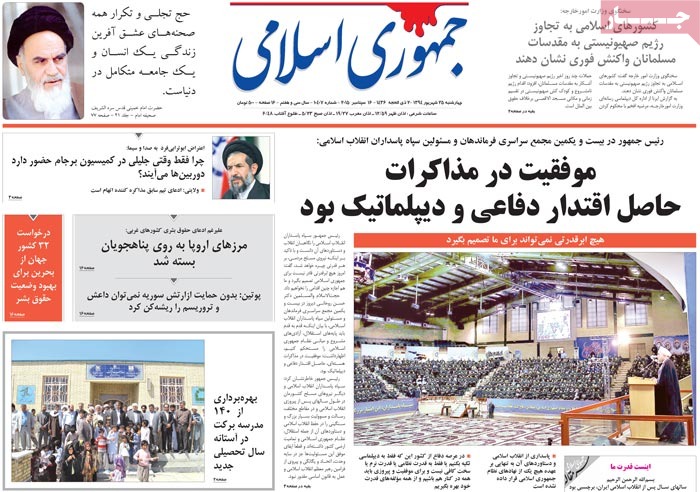
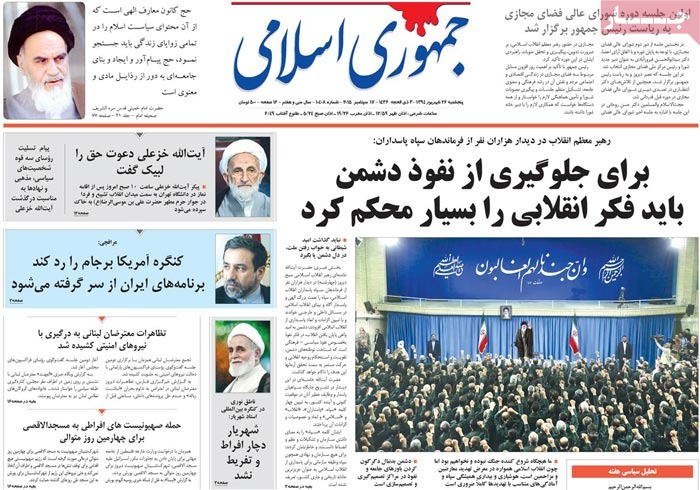
Jomhouri Islami: The heads of the three branches of government and senior political and religious figures have issued messages of condolences following the demise of Ayatollah Khazali.
 

A look at Iranian newspaper front pages on September 17


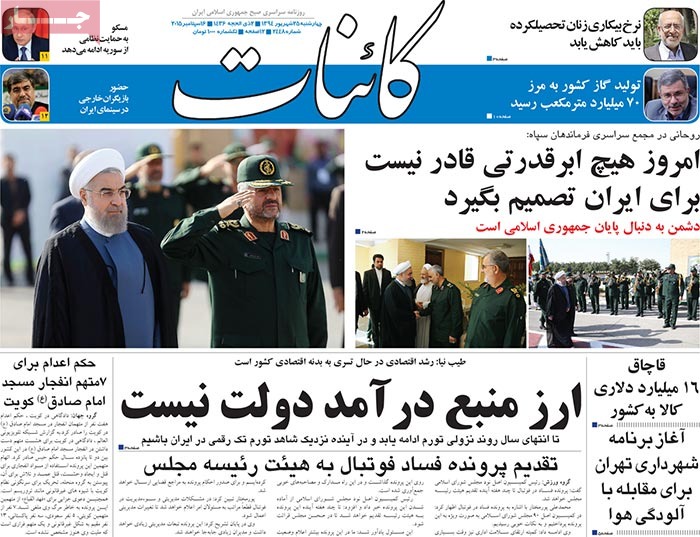
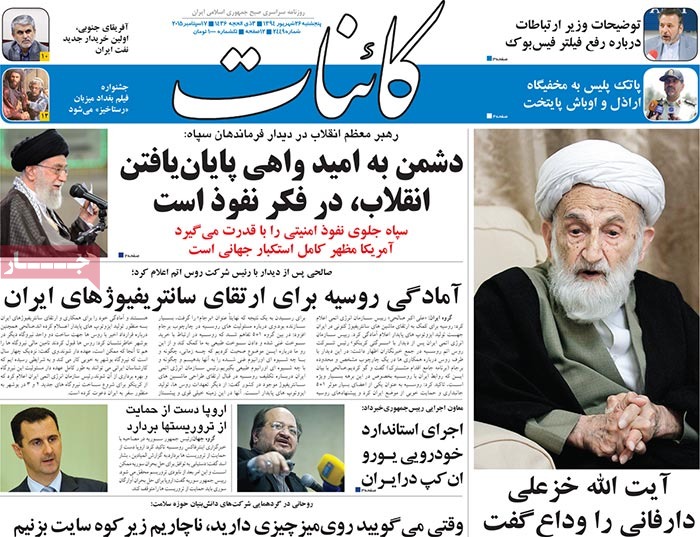
Kaenat: “When you said everything was on the table [a reference to military option], we had to set up a site under the mountains,” President Rouhani said in comments aimed at the West.
 

A look at Iranian newspaper front pages on September 17


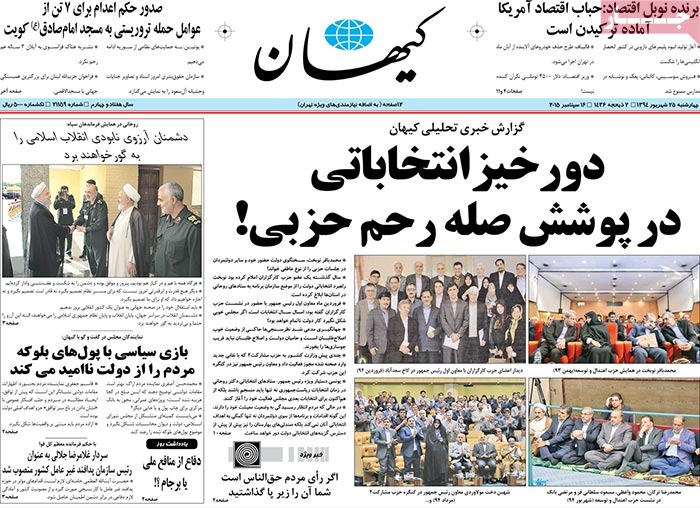
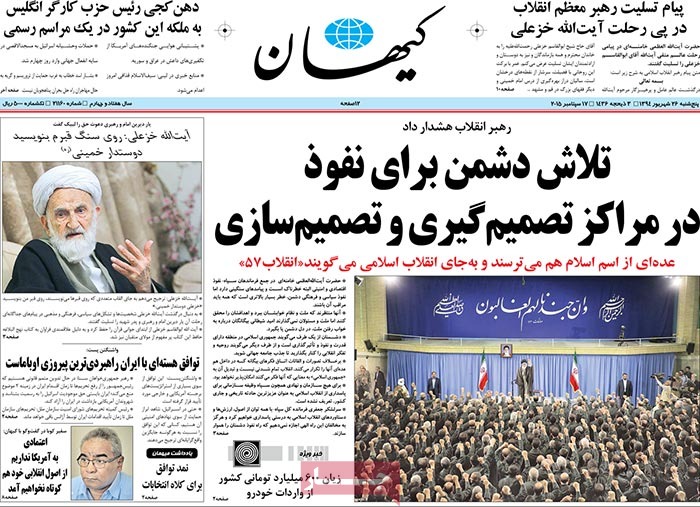
Kayhan: The Supreme Leader has released a message of condolences following the passing of Ayatollah Khazali.

In his will the late Ayatollah instructed his family to write “A friend of Khomeini” on his gravestone.
 

A look at Iranian newspaper front pages on September 17


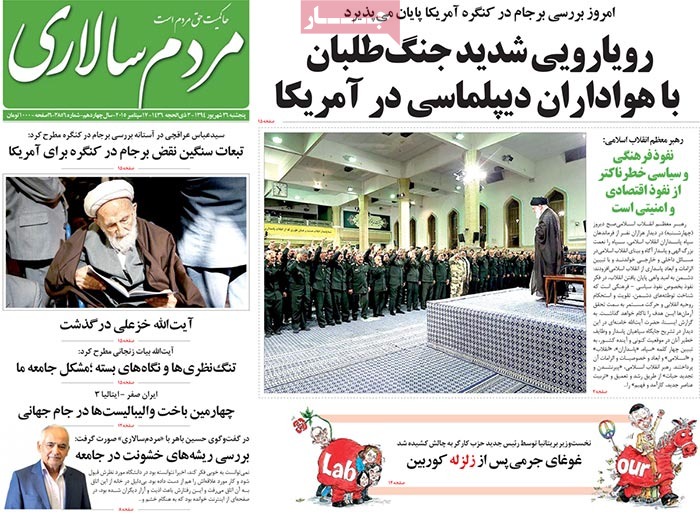
Mardomsalari: Iran has suffered a fourth defeat in the Volleyball World Cup.
 

A look at Iranian newspaper front pages on September 17


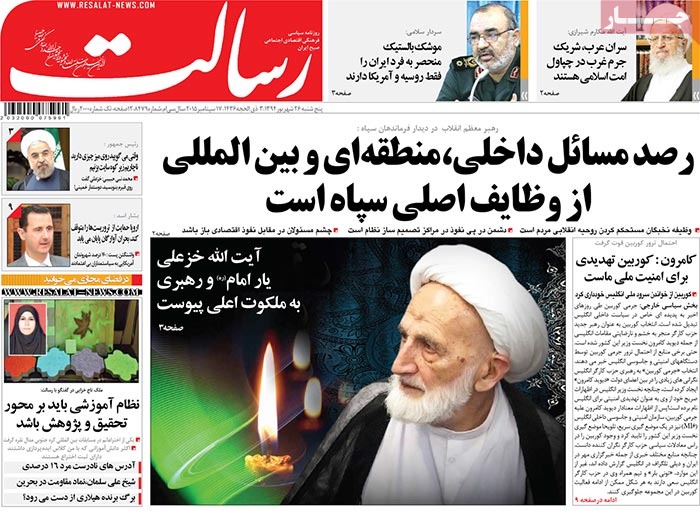
Resalat: “Keeping an eye on local, regional and international developments is a major responsibility of the Islamic Revolution Guard Corps,” the Supreme Leader said.
 

A look at Iranian newspaper front pages on September 17


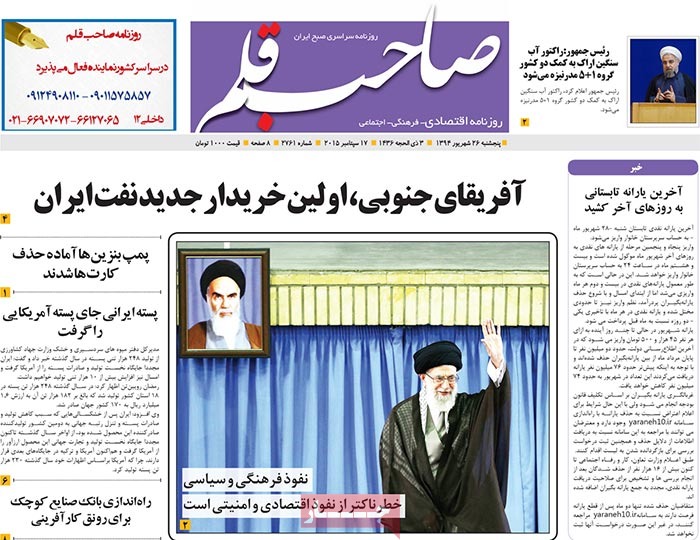
Saheb Ghalam: South Africa, the new buyer of Iranian oil
 

A look at Iranian newspaper front pages on September 17


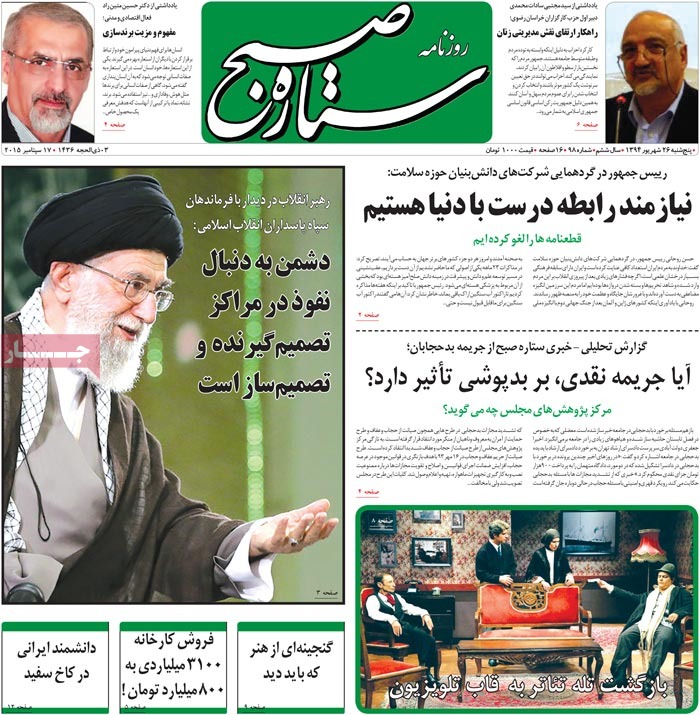
Setareh Sobh: “We need to have good relations with the rest of the world,” said President Rouhani.
 

A look at Iranian newspaper front pages on September 17


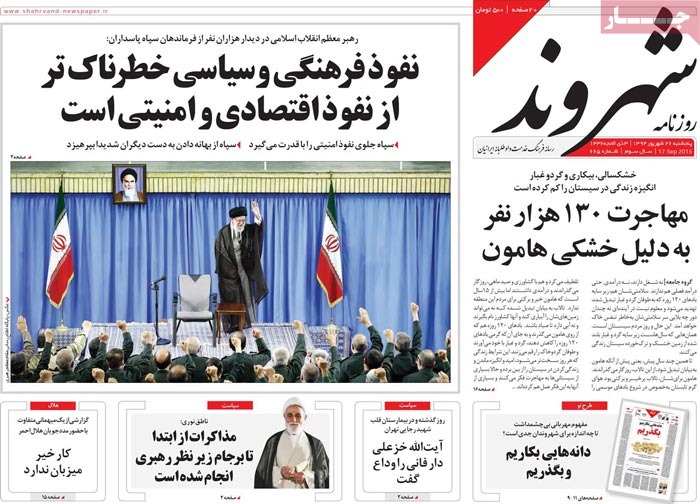
Shahrvand: With the Hamoon Lake drying up as many as 130,000 people have left their homes.

Shahrvand: “From the very beginning until the finalization of the Joint Comprehensive Plan of Action, nuclear talks were under the supervision of the Leader,” said Ali Akbar Nategh Nouri, a former parliament speaker and member of the Expediency Council.
 

A look at Iranian newspaper front pages on September 17


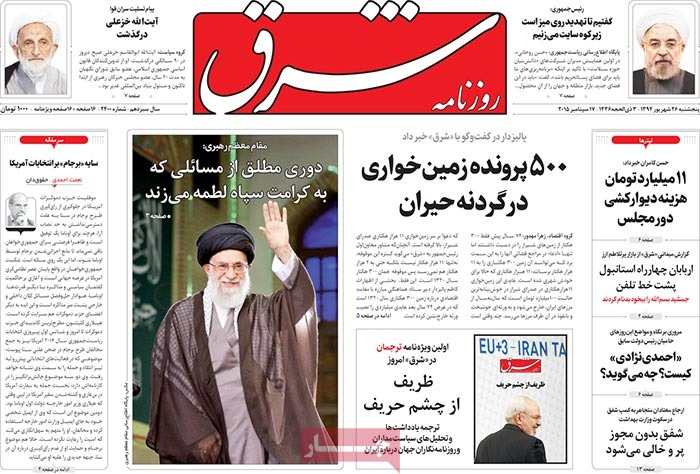
Sharq: There are as many as 500 land-grab cases in Heyran area.
 

A look at Iranian newspaper front pages on September 17


Were high winds really to blame for the deadly crane accident in Mecca?

Mecca Accident

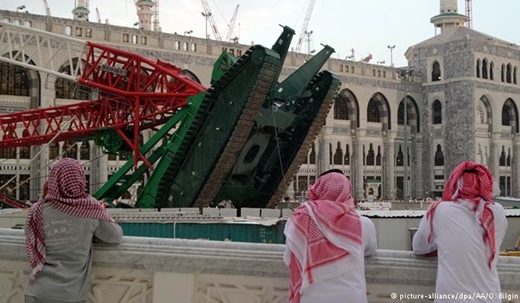
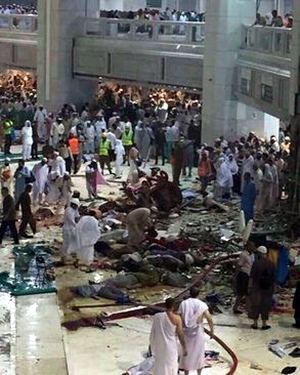
Mecca-4A construction crane tumbled at the Grand Mosque in Mecca at 5:10 p.m. on September 11, leaving more than 300 people dead or injured.
The following is the translation of a report Haft-e Sobh daily published on Tuesday, casting doubt on Saudi accounts on the cause of the deadly accident:

Saudi media were quick to blame the accident on the elements. Al-Arabiya claimed that winds traveling at 65 kph were blowing at the time of the crane collapse. CNN Arabic went one step further and said that the wind gusts of 95 kph, unprecedented in the Middle East for 37 years, were blowing Friday afternoon.

Dr. Mansour al-Mazroui, an expert with the weather center of King Abdulaziz University, said winds at the time traveled at between 40 and 55 kph and blamed the accident on freak weather.

Was storm really to blame for the deadly accident? Studies suggest that there were no storms at the time of the accident and that worshippers were walking around in the courtyard of the Grand Mosque without any difficulty.


Wind-Mecca


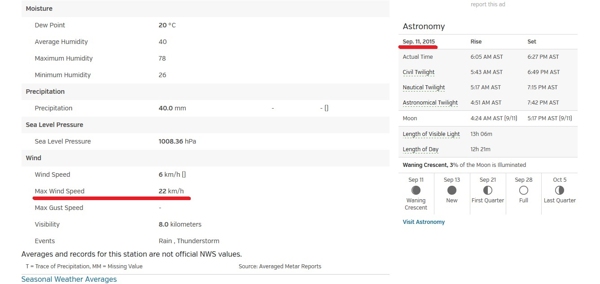
A look at Mecca weather report on September 11 shows that wind speeds on that day never went beyond 22 kph. The reports released by weather.org and worldweatheronline.com prove Arab media suggestions wrong.

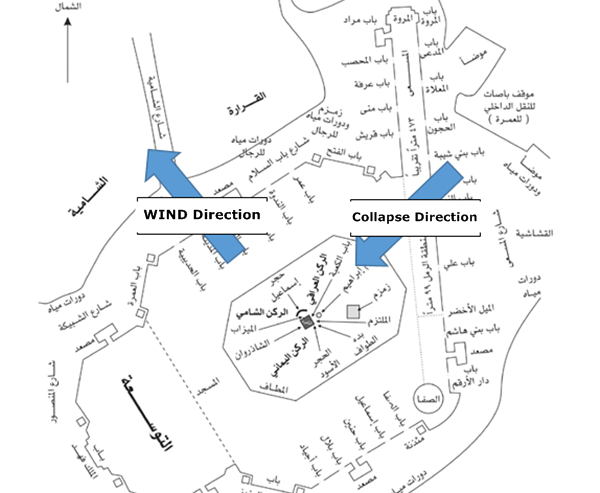
What is interesting is that weather news sites have suggested that winds were blowing in a northwesterly course in Mecca at the time; whereas the crane fell toward the southwest.


Mecca


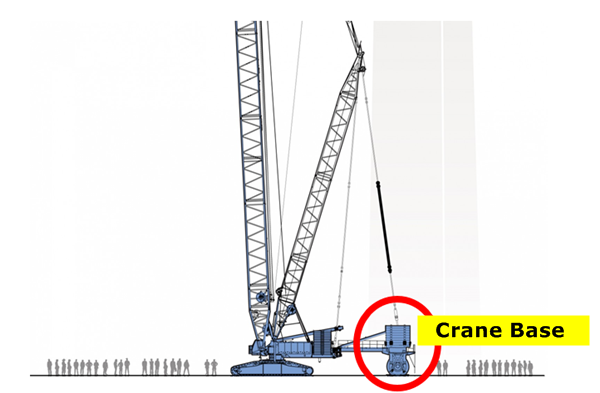
Another issue is that the crane tumbled where there was the highest concentration of worshippers. And a look at the tumbled crane shows that its base had been detached from its body.


Mecca-1


With weather no longer a suspect, and given that the crane structure seems to have been tampered with, one needs to wait and see what the real cause of the accident has been. An accident which came on the anniversary of 9/11 and at the busiest location of the Grand Mosque.

Nuclear accord tastes sweet for Iran citrus

citrus

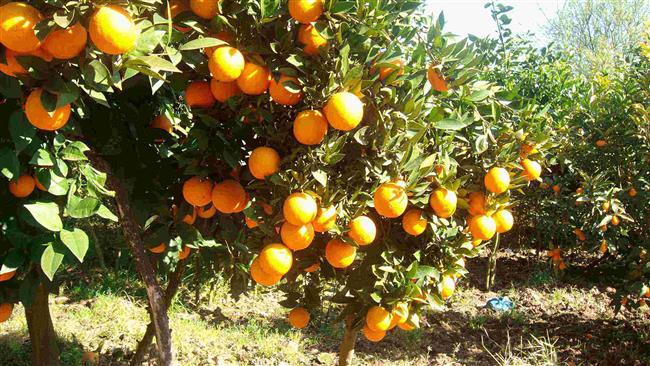
Iran’s nuclear accord bears fruit in season for its horticulture growers who are on course to export $2 billion of citrus and other products to neighboring countries, an Agriculture Ministry official says.

As many as 240 million people across the region savor Iran’s horticultural products, primarily pomegranates, pistachios, saffron, figs, raisins and dates, the ministry’s Mohammad Ali Tahmasbi said.

“After the nuclear agreement with P5+1, the market for Iran’s horticultural products has been thriving so far that Russia and the Central Asian states have joined it,” the official added.

Up to 50,000 metric tons of citrus fruit will be exported to the neighboring market this year, Tahmasbi said. Iran is the world’s seventh largest producer of citrus fruits, including a variety of oranges, tangerines, limes and lemons.

Citrus groves are mainly spread across the fertile land near the Persian Gulf in the south and the northern Caspian Sea in the provinces of Mazandaran, Gilan, Fars, Kerman, Khuzestan, Hormuzgan and Bushehr.

Because of its unique ecology and rich soil, Iran is the largest fruit producer in the Middle East and North Africa where the variety of climatic zones makes it possible to cultivate a diverse group of crops.

The Iranian plateau is believed to be the homeland to a number of fruits, vegetables and ornamental plants such as Persian walnuts, pomegranates, peaches, spinach and tulips.

Tahmasbi said more than 16 million metric tons of horticultural products are harvested annually from 2.6 million hectares of orchards, with production expected to grow this year because of better yield, especially of grapes and apples.

Agricultural products buck the trend in Iran where consumers usually prefer foreign-made commodities to local ones. In recent years, however, the Iranian taste buds are being put to the test amid a rise in irregular imports of fruits which many believe can’t hold a candle to the local produce.

Agriculture accounts for 13% of Iran’s GDP and over 20% of its employment. The sector has traditionally been the key foundational block of the Iranian society, but it began to lose much of its significance since the first oil wells were struck.

The industry also uses up 92% of the country’s water, draining valuable reserves. Experts say efficient agriculture and food production practices are crucial to Iran’s development and employment.

Life of an environmentalist in photos

environmentalist-17

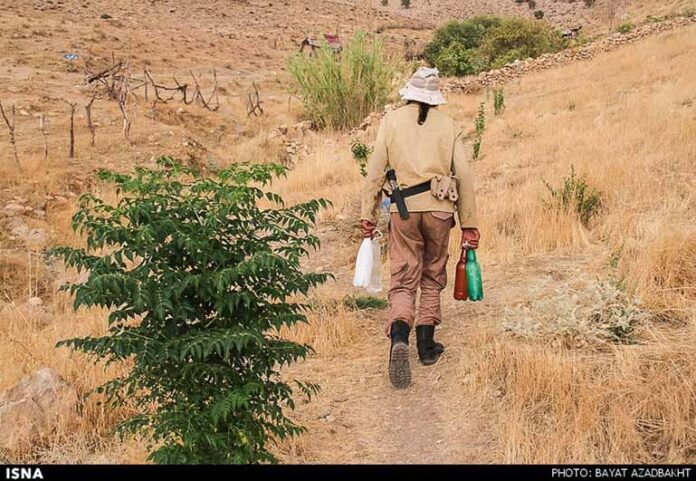
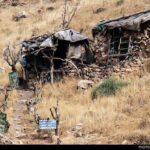
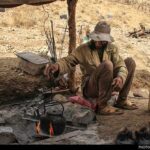
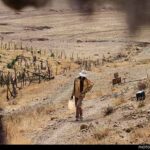
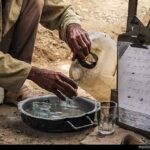
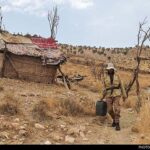
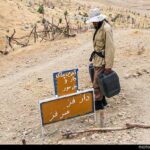
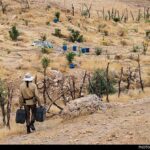
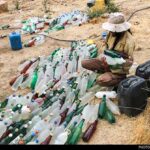
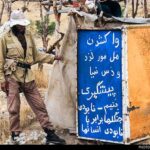
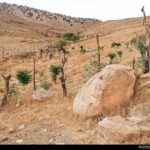
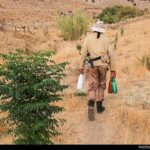
Kamran Bazvand is a rural environmentalist in western Iran who has planted over the years more than 600 saplings in an area severely affected by drought.  

Water scarcity has prompted this environmentalist who also dabbles in firefighting to carry water for miles to cater to the trees it has planted.

Kamran says he has gone through many books to learn more about ways of helping the environment and wildlife. He says he does not have a cell phone because its radio waves are hazardous to bees.

He talks about the importance of efforts to protect the environment when people from far and wide come to his place almost daily.

The following are images of the life of this environmentalist released by the Iranian Students’ News Agency:

Enemy infiltration major threat: Leader

Supreme Leader-IRGC

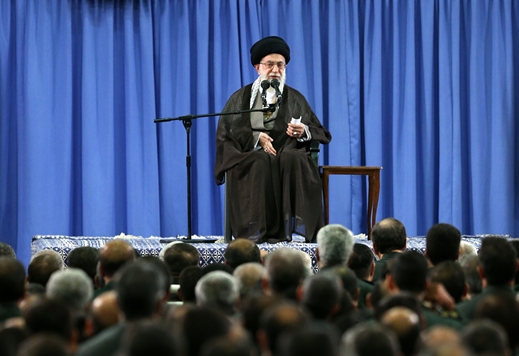
Leader of the Islamic Revolution Ayatollah Seyyed Ali Khamenei says the enemy’s infiltration is a major threat to Iran.

The Leader made the comment in a meeting with commanders and officials of the Islamic Revolution Guards Corps (IRGC) in Tehran on Wednesday.

“Economic and security infiltration is not as important as intellectual, cultural and political infiltration,” Ayatollah Khamenei said.

Of course, Ayatollah Khamenei said, different institutions, namely the IRGC, will firmly stand up to security infiltration, urging authorities to remain on the watch for economic infiltration as well.

For cultural infiltration, said the Leader, the enemy seeks to distort and undermine beliefs which underpin society.

In order to achieve political infiltration, Ayatollah Khamenei pinpointed, the enemy tries to sneak into decision-making centers.

“When a country is affected by such political infiltration, the direction in which that country moves will be according to the will of hegemonic powers,” the Leader noted.

Ayatollah Khamenei urged the nation and authorities to remain vigilant in the face of enemy schemes.

“If we are watchful, the enemy will be disappointed.”

He called for efforts to further reinforce the foundation of the Islamic Revolution and of a revolutionary way of thinking, saying, “This is the fundamental responsibility of the IRGC’s elite and all revolutionary elite in the country.”


The Iran nuclear deal; why so many misconceptions?

Obama-Congress

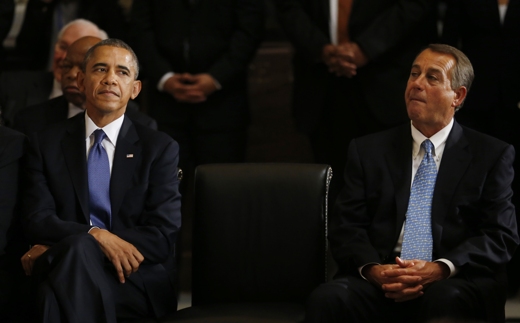
We would be overoptimistic and gullible if we thought that the confrontation between the White House and the opponents of the Iran nuclear deal would soon come to an end. The allegiance as many as 41 US Senators showed to Mr. President [by voting for the Iran nuclear deal last week] sweetened Barack Obama’s holiday weekend.

This is the opening of an opinion piece on the misunderstandings surrounding the Iran nuclear deal by Matin Moslem, an expert in international affairs, Aftab-e Yazd daily published on September 15. The following is the translation of part of that piece:

The determined occupant of the Oval Office at the White House knows well that this sweet feeling can – in due time, but not necessarily over Iran – invoke the bitterness of his ties with Congress over the past four years. A US presidential advisor has said that he sensed a strange feeling of happiness on Mr. Obama’s face when he got the news of the survival of the Iran nuclear deal in Senate, but afterward the president was in deep thoughts for a few moments.

What is the reason behind this high-stakes misunderstanding and the unprecedented confrontational attitude of Congress toward the president? Sooner or later the answer to that question will come to light. Personally, I believe Iran is not the only reason, it may be the most important one though.

When a racist individual like Donald Trump emerges as leader of Mr. Obama’s opponents or when Senator Ted Cruz from Texas opts for stand-up comedy in Las Vegas to mock President Obama, one needs to admit that something has gone wrong. Their opposition to the current occupant of the White House does not stem from their concern about US security or interests, or the Iran issue for that matter; rather, such opposition is personal or partisan at best.

[…]

Now the Iran nuclear deal – a global issue which is not necessarily a sole Washington concern – has turned into a handy excuse [to take measures] against the White House. Without considering the dangerous consequences of opposition [to the Iran nuclear deal], the opponents are busy making plans which have raised serious concerns.

These concerns have prompted leaders in France, Germany and Britain to show reactions to decisions by the US Congress. The cavalry regiment of the opponents led by Benjamin Netanyahu feels that it will entrap the US administration in the final crossroad, steal and burn the final nuclear document, but the White House’s approaches show that what they seek will remain there merely as a feeling. The White House and the State Department will not sit idly by and let the great legacy of Mr. Obama and the Democratic Party be destroyed.

A senior British diplomat based in New York says if an issue other than Iran was the case or the world had no trust in Iran, the international community and Western powers would more likely join the US Congress [in its opposition to the Iran nuclear deal], but the point is that the reverse holds true now.

He further said that Iran has been committed to its promises and the IAEA has confirmed such commitment, adding that the Iranian president too has expressed readiness for his country’s presence in international equations or as what he calls ‘constructive interaction with the international community’. Well, what else could we ask for?

If Congress is seeking to settle its partisan scores with the president, we have no commitment to join it. Mr. Kerry’s remarks that the breakdown of [nuclear] talks will isolate the United States sound correct, he further said.

This diplomat is in the right, but we are not the ones who are expected to buy this. The opponents have announced that they are not going to give up. Republican presidential candidates Donald Trump, Senator Ted Cruz and Glenn Beck, the host of a controversial TV talk show – the Glenn Beck Program – are still beating the drum of opposition and get a kick out of it.

The Tea Party movement, pro-Israel lobbying organizations in the US and the Center for Security Policy [a conservative national security think tank] all back the opponents of the Iran nuclear deal. How far will they go in their efforts – by for example blocking the Iran nuclear deal – in a bid to take revenge on the White House and the Democrats in the 2016 presidential elections?

This question concerns us, because I think that an agreement with Iran is now all but a finalized question thanks to international support it has been given by the world public opinion. Prior to the congressional debate on the Iran nuclear deal last week, John Kerry said that the agreement will matter as much as any foreign policy decision in recent history. “To oppose this agreement is, whether intended or not, to recommend a policy of national paralysis. It is to take us back directly to the very dangerous spot that we were in two years ago, only to go back there devoid of any realistic plan or option,” he added.

Education through middle school to become compulsory: Minister

635707414126960602

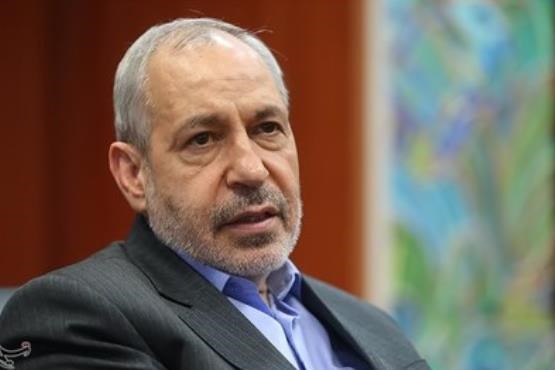
Education Minister Ali Asghar Fani has said that government seeks to envision nine years of compulsory education for Iranian children in the Sixth Development Plan, adding that, if families fail to comply with such regulations, the ministry will take action through the Judiciary.

What comes next is the translation of part of the educations chief’s remarks at a press conference Sharq daily covered on September 15:

On education of foreign nationals in Iran and reports that they are not registered if they don’t pay tuition fees, the minister said, “We have no accurate statistics about the number of Afghan students in the country. The figures which are available are mostly based on estimates. Some 408,000 foreign students received education in Iranian schools last year; as of yesterday, an additional 48,000 had been signed up.”

Fani further said that some 13.25 million students are expected to attend school this year – over 1.5 million in private schools and more than 11 million in public schools. “If for every 15 students one teacher were needed, we would need a workforce of 750,000, while at present we have 950,000 on our payroll.”

Fani said that downsizing of the workforce does not constitute a halt to new recruitment and added, “In September 2016, a number of student teachers will be recruited.”

When asked about the reason why the ministry employs more men than women, Fani said, “Presently, the ministry has 518,077 women and 460,210 men on its payroll. Over 51 percent of students are girls and 49 percent are boys. In Tehran at present we have 2,300 female high school teachers who are surplus to our needs. Therefore, in recruitment we need to consider those gaps.”

He went on to say, “Women account for 81 percent of our staff members in Tehran and for the very reason, we need to pay special attention to the employment of men. As for the employment of women in managerial positions, the ministry seeks to hire more women than men for such positions.”

Fani said, “You cannot find any student anywhere in Iran who is denied education because of a lack of education facilities. If a child cannot go to school, economic, family and other problems are to blame.”

The education minister further said, “We have tapped into what is at the disposal of the Interior Ministry and the Ministry of Cooperatives, Labor, and Social Welfare to minimize the number of problems which prevent students from going to school, and the Education Ministry is fully prepared to bring under its coverage the students who are entitled to education.”

On teachers who are behind bars, Fani said, “I am following up the case so that the teachers who are serving prison term are hopefully released as schools reopen.”

The education minister said, “The government has allocated a budget of over $8 billion for education this year which means a per capita share of over $650, but that is not enough.”

In response to a question on non-Persian textbooks being taught in some provinces, he said, “The ministry started studying the issue two years ago. If a final decision is made in this regard, we will implement it.”

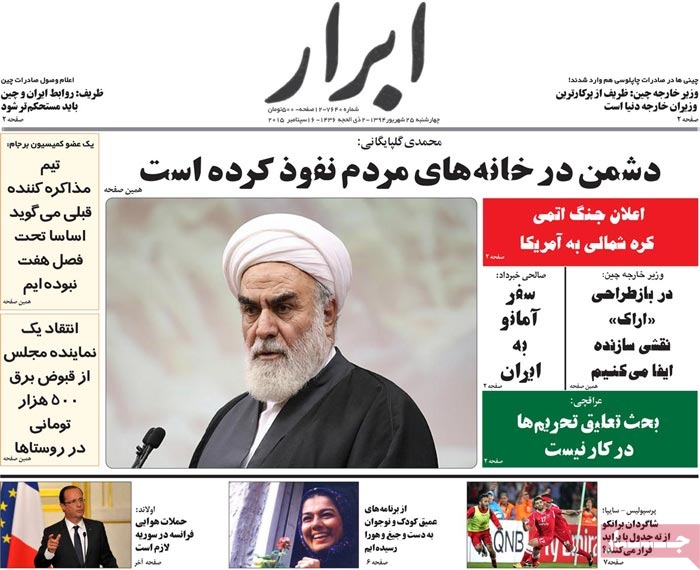
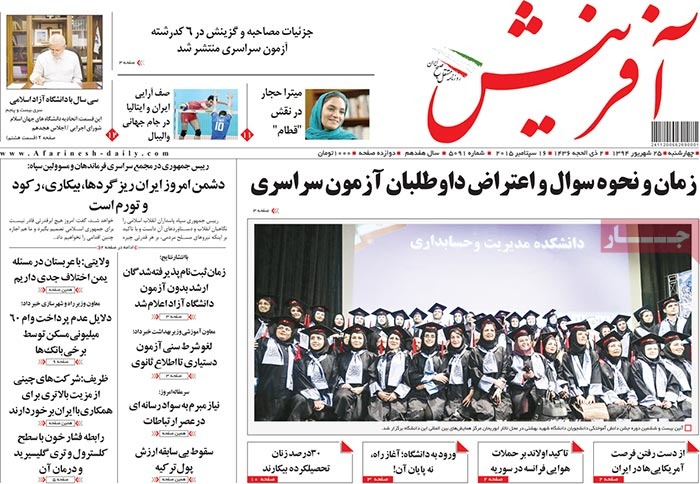
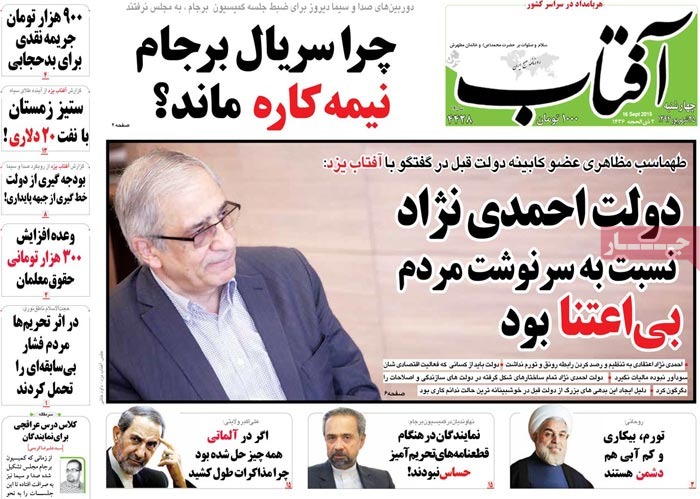
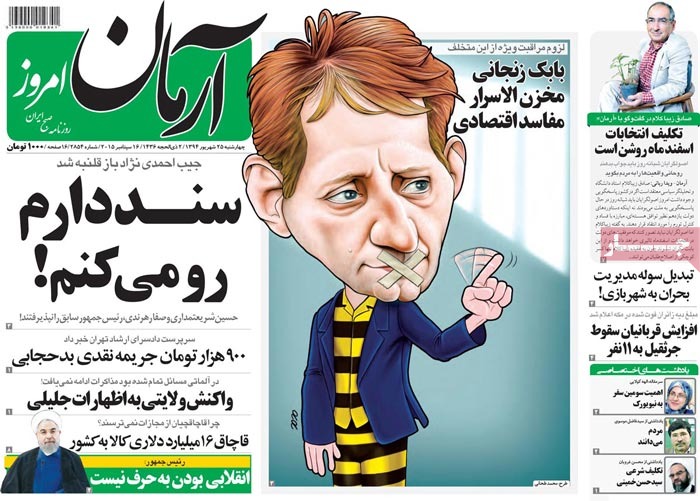
A look at Iranian newspaper front pages on September 16

Iranian Newspapers Headlines

The comments of President Rouhani at a gathering of Revolution Guards commanders dominated the front pages of Iranian newspapers on Wednesday.


Ettela’at: “Independence should come with all legitimate freedoms,” President Rouhani said at a gathering of IRGC commanders from across the nation.

He further said that the responsibility to safeguard the Islamic Revolution does not solely lie with one single institution.


Abrar: The Chinese foreign minister has described his Iranian counterpart as one of the busiest foreign ministers in the world.


A look at Iranian newspaper front pages on September 16


Afarinesh: [The Supreme Leader’s advisor] Ali Akbar Velayati has said that Iran has differences with Saudi Arabia over Yemen.


A look at Iranian newspaper front pages on September 16


Aftab-e Yazd: “The Ahmadinejad administration didn’t care about what was happening to the public,” said Tahmasb Mazaheri, a Cabinet member of the previous government.

Aftab-e Yazd: President Rouhani has described inflation, unemployment and drought as enemies of the country.

Aftab-e Yazd: “If everything was settled in Almaty, why did the talks last so long?” asked Ali Akbar Velayati, an adviser to the Supreme Leader.

[He was reacting to claims by the former nuclear negotiator Saeed Jalili that his team nailed down the deal in Kazakhstan.]


A look at Iranian newspaper front pages on September 16


Arman-e Emrooz: Babak Zanjani [a young billionaire who stands accused of committing massive fraud] is a wealth of information about corruption.

Authorities should keep a close watch over this offender.

Arman-e Emrooz: Smugglers sneak in more than $16 billion in goods into the country.

Why aren’t smugglers afraid of punishment?


A look at Iranian newspaper front pages on September 16


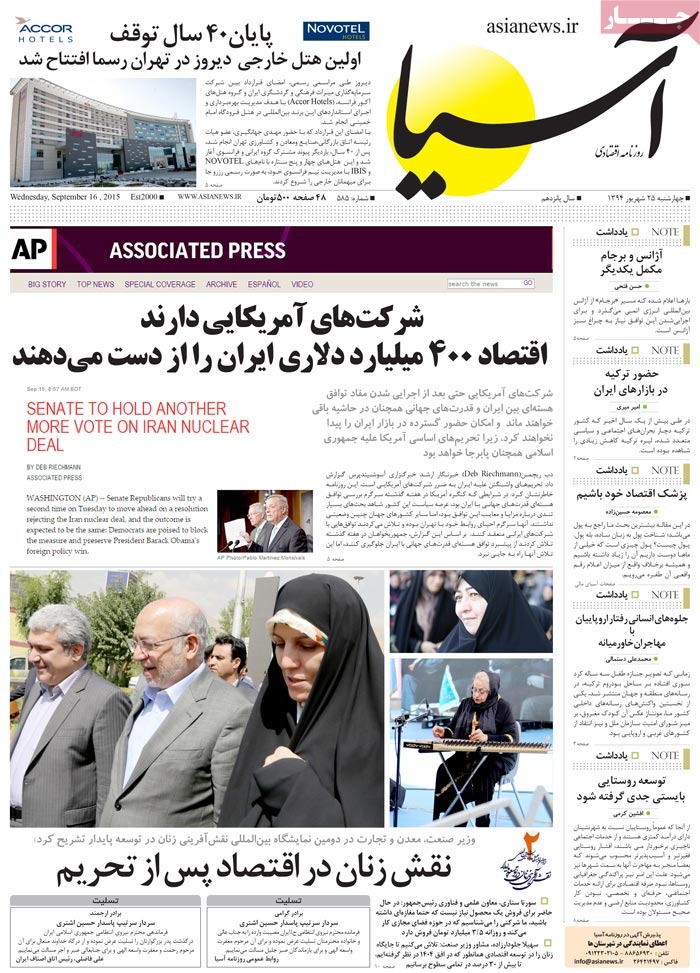
Asia: After a 40-year hiatus, a first foreign hotel has been inaugurated in Tehran.


A look at Iranian newspaper front pages on September 16


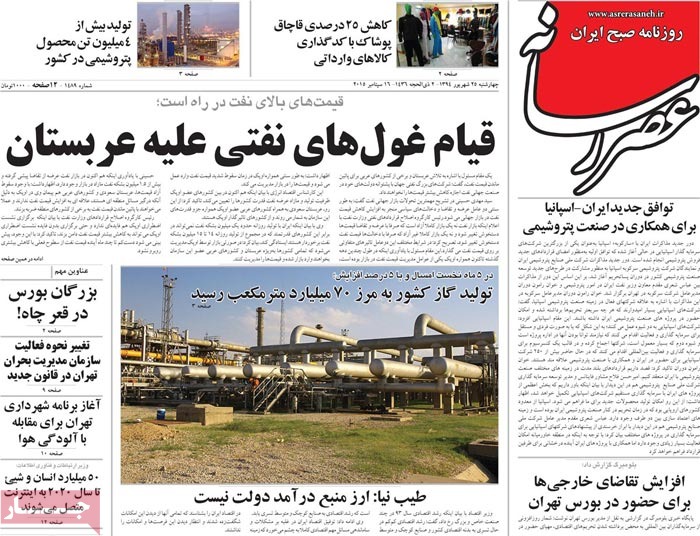
Asr-e Rasaneh: Iran’s natural gas production in the first five months of the year registered a five percent rise to reach 70 billion cubic meters.


A look at Iranian newspaper front pages on September 16


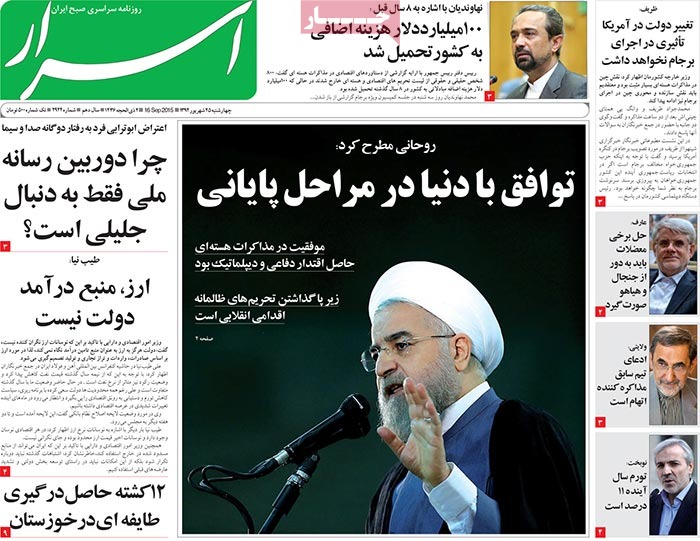
Asrar: The chief of staff of President Rouhani has said that during the tenure of the previous government the country paid $100 dollars in unnecessary costs.

Asrar: A tribal feud in Khuzestan Province has left a dozen people dead.


A look at Iranian newspaper front pages on September 16


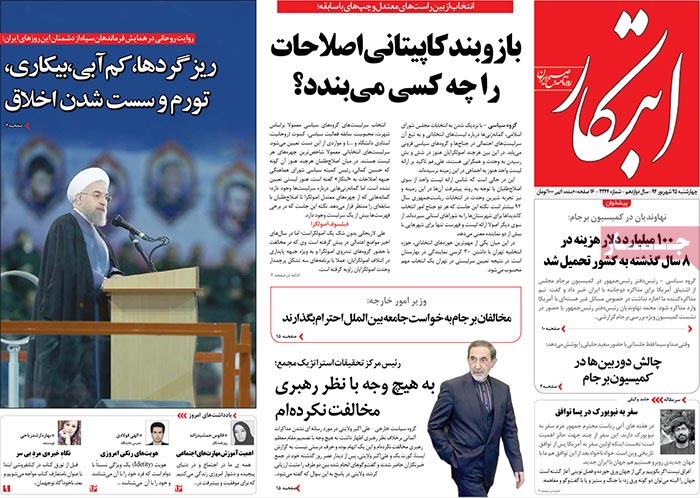
Ebtekar: “I have never objected to the Supreme Leader’s views,” said the head of the Strategic Research Center of the Expediency Council.


A look at Iranian newspaper front pages on September 16


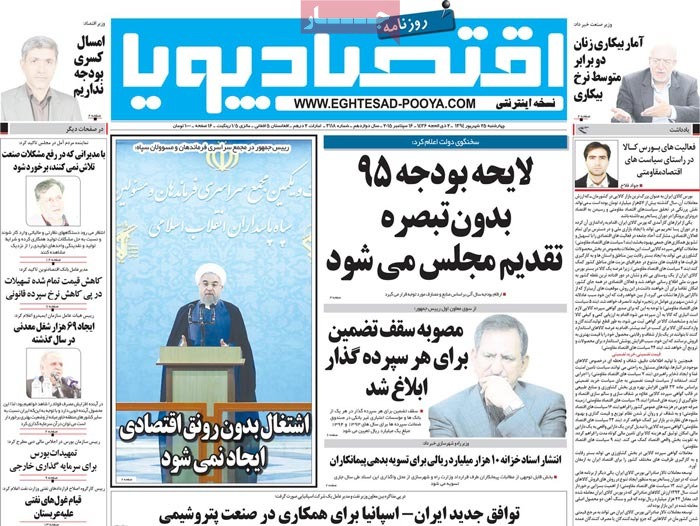
Eghtesad-e Pooya: Iran and Spain have agreed to launch petrochemical cooperation.


A look at Iranian newspaper front pages on September 16


Emtiaz: Tehran Municipality has taken on air pollution by introducing hybrid taxis and electricity-powered motorcycles.


A look at Iranian newspaper front pages on September 16


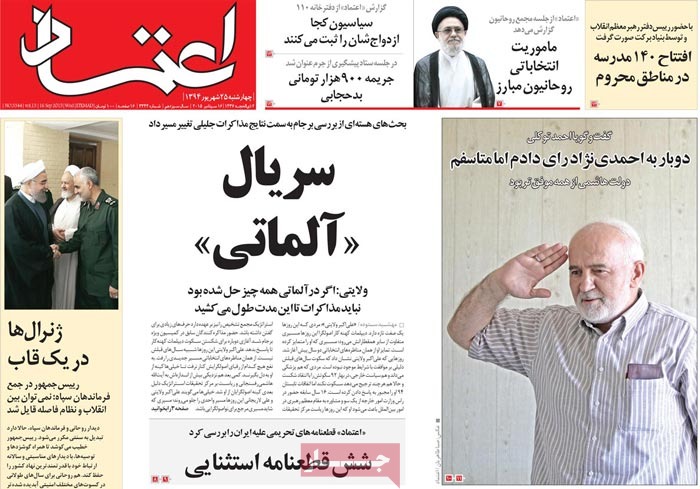
Etemad: Ahmad Tavakoli has said that he voted for Ahmadinejad twice, but that he regrets his decision.

“The Rafsanjani administration was more successful than others,” said the [principlist] Tehran MP.


A look at Iranian newspaper front pages on September 16


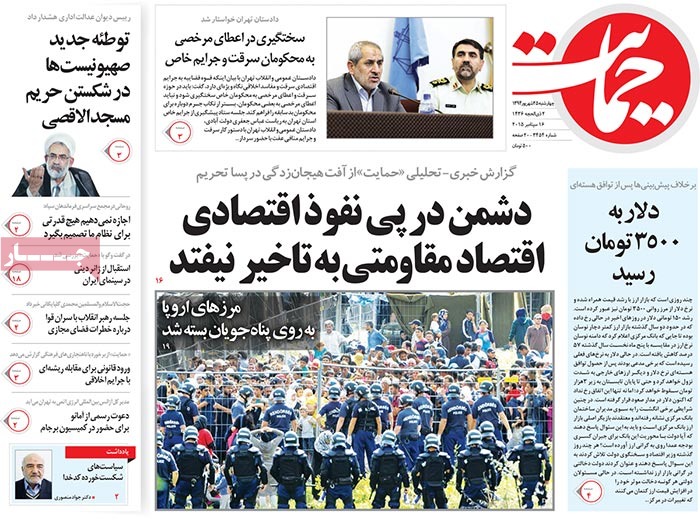
Hemayat: Tehran’s prosecutor has called for tougher furlough regulations when it comes to convicts found guilty of robbery and special crimes.


A look at Iranian newspaper front pages on September 16


Jomhouri Islami: Parliament’s vice-speaker has criticized Islamic Republic of Iran Broadcasting (IRIB).

“Why is it that IRIB cameras show up for coverage of JCPOA Review Committee sessions only when Jalili is here?” Abutorabi-Fard wondered.
 

A look at Iranian newspaper front pages on September 16


Kaenat: Seven people accused of playing a role in a deadly bomb explosion at a Shiite mosque in Kuwait have been sentenced to death.

Kaenat: The economy minister has said that growth is finding its way into the body of the country’s economy.


A look at Iranian newspaper front pages on September 16


Kayhan: Political gamesmanship with the country’s frozen assets will kill public trust in the administration, a few MPs have said in an interview with the daily.


A look at Iranian newspaper front pages on September 16


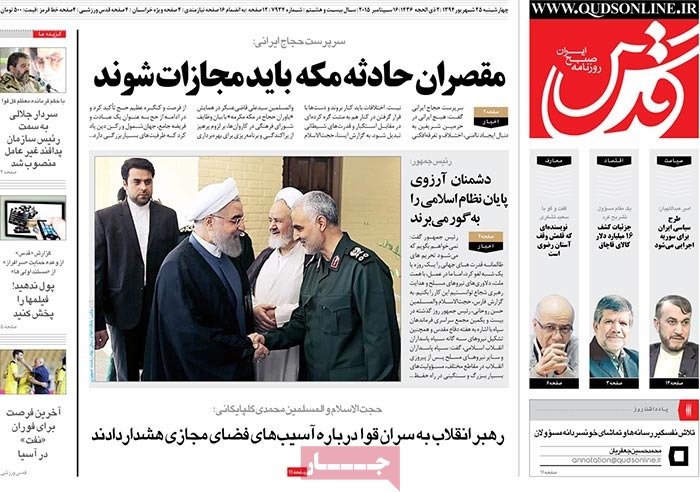
Qods: The caretaker of Iranian Hajj pilgrims has called for those responsible for the deadly crane collapse in Mecca to be punished.
 

A look at Iranian newspaper front pages on September 16


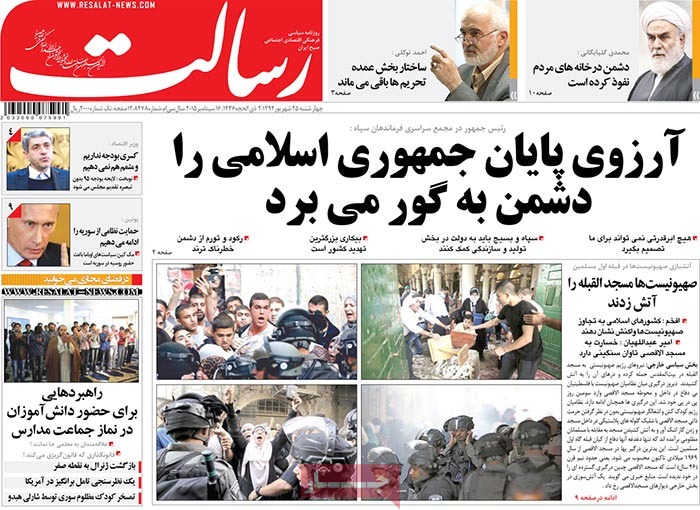
Resalat: “The enemy will take its dream of seeing the end of the Islamic Republic to the grave,” said the president.


A look at Iranian newspaper front pages on September 16


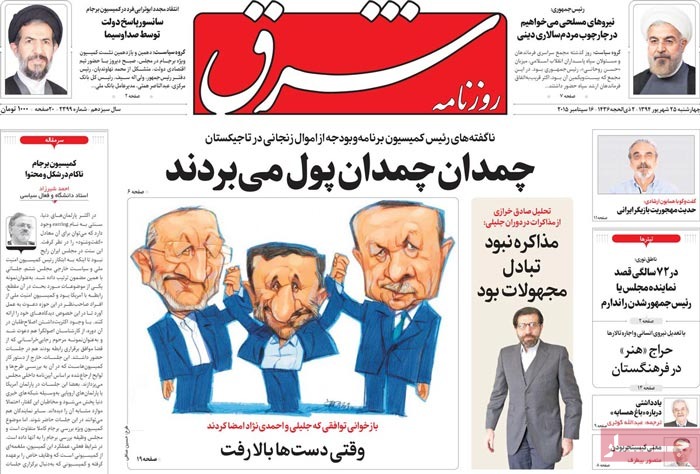
Sharq: The president has said that the country needs armed forces who act in line with the principles of religious democracy.

Sharq: Former Parliament Speaker Ali Akbar Nategh Nouri has said that at 72 he has no intention of running for parliament or president.


A look at Iranian newspaper front pages on September 16


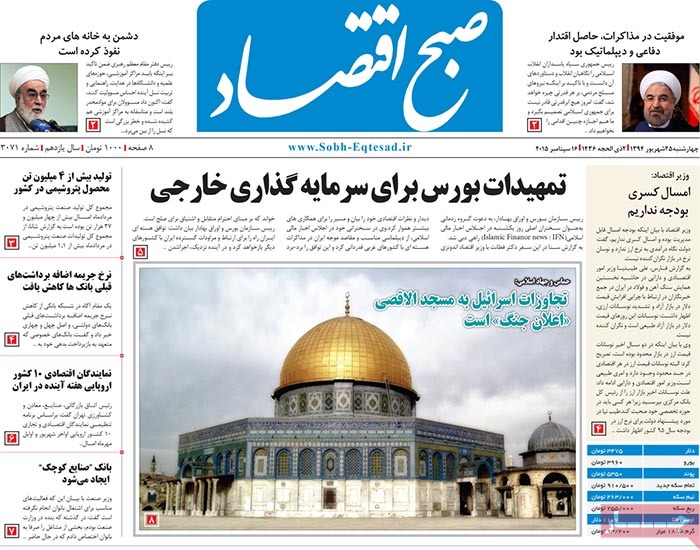
Sobh-e Eghtesad: “The enemy has found its way into Iranian houses,” said the chief of staff of the Supreme Leader.


A look at Iranian newspaper front pages on September 16


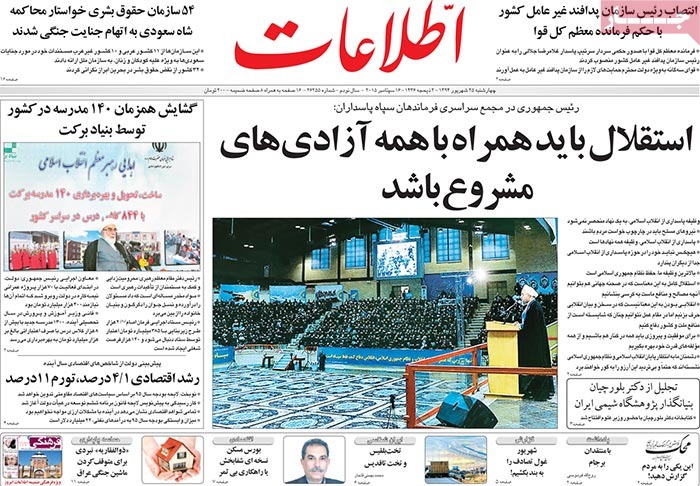
Highlights of Ettela’at newspaper on September 16

Ettelaat

 “Independence should come with all legitimate freedoms,” President Rouhani said at a gathering of IRGC commanders from across the nation.

He further said that the responsibility to safeguard the Islamic Revolution does not solely lie with one single institution.

 The commander in chief of the armed forces has appointed Brigadier General Gholamreza Jalali as chairman of the Passive Defense Organization.

Ayatollah Khamenei has urged the three branches of government, particularly the executive, to support the Passive Defensive Organization.

 Fifty-four human rights organizations have called for the trial of Saudi King Salman on war crimes charges.

It came as 32 countries expressed concern over violation of human rights in Bahrain.

 Barakat Foundation simultaneously opens 140 schools in impoverished areas across the country.

The chief of staff of the Supreme Leader has said that Ayatollah Khamenei underlines efforts to eliminate poverty and assist the needy.

 The government predicts economic growth to hover around 4.1 percent next year. Inflation is estimated to be in the neighborhood of 11 percent.

The director of the Management and Planning Organization has said that next year’s budget will be drafted based on principles of the resistance-based economy.

 The efforts of Dr. Mohammad Bolurchian, the founder of Chemistry Research Center, have been praised.
The minister of science was on hand for the inauguration of a library named after Dr. Bolurchian.