Wednesday, December 24, 2025
Home Blog Page 4761

Academics appeal to officials to launch anti-extremism campaign

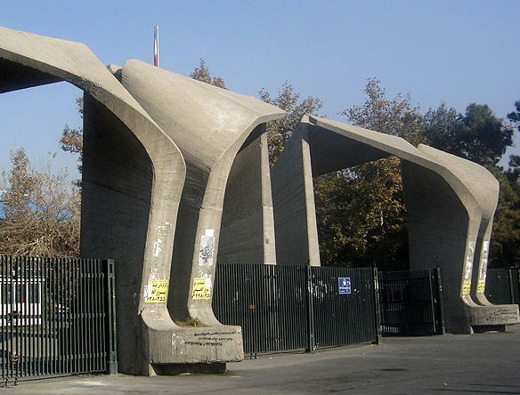
tehran university

In an open letter to the heads of the three branches of the Islamic Republic, over 700 Iranian academics have called for efforts to ensure the privacy of universities.

What appears next is the translation of an excerpt of the letter that Ettela’at daily ran on May 11:

Knowledge is key to our country’s power and progress, and universities play an instrumental role in generating modern knowledge and in raising social awareness.

To play an effective role in cementing the scientific foundation of the country, universities need to enjoy sufficient independence in decision making, have enough security to think freely and be given a chance to contribute on the policymaking front.

The exertion of pressure coupled with interferences in the internal affairs of universities, either apparently legal or at times beyond the bounds of law, is in stark contrast with the principles and weighty responsibilities assigned to universities.

Among seemingly legal pressures exerted on universities toward the end of last year [ended on March 20] were two unpleasant incidents which irked a large number of people at universities.

One such incident was the unprecedented role of an organization in preventing a cultural event from being held at Ferdowsi University in Mashhad, it had been granted legal permission though.

The other controversial incident took place when another organization wouldn’t allow an MP to deliver a speech at Shiraz University. Likewise, a legal permission for the speech had been issued.

To add insult to injury, organized pressures beyond the law by some individuals and influential factions are constantly brought to bear on universities.

Such pressures interfere with the fulfillment of responsibilities of universities and make academics feel frustrated and insecure.

We expect the esteemed heads of the three branches of the government, who have the greatest responsibility by law and are known as educated and respectful figures by academics and university students, to use all their powers, particularly their authority in the Supreme Council of Cultural Revolution – which is responsible for laying down rules and regulations for universities – to safeguard the privacy of universities.

Also we want them to make sure unwarranted interference and pressures beyond the law by some organizations on universities become a thing of the past.

Iran trade team on rare US visit

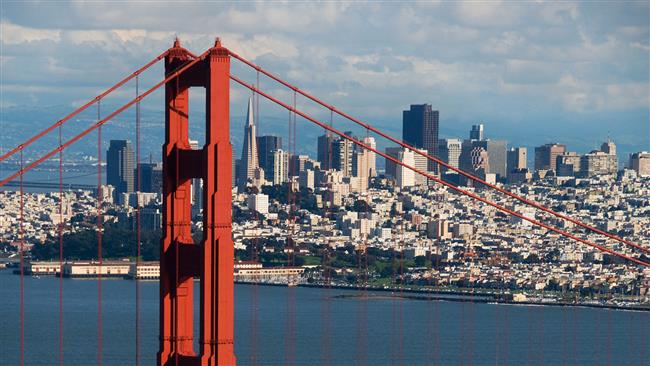
San Francisco

A 15-member delegation comprising Iranian traders, entrepreneurs and artists is reportedly in the United States on a rare visit.

The visit – which officials say started two weeks ago and is expected to end next week – has been arranged by a US-based non-governmental institution called Learning.

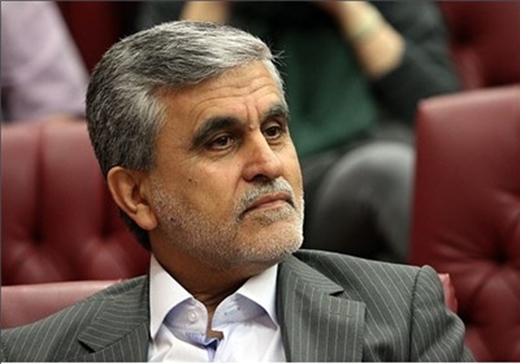
Hamid Hosseini, a veteran Iranian merchant and a member of Tehran Chamber of Commerce, has told Mehr News Agency that the purpose of the visit is “to hold talks with American cultural institutes, universities and trade sectors and present Iran’s cultural and economic capacities and potential.”

“The delegation intends to present a vivid and real picture of Iran which has been malignantly distorted in recent decades,” Hosseini said, adding that a series of meetings have been planned in Washington and San Francisco.

“Iranian and American traders are interested in cooperating with each other,” said Hosseini, who is also a board member of the Union of Iranian Oil Products Exporters. “This is while the Americans cannot trade with Iran due to the sanctions,” he added.

The visit by the Iranian delegation to the US comes at a time that global businesses are awaiting an expected removal of sanctions against Iran in light of an emerging final deal over the country’s nuclear energy program.

Iran and P5+1 are presently working on the text of the final deal which – if concluded – envisages the removal of some economic sanctions against Iran in return for some restrictions in Iran’s nuclear energy activities.

The prospects for the lifting of sanctions have already encouraged trade delegations from several European and Asian countries to visit Iran over the past weeks.

In April, reports said a 22-member American trade delegation was visiting Iran to explore the avenues for post-sanctions investments. The visit had reportedly been arranged by Learning.

South Africa opposed to attacks in Yemen: Minister

bac453db-2b02-4d8d-8d03-306bee79c795

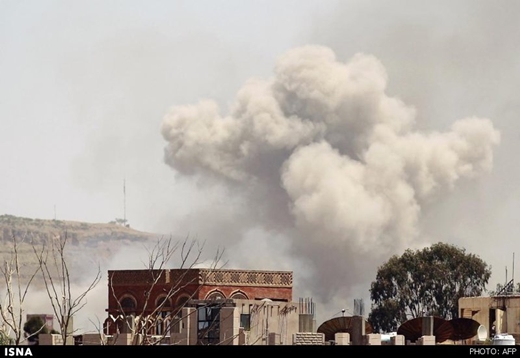
The South African minister of international relations and cooperation has rejected a military approach to the current crisis in Yemen, saying that using force against the impoverished Arab country could further destabilize the Middle East and instigate more chaos and insecurity in the world.

Maite Nkoana-Mashabane said on Sunday that the crisis in Yemen has no other solution than a diplomatic one, saying that Pretoria has initiated efforts aimed at mediating the conflict in Yemen.

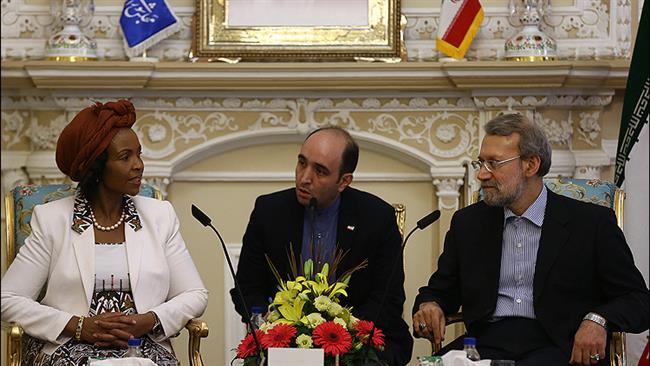
The South African minister made the remarks in a meeting with Iranian Parliament (Majlis) Speaker Ali Larijani during his one-day visit to the Iranian capital Tehran.

South Africa has started communicating with the Arab League to find a political solution to the crisis in Yemen, Nkoana-Mashabane said, adding that the adoption of the military approach in dealing with the crisis could bring about “unwanted and harmful” outcomes including the spread of insecurity and terrorism in the region and the world.

The Iranian parliament speaker, for his part, described as “robust and growing” the relations between Tehran and Pretoria, saying that the two countries have enjoyed friendly relations since the fall of the apartheid regime in South Africa.

Larijani also called for the removal of the existing obstacles in the way of expanding bilateral relations, especially those related to the nuclear sanctions imposed on Iran’s banking and financial system.

He added that cooperation could have positive outcomes for sustainable peace and security in the region and the world.

Iran, South Africa should up cooperation

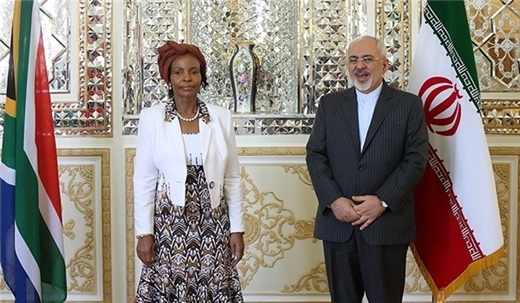
Earlier in the day, Iranian Foreign Minister Mohammad Javad Zarif also met with Nkoana-Mashabane, calling for more economic and business cooperation.

During the meeting Zarif said that Iran is interested to raise the current level of ties in various economic and business fields.

Despite the existing bans imposed on Tehran over its nuclear program, Iran and South Africa could cooperate in major fields such as oil and gas as well as financial and banking activities, Zarif said.

The Iranian foreign minister also said what matters to Iran most is the “mechanisms for implementing agreements” with South Africa.

The South African foreign minister, for her part, described as important the expansion of political and economic relations, saying the main objective of her trip to Tehran is to trigger a sensible and achievable growth in the bilateral ties.

Gas exports to Europe not economical: Iranian official

139402201007452735270793

It is not economically feasible to start exporting gas to Europe, an Iranian energy official dealing with the international affairs and contracts announced.

“Given a decline in the gas price in that continent, it is not at the moment economically feasible to export gas to Europe,” Mohsen Ghamsari, director for international affairs of the National Iranian Oil Company told the Tasnim News Agency on Sunday.

Known as the world’s top gas reserves holder with an estimated 33.6 trillion cubic meters, Iran is an attractive market for Europeans seeking alternative sources to improve their resilience to gas supply disruptions.

Russia is now the biggest supplier of gas to Europe, with about a third of Europe’s current gas requirements covered by Russian gas.

Back in April, Iran’s ambassador to Turkey said Tehran was working out details of a project to export its natural gas to Europe through Turkey.

“A basis for transferring Iranian gas through Turkey has been established and details are still being worked out,” Alireza Bigdeli said.

In the same month, Miguel Arias Canete, the European Union’s energy commissioner, said they were open to import Iranian gas, which could break their dependency on Russia.

However, Iranian President Hassan Rouhani in September 2014 ruled out speculations that the country might provide Europe with natural gas should Russia decides to halt energy exports to the European states.

“Today’s conditions are not such that if Russia stops selling gas to Europe, Iran can serve as an alternative for Russia’s gas exports to those countries,” President Rouhani had announced in an interview with Russia-2 television channel.

S. African FM blasts sanctions against Iran as “illogical, illegal”

13940220000760_PhotoI

South African Foreign Minister Maite Nkoana-Mashabane stressed her country’s opposition to the sanctions against Iran, calling the embargos as “illogical and illegal”.

“We have never supported the sanctions against Iran and believe that they are illogical and illegal,” Mashabane said, addressing the inauguration ceremony of the 12th Joint Iran-South Africa Economic Commission co-chaired by Iranian Foreign Minister Mohammad Javad Zarif in Tehran on Sunday.

She referred to the nuclear talks between Tehran and P5+1 (the US, Russia, China, Britain and France plus Germany), and said, “We support the trend of these negotiations and believe, within the same framework, that the US Senate measure can slacken this trend.”

Zarif, for his part, described relations between Tehran and Pretoria as excellent, and said, “We can witness expansion of bilateral ties in all fields using the existing capacities.”

The US Senate on Thursday advanced a legislation that would allow the Congress to review a nuclear deal between world powers and Iran.

After nine days of hard work in Lausanne, Switzerland, Iran and P5+1 reached an understanding on April 2 which laid the ground for them to start drafting the final nuclear deal over Tehran’s nuclear energy program ahead of a July 1 deadline.

Reading out a joint statement at a press conference with EU foreign policy chief Federica Mogherini in Lausanne on April 2, Zarif said according to the agreement, all the US, EU and UN Security Council sanctions against Iran would be lifted under the final deal.

The delegations of the seven nations are now drafting the final deal.

Iran nuclear talks progressing well: Nuclear chief

salehi

Head of the Atomic Energy Organization of Iran (AEOI) Ali Akbar Salehi on Sunday said the talks with world powers over Tehran’s peaceful nuclear program are advancing well.

“The negotiations are being pursued within specified frameworks, and nothing is done beyond those frameworks,” Salehi told reporters in Tehran, on the sidelines of a ceremony held to commemorate martyred Iranian nuclear scientists.

He also underscored that the country’s negotiators, who are engaged in talks with the group of six world powers (Russia, China, the US, Britain, France and Germany), are vigorously defending Iran’s national interests and sovereignty.

Salehi further made it clear that whatever the outcome of the talks, it will be according to agreements and consensus among the Iranian officials.

Iran and P5+1, also known as E3+3, are in talks to hammer out a lasting accord that would end more than a decade of impasse over Tehran’s peaceful nuclear program.

On April 2, the two sides reached a framework nuclear agreement in Lausanne, Switzerland, with both sides committed to push for a final deal until the end of June.

Diplomats from Iran and the EU wrapped up the latest round of negotiations in New York and are slated to resume the talks in Vienna on May 12 to press on with the task of drafting the comprehensive deal.

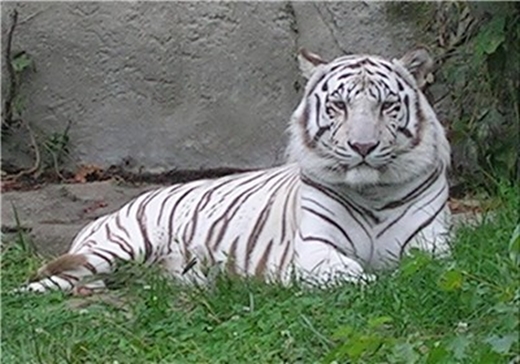
Iran to import rare white tiger from Germany

tiger

An official at Iran’s Environment Protection Organization (IEPO) said a white tiger will be brought to Iran from Germany for public display at a zoo in Tehran.

The IEPO has given permission for the rare animal’s imports and Tehran’s Eram Zoo has paid for it, Ali Teimouri told Tasnim on Sunday.

He said inspection of the zoo has verified that the place designated for keeping the tiger is ready and in a good state.

Should Iran Veterinary Organization grant permission, the white tiger will be delivered this week, Teimouri noted.

The next plan is to import a Bengal tiger as a mate for another one being kept at the Eram Zoo, he added.

According to Big Cat Rescue, white tigers (a recessive mutant of the Bengal tiger) are produced by generations upon generations of inbreeding, a process that causes a lot of defects and deformities.

It is also important to remember that breeding of white tigers and lions can often be problematic.

In 2011, the American Zoological Association (AZA) formalized a ban on the breeding of white tigers, white lions and king cheetahs by their member zoos.

Moreover, like their colored brethren, white lions and white tigers have been threatened by hunting and habitat destruction, and are both believed to be almost extinct in the wild.

Yemeni crisis: Arab media on the same wavelength

KONICA MINOLTA DIGITAL CAMERA

The story of the new Saudi king evokes The Emperor’s New Clothes*; an emperor who comes among people unclothed but the admiration expressed by those surrounding him forces people to praise his new suit, ignorant of the fact that people have had their fill of the king’s indecent manners.

The new outfit King Salman has draped Saudi Arabia’s policies with is unbecoming of all political and human principles, but the fact is that the Arab media are trying to depict the outfit as beautiful and elegant. They are unaware that what they’re earnestly doing has done little to change the impact the Saudi policies have had [in the region].

Alef, a news website, has published a report on the news coverage by foreign and Arab media of the Yemeni crisis, explaining how their biased look at a regional crisis is to benefit the new Saudi king and his odd policies. The following is the translation of excerpts of the report:

These media – which do not see the deadly Saudi airstrikes on Yemen and Riyadh’s undemocratic efforts to form a coalition against popular forces there – aim to counter Ansarullah and the policies of the Houthis in Yemen.

Al Riyadh [a pro-government Saudi daily newspaper] has blamed the Shiites and popular forces for unrest in the country.

To bolster the Saudi coalition against Yemen, this newspaper magnifies Iran’s role in the Yemeni crisis to distract public opinion and conceal the inhuman acts behind the deep-rooted feuds.

[…]

A coalition to divert public attention

Diverting the attention of people is one of the methods media use to manipulate public opinion. When public opinion becomes sensitive to an issue, they [the media] create parallel news stories to push public opinion off course. To that end, they also try to slant the new stories and play up their own policies.

Accordingly, Al Arabiya [a Saudi-owned pan-Arab television news channel] carried headlines such as “Kerry urges Houthis, allies to enter talks”, “Yemen’s [P]GCC membership is rightly back on the agenda” and “Iran tried to break naval blockade, Yemen minister says” to twist the facts.

A closer look at Al Arabiya’s headlines on Yemen – which highlight the killing of Arab soldiers who are fighting the Houthis to bring the Yemeni crisis to an end – shows that the readers get the least information on collateral damage caused by the operations of the Saudi-led coalition.

Irrespective of the true story and the interpretation of the policies provided by the two sides of the conflict, the coverage by the Arab media of the Saudi airstrikes on Yemen reveals one point: an unwritten alliance has been formed among the Arab media to reflect the ground realities in line with the policies of the Al-Saud family.

Al Jazeera [a Doha-based broadcaster funded by the House of Thani, the ruling family of Qatar] is another Arab medium which underscores foreign meddling in Yemen, but it looks as though the editors-in-chief of this broadcaster do not see the Saudi aggression. Al Jazeera carries an item on volunteer forces – who join the fight on ISIL – and picks the following headline for it: “Iraq’s Badr Organization Offers to Join Yemen’s Ansarullah in War against Al-Saud”.

London inflames the situation

The use of “the Yemeni government” for the cabinet of the ousted Yemeni president is another diversion in the media world. The BBC takes a similar stand and uses the term “the government-in-exile” and gives [extensive] coverage to the Yemeni news and views, especially those which are against Iran.

Following remarks by the Iranian foreign minister on [Iran’s four-point initiative for] solving the Yemeni crisis, the BBC picks this headline: “Yemen government rejects Iranian peace plan” to reflect comments by the spokesman of the former Yemeni government [Rajeh Badi] who is in Qatar.

Instead of covering news items on the Saudi aggression on Yemen, the BBC always tries to play up [what it calls] Iran’s interference in the Arab country’s [internal] affairs, releasing undocumented remarks by members of the former Yemeni government or analyses by European and American experts and officials.

The BBC’s use of rebels for the country’s popular front merits attention. Viewers have not forgotten the word “militants” – the BBC’s term of choice for ISIL forces in Syria. The various denotations the British medium uses for the former Yemeni government and the Arab country’s popular front – compared with what it employs for other regional crises – clearly discloses the BBC’s [biased] media policies.

Al Riyadh, Al Arabiya and Al Jazeera in cooperation with the BBC are trying to display the new clothes of the Saudi King’s policies as something beautiful and fancy. They also try to divert public opinion by portraying the Saudi war measures as something that serves the best interests of the region.

They should not forget the fact that the audiences in the new media age are searching for the truth in a more dynamic fashion, and that multiple media have stepped in to break a [media] monopoly over recounting the events. This has rendered their efforts – to influence public opinion – more complex than before.

The Emperor’s New Clothes is a short tale by Hans Christian Andersen about two weavers who promise an Emperor a new suit of clothes that is invisible to those who are unfit for their positions, stupid, or incompetent. When the Emperor parades before his subjects in his new clothes, no one dares to say that he doesn’t see any suit of clothes until a child cries out, “But he isn’t wearing anything at all!”

Iran, UN discuss sending human aid to Yemen

5

Iranian Deputy Foreign Minister for Arab and African Countries Hossein Amir Abdollahian and UN Under-Secretary-General for Humanitarian Affairs Valerie Amos discussed sending human aid to Yemenis.

Amir Abdollahian in a phone call with Amos slammed Saudi aggression against Yemen, including attacks on civilian targets in Sa’dah and Amran provinces.

He reiterated that the measures would violate international rules and human rights principles.

“The Islamic Republic of Iran expects the UN envoy in Yemen Ismail Bin Al-Sheikh Ahmed to act urgently and take steps for ending the attacks and preventing the escalation of human crisis,” he said.

He also said Iran is ready for sending fuel and oil products to Yemeni ports, medical teams and establishing field hospitals in Sana’a, Aden and Sa’dah and transferring foodstuff to Djibouti or directly to Yemen after arrangements with the UN.

Valerie Amos, for her part, appreciated Iran’s efforts and supports for sending humanitarian aid to Yemen, and said specialist organizations and workgroups would step up the operations of sending aid to Yemen.

Illusion of ‘Shia crescent’ is a failed scenario: IRGC

Ramezan Sharif

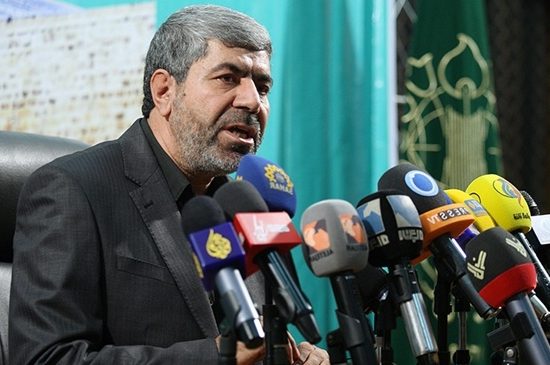
The director of the Islamic Revolution Guards Corps (IRGC) Public Relations Department said on Saturday that “illusion of a Shia crescent” is a “failed scenario” advocated by the U.S. and the Zionist regime of Israel.

General Ramezan Sharif made the remarks in response to attribution of the sentence “A Shia crescent is being formed” to IRGC top commander Major General Mohammad Ali Jafari.

Attributing this sentence to the IRGC commander is “a partial interpretation” and “distortion” of his analysis of the situation in the Mideast region, Sharif stated.

He added that the U.S. and the Zionist regime of Israel make accusations against Iran in line with their policy of “Iranophobia” and “Shiaphobia” with the aim of causing schism in the Islamic world.

He also slammed the strategy of Shiaphobia and illusion of a Shia crescent as “defeated propaganda”.