Tuesday, December 23, 2025
Home Blog Page 4757

Iranian tower runner breaks record with an eye to another flight of stairs

Major Tavakol Rahimi3

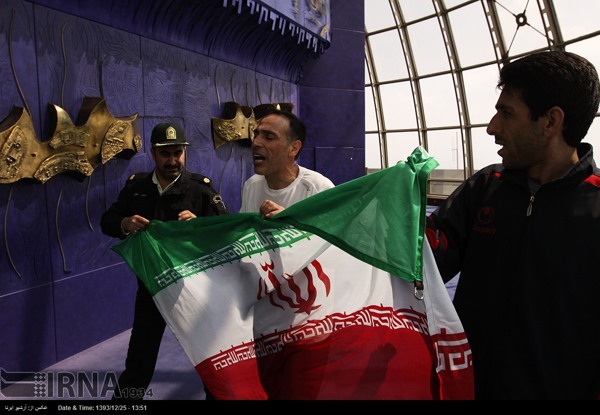
Major Tavakol Rahimi, an Iranian police officer, broke the world’s stair climbing record after ascending a flight of 1,746 stairs at Tehran’s Milad Tower in 12:42 minutes. The previous record holder was an American who mounted a set of 1,500 stairs in 16:40 minutes.

He says the paperwork has been filed for an ascent of Burj Khalifa, an 828-meter spired skyscraper in Dubai and the world’s tallest, adding he seeks to break his own record. [The tower in Dubai has 2,909 stairs from the ground floor to the 160th floor.]

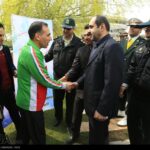
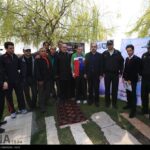
IRNA has filed the following images of the Iranian tower runner:


Selfless teachers who put their students first

Teachr

Teaching is a labor of love and real teachers are the ones who put the needs and interests of their students ahead of theirs. They are selfless and make sacrifices to bring a smile to the face of their students. After all, they are supposed to be a role model for students, and society at large, to promote humanity.

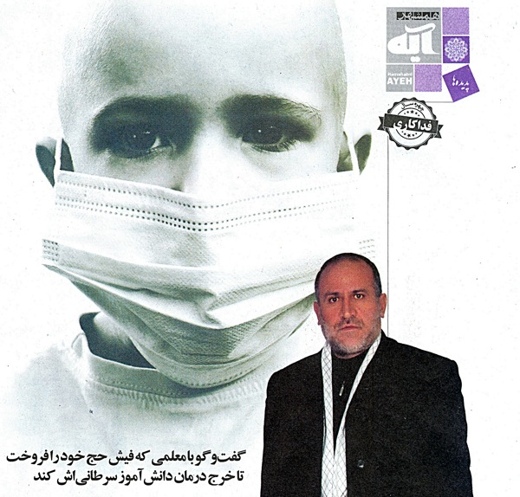
Hamshahri Ayeh, a monthly, has conducted an interview with one of these selfless teachers who tries his best to cheer up an ailing student of his. The following is the translation of part of the interview:

A teacher serving in a rural area has gone to great lengths to help a student of his. With fatherly love, he pledged to stand by his ailing student when Soheil lost his hair as a result of chemotherapy.

In his bid to help his student, Kazem Jafari even sold his minor Hajj permit [a permit that allows Muslims to set out on the most important spiritual trip of their lifetime]. That is not all; the teacher now wants to spend all his pension savings on the treatment of Soheil.

The teacher is not pleased about the fact that his measures have found their way to news media, yet he is hopeful that it will raise awareness and invite more benefactors to help patients like his student.

On the reason behind his efforts, Jafari said, to him there is no difference between his children and students, asking how a father could stay indifferent to his child who is fighting cancer.

When asked if his family ever opposed his efforts to help his student, he said, “When I told my family about Soheil and that I wanted to help, they expressed delight. I have two sons and have always advised them to pull out all stops to help others.”

Jafari is not alone in his selfless efforts to help his students. Mohammad Ali Mohammadian, who teaches second graders at a primary school in Marivan, Western Iran, made headlines at home and abroad when he shaved his head to show solidarity with his student who had loss his hair after undergoing chemotherapy.

The 45-year old teacher who has been teaching for 23 years believes that a teacher should be there for his/her students all the time.

Leader warns Riyadh over impacts of aggression on Yemen

Leader-Iraq

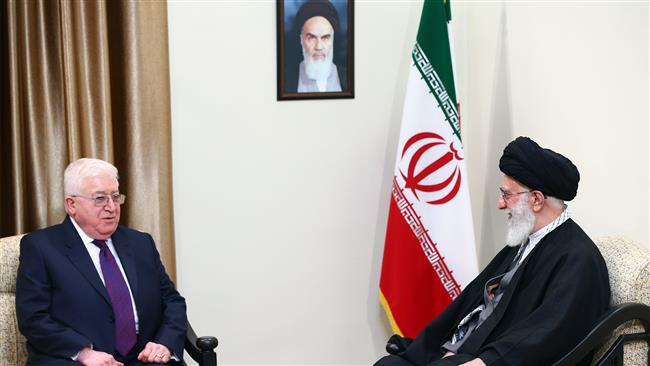
Leader of the Islamic Revolution Ayatollah Seyyed Ali Khamenei has described Saudi Arabia’s ongoing military aggression in Yemen as a big mistake, saying the venture will certainly backfire on the kingdom.

“The Saudis committed a big mistake in Yemen and the impacts of the crimes they have committed will certainly backfire on them,” Ayatollah Khamenei said Wednesday in a meeting with visiting Iraqi President Fuad Masum.

Ayatollah Khamenei further called the logic used by Saudi Arabia to attack Yemen as “silly,” saying “They [the Saudis] attacked Yemen based on a request by the fugitive and resigned [former] president of Yemen [Abd Rabbuh Mansur Hadi] who betrayed his country in the most sensitive conditions.”

The Supreme Leader also stated that the surge in terrorist activities in the Middle East benefits those seeking instability in the region, saying the presence of Takfiri groups in Syria and Iraq serves the interests of Israel.

The Leader also described the current state of relations between Iran and Iraq as “unprecedented” and called for closer relations between the two neighbors.

The Iraqi president, for his part, hailed the Leader’s role in strengthening relations between Tehran and Baghdad.

Masum said the Iraqi government and nation will never forget the assistance provided by the Islamic Republic of Iran to their country in the most unbearable conditions, especially during the offensive by the ISIL terrorist group.

Iran condemns terrorist attack in Pakistan’s Karachi

Marzieh Afkham

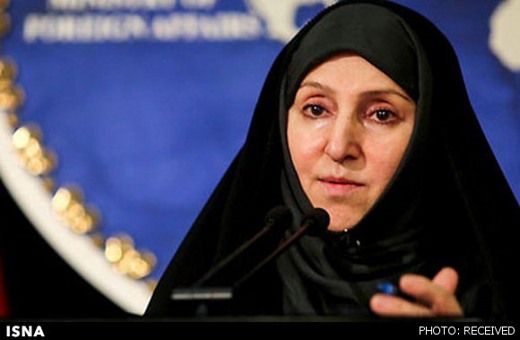
Iran’s Foreign Ministry Spokeswoman Marziyeh Afkham condemned a Wednesday terrorist attack in the Pakistani city of Karachi that killed scores of Shiite Muslims on a bus.

Afkham slammed the atrocity and condoled with the bereaved families of the victims and the Pakistani people and government.

“Extremism and terrorism are against humanity and Islam, and killing innocent people, with any purpose and in any form, is rejected and unjustifiable,” she said.

The objective of such terrorist attacks is to undermine unity in Pakistan, Afkham warned, but expressed confidence that prudence and rapport between the Pakistani government and nation would safeguard stability and security in Iran’s neighboring country.

Earlier on Wednesday, at least 43 people were killed and many more wounded in an attack on a bus carrying a group of Shiite Muslims in Karachi.

Local officials say the attack was carried out by six gunmen, who approached the bus on three motorcycles.

Targeted killings against Shiite Muslims in Pakistan have drawn international outrage, with rights groups and regional countries expressing concern over the growing violence.

Shiites are seen as a minority group in Pakistan. They make up about a fifth of the country’s population of over 180 million.

Ayatollah Rafsanjani: Iran’s diplomacy to help Iraq in all areas

Hashemi-Iraq

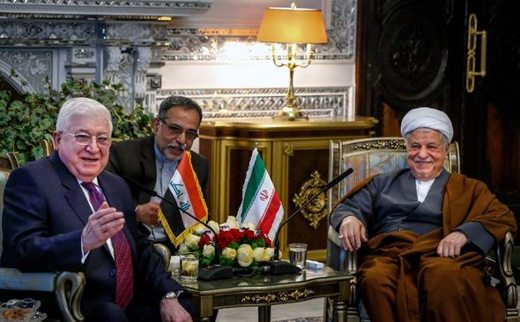
Chairman of the Expediency Council Ayatollah Akbar Hashemi Rafsanjani underlined that Iran supports Iraq in all areas.

“The policy of the Islamic Republic of Iran is to help the Iraqi government and nations in all areas,” Ayatollah Hashemi Rafsanjani said in a meeting with Iraqi President Fouad Massoum in Tehran on Wednesday.

He noted that time is now ripe for different Iraqi sects – including Shiites, Sunnis and Kurds – to maintain security in Iraq.

The Iraqi president, for his part, pointed to Iran’s good role in helping the Iraqi nation in different areas, and addressing Ayatollah Rafsanjani said, “You are one of the personalities that the Iraqi nation takes honor in”.

Earlier in the day, Leader of the Islamic Revolution Ayatollah Seyyed Ali Khamenei in a meeting with the visiting Iraqi president warned the Saudi regime against the repercussions of the relentless airstrikes against the Yemeni nation.

“The Saudis have committed a big mistake in Yemen and the consequences of the crimes they have committed will certainly backfire on them,” Ayatollah Khamenei said during the meeting also attended by President Hassan Rouhani.

[…]

The Iraqi president was officially welcomed by President Hassan Rouhani on Wednesday morning.This is the first visit of President Massoum to Iran since he took office last summer.

Iran’s nuclear case, a sign of waning Arab powers

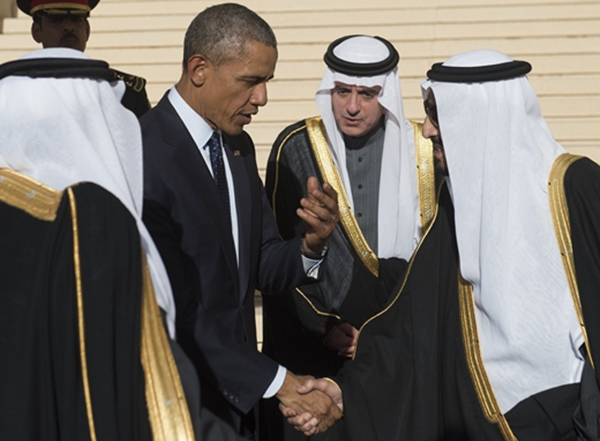
Image: SAUDI-US-ROYALS-DIPLOMACY-OBAMA

Iran’s nuclear case is of great importance as far as international order is concerned. Observers suggest that the nuclear case of Iran is not just a file about [a country in] the Middle East, but that it is a case which will help international order take on a new form and meaning.

Arman-e Emrooz daily published an opinion piece by Mehdi Motaharnia, an international relations expert, in its May 13th issue on Iran’s nuclear program and where the Arab leaders stand on that. The following is the translation of excerpts from the piece:

[…] Whether or not the nuclear case culminates in a comprehensive agreement in a democratic fashion, the region needs to remain poised for significant developments [around the corner]. It is the very point where the stances of Arab countries take on a certain meaning.

Assumptions that the Arabs are dependent on the US and that America always supports the Arab countries no longer make sense. Today a yawning chasm has emerged between the Arabs and the US. […]

The concerns expressed in royal courts of Arab countries have no other reason than realization that Iran – as a big regional player – is taking measures and showing its capabilities at a global level. They have woken up to the fact that Iran is trying to be a factor in the future regional order and bring on board international players […].

A Camp David summit [which is to be held this week] and the positions the Arab leaders will take there will certainly showcase the concerns in Arab capitals over the future of regional order.

This future shows itself by forming international order and depicting the Persian Gulf and the Iranian Plateau as one of the most important geographical zones in regional order. It can also raise growing concerns in Arab nations where those in power have shown unwillingness [to take part in] and opposition to the Camp David Summit.

Pakistan is counting the cost of its blind obedience to the US

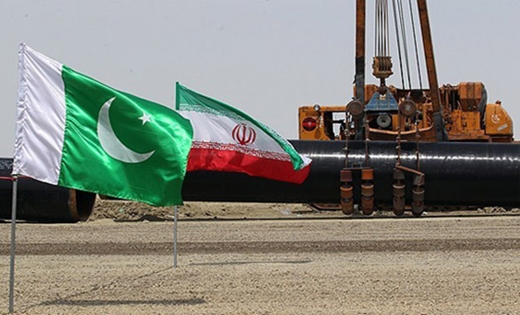
Iran - Pakistan- Pipe lie

Despite suffering from energy shortages for years, Pakistan fails to take steps to ease the pain of its people simply because of its compliance with US demands. That is in contravention of Islamabad’s contractual commitments under a deal it has signed with Iran to lay a pipeline to import Iran’s natural gas.

The Islamic Republic News Agency on May 12 published an analysis on Iran-Pakistan gas pipeline project and US pressures on Islamabad to back off on the agreement. The following is the translation of the analysis:

Islamabad blames its failure to make good on the promises it made in the gas deal on US sanctions. Being aware of the global conditions and Iran’s status, the then Pakistani government inked the deal [the Iran–Pakistan gas pipeline, also known as the Peace pipeline, or IP Gas] with Iran back in 2010.

A deadline for the two sides to implement their commitments passed last year [about two months ago]. Iran has met almost all of its commitments, but the Pakistani side has yet to take a practical step toward laying the pipeline on its soil.

Amos Hochstein, Special Envoy for International Energy Affairs at the US Department of State, made a trip to Pakistan a few days ago. According to Pakistani media, the US envoy held talks with the country’s energy officials, warning them against the implementation of the IP Gas deal prior to termination of Iran sanctions.

Hochstein asked Islamabad to contemplate the TAPI deal (The Trans-Afghanistan Pipeline also known as Turkmenistan–Afghanistan–Pakistan–India Pipeline) instead of the IP contract and go ahead with its imports of liquefied gas from Qatar.

The first Qatari ship carrying liquefied gas docked at the Pakistani seaport of Karachi last month. After undergoing complicated processes, the liquefied gas turns into natural gas to be either channeled into a gas pipeline or sent to thermal power plants which use it to generate electricity.

A while ago an official report circulated in certain Pakistani media on the hefty price tag Qatar has put on its exported gas and the high cost of electricity generation in power stations which run on Qatari gas.

The report described liquefied gas imports from Qatar as a step in the wrong direction, arguing such a decision did not result in inexpensive power generation in Pakistan; rather it said the electricity generated in the country carry a higher price than the electricity produced through other fuels such as diesel and heavy fuel oil or mazut. In addition to the question of price, Pakistan has to shell out a higher figure for transferring gas from Qatar and converting it to natural gas.

Nonetheless, the US is still insisting that Pakistan continue importing liquefied gas from Qatar. The fact that the US and European oil giants account for a large number of stakeholders in the Qatari oil and gas sector is possibly the reason behind the US insistence. If so, any boom in Qatar’s oil and gas exports will funnel a staggering amount of money into the pockets of these foreign firms.

The Iran-Pakistan deal is a staple news item for the Pakistani media which have always called on Islamabad to show strong determination for implementing the deal. As Pakistan’s [immediate] neighbor which has the world’s second largest gas deposits, Iran can be the best, shortest and the most economical option for Pakistan to alleviate its energy crisis.

Now that the Chinese have signed multibillion dollar deals with Pakistan to carry out different megaprojects, among them the China–Pakistan Economic Corridor (CPEC) and Gwadar-Nawabshah pipeline deal (which Islamabad says will be used as [the main part of] Iran-Pakistan gas pipeline project in the future), the US has piled pressure on Islamabad only to throw obstacles in the way of its main rival – China – in Pakistan.

Recent warnings by the US – that Pakistan should not try to implement the gas pipeline project with Iran – are not merely because of sanctions, rather they show how the US is concerned about the strong presence of Chinese investors in Pakistan.

President Rouhani stresses regional cooperation against terrorism

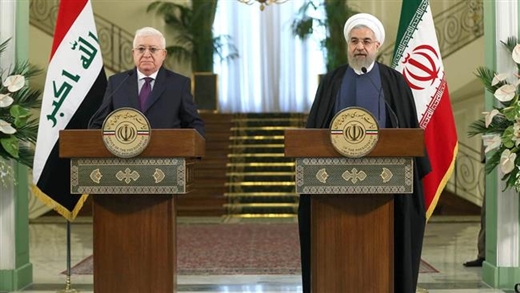
rouhani-iraq

President Hassan Rouhani on Wednesday stressed the need for regional consensus against terrorism.

He made the remark in a joint press conference in Tehran with visiting Iraqi President Fouad Masoum.

He said the voice of the suppressed nation of Yemen should reach all philanthropists in the world.

The President also said that during his discussions with the Iraqi president, the two shared the view that terrorism posed a threat to the whole region.

President Rouhani said that regional coordination is necessary in the fight against terrorism.

Those who are dreaming of using terrorist groups as a tool to advance their own policies in the region are badly wrong, stressed the president.

Iran will give no permission for inspection of aid ship: Afkham

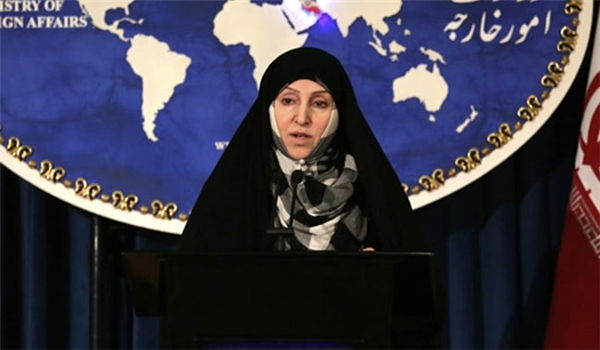
Marzieh Afkham speakerwoman

Iran says the Islamic Republic will not allow any country engaged in the aggression against Yemen to inspect an Iranian cargo ship which is traveling to Yemen to deliver humanitarian aid to the war-wracked impoverished Arab country.

“No permission will be granted to countries involved in the war on Yemen to inspect the ship carrying the Islamic Republic of Iran’s humanitarian aid,” Foreign Ministry Spokeswoman Marzieh Afkham said on Wednesday.

She added that the “spiteful blockade” of Yemen by aggressive countries over the past 50 days has deteriorated the living conditions in the country, warning of a humanitarian catastrophe in the impoverished state.

Afkham said Iran held discussions over recent days with international organizations on ways to send immediate relief aid, including food and medicine, to Yemen and started to dispatch humanitarian aid to the war-stricken country.

She expressed hope Iran’s relief aid would be distributed among the Yemeni people in cooperation with the Office for the Coordination of Humanitarian Affairs (OCHA) of the UN Secretariat as soon as possible.

On Monday, an Iranian ship, dubbed Nejat (Rescue), carrying 2,500 tons of much-needed humanitarian supplies left the southern Iranian port city of Bandar Abbas for war-torn Yemen.

Iranian officials have said the ship would reach Yemen within the next 10 to 12 days.

She added that Iran has made the necessary coordination with the Yemeni Red Crescent Society as well as the International Committee of the Red Cross (ICRC) and held consultations with the Red Crescent Society of Saudi Arabia, Oman and Djibouti to dispatch the cargo ship.

An Iranian surgeon on board the ship on Wednesday warned about “very critical conditions” in Yemen and said people in the battle-scarred country are in dire need of medicine.

Speaking to Press TV in an exclusive interview, Shahin Mohammad Sadeqi added that 20 doctors and technicians are aboard the vessel heading toward the Yemeni port city of al Hudaidah.


Iran will give no permission for inspection of aid ship: Afkham


“Unfortunately, there are very bad conditions [in Yemen]. Hospitals are bombarded by Saudi airplanes and also many hospitals are destroyed. They need medicine and medical help, for example doctors and the instruments of an operating room,” the Iranian doctor said.

“There are many untreated injured people, including women and children…that need to be treated by medical teams,” Sadeqi added.

Christoph Horstel, an activist and member of the Deutsche Mitte Party, who is on board the Iranian ship also told Press TV that by partaking in the mission he seeks to raise awareness about the suffering of the Yemeni people and the massacre carried out by the Saudis backed by the US as well as make sure that the humanitarian goods reach the Yemeni people.


Iran will give no permission for inspection of aid ship: Afkham


He described the voyage as a “pure and honest humanitarian mission.”

Regarding any attempts at inspecting the vessel, Horstel said, “We don’t want any foreign weapons on board. We want this to go smoothly, seriously and in a civilized manner,” adding, “I don’t want any blocking of this humanitarian mission.”

[…]

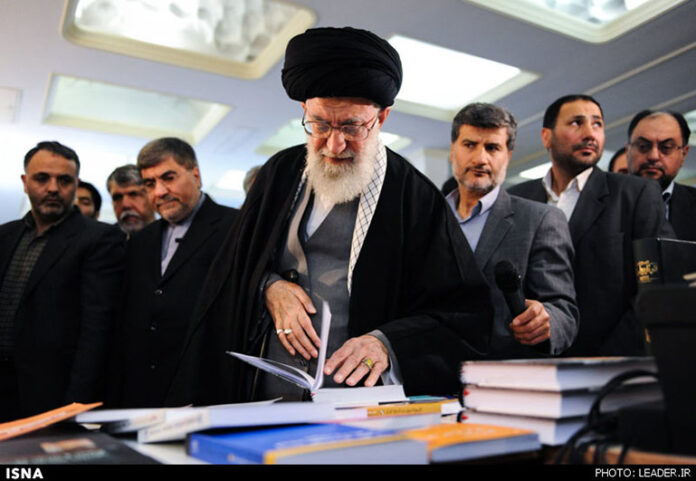
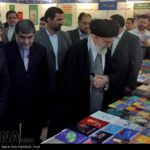
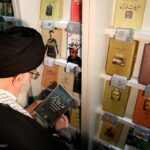
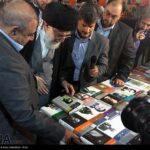
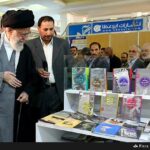
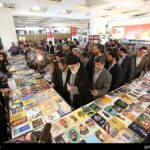
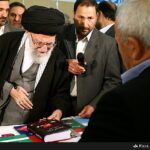
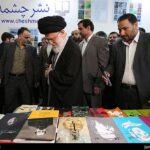
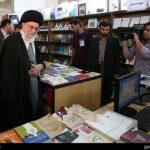
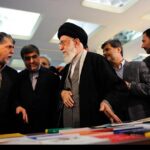
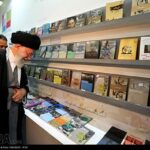
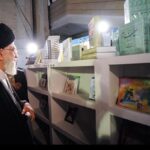
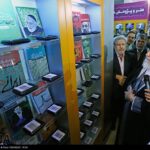
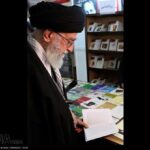
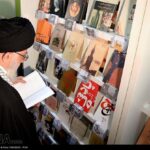
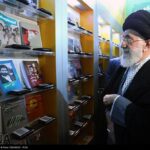
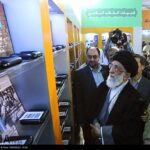
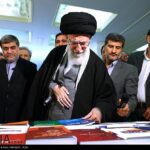
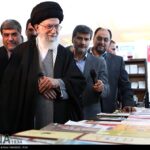
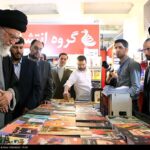
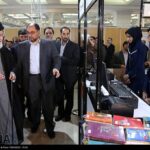
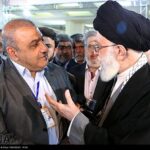
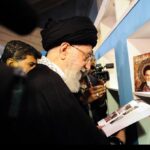
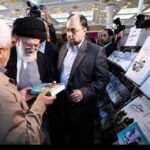
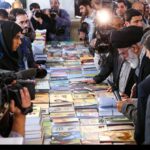
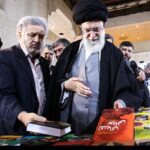
Supreme Leader visits Tehran Book Fair (PHOTOS)

Ayatollah Seyyed Ali Khamenei -0

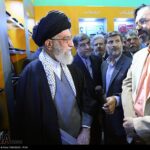
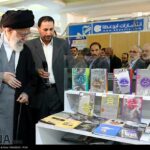
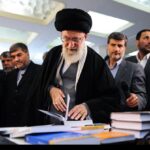
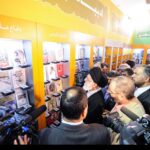
Supreme Leader Ayatollah Seyyed Ali Khamenei paid a visit to a 28th edition of Tehran International Book Fair on Wednesday.

Minister of Culture and Islamic Guidance Ali Jannati accompanied the Leader as he inspected different sections of the expo.

The exhibition which offers some 500,000 book titles in two local and foreign sections opened at Imam Khomeini Prayer Ground in Tehran on May 5 and will run through May 16.

Images of a visit by the Leader to Tehran Book Fair released online by different news websites: