Monday, December 22, 2025
Home Blog Page 4726

Iran urges IAEA to expedite assessment of Parchin samples

Behrouz Kamalvandi

Iran has called on the International Atomic Energy Agency (IAEA) to accelerate assessment of the environmental samples taken from the country’s Parchin military site and release a report within a month, the spokesman for the Atomic Energy Organization of Iran (AEOI) said.

The IAEA has announced that assessment of the Parchin samples may take one or two months, Behrouz Kamalvandi said on Tuesday, adding that Tehran has insisted that evaluation of the samples should be carried out faster to speed up what should be done under a Road-map signed with the UN nuclear watchdog.

IAEA Director General Yukiya Amano had a one-day trip to Iran on Sunday and paid a visit to Parchin military site near Tehran, where some Westerners claim nuclear tests may have taken place.

On Monday, Amano said environment samples have been taken at Parchin, citing “significant progress” in its investigation of Tehran’s nuclear energy program.

Kamalvandi said if there is good IAEA cooperation, results of assessment of the samples will be ready within the next 4 or 5 weeks.

The first step, he added, was for the IAEA to confirm the authenticity of the samples, and Amano’s remarks show that the Iranian experts have done their job right.

Amano told reporters on Monday that the IAEA “can confirm the integrity of the sampling process and the authenticity of the samples, which were taken at places of interest to the agency at the particular location in Parchin.”

“Authentication by the agency of the samples was achieved through use of an established verification process. The process was carried out under our responsibility and monitoring,” the UN nuclear chief said, adding that the samples have been taken to Vienna for analysis.

Iran and the UN nuclear agency on July 14 signed a Road-map to resolve all the past and present outstanding issues related to Tehran’s nuclear energy program.

On the same day, Iran and P5+1 (Russia, China, the US, Britain, France and Germany) also finalized the text of a lasting nuclear deal, dubbed the Joint Comprehensive Plan of Action (JCPOA).

The IAEA has been given the role of verifying Iran’s commitments under the JCPOA.
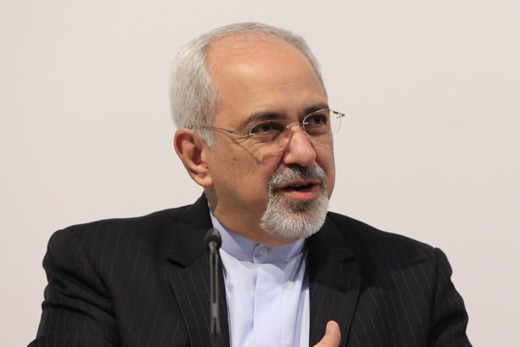
Zarif: Iranians should feel changes according to UN Resolution 2231

Iran FM Zarif

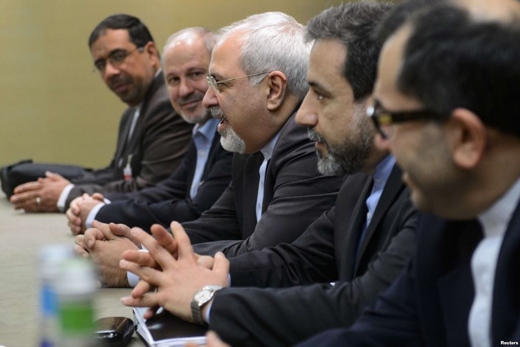
Foreign Minister Mohammad Javad Zarif underlined that he and his team are trying hard to let the Iranian nation feel real change for the better in the country’s economic conditions by pursuing the implementation of JCPOA at the UN.
Zarif made the remarks to reporters upon arrival in New York City on Tuesday afternoon.

“The Iranian nation should feel fundamental changes in accordance with the UN Security Council Resolution 2231,” the Iranian foreign minister said.

He reiterated that his team will pursue the implementation of JCPOA at the United Nations.

Zarif pointed out that meetings at foreign ministerial level will be held between Iran and P5+1 (the US, Russia, China, France and Britain plus Germany). If needed expert meetings will also be held to specify the executive measures to remove sanctions and renovate Arak heavy reactor facility and exchange fuel.

The Iranian foreign minister said that as it has always been said implementation of JCPOA is the important part of the work.

“Now the time has come for P5+1 countries, especially those countries that imposed unfair sanctions against Iran to make fundamental shift in their attitude towards Iran and show in practice that they look at a different future and the Iranian nation should feel this fundamental change,” Zarif said.

He urged the Western countries and those interacting with Iran to strengthen the foundations of JCPOA through their performance and their measures.

He noted that the Iranian delegation will also follow up the formation of a joint commission between Iran and P5+1 during its visit to New York.

Zarif, heading a ranking delegation, arrived in New York late Tuesday to attend the first meeting of the Joint Commission with members of P5+1.

The Joint Commission is comprised of representatives of P5+1 and Iran along with EU Foreign Policy Chief Federica Mogherini.

While in New York, Zarif will follow up the implementation process of the Joint Comprehensive Plan of Action (JCPOA) reached on July 14 between Iran and G5+1.

The Iranian delegation includes Zarif and his deputy Abbas Araghchi as well as head of the Iranian nuclear expert team Hamid Baeedinejad. Another Deputy Foreign Minister Majid Takht-e Ravanchi is to join the team later.

Rafsanjani: JCPOA a victory for revolution, Iranian nation

81769970-70180679

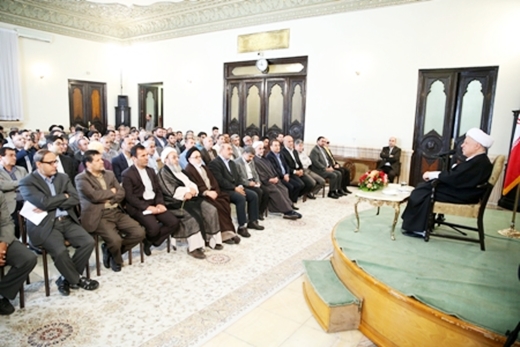
The chairman of the Expediency Council said on Tuesday that the Joint Comprehensive Plan of Action is a manifestation of the victory of the Islamic Revolution and the Iranian nation.

“Comments made by the opponents and the supporters of the JCPOA in the United States reveal that the Iranian nation has achieved a victory in line with the objectives of the Islamic Revolution,” Ayatollah Akbar Hashemi-Rafsanjani said in a meeting with the commanders of the Sacred Defense (the 1980-1988 war Saddam’s Iraq imposed on Iran).

“You veteran combatants have every right to opine about the country’s major developments and should not be disheartened by the hue and cry of a minority that has a loud voice,” said the ayatollah.

“The comments made by the supporters and the opponents of the nuclear agreement in the US administration and Congress are worth contemplation and they reveal the political victory of the Iranian nation in line with the objectives of their revolution,” he said.

“Iran is now a member of the international nuclear club and its entire nuclear activities are recognized as legal in accordance with the rules and regulations of the International Atomic Energy Agency (IAEA),” he said.

Ayatollah Rafsanjani further said that the international community has made sure that Iran has never been after manufacturing atomic bombs. It is not a small achievement.

Iran considers ties with China strategic: Economy Minister

1397af61-f335-4447-9e45-7d9e35f0e718

Iran’s minister of economic affairs and finance says the Islamic Republic considers relations with China as strategic and plans to boost economic cooperation with Beijing.

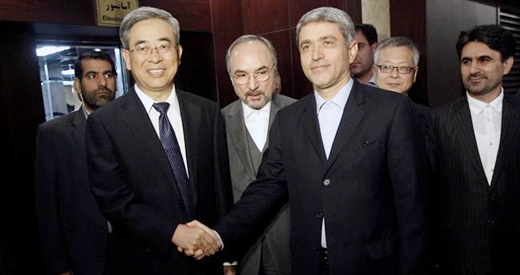
Speaking in a meeting with special envoy of the Chinese government, Zhang Yi, in Tehran on Tuesday, Ali Tayyebnia said, “Relations between Iran and China have been always constructive and we consider these relations as strategic.”

The Iranian minister noted that limitations that exist in economic and trade relations between the two countries will be removed in the near future and that the two countries will enter a new phase of economic cooperation, including with regard to bilateral investment.

He added that the visit by the Chinese government’s special envoy and his accompanying delegation proved that both countries are interested in bolstering trade and economic exchanges.

Tayyebnia also stated that territorial expanse, big population, existence of rich oil and gas resources, skilled and educated manpower, strategic geographical position and easy access to markets in neighboring countries, as well as security and stability in Iran have made the country a good choice for foreign investors.

The Iranian minister then mentioned development of Iran’s southeastern Chabahar port and connecting the port city to Central Asia via railroad as a fertile ground for investment by the two countries.

The Chinese official, for his part, noted that his visit was telltale sign that Chinese government is bent on further development of economic and trade relations with Iran.

Zhang Yi, who is also Chairman of the State-Owned Assets Supervision and Administration Commission of the State Council, said development of trade ties with Iran, discussing the latest situation of bilateral cooperation, and exchange of viewpoints with Iranian officials were three objectives of his visit to the Islamic Republic.

The Chinese official arrived in Tehran on September 21 for an official three day visit to Iran. He is accompanied by a delegation comprising managing directors of 18 major Chinese companies, which seek to expand interactions with their Iranian counterparts.

Iran president condemns raid on diplomatic missions in Yemen

Rouhani-Oman

Iran’s President Hassan Rouhani has strongly condemned airstrikes against civilians, infrastructure and specifically diplomatic missions in Yemen.

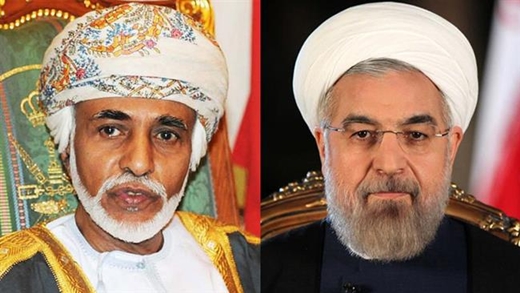
“We are concerned about disregard by the aggressive forces of international regulations and norms, and these actions, particularly attacks on diplomatic sites, should be strongly condemned as an incorrect and inhuman act,” Rouhani said in a phone conversation with Oman’s Sultan Qaboos bin Said on Tuesday.

On September 18, Saudi Arabia bombarded the residence of the Omani envoy to Yemen, Bader al Mantheri, seriously damaging the building and nearby houses in the al-Sabin district. The ambassador survived the attack.

The Saudi attack was condemned by both Iran and Oman.

The Iranian president also commended Oman for its constructive role in regional developments, saying Iran and Oman must cooperate to help end regional crises.

“Tehran-Muscat regional cooperation, particularly on restoration of peace and stability to the region, is very effective and important,” Rouhani said.

He praised Oman’s stance on regional developments and its humanitarian aid to the Yemeni people and expressed hope that peace and stability would be restored to the war-stricken country.

The Iranian president expressed hope for a ceasefire in Yemen on the occasion of the Eid al-Adha (the Feast of Sacrifice) under the aegis of efforts by Oman and particularly Sultan Qaboos as well as other peace-seeking countries.

Rouhani regretted the international community’s refusal to take serious action for establishing a ceasefire in Yemen.

Saudi Arabia launched military aggression against Yemen on March 26 – without a United Nations mandate – in a bid to undermine the Houthi Ansarullah movement and restore power to fugitive former Yemeni President Abd Rabbuh Mansour Hadi, a staunch ally of Riyadh.

According to Civil Coalition, a Yemeni NGO, 6,091 Yemenis have lost their lives in the Saudi airstrikes and a total of 13,552 people have been injured.

It said there are 3,006 women and children among the dead while as many as 2,997 women and children have been wounded.

Rouhani also said Iran hopes to strengthen its relations, particularly in economic and trade sectors, with Oman after international sanctions on Tehran are lifted.

Oman’s bent on enhanced ties with Iran

The Omani Sultan said his country is willing to enhance ties with Iran, particularly after the removal of sanctions imposed against Tehran.

Sultan Qaboos said Muscat would proceed with consultation with other countries to help establish peace and stability in Yemen and would send more humanitarian aid to the war-hit country.

He also called for an immediate end to attacks on diplomatic missions.

Top commander dismisses US threats as hot air

General Firouz Abadi

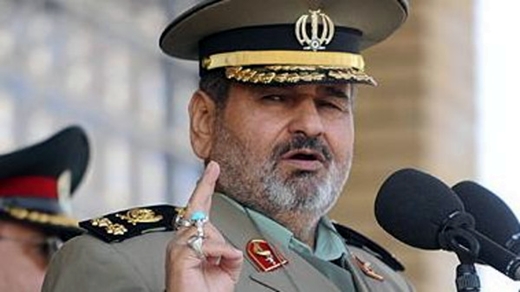
The chief of staff of the Iranian armed forces has said that US threats are nothing more than hot air and that Republicans are reactionaries who want to go back to the time of “crazy George Bush”.

Major General Hassan Firouzabadi made the comments on the sidelines of a military parade the armed forces staged on Tuesday (September 22) to mark the start of Sacred Defense Week. Fars News Agency published the general’s remarks on the US threats against Iran, the preparedness of the armed forces and the Joint Comprehensive Plan of Action. The following is the translation of what else Firouzabadi told reporters:

Iran’s armed forces

Today the armed forces are well-prepared and in best shape thanks to support by members of the public and the Supreme Leader. Iran’s vibrant armed forces, which have made remarkable progress [over the years], are always prepared to develop new technologies.

Iran’s armed forces are at the ready to effectively defend the country’s geographical and ideological beliefs. Building on public support, we are ready to properly defend our borders.

Threats by certain countries, the US included, are nothing but empty talk. Some shriek out of fear, but the fact remains that nothing threatens Iran in the current situation.

Anybody who possesses a priceless pearl tries to keep it safe. The Iranian nation, led by the Supreme Leader, will defend its [cherished] possessions. This nation and its leader should be fully defended.

Iran’s defense doctrine is centered on one core principle: defending the world’s Muslim and freedom-seeking nations. Today, the US, Israel and Britain work hand in glove with terrorists in the region.

Terrorists in this region are an inseparable part of world powers. Iran, which seeks to take up a struggle against colonialism, has to stand up to their agents in the region, that is to say the terrorists. All regional countries should know that the US, Israel and Britain are supporters of terrorists.

Republicans’ opposition to JCPOA and military threats against Iran

Republicans are reactionaries who want to take the US back to the era of crazy George Bush, who tried his utmost to attack Iran but failed.

The US says it can launch an attack but cannot handle the possible reactions such an attack would draw. A war will earn them nothing, because what they say is simply full of hot air.

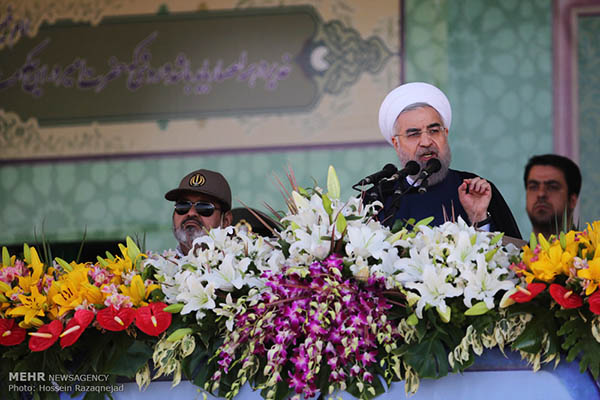
Iran armed forces biggest anti-terror force: President

Rouhani

Iranian President Hassan Rouhani says the armed forces of the Islamic Republic of Iran are the biggest anti-terrorism force.

“We tell the world today [that] the biggest anti-terrorism force is the armed forces of the Islamic Republic,” President Rouhani said.

He made the remark in a ceremony Tuesday marking the anniversary of the day the regime of the slain Iraqi dictator Saddam Hussein invaded Iran back in 1980 which marks the beginning of Sacred Defense Week in Iran.

Military top brass, the military attachés of foreign countries and a number of families of the war martyrs and veterans were also present at the ceremony.

“Just as we have helped the governments of Syria and Iraq against terrorism, upon requests from their governments, if, heavens forbid, terrorism emerges in other neighboring countries, the governments of those countries will pin their hopes on the armed forces of the Islamic Republic of Iran,” President Rouhani said.

Pointing to the Iran-Iraq War in the 1980s, President Rouhani said Iranian people displayed unprecedented unity during the eight-year war.

After the 1979 Revolution that led to the establishment of the Islamic Republic, President Rouhani said, the country was accused of being a fundamentalist system seeking to impose its will on its neighbors and other countries.

“In the [Iraqi-]imposed war [on Iran], it was proved who the invader was, which ideology sought to invade and meddle in the internal affairs of other countries, and who those people are who have no mercy not only on neighboring nations but also on their own people,” the president said.

Strong faith in God was a prominent feature of the Iranian soldiers and commanders, he said.

Iran did not have an intention to invade another country; it sought peace with neighbors; but, hegemonic powers convinced a neighbor to invade Iran in the hope that they could defeat the Islamic Republic, which had just emerged from a revolution, the Iranian president said.

The president referred to Iran’s recent nuclear negotiations with P5+1, and said the unity of the people, the expertise of the Iranian diplomats and the guidance of Leader of the Islamic Revolution Ayatollah Seyyed Ali Khamenei led to the agreement that secured the rights of the Iranian nation.

Following President Rouhani’s speech, various divisions of the Iranian armed forces staged military parades and showcased their latest products.

[…]

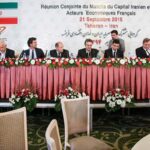
Iran-France joint conference (PHOTOS)

Iran-France0153

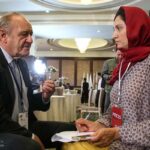
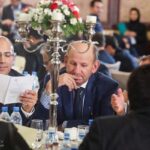
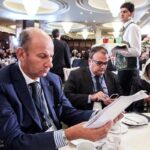
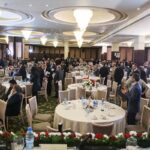
Tehran’s Espinas Hotel hosted a joint conference between the representatives of the Iranian capital market and a group of French economic officials on September 21.

Images of the gathering posted online by Mehr News Agency:


Zarif and his team left for New York on Tuesday

Iran Nuclear Talks Team

Iranian Foreign Minister Mohammad Javad Zarif, accompanied by members of the nuclear negotiating team, left Tehran for New York early on Tuesday (September 22) to attend the 70th UN General Assembly.

The Iranian top diplomat will also take part in a meeting with foreign ministers from P5+1 (the US, France, Russia, Britain and China plus Germany) to review the latest coordination efforts before implementation of the Joint Comprehensive Plan of Action (JCPOA) gets started.

While in New York, Zarif will also meet and consult with his counterparts from different countries.

Foreign ministers of Iran and six world countries will meet in New York on September 28 on the sidelines of the UN General Assembly to exchange views about JCPOA, Fars News Agency reported on September 22.

[…]

Deputy Foreign Minister for Legal and International Affairs Seyyed Abbas Araghchi and Hamid Baeedinejad, the Foreign Ministry’s Director General for Political Affairs, accompany Zarif.

Majid Takht-e Ravanchi – the Deputy Foreign Minister for Euro-American Affairs – who is mourning the loss of his mother will join them later.

The meeting between foreign ministers of Iran and P5+1 will be their first after the conclusion of the Vienna accord [back on July 14]. A first session of the Iran-P5+1 joint committee session will be held on the sidelines of the UN General Assembly, but its timing has yet to be fixed.

[…]

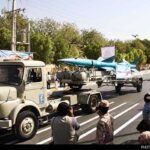
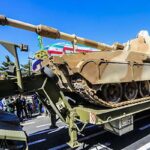
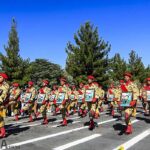
Military parade in Tehran (PHOTOS)

Military parade0

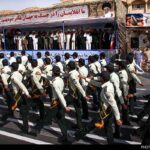
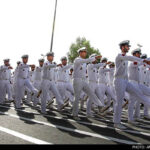
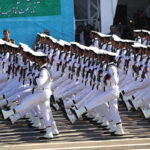
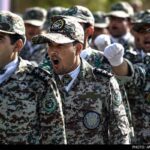
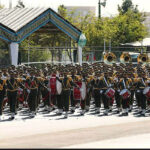
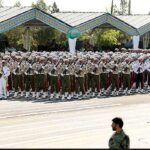
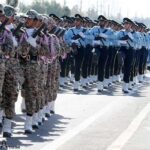
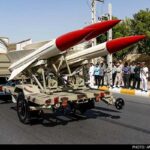
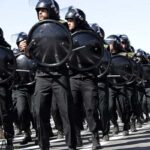
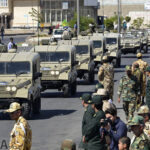
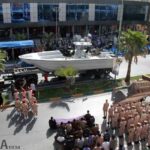
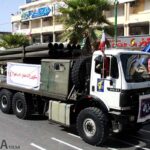
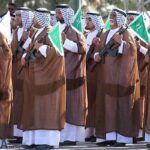
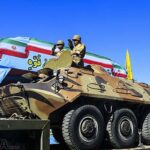
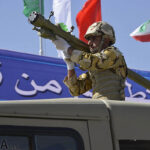
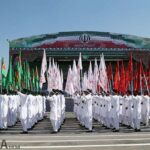
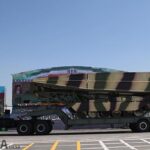
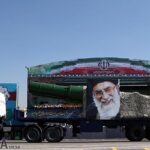
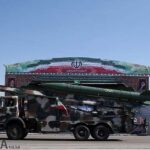
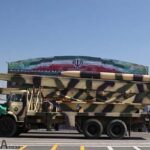
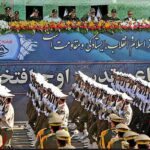
Iranian armed forces staged a military parade near the mausoleum of the late Imam Khomeini on Tuesday to mark the start of Sacred Defense Week.

The following snapshots of the parade, attended by President Rouhani, have been posted online by different websites: