Friday, December 26, 2025
Home Blog Page 465

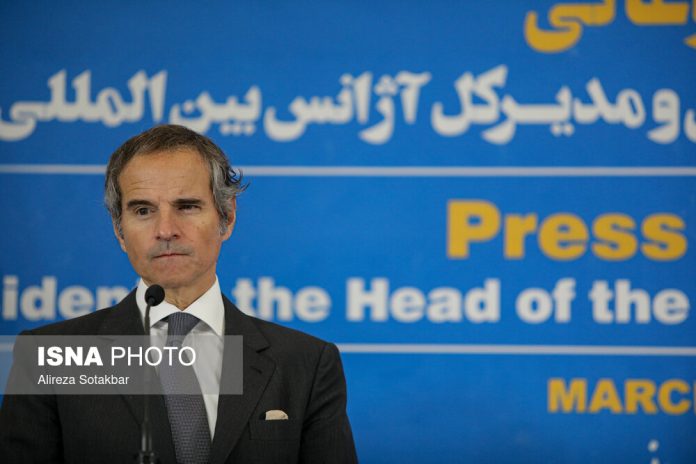
Iran slams IAEA chief’s ‘speculative’ nuclear bomb claims, vows to continue diplomacy with Europe

IAEA Grossi

In his weekly press conference on Monday, Baqaei stated that such speculative remarks are outside the IAEA chief’s mandate and undermine constructive engagement.

He emphasized that Iran’s nuclear program operates within the framework of international law, including the Non-Proliferation Treaty (NPT) and safeguards agreements, and urged the IAEA to act within its statutory limits.

Baqaei also addressed ongoing diplomatic efforts with European nations, confirming that talks would continue.

Regarding regional tensions, the spokesperson criticized recent comments by Turkey’s Foreign Minister Hakan Fidan, who claimed on Wednesday that Iran has paid a heavy price to maintain its influence in Iraq and Syria, yet its costs outweigh its gains in the region.

Describing the remarks as ‘unconstructive,’ the Iranian spokesperson warned of the growing assertiveness of Israel in the region and stressed the importance of managing differences with Turkey through wise and pragmatic approaches.

On Iran’s frozen funds in Qatar, Iraq, and Turkey, Baqaei acknowledged the challenges posed by US sanctions, noting that the Iranian Foreign Ministry, in coordination with the Central Bank, is actively working to resolve the financial restrictions.

He emphasized that the situation varies across the mentioned countries and remains a priority for Iran’s diplomatic efforts.

FBI Director urges US Congress to investigate Ukraine aid transparency

FBI

“I’ve asked Congress to investigate where this money has gone. The American people are owed that answer because it’s our money. It’s our taxpayer dollars,” Patel said.

Opinion polls show that Americans significantly overestimate the proportion of the US federal budget that is spent on foreign aid, believing it to be around 25 percent when in fact it was only around 1 percent in 2023, amounting to just 0.25% of GDP.

He also criticized the scale of US aid to Ukraine.

“The issue is not about the US sending a billion dollars, but rather that the amount sent to one country is one hundred times that billion.”

Patel then questioned President Volodymr Zelensky’s credibility, and referenced a missile incident in Poland.

“Zelensky went on the world stage and said ‘Russia fired a rocket into Poland,’ which would be an act of war. It turned out that Russia fired no such rocket,” Patel claimed.

Poland has scrambled jets amid Russian attacks on Ukraine several times over the past year, as missiles sent to western Ukraine have violated Polish airspace.

He concluded with further skeptical statements and additional calls to investigate Ukrainian funds.

“We just can’t have full faith and trust in giving a leader $100 billion and then having him say, ‘I’m not telling you where the money went.’” Patel concluded.

Numerous US government organizations have been keeping up with oversight and transparency measures of aid to Ukraine since the start of the full-scale invasion.

Aside from military aid, US funds have been vital in supporting numerous Ukrainian programs and initiatives.

Since the start of Russia’s full-scale invasion, the US Agency for International Development’s (USAID) has provided Ukraine with $2.6 billion in humanitarian aid, $5 billion in development assistance, and more than $30 billion in direct budget support, helping to rebuild schools after Russian attacks, pay for bomb shelters, advanced medical equipment for hospitals and much more.

USAID’s efforts have also included supporting judicial reforms and anti-corruption initiatives, and promoting transparency and accountability in governance.

The Donald Trump administration announced that it would be terminating over 90% of USAID foreign aid contracts, cutting $60 billion in foreign assistance.

Patel previously served as a federal prosecutor, and he held various intelligence positions in Trump’s first administration. He has been considered a Trump loyalist, and his views align with the current administration’s escalating criticisms of Zelensky’s government, including Trump’s recent false claims that the US has sent $350 billion in assistance to Ukraine.

Patel also received $25,000 in 2024 from a film company run by pro-Kremlin filmmaker Igor Lopatonok, according to a report.

The payment came after Patel participated in a documentary about Trump that aired on TCN, the online network of right-wing commentator Tucker Carlson.

Just 4 percent of Americans support Russia in Ukraine war: Poll

In the poll, which took place between Feb. 26 and 28, 4 percent of the respondents said they “personally support” Russia when it comes to the war. Fifty-two percent said they personally support Ukraine, while 44 percent said “neither.”

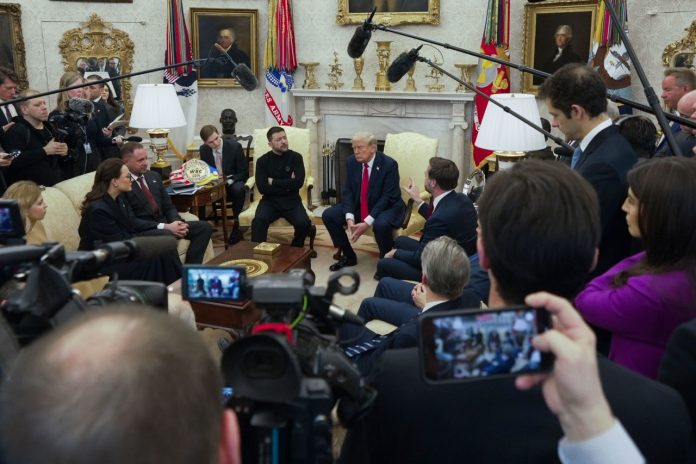
The poll’s survey period ended the same day as a recent tense Oval Office meeting between President Donald Trump, Ukrainian President Volodymyr Zelensky and Vice President JD Vance. In the meeting, Zelensky and Trump clashed over US support of Ukraine.

Following the meeting, Trump said on his Truth Social platform that the Ukrainian president “is not ready for Peace if America is involved, because he feels our involvement gives him a big advantage in negotiations.”

Trump has been pushing for an end to the war between Russia and Ukraine, with US and Russian officials meeting in Saudi Arabia last month.

The meeting also resulted in blowback from Democrats.

Regarding American “military aid to Ukraine,” 51 percent of respondents in the CBS News/YouGov poll backed it, while 49 percent said they didn’t.

The CBS News/YouGov poll featured a margin of error of 2.5 percent points and 2,311 participants.

Britain announces ‘coalition of willing’ to deploy troops in Ukraine

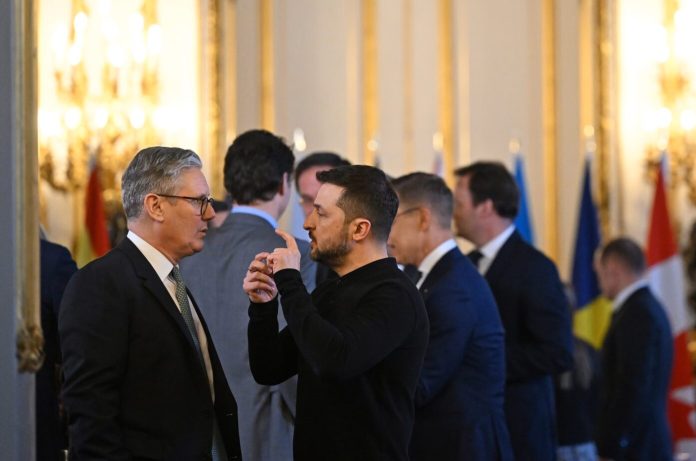
During an emergency summit in London on Sunday, following Ukrainian leader Vladimir Zelensky’s disastrous trip to Washington, Starmer emphasized the necessity for the EU and other sponsors to step up and take a leading role in supporting Kiev. While acknowledging that some nations have little to contribute, he insisted that those willing should act with urgency.

“Not every nation will feel able to contribute, but that can’t mean that we sit back. Instead, those willing will intensify planning now with real urgency. The UK is prepared to back this with boots on the ground and planes in the air, together with others,” Starmer told the press.

French President Emmanuel Macron stated that European troops would only be deployed once the situation on the ground is safe for them. He proposed a temporary month-long “truce in the air, on the seas, and on energy infrastructure” – an idea that Moscow had previously denounced as a Western ploy to rearm and bolster Kiev.

“There will be no European troops on Ukrainian soil in the coming weeks,” Macron said in an interview with Le Figaro.

“The question is how can we use this time to try to get a truce accessible, with negotiations that will take several weeks, and then, when the peace is signed, a deployment.”

Moscow has repeatedly ruled out temporary ceasefires similar to the failed Minsk agreements, insisting on a permanent, legally binding deal that addresses the root causes of the conflict. The Minsk ceasefire, which was ostensibly intended to freeze the conflict between Kiev and the Donetsk and Lugansk People’s Republics, was in fact only “an attempt to give Ukraine time” to build up its strength, former German Chancellor Angela Merkel admitted in 2022.

The summit was attended by several European leaders, including Starmer, Macron, German Chancellor Olaf Scholz, Polish Prime Minister Donald Tusk, and others, along with Canadian Prime Minister Justin Trudeau, European Commission President Ursula von der Leyen, and NATO Secretary General Mark Rutte.

Trudeau did not rule out potentially deploying troops to Ukraine, saying that Ottawa “has looked at the ways it can best help, and as I’ve said a few days ago, everything’s on the table.”

However, Italian Prime Minister Giorgia Meloni stated that there was still no single specific plan for troop deployment and stressed that “the presence of Italian troops in Ukraine has never been on the agenda.”

Tusk noted that the leaders had failed to propose a systematic, common position to shape future security guarantees for Ukraine or “a concrete plan for negotiations” with Russia.

“We all get a sense at this moment that no one has a plan for it, and that sense of chaos, makeshift approach … sometimes sparks emotions like we have seen in that unseemly spectacle in Washington a few days ago, which we all would rather avoid,” Tusk said.

Moscow has strongly opposed the deployment of unauthorized foreign troops to Ukraine, warning that without a UN mandate, they would be considered legitimate targets. Russian Foreign Minister Sergey Lavrov has said that the idea of deploying foreign troops to Ukraine – pushed primarily by France and Britain – is meant to “further fuel the conflict and stop any attempts to cool it down.” The Russian Foreign Ministry also accused the EU and UK of embarking “on a path of militarism.”

Israeli PM rejects 2nd phase of Gaza ceasefire deal, admits use of starvation against Gazans

Gaza War

The Israeli government on Sunday halted the entry of humanitarian aid into Gaza, hours after the expiry of the first phase of the Gaza ceasefire agreement.

Speaking at a weekly cabinet meeting, Netanyahu said he held a security discussion Saturday night with Defense Minister Israel Katz, coalition party leaders, security officials, and his negotiation team.

“At the end of the discussion, we decided on the following steps: Israel will adopt the plan proposed by President Donald Trump’s envoy, Steve Witkoff, for a temporary ceasefire during (the Muslim month of) Ramadan and (the Jewish holiday of) Passover. We are fully coordinating with President (Donald) Trump and his team,” Netanyahu stated.

He added Witkoff proposed the plan after it was concluding that there was no immediate prospect of bridging the gap between Israel and Hamas on the second phase of the Gaza deal.

He stated more time was needed to reach a possible agreement, describing his proposal as a “pathway for negotiations” on the next stage.

Contradicting Netanyahu’s position, Israeli Interior Minister Moshe Arbel expressed his support for advancing to the second phase of the prisoner swap and ceasefire agreement.

“I support the second phase; there is no greater commandment than redeeming prisoners,” Yedioth Ahronoth newspaper quoted Arbel as saying during a conference in Eilat in southern Israel.

Netanyahu openly admitted the use of starvation as a tool against Hamas, saying: “I want to make one thing clear: There will be no free meals.”

“If Hamas believes it can extend the ceasefire or benefit from the conditions of the first phase without us recovering our hostages, it is gravely mistaken,” he added.

Netanyahu claimed that based on Israeli intelligence, Hamas currently holds 59 Israeli captives, with up to 24 believed to be alive and at least 35 dead.

“We will not abandon any of them, and we are determined to bring them all home.”

The Israeli premier stated that under Witkoff’s proposal, half of the hostages would be released on the first day of the plan. If an agreement is reached, the remaining captives would be freed at the end of the process.

“Under the original agreement, Israel can resume fighting after 42 days if negotiations prove ineffective. This clause was supported by a side letter from the previous US administration and has now received backing from the Trump administration,” Netanyahu claimed.

Netanyahu accused Hamas of rejecting the proposal, claiming that “If Hamas changes its stance, Israel will immediately enter negotiations to implement the plan.”

“If Hamas continues to entrench its position and refuses to release our captives, there will be additional consequences, which I will not elaborate on here,” he threatened.

Netanyahu had sought to extend the initial exchange phase to secure the release of as many Israeli captives as possible without offering anything in return or fulfilling the military and humanitarian obligations of the agreement.

Hamas has refused to proceed under these conditions, insisting that Israel abide by the terms of the ceasefire and immediately start negotiations for the second phase, which includes a full Israeli withdrawal from Gaza and a complete halt to the war.

The ceasefire agreement has halted Israel’s genocidal war on Gaza, which has killed more than 48,380 victims, mostly women and children, and left the enclave in ruins.

Last November, the International Criminal Court issued arrest warrants for Netanyahu and his former Defense Minister Yoav Gallant for war crimes and crimes against humanity in Gaza.

Israel also faces a genocide case at the International Court of Justice for its war on the enclave.

Iran Strategic Vice President Zarif resigns amid political pressure

Javad Zarif

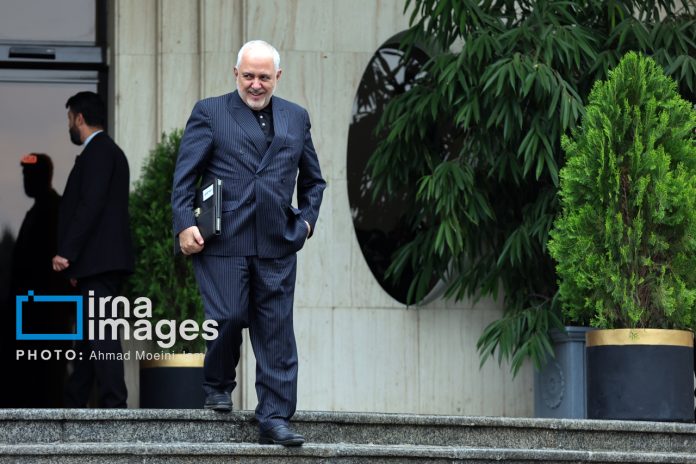
In a social media post, Zarif expressed gratitude for the opportunity to serve the nation over the past nine months in President Massoud Pezeshkian’s administration but described the last six months as the “bitterest period” of his 40-year career, citing relentless insults, slander, and threats against him and his family over their dual citizenship.

Zarif had been under pressure, largely by the far-right Perseverance Front, to step down over his children’s American citizenship, for which he has provided legal counter-arguments.

He also drew criticism in Iran’s dichotomized political atmosphere for paving the ground for talks with the US to alleviate economic pressure.

The former foreign minister, the architect of Tehran’s 2015 nuclear deal with world powers, expressed hope that his departure would remove obstacles to the government’s success and the fulfillment of the people’s demands.

The state news agency IRNA confirmed Zarif’s resignation, noting that President Pezeshkian has yet to respond to the resignation letter.

The resignation came on the same day as Iranian Parliament impeached Economic Minister Abdolnaser Hemmati, known as another proponent of rapprochement with the West.

Iranian animation wins Oscar at 97th Academy Awards

Directed by Shirin Sohani and Hossein Molayemi, the film marks Iran’s third Oscar win, following Asghar Farhadi’s A Separation (2012) and The Salesman (2017).

The ceremony, hosted by Conan O’Brien at the Dolby Theater, saw Anora emerge as the night’s biggest winner, securing five awards, including Best Picture and Best Director for Sean Baker.

The film also earned accolades for Best Actress, Best Original Screenplay, and Best Editing.

Other notable wins included The Brutalist, which claimed three awards, including Best Actor for Adrien Brody, and Emilia Perez, which took home two Oscars for Best Supporting Actress and Best Original Song.

Dune: Part Two also won two awards, while The Meeting secured one.

The success of In the Shade of the Cypress, a minimalistic, dialog-free tale about a former captain suffering from PTSD, highlights the growing recognition of Iranian talent on the global stage, and its win is a proud moment for the country’s animation industry.

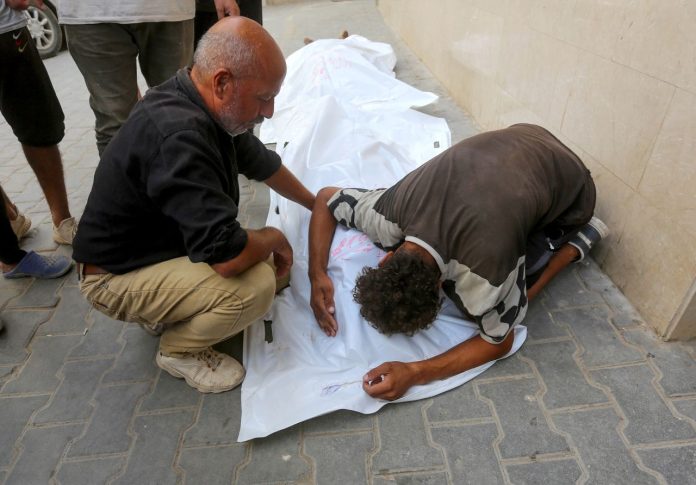
At least 116 Palestinians killed by Israel since start of Gaza ceasefire

Gaza War

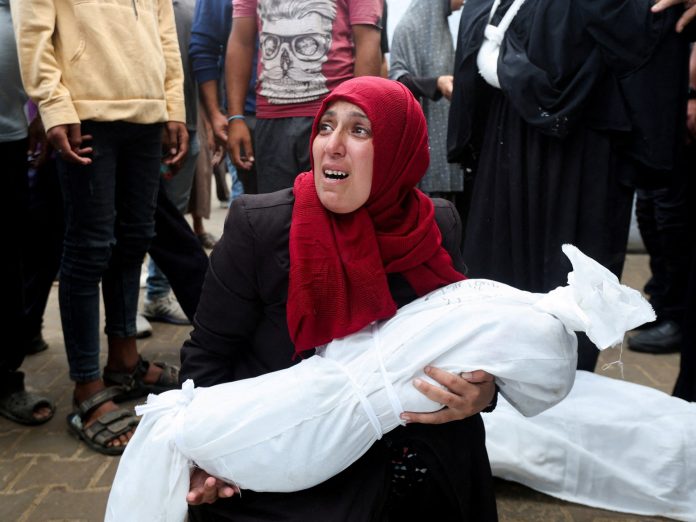
A ministry statement said that six more Palestinians were injured in Israeli attacks in multiple areas across the enclave, pushing the number of injuries to over 490.

A medical source stated early Sunday that a woman was killed and two people were injured in an Israeli drone strike in Al-Farahin neighborhood in eastern Khan Younis in the southern Gaza Strip.

Another Palestinian was killed and two others were injured by Israeli sniper fire in Rafah, also in southern Gaza, while two more people lost their lives in a drone strike in the northern town of Beit Hanoun.

The Israeli army claimed that the attacks targeted suspects allegedly operating near its forces.

The first six-week phase of the ceasefire agreement, which took effect on Jan. 19, officially ended at midnight on Saturday. However, Israel has not agreed to move forward to the second phase of the deal to bring an end to the war in Gaza.

Israeli Prime Minister Benjamin Netanyahu had sought to extend the initial exchange phase to secure the release of as many Israeli captives as possible without offering anything in return or fulfilling the military and humanitarian obligations of the agreement.

Hamas has refused to proceed under these conditions, insisting that Israel abide by the terms of the ceasefire and immediately start negotiations for the second phase, which includes a full Israeli withdrawal from Gaza and a complete halt to the war.

The ceasefire agreement has halted Israel’s genocidal war on Gaza, which has killed more than 48,380 victims, mostly women and children, and left the enclave in ruins.

Last November, the International Criminal Court issued arrest warrants for Netanyahu and his former Defense Minister Yoav Gallant for war crimes and crimes against humanity in Gaza.

Israel also faces a genocide case at the International Court of Justice for its war on the enclave.

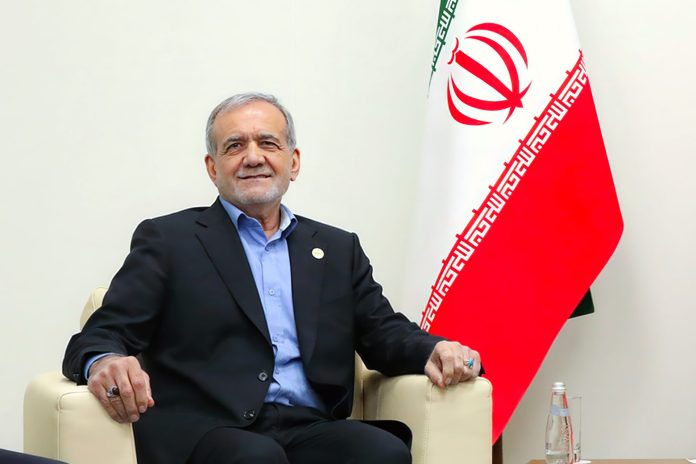
President Pezeshkian congratulates Muslim leaders on holy month of Ramadan

Masoud Pezeshkian

Pezeshkian made the remarks in a message on the first day of Ramadan on Sunday, as Iran and some other Muslim countries across the world started celebrating the arrival of the holy month.

“With the blessings of this holy month and with the collective efforts of the leaders of Muslim countries, we will witness the expansion and strengthening of cooperation among Muslim countries and greater efforts to reduce the suffering of the Palestinian people, including the oppressed people of Gaza and Lebanon,” he said.

Muslims around the globe are celebrating the arrival of the holy month of Ramadan, a month dedicated to fasting, prayer, and reflection.

Saudi Arabia and some Arab countries started the month on Saturday, with some other Islamic nations, including Iran and Morocco, declaring Sunday as the first day of the holy month.

The beginning of the fasting month of Ramadan is determined by both lunar calculations and physical sightings of a new moon.

During Ramadan, Muslims refrain from eating and drinking from dawn to dusk, converge in mosques for prayers, and traditionally break their fast in gatherings in mosques or with family and friends in the evening.

Different countries have developed their methods of declaring the first day of Ramadan.

France, UK working on developing one month truce plan for Ukraine: Paris

Russia Ukraine War

Macron’s statement comes after European leaders met in London to discuss ending the war in Ukraine, and restoring dialogue between the Ukrainian and U.S. governments following the heated argument between U.S. President Donald Trump and President Volodymyr Zelensky at the White House last week.

Ground and maritime operations, as well as energy infrastructure, would be part of a potential truce plan, Macron told Le Figaro, but would not cover the front lines as it would be too difficult to monitor, he said in an interview with Le Figaro.

Peacekeeping forces will be deployed on the ground only at the second stage of the plan’s implementation, according to Macron.

“There will be no European troops on Ukrainian soil in the coming weeks,” he added.

But an unnamed British official denied that such a truce had been agreed upon in London, adding there was not yet agreement on the timing of any potential ceasefire.

Macron stated that the European Union must also allocate an additional 200 billion euros ($208 billion) to strengthen its defense capabilities in light of a possible U.S. rollback and further Russian threats.

EU countries have to set a target for defense investment of 3%-3.5% of GDP, the French president said. He added defense funds are expected to come through “innovative financing,” including joint loans and other EU mechanisms.

These issues will be on the agenda of the emergency European summit on March 6. According to Macron, the EU is also seeking to provide Ukraine with an emergency military aid package worth 20 billion euros ($21 billion) at the meeting in Brussels.

While most European leaders publicly voiced support for Zelensky after his spat with Trump, Starmer called both the Ukrainian and U.S. leaders in an attempt to bridge the rift. The prime minister reportedly aims to tell Zelensky that fixing relations with Trump would be necessary to ensure lasting peace.

The British prime minister and Macron, who visited Washington earlier the previous week, are seeking to mend the ties between Kyiv and the U.S. and present a united front on Ukraine and Russia.

European leaders had previously been sidelined from talks between the U.S. and Russia — concerned that neither the EU nor Kyiv will have a role in negotiating a ceasefire in Ukraine.