Monday, December 22, 2025
Home Blog Page 4645

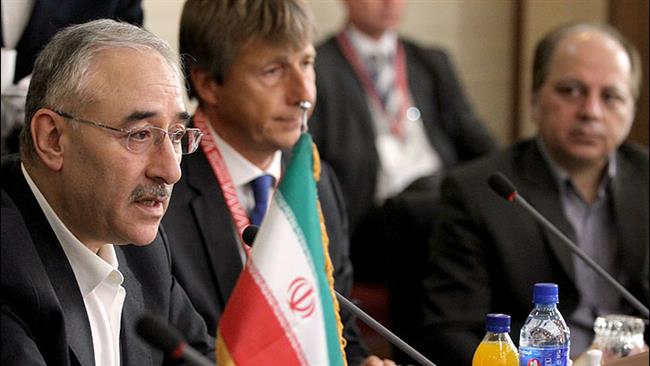
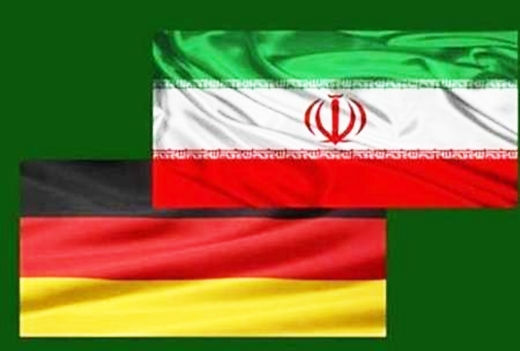
Culture minister meets German ambassador

iran-germany

The minister of culture and Islamic guidance has said that cultural relations can guarantee political and economic ties between Iran and Germany.

Ali Jannati made the remark in a meeting with German Ambassador to Iran Michael Baron Von Ungern Sternberg on Tuesday and added, “That generations of Iranians have lived in Germany is proof that the two countries have had the oldest industrial and economic relations and that they are interested in maintaining good bilateral ties”.

He said that the deep-rooted Iran-Germany cultural relations have continued partly intact, adding that Iran participates in Frankfurt Book Fair every year and the head of the German fair is invited to participate in the opening ceremony of the Tehran Book Fair this year.

Jannati also said that during Iran’s Culture Weeks in Germany in previous years the two sides used to have an exchange of films and musical troupes, but in recent years such exchanges have decreased. This needs to be restarted at a broad level.

The German ambassador, for his part, said that establishment of cultural relations will lead to decreasing tensions and help overcome crises [in the world].

“The economic and political relations cannot sustain successfully in the absence of cultural relations,” Von Ungern Sternberg said, adding that our efforts should be focused on expansion of such relations.

On the Tehran International Book Fair, the German envoy expressed satisfaction that Germany has always maintained its strong presence in this international event, adding that his country always do so in the future.
Basij Commander: N. agreement never ends US enmity towards Iran

Naghdi

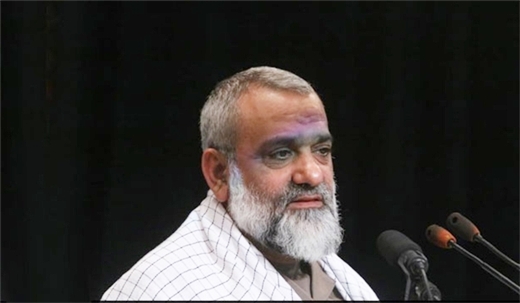
Commander of Iran’s Basij (volunteer) Force Brigadier General Mohammad Reza Naghdi dismissed the possibility that the US and its allies would stop their hostile acts against Iran after the nuclear agreement between Tehran and the world powers.

“The 5+1 countries (the US, Russia, China, Britain and France plus Germany) are the same old enemies who have today sat to the negotiating table against our nation and we would be much gullible to think that their problem with us merely pertains to the nuclear issue or the regional problems; the (main) issue is the confrontation between Islam and infidels,” Naghdi said, addressing a ceremony in the Central city of Qom on Tuesday.

He said the US is concerned about the spread of the Islamic Revolution in the world, and added, “The US problem is that the Islamic Revolution thoughts spell an end to the US rule in the world.”

Naghdi further said that if the US had been merely worried about Iran’s nuclear program, then it should have adopted a fresh approach toward Tehran after the nuclear agreement.

He also underlined the necessity for the termination of sanctions against Iran.

His remarks came after Supreme Leader of the Islamic Revolution Ayatollah Seyyed Ali Khamenei blasted the US statesmen for their contradictory remarks after the nuclear agreement with Tehran, and called on the Iranian officials to show more sensitivity and give proper response to their comments.

[…]

Following US policies against Iran unwise: Ayatollah Khamenei

Leader-Austria President-5

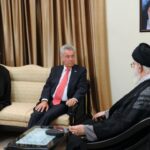
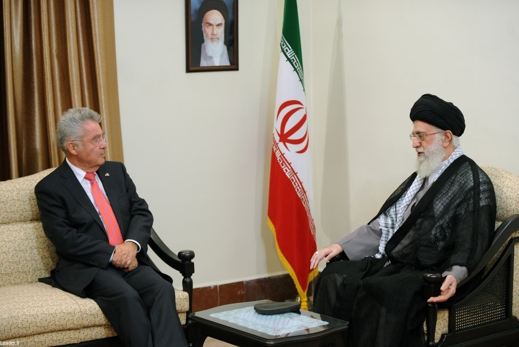
“Some European countries’ following the US is unwise and groundless. Of course, Austria is not one of these countries,” the Leader said in a meeting with visiting Austrian President Heinz Fischer in Tehran on Tuesday.

The Leader added that the US is hostile against Iran because it lost its interests in the Islamic Republic after the victory of the Islamic Revolution in 1979.

“The Islamic Revolution took Iran, which was fully under the Americans’ control, from them and this issue is the reason behind the US hostility against the Islamic Republic,” Ayatollah Khamenei said.

The Leader called on Iranian and Austrian officials to devise plans and follow up on them in order to enhance bilateral ties.

He said the main goal of the Islamic Revolution was to bring prosperity and happiness to the Iranian people and all humans under the aegis of “following the divine path, rule of wisdom and faith together with action.”

Ayatollah Khamenei emphasized that Iran’s “benevolent approach” has won the country enemies who are after warmongering and are seeking to pit nations against one another.

However, Iran has plenty of good and king friends among governments and nations, the Leader said.


In response to a question by the Austrian president about the future of ties between Iran and European countries, the Leader said, “Certain remarks have been made on the part of the European governments, but we should wait for the practical effects of these remarks.”

The Leader further pointed to deviant moves operating in the name of Islam in the Middle East region, saying: “Islam is not what these [deviant] currents are introducing, but Islam stands on a strong, faithful and wise basis.”

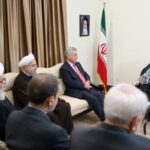
During the meeting, which was also attended by Iran’s President Hassan Rouhani, the Austrian president assessed as good his negotiations with Iranian officials.

Fischer said the two countries should hold more dialogue on the issues of mutual interest to finalize agreements.

He added that he held good talks with the Iranian president and expressed optimism about the future of mutual relations.

He said a new opportunity has been created for Tehran and Vienna to improve cooperation.

JCPOA beneficial to Europe, Mideast: Rouhani

Iran-Austria

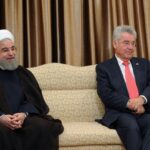
“After the nuclear agreement, the Islamic Republic of Iran is set to increase its efforts more than before for stability and security in the region and the world and we believe that stability and sustainable security will be in the interest of Europe, the region and the [entire] world,” Rouhani said in a meeting with visiting Austrian President Heinz Fischer in Tehran on Tuesday.

On July 14, Iran and the P5+1 countries – the United States, Britain, France, China, Russia and Germany – finalized the text of a nuclear agreement, dubbed the Joint Comprehensive Plan of Action (JCPOA), in the Austrian capital of Vienna.

Under the JCPOA, limits will be put on Iran’s nuclear activities in exchange for, among other things, the removal of all economic and financial bans against the Islamic Republic.

The Iranian president expressed hope that the Vienna nuclear agreement would reinforce international peace, stability, security and cooperation.

Rouhani added that the agreement carries the message of “peace, friendship, dialog, cooperation and future development of the region and the world.”

Iran-Austria ties after JCPOA

The Iranian president also said the nuclear agreement provides Iran and Austria with an opportunity to enhance their cooperation.

“Today, after the nuclear agreement, an appropriate opportunity is created to improve our cooperation proportionate to the nations’ demands and existing potentialities,” Rouhani said.

He added that no obstacle can hinder the expansion of Tehran-Vienna ties and noted that bilateral cooperation would help strengthen mutual trust.

Fischer, for his part, said Austria is an independent and impartial country and is fully ready to boost its ties with Iran in different sectors.

The Austrian president expressed hope that his visit to Tehran would lead to lasting mutual relations.

Iran-Austria documents for cooperation

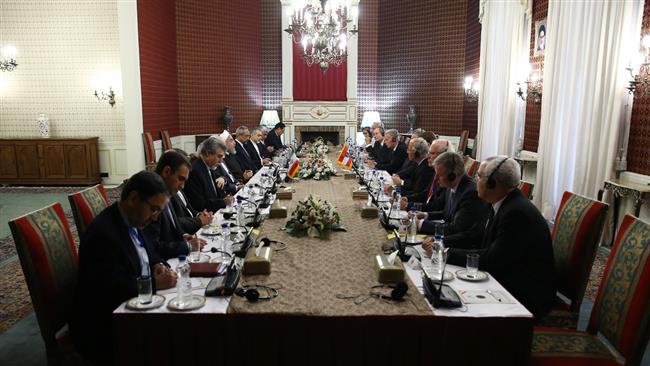
Meanwhile, senior Iranian and Austrian officials on Tuesday signed four documents for strengthening bilateral cooperation in the presence of the two countries’ presidents.

Iran’s Foreign Minister

The Iranian minister of industry, mine and trade, Mohammad Reza Nematzadeh, and Austrian minister of science, research and economy,Reinhold Mitterlehner, also inked an agreement on holding the 8th meeting of Iran-Austria Business Council.

The Austrian president arrived in Tehran on Monday at the head of a 240-member delegation at the invitation of his Iranian counterpart with the purpose of discussing ways to improve Tehran-Vienna relations.

Fischer’s trip to Tehran comes 11 years after then President Thomas Klestil traveled to Tehran.

Mohammad Javad Zarif and Austrian Minister of Agriculture, Forestry, Environment and Water Management Andrae Rupprechter signed an agreement to boost environmental cooperation.


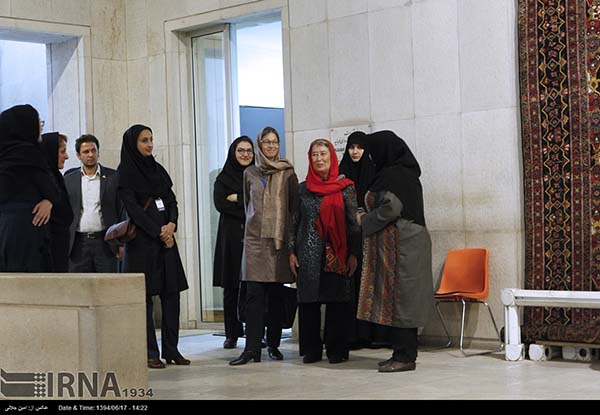
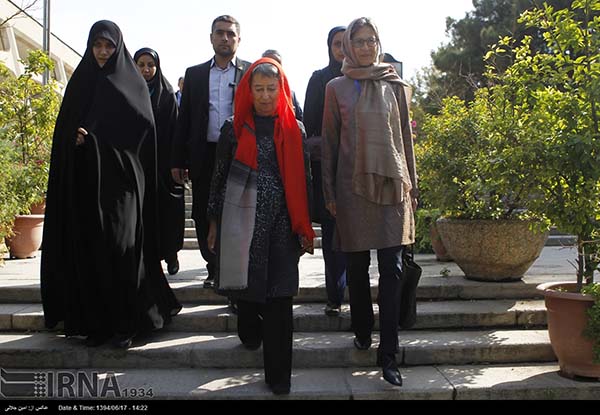
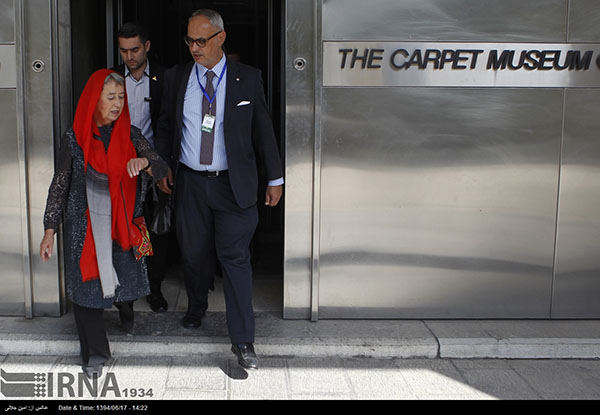
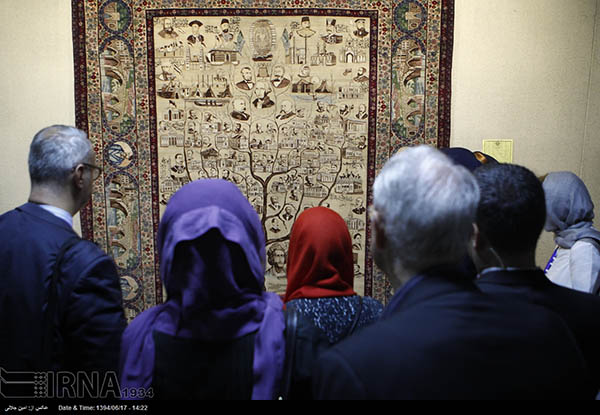
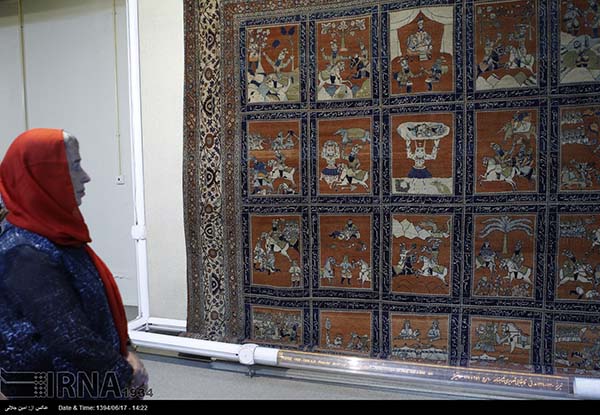
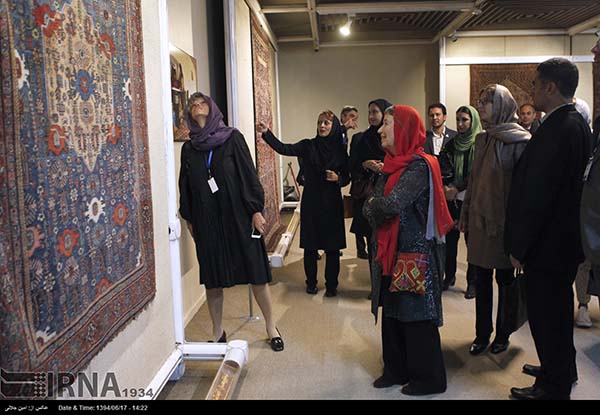
Austria’s First Lady visits Tehran Carpet Museum (PHOTOS)

Austria's First Lady

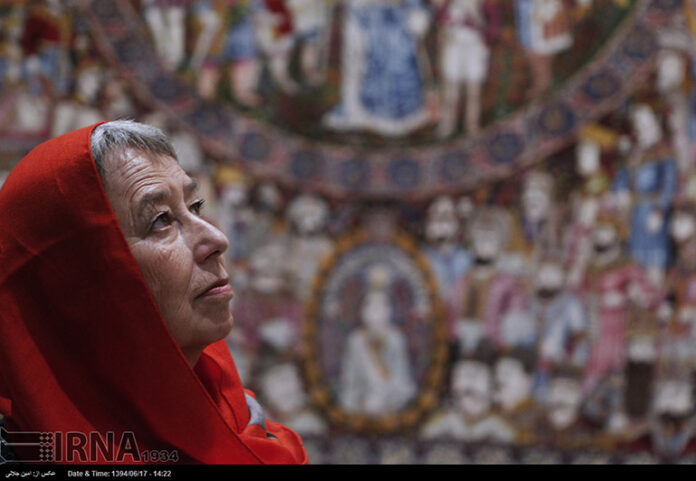
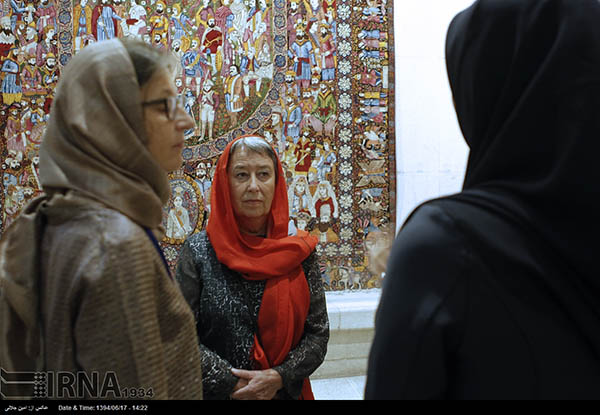
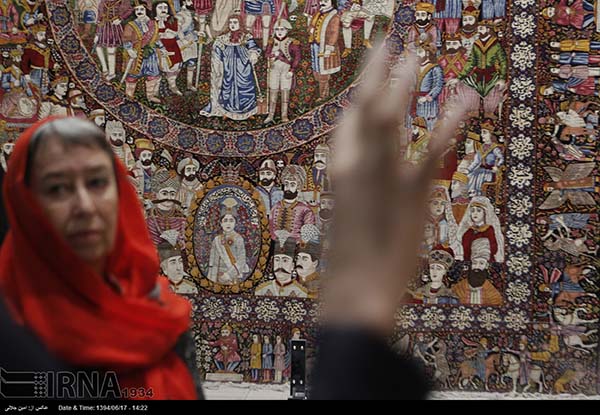
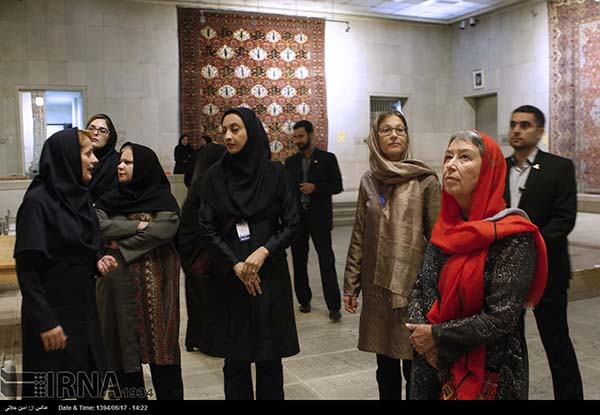
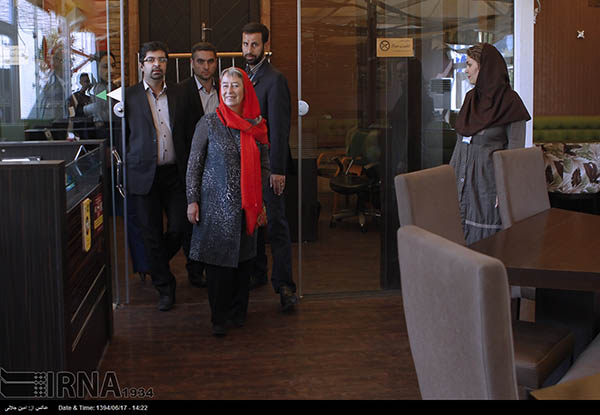
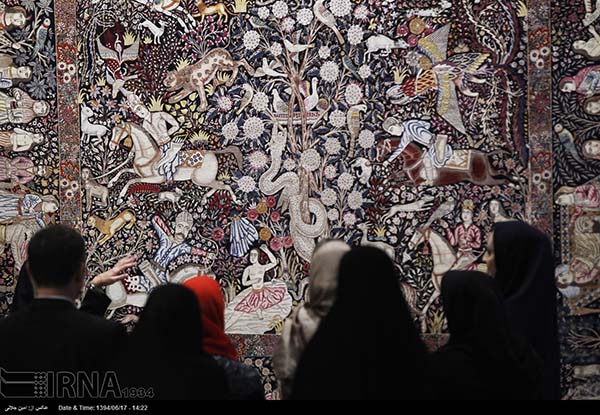
Margit Fischer, the First Lady of Austria and the wife of President Heinz Fischer who is in Iran, toured Tehran’s Carpet Museum on Tuesday.

The Austrian President along with his wife and a large economic delegation is in Iran on a three day official visit.

The following photos of Margit Fischer in the Carpet Museum have been released by the Islamic Republic News Agency:

A positive development in Iran-Austria ties

Rouhani-Austrian president

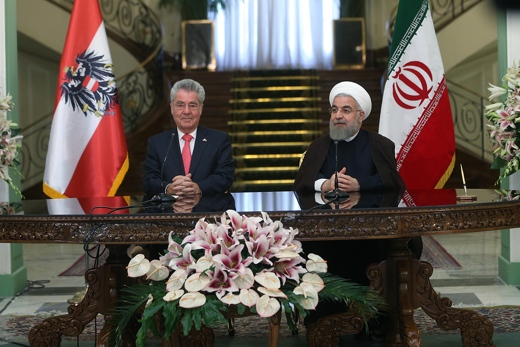
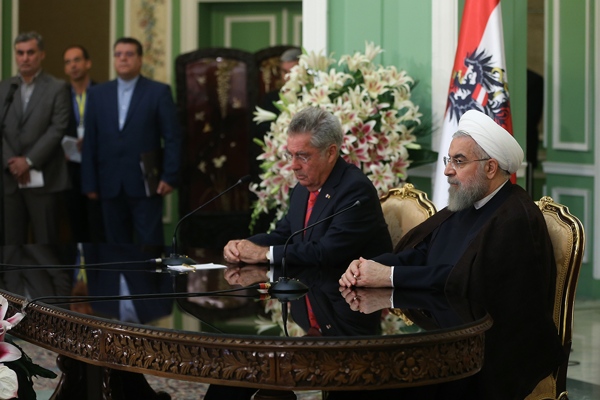
President Rouhani had welcomed President Fischer in an official ceremony earlier in the day. They also held a meeting prior to the press conference.

Hailing the Iran agreement

President Fischer, who is in Iran on an official three-day visit, said during the presser that the recent agreement reached between Iran and the P5+1 in the Austrian capital, Vienna, on July 14 opened a new chapter in the relations between the Islamic Republic and other countries.

The agreement, dubbed the Joint Comprehensive Plan of Action (JCPOA), was clinched between Iran and the United States, Britain, China, France, Russia plus Germany, which together form the P5+1.

President Fischer said Austria attached especial significance to good relations with other countries. He said such relations should not be lop-sided and to the benefit of only one party.

Both sides should equally benefit from the relationship, he said.

Bilateral trade with Iran

President Fischer also said he expected Austria’s bilateral trade with Iran to grow to 300 million euros (335 million dollars) this year, and continue to “markedly” increase in the coming years.

He also said that the two governments had agreed to increase political and economic cooperation, and the agreements would benefit both sides equally.

The Iranian president, for his part, firstly thanked the Austrian government for its “good hosting” of the nuclear negotiations between Iran and the P5+1 countries, which culminated in the agreement between the two sides.

In Syria, first things, first

In response to a question about Iran’s support for the Syrian government, President Rouhani said the priority now is putting an end to the total insecurity in the country and the misery of the people.

“The first step is to stop the bloodshed [in Syria],” the Iranian president said, adding that once that priority is fulfilled, it will be time to discuss such political issues as democracy and opposition in the Arab country.

President Rouhani emphasized that the future of Syria should be built by the Syrian people themselves through popular voting.

“No foreign country can and should decide about Syria’s future,” he said, adding that all countries should cooperate for the settlement of the Syrian crisis.

Iran is ready to sit at the negotiating table with any country or world power if the Islamic Republic deems that the result of such negotiation would be a secure, stable and democratic future for Syria.


Rouhani-Austria

The Austrian president is in Iran at the head of a 240-member delegation and on an invitation by President Rouhani.

Austria’s Foreign Minister Sebastian Kurz as well as Vice Chancellor and Economy Minister Reinhold Mitterlehner accompany Fisher on his trip to Tehran.

Fischer’s visit to Iran is a first by a leader of a member state of the European Union (EU) since former Austrian President Thomas Klestil traveled to Tehran in January 2004.


‘Iran backs any oil market recovery bids’

Zangeneh-0

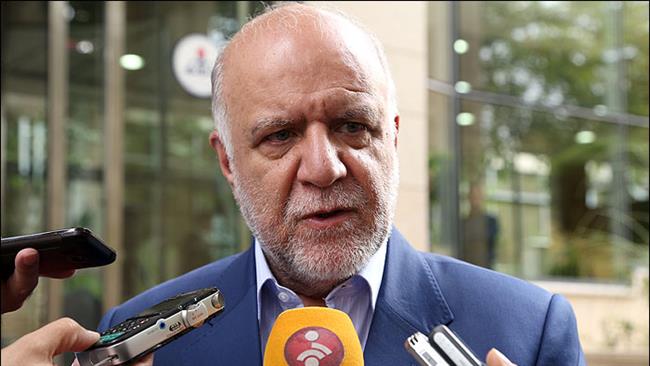
“Iran supports and welcomes any steps to help the oil market recover and escape the current conditions,” Zangeneh has been quoted as saying by the media.

He made the comment in reference to a proposal made by Venezuela to coordinate between OPEC and non-OPEC oil producers.

Venezuela has for months been pushing for an emergency OPEC meeting and joint coordination with Russia to stem a tumble in oil prices, but with little success, Reuters reported.

Venezuelan President Nicolas Maduro said on Saturday, he has suggested to the Emir of Qatar a summit for heads of state of OPEC countries to defend oil prices.

The Venezuelan leader, who met with the emir, Sheikh Tamim bin Hamad al-Thani during his visit to OPEC nation Qatar, added he had also suggested non-OPEC countries, which include Russia, take part.

Zangeneh had earlier emphasized that Iran is not opposed to an emergency OPEC meeting to discuss sagging oil prices.

“If this meeting is held, it will be effective and we will not oppose it,” he told reporters last month.

“An emergency meeting has to be held with the consensus of OPEC members and a consensus means all members are decided to reach a conclusion,” the Iranian minister said.

But I think it is unlikely that certain countries which have political motivations in the back of their minds in bringing down the prices will simply agree with it, he added.

Analysts believe that Zangeneh was alluding to Saudi Arabia which is largely believed to be leading the drive for lower prices, producing oil at full capacity despite a glut in the market.

Ignoring negotiating teams’ efforts, big mistake: Shamkhani

Shamkhani

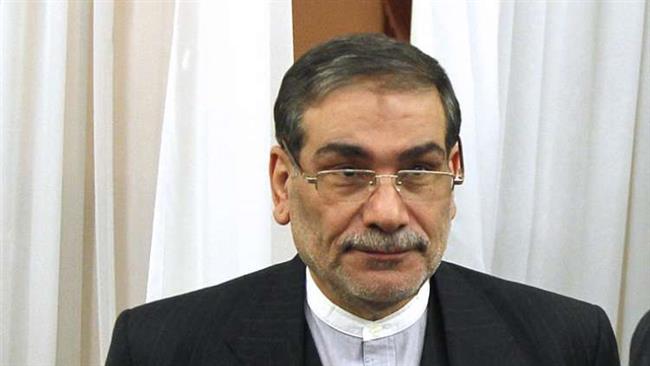
Efforts made by previous and current negotiating teams should not be ignored, secretary of the Supreme National Security Council (SNSC) said Tuesday.

Ali Shamkhani made the remarks on the sidelines of a sixth meeting of parliament’s Special Committee to Review the Joint Comprehensive Plan of Action (JCPOC).

Appreciating the active presence of MPS to review JCPOA, Shamkhani said negation of the negotiating teams’ efforts is a big mistake.

Referring to issues discussed in today’s session, he said the previous teams’ efforts brought such outcome.

Parliament continues to review JCPOA, he said, adding Supreme Leader of the Islamic Revolution Ayatollah Ali Khamenei has described parliament as an effective element regarding the issue of JCPOA.

He expressed hope a national consensus would be reached on the issue to prevent any infiltration of the enemies.

Former Iranian nuclear negotiator lashes out at JCPOA

Jalili

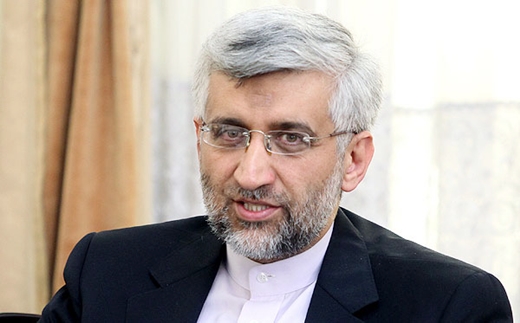
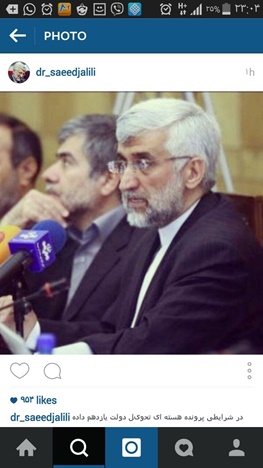
Saeed Jalili, who led Iran’s nuclear negotiating team when Ahmadinejad was president, has lashed out at the Joint Comprehensive Plan of Action in an Instagram post.

The following is the translation of his posting Alef.ir published on September 7:

Jalili-instagram“The nuclear dossier was handed over to the 11th government after the Islamic Republic had made substantial progress in the nuclear industry. But our acceptance of the Joint Comprehensive Plan of Action would amount to renunciation of 100 or so of our inalienable rights.

“Unfortunately, under this deal, we have accepted to be labeled an exception. In other words, we have agreed to be entitled to fewer rights and be committed to more undertakings than other nuclear countries. Even worse, we have retreated from our entitlements under the Geneva deal.

“Many of the time-related restrictions of Iran’s nuclear industry are far from clear. Under this deal, we would need some 40 years to reach the 190,000 separative work units the Supreme Leader has underlined the country needs.

“Security is another red line of the establishment; unfortunately, under JCPOA we have agreed to unconventional access, supervision and inspections which would compromise our intelligence.

“The joint commission which is to be formed under JCPOA will act against Iran too. For instance, if a member of this commission, say the US, accused Iran of failing to act in line with its commitments, it would be easy for sanctions to snap back into place.

Also under the recent UN Security Council resolution, Iran’s case would remain under Chapter Seven for 10 years and the nuclear issue would sit on the agenda of the Security Council for a decade.”

In conclusion, the former top negotiator has said he hopes IRIB [radio and TV organization] airs in entirety the comments he made when he attended a session of the JCPOA Review Committee in parliament.

Austria’s OMV to help double Iran’s oil, gas output

Aurstria-oil

Amir-Hossein Zamaniniya, Iran’s deputy petroleum minister for international and trade affairs, has told the media that OMV has announced readiness to provide Iran with technologies for operations that are known as Improved Oil Recovery (IOR) and Enhanced Oil Recovery (EOR).

Zamaniniya added that IOR and EOR technologies will be used for both oil and gas fields. However, that still depends on the removal of sanctions against Iran, as envisaged by the July nuclear breakthrough reached by Iran and the P5+1 group of countries.

“OMV has voiced readiness to double the recovery rate at Iran’s oil and gas fields by using modern technologies,” Zamaniniya said.

In answer to a question on whether OMV officials have discussed the prospects to pipe Iran’s natural gas to Europe, the official emphasized that no plan is on agenda in Tehran for gas exports to Europe in the near future.

“The priority for Iran presently is to export gas to the neighboring states,” said Zamaniniya. “This will be economically justifiable and will also have immediate political benefits for Iran”.

A consortium led by Austria’s OMV is pursuing Nabucco project to pipe natural gas to Europe. It had originally designated Iran as a key supplier of the project. However, the country was sidelined from the scheme in 2008 due to a series of complications that emerged – the most important of which were US sanctions.