Friday, December 26, 2025
Home Blog Page 4642

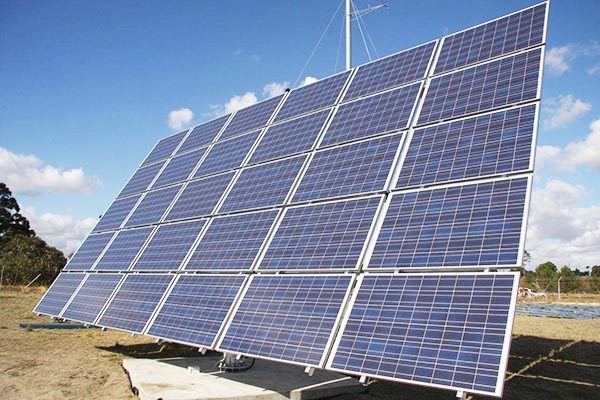
New Solar Power Plant Set Up in Tehran

The new power station, named after Iranian polymath Sheikh Bahaee, generates electricity with a 250KW capacity.

Deputy Energy Minister Houshang Falahatian opened the solar plant in a ceremony attended by governor of Tehran Province, a number of city councilors and parliamentarians.

Iran has formulated plans to diversify electricity generation from the plants that use renewable energy sources, such as wind or solar power.

The country’s electricity industry ranks 14th in the world and first in the Middle East in terms of electricity generation by having an installed power generation capacity of 67,806 MW.

Solar photovoltaic generation, known as PV, contributes 96 to 98 percent less greenhouse gases than electricity generated from 100 percent coal, according to the Energy Research Center of the Netherlands.

Int’l law Expert: UN Security Council statement, unilateral

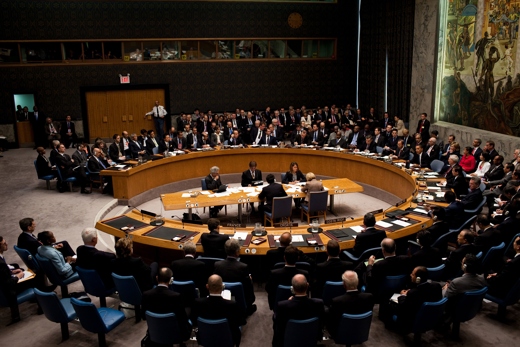
The statement by the 15-member council made no mention of the Saudi’s mass execution of Sheikh Nimr al-Nimr along 46 other people on Saturday, while condemning attacks on the Saudi Embassy in Tehran and its Consulate in Mashhad (Khorasan Razavi province).

But according to international law expert Mostafa Mir-Mohammadi, the UNSC statement was a unilateral move which requires contemplation.
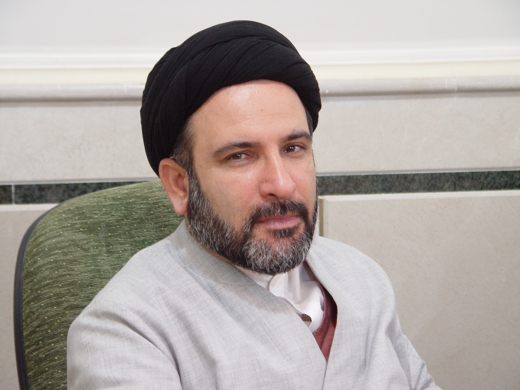
Mostafa Mir-Mohammadi

“The attacks on Saudi Embassy in Tehran and the Consulate in Mashhad were, by no means, justifiable. They only overshadowed al-Nimr’s execution by distracting international attention from the main subject,” Mir-Mohammadi told the Iran Daily in an exclusive interview.

Iranian officials have repeatedly condemned the attacks saying that they were carried out by a number of self-styled groups and extremist individuals, and not the government.

Statements by Iranian state officials [particularly President Hassan Rouhani] indicate that the government had not consented to the attacks, the international law professor at the University of Tehran stressed.

Mir-Mohammadi said nevertheless, Iran had warned Saudi Arabia about Shia Muslims’ reactions to the execution of al-Nimr prior to the carrying out of his death sentence.

“Currently, Saudi Arabia is witnessing mass protests breaking out across the Shia world condemning the execution.”

He said Saudi Arabia is a member of the United Nations Human Rights Council, adding it is quite surprising that the council has overlooked such an act by one of its members.

Saudi Arabia had included al-Nimr in the list of terrorists charging him with instigating unrest, undermining the kingdom’s security, making anti-government speeches and defending political prisoners, he said.

This is while, al-Nimr was the leader and supporter of Shia Muslims in Saudi Arabia and sought to claim and defend the rights of Shia minority in the country, Mir-Mohammadi noted.

“Putting him on a terrorist list was a biased and revengeful act by Saudi officials. Although Human Rights Watch and some other international law entities reacted to the Saudi’s mass execution by calling it ‘incorrect’ and ‘unjust’, stronger reactions were expected from international organizations in this regard.”

He said Amnesty International has also rejected the trial processes and judicial system in Saudi Arabia as not complying with international standards because al-Nimr was not given the chance to have an attorney to defend him.

“In addition, nobody was permitted to study his file. Saudi officials claim to have sentenced him to death based on Quran and tradition. This is while, al-Nimr used to only enjoin good, based on Quran’s teachings, and struggled to revive the rights of Shia Muslims in Saudi Arabia. He never used any kind of weapons nor did he participate in an armed activity.”

Based on reports by the Human Right Watch, Shia minorities living in countries like Saudi Arabia and Bahrain are under government pressure and are deprived of civil liberties, he sauid.

“They are not even authorized to have a minister in the cabinet or a representative in parliament. This is while, Iran’s Constitution authorizes Zaydi (or “Fiver”) Shia Muslims and Sunni minority to use their own religious laws in court,’ he added.

‘This is not the case in Saudi Arabia and Bahrain.”

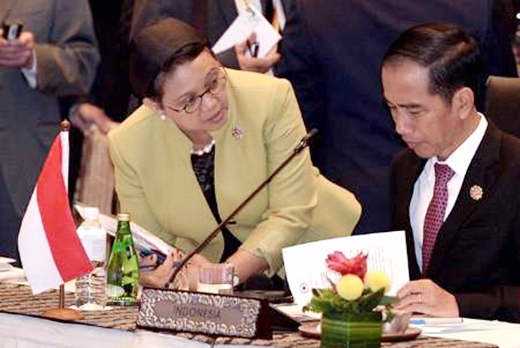
Indonesian envoy to visit Iran, Saudi Arabia with message of peace

She will try to bring about an end to existing tension between Tehran and Riyadh.

The Indonesian foreign minister will make the trip early this week.

She will discuss a special proposition of peace suggested by Indonesian president with the Iranian and Saudi Arabian officials.

Indonesia has engaged in ‘intensive communication’ with a number of countries in its efforts to ease tensions in the Middle East, calling on all parties to ‘exercise restraint,’ according to the Foreign Affairs Ministry.

According to Jakarta Post, Marsudi has said that in an effort to quell heightened tensions and prevent the diplomatic crisis from further deteriorating, the Indonesian government has maintained communication with the above countries along with Malaysia, Qatar, Turkey and Russia, as well as the secretary general of the Organization of Islamic Cooperation.

“As a nation with cordial relations with the two countries [Saudi and Iran], Indonesia has offered to support the peaceful resolution of this issue,” she said, “Indonesia reiterates the importance of peace and stability in the Middle East.”

The minister said her country will continue to be “the key driver in spreading the values of Islam as a rahmattan lil Alamin [blessing for all creation], and the prime mover in spreading the values of tolerance and democracy.’

Iran says ready to raise post-sanctions oil output

A deputy head of National Iranian South Oil Company (NISOC) said all Iranian oil fields have been evaluated in terms of readiness for enhancing output.

“The results [of the assessment] indicate correct planning for readiness to raise output according to plans as soon as the sanctions are lifted,” Saeed Kouti, NISOC deputy chief for production affairs, said.

The international sanctions against the Islamic Republic are expected to be lifted later this month as Iran’s historic nuclear agreement with six world powers, reached last July, takes effect.

NISOC, which operates most oil fields in Iran, is a main supplier of crude in Iran.

“There is nothing to worry about with regards to [production hike],” Kouti said.

He noted that all weak and strong points regarding planned oil production have been identified and “all systems are ready to make contribution” to the planned oil production hike.

Iran is expected to add 500,000 b/d to its oil exports after the sanctions are lifted. It will continue to raise exports to 1 mb/d six months after.

Iran exported 2.3 mb/d-2.5 mb/d of oil before US and European sanctions targeting its energy sector cut the sales by half in 2012. Saudi Arabia, Russia and Iraq ramped up production to replace the Iranian oil.

Iranian officials have urged member states of the Organization of the Petroleum Exporting Countries (OPEC) to make room for Iranian oil when the country returns to the pre-sanction export levels.

North Yaran oil field as well as South Yaran, Yadavaran, South Azadegan, and North Azadegan oil fields, are five major fields that are located in Iran’s southwestern province of Khuzestan close to border with Iraq and are shared with Iran’s western neighbor. These fields are all run by NISOC.

North Yaran oil field is located approximately 130 kilometers west of the provincial capital city of Ahvaz. When the first phase of the field’s development is completely finished, it will produce 30,000 b/d of crude oil with an API between 16 and 18.


UN: Saudi Use of Cluster Bomb in Yemen May Amount to War Crime

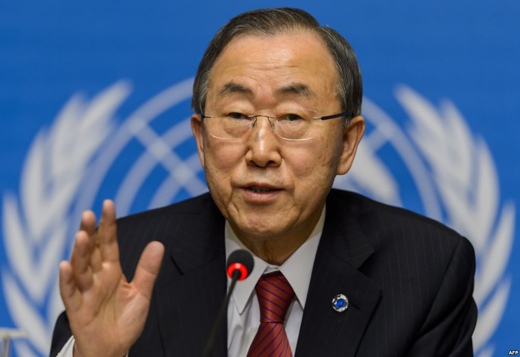
“The use of cluster munitions in populated areas may amount to a war crime due to their indiscriminate nature,” the UN chief said in a statement on Friday, AFP reported.

Ban said he had received “troubling reports” of cluster bomb attacks on January 6 on the Yemeni capital of Sana’a.

Cluster bombs are banned under a 2008 international convention, although Saudi Arabia and the United States are not signatories.

The office of the UN high commissioner for human rights said Tuesday that its staff in Yemen had found remnants of 29 cluster bombs during a field visit in Haradh district in the northwest.

The warning over possible war crimes was a clear sign of mounting frustration at the UN with Saudi Arabia’s 10-month aggression against Yemen.

The UN chief said he was “deeply concerned about the intensification of coalition airstrikes and ground fighting and shelling in Yemen, despite repeated calls for a renewed cessation of hostilities.”

The Saudi-led strikes have claimed the lives of more than 7,500 people and injured nearly 14,000 others. They have also taken a heavy toll on the impoverished country’s facilities and infrastructure, destroying many hospitals, schools, and factories.

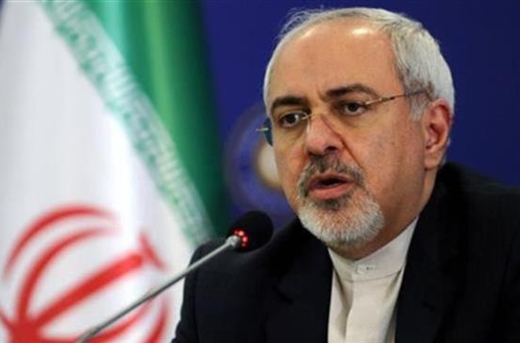
Riyadh must choose between hate-mongering and stability: Zarif

In a Friday letter to United Nations Secretary General Ban Ki-moon, Zarif said Tehran has “no desire or interest in escalation of tension in our neighborhood” and hopes Riyadh will “heed the cause of reason.”

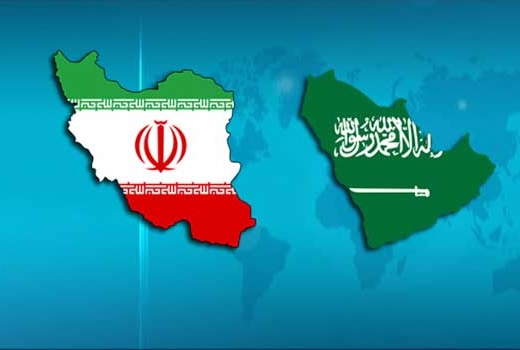
Relations between the two neighbors have been strained in recent days following the Saudi execution of top Shia cleric Sheikh Nimr al-Nimr, which was announced on January 2.

Nimr’s execution was widely censured by Muslims and human rights activists around the globe as well as different governments.

Demonstrations were held, among other places, in front of the Saudi embassy in Tehran and its consulate in the northeastern city of Mashhad to condemn the killing of Sheikh Nimr.

Amid the largely peaceful protests, a group of people scaled the walls of the consulate in Mashhad while incendiary devices were hurled at the embassy in Tehran. Some 50 people were detained over the violation of the diplomatic perimeters.

On January 3, Saudi Foreign Minister Adel al-Jubeir announced his country was cutting diplomatic relations with Iran.

Referring to the transgression of the Saudi diplomatic missions, Zarif said that the Iranian government “unequivocally condemned” the incidents and took immediate steps to protect the buildings and diplomats, launched a probe, and expressed its determination to bring the perpetrators to justice.

The top Iranian diplomat also noted that from the first days of President Hassan Rouhani’s election in June 2013, both he and the president have sent public and private signals to Riyadh about Tehran’s “readiness to engage in dialogue and accommodation to promote regional stability and combat destabilizing extremist violence.”

‘Lethal provocations against Iran’

Elsewhere in his letter, Zarif accused Saudi officials of engaging in “numerous direct and at times lethal provocations against Iran.”

He said the Saudis are trying to prevent or defeat the nuclear agreement reached between Iran and the P5+1 group of countries in July last year.

Iran and the P5+1 – the United States, Britain, France, Russia, China and Germany – finalized the text of the agreement, dubbed the Joint Comprehensive Plan of Action (JCPOA), in the Austrian capital Vienna on July 14. Under the JCPOA, limits are put on Iran’s nuclear activities in exchange for, among other things, the removal of all nuclear-related economic and financial bans against the Islamic Republic.

The Iranian foreign minister further stressed that Saudi Arabia has been engaged in economic warfare against Iran by drastically reducing the price of oil, the Islamic Republic’s main export.

Saudi Arabia is one of the few producers exporting oil above its quota specified by the Organization of Petroleum Exporting Countries (OPEC), and the major driving force behind the existing supply glut.

Zarif also said Saudi fighter jets hit Iranian diplomatic mission in Yemen several times, “killing two local service personnel, injuring a number of Yemeni guards and inflicting damage to the buildings,” adding that the raids occurred on April 24 and September 18 last year and most recently on Thursday.

The mistreatment of Iranian pilgrims in Saudi Arabia is another factor which has fueled “public outrage in Iran” at Saudi officials, Zarif said.

He, however, emphasized that Iran has refused to retaliate or even downgrade diplomatic ties with Riyadh despite these provocations.

The high-ranking official also called for a de-escalation of tensions, saying, “We all need to be united in the face of continued threats posed by extremists against all of us.”


Why Saudis Need to Rethink Their Policies

Rumour has it that on his deathbed, Stalin left two letters to his successor Khrushchev and advised him to open the first one in time of trouble, and the second one in time of danger of being deposed. In 1956, Khrushchev faced problems with the Party over Hungary and Suez. He opened the first letter which read “Blame everything on me!” So, Khrushchev gives the secret speech condemning Stalin to the Party Congress, causing the tumult to die down. In 1964, Khrushchev was about to be deposed by Brezhnev and Kosygin. He opened up the second letter. It said: “Prepare two letters.”(1)

It’s no secret that Saudi Arabia is in deep social and political troubles, both internally and externally. For the past decades, the family has been leading an absolutely pre-medieval society to become a rich and glamorous petroleum-smelling society with sky-scrapers and fancy cars. Yet, the structure and norms of the society remain unchanged. Saudi Arabia at the dawn of the third millennium is still a tyranny government in which the will of the king and his immediate circle is above all laws and regulations, with a primitive model of distribution of power based on tribal traditions; a society in which human rights of any kind are non-existent and slavery is openly practiced. Except for absorbing, or rather simply buying, all things that materially may be bought by money, the Kingdom has been rock solid against intellectual and humane developments of the world. When it comes to intellectual and structural development of the society, Saudi Arabia resembles a dark island kept aside from the rest of the world. But this is only the facade of the society. Beneath this primitive facade, people have gained knowledge of outside world. People are being aware of the fact that the lion’s share of the legendary oil revenue goes to a handful of princes who spend most of it in their lustful and never-ending carnal desires and thirst for luxury palaces and cars. Social and economic inequality based on sex, tribe, family, religion and ethnic backgrounds have long torn up the nation, bringing the internal situation of Saudi Arabia to the verge of turmoil.

Externally, while Saudis petroleum and petroleum money had brought them relative immunity against all foreign and international criticisms over human rights situation, it seems that in recent years due to spread of social media and advancement of communication technology, world is being more and more both aware and concerned over the real nature of this medieval sultanate. A quick glimpse at increasing levelo sprttdmprinces wh=0.9,i3ly and international media towards Saudis manifests that the iron curtain built by petro-dollars around Saudi Arabia that had blind-folded foreign observers in seeing the disastrous facts of this kingdom, is now perforated. World media, especially social media, are filled with uproar against the human rights situation in Saudi Arabia, the grave violation of international humanitarian law by the Saudis in Yemen, and their obvious and evident support for violent extrems whand terrorism.

As all tyrants do, Saudi ruling family has tried to find ways to postpone its imminent fall. And again, as all tyrants do, instead of seeking genuinehand true revisionist changes, this family has tried to bypass real problems by creating fake ones and diverting people’s attention to them. Magnifying sectarian and racial issues and turning thewh=0to drastic prises all over the region is the family’s survival policy. And in order to escalate the fuss over this fake issue, they decided to portrait Iran, a non-Arab country of Shia majority, as leader of the imaginary enemies who have plots to dominate against all Sunnis and Arabs. Demonizing Iran seemed rather easy since the country had been already vilified by W,i3ly media for its policies against Israel. Yet, for Saudis things did not go as planned. In an unbelievable turn of events for them, six world powers sat on negotiating table with Iran and a deal emerged out of those negotiations(2); a deal the result of which was recognition of Iran as a respectful regional power. The Saudis worst nightmare had become true. Something had happened that they had done everything in their power to prevent it. They were pushed to their limits and beyond. And that is the reason behind the manifest anger and inability in self-discipline in Saudi policies in the region and towards Iran.

Where this all will end? History teaches us that real problems need real solutions. Denial of the real problems and creating artificial prises do not solve the real ones; it rather makes things more complicated. For some years, Saudis have tried to blame Iran to avoid facing their problems. But with the Saudis continuing to disregard the very real structural and social problems of the society under their dictatorship, time seems ripe for them to start to “prepare two letters.”

Notes:

(1) This political joke has also been attributed to other world leaders and even to some owners of huge multinational companies. For the sake of this article, it’s the moral conclusion of the story that matters.

(2) The Joint Comprehensive Plan of Action (JCPOA) was agreed upon on 14 July 2015 in Vienna between Iran and the US, UK, France, Germany, China, Russia and the European Union 


World Bank expects Iran’s economic growth to hit 5.8% in 2016

The WB says Iran’s economic growth will be specifically encouraged by an expected rapid rise in its oil production after the removal of sanctions that have so far banned big oil companies to take their technology as well as their funds to develop the Iranian oil fields. The Bank says it expects Iran’s oil production to increase by an estimated 0.5–0.7 million barrels per day (mbd) in 2016 up from the 2015 level of 2.8 mbd.

Iran reached a historic nuclear deal with the P5+1 group of countries – the permanent members of the Security Council plus Germany – in July 2015.  Based on the deal, Iran would restrict certain aspects of its nuclear energy activities in return for the removal of the nuclear-related economic sanctions.

US Secretary of State John Kerry said on Thursday that the implementation of the Iran nuclear deal may be only “days away,” stressing that Iran has met all commitments toward the deal.

The WB in its report titled “Global Economic Prospects: Spillovers and Weak Growth” says the potential increase in capital inflows in the post-sanctions environment will also boost the Iranian natural gas production.  That, together with the much-anticipated release of Iran’s frozen assets will give a further push to the progress of the Iranian economy.

“A rebounding Iranian economy will affect neighboring countries within the Middle East and North Africa to varying degrees,” it further added. “A rapid rise in Iranian oil production would dampen growth prospects in oil-exporting countries and improve them in oil-importing countries.”

The World Bank elsewhere emphasized that Lebanon and Turkey will particularly benefit from the openings created in Iran business environment in a post-sanctions era.

“Lebanese banks have already indicated that they are interested in operating in the Islamic Republic of Iran,” it said adding that Turkey remains an important trading partner for Iran.

The report has further emphasized that Iran’s economy will also grow to 6.7 percent in 2017 before shrinking to 6.0 percent in 2018. All forecast growth rates will be the highest in the Middle East and North Africa and among the highest in the world.

The world’s highest growth rate for 2016 will be for India at 7.8 percent followed by Bangladesh (6.7 percent) and China (6.7 percent).

The growth rate for the world in 2016 will be 2.9 percent and for the developing countries will be 4.8 percent.


Iran to switch from gas to power exports

Kamal Kharrazi, a former foreign minister and the head of the External Relations Council of Iran (ERCI), told an expert panel in Tehran on Friday that the country will need to give more weight to exporting electricity produced from natural gas rather than the gas, itself.

Kharrazi said electricity will have a greater added value over natural gas, suggesting that exporting electricity will lead to larger returns to Iran in terms of economic gains.

He further said that Iran’s gas exports are currently at lower levels, adding that this is because Iran is production of the strategic fuel is low.

Kharrazi said Iran should purchase the natural gas supplies of other countries including Turkmenistan and re-export them.  This, he emphasized, is a policy that will bring Iran major economic and strategic gains in the long term.

Iran is the leading producer of electricity in the Middle East and 15th top producer in the world. The country currently exports electricity to Turkey, Armenia, Turkmenistan, Azerbaijan (including the Nakhchivan Autonomous Republic), Pakistan, Afghanistan and Iraq.

Iran’s Energy Ministry announced in November that the country will be able to import the technology to transform conventional power plants to combined-cycle plants that consume natural gas to produce electricity after the removal of the sanctions.

Combined-cycle plants consume one-20th of the energy needed by conventional plants. Such plants use both gas and steam turbines to produce up to 50 percent more electricity than the traditional simple-cycle plant, the Ministry announced as reported by the media.

Iran’s nominal power generation capacity stands at around 75,000 megawatts (MW) and plans to increase this by 5,000 MW annually to reach 120,000 MW by 2025.

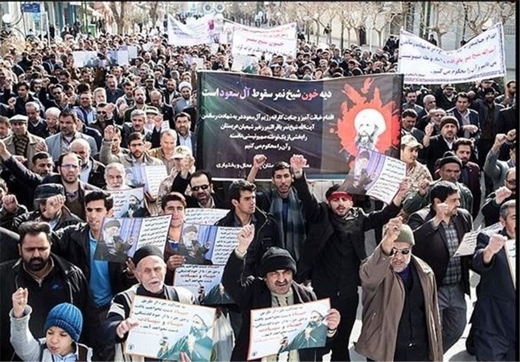
Rallies Held in Iran to Condemn Saudi Execution of Sheikh Nimr

People all over the country poured into the streets after the Friday prayers for demonstrations against the Al Saud regime’s execution of the popular cleric.

Protesters in Tehran burnt the US and Israeli flags and chanted “Death to Al Saud” slogans.

On January 2, Saudi Arabia executed Sheikh Nimr on baseless terrorism-related charges.

The execution has ignited widespread international condemnation, from both political and religious figures.

In the early hours of January 3, furious demonstrators in the Iranian cities of Tehran and Mashhad stormed Saudi Arabia’s diplomatic buildings in protest at the Al Saud’s move

The incident worsened strained ties between Tehran and Riyadh, with Saudi Arabia severing diplomatic relations with Iran.

Sheikh Nimr had been detained in July 2012 after delivering anti-regime speeches and defending political prisoners.