Tuesday, December 23, 2025
Home Blog Page 4640

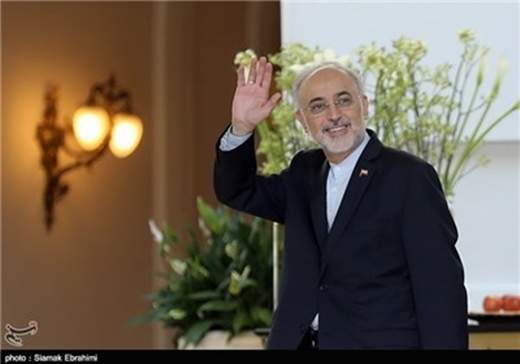
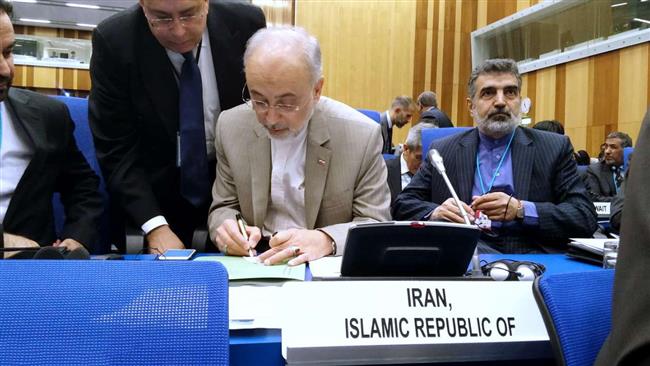
Iran hopes ‘PMD’ resolved by end of 2015: Salehi

Salehi

The director of the Atomic Energy Organization of Iran (AEOI) has said that Tehran hopes the issue of the so-called Possible Military Dimensions (PMD) in Iran’s nuclear program will be resolved by the end of the year.

“We have an agreement with the IAEA (the International Atomic Energy Agency) about the past and the present issues…[the] IAEA is pursuing what they should do and we have also done what we were supposed to do… [We hope] that the final report will come out by December 15th of this year and we hope that by then the issue will be closed,” Ali Akbar Salehi said on the sidelines of the 59th Regular Session of the IAEA General Conference in Vienna on Monday.

He said Iran and the UN nuclear watchdog “are both committed according to the agreement that we have signed,” adding, “In that agreement that was signed by me and Mr. [Yukiya] Amano (the IAEA chief) in Vienna, the roadmap is clear as to what the IAEA should undertake, what measures they should undertake, and what measures we should undertake.”

Amano due in Iran

Salehi said that the IAEA chief will travel to Iran in a “few days” for “the follow-up of the agreement that we had in Vienna and we hope, we are doing our best to remove all kinds of obstacles that may be on the way to come to a conclusion by December 15.”

He also thanked Amano for refusing to release confidential information on the agency’s arrangements with Iran despite all the pressure.

“Mr. Amano himself has insisted about the confidentiality of the documents so I would like to put on record our thankfulness to him that despite all the pressure that has been put on him he has not disclosed anything in this regard so he has stayed committed to this and this really makes me, I mean it’s imperative upon me to thank him for that.”

Referring to his meeting with Kazakh Energy Minister Vladimir Sergeyevich Shkolnik, Salehi said the two talked about the recently established fuel bank in the Central Asian country. He added that “Iran could be a supplier of enrichment services to this fuel bank.”

Salehi met the head of the Chinese delegation Monday and participated in a trilateral meeting with the US and China. He also held a bilateral meeting with Amano.

[…]
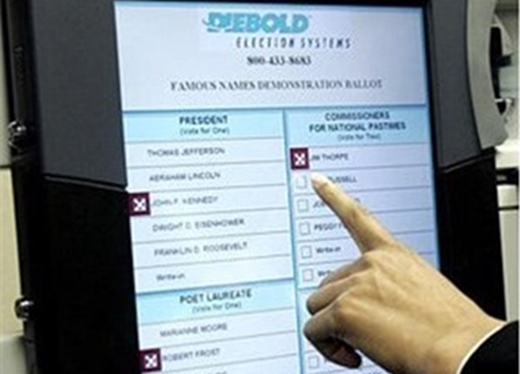
Iran to order electronic ballot boxes for upcoming elections

Ellection

An Iranian official said that the Interior Ministry plans to order electronic ballot boxes made outside the country for the two upcoming elections due in late February 2016.

After a series of studies conducted by the ministry, a prototype of the required electronic ballot boxes was manufactured, Siamak Rahpeyk, an election official with the Guardian Council said.

It will be sent to the Guardian Council in the coming days for approval, he added.

After the box shape is given approval, the hardware, software, and security issues will be addressed, he said.

Iran’s cabinet passed a plan in June to use electronic voting machines in the two upcoming elections.

President Rouhani has called for necessary preparation for holding electronic elections by building on the experience of other countries.

After a report by the Interior Ministry on the issue was discussed, Cabinet members approved a plan to hold the upcoming parliamentary and the Assembly of Experts elections, due on February 26, 2016, electronically.

There are 290 seats in parliament elected by the direct vote of people in nationwide election for four years.

The Assembly of Experts is also a high-ranking body that elects and oversees the activities of the Leader of the Islamic Revolution.

Members of the assembly are elected by people for an eight-year term. It holds biannual meetings to appoint a new chairman.

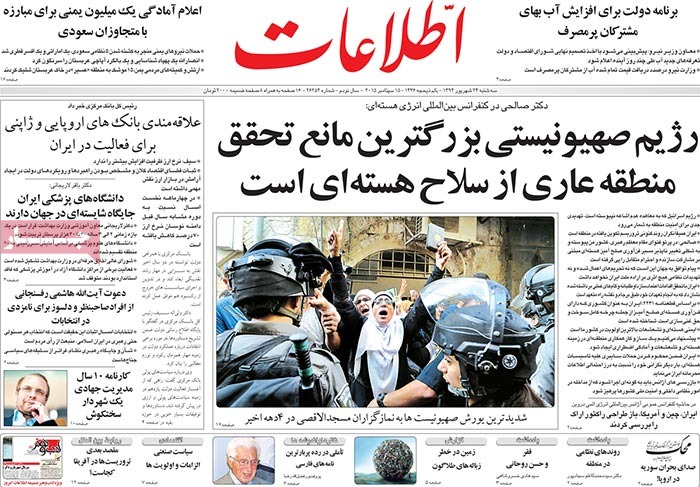
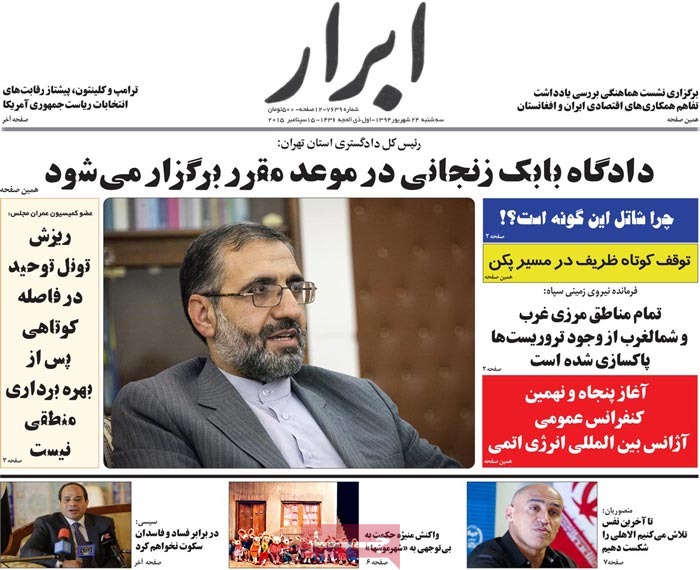
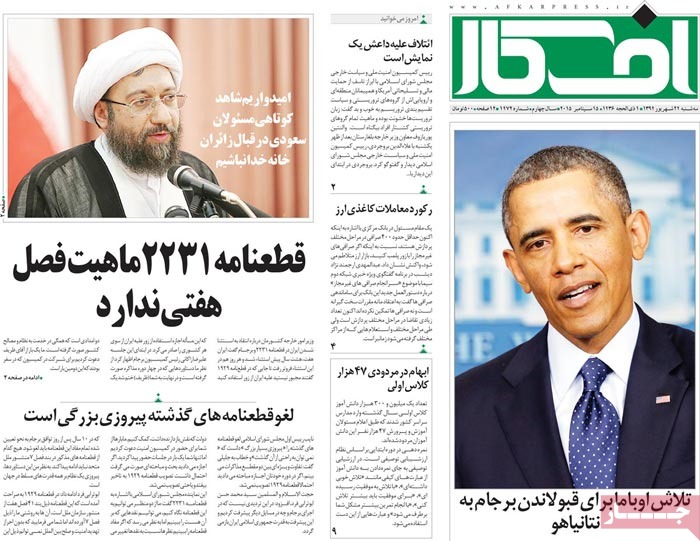
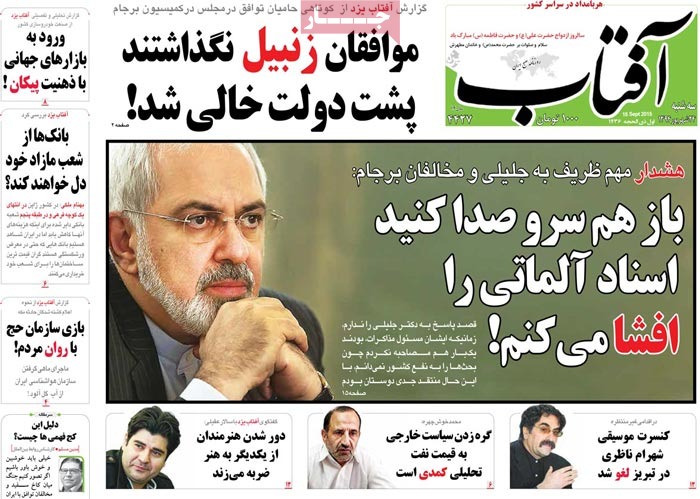
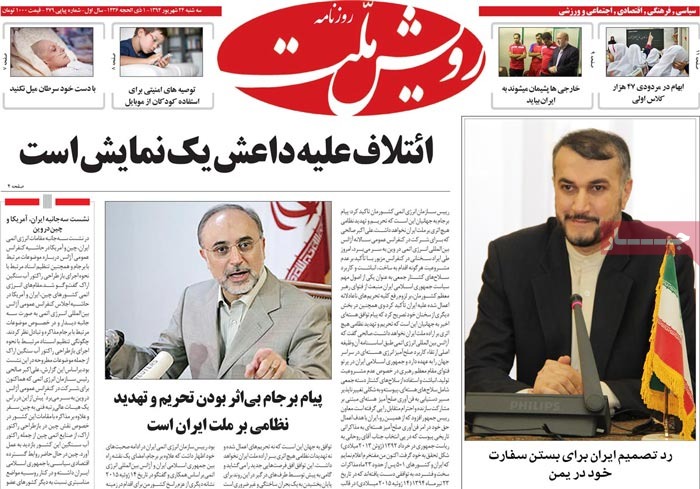
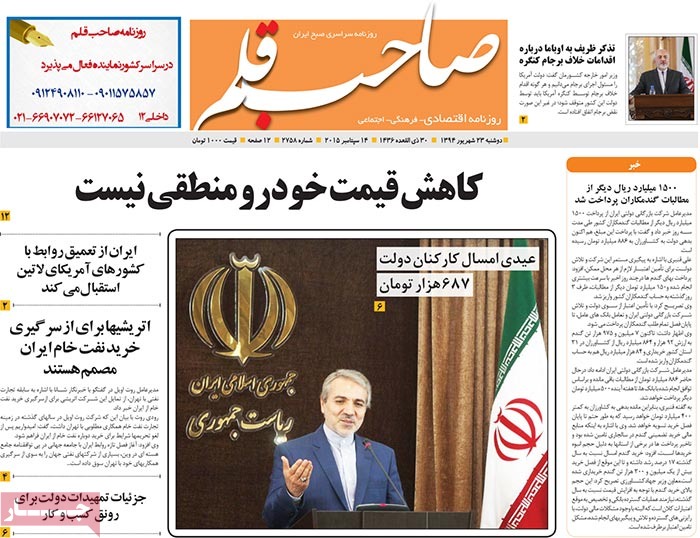
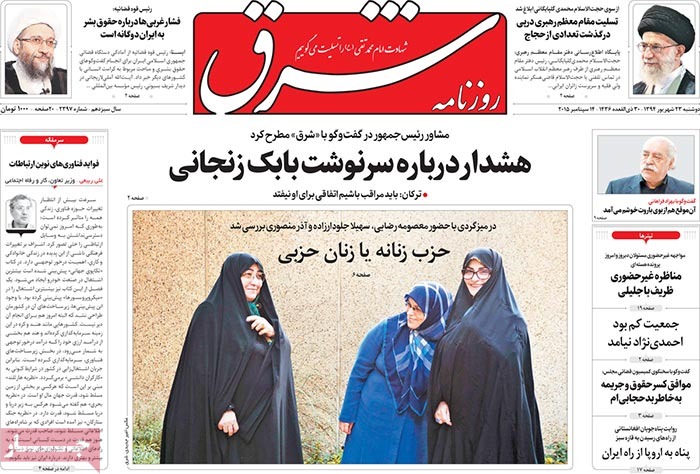
A look at Iranian newspaper front pages on September 15

Iranian Newspapers Headlines

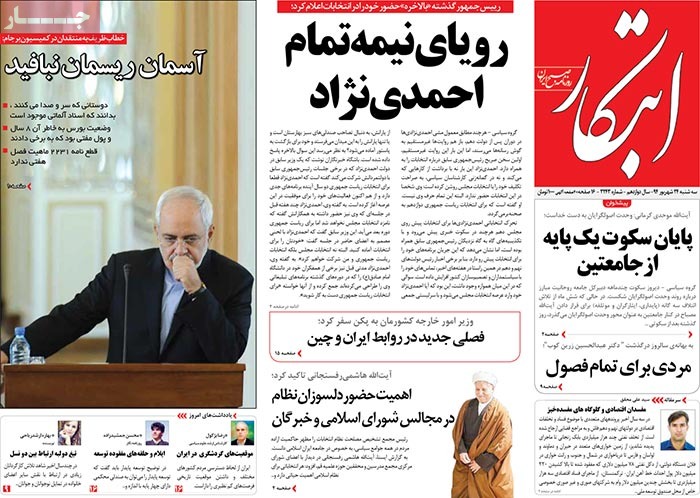
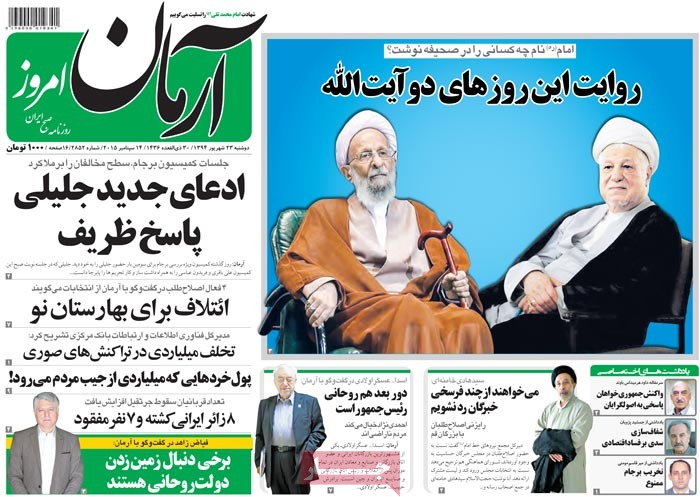
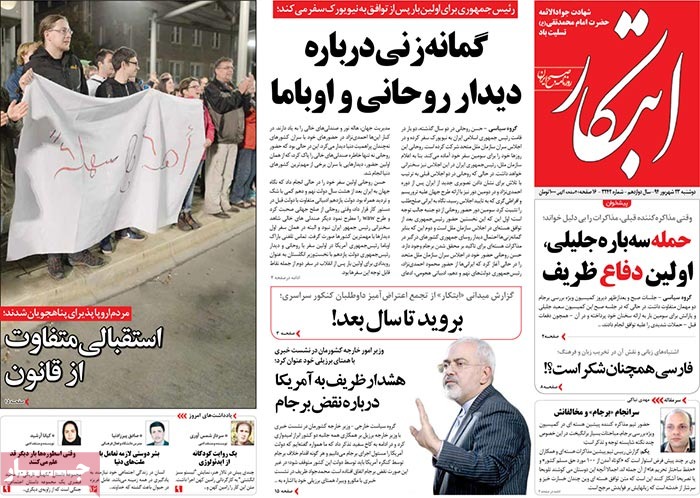
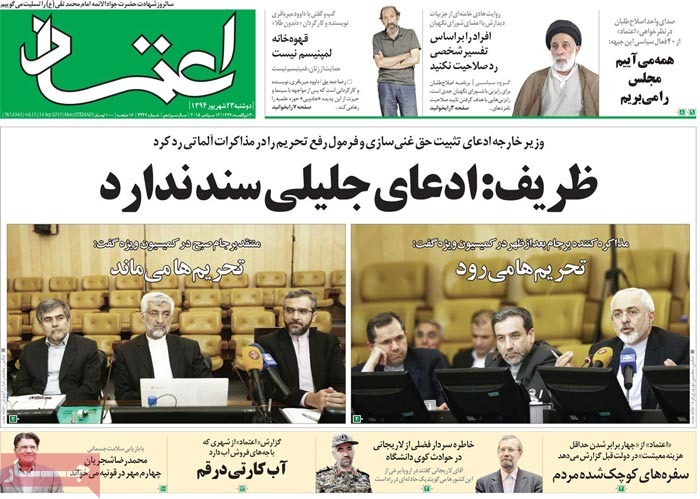
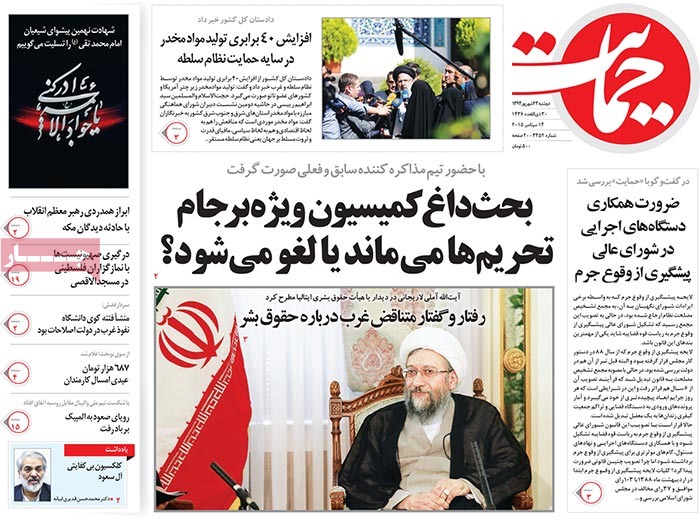
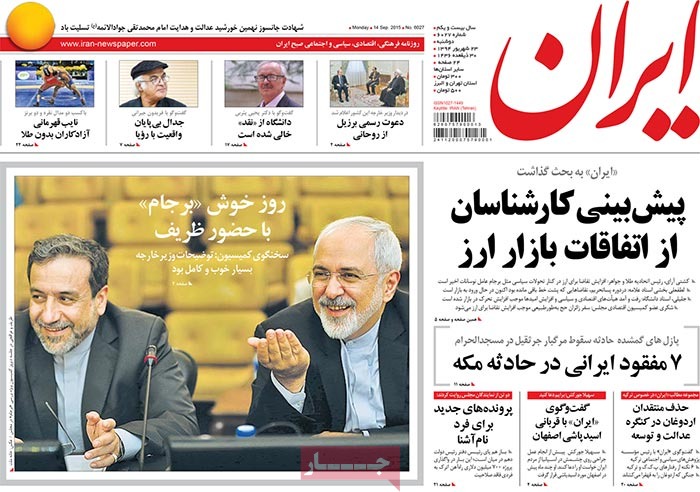
Exchanges in parliament between supporters and opponents of the nuclear deal, the warning by the judiciary chief about enemy efforts to infiltrate the country and the call by Ayatollah Akbar Hashemi Rafsanjani on all those who care about the establishment to throw their hats in the ring for the upcoming elections dominated the front pages of Iranian newspapers on Tuesday.


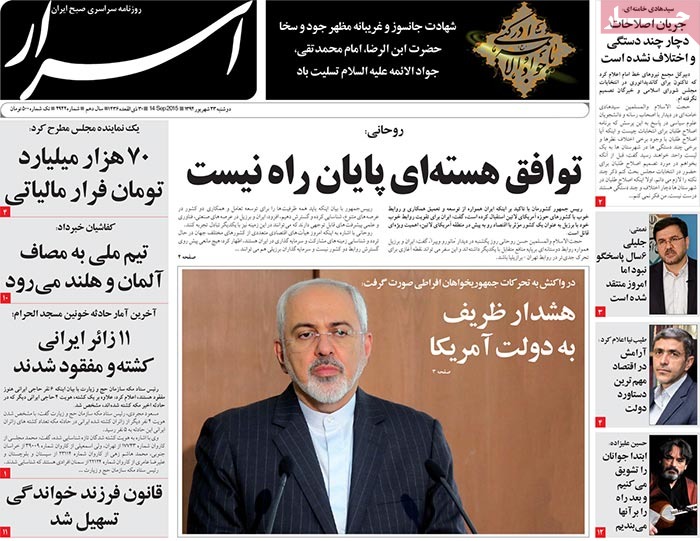
Ettela’at: “The Zionist regime is the biggest obstacle standing in the way of a nuclear-free region,” the director of the Atomic Energy Organization of Iran told an international nuclear energy conference.

Ali Akbar Salehi further said the Zionist regime, which has failed to sign the Nuclear Non-Proliferation Treaty, poses a serious threat to regional security.


Abrar: The commander of IRGC ground forces has said that all areas in the west and northwest have been cleansed of terrorists.


A look at Iranian newspaper front pages on September 15


Afkar: “The coalition against IS is theatrical,” said the chairman of the Iranian parliament’s National Security and Foreign Policy Committee.

Afkar: “Annulment of previous resolutions against Iran is a major victory,” said the vice-speaker of the Iranian parliament.


A look at Iranian newspaper front pages on September 15


Aftab-e Yazd: “Make more noise and I will make the Almaty documents public,” Foreign Minister Zarif has warned Jalili [a former top nuclear negotiator] and other critics of the Joint Comprehensive Plan of Action.


A look at Iranian newspaper front pages on September 15


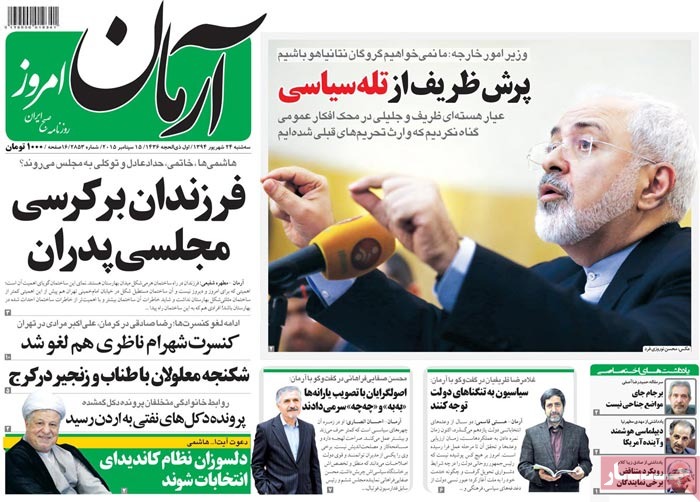
Arman-e Emrooz: Will the children of Hashemi, Khatami, Haddad Adel and Tavakoli follow in the footsteps of their father into parliament?

Arman-e Emrooz: Shahram Nazeri’s concert [in Tabriz] has been called off.

Concerts keep being cancelled.


A look at Iranian newspaper front pages on September 15


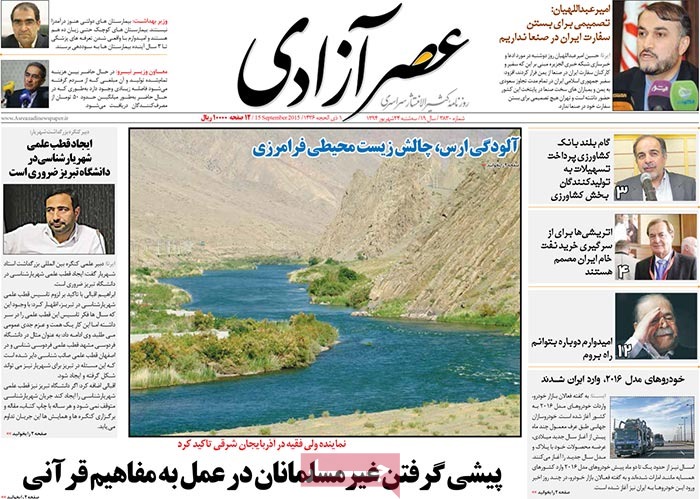
Asr-e Azadi: “Iran has no plans to shut down its embassy in Sana’a,” said the deputy foreign minister.


A look at Iranian newspaper front pages on September 15


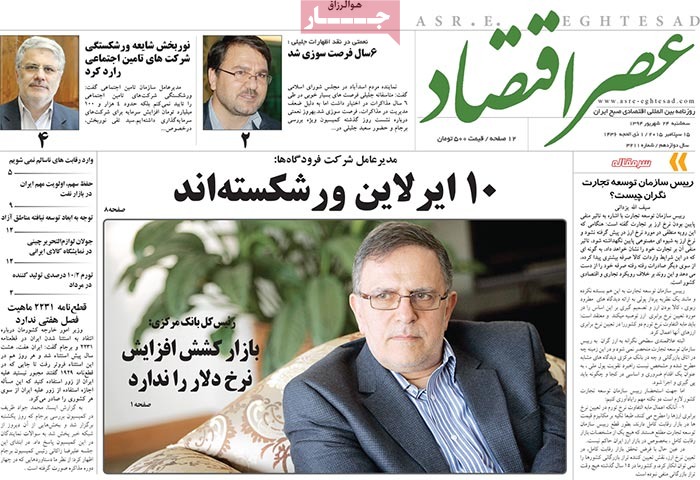
Asr-e Eghtesad: Ten Iranian airlines are bankrupt, said the managing director of the Airports Company.


A look at Iranian newspaper front pages on September 15


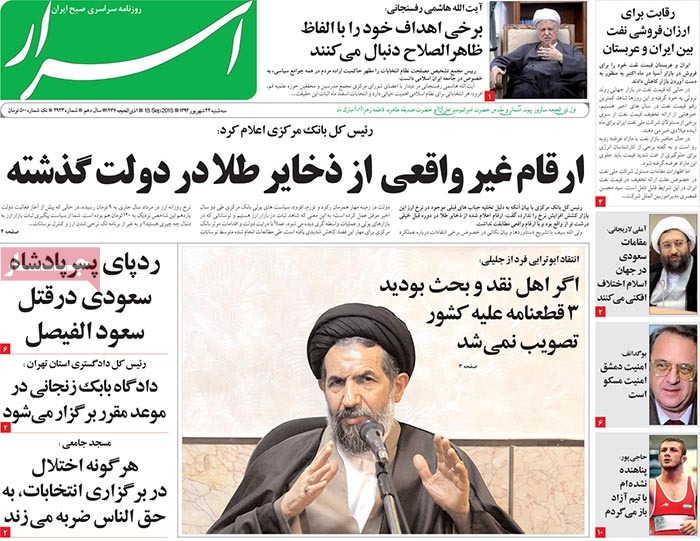
Asrar: “Saudi officials are dividing the world of Islam,” said Judiciary Chief Ayatollah Sadegh Amoli Larijani.

Asrar: Footprints of the son of the Saudi king in the death of Saud al-Faisal

Asrar: “If you had left the nuclear question open to debate, three resolutions wouldn’t have been issued against the country,” Vice-Speaker Abutorabi-Fard said in critical comments aimed at Saeed Jalili, a former top nuclear negotiator.


A look at Iranian newspaper front pages on September 15


Ebtekar: A new chapter in relations between Iran and China opens with the Beijing visit of Foreign Minister Mohammad Javad Zarif.

Ebtekar: The unfinished dream of Ahmadinejad

The former president has finally said that he will run for elected office [in 2017].


A look at Iranian newspaper front pages on September 15


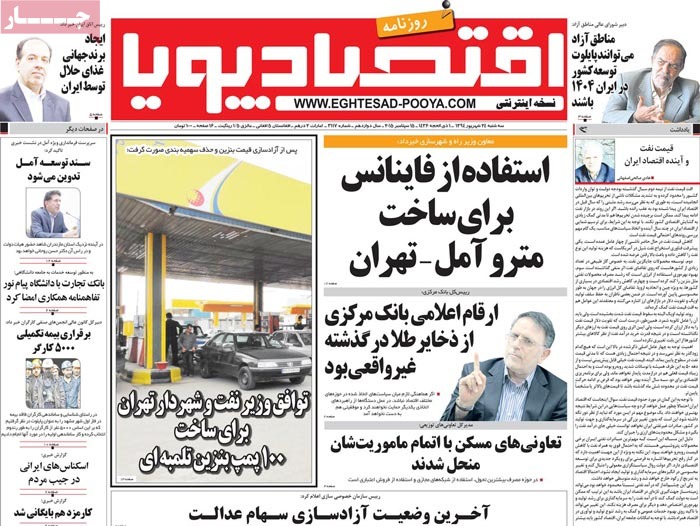
Eghtesad-e Pooya: The report the Central Bank released in the past on the amount of the country’s gold reserves was unrealistic,” said the governor of the Central Bank of Iran.


A look at Iranian newspaper front pages on September 15


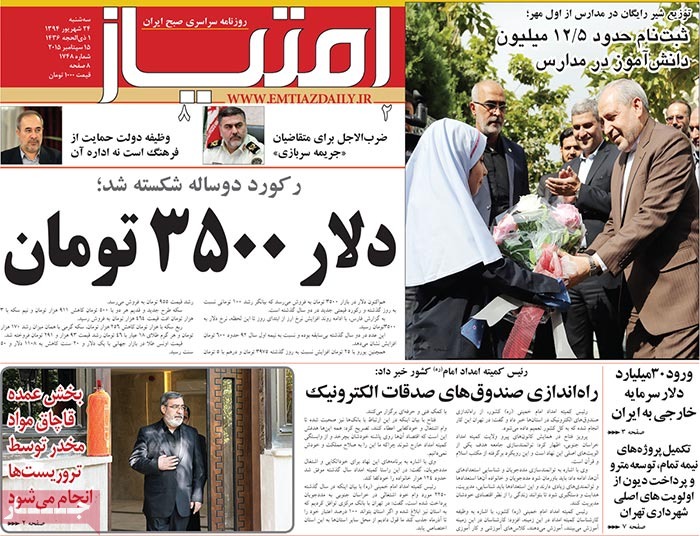
Emtiaz: The interior minister has said that terrorists account for the better part of drug trafficking.


A look at Iranian newspaper front pages on September 15


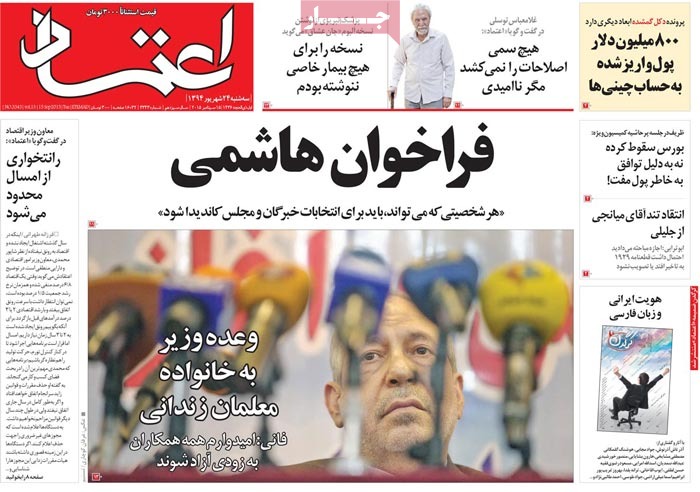
Etemad: The education minister makes a promise to the families of teachers behind bars. “I hope all teachers are freed soon.”


A look at Iranian newspaper front pages on September 15


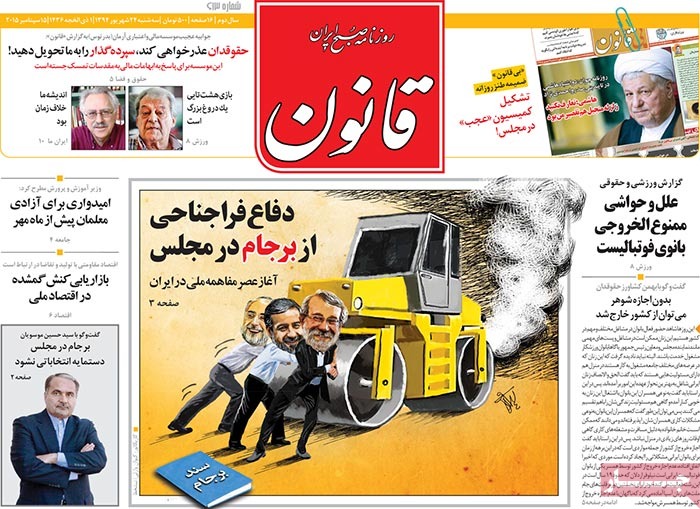
Ghanoon: “The review of the Joint Comprehensive Plan of Action in parliament should not turn into a tool to advance electoral agenda,” said Seyyed Hossein Mousavian, a former nuclear negotiator.


A look at Iranian newspaper front pages on September 15


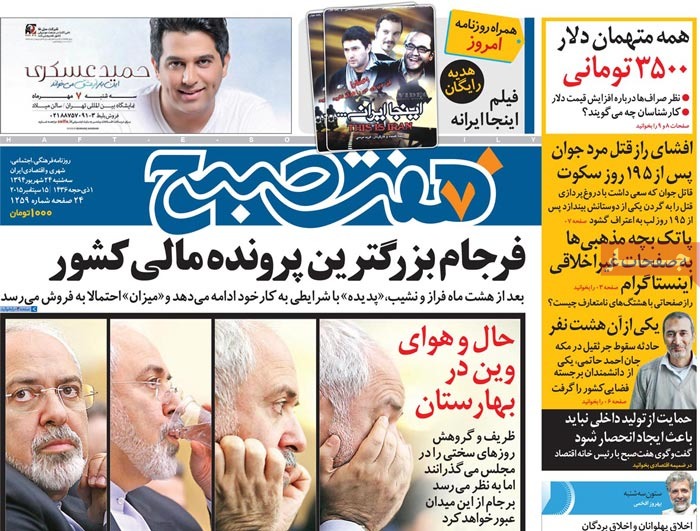
Haft-e Sobh: One of the eight Iranian nationals who were killed in the crane collapse in Mecca [on Friday] was Ahmad Hatami, a prominent scientist.


A look at Iranian newspaper front pages on September 15


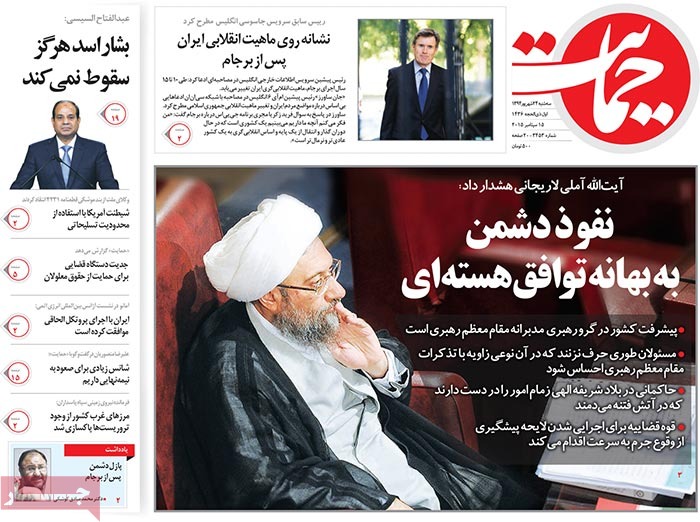
Hemayat: Ayatollah Larijani has warned about enemy efforts to infiltrate the country under the pretext of the nuclear deal.

The judiciary chief further said that the progress of the nation hinges on the judicious leadership of Ayatollah Khamenei.


A look at Iranian newspaper front pages on September 15


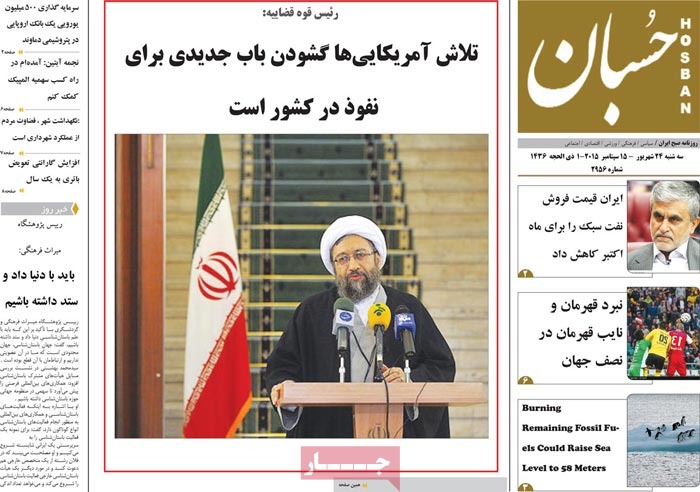
Hosban: Iran has lowered its light crude prices for October delivery.


A look at Iranian newspaper front pages on September 15


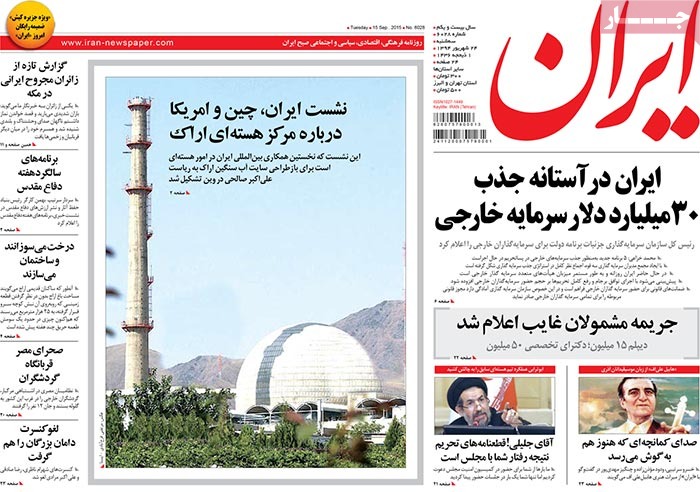
Iran: Iran is on the verge of absorbing $30 billion in foreign investment.


A look at Iranian newspaper front pages on September 15


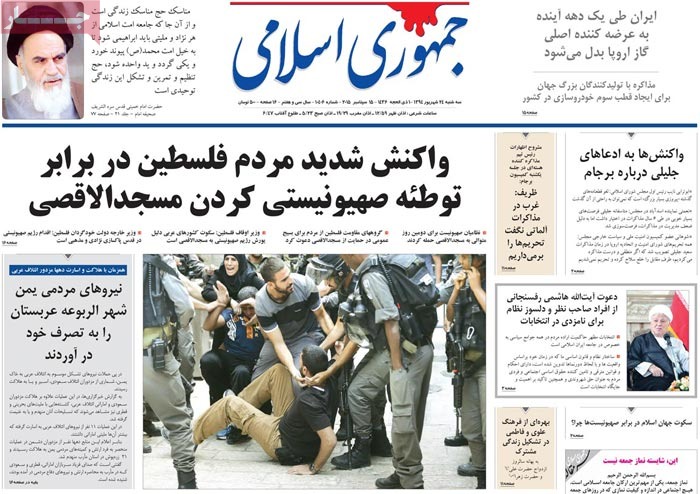
Jomhouri Islami: Iran will turn into the major supplier of natural gas to Europe within a decade.


A look at Iranian newspaper front pages on September 15


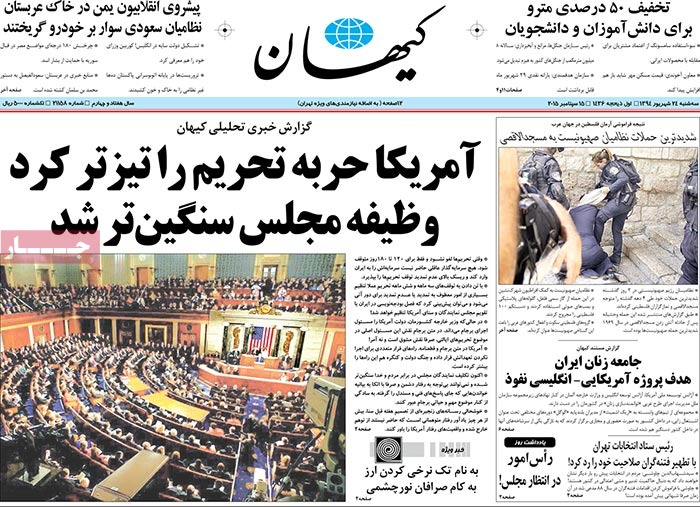
Kayhan: With the US playing the sanctions cards, parliament should shoulder a heavier responsibility.


A look at Iranian newspaper front pages on September 15


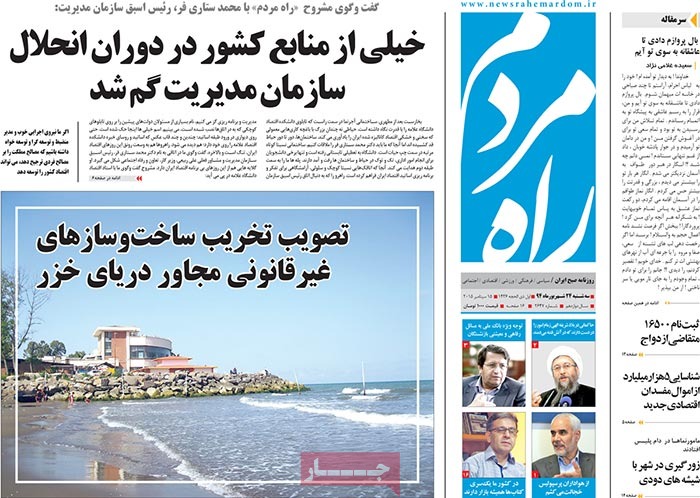
Rah-e Mardom: Buildings constructed illegally by the Caspian Sea will be demolished.


A look at Iranian newspaper front pages on September 15


Rooyesh-e Mellat: “The message of the Joint Comprehensive Plan of Action is that in dealing with the Iranian nation sanctions and military threats do not work,” said the director of the Atomic Energy Organization.


A look at Iranian newspaper front pages on September 15


Sharq: “The position of the Leader is above the political tastes of factions,” said the chairman of the Expediency Council.

Sharq: The director of IRIB’s Channel Four has resigned. [His resignation has reportedly been rejected.]


A look at Iranian newspaper front pages on September 15


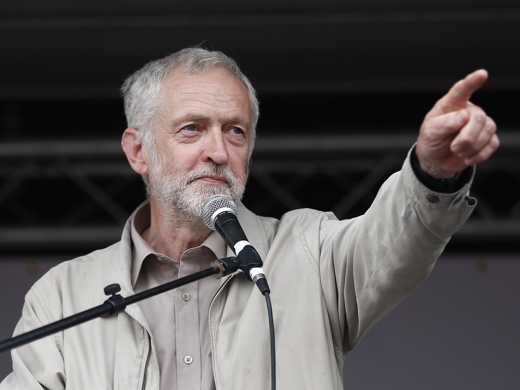
British aristocracy shocked by new Labour Party leader

Jeremy-Corbyn

Members of the British political aristocracy are in a state of panic after Jeremy Corbyn secured a landslide victory in the Labour Party leadership contest. His victory even met with harsh reaction from Prime Minister David Cameron who said he is a threat to the country’s national security!

On September 14, Kayhan daily published a report on the newly-elected leader and the reactions his victory has drawn from different British politicians. The following is the translation of that report:

Emergence of an individual who holds dramatically opposite opinions to those of British politicians has raised deep concerns in the country’s economic and political circles. Jeremy Corbyn won 59 percent of the votes in a Labour Party election on September 12. He finished ahead of four other rivals in the race for the Labour leader.

Corbyn, who has nothing in common with regular British leaders, wears a beard, does not wear a tie, is a staunch advocate of the oppressed people of Palestine, is opposed to austerity plans, blames the 2008 world economic crisis on banks and favors negotiations with Iran, Lebanon’s Hezbollah and Hamas.

He supports revolutionary figures, particularly those of Latin America, leads a simple life and does not drink.

Although he is popular with a large number of the youth, his entry into the club of political elites has stoked concerns among conservatives, and right-leaning media and free market advocates have launched a barrage of criticism against him.

On popularity of Corbyn, former British Prime Minister Tony Blair said, “When people say: ‘My heart says I should really be with that politics’, get a transplant.” Corbyn has suggested that Blair be tried for war crimes for the 2003 invasion of Iraq.

Supporters of Tony Blair within the Labour Party who identify themselves as moderates have said that the “virus” of Corbyn’s mentality must be contained. They have even attacked the party by saying “Labour has taken leave of its senses” by voting for him.

The 66-year-old leader who has 32 years of partisan activities under his belt has drawn the criticism of David Cameron too. Although the prime minister called Mr. Corbyn to congratulate him on his victory on Saturday night, he had earlier said that his leadership of the Labour Party would threaten the British national security.

Cameron also denounced Labour as “a threat to our national security, economic security, and your family’s security”.

Corbyn favors Britain’s nuclear disarmament, renationalization of the electricity and gas sector and reinforcement of public ownership.

Jeremy Corbyn is a vegetarian who does not drink. He doesn’t usually wear a suit or tie. He cycles or gets the bus to work, carrying a backpack and wearing sandals. He does not have a car and lives in an ordinary house in an ordinary neighborhood. His name is always among those who spend the least amount in the annual report on MPs’ expenses.

Now that he has taken the helm at the Labour Party, we should wait and see whether he will be elected prime minister in the next general elections.

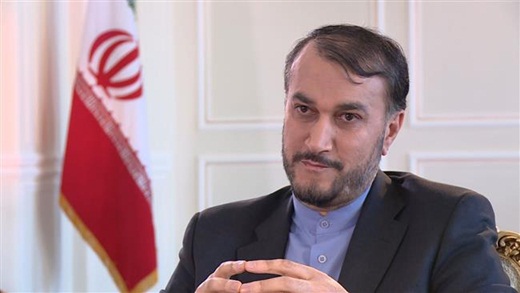
No plan to close Iran embassy in Yemen: Diplomat

Hossein Amir-Abdollahian

A senior Iranian diplomat has reaffirmed the Islamic Republic’s strong support for Yemen, saying Tehran has no plan to close its embassy in the Yemeni capital of Sana’a.

Deputy Foreign Minister for Arab and African Affairs Hossein Amir-Abdollahian on Monday dismissed claims by the Qatar-based satellite TV channel Al Jazeera that Iran’s ambassador to Sana’a along with other embassy staff had fled the war-hit country.

“The Islamic Republic of Iran’s ambassador in Sana’a has come to the country for just a few days for medical examinations,” Amir-Abdollahian said.

He added that the ambassador has been conducting his mission during the Saudi military campaign against Yemen and heavy airstrikes in Sana’a.

“Undoubtedly, Iran’s embassy [in Sana’a] will continue its routine activities,” the official pointed out.

He noted that Iran has given necessary warnings to Saudi Arabia to protect the Iranian diplomatic missions in Yemen based on international diplomatic and consular regulations.

[…]

Amir-Abdollahian further said, “We will strongly back the Yemeni people in the fight against terrorism and will undoubtedly continue our effective political and humanitarian support for the Yemeni people.”

He once again expressed Iran’s opposition to military approaches toward Yemen and expressed Tehran’s support for a political solution based on Yemeni-Yemeni dialog as well as efforts by the United Nations to solve the ongoing crisis in the Arab country.

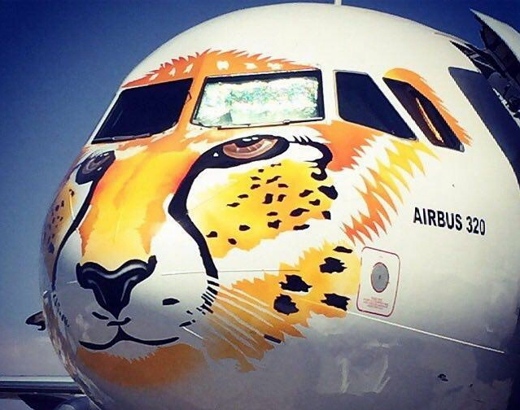
Asiatic cheetah-themed airliner takes to Iranian skies

cheetah-airplane

The director of the Iranian Cheetah Society said that a Meraj Airlines Airbus A320 on whose nose the image of an Asiatic cheetah has been painted has taken to the sky for the first time.

Morteza Eslami further said, “The aircraft belonging to Meraj Airlines left Tehran for Mashhad at 8 a.m. on Sunday,” adding that planes bearing images of the endangered big cat are to be used on domestic flights.

He thanked the airlines for its valuable measure and said, “Since winter, Meraj Airlines has launched cultural and educational cooperation with the society in a bid to honor its social obligations.

Meraj Airlines has also published articles and photos of Asiatic cheetahs and Iran’s wildlife in a number of its in-flight magazines to raise public awareness.”

Iranian scientists and universities among the world’s top one percent

Iranian Students

An official at the Ministry of Science, Research and Technology has said that 170 Iranian scientists are on the list of the world’s top scientists and 13 universities in Iran have been enlisted as the world’s best universities.

Director General of the ministry’s Research Planning and Policy-Making Department Mohsen Sharifi further said that these Iranian scientists and universities are among the world’s top one percent.

Ettela’at newspaper on September 14 published a report on the list of top academic centers in the world issued by Information Sciences Institute (ISI)and where Iran stands on that list. The following is the translation of the report which also includes Sharifi’s remarks in a press conference:

Sharifi said that there were no ISI statistics in 2012 on Iranian universities which were among the top one percent higher education institutes in the world, but the number of Iranian universities on that list is 13 for 2015.

In 2012, the number of Iranian scientists who made it to the list of the top one percent researchers in the world was not substantial, but this year the number stands at 170, he said.

Based on reports released by Scopus [a bibliographic database containing abstracts and citations for academic journal articles], some 40,300 scientific articles and documents from Iran were indexed in the abstract and citation database in 2012, he said, adding that the figure rose to 41,300 two years later.

He went on to say that Iran which ranked 17th in the world in terms of scientific growth in 2012 is now in 16th place, adding that Iran is leading regional countries when it comes to science production thanks to the number of its scientific articles and documents indexed by Scopus. Iran’s share of the world’s science production now stands at 1.7 percent, up from 1.5 percent in 2012.

As for Iran’s share in the world science production indexed by ISI, he said that Iran’s 2012 share of 1.38 percent has risen to 1.6 percent this year, adding that according to ISI citation index, Iran was the 24th country in the world in 2012 and 23rd in 2014.

[In 2012] Iran was second in the region in terms of science production according to the ISI’s indexed science production, and the country has maintained that place [in 2015], he added.
The science ministry official also said that these numbers show that science production is improving in Iran, adding that according to an ISI report Iran published 0.82 percent of the world’s top articles in 2012; the figure stood at 1.56 percent in 2014.

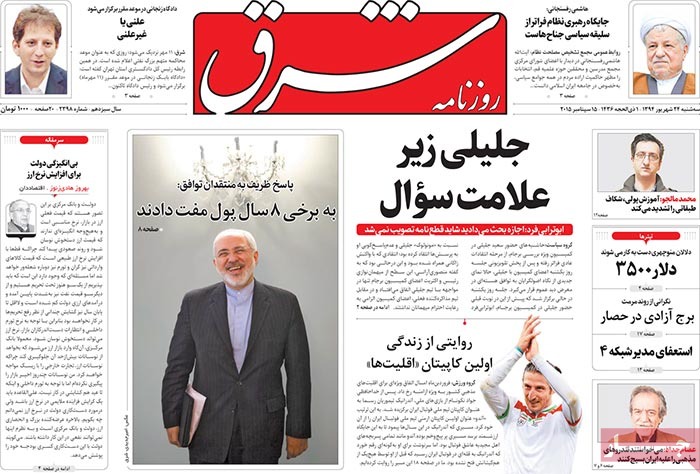
A look at Iranian newspaper front pages on September 14

Iranian Newspapers Headlines

The opposing views of Zarif and Jalili [the current and former heads of the Iranian nuclear negotiating team] about whether or not implementation of the Vienna nuclear accord will lead to termination of sanctions dominated the front pages of Iranian newspapers on Monday.


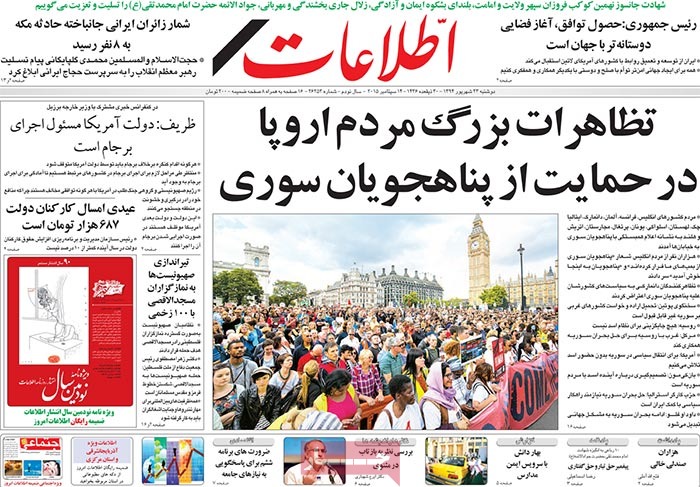
Ettela’at: Europeans have staged massive rallies in support of Syrian migrants.

People in Britain, France, Germany, Denmark, Italy, Czech, Poland, Slovakia, Greece, Portugal, Hungary, Austria and the Netherlands took to the street in solidarity with Syrian migrants.


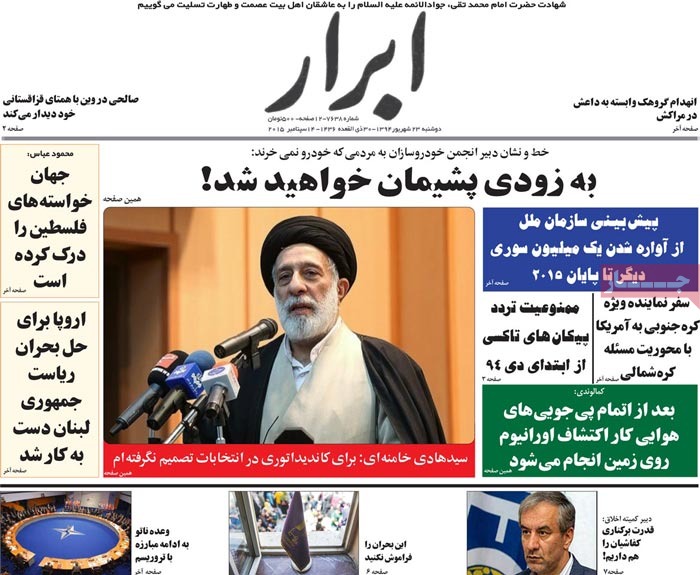
Abrar: Seyyed Hadi Khamenei has said that he has not made up his mind whether to run for the Assembly of Experts.


A look at Iranian newspaper front pages on September 14


Abrar-e Eghtesadi: The price of Iranian oil on global markets has increased 10 percent.


A look at Iranian newspaper front pages on September 14


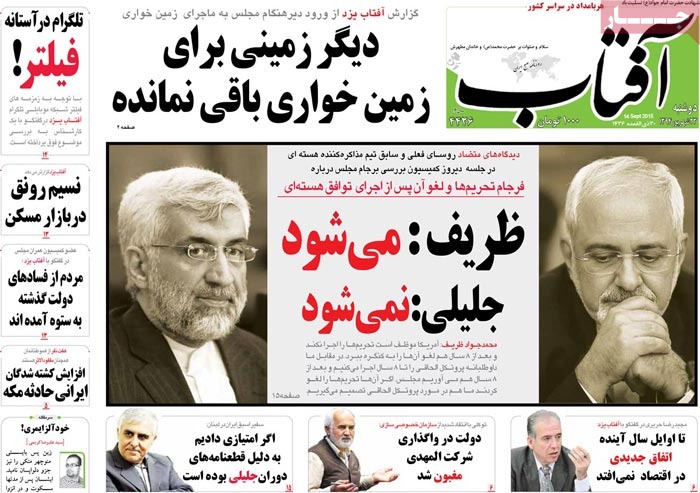
Aftab-e Yazd: The opposing views of the former and current top nuclear negotiators:

Zarif: Implementation of the deal WILL result in termination of sanctions.

Jalili: Implementation of the deal WON’T result in termination of sanctions

Aftab-e Yazd: “If Iran had to make concessions [in the nuclear deal with P5+1], it was simply because of the resolutions issued when Jalili was the top negotiator,” said Iran’s former ambassador to Lebanon.


A look at Iranian newspaper front pages on September 14


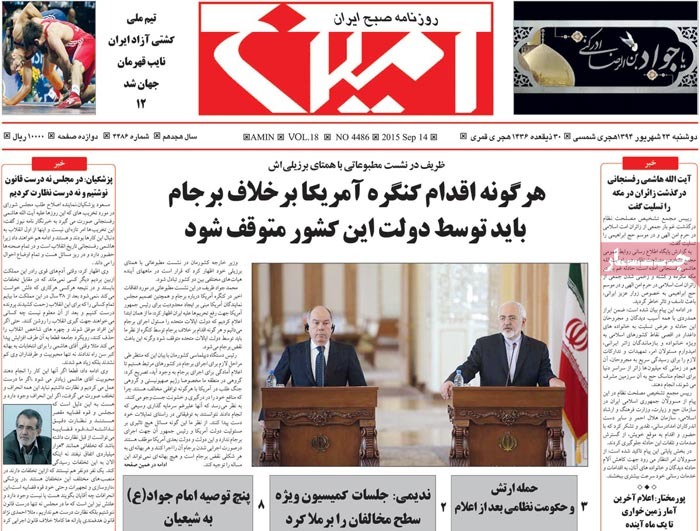
Amin: Iran has finished second in the world freestyle wrestling championships in the US.


A look at Iranian newspaper front pages on September 14


Arman-e Emrooz: The number of Iranian pilgrims killed in the construction crane collapse in Mecca has risen to eight. Seven others are missing.


A look at Iranian newspaper front pages on September 14


Asrar: “Iran will take on Germany and the Netherlands [in friendlies],” said the chairman of the Iranian Football Federation.

Asrar: “Ushering in a state of economic calm was the most important achievement of the government,” said the minister of economy and financial affairs.


A look at Iranian newspaper front pages on September 14


Ebtekar: There are speculations about a meeting between Presidents Rouhani and Obama when the Iranian president travels to New York to attend a UN General Assembly.


A look at Iranian newspaper front pages on September 14


Etemad: Renowned Iranian vocalist Mohammad Reza Shajarian has fully recovered and will go on stage in Konya, Turkey in late September.


A look at Iranian newspaper front pages on September 14


Hemayat: The Iranian attorney general has said that production in Afghanistan of drugs has increased 40-fold since the presence of NATO forces in the country.


A look at Iranian newspaper front pages on September 14


Iran: Brazil has extended an official invitation to President Rouhani to visit Brasilia.


A look at Iranian newspaper front pages on September 14


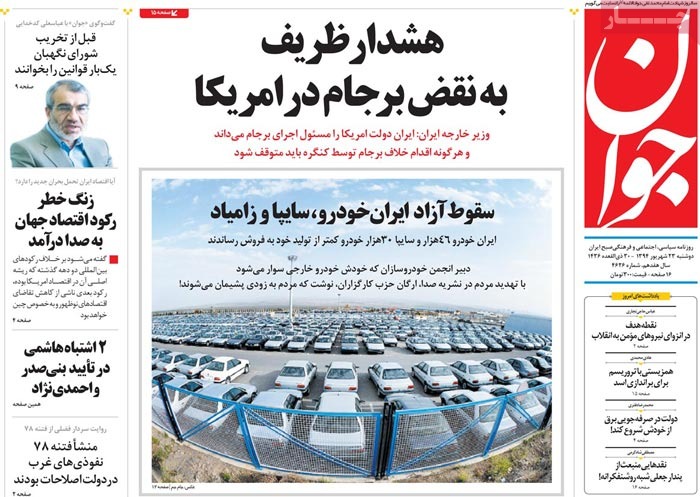
Javan: The free fall of Iran Khodro, Saipa and Zamyad

Iran Khodro and Saipa sold 46,000 and 30,000 fewer cars than they produced.

The secretary of the Carmakers Association, who drives a foreign-made car, has threatened, “People [those who have joined the campaign to boycott brand new Iranian-made cars because of their low quality] will soon regret their decision [because prices will go up].”


A look at Iranian newspaper front pages on September 14


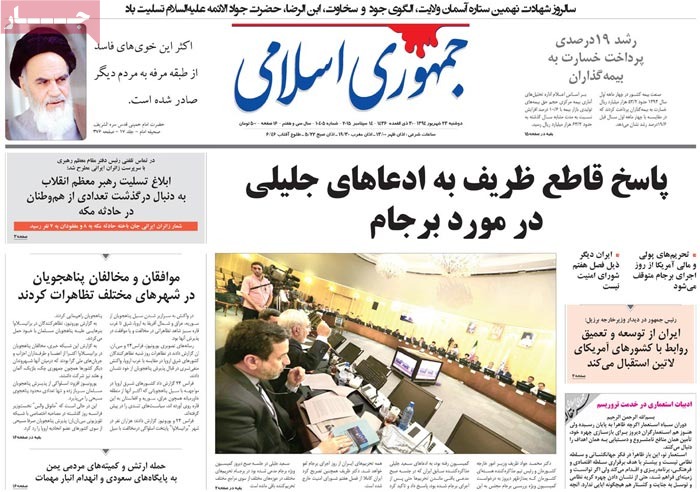
Jomhouri Islami: Foreign Minister Zarif has offered a strong response to claims by [former top negotiator Saeed] Jalili on the Joint Comprehensive Plan of Action.


A look at Iranian newspaper front pages on September 14


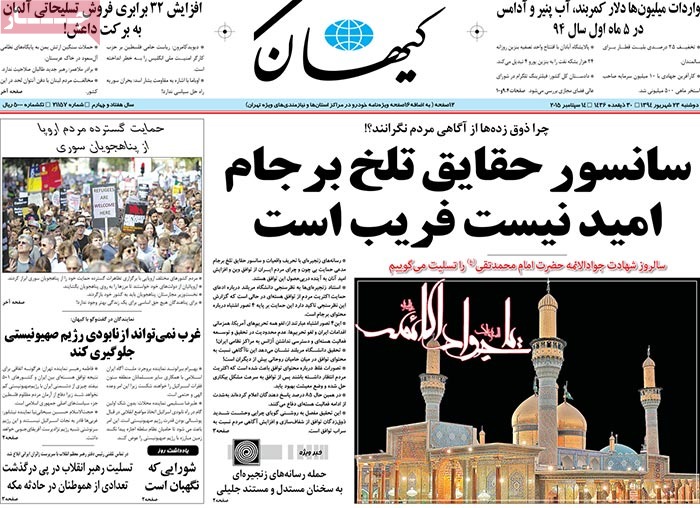
Kayhan: Censoring the home truths about the Joint Comprehensive Plan of Action does not generate hope; it amounts to deception.

Why are those who are salivating [over the nuclear deal] worried about public awareness?


A look at Iranian newspaper front pages on September 14


Saheb Ghalam: The Austrians are determined to resume purchases of crude oil from Iran.


A look at Iranian newspaper front pages on September 14


Sharq: The Supreme Leader has offered condolences to the families who lost loved ones in the crane collapse in Mecca.

Sharq: “The pressures the West exerts on Iran as far as human rights are concerned have their roots in double standards,” the Iranian judiciary chief has said.


A look at Iranian newspaper front pages on September 14


Iran, Kazakhstan Discuss IAEA Fuel Bank Cited in JCPOA

Salehi

Iran’s nuclear chief and Kazakh minister of energy in a meeting in Vienna discussed Iran’s sale of its excess enriched uranium to a fuel bank belonging to the IAEA in Kazakhstan and mentioned in a nuclear deal between Tehran and world powers.

Director of the Atomic Energy Organization of Iran (AEOI) Ali Akbar Salehi met Kazakh Minister of Energy Vladimir Shkolnik on the sidelines of the 59th Annual Regular Session of the International Atomic Energy Agency (IAEA) General Conference, held at the Vienna International Center (VIC) in Austria on Sunday.

Highlighting friendly ties between Tehran and Astana, Salehi and Shkolnik stressed the need for the expansion of relations in the energy field.

They also discussed the subject of an IAEA fuel bank that Iran can choose – under a comprehensive nuclear deal with 5+1- to sell its excess enriched uranium to.

According to the JCPOA, “All enriched uranium hexafluoride in excess of 300 kg of up to 3.67% enriched UF6 (or the equivalent in different chemical forms) will be down blended to natural uranium level or be sold on the international market and delivered to the international buyer in return for natural uranium delivered to Iran. Iran will enter into a commercial contract with an entity outside Iran for the purchase and transfer of its enriched uranium stockpile in excess of 300 kg UF6 in return for natural uranium delivered to Iran. The E3/EU+3 will facilitate, where applicable, the conclusion and implementation of this contract. Iran may choose to seek to sell excess enriched uranium to the IAEA fuel bank in Kazakhstan when the fuel bank becomes operational.”

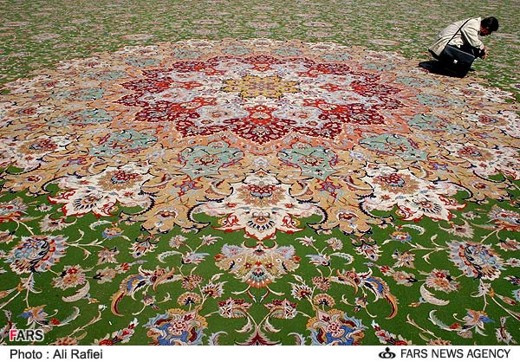
Iran to make world’s largest carpet for Algeria Grand Mosque

Capet

Carpet weavers in the northeastern Iranian city of Neyshabour will weave a large carpet for the grand mosque of Algeria.

According to the website of the Islamic Culture and Relations Organization, the carpet will cover an area of 10,000 square meters.

A number of officials from Neyshabour, including the city’s MPs had previously suggested to Algerian Awqaf and Islamic Affairs Ministry that the mosque’s carpet be made by Neyshabour artisans.

Algerian officials have welcomed the idea and sent a letter to Iran via their ministry of foreign affairs, expressing willingness to host an Iranian delegation for final talks on the project.

Mohammadia Mega Mosque, whose construction began in 2012, is being built on a 218,525 square meter site in Algiers.

It will be the third largest mosque in the world after those of the holy cities of Mecca and Medina in Saudi Arabia.

The main attraction of the mosque will be a 265m-tall minaret.

The mosque complex comprises a multimedia library, the minaret, a research center, a meeting room, a prayer room that can accommodate nearly 35,000 people, a Quran school with residential facilities and a museum.

The world’s largest carpet at present is also an Iranian-made rug. It graces the main prayer hall of a mosque in Abu Dhabi, the United Arab Emirates.

Covering an area of 5,700 square meters, the four-piece rug was made in 21 months by more than 1,200 handpicked carpet weavers, 20 technicians, 30 designers, dyers and other skilled Iranian experts.

The production of the world’s largest handmade rug began in January 2006 by the Iran Carpet Company (ICC). The design work took six months, the weaving a year and the finishing work a further three months.

This large hand-made masterpiece has a unique design, featuring five big medallions depicting various traditional flower motifs. About 30 tons of wool and 15 tons of cotton were used in weaving the mammoth rug measuring 135×46 meters.