Tuesday, December 23, 2025
Home Blog Page 4639

Iran censures ICRC over ‘insufficient’ aid for Yemen

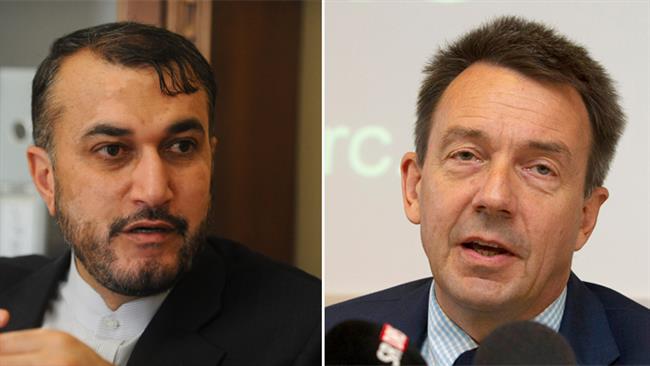
Amir Abdullahian-ICRC

In a Tuesday meeting with Robert Mardini, the head of the ICRC operations for Near and Middle East, Amir-Abdollahian said the body is obligated to send humanitarian aid to regional countries which are affected by crises.

“Miscalculation and actions by certain countries in contravention of human principles and international regulations have regrettably exacerbated the humanitarian situation in the crisis-hit countries,” the senior Iranian diplomat said.

He added that innocent civilians are the first to fall victim to such moves, which have even affected the activities of international humanitarian relief organizations.

Amir-Abdollahian called for effective measures by the international community to immediately and regularly dispatch relief aid to the Yemeni people and prevent a “humanitarian catastrophe” in the war-stricken country.

Mardini, for his part, said Yemen is facing deplorable humanitarian situation and added that the ICRC is committed to sending relief aid to Yemeni civilians despite insecurity in the impoverished country.

The ICRC official added that a safe and effective dispatch of aid to Yemen is difficult given the ongoing war and the difficulty of convincing armed groups to allow distribution.

Mardini praised Iran’s humanitarian aid to Yemen, Iraq and Syria, saying the ICRC would try to distribute Iran’s relief aid to the Yemeni people despite all problems.

Saudi Arabia launched its military aggression against Yemen on March 26 – without a UN mandate – in a bid to undermine the revolutionary Ansarullah movement and restore power to Hadi, a staunch ally of Riyadh.

Nearly 4,500 people have been killed in the Yemeni conflict, the World Health Organization said on August 11. Local Yemeni sources, however, say the fatality figure is much higher.

French group to open two hotels in Iran

Hotels

The hotel contracts will be signed on Tuesday by AccorHotels’ chief executive Sebastien Bazin with representatives of Iranian company Aria Ziggurat, which owns the buildings, AFP reported.

The four-star hotels are scheduled to open for business on October 15, with a total of nearly 500 rooms.

Aimed at both international and Iranian business travelers, they will be equipped with meeting rooms, conference spaces and spas, fitness suites and swimming pools.

“There is an enormous potential for development of our brands in this country of nearly 80 million inhabitants whose economy is growing fast,” Bazin said in a statement.

AccorHotels is the world’s sixth-largest hotel group.

Christophe Landais, chief operating officer of AccorHotels Middle East, said in July that the group was involved in talks with Iranian officials regarding management agreements for the two hotels.

“We expect the recent agreements to potentially open up tremendous opportunities and rapid growth for the hospitality and tourism industry in Iran”, said Landais.

Rotana hotels group, based in Abu Dhabi, has also confirmed that it is opening four hotels in Iran – two in Mashhad and two in Tehran – all of which will open by 2018.  

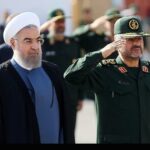
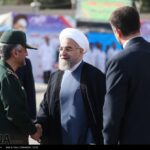
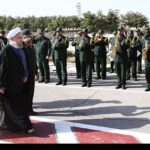
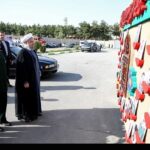
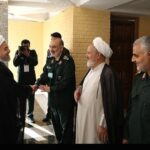
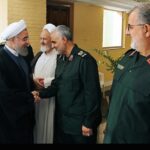
Rouhani attends gathering of Revolution Guards commanders (PHOTOS)

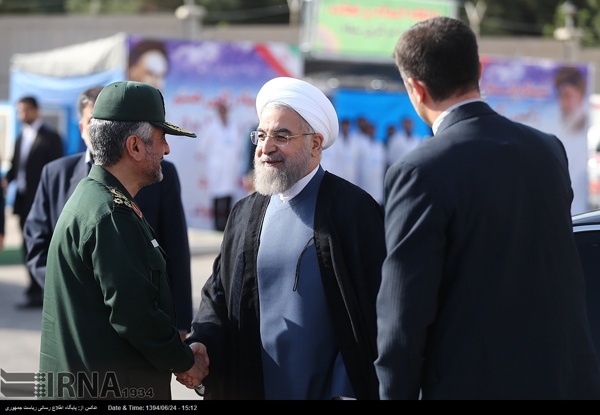
Rouhani-IRGC-17

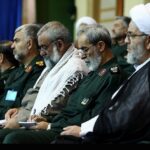
President Hassan Rouhani attended a gathering of senior officials and commanders of the Islamic Revolution Guard Corps (IRGC) in Tehran on Tuesday.

The following images of the president’s presence in the gathering have been released by Tasnim News Agency:

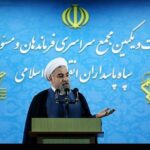
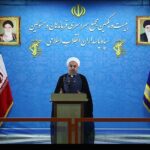
President: No world power can decide for Iran

Rouhani-IRGC

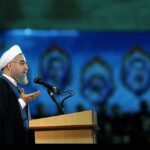
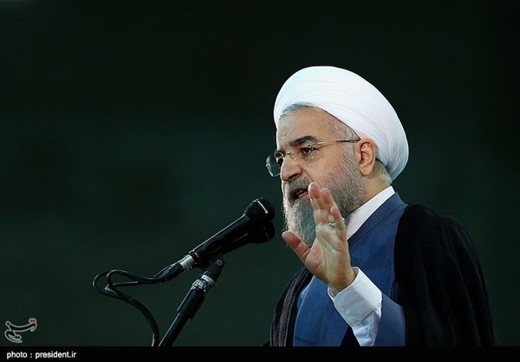
Iranian President Hassan Rouhani praised the country’s independence after the Islamic Revolution in 1979, saying that today, no world power can decide for the Islamic Republic in the international arena anymore.

Speaking in a gathering of commanders and officials of the Islamic Revolution Guards Corps (IRGC) in Tehran on Tuesday, President Rouhani emphasized that before the Islamic revolution, global superpowers would interfere in Iran’s internal affairs and decide for the country.

That era is gone, he said, adding, “Today, there is no power or superpower that can decide for the establishment anymore… nor would we allow them to do so.”

Rouhani described Western sanctions imposed on the Islamic Republic as “cruel”.

Pointing to the successful conclusion of nuclear talks with world powers, which will result in the termination of the anti-Iran sanctions, he said the Iranian nation managed to put an end to the embargos thanks to the guidelines of Supreme Leader of the Islamic Revolution Ayatollah Seyyed Ali Khamenei and the bravery of the country’s armed forces.

Iran and P5+1 (Russia, China, the US, Britain, France and Germany) on July 14 reached a nuclear agreement that would terminate all sanctions imposed on Tehran over its nuclear energy program once it takes effect.


IRGC has taken up permanent position in rugged heights: Commander

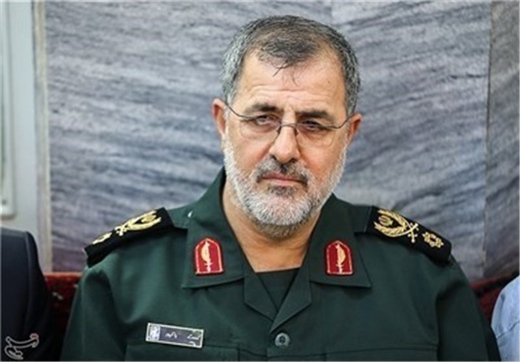
General Mohammad Pakpour

Commander of the Islamic Revolution Guards Corps (IRGC) Ground Forces Brigadier General Mohammad Pakpour has said his forces have fully cleansed the country’s western and northwestern border areas of terrorist groups.

“The country’s entire northwestern and western regions, where the IRGC Ground Forces are in charge (of providing security), have been cleansed of terrorists and our fighters are constantly present in those high zones,” Brigadier General Pakpour said on Monday.

He said the IRGC servicemen have in recent years gained control over the strategic mountainous areas that lacked any military base because of their rugged terrain and used to be a hotbed of terrorist activities.

The commander also noted that the IRGC’s presence in those regions has strongly undermined terrorist groups’ morale.

Since the outbreak of an armed rebellion in Iraq staged by the ISIL terrorist group, Iranian military officials have time and again underlined the high level of security along Iran’s western border areas, neighboring Iraq.

A teacher’s foray into an apiary

apiary

Soraya Parsafar is a 43-year-old teacher who has embarked on a beekeeping career with no prior experience in this line of work and succeeded in producing 300 kg of honey on her own in five months.

Fars News Agency has published a report on the success of this Iranian woman who hails from a village in the northern province of Gilan. The following is the translation of part of the report:

Parsafar decided to keep bees and produce honey after her father passed away. She got about $2,600 in loans, bought 15 beehives and put them in a land behind her village house.

Having had no experience in beekeeping, she sought expert advice and was successful in producing a considerable amount of honey in less than five months.

She said, “I was always afraid of approaching bees. At first, I was worried about being stung by them, but after a while I learned more about bees and now I approach them without wearing protective gear.”

Parsafar put her success down to her tireless efforts and said, “Some nights, I spend hours with my bees and look at the way they produce honey with awe.”

Parsafar has now opened a store where she sells the honey her bees produce in her backyard.

Iran to host trade teams from 10 EU states

EU flags

Masoud Khansari, the president of Tehran Chamber of Commerce, has told the media that a surprise influx of trade delegations has created a challenge for the Chamber as well as the government of President Hassan Rouhani in terms of planning.

Khansari added that eight major European trade delegations have so far visited Iran in light of the Iran nuclear breakthrough which was achieved in mid-July.

He expressed delight over this and said President Rouhani’s team deserve praise for brining Iran out of what he described as “relative [trade] isolation”.

Khansari said the enthusiasm by the Europeans to visit Iran to look for post-sanctions business opportunities has already made the Tehran Chamber of Commerce to move to identify potential local private-sector partners.

The French media said on September 10 that a major trade delegation will arrive in Tehran later this month to study investment potentials in Iran.

The initiative will be led by France’s main business lobby group, the Medef.

The delegation that it plans to send to Tehran will comprise about 130 firms, including top companies such as Total and Peugeot, reports said.

Zarif urges anti-JCPOA group to respect int’l will

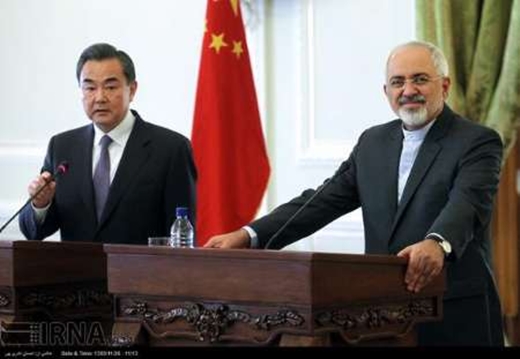
Zarif, Chinese Counterpart Discuss Peace in Afghanistan

Foreign Minister Mohammad Javad Zarif, who is on an official visit in Beijing, called Tuesday on the groups opposed to the Joint Comprehensive Plan of Action (JCPOA) to respect the international decision.

At a joint press conference with his Chinese counterpart Wang Yi, Zarif urged US and regional opponents of JCPOA to respect the international will to solve global problems through peaceful solutions.

Zarif criticized the emergence of non-constructive approaches in the US political atmosphere and said, unfortunately some in the US and in the region, including the Zionist regime, pursue their interests through conflicts and tensions.

He expressed hope that all sides adopt the will of the international community to solve important issues in the world through peaceful ways.

Zarif also welcomed China’s constructive role in implementing the reconstruction of Arak heavy water reactor as well as other plans envisioned in JCPOA.

Zarif expressed hope Tehran and Beijing will maintain their present positive approach to bilateral relations.

The Chinese foreign minister, for his part, said Beijing and Tehran agreed to start talks within the framework of strategic cooperation.

Iranian and Chinese economies are supplementary to each other, said Wang Yi, adding that his country is keen to deepen ties with Iran.

He called on all sides of the nuclear talks to be committed to their obligations.

China stresses the importance of the implementation of JCPOA as soon as possible, he said.

Beijing will stay true to its political commitments, he said, adding that his country and Iran believe that the fight against terrorism is necessary.

[…]

Zarif hopes China plays constructive role in JCPOA implementation

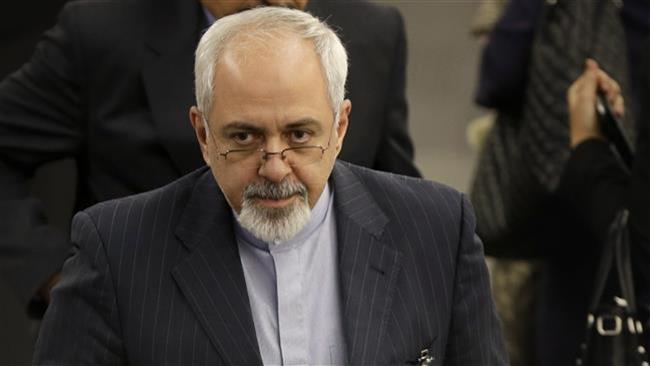
Zarif-Iran

Foreign Minister Mohammad Javad Zarif has praised China’s constructive role in the negotiations between Iran and P5+1, expressing hope that Beijing will help with the implementation of the nuclear agreement between Tehran and six world powers.

Zarif made the remarks on the Joint Comprehensive Plan of Action (JCPOA) upon arrival in the Chinese capital at the head of a delegation on Monday.

[…]

The Iranian top diplomat said that President Rouhani and Chinese President Xi Jinping have met four times over the past two years, adding that the meetings indicate the two countries’ willingness to expand their ties.

“Good and apt decisions have also been made on joint investment,” Zarif said.

Expounding on the reasons for his trip, he said that as the implementation phase of the nuclear agreement between Iran and P5+1 is just around the corner, it is “necessary” to hold talks with “our Chinese friends” on how to use the new situation for expanding fundamental joint economic activities which are in line with the interests of both countries.

Zarif said that discussions on terrorism, extremism, and crises in the region are also on the agenda of his meetings with the Chinese officials.

He went on to say that Iran and China have common interests and face similar threats, which have encouraged the countries to “have extensive and constructive consultations over the past years.”

The foreign minister said that the two countries enjoy extensive relations in political and economic fields.

Chinese Prime Minister Li Keqiang and Foreign Minister Wang Yi are among senior officials Zarif plans to hold talks with.

Iran’s space scientist killed in Mecca crane collapse

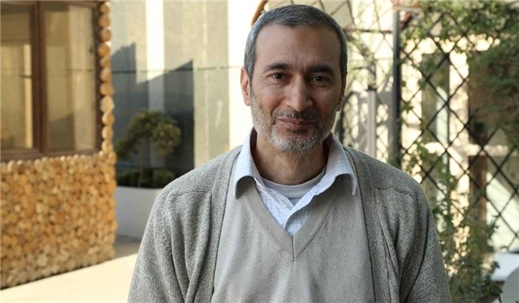
Ahmad Hatami

Iran’s renowned space scientist and university professor Ahmad Hatami has been one of the eight Iranian pilgrims who died in the crane collapse in Mecca on Friday.

Communications and Information Technology Minister Mahmoud Vaezi said Monday that Dr. Ahmad Hatami, a science board member of Iran Space Research Center, was among the eight Iranian pilgrims who were killed in the accident.

The minister expressed deep sorrow over Hatami’s death and extended his heartfelt condolences to his family and to the Iranian IT and space technology community.

The Supreme Cultural Revolution Council issued a statement to express its profound sadness and condolences to the community of Iranian scientists.

At least 107 Hajj pilgrims, eight of them Iranian, were killed and 238 more, including 32 Iranians, were injured when the crane collapsed on to the Grand Mosque during storms.

Storms were lashing the Saudi city of Mecca when strong winds brought down the crane that was part of construction work.

Tons of rubble and debris crashed to the ground on top of scores of people gathering in the mosque for prayers when a part of the crane crashed through the roof.

On Sunday, Parliament Speaker Ali Larijani said the Saudi negligence was the main cause of the deadly accident.

“The Saudi government should have made the necessary preparations to safeguard the lives of the pilgrims,” Larijani said in a message of condolence to the bereaved families of the victims.

He expressed regrets that the Hajj rituals coincided with the sad incident, and asked Saudi officials to immediately investigate the cause of the accident.