Thursday, April 9, 2026
Home Blog Page 46

US highlights ‘close cooperation’ with Syria against Daesh threats

Daesh

Speaking virtually at a Middle East Institute event on Wednesday, Cooper said the US military is working to “foster cooperation” with Syrian authorities.

“We have now had multiple instances of collaboration with the Syrian government to counter very specific IS threats,” Cooper added.

The US general’s comments came on the first anniversary of the start of the Syrian transition after the fall of the government of President Bashar al-Assad in a lightning offensive by opposition fighters.

Cooper’s statement emphasising security cooperation in Syria underscores the stunning transformation in Damascus, which had close ties to US rivals Russia and Iran for decades under al-Assad’s rule.

The US commander also stated that the US is helping efforts to integrate the Kurdish-dominated Syrian Democratic Forces with the Syrian government.

Backed by the US, the SDF controls large parts of the country’s northeast, where it enjoys de facto self-rule. Despite an agreement in March to merge SDF fighters into Syrian state institutions, occasional clashes have broken out between the two sides.

“SDF’s successful integration with the Syrian government forces will lead to a more predictable and stable security environment,” Cooper said.

Syria joined the US-led global coalition against Daesh last month after President Ahmed al-Sharaa – a former rebel commander who formerly led a group with ties to al-Qaeda – visited Washington, DC, and met US President Donald Trump.

“Just the other week, we worked with the Syrian Ministry of Interior in locating and destroying 15 IS weapon sites in southern Syria,” Cooper stressed on Wednesday.

“This operation eliminated over 130 mortars and rockets, multiple small arms, antitank mines, IED [improvised explosive device] material and illicit drugs.”

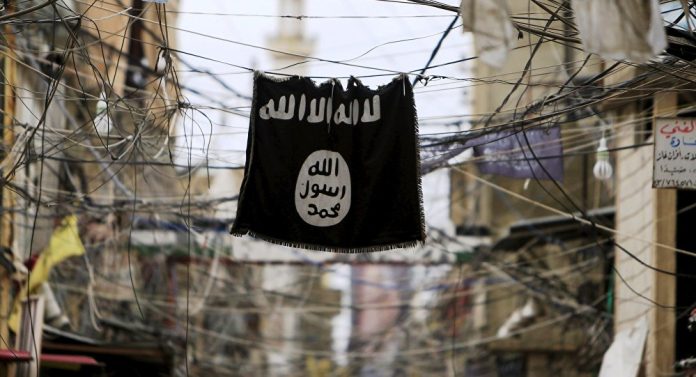
Daesh controlled large areas in Syria and Iraq between 2014 and 2019. Despite the terror group’s territorial defeat, US officials say Daesh remnants continue to pose a threat to the region.

The US deployed as many as 2,000 troops to Syria during the fight against Daesh, but the Donald Trump administration announced earlier this year that it will slash the number of US bases and soldiers in the country.

Cooper added the US military will continue to play an “active role” in supporting US envoy Tom Barrack to realise Trump’s “vision of a prosperous Middle East and a stable Syria at peace with itself and its neighbours”.

He also reiterated his gratitude to the Syrian authorities for intercepting weapons intended for Hezbollah in Lebanon.

“These are the types of tangible security gains we can make on the ground through close cooperation with Syrian government forces,” he continued.

Since the fall of al-Assad, Israel – the top US ally in the region – has been carrying out air strikes in Syria and expanding its military presence in the south of the country.

Israeli soldiers have also been regularly launching raids in southern Syria and abducting and disappearing residents.

On Wednesday, Cooper failed to mention the Israeli campaign in the country, but he hailed what he called “hoops diplomacy”, referring to footage of himself playing basketball with al-Sharaa earlier this year.

“While much work remains, I believe there’s great reason for optimism and hope about the historic opportunity ahead,” he stated.
 

Gaza tents flood, families seek shelter

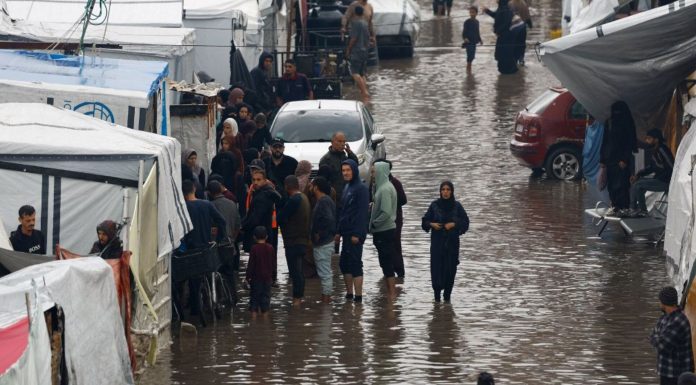
Officials warned Wednesday that the storm was forecast to bring flash floods, strong winds and hail until Friday, conditions expected to wreak havoc in a territory in the grip of a humanitarian crisis, where hundreds of thousands of displaced people live in tents, temporary structures, or damaged buildings after two years of Israel’s genocidal war against the Palestinian people in Gaza.

Humanitarian workers said Israeli restrictions on the entry of tents, tools to repair water and sewage systems have left Gaza poorly equipped to respond to the storm, and called on the international community to pressure the Netanyahu government to urgently allow in supplies.

In the southern city of Rafah, the Palestinian Civil Defence said its teams had already received distress calls from displacement camps, with families reporting “flooded tents and families trapped inside by heavy rains”.

“Despite limited resources and a lack of necessary equipment, our teams are working tirelessly to reach those in need and provide assistance,” the rescue agency wrote on Telegram.

Footage posted on social media and verified by Al Jazeera showed Palestinians shovelling a ditch around tents in a desperate attempt to create barriers that would prevent them from flooding.

Nearly 850,000 people sheltering in 761 displacement sites face the highest risk of flooding, according to the UN Office for the Coordination of Humanitarian Affairs (OCHA).

Flooding has previously been recorded at more than 200 of the highest-risk sites, affecting more than 140,000 people, the office added.

Previous storms had contaminated displacement sites with sewage and solid waste, swept away families’ tents and driven them out of makeshift shelters.

Amjad Shawa, director of the Palestinian NGOs network, stated that Israeli restrictions on the entry of aid and equipment had left Gaza ill-equipped to deal with the storm.

He said only 40,000 tents, out of a needed 300,000, had been allowed in, while tools that would likely be needed to repair sewage systems and water networks were also restricted.

Flooding would bring a serious risk of sewage and solid waste contaminating drinking water or food supplies, raising the risk of diseases in the densely populated Strip, where 2.2 million people are crammed into just 43 percent of the territory, while the remaining 57 percent remains under Israeli military control.

“If Israel were to allow the entrance of supplies, things would be different. But for now, it has done all it can to make life more complicated for Palestinians,” Shawa added.

Oxfam humanitarian response adviser Chris McIntosh agreed, told Al Jazeera that the people of Gaza were bracing for a “very tragic situation”.

“Persistent bureaucracy prevented us from bringing in adequate dwellings for people in Gaza,” McIntosh continued, adding, “The Israelis have not permitted tents to enter Gaza for many months. The only thing they’re allowing at this point is some tarpaulin, which isn’t going to do much for people who need proper shelter.”

He said Palestinians were being forced to live in “deplorable conditions”, with well more than 50 percent of the population living in tents.

He anticipated many would attempt to find dry ground inside bombed-out buildings that were at heightened risk of collapse amid the forecast heavy rains and winds.

Farhan Haq, a spokesperson for UN Secretary-General Antonio Guterres, warned that vulnerable groups, including newborn children, are at particular risk from the incoming winter storm.

About 200 families were expected to arrive at a new displacement site in eastern Khan Younis in the south of the Strip, fleeing a heightened risk of flooding in their present location, he said.

“These households made the decision to move given the impact of the frequent rains and the risk of flooding,” he added.

Ismail al-Thawabta, director of Gaza’s Government Media Office, told Al Jazeera that about 288,000 Palestinian families were without shelter as Storm Byron bore down on the enclave, and issued a call to the international community to pressure Israel to allow in supplies to help respond to the storm.

“We are issuing an urgent appeal to the world, [United States] President Trump and the [United Nations] Security Council to pressure the Israeli occupation,” he said.

Francesca Albanese, the UN special rapporteur on human rights in the occupied Palestinian territory, condemned global inaction as families in Gaza braced for the storm.

“Palestinians in Gaza are literally left alone, freezing and starving in the winter storm,” she posted on X.

“I keep asking how we became such monsters, [i]ncapable of stopping this nightmare.”


Nationwide ceremonies mark Mother’s Day and Women’s Day in Iran

The occasion is traditionally held on the 20th of Jamadi al-Thani in the Islamic lunar calendar, aligning with the birth anniversary of Hazrat Fatima Zahra, daughter of Prophet Muhammad (PBHU).

Revered by Muslims for her compassion, piety, and moral strength, Hazrat Fatima is regarded as an exemplary figure whose life continues to inspire women across the Islamic world.

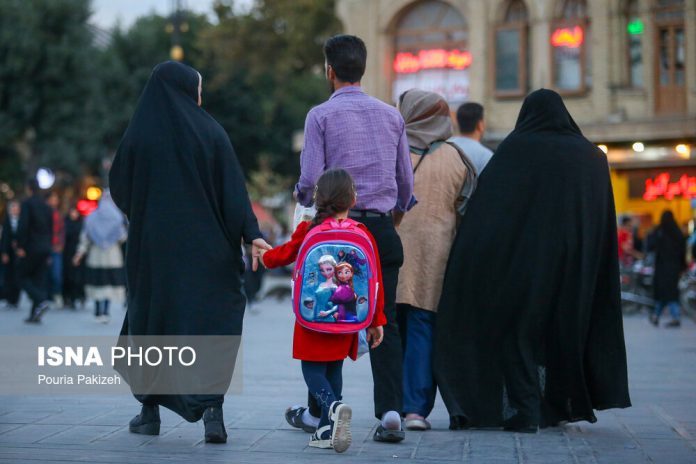
Throughout the country, families express their appreciation by presenting mothers and women with flowers, gifts, and heartfelt messages of gratitude.

Many households also hold small gatherings to commemorate the day and reflect on the importance of maternal influence.

In public institutions, schools, and cultural centers, special ceremonies and educational programs were organized on Wednesday to highlight women’s achievements in fields such as science, education, healthcare, and social development.

Three IRGC members killed in terrorist attack in southeastern Iran

IRGC

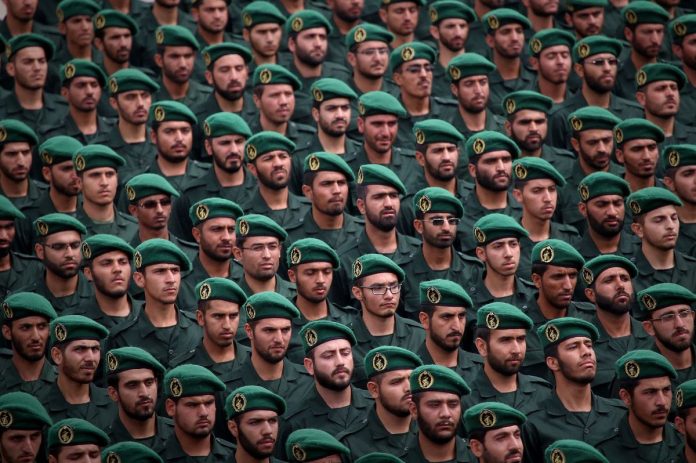
According to a statement released by the IRGC’s Quds Regional Headquarters, the troops were targeted while on duty protecting Iran’s southeastern borders.

IRGC forces have launched a manhunt in the region, it said.

“Operations to track down and confront the attackers are currently underway,” the statement added.

Sistan and Baluchestan province, bordering Pakistan, has faced frequent terrorist attacks targeting both civilians and security forces in recent years.

Terrorist groups carrying out attacks on Iranian interests in the southeastern and southwestern parts of the country are thought to have ties to foreign intelligence agencies.

The so-called Jaish al-Adl terrorist group has taken responsibility for many attacks, including one in August that killed five Iranian policemen. A month earlier, in July, terrorists had stormed a courthouse in the province, leaving six people dead.

The most devastating attack in recent years occurred in February 2019, when a Jaish al-Adl suicide bombing targeted an IRGC bus convoy, killing 27 members of the force.


Italy pushes Ukraine leader on ‘painful concessions’: Report

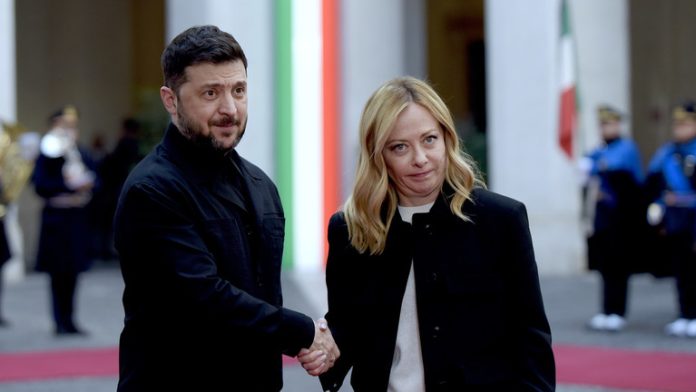
According to the paper, while Ukrainian and Italian officials attempted to create a facade of “a constructive and mutually trusting meeting” in Rome earlier this week, the two sides clashed over their vision for the conflict’s endgame.

The conversation, which involved Meloni, was reportedly frank, and the overall message to Ukraine was: “Consider that you may be forced to make some painful concessions.”

Zelensky, in turn, asked Meloni “to soften [US President Donald] Trump’s position” on a peace settlement.

The stand-off stemmed from the fact that Italy supports Washington’s rush to reach a peace deal as soon as possible, and Meloni’s team believes that Zelensky has been weakened by a corruption scandal in the energy sector involving his long-time associate, Corriere della Sera said. It added that Italy’s policy remains “to reach a fair and lasting peace plan, but taking American leadership rather than a European one into account.”

The reported exchanges come against the backdrop of a US-drafted peace plan leaked to the media last month. The initial version of the proposal would reportedly require Kiev to withdraw from parts of Russia’s Donbass that it still controls, agree to stay out of NATO, and accept limits on the size of its armed forces.

Trump has recently expressed irritation with Kiev, rebuking Zelensky over what he described as a failure to get up to speed on revised peace proposals. He also suggested that Zelensky should be “realistic” about the course of the conflict, arguing that the Ukrainian people overwhelmingly want the hostilities to end.

Russia has said the US plan “can be used as a basis for future agreements,” but no compromise has yet been reached. It also insists that a settlement must include Ukraine’s withdrawal from the new Russian regions, a pledge to stay out of NATO, as well as demilitarization and denazification.

Influenza wave in Iran claims over 100 lives as new vaccine-evasive strain spreads

COVID in Iran

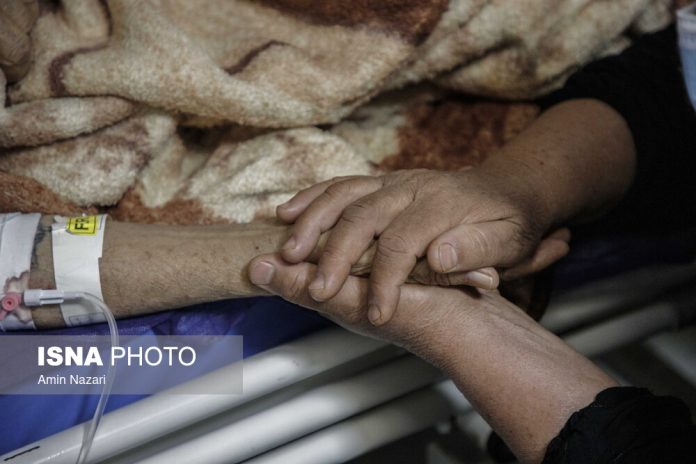
Hossein Kermanpour, head of the ministry’s public relations center, said on the sidelines of a communications conference that the strain has been spreading rapidly since mid-November, prompting nationwide alerts for medical facilities.

Health authorities had not expected the surge to reach current levels, he noted, but the volume of recent patient visits has increased pressure on hospitals across the country.

Most of those who have died had not received the seasonal flu vaccine, Kermanpour added.

The ministry forecasts that the peak of the outbreak will likely continue until mid-January before declining.

Schools are playing a significant role in transmission, officials said, renewing calls for strict adherence to hygiene and prevention guidelines.

Kermanpour stressed that influenza vaccines must be supplied and administered in a timely manner due to their limited shelf life.

Only 20% of Ukrainians would vote for Zelensky following corruption scandal: Survey

Zelensky

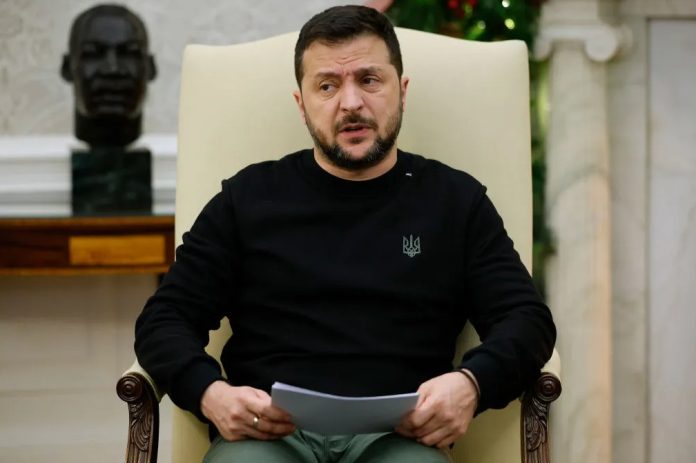
The poll was conducted between Nov. 13 and Nov. 28, days after Ukraine had been hit with a large-scale corruption scandal, in which Zelensky’s allies and government officials were implicated.

In October, a month before the corruption scandal, 24.3% voters said they would support Zelensky.

Former Commander-in-Chief Valerii Zaluzhnyi, now Ukraine’s ambassador to the U.K., ranks second with 19.1%, a 3% increase from the October poll.

Kyrylo Budanov, head of Ukraine’s military intelligence, placed third with 5.1% support, according to the poll.

Around 23.6% of those asked either couldn’t decide or chose not to answer the question.

When asked about parliamentary elections, 21.8% of Ukrainians said they would support a non-existent party led by Zaluzhnyi, while Zelensky’s party would secure a mere 11.5%.

Despite their popularity, neither Zaluzhnyi nor Budanov has announced any plans to pursue a political career.

The poll was conducted through telephone interviews with 1,000 Ukrainians aged 16 and older.

When Zelensky came to power after the 2019 presidential and parliamentary elections, 80% of Ukrainians trusted him, but the number dropped to 37% by February 2022. The level of trust skyrocketed to 90 % when Russia’s full-scale invasion started.

A poll conducted by the Kyiv International Institute of Sociology (KIIS) earlier this fall showed that 60% of Ukrainians currently trust Zelensky, while 35% do not.

Meanwhile, the same survey showed that only 25% of Ukrainians believed Zelensky should remain in office after the end of Russia’s full-scale war against Ukraine.

According to Ukraine’s constitution, the next election is possible only after the end of martial law, which was declared at the outbreak of Russia’s full-scale invasion in 2022. Zelensky has said in September that he is open to not seek re-election after the war is over.

When asked, U.S. President Donald Trump said in an interview with Politico, aired on Tuesday, that “it’s time” for Ukraine to hold an election. His comments come as Washington has been pushing Kyiv to negotiate a peace plan to end Russia’s full-scale war. Trump added that “maybe Zelensky would win” elections.

“I am always ready for elections,” Zelensky told Italian newspaper La Repubblica later in the day, responding to Trump’s remarks.


Lebanon’s foreign minister declines Iran visit, calls for meeting in third country

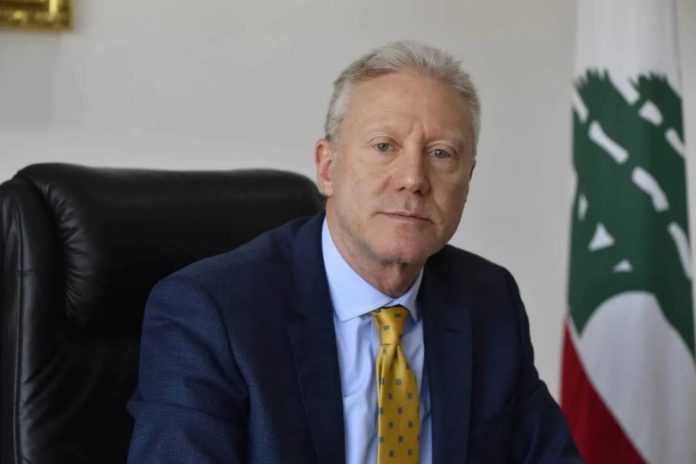
Lebanon’s Foreign Minister Youssef Rajji

In a letter addressed to his Iranian counterpart Seyyed Abbas Araghchi, Raji emphasized that Beirut remains ready to open a new phase of constructive relations with Iran, grounded in full respect for the sovereignty of both states.

According to a report by the Lebanese outlet Elnashra, Raji stressed that turning down the invitation should not be interpreted as rejecting dialogue. Instead, he proposed holding a bilateral meeting in a neutral third country agreed upon by both sides.

Raji reiterated Lebanon’s readiness to develop ties with Iran while underscoring his government’s position on state authority.

He stated that building a strong state is only possible when all weapons are exclusively under the control of the government and the national army, and when decisions related to war and peace rest solely with the country’s official institutions.

Iran offered an invitation to Raji earlier this month to visit Tehran and discuss bilateral ties, amid growing debate in Lebanon over the future of the Iran-aligned Hezbollah and calls for state control over the resistance movement’s weapons.

Iranian woman spared execution after victim’s family grants pardon

Iran Prison

The case of Goli Kouhkan, which had recently drawn significant public attention, was resolved through a formal pardon granted “in honor of Lady Fatemeh Zahra,” Prophet Muhammad’s daughter, on her birthday anniversary, according to provincial judicial authorities.

Haidar Asiabi, the head of the Golestan Judiciary, said the murder occurred in 2018, involving Kouhkan and an accomplice.

Following proceedings in a criminal court and final confirmation by the Supreme Court, a death sentence had been issued and all legal steps for carrying it out had been completed.

Asiabi said efforts for reconciliation intensified due to Kouhkan’s young age, her role as a mother, and the presence of a small child.

The provincial prosecutor’s office, members of the Dispute Resolution Council, and local community elders played key roles in facilitating negotiations. The victim’s family ultimately agreed to pardon her, citing religious values and compassion.

The victim’s father said concern for the future of the couple’s child was a major factor in the family’s decision.

Judicial authorities noted that this is the eleventh death sentence in the province to be resolved through forgiveness since the beginning of the year.

Kouhkan, 25, was reportedly forced into marriage at the age of 12 to her cousin.

Iran’s president highlights Kazakhstan trip as platform to deepen bilateral ties

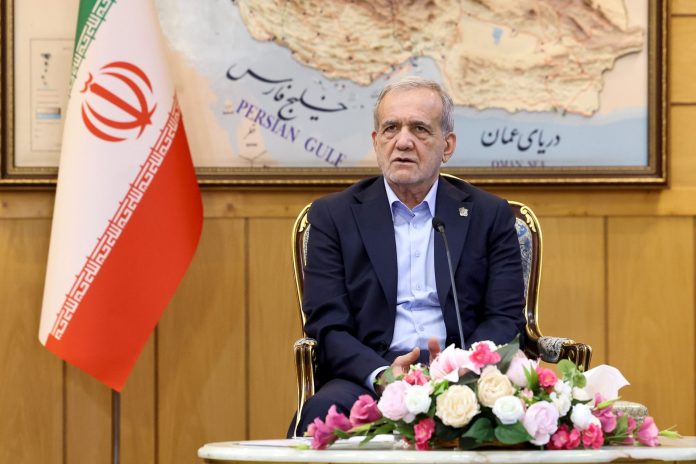
Speaking at Mehrabad Airport in Tehran before his departure, he noted that the trip is being made at the formal invitation of Kazakh President Kassym-Jomart Tokayev.

President Pezeshkian said that expert committees from both governments have prepared a series of planned agreements aimed at strengthening bilateral collaboration.

He added that Iran seeks deeper and more sincere ties with other Muslim-majority countries based on shared beliefs, stressing the importance of mutual assistance and the exchange of experience across the region.

The president will then travel from Kazakhstan to Turkmenistan at the invitation of President Serdar Berdimuhamedow to attend the World Conference on Peace and Trust.

The event will host leaders from across the region and, according to President Pezeshkian, provides an important platform for presenting Iran’s views on international peace and stability.

He criticized widespread warmongering by those claiming to defend peace and humanity, saying regional nations are witnessing atrocities against civilians.

President Pezeshkian added that the conference would allow for direct dialogue with regional leaders to promote practical steps toward peace and trust.