Wednesday, December 24, 2025
Home Blog Page 4530

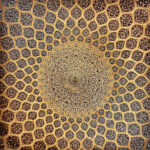
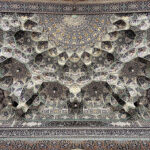
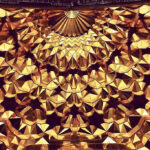
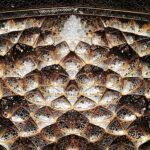
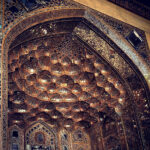
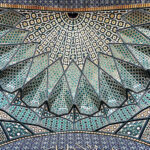
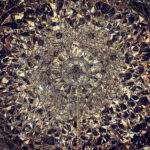
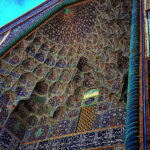
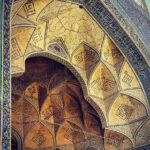
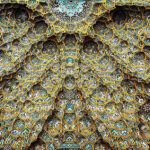
Hypnotizing Beauty of Iranian Mosque Ceilings

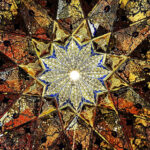
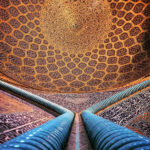
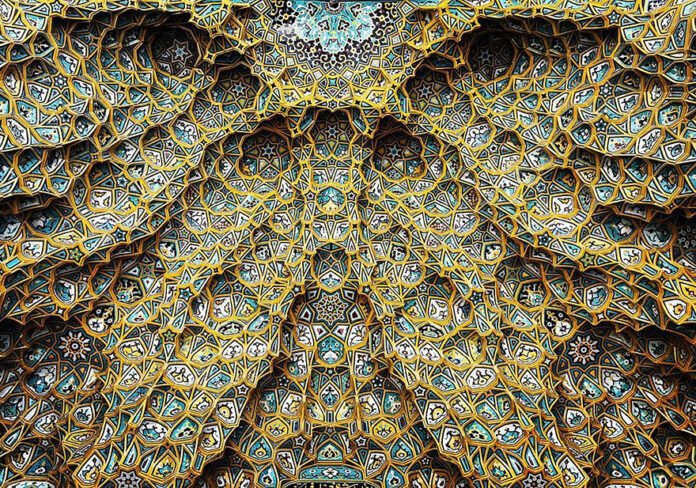
Hazrate-Masomeh’s mosque in Qom, Iran

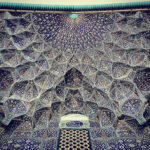
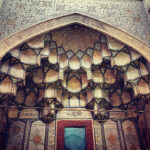
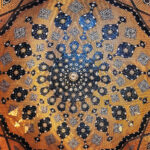
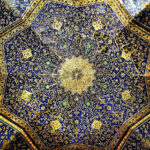
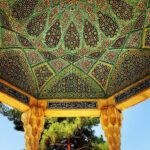
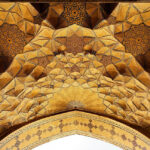
IFP: Mosques in Iran, as well as being places of worship, are often tourist destinations for their impressive architecture. In the following collection, originally sourced by boredpanda.com, there is a focus on some of the most fascinating ceilings of mosques across the country.


Middle Eastern architecture is renowned for its kaleidoscopic beauty. If you haven’t had a chance, yet, to witness it for yourself, Instagram photographer m1rasoulifard can take you on a mesmerizing visual journey. He captures the best of Iran’s architectural details in his hypnotizing photos.

From the Jameh Mosque, one of the oldest still standing in Iran, to Chahar Bagh school, the photographer aims to show the history of Iranian architecture and design.


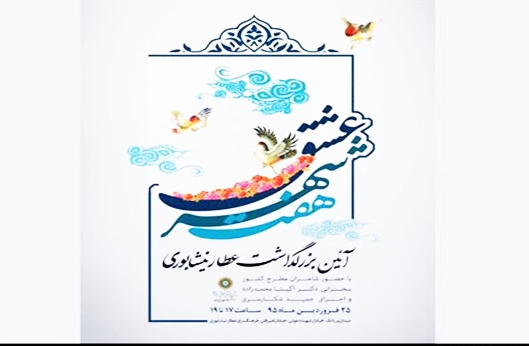
Iran to pay tribute to Persian poet Attar

Among the programs is ‘Seven Cities of Love’ which is scheduled to be held today at Attar Culture Academy in Tehran. It will be attended by poets namely Ali Aban, Ehsan Afshari, Sajjad Azizi and those interested in Attar.

Abu Hamed bin Abu Bakr Ibrahim, known as Attar, was an Iranian Muslim poet, theoretician, and philosopher who had long lasting influence on Persian poetry.

Born in Neishabour, Khorasan Razavi province in 1142, Attar was a poet during the Seljuk rule and his works were mostly inspired by the Persian Sufi poet Molana Jalaleddin Rumi.

According to Iranian literary figure, Mir Jalaleddin Kazzazi, Attar is a master of Persian language who was thoroughly familiar with the delicate and elegant aspects of the language, and featured a divine bond with the Almighty in his poetry.

Attar’s talent for perception of deeper meanings behind outward appearances enabled him to turn details of everyday life into illustrations of his thoughts.

Almost thirty works by Attar survive. They include ‘Asrar-Nameh’, ‘Javaher-Nameh’, ‘Mosibat-Nameh’, ‘Mokhtar-Nameh’, ‘Elahi-Nameh’, ‘Tazkerat al-Olia’ and ‘The Divan of Attar’.

However, his masterpiece is the ‘Manteq-al-Tayr’ (The Conference of the Birds) in which he describes a group of birds (individual human souls) under the leadership of a hoopoe (spiritual master) who determine to search for the legendary bird Simorgh (phoenix).

The birds must confront their own individual limitations and fears while journeying through seven valleys before they ultimately find the Simorgh to complete their quest.

The 30 birds who ultimately complete the quest to discover that they themselves are the Simorgh they were looking for, playing on a pun in Persian (‘si’ and ‘morgh’ which means ’30 birds’) while giving an abstruse teaching on the presence of the divine light within us.

Attar was beheaded by the invading Mongol army in 1221. His tomb, in Neishabour, Khorasan Razavi Province, attracts many visitors throughout the year.

How Iran’s Nuclear Chief Received Death-Threats from Hardline MPs

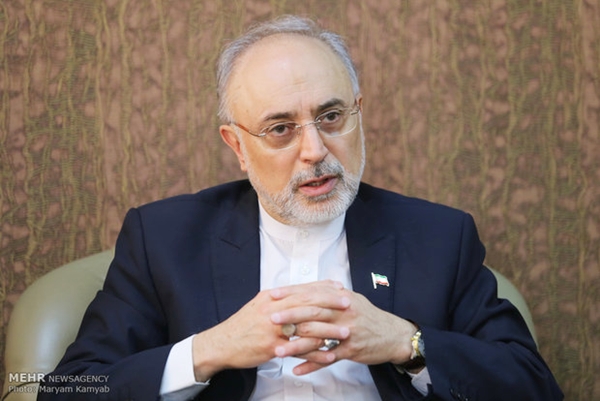
Salehi

Ali Akbar Salehi, the head of Atomic Energy Organization of Iran (AEOI), was one of the key figures in Iran’s nuclear negotiating team. Salehi and Foreign Minister Mohammad Javad Zarif were the ones who shouldered the majority of the responsibility, and faced harsh criticism both during and after the negotiations.

On October 11, 2015, a parliamentary session was held in Tehran, during which the JCPOA was supposed to be put to a vote. During the historic session, a series of events outraged the Iranian nuclear scientist Salehi, who is known for his calmness.

He showed this anger clearly in his address to the parliament, where he told the audience that he had been threatened to be buried in cement in the Arak heavy-water nuclear reactor.

In a recent interview with Khabaronline, Salehi describes the events that led to his outrage, and the positive consequences of his memorable address, which finally led to the approval of the deal in the Majlis.


Salehi Called to Attend Parliamentary Session

“On that day, I was not even supposed to be in the parliament, or to address it. Some believe that Mr. Zarif and I had previously planned what we were going to say. But we did not know anything about what was going to happen,” Salehi said.

“I was somewhere else on that day when they called me and told me to attend that day’s parliamentary session,” he explained about the day he went to the Majlis.

In the first phone call, which was made by Salehi’s deputy Behrouz Kamalvandi at the request of the Vice-President for Parliamentary Affairs Majid Ansari, he replied that he was busy.

“Since Mr. Zarif was attending the session, I said there was no need for my attendance,” he went on to say.

However, Ansari called Salehi in person and said it was recommended that he attend the session personally. So, according to the Iranian nuclear chief, he left his meeting and went to the parliament.


A Series of Events in Parliament Convince Salehi to React

“In the parliament, I was sitting beside Mr. Zarif. We were talking about what we should do, and based on Mr. Zarif’s recommendation, we agreed that I make some remarks first, and then he would make his own address,” Salehi stated.

“I told Mr. Zarif that since he was the head of the [nuclear] negotiating team, he had better say everything himself. The issue was not technical anymore, so he could do it himself,” he added.

However, Salehi explained, what happened on the sidelines of the parliamentary session led to him speaking first.

It was at the time when Mr. Zarif had shaken hands with US President Barack Obama, and the atmosphere had become even heavier, Salehi said, explaining what made him talk first.

“I guessed that if Mr. Zarif had talked, they would have totally forgotten about the nuclear issue, and would have focused on the handshake and other trivial issues rather than the main problem… But if I talked first, other topics would be raised, such as the reason why we changed the [nuclear] reactor that way, or the centrifuge this way. It would have been totally different,” he further noted.

Zarif had recently shaken hands with Obama, and his address could raise tension in the parliament

“Finally, Mr. Zarif told me to speak first, and he would follow me. In addition, neither I nor Mr. Zarif realized that, based on the regulations, only one person could make an address.”

“When I had finished talking, I thought Mr. Zarif would continue. But [Parliament Speaker] Mr. [Ali] Larijani said, “No! Only one can speak!”.”


Hardline MPs Try to Outrage Salehi and Zarif

“As I was talking to Mr. Zarif, several lawmakers came and talked to us, as they usually do. Some of them just greeted us. Others wanted something from us. One praised us and another criticized us,” he explained about the atmosphere in the parliament before his speech.

“A number of people along with Mr. [the hardline MP Ruhollah] Hosseinian approached us angrily… Mr. Hosseinian and his companions were trying to make me and Mr. Zarif angry,” Salehi asserted.

“These people had formed a large gang! They were fully prepared to take control of the parliament, and they were doing it perfectly! They had a great plan. Like a football team, they all knew what they were supposed to do. Some of them had the job of making us angry. Others came and made sarcastic comments. Another one threw insults. In short, they had shared the duties well between them,” he went on to say.

“The atmosphere was already tense before my arrival at the parliament. When I entered, the atmosphere was quite inflamed,” Salehi said.

“Some MPs were talking to both of us; some shouted that we had betrayed the country, and so on. Mr. Hosseinian was the one who said that I deserved to be buried in the [nuclear power] plant, that they would bury me in cement.”

“He said that to both of us. He said it once to Mr. Zarif, and once to me. Later on, Mr. Hosseinian started arguing with me, saying that I’d better back off. He said I shouldn’t have joined in the fight.”

“Mr. Hosseinian later told his friends that ‘we wanted to make these two angry so that they would show their nerves.’ They were indeed successful, but the anger happened to end up in our favour, and that was God’s will,” Salehi stated.

“It is very difficult to make me angry. I may get angry once in a year. There, I tried hard to control myself. But Mr. Hosseinian called us traitors who had betrayed our country. Then I got really upset. Betrayal is a very offensive and unfair word. Who had given them the right to say such a thing? And in what position were they to say that to us?”

Iran’s nuclear chief: I was outraged when he called us traitors. It was very offensive and unfair.

Some said that Hosseinian was joking when he made those remarks, but based on what Salehi says, he later said he was not joking, and was indeed very serious.

“Those days, I saw certain commentators describing me as irritable, criticizing me for getting angry so easily. But the interesting point was that this supposed irritability had lain unnoticed for more than three decades, and all of a sudden, I was called thin-skinned on this particular issue!”

“Besides, the people who made such remarks were as young as my child. The student of my student could be their teacher. What should I tell them? I have been a faculty member for 38 years. Anyone who is under 40 years old was barely born when I became a faculty member!” he added.

“Another interesting point here was that Mr. Hosseinian swore to God when he was talking to me. He said ‘I swear to God you are a traitor and I swear to God I would do this or that’. That made me angry, and Mr. Zarif had to try to calm me down,” he said, asked about a picture published later showing Zarif taking Salehi’s hand and asking him not to get angry.

“I told Mr. Hosseinian not to swear to God. I told him say anything you want, but do not swear to God. When you swear, you have to do it. I said, you are a cleric, and should encourage people to be ethical and polite. Why are you talking like this? How are you supposed to welcome people to Islam? When you swear to God but do not do what you said, it is a sin,” Salehi stated.

After the arguments, Salehi angrily told the audience in his address that someone had threatened to bury him in cement in the Arak heavy-water nuclear reactor.

“It finally ended up in our favour, because some lawmakers later came to me and said they were doubtful whether to vote for the JCPOA or against it, but after my remarks, they were convinced to vote for it,” Salehi added.

Salehi says his anger happened to be helpful in getting parliamentary approval for the JCPOA

“Before those remarks, Mr. Larijani had noted that the nuclear deal would not get the parliament’s approval at that day. Mr. Kazem Jalali [a senior lawmaker close to Larijani] came to me and Mr. Zarif and quoted Larijani as saying that the deal would not be approved today [Sunday, October 11, 2015].”

Larijani had sent the message to Zarif and Salehi that they could postpone the approval of JCPOA to a session on Tuesday [October 13] if they wanted to.

“I told Mr. Zarif that in my opinion, if the case were to be postponed to Tuesday, it might be even more difficult to get it approved, because at that time, those people were taking control of parliament. They would have had total control over the Majlis by Tuesday. So it was decided that the voting would take place in the same session.”

NIOC Mulls R&D Cooperation with Wintershall

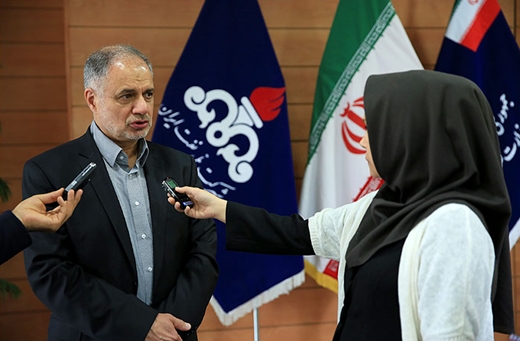
Ali Kardor, NIOC’s deputy managing director for investment and finance, told Shana that Wintershall has indicated willingness to cooperate with NIOC in research and development areas and the two companies may start cooperation in the future.

Speaking on the sidelines of a ceremony to sign a memorandum of understanding (MoU) by NIOC and Wintershall in Tehran, on Tuesday, Kardo said the two companies have agreed to exchange data within a month and the German side will initiate studies on 4 oilfields in western Iran.

From Iran, Roknoddin Javadi, managing director of NIOC, and from Wintershall, Mario Mehren, CEO, signed the MoU in Tehran on Tuesday.

A subsidiary of BASF, Wintershall is Germany’s largest internationally active crude oil and natural gas producer.  It explores and produces oil and gas in Europe, North Africa, South America, Russia, and the Middle East. It has been active for over 85 years and has a workforce in excess of about 2,000 employees from more than 40 nationalities.

This will be the first time Winteshall starting direct cooperation with NIOC, said Kardor.

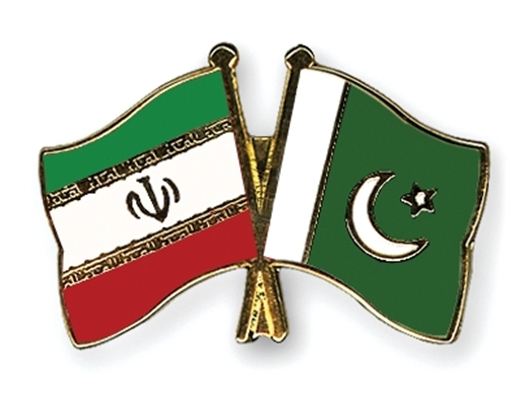
Iran Ready to Supply Pakistan’s Energy Needs: Interior Minister

He made the remarks in a ceremony held to celebrate the Pakistan National Day.

Rahmani Fazli predicted Iran-Pakistan trade volume to increase to $5bn within the next three years.

Wishing a happy National Day to the Pakistani government and nation, he noted that Iran and Pakistan enjoy cordial historical ties and the two countries’ governments are committed to enhancing all-out ties.

The interior minister voiced hope that practical steps can be taken towards the enhancement of economic ties in the upcoming 20th meeting of the Iran-Pakistan Joint Economic Commission in summer 2016 in Tehran.

Iran is ready to provide Islamabad with the energy and new technologies which the neighbouring country needs, he said.

He added that Iran can export both gas and electricity to Pakistan.

Rahmani Fazli called for a boost in cooperation between Tehran and Islamabad in border control, as well as in fighting human and drug trafficking, adding that Iran and Pakistan will hold high-level security talks in the next three weeks.

The official hailed Pakistan parliament’s stance on the Palestine, Gaza, Syria and Yemen issues, adding that dominant powers seek to stoke war in the region.

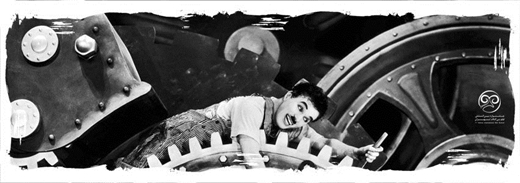
Tehran to host festival of silent films

Speaking at a press conference on Monday, the secretary of the festival, Alireza Qasemi, who is also the founder of the event, said that Italy, the U.S. and Australia are the only countries enjoying festivals of silent films.

The Tehran International Silent Film Festival was established “to fill the vacuum for such an event in Iran,” he added.

Forty-five fiction, animated and documentary films will be screened at the festival, which will be held at the Tehran University of Art.

“Hunter” by Scott Barley from Wales, “Trilogy of Silence” by Diego Fiori from Austria, “Displacement” by Manuel Álvarez-Diestro from England and “Chamber Music” by Katharina Blanken from Germany are among the films.

The films have been selected from among over 800 submissions from around the world.

The Experimental and Documentary Film Center and the Tehran University of Art festival are the main sponsors of the event.

The organizers began on Sunday screening a number of silent films during a five-day program at the university to inform the audience about world silent cinema before the beginning of the festival.

The program focuses on works by Swedish cineaste Victor David Sjostrom, Japanese director Yasujiro Ozu, Austrian-German filmmaker Fritz Lang, Finnish-Swedish Mauritz Stiller, Danish director Carl Theodor Dreyer, and German filmmakers Karlheinz Martin and Robert Wiene.

Film editor Hayedeh Safiyari, cinematographer Mahmud Kalari, director Kamran Shirdel and actress Fatemeh Motamed-Arya are the Iranian members of the jury, which also includes Dana Polan, the associate chairperson of the Department of Cinema Studies at New York University.

Photo: A poster for the Tehran International Silent Film Festival


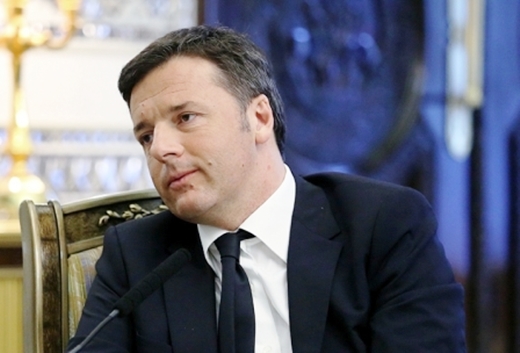
Matteo Renzi: Peace is One of Italy and Iran’s Mutual Goals

He added, “There is a deep belief that Iran can play a vital role not only in the region, but also in the world, which faces so many challenges.”

He highlighted the crisis in the region and said, “There’s still a huge human crisis in Syria and Yemen, to the extent that the number of refugees to Italy in this year has increased 15 to 20 times.”

Italy’s Prime Minister continued, “Knowing that 23% of the victims in Yemen are children, and that 15% are women, highlights the catastrophe in the country.”

Renzi pointed out that Iran and Italy can spread a message for stability in the region and said, “The two countries also can work on subjects which there are some disagreements about. However, we have many agreements and common goals with Iran, and one of them is making peace.”

Iran’s Oil Market Counter-Attack against Saudi Arabia

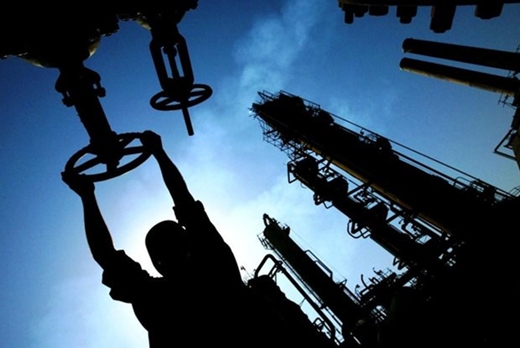
Iran’s oil production had sharply decreased in recent years, due to the sanctions imposed on the country for years, and Tehran is now trying to regain its lost share from the global oil market by boosting its output.
Meanwhile, Iran’s regional rival Saudi Arabia drastically increased its oil supply and even threatened foreign oil tankers in a bid to force Iran into “freezing” its oil production. The finalization of new oil contracts and a growth in Tehran’s oil exports, however, have meant that production continues to increase.
In an article for Mehr News Agency, Mohammad Ali Zamankhani discussed oil competition in the Middle East, and the way Iran countering Saudi Arabia’s plans in this regard.
Here is Zamankhani’s article, translated by IranFrontPage (IFP)


Before the termination of anti-Iran sanctions, based on a nuclear deal implemented in mid-January, Saudi Arabia served as an enforcer for those who had put Iran’s oil industry under sanctions. Now that embargoes are lifted, the Saudis are once again making extensive plans to “freeze” Iran’s oil barrels.

Saudi Arabia’s plans for preventing Iran from regaining its pre-sanctions share of oil supply include unrestrained oil production and supply, attempts to keep the oil price low, manipulating prices, and finally, the recent threats levied at oil tankers carrying Iran’s crude oil.

Saudi Arabia threatened oil tankers carrying Iran’s crude oil, but that has not hampered the increase of Iran’s oil exports

However, statistics indicate that within the first two months of the post-sanctions period, while SWIFT restrictions are still in place and there are barriers to the transfer of foreign currencies and the insurance of oil tankers, Iran has raised its crude oil exports by almost 60%.

Iranian Oil Minister Bijan Namdar Zanganeh announced in late March that Iran’s crude oil and gas condensates exports have already exceeded 2 million barrels per day.

“In the [Iranian calendar] year 1395 [started on March 20, 2016], Iran’s crude oil sale per se will be increased to more than 2 million bpd,” Zanganeh said at the time.

In the new Iranian calendar year, Iran will export more than 2 million bpd of its crude oil.

Meanwhile, the oil tankers belonging to Iran’s customers in Asia and Europe are also docking and being loaded at Iranian terminals. Since the beginning of the new Iranian calendar year, an average of one oil tanker per day has been filled with Iran’s oil in one of the country’s terminals in Persian Gulf, and has transferred it to target markets.

Two of Saudi Arabia’s plans – including the increase of supply and threatening the oil tankers carrying Iran’s oil – seem to have been ineffective so far, as the amount of Iran’s oil exports has exceeded 500,000 bpd to the EU alone.

Iran is now exporting more than 500,000 bpd of its crude oil to European countries

Seyyed Mohsen Qamsari, the director-general for international affairs at the National Iranian Oil Company (NIOC) declared the signing of new contracts for the export of Iran’s oil to Europe, in an interview with Mehr News Agency.

“Currently, Iran sells almost 35%, which is more than 500,000 bpd, of its oil to Europeans,” Qamsari said.


jadval (1)


South Korea, Biggest Customer of Iran’s Oil in Post-Sanctions Era

India, China, Japan, and South Korea should be considered as the four traditional customers of Iran’s crude oil in Asia. Among them, South Korea had the greatest increase in its oil purchases after the recent termination of anti-Iran sanctions, and has somehow outpaced its competitors.

A report published by an Iranian body responsible for OPEC (Organization for Petroleum Exporting Countries) affairs demonstrates that in February, Iran’s crude oil exports grew by almost 25%.

Thanks to the termination of sanctions, Iran’s crude oil exports in February has almost increased by 25%

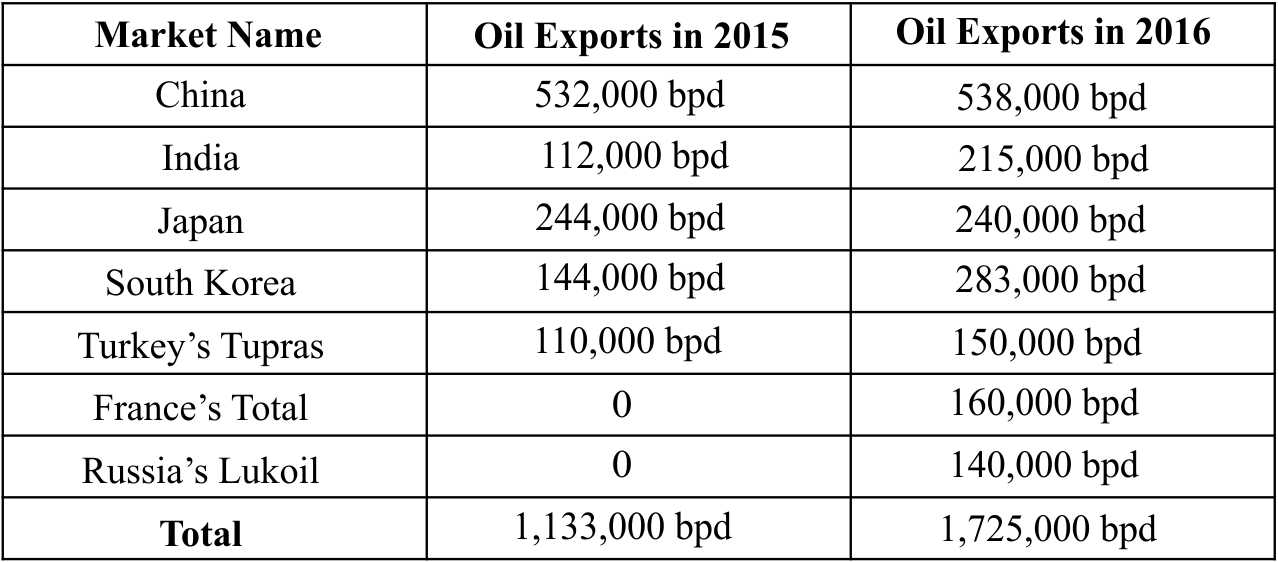
During the same period of time, India increased its oil imports from Iran by 113,000 bpd and marked the highest amount of crude oil imports within the past two years. South Korea’s refineries also raised their crude oil purchase from Iran by 139,000 bpd.

The interesting point here is that the amount of Iran’s oil exports to China in February 2016 shows only an increase of 6,000 bpd, and the exports to Japanese refineries have even dropped by almost 4,000 bpd due to decreased demand in Japan.

Nevertheless, China is still Iran’s biggest oil customer, importing 538,000 bpd, and after that, South Korea (283,000 bpd), and India (215,000 bpd) are among the biggest consumers of Iranian oil.


Unveiling European Customers of Iran’s Oil

In winter 2015, Saudi Arabia targeted Russia’s oil markets by selling oil to a Swedish refinery. Some market experts believed at that time that Riyadh would prevent the return of Iran’s oil barrels after taking over part of Russia’s share in the European market.

Within the past few months, the National Iranian Oil Company have not only signed contracts for selling oil to France’s Total, Russia’s Lukoil, and Spain’s Cepsa, but has also aimed to finalize new deals for selling the country’s oil to Greece’s Hellenic Petroleum, Switzerland’s Vitol, Italy’s Eni and Saras SpA, Britain’s Shell, Hungary’ MOL, and Turkey’s Tupras.

Once new contracts with Europeans are finalized, Iran will increase its exports to the continent to more than 700,000 bpd.

It is generally predicted that once the new contracts for export of Iran’s crude oil to major European companies are signed, the total exports of Iran’s oil to European countries would exceed 700,000 bpd for the first time ever.

One can also draw up a list of potential future customers, including Malaysia’s Petronas, Taiwan’s CPC and Formosa, South African refineries, Sri Lanka’s Ceylon, Singapore, Pakistan, Thailand, Russia’s Rosneft, and Ghana.

The Best Type of Cooking Dishes, According to Traditional Medicine

As reported by Tasnim, Hamidreza Qorbanzadeh talked about the food and utensil health and safety, according to the traditional medicine. “Food health and safety has been an important subject since ancient times, and Iranian traditional medicine has also addressed this.”

According to him, human health has improved by using chemical medicines in recent years, but there are still many diets which are full of harmful chemical elements, especially for children.

He also added, “Among the heavy metals such as lead, cadmium, arsenic and mercury, there’s no known benefit or useful elements for the body. However, their poisonous effects on metabolism, even in small quantities, have been well documented.”

Qorbanzadeh continued, “Using these metals, even in very small quantities, can be extremely harmful. This is why it has been reported that in some particular foods and diets, especially in developed countries, these elements are entering the body more.”

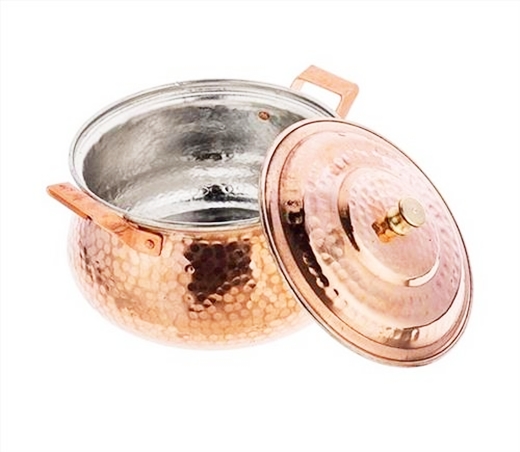
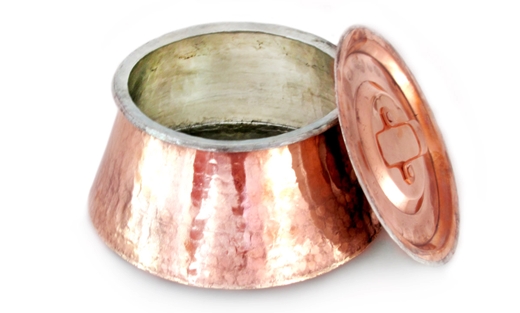
He declared, “In Iranian traditional medicine sources, the best dishes to use for cooking are those made of gold, silver and whitened copper which has been washed by tin, to make it easy to wash and to remain clean.”


168383

A Shirt to Help Children with Learning Difficulties

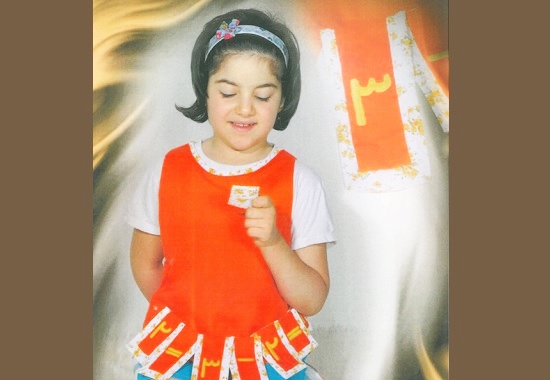
Mohadeseh Mahboubi is a costume and clothing design postgraduate from Yazd Azad University. She has designed a “smart shirt” for children suffering from learning difficulties.

In her interview with Honar Online she talked about the initial idea for the shirt, saying, “My postgraduate thesis was on Using Educational Building Blocks in Pre-school Children’s Clothing. That idea ended up in the current form of the shirt.”

She added, “While researching my thesis, I made some changes to the initial idea and changed it into a puzzle which can teach the alphabet, numbers and colours to children. After sharing it with a child psychiatrist and getting a positive response from her, I continued studying the characteristics of those types of children, and took it to an education centre for children with learning difficulties and tested it there. After getting positive results, I registered my invention.”

She pointed out that the children who were tested were mostly in first or second grade. “Those children have difficulties sitting at their desk and learning. This shirt is more like a game for them and it’s entertaining, so it keeps them interested.”

About the function of the shirt, she said, “The training takes place in three stages. The children are asked to find the right letter for a specific word or a number and place it on the shirt. If they do it correctly, through the electric system built into the shirt, it starts playing music for them, so they get motivated.”

She continued, “During the time I was testing the shirt in that centre, I saw children who were crying and didn’t want to go into their classrooms. However, after trying the shirt they were immediately interested and would ask to try it again. They play and learn simultaneously.”

Regarding the mass production of the shirt, she said, “The professors who were involved in the process were all interested to mass-produce it. They believe that there will be a lot of demand for it. So far, however, no steps have been taken in this regard.”