Friday, December 26, 2025
Home Blog Page 4517

Ahmadinejad’s Gov’t Is to Blame for US Seizure of Iranian Assets

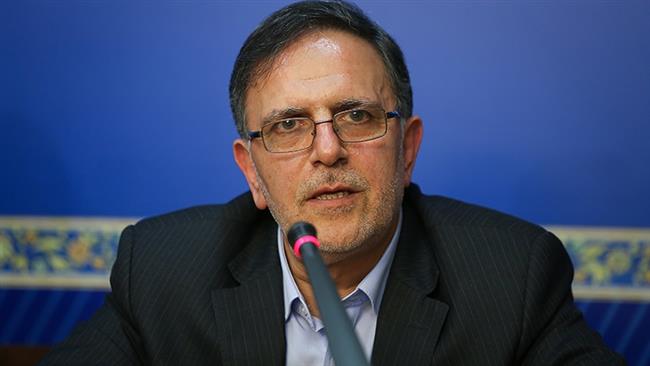
Valiollah Seif

“Unfortunately, in the previous government, there was negligence in buying bonds and making investments in the US dollar,” Seif said.

Seif noted that “u-turn” transactions with the Islamic Republic were exceptionally permitted in the US dollar sanctions against Iran, but Ahmadinejad’s administration was not careful and cautious enough in making the investments.

The former government’s officials should have considered the issue and exercised enough caution, but in spite of warnings by CBI experts against investments on dollar-based bonds, they (the then officials) made the purchases and set the stage for the Iranian nation’s loss, he added.

“The warnings by those experts came true, and unfortunately, the ban on dollar-based transactions with Iran was once again imposed in 2008, and American banks were banned from having such transactions with Iran,” Seif said.

If the bonds had not been purchased at that time, there would have been no money to be seized by the Americans, he added, as reported by the CBI’s website.

The measures taken by the forerm government led to other hostile moves by the US, including the 13599 Executive Order against the CBI, he noted.

He was referring to an executive order issued in 2012, based on which the US Treasury blocked “all property and interests in property of the Government of Iran, including the Central Bank of Iran, and of all Iranian financial institutions, regardless of whether such persons are located or incorporated inside or outside of Iran”.

Therefore, he concluded, all these unfair and illegal measures by the Americans took place under Ahmadinejad’s tenure, which was a time when the Iranian government considered sanctions to be barely effective, even futile.

If any of these moves had been prevented at that time, the recent US court ruling could not have happened, he noted.


Rouhani’s Gov’t Evading Responsibility by Pinning Blame on Predecessors: Analyst

Meanwhile, Kezem Anbarlouie, a political analyst, believes that the incumbent government of President Hassan Rouhani is trying to blame Ahmadinejad’s to whitewash its own deficiencies.
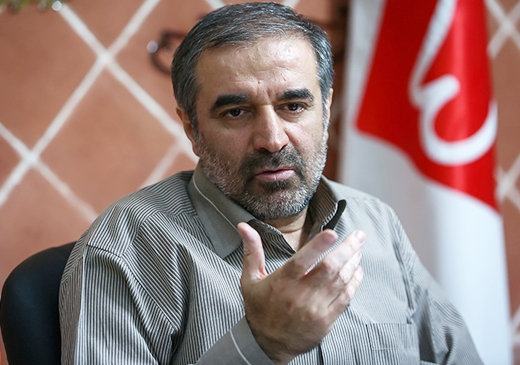
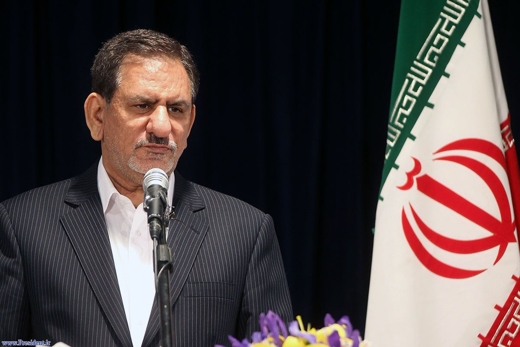
Mohammad Kazem AnbarloueiIn a comment published by Tasnim and translated by IFP, Anbarlouie referred to similar remarks by First Vice-President Eshaq Jahangiri on the responsibility of the former government for the asset seizure, describing his remarks as “shocking”.

“The First VP said the previous government was not prudent enough, and spent part of the CBI’s resources on purchasing bonds, even if it knew the Americans were not committed to international regulations,” Anbarlouie said.

He further argued that if Americans are not committed to international regulations, Rouhani’s government should also have refused to sign the recent nuclear deal (JCPOA) with them.

“The previous government was in conflict with the US, and everyone in the world knew that; however, the US government did not dare to seize Iran’s money at that time,” he went on to say.

“The 11th government has made an agreement with the Americans and shaken hands with them while they promised to release Iran’s frozen assets, but now, they have not only refused to release them, but they are also stealing and seizing the country’s money once again,” the analyst added.

“To those who say the former government is to blame for the US seizure of Iranian assets, one should say, ‘What were YOU doing? Do not blame the former government for your own imprudence’.”
Iran, German Sachsen state to Cooperate on Specialized Agriculture

Deputy Minister of Agriculture, Ali Akbar Mehrfard, and the German Minister of Agriculture and Environment Thomas Schmidt, accompanied by a delegation from the German state of Sachsen, held talks on ways to develop economic cooperation between the two countries.
Noting that Iran boasts numerous agricultural capacities and produces some 120 million tons of crops annually, Mehrfard called for transfer of technical know-how from the German state of Sachsen to Iran.
Iran stands high in the global production of crops such as pistachio, saffron and dates, he said, noting, “We are seeking to complement post-production chains, processing and packaging of products.”
Stressing the need for using modern equipment to store fruits and vegetables, he said that Iran produces four times the global average of citrus fruits, and that storing surplus consumer goods for export and processing is a significant issue.
Modern irrigation techniques are rapidly developing in the agricultural sector, he said, adding that Iran and Sachsen can have good cooperation in the field of modern irrigation.
German Minister of Agriculture and Environment Thomas Schmidt, for his part, hoped Iran-Germany ties will further improve following the removal of sanctions, saying that German companies and the private sector can help Iran in this regard.
The State of Sachsen is ready for cooperation in the field of packaging and processing all types of fruits and medicinal herbs, he said. Schmidt invited Iran’s private sector to visit Sachsen to get further acquainted with technical and scientific capabilities.

Iran Ready to Help Expedite Silk Road Revival: Soltanifar

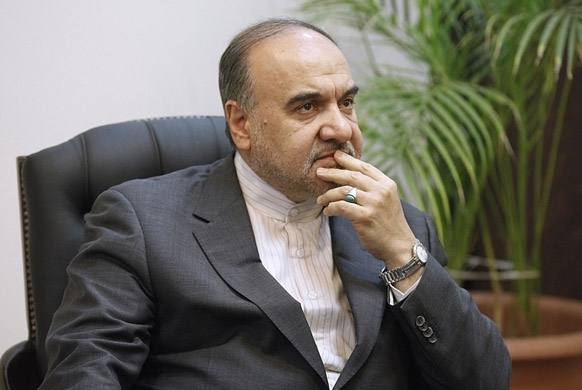
Soltanifar

Iran ready to help expedite Silk Road revival: Soltanifar

Addressing the 6th UNWTO Silk Road Task Force Meeting in Urmiye, Soltanifar noted that the Silk Road has been a route for political, cultural and tourism between Asia and Europe over the centuries, and has encouraged development for many countries.

Iran, as the descendant of ancient Persia and the centre of the Silk Road, has been a connecting link between East and West throughout history, he added.

The Iranian official further noted that over the years, the Silk Road has been a route for the exchange of goods between different countries and varied civilizations, but that unfortunately with the spread of terrorism and the existence of certain differences, certain controversies have emerged.

Soltanifar said that the promotion of friendship between different states and maintaining communication between countries requires increased intellectual and cultural efforts.

He called for the expansion of continental and international cooperation, and for ending disputes between countries in the coming decade.

The vice president said that the current meeting in Urmiye can be a tool to move away from conflicts and to promote humanitarian goals.

Soltanifar noted the Islamic Republic of Iran makes efforts to develop tourism, as well as economic, social and international potential among the Silk Road countries, in order to accelerate the process of reviving the Road and to encourage solidarity among the regional nations.

The three-day UNWTO Silk Road meeting is currently underway in Urmiye with representatives of UNESCO, the World Tourism Organization and delegates from more than 33 Silk Road countries participating.

Iran Marks 400th Anniversary of Shakespeare’s Death

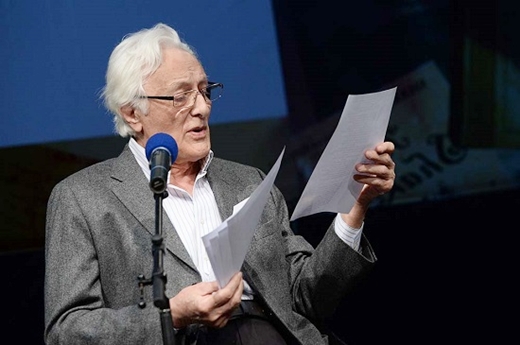
At the beginning of the ceremony, which was hosted by Ardeshir Salehpour, Iranian theatre actor and director Mikaeil Shahrestani performed parts of Shakespeare’s Hamlet, one of the world’s most famous tragedies.

Qotbeddin Sadeqi, an Iranian theatre director and researcher, also delivered a speech, during which he described the playwright and poet as an exceptional personality who emerged in a time when Britain’s art and economy were thriving.

On the reason why Shakespeare is an inspirational figure for the world’s theatre, Sadeqi said, “If we look at his works, we will see four types of plays: comedies, historical plays, Roman plays, and tragedies.”

“The playwright taught us three lessons,” he noted. “The first was his special view of religion, which has its roots in the Baroque worldview. The second point, derived from his historical works, is that power is faithless and does not last forever,” with the third point being Shakespeare’s deep scepticism towards tradition and love, seen in his tragedies. Such scepticism originated from the fact that human perception of such concepts is nothing but an illusion, he added. “This tragic view is extrapolated to the extreme, leading to failure and death.”

“In his tragedies, everyone learns something: King Lear learns, Macbeth understands, and so on. How can these lessons be effective? I learned from Shakespeare that one can stand against the world’s conflicts through theatre,” the Iranian director said.

Elsewhere in the ceremony, Manouchehr Anvar, another Iranian director and playwright who is a graduate of Britain’s Royal Academy of Arts, recited parts of Hamlet in English.

A statement by Shakespeare’s Globe Theatre was also read out in the ceremony. In the statement, the group referred to its performances of Hamlet in 197 countries, including a recent performance in Tehran.

“Our performance in Tehran taught us that theatre can be a place to understand sincerity, sympathy, and a position beyond the limitations of languages,” the statement read.

“For centuries, Shakespeare’s plays have been inspiring different directors throughout the world, and Iran, with its old and brilliant history of theatre, and given the Iranian works performed in different parts of the world in recent years, is now considered part of the global theatre calendar,” the statement added.

It also noted that it is not surprising that Shakespeare’s works enjoy a great position in Iran and inspire various generations of Iranian artists.

At the end of the ceremony, a portrait of Shakespeare was unveiled and signed by Iranian artists.

World’s Largest Brain Research Centre under Construction in Tehran

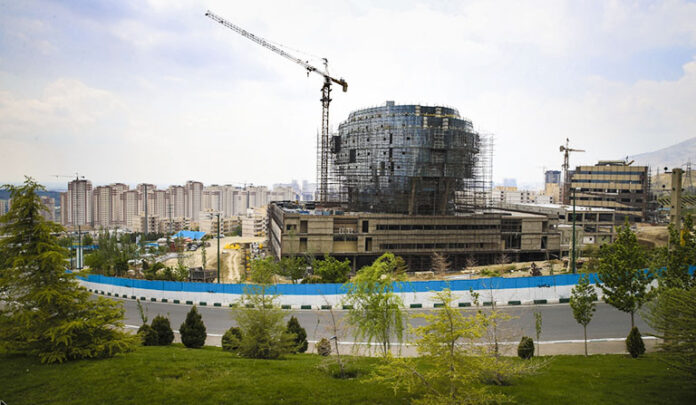
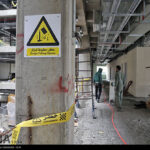
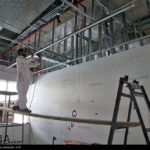
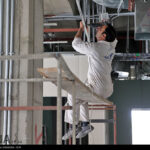
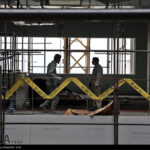
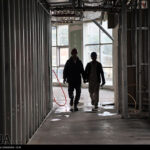
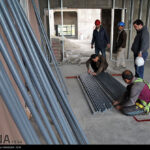
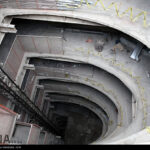
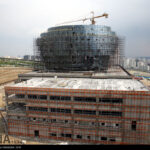
Based on a proposal by Professor Majid Samii, the world’s largest brain and neuro
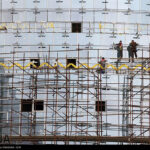
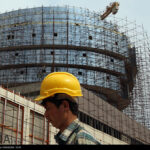
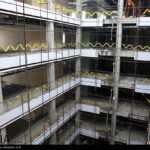
​logy ​research centre is being constructed in the Iranian capital​, under the supervision of the distinguished neurosurgeon. The hospital ​will have an area of 80,000​ ​square metres​ ​and 11 storeys. The main building’s ​floorplan is 2.5 times larger than the world-renowned International Neuroscience Institute (INI), which was founded by Samii in Germany’s Hannover. The Tehran building ​will be exceptional,​​ both​ in the Middle East and ​globally, in terms of its size, structure, medical facilities and staff.


Iran Stood with Armenians in Grief over 1915 Genocide: Archbishop

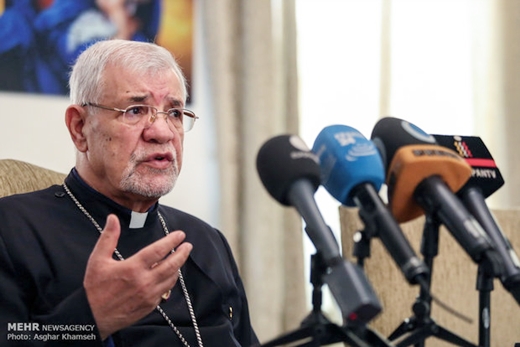
“Iranians have always shared our grief over the large genocide, in which 1.5m Armenians were killed,” Sarkissian said, expressing Armenians’ happiness with Iran’s solidarity.

“It has been a century since the genocide, and during all these years, we Armenians have always tried to assert our rights, and are hopeful about the future,” he added.

The past century was full of wars and bloodshed, he said, at the same time noting that such problems had not prevented the Armenians from moving forward. “We continued our life and progress,” the Armenian archbishop said.

He further lashed out at Turkey over its failure to recognize and condemn the genocide after one hundred years, adding, “If world figures and organizations express their support in denouncing the genocide, it would cause peace-seeking countries to stand by us so that we would be able to protect our rights.”

“On the 101st anniversary of the genocide, we want to call on Turkish officials either to understand their own history or to recognize the realities of the genocide,” he added.

“After all these years, we still remember the victims of the painful disaster every day and believe that justice will one day be restored to its real position in human life,” Sarkissian continued.

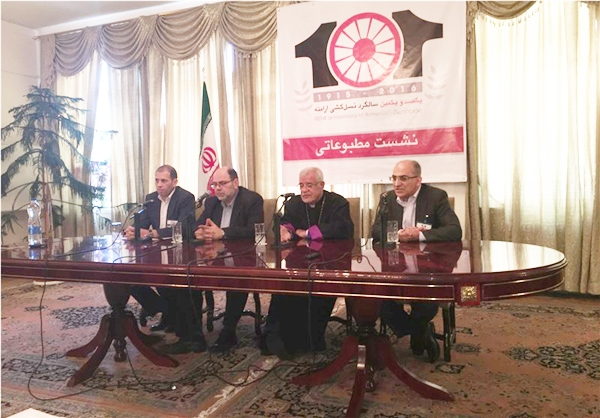
April 24 is the 101st anniversary of the Ottoman Empire’s massacre of Armenian nationals, which took place in 1915. On this day, a ceremony entitled “Genocide and Extremism: from Armenia to Syria” is held in Ararat Club in Tehran.


139502041817179657566454

IRGC Navy Commander: US Incapable of Waging War on Iran

Speaking in a ceremony held on Sunday in Yazd, Fadavi said the hostility of the US and other hegemonic powers towards Iran is constantly increasing, but that they know that the disadvantages of any move against Iran would outweigh any advantages.

Iran and Iraq signed a ceasefire in the 1980s and established peaceful borders between two countries. Despite this, US warships have remained active in the Persian Gulf, even though no bullet has been fired, General Fadavi stated.

“That was because the Americans believe in Iran’s power of deterrence, and do not have the capability to attack Iran militarily,” he added, as reported by Tasnim and translated by IFP.

“This deterrent power means that if they make any move against Iran, it would be more harmful than beneficial for them,” he added.

“Americans say the entire world should obey them because they are the most powerful, and this is happening in reality: many countries do not even dare to express rhetorical opposition to the US,” he continued.

“Currently, 50 American warships are in the Persian Gulf, and this number increases to 63 if we take into account the warships of its allies,” he said.

However, Fadavi emphasized, Iran does not consider them powerful at all.

“FIFF Is Just Like Western Film Festivals” – Marcin Luczaj

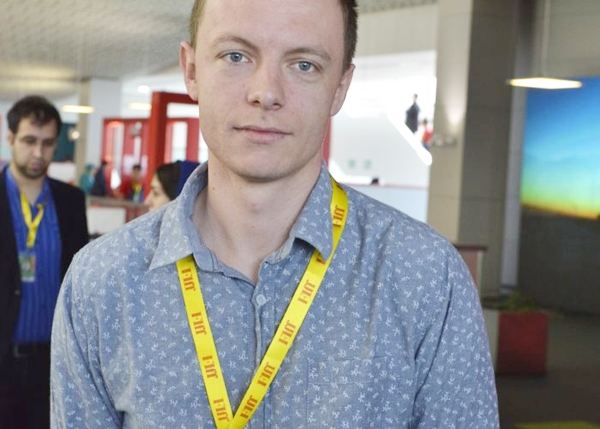
How do you feel about being in Iran for the first time?

Good, very good. I have always wanted to be here. I select Iranian films for our festival and I have seen lots of Iranian films, but never have a chance to be here.

What do you like about Iranian cinema?

I think Iranian cinema is very close to Polish cinema; both cinemas are based on society, based on social dramas. And for us it is the exotic culture that is more fascinating. However, we can find lots of links between the two. I mean, on the surface Iranian cinema seems very exotic, but at the same time it is very familiar.

Are Polish audiences familiar with Iranian cinema?

They are quite familiar with Iranian cinema. Iranian films are distributed in Poland. For example, in our cinema, we show some of the Iranian films which were in Cannes or the Berlinale, so there is a chance of them being shown in cinemas. We always have one to five Iranian films every year. Last year, we had a film directed by Niki Karimi which the audience really liked.

How do you usually select Iranian films for your festival?

We receive over two thousand submissions and we screen one hundred films; we pick whatever movies we like. I mean we don’t select a movie because it is from Iran, and we don’t select a movie because we like the country or not! We like to show other movies which are made outside Europe, and Iran is part of that.

What do you think about the organization of the festival?

Well, it is very well-organized. I have been to a lot of festivals and I don’t see any difference between Fajr and the others. It is just taking place in another city, and when you are in the festival venues, it looks like other festival and film markets in Europe or Unites States, very similar.

What do you expect to see in the coming days in the festival?

We are in the selection process for the Warsaw Film Festival, so I am looking for new films from Iran. I know there are lots of Iranian films ready and waiting for an international premiere and we are interested to discover new names. Some of the names in the lineup are by familiar names, like Reza Dormishian.

Are you looking for something specific in the films?

We know the taste of our audience; we have been running the festival for over twenty years. Sometimes we don’t like a movie but know that our audience will like it and want to see it, so we select it. In our festival we are looking for more experimental films in terms of narrative to introduce to Polish people, because they are used to watching traditional films. Our festival is a platform to let them watch new films and discover films which are not shown in regular cinemas.


The 34th edition of Fajr International Film Festival is being held from April 20th to April 25th, 2016 in Charsou Cineplex, under the supervision of Iranian filmmaker Reza Mirkarimi, who is also the Managing Director of Khaneh Cinema.

First VP Underlines Importance of Knowledge-Based Economy

Jahangiri

Jahangiri noted on Sunday that five approaches in the Resistance Economy are focused on knowledge-based economy, stressing that knowledge-based companies can benefit from all of these approaches, as they are all commensurate with each other.

He made the remarks at the opening ceremony of the 4th Exhibition of Iranian-Made Laboratory Equipment and Materials here in Tehran, as reported by IRNA and translated by IFP.

The main orientation of Iran’s economy is towards the accumulation of knowledge, Jahangiri pointed out, adding that the Iranian administration should develop precise approaches so as to realize this knowledge-based economy.

“A knowledge-based economy means that our industry, agriculture, and oil – as well as the way the country is administered – should be based on knowledge,” he added.

Jahangiri referred to universities as the main infrastructure for the realization of such an economy, and stated that universities have a key role to play in the production of knowledge inside the country.

“Our primary mission is to equip the universities correctly, and the government should help equip the country’s universities with the required laboratory equipment,” he went on to say.

The Iranian first vice-president further referred to the contracts recently signed by the Iranian oil ministry with the country’s top universities, and said that more than $300m is earmarked to be given to universities to make the oil industry less dependent on foreign sources of knowledge and expertise.

“We are all responsible for Iran’s development,” he said, stressing that sustainable development is only possible if it utilizes science and technology.

“Given Iran’s historical record in the production of science and technology in the world, we need to regain our former position. We should pay attention to the scientific elite and respect our universities,” he stated.

Kerry assures world business transactions with Iran are safe

Speaking to reporters before meeting with Iranian Foreign Minister Mohammad Javad Zarif in New York on Friday, Kerry urged internatioanl financial institutions to inquire whenever they have any doubts on their business with Iran.

The following is the full text of the remarks made by Secretary Kerry and Foreign Minister Zarif:

SECRETARY KERRY: Good afternoon, everybody. Let me just say a few words, if I can. I’m very pleased to be meeting with Foreign Minister Zarif today to continue our discussions about the Joint Comprehensive Plan of Action implementation. We had a very productive meeting earlier in the week. We exchanged a lot of thoughts. We talked about some challenges, and so I think we both decided that it was important to do some homework. And we’ve come back today to follow up on that conversation.

First, I want to say something about one of the issues that we have been discussing. As President Obama has said, as Secretary Jack Lew has said, and as I have said, and we have said it repeatedly, the United States is not standing in the way and will not stand in the way of business that is permitted with Iran since the JCPOA took effect.
And I want to emphasize we lifted our nuclear-related sanctions, as we committed to do, and there are now opportunities for foreign banks to do business with Iran.

Unfortunately, there seems to be some confusion among some foreign banks, and we want to try to clarify that as much as we can. Among the nuclear-related sanctions that were lifted were those that prevented Iran from engaging with non-U.S. banks, including getting access to Iran’s restricted funds that were previously held overseas.

Now, we have no objection – I want to make this clear. We have no objection and we do not stand in the way of foreign banks engaging with Iranian banks and companies, obviously as long as those banks and companies are not on our sanctions list for non-nuclear reasons. But the nuclear sanctions permitted non-U.S. banks to engage with business activity and companies in Iran, and it allows them to provide access to funds and financing, and it allows Iran, importantly, to have access to its own funds.

We also – I want to say that we understand that banks and businesses have complicated business decisions to make, and they have to make them. But that is why the State and the Treasury Department have been actively engaged with partner governments and the private sector in order to clarify those sanctions that have been lifted. And if banks or any company has any question about this, we’re happy to answer those questions. They shouldn’t just assume that activities that were not permitted before the JCPOA are not permitted at this point in time. And so they shouldn’t also assume that activities still prohibited by the primary embargo are also prohibited for foreign actors. That’s not the way that works.

So when in doubt – my message: when in doubt, ask.

Now, we recognize it is going to take some time for companies to feel confident in reengaging with Iran, and in all fairness, that is due to concerns other than sanctions. And Iran, as we have said in a candid conversation, also has a certain amount it needs to do to modernize its own banking system to begin to do things to – that it hadn’t done during the years that it was operating under sanctions, and that would facilitate this process.

But I want to make clear the United States is committed to doing our part as we believe it is in our interest to ensure that the JCPOA, the nuclear agreement that we reached, that it is in fact working for all participants. And just as we have upheld our commitments, we’re going to continue to work with Iran to verify that they uphold theirs also. It is mutuality that was created in this, and it’s important that we make sure there is mutuality in its implementation.

FOREIGN MINISTER ZARIF: Thank you, Secretary Kerry. I think what is important for everybody to understand is that the JCPOA was a balanced agreement, and Iran has implemented its part of the bargain and we hope that with this statement by Secretary Kerry and other steps that were taken by the United State, now we will see serious implementation of all JCPOA benefits that Iran should derive from this agreement so that we can ensure that agreement is a way for addressing international problems, that sanctions and pressure won’t resolve international problems, but negotiations,
talks, dialogue in fact are the way to address international problems.

We hope that the statement made today by Secretary Kerry will begin to open the difficult path that has been closed because of concerns that banks had about the U.S. approach towards implementation of the commitments under the JCPOA. We will continue to have differences with the United States. Our differences are very serious in a good number of areas. We will – but we have decided together with P5+1 to address this issue, and we want to show that P5+1 and Iran have been able to resolve a very serious, difficult issue through negotiations, and I believe we should take the necessary steps in that regard. And I hope that by – through serious action so that the Iranian people can see the benefits of implementation of JCPOA, we can move forward with the long-term implications for this very important agreement, which should create the foundations and not the ceilings for resolution of international issues. Thank you.

SECRETARY KERRY: The foreign minister just mentioned one thing I just want to make clear so we’re both on – addressing it. The foreign minister is correct; there are differences and some of them are obviously serious differences. Those have to be the subject of future discussion. But it’s important for people to understand that an agreement is an agreement, and we need to separate, even as we are working to resolve those other differences. And nothing that I said diminishes the United States commitment to helping to resolve those differences and certainly to continue to work for the peace and stability of the region. Thank you.