Friday, December 26, 2025
Home Blog Page 4494

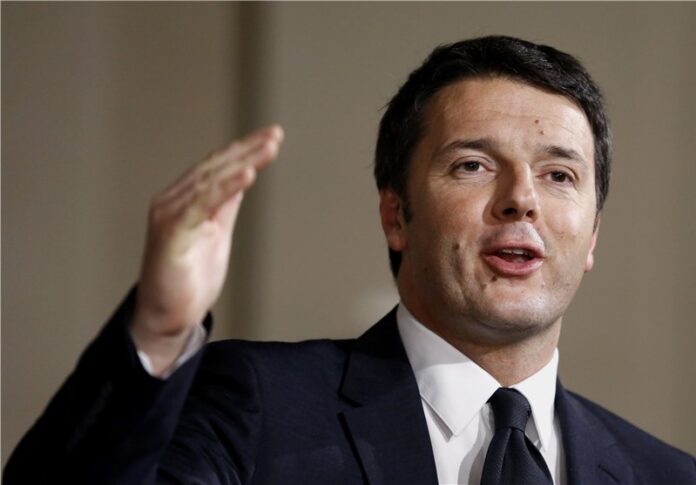
Italian PM Due in Iran in April

“I will be in Teheran in April,” Renzi told journalists at the foreign press club in Rome.

Last month, Iran’s President Rouhani in a historic trip visited Italy in the first state visit to Europe by an Iranian president for 16 years.

Rouhani’s late January European trip was aimed at rebuilding economic and political ties.

Before the international sanctions imposed on Iran over its nuclear program, Italy was the country’s biggest European trading partner, Rouhani said at the time.

The visit came after the sanctions were removed in January under a landmark nuclear deal reached between Tehran and world powers in July 2015.

Some 20 billion dollars of accords covering industries from natural gas to high-speed rail were signed at a ceremony in Rome on January 25 after talks between Renzi and Rouhani.

“Italian PM Matteo Renzi will travel to Iran in the coming months to boost economic ties,” Rouhani had said in a post in his Twitter account on 26 January after meeting Renzi.
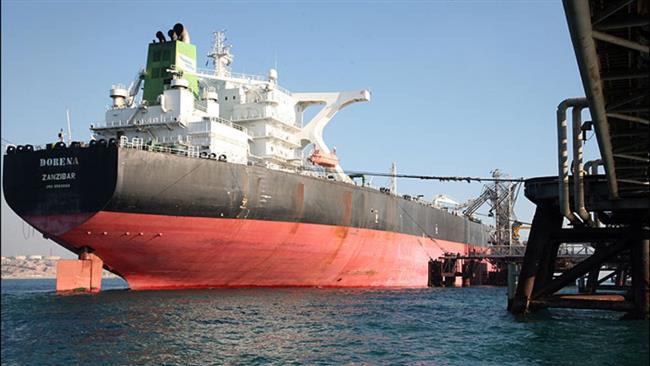
Iran, US will have biggest oil production surges: IEA

The IEA said in a report published on Monday that “while US light, tight oil (LTO) output is falling steeply for now, the market will begin rebalancing in 2017, and by 2021, the United States and Iran are seen leading production gains among non-OPEC and OPEC countries, respectively.”

The annual medium-term oil market report added that a sanctions-free Iran leads OPEC gains; “Iranian oil output rises 1 mb/d to 3.9 mb/d by 2021.” Iran announced last week that the country’s oil production capacity had increased by 400,000 bpd.

US production is seen reaching an all-time high of 14.2 mb/d by the end of the forecast period, but only after falling in the short term.

This is while the International Energy Agency projected a sharp decline in oil production growth rates over the next five years.

The IEA said the global oil supply growth is plunging as an extended period of low prices takes its toll.

The report sees 4.1 million barrels a day (mb/d) being added to global oil supply between 2015 and 2021, down sharply from the total growth of 11 mb/d in the period 2009-2015.

The drop in supply growth comes as upstream investment dries up in response to the current glut that is pressuring prices.

Global oil exploration and production capital expenditures (capex) are expected to fall 17% in 2016, following a 24% cut in 2015 – which would be the first time since 1986 that upstream investment has fallen for two consecutive years.

The report sees global oil demand growing at an average rate of 1.2 mb/d through 2021, crossing the symbolic 100 mb/d mark towards the end of the decade before reaching 101.6 mb/d by 2021.

Indian consumption races ahead as more motorists take to the roads, while Chinese demand growth cools in tandem with the economy. Global oil trade continues its pivot towards Asia.


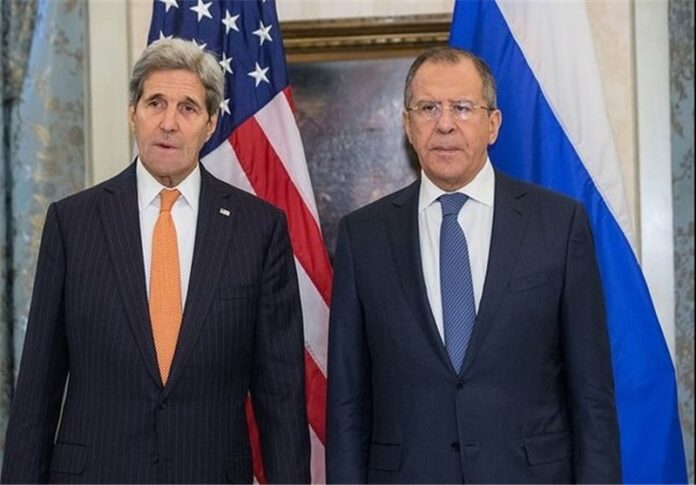
US-Russia Draft Deal Calls for February 27 Truce in Syria

The sources said the truce would start on February 27, 2016 and exclude two major armed groups in Syria, namely Daesh and Nusra Front.

One western source, speaking on condition of anonymity, confirmed a previous report saying that the draft deal calls on warring sides in Syria to agree to the cessation of hostilities by midday on February 26.

Another anonymous source, however, was unable to confirm the accuracy of the reports, Press TV reported.

US Secretary of state John Kerry said on Sunday that he and his Russian counterpart, Sergei Lavrov, had reached a provisional agreement on the “cessation of hostilities” in Syria.

He said the sides were closer to a ceasefire than ever before.

Kerry said Washington and Moscow were “filling out the details” of the agreement. He said the presidents of the US and Russia are expected to talk in the coming days to complete the provisional agreement in principle.

Syrian President Bashar al-Assad had said on Saturday that he was ready for a ceasefire in case the terrorists did not use it to advance their ambitions and that countries backing them stop their support.


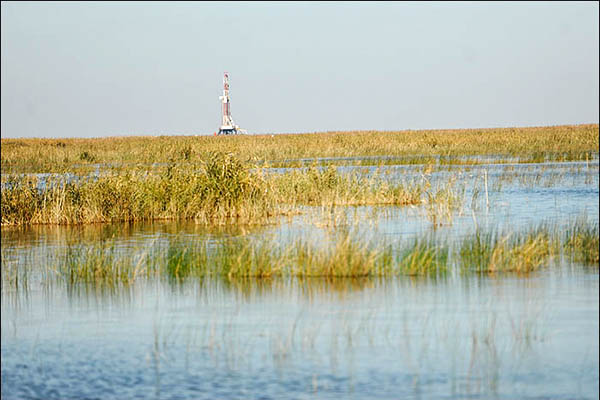
VINCI, Hyundai interested in Iran largest oil field

Mahmoud Marashi, director of South Azadegan project, told IRNA that preliminary talks on those activities have been held but they are not finalized yet.

Also, Japan’s Marubeni Corporation has expressed readiness for being in South Azadegan.

Vinci, corporately styled VINCI, is a French concessions and construction company and Hyundai is a Motor Company.

Asked about claim that INPEX was to be present in Azadegan to develop that oil field, Marashi said Japan’s largest oil and gas exploration and production company has had no related talks with Iran after the two inked agreement on the issue.

Japan stopped following up that agreement due to unjust anti-Iran sanctions years ago. Then Iran started development talks with Russia and India.

The anti-Iran sanctions were lifted on January 16.

South Azadegan oil field, being explored over 15 years ago, is the largest oil field in Iran. It is located in southwest of the country straddling Iran-Iraq border point.

Iran’s Petroleum Ministry welcomes participation of foreign firms in development of the second phase of South Azadegan project because it is a joint oil field with Iraq and the Iraqi side is excavating oil from the field with high speed.

Iran, Russia urge ceasefire in Syria

In a Monday phone conversation, Iran’s Deputy Foreign Minister for Arab and African Affairs Hossein Amir-Abdollahian and Russian official Mikhail Bogdanov emphasized that the crisis in Syria should be settled only through political approaches.

They also stressed the importance of dispatching humanitarian aid to war-stricken Syrian people.

Amir-Abdollahian and Bogdanov said the resumption of peace talks between the Syrian government and opposition groups is a main priority for the Arab state.

Bogdanov, who is the Russian President Vladimir Putin’s representative for the Middle East and Africa, plans to pay a visit to Tehran at the invitation of Amir-Abdollahian to hold more consultation on the latest regional developments.

The Monday phone conversation came two days after Syrian President Bashar al-Assad said he is ready for a ceasefire on condition that it stops Turkey and other countries from sending militants and weapons into the country.

A ceasefire must guarantee that “other countries, especially Turkey, are prevented from sending more terrorists and weapons, or any kind of logistical support,” Assad said in an interview with the Spanish newspaper El Pais.

So far, attempts to negotiate a ceasefire in the war-torn country have failed. Following a marathon meeting held in the German city of Munich on February 12, world powers agreed a cessation of hostilities, which was scheduled to start after a week but never took effect.

Syria has been gripped by a foreign-backed militancy since March 2011. According to a new report by the Syrian Center for Policy Research, the conflict has claimed the lives of over 470,000 people, injured 1.9 million others, and displaced nearly half of the country’s pre-war population of about 23 million.


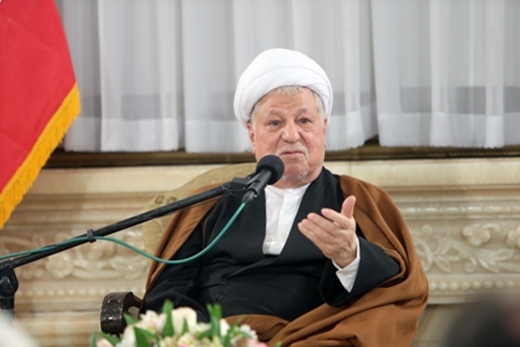
Ayatollah Rafsanjani dismisses charges of British list of candidates

‘Such interpretations regarding British list (of candidates) is an insult to Iranian people’s wisdom,’ said Ayatollah Rafsanjani in a meeting with the reformist and moderate candidates.

He said that hues and cries alledging that enemies decide for Iranian people are dirty claims because such attempts try to insinuate that Britons have influence in entire parts of Iran and can name candidates.

He added that political coalition is customary in all corners of the world.

He also deplored that 500 knowledgeable theologians and seminarians as well as university instructors were disqualified for the elections during celebrations marking 38th anniversary of the Islamic Revolution victory.

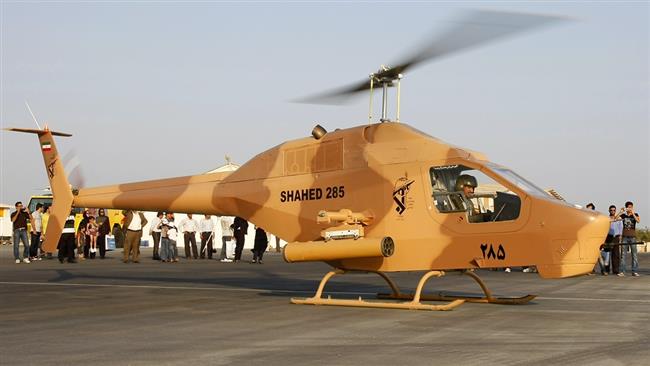
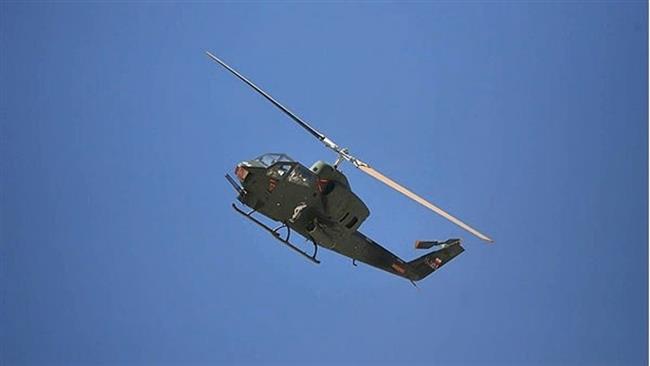
IRGC set to launch rotary-wing segment: Senior commander

The division is currently being set up by IRGC’s Ground Forces upon an order by the Leader of the Islamic Revolution Ayatollah Seyyed Ali Khamenei, the deputy head of IRGC’s Ground Forces was quoted by the Fars News Agency as saying on Monday.


IRGC Force


Abdollah Araghi noted that rotary-wing segments are one of the most important military units in ground forces all over the world.

The Sepah commander added that some of the IRGC’s choppers, which were in use by the Aerospace Force division, are being handed over to the ground forces.


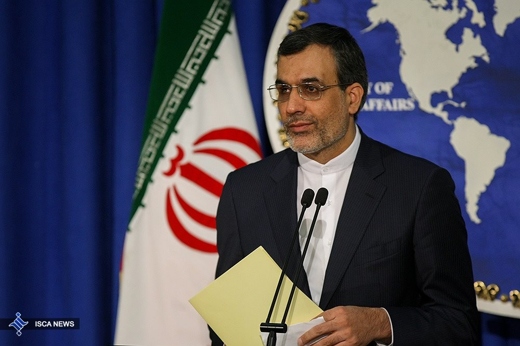
FM spokesman: Time set for Rouhani’s visit to Europe

Speaking in his weekly briefing, Jaberi Ansari said that after the necessary planning and arrangements with the other governments, details of President Rouhani’s second visit to Europe will be announced.

On negotiations to stabilize oil market, the spokesman said that efforts are underway by the OPEC and non-OPEC oil producers and that they have held different talks in Iran and other countries.

He said that Iran supports the producers’ efforts to ensure a fair and reasonable price for crude oil. However, he noted that Iran insists on retaking its quota in the oil market.

The producers which increased their production during sanctions times have to reduce their output to help diplomatic negotiations bear fruit, Jaberi Ansari said.

He said that Azeri President Ilham Aliyev will pay a visit to Tehran to discuss political, economic and energy issues with senior officials of the Islamic Republic of Iran.

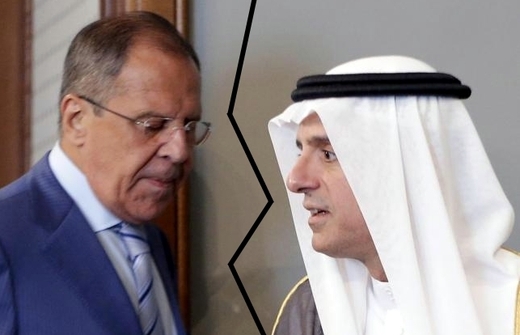
New Revelations by Saudi Whistleblower about Secret Commitment of Saudis to Russia

The well-known Saudi blogger and activist, Mojtahed, who has frequently exposed the darker sides of the ruling Saud family, now says that Riyadh has committed itself to Russia.

According to the website Entekab, the Saudis have promised Russia not to supply anti-aircraft missiles to Takfiri groups which they support in Syria.

Apparently the Saudis gave this promise when Russia threatened to retaliate to the Saudi supply of missiles to Takfiris by supplying the Houthis in Yemen with similar anti-aircraft missiles.

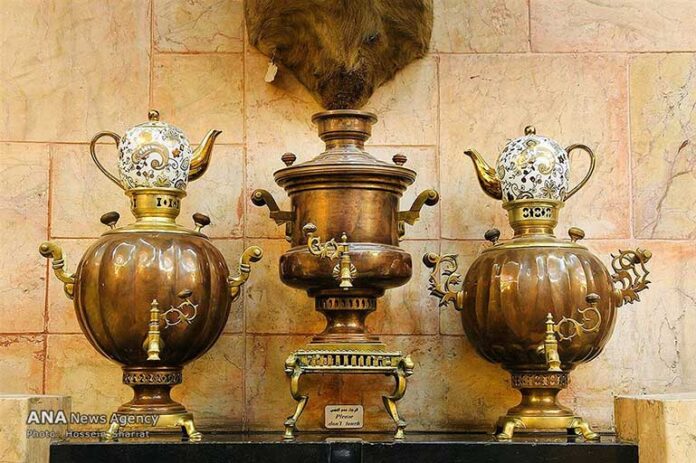
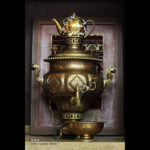
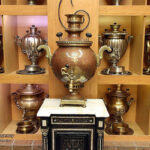
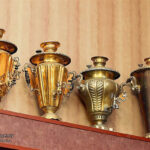
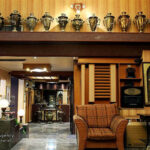
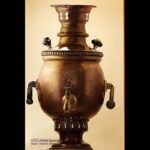
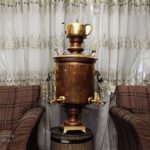
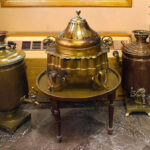
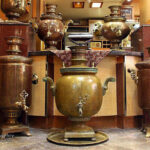
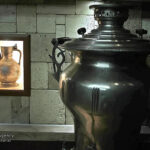
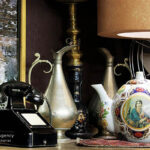
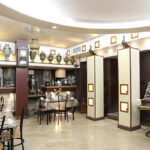
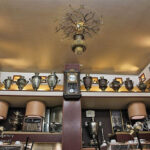
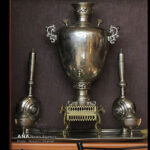
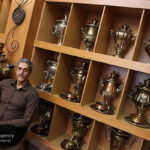
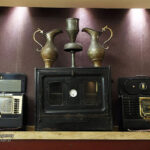
Samovar Museum in Iran

​A samovar (literally “self-boiler”) is a heated metal container traditionally used to heat and boil water in and around Russia, as well as in other Central, South-Eastern and Eastern European countries, Kashmir and in the Middle-East. It is not clear where and when the first samovar was invented, but it is estimated to have occurred between 1738 and 1740 in the Ural region of Russia. It was first industrially produced in the Russian city of Tula.