Tuesday, December 30, 2025
Home Blog Page 4494

Rouhani Says His Gov’t Paying For Mistakes of Previous Administration

Talking to a gathering of people in the southeastern city of Kerman on Tuesday May 10, he said that $2bn of national assets had been made available to the US due to poor policies.

He said the government was now being forced to pay for the [earlier] mistake, maintaining that there was a golden chance to get the money from the US during 2007-8. The question now remains to be answered as to why this didn’t occur, said the President, explaining that the committee assigned to investigate the case will produce its report soon.

The President said that Iran is going to take the case to the International Court of Justice (ICJ) to restore the rights of the Iranian nation through legal, banking and political channels, going on to say that the government will spare no effort in reclaiming the seized assets.

Referring to criticisms about the outcome of the Joint Comprehensive Plan of Action (JCPOA), he said that the deal gave Iran a free hand to carry out new activities. In the four months since the JCPOA implementation, the President stressed, a total value of $3.4bn of direct investment took place, while permissions have already been issued for another $3.5bn.

He said the nation has managed to get through a sensitive juncture in its history thanks to their unity and also the wise guidance of the Supreme Leader.

The President arrived in Kerman on Tuesday to pay his 27th visit to the country’s provinces.

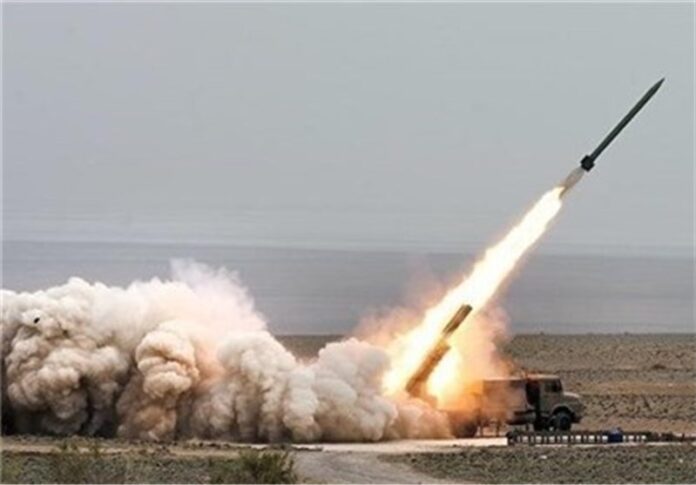
Iran’s Air Defence Forces Equipped with S-300 System: DM

Khatam al-Anbia Air Defence Base has received the strategic S-300 air defence missile system, Brigadier General Hossein Dehqan said on the sidelines of a visit to an exhibition of the achievements of the Iranian Army’s air defence base.

Highlighting the country’s major strides toward self-sufficiency in the area of aerial defence, he added that Iran has also developed its domestically-built Bavar-373 air defence system, and will launch its mass production this year.

He said the Iranian system enjoys specifications and functions similar to those of S-300, and that it can simultaneously engage multiple aircraft, ballistic missiles, and drones.

Back in April, Iran displayed part of the Russian-made S-300 air defence missile system in a military parade in Tehran, held to mark the National Army Day.

The gear unveiled in the ceremony included 2 radar systems of S-300, its carrier and command vehicles as well as the crane for lifting its missiles.

Elsewhere, Dehqan said that Iran had made great achievements in its defence sector and attained self-sufficiency in producing essential military equipment and systems, including those for tracking, detection, interception and surveillance.

Iranian military experts and technicians have made great headway in recent years in manufacturing a broad range of indigenous equipment, making the armed forces self-sufficient in the armaments sphere.

Iran has already made it clear that its military might poses no threat to regional countries, saying that the Islamic Republic’s defence doctrine is entirely based on deterrence.

103 MPs Petition Rouhani to Withdraw from JCPOA If US Shows More Enmity

The petition, signed by 103 MPs, asks for “Reconsidering voluntary measures and resuming all activities within the NPT” if the US does not change tack on Iran.

This note was delivered and read by Ibrahim Karkhaneh, a member of the presiding parliamentary board, and warns Rouhani to give JCPOA implementation a second thought if the US “Fails to return Iran’s stolen assets, continues to show malice and a lack of commitment in removing sanctions and creating a toxic atmosphere in JCPOA implementation.”

After the signing of the JCPOA, formally known as the Joint Comprehensive Plan of Action, in July 2015, Iranian officials have objected to the US obstructing foreign partners from doing business with Iran.

Although the nuclear deal ended economic sanctions against Iran, including banking limitations, many foreign banks have shown a reluctance to resume ties with Tehran, fearing falling foul of US fines.

In another recent development in the already turbulent ties between Tehran and Washington, the US Supreme Court ruled that almost $2bn in frozen Iranian assets must be turned over to American families of people killed in the 1983 bombing of a US Marine Corps barracks in Beirut, and other attacks allegedly blamed on Iran.

Iran Announces Major Jump in Asian Oil Exports

Imports to Iran’s top four buyers – China, India, Japan and South Korea – came to 1.56m bpd in March, up 50% from a year ago, government and tanker-tracking data showed.

India’s imports last month totalled 506,000 bpd, the highest in five years, the data showed.

South Korea’s imports in March experienced a 95% raise in comparison with the previous year, reaching 264,000 bpd. Imports to China and Japan fell from a year ago.

In mid-January, a series of economic sanctions that had been imposed on Iran for multiple years were removed after a deal between the country and the P5+1 – the five permanent members of the Security Council plus Germany – was implemented.

The sanctions barred foreign investment in the Iranian oil industry and also implemented a ceiling of 1m bpd on the country’s oil exports.

Kayhan Editorial: Iran Should Close Straits of Hormuz in Response to US Asset Seizure

Here is IFP’s translation of the editorial published on Sunday.


Why does the United States violate all internationally-recognized legal norms and regulations – which must be observed by all UN member states, including the US – in snaffling $2bn of Iran’s assets so easily? Based on reliable reports, Washington already has made plans to confiscate another $50bn of Iran’s frozen assets.

Is filing a lawsuit in The Hague or asking for the help of UN and other international organizations the only ways to counter this thievery? Isn’t this the very same ineffective way in which the Iranian administration has been acting? The government does not seem willing to change the method, but still expects it to work. The following article is a response to the strategic questions.

1- It is an unwritten, yet accepted, rule in politics that, “When the enemy talks too much, one can conclude that its options are limited.” In other words, when the enemy sees a huge gap between its “actual power” and the power it “needs” to impose its demands on the other side, it resorts to boasting and exaggerating its capabilities so as to intimidate the other party, trying to make it surrender and stop resisting.

Daniel Lerner, in his famous book The Passing of Traditional Society, notes that psychological operations should be designed and implemented in a way which changes the opponent’s perception of events. These operations should spread the idea to the opposition’s think tanks that resistance is futile and expensive, in order that they decrease their demands. These demands, having been minimized, are then only met by accepting the original offer from the first side [thus gaining an advantage in negotiations].

2- With sadness, we should make it known that the US and its allies have received signals of weakness and desperation from the Iranian administration over the past three years. They are now confident – of course, unrealistically – that Iran has surrendered under the sanctions, and has backed off from some of its revolutionary principles and teachings. As a single example, notice the way in which a French radio station interpreted the way President Hassan Rouhani’s government behaved on October 11, 2013, a few months after he was sworn in:

The West’s evaluation of the current situation in Rouhani’s government is to see it as an interaction with an indebted and enthusiastic salesman, who feels obliged to sell national privileges. Based on this, the purchaser’s patience will make it more difficult for the salesman, reducing the sale price. An offer by Rouhani to set a three-month deadline for a lasting deal with the West indicates the emergency in which the Iranian President finds himself, thus appearing in Geneva as the salesman.


The US and its allies perceive the President to be an “indebted salesman who is obliged to sell his national interests”. So what reaction do you think they would show towards Islamic Iran? An overview – even a brief one – of what happened during the past three years in the course of Iran’s nuclear negotiations with the Group 5+1 [Russia, China, the US, Britain, France, and Germany] and the events that took place after the deal’s implementation clearly indicates that the US and its allies have been designing and pursuing “nuclear deal inequality,” based on the abovementioned interpretation.

3- The US then must conclude, based on repeated remarks by the President and some of his partners, that Iran’s back has been broken under sanctions, and that even Iranian drinking water hinges on the nuclear deal and the termination of sanctions. They also considered our President as a “desperate and hopeless debtor” who is in a hurry to “sell his country’s national interests” to get out of trouble. Considering these, one can guess that they would then make two hostile, parallel moves in their fight against the Islamic Republic of Iran, who they see as a real, powerful enemy.

Firstly, the US, which was sure about the effectiveness of sanctions and confident that Rouhani’s government considered the termination of sanctions as the only solution and path to economic growth, reached the conclusion that it should never make any change in the system of sanctions. This was what Washington had already done: It had not only refused to lift the sanctions, but it also added fresh sanctions to the previous ones.

Secondly, having received the signal of desperation from the government, or “the indebted salesman who feels obliged to sell national interests”, they would reduce the price as much as possible; something that they have already done. In return, they would give certain promises “on credit”, and then break these promises one by one. Isn’t this true?

This is not over, and it will not end here. Not only has the US failed to keep its promises, but also it has taken other aggressive moves against the Islamic Republic. The recent seizure of nearly $2bn of Iran’s frozen assets is one of them, and it definitely will not be the last one.

4- Should the government continue its current policies? Wouldn’t they lead to further US damage to the Islamic Republic of Iran? A thoughtful mind or secret and classified information is not needed to answer this question. It can be clearly seen that the US will spare no effort to harm Iran and its people. We have learned that we cannot trust any of their promises.

Therefore, only two paths remain, and we cannot think of a third one. First, we could do nothing, and just accept the robbery of our country’s assets, which will continue up to $50bn. On this path, we should expect more hostile moves from America, as it has repeatedly and publicly announced that it pursues a strategic goal of the overthrow of the Islamic Republic. The second way is to use the leverage we have, and seriously endanger their vital interests in a bid to counter their bullying. Imam Ali is quoted as saying that one should respond to the stones the opponent has thrown in the same way.

5- The Straits of Hormuz are the most effective way, indeed the only one, to progress in this regard. Hormuz is the world’s second-busiest strait in terms of daily traffic. The tankers passing through there, out of the Persian Gulf, carry an average of 18 million barrels of crude oil per day. This is said to represent 42% of the world’s seaborne oil shipments. According to the Convention on the Territorial Sea and the Contiguous Zone (Geneva, 1958) and the United Nations Convention on the Law of the Sea (Jamaica, 1982), Iran has the right to shut the Strait of Hormuz to all oil tankers and even merchant ships and ones carrying weapons if it feels its national interests are in danger. Under such circumstances, there is no reason that hostile countries would be allowed to pass out of a strait located in Iran’s territorial waters.

The fourth paragraph of Article 194 in the Convention on the Territorial Sea and the Contiguous Zone stresses that “Passage is innocent so long as it is not prejudicial to the peace, good order or security of the coastal State.”

Also the first paragraph of Article 16 in the same convention states that “The coastal State [in this case, Iran] may take the necessary steps in its territorial sea to prevent passage which is not innocent.”

According to Article 16 of the Geneva Convention and Article 37 of the Jamaica Convention, “The coastal State may, without discrimination amongst foreign ships, suspend temporarily in specified areas of its territorial sea the innocent passage of foreign ships if such suspension is essential for the protection of its security. Such suspension shall take effect only after having been duly published.”

As mentioned above, it is Iran’s basic and legal right to close the Strait of Hormuz to such countries as the US and certain European countries, and we should not hesitate even for a moment in using our legal rights to prevent the plunder of our country’s assets and reclaim the $2bn stolen from us. We should be confident that the US can do nothing wrong… Otherwise, in addition to the concessions we have given in the inequality of the JCPOA (nuclear deal) […], we should expect the robbery of all our frozen assets and tens of other hostile moves by the US against our nation.

Iranian officials should be confident that the entire nation will support any move against the banditry and crimes committed by the US. Therefore, we shouldn’t let the dogs be unleashed while the stones are tied up! [an untranslatable play on words, meaning that you can only have control of a situation via the existence of a threat]

Photography: Another of Abbas Kiarostami’s Skills

As reported by ISNA and translated by IFP, Kiarostami has been in the news recently due to his illness and admission to hospital for several operations. This news drew a lot of reaction due to his place in Iran and world cinema. Kiarostami, winner of Cannes’s Palme d’Or, is known to the world for his specific style of cinema; however, he has been active in other fields as well for years, one of which is photography.

His passion for photography and photos so great that in 1991, at the opening of his black and white photos of snowy landscapes, he said, “It’s mostly my photography that influences my cinema and less my cinema influencing my photos.”

Abbas Kiarostami was born in 1940 and holds a BA degree in painting from the University of Tehran, College of Fine Arts. This is perhaps why his photos have painting-like imagery, and the landscapes draw the audience in like a canvas.

He has held several exhibitions of his photos which attracted a huge crowd of art and photography enthusiasts to the galleries.

Abbas Kiarostam-2

He said about his photos, “I took some of my photos while I was looking for locations for my movies. Even during the shooting I would spend one or two days on photography. Despite all that, when I make movies I’m a filmmaker and when I take photos I’m a photographer.”

His photo exhibitions are not limited to Iran. He has shown them in other countries as well. The Louvre Museum hosted an exhibition of Kiarostami’s photographs called “The 2009 Paris Photos” from 19-22November 2009. There was also an exhibition of his photographs at the Imperial City Art Museum in Beijing in 2007. In the same year, Kiarostami’s two photo series of Roads and Snow White went to Turkey for a 42-day exhibition.

The record for the highest-priced photograph from the Middle East belongs to Kiarostami. He has held this record since 2008 by setting a record of over $100,000 in Christie’s making him the most expensive photographer in the region.

Alireza Samiazar, art history lecture and the former President of Tehran Museum of Contemporary Art, said, “For more than three decades, Kiarostami has been presenting his photography.”

Abbas Kiarostami

About the differences between Kiarostami’s photos and movies, he said, “The main subjects of Kiarostami’s movies are life and the complexities of human relations. There’s the theme of life in all the movies by him. What can be seen more in his photographs, however, is his focus on nature. He portrays elements of nature like rain, trees and snow. There are very few of his photographs in which you can see a person. Even in his series of Doors, he’s portraying things made by humans but we can’t see any humans there.”

Larijani Criticizes West for Sending Arms to Terrorists in Syria

Speaking in an open session of the parliament on Tuesday, Larijani pointed to the recent massive attacks carried out by terrorist groups on civilians in Aleppo despite a truce in Syria, saying that terrorists had committed heinous crimes during the ceasefire.

It seems that initiating a ceasefire and organizing arms shipments to Syria, including a recent arms cargo ship sent from Europe, was a plot hatched by the West and its regional allies to make further gains in ongoing UN-brokered peace talks, he claimed.

As in the past, the arms sent to terrorists in Syria will be eventually used against Western countries, the Parliament Speaker cautioned, referring to recent terrorist attacks in the European capitals of Paris and Brussels.

Syria has been gripped by civil war since March 2011 with various terrorist groups, including Daesh [ISIS], currently controlling parts of it.

According to a new report by the Syrian Center for Policy Research, the conflict has claimed the lives of over 470,000 people, injured 1.9 million others, and displaced nearly half of the country’s pre-war population of about 23 million within or beyond its borders.

Iran’s Parliament Speaker Urges Foreign Ministry to Sue US in The Hague

Addressing lawmakers in a parliamentary session on Tuesday, Larijani said the recent move by the US to seize nearly $2bn of Iran’s frozen property was against all international rules.

He further described it as an impudent move, similar to highway robbery, and expressed surprise over a bill passed by US Congressmen in this regard.

“More surprisingly, while such a ruling was not even feasible under the USA’s domestic regulations, Congress approved a bill on this particular case,” he added.

This is American democracy’s style of legislation, in which legislation is used for cruel regulations, Larijani went on to say.

“The USA’s impudence should not be left unanswered. The Foreign Ministry should take the American rulers’ scandal to the Hague-based International Court of Arbitration and strongly defend the rights of the Iranian nation.”

AEOI Chief: Iran in Talks with Russia on Exports of Heavy Water

“Negotiations in this regard are underway and (the results) will be announced in due time,” Salehi said on Tuesday May 10.

Also asked about the latest developments in heavy water sales to the US, he said, “The heavy water supply was due to be delivered to the US, but we exercised caution after the US blocked $2bn of Iran’s assets (referring to a recent court ruling by the US Supreme Court which authorized the transfer of $2bn of Tehran’s frozen assets to the families of the victims of a 1983 bombing in Beirut).”

“As long as this issue is not resolved, we will negotiate over the ways of payment (for the heavy water supply to the US) and other things in a bid to gain confidence,” Salehi said.

His remarks came after Iranian Foreign Ministry Spokesman Hossein Jaberi Ansari announced last week that Tehran will dispatch its cargo of heavy water to the US only when Washington makes the payment.

“The United States showed an illogical and illegal attitude towards the seizure of Iran Central Bank’s assets under the recent US court ruling and it ruined the Islamic Republic’s trust in the US actions,” Jaberi Ansari told reporters in Tehran.

Noting that the AEOI is responsible for the heavy water contract with the US, he said, “All necessary executive measures have been planned by the Organization to ensure that it receives its money, and the AEOI will pursue the case in a way that the agreement and contract is implemented properly.”

Roman Façades and Fake Identities in Tehran

One architect believes that neoclassical, Roman-style architecture has taken over urban spaces and places, giving them fake characteristics. Another says, “The classic façades taken from ancient Rome and Greece are poor and vulgar imitations which have become popular in Tehran. Even the countries that popularized this style originally have stopped using such facades in their architecture now.”


The following is an ISNA interview about the prevalence of Roman architecture in Tehran, talking to architects Kamarn Naderafshari and Giti Etemad, and translated by IFP.


Kamran Naderafshari: “Those types of architecture with specific cultural references, which refer to a certain historical period, raise the question of what that history is and why this reference has been used. Classical architecture has rules, none of which are obeyed in these buildings, neither in totality nor in detail. Therefore these buildings can be confusing for those interested in history.”

“This type of architecture is mostly common in countries which have been colonized by western countries. Iran, however, has never been colonized.”

“Those who are the “children of their own time” criticize and reflect on their own specific period. Rumi, for instance, criticized his own era and created a new style. Naturally, this was far from being imitation. If we are referring to a certain culture, it should certainly be relevant to our own culture. This doesn’t necessarily mean sticking historical traditions. We should work on our contemporary culture as well. Culture is not a power supply, but a legacy that’s been passed on, hand-to-hand, and we must pass it on to future generations.”


Giti Etemad: “The first reason for the prevalence of this style of architecture is the emergence of an upwardly mobile section of society, being capitalists, owners or employers. The second complementary cause is the existence of builders with no commitment and awareness towards their land, culture, urban texture and architecture.”

“We realize how commercial and identity-less this new architecture is when we compare them with Iran’s traditional architecture, or with foreigners who created masterpieces based on Iranian styles.”

She highlighted the fact that this faux-Roman architecture causes other damage to the city, more than just its undesirable appearance. “Suitable materials for Tehran, based on its climate and geography, include bricks and concrete. Knowing that Tehran is in a seismic zone, using heavy decorative materials (thick pillars, statues, and stone walls) could cause a tragedy in an earthquake.”

“This doesn’t mean we should tie the hands of a creative architect. One can also create masterpieces using bricks and concrete.”

She believes that this style of architecture shows a deep class division, “In Iran’s traditional architecture, this class division would usually be found inside the houses and in their size, but now it is mainly seen in the facades of the buildings.”

She added, “The facade of a building is an influential element on the surrounding urban space, and this space is the property of all the citizens. This is why urban managers and the City Council of Tehran (with an architect as its chairman) must pay more attention to this matter.”