Thursday, December 25, 2025
Home Blog Page 4478

Street Performances Herald the Persian New Year

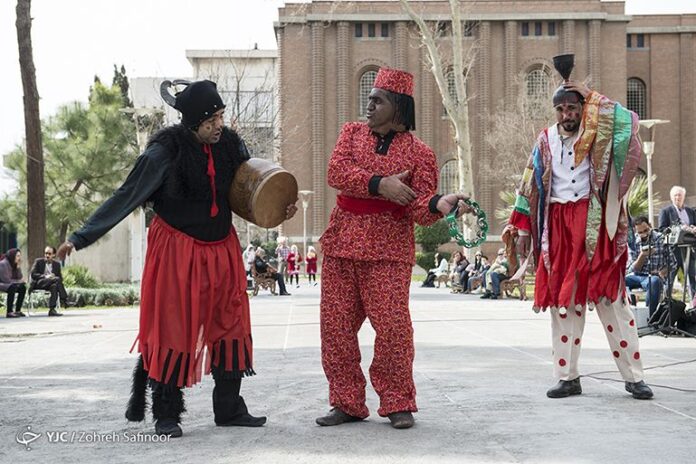
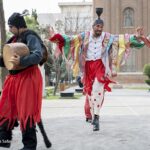
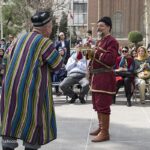
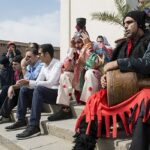
The Persian New Year, or Nowrouz, is celebrated on the Spring Equinox, and heralds a period of new life and growth. In the weeks leading up to it, a traditional character called Haji Firouz makes his appearance in the streets. Dressed in red, with a black face, and playing a drum, he spreads the news that winter is ending and spring is coming.

On the final Wednesday of the year, known as Chaharshanbe Suri, ceremonial fires are lit and fireworks are let off all over the country.

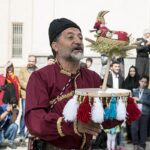
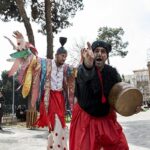
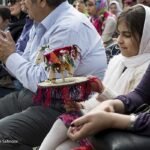
Here are some photos of Haji Firouz street performances capturing the spirit and tradition of both celebrations.

Text by IFP, photos from YJC:

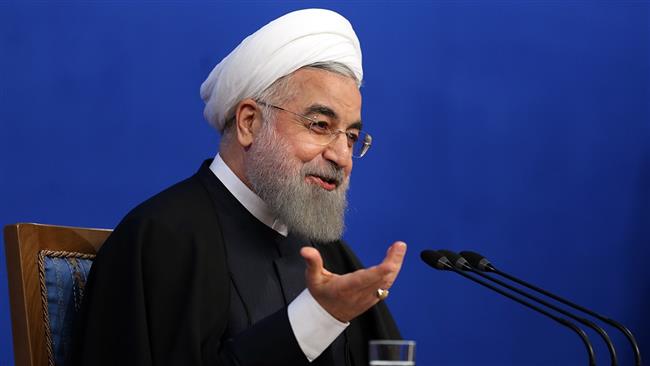
Iranians again amazed world in recent elections: President Rouhani

President Rouhani made the remark in the capital, Tehran, on Sunday, addressing Iranian and foreign reporters in a presser.

On the election day, the Iranians once again “showed their trust in their establishment, their leadership, and their administration and went to the polls and once again amazed the world,” President Rouhani said.

Iran held its 10th parliamentary and 5th Assembly of Experts elections on February 26 with an overall turnout of 62 percent nationwide. At least 33 million out of the 55 million eligible voters took part in the polls.

Rouhani hailed the participation as “historic glory.”

The government made efforts to hold “legal, free and fair” elections, and did its utmost to “return hope to the society,” he noted.

He said whatever action was taken concerning the elections, including the rejection of some of the hopefuls’ eligibility to run in the polls, “was within framework of the law and this means political maturity.”

“Among all the factions, parties, and groupings, it was mostly moderates who were chosen and this means that our people have opted for moderation,” the Iranian president said of the results of the elections.

After the introductory remarks by President Rouhani, the floor was turned to the reporters.

Sanctions removal and oil

One reporter asked how the country was availing itself of the opportunities provided following the removal in January of the nuclear-related sanctions against the country.

President Rouhani said the Islamic Republic has increased its oil output to 1.4 million barrels per day following the removal of the bans, adding, “We’ll be selling two billion barrels of oil per day next year.”

A little bit of lingering fear

Asked whether the other side to the July 2015 deal that enabled the lifting of the sanctions has been completely fulfilling its commitments, the Iranian president acknowledged that “some private institutions, some banks, [for instance] a bank that has already been fined for working with Iran, they are still a little bit afraid” of renewing business with Iran.

He, however, said this does not mean that the agreement has not led to renewed international banking and insurance cooperation with Iran.

The agreement, he said, has led to the cost of the foreign exchange flow needed for production and export to decrease by 10 percent and the cost of maritime transportation to drop by 25 percent.

On Yemen

Amid the West’s criticism of Iran’s provision of humanitarian aid for Yemen and its silence on Saudi Arabia’s unabated bombing of the impoverished nation, Rouhani said, “Iran’s altruistic assistance to Yemen is to continue and will not be disrupted… The Saudi government unfortunately continues its ruthless bombing, and great powers do not pay attention to this issue.”

Saudi Arabia launched its military aggression against Yemen in late March last year in a bid to bring fugitive former Yemeni President Abd Rabbuh Mansur Hadi, a Riyadh ally, back to power and undermine Yemen’s Houthi Ansarullah movement.

GCC’s terrorist label for Hezbollah ordered by Israel: Iran cmdr.

On Wednesday, the six-nation [Persian] Gulf Cooperation Council issued a statement labeling Hezbollah a terrorist organization. The bloc, comprising Saudi Arabia, Qatar, the United Arab Emirates, Oman, Bahrain and Kuwait, claimed that Hezbollah’s moves in the region are against international values and moral and human principles.

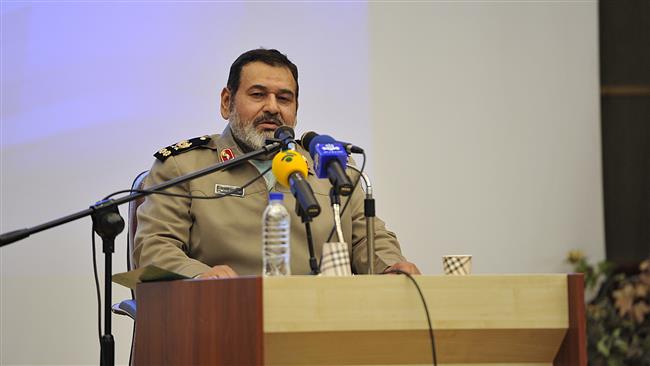
Iranian Armed Forces Chief of Staff Major General Hassan Firouzabadi said on Sunday that the Arab bloc’s blacklisting Hezbollah as a terrorist body was a strategic mistake and a very hasty and impulsive measure which runs counter to the interests of Muslim nations.

“Hezbollah is the son of the Lebanese nation,” he said, adding that the movement has done a lot for the Arab country.

The Iranian commander added that the GCC’s move was in line with Saudi Arabia’s proxy war to prepare the ground for the US and Zionists to achieve their ominous objectives in the region.

He, however, emphasized that despite efforts by Riyadh and its regional allies, the move would fail to change Hezbollah’s role in establishing power balance in the region.

The GCC decision to blacklist Hezbollah has been met with opposition and criticism.

Algeria refused to classify the movement as a terrorist organization. Palestinian resistance movement, Islamic Jihad, also praised Hezbollah as a resistance movement, which has a history in the struggle against the Zionist entity as well as in supporting the Palestinian cause. Iran, Syria and Yemen’s Houthi Ansarullah movement have also slammed the move by the GCC.

Persian Celebrations Not Derived From Any Specific Religion

Studying Persian celebrations and their placement in the calendar allows us to reveal their common characteristics. Almost all of these celebrations are linked to natural, cosmic and environmental phenomena, and that is why their timings have mostly been adapted to the natural calendar.

Another characteristic of Persian festivals and rituals is that they are always accompanied by joy and celebrations – tears and sadness have no place there. As an example, the Manichean festival of Bema is celebrated with joy and happiness even though it falls on the same date as Mani’s death.

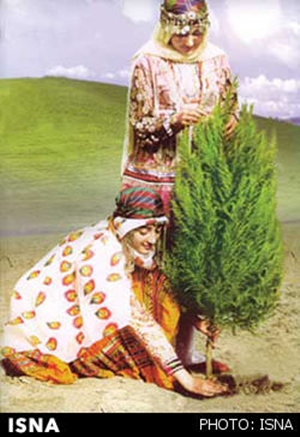
PersiansAs reported by ISNA Cultural Centre, Mohammad Hoseein Mosavi (in his book of Celebrations of Ancient Persia) talks about respecting and honouring all of nature’s manifestations as a fourth characteristic, in addition to the three already mentioned above. There is no sign of violence or maltreatment of plants or animals in any Persian rituals – in fact, there are several which are specifically performed with the goal of looking after and honouring the environment.
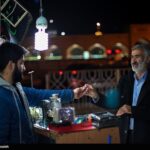
A fifth characteristic is the unbreakable link between Persian celebrations and the concept of fire. Even if there is no direct relation between a celebration and fire, there will still be a small fire lit to give it more formality and venerability.

The sixth general characteristic is that they are not usually linked to the anniversary of someone’s birth or death. People’s birthdays were not of great importance for Persians, and they are rarely recorded. This can clearly be seen in ancient books like the Shahnameh. It was accepted that every person will be born and will die on certain days, but the basis for festivals was usually the accomplishment of some great achievement, rather than noting a birth or death. There are several good examples of this in the Shahnameh.

A final characteristic can be seen in the breadth of these celebrations. Persians celebrated their national festivals and rituals in a communal way, demonstrating exceptional solidarity and peaceful co-existence. They did not let ethnic, linguistic or religious differences interrupt this togetherness. Today, Persian celebrations belong to all Iranians, and they all play a role in safeguarding and honoring these traditions.

Creative Artworks Made from Corn Leaves

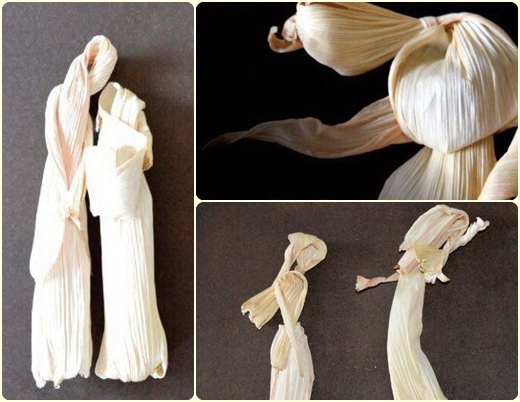
Talking about her work with the ISNA news agency, artist Maryam Shaheedi said that these figures resemble human beings, and are all made from the leaves of the corn plant.

“I didn’t choose this material for my work,” she explained, “Rather, the opposite is true – this material chose to become an artwork.”

“A few years ago I started to work with corn leaves to create something resembling the human form. Later, with the encouragement of those around me, I took up the job more seriously, and the result is this exhibition,” said Ms. Shaheedi.

According to the artist, dried corn leaves are quite hard and durable art materials.


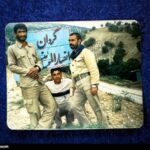
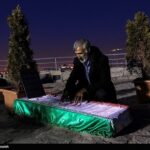
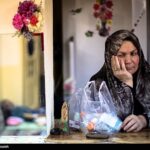
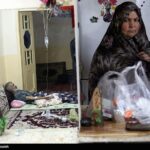
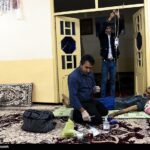
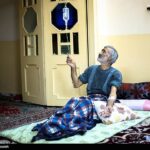
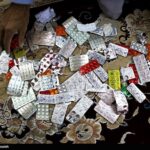
Sleepless War Veteran

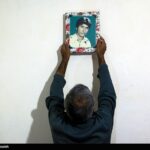
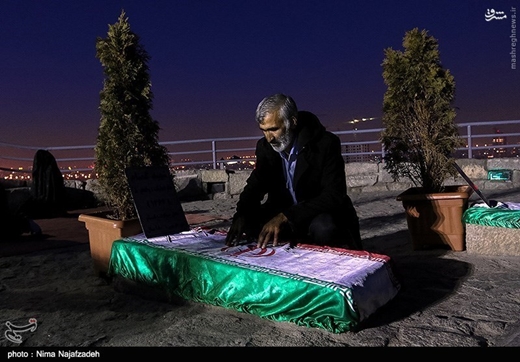
According to Mashregh News, he has been subject to various treatments, none of which have had any no effect so far. Rashidi has not slept, even for a short time, since he was a 17-year old volunteer in the war which Iraqi dictator Saddam Hussein launched against Iran soon after the Islamic Revolution.

In his war against Iran, Saddam Hussein was supported by the US and many Arab states (with a few exceptions such as Syria). In Iraqi efforts to claim Iranian territory, extensive material damage and human suffering was inflicted upon both nations in a bloody eight-year war.


Iran’s FM to address OIC summit on Israel’s crimes

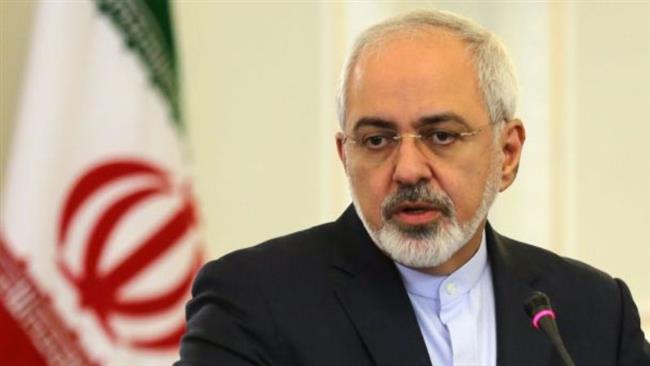
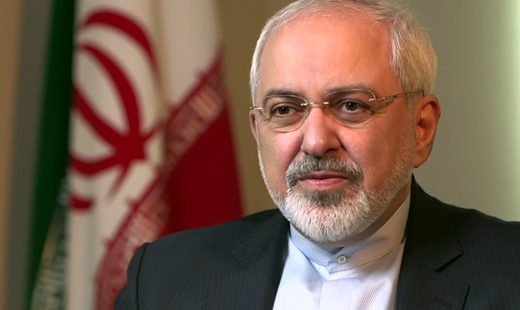
“Based on basic principles of Iran’s foreign policy on Palestine, the Islamic Republic of Iran will declare its position in this extraordinary meeting [of the OIC] on measures taken by the Zionist regime and the threats it poses to the Muslim world,” Zarif told reporters upon arrival in Indonesia’s capital of Jakarta on Sunday.

Zarif praised the Indonesian government for hosting the “important” OIC meeting in a proper time, saying that he would hold talks with the country’s officials on ways to bolster mutual relations.

Heading a high-ranking politico-economic delegation, Zarif arrived in Jakarta Sunday on the first leg of an official visit to six Southeastern Asian and Pacific countries.

The 5th Extraordinary Islamic Summit on Palestine and Al-Quds Al-Shareef under the theme of “United for Just Solution” will be held in Jakarta on March 6 and 7, according to the OIC website.

Indonesia will host the two-day extraordinary OIC summit upon the request of Palestinian President Mahmoud Abbas in a bid to consolidate the organization’s efforts to support the Palestinian people in their struggle for their rights and prepare the ground for the resumption of the peace process within a specific agenda and timetable.

The occupied Palestinian territories have been the scene of heightened tensions triggered by Israel’s imposition in August 2015 of restrictions on the entry of Palestinian worshipers into the al-Aqsa Mosque compound in East al-Quds.

More than 190 Palestinians, including children and women, have lost their lives at the hands of Israeli forces since the beginning of last October.

After his visit to Indonesia, Zarif will head for Singapore and Brunei for talks.

On the fourth leg of his tour, the Iranian minister will set off for Thailand to participate in the 14th Asia Cooperation Dialogue (ACD) Ministerial Meeting.

Zarif will then travel to New Zealand and Australia to discuss ways to improve relations in various fields before wrapping up his six-nation tour.

Iran’s FM Starts 11-Day Tour of Southeastern Asia

Zarif

Foreign Minister Zarif is visiting Indonesia to attend an extraordinary meeting of Organization of Islamic Cooperation (OIC) due to be held in Jakarta on the issue of Palestine and the Holy Quds, Iran’s Ambassador to Jakarta Valiollah Mohammadi told Tasnim on Saturday.

Zarif will also take part in the ministerial meeting on Sunday noon, and the Leaders’ Summit on Monday on behalf of Iranian President Hassan Rouhani, the Iranian envoy added.

The Iranian foreign minister will also hold separate meetings with his Indonesian counterpart Retno Marsudi and President Joko Widodo, he said at the time.

Ahead of the meetings, the Iranian envoy expressed the hope that the value of trade exchanges between the two countries would again rise to $2 billion after removal of anti-Iran sanctions.

“The political ties and mutual cooperation between Iran and Indonesia are very good, and the economic relations have been recently reinforced with the implementation of JCPOA (the nuclear deal between Tehran and world powers),” Mohammadi said.

“It is hoped that we will witness the results and benefits of the (recent) developments in the two countries’ ties soon,” he added, expressing the hope that with the removal of anti-Iran sanctions, the value of economic exchanges between Tehran and Jakarta, which stood at $2 billion in 2011 but dropped to $300 million last year, would rise to $2 billion again.

The ongoing visit by Iranian Foreign Minister Zarif is expected to boost bilateral ties, Iran’s ambassador noted.

Zarif’s 11-day tour of southeastern Asia and Oceania is scheduled to go on with official visits to five other countries including Singapore, Brunei, Thailand, New Zealand, and Australia.

U.S. investors late for Iran deals worth billions, Greylock says

“It seems like the U.S. might miss this opportunity because the Europeans are going to move regardless,” Hans Humes, Greylock’s chief executive officer and chairman who traveled to Iran in June, said in an interview in Mexico City, Bloomberg reported. “It almost doesn’t matter what the U.S. does because once it starts opening up to Europe I think the economy in Iran will start to move.”
Foreign investors and multinationals are lining up to return to Iran after last year’s historic nuclear deal led to the lifting of international sanctions in January. Until then, firms were prevented from transferring money in and out of the Islamic Republic, whose $370 billion economy is projected to grow 5.8 percent this year.
While European companies like German automaker Daimler AG and France’s Airbus Group SE have already signed deals, American citizens and companies remain limited because the U.S. has kept some of its own restrictions.
Changing the Treasury Department’s Iran policy toward processing payments would “open things up,” said Humes. His New York-based hedge fund, which oversees about $1 billion, focuses on distressed and high-yielding emerging-market debt.
The U.S. severed ties with Iran a year after the 1979 Islamic revolution that toppled American ally Shah Mohammad Reza Pahlavi and led to the U.S. embassy hostage crisis in Tehran. President Barack Obama initiated a detente in 2013, eventually sealing an international accord with Iran, despite Republican lawmakers’ opposition. Republican presidential candidates Marco Rubio, Donald Trump and Ted Cruz have all pledged to either nullify or renegotiate the terms of the deal.
Humes sees the biggest opportunities in Iran’s energy, infrastructure and corporate services. He said that the investment opportunities may be worth “multiple tens of billions” of dollars in the next five to 10 years, assuming political stability.
Europe is likely to get in first with banks there hopefully starting to ramp up transactions with Iranian lenders in the next year, Humes said. Meanwhile, the entrance of U.S. institutional investors still likely two to three years away, he added.
“Everybody sees the opportunity in Iran,” he said. “It’s going to happen and the trigger for that will just be the payment system opening up.”

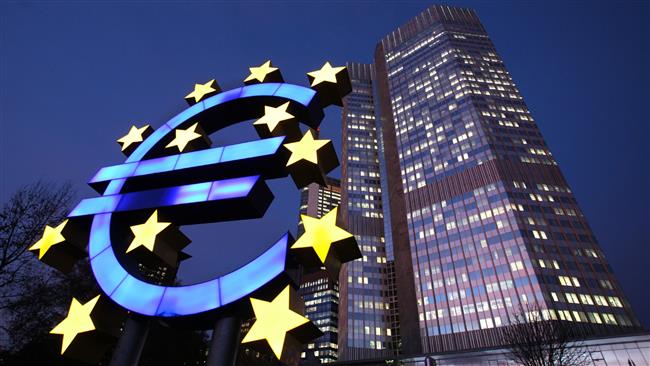
Iran warns cautious European banks

Deputy Foreign Minister Majid Takhtravanchi said European banks are overcautious in forging renewed connections with Iran, warning that they “will fall behind under the new situation.”

“Any conservatism by European banks will mean the loss of opportunities and conservatism is the biggest enemy in plundering opportunities,” president of Iran’s foreign investment organization Mohammad Khazaei said.

The lifting of sanctions in January has triggered a wave of interest among world governments and corporations for trade with Iran and some of them have already clinched agreements in the upwards of $50 billion.   

European banks, however, have adopted a wait-and-see approach, fearing they could face US legal action if they move to reestablish links with Iran.

Washington has agreed to lift “secondary sanctions” related to Iran’s nuclear program but its “primary sanctions” linked to terrorism and human rights accusations still remain in place.

The opaque nature of what is legal or illegal in trade with Iran has made Western banks play safe and wait for others to take the initiative.

Deputy Governor of the Central Bank of Iran Hamid Tehranfar said, “There is still ‘Iranophobia’ in the banking sector that we’re trying to overcome.”

Takhtravanchi described excessive caution exercised by European banks as “a main challenge,” assuring that they didn’t have to worry about anything.

“They are worried but there is nothing to be worried about because there is no impediment to trade cooperation with Iran within the framework of the JCPOA (Joint Comprehensive Plan of Action),” he said, referring to the nuclear accord.  

“Some worries held by international banks are groundless or the European banks’ little knowledge about the annulment of sanctions has caused it,” Takhtravanchi added.

Tehranfar said, “We have asked the International Monetary Fund to review our regulations so other countries’ banks feel reassured.”

Iranian and European companies signed several multi-billion-dollar trade agreements when President Hassan Rouhani visited Italy and France in January to rebuild relations.

“Both Iran and Europe are interested in economic cooperation and there is no obstacle in this regard. For instance, the debt problem with insurance companies has either been resolved or is being resolved,” Takhtravanchi said.

Khazaei said cooperation between Iran and Europe is a “win-win game” even though the Islamic Republic is being pulled to an “economy of resistance” because of the collapse of crude oil.

“The policy of resistance economy does not mean shutting our doors and all state officials support foreign investment and investors. This is one of the objectives of the state and the policy of the economy of resistance,” he added.

Governor of the Central Bank of Iran Valiollah Seif said Iran’s market is ripe for cooperation between Iranian and European banks.

“Transparency is the prerequisite of international transactions. Iran has taken primary steps to make the financial information of Iranian banks as transparent as possible.”