Wednesday, December 31, 2025
Home Blog Page 4466

Iran to Boost Annual Non-Oil Exports to $50bn: Trade Minister

“In line with efforts to realize [the objectives of] the Resistance Economy, with a $10bn increase, we are working to boost non-oil exports to $50bn by the year end,” the minister was quoted by Shatanews as saying on Saturday May 28.

He further highlighted the importance of developing exports and foreign trade based on the policies of the Resistance Economy, saying that in these policies, emphasis has been put on several approaches, including the maximum use of local capabilities to boost domestic production.

Back in 2014, Leader of the Islamic Revolution Ayatollah Seyyed Ali Khamenei sent a proclamation to the heads of Iran’s authorities, outlining general policies to boost the country’s economy and lower its vulnerabilities under a master plan, dubbed the Resistance Economy.

Last year, Iran exported $42.415bn worth of goods, while its imports reached $41.499 billion, showing a 16.11% decrease in the value of exports and a 22.53% decline in the value of imports when compared to its previous year.

Iran has stepped up efforts in recent years to enhance its non-oil exports and reduce dependency on its oil revenues. There has also been a boom in Iran’s service exports in diverse sectors, including tourism, engineering, and transit.

Iran Hajj Organization: Saudis Depriving Iranian Pilgrims

Iran Officially Declares Cancellation of This Year's Hajj Pilgrimage

In a statement on Sunday, the Hajj and Pilgrimage Organization said the time limit for making and finalizing arrangements for the Iranian pilgrims’ trips has now elapsed, and that the Islamic Republic’s legitimate requests have gone unanswered.

“Due to the continuation of the Saudi government’s obstructionism, the Islamic Republic of Iran’s dear pilgrims will be deprived of attending this year’s Hajj,” the statement said, holding Riyadh accountable for the problem.

Highlighting a number of Saudi moves to hinder Hajj arrangements, the statement denounced the Riyadh regime for politicizing the Hajj and altering the provisions of a routine agreement it signs with Iran every year.

Iran insisted that the safety of travellers to Saudi Arabia must be ensured, given the disaster in Mina that killed many Iranian pilgrims in last year’s Hajj. More than 460 Iranians were among the thousands of pilgrims who died on September 24, 2015, in a crush in Mina, near Mecca. The incident marked the worst ever tragedy during Hajj.

There were already doubts about participation of Iranian pilgrims in the 2016 Hajj, since tensions between Iran and Saudi Arabia ran high following Riyadh’s execution of prominent Shiite cleric Sheikh Nimr al-Nimr, and a subsequent attack by outraged Iranian protesters on the Saudi embassy in Tehran, which resulted in the Arab country’s decision to sever its ties with the Islamic Republic.

Assembly of Experts Recommends “Crushing Response” to JCPOA Violations

The 5th Assembly of Experts (AoE) opened on Tuesday May 24, as the 86 newly-elected clerics convened to choose their new chairperson. Ayatollah Ahmad Jannati, a senior conservative cleric, was selected as the new head of the Assembly.

This result was meaningful, as supporters of Ayatollah Akbar Hashemi Rafsanjani, who achieved a great victory in February polls, believed the former president or one of his supporters would be elected as the new chair.

According to a report by Mehr, the two-day meeting of the AoE concluded on Wednesday May 25 with a statement in which the members voiced major concerns over cultural, political, regional, and nuclear issues.

Read aloud by Ayatollah Ghorbanali Dorri-Najafabadi, the statement referred to the hotly debated issue of the JCPOA, in the face of recent despair voiced by some government officials, notably CBI Governor Valiollah Seif, who had been quoted as saying that the JCPOA implementation had achieved “almost nothing” in terms of relieving economic hardship.

“The US conduct on the JCPOA has violated the spirit of the agreement, the most important part of which was the removal of sanctions. We believe that government officials should draw upon the Leader’s 9-point directive to prepare a proper response to western side and their acts of sabotage,” it emphasized.

Hajj Pilgrimage and Iran-Saudi Arabia Tension

The statement also touched upon the issue of the Hajj pilgrimage, an area of tension between Iran and Saudi Arabia, and one over which Iranian negotiators claimed that the Saudi regime proved quite intransigent.

“The AoE condemns the divisive policies of the Saudi regime, and calls on Hajj and Pilgrimage Organization and Foreign Ministry officials to address the issue of Hajj seriously and to effectively mount pressure on Saudi officials to accept the consequences of last year’s Hajj Mina tragedy, thus depriving them of pretexts for denigrating the national glory of Iranians,” it stated.

Saudi Arabia’s Regional Encroachments

It also condemned the silence of “so-called human rights advocates” in the face of Saudi encroachments in Lebanon, Yemen, Syria, Iraq, Palestine, and Bahrain and its unashamed support for different terrorist groups including ISIS and Al-Qaeda. Further condemnations were applied to Saudi Arabia for blacklisting organizations such as the Lebanese Resistance Movement, Hezbollah, which, they said, had performed brilliantly in fighting terrorism in Syria and Lebanon.

Iran Starts Construction of 9th Cross-Country Gas Pipeline

Speaking to Shana, Planning Director of the National Iranian Gas Company Hassan Montazer Torbati said on Sunday May 29 that the construction of the 9th cross-country pipeline has already started.

The development of gas pipelines in rural and urban areas for various provinces of the country, particularly deprived regions, has been on top of the agenda for the NIGC from last year, and will continue to be so until next year, the official added.

Montazer Torbati said that the NIGC is keen to complete and exploit the 9th cross-country gas pipeline project in two and a half years.

Exporting gas to Iraq and Pakistan, as well as through an undersea pipeline to Oman are also on the NIGC agenda, he added.

The official said that the undersea Iran-Oman gas pipeline is at the surveying stage, and after finalization can progress to the execution stage.

The private sector is expected to make a $5bn investment to construct the 9th cross-country pipeline.  The 1,800km-long pipeline, with 17 gas pressure stations, will be built to transfer the country’s gas to Turkey and Europe, and to meet the shortage in the western parts of the country. The 56inch-width pipeline starts in Assalouyeh, in the southern province of Bushehr, and stretches to the Bazargan border in northwestern Iran, carrying 110 million cubic metres of gas per day.

Iraqi MP Defends Gen. Soleimani in Response to Bahraini FM’s Remarks

Hanan Al Fatlawi, a member of the Iraqi Parliament, downplayed the recent remarks by the Foreign Minister of Bahrain, Khalid bin Ahmed Al Khalifa, against the presence of IRGC Quds Force Commander General Qassem Soleimani in the ongoing Iraqi battle against ISIS militants.

According to a report by Al Alam, translated by IFP, the Bahraini FM had earlier posted on his Twitter account, “May God help the people of Iraq. They are engulfed by the fire of ISIS terrorism, the extreme heat of Qassem Soleimani, and his damned sectarian popular forces.”

In reaction, Fatlawi tweeted, “Khalid! The damned are those who support and defend ISIS, not the ones who are fighting them.”

Zarif Heads to Warsaw

The first destination for Mohammad Javad Zarif will be Warsaw, where he is scheduled to visit high-ranking political officials and also deliver a speech at the Iran-Poland Economic Form.

Zarif, accompanied by Foreign Ministry Spokesperson and Head of the Media and Public Diplomacy Centre Hossein Jaberi Ansari, will then head to Finland, Sweden and Latvia.

A 70-member business delegation headed by the Chairman of Iran’s Chamber of Commerce, Mohsen Jalalpour, is also accompanying Zarif on the European tour.

Peace in Eastern Europe Important to Iran: Rouhani

In a Sunday May 29 meeting with Klimkin in Tehran, Rouhani said peaceful solutions are the only means to guarantee lasting peace and to solve regional crises.

The Iranian President further described Ukraine as a friendly state in Eastern Europe and said, “Tehran seeks further expansion of amiable relations” with Ukraine in all spheres, particularly in the economic and energy sectors.

“Interactions among banks of the two countries can pave the way for the enhancement of joint economic and trade cooperation,” Rouhani said.

The top Ukrainian diplomat, in turn, said Iran was a “great country” with a deep-rooted history and rich culture, and said that Kiev wants closer relations with Tehran.

In the roadmap designed to deepen Iran-Ukraine ties, Kiev seeks to bolster relations with the Islamic Republic in different fields, including economy, energy, science, tourism, culture and farming.


Tensions in East Ukraine

The Russian-speaking regions in eastern Ukraine, particularly the Donetsk and Lugansk regions, have been the scene of heavy fighting between Kiev’s forces and pro-Russia protesters since 2014.

According to the United Nations, over 9,000 people have lost their lives and some 20,000 have been injured in the conflict since April 2014.

In the latest development on Sunday, five Ukrainian soldiers were killed and another four wounded in fresh clashes with pro-Russians in the east, the second biggest casualty toll in a single day this year.

The two sides have so far signed two peace deals aimed at containing the violence, but the both sides continue to trade accusations of breaking the deal. Diplomatic efforts are currently underway to ensure the full implementation of the truce agreements.

Commander Warns of Cyber Sanctions against Iran

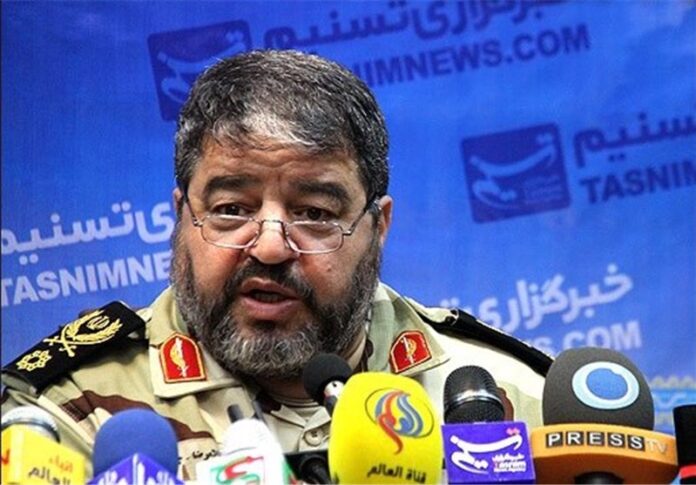
General Gholam Reza Jalali

Speaking at an exhibition of Iran’s local cyber industry, Jalali stressed the need for constant vigilance and monitoring the enemy’s moves to avert any damage caused by possible cyber sanctions against Iran.

The Civil Defence Organization’s warnings about the threat of oil sanctions went unheeded by the previous Iranian administration, which had claimed that the world would not deprive itself of Iranian crude, but the country was finally hit by oil sanctions, he explained.

The commander then warned that Iran’s dependence on foreign cyber systems should be minimized by the development of a national data network and avoiding the use of foreign systems without proper control and assessment.

The official told Tasnim earlier that Iran is going to stage specialized cyber war games in coming months to increase its cyber defence capabilities.

“Holding specialized cyber war games is one of the priorities (of the Civil Defence Organization) this year,” he said, adding that the exercises are aimed at monitoring and eliminating any problems and weaknesses in the country’s cyber defence network.

Iran Welcomes China, Pakistan Joining Chabahar Project: Envoy

The Chabahar port agreement between Iran, India and Afghanistan is “not finished” and “not limited to these three countries,” Mehdi Honardoost said, while speaking about Pakistan-Iran relations at the Institute of Strategic Studies in Islamabad (ISSI), Dawn reported.

Iran, India and Afghanistan have signed a key trilateral deal, known as the Chabahar agreement, to establish a strategic transit and transportation route connecting the three countries.

The agreement was signed in the presence of Iranian President Hassan Rouhani, Indian Prime Minister Narendra Modi and Afghan President Ashraf Ghani in the Iranian capital of Tehran on May 23.

The offer to cooperate had at first been extended to Pakistan and then China, which suggested that neither had expressed interest, the envoy said.

“We are waiting for new members. Pakistan, our brotherly neighbours and China, a great partner of the Iranians and a good friend of Pakistan, are both welcome,” Honardoost said.

He further referred to Iran-India relations during the era of anti-Tehran sanctions, saying, “India was a good friend during the sanctions, the only country to import oil from us during the sanctions era.”

The Chabahar agreement is aimed at bringing about a considerable increase in transit via Chabahar, linking India to central Asia via Afghanistan, and helping Afghanistan have access to the sea.

In 2003, Iran and India agreed to develop the Port of Chabahar. The project was, however, suspended following the imposition of sanctions against Iran over Tehran’s nuclear program. In May 2014, India and Iran signed an MoU to jointly develop the port once the international sanctions against Iran were terminated.

The Chabahar route will allow Indian goods to reach Afghanistan via Chabahar without crossing Pakistan’s territory.

Chabahar is located in the Gulf of Oman near the border with Pakistan. It is the closest and best access point in Iran to the Indian Ocean, and Iran has devised serious plans to turn it into a transit hub for convenient access to markets in the northern part of the Indian Ocean and Central Asia.

Iraqi Commander: Gen. Soleimani in Iraq at Baghdad’s Request

In a Saturday May 28 interview with Iraqi TV channel Al Sumaria, as covered by Fars and translated by IFP, Abu Mahdi al-Muhandis emphasized that Iraq does not need anyone’s help to expel terrorism.


He noted, however, that the presence of Iranian military advisors, including General Soleimani, is solely based on the official request of the Iraqi government.

His remarks seemed to be in reaction to Saudi Arabia and Bahrain, who had recently criticized the “negative” role of General Soleimani, and expressed their opposition to his presence in Iraq.

“Iranian advisors, at the head of whom is my dear brother Qassem Soleimani, have stood by us [in Iraq] since the beginning of the war, […] and their presence was permitted by the commander of the Iraqi Armed Forces,” he said.

General Soleimani himself had earlier stressed that Iraq does not need the interference of others. Iranian Foreign Ministry Spokesman Hossein Jaberi Ansari also announced on Friday that the Islamic Republic has an advisory presence in Iraq at the request of the Baghdad government.