Thursday, December 25, 2025
Home Blog Page 443

UN Envoy warns about dire consequences of US hostile actions against Iran

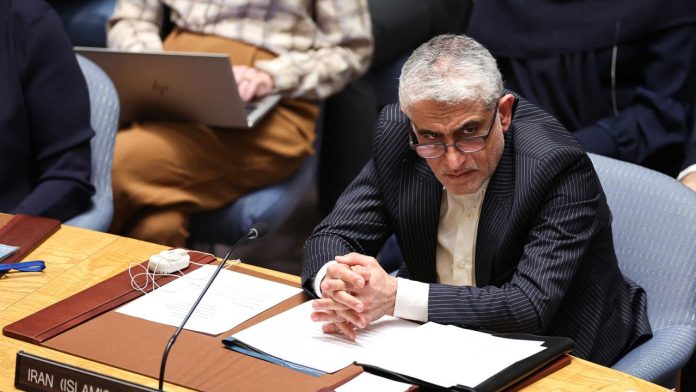
Amir Saeed Iravani

Amir Saeed Iravani stated in a letter to Kristina Markus Lassen, the rotating president of the UN Security Council, and Antonio Guterres, the UN Secretary-General, that the Islamic Republic of Iran firmly defends its sovereignty, territorial integrity, and national interests against any hostile actions.

Iravani condemned the recent hostile remarks from senior US officials, including Donald Trump, against Iran, adding that the US is attempting to justify its illegal aggressive actions and war crimes against Yemen with these desperate claims and has clearly threatened to use force against Iran.

US President Donald Trump recently ordered a new round of US military attacks against Yemen and threatened to attack Iran for its support of Yemenis.

The Iranian ambassador called on the UN Security Council to take a clear and principled stance in condemning these provocative statements and to urge the United States to adhere to its commitments under the UN Charter.

In the letter from Iran’s envoy, it was stated that the Ansaruallh movement and Yemeni officials operate independently in their decision-making and actions, emphasizing that their operations are in support of the people of Gaza and in response to the violation of Yemen’s sovereignty and territorial integrity.

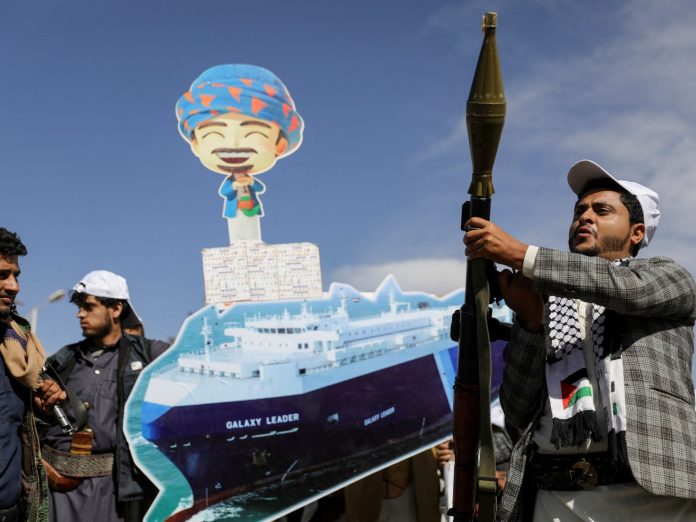
Ansarullah of Yemen has asserted that in response to the crimes of the Zionist regime against the Palestinian people, especially in Gaza, they will target ships heading to the occupied territories of Palestine.

Iran vows ‘firm response’ to any assault after US threats

At least 53 people, mostly women and children, were killed and 101 others wounded after the US carried out the first attacks against Yemen since President Donald Trump took office in January. The US launched its large-scale military strikes on the Yemeni capital Sana’a and multiple other provinces across the country on Saturday night.

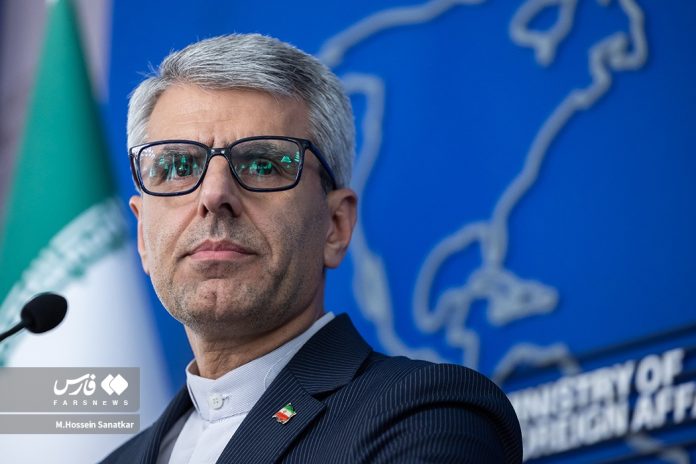
“We will respond decisively to any aggression against Iran’s territorial integrity and its national security and interests. There is no doubt about this,” Esmaeil Baghaei told reporters at his weekly press conference on Monday.

Trump, in a statement on Saturday, said the US holds Iran “fully accountable” for its support for Yemen’s Ansarullah resistance movement. He stated support for the movement must “end immediately,” warning that Washington will hold Tehran fully accountable.

Baghaei added that the Yemeni government and people independently make decisions about the measures they deem necessary to support the legitimate resistance of the Palestinian people.

He condemned the US act of aggression against Yemen Yemen as a violation of all the principles of the United Nations Charter and international law.

The Iranian spokesman called on the international community, Muslim countries, and the Organization of Islamic Cooperation (OIC) to take swift action regarding the US attack.

In response to a question about Trump’s letter to Iran, Baghaei said the US sends “very contradictory” messages.

“Simultaneously with its expression of readiness for negotiations, the US imposed extensive sanctions on various Iranian commercial and manufacturing sectors,” he continued.

Washington’s words do not match its actions, he said, referring to the Treasury Department’s latest sanctions on Iran’s Oil Minister Mohsen Paknejad and some vessels that are part of a fleet involved in the Iranian crude oil exports.

The Iranian spokesman reiterated that the US has failed to remain committed to its obligations over the past 10-15 years, adding that Washington raised the issue of talks just as a political means and psychological warfare and not as a way to solve disputes.

“Our response is clear,” Baghaei asserted, adding that Iran currently has no intention to publicize the details of Trump’s letter, dismissing speculations in this regard.

Iran would respond to the letter through the appropriate channels after completing the reviews, the diplomat said.

He rejected any link between the Iranian Foreign Minister Abbas Araghchi’s short “pre-planned” visit to Oman on Sunday and the US letter, saying regional countries should hold intensive consultations given the very hasty developments in the region.

Baghaei further said the Trump administration’s possible travel restrictions for the citizens of dozens of countries, mainly Muslim states, clearly shows the US’s racism and racist discrimination based on religion, ethnicity and nationality.

“The travel ban on Iranian nationals to the United States is also a clear sign of hostility and animosity of American politicians and policymakers towards the Iranian nation,” he emphasized.

He added that the move is part of the US pressure tactics against Iran that have been implemented in various forms at different times.

Yemen’s Houthis and US launch new attacks amid tensions

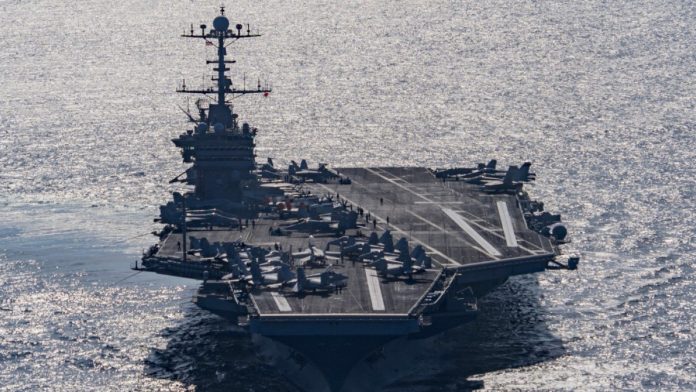
A Houthi spokesperson said on Monday that fighters had launched 18 missiles and a drone at the “aircraft carrier USS Harry Truman and its accompanying warships”.

The US military announced it had continued targeting the group overnight.

It was the second strike on the US navy claimed by the group over the last 24 hours, amid a sudden surge in hostilities.

After the Houthis warned last week they would resume targeting Israeli-linked shipping in the Red Sea due to Israel’s ongoing blockade of Gaza, the US launched a series of large-scale attacks on Yemen over the weekend, killing dozens of people and wounding many more.

In a statement posted on Telegram, the Houthi spokesperson said the attack was “in retaliation to the continued American aggression against our country”.

The US has not responded to the claimed strike. However, US Central Command posted a video on X saying its “forces continue operations against Iran-backed Houthi terrorists”.

The Houthi-backed SABA news agency reported two new air raids early on Monday around the port city of Hodeidah, about 230km (143 miles) from the capital Sanaa.

Citing local authorities, SABA also reported that US forces carried out strikes on a cancer facility being built in the city of Saada on Sunday, causing “widespread destruction”.

The Houthis, who control much of the Arabian Peninsula’s poorest country, maintained a campaign targeting the busy sea route off the coast of Yemen as Israel bombarded Gaza over the past 18 months.

The attacks affected global trade, forcing a significant volume of maritime traffic between Asia and Europe away from the Suez Canal to take the far longer journey around Africa.

The group halted its drone and missile attacks, which had targeted vessels with tenuous Israeli links, when the Gaza ceasefire was declared in January.

However, the Yemeni group announced last week it was “resuming the ban on the passage of all Israeli ships” in the Red Sea due to Israel’s renewed blockade of the Palestinian enclave.

On Saturday, President Donald Trump ordered the US military to strike at the Houthis.

The attacks killed at least 53 people and injured many more, most of them women and children, according to the Reuters news agency. Most of the 40 raids targeted the Houthi-controlled Saada province, north of Sanaa.

Oil prices have been trading higher on news of the Red Sea attacks. Brent futures – the global international benchmark – rose 41 cents or 0.6% on Monday, to $70.99 a barrel.

Iran reformist politician Mehdi Karroubi’s house arrest ends after 15 years

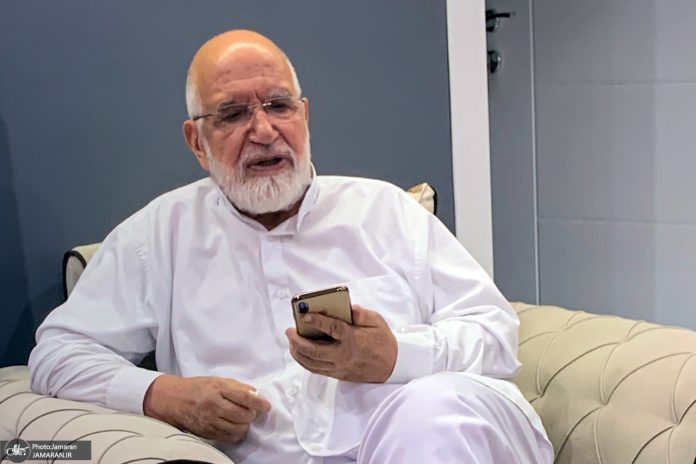
Hossein karroubi said, “Security officials on Sunday told my father that the Judiciary chief had issued an order to end his house arrest”.

He noted that the security officials also told Mehdi Karroubi that they will remain at the former parliament speaker’s house until April 9, 2025 due to security reasons.

Hossein Karroubi added that the Judiciary chief had earlier told a famous political figure that they had been given the go-ahead by Iran’s Supreme National Security Council to release Mehdi Karroubi.

According to him, officials have told Mehdi Karroubi that after April 9, the cleric can go anywhere he desires without any restrictions and that before this date, he can do so after coordinating with officials.

Karroubi, along with Mir Hossein Mousavi and Zahra Rahnavard, was put under house arrest in February 2010 following months of protests by their supporters, rejecting the 2009 presidential election result.

Former president Mahmoud Ahmadinejad won the vote but Karroubi and Mousavi, other candidates running for president, refused to concede defeat and accused Ahmadinejad of stealing the vote.

The two candidates and Mousavi’s wife Zahra Rahnavard then urged their supporters to take to the streets and called for the election result to be annulled, a demand flatly rejected by the establishment back then.

Remains of 6500 year old infant found in western Iran

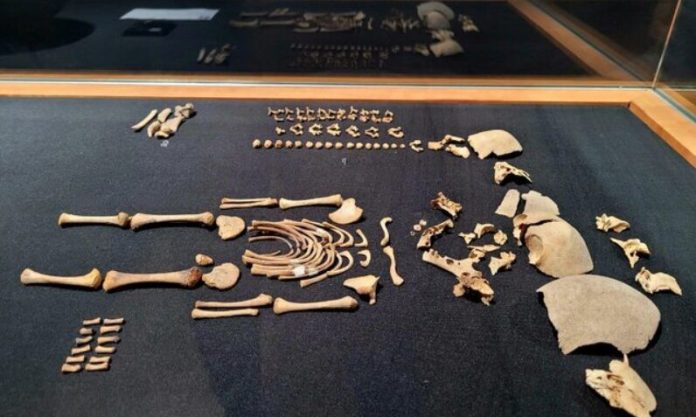
Ronak Tasa, the head of Cultural Heritage Department in the city of Oshnavieh added the pieces, which date back to the mid-fifth millennium BC and found in a clay vessel, are currently kept in the National Museum of Tehran.

The official added that 30 other notable objects are also held at the museum along with the ancient infant’s remains.

Archaeological studies show that, based on bone growth patterns, this fetus was in its 38th week of life and was born 2 or 3 weeks early.

That’s one of the most complete infant burials in the prehistoric era of the Iranian Plateau, with more than 90% of its bones remaining intact.

Iran’s 20-Year Vision Plan: A review of unmet goals as 1404 horizon arrives

Iran Bazaar

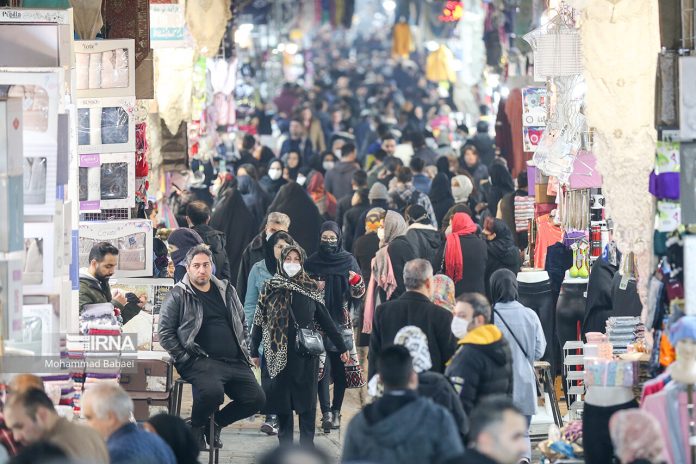
Ebrahim Ayoubi, lawyer, in an analysis published by Asriran news website on Monday, notes that the plan aimed to transform Iran into a developed nation with regional leadership in economic, scientific, and technological domains, but challenges in politics, economy, society, and culture have hindered progress.

Politically, the vision sought to establish Iran as a model of Islamic democracy and a constructive global player. However, declining voter turnout, regional tensions, and strained relations with the West highlight unmet aspirations.

Economically, the plan envisioned Iran as a regional leader with social welfare and technological advances. Instead, the national currency has lost nearly 100 times its value against the dollar, while unemployment and environmental issues persist.

Socially, the plan aimed for a cohesive, proud, and just society. Yet, rising youth emigration, widespread smuggling, and judicial inefficiencies reflect growing dissatisfaction.

Culturally, efforts to preserve Persian language and values have struggled against the influence of social media and foreign terminology.

The assessment agues the absence of a new vision plan suggests a recognition of past shortcomings.

As Iran enters Persian New Year 1404, the unmet goals underscore the need for realistic strategies and effective governance to address the country’s complex challenges in the decades ahead.

Houthis claim retaliation, US attacks on Yemen continue

Yemen Houthi

The rise in the death death toll to 53 from the US attack on Yemen was confirmed by a spokesperson for the Houthi-run Health Ministry on Sunday.

Five children and two women were among the victims, while the number of injuries rose to 98, stated Anees Alsbahi, the spokesperson.

Houthi military spokesperson Yahya Saree said earlier on Sunday that the group targeted the US aircraft carrier USS Harry S Truman and its warships with 18 ballistic and cruise missiles and a drone, state TV Al Masirah reported.

Saree added that the US had launched more than 47 raids on various areas in Yemen.

In separate comments, Abdul Malik al Houthi, the leader of the Houthi movement, said in a televised statement that the US and Israel were “seeking to impose the equation of permissibility on the region and its people”.

“We will respond to the American enemy with missile strikes and targeting its warships and naval vessels,” al-Houthi added, stating that they have decided to “threaten Israeli shipping to pressure the entry of humanitarian aid into the Gaza Strip”.

The Houthi political bureau announced that the deadly strikes constituted a “war crime”.

Al-Asbahi stated Saturday’s attacks targeted the capital, Sanaa, and areas in Saada, Al Bayda and Radaa.

But after ordering the initial attacks, US President Donald Trump said he would use “overwhelming lethal force” until the Houthis cease their attacks on shipping along the crucial maritime corridor in the Red Sea.

The Houthis, who began their attacks on shipping containers in response to Israel’s war on Gaza in 2023, and in defence of the Palestinians, reiterated on Sunday in separate comments that the “naval operation will continue until [the] Gaza blockade is lifted and aid is let in”.

The Houthis had halted the attacks when the Gaza ceasefire took effect in January and have not launched any attacks in the two months since.

At the beginning of March, Israeli Prime Minister Benjamin Netanyahu announced that the entry of aid deliveries to Gaza was being suspended in a move to pressure Hamas into accepting an extension of the first stage of the ceasefire deal instead of moving on to the next stage, which would negotiate an end to the war.

On Tuesday, the Houthis announced they would resume attacks after their deadline for Israel to allow the resumption of aid deliveries into Gaza had passed.

On Sunday morning, US Defense Secretary Pete Hegseth said Washington would conduct “unrelenting” strikes against the Houthis until they stop targeting US assets and global shipping.

Speaking to Fox News, Hegseth noted the campaign was a response to the numerous attacks the Houthis have launched on ships since November 2023 and served as a warning to Iran to cease supporting the group.

“This will continue until you say ‘We’re done shooting at ships. We’re done shooting at assets,’” Hegseth added.

The US and some of its allies have bombed Yemen with cruise missiles on several occasions since January 2024 as Israel’s war in Gaza raged and the Houthis continued their sustained maritime campaign.

US Secretary of State Marco Rubio also announced that the US military campaign would continue until the group could no longer strike ships. He blamed Iran for supporting the Houthis.

US National Security Advisor Michael Waltz told ABC that the strikes “actually targeted multiple Houthi leaders and took them out”.

On Sunday, United Nations Secretary-General Antonio Guterres called for “utmost restraint and a cessation of all military activities” in Yemen, his spokesperson stated.

“Any additional escalation could exacerbate regional tensions, fuel cycles of retaliation that may further destabilize Yemen and the region, and pose grave risks to the already dire humanitarian situation in the country,” U.N. spokesperson Stephane Dujarric added in a statement.

Trump says he will speak with Putin on Ukraine war

Putin and Trump

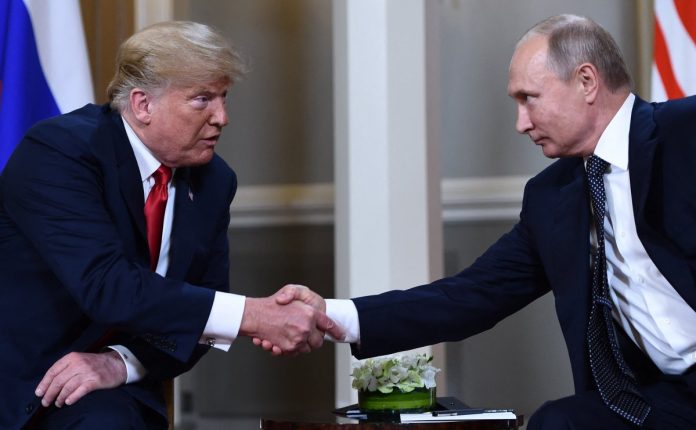
“I’ll be speaking to President Putin on Tuesday. A lot of work’s been done over the weekend,” Trump told reporters on Air Force One during a late flight back to the Washington area from Florida.

“We want to see if we can bring that war to an end. Maybe we can, maybe we can’t, but I think we have a very good chance,” Trump added.

Trump is trying to win Putin’s support for a 30-day ceasefire proposal that Ukraine accepted last week, as both sides continued trading heavy aerial strikes through the weekend and Russia moved closer to ejecting Ukrainian forces from their months-old foothold in the western Russian region of Kursk.

“We will be talking about land. We will be talking about power plants,” Trump stated, when asked about concessions.

“I think we have a lot of it already discussed very much by both sides, Ukraine and Russia. We are already talking about that, dividing up certain assets.”

UK proposes Western peacekeeping mission of 10,000 forces in Ukraine

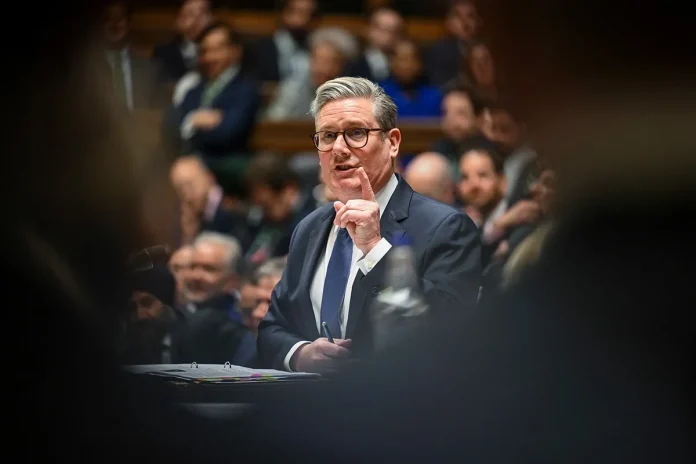
The summit, which included 29 international leaders, was organized by the U.K. with the purpose of creating a “coalition of the willing” that could secure Ukraine in the event of a peace deal with Russia.

Starmer’s proposed peacekeeping contingent would include around 10,000 troops, mostly provided by the U.K. and France, U.K. military sources told the Sunday Times. Thirty-five countries have agreed to supply the peacekeeping mission with weapons, logistics, and intelligence support.

The peacekeeping mission will be “a significant force with a significant number of countries providing troops and a much larger group contributing in other ways,” a senior government source said.

In addition to European nations, Australia, Canada, and New Zealand joined the call, as did NATO Secretary General Mark Rutte.

The proposed force of 10,000 is significantly smaller than the 30,000 troops Starmer reportedly pitched to U.S. President Donald Trump during their White House meeting on Feb. 20.

Previously, President Volodymyr Zelensky said that European partners would need to station 100,000 to 150,000 troops on Ukraine’s front lines to effectively deter Russia.

U.K. defense sources told the Guardian on Feb. 18 that a much smaller European-led peacekeeping force could instead rely on intelligence, surveillance, and long-range monitoring to enforce a ceasefire.

Following the virtual summit, Starmer announced that “troops on the ground and planes in the sky” would provide security guarantees for Ukraine following a future peace deal.

The allied coalition will hold a second round of military talks on March 20, Starmer added.

While France and the U.K. have been the most vocal about sending troops to Ukraine, some countries, including Italy and Finland, have expressed reservations. Italian Prime Minister Giorgia Meloni attended the summit and vocalized support for Ukraine, but said that Italy does not plan to participate in the proposed peacekeeping force.

The summit followed an eventful week of diplomacy, as Kyiv agreed to a 30-day ceasefire proposed by the U.S. on March 11. While the the Kremlin said it was ready to agree to the U.S.-backed ceasefire, it demanded that Kyiv limit military mobilization and training in addition to the West halting military aid to Ukraine.

Iran President welcomes peace treaty between Armenia, Azerbaijan

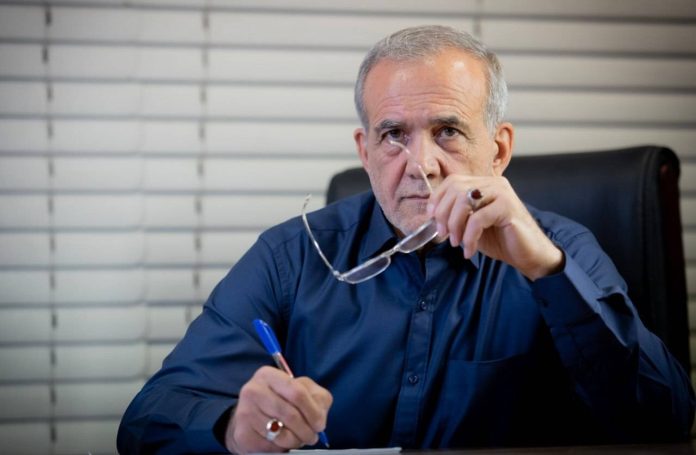
Massoud Pezeshkian

In a telephone conversation with Armenian Prime Minister Nikol Pashinyan on Sunday, Pezeshkian congratulated the two neighboring countries and nations on the important event.

“Iran has always welcomed the establishment of peace, convergence and stability in the region, especially among the neighbors, while preserving the territorial integrity of countries,” he said.

Armenia and Azerbaijan on Thursday agreed on the text of a peace agreement to end nearly four decades of conflict between the South Caucasus countries, with Yerevan agreeing to surrender its claim to Karabakh.

The long-disputed region of Karabakh was at the center of two costly wars between Armenia and Azerbaijan in 2020 and the 1990s.

The region has always been internationally recognized as part of Azerbaijan, whose troops retook it in a 24-hour offensive.

Iranian Foreign Ministry spokesman Esmaeil Baghaei on Friday hailed the announcement as “a necessary and important step” to achieve “lasting” peace in the South Caucasus region.

During the phone conversation, Pezeshkian pointed to good and progressing relations between Iran and Armenia and called on the two countries’ high-ranking officials to expedite the implementation of bilateral agreements in various fields.

Pashinyan, for his part, informed Pezeshkian on the finalized draft text of the “Agreement on the Establishment of Peace and Interstate Relations between Armenia and Azerbaijan” and the completion of negotiations on the agreement and hailed Iran’s support for the treaty.

The Armenian prime minister said his country would strive to continue negotiations and consultations aimed at implementing the agreement and also to organize regional relations.

He expressed hope that the two countries would sign and implement the deal in the near future.

Pashinyan also commended the efforts by the Iranian government to improve mutual relations and noted that his country is keen to implement the agreements signed with Iran.