Friday, December 26, 2025
Home Blog Page 4424

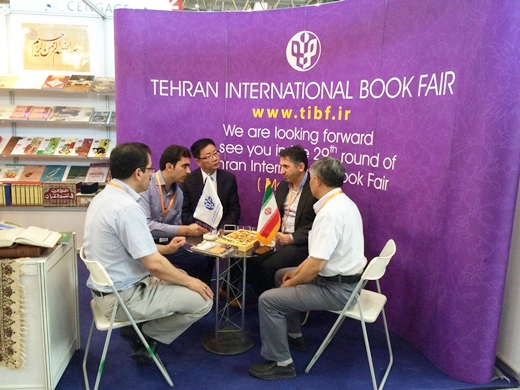
Over 60 foreign publishers to participate in Tehran Intl. Book Fair

The publishers are mostly from Mexico, Australia, Syria, Russia, Germany, Italy, China, Sweden, Lebanon, Denmark, Kazakhstan, Pakistan, France, Oman, Emirates and Algeria, the organizers announced on Sunday.

In addition, 27 top international cultural officials and many prominent authors will visit the TIBF, which is one of Iran’s major cultural events.

“Tomorrow Is Too Late to Read” is the motto of this year’s exhibition, which will be held from May 5 to 15 at Shahre Aftab, a newly-established cultural center in southwest Tehran.

Commander: Iranian Navy to Stage Massive Wargames in Int’l Waters

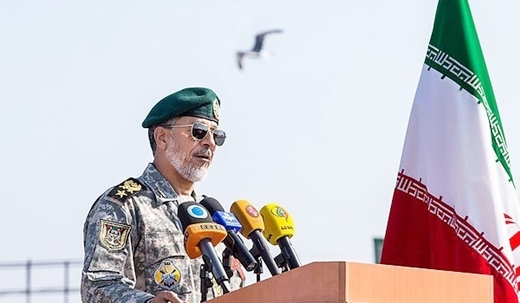
“The massive Velayat 95 wargames will be held in international waters by the end of the current (Iranian) year (started March 20),” Sayyari told FNA on Monday.

“This year, we also have specialized submarine, missile,… drills related to the Navy agenda,” he added.

Sayyari said that the Navy also plans to hold joint drills with other countries’ warships which berth at Iranian ports, and during reciprocal visits.

Elsewhere, he said that the Iranian Navy’s 40th fleet of warships, comprising Alborz and Tonb warships, is now present in the Gulf of Aden to protect the country’s cargo ships and oil tankers from pirate attacks.

Iran ran the major Velayat naval wargames in its territorial waters in the Persian Gulf late January.

The high-profile Velayat exercises are an annual event and all shipping lines and naval vessels in the region are informed of the area of the drills, according to international maritime and naval standards that require all foreign ships and vessels to keep some 5 nautical miles away from the wargame zone.

During the exercises in March, a US Navy warship received a serious warning from several Iranian destroyers to keep away from their drill zone near the Strait of Hormuz, an incident which could keep frictions high after Iran captured 10 US marines in the Persian Gulf in the same month.

Also, the Iranian Navy’s unmanned aerial vehicle (UAV) and a submarine recorded images of a US aircraft carrier on the third day of the main phase of the massive wargames along the country’s Southeastern Makran shore, on the rim of the Persian Gulf.

The Navy drone captured a video during the surveillance mission over the US aircraft carrier.

Meantime, a Qadir-class submarine, also belonging to the Iranian Navy, was deployed close to the US aircraft carrier with a mission to gather intelligence and capture video of the US vessel’s movements.

The Iranian submarine managed to take clear pictures of the aircraft carrier without catching the attention of the staff on board.

Tehran Slams Riyadh for Politicizing Hajj Pilgrimage

Speaking to reporters at his weekly press briefing in Tehran on Monday, Jaberi Ansari pointed to a delay by Riyadh in holding negotiations with Tehran on preparation for the upcoming Hajj rituals, saying that Saudi Arabia has not fulfilled its commitments.

Unfortunately, despite Riyadh’s claims that Hajj pilgrimage is a “non-political issue”, the Saudi government delayed issuing visas to the members of an Iranian delegation tasked with facilitating Hajj affairs, he stated.

Jaberi Ansari further said Iran’s policy, unlike that of Saudi Arabia, is avoiding escalation of tensions, but warned that Tehran’s patience has limits.

Last month, Head of Iran’s Hajj and Pilgrimage Organization Saeed Ohadi also took a swipe at Saudi officials for a delay in holding negotiations in preparation for the upcoming Hajj rituals.

Saudis have twice postponed the meetings they had pledged to hold with the Iranian officials for negotiations, Ohadi said on March 20.

Tehran has been trying to contact Saudi Hajj authorities for arranging a meeting for talks about Iranians’ possible religious visit to the kingdom for this year’s Hajj season, irrespective of political disputes, he said at the time.

Iran insists that the safety of travelers to Saudi Arabia must be ensured, given the disaster in Mina that killed many Iranian pilgrims in the previous Hajj pilgrimage.

More than 460 Iranians were among the thousands of pilgrims who died on September 24, 2015, in a crush in Mina, near Mecca, during the Hajj pilgrimage.

The incident marked the worst ever tragedy during Hajj.

There have been doubts about participation of Iranian pilgrims in the 2016 Hajj since tensions between Iran and Saudi Arabia ran high following Riyadh’s execution of prominent Shiite cleric Sheikh Nimr al-Nimr, and a subsequent attack by outraged Iranian protesters on the Saudi embassy in Tehran, which resulted in the Arab country’s decision to sever its ties with the Islamic Republic.

Although Iranian officials criticized the embassy attack and those involved in the attack have been brought to justice, Saudi Arabia has cut off all diplomatic relations with Iran.

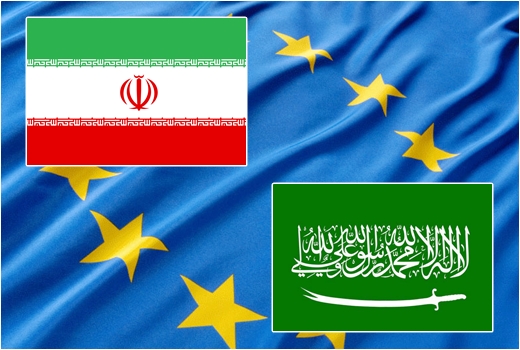
Impact of Iran-EU Ties on Saudi Arabia’s Behaviour towards Tehran

Iran’s ties with the European Union have always been influenced by the political and social developments both in Iran and other Middle Eastern countries. The EU attaches a great importance to Iran, given the country’s influence in the region, its numerous and diverse resources, energy reserves, and lucrative market for European goods.

Issues such as human rights and Tehran’s nuclear energy program have been among the controversial issues raised between the two sides in recent years. During the nuclear negotiations between Tehran and world powers, the EU representative tried to facilitate the achievement of a lasting nuclear deal by bringing the old enemies, Iran and the US, closer to each other.

The EU also took the first step and proposed a resolution to the Board of Governors of the International Atomic Energy Agency (IAEA), which was finally approved by the members and prepared the grounds for the operational phase of the nuclear deal (JCPOA).

After the JCPOA, the EU is trying to rebuild its political and trade ties with Iran. The practical measures the European body has put on its agenda in the post-JCPOA era include: terminating the sanctions it had unilaterally imposed on Iran during the nuclear tension, helping Iran with its accession to the World Trade Organization (WTO), and opening the EU office in Tehran.

During the forty years since Iran’s 1979 Revolution, the ties between Iran and Europe have had lots of ups and downs. Arman daily newspaper discusses these ties and their influence on Iran’s regional relations in an interview with Mehdi Zakerian, a university professor and political analyst.

Here is IFP’s translation of selected parts of the interview.


Given the importance of the European Union as a regional body, what position does it have in Iran’s foreign policy?

The European Union is considered a regional-international body. … The Union was originally founded for economic reasons, so the EU has great economic importance.

However, the body has gradually turned to an international and multifaceted one with different political, economic, cultural, social, and legal aspects. We can dare to say after the United Nations, the EU is the most important body in terms of playing a role in and commenting on the resolution of international crises. …

The EU is the most widespread regional organization of Europe, and given its importance in the international system, it naturally can be influential and significant for many countries. The body can thus be of a great importance to Iran as a key player in the Middle East. …


There has always been a rivalry between Iran and Saudi Arabia. But in recent months, the Al Saud family’s anti-Iran policies have worsened, and the ties between Tehran and Riyadh have soured. Now, do you think the close ties between Iran and the EU could be effective in changing Saudi Arabia’s behaviour towards Iran?

I believe that they can be effective. An extremist and radical faction is in power in Saudi Arabia. There are wise people in the country as well. Therefore, the more that Iran can expand its relations and interactions throughout the world, the more influence it can have on our country’s ties with third-party countries including Turkey, Pakistan and Saudi Arabia. …

The EU is an important regional body, and the way Iran interacts with it can motivate Saudi Arabia. On the other hand, under such circumstances, the EU might ask and put pressure on other countries, including Saudi Arabia, to maintain good regional ties with Iran.


Some analysts believe that Iran should start talks with a number of new countries in a bid to decrease Saudi Arabia’s destructive policies. Do you think such policies can have positive outcomes?

In defining its foreign policy and relations with other countries and organizations, Iran should see beyond the ongoing crises or [temporary] conflicts of opinion with certain states. It should not boost its ties with the EU, Russia, and the US only because it has problems with a country or a group of countries. Rather, it should see how Iran’s interests and demands are defined in the world, and which international players can meet them. We should start our talks and have good ties with different countries based on such an attitude.

… It is totally wrong to enhance our ties with the EU solely due to certain current problems with Saudi Arabia. Traditionally, this type of attitude has been in place at certain junctures in Iran’s foreign policy history.


Has Iran’s foreign ministry managed to have a constructive policy on the nuclear deal?

… One should have specific strategies and plans for doing different things. Under the former Iranian President Mahmoud Ahmadinejad, we were faced with populist, slogan-based foreign policy. Their diplomacy was not at all based on knowledge and expertise. However, the incumbent government of President Hassan Rouhani has fortunately moved towards a knowledge-based foreign policy. The reason is the expertise of Foreign Minister Mohammad Javad Zarif and his advisors.

Zarif has set good patterns for the country’s managers. He said we should consider the Establishment’s agenda in dealing with the nuclear issue: we should see what we want from our nuclear program. We should achieve whatever helps the country’s peaceful nuclear activities, while abandoning whatever had led to the imposition of anti-Iran sanctions.

In other words, sanctions are out and peaceful nuclear activities are in. Having such a definition in mind, they started their negotiations with the Group 5+1 (Russia, China, the US, Britain, France, and Germany) under the EU’s leadership, and we managed to achieve positive and brilliant outcomes on our nuclear program.

Now, after such a successful model and experience, the foreign ministry should be permitted to work on other issues, including the definition of economic and political relations. Of course, this hinges on a categorization in which the EU is considered a top economic priority. … Iran, however, can have cooperation with the European bloc in various fields, because there are lots of common interests between the two sides. …


In which fields can Iran start its interactions with the EU?

The EU is not just economically important. Rather, Iran should consider political, cultural, and legal areas. … Currently, the continent’s economy is attractive for Iran.


What impact can the visits of European delegations to Iran have on the country’s economy?

The presence of European delegations has a lot of positive and effective outcomes for Iran, but our eyes should be kept wide open, so that we can make the best use of these chances and achieve as much as possible.

A question might be asked as to what Iran earns from such reciprocal visits. The answer is that such visits are great motivations for the expansion of economic ties between Iran and the EU member states.  However, the country’s businessmen, traders, industrialists, and experts in economy and industry should pay attention to the contract types. In the past, even during the reformist President Mohammad Khatami’s tenure, which was a very successful era, certain contracts were legally ill-prepared. … Therefore, the way the contract is prepared and the negotiations are held is very important.


Can the recent terrorist attacks in Europe have any impact on European states’ attitudes towards Saudi Arabia as the main state-sponsor of terrorism?

Two lobbies are active in major EU countries including Germany, Britain, Italy, and France. One of them is the Saudi lobby, in which Qatar, the UAE, and Saudis pay huge amounts of money to present Iran as a danger to the international community. … They claim these countries are opponents of terrorism and control such groups. … On the other hand, there is an intellectual movement in Europe, whose members believe that terrorism and violence have their roots in the Wahhabi school of thought. They believe those who develop such thoughts should be countered; therefore, they conclude that Saudi Arabia, the UAE, and Qatar are on the same boat as the Wahhabi and Salafi movements.

These countries are thus believed to be sources of danger for global peace and security. Proponents of the second European intellectual movement believe that having extensive relations [with Riyadh] is not in the interest of Europe. The movement, however, does not have huge financial resources and is considered a minority working independently in Europe. …

When the terrorist attacks occurred in Europe, the second movement attracted some attention, but … such incidents cannot weaken the Arab lobby. That would need more extensive and effective measures.


How is it possible to minimise the role and influence of anti-Iran lobby groups in Europe?

Iran, and similar countries, should look for a series of dialogue-based meetings. If such meetings are held between Iran and the EU, the money-based lobbies will definitely lose their influence in Europe, and the second movement can play a role in a revision of the EU’s ties with these Arab states.

Hyundai to build power plant in Iran

On the threshold of the South Korean president’s visit to Tehran, a panel of executives and experts at Hyundai’s energy sector has arrived in Iran.

Accordingly, the South Korean delegation has travelled to Zanjan city in order to visit and assess facilities and infrastructures required for the construction of a 500 MW power plant, high-voltage power transmission lines as well as a gas injection station.

On the basis of an agreement reached between a subsidiary of Iran Power Generation and Transmission Company (Persian acronym: TAVANIR) and Hyundai Engineering Company of south Korea, a 500-megawatt power station will be constructed 25 kilometers off Zanjan covering an areas of 42 hectares within the framework of a Build-Own-Operate (BOO) contract.

Moreover, South Korea’s HEC has announced that “in time with the visit of South Korean President Park Geun-hye to Tehran in May, a contract worth 3.6 million dollars will be sealed with a private Iranian firm to build a gas refinery in South Pars field.”

Iran Ready to Transfer Anti-Terror Expertise: Rouhani

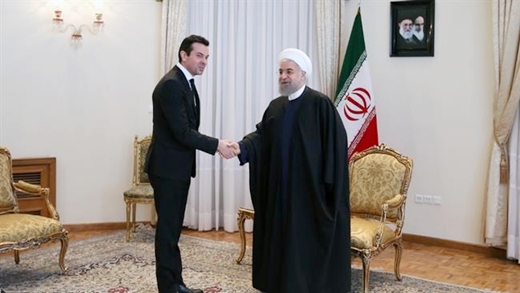
Rouhani made the remarks in a meeting with visiting Macedonian Foreign Minister Nikola Poposki in Tehran on Monday Apr 25.

He said that some people try to attribute deviant views to Islam and push young Muslims toward terrorism and extremist activities.The Iranian president emphasized that measures should be taken to immunize the youth to extremist views.

Elsewhere in his remarks, the Iranian president highlighted the bilateral relations between Tehran and Skopje, saying that there is great potential for developing and deepening cooperation between the two sides.

“There are no obstacles in the way of developing all-out ties between Tehran and Skopje,” Rouhani stressed.

The Macedonian foreign minister, for his part, referred to the issue of terrorism and the necessity of fighting it, and said, “Unfortunately, Europe ignored this scourge (terrorism) for a long period.”

Poposki also called on all countries to coordinate in the battle against terrorism, which has created “a common concern for the international community.”

He also stressed that Macedonia is willing to strengthen its bilateral ties with Iran, and will open an embassy in Tehran in the near future.

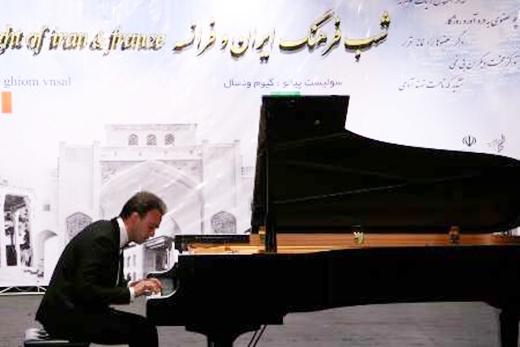
Iran and France Hold Cultural Soiree in Shiraz

The theme of the cultural event – which attracted many tourists and artists from both countries – was the need for the exchange of friendship between the two nations.

The renowned French pianist Guillaume Vincent also performed at the ceremony.

Addressing the ceremony, the Head of the Provincial Association of Music Artists, Hedayat Rezaie, said that 140 French tourists had been invited to take part in the event.

He said 20 French artists had special performances during the event to introduce their art and culture to the Iranian nation.

Noting that France and Iran enjoy very rich cultures, he said culture is the common point that all nations share to exchange and enhance friendship in the world.

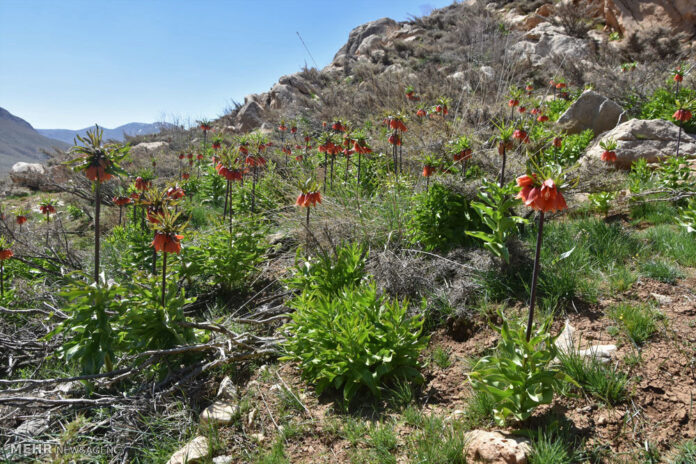
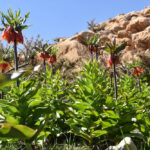
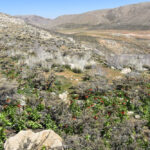
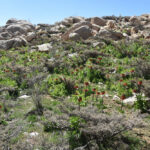
Beauty of fritillaria imperialis

Dehaghan of Isfahan province is home to beautiful red fritillaria imperialis flowers during the spring.


Kerry’s Remarks Not Enough to Resolve Issue of Iran’s Int’l Transactions: Nuclear Expert

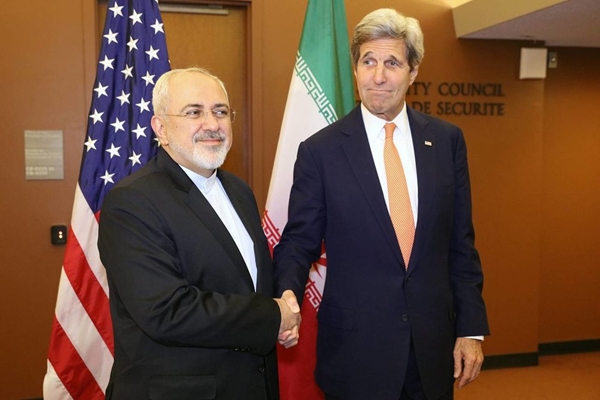
After Iran experienced problems with its financial transactions with foreign banks, particularly European ones, US Secretary of State John Kerry said in a meeting with his Iranian counterpart Mohammad Javad Zarif that European banks should not be afraid of making deals with Iran.

3_Untitled-1
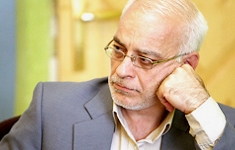
Hassan Beheshtipour

However, Hassan Beheshtipour, an expert in nuclear issues, believes that the US official’s remarks are not sufficient to allay the concerns of those willing to work with Tehran.

IFP has selected and translated parts of his interview with Fararu news website.


“Rhetorically, Mr. Kerry’s remarks are good and should be welcomed, but they are not enough,” Beheshtipour said.

“The US Secretary of the Treasury should also clearly explain the moves Washington has already made, or will make, to ensure other countries it will not punish them for cooperation with Iran,” he went on to say.

“Before the JCPOA [the nuclear deal between Tehran and world powers], the US Treasury used to monitor anti-Iran sanctions to tighten the controls, but the process stopped or at least slowed down after the deal. However, evidence indicates that the slowdown has not been as much as Iran expected, and the pace of the removal of anti-Iran sanctions or their repercussions has remained slow,” the expert said.

“Therefore, we should see whether or not the US Treasury, which was the department responsible for implementing the anti-Iran sanctions, will follow up Kerry’s remarks and make certain moves to put his words into practice,” he added.

“The US is losing an historic opportunity in relation to Iran,” Beheshtipour noted, adding that the US failure to comply with its JCPOA commitments would encourage Iran to revert to its pre-JCPOA situation.

“However, if the US shows good behaviour with regard to the JCPOA, the experience of the nuclear deal could be repeated in other fields. However, when they breach their commitments in this area and refuse to take the measures required, they are actually wasting these opportunities.”

“Of course, we should be patient and see what will happen in coming weeks after the negotiations between Kerry and Zarif, and the Vienna talks,” he noted.

“During the time of sanctions, officials from the US Treasury Department visited different countries to convince them to join the anti-Iran sanctions. If they cannot now travel to other countries to assure them of the end of sanctions, they can at least talk to them, and give them assurances that the US is not going to intensify or re-impose the sanctions against Iran, and that the other parties involved in deals with Iran will not be punished, as per the Joint Comprehensive Plan of Action,” Beheshtipour concluded.

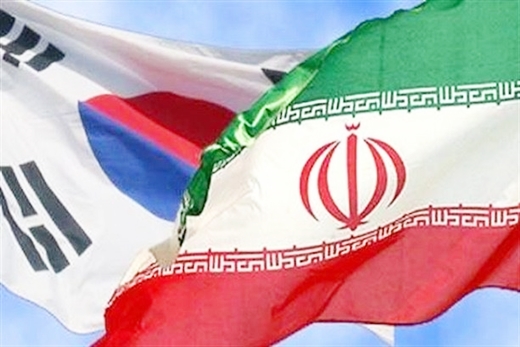
Iran and South Korea Confer on Expanding Nuclear Cooperation

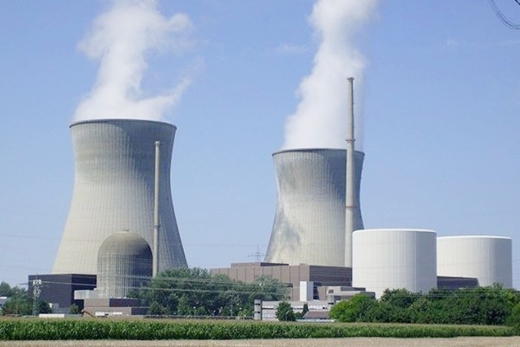
The meeting was held in Tehran on Sunday with Behrouz Kamalvandi, AEOI legal and Parliamentary deputy-head, as well as a number of relevant officials. During the meeting, the two sides expressed interest and satisfaction with the increasing trend of nuclear cooperation between Iran and South Korea, highlighting the serious determination on both parts for the further expansion of bilateral cooperation.

The Korean official noted the development of cooperation between the two countries in economic, cultural and industrial fields, saying nuclear safety and issues related to safeguards can serve as the first steps toward accelerating nuclear cooperation between Tehran and Seoul.

He also expressed hope that Iran-South Korea’s nuclear cooperation will expand further in future.

Also on Sunday, Japan’s newly-appointed ambassador to Tehran held a meeting with AEOI Head Ali Akbar Salehi. In the meeting, the two sides conferred on the expansion of ties, and expressed a keen interest in developing cooperation in various nuclear areas, particularly in the field of nuclear safety.

According to Kamalvandi, the AEOI head is expected to visit the Czech Republic and Slovakia next week to step up cooperation on the construction of nuclear power plants.

South Korean President Park Geun-hye is slated to visit Iran from May 1-3 to discuss ways to promote business ties between the nations, leading a delegation of some 200 businesspeople from such areas as construction, energy and finance.