Saturday, January 17, 2026
Home Blog Page 4415

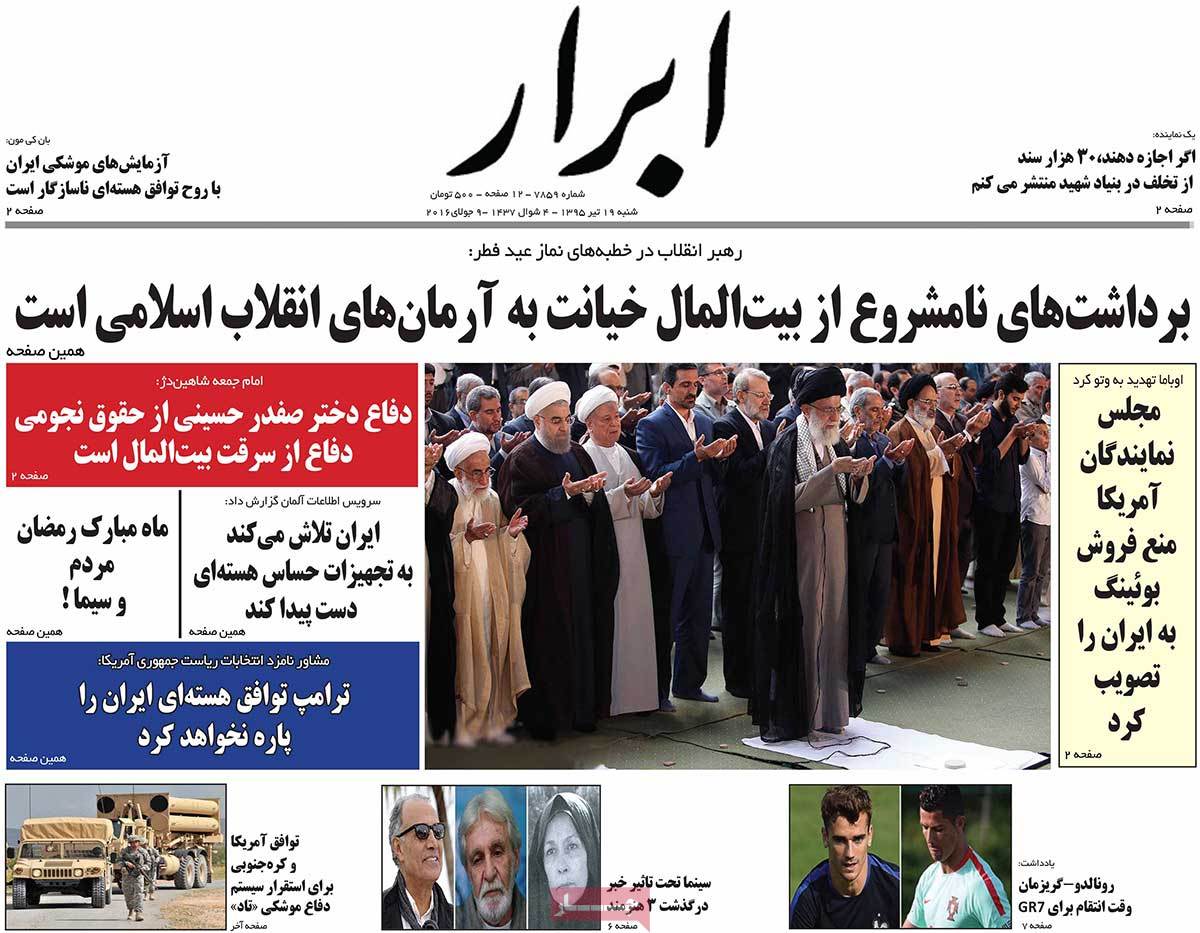
Iran Rejects Merkel’s ‘Unconstructive’ Remarks about Its Missile Program

“The Islamic Republic of Iran has repeatedly announced that the country’s missile program is purely defensive and they [ballistic missiles] are by no means designed to carry nuclear warheads,” Qassemi said in a statement released on Saturday, July 9.

“The Islamic Republic of Iran, once again, declares that based on its defence doctrines and national security calculations, will continue its missile program in full force and such remarks will leave no effect on the country’s legitimate missile program,” the spokesman added, as reported by Tasnim.

His remarks came after German Chancellor Angel Merkel claimed on Thursday, July 7, that Iran “continued unabated to develop its rocket program in conflict with the relevant provisions of the UN Security Council.”

Addressing the Bundestag, Merkel added that NATO’s anti-missile system targets Iran’s rocket program and was “developed purely for defence.”

Germany’s intelligence agency, the Office for the Protection of the Constitution, also claimed in its annual report released on Thursday that Iranian efforts to “procure technology, especially in the nuclear area, had continued at a high level” in 2015.

Later on Friday, July 8, German Foreign Ministry Spokesman Martin Schaefer reacted on the annual report and asserted, “There are forces within Iran…they may be trying, one way or another, to undermine or torpedo the nuclear deal and the normalization of relations between us and Iran. We are watching this closely.”

16 Iranian Teacher Associations to Hold General Assemblies

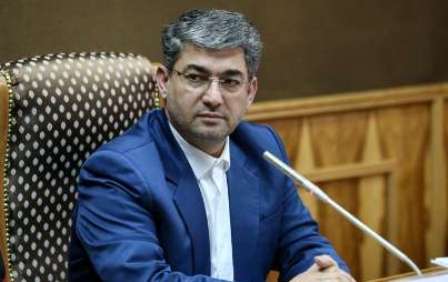
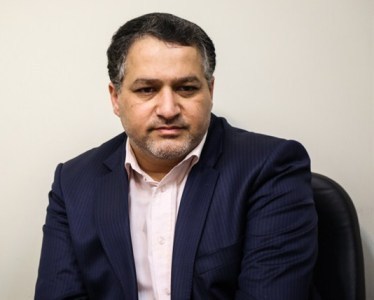
Mohammad Amin Rezazadeh

In an interview with IRNA, as Translated by IFP, Mohammad Amin Rezazadeh, the secretary of Article 10 Commission of Parties’ Law, announced that 16 ITTAs were permitted to hold General Assemblies.

“For many years, these ITTAs were awaiting to receive permission until July 4 when the Article 10 Commission permitted them to hold General Assembly and amend the Articles of Association in accordance with Parties and Associations Law [PAL],” IRNA quoted the secretary as saying.

Rezazadeh, who is also the General Director of Politics at the Ministry of Interior, further named these 16 ITTAs individually, “Iranian Teachers Trade Associations of Tehran, Ilam, East Azarbaijan, Independent ITTA of Tehran, Lorestan, Isfahan, Fars, Golestan, Zanjan, Alborz, Gilan, Kohgiluyeh and Boyer-Ahmad, Bushehr, Mazandaran, Khorasan Razavi, and North Khorasan provinces.”

Iran’s Petchem Complex to Resume Operation Within Weeks: Minister

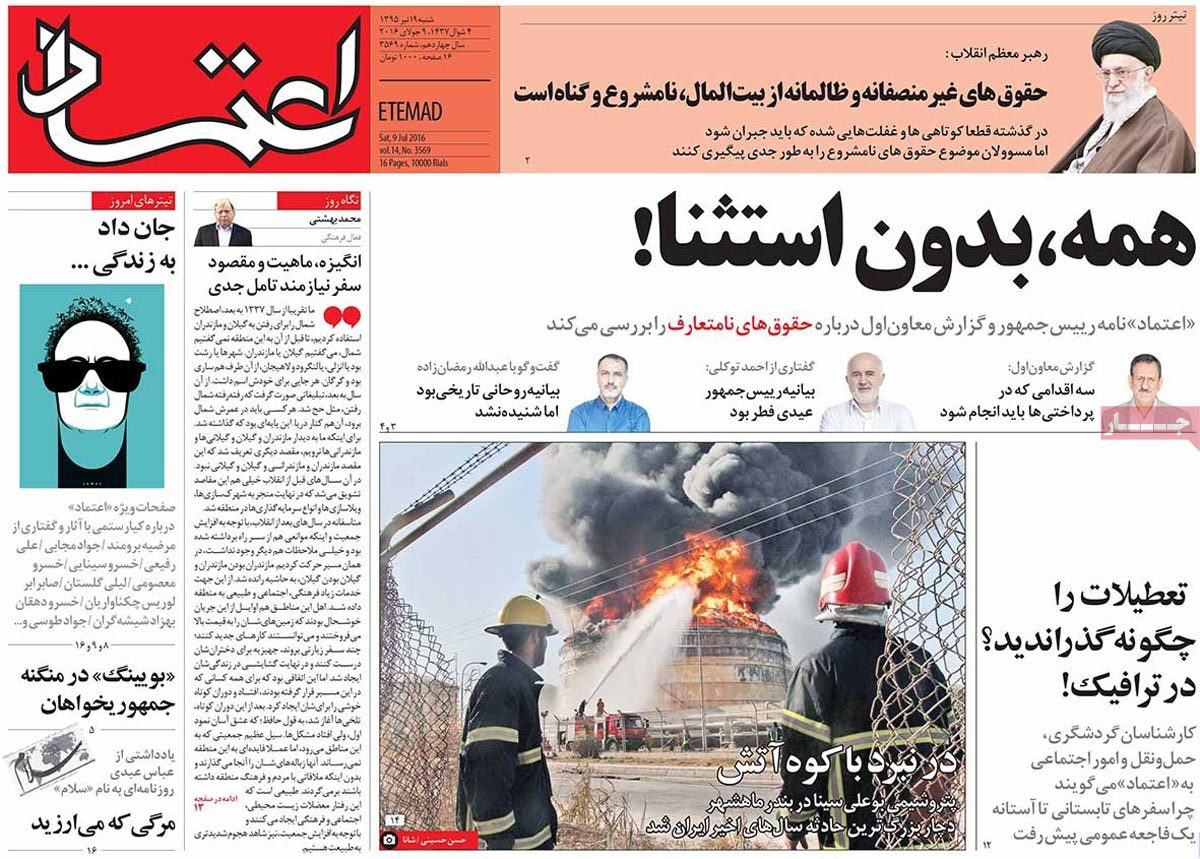
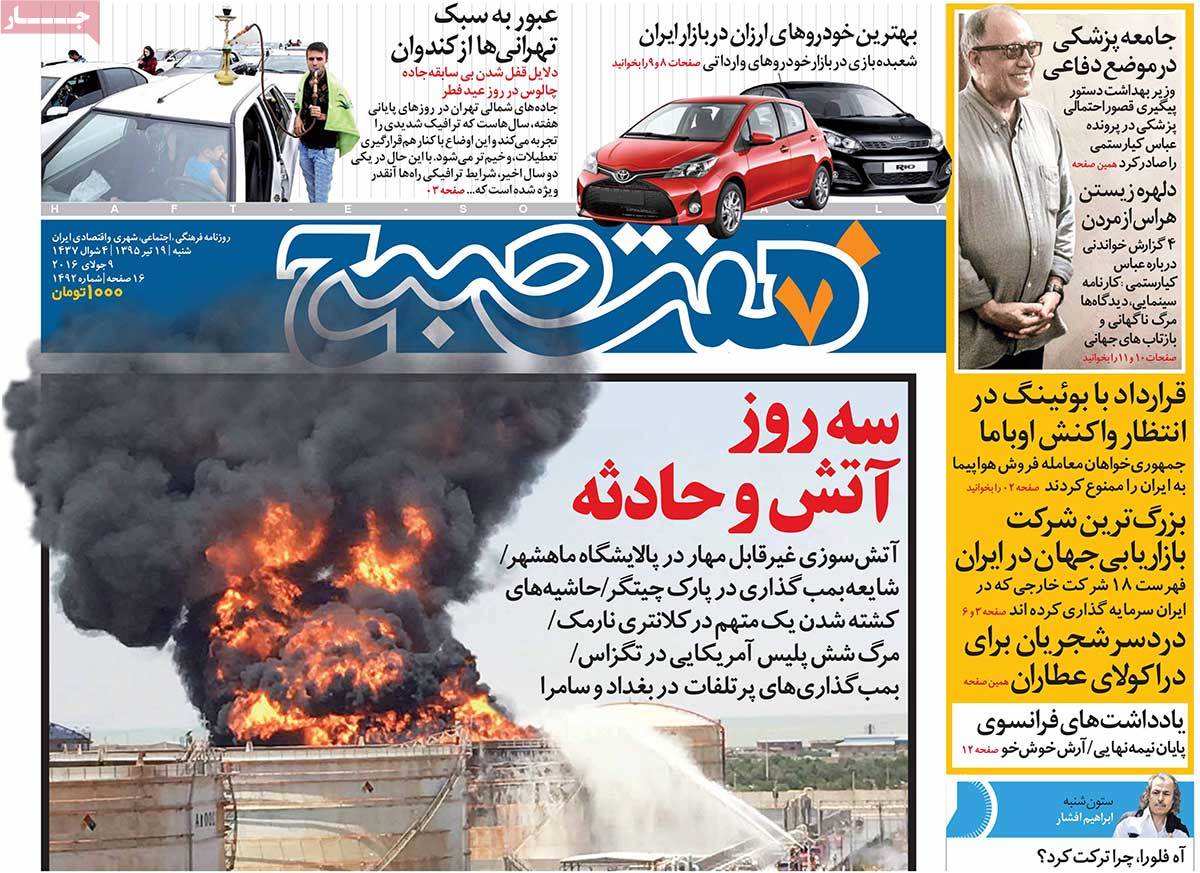
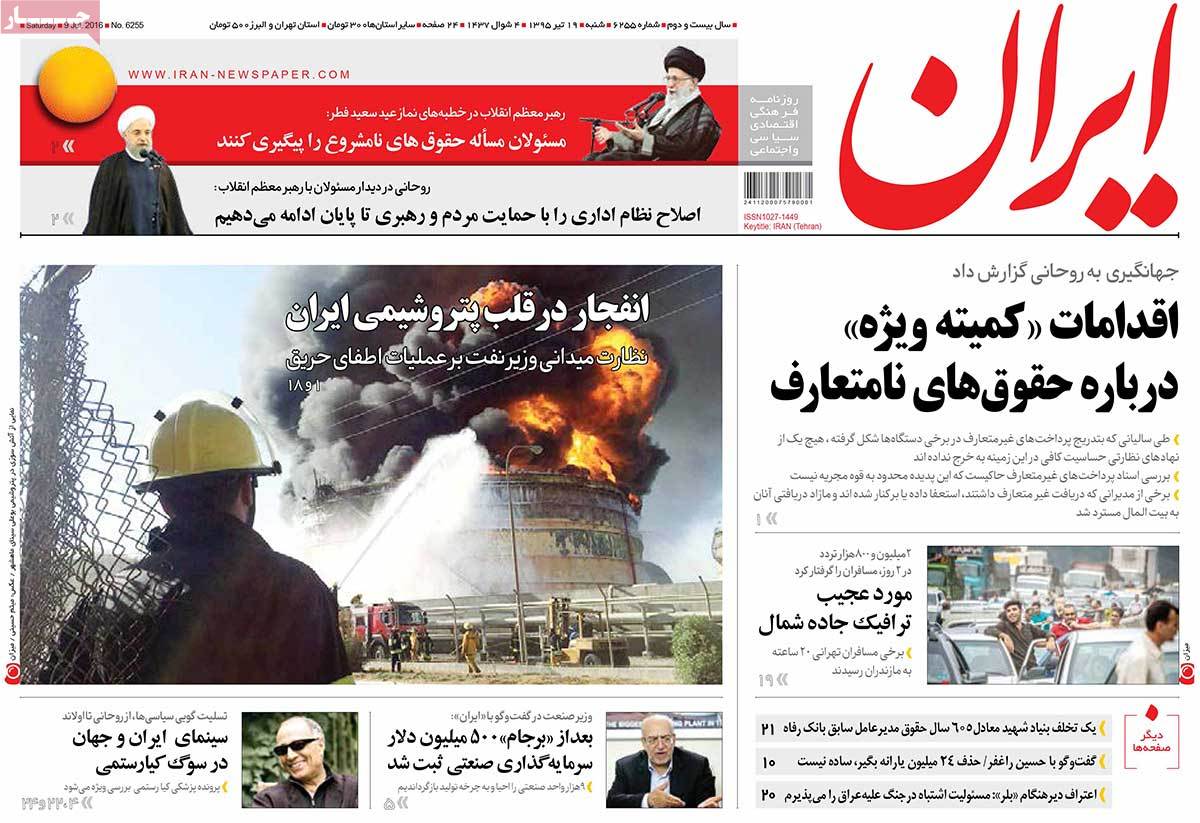
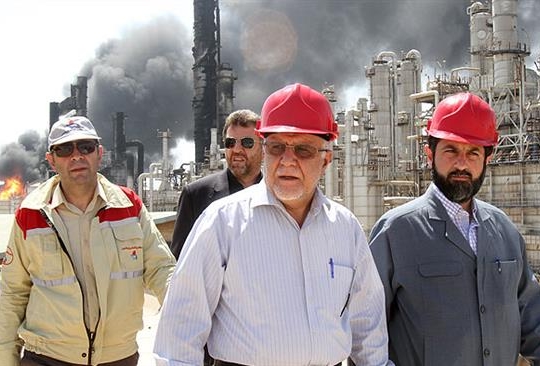
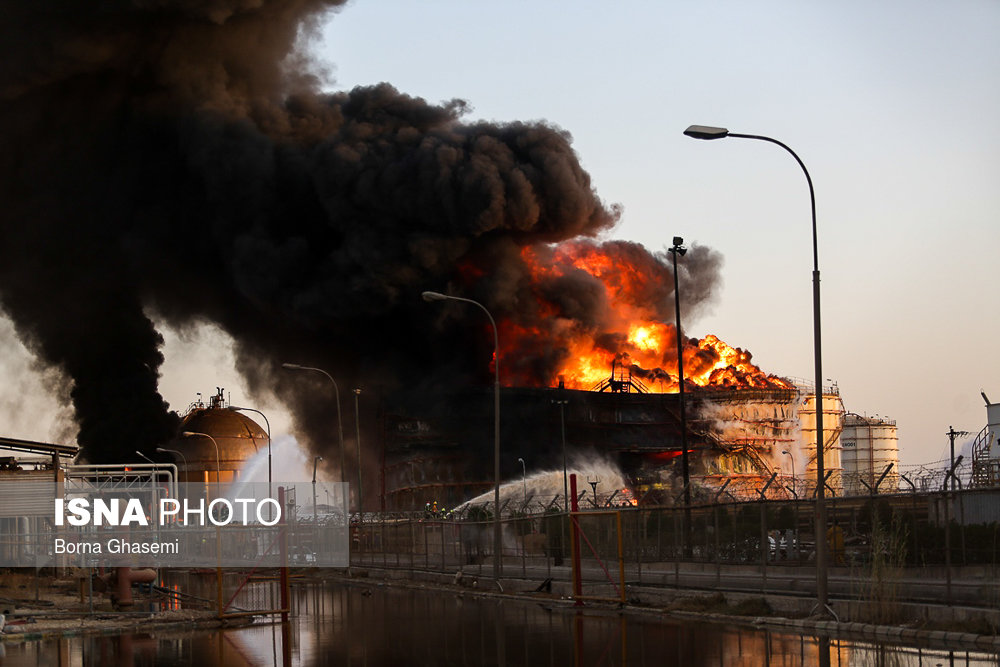
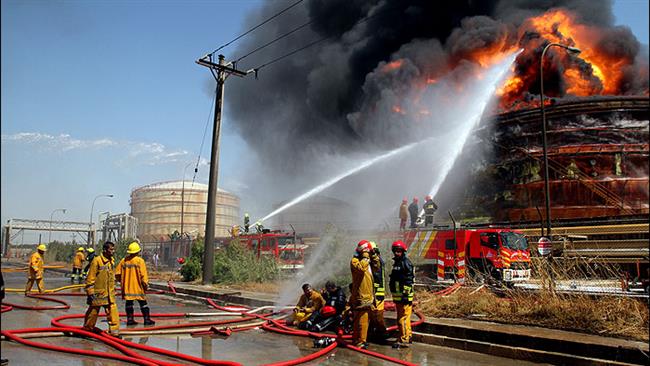
Iranian Minister of Petroleum Bijan Zangeneh is seen at Bu Ali Sina Petrochemical Complex in Iran’s southwestern province of Khuzestan on July 8, 2016. ©SHANA

Bijan Zangeneh told reporters early on Saturday that the complex will return to normal condition in two or three weeks, though it will take longer for its paraxylene tower to be repaired and start over regular activities.

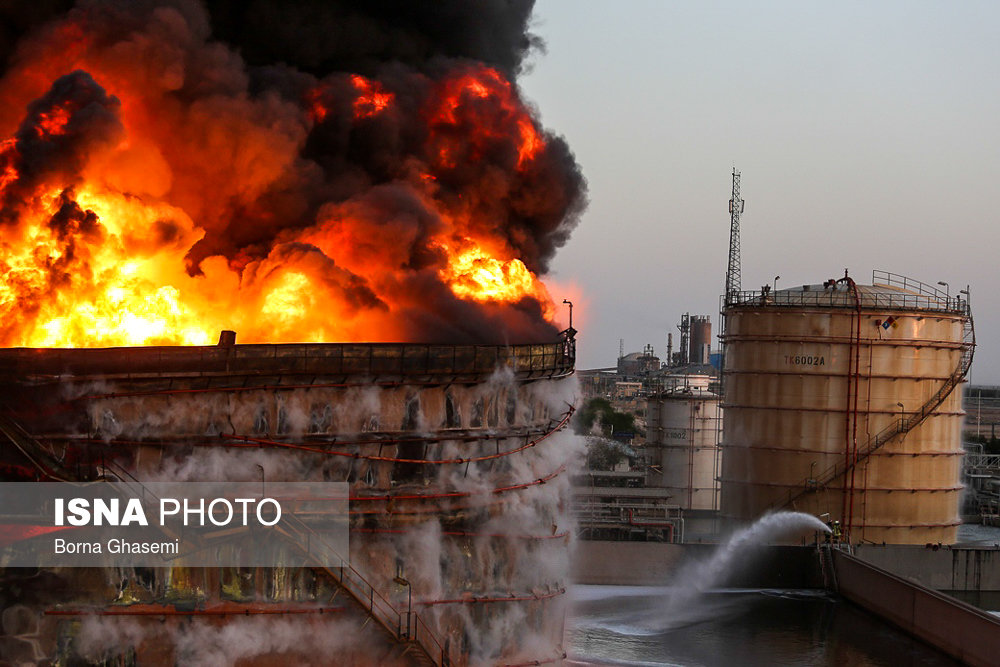
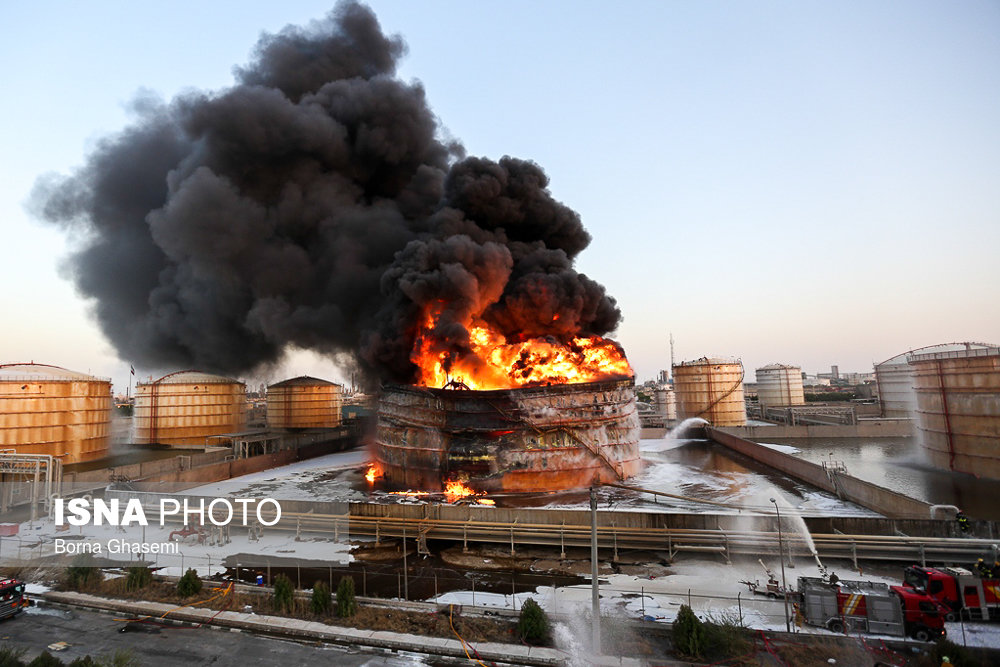
He expressed his gratitude to firefighting teams for their efforts to extinguish the blaze at the petrochemical complex, describing the cooling of liquefied petroleum gas (LPG), benzene and petroleum naphtha tanks as the most important part of the battle to contain the fire.

He added that personnel from Bu Ali Sina Petrochemical Complex, Shahid Tondgooian Petrochemical Company, Bandar Imam Petrochemical Complex, the National Iranian South Oil Company (NISOC), Ports and Maritime Organization (PMO), as well as Khuzestan provincial governor’s office were in action to keep the temperature and pressure at the tanks low.

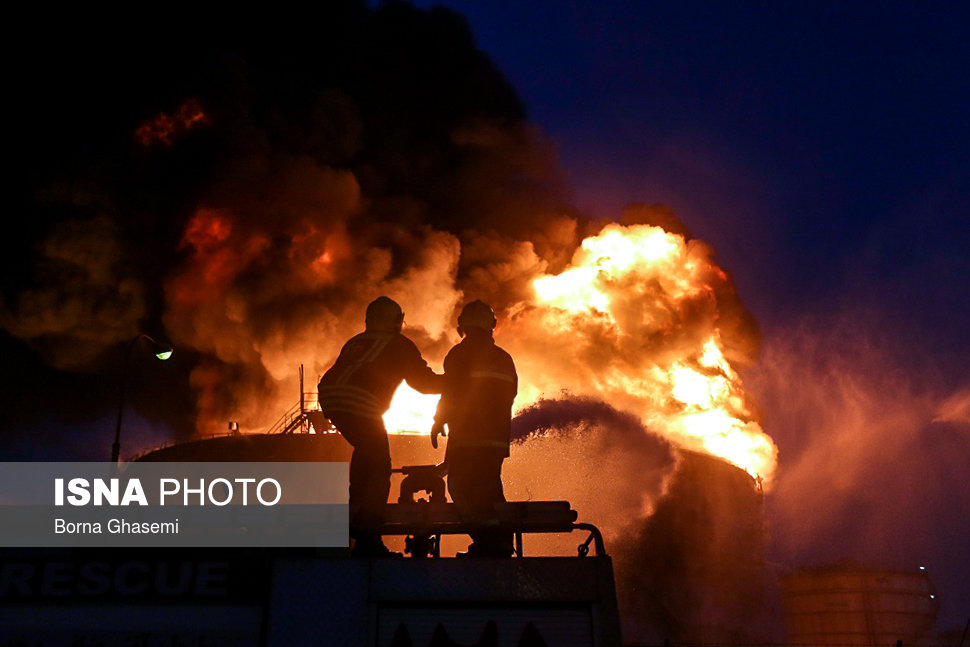
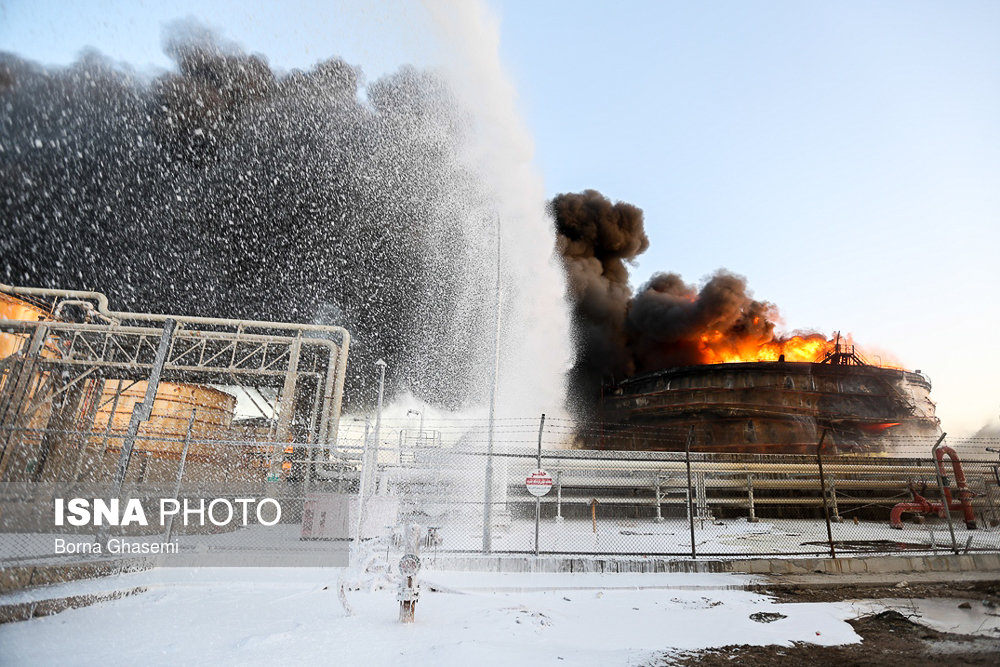
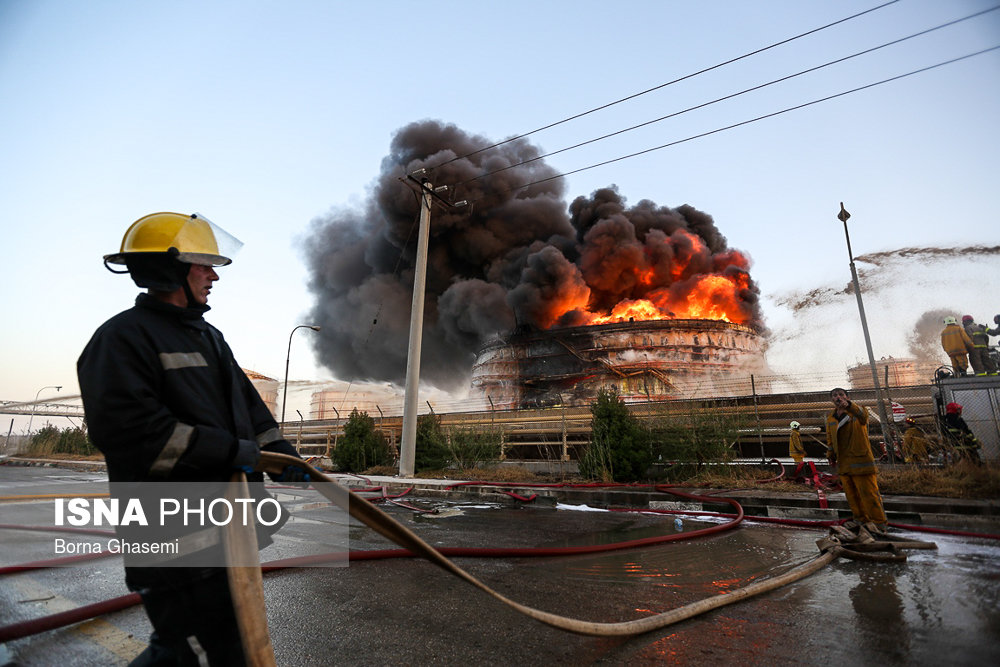
Iranian firefighters are seen fighting a raging fire at Bu Ali Sina Petrochemical Complex in the country’s southwestern province of Khuzestan on July 8, 2016. ©SHANA

Zangeneh further noted that foaming and cooling operations are currently underway in Bu Ali Sina Petrochemical Complex to prevent recurrence of the conflagration.

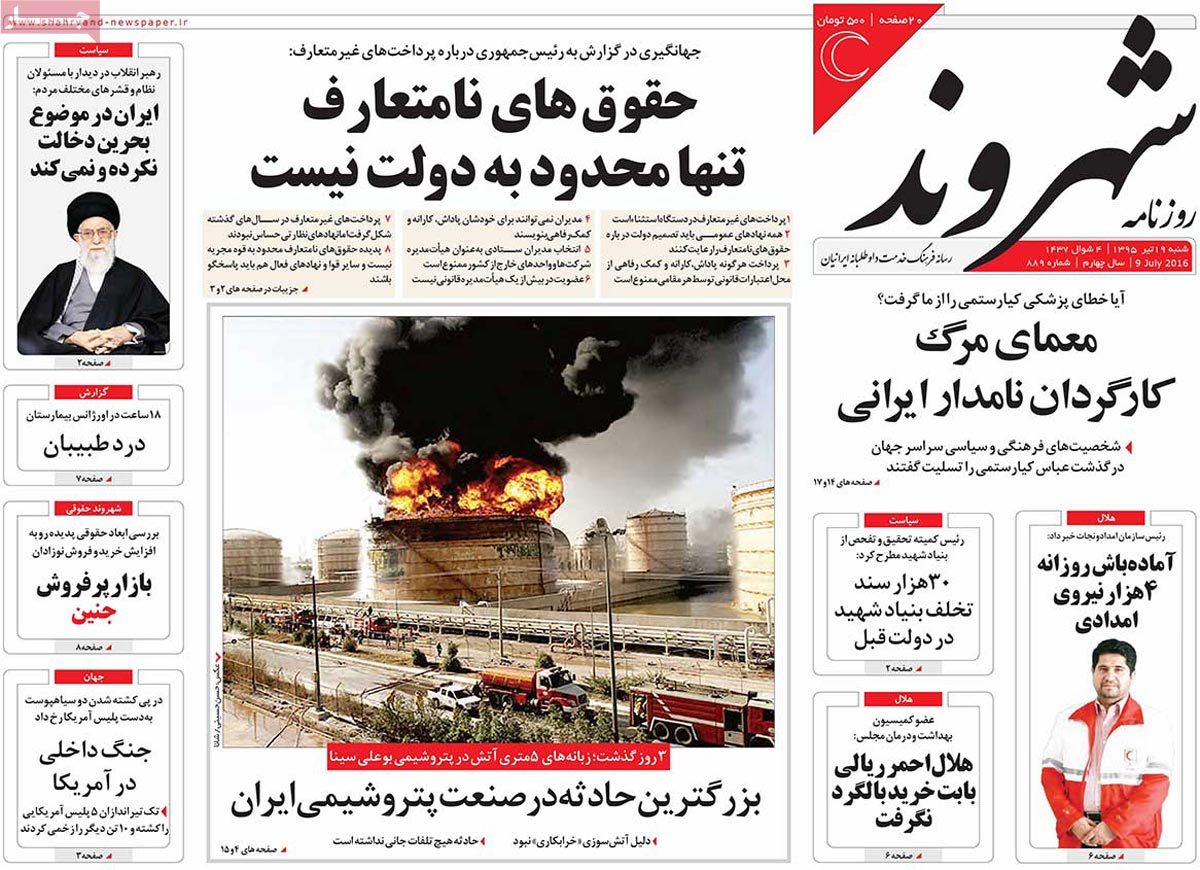
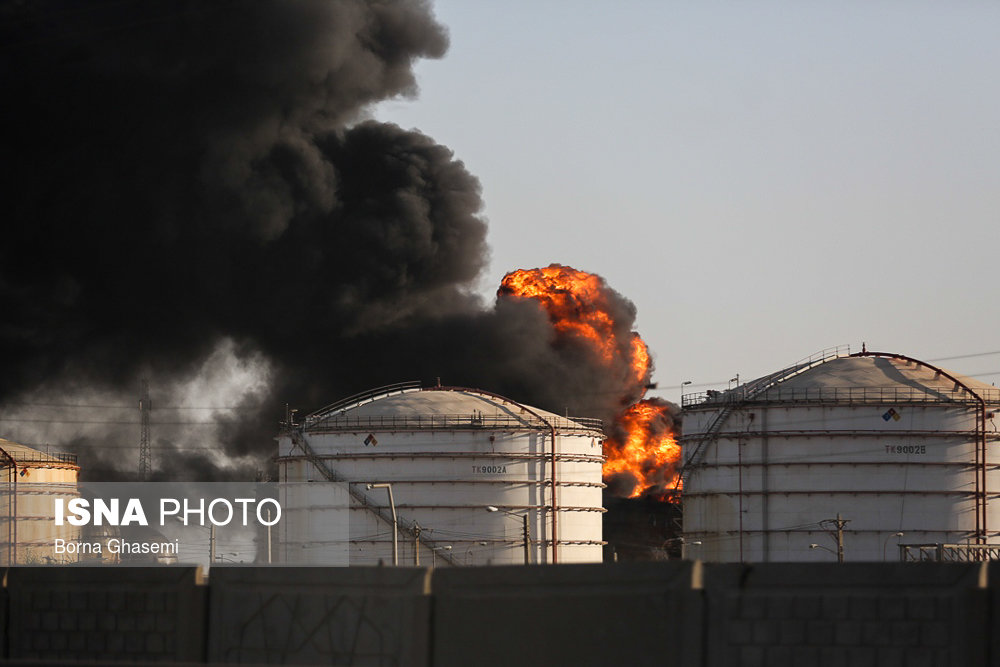
Firefighters managed to fully contain the blaze at the complex in the early hours of Saturday, almost three days after it erupted due to an explosion in one of its key towers.

It is still not clear what exactly caused the incident, but Zangeneh has ruled out sabotage and said the fire erupted due to technical issues.

There have also been conflicting reports on the number of casualties. Some reports initially said several people had been killed in the incident while others said there had been no casualties.

Mahshahr Special Economic Zone is a key industrial zone on the southern shores of Khuzestan, where a chain of petrochemical plants is situated.

Iran Urges UN’s Unbiased Report on US Failure to Meet JCPOA Undertakings

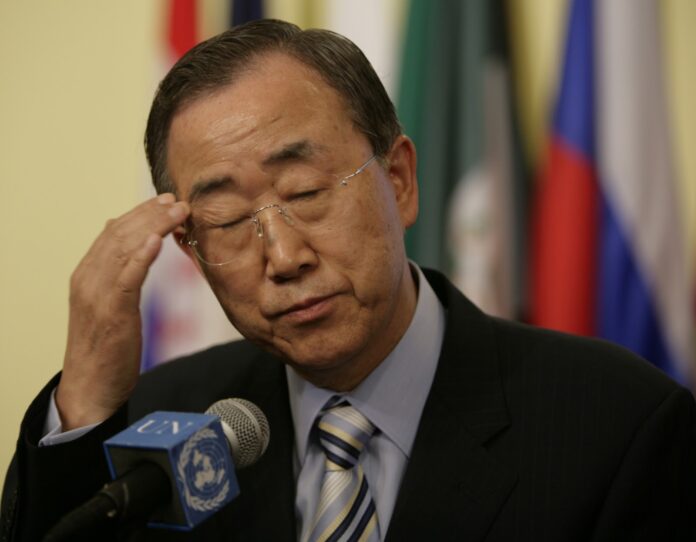
Ban Ki-Moon

The Iranian official expressed the hope on Friday that a report that Reuters has attributed to Bank Ki-moon would not be authentic.

Reuters claimed on Thursday it has seen a confidential report by the UN chief, saying Iran’s ballistic missile launches “are not consistent with the constructive spirit” of a nuclear deal between Tehran and the Group 5+1 (Russia, China, the US, Britain, France and Germany).

“I call upon Iran to refrain from conducting such ballistic missile launches since they have the potential to increase tensions in the region,” Reuters’ story quoted Ban as saying in his first bi-annual report to the 15-member Security Council on the implementation of remaining sanctions and restrictions.

The Security Council will reportedly discuss Ban’s report on July 18.

Iran has already made it clear that test of missiles is an issue relating to defense of its territorial integrity and that none of its missiles are designed to carry nuclear weapons.

In reply, the official at Iran’s Foreign Ministry pointed to the fact that the UN officials were not part of the nuclear negotiations between Iran and the six countries and are accordingly uniformed about the history of the agreements.

The official further called on Ban to avoid the interpretations that are inconsistent with the text of the Joint Comprehensive Plan of Action (JCPOA) and disclose political pressures imposed (on Ban) by one or a number of the UNSC member states.

The official also asked the UN authorities to act within the limits of their position and make a “fair and realistic” report on Washington’s failure to honor its commitments under the JCPOA, which has been acknowledged by the whole countries that have begun to resume trade ties with Iran after the nuclear deal.

While the JCPOA came into force in January, some Iranian officials complain about the US failure to fully implement the accord.

Back in March, Leader of the Islamic Revolution Ayatollah Seyed Ali Khamenei said Americans have yet to fulfill what they were supposed to do as per the nuclear deal.

Iran still has problems in its banking transactions or in restoring its frozen assets, because Western countries and those involved in such processes are afraid of Americans, the Leader said at the time, criticizing the US for its moves to prevent Iran from taking advantage of the sanctions removal.

Iran: Washington Responsible for Fulfillment of JCPOA Undertakings

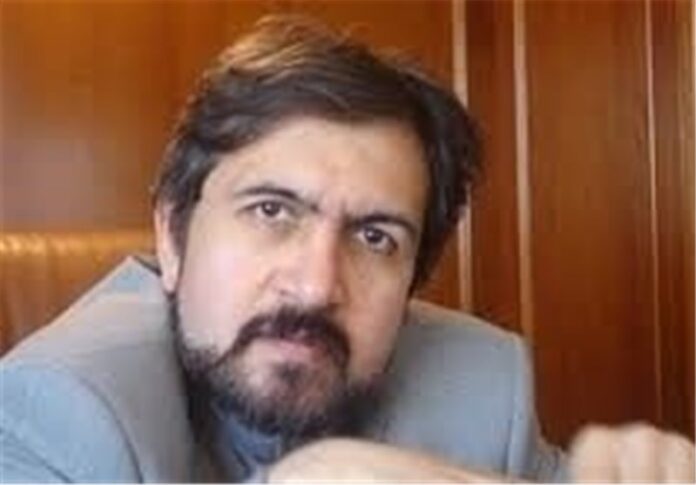
Iran FM Spokesman Bahram Qasemi

“What is important to the Islamic Republic of Iran is the opposite party’s commitment to its obligations, and we have nothing to do with the US domestic issues,” Iranian Foreign Ministry Spokesman Bahram Qassemi said in a statement on Friday.

The statement came after the Republican-weighted US House of Representatives on Thursday voted by voice to pass two amendments to a financial services spending bill aimed at barring Chicago-based Boeing from selling commercial passenger aircraft to Tehran.

Qassemi criticized the US lawmakers’ measures, saying Washington is duty-bound to put right all measures that are inconsistent with last year’s nuclear agreement, also known as the Joint Comprehensive Plan of Action (JCPOA).

He said sensitivities and inter-party blackmailing in the US on the verge of the country’s presidential election are understandable, but the irreversible outcomes of such differences among US parties and the lack of commitment to JCPOA obligations would backfire on themselves.

Iran and the Group 5+1 (Russia, China, the US, Britain, France and Germany) reached the landmark nuclear agreement on July 14, 2015. The deal ended international economic sanctions against Tehran, allowing airline manufacturers to re-enter the market.

Head of Iran’s Civil Aviation Organization (CAO) Ali Abedzadeh said in June that Tehran and US aerospace giant Boeing have reached a deal for the purchase of 100 aircraft in a bid to upgrade the country’s aging fleet.

Back in January, Iran had also signed a major deal worth $27 billion with aviation giant Airbus to purchase 118 planes from the company. The deal with Airbus was sealed during a state visit to Paris by Iran’s President Hassan Rouhani.

Iran has a fleet of 250 aircraft, of which 90 are grounded due to the economy or missing parts, Managing Director of Iran Air Farhad Parvaresh said recently.

Of that total, 80 percent will need to be renewed in the next decade, he said, adding that growth could add even more jets to Iran’s shopping list.

This Year’s Hajj to Be a Dangerous Journey, Pakistani Senator Warns

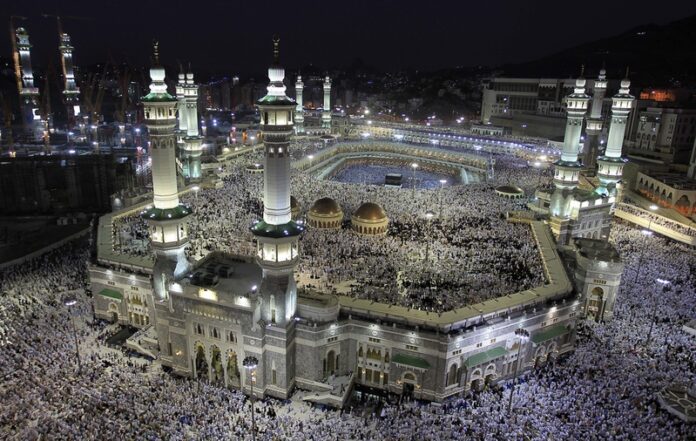
Hajj - Saudi Arabia

According to a report by IRNA, as translated by IFP, Syed Tahir Hussain Mashhadi, a member of Pakistan’s Foreign Affairs Commission, described the recent terrorist attacks in Saudi Arabia as a clear example of an idiom that says, “Your sins will find you out.”

Syed Tahir Hussain Mashhadi, a member of Pakistan’s Foreign Affairs CommissionHe further strongly warned against this year’s Hajj pilgrimage, adding, “Saudi Arabia’s all-out support for the terrorist outfits and groups is the main backbone of terrorism.”

In his interview with IRNA, the Pakistani politician said, “There is no doubt that terrorist attacks will increase in Saudi Arabia. Saudi kings, despite their hypocritical claims and ostensible measures such as forming a coalition to fight terrorism, have not been immune to the detrimental effects of their moves.”

“Given the recent terrorist operation near Prophet Muhammad’s shrine and Medina while there are only two months left to the commencement of Hajj season, one can safely assume that this year’s hajj pilgrimage will face a looming danger,” he added.

Mashhadi voiced concern over the pilgrims’ safety and said, “Forces from the United Nations and Islamic countries should come to help incompetent Saudis organize Hajj pilgrimage.”

“It is no secret that if the arms supply and financial assistance to terrorist groups operating in the Middle East are not cut, we should be expecting an increase of terrorist operations in other countries,” he added.

Terrorism knows no boundaries and adheres to no principle, he noted, adding, “After raiding Syria, Iraq and Yemen, terrorists are now launching attacks against countries whose leaders would have never thought their petrodollars would harm their own people.”

Mashhadi blamed the “illegitimate Zionist regime” [Israel] and Saudi Arabia for sowing the seeds of terrorism across the world.

Concerns have been rising among pilgrims after the terrorist attacks recently launched in the cities of Medina and Jeddah only two months before this year’s Hajj pilgrimage.

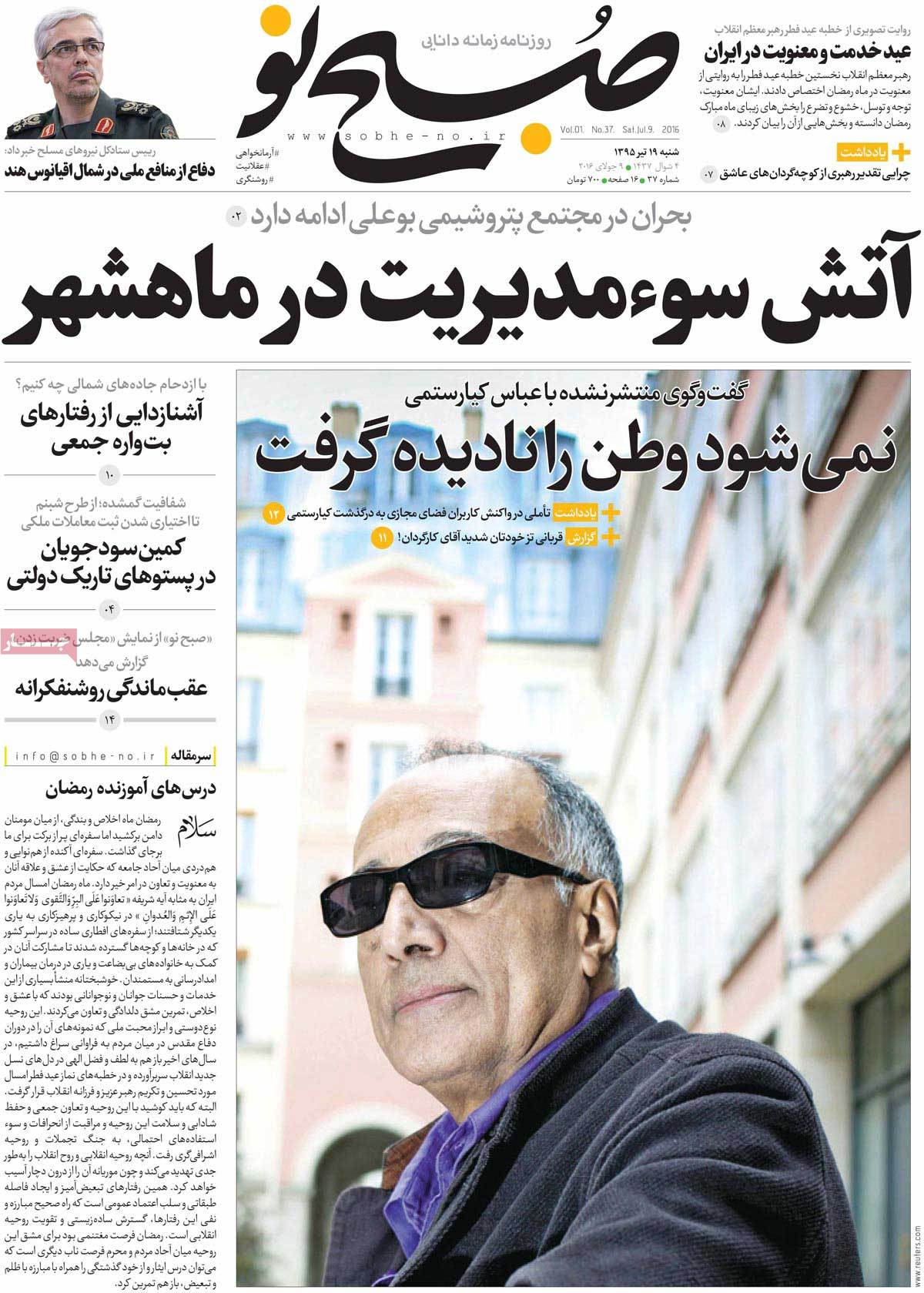
Kiarostami Gave New Life to Experimental Cinema

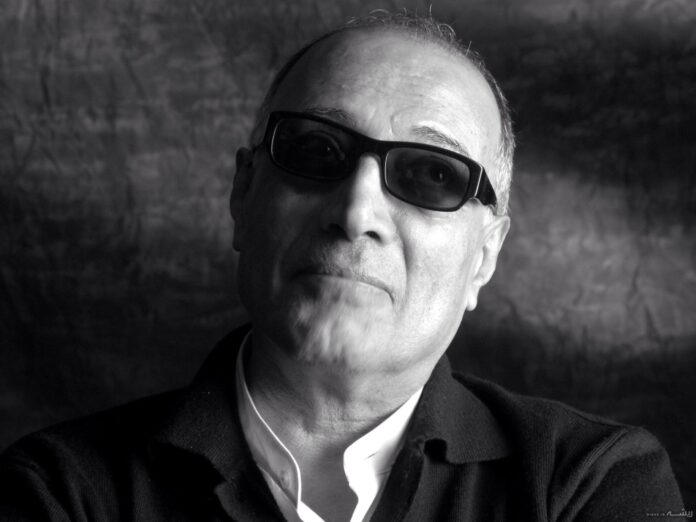
Abbas Kiarostami

Kiarostami died on July 4 at the age of 76. His death was a great shock to art lovers and cinema professionals in Iran and many other parts of the world. Many people, including Tabesh, have since released messages on his demise. While offering its condolences over the acclaimed director’s death, IFP publishes Tabesh’s message as follows:

Alireza Tabesh“I extend my heartfelt sorrow on the death of the brilliant figure of Iranian cinema and the world, Abbas Kiarostami, to the Iranian people, filmmakers, and the entire art loving community.

Abbas Kiarostami is a leading figure in the art of cinema. His approach is humanistic and ethical.

He has created innovative, modern and magnificent work. Kiarostami brought a new genre to the Iranian cinema and as a consequence made the Iranian cinema famous in the artistic circles all around the globe. Kiarostami gave a new life to experimental movies and paved the way for an entire generation of experimental and new wave filmmakers and for the empiricists in the seventh art.

My condolences to his family, may our prayers bring comfort and peace to them.

May his soul rest in peace.”

Army General Becomes Deputy Chief of Staff of Iranian Armed Forces

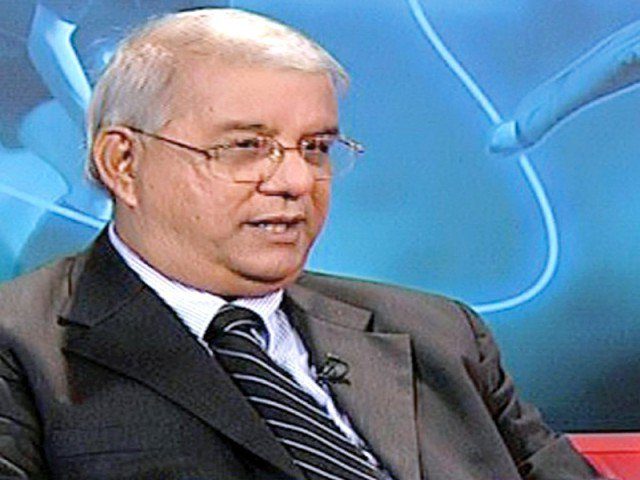
General Abdul-Rahim Mousavi

According to a report by Fararu, as translated by IFP, General Mousavi replaced Major General Gholam-Ali Rashid, who was a member of the Islamic Revolution Guards Corps (IRGC).

The appointment, which was declared on July 5, came after Major General Mohammad Baqeri was appointed by the Leader as the new Chief of Staff of Iran’s Armed Forces.

General Bagheri replaced Major General Hassan Firouzabadi, who had served at the post for more than two decades.

At Least 35 Killed in ISIS Attack on Shiite Shrine North of Baghdad

At Least 35 Killed in Daesh Attack on Shiite Shrine North of Baghdad

A man detonated an explosive belt at the external gate of the Mausoleum of Sayyid Muhammed bin Ali al-Hadi at around 11 pm, allowing several gunmen to storm the site and start shooting at worshippers on the occasion of the Eid al-Fitr festival, according to the security sources.

At Least 35 Killed in Daesh Attack on Shiite Shrine North of BaghdadAt least one gunmen blew himself up in the middle of the crowd while another was gunned down by the guard of the mausoleum before he could detonate his explosive belt.

The site also came under rocket fire during the attack that was claimed by ISIS. The terror group said in a statement the attack was carried out by three suicide bombers wearing explosive belts.

Pictures posted on social media showed a fire burning in the market located at the entrance of the mausoleum. It was not clear if the site itself was damaged.

Prominent Shiite cleric Muqtada al-Sadr ordered his forces, the Peace Brigade, to deploy around the mausoleum, near Balad, about 93 kilometers (58 miles) north of Baghdad, Reuters reported.

At Least 35 Killed in Daesh Attack on Shiite Shrine North of BaghdadThe Peace Brigade is also deployed in Samarra, a nearby city that houses the shrine of Imam Ali al-Hadi, the father of Sayyid Muhammed whose mausoleum was attacked on Thursday.

A 2006 bombing destroyed the golden dome of the shrine of Ali al-Hadi and his other son, Imam Hasan al-Askari (AS).

The attack came several days after a massive bombing that killed at least 292 people in a mainly Shiite shopping area of central Baghdad, in the deadliest single bombing since the US-led invasion that toppled Saddam Hussein in 2003.

UAE Plans to Install Prince Mohammed as New Saudi King

Sheikh Mohammed bin Zayed al-Nahyan and Mohammad bin Salman

Prince Mohammed is being advised by Sheikh Zayed on how he can win backing from the US and become king by the end of 2016, Middle East Eye reported.

Two “well-placed Saudi sources” said the de facto UAE ruler Sheikh Mohammed bin Zayed al-Nahyan is advising Mohammed on a two-pronged strategy to become Washington’s preferred choice as the next Saudi ruler.

The first Saudi source said bin Zayed has told bin Salman that he must “end the rule of Wahhabism” if he wants to be accepted by the Americans, the online news portal reported on June 29.

Wahhabism is the radical ideology dominating Saudi Arabia which has inspired Takfiri groups such as ISIS and al-Qaeda-linked Nusra Front to wreak havoc in the Middle East, Press TV reported.

Bin Zayed has also told bin Salman that he must open a “strong channel of communication” with Israel if he is to be Washington’s preferred candidate to be king, the report added.

The second Saudi source reportedly said bin Salman is willing to win the backing of Washington after telling close associates recently that he would complete the mission of becoming king before the end of the year.

The 30-year-old bin Salman, who also serves as the Saudi defense minister, has been granted increasing power since he was named the third in line to the throne last April.

He is heading up the country’s economic reforms plan, the kingdom’s policy towards Syria and its deadly aggression against Yemen.

The young prince’s meteoric rise, however, has sparked tensions within the Saudi royal family.

According to the report, bin Salman would seek to fundamentally change the role of religion in the kingdom on bin Zayed’s advice.

The UAE’s de facto ruler Sheikh Mohammed bin Zayed al-Nahyan (R) meets with US Secretary of State John Kerry at Mina Palace in Abu Dhabi on June 8, 2016. © AFP

One of the two Saudi sources said that bin Salman plans to cancel the Council of Senior Scholars, which is the kingdom’s highest religious body, and stop all activities that serve Wahhabism.

“The aim will be for him [bin Salman] to be hailed as a hero by the press, Congress, and academia, so that the [US] administration is forced to follow.”

Such a plan is highly risky given the influence of religious bodies in the kingdom and could lead to a serious showdown.

The second strategy advised by bin Zayed to win Washington’s backing was developing close relations with Israel.

Israel has covert ties with Arab states despite their claims that they would normalize relations with Tel Aviv only when it reaches a deal with the Palestinians.

In April, the Jerusalem Post wrote that “rather than being isolated, Israel is being incorporated into the Saudi-led orbit,” citing the opening of a mission in Abu Dhabi and increasing contacts in the Persian Gulf States.

One of the Saudi sources said Washington could be swayed into supporting bin Salman’s bid to be king if he could achieve good communication with Israel, even if the Americans like their long-time ally bin Nayef.

Bin Nayef may be the first in line to throne but his quietness – and bin Salman’s prominence – has led many to conclude the experienced 56-year-old’s power is waning.

During bin Salman’s recent visit to the US, where he met President Barack Obama, a report emerged that American intelligence officers believed the current Saudi ruler King Salman and Crown Prince Muhammad bin Nayef suffer from ill health.

“We’ve put a lot of markers down on Mohammed bin Nayef. It’s the smart move to do the same with bin Salman. It’s an opportunity to get to know him,” Bruce Riedel, an ex-national intelligence officer and a member of Obama’s transition team, said.