Saturday, December 27, 2025
Home Blog Page 4408

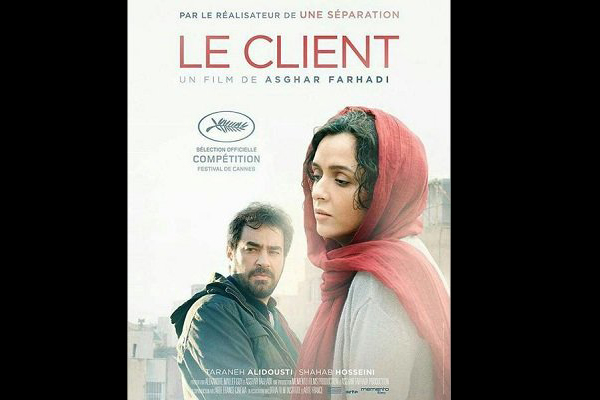
Farhadi’s Newest Movie Poster Unveiled at Cannes Festival

Just days before opening the 69th edition of the Cannes Film Festival in the French city of Cannes, the latest feature film of Asghar Farhadi unveiled its poster with a French title different from the English title formerly announced. Farhadi is a renowned Iranian director, who won an Oscar for his 2011 film A Separation.

Farhadi shot his latest work The Salesman (Le Client) in Tehran, starring Taraneh Alidoosti, Shahab Hosseini, and Babak Karimi.

The movie tells the story of a couple whose relationship begins to turn sour during their performance of Arthur Miller’s Death of a Salesman.

“As in my previous films, The Salesman addresses how social challenges can propel the downfall of some people,” Farhadi was quoted as saying.

The 2016 Cannes Film Festival is scheduled to open on May 11, and Farhadi’s movie is announced to be screened on the day before the award ceremony on May 21 at Grand Théâtre Lumière.

Behnam Behzadi’s Inversion is another Iranian film participating in the event, which is scheduled to be competing in the Un Certain Regard section, run at the Salle Debussy, in parallel with the competition for the Palme d’Or.

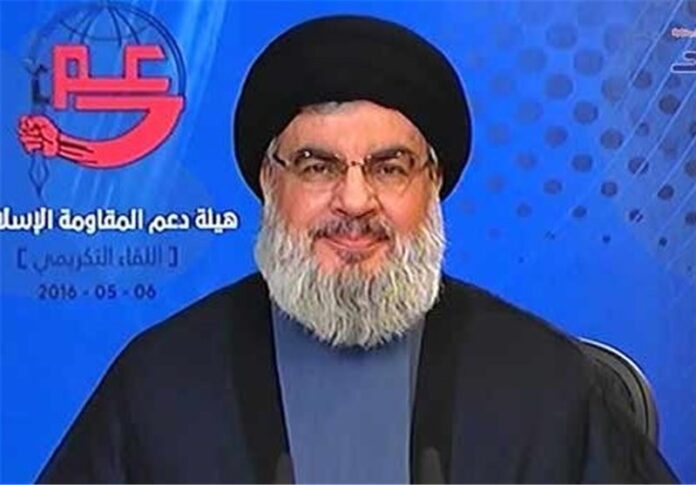
Riyadh Attempting to Disrupt Syria, Yemen’s Peace Talks: Nasrallah

Nasrallah said Saudi Arabia, a main backer of the Takfiri militants, is escalating conflicts in Syria and Yemen in order to thwart any peace efforts.

He made the comments during a televised speech in the Lebanese capital, Beirut, on Friday.

Nasrallah further criticized Saudi Arabia for labeling Hezbollah as a terrorist organization, saying such a move aims to tarnish its reputation and please the US.

He said the Saudi regime failed to convince fellow Muslim states to join its stance against Hezbollah, adding that the Organization of Islamic Cooperation (OIC) did not recently reach consensus in its final statement against the resistance movement.

Nasrallah also thanked Indonesia, Iraq, Tunisia and Algeria and other supporters of the resistance while hailing Iran’s unwavering support.

He also said that Syria is engulfed in a war because of its support for resistance movements in Palestine and Lebanon, adding the US and Israel target Hezbollah and its backers, Press TV reported.

The secretary general of the Lebanese resistance vowed that resistance movements would come out stronger from attacks and assassinations.

The Saudi kingdom has been targeting Hezbollah, which has been fighting Saudi-backed extremism inside both Lebanon and Syria.

Earlier this year, Lebanese Foreign Minister Gibran Bassil refused to back a motion drafted by Saudi Arabia against the Islamic Republic, prompting Riyadh to retract a $4-billion aid pledge to Lebanon and demand an apology, which Lebanon refused to give.

The motion had sought to condemn Tehran over January attacks on vacant Saudi diplomatic premises. The attacks occurred during otherwise peaceful protests against Saudi Arabia’s earlier execution of prominent Shia cleric, Sheikh Nimr al-Nimr.

Some local media reports in Lebanon have, meanwhile, said the Saudis may be applying pressure to secure the release of a member of the royal family held in Lebanon since last October on drug charges.

Abdul-Mohsen al-Waleed Al Saud was detained in Beirut after authorities seized two tons of amphetamine pills before they were loaded onto his private plane.


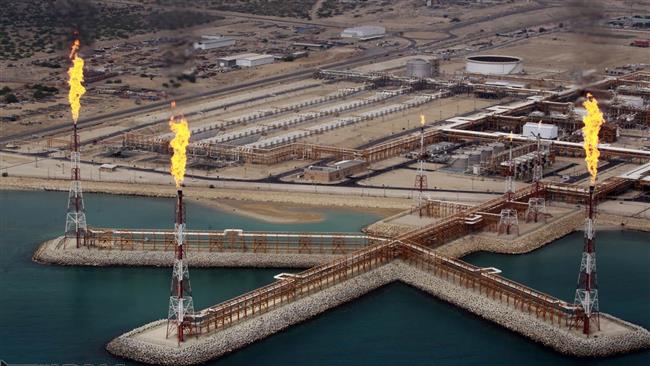
Iran set to take over Qatar in gas output from shared field

Ali-Akbar Sha’banpour, the managing director of Pars Oil and Gas Company (POGC), told reporters that Iran’s production of natural gas from the field – called South Pars by Iran and the North Dome by Qatar – will surpass 500 million cubic meters per day (mcm/d) once several ongoing projects are fully developed.

Sha’banpour said the projects are phases 17, 18, 19, 20, and 21 of South Pars.

Iran’s current production from the field – the world’s largest independent gas field – stands at around 130 mcm/d, he added.

The official further emphasized that the prospects for Iran’s win in its rivalry with Qatar in producing gas from the field comes as Qatar’s production has been at a fixed level of about 177 mcm/d over the past three years.

“In 2013, Qatar’s production from the field was two times higher than Iran’s,” said Sha’banpour. “Today, Iran has been able to decrease the difference by putting more projects into production,” he added.

The huge offshore field covers an area of 9,700 square kilometers, 3,700 square kilometers of which are in Iran’s territorial waters in the Persian Gulf. The remaining 6,000 square kilometers are situated in Qatar’s territorial waters.

The field is estimated to contain a significant amount of natural gas, accounting for about eight percent of the world’s reserves, and approximately 18 billion barrels of condensate.

Iran has defined over 20 projects in South Pars – each designated as a numbered phase. Over a dozen phases have been made operational, several will be – as Sha’banpour said – fully developed soon and the remaining phases are still to be awarded to companies.

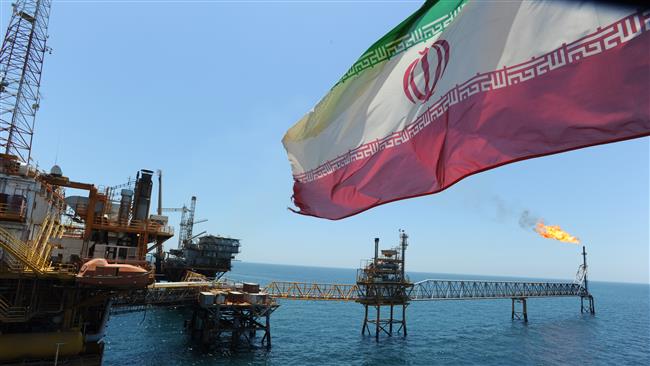
Iran Says Ready to Join Oil Freeze Plan

Mohsen Qamsari, the director for international affairs of the National Iranian Oil Company (NIOC), told reporters that Iran has already reached the desirable level of oil output to proceed with freezing its production.

Qamsari said Iran’s current production of oil, based on OPEC calculations, stands at around 4.2 million barrels per day (bpd) by considering the daily production of 500,000 bpd of condensate.

“Accordingly, the desirable figure for Oil Minister [Bijan Zangeneh] has been reached and we can join the oil freeze plan,” he has been quoted as saying by Tasnim news agency.

Nevertheless, the official emphasized, the decision to join the plan should be taken by the oil minister, himself.

“It is expected that he will make a decision over this,” other news agencies have quoted Qamsari as saying.

The oil freeze plan that has been raised by key OPEC and non-OPEC producers requires the global production of oil to remain at January levels.  The plan is meant to boost the prices that have fallen 65 percent since peaking in June 2014 due to oversupply.

Iran had so far rejected the call to freeze its output as unfair and emphasized that it will go ahead with its plans to increase its oil production.

Nevertheless, it had made it clear that it is ready to join the plan after its output reaches 4 million barrels per day.

The country had been under multiple years of sanctions that limited its oil exports to 1 million barrels per day and also barred foreign investments in its oil industry.

The sanctions were lifted in mid-January with the implementation of a deal that the country had reached with the P5+1 – the five permanent members of the Security Council plus Germany – over its nuclear energy program.

Shortly after the removal of the sanctions, Iran increased its oil production by several hundred thousand barrels per day.

NIOC’s Qamsari told reporters on Friday that Iran’s oil exports already stand at 2.2 million bpd of which at least 0.5 million bpd is exported to Europe.

He also emphasized that any fresh rise in the country’s oil production will depend on market conditions and its domestic capabilities.


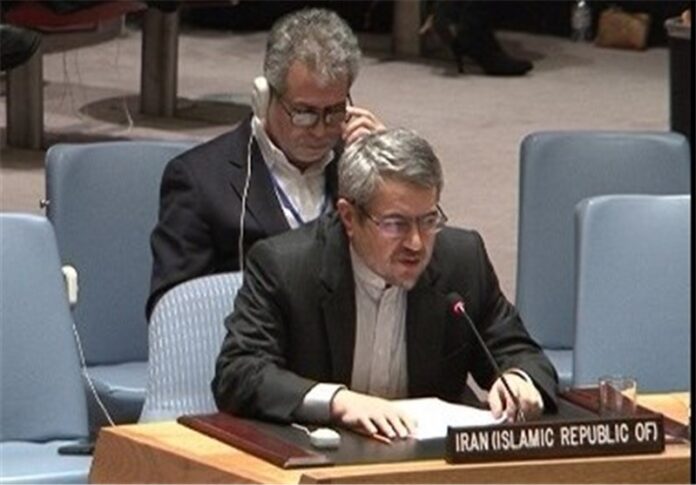
NAM Deplores US Violation of Principle of Sovereign Immunity

On behalf of the NAM, Iran’s UN Ambassador Gholam Ali Khoshroo sent a letter to the United Nations Secretary-General Ban Ki-moon on Thursday, submitting the Communiqué of the Coordinating Bureau of the Non-Aligned Movement on the violation of the principle of sovereign immunity of States by the US.

He also asked the UN chief to circulate the letter and its enclosure as a document of the General Assembly under agenda item entitled “Rule of law at the national and international levels” and of the Security Council.

The following is the text of the communiqué:

Communiqué by the Coordinating Bureau of the Non-Aligned Movement in Rejection of Unilateral Actions by the United States in Contravention of International Law, in Particular the Principle of State Immunity

The Coordinating Bureau of the Non-Aligned Movement rejects the illegal practice of the United States in defying international law by allowing and facilitating private plaintiffs to bring civil action before US courts against sovereign States, including the Islamic Republic of Iran, leading to the awards of default judgments against them and their national institutions. Legislation by US Congress to pave the way for illegally confiscating foreign assets in the US and the actions by the US government to unlawfully hold them enable US courts to issue groundless rulings.

The CoB objects to US defiance to international law through the unilateral waiving of the sovereign immunity of States and their institutions in total contravention of the international and treaty obligations of the United States and under a spurious legal ground that the international community does not recognize. This practice runs counter to the most fundamental principles of international law, in particular the principle of sovereign immunity as one of the cornerstones of the international legal order and a rule of customary international law – a principle whose primacy is recognized by the community of nations, all legal systems and the International Court of Justice and was most recently codified in the United Nations Convention on Jurisdictional Immunities of States and Their Property.

The CoB calls upon the  United States of America to respect the principle of State immunity, and reiterates that failing to do so would have adverse implications, including uncertainty and chaos in international relations and the undermining of the rule of law at the international level, and would constitute an international wrongful act, which entails international responsibility.

The CoB seizes this opportunity to reiterate the NAM’s call to uphold dialogue and accommodation over coercion and confrontation as well as to promote peaceful settlement of disputes.


US, Zionism brought terror to Middle East: Iran

“Who brought terror and insecurity to this region?” he asked on Thursday, addressing a meeting in which Iranian officials and ambassadors from Muslim states met with Leader of the Islamic Revolution Ayatollah Seyyed Ali Khamenei.

“Who set up a usurper regime (Israel) in this region around 70 years go? Is not a good deal of the insecurity, assassinations and wars in our region rooted in the regime occupying al-Quds?” he further asked.

The Iranian president also referred to the US-led invasions of Afghanistan and Iraq, saying “Zionists and Americans are responsible for all these crimes.”

He also condemned centuries-long Islamophobic efforts by Western Islamophobes, on the one hand, and “ignorant friends” or “dependent mercenaries,” on the other hand, adding, “Both [groups] have endangered Islam’s reputation and status like the blades of a pair of scissors.”

‘No mum on Yemen bloodbath’

The Iranian chief executive also asserted that the Islamic Republic would not remain silent over Saudi Arabia’s bloodletting and destruction in its impoverished southern neighbor.

“How can we remain silent while Yemeni people are savagely bombed everyday by those who call themselves the custodians of the Grand Mosque [of Mecca]?” he said.

The kingdom has been pounding the Arab world’s poorest nation since last March to shore up the former Yemeni regime and undermine Yemen’s Houthi Ansarullah movement. More than 9,500 people have been killed and at least 16,000 others injured since the onset of the Saudi aggression.


Many Iranian Sites on UNESCO Waiting List

He said that Iran has so far registered 10 cases of its intellectual heritage, 19 of its historical property and 12 cases of natural heritage with UNESCO.

Accordingly, he noted, two creative cities, three spiritual cities and two scientific cities have also been presented to the world.

He further stressed the role that universities must play in endeavouring to make the younger generations familiar with the works of the big names of the country.

Nassirian: Success demands cradle to grave involvement

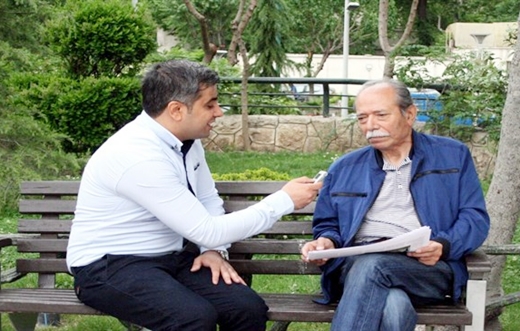
Prominent Iranian actor Ali Nassirian (born in 1924) is one of the few Iranian actors whose age has failed to prevent him from working, and he is still at the pinnacle of his cinematic and dramatic career.

The 82-year-old actor, accompanied by some other cineastes in the 1960s, was instrumental in creating Iranian New Wave cinema.

He assumed unforgettable roles in films in the years following the 1979 Islamic Revolution in TV programs, namely ‘Sarbadars’ (head on the gallows) by Mohammad Ali Najafi, ‘Hezar Dastan’ [1000 stories] by Ali Hatami, ‘The Scent of Joseph’s Shirt’ by Ebrahim Hatamikia and ‘Mirza Norouz’s Shoes’ by Mohammad Motevaselani.

At present, he is starring in the hugely popular DVD-released serial ‘Shahrzad,’ which continues to attract a large audience.

After six decades of continuous activity in theatre, TV and cinema, he still has a strong motivation to remain active, believing that humans should work till the very last moment of their lives.

Iran Daily interviewed Ali Nassirian to find out more about his six decades of cinema and theatre work. Excerpts of the interview follow:


IRAN DAILY: How much has theatre influenced your dramatic activity as well as your health?

ALI NASSIRIAN: Very much. Theatre provided us with technical training. Working in theatrical groups calls for a specific order and discipline, which are also helpful in other aspects of life. In addition, compared to cinematic projects, theatre paves the way for more experience in playing different roles.


Please tell us about ‘The Cow,’ which was selected as the best film in Iran’s cinematic history.

The film’s plot, which was new for cinema at the time, was the main reason for its success. Seeing a human transform into an animal (cow) due to emotional and economic factors was new in cinema.

Another issue was the strong collective motivation to make a good film. Once we were invited to participate in the project, we continued without any financial expectations. In other words, strong incentives are vital for creating a successful artistic production.

As you know, the film was one of the pioneers of Iranian ‘New Wave’ cinema. What were the factors that influenced the development of the movement?

In the mid-1960s, a number of new artistic activities emerged in painting, music and theatre. We also began our work as a young theatrical group.

‘Mud-Brick and Mirror’ (1965) by Ebrahim Golestan, ‘The Night of the Hunchback’ (1964) by Farrokh Ghaffari, ‘The Cow’ (1969) by Dariush Mehrjoui, and ‘Qeysar’ (1969) by Masoud Kimiaei were some of the films made during this new movement.

Before the 1979 Islamic Revolution, some films including ‘Mr. Naïve’ and ‘The Cycle’ by Mehrjoui, ‘Tranquility in the Presence of Others’ by Nasser Taqvaei and ‘Hasan the Bald’ by Ali Hatami also explored new themes.

Given the present international status of Iranian cinema, how do you evaluate the future of the industry?

I believe that we should apply native Iranian perspectives to our cinematic productions. In other words, if we can do our best to make films for the Iranian audience, and they are welcomed internationally, that would be ideal. But it is not right to make films purely for recognition at international festivals. The more we think about our domestic needs, the better the films will be received by international audiences.


Do you think artistic cinema and box office cinema are two different things?

I don’t think they are completely independent. If an Iranian film is warmly accepted on the international scene, it will be more widely within Iran, and well-received too. Thus, the two are not unrelated and the interaction between them is crystal clear.


Since the revolution, you have starred in more than 20 cinematic productions and several series, TV programs and plays.

I have never liked to sit and watch other people working in cinema. I have been active throughout my life. Now, despite deteriorating health, I still like to work on different programs.


You wrote ‘The Wandering Nightingale’ in 1957, which won the best playwriting award. Why didn’t you continue writing plays?

At that time, I was more involved as a director and actor, and not an author. I began writing plays due to the absence of scripts for my own work. At that time there was no Akbar Radi, Bahram Beizai, Gholam-Hossein Sa’edi.

Thus, inspired by Sadeq Hedayat’s works, I wrote about ten pieces of drama, which were later used in my own performances.

My first play was ‘Golden Viper’ which was followed by ‘The Wandering Nightingale’. In 1961, I created Siah-bazi (a type of Iranian folk play featuring a black-faced harlequin who stirs the audience to laughter with amusing improvisations) as part of the modern theatre. Then I wrote ‘Black Play’ which illustrated the world of the Siah-bazi.

Anyway, I am more interested in acting in theatre rather than in writing plays. As for cinema, I neither like to direct nor write. I only enjoy acting in films.


Don’t you think your experience in cinema and theatre can help the younger generation or create a new attitude toward playwriting?

Perhaps it will. But at present we have many professional young people in the field of playwriting.

Your role in ‘Saturday’s Hunter’ by Parviz Sheikh Tadi has a specific religious attitude. Are religious issues important for you in selecting your role?

When I read the film’s scenario, two things were of great significance for me, the first was my complex role, and the second was the theme. It covers Palestinians and the oppressions imposed on them on the one hand, and religious dogmatism, as is evident in today’s terrorist group Daesh, on the other.


How did you accept the invitation to take up a role in the DVD release ‘Shahrzad’? Did you think it would be warmly-welcomed or not?

Once I read the first few pages of the plot, I figured out that it had the necessary characteristics for a fine home video program, and I knew that its director, Hassan Fat’hi, is not the kind of a man who would leave a project incomplete. Although many maintained that ‘Shahrzad’ would not be successful, I was optimistic about the wide appeal of the project from the very beginning. I must confess, though, that I did not expect such a high level of public enthusiasm for the production.


Why do you think ‘Shahrzad’, a serious, historical DVD serial, is being warmly received, while several home videos have not done so well?

Iranians are very smart people. Although some argue that people enjoy entertaining comedies for TV and home video, I personally believe that they can distinguish a serious from a cheap work, and that’s why ‘Shahrzad’ has been well-received.

As you can see, all the sets were designed seriously. All decorations and settings are made only for this production and were not ready in advance. For instance, the garden which houses my character’s building was constructed solely for this production.

The public support for ‘Shahrzad’ is great. I hope that the program’s success will lead to more private sector productions. Although TV programs are successful, a number of rules and regulations limit directors in presenting their artistic works freely. In other words, compared to TV programs, home videos and DVD releases have far fewer limitations.

Do you think home video is a potential rival for TV programs?

Yes, it is likely that if the production of appropriate and serious works continues, I think home video can have a positive impact on IRIB’s TV programs.

Spring Blossoms in Mountains Overlooking the Desert

Ostour, a village in the mountainous desert regions of Sirjan in Kerman Province, is adorned with spring blossoms of eye-catching beauty.


Spring Blossoms in Mountains Overlooking the Desert

Ostour, a village in the mountainous desert regions of Sirjan in Kerman Province, is adorned with spring blossoms of eye-catching beauty.