Thursday, January 15, 2026
Home Blog Page 4375

Iran Dismisses US Report on Religious Freedom

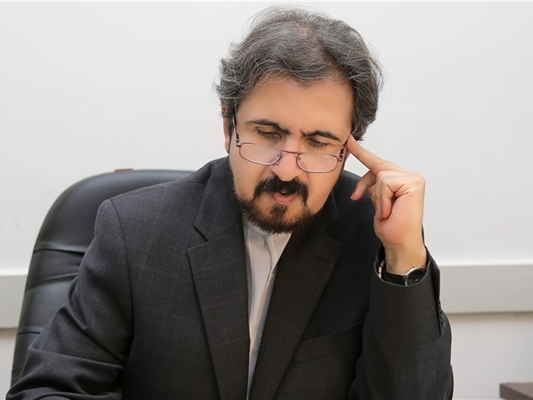
Bahram Ghasemi- FM Spoksman

Foreign Ministry Spokesman Bahram Qassemi on Saturday described the US Department of State’s annual report on human rights practices as an unreal, exaggerated and unconstructive document that contains repeated and unsubstantiated claims made “on the basis of enmity and political intentions.”

“The Islamic Republic of Iran recognizes the rights of religious minorities according to its Constitution. All Iranian citizens are equal in enjoying their basic rights under the law,” he added.

Qassemi then highlighted the UN’s expression of concern in a recent report about the widespread violation of rights of religious minorities in the US, calling on Washington to address the blatant violations of Muslim rights instead of giving advice to the others.

“It is necessary for the US administration to stop violating the rights of religious minorities, particularly of Muslims, and show more serious commitment to its human rights obligations,” Qassemi underlined.

Tehran condemns any political exploitation of the issue of human rights against the interests of the independent countries, he concluded.

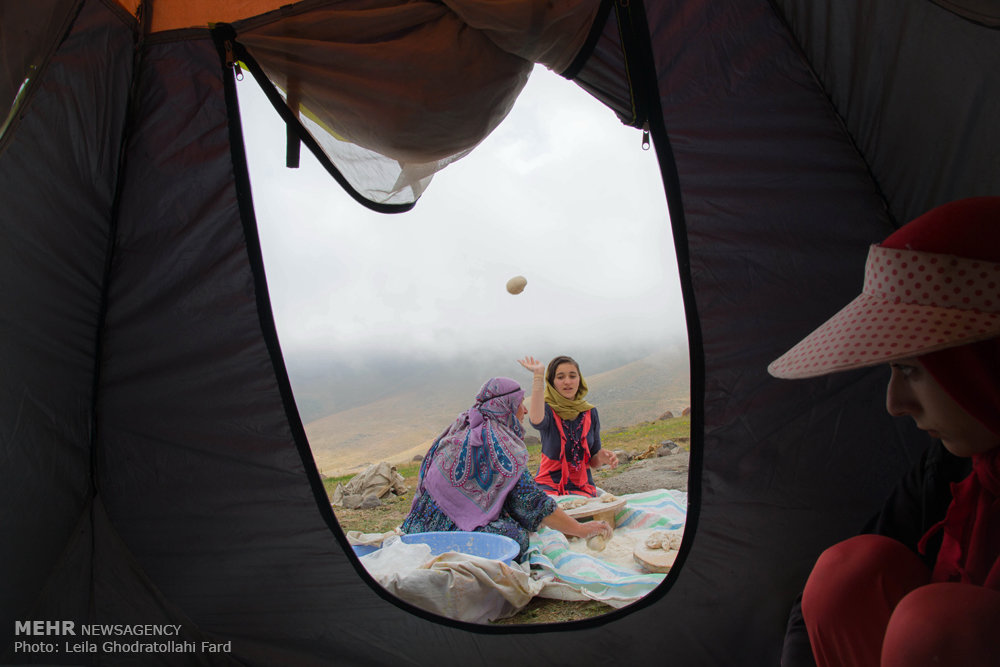
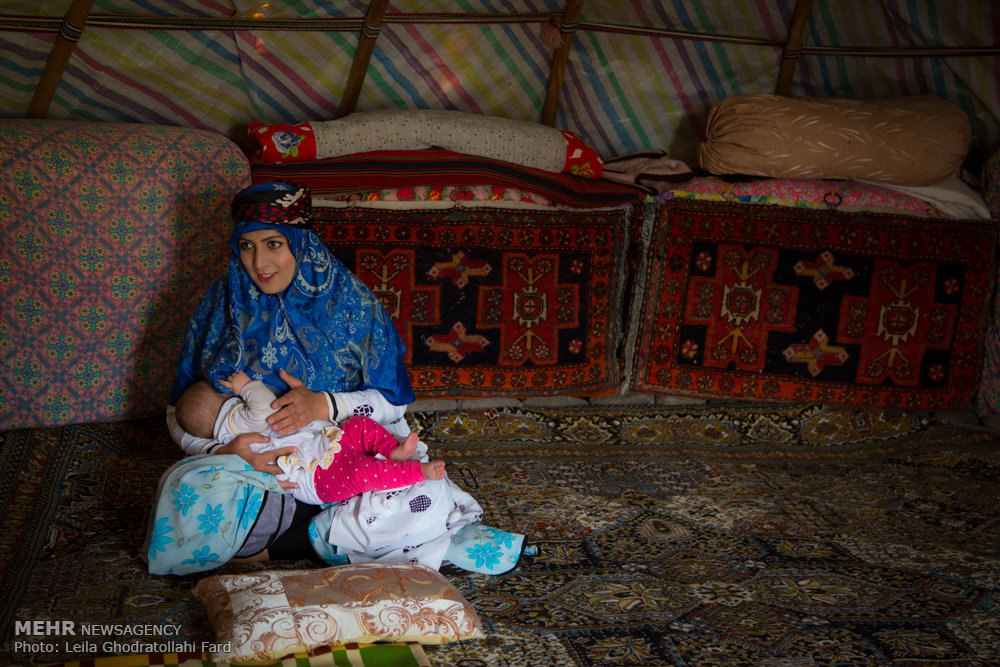
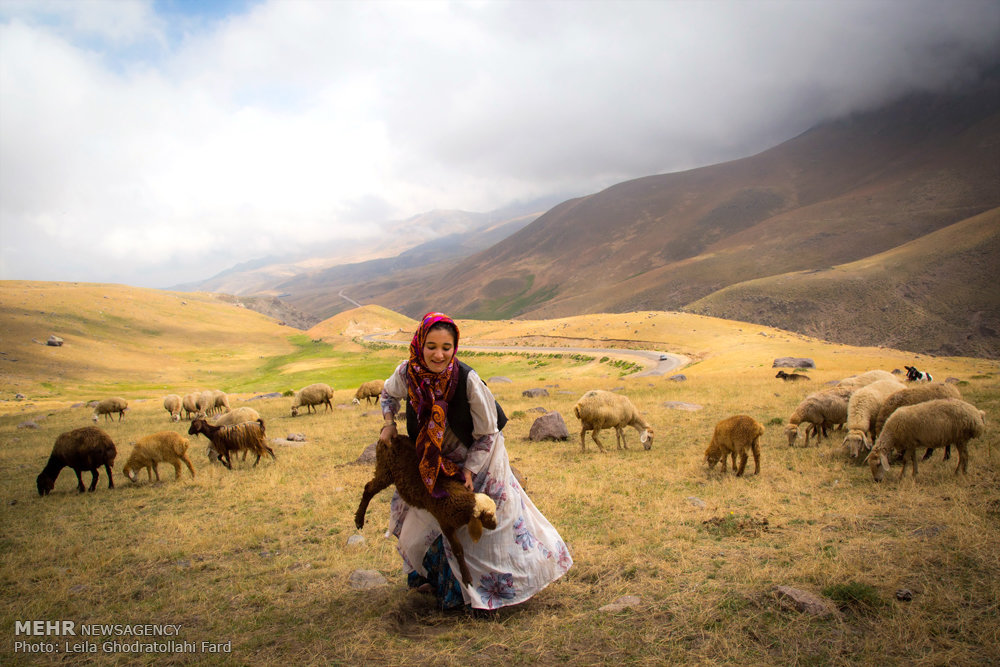
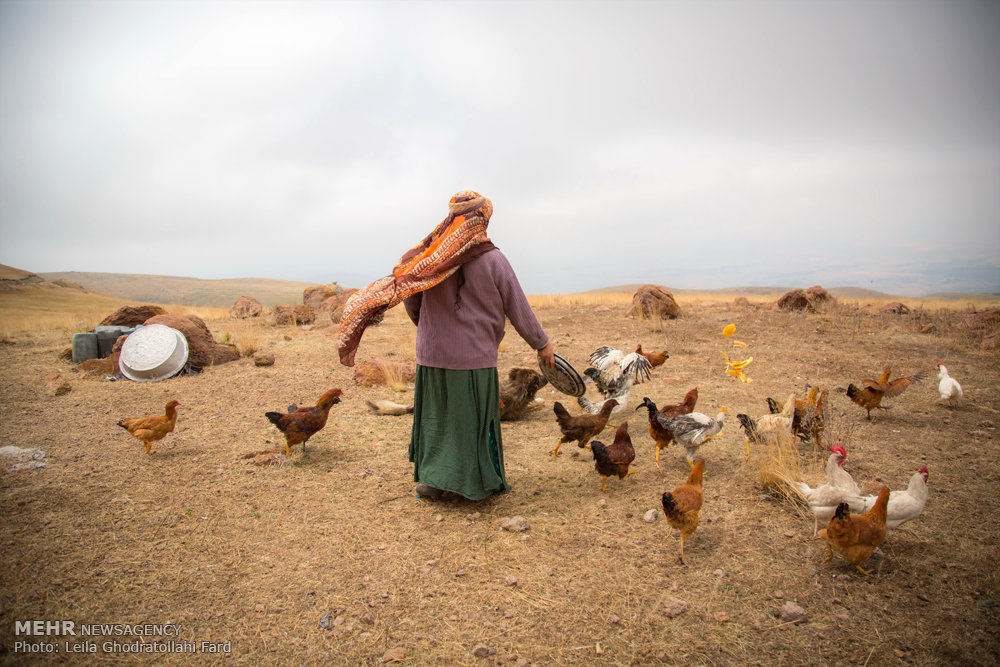
Women’s Key Role in Iran’s Shahsevan Tribe

Shahsevan nomad2

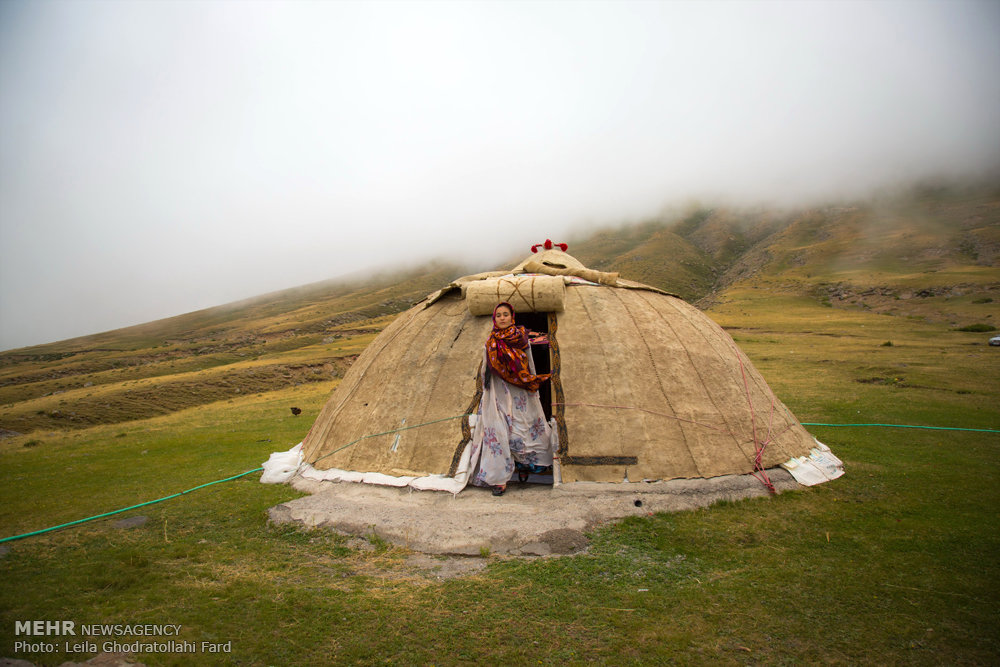
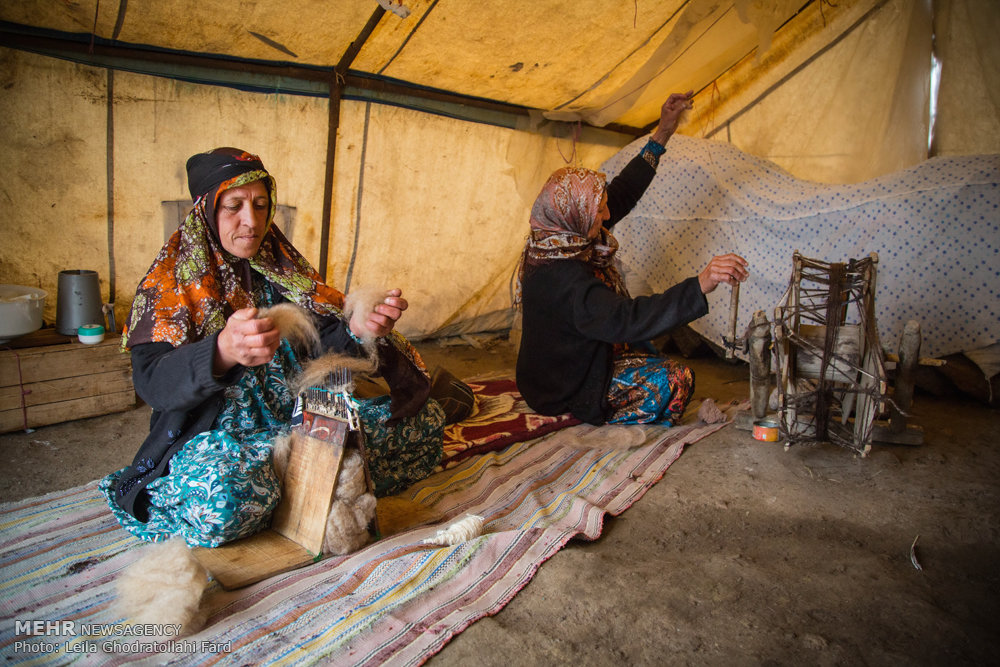
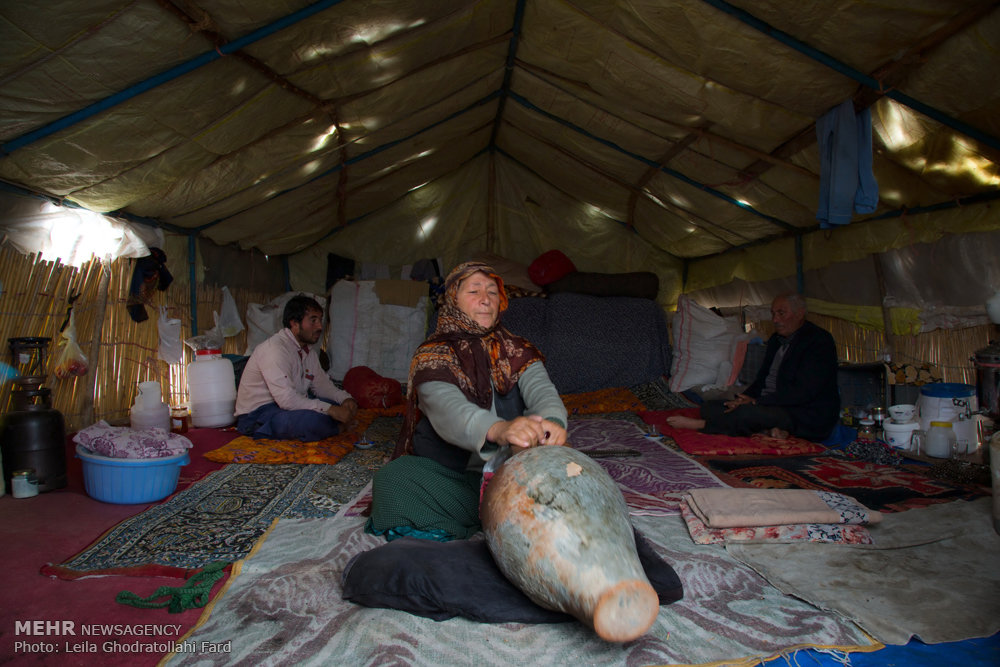
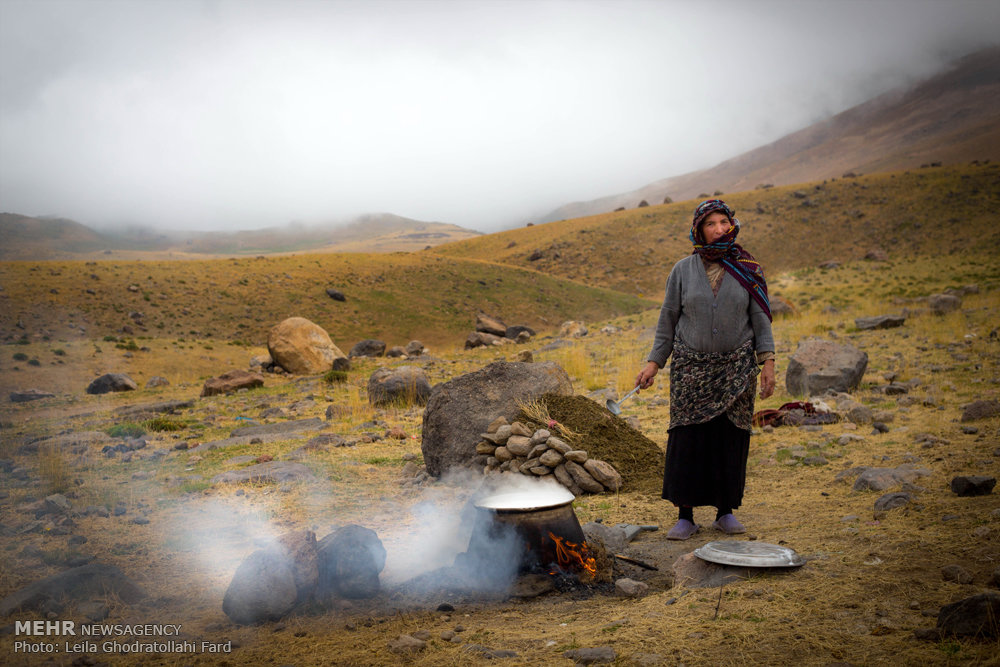
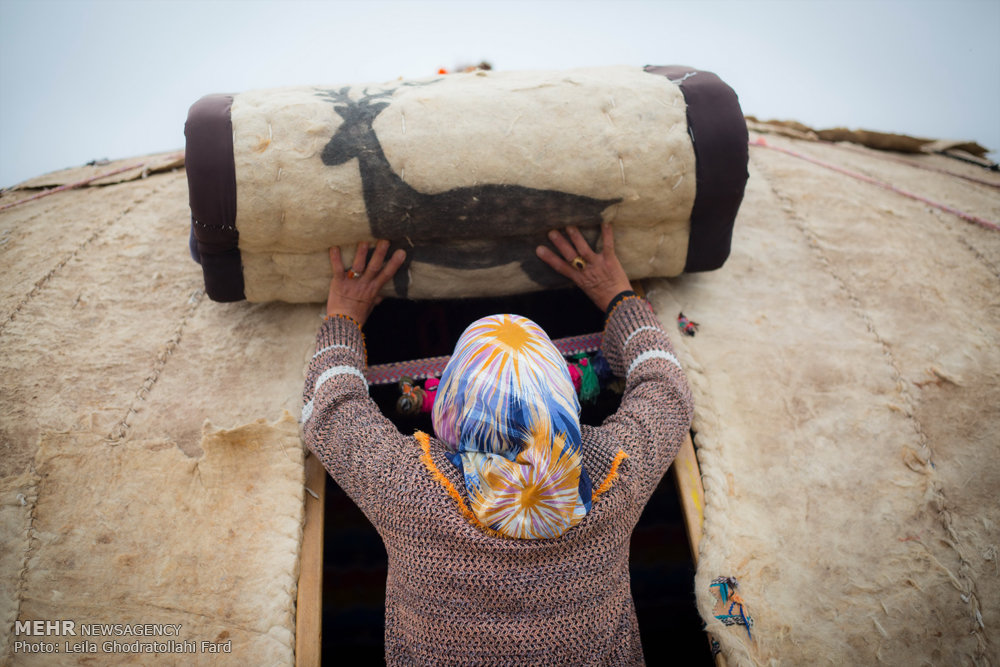
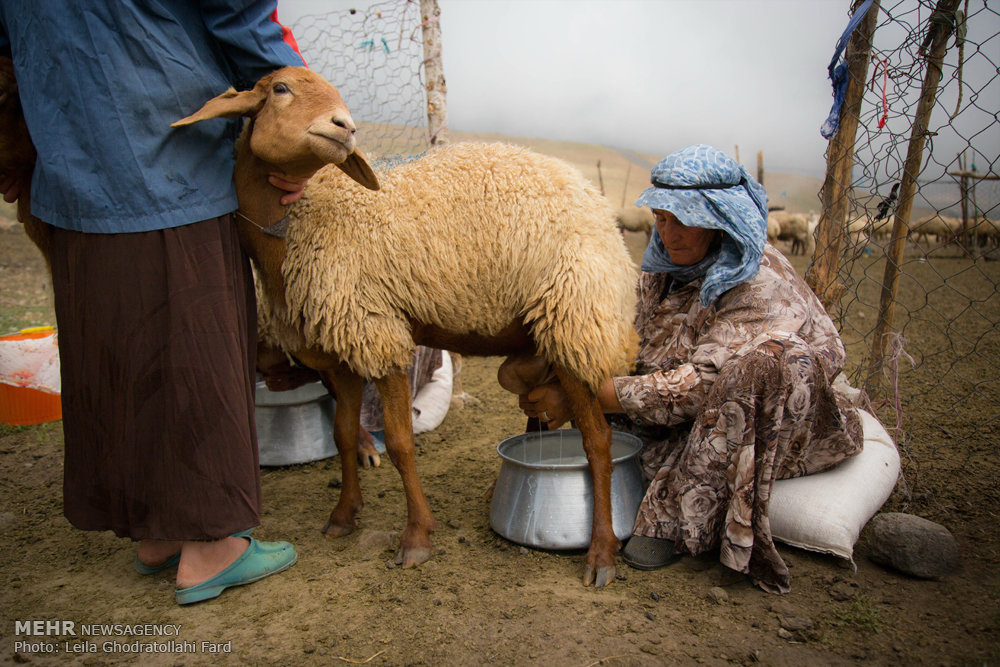
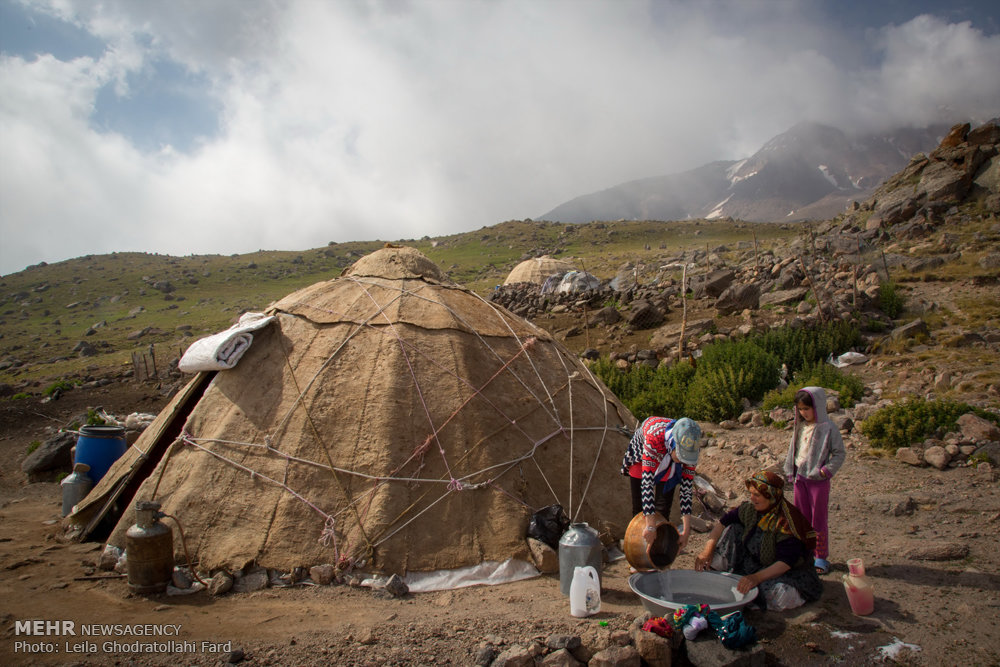
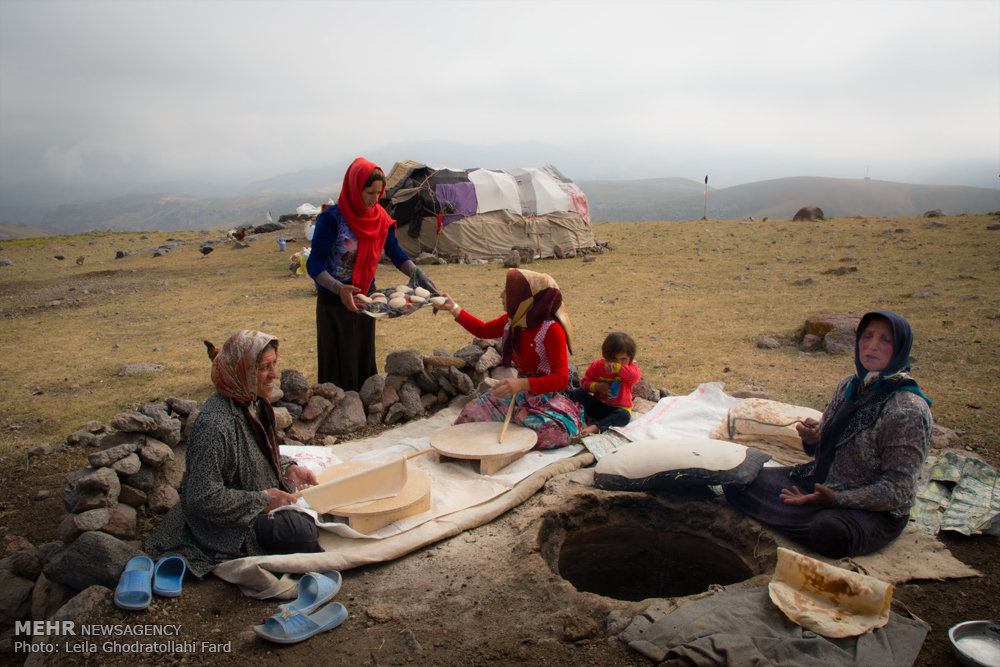
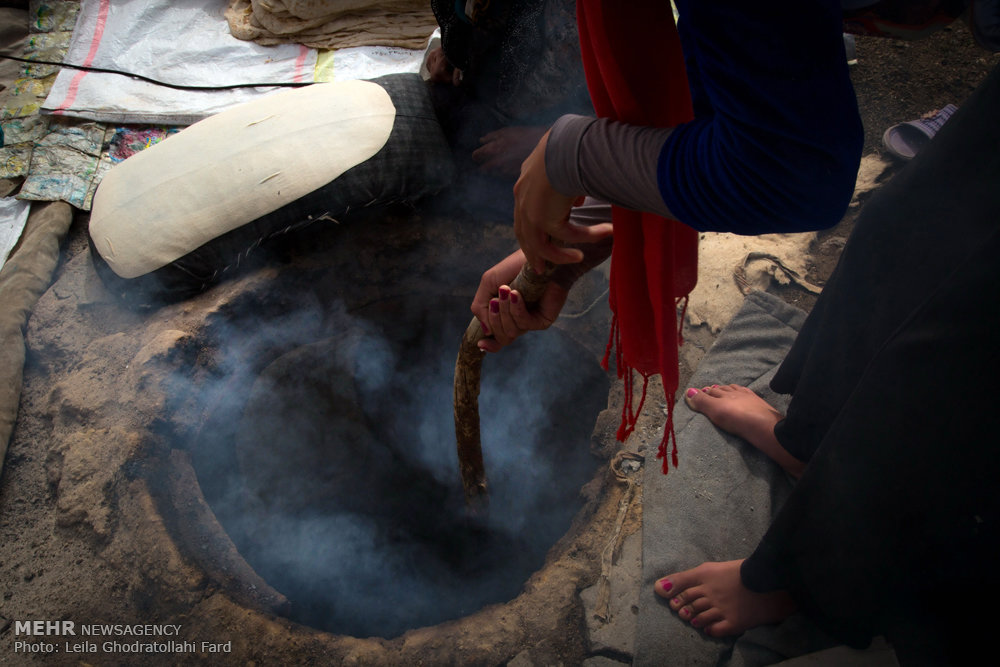
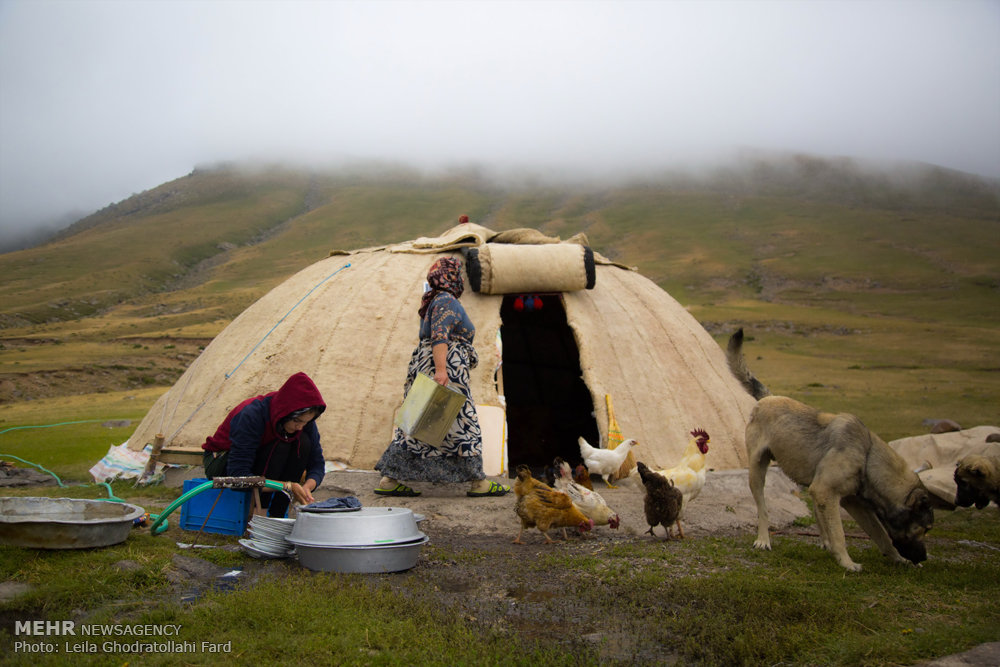
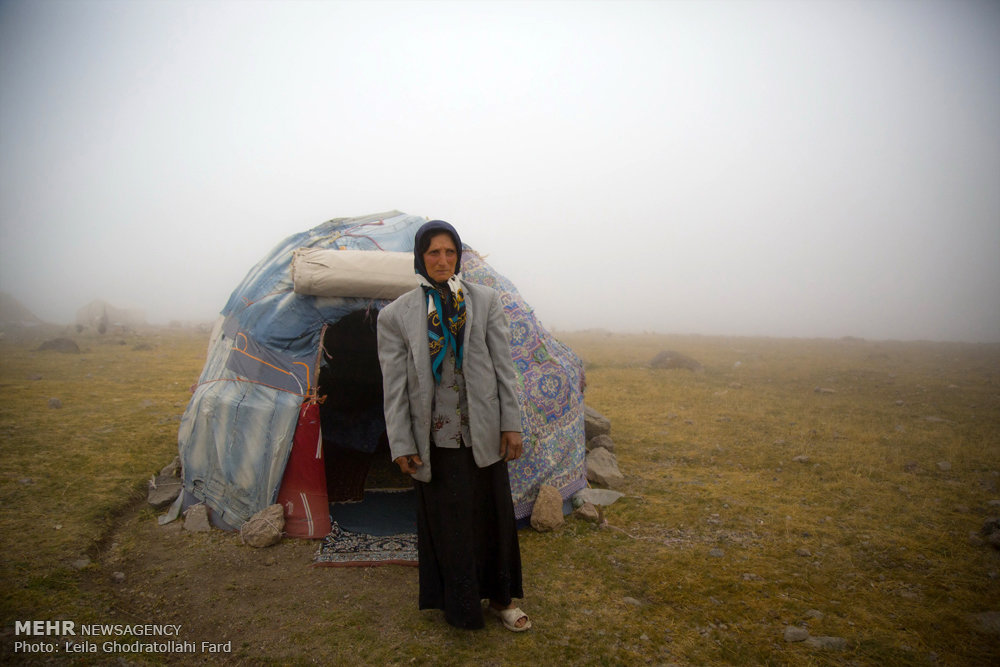
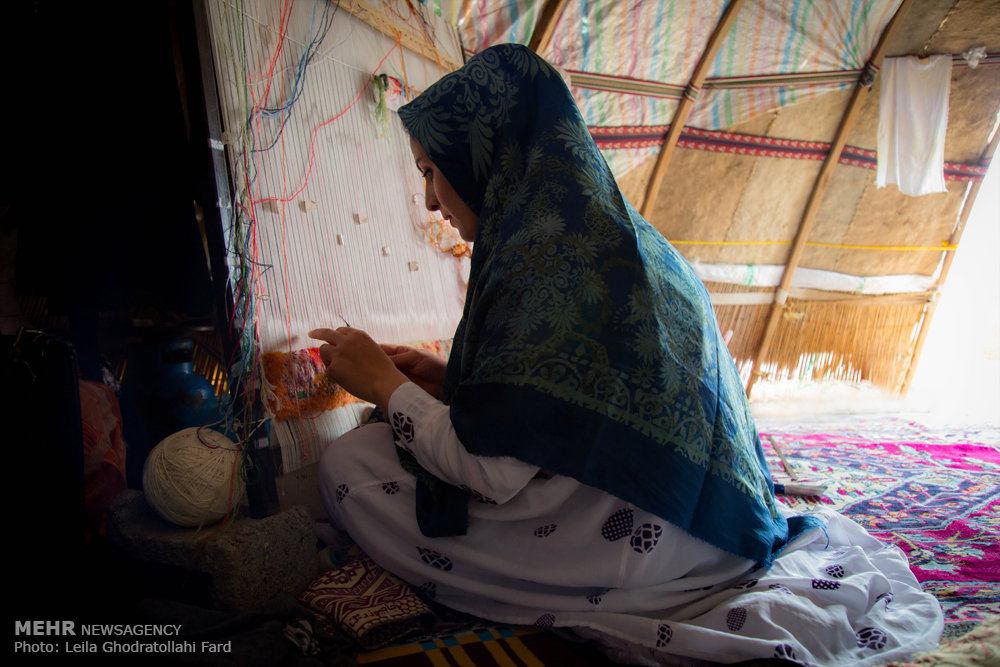
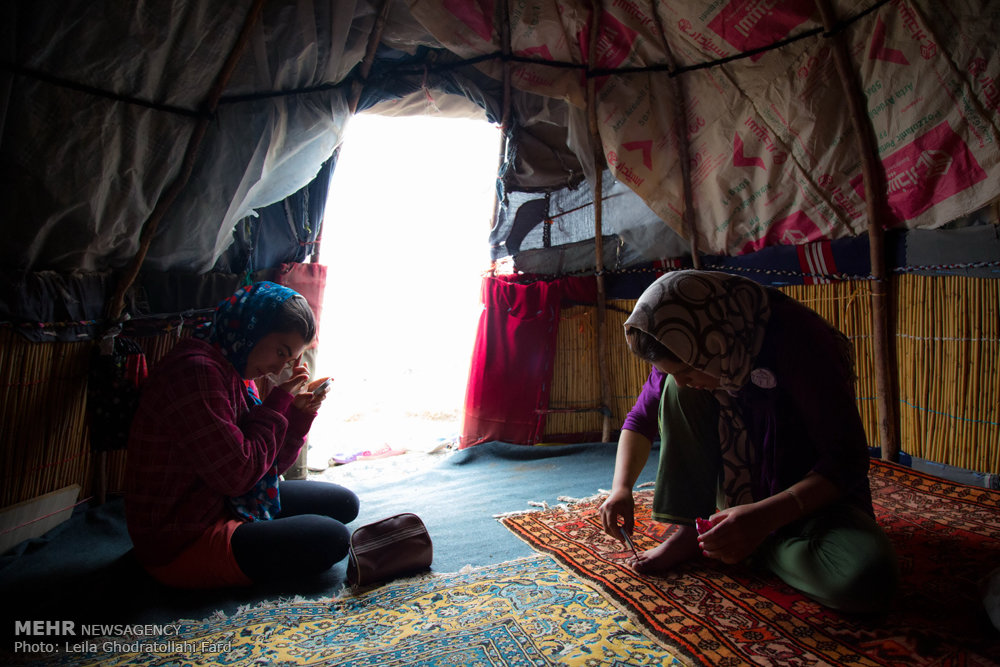
Hectic women of Shahsevan nomadic tribes play key roles in the economic life of their community, which is usually hosted by Sabalan outskirts during spring and summer.


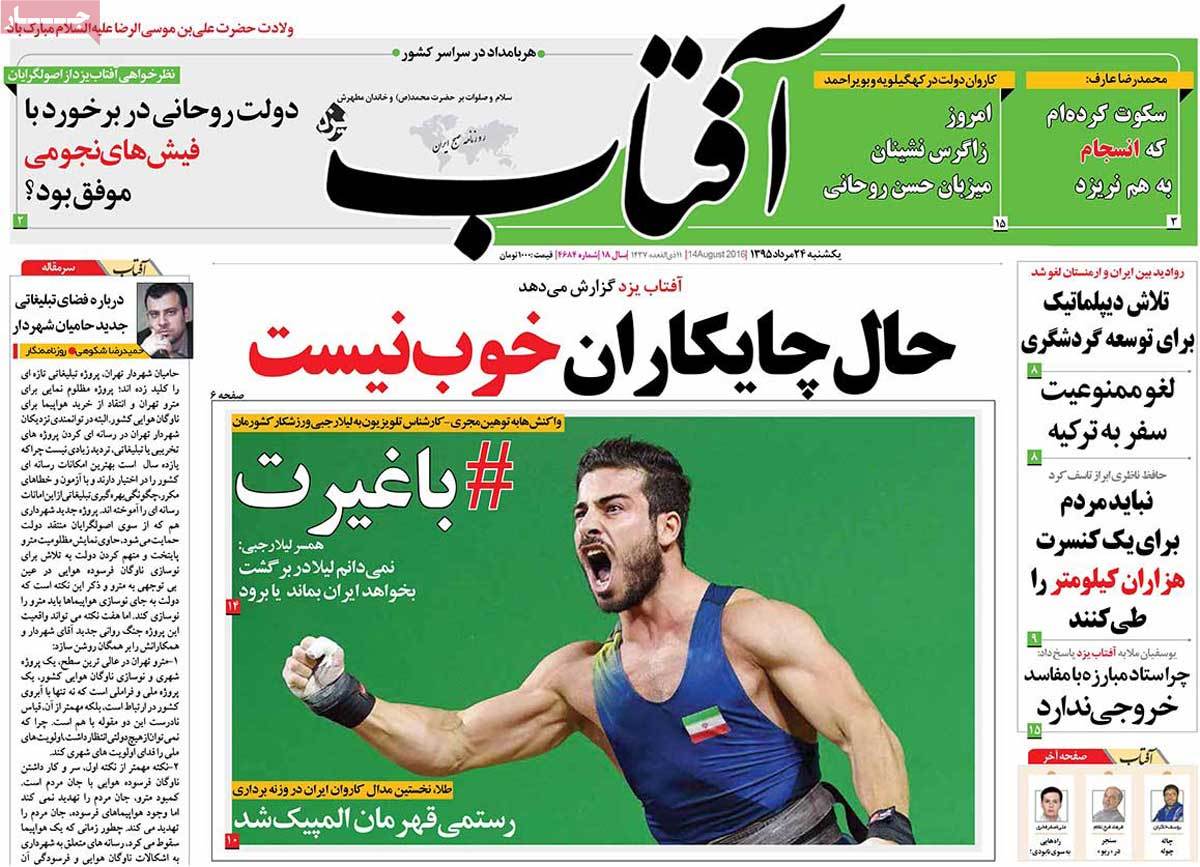
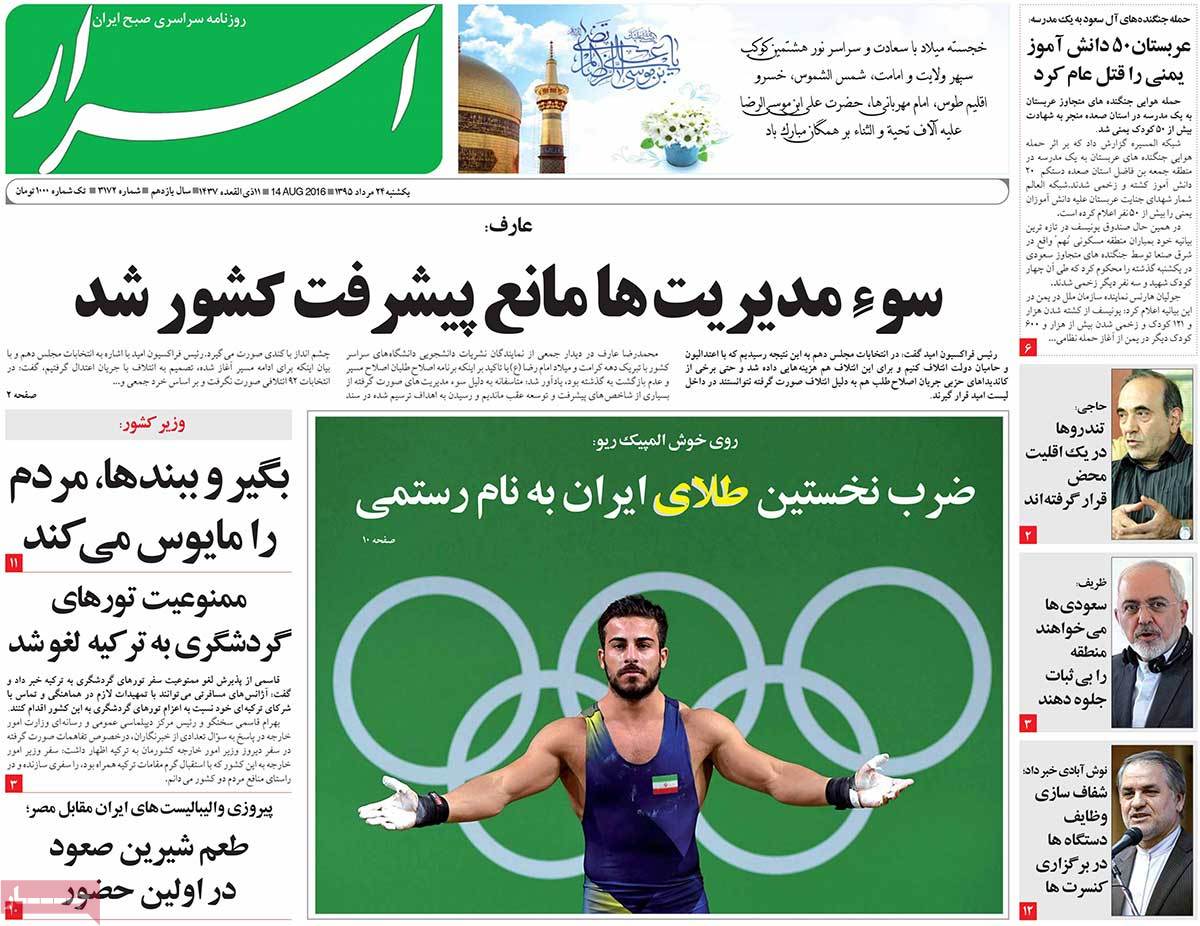
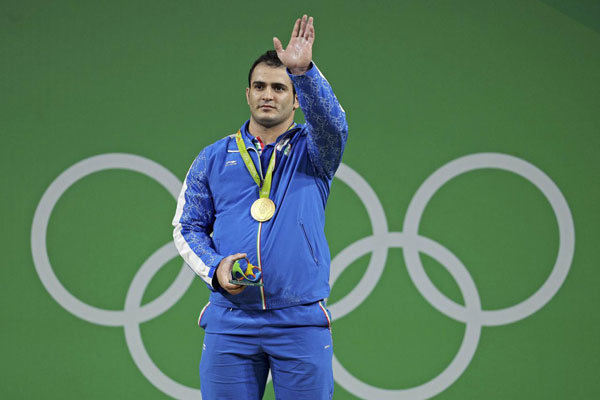
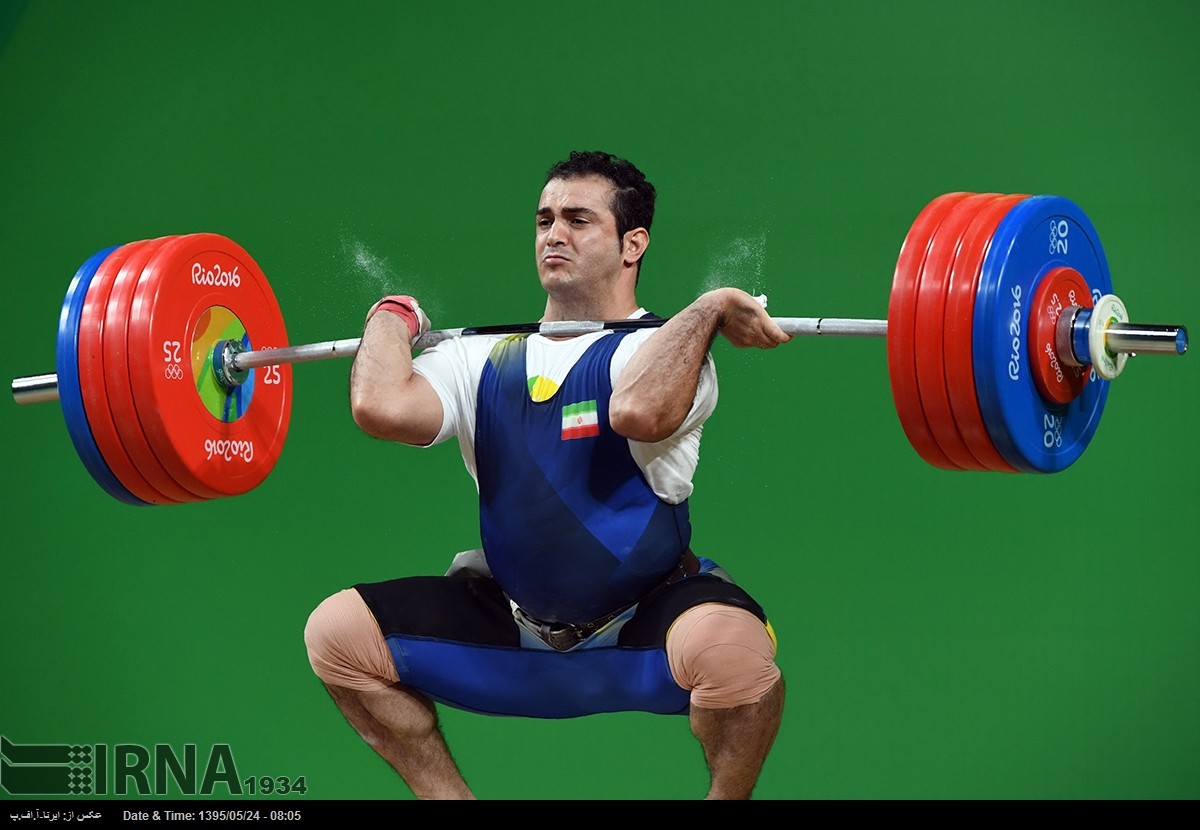
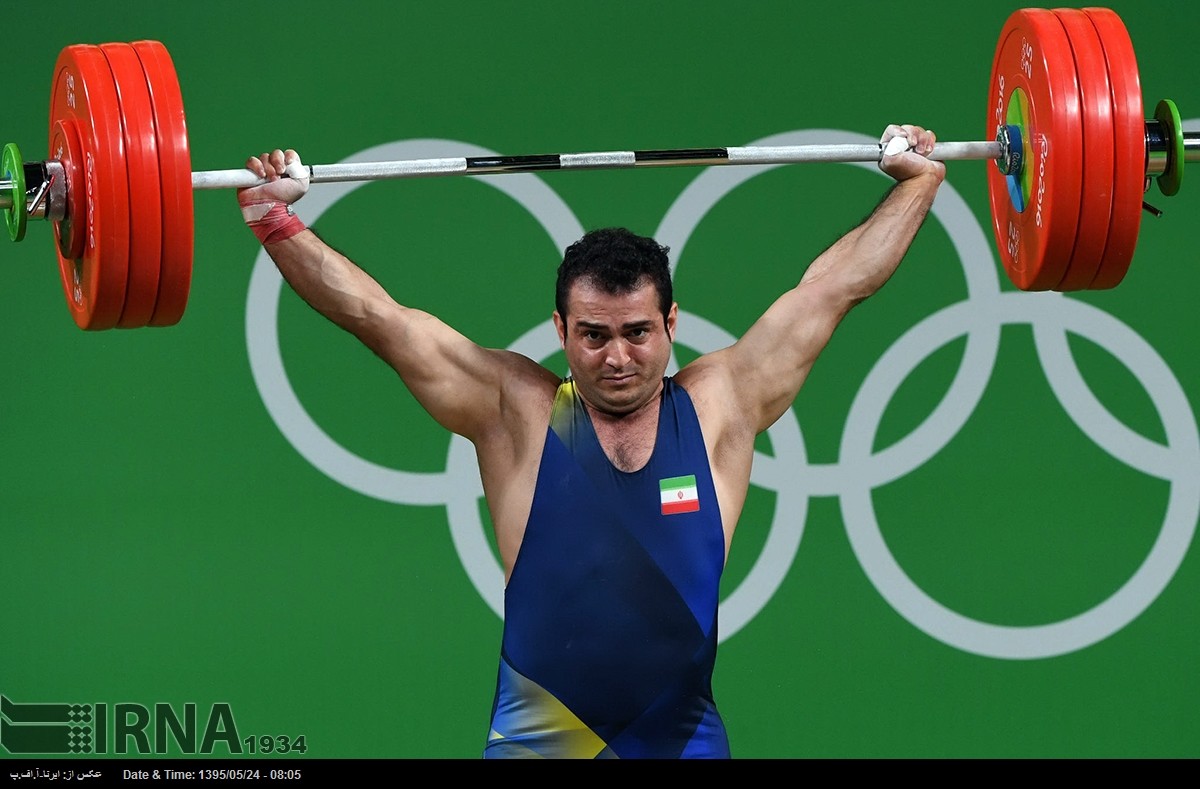
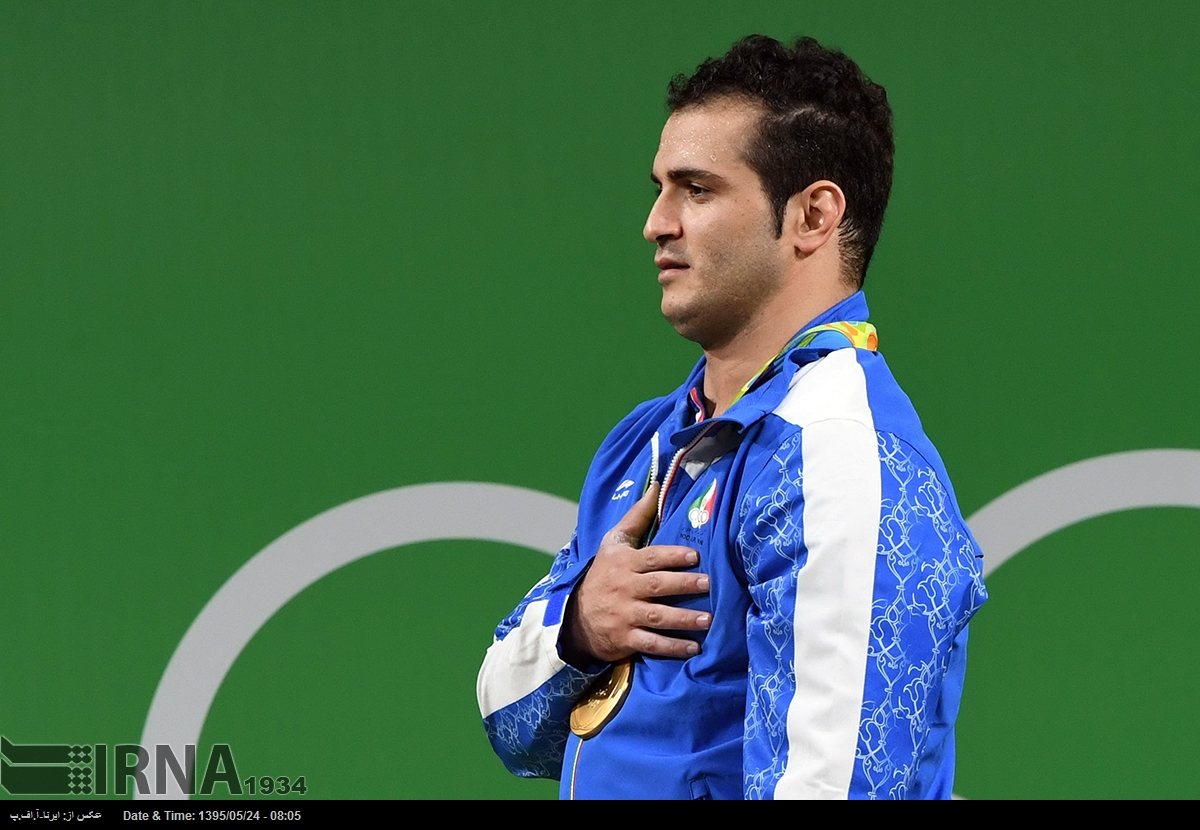
Moradi Clinches 2nd Gold Medal for Iran’s Caravan

Sohrab Moradi

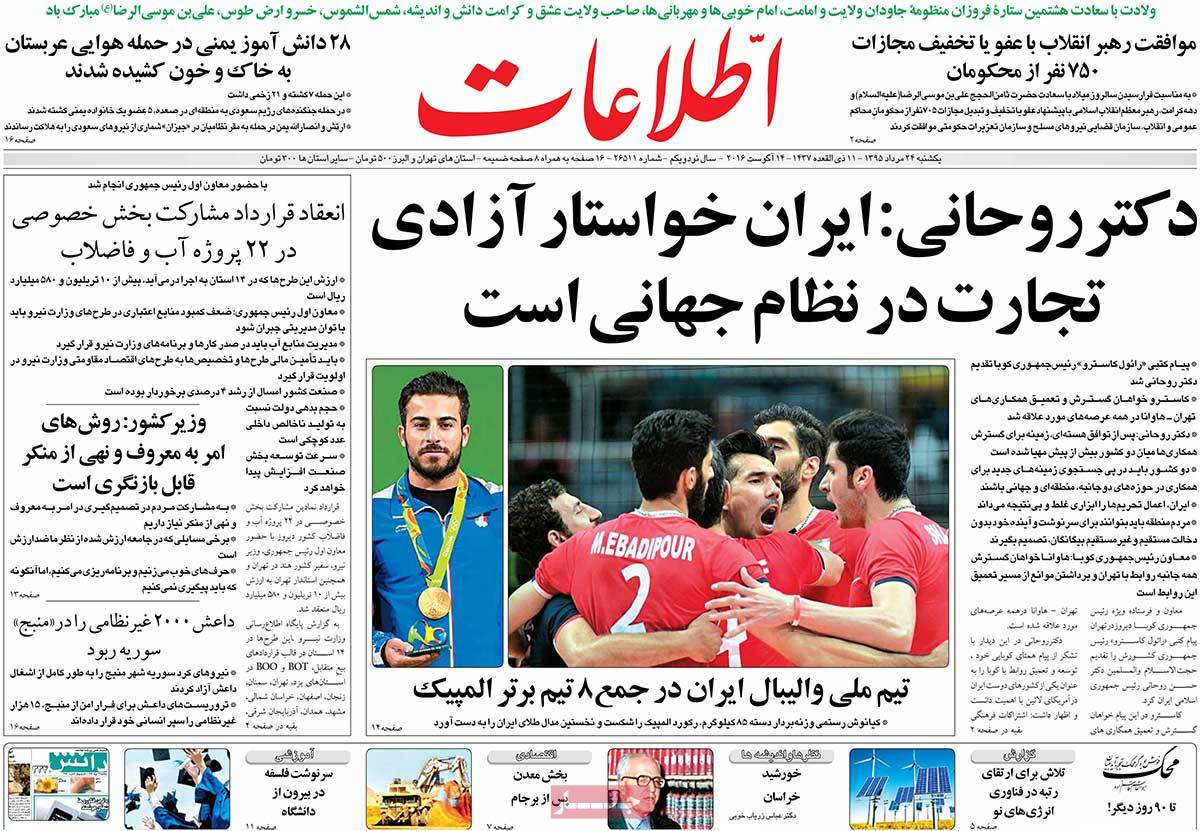
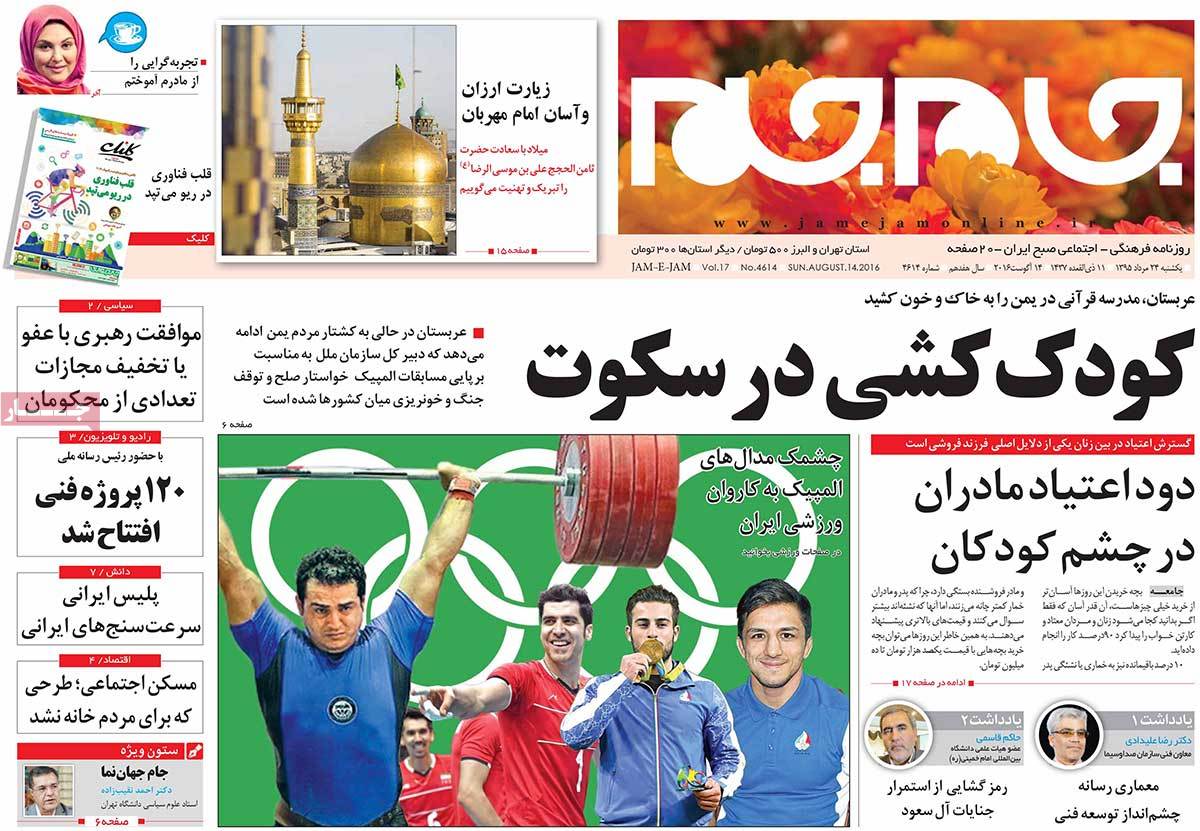
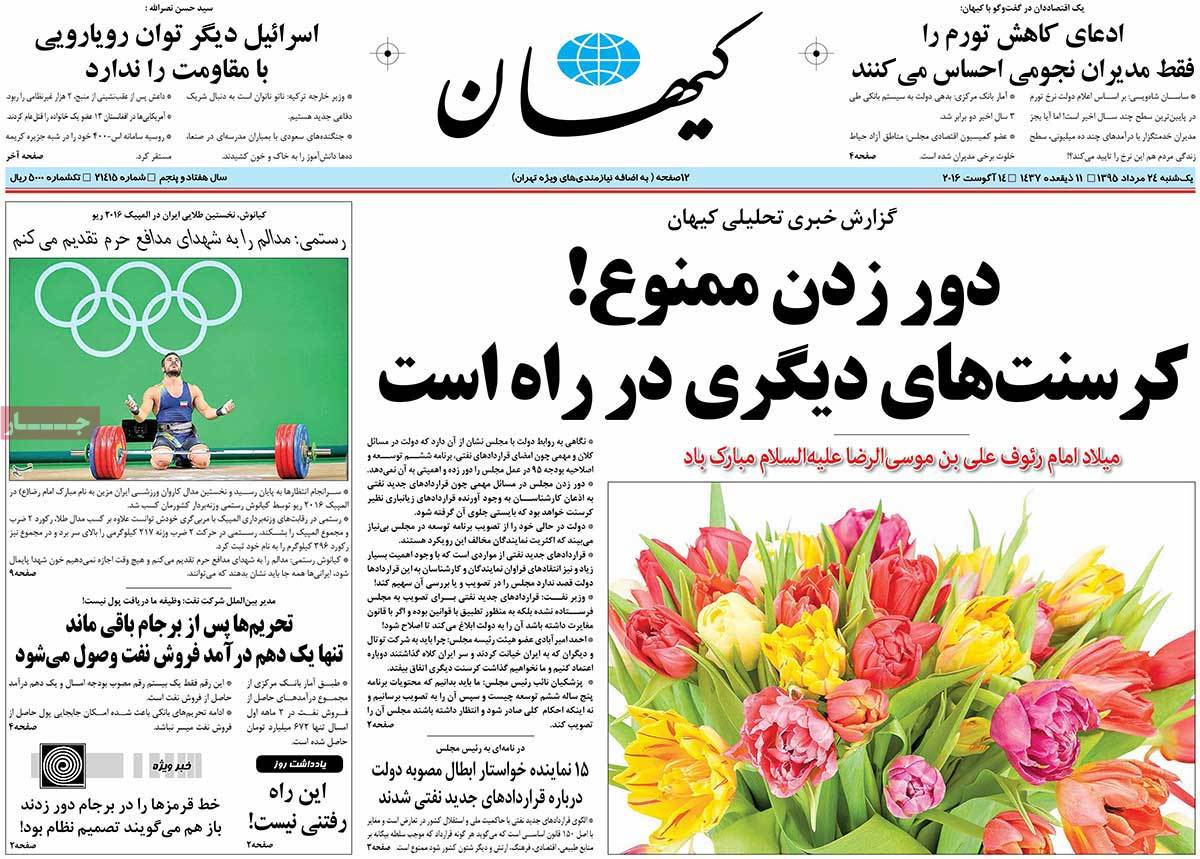
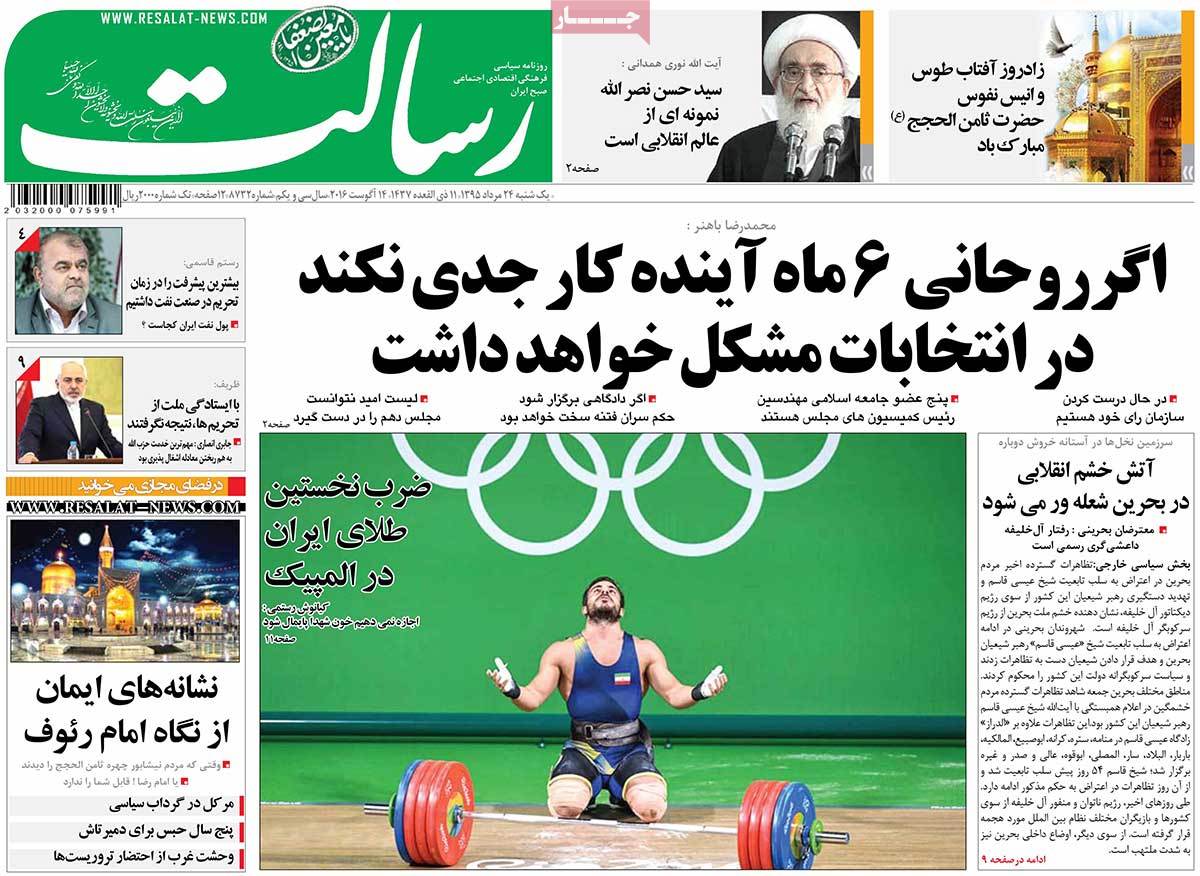
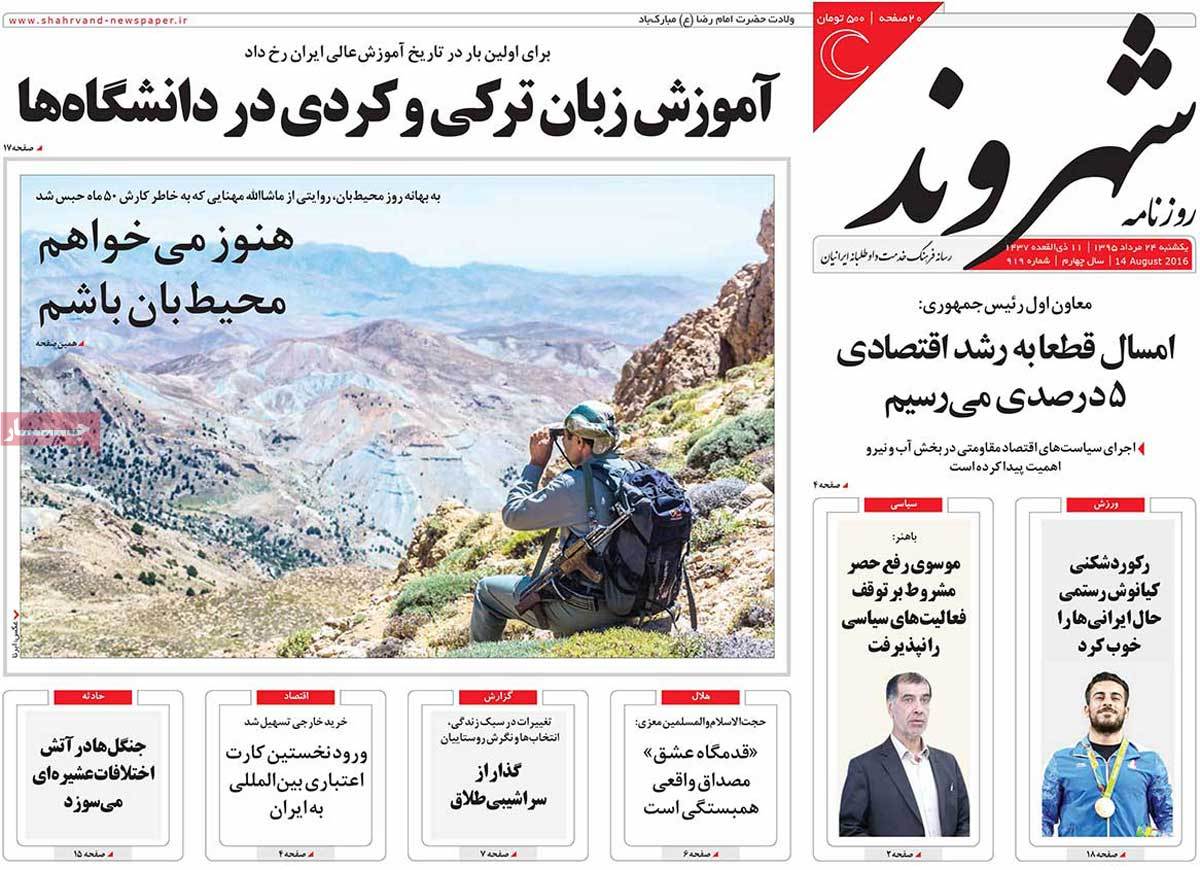
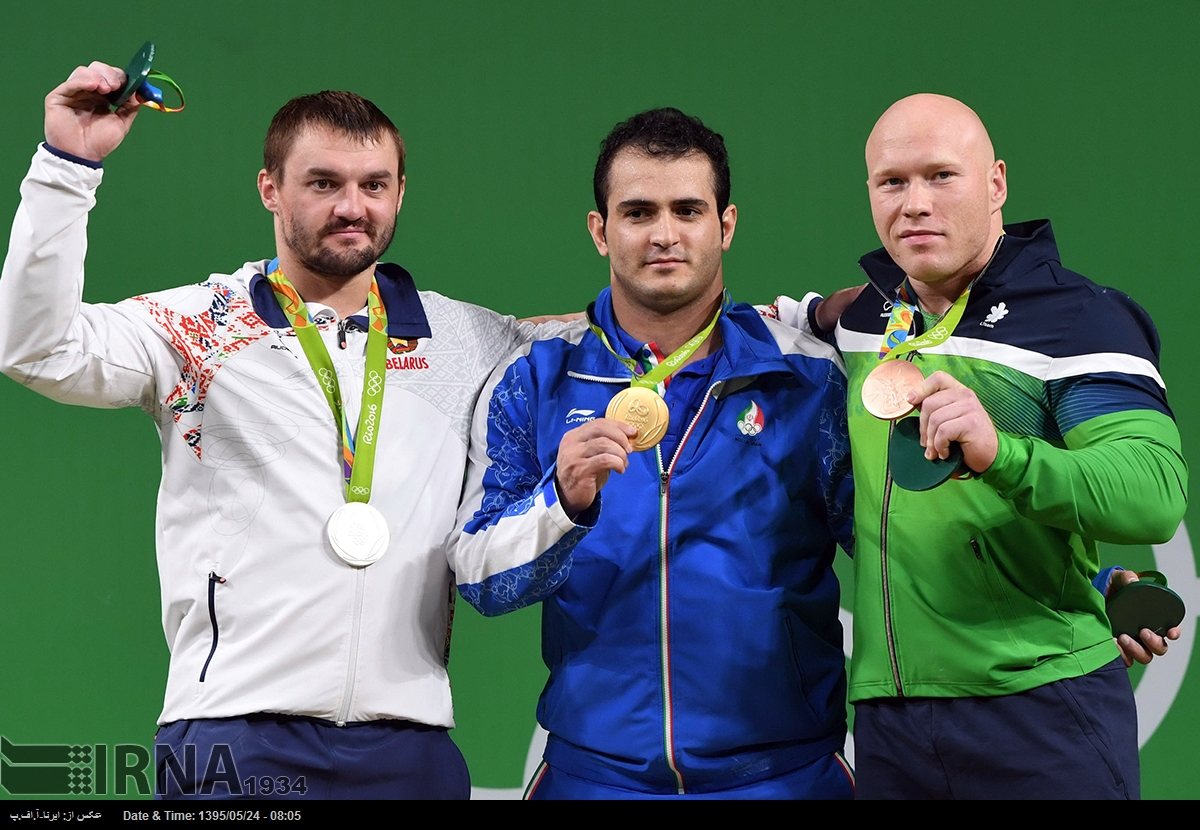
Iran had deployed two representatives to the Men’s 94 kg weightlifting encounter at Rio 2016 who lifted weights on Sunday and won a gold medal to take the country to the 21st place in overall medal standings.

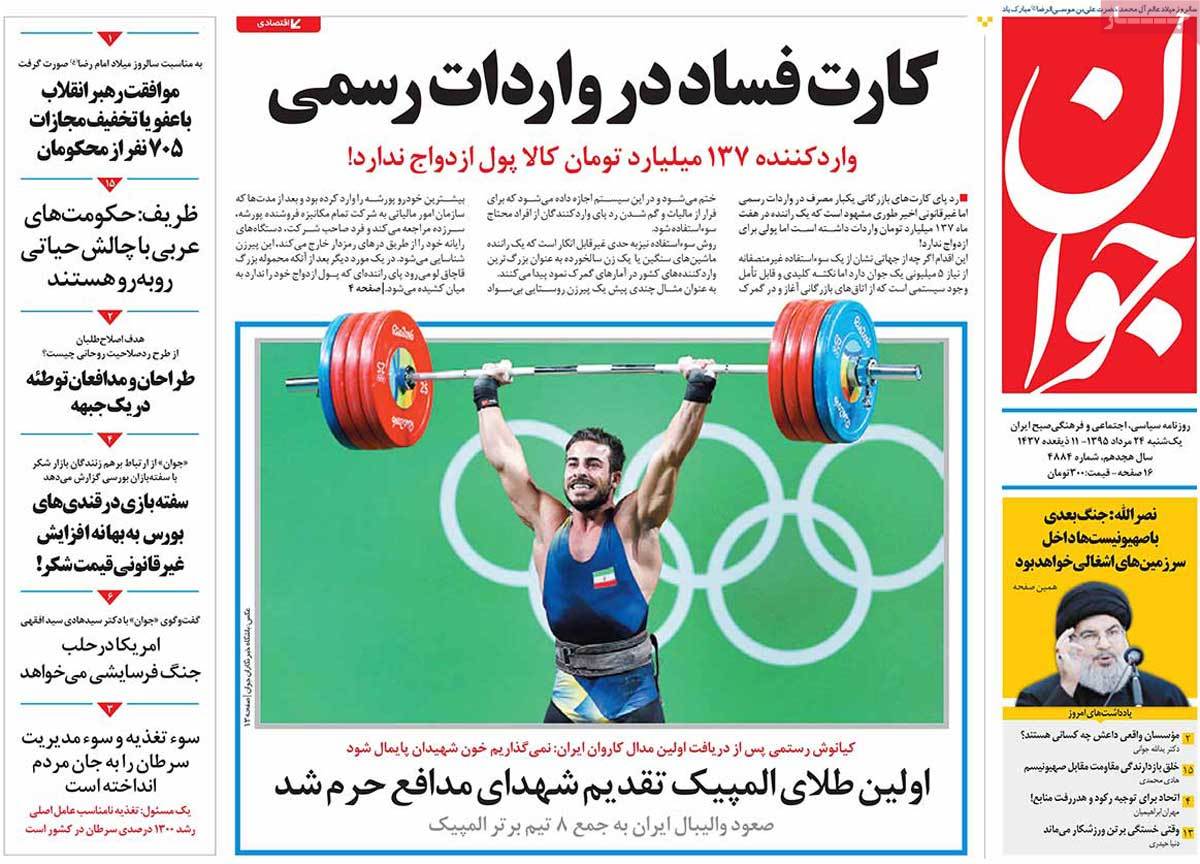
Sohrab Moradi first requested 178 kilograms though he managed to lift it in the second try. Meanwhile, he fulfilled the ambition of lifting 182 kilograms in his third try only to confirm his position on top of the snatch table.

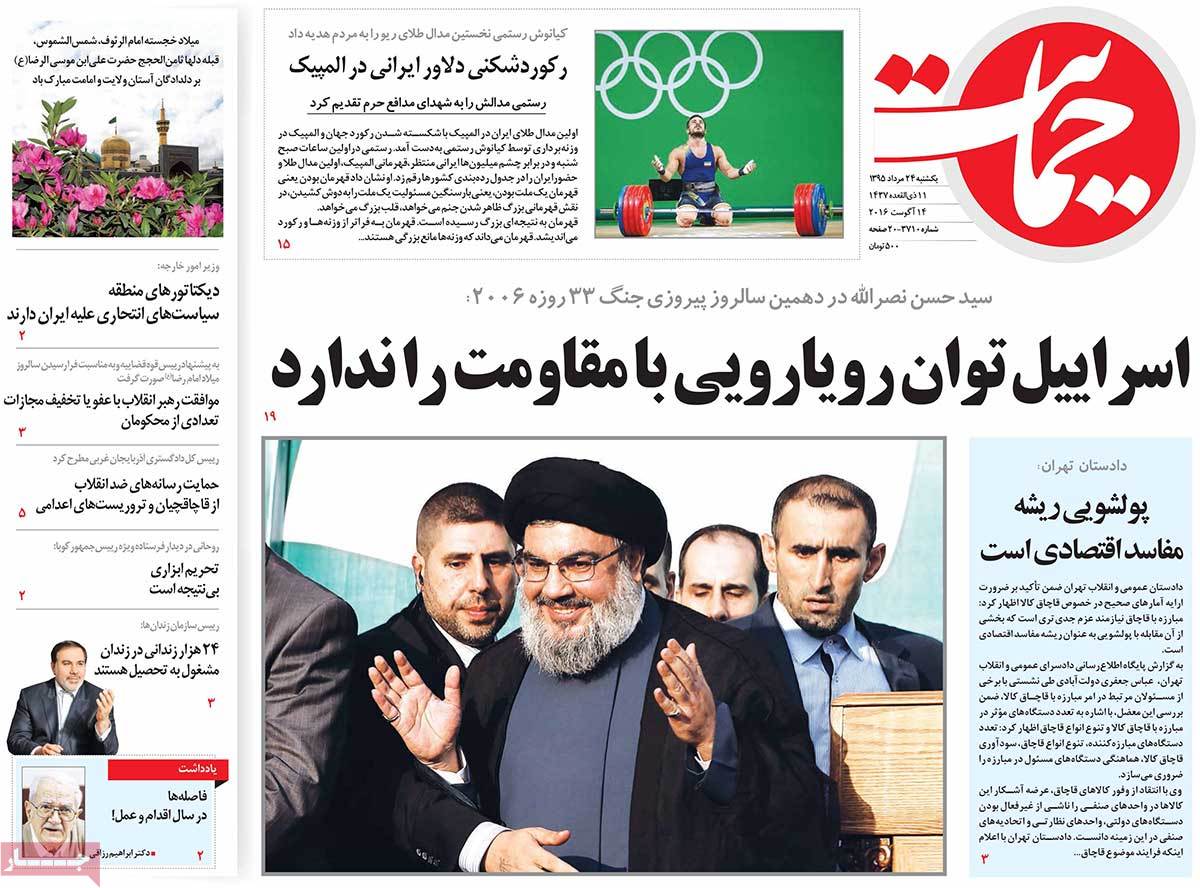
Moradi overcame the 221kg weight in his first try of clean and jerk which was enough for him to win the gold medal. The Iranian champion devoted his two remaining attempts to 231 and 233 kilogram weights in order to break the world record though he failed to do so and finished with 403 kilograms overall to stand in top of the podium.

Vadzim Straltsou of Belarus bagged silver with a total of 395 kilograms and Lithuania’s Aurimas Didzbalis claimed bronze on 392 kilograms.

Iran’s other weightlifter in the same category Ali Hashemi, who was the first Iranian weightlifter to make his attempts on Sunday, only managed to snatch 173 kilograms in his third try and lifted 210 kilograms in the clean and jerk to finish in the seventh place with a total of 383 kilograms.

Earlier on Friday, Iran’s first gold in the 2016 Olympic Games was received by weightlifter Kianoush Rostami who won the men’s 85-kilogram category with a new world record of a total of 396 kilograms.

These two golds put Iran in the 21st position in the Rio Olympics rankings between Switzerland and Sweden.


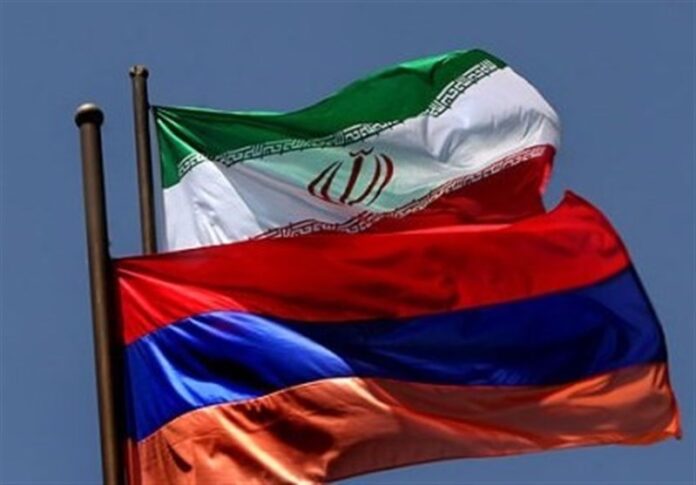
Iran, Armenia Abolish Mutual Visa Regime

Armenia

The removal of mutual visa regime between Iran and Armenia follows a relevant agreement signed recently between the two neighboring countries in Tehran, the Iranian embassy said in a statement.

The agreement for abolishing the visa regime came into effect on August 6, 2016, it added.

Earlier, Iran’s Ambassador to Armenia Kazem Sajjadi was quoted by the Armen Press news agency as saying that the issue had been discussed in a meeting between Iran’s Justice Minister and Armenia’s Prime Minister Hovik Abrahamyan.
Armenia announced in early June that it has approved signing an agreement with Iran to abolish the visa regime between the two countries.

The country’s Deputy Foreign Minister Shavarsh Kocharyan was quoted by media as saying that the agreement will help develop relations between Iran and Armenia.

The agreement, signed June 5 during a visit to the Iranian capital by Armenia’s Foreign Minister Edward Nalbandian, will allow Iranians and Armenians to travel to the two countries with citizens and diplomatic passports without a visa and stay there for maximum 90 days within a 180-day period, the media reported at the time.

Best Decision Is to Resume House Arrest of Iranian Opposition Leaders

mohammadreza bahonar

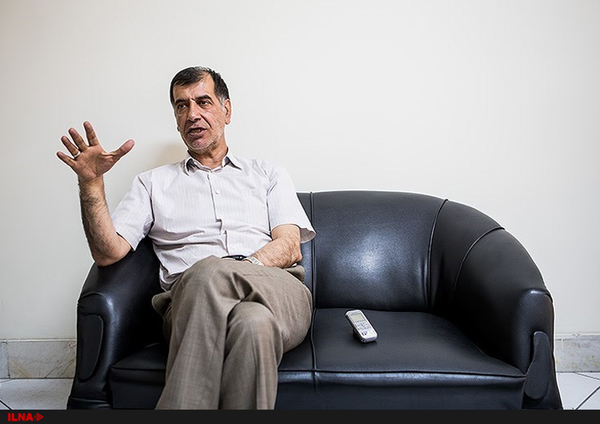
Here’s IFP’s translation of excerpts from Bahonar’s interview with ILNA:

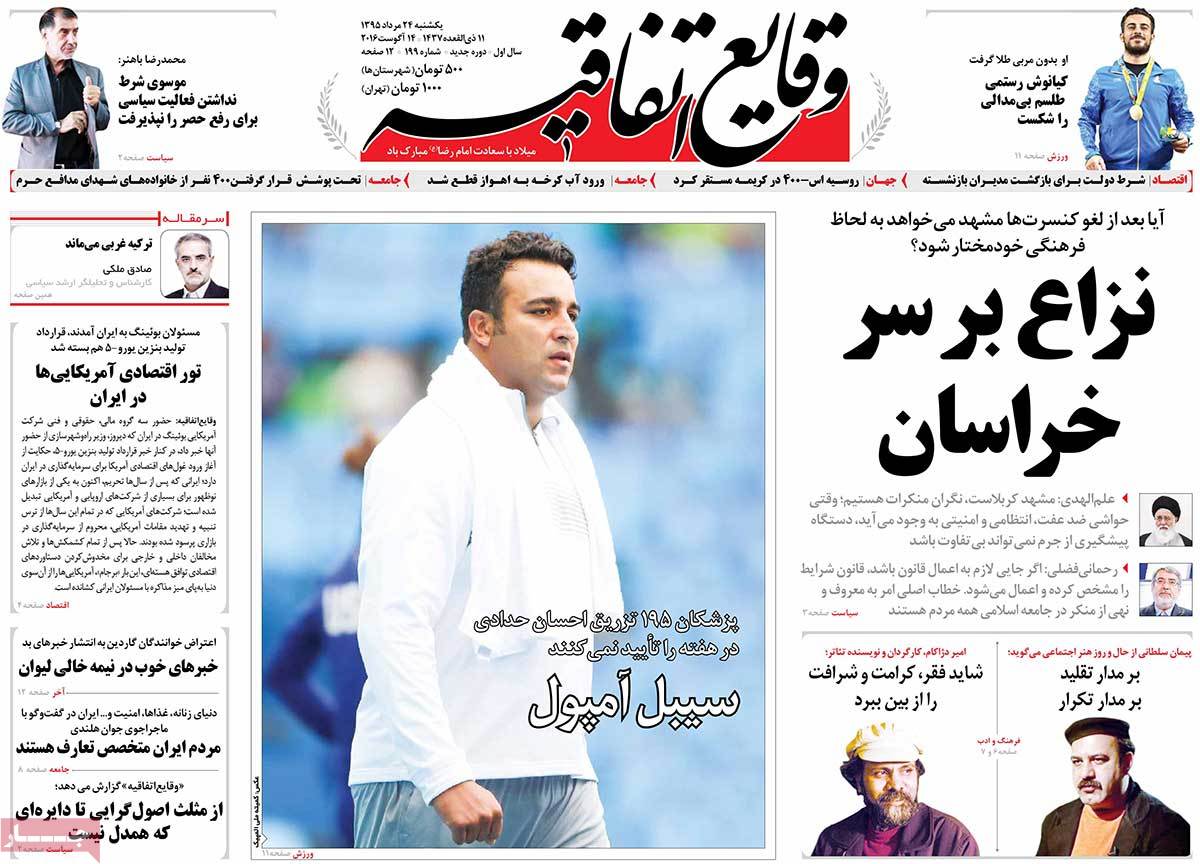
“The best situation … is the house arrest. If these two men [Mousavi and Karroubi] are to be tried in any court of justice based on the country’s regulations, they would receive a stiff sentence, and it may not be in the country’s interest to carry out such a sentence for them,” Bahonar said.

He further raised the question that why the Establishment does not release them now that they are not going to be tried.

“We can’t find anyone in the world that does something against a ruling system and live freely. Someone may talk against our party, and that is normal. But sometimes some people become the opposition of the ruling system. The opposition figures don’t have the right to be active anywhere in the world. It is like telling someone that you have the right to launch a revolution,” he answered.

He further hinted that they could be free if they wanted to live their lives without interfering in politics. However, according to Bahonar, they want to create a chaos in the country once they are released.

“In such cases, the Establishment would never let them do so,” he went on to say.

Bahonar revealed that he had recently sent a message to Mousavi and asked him to declare that he would avoid any political activity for years if he is released.

However, he added, Mousavi has apparently rejected the offer.

Mousavi, his wife Zahra Rahnavard, and Karroubi has been under house arrest since February 2011. The three were arrested following the 2009 post-election protests and riots.
During the unrest and riot that broke out following presidential election, supporters of Karroubi and Mousavi, the two candidates that had lost the election, raised allegations of electoral fraud and held sporadic violent rallies in Tehran and some other cities.

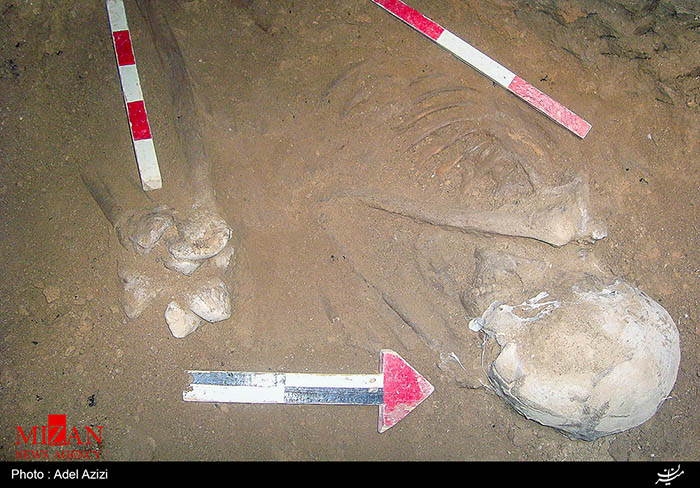
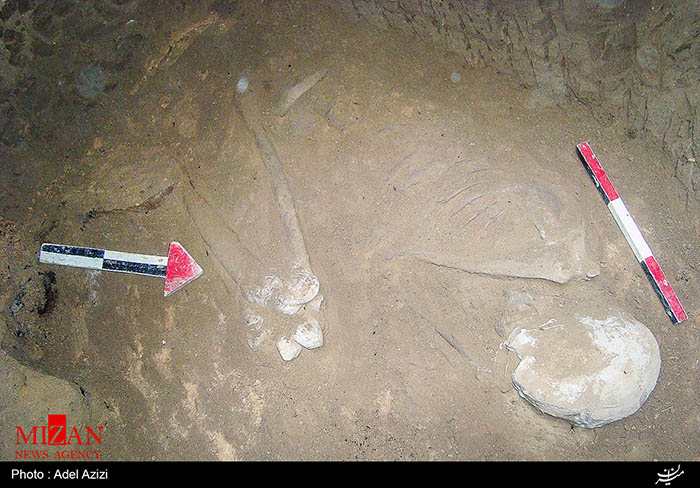
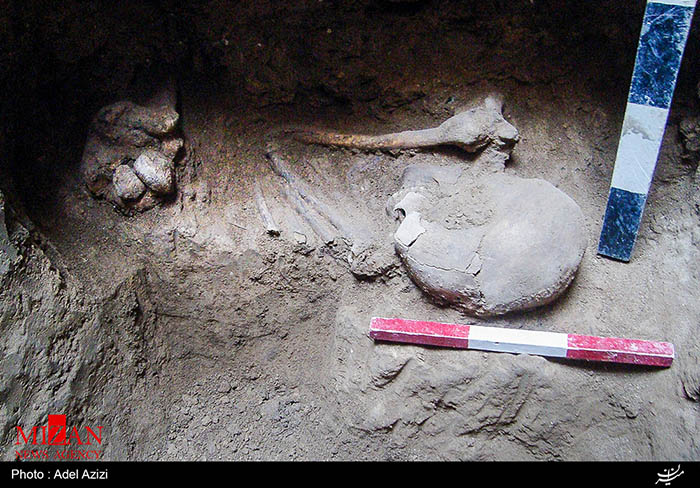
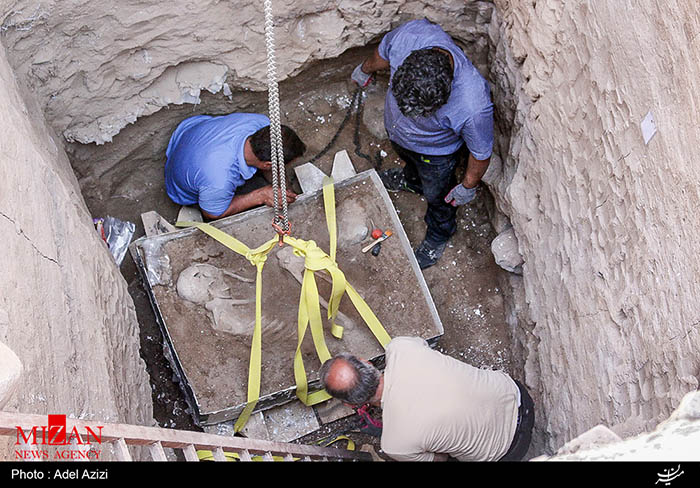
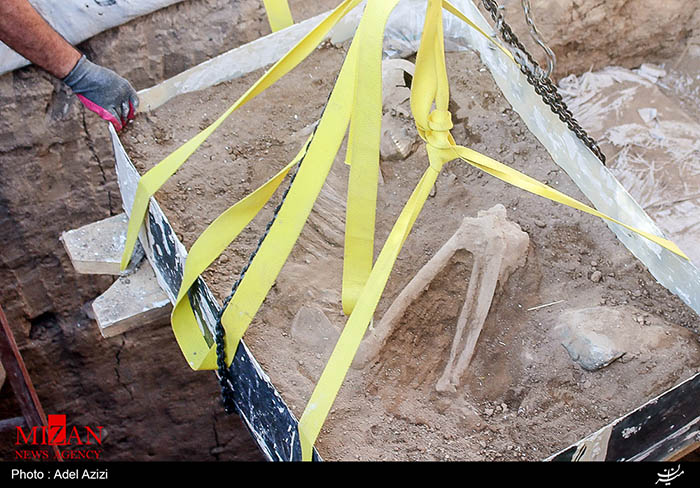
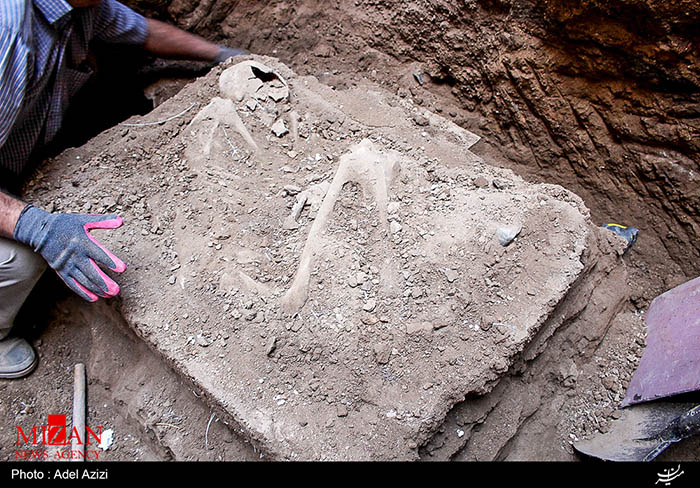
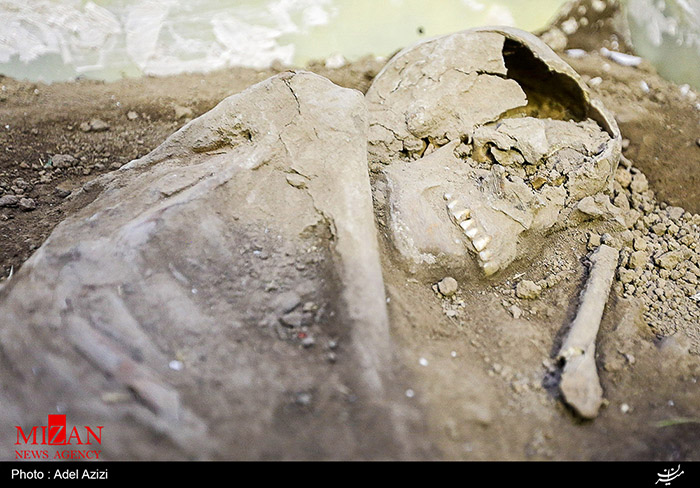
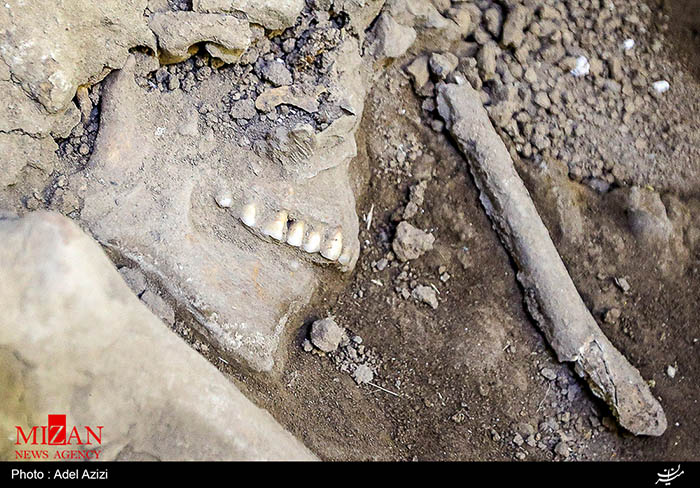
Skeleton of 7,500-Year-Old Man Found Almost Intact in Iran

Here’s IFP’s translation of excerpts from Mehr’s interview with Hamid Farahi, the head of the team dispatched to the site by the National Institute for Conservation and Restoration of Iran’s Cultural Heritage, Handicrafts and Tourism Organization (ICHTO):

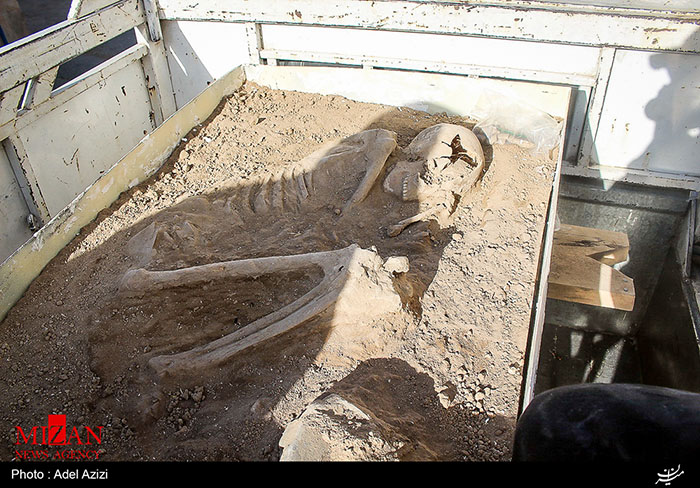
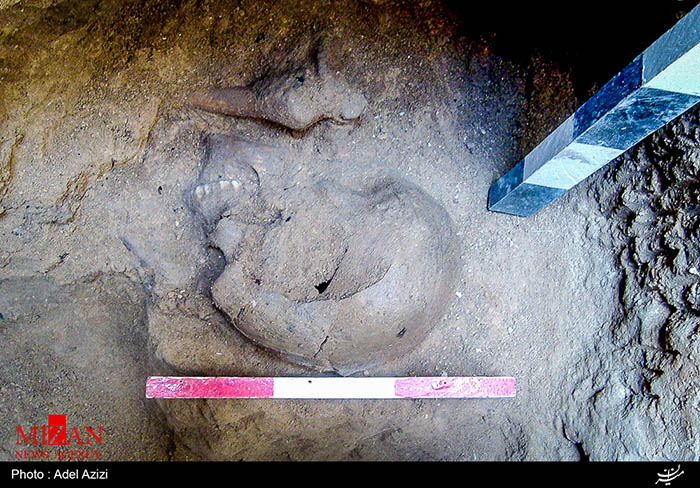
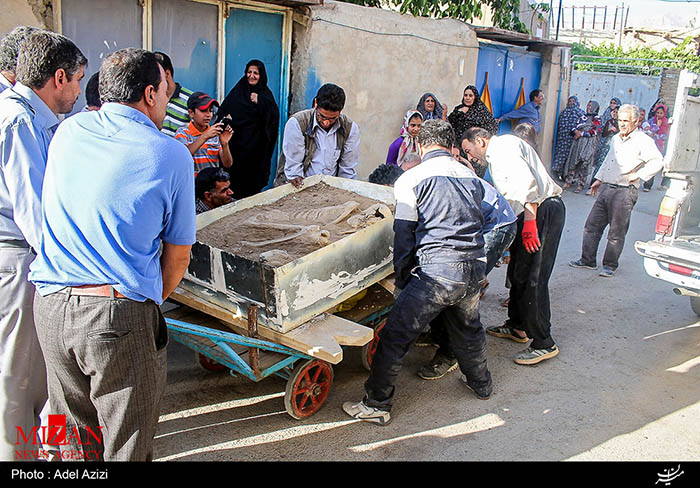
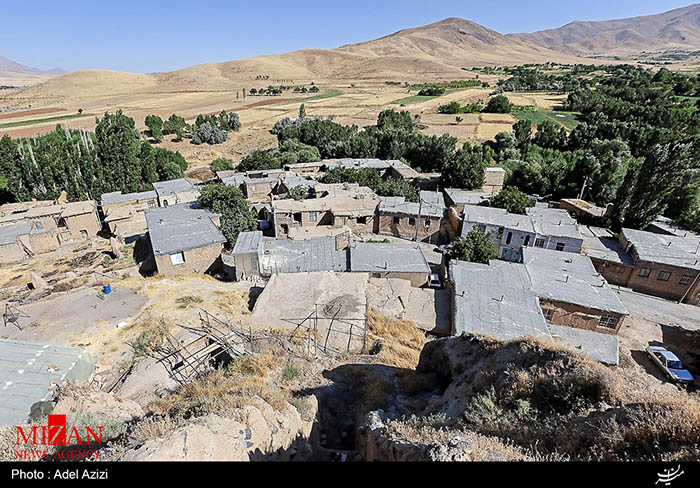
The 7,500-year-old skeleton was discovered 6 metres down the earth in Sar Sakhti-ye Olya village in Shazand, and was transferred to Chahar Fasl (Four Seasons) Museum in Arak.

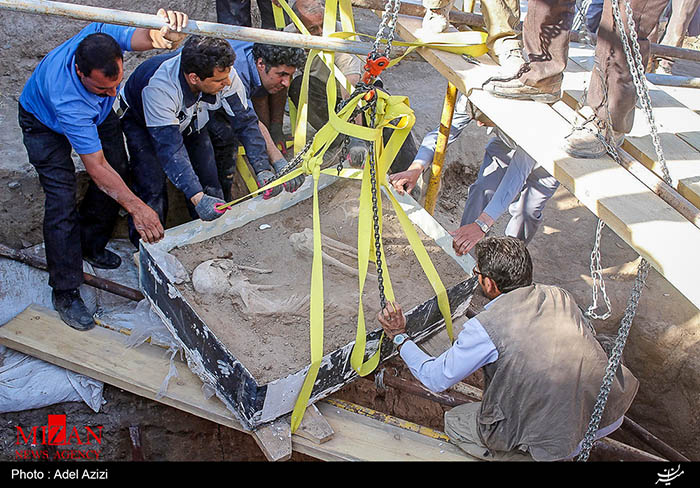
“Since the skeleton had been buried deep in the earth, the transfer team had great difficulty in moving the skeleton to the museum,” Farahi said.

“Before transferring the skeleton to the museum, we had to apply techniques of cutting and plaster moulding,” he noted.

It takes two months before the skeleton bones become stiff, he said, adding, “Once we finish strengthening the skeleton, it will be displayed to the public.”

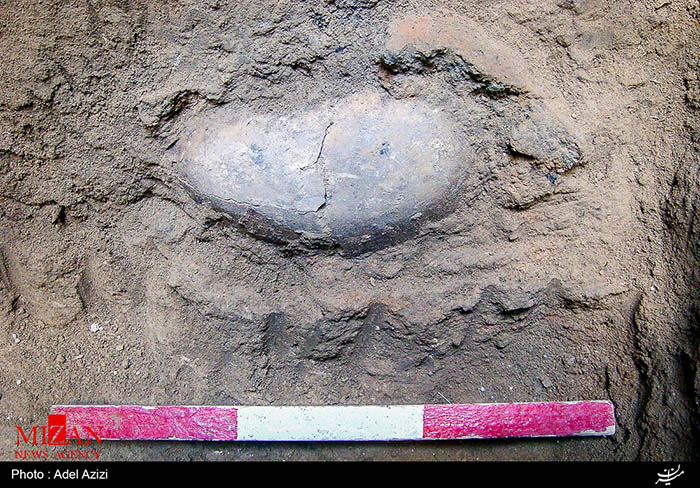
Some significant objects including turtle shell and a series of grinding tools were also found buried with the man, he added.

Fathollah Niazi, the leader of the excavation team, mentioned that the man had been buried squatted and probably facing to the sun.

“He was buried with a few heating items such as a heater, because people at that time believed that life continues after death,” he underscored.

Niazi further pointed to the healthy teeth and bones of the skeleton, adding that “the type of the soil and the existence of some elements such as lime, very low levels of acid and high amount of salt are the main reasons.”

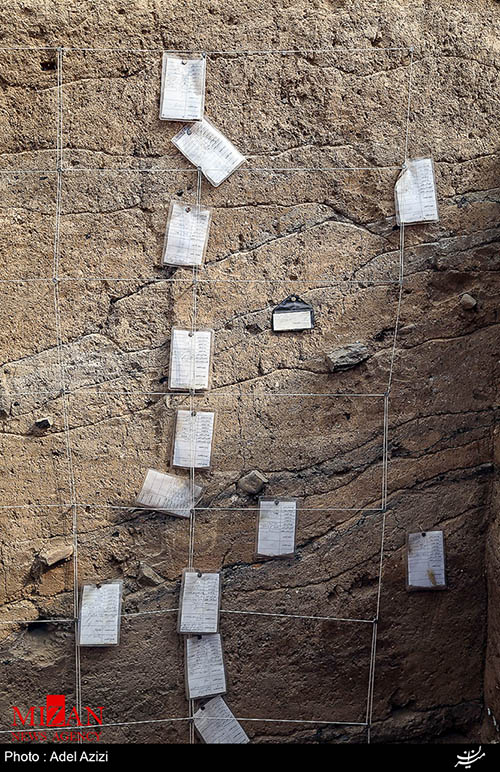
Here are Mizan‘s photos of the skeleton and the transfer process:


Russia Had Warned Turkey of July Coup: Media Reports Confirm

57331824

Western and Arab media outlets and journalists are confirming earlier media reports that said Russia had warned Turkish President Recep Tayyip Erdogan of an imminent coup by the army on July 15.


Last month, Rai Alyoum revealed that Turkey’s President Erdogan had been alerted by Russia against an imminent army coup hours before it was initiated, and added that Erdogan asked his supporters to remain in the streets after receiving advice from Tehran.

Several Arab media outlets, including Rai Alyoum, quoted diplomatic sources in Ankara as saying that Turkey’s National Intelligence Organization, known locally as the MIT, received intelligence from its Russian counterpart that warned of an impending coup in the Muslim state.

Now Rai Alyoum Editor-in-Chief Abdel Bari Atwan has confirmed the report in an interview with Russia Today Arabic news network, saying, “The Russian intelligence came to find out about the coup in Turkey before anyone else and the Russian President informed his Turkish counterpart in an urgent hotline phone call.”

Asked about his sources and the reliability of his report, the renowned journalist said, “We earned this piece of news from several sources; the Russian intelligence service had managed to monitor and pick up abnormal and massive moves of the Turkish army through the Tartus base in Syria.”

He further stated that the move has caused a U-Turn in President Erdogan’s foreign policy towards Russia, especially with regard to Syria, as reported by Fars and edited by IFP.

In the meantime, Robert Fisk, who heads the Middle-East desk of Independent, also confirmed the report in an article on Tuesday, August 9.

“Russia and, indeed, Iran played an intelligence role in warning Erdogan of the military coup plotted against him,” Fisk wrote.

“The Arabs have already been told by their Russian collocutors that Putin, being the old KGB boss that he was, personally sent a message to Erdogan after learning of the coup from Turkish army communications, which were picked up and listened to by Russian technicians at their air base just outside Lattakia in Syria,” he added.

The Iranians – who would be happy to see Turkey turned against their Sunni Islamist enemies in Syria – also tipped off Erdogan about the coup, so the Arabs have been told,” Fisk said.

Fisk also presented an analysis identical with Atwan in his Independent article, saying that Turkey is now leaning towards Russia and turning its back to the former Arab and western allies.

Boeing Representatives in Tehran: Minister

Boeing

“Right now, Boeing representatives including three financial, legal and technical groups are in Tehran and negotiating” the sale of jetliners to Iran, Minister of Roads and Urban Development Abbas Akhundi said on Saturday.

Those negotiations with Airbus have concluded and the two sides were waiting for the US Department of the Treasury’s Office of Foreign Assets Control (OFAC) to issue a license for the purchase to go ahead, he added.

The two aviation rivals have signed initial accords with the flag carrier Iran Air to sell about 200 aircraft worth more than $50 billion to the country which is seeking to renovate its aging fleet after decades of sanctions.

However, they are facing stiff opposition from pro-Israeli members of US Congress who are seeking to block the planned sales. The lawmakers plan to debate a raft of measures, including one that would prohibit the US Treasury from licensing the sales.

US President Barack Obama and his allies are expected to oppose the legislation, but if the bills are written into law, they would prevent other firms from selling aircraft to Iran as well.

US equipment allegedly accounts for more than 10% of the content used in almost all modern jets, requiring export licenses from the American government for any contract to be implemented.

Akhundi expected deliveries by Airbus to start in the Iranian month of Aban which begins on October 22 if OFAC issues a license within the next two or three weeks.

“As for Airbus, all technical, contractual and financial negotiations have finished and we are waiting for OFAC’s license in which case all work will be wrapped up in time,” he said.

“Everything depends on this license and politicians are saying that OFAC’s licenses for Airbus and Boeing are interrelated,” Akhundi added in remarks quoted by the Tasnim news agency.

As regards Airbus, most of the technical specifications have ended and only the time of the authorization remains to be announced by OFAC, the minister said.

Iran Air agreed in January to buy 118 jets worth $27 billion at list prices from Airbus. Another MoU was signed in June, calling for Boeing to sell a total of 80 aircraft to Iran and help the country lease a further 29 in a deal worth $25 billion.

Boeing has proposed to sell its 737, 777 and 787 models and promised after-sales support, according to Iranian officials who have said the country needs as many as 500 jets for its fleet.

Iran’s current civil aviation fleet consists of 248 aircraft with an average age of 20 years, of which 100 are grounded.

Some media reports have said US Treasury might be putting off its decision on the sales until after the Nov. 8 presidential election in the US, where both Democratic Party candidate Hillary Clinton and Republican candidate Donald Trump are stalwart supporters of Israel.

Amid those speculations, Iranian carriers have begun talks with Canada’s Bombardier and Brazil’s Embraer as well as Japan’s Mitsubishi Aircraft for its regional passenger jet currently under development.

China’s single-aisle C919 airliner which rolled off the assembly line last November is another option, but neither choice is without hurdles.

While none of the companies has an aircraft for delivery in its inventory, both rely on the US and Europe for key parts in their manufacturing.

Ayatollah Khamenei Grants Clemency to Iranian Convicts

Iran’s Leader Okays Allocation of €1 Billion to Fight COVID-19

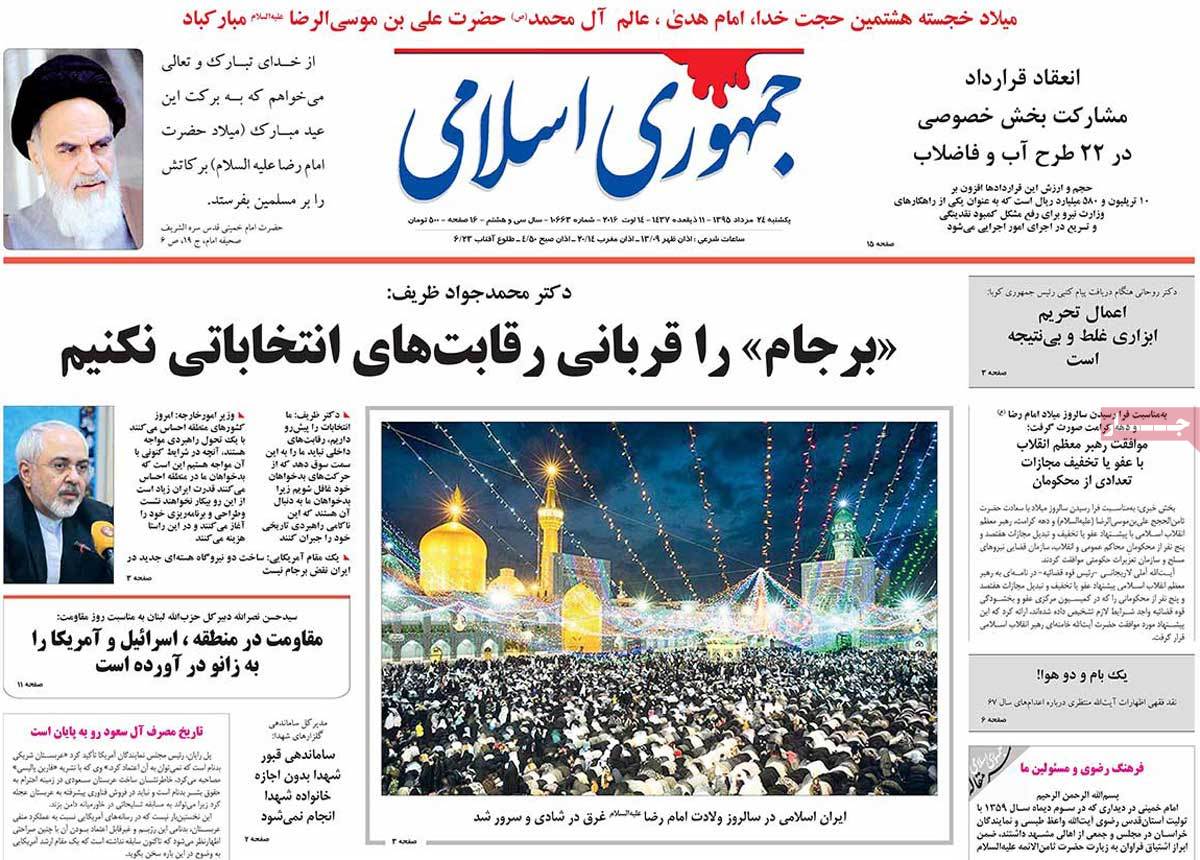
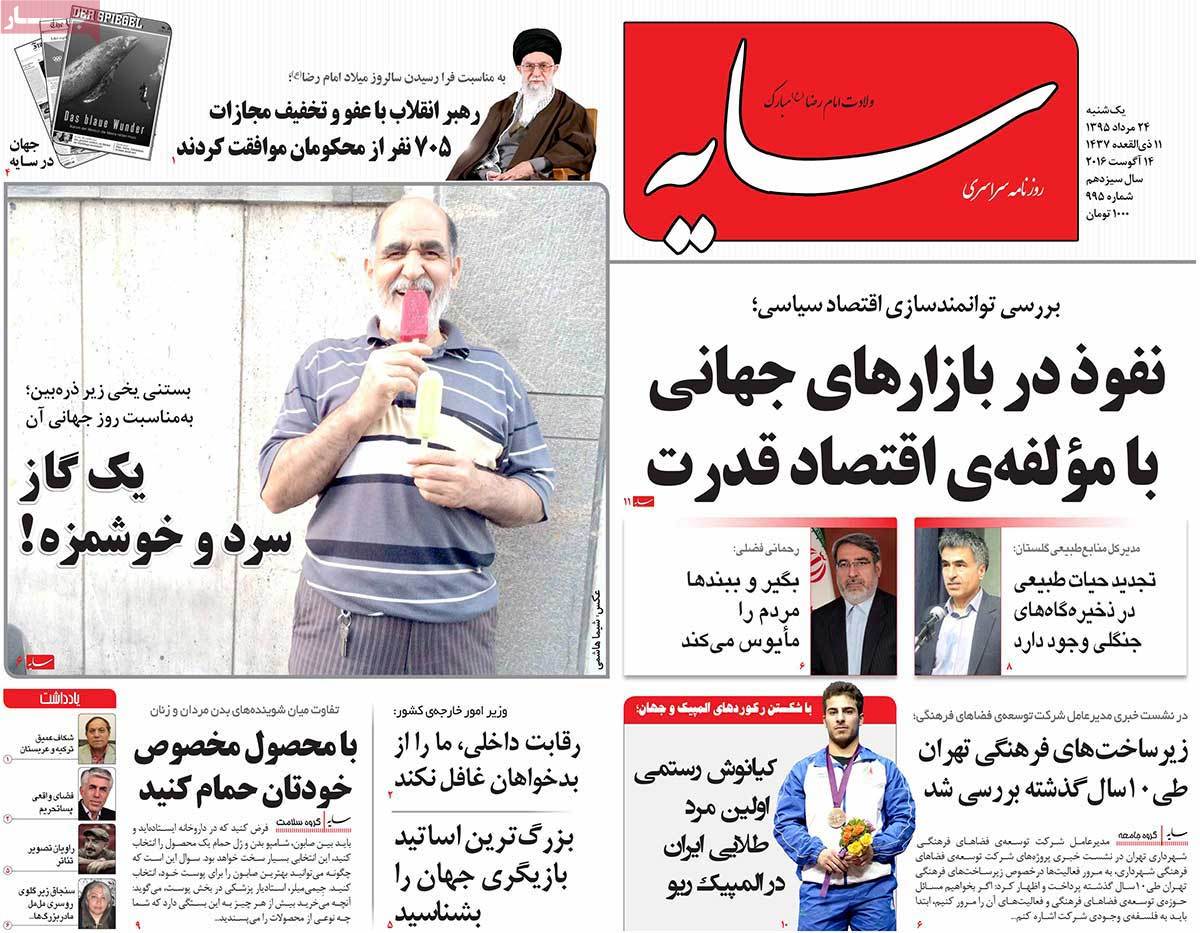
Ayatollah Khamenei on Saturday pardoned or commuted sentences of 705 prisoners found guilty by various Iranian courts.

The pardon was granted at the request of the country’s Judiciary Chief Ayatollah Sadeq Amoli Larijani on the occasion of the birth anniversary of Imam Reza (PBUH), the eighth Shiite Imam whose shrine is in Iran.

Iran’s Constitution grants the Leader the right to pardon, reduce or replace the sentences of convicts upon a recommendation from the Judiciary chief.

The clemency, however, does not apply to several types of convicts, including those who have been sentenced for their role in armed struggle against the country, armed or organized drug trafficking, rape, armed robbery, arms smuggling, abduction, bribery and embezzlement.

Cuban President Sends Message to Ayatollah Khamenei

Cuban President

Ricardo Cabrisas Ruiz, vice president of Cuba’s Council of Ministers and Executive Committee, held a meeting with Ali Akbar Velayati, an international adviser to Ayatollah Khamenei, and delivered the message from the Latin American nation to the Leader.

Conveying warm greetings from the Cuban president and Fidel Castro, the envoy said Iran and Cuba take a common stance against tyranny and despotism.

He also affirmed that Cuba, like Iran, is resolved to counter cruel sanctions imposed by foreign countries.

Cabrisas further hailed Iranian Foreign Minister Mohammad Javad Zarif’s upcoming visit to Havana as a historical trip, saying it will contribute to the expansion of bilateral trade ties.

Velayati, for his part, praised Cuba’s independence-seeking morale, saying that other Latin American nations have been inspired by the 1950s Cuban Revolution.

He noted that Foreign Minister Zarif’s forthcoming visit to Cuba will help promote Tehran-Havana cooperation in the Non-Aligned Movement (NAM).

The former foreign minister also highlighted the suitable grounds for cooperation between Iran and Cuba in the medical sector, as in vaccine and serum making industry.

Velayati further referred to US President Barack Obama’s visit to Cuba in March and said resumption of diplomatic ties between the two countries has not led to any reduction in Washington’s hostility toward Havana.