Thursday, January 15, 2026
Home Blog Page 4376

US, Saudi Presence in Syria Illegal: Iranian Adviser

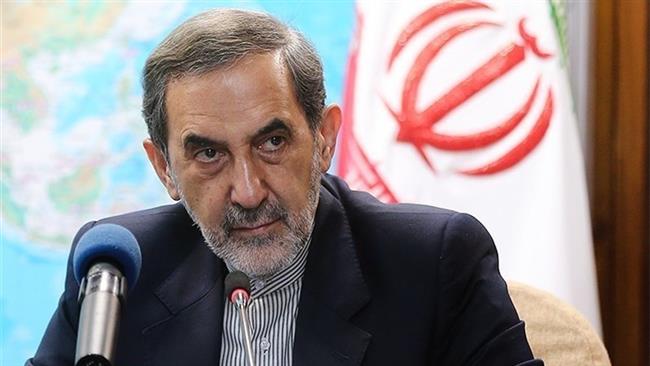
“The presence in Syria by such countries as the US and Saudi Arabia, who intervene there without the Syrian government’s consent, is illegal,” Ali Akbar Velayati, who advises the Leader on international affairs, said on Saturday.

“Making decisions as to Syria’s future is up to Syrian people,” he said, adding, “Others are disallowed to meddle in Syria’s internal affairs.”

Saudi Arabia is widely reported to be providing lavish financial and ideological support for the Takfiri militants operating in Syria. Riyadh also backs the so-called High Negotiations Committee (HNC), which is an opposition group. The HNC has so far turned down two United Nations (UN) proposals aimed at resolving the Syrian conflict.

Many of the Takfiri terrorists operating against Damascus in Syria are believed to follow Wahhabism, a strand of extremist “ideology” preached by government-sanctioned clerics in Saudi Arabia.

The United States has also been leading a number of countries in a bombing campaign with the declared goal of uprooting Daesh in Syria since 2014. The campaign, which has forgone both a UN mandate and Damascus’ approval, has fallen severely short of its declared aim.

‘Turkey coup revelatory’

Velayati also remarked on the failed coup in Turkey in July, which was conducted by a faction of the Turkish military.

“What recently happened in Turkey had different results, including [clarifying] who the real friends of Turkey are and who aren’t,” he said.

Iran was the first country to condemn the failed putsch in Turkey.

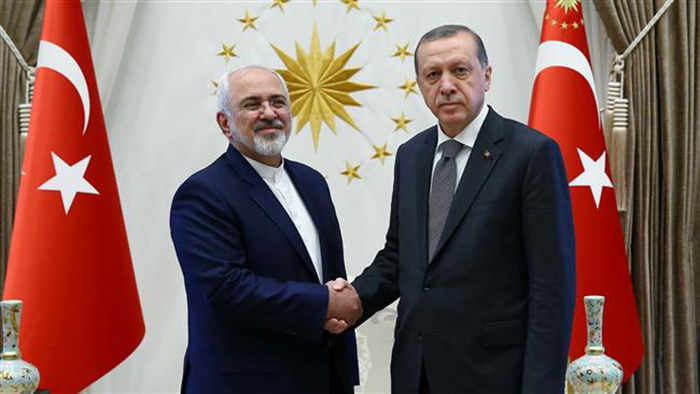
zarifOn Friday, Iranian Foreign Minister Mohammad Javad Zarif traveled to the Turkish capital, Ankara, in a first visit by a high-ranking Iranian official to Turkey since the July 15 coup bid.
Zarif met with his counterpart Mevlut Cavusoglu as well as Turkish President Recep Tayyip Erdogan, discussing crucial issues of mutual interest and the means of resolving differences between Iran and Turkey.

Saudi Ideology of Wahhabism, Root of Terrorism: Arrested Militant

Terrorism

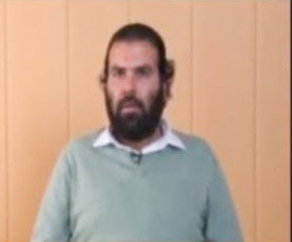
Alimoradi, who had acquired the knowledge of making bombs from terrorists in Afghanistan, was apprehended on his way to Syria by security forces on Iran’s western borders.

Here is IFP’s translation of excerpts from his interview with Al-Alam news website, where he explains about his aims and motives as well as the origins of terrorist groups throughout the world.


Al-Alam: What do you think are the main aims and motives behind the terrorist operations of Tawhid wal-Jihad terrorist group?

Alimoradi: Wahhabism is the intellectual basis of Jama’at al-Tawhid wal-Jihad, based on which the adherents of other religions are accused of apostasy. According to them, followers of other creeds are dubbed apostates specifically on account of Tawassul (resort) to anyone but God. They hold that the Islamic Republic of Iran is an idolatrous government; therefore, its affiliates should all be immediately executed as they are the main obstacles in the way of Tawhid [Islam’s most fundamental concept that says God or Allah is one]. We assassinate Sunni Mamostas [clerics] for the same reason, i.e. they have connections with Iran. To us, Mamosta Sheikholeslam [who was assassinated by the terrorist group] stands the highest in apostasy because he was the representative of Iran’s Supreme Leader and thus executed.

Al-Alam: The concept of resort, which is one of the main criteria for apostasy to you, has not been categorically debunked in Wahhabism! How do you explain this contradiction?

Alimoradi: That’s right, but only in a few particular conditions you are allowed to resort to anyone but God. For example Wahhabis are permitted to resort to the prayers of a living person or their good deeds. […] Going to the graves of noble, righteous people, saying prayers there, sacrificing an animal and offering its meat to a dead person; all of these are looked upon as acts of apostasy and the performers are polytheists; they thus deserve to be killed.

Shouresh AlimoradiAl-Alam: Why did you join this terrorist group and become an accomplice to their heinous crimes while you knew all these?
Alimoradi: I did not know much when I first joined the group […].

Al-Alam: So, are you actually affirming that you had been deceived and the leaders of Tawhid wal-Jihad terrorist group were the main perpetrators of terrorist operations?

Alimoradi: Yes. They were my inmates for two years. One of them is my own uncle. They still hold strongly to their beliefs […].

Al-Alam: How do you think the reaction of the Sunni Muslim world would be to the execution of these people?

Alimoradi: Execution of these people is a real blessing to Sunnis. Not only does it curb the spread of conflicts among Sunnis, but also the young generation will be safe from being absorbed to these groups […].

Al-Alam: Do you know anything about the terrorist groups out of Iran such as al-Qaeda, ISIS, al-Nusra Front, Jaysh al-Islam?

Alimoradi: All of them have been developed from Wahhabism […].

Al-Alam: Why are they so much in conflicts, if they are all rooted in one single religion?

Alimoradi: […] In fact, that’s the very same question that’s been boggling my mind all these years. I believe that is because of power struggle. The senior leaders of all terrorist groups across the world are willing to kill each other but never lose power.

Rangers vs. Hunters: How Rangers Endanger Their Lives to Save Animals

Hunters

Here is IFP’s translation of a report by ISNA:


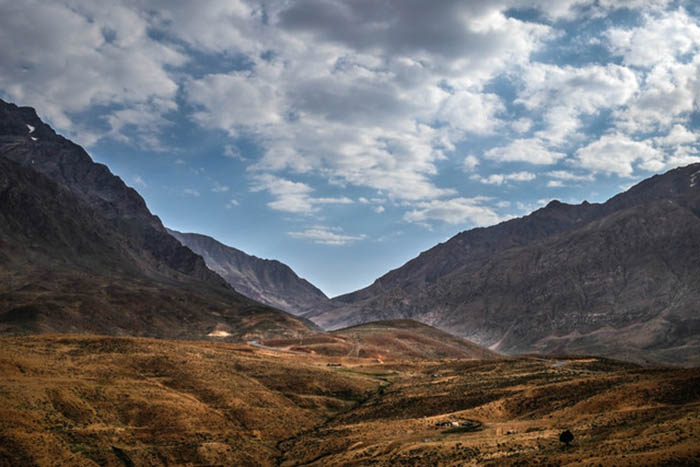
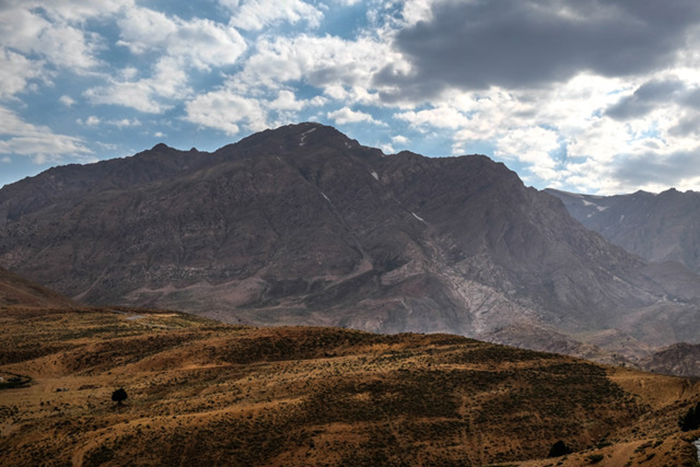
The National Park, Conservation Area, and Biosphere Reserve of Dena is located in Iran’s southwestern province of Kohgiluyeh and Boyer-Ahmad. With an area of 94 hectares and only 25 rangers, it is known for sporadic controversial clashes between hunters, who have an insatiable thirst for killing animals, and rangers, who have an abiding determination to save them.

Dena Biosphere ReserveOak and juniper forests make up 20% of Iran’s green vegetation. Wild goats, leopards, bears and boars are the most important animals living in the area; however, heat and incessant fires, drought and hunting are major threats to them.
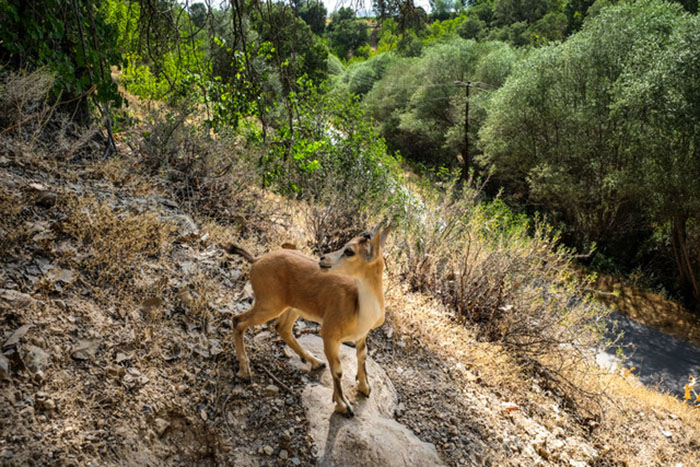
Aside from all these dangerous threats, the most upsetting reality is the damage hunters inflict upon nature.

Dena Biosphere Reserve (1)The unwanted killing of a hunter in Dena protected area put two rangers into death row, which took years to be exonerated. Clashes are still ongoing and from time to time an innocent ranger has to sacrifice his life for the environment.
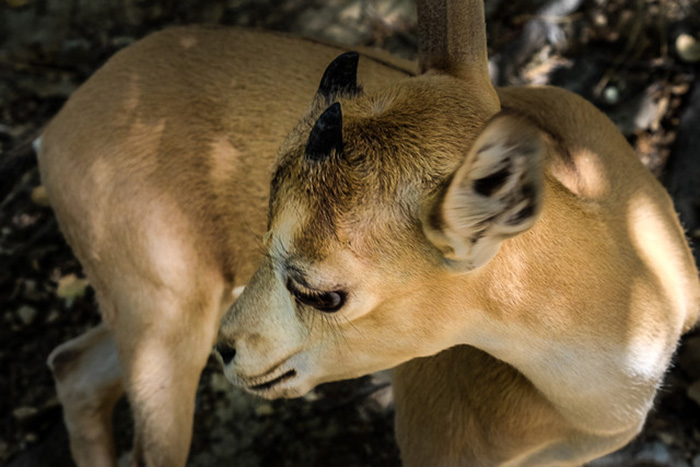
Wild goat is the most alluring animal for hunters; a hoofed quadruped animal that is said to have delicious and Halal yet pricey meat. Although the forefather of the domestic goats is not an endangered species, it has become extinct in many national parks like Dena. Since leopards feed on wild goats, their extinction poses a serious threat to the lives of these big cats.

Nomadic tribes, too, live in Dena protected area. They are the ones who proudly proclaim that hunting is in their blood and part of their identity.

Although hunting is illegal and prohibited in most parts of the area, there are many who go hunting, kill pregnant animals and ruthlessly take the baby animals out of their wombs just to take photos and spell their foolish pride in five words, “Hunting is in our blood”.

There are people who argue that hunting is a historical and cultural heritage and government officials have to put up with it. Nonetheless, it is not that simple.

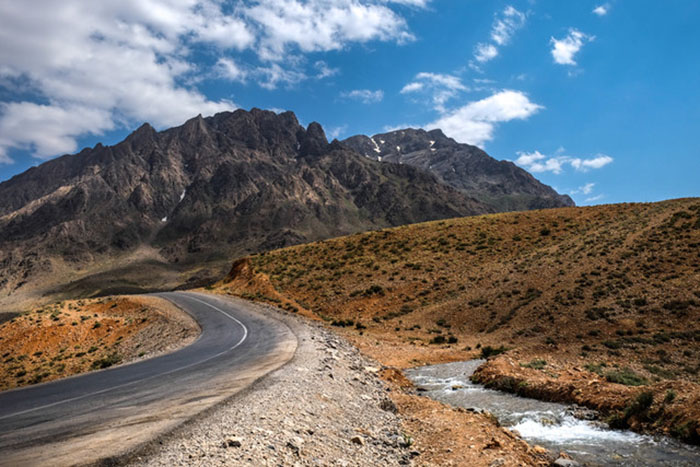
Since Dena Conservation Area is a mountainous terrain, curbing hunters has become even harder.

“Hunting, though part of some people’s identity, belongs to its own time. Things are completely different now. The population has grown much bigger and natural resources cannot meet the growing needs; therefore, the environment is being destructed,” said Asadollah Hashemi, the head of the provincial office of Department of Environment at Kohgiluyeh and Boyer-Ahmad.

Although it has helped attract much more tourists to the region, building roads in Dena Protected Area has exposed the environment to constant danger.

Another reason for the increase in clashes in Dena Protected Area is the wasteful issuance of gun licences.

Javad Emadi, a national park ranger, was recently injured in one of the clashes with hunters.

“Not all villages used to have guns. There were only 20 guns in each village,” he said, adding that “suddenly a bunch of entities showed up from nowhere and issued gun licences lavishly and made a good fortune by selling plenty of guns.”

Now, he added, almost each family in the village has over 3 licences, and they can easily buy bullets by taking a taxi to the city.

Rise of temperature and the looming drought have forced animals to approach residential areas where they are prone to be hunted.

“Therefore, curbing hunting activities has become almost impossible,” he went on to say.

Unlike some experts who believe that training is the only way out of this quagmire, an official from the provincial office of Department of Environment described it as disappointing.

“Building an appropriate culture, though it may seem promising on the surface, will probably end up in the full destruction of the environment, because it takes about 30 years to pay off,” the official said.

Iranian Travel Agencies Can Resume Sending Tourists to Turkey: Foreign Ministry

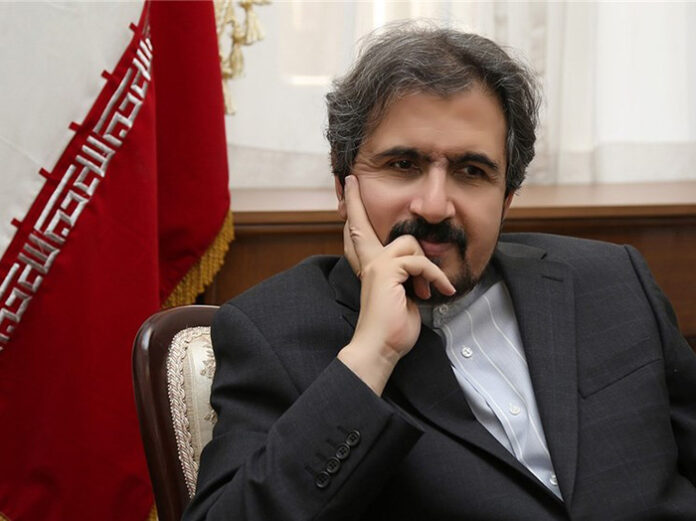
Shortly after the recent visit of Iranian Foreign Minister Mohammad Javad Zarif to Turkey, Iranian Foreign Ministry Spokesman Bahram Qassemi announced that a recent ban imposed by the Iranian government on Turkey tours has been lifted.


Qassemi noted that Iran has lifted the ban on travel agencies to take tourists and visitors to Turkey after the country pledged to provide security and welfare of Iranian tourists.

“Therefore, Iranian travel agencies can organize tourist trips to this neighbouring country,” he added, as reported by ISNA and translated by IFP.

Iran had earlier ordered travel agencies to cancel all trips to the country after the recent coup in the country.

The decision to lift the ban came after Zarif paid an official visit to Ankara and was warmly received by his counterpart. There he held separate meetings with Turkish high-ranking officials including President Recep Tayyip Erdogan.

“During the visit to Turkey, the Iranian minister had long negotiations on bilateral political, regional and international issues and other relevant matters between the two countries,” Qassemi said.

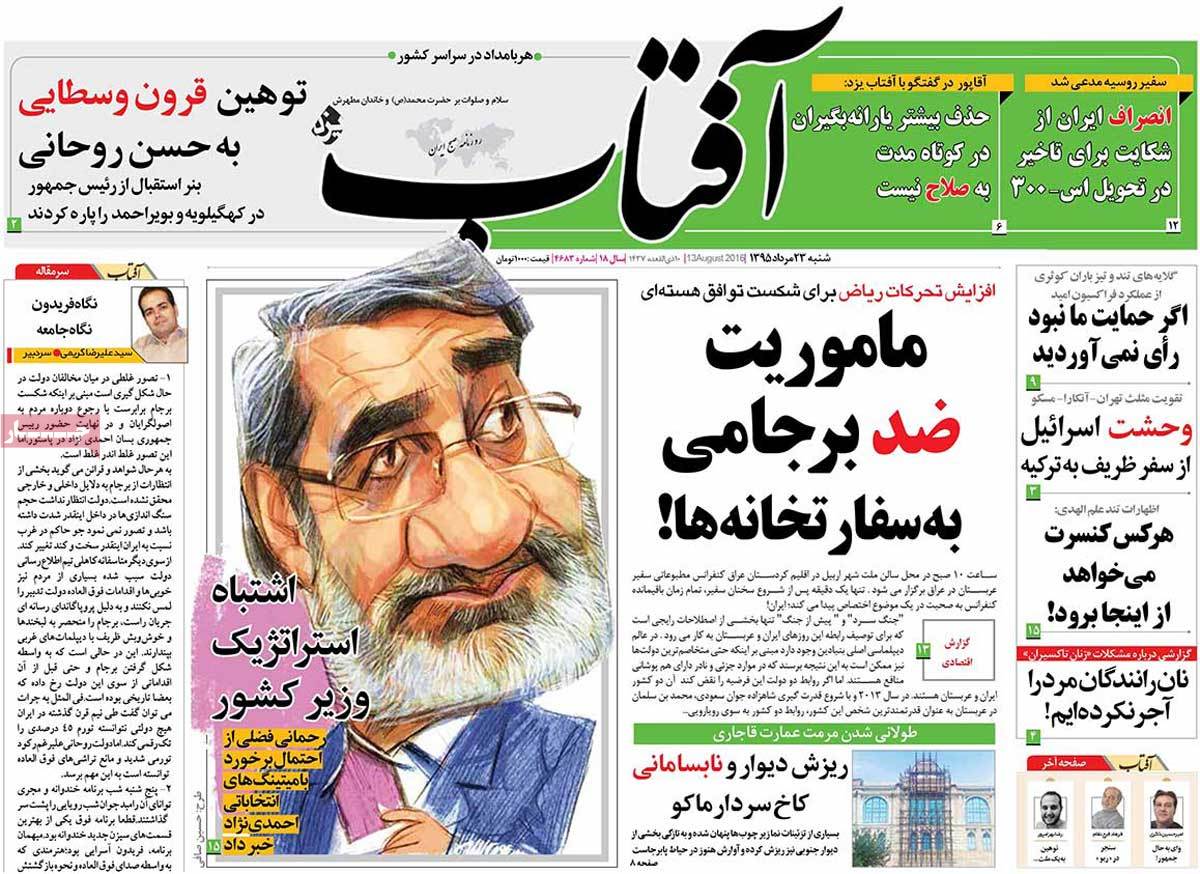
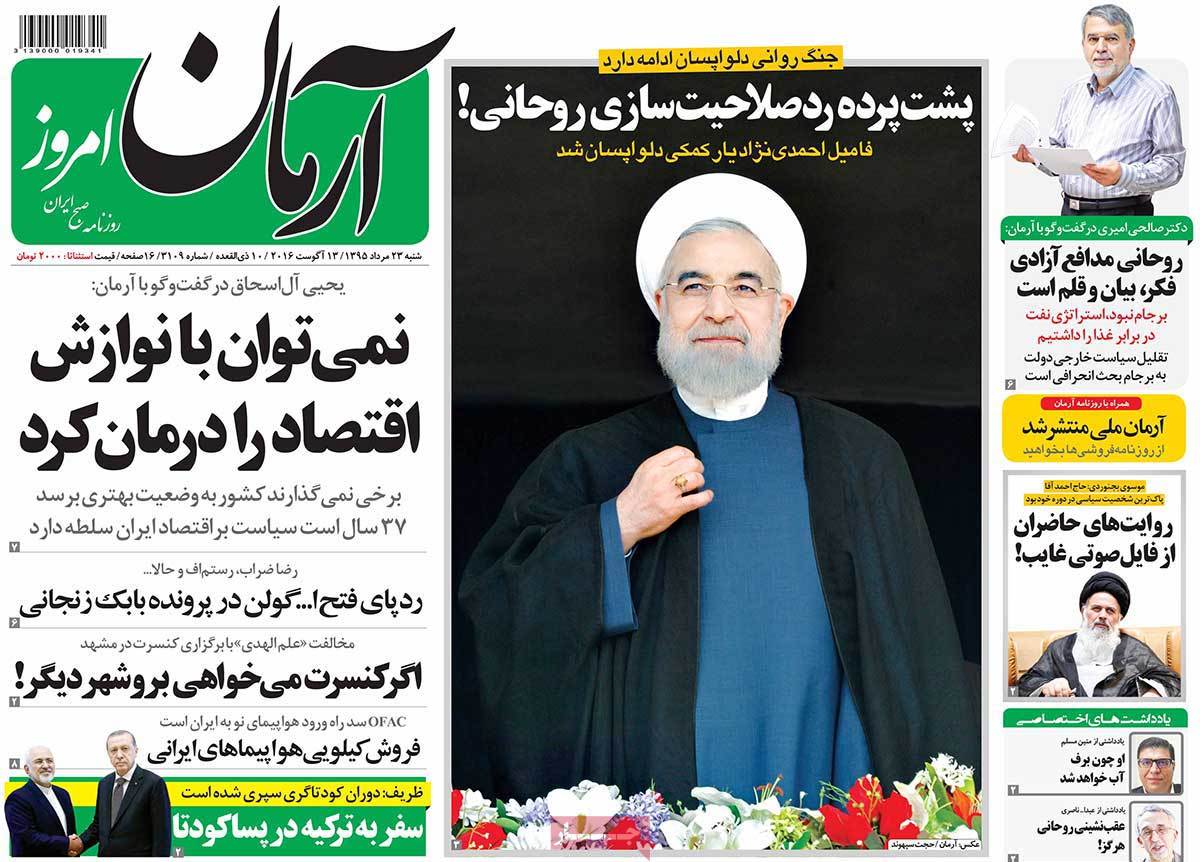
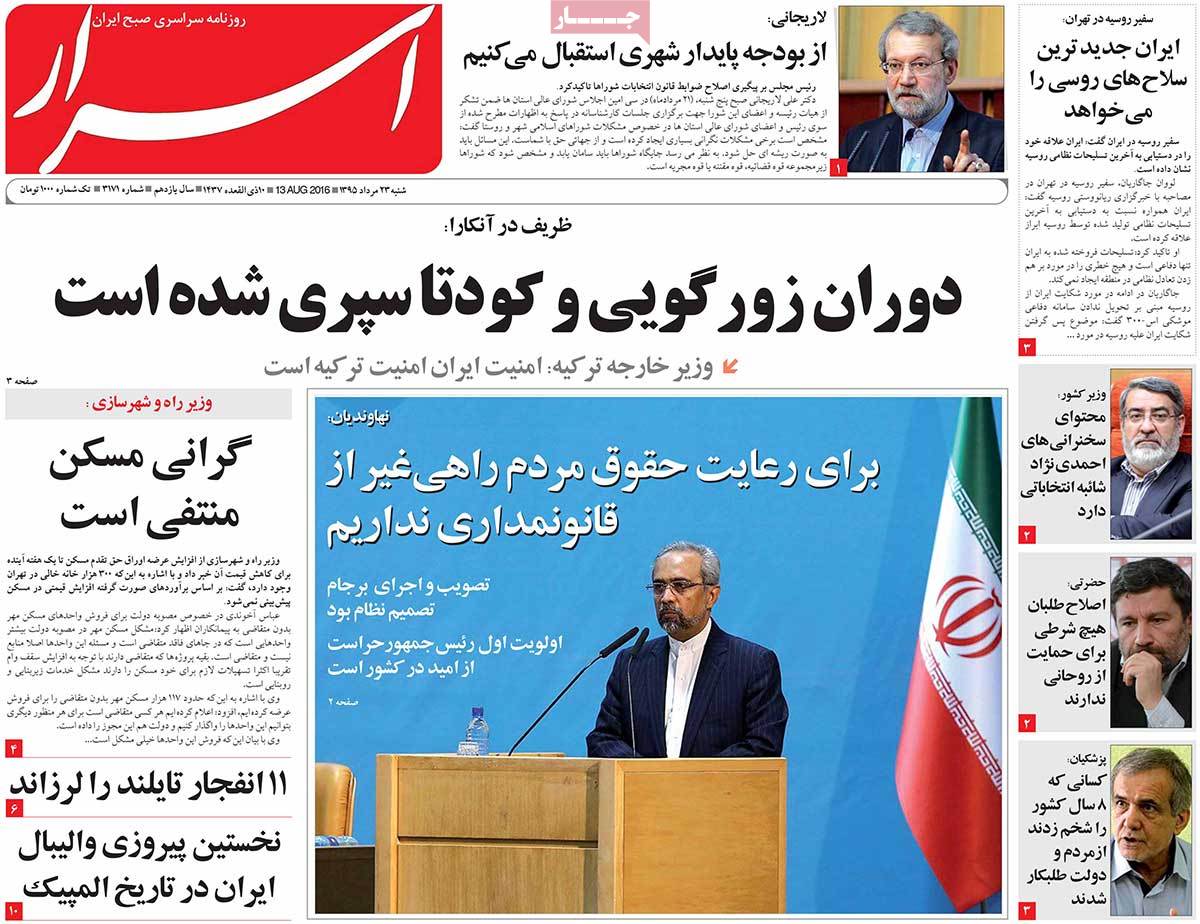
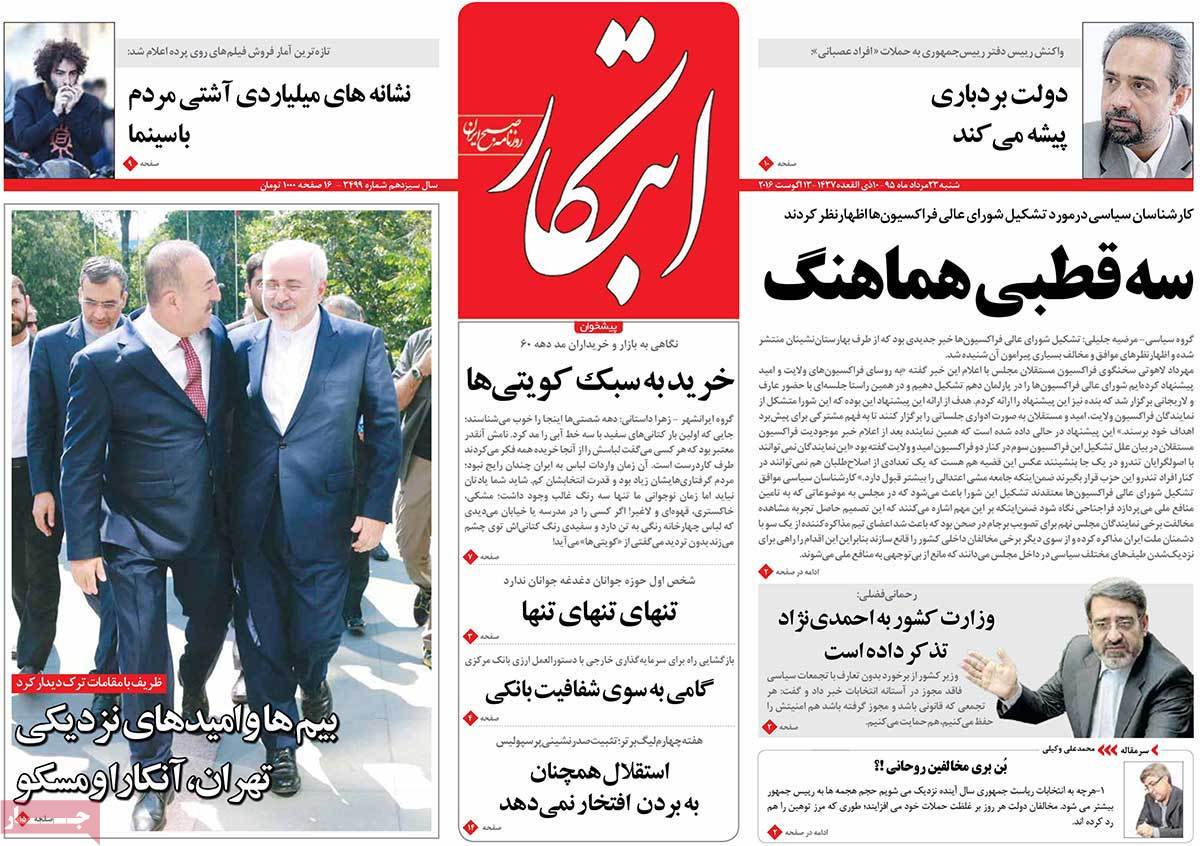
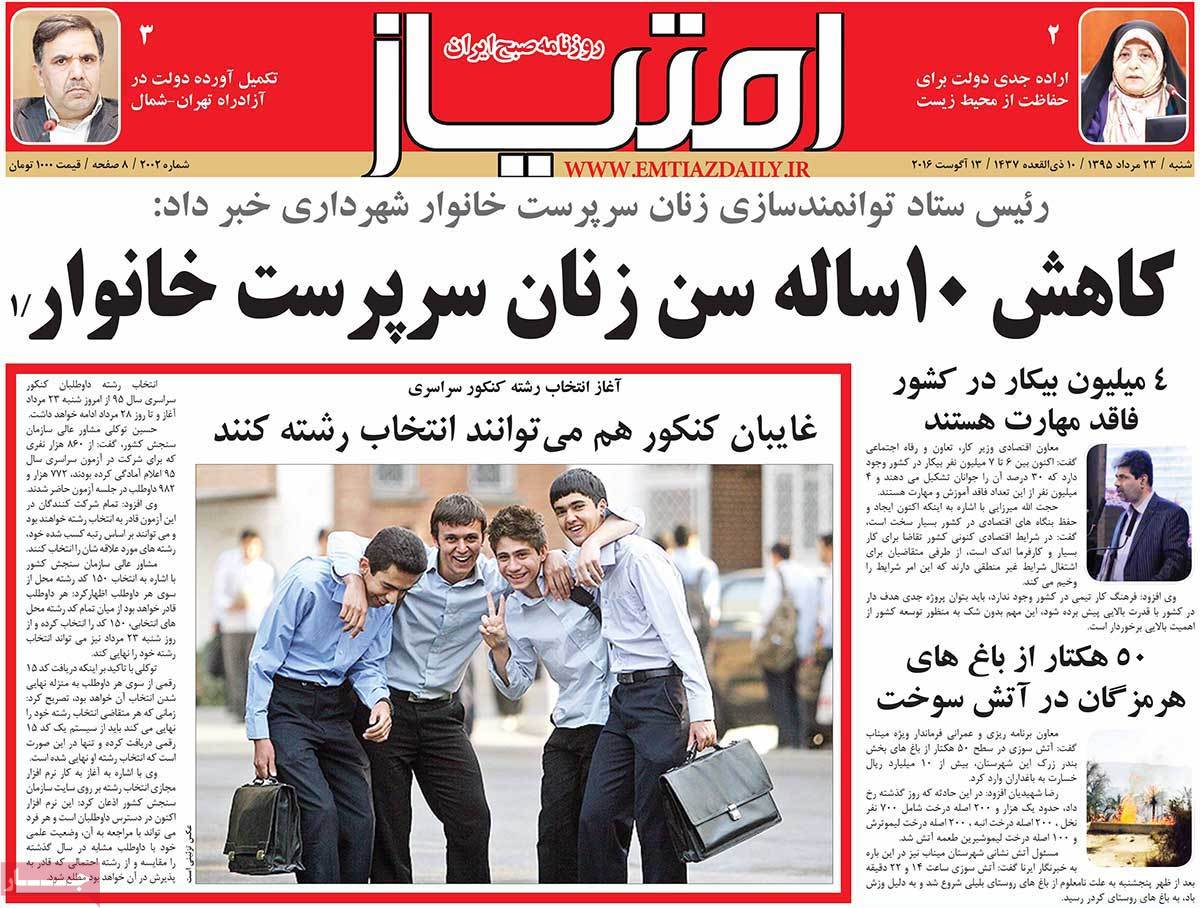
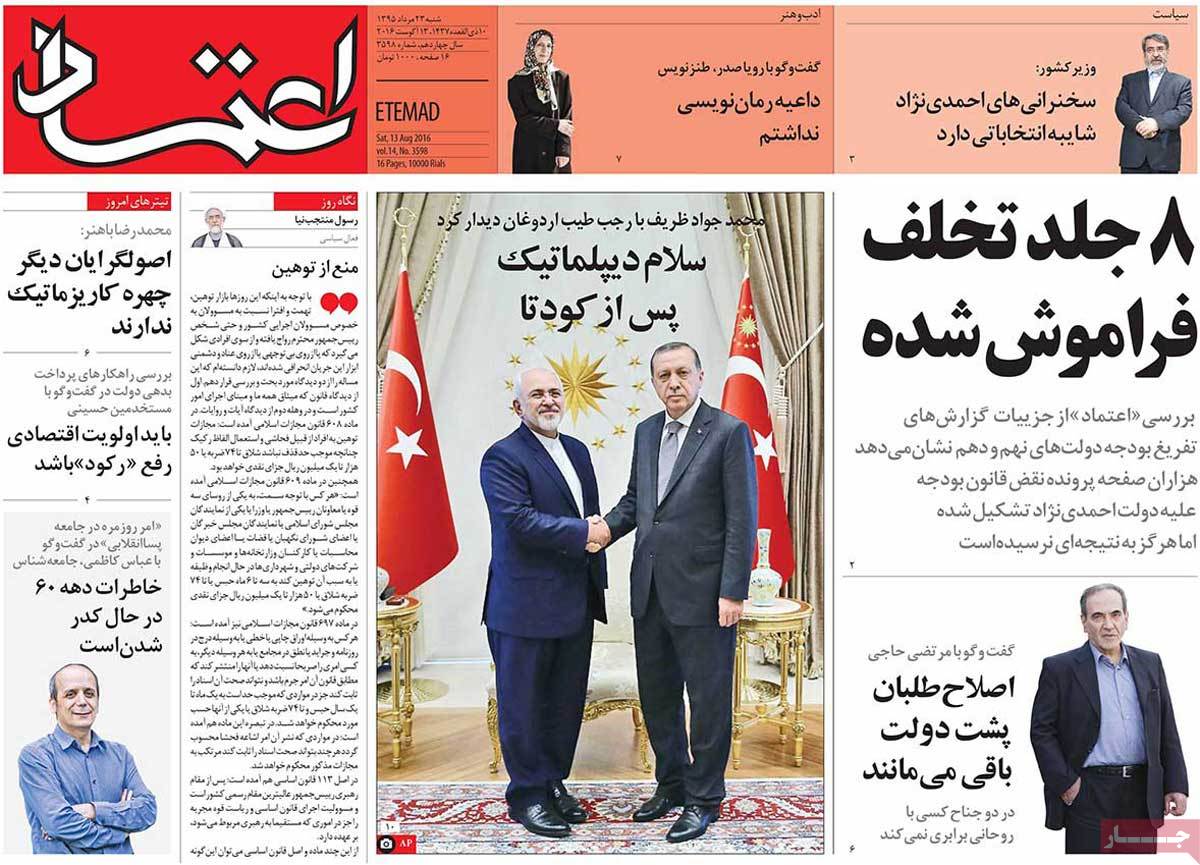
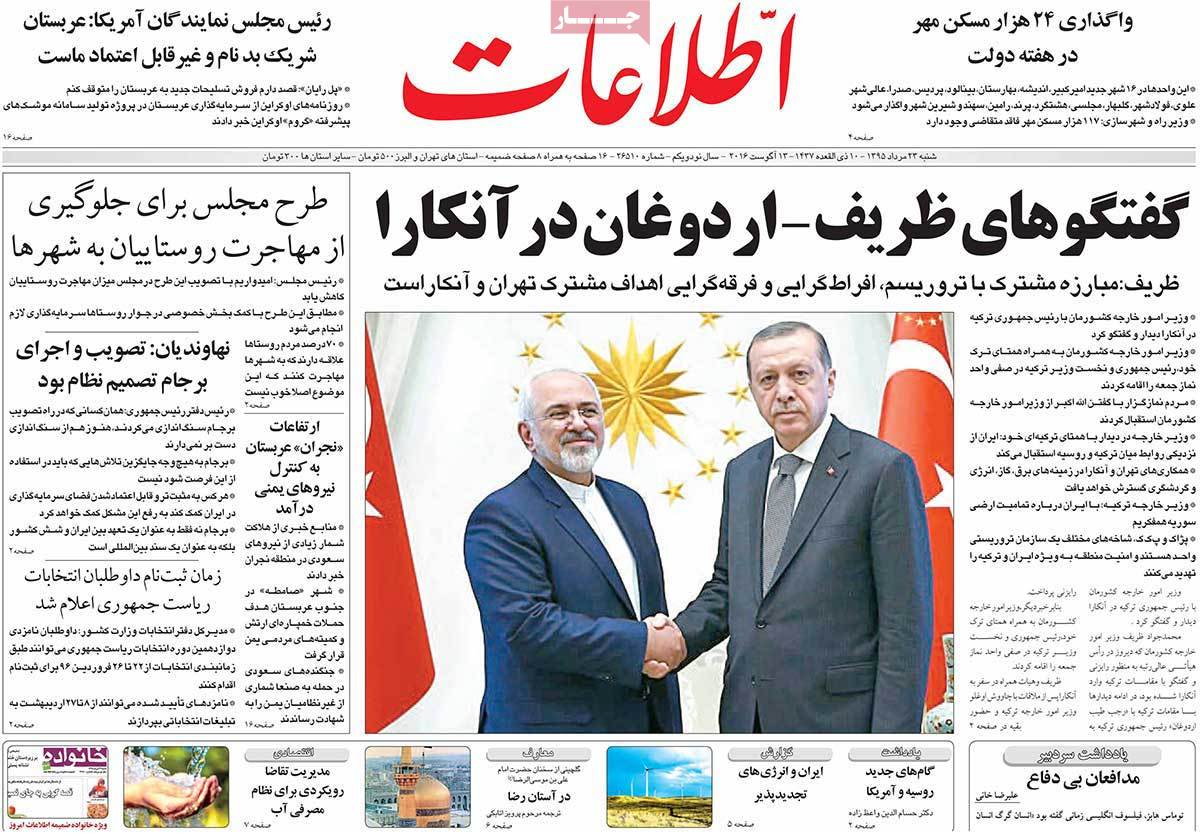
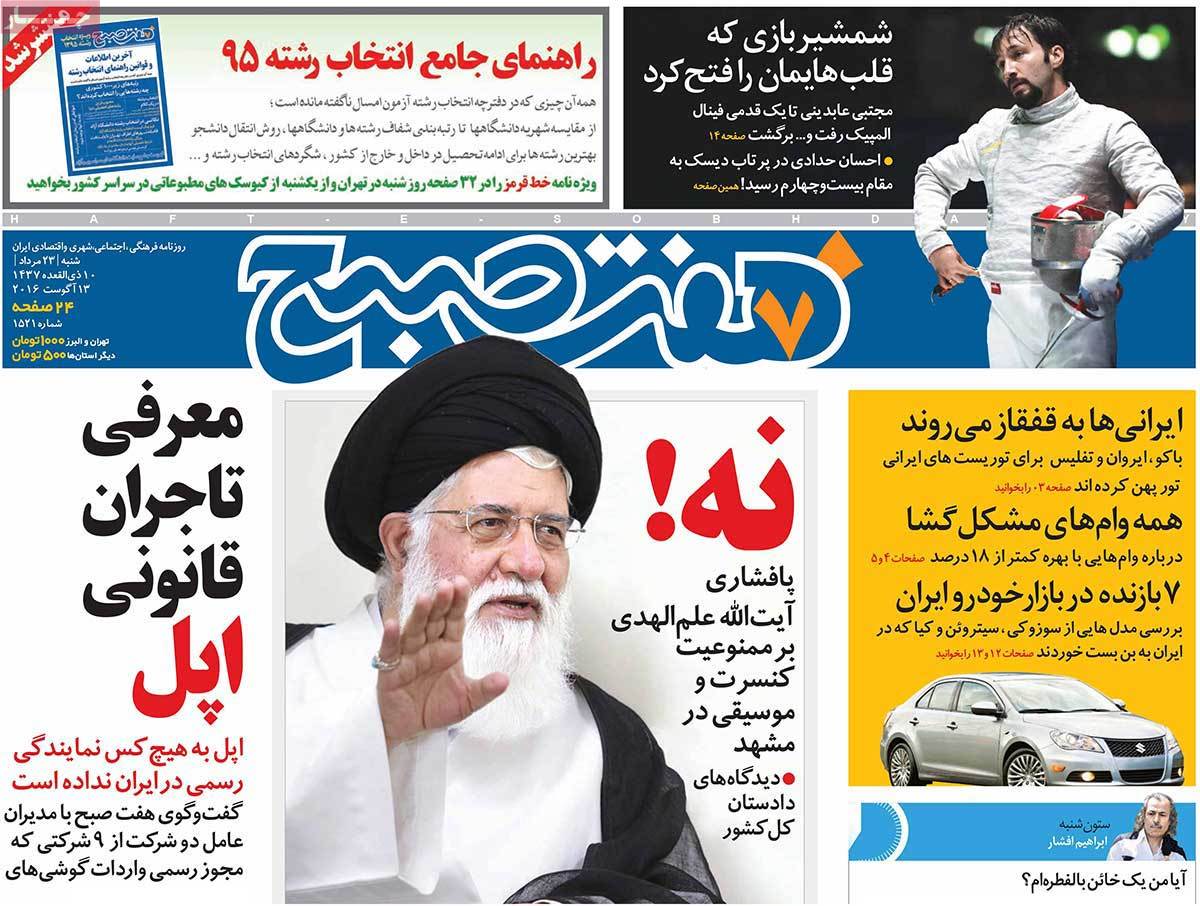
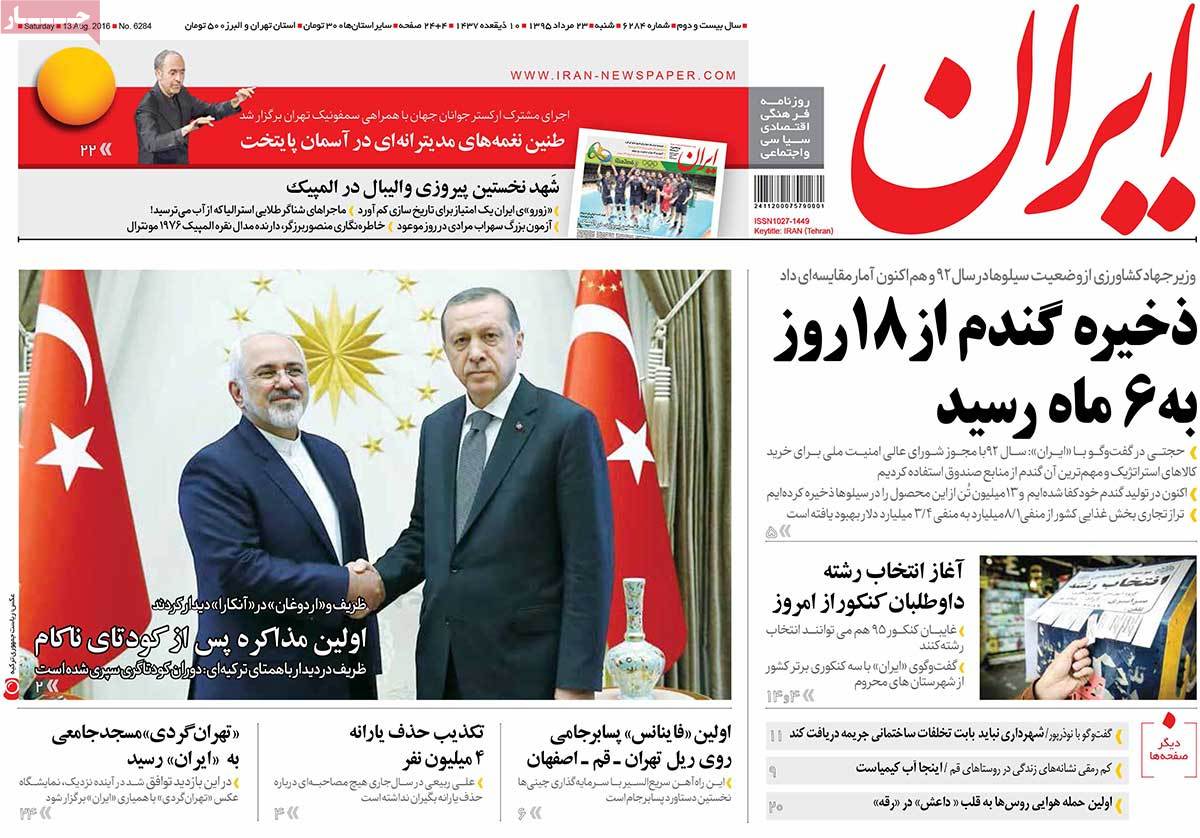
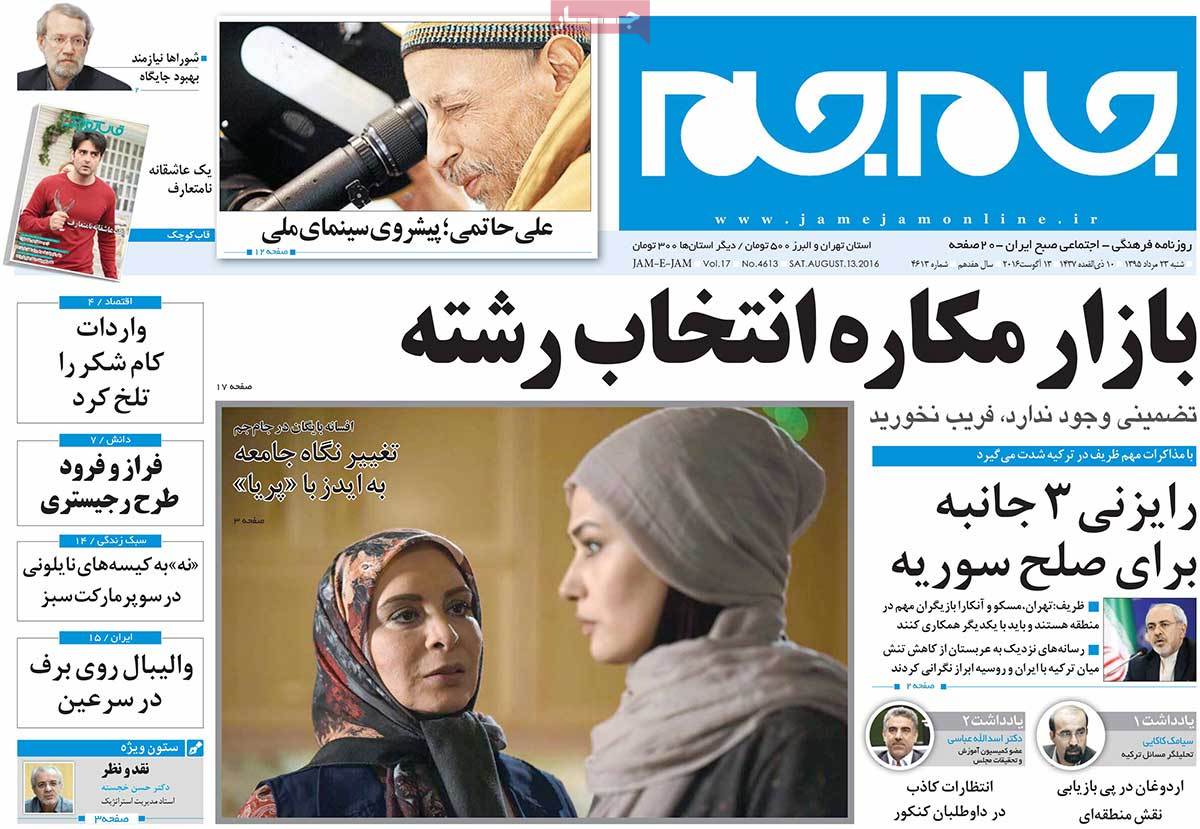
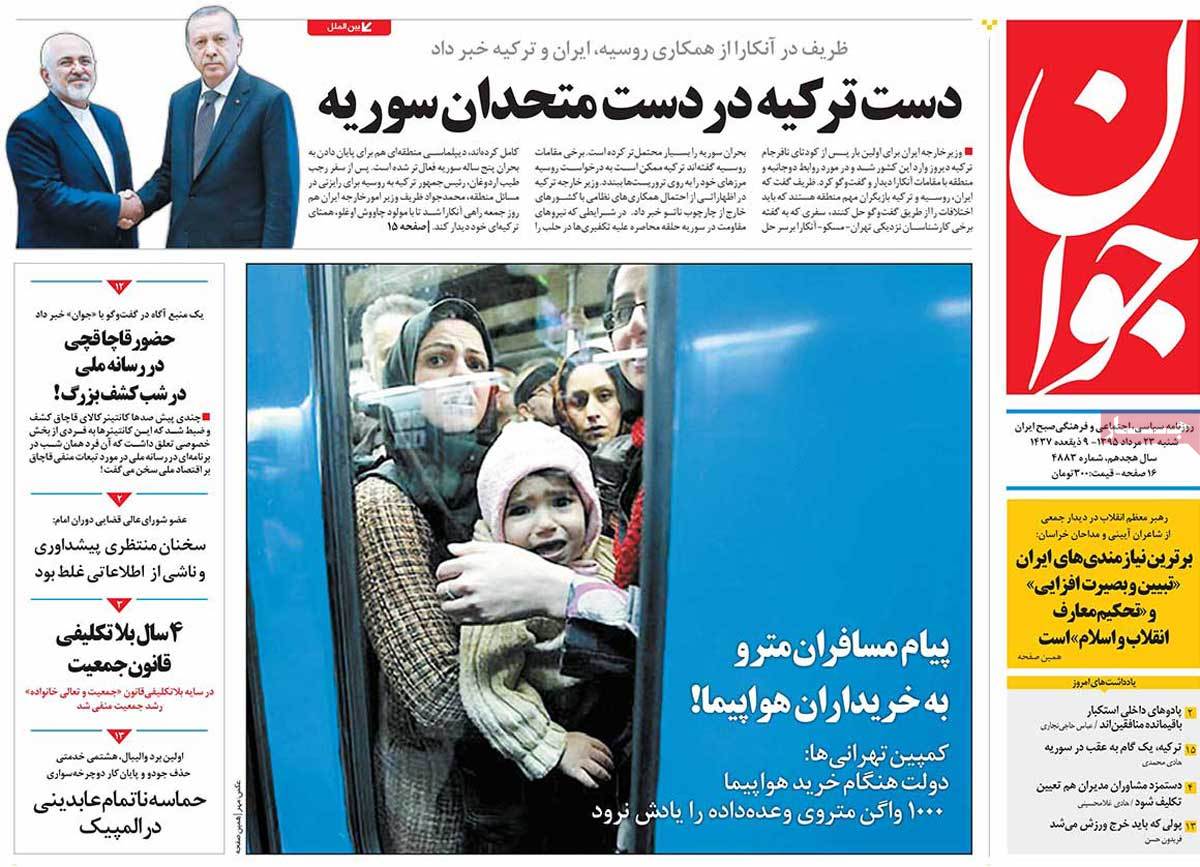
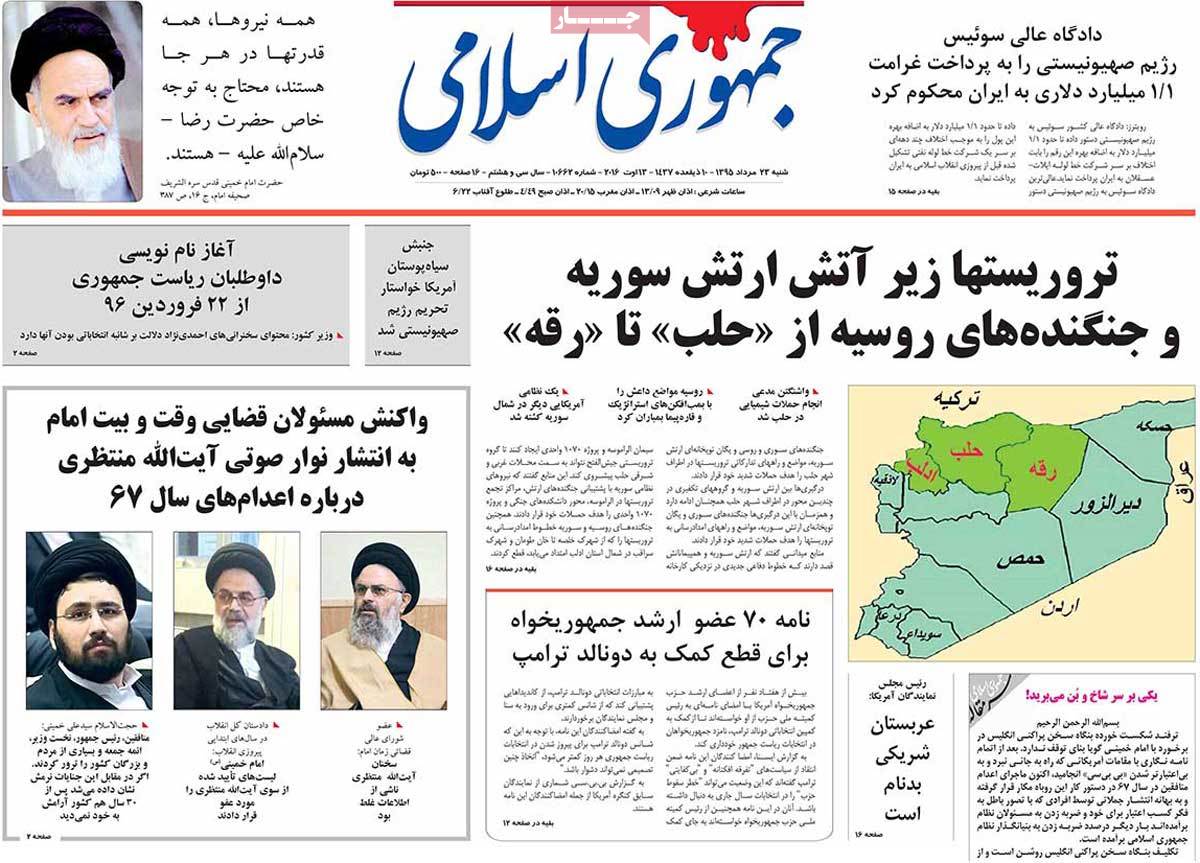
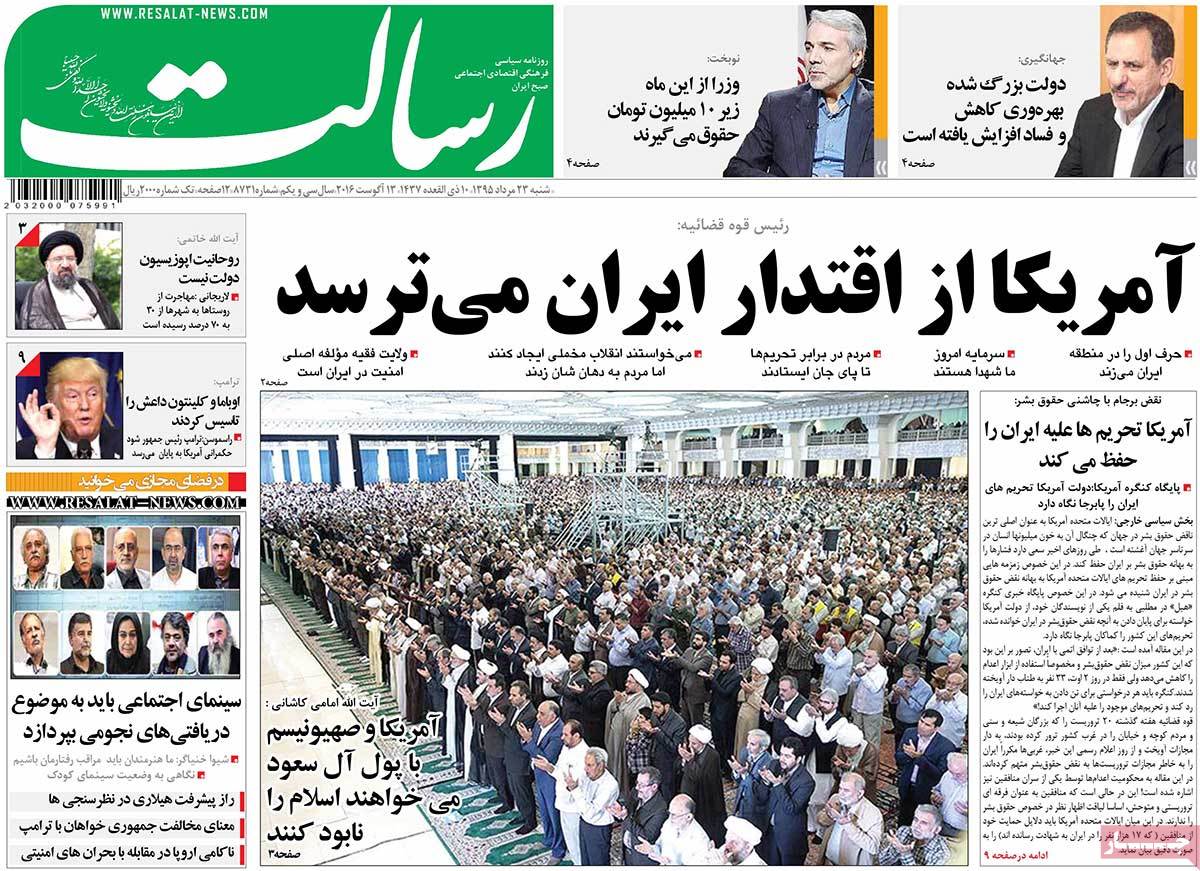
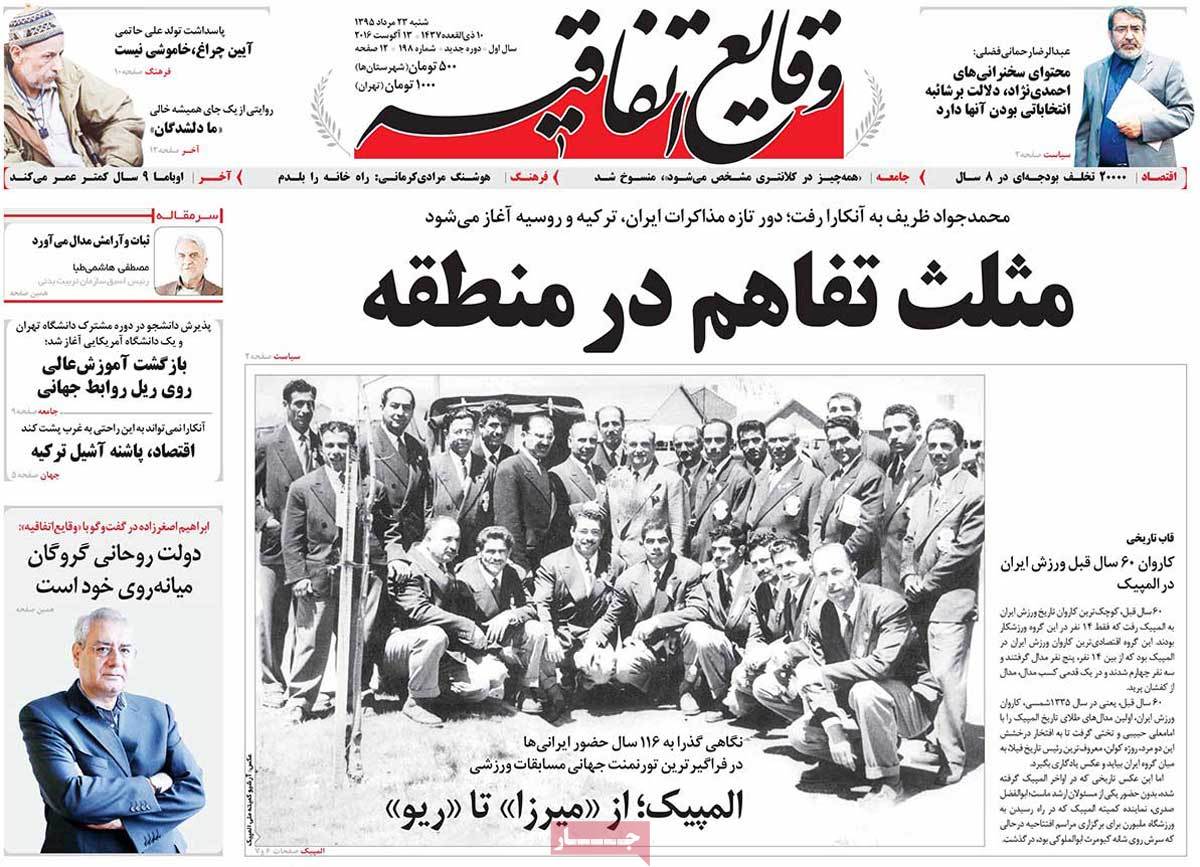
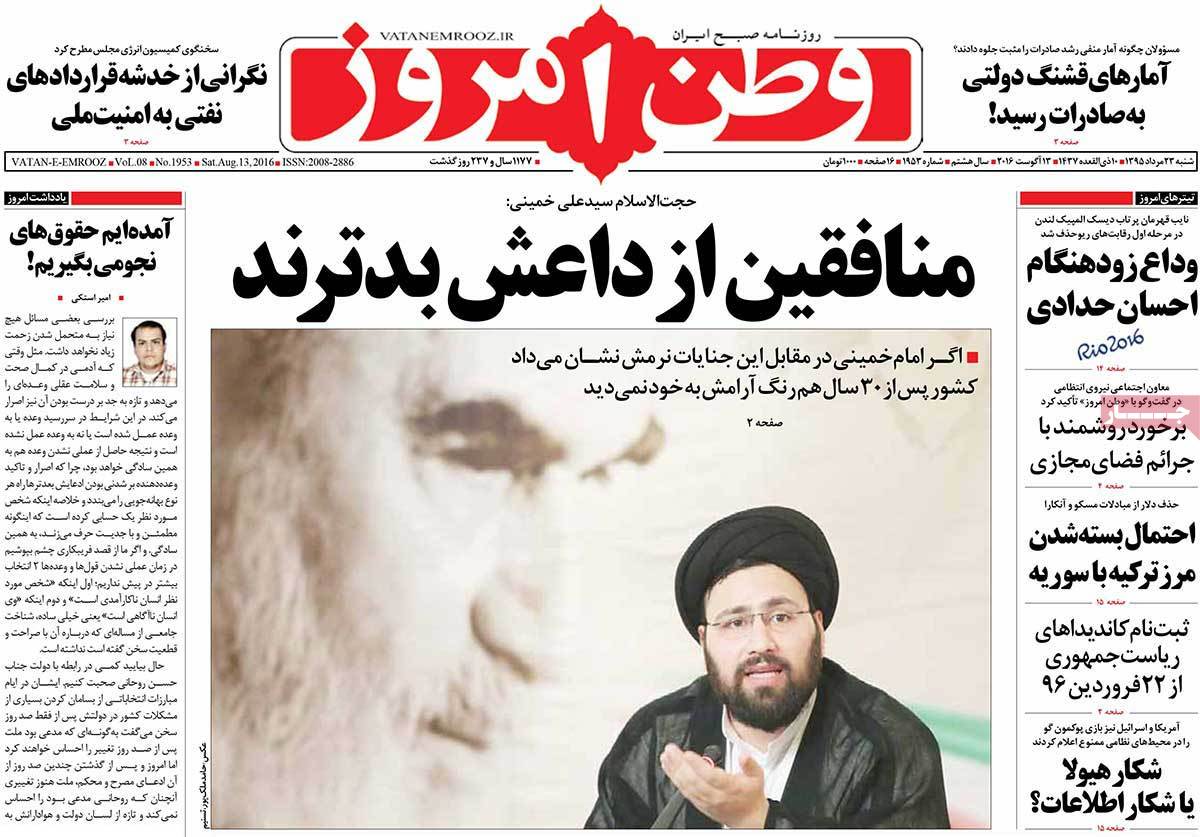
A Look at Iranian Newspaper Front Pages on August 13

Iran Newspaper front pages

Newspapers on Saturday widely covered the visit of Iranian Foreign Minister Mohammad Javad Zarif to the Turkish capital of Ankara, where he was warmly received by his counterpart, and held separate meetings with Turkish high-ranking officials including President Recep Tayyip Erdogan.

A new triangle of cooperation between Iran, Turkey, and Russia was also discussed by many papers. Zarif’s visit to Turkey and his remarks as well as the restoration of Moscow-Ankara ties have increased the possibility of such alliance.

The above issues as well as many more are covered in the following headlines:


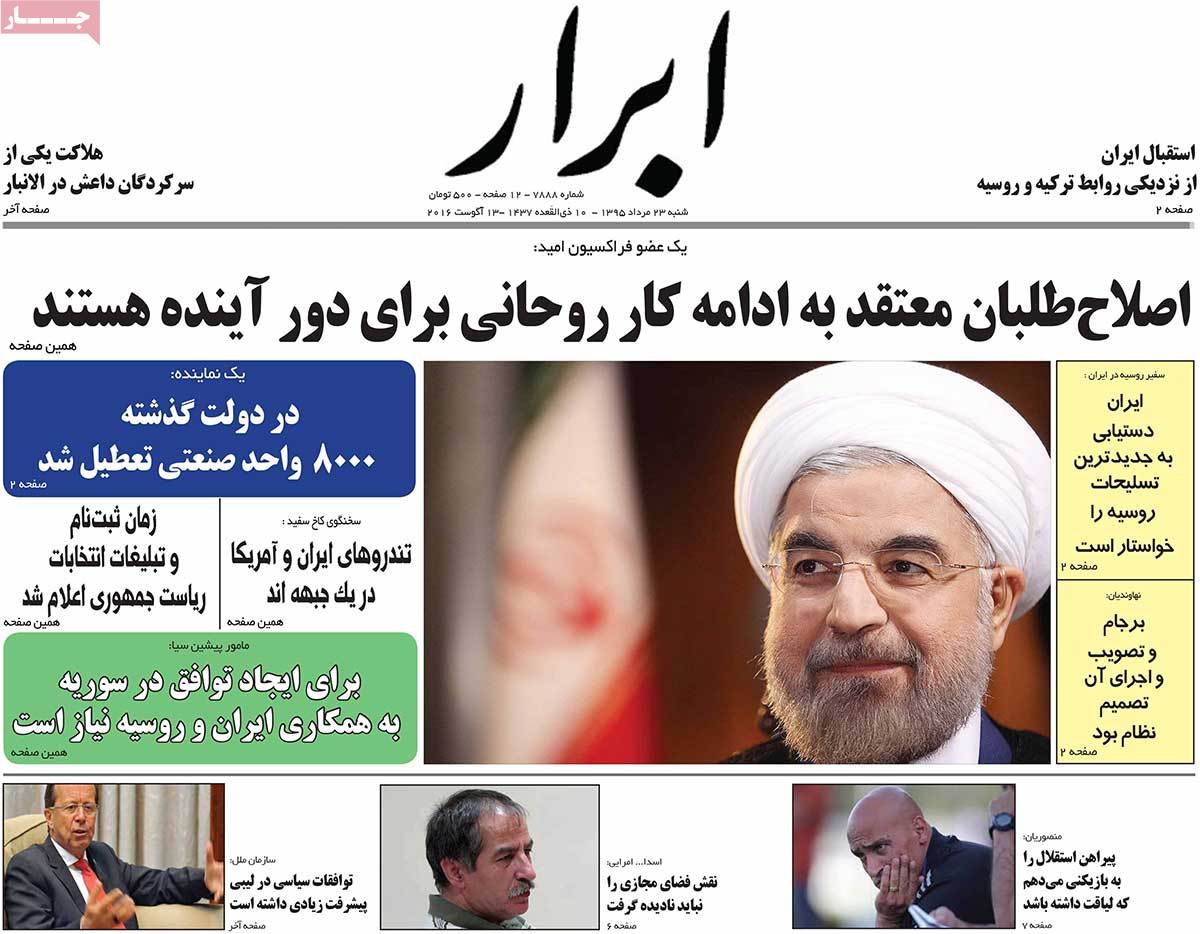
Abrar:

1- Reformists Want Rouhani to Continue His Work in Second Term

2- Iran Welcomes Close Ties with Turkey and Russia

3- Russian Ambassador to Iran: Tehran Wants to Have Latest Weapons Made by Russia

A Look at Iranian Newspaper Front Pages on August 13


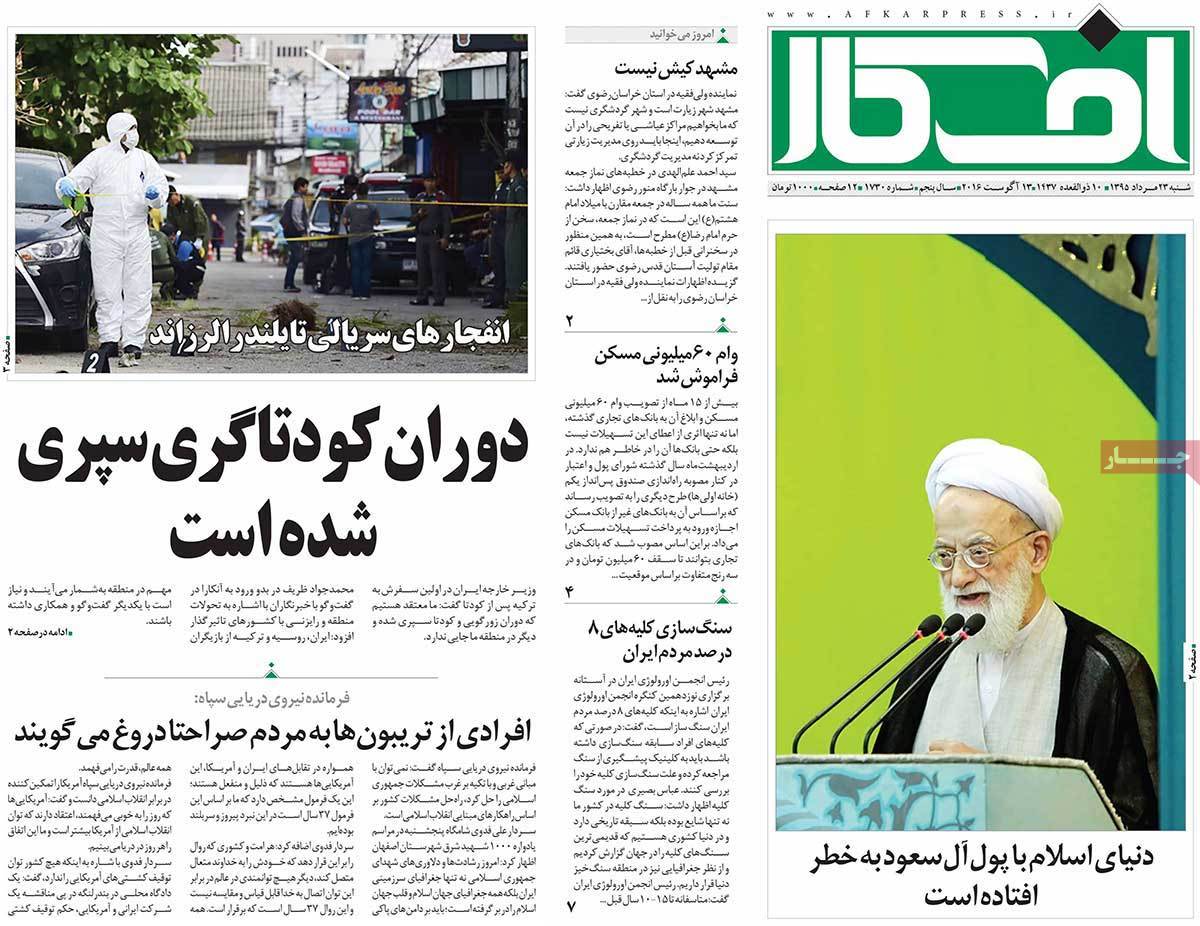
Afkar:

1- Kidneys of 8% of Iranians Form Stones

2- Muslim World Endangered Because of Saudi Arabia’s Money: Cleric

A Look at Iranian Newspaper Front Pages on August 13


Aftab-e Yazd:

1- Russian Ambassador to Iran: Iran’s Withdrawal from Its Lawsuit against Russia in Delivery of S-300 Missile Defence System

2- Interior Ministry’s Strategic Mistake: Action to Be Taken against Ahmadinejad’s Electoral Meetings

3- Anti-JCPOA Mission Given to Embassies: Increase in Saudi Arabia’s Activities against Iran Nuclear Deal

4- Israel Terrified by Zarif’s Visit to Turkey: Reinforcement of Tehran-Ankara-Moscow Triangle

A Look at Iranian Newspaper Front Pages on August 13


Arman-e Emrooz:

1- Secrets behind Efforts to Have Rouhani Disqualified from Running for Presidency

2- Possible Role of Turkey’s Gulen in Babak Zanjani’s Case

3- Trip to Turkey in Post-Coup Era

A Look at Iranian Newspaper Front Pages on August 13


Asrar:

1- Zarif in Ankara: Era of Bullying and Coup Is Over

2- 11 Explosions Hit Thailand

A Look at Iranian Newspaper Front Pages on August 13


Ebtekar:

1- Millions of Dollars Earned by Iranian Cinemas Show People’s Reconciliation with Cinema

2- Interior Ministry Gives Warning to Ahmadinejad

3- Fears and Hopes of Close Ties between Tehran, Ankara, and Moscow

A Look at Iranian Newspaper Front Pages on August 13


Emtiaz:

1- Even Those Absent from University Entrance Exam Are Allowed to Apply

2- Ebtekar: Government’s Serious Will to Save Environment

A Look at Iranian Newspaper Front Pages on August 13


Etemad:

1- Diplomatic Hello after the Coup

2- Ending the Economic Downturn Should Be Iran’s Top Economic Priority

A Look at Iranian Newspaper Front Pages on August 13


Ettela’at:

1- Talks between Zarif and Erdogan in Ankara

2- Zarif: Joint Campaign against Terrorism, Extremism, and Sectarianism Is the Common Goal of Iran and Turkey

3- Iranian FM, His Turkish Counterpart, Erdogan, and Turkish PM Say Their Prayers in Same Line

4- Saudi Arabia Is Our Notorious and Unreliable Ally: US House Speaker

5- Parliament’s Plan to Prevent Villagers’ Migration to Cities

A Look at Iranian Newspaper Front Pages on August 13


Haft-e Sobh:

1- Iranians to Visit Caucasia: Baku, Yerevan, and Tbilisi Trying to Attract Iranian Tourists

2- Apple Hasn’t Given Representation Licence to Anyone in Iran

A Look at Iranian Newspaper Front Pages on August 13


Iran:

1- First Talks after Failed Coup

2- Iran’s Wheat Reserves Were Enough for 18 Days, Now They Suffice for 6 months

3- First Post-JCPOA Finance on Tehran-Qom-Isfahan Railway: Rapid Railway Financed by the Chinese Is First Achievement after Nuclear Deal

A Look at Iranian Newspaper Front Pages on August 13


Jame Jam:

1- Change in Iranian Society’s View of HIV Thanks to IRIB TV Series: Actress

2- Trilateral Consultations for Peace in Syria

3- “No” to Plastic Bags in “Green Supermarkets”

A Look at Iranian Newspaper Front Pages on August 13


Javan:

1- Turkey’s Hand in That of Syria’s Allies: Iran-Russia-Turkey Cooperation Announced by Zarif in Ankara

2- Popular Campaign Urges Government, Which Is Busy Buying Airplanes, Not to Forget 1,000 Metro Wagons It Has Promised to Supply

A Look at Iranian Newspaper Front Pages on August 13


Jomhouri Eslami:

1- Terrorist under Fire of Syrian Army and Russian Fighters from Aleppo to Raqqa

2- US Black Movement Call for Boycott of Israel

A Look at Iranian Newspaper Front Pages on August 13


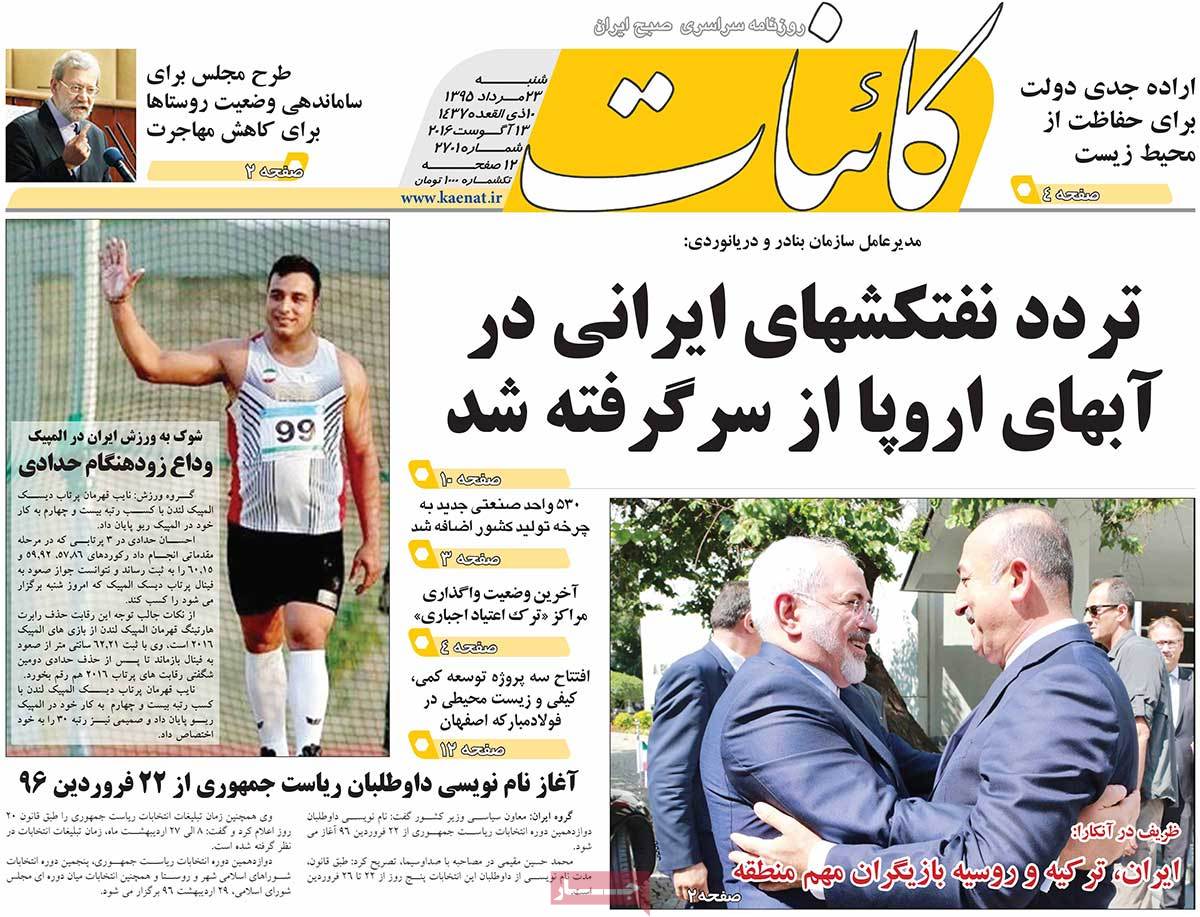
Ka’enat:

1- Iranian Oil Tankers Resume Navigation in European Waters: Official

2- Shock to Iran’s Sports in Olympics: Ehsan Haddadi Disqualified Very Soon

3- 530 New Industrial Units to Be Added to Iran’s Production Cycle

A Look at Iranian Newspaper Front Pages on August 13


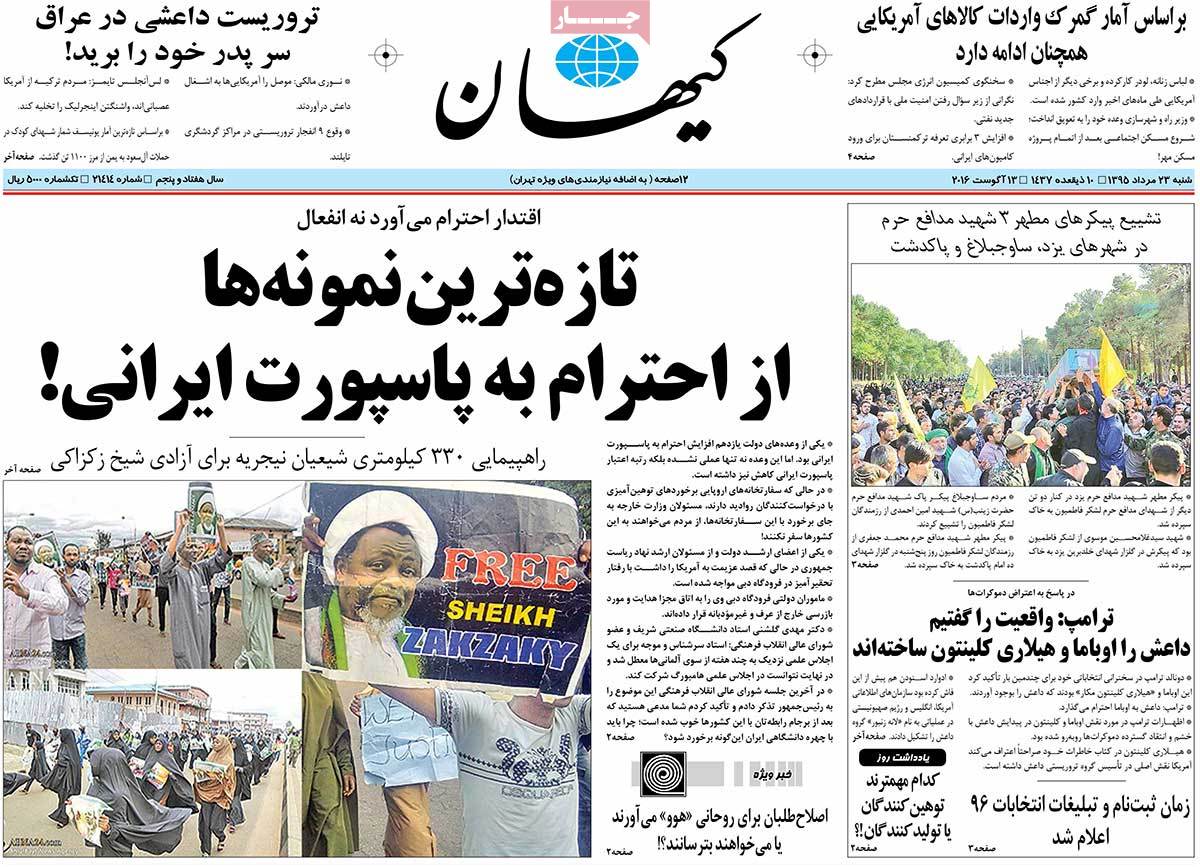
Kayhan:

1- 330km Rally Held by Nigerian Shiites for Release of Sheikh Zakzaky

2- American Goods Are Still Imported Based on Statistics

3- ISIS Terrorist Beheads His Father

A Look at Iranian Newspaper Front Pages on August 13


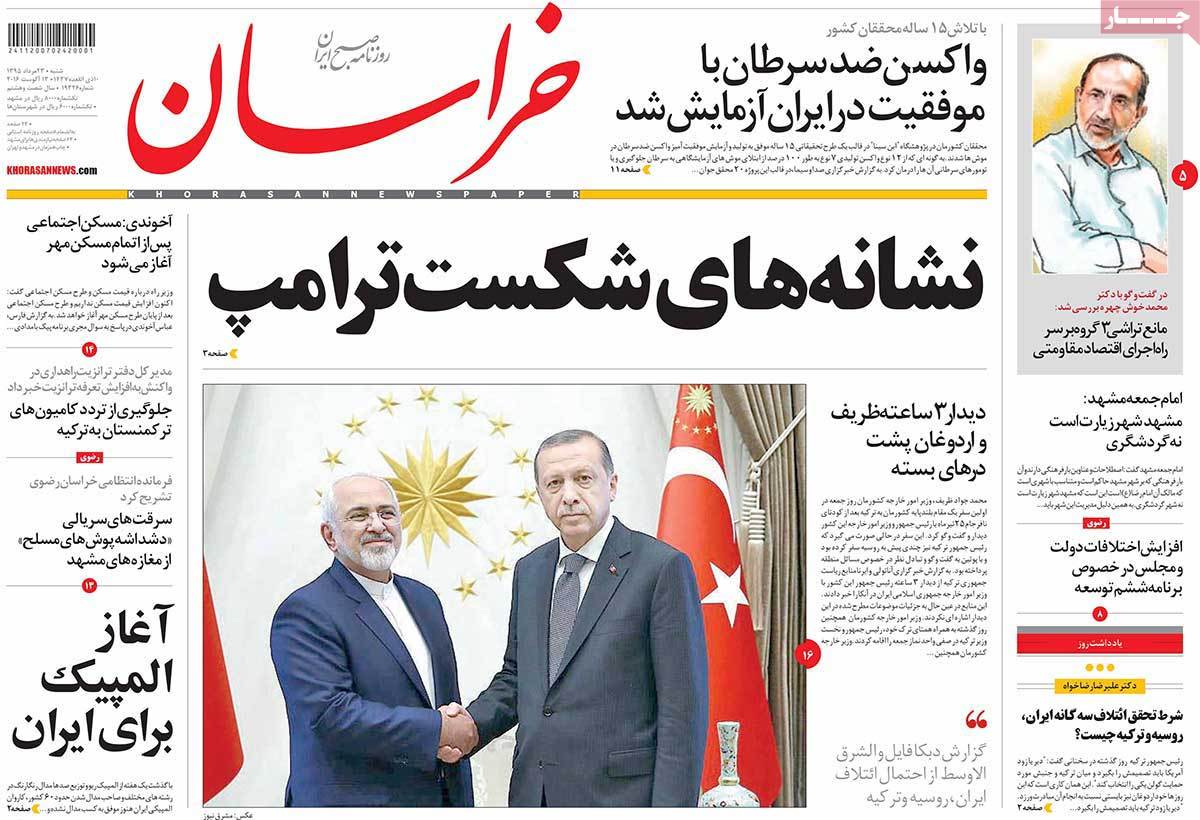
Khorasan:

1- Cancer Vaccine Successfully Tested in Iran

2- Signs of Trump’s Defeat

3- Beginning of Olympic Games for Iran

A Look at Iranian Newspaper Front Pages on August 13


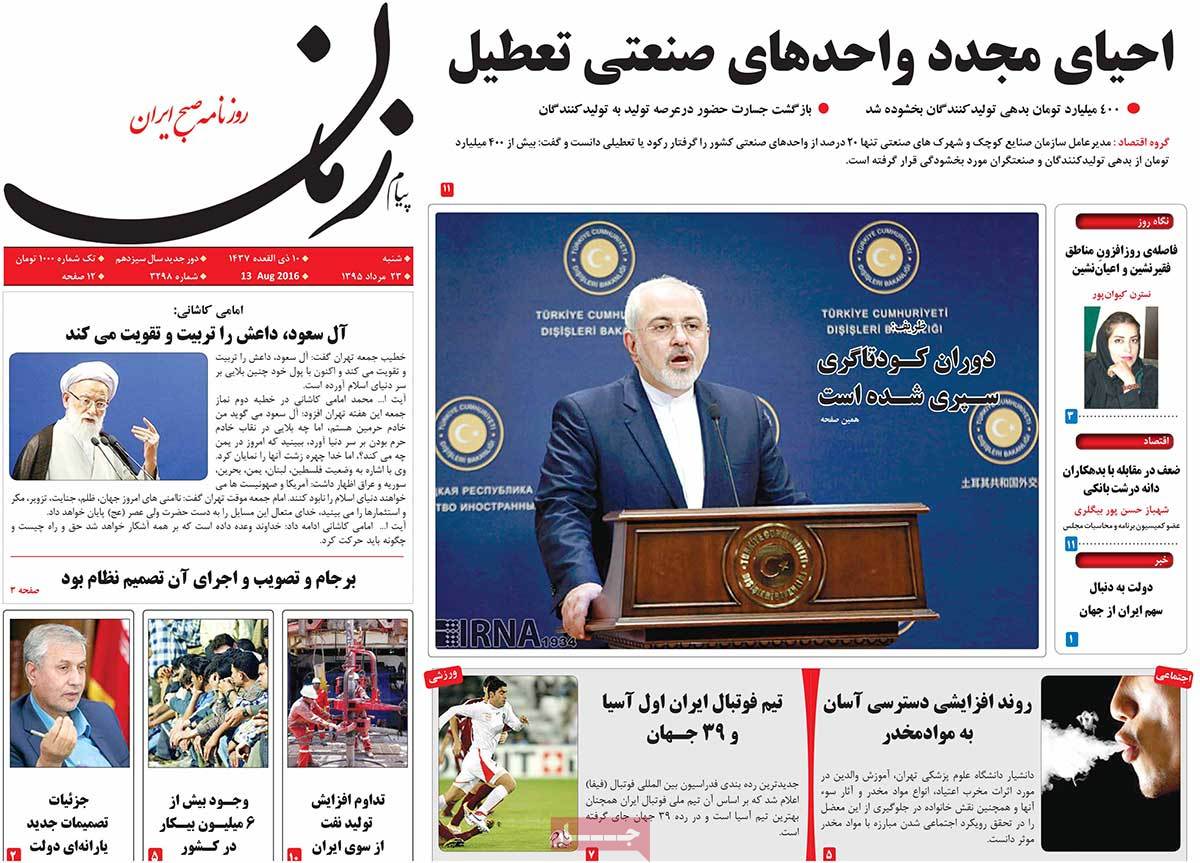
Payam-e Zaman:

1- Restoration of Closed Industrial Units

2- Al Saud Is Training and Reinforcing ISIS: Senior Cleric

A Look at Iranian Newspaper Front Pages on August 13


Resalat:

1- US Afraid of Iran’s Power: Judiciary Chief

2- Ministers to Receive Salaries Less than $2,900 as of This Month: Gov’t Spokesman

3- Clerics Are Not Opposition of Government: Ayatollah Khatami

A Look at Iranian Newspaper Front Pages on August 13


Vaghaye Ettefaghieh:

1- A Review of 116 Years of Iran’s Presence in Olympic Games

2- Triangle of Understanding in the Region: New Round of Iran-Turkey-Russia Talks Started

A Look at Iranian Newspaper Front Pages on August 13


Vatan-e Emrooz:

1- MKO Terrorists Are Worse than ISIS: Imam Khomeini’s Grandson

2- Possibility of Closure of Turkey-Syria Border

A Look at Iranian Newspaper Front Pages on August 13

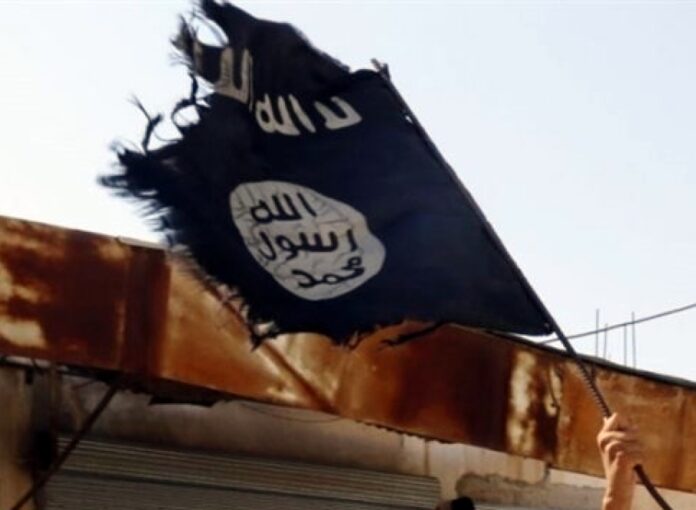
ISIS Member Beheads His Father in Mosul

isis-flag

Sharing the details, the source said, “One ISIS member on Thursday [August 11] evening beheaded his father at Ghazlani region in western Nineveh. The attack was made as the deceased approved the exodus of his family from Agrarian Reform neighbourhood to Makhmour district in south of Mosul. ”

“The killer collected a number of his close associates and members of the organization and filmed the entire execution,” further added the source seeking anonymity, as reported by Iraqi News and covered by Kayhan.

Earlier in June, two ISIS-linked Saudi brothers had also beheaded their mother and wounded their brother and father. Saudi social media users argued at the time that the twins believed their parents were apostates for opposing ISIS (also known as ISIL or Daesh)

Back in September, two ISIS sympathizers lured their cousin – a member of the Saudi armed forces – to come to the desert and shot him dead on the first day of Eid al-Adha, while recording the entire incident.

100 ISIS Terrorists Trapped in Ramadi Underground Tunnels

Ramadi

According to a report by Mizan, as translated by IFP, before the terrorists’ hideout was discovered, fierce clashes broke out between Iraq’s security forces and the terrorists who were lurking in the tunnels.

Most of the terrorists were foreigners and a few of them were Arab.

Earlier last weekend, Major General Ismail al-Mahlawi, the commander of Anbar Operations Command, told al-Sumaria that security personnel had fully regained control over Khalidiya Island, which lies nearly 90 kilometres (55 miles) west of the capital, Baghdad.

He said tens of terrorists were killed in the liberation operation.

Lieutenant General Raed Shaker Jawdat, the Federal Police Forces’ commander, separately said that Iraqi security forces had killed nearly 200 ISIS terrorists and disarmed 250 bombs in the operation to free the Khalidiya Island.

Arab World Facing Serious Challenge, But Not From Iran: Zarif

Mohammad Javad Zarif

In comments at a cultural ceremony in Tehran on Saturday, Zarif said the regional Arab states’ inability to meet public demands has created tense situation, particularly in Saudi Arabia.

The Arab world’s intelligentsia and the grass roots feel a sense of frustration after developments in recent years and the lack of proper reaction by their rulers, Zarif explained, saying the governments are trying to whitewash their inability by steering the public hatred towards sectarian and ethnic rift.

“Today, they (Arab states) are faced with a critical challenge, which is of course not from Iran,” he added.

Zarif then underlined that Iran has behaved with dignity over the past three decades, which is a quality of greatness, noting that the harsh behavior and indecent remarks by the Saudi rulers is a sign of weakness.

The top Iranian diplomat finally added that ill-wishers of Iran are entangled in a “strategic failure.”

Tensions in the ties between Tehran and Riyadh started to escalate after Saudi Arabia on January 2 executed prominent Shiite cleric Sheikh Nimr al-Nimr, among dozens of others. The execution ignited widespread international condemnation, from both political and religious figures.

Bilqis Spring in Iran: Reminiscent of Prophet Solomon’s Palace

Bilqis

According to a report by Tasnim, as translated by IFP, 3 kilometres away from Charam, one of the most attractive Iranian traditional gardens catches your attention.

The garden, which is covered with bushy trees, has been embraced like an eye-catching signet with a beautiful short stone fence.

The garden’s name comes from ancient Iranian legends on account of its incomparable beauty. The water springing from the ground flows gently under the apple, pomegranate, cypress, weeping willow and the splendid, tall palm trees.

Bilqis


The garden of Bilqis Spring was designed and constructed at the beginning of the second Pahlavi era by two brothers named Eskandar Khan and Djan Mohammad Khan and is reminiscent of beautiful gardens of Islamic period.

The garden, with different types of decorative and fruit trees, covers an area of over 4.5 hectares. There is a water pond in the middle of the garden that reminds the passers-by of the dream of Bilqis, the Queen Saba, in the Prophet Solomon’s palace.

Since the garden is located in a tropical area, trees of eucalyptus, cedar, oak, lotus and a variety of fruit trees such as walnuts, pears, apples, lemons, persimmons, oranges, tangerines, figs, grapes, strawberries, oranges, palm, etc. are widespread in the area.

BilqisAlso various types of plants as well as bushes and of course lovely flowers grow in large numbers.

The garden’s irrigation system relies on a few sources of springing water. After passing through the garden and giving the tourists a sense of pleasant coolness, the spring pours into a circular pool with a radius of 10 and a depth of 1.5 meters. Fashian Lake is the next destination where the spring flows in to quench the thirst of Charam plain.

It seems that in the past, Bilqis Spring used to be a popular resort for the Kings; however, now it attracts many tourists from around the world.

GOP vs. GOP: Disqualification of Donald Trump

Trump

According to a report by Etemad newspaper, as translated by IFP, fifty prominent Republican foreign policy and national security experts — many veterans of George W. Bush’s administration — have signed a letter denouncing Donald Trump’s presidential candidacy and pledging not to vote for him.

The letter, first reported by The New York Times on Monday, August 8, warns, “We are convinced that in the Oval Office, he would be the most reckless President in American history.”

“[Trump] would be a dangerous President and would put at risk our country’s national security and well-being,” said the former officials.

“Most fundamentally, Trump lacks the character, values, and experience to be President,” they added.

“He weakens US moral authority as the leader of the free world. He appears to lack basic knowledge about and belief in the US Constitution, US laws, and US institutions, including religious tolerance, freedom of the press, and an independent judiciary.”

The letter also said that Trump has “demonstrated repeatedly that he has little understanding” of America’s “vital national interests, its complex diplomatic challenges, its indispensable alliances and the democratic value.”

They also regretted that “Trump has shown no interest in educating himself.”

“None of us will vote for Donald Trump,” they said in the letter.

Nevertheless, the former officials stressed that they “know that many have doubts about Hillary Clinton, as do many of us.”

The letter came as former Republican officials used to avoid taking public stances against Trump, and such stances used to be expressed only in social media pages and small gatherings.

Many of the same leaders wrote an open letter in March during the Republican primaries condemning Trump and pledging to oppose his candidacy, at a time when other GOP candidates remained in the race.

Some of those signatories have not signed the new letter; however, many former officials in Republican governments, who had kept silent towards Trump’s policies, have felt the threat and broke their silence by signing this letter.

Among the signatories of the new letter are such prominent figures as Michael Hayden, the former Director of Central Intelligence Agency and former Director of National Security Agency; John Negroponte, the former Director of National Intelligence, former Deputy Secretary of State and former Deputy National Security Advisor; Robert Zoellick, another former Deputy Secretary of State and US President’s Representative in the World Bank; Tom Ridge, the former Secretary of Homeland Security, former Assistant to the President for Homeland Security, and former Governor of Pennsylvania; Michael Chertoff, the former Secretary of Homeland Security and former Assistant Attorney General for the Criminal Division at the Department of Justice; Eric Edelman, the former Under Secretary of Defense for Policy and former National Security Advisor to the Vice President.

The signatories also include Robert Blackwill, the former Deputy National Security Advisor for Strategic Planning; James Jeffrey, the former Deputy National Security Advisor; William H. Taft IV, the former Deputy Secretary of Defense and former Ambassador to NATO. Blackwill, a former aide to Henry Kissinger, is expected to officially endorse Clinton this week.

The letter underscores the continuing rupture in the Republican Party, but particularly within its national security establishment.

Many of those signing it had declined to add their names to the letter released in March. But a number said in recent interviews that they changed their minds once they heard Trump invite Russia to hack Clinton’s email server and say that he would check to see how much NATO members contributed to the alliance before sending forces to help stave off a Russian attack.

Trump has said throughout his campaign that he intends to upend Republican foreign policy orthodoxy on everything from trade to Russia, where he has been complimentary of President Vladimir Putin, saying nothing about its crackdown on human rights and little about its annexation of Crimea.

The sharp split in the Republican Party raises the question of whom Trump will turn to for institutional memory if he is elected. The officials he denounced made plenty of mistakes, some of which they acknowledge and some they gloss over. But they are also the party’s repository of experience of economic, diplomatic and military strategies, both successful and failed. Trump’s own bench of foreign policy advisers has had comparatively little experience.

Missing from the signatories are any of the living Republican former secretaries of state Kissinger, George P. Shultz, James A. Baker III, Colin L. Powell and Condoleezza Rice.

Trump met with Kissinger and Baker several months ago, and “I came away with a lot of knowledge,” he told The New York Times in a July 20 interview. But neither of the two, who represent different foreign policy approaches within the party, has said if he will endorse Trump.


Trump: You Are Nothing More than Failed Elite

Late Monday, Trump struck back. The signatories of the letter, he said in a statement, were “the ones the American people should look to for answers on why the world is a mess, and we thank them for coming forward so everyone in the country knows who deserves the blame for making the world such a dangerous place.” He dismissed them as “nothing more than the failed Washington elite looking to hold onto their power.”

Trump identified many of the signatories as the architects of the invasion of Iraq and its aftermath. He also blamed them for allowing Americans “to die in Benghazi” and for permitting “the rise of ISIS” — referring to the 2012 attacks on the American mission in Libya and the spread of the Islamic State in Iraq and Syria, both of which occurred during the Obama administration. At the time, most of Trump’s Republican foreign policy critics were in think tanks, private consultancies or law firms, or signed on as advisers to the Republican hopefuls Mr. Trump beat in the primaries.


Trump’s Attack on Clinton in Twitter

Tehran’s execution of Shahram Amiri, the Iranian academic who worked as a spy for the US, has influenced the US elections as well. It has become a pretext for Trump to attack his rival Clinton.

Trump claimed in his Twitter post that the hacked emails from Clinton’s sloppy server led to the execution of the Iranian nuclear scientist.

“Many people are saying that the Iranians killed the scientist who helped the US because of Hillary Clinton’s hacked emails,” Trump said in his Twitter page on August 8.

Clinton’s campaign responded to Trump’s insinuation that Clinton was somehow to blame for Amiri’s death, censuring him for feeding conspiracy theories.

“The Trump campaign has never met a conspiracy theory it didn’t like. He and his supporters continue to use increasingly desperate rhetoric to attack Hillary Clinton and make absurd accusations because they have no ideas for the American people,” Clinton campaign spokesperson Jesse Lehrich told the Washington Post.

The US State Department also announced in a Monday statement that there was no connection between Amiri’s execution and Clinton’s hacked emails.

American officials have noted that Amiri had come to the US on his own will, but suddenly changed his mind and chose to return to Iran and be with his family.

Clinton had stressed in a July 2010 press conference that Amiri is free in the US. However, two emails sent to Clinton when she was Secretary of State and stored on her private server appear to refer obliquely to Amiri’s doubts over staying in the US. A few days after the emails were sent, Amiri went to Iran’s Interest Sections in Washington to come back to Iran.

Sen. Tom Cotton (R-AR) said on Sunday, August 7, that the emails about Amiri show Clinton’s email practices were “reckless and careless.”

”I’m not going to comment on what he may or may not have done for the United States government, but in the emails that were on Hillary Clinton’s private server, there were conversations among her senior advisers about this gentleman,” Cotton said.