Monday, May 4, 2026
Home Blog Page 437

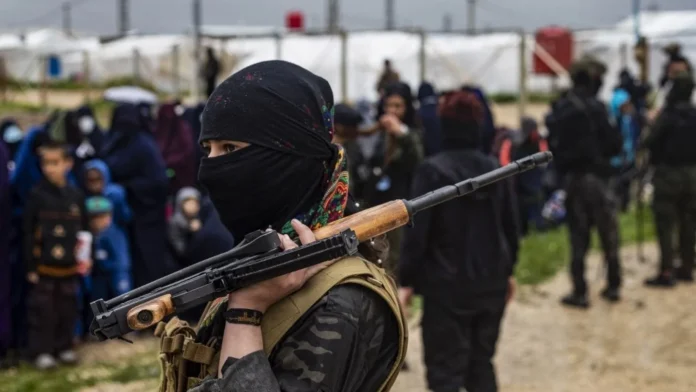
Kurdish fighters withdraw from key Syrian dam after agreement with Damascus

The SDF captured the Tishrin Dam, one of several along the Euphrates river, from the Islamic State group in late 2015. However, in recent months, they have come under increasing attack from Turkish-backed forces.

On Thursday, a source within the Autonomous Administration of North and East Syria, known as Rojava, said its forces had reached an agreement with President Ahmad al-Sharaa’s government on the running of the dam, which is a major provider of irrigation and hydroelectric power in Syria.

However, a separate Kurdish source told AFP on Saturday that, under the terms of the deal, the dam would remain under Kurdish civilian administration.

State news agency Sana reported “the entry of Syrian Arab Army forces and security forces into the Tishrin Dam… to impose security in the region, under the agreement reached with the SDF”.

It added that Turkish-backed forces “that seek to disrupt this agreement” were also required to withdraw from the area.

Since Sharaa and Hay’at Tahrir al-Sham (HTS) overthrew Bashar al-Assad in December, there have been repeated negotiations between the new administration and the Kurdish-led authorities, who control much of northeastern Syria.

Turkey, a key ally of the new government in Damascus, is keen to see the dismantling of the SDF, which it says is linked to the outlawed Kurdish Workers Party (PKK).

Last month, the SDF signed a deal with the Syrian government aimed at integrating its civilian and military institutions into the new state.

The eight-point agreement, signed by SDF commander Mazloum Abdi and Sharaa, guarantees all Syrians the right to participate in state institutions based on merit, regardless of religious or ethnic background.

According to the agreement, all SDF-controlled entities – including border crossings, airports and oil and gas fields – will be integrated into state institutions. After Assad was toppled, the SDF took control of Qamishli International Airport but had not been able to operate it.

The deal also stipulates the return and protection of displaced Syrians, supports efforts to combat terrorism and security threats to Syria, and rejects division and hate speech.

Iranian speaker rejects claim, confirms parl’t was aware of Muscat negotiations with US

Mohammad Baqer Qalibaf

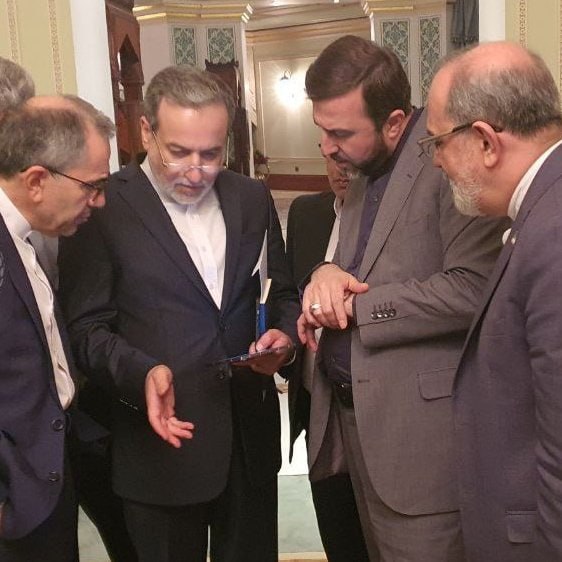
During Sunday’s parliamentary session, Ghalibaf asserted, “No one can claim the Parliament was uninformed. The legislative body has been fully briefed on all matters, and every action follows legal procedures.”

His comments came in direct response to MP Mehdi Koochakzadeh’s statement that lawmakers had no knowledge of the sensitive talks.

Koochakzadeh had warned citizens to “remain vigilant during these critical historical moments,” cautioning against trusting those who “pose as sympathizers while pursuing their own agendas,” in an open reference to those who advocate the negotiations.

The talks, whose first round was concluded on Saturday and was scheduled to resume next week, have had a wide range of reactions form political camps in Iran.

Separately, another parliamentarian Hamid Resaee criticized Foreign Minister Seyed Abbas Araghchi’s brief meeting with US envoy Steve Witkoff while leaving the venue of negotiations, questioning why direct talks occurred despite only having authorization for indirect negotiations.

Araghchi had explained that the minutes-long encounter with the US delegation was within normal diplomatic framework.

Results of US-Iran negotiations in Oman reassuring: Russian diplomat

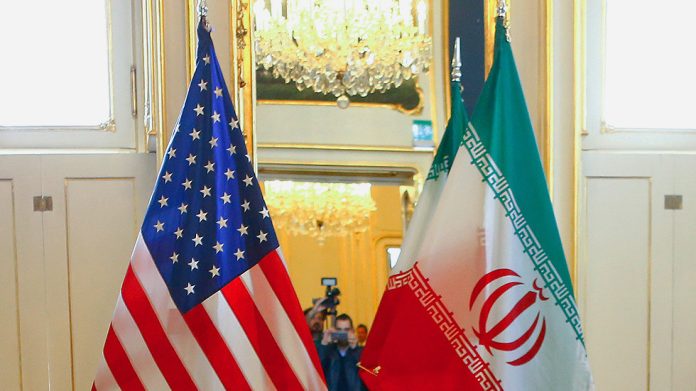
Iran US Flags

“On the outcomes of today’s meeting in Oman, both the Iranians and the Americans described the negotiations as positive and constructive. This is reassuring,” he wrote on Telegram.

On Saturday, Oman hosted indirect talks between Iranian and US negotiators, in the presence of the Omani foreign minister, on resolving the situation around Iran’s nuclear program. The Iranian delegation was led by Foreign Minister Seyyed Abbas Araghchi, while special envoy Steve Witkoff represented the United States.

The Islamic republic’s Ministry of Foreign Affairs said the meeting had been held in a constructive atmosphere. Talks will resume in Oman on April 19.

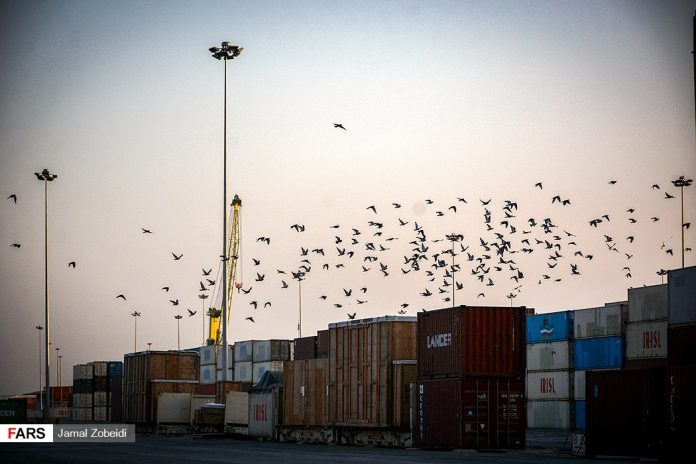
Iran’s Parviz Khan Customs records $996 million in exports to Iraq

Iran Trade

Hojatollah Chavoshi, the caretaker of Parviz Khan Customs, highlighted these figures during an interview with IRNA.

The customs processed $666 million worth of declared goods and $330 million in transit goods, marking a 3% increase in export value and a 4% growth in volume compared to last year, Chavoshi said, explaining on average, 690 export trucks traversed the customs checkpoint daily.

The exported commodities predominantly included fruits and vegetables, evaporative coolers, construction materials, steel billets and sheets, rebar, and a variety of dried fruits.

Chavoshi emphasized the pivotal role of Parviz Khan Customs as one of Iran’s largest trade hubs, managing the daily movement of over 2,000 trucks.

Kermanshah Province shares a 371-kilometer border with Iraq and hosts two official border points along with five operational border marketplaces.

Parviz Khan accounts for 45% of Iran’s non-oil exports to Iraq, facilitating trade with key Iraqi cities such as Sulaymaniyah, Kalar, Khanaqin, Kirkuk, and Mosul.

The Khosravi border terminal near Qasr-e Shirin boasts the largest international land terminal in the Middle East, further strengthening the province’s strategic importance in regional trade.

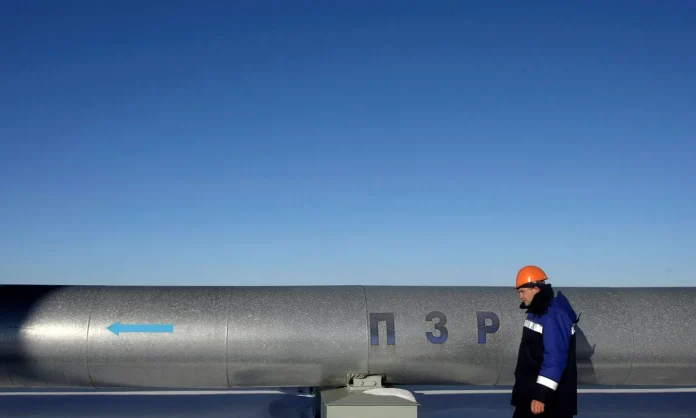
Washington ‘demands control’ from Kyiv of key pipeline carrying Russian gas: Reuters

US and Ukrainian officials met on Friday to discuss White House proposals for a minerals deal. Donald Trump wants Kyiv to hand over its natural resources as “payback” in return for weapons delivered by the previous Biden administration.

Talks have become increasingly acrimonious, Reuters said. The latest US draft is more “maximalist” than the original version from February, which proposed giving Washington $500bn worth of rare metals, as well as oil and gas.

Citing a source close to the talks, the news agency added the most recent document includes a demand that the US government’s International Development Finance Corporation take control of the natural gas pipeline.

It runs from the town of Sudzha in western Russia to the Ukrainian city of Uzhhorod, about 750 miles (1,200km) away, on the border with the EU and Slovakia. Built in Soviet times, the pipeline is a key piece of national infrastructure and a major energy route.

On 1 January, Ukraine cut off the supply of gas when its five-year contract with the Russian state energy company Gazprom expired. Both countries had previously earned hundreds of millions of euros in transit fees, including during the first three years of full-scale war.

Volodymyr Landa, a senior economist with the Centre for Economic Strategy, a Kyiv thinktank, said the Americans were out for “all they can get”. Their bullying “colonial-type” demands had little chance of being accepted by Kyiv, he predicted.

Last autumn, Volodymyr Zelensky proposed giving the US access to Ukraine’s underdeveloped mineral sector. He envisaged a deal that would see the incoming Trump administration supply Ukraine with weapons, in return for future profits from joint investments.

Instead, Trump has refused to give security commitments or military support but wants the minerals anyway. Last week he complained Zelensky was trying to “back out of an agreement” and said Ukraine’s president would have “big problems” if he failed to sign.

Speaking to journalists on Thursday, Zelensky said he was ready to do a deal to modernise his country but that Ukraine could only agree if there was “parity” between the two sides, with revenues split “50-50”.

“I am just defending what belongs to Ukraine. It should be beneficial for both the United States and Ukraine. This is the right thing to do,” Zelenskyy added.

The US Treasury confirmed “technical” talks were ongoing.

Meanwhile, the US special envoy to Ukraine, Keith Kellogg, said his remarks over a possible partition of Ukraine had been misinterpreted. In an interview with the Times, Kellogg stated the country could be divided “almost like the Berlin after world war two” as part of a peace deal.

Writing on X, Kellogg noted he was referring to “a post-cease fire resiliency force in support of Ukraine’s sovereignty”.

Under this plan, Russian troops would remain in territory already seized by Moscow, with British and French forces stationed in Kyiv and in other parts of the country.

On Friday, Trump’s special envoy Steve Witkoff held talks with Vladimir Putin in St Petersburg. Witkoff’s reported solution to the conflict was to give Russia the four Ukrainian provinces it is demanding – including territory that Ukraine controls, and which is home to 1 million people.

Meanwhile, at a meeting of the Ukraine defence contact group on Friday, Kyiv’s allies announced a record €21bn (£18.2bn) in additional military help. They accused Putin of dragging his feet over a 30-day ceasefire deal which Ukraine has accepted.

Trump extends Russia sanctions for another year

Washington placed punitive restrictions on Russia after it absorbed Crimea following a referendum held in 2014, and later over Moscow’s alleged meddling in American elections. The sanctions were drastically expanded following the escalation of the Ukraine conflict in February 2022.

The latest extension approved by Trump and dated April 10, 2025, has been posted to the Federal Register’s website, announcing the “Continuation of the National Emergency With Respect to Specified Harmful Foreign Activities of the Government of the Russian Federation.”

It refers primarily to Executive Order 14024 signed by former President Joe Biden in April 2021 in response to an “unusual and extraordinary threat to the national security, foreign policy, and the economy of the United States” presumed to be posed by Russia.

Among the “harmful” activities ascribed to Russia in the document are “efforts to undermine the conduct of free and fair democratic elections and democratic institutions in the United States and its allies and partners.”

Some of Moscow’s other alleged transgressions are attempts to “undermine security in countries and regions important to United States national security; and to violate well-established principles of international law, including respect for the territorial integrity of states.”

Late last month, the US president lamented that there was still “a lot of ill will between” Ukraine and Russia.

Trump has also threatened to impose new sanctions on Moscow if he deems Russia responsible for any failure in ceasefire talks on the Ukraine conflict.

Commenting on Trump’s threat, Kremlin spokesman Dmitry Peskov said last week that “our dialogue with the American side is ongoing,” and that Moscow remains open to resolving the Ukraine conflict diplomatically.

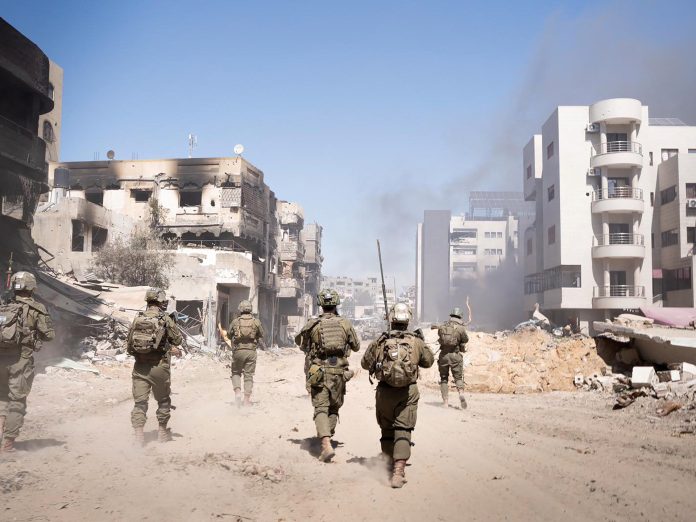
Israeli military cuts off Gaza’s Rafah

Israel Army

The Israeli army’s Arabic language spokesperson on Saturday issued new forced displacement orders for several neighbourhoods in Khan Younis, warning of an imminent attack “with great force” in response to alleged Hamas rockets fired at Israel from this area.

Residents in Qizan an-Najjar, Qizan Abu Rashwan, al-Salam, al-Manara, al-Qurain, Maen, al-Batn al-Sameen, Jurt al-Lot, al-Fakhari and the southern neighbourhoods of Bani Suheila were ordered to leave their homes and proceed to al-Mawasi, on Gaza’s sea coast.

The announcement came amid a barrage of drone attacks and artillery shelling on Khan Younis that killed at least two people.

Israel’s Defence Minister Israel Katz stated the Morag Corridor effectively turned Rafah into an “Israeli security zone” and added that the Netzarim Corridor, which divides the Strip in two, would also be expanded.

“Willful passage” will be granted for Palestinians who wish to flee Gaza, Katz said in a statement, mentioning again US President Trump’s plan to remove Palestinians from Gaza.

Katz told Gaza’s besieged population he was offering them the “last chance to banish Hamas and release all hostages, stopping the war,” or else Israeli operations will spread to “most of Gaza’s territory”.

Hamas issued a statement accusing Prime Minister Benjamin Netanyahu of prolonging the war despite repeated calls from within Israeli society to halt the conflict.

“The equation is clear: the release of captives in exchange for a cessation of the war. The world accepts it, but Netanyahu rejects it,” it stressed.

“The blood of Gaza’s children and the occupation’s prisoners are victims of Netanyahu’s ambitions to remain in power and to escape prosecution”.

About 2.1 million Palestinians are now squeezed into about one-third of Gaza and no trucks carrying aid, food, cooking gas, or fuel have entered the Strip since Israel reimposed a blockade last month. Katz has publicly stated that, since breaking the ceasefire with Hamas on March 18, Israel’s goal has been to apply pressure on the civilian population, the correspondent added.

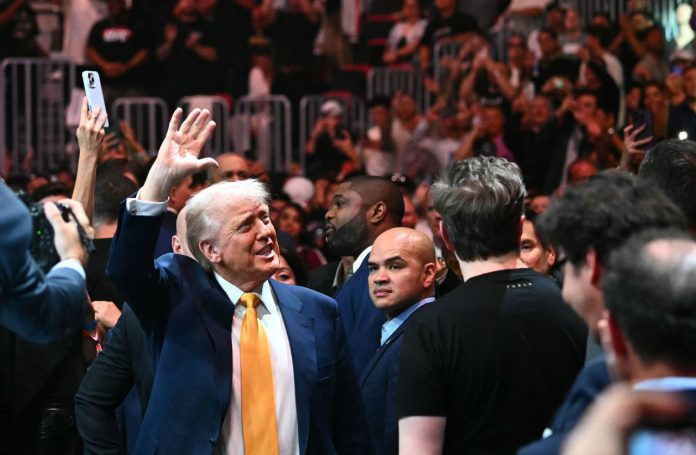
Negotiations with Iran “going OK”: Trump

“I think they’re going OK,” Trump said Saturday while en route to a UFC fight in Miami.

“Nothing matters until you get it done. So, I don’t like talking about it. But it’s going OK. The Iran situation is going pretty good, I think,” he added.

US special presidential envoy Steve Witkoff “conducted talks today in Muscat with Iranian Foreign Minister Seyyed Abbas Araghchi, which were hosted by Omani Foreign Minister Said Badr,” the White House announced in a statement earlier Saturday, describing the discussions as “direct communication” and “very positive and constructive.”

Trump has warned that failure to reach an agreement could lead to potential military strikes on Iran. Tehran, in turn, has warned that any attack on it would drag the US into a broader Middle Eastern conflict.

Sources involved in the talks have told CNN that the Trump administration wants to move fast — and the two parties are expected to meet again for further discussion next Saturday.

White House says Iran talks positive, constructive

White House

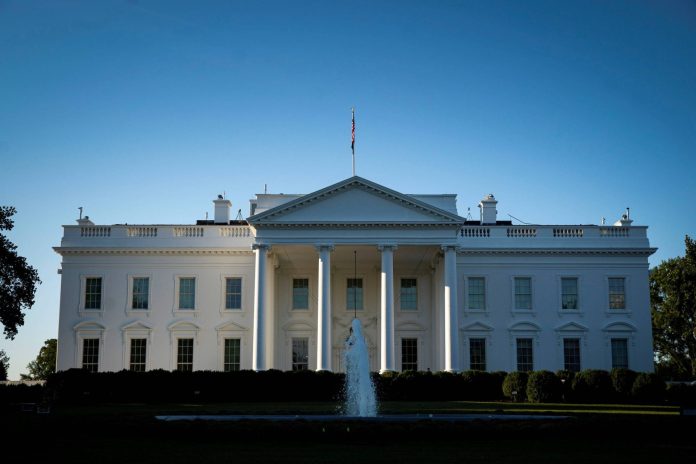
The “direct communication” between President Donald Trump’s Middle East envoy Steve Witkoff and Iran’s Foreign Minister Abbas Araghchi was “very positive and constructive,” the White House said in a statement.

Witkoff “emphasized to Araghchi that he had instructions from President Trump to resolve our two nations’ differences through dialogue and diplomacy, if that is possible,” the statement added, calling the talks a “step forward in achieving a mutually beneficial outcome.”

The US statement thanked Oman for its mediating role in the talks, and noted that the US ambassador to Oman, Ana Escrogima, was also present.

The White House announced that the two sides plan meet again next Saturday.

In comments reported by Iranian media earlier today, Tehran similarly described the talks as “constructive” and shared the plans for more discussions next week.

Iran says talks with US held in constructive atmosphere, negotiations to continue next week

Iranian Foreign Minister Seyed Abbas Araghchi and the US president’s special envoy for the Middle East Steve Witkoff talked with each other for a few minutes in the presence of the Omani foreign minister after the end of the first round of negotiations that lasted for more than 2.5 hours.

According to the Iranian Foreign Ministry, during the course of the negotiations, mediated by Badr Al Busaidi the Omani foreign minister, Araqchi and Witkoff outlined the views of their respective governments regarding Iran’s nuclear program and the lifting of anti-Iran sanctions in a constructive atmosphere and based on mutual respect.

The first round of indirect talks between the Islamic Republic of Iran and the United States of America over sanctions removal and the nuclear issue came to an end on Saturday.

The two sides agreed to continue the negotiations next week.

Meanwhile, Badr Al Busaidi, Oman’s Foreign Minister, in a post on X, said the talks were held in a friendly atmosphere.