Monday, May 4, 2026
Home Blog Page 438

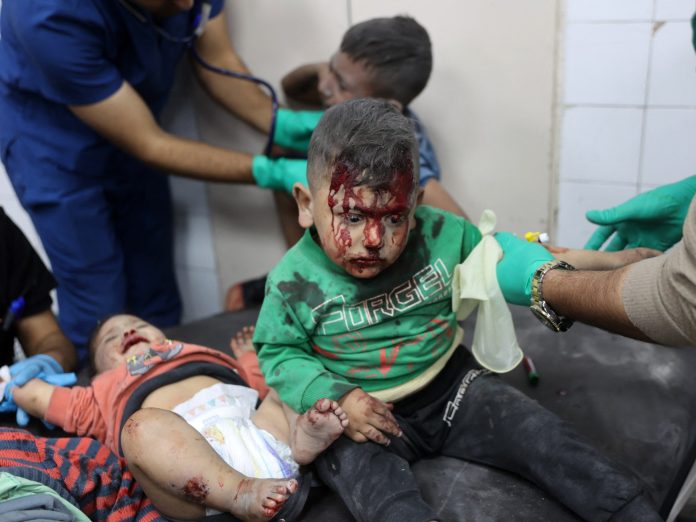
At least 500 children killed since Israel broke Gaza ceasefire: Palestinian official

At least 500 children have been killed in the Gaza Strip since Israel resumed its offensive on March 18, Basal confirmed on Saturday.

More than 1,500 people have been killed since Israel resumed its bombardment of Gaza on March 18, according to figures from the Palestinian Ministry of Health.

On Friday, Ravina Shamdasani, spokeswoman for the UN High Commissioner for Human Rights, reported that 36 of the 224 documented Israeli strikes in Gaza, between March 18 and April 9, involved deaths that were only women and children.

In a statement, the Palestinian rights group Al-Haq said the findings by the UN further confirmed a pattern it previously identified.

“Such a calculated effort to exterminate women, boys, girls & even infants, has not been witnessed in any other modern conflict,” Al-Haq added.

In an interview with Al Jazeera’s Upfront, UN agency for Palestinian refugees (UNRWA) chief Philippe Lazzarini described the situation in Gaza as a “post-apocalyptic” killing zone.

Speaking at the Antalya Diplomacy Forum in Turkiye on Friday, Lazzarini also reiterated that Israel has been preventing the entry of food, fuel, medicine and other vital humanitarian supplies into Gaza, contravening international law.

In a separate post on X on Saturday, UNRWA Director of Communications Juliette Touma warned that all basic supplies “are running out” in Gaza.

“It means babies, children are going to bed hungry.”

Israel has pledged to press on with its military offensive, with officials in recent days outlining plans to seize new swaths of territory in southern Gaza and issuing a series of forced evacuation orders.

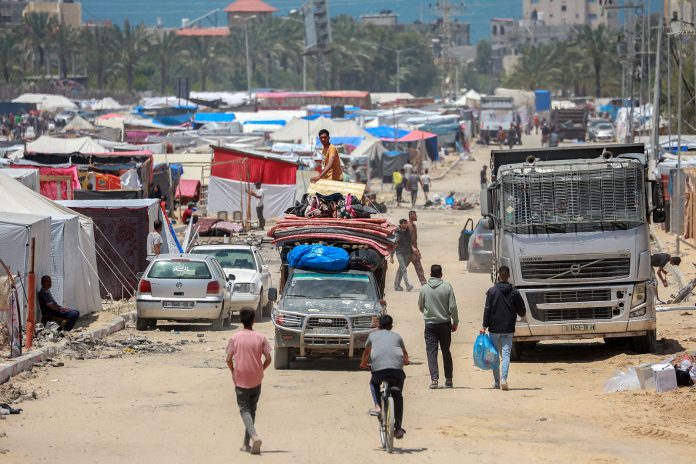
UNRWA said about 400,000 Palestinians have been forcibly displaced across Gaza since the ceasefire ended on March 18. Israel forcibly displaced about 90 percent of Gaza’s 2.3 population since it launched war on October 7, 2023. More than 50,900 Palestinians have been killed and 116,000 wounded drawing condemnation from rights groups.
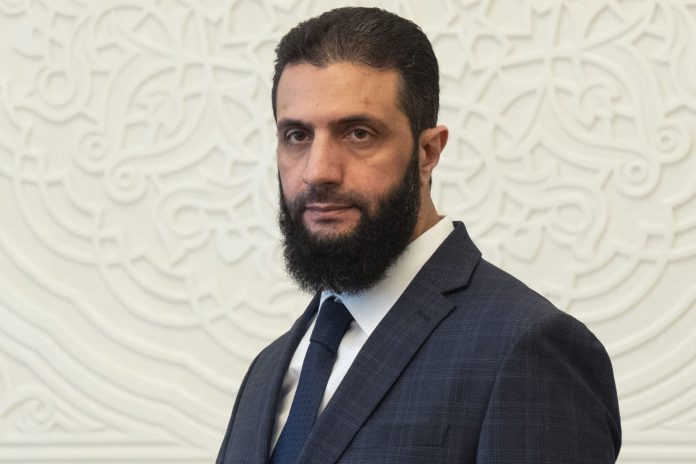
Syrian new president affirms commitment to dialogue, diplomacy

Ahmad Al Sharaa

His remarks came during his participation in the 4th edition of the Antalya Diplomacy Forum, which began Friday in southern Türkiye.

In Saturday’s statements reported by Syria’s official news agency SANA, Sharaa emphasized that Syria’s participation stemmed from “the firm belief of the Syrian Arab Republic that dialogue and diplomacy are the most effective means to resolve disputes and enhance peace and stability in our region and the world.”

Sharaa described the forum as a “valuable opportunity” to exchange views with international leaders and officials regarding pressing regional and global challenges.

He also stressed the “importance of respecting the sovereignty and territorial integrity of the Syrian Arab Republic,” amid ongoing Israeli violations of Syrian territory.

Since Sharaa took office following the fall of the Bashar Assad government in December 2024, Israel has carried out multiple strikes inside Syria without any retaliatory threats from Damascus. Israel also seized the UN-monitored buffer zone in Syrian territory, citing the need to “secure” the occupied Golan Heights.

Israeli air raids on Syria have become almost daily in recent months, targeting Syrian military sites, weapon depots, and infrastructure, resulting in civilian casualties and damage to Syrian army equipment.

Israel has occupied most of Syria’s Golan Heights since 1967 and has used the recent political shift in Syria to expand its control over formerly demilitarized zones, effectively nullifying the 1974 disengagement agreement.

Sharaa also extended his “thanks and appreciation to (Turkish) President Recep Tayyip Erdogan for his warm hospitality and keen interest.”

The three-day Antalya Diplomacy Forum, which kicked off on Friday, is held under the theme Reclaiming Diplomacy in a Fragmented World, and it brings together leaders, diplomats, and policymakers from across the globe.

Iran-US negotiations get underway in Oman

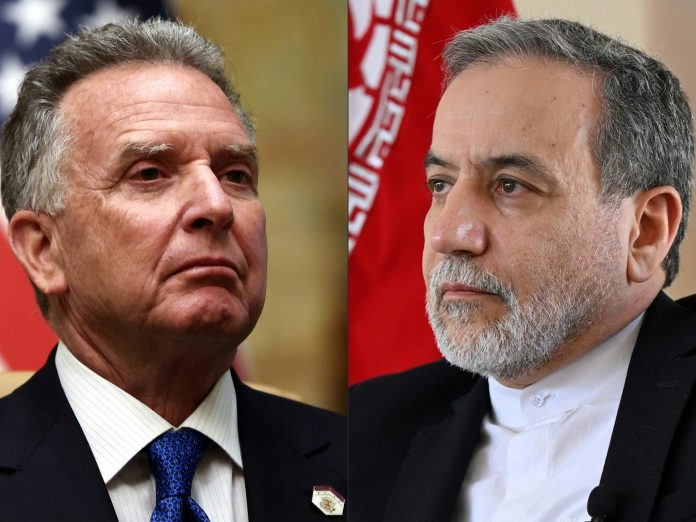
Spokesperson for the Iranian Foreign Ministry Esmaeil Baqaei said in a post on his X account that the indirect talks between Iranian Foreign Minister Abbas Araqchi and the US president’s special envoy for the Middle East, Steve Witkoff, started in Muscat with Omani Foreign Minister Sayyid Badr Hamad Al Busaidi acting as an intermediary.

He stated the negotiations are held in a location prepared by host Oman, noting that the Iranian and American representatives have been accommodated in separate halls.

The two sides are exchanging their views and stances via the foreign minister of Oman, Baqaei added.

Speaking to reporters after a meeting with his Omani counterpart on Saturday morning, Araqchi said Iran has taken part in the talk with “the necessary seriousness”.

“It is our intention to reach a fair and honorable agreement on equal standing,” the Iranian foreign minister stated.

He added that if the US enters the talks with the same approach, there will be the chance of a preliminary deal that would define a path to negotiations.

Many initial and fundamental issues will become clear on Saturday, Araqchi explained, noting, “Sufficient determination of the two sides will allow us to decide on a timetable, however it’s still early to talk about it.”

Vibrant spring tulips bloom in Tehran’s Iranian Garden

Spanning three hectares in the Deh-e Vanak neighborhood, the park offers residents a peaceful escape from urban life during the spring season.

Visitors are drawn to the garden’s vibrant floral scenery and tranquil atmosphere.

More in pictures:

Only six Western countries willing to deploy troops to Ukraine: AFP

Russia Ukraine War

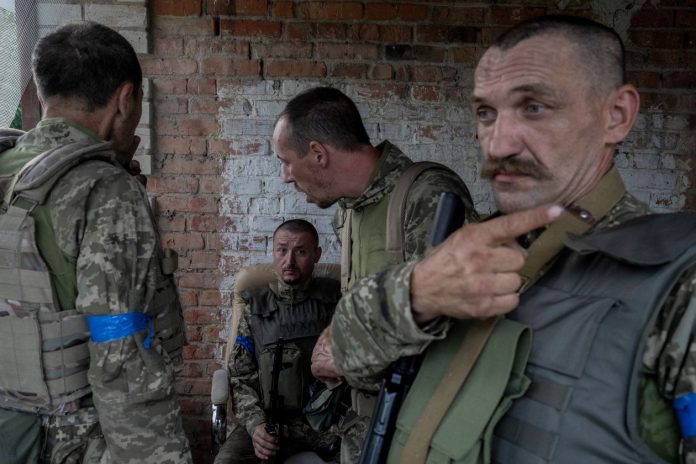
The report comes after the latest meeting of defense ministers from the so-called “coalition of the willing” in Brussels. The group of some 30 nations, predominantly composed of EU and NATO member states, appears to remain split on a potential deployment. Its members are questioning the goals and mandate of the proposed mission.

Thus far, only six nations, including the UK, France, and the Baltic states – Estonia, Latvia and Lithuania – have promised to contribute troops, the AFP reported, citing unnamed European officials. The sixth state in the group was not named by the agency.

Britain, has insisted the coalition has actual plans to deploy, claiming that the troops would contribute to a “lasting peace” between Russia and Ukraine.

“Our planning is real and substantial. Our plans are well developed,” UK defense minister John Healey told the meeting.

“Our reassurance force for Ukraine would be a committed and credible security arrangement to ensure that any negotiated peace does bring what [US President Donald] Trump has pledged, a lasting peace for Ukraine,” he added.

Other coalition members, however, have publicly expressed concerns about a potential mission, refusing to make any commitment before plans are more fleshed out.

Dutch Defense Minister Ruben Brekelmans said the group must have the US on board, though Washington has repeatedly said it has no plans to send troops to Ukraine in any role.

“What is the potential mission, what is going to be the goal?” Brekelmans wondered.

“What is the mandate? What would we do in the different scenarios, for example, if there would be any escalation regarding Russia?”

Swedish Defense Minister Pal Jonson highlighted “a number of questions that we need to get clarified” before it could make any promises.

“It’s helpful if there’s a clarity of what that mission would entail, and what do we do – if we are peacekeeping, deterrence or reassurance,” he stated.

Moscow has repeatedly warned the West against deploying troops to Ukraine under any pretext, specifically objecting to forces from any NATO countries ending up in the country. Last month, former Russian President and the deputy chair of Russia’s Security Council, Dmitry Medvedev, said that the potential emergence of any NATO “peacekeepers” in Ukraine would mean a war between the bloc and Russia.

American judge rules pro-Palestine activist Mahmoud Khalil can be deported

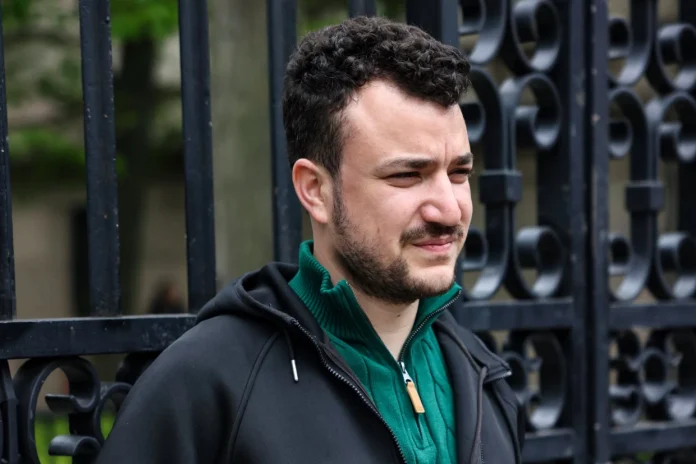
Judge Jamee Comans made the determination on Friday at the end of a nearly two-hour hearing in the US state of Louisiana, stating the government had “established by clear and convincing evidence that he is removable”.

Khalil – a US permanent resident – can appeal the decision.

“Mahmoud was subject to a charade of due process, a flagrant violation of his right to a fair hearing and a weaponization of immigration law to suppress dissent,” one of his lawyers, Marc Van Der Hout, said in a statement after the hearing.

“This is not over, and our fight continues,” he added.

Khalil’s case has drawn widespread scrutiny as rights advocates accuse President Donald Trump’s administration of cracking down on free speech and pro-Palestine activism under the guise of fighting anti-Semitism.

The administration is trying to deport Khalil under a rarely used provision of an immigration law that gives the secretary of state the power to remove any non-citizen whose presence in the US is deemed to have “adverse foreign policy consequences”.

The government has not charged Khalil with a crime.

In a two-page letter submitted to the court and Khalil’s lawyers, US Secretary of State Marco Rubio wrote that the 30-year-old should be removed for his role in “antisemitic protests and disruptive activities, which fosters a hostile environment for Jewish students in the United States”.

Rubio’s letter did not accuse Khalil of breaking any laws, but he said that his department can revoke an immigrant’s legal status even where their beliefs, associations or statements are “otherwise lawful”.

Khalil’s supporters say he engaged in peaceful protests against Columbia University’s ties to the Israeli military as part of the wave of campus demonstrations that swept the country last year amid Israel’s Gaza war.

Baher Azmy, the legal director of the Center for Constitutional Rights and another one of Khalil’s lawyers, told reporters on Thursday that Rubio’s letter “is a sort of tacky, Soviet-style diktat that’s equal parts empty and chilling”.

Khalil has been held by the government since March 8, when he was arrested late at night by immigration enforcement agents in front of his pregnant wife, who is a US citizen.

He was then transferred to two different facilities without his family or lawyers being notified.

In a statement read out during a news conference outside the court in Louisiana on Friday afternoon, Khalil’s support team said the judge’s ruling was “as unjust as it is alarming”.

“Despite the government’s failure to prove that Mahmoud broke any law, the court has decided that lawful permanent residents can have their status revoked for pro-Palestine advocacy,” the team noted.

“This is a blatant violation of the First Amendment [of the US Constitution] and a dangerous precedent for anyone who believes in free speech and political expression.”

In another statement read out by activists, Noor Abdalla, Khalil’s wife, said the court’s decision was “a devastating blow”.

“No person should be deemed removable from their home for speaking out against the killing of Palestinian families, doctors and journalists,” stated Abdalla, referring to Israel’s Gaza war.

Comans, the Louisiana immigration judge, gave Khalil’s legal team until April 23 to seek a waiver. But the judge’s decision is not the final say over whether Khalil will be deported.

In a separate case in New Jersey federal court, US District Judge Michael Farbiarz has blocked deportation while he considers Khalil’s claim that his arrest was made in violation of the US Constitution’s First Amendment protections for freedom of speech.

Over the past several weeks, US immigration authorities have also cracked down on several international students who have taken part in pro-Palestinian protests or spoken out in defence of Palestinians in Gaza.

UK deeply involved in Ukraine war: The Times

UK Army

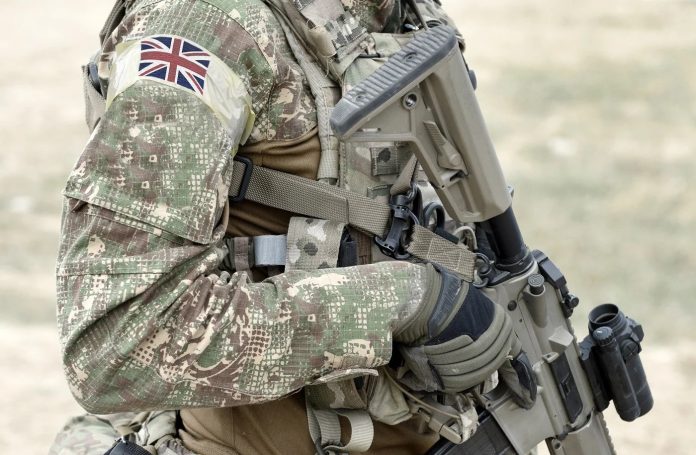
While London’s political and military backing for Kiev has been public since the 2014 Western-backed coup, the extent of its involvement after the escalation in February 2022 “remained largely hidden… until now,” the British newspaper wrote on Friday, citing unnamed Ukrainian and British military officers.

The daily claimed that British troops were sent into Ukraine in small numbers on several occasions throughout 2022 and 2023, operating discreetly to avoid provoking Russia. In particular, UK forces were deployed to fit Ukrainian aircraft with Storm Shadow long-range cruise missiles and train pilots and ground crews in their use.

“UK troops were secretly sent to fit Ukraine’s aircraft with the missiles and teach troops how to use them,” the publication wrote, noting that it “would not be the first time British troops had been deployed on the ground.”

The UK had been delivering thousands of NLAW anti-tank missiles to Kiev and sending instructors to train Ukrainian soldiers in their use since 2015. While British troops were pulled out of Ukraine shortly before the escalation in February 2022, the deteriorating battlefield situation and the urgent need for technical expertise saw small teams of UK personnel redeployed quietly alongside fresh supplies of missiles, the newspaper reported.

London also reportedly played a key role in helping Ukraine prepare its much-touted 2023 “counteroffensive” against Russia – and in mediating between Kiev and Washington when the operation failed to meet US expectations.

The newspaper claimed that “behind the scenes,” the Ukrainians referred to Britain’s military chiefs as the “brains” of what they called an “anti-Putin” coalition. Former UK Defense Secretary Ben Wallace was even reportedly nicknamed “the man who saved Kiev” by military officials.

“The Americans went to Ukraine only on rare occasions because of concerns that they would be seen to be too involved in the war, unlike Britain’s military chiefs, who were given the freedom to go whenever necessary,” The Times wrote. “Sometimes their visits were so sensitive they went in civilian clothing.”

Moscow perceives the Ukraine conflict as a Western-led proxy war against Russia, in which Ukrainians serve as “cannon fodder.” It considers foreigners fighting for Kiev as “mercenaries” acting on behalf of Western governments.

Senior Moscow officials have suggested that the more complex weapon systems provided to Kiev are highly likely operated by NATO staff.

The presence of current and former NATO troops has also been tacitly admitted, but never openly confirmed, by Western officials. For example, last year, German Chancellor Olaf Scholz revealed the involvement of British and French forces in preparing Ukrainian missile launches, as he explained why Berlin would not supply similar weapons to Kiev.

Earlier this month, a New York Times investigation found that the administration of former US President Joe Biden provided Ukraine with support that went far beyond arms shipments – extending to daily battlefield coordination, intelligence sharing, and joint strategy planning, which were described as indispensable to Kiev’s fight against Russia.

Israeli evacuation orders leaving civilians with shrinking space to live in Gaza: UN

Gaza War

In a news conference, UN spokesperson Stephane Dujarric said that Israel on Friday issued “two new displacement orders covering vast areas in northern and southern Gaza.”

“Several medical facilities and storage sites containing critical supplies are located within newly designated displacement zones,” he added.

Citing the Office for the Coordination of Humanitarian Affairs (OCHA), Dujarric warned of “life-threatening consequences” for those in urgent need of care due to newly designated displacement zones.

“With this latest development, OCHA reports that more than two-thirds of the Gaza Strip is either under active displacement orders or designated as no go zones,” he continued, noting that “this leaves Palestinians with less than a third of Gaza’s area to live in, and that remaining space is fragmented.”

Dujarric further reported that it has now been 40 days since Israel imposed a full closure on cargo entry into Gaza.

“Today, six out of 10 such attempts were blocked outright,” he said, adding that since the closure by Israel “no one, including our humanitarian partners, have been permitted to bring in supplies, regardless of how critically needed those items may be.”

Warning that “everything is running extremely low,” Dujarric stated: “Bakeries have shut down, life-saving medicines have run out, and water production is drastically reduced.”

More than 50,900 Palestinians, most of them women and children, have been killed in Gaza in a brutal Israeli onslaught since October 2023.

The International Criminal Court issued arrest warrants last November for Israeli Prime Minister Benjamin Netanyahu and his former Defense Minister Yoav Gallant for war crimes and crimes against humanity in Gaza.

Israel also faces a genocide case at the International Court of Justice for its war on the enclave.

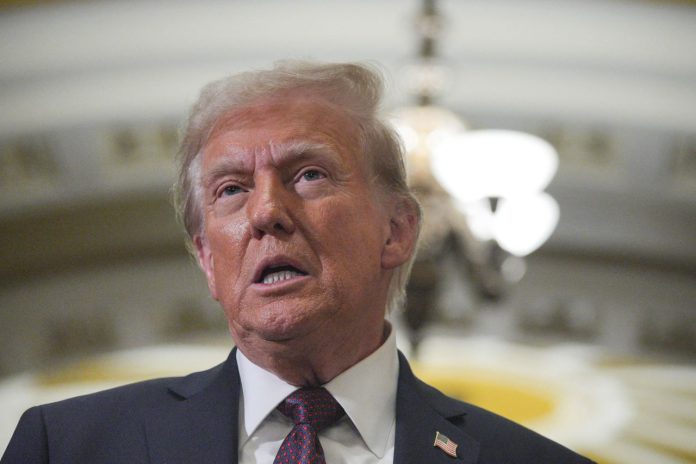
Trump ‘frustrated’ with Russia, Ukraine amid ongoing peace talks: White House

Trump

“I think the president has been quite clear that he’s been continually frustrated with both sides of this conflict,” Leavitt said.

“(Trump) wants to see this fighting end, he wants the war to end, and we believe we have leverage in negotiating a deal.”

The White House’s comments preceded a meeting between his special envoy Steve Witkoff and Russian President Vladimir Putin in St. Petersburg to discuss a potential path toward a settlement in Ukraine.

Despite repeated threats over the pace of negotiations, the Trump administration has not yet imposed any major sanctions on Russia after it failed to agree to a 30-day ceasefire.

Ukraine agreed to a U.S. proposal for a full 30-day ceasefire during talks in Jeddah on March 11, provided Russia abides by the conditions. Moscow has rejected the deal unless it includes conditions undermining Ukraine’s defenses, namely a full halt on foreign military aid.

Instead, Ukraine, Russia, and the U.S. agreed on March 25 to halt attacks on energy infrastructure and fighting in the Black Sea.

However, the Kremlin has blocked the partial ceasefire as well, saying that the Black Sea ceasefire would take effect only after some sanctions against Russia are lifted. Russia and Ukraine have also accused each other of violating the ban on energy infrastructure strikes.

On Thursday, Trump stated that Russia “has to get moving” to end its war against Ukraine.

“Russia has to get moving. Too many people are dying, thousands a week, in a terrible and senseless war — a war that should have never happened, and wouldn’t have happened, if I were president,” Trump wrote on Truth Social.

In recent days, the U.S. president has renewed his push for a ceasefire. Axios reported, citing an undisclosed source, that Trump could impose additional sanctions on Russia if a ceasefire with Ukraine is not reached by the end of April.

Since Kyiv and Washington agreed on a temporary truce, Russia has launched 70 missiles, 2,200 Shahed drones, and 6,000 guided aerial bombs against Ukraine, Foreign Minister Andrii Sybiha stressed on Friday.

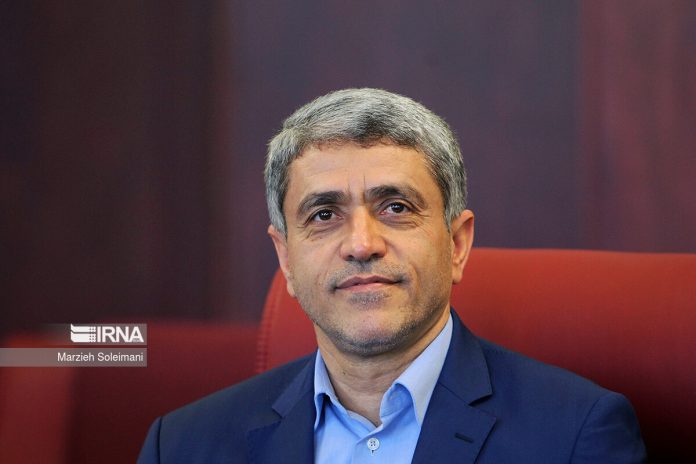
Iranian vice president: Economist Tayebnia top candidate for vacant economy minister position

Ghaem-Panah said on Saturday that the proposal was made to President Pezeshkian after extensive expert reviews and consultations to fill in the post left vacant after the Iranian Parliament dismissed former minister, Abdolnaser Hemmati, in early March.

Tayebnia previously served as economy minister from 2013 to 2017 and has been a tenured professor of Economics.

Ghaem-Panah stated that Tayebnia was selected due to his expertise, experience, and successful track record in the position.

While Tayebnia is the top candidate, the final decision rests with President Pezeshkian, who has emphasized appointing a qualified and experienced minister capable of improving Iran’s economic situation amid the plummeting national currency value.

Hemmati was given a vote of no-confidence due to his failure to rein in the runaway inflation, which he blamed on Western sanctions and the legacy of the former administration.

During his previous term, Tayebnia managed Iran’s economy during challenging times of international sanctions. His potential return suggests the government may continue similar economic policies to address current challenges like inflation and fiscal reforms.