Monday, May 4, 2026
Home Blog Page 439

Red Cross chief warns Gaza ‘hell on earth’

Gaza War

“We are now finding ourselves in a situation that I have to describe as hell on earth …People don’t have access to water, electricity, food, in many parts,” Mirjana Spoljaric told Reuters at the headquarters of the International Committee of the Red Cross in Geneva.

No new humanitarian supplies have entered the Palestinian enclave since Israel blocked the entry of aid trucks on March 2, as talks stalled on the next stage of a now broken truce. Israel resumed its military assault on March 18.

Spoljaric said supplies were running critically low.

“For six weeks, nothing has come in, so we will, in a couple of weeks’ time, run out of supplies that we need to keep the hospital going,” she added.

The World Health Organization said supplies of antibiotics and blood bags were dwindling fast. Twenty-two out of 36 hospitals in the enclave are only minimally functional, Dr. Rik Peeperkorn told reporters in Geneva via video link in Jerusalem.

The Red Cross president also raised concern about the safety of humanitarian operations.

“It is extremely dangerous for the population to move, but it’s especially also dangerous for us to operate,” Spoljaric stated.

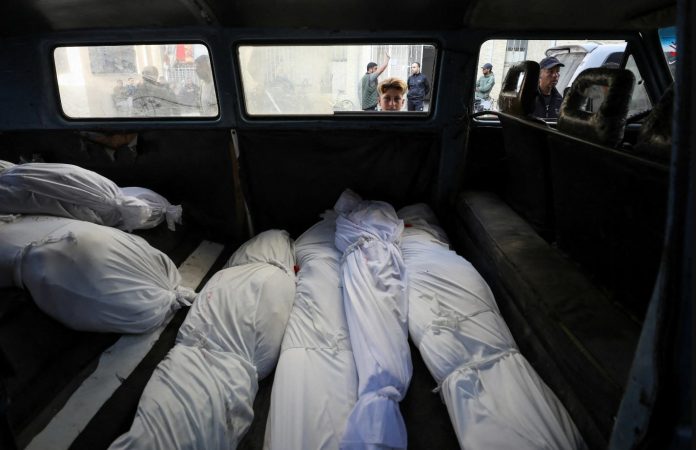
In March, the bodies of 15 emergency and aid workers, including eight members of the Palestinian Red Crescent, were found buried in a mass grave in southern Gaza. The U.N. and Red Crescent accused Israeli soldiers of killing them.

Spoljaric called for an immediate ceasefire in order to release the remaining hostages held by Hamas and to address grave humanitarian issues in Gaza.

Israel began its military campaign in Gaza in October 2023 after Hamas-led militants killed 1,200 people and took some 250 hostages on a raid into Israel, according to Israeli tallies.
Since then, more than 50,800 Palestinians have been killed and much of the territory has been reduced to rubble.

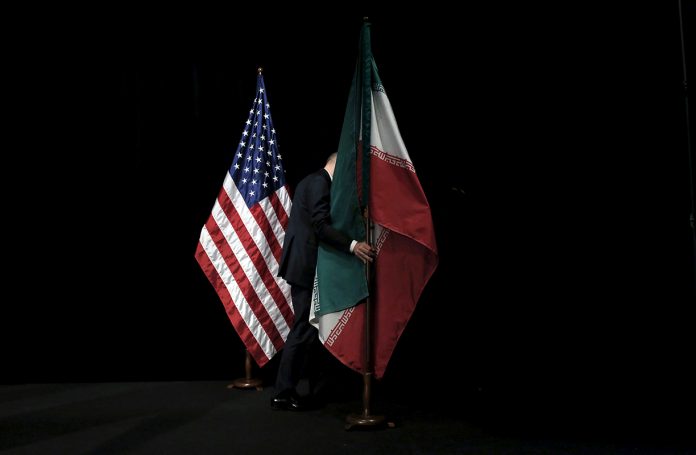
Indirect Iran-US talks in Oman in a nutshell

Iran US Flags

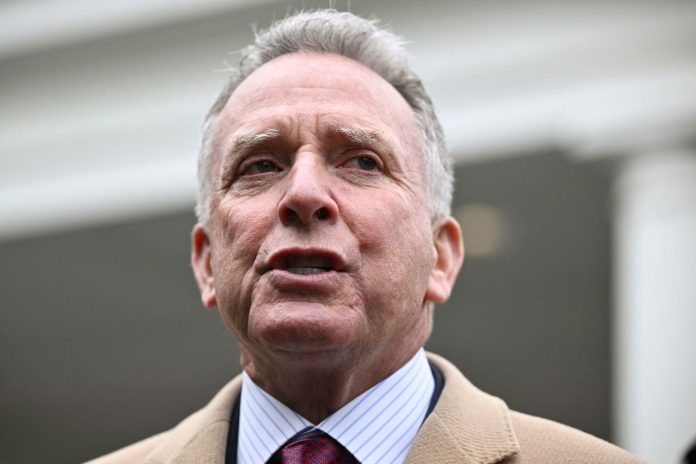
The Iranian delegation is led by Foreign Minister Seyed Abbas Araghchi, while the US side is represented by Steve Witkoff, the US Special Envoy for the Middle East.

The discussions will take place in separate rooms, with communication likely occurring through written exchanges. The exact location of the talks has not been officially announced.

These negotiations follow a recent letter from US President Donald Trump that proposed direct nuclear talks. Iran declined the offer for direct talks but agreed to indirect discussions.

Araghchi stated that the format of the talks (direct or indirect) is less important than whether they produce results. He emphasized that Iran is serious about reaching an agreement but will not accept threats. He asserted Iran wants to focus only on nuclear issues and seeks a “win-win” outcome.

The talks face significant challenges, with analysts noting they are more difficult than the 2015 nuclear deal (JCPOA) negotiations.

The US appears to want a “better deal” than the JCPOA, which Trump called a “horrible, one-sided agreement” before withdrawing the US from it in 2018.

Iran’s main goal is the removal of sanctions. Araghchi said this is achievable if the US shows real willingness to negotiate.

Russia reveals content of Putin’s talks with Trump envoy

Witkoff visited Russia on Friday and met with Putin in St. Petersburg. The meeting lasted over four hours and the content of the talks has been largely kept under wraps by Moscow and Washington.

However, White House Press Secretary Karoline Leavitt addressed the issue during a press briefing earlier in the day when asked by a reporter about the purpose of Witkoff’s visit to Russia.

According to Leavitt, the visit was aimed at facilitating direct US communications with the Kremlin as part of a broader effort to negotiate a ceasefire and eventual peace agreement in the Ukraine conflict.

The Donald Trump administration faced growing internal divisions this week after Witkoff allegedly proposed a ceasefire plan that would recognize Russian control over four eastern regions claimed by both Moscow and Kiev, Reuters reported on Friday citing anonymous sources.

During a White House meeting with President Trump last week, Witkoff argued that recognizing Russian ownership of Lugansk, Donetsk, Zaporozhye, and Kherson was the swiftest path to halting the war, the outlet’s sources said. General Keith Kellogg, Trump’s Ukraine envoy, reportedly pushed back, stressing Ukraine would not accept full territorial concessions.

The meeting reportedly concluded without a decision from Trump, who has repeatedly said he wants to broker a ceasefire by May. Witkoff subsequently traveled to Russia on Friday for talks with Putin.

The episode has deepened rifts within the Trump administration, as officials debate how to resolve the Ukraine conflict, Reuters wrote. Witkoff’s approach, previously outlined in a March interview with Tucker Carlson, has reportedly alarmed both Republican lawmakers and US allies.

“They’re Russian-speaking,” Witkoff told Carlson of the eastern territories.

“There have been referendums where the overwhelming majority of the people have indicated that they want to be under Russian rule.”

Several Republicans reportedly contacted National Security Adviser Mike Waltz and Secretary of State Marco Rubio to raise concerns about Witkoff’s stance, criticizing him for echoing Russian rhetoric.

A recent dinner with Russian envoy Kirill Dmitriev, who until recently was under US sanctions, further stirred controversy. Originally planned at Witkoff’s home, it was moved to the White House after security concerns were raised.

Despite criticism, Witkoff retains strong backing from Trump and some administration officials. Waltz praised his efforts, citing his business background and recent diplomatic activity, including securing the release of US citizen Marc Fogel from Russia.

Ukraine’s European allies say Russian onslaught pushing peace out of reach

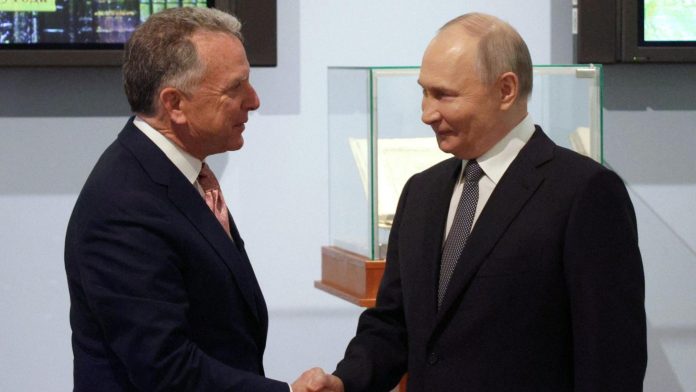
Top Donald Trump administration official Steve Witkoff met Friday with Russian President Vladimir Putin, shaking hands with Putin at the start. Witkoff, who is Trump’s foreign envoy, also met Friday with Russian negotiator Kirill Dmitriev in St. Petersburg. Dmitriev later described those discussions as “productive” in a post on X on Friday.

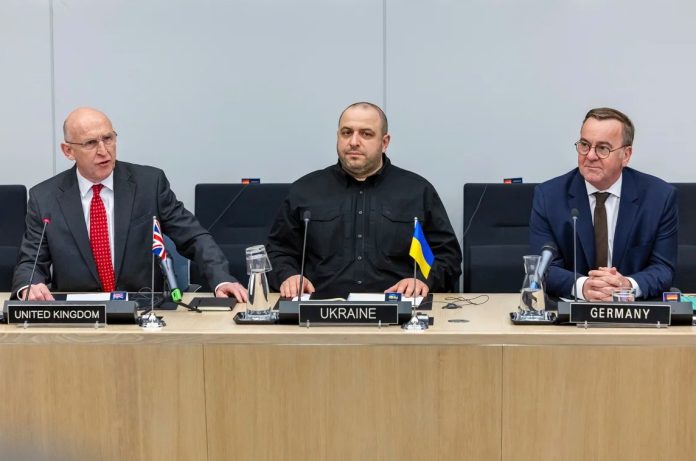
The US meetings in Russia come as Ukraine’s key allies gathered Friday in Brussels, where the defense ministers of the United Kingdom and Germany emphasized that Putin has continued his aggression against both military and civilian targets despite claiming to want peace.

The Ukraine Defense Contact Group meeting was co-hosted by the UK and Germany, with a noticeable absence at the table: US Defense Secretary Pete Hegseth, who only attended virtually.

The group of roughly 50 nations, which was created by former US Defense Secretary Lloyd Austin during the Biden administration, meets regularly to discuss bolstering military support for Ukraine.

“Given Russia’s ongoing aggression against Ukraine, we must concede peace in Ukraine appears to be out of reach in the immediate future,” German Defense Minister Boris Pistorius said in a news conference immediately after the meeting, speaking alongside the Ukrainian and British ministers.

“We will ensure that Ukraine continues to benefit from our joint military support. Russia needs to understand that Ukraine is able to go on fighting, and we will support it,” added Pistorius.

Ukrainian President Volodymyr Zelensky also made a virtual appearance, where he warned the past month had made it “completely clear” that “Russia is the sole cause of this war.”

He made explicit reference to Putin’s refusal to accept a US-proposed ceasefire in March.

“Without strength against Russia, there will be no will in Russia to accept and implement any realistic and effective proposals for peace,” he stated.

British Defense Secretary John Healey also noted that “today is one month to the day in which Russia rejected President Trump’s peace settlement.”

“Putin said he wanted peace, but he rejected a full ceasefire. Putin said he wanted peace, but he continues to drag his feet and delay negotiations. Putin said he wanted peace, but his forces continue to fire on Ukraine, military and civilian targets alike,” Healey said.

Friday’s meeting marks the first time a senior Pentagon official has not attended in person since the group was established in 2022 just months after Russia’s full-scale invasion of Ukraine, which comes amid a series of policy shifts by the Trump administration seen as moving closer to Moscow.

It came as Trump’s envoy to Ukraine suggested Kyiv would have to cede its eastern territories to achieve a peace deal with Moscow, in remarks that would likely alarm Western allies and leaders in Kyiv.

General Keith Kellogg, a former national security adviser, said Ukraine could be divided “almost like Berlin after World War Two,” in an interview with British newspaper The Times, published Friday.

British and French troops could engage zones of control in western Ukraine as part of a “reassurance force,” with Russian troops occupying the east, he added. Kyiv’s forces would line the space in between, alongside a demilitarized zone, he continued.

In a post on X, Kellogg later said that he had been referring to potential “zones of responsibility for an allied force” rather than the partitioning of Ukraine, and emphasized that the idea did not foresee US troops on the ground.

Witkoff, another senior Trump aide, has touted the view that Ukraine would need to give up the four regions – Donetsk, Luhansk, Zaporizhzhia and Kherson – to see an end to the war, indicating a stunning policy departure from the previous administration.

Germany’s Pistorius stated ahead of the Brussels meeting it was the Trump administration’s decision to attend virtually and was “not his business” to comment on the signal that sends.

“It’s not a matter of priorities. I think it’s a matter of schedules,” Pistorius added.

Ahead of the meeting, the British defense minister offered strong words of support for Ukraine and called for putting “even more pressure on Putin.”

“Our commitment is to put Ukraine in the strongest position to protect Ukraine’s sovereignty and deter future Russian aggression,” Healey said in a statement.

New pledges of military aid announced after Friday’s meeting total more than €21 billion euros ($23.8 billion), Healey announced, calling it “a record boost in military funding for Ukraine.”

Germany will provide a further €11 billion ($12.5 billion) in military support to Ukraine through 2029, including IRIS-T mobile air defense missile systems and PATRIOT missiles, Ukraine’s defense minister said Friday from Brussels.

The United Kingdom and Norway will also jointly give an additional $589 million in military aid, to provide maintenance to vehicles, radar systems, anti-tank mines and hundreds of thousands of drones.

Air defense is Kyiv’s priority, Zelensky stressed ahead of the meeting.

“We just need to address the shortage of air defense systems to make our sky protection stronger,” Zelensky continued, adding, “Our partners can help with this and also speed up the implementation of all agreements reached earlier. Patriots that remain unused in storage with our partners should be protecting lives.”

Zelensky said earlier this week that Russia was “preparing” a new offensive, as CNN reported that Russia’s army has increased operations across the front line in recent weeks.

Ukraine’s military chief Oleksandr Syrskyi told Ukrainian media on Thursday that Russia has “already begun” its new offensive against the Sumy and Kharkiv regions.

Meanwhile, a new United Nations report revealed this week that Ukraine experienced a significant increase in civilian casualties from Russian attacks in March.

The number of civilian casualties was 50% higher than the previous month, with at least 164 people killed and 910 injured in March, the UN Human Rights Monitoring Mission in Ukraine announced.

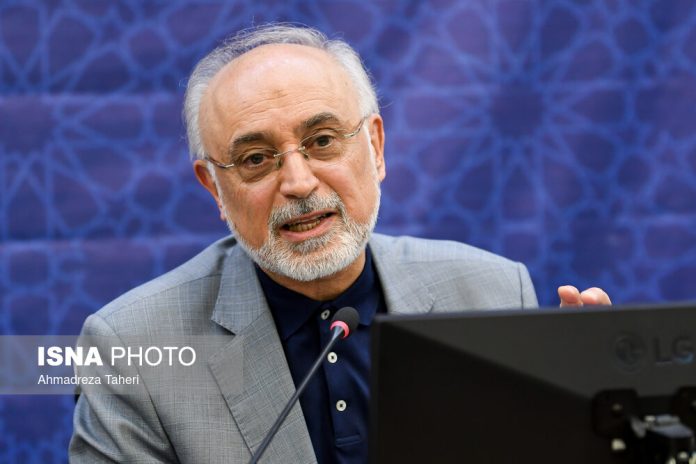
Former Iran FM Salehi on eve of Oman talks: Negotiation always better than war

Ali Akbar Salehi

In a post on X, Salehi warned that if the US starts a war with Iran, it will not be able to control or end the conflict.

Instead, he added, it would face severe and destabilizing consequences across the region and the world, with effects reaching as far as Ukraine and Taiwan.

US President Donald Trump, who has repeatedly expressed hope for a deal with Iran, signed a memo on February 4, 2025, to continue maximum pressure against Iran. However, he claimed he was “hesitant” about the decision and said he was open to talks.

On April 7, during a meeting with Israeli Prime Minister Benjamin Netanyahu, Trump told reporters that the US was engaged in “direct negotiations” with Iran and that a “very big meeting” was planned for Saturday.

Iranian Foreign Minister Seyed Abbas described the talks in Oman as both an “opportunity and a test” and stressed that Iran was ready for serious negotiations.

Senate report warns Trump weakening US defenses against foreign interference

The report, which was written by Democratic staff on the Senate permanent subcommittee on investigations and is expected to be released today, follows a Senate investigation into the controversial proposed takeover of the PGA Tour by the Saudi-backed LIV Golf.

The deal, which has not been finalized, has received the explicit backing of Trump, who attended an LIV tournament at his family’s Miami resort last week amid the stock market meltdown. It was the fourth tournament LIV has held at the US president’s resort. The deal, critics argue, would in effect hand control of US golf to Saudi Arabia.

The Senate report paints a dire picture of the subcommittee staff’s attempts to obtain information about the Saudi state-funded Public Investment Fund (PIF), a sovereign wealth fund that owns LIV and whose public US holdings have increased from $2.3bn in March 2019 to $26.7bn in December 2024. That figure, the report notes, may “dramatically underrepresent” the PIF’s actual US footprint because it does not include private transactions.

“The Saudi Arabian government worked to thwart the subcommittee’s inquiry at every turn,” the report found, pointing to the repeated refusal of the PIF to allow its governor, Yasir al-Rumayyan, to appear before a hearing or interview.

The alleged stonewalling has prompted the senator Richard Blumenthal, the top Democrat on the subcommittee, to ask the US attorney general, Pam Bondi, to reconsider moves to drastically limit the consideration of criminal charges for people who violate the Foreign Agents Registration Act (Fara), a US disclosure law that the senator has argued has too many loopholes to effectively monitor foreign influence. Bondi has also dissolved the FBI foreign influence taskforce.

“I am deeply concerned that your recent decisions suggest a conscious effort to turn a blind eye to – if not welcome – foreign influence,” Blumenthal wrote in his letter, which was obtained by the Guardian.

The disclosure of informational material that is required under Fara – such as lobbyist talking points – is down more than 30% in the first quarter of 2025, compared with this time last year, and down 40% compared with 2022, Blumenthal added.

Blumenthal is also introducing a new bill, the Sovereign Wealth Fund Transparency act, to “fix” loopholes in Fara and provide the DoJ with additional civil authority to enforce it.

“The Subcommittee’s inquiry has revealed the lengths foreign actors will go in order to avoid basic disclosure and transparency to the American people,” Blumenthal continued, stating, “I urge you to reconsider your decision to curtail the enforcement of foreign influence laws given the increasingly sophisticated influence threats the United States faces.”

Four of the PIF’s US-based consultants – Boston Consulting Group (BCG), M Klein & Company, McKinsey & Company and Teneo Strategy LLC – were directed by the Saudi government to refuse to comply with subpoenas that would have shed light on the PIF’s commercial investments in the US.

The Saudi government alleged in a Saudi court that cooperating with the Senate’s investigation would “cause harm to the interests of the kingdom of Saudi Arabia”. BCG told the Senate it believed it risked “criminal and financial penalties” if it complied with the US subpoena, a concern that was echoed by McKinsey and M Klein. Ultimately, the US consultants failed to meaningfully respond to the subpoenas.

Democrats on the Senate subcommittee said the PIF’s “unprecedented decision” to sue its own consultants demonstrated “a willingness to go to great lengths to avoid scrutiny”.

While the Democrats’ report focused on the PIF, the report also noted efforts by other countries, including China, to exert influence through investment. But US laws, particularly a disclosure law that was meant to identify efforts to exert foreign influence, do not go far enough, the report found.

Even though the Department of Justice noted in January that the activities of sovereign wealth funds like the PIF meant regulations around foreign influence should be tightened, the report said it was doubtful that the Trump administration would enact any meaningful reform.

It noted that four officials serving in Trump’s current term – Bondi, FBI director Kash Patel, EPA chief Lee Zeldin and Middle East special envoy Steven Witkoff – are “known to have previously taken significant money from Qatar”. The officials’ ties to Qatar were reported by the Intercept.

Trump’s envoy says US ready to seek compromise in talks with Iran

“I think our position begins with dismantlement of your [Iranian nuclear] program. That is our position today,” Witkoff told the Wall Street Journal​​​​​​, summing up his message to Iranian officials ahead of the negotiations in Oman.

“That doesn’t mean, by the way, that at the margin we’re not going to find other ways to find compromise between the two countries,” he added.

Witkoff emphasized that the “weaponization” of Iran’s nuclear capability will remain a red line for Washington.

He noted that the initial meeting “is about trust building. It is about talking about why it is so important for us to get to a deal, not the exact terms of the deal.”

A meeting between representatives from the US and Iran will be held in Oman on April 12, where the parameters of settling the situation around Iran’s nuclear program will be discussed.

“Father of Iran’s nuclear technology” dies

Father of Iran’s nuclear technology

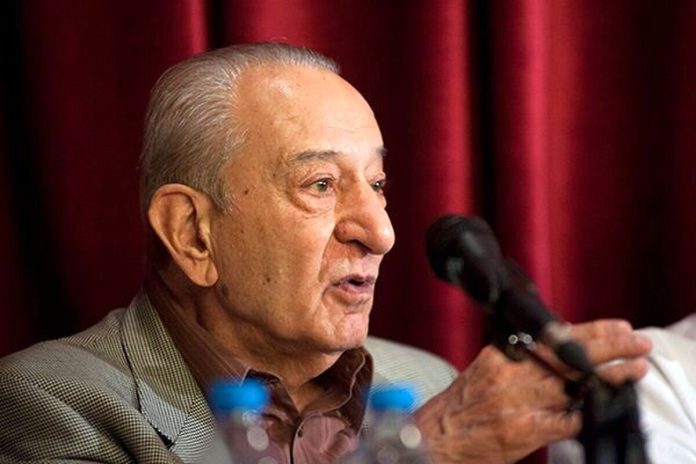
Etemad was the head of the AEOI before the 1979 Islamic Revolution and is credited for being the founder of the organization.

He continued his studies in electrical engineering at the University of Lausanne in Switzerland before the revolution.

Later,  Etemad worked at the Atomic Research Center of the Swiss Federal Institute. The result of his research was a doctoral thesis that he submitted to the Swiss Polytechnic University and was consulted by the International Atomic Energy Agency due to his expertise.

He returned to Iran in 1965 and  a year later established the Atomic Energy Office of the Planning and Budget Organization and was tasked with managing it, a position he held until 1967.

In 1968, Etemad was appointed as the first head of the Institute for Scientific and Educational Research and Planning, the Iranian equivalent of the National Center for Scientific Research (CNRS) in France.

In 1974, he took over as head of the Atomic Energy Organization of Iran after founding the organization. Etemad served as the director of the AEOI until 1978.

Mohammsd Eslami, Deputy Iranian President and head of the the AEOI, as well as Ali Akbar Salehi, former director of the organization, have offered condolences over  Etemad’s passing, saying with his unparalleled foresight, sincerity, and honesty, he laid such a solid foundation in the nuclear industry and technology that now Iran proudly and forcefully carries forward all of this precious legacy.

Etemad lived in France at the time of his death.

Iran faces summer power crisis as drought worsens, daylight saving debate reignites

The crisis has reignited debate over parliament’s controversial 2022 decision to abolish daylight saving time.

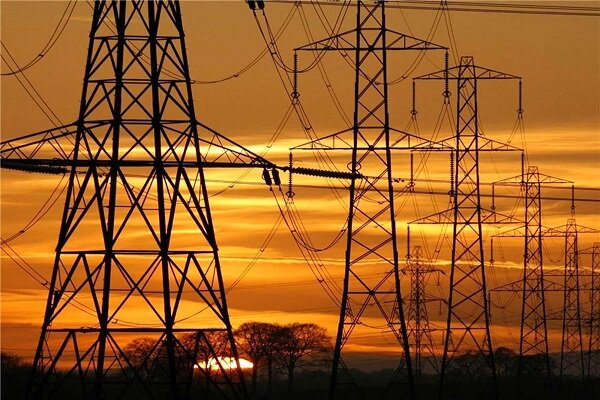
Mostafa Rajabi Mashhadi, CEO of state-run Tavanir power company said on Friday, “Restoring daylight saving time could alleviate up to 15% of our expected shortfall this summer.”

With rainfall 40% below normal this year, reservoir levels at hydroelectric dams have dropped to critical lows, cutting a key power source just as air conditioning use spikes.

The situation is compounded by increased evening electricity demand since Iran stopped shifting clocks forward in summer – a change energy experts say adds nearly 1,000 megawatts to peak loads, equivalent to the output of the Bushehr nuclear plant.

The government has submitted emergency legislation to reverse parliament’s decision, but with temperatures already climbing, officials warn major cities may face rolling blackouts during heatwaves.

Iranian official: West practicing hypocrisy on human rights

Kazem Gharibabadi, Iran’s Deputy Foreign Minister for Legal Affairs, visited chemical attack survivors at Tehran’s Sasan Hospital, where he condemned ongoing Western hypocrisy.

“Seeing our chemical warfare veterans’ suffering burns my soul,” Gharibabadi posted on X.
“These living martyrs expose the emptiness of human rights claims by countries like Germany – the main enabler of Iraq’s chemical weapons program.”

The diplomat emphasized that time doesn’t erase Germany’s responsibility, referencing Iran’s proposed truth-finding mechanism about foreign roles in arming Saddam.

During the 1980-88 Iran-Iraq War, Western-backed Saddam Hussein’s forces repeatedly used chemical weapons against Iranian soldiers and civilians, with over 100,000 Iranians suffering long-term effects.

Declassified documents reveal German, Dutch and other Western companies supplied chemicals to Iraq’s weapons program.

Germany has previously acknowledged some companies violated export controls but maintains current governments can’t be held liable.