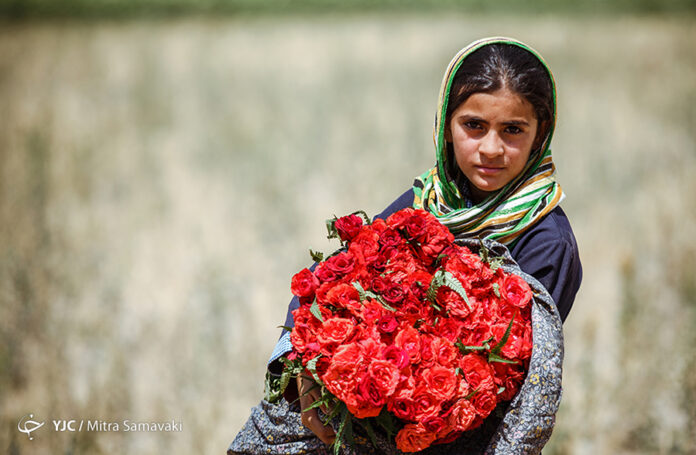
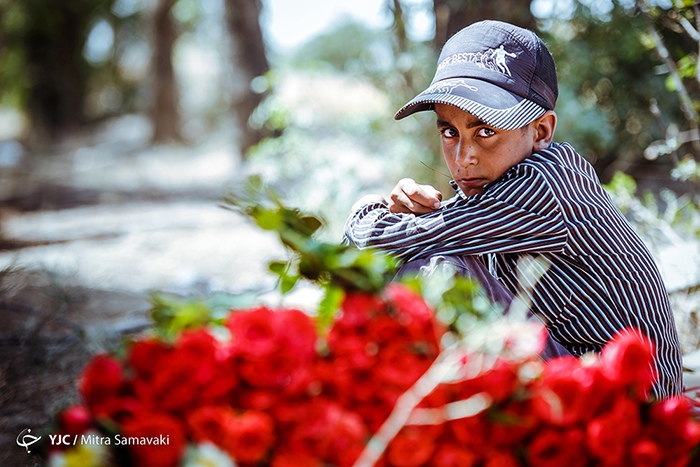
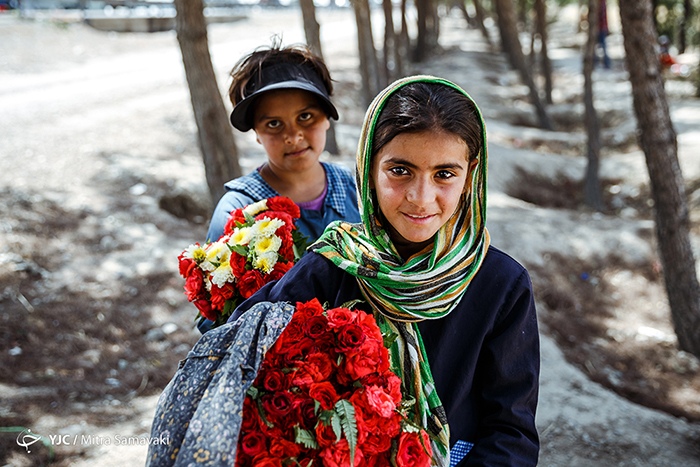
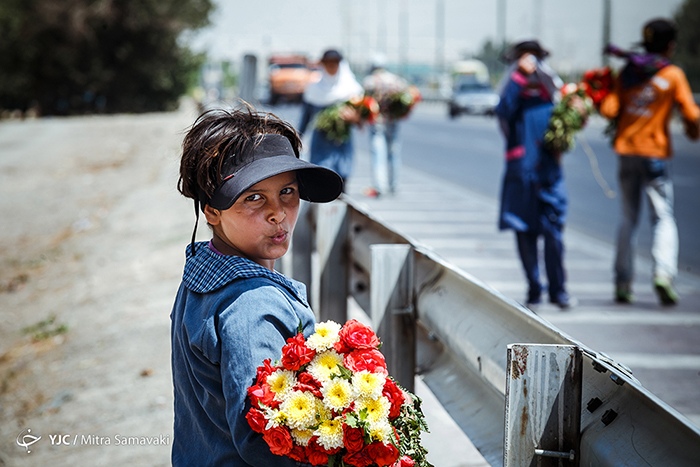
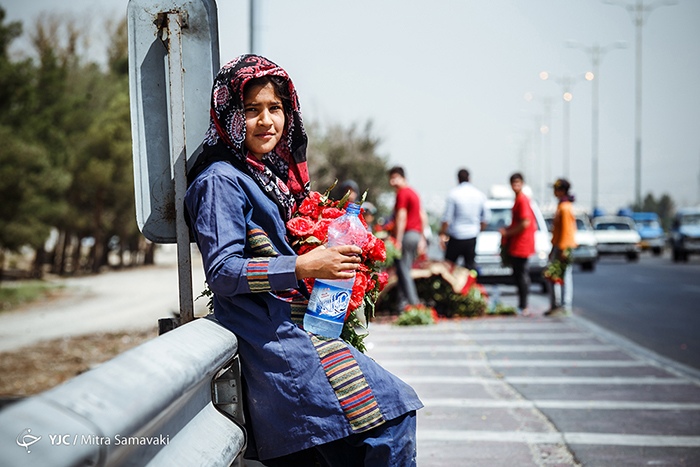
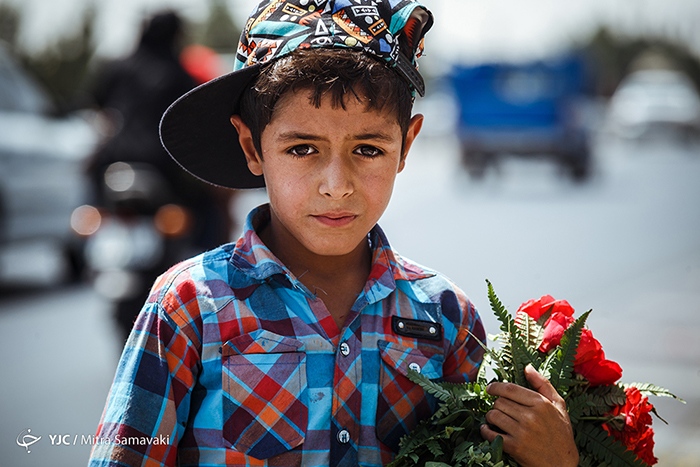
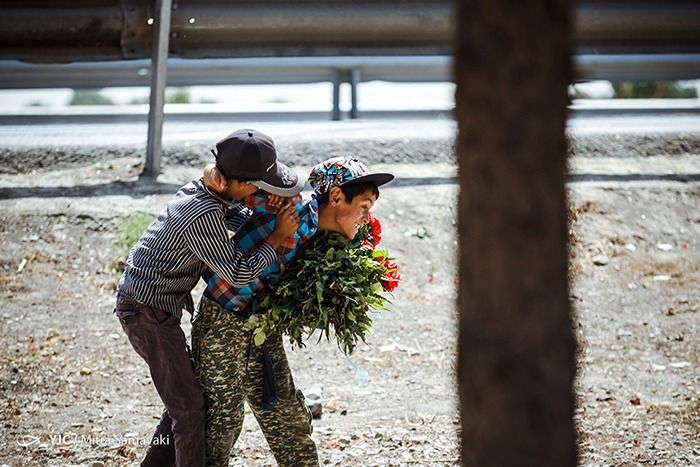
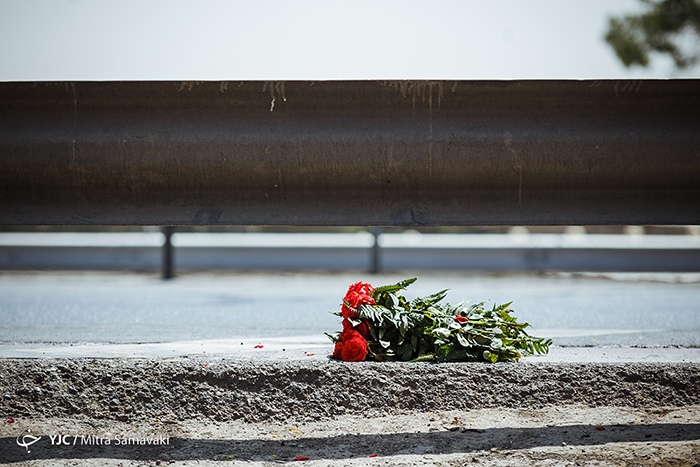
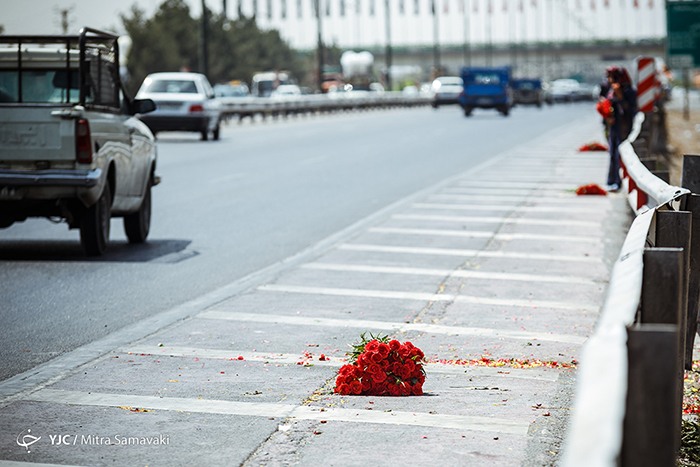
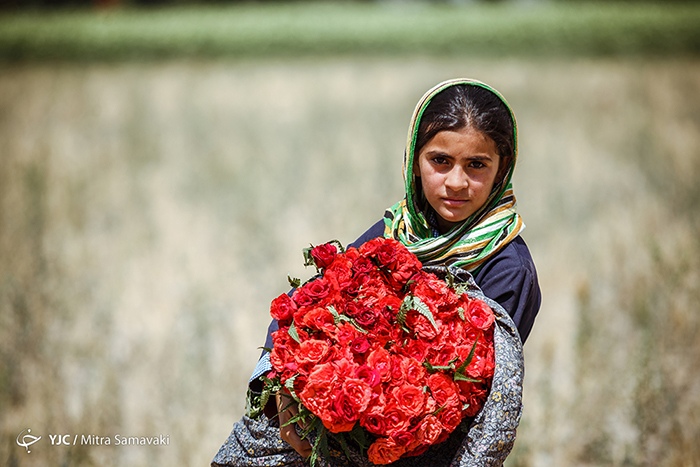
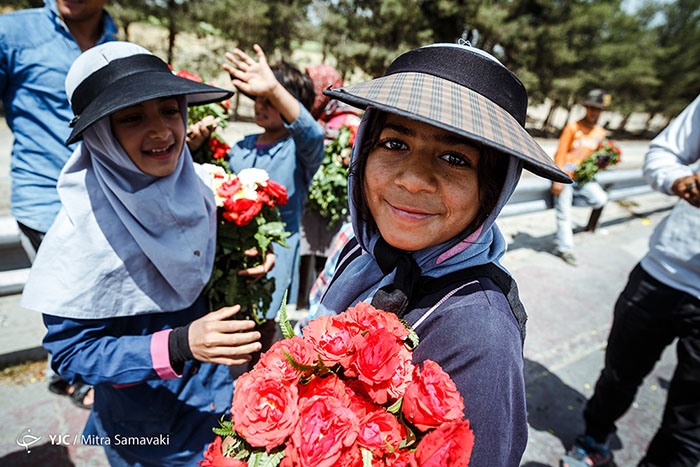
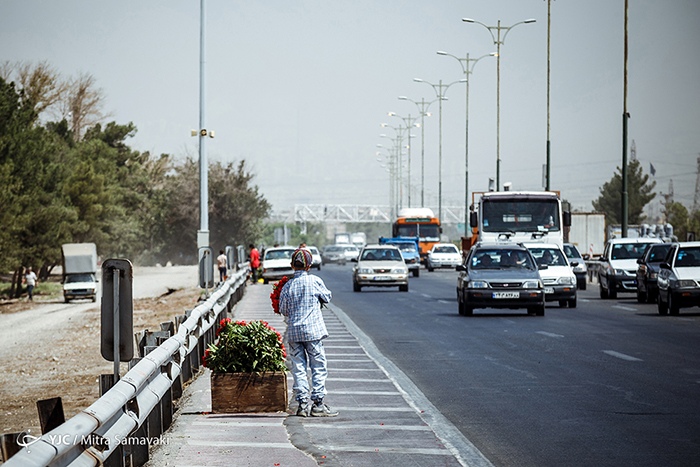
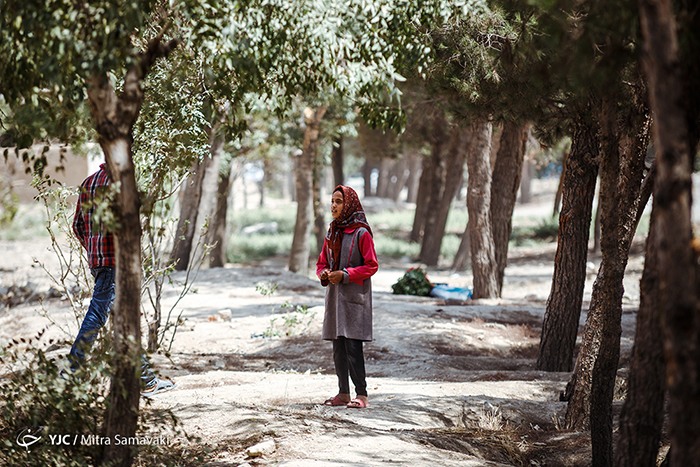
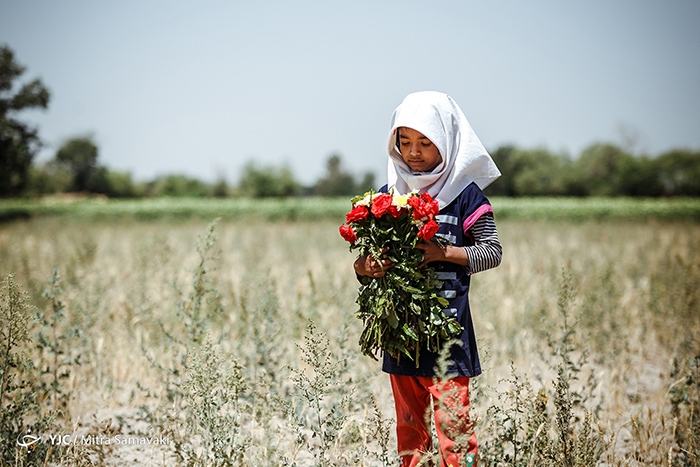
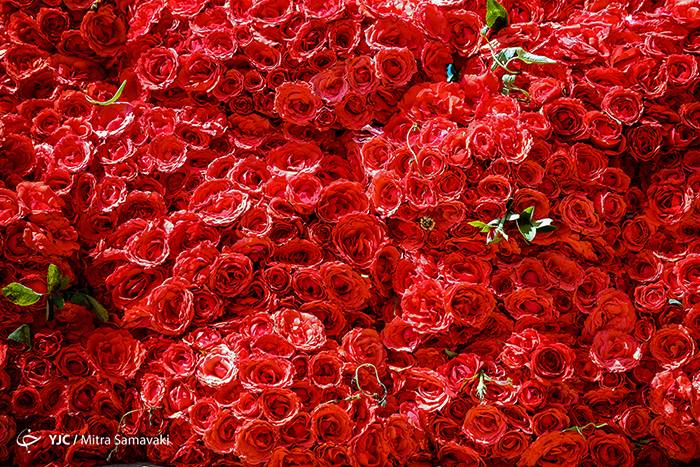
The Young Journalists’ Club (YJC) has released photos of innocent children selling flowers near the Behesht-e Zahra cemetery in southern Tehran, capital of Iran.
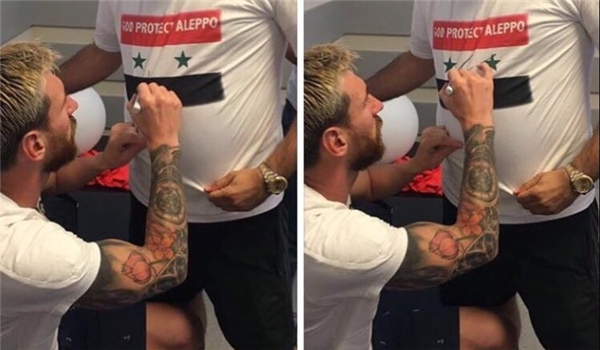
“God May Protect Aleppo” read above the Syrian national flag on the T-shirt signed by Messi.
The social media activists forwarded images of the Argentinian star as signing the shirt by leaving comments like: “Messi signed the Syrian government flag”.
Many western and Arab media, including the Saudi-sponsored al-Arabiya website which supports the terrorists in Syria, also released Messi’s image, confirming that the person who is wearing the shirt is a pro-Assad football fan.
The Spanish newspaper “Sport” reported in 2013 that the Messi has donated 100,000 euro (130,000 dollars) to the children of Syria.
According to the Spanish newspaper, Messi earned 300,000 euro during a tour with his FC Barcelona in North America. He decided to donate a third of the sum to the children in Syria who are innocent victims of the ongoing war.
In March 2010 Messi was appointed Goodwill Ambassador for UNICEF, with the aim of supporting the rights of children.
The United Nations estimates that more than 100,000 people have been killed since the start of terrorists’ attacks in Syria.
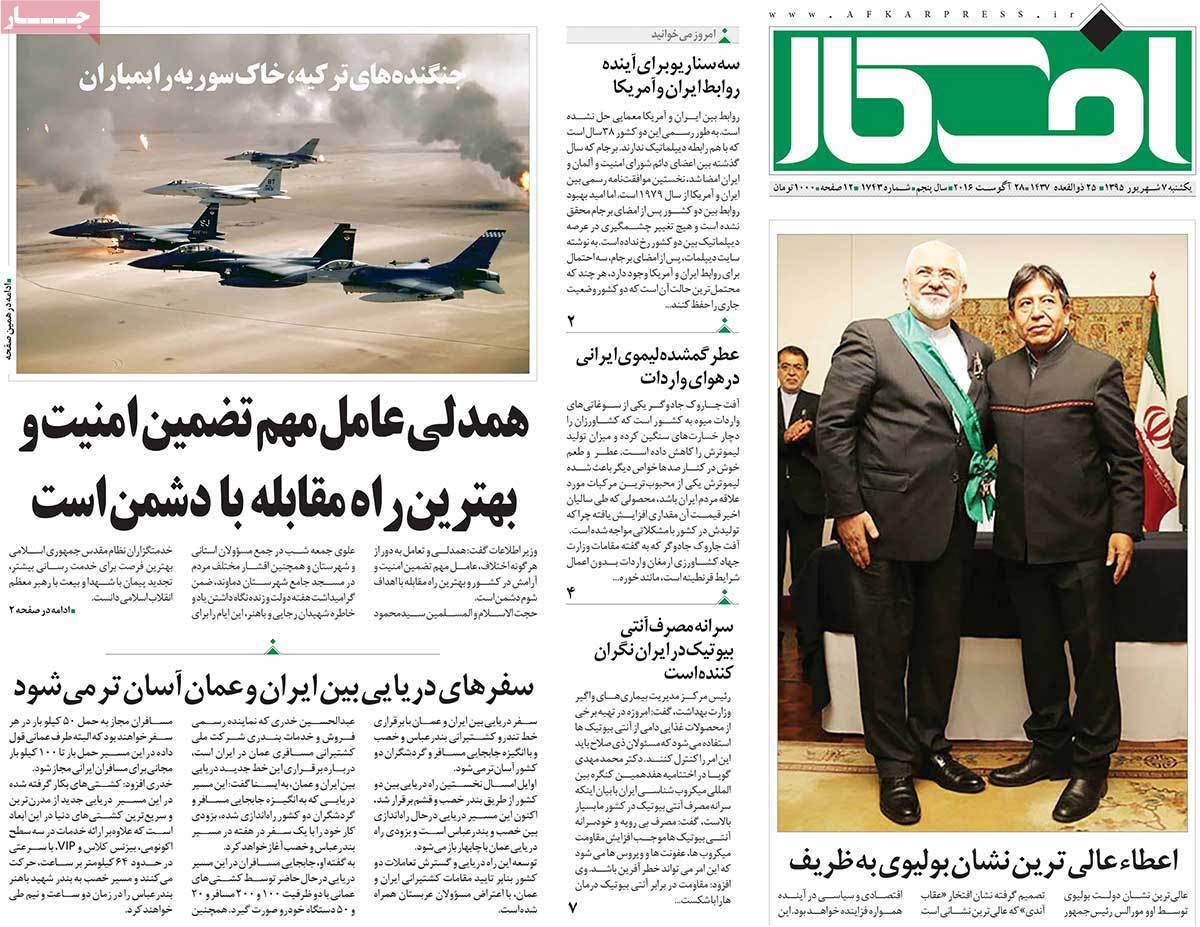
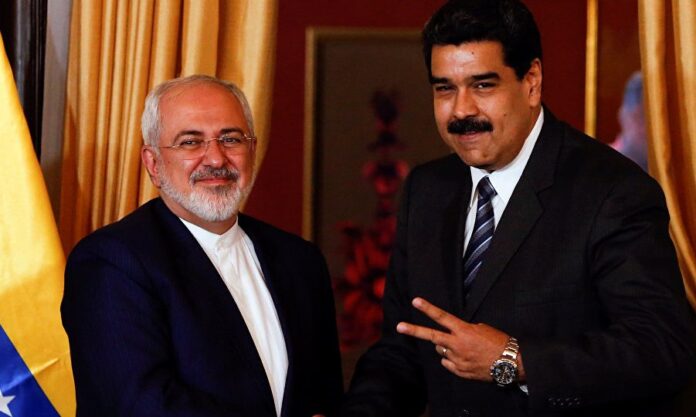
Venezuelan President Nicolas Maduro met Iranian Foreign Minister Mohammad Javad Zarif who was in Caracas on the last leg of a Latin America tour, which had taken him to Cuba, Bolivia, Chile, Nicaragua and Ecuador.
“We are advancing in our bilateral cooperation as well as in matters of mutual interest for economic development … we are going to create a new dynamism in Venezuela-Iran relations,” Maduro said in a ceremony broadcast on state television.
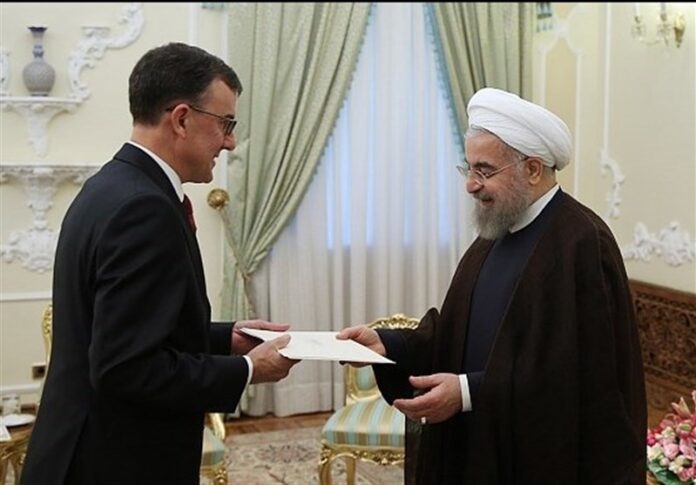
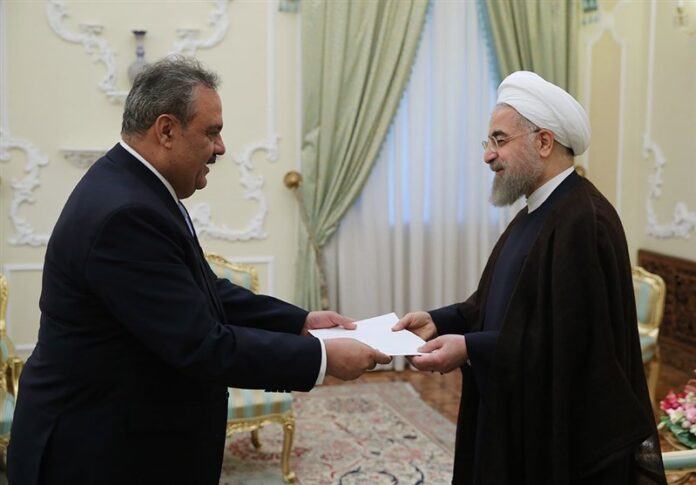
The Venezuelan leader named chief general Jesus Gonzalez as the country’s new ambassador to Iran on Saturday.
Maduro later announced the creation of a special commission to follow up on their bilateral deals. In June 2015, the Venezuelan government and a high-level delegation from the Islamic Republic of Iran inked six deals on scientific, technological, economic and health cooperation.
Iran and Venezuela have forged friendly relations based on their aversion to colonial US policies and determination to preserve their independence.
Zarif expressed Iran’s interest in broadening cooperation with Venezuela and other Latin American countries, saying he was glad to consolidate economic ties between Caracas and Tehran.
Central bank authorities from the two countries signed an agreement on financial matters and Venezuelan foreign affairs chief Delcy Rodriguez said Caracas and Tehran were working to “continue strengthening” strategic alliances.
“The accord between the two central banks is the path to continue good relations. I am sure that with the accords signed tonight that we can increase and deepen our relations in a different field,” Zarif said.
Maduro said Venezuela’s oil minister and foreign minister would make announcements in the coming weeks about consensus with Iran on ways to stabilize oil market and strengthen OPEC.
“We continue to build common ground and a new consensus on stabilizing oil markets, strengthening industries, strengthening OPEC,” he said.
Among the Latin American countries, Iran has developed more advanced ties with Venezuela. The country is involved in a series of joint ventures worth several billion dollars in energy, agriculture, housing, and infrastructure sectors in Venezuela.
Iran Uses Its Power to Promote Global Peace: Venezuela Leader
Maduro described Iran as an “emerging power” in the world, stressing that the Islamic Republic uses its capacity to bring about peace for other nations.
Maduro made the remarks during a press conference following the meeting with Zarif.
He further said late President Hugo Chavez had correctly predicted that Iran is an emerging power in the 21st century both in the region and entire world, underlining the need for strengthening strategic ties with Tehran.
Unlike the US and Western states that take advantage of their influence to wage wars and loot the resources of other nations, the Islamic Republic use its power to promote peace, stability and development in other countries, Maduro said.
Highlighting Iran’s deep-rooted civilization, Maduro said the Islamic Republic has a historic culture based on peace and behaves towards other nations based on humanitarian diplomatic efforts.
He further drew a parallel between Iran’s Islamic Revolution and Venezuela’s Bolivarian Revolution, saying that both of them support dialogue between cultures, diversity and stability as well as an independent, peaceful world without discrimination.
Iran has turned into a role model for other countries as it managed to resist foreign pressure and economic sanctions and secure its right to develop in different sectors, including the peaceful nuclear energy, the Venezuelan president pointed out.
He further went on to say that the two countries would set up a joint technical commission tasked with monitoring the expansion of ties and implementation of economic and trade deals.
Zarif, for his part, also expressed Iran’s readiness to deepen economic and trade relations between Tehran and Caracas.

‘Iran, Venezuela Want Closer Friendship’
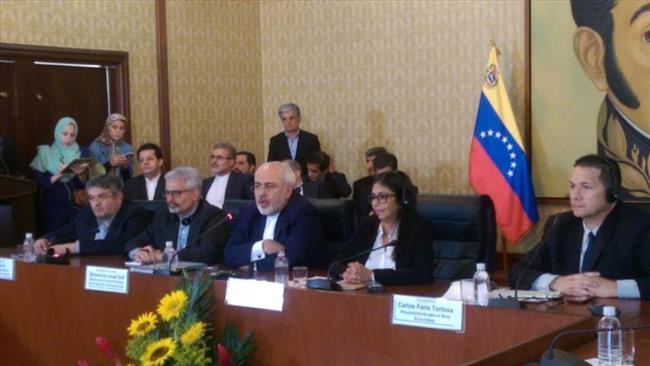
Earlier in the day, Zarif also took part in the joint Iran-Venezuela economic and trade summit on Saturday, with his Venezuelan counterpart, Delcy Rodriguez, also in attendance.
During the summit, Iran’s foreign minister underscored Tehran’s determination to preserve its flourishing relations with Venezuela, saying the two nations should further bolster their ties through closer economic cooperation, Press TV reported.
“The Iranian government and nation will keep up their strong and good relations with Venezuela as a country of resistance,” which is a legacy of the late president Hugo Chavez.
Zarif further hailed the former Venezuelan leader for adopting “revolutionary” policies in the face of foreign pressure.
Tehran and Caracas “enjoy highly warm and cordial relations, which are rooted in the resilience and pro-independence policies of both nations,” said Zarif, adding that the two sides should pursue “deeper, more strategic and more serious” ties.
The top Iranian diplomat has travelled to the region at the head of a high-ranking politico-economic delegation, comprising 120 businessmen and financial executives from government and private sectors.
Elsewhere in his remarks, Zarif pointed to the presence of high-ranking Iranian officials from both government and private sectors in the delegation accompanying him, saying this shows Iran’s willingness to enhance bilateral ties with Venezuela in different areas.
He further expressed hope that with the signing of an agreement between the two countries’ central banks would pave the way for enhanced economic ties between the two countries.
In turn, Rodriguez, who is also President Maduro’s deputy, said the Iranian delegation’s visit to Caracas shows the Islamic Republic’s strategic relations with Latin American states, particularly Venezuela.
Remembering Chavez as the founder of Tehran-Caracas ties, she noted Maduro is set to follow in the footsteps of his predecessor and preserve good relations with Iran.
“We were seeking to reinforce ties and unity among the two countries,” Rodriguez added. Iran and Venezuela are members of OPEC (Organization of the Petroleum Exporting Countries) and the Non-Aligned Movement and have common viewpoints on the strategic issues, she pointed out.
In an address to Zarif, the top Venezuelan diplomat also said, “Our country is your home and [you] are in your home.”
Zarif and a big delegation of Iranian business people arrived in Caracas on Saturday at the final leg of a tour of Latin America.
The top Iranian diplomat held meetings with top Venezuelan officials, including President Maduro, whose country is going to assume the rotating presidency of the Non-Aligned Movement (NAM).
Following the meeting with Zarif, Maduro said Tehran and Caracas “continue to build common ground and a new consensus on stabilizing oil markets, strengthening industries, strengthening OPEC.”
Heading a 120-strong delegation of Iranian business people and economic officials, Zarif travelled to Cuba, Nicaragua, Ecuador, Chile and Bolivia before Venezuela.
Iran’s Foreign Ministry had announced the tour of Latin America signifies Tehran’s plans to boost non-oil exports.
Following months of intelligence measures and operations by the province’s security forces, a major gang of kidnappers was identified and disbanded, Dadkhoda Salari said on Saturday.
He added that 13 hostages held by the 7-strong group were released during the operations.
The hostage takers chained and frequently tortured the hostages to make their families pay the ransom demanded by the outlaws, the official said.
All seven members of the gang were arrested by the security forces, he noted.
They were involved in a spate of crimes, including kidnapping, armed robbery, extortion, car theft, and home theft, Salari went on to say.
According to a report by Tasnim, as covered by Reuters, Mohammad Baqer Olfat, the deputy head of judiciary for social affairs, stressed that “The execution of drug smugglers has had no deterrent effect.”
“We have fought full-force against smugglers according to the law, but unfortunately we are experiencing an increase in the volume of drugs trafficked to Iran, the transit of drugs through the country, the variety of drugs, and the number of people who are involved in it,” Olfat said.
He said he had suggested to the judiciary chief that traffickers should serve long prison terms with hard labour rather than being executed.
Mohammad-Javad Larijani, the secretary of Iran’s Human Rights Council, said in 2015 that more than 90 per cent of executions in the country were for drug-related crimes.
He said the death penalty has not led to a significant fall in drug-related crimes and that the policy must be re-evaluated.
The Islamic Republic seized 388 tonnes of opium in 2012, around 72 per cent of all such seizures globally, but it has lost many security personnel in skirmishes with drug traffickers in volatile regions bordering Afghanistan and also Pakistan.
In recent decades, Iran has been hit by drug-trafficking, mainly because of its 936-kilometre shared border with Afghanistan, which supplies over 90% of the world’s opium, the raw ingredient of heroin.
The United Nations has estimated in the past that opium trafficking accounts for up 15 per cent of Afghanistan’s gross domestic product, but the figure is expected to rise as international military and development spending declines with the NATO withdrawal at the end of 2014.
Iran is on a major transit route for drugs being smuggled from Afghanistan to Europe, the Middle East and Africa, and the country’s war on drug-traffickers has claimed the lives of nearly 4,000 Iranian police forces over the past 34 years.
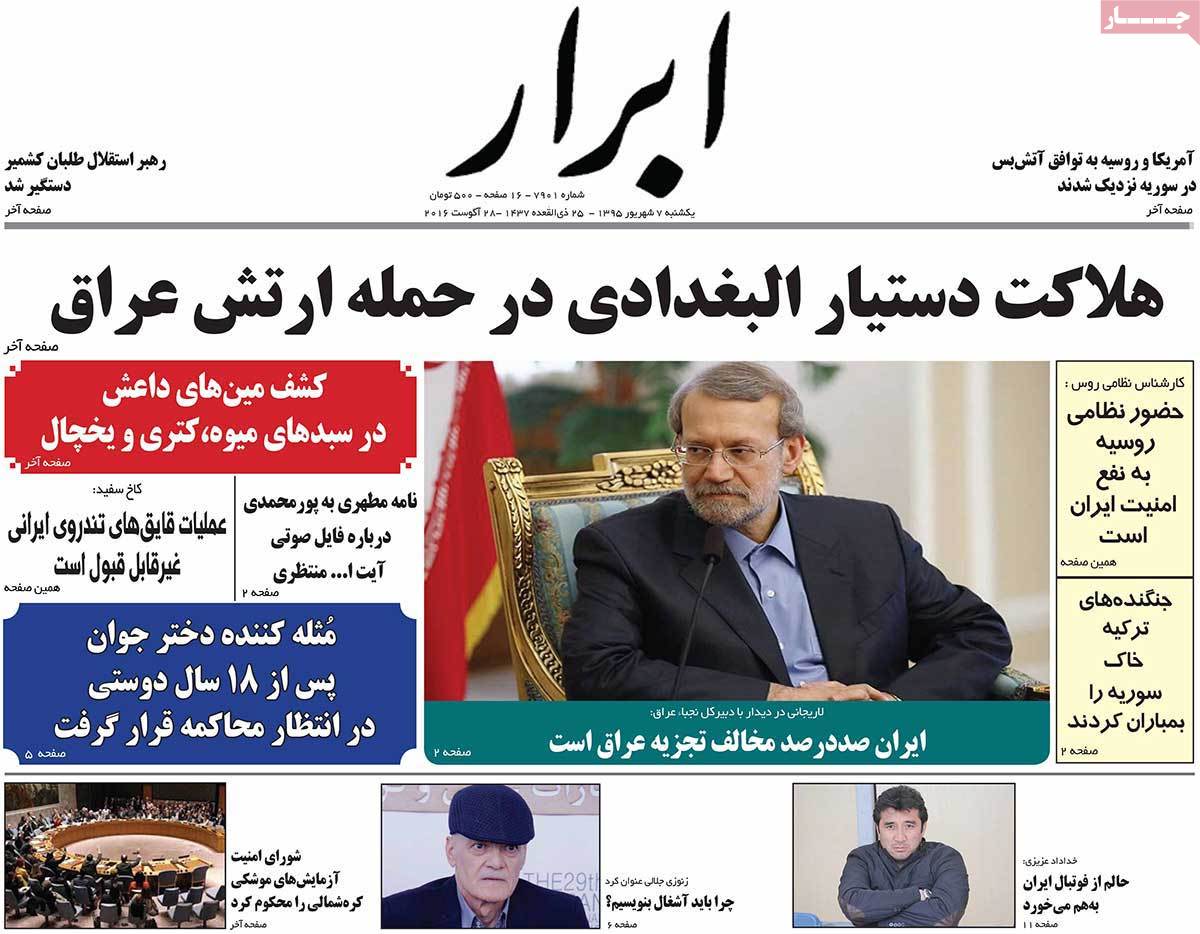
“Saudi Arabia has been bombing Yemen for a year and a half now. However, as you can see, they (Saudis) have had no success in this war,” Larijani said during a Saturday meeting with Sheikh Akram al-Kaabi, the secretary general of Hezbollah al-Nujaba, in Tehran.
Al-Nujaba is a major Iraqi Shiite resistance movement, which is fighting Daesh (also known as ISIL and ISIS) terrorists.
Elsewhere in his remarks, he referred to enemies’ plots for partitioning Iraq, saying, “We, just like all sources of emulation in Iraq, absolutely disagree with disintegration of Iraq.”
Larijani further reiterated Iran’s support for the Iraqi government, army and nation and said, “We support you wholeheartedly”.
Sheikh al-Kaabi arrived in the Iranian capital on Friday to discuss the latest regional developments, Iraq in particular, with senior Iranian officials.
The secretary general of al-Nujaba Islamic Movement is planned to attend a press conference at the Tasnim head office in Tehran on August 28 to give more details about the latest gains of the Iraqi army and resistance forces in their military campaign against the Daesh terrorist group in areas near Mosul and other militant-held areas.
The Iraqi army is gearing up for a major offensive in late September to purge Daesh from Mosul, the country’s second largest city. Iraqi forces have managed to wrest control of several areas in the southern parts of the city.
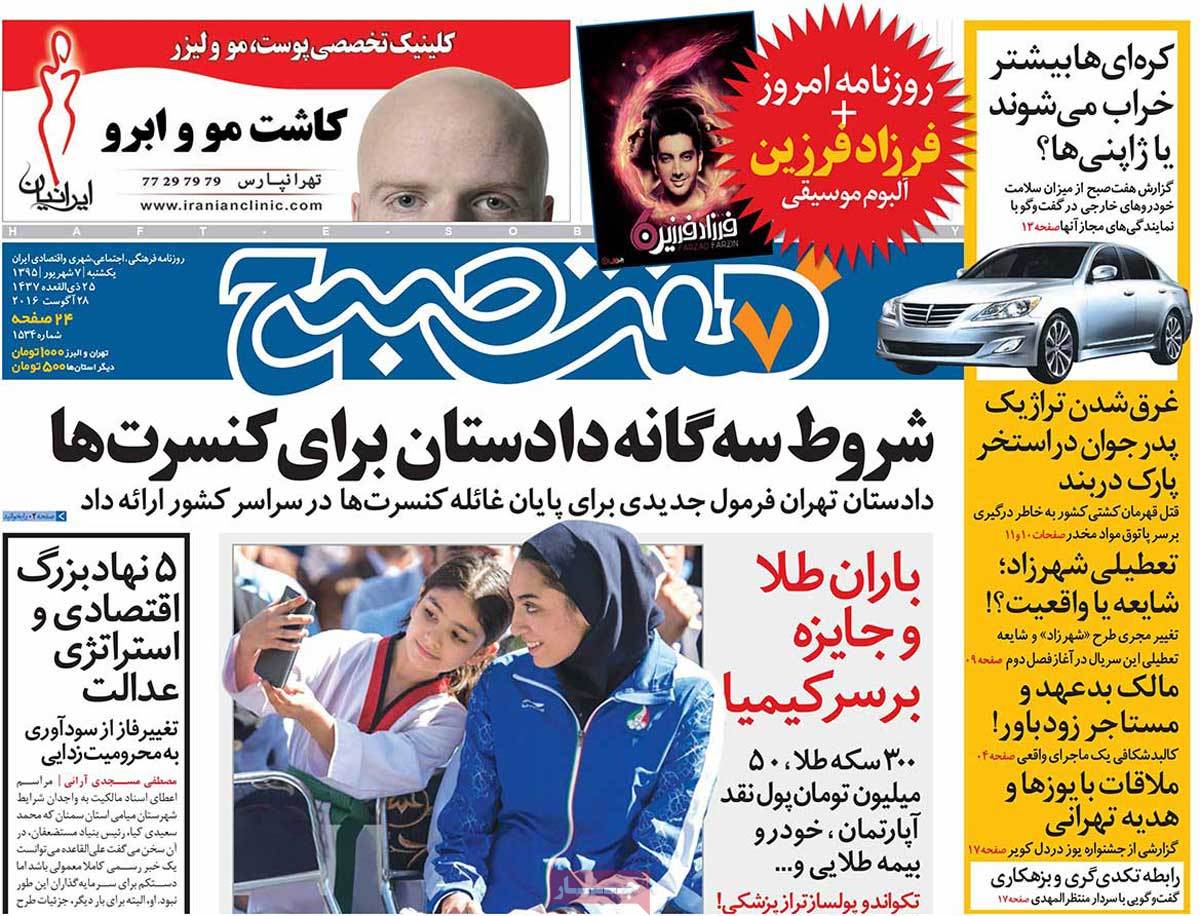
Although Alizadeh had won a Bronze medal, the Iranian Ministry of Sports and Youth Affairs vowed to give her 300 gold coins, almost $94,000, which is the same reward it gives to gold medallists.
Also upon her arrival in Karaj, her hometown near the capital city of Tehran, the Governor-General of Alborz Province gave her an apartment as a reward for the historic medal she won.
The City Council further rewarded her with $14,000 in cash in a ceremony held in Karaj, according to a report by Asr-e Iran.
She also received an Iranian-made car from a sponsor, which is reported to be worth $10,000.
Earlier, President Hassan Rouhani had hailed Alizadeh as a young lady who became the symbol of the presence of Iranian women in the games.
The 18-year-old athlete made Iranian history after she won an Olympic bronze medal in the -57kg class of taekwondo competitions.
The principled agreement on the establishment has been reached, the CBI said in its report, adding that the process of implementing the agreement is underway by the banks that have made their requests.
The news has been published in the fourth report of the CBI activities since the beginning of the new Iranian calendar year, IRNA reported.
On August 23, the national Government Week began in Iran. During the week, the Iranian government is giving reports on its activities in the country in different areas.
The latest report of the CBI included the achievements gained in the banking permits, combat against money laundering, banking studies and regulations in the past year.
After the nuclear deal, known as the Joint Comprehensive Plan of Action (JCPOA), finalized between Iran and the six world powers on July 14, 2015, Iran’s international banking relations grew.
“Continuation of providing services to the people of the region by India’s government and eliminating the people’s feeling of discrimination and deprivation compared to other Indian citizens can be decisive in creating sustainable security in Kashmir,” Shamkhani said Saturday in a meeting in New Delhi with the South Asian country’s National Security Adviser Ajit Doval.
He underlined the need for New Delhi to exercise self-restraint in the face of the recent events in Indian-administered Kashmir.
Clashes in Kashmir erupted on July 9, when thousands of protesters thronged streets in towns across the restive region to condemn the death of a popular secessionist leader at the hands of Indian security forces.
The violence has been among the worst in the region in years. Indian forces have shot dead tens of people since July 9, while thousands of others have been injured.
Security forces have been accused of using disproportionate force against civilians, a charge the state government has vowed to investigate.
Kashmir is divided between India and Pakistan, and Indian-administered Kashmir has long been troubled, plagued by the aftershocks of an armed insurgency born in the late 1980s.
Elsewhere in his remarks in the Saturday meeting, Shamkhani called for reviving joint collaborations between Iran, India and Russia on regional security, especially in the fight against terrorism and helping to enhance security and stability in Afghanistan.
He also described his Friday meeting with Indian Prime Minister Narendra Modi as a “very positive and constructive” one promising new bright horizons in the bilateral ties between Tehran and New Delhi.
Doval, for his part, highlighted the cultural commonalities between the two countries and the capacities for bilateral cooperation in cyberspace, saying India is ready for establishing strategic ties with Iran in the two areas.
He also said New Delhi welcomes enhancement of strategic dialogue between Iran, India, Russia and China on security, political and economic issues.