Tuesday, December 23, 2025
Home Blog Page 4315

Iran, Italy Mull Human Rights, Anti-Terror Cooperation

larijani

Chief of the Iranian Judiciary’s Human Rights Council Mohammad Javad Larijani, who is in Rome for the third round of talks on Iran-Italy judicial cooperation, held a meeting with President of the Italian Senate Pietro Grasso.

Hailing Iran-Italy human rights talks for focusing on serious and specialized topics without any prejudices, Larijani said Iranian judges have managed to provide Italians with first-hand judicial experiences via these talks.

He further voiced Tehran’s support for an inclusive and global fight against terrorism, dismissing as “unconstructive” any move to classify terrorists as “good and bad”.

Larijani also welcomed the idea of mutual cooperation in battling terrorism through the exchange of intelligence, saying such close ties could spread to the war on drugs as well.

For his part, Grasso expressed Italy’s eagerness to strengthen relations with Iran in all fields, and lauded the human right and judicial talks with Iran as effective.

The Italian senator then warned of the serious threats that terrorism poses to Europe, stressing that cooperation with Iran could be quite useful in tackling terrorism.

Italy needs to promote judicial, policing and intelligence cooperation for more effective fight against terrorism, he added.

The human rights negotiations between Iran and Italy began two years ago. In November 2014, a conference was held on Italy’s Sicily island, titled “Protection of Human Rights in Iran and Italy’s Criminal Justice System”.

Pan-Armenian Games Kick Off in Tehran

Armenian Olympics

The 48th edition of the Armenian Olympics commenced at Tehran’s Ararat Sports Complex on Tuesday, September 13. Around 800 Armenian athletes from Iran, Armenia and Georgia compete in the games in 9 fields.


Iran Wins 3 Awards at MoonDance Film Festival

film


‘The Sea and the Flying Fish’ directed by Mehrdad Ghafarzadeh won the Best Feature Film award alongside titles from Canada, Germany, Russia and the US.

The film is about a young innocent deaf and dumb inmate of a correctional camp who communicates through painting. ‘The Sea and the Flying Fish’ has previously won the Best Actor award at Spain’s film festival.

‘Atlan’ directed by Moein Karimoddini won the Best Feature Documentary Film award at the festival. The film relates the story of a horse-trainer, Ali Golnejad and his beloved horse, Ilhan, which is supposed to bring much success and glory to the family.

In the short film category, ‘The Salt Man’ directed by Sajjad Mousavi won an award along with other titles from the US, Ireland, France, and Kazakhstan.

MoonDance International Film Festival, popularly known as the “American Cannes”, is one of the premier venues for the exhibition and promotion of feature and short films in the US, and one of the leading indie film festivals in the world.

The 17th edition of the festival took place on September 4 and 5, 2016.

Iran’s Culture, Poets and Dishes in Eyes of Non-Iranian Persian Language Learners

Foreign Students

Saadi Foundation recently hosted 250 Persian language learners from 41 countries who became surprised to find out the distance between the preconceptions formed in their minds by foreign media outlets and the truth that was revealed to them by visiting Iran, learning its language, and tasting its national dishes.

Basically, when you pay a visit to a foreign country, you become familiar with its language and lifestyle; however, when it comes to Iran, things get slightly confusing as we are speaking of two types of Iran; one that is depicted maliciously by the media outlets and the other is what foreign visitors of the country see for themselves.

Now, at a time when the Persian language and Iranian culture are falling victim to deceitful rhetoric, Saadi Foundation has come to the rescue by running courses for foreigners to learn Persian language.

16-8-22-125652photo_2016-08-22_12-59-39According to a report by Khabar Online, as translated by IFP, this foundation recently invited 250 of Persian language learners from 41 countries to come and stay for a month in Iran. Many of them study in the fields that are somehow related to the Persian language.

1- Afshin Mousavi, born from an Iranian father, is a Persian language learner who spends the nights at the dormitory of Allameh Tabataba’i University together with other language learners.

“I often read poems and among contemporary poets I really like Fereydoon Moshiri,” Mousavi said, adding that Ghormeh Sabzi is his favourite Iranian dish.

Asked about his motivation for learning Persian language, he said, “I want to be the best Iranologist of Bulgaria.”


16-8-22-124242photo_2016-08-22_12-48-542- When you first meet Zenoorin Heydar Alavi, who has recently received his Ph.D. in Persian literature from University of New Delhi, you become surprised by his mastery over Persian language. Back at home his family call him Saadi Mustafa.

“The main reason that I picked Persian language was because I am rooted in a sophisticated, educated family, so I thought it would be great if I take this path,” he noted.

Alavi said that he had a great time in Iran and added, “I’ve had so many good experiences that I am determined to gather them up in the form of an itinerary when I return to my country.”

He knows the Iranian contemporary poet Abdoljabbar Kakai and is also familiar with some renowned traditional poets like Hafez, Saadi, Attar of Nishapur, Sana’i and Abusa’id Abolkhayr.

Alavi cited a poem from Hafez about love that says, “The radiance of your goodness manifested in eternity, love appeared and set the entire world on fire.”

To prove that his liking for Iran is not limited to Iranian literature, Alavi referred to Chelow Kabab as his favourite food among Iranian national dishes.


16-8-22-12367photo_2016-08-22_12-42-193- Isabella is another Persian language learner who has come all the way from Armenia to experience the richness of Iranian culture. She has studied orientalism in Yerevan State University for four years.

“I have come to see Iran with my own eyes and improve my language skills in the meantime,” she said.

Isabella and a few other language learners have plans to visit Isfahan. She admired the works of Iran’s traditional poets such as Saadi, Hafez and Khayyam and added, “I know Forough Farrokhzad and Parvin E’tesami pretty well and I can cite by heart one of Forough’s poems named Wind-up Doll.”


16-8-22-123421ema4- Emma from England is another Persian language learner who, with a warm smile and particular sweet accent, explains why she likes to learn Persian language.

“I graduated from the University of Oxford in ancient history of the Middle East. I have a penchant for Iran’s ancient history and Persian language.”

She expressed enthusiasm to visit Iran as a tourist after she finished the course. She referred to Abgoosht as the best Iranian national dish.


16-8-22-123825photo_2016-08-22_12-44-365- Ilshad from Russia, who is visiting Iran for the first time, expressed interest in Persian literature and noted, “The beauty and sweetness of Persian language encouraged my interest in it.”

He appreciated the works of contemporary, eminent Iranian writers such as Houshang Moradi Kermani and Sadegh Hedayat.

“I have read Hedayat’s The Blind Owl,” he stressed.

Ilshad expressed the hope that he would visit Iran again because he has enjoyed his trip a lot.

“I like Iranian cuisine including Chelow Kabab and many other types of kebab,” he noted, adding that Iranian sweets are delicious too.

Learners from Pakistan, Germany, Turkey, Georgia, Armenia and Russia have made up a lion’s share of the 250 Persian language learners.

A Look at Iranian Newspaper Front Pages on September 14

Iran Newspaper front pages

Newspapers on Wednesday covered the remarks made by the Leader of the Islamic Revolution Ayatollah Seyyed Ali Khamenei in a Tuesday meeting with members of Iran’s Statistics Organization and the census personnel.

They also discussed the former IRGC Commander Yahya Rahim Safavi’s call for easing tensions with Saudi Arabia.

The letter of apology by Saeid Mortazavi, the former prosecutor-general of Tehran who allegedly had a role in the deaths of three Iranian protesters during the 2009 Iranian election protests, also remained a top story today, especially among reformist newspapers. Mortazavi is now being tried for what he did at that time.

The above issues, as well as many more, are highlighted in the following headlines:


Abrar:

1- IRGC Major General Rahim Safavi: We Never Should Move towards Tension with Saudi Arabia

2- Chinese Ambassador to Iran: Tehran and Beijing Will Exchange Military Delegations in Near Future

A Look at Iranian Newspaper Front Pages on September 14


Abrar-e Eqtesadi:

1- After 5 Months, Nothing Heard from Airbus Deal!

2- $2.9bn Jump in Iran’s Oil Income (Thanks to Export of Gas Condensates)

3- Records Broken in Export of Iran’s Oil to Japan

A Look at Iranian Newspaper Front Pages on September 14


Afarinesh:

1- Ayatollah Rafsanjani: We Hope Mischievous Acts that Prevented Iranian Pilgrims from Going on Hajj Are Corrected for Next Year

2- Fox News: Iran’s Serious Warning to US Spy Aircraft in Persian Gulf

A Look at Iranian Newspaper Front Pages on September 14


Aftab-e Yazd:

1- Hardliners Consider Foreign Investment as Heresy: MP

2- Hard-Line Lawmaker: I Can Gain Support of No More than 12 MPs in Raising Anti-Gov’t Plans

A Look at Iranian Newspaper Front Pages on September 14


Amin:

1- Government Spokesman: Issue of FATF Should Be Discussed in Supreme National Security Council, Not through Friday Prayers Tribune

A Look at Iranian Newspaper Front Pages on September 14


Arman-e Emrooz:

1- Vice-Speaker: If It Wasn’t for Leader’s Support, Iran’s Nuclear Negotiating Team Could Have Been Executed!

2- Kahrizak’s Letter of Repentance! [The letter of apology written by Saeid Mortazavi, the former prosecutor-general of Tehran who allegedly had a role in the deaths of three Iranian protesters during the 2009 Iranian election protests.]

  • Zibakalam: World Could Have Been More Beautiful If You Would Apologize in 2009
  • Mortazavi’s Apology Is a Confession: Expert

3- Iran’s Oil Cargo Is Lost! Official Says Whereabouts of One of Iran’s Fuel Oil Cargos Is Not Clear

A Look at Iranian Newspaper Front Pages on September 14


Asrar:

1- Leader: Ageing Population Is One of the Incurable Problems

2- US State Dept.: Kerry and Zarif Are in Touch; We Expect Iran to Use Its Influence on Hezbollah to Support Syria Ceasefire

3- Iran Ready to Buy Nuclear Reactor from Japan: Salehi

4- Government Spokesman: We Won’t Sign a Deal that Doesn’t Serve Iran’s National Interests

A Look at Iranian Newspaper Front Pages on September 14


Ebtekar:

1- Iran’s DM: We’re Worried about Terrorist Movements Being Armed and Equipped Once Again

A Look at Iranian Newspaper Front Pages on September 14


Emtiaz:

1- Annual Shortage of Water in Iran Stands at 5.7bcm

A Look at Iranian Newspaper Front Pages on September 14


Etemad:

1- Leader Calls for Investigation into Source of Differences between Governments’ Statistics

2- CBI Governor: Dealers Made an $80bn Profit out of Anti-Iran Sanctions

A Look at Iranian Newspaper Front Pages on September 14


Ettela’at:

1- President: Regional Issues Should Be Resolved through Dialogue

2- Syrian Army Shoots Down Zionist Regime’s F-16

3- Fourth Nuclear Power Plant Will Be Built in Makran [in southeastern Iran]: Salehi

A Look at Iranian Newspaper Front Pages on September 14


Farhikhtegan:

1- Leader: It Is Wrong to Continue Policies of Population Control

2- Robert Fisk: Instead of Warmongering, Saudi Arabia Should Better Pay Wages of Its Labourers

A Look at Iranian Newspaper Front Pages on September 14


Iran:

1- Leader Underlines Need for People’s Serious Participation in Census

2- CBI Governor: Iran Now Has Direct Trade with Foreign Companies

A Look at Iranian Newspaper Front Pages on September 14


Jame Jam:

1- Leader: Statistical Differences Are a Big Scourge

A Look at Iranian Newspaper Front Pages on September 14


Javan:

1- Differences in Statistics Announced for Unemployment, Inflation, and Economic Growth Rates Leads to People’s Mistrust: Leader

2- Subcontinent Expert: US Will Stay in Afghanistan to Control Iran, Russia, and China

A Look at Iranian Newspaper Front Pages on September 14


Jomhouri Eslami:

1- Mine Projects Worth more than $8bn Restarted

2- Global Human Right Organizations Call for Cessation of Oppression in Bahrain

A Look at Iranian Newspaper Front Pages on September 14


Kayhan:

1- Leader: Resistance Economy Is Real Cure for Iran’s Problems

2- Clinton Lacks Required Physical and Brain Conditions for Being a President: US Medical Association

A Look at Iranian Newspaper Front Pages on September 14


Khorasan:

1- Manipulation of Statistics Is a Deadly Sin: Leader

2- Kerry: Transfer of MKO Elements to Europe Was a Major Diplomatic Achievement for US

3- IRGC Navy Commander: We Negotiate with US in Gulf of Mexico


A Look at Iranian Newspaper Front Pages on September 14


Resalat:

1- Leader: Knowledge-Based Economy Is the Way of Iran’s Progress

2- Trump: Afghanistan Is Safer than Some US States

3- IRGC General Salami: We Never Stop Developing Our Power

4- Zionist Regime [Israel]’s Support for Nusra Front Revealed: Lieberman Is Committed to Supporting Nusra Front


A Look at Iranian Newspaper Front Pages on September 14


Setareh Sobh:

1- Vice-Speaker: Before JCPOA, We Couldn’t Import Medicine for Our Patients

2- Inflation Rate to Be Increased to More than 10%: Chamber of Commerce

3- Italy’s Most Well-Known Music Organization La Scala in Iran


A Look at Iranian Newspaper Front Pages on September 14


Shahrvand:

1- Rio Champions: Iran’s Paralympics Team Has Won 2 Gold, 2 Silver, and 1 Bronze Medals in Past 2 Days

2- Megamalls Swallowing Tehran: Councillor Warns about Tehran’s Fate in Next 10 Years


A Look at Iranian Newspaper Front Pages on September 14


Shargh:

1- IRGC General’s Recommendation for Managing Regional Condition: We Should Tolerate Saudis

2- Reactions to Mortazavi’s Letter of Apology: We Won’t Forgive

  • Jomhouri Eslami Newspaper Calls for Prosecution of Ahmadinejad over 2009 Post-Election Crimes
  • Kahrizak Issue Can’t Be Resolved with an Apology: MP
  • Mortazavi Should Be Executed: Cleric


A Look at Iranian Newspaper Front Pages on September 14


Vatan-e Emrooz:

1- Leader: Kerry Worried about Lives of MKO Terrorists: US Transfers Terrorists from Iraq

2- Philippines’ President Calls for Deportation of Americans: Ultimatum to US Military

A Look at Iranian Newspaper Front Pages on September 14

IRGC Navy Commander Warns US to Leave Persian Gulf

Commander Rear Admiral Ali Fadavi

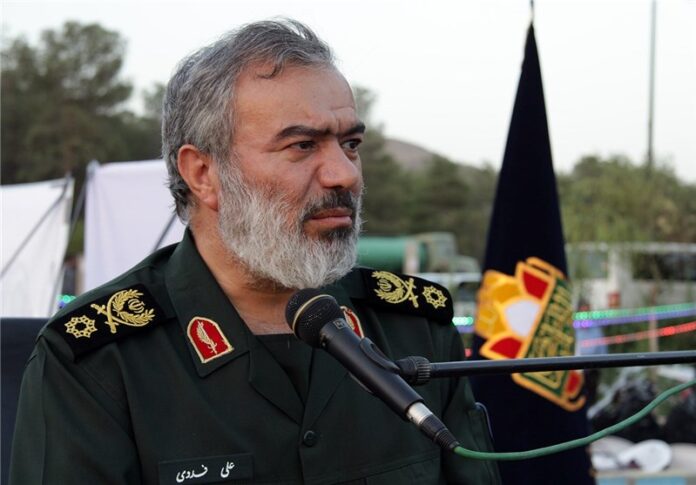
“What has been in place in the Persian Gulf for years and has not changed is the powerful presence and intelligence supremacy (of the IRGC) in the Persian Gulf and the Strait of Hormuz,” Rear Admiral Ali Fadavi said in a ceremony held in the southern port city of Bushehr on Tuesday.

He further denounced the US naval presence in the region, saying that over the past 28 years, the US has been the cause of insecurity in the regional waters.

The Iranian commander emphasized that in order to prevent any problems in the “important Persian Gulf region”, the Americans had better leave the waters in a dignified way.

The Islamic Republic of Iran has always been against the presence of foreign powers in the Persian Gulf.

Back in December 2015, Leader of the Islamic Revolution Ayatollah Seyed Ali Khamenei underlined that security of the Persian Gulf region comes within the purview of the regional countries alone, and dismissed the US claim of seeking security in the region.

“The Persian Gulf’s security relates to the countries of the region which have common interests, and not to the US. So, the security of the Persian Gulf region should be provided by the countries of this region itself,” the Leader said at the time.

Iran, G5+1 FMs May Hold Talks in New York: Russian Diplomat

iran-nuclear

There is a strong possibility that the foreign ministers of Iran and the Group 5+1 (Russia, China, the US, Britain, France and Germany) will meet on the sidelines of the 71st Session of the United Nations General Assembly in New York, Kabulov said on Wednesday.

He said arrangements for the meeting will be discussed in talks in New York between Iranian Foreign Minister Mohammad Javad Zarif and his Russian counterpart, Sergey Lavrov.

The likely ministerial meeting of Iran and the Group 5+1 would focus on the implementation process of the nuclear agreement reached between the two sides back in July 2015, known as the Joint Comprehensive Plan of Action (JCPOA), according to Russian media reports.

The 71st Regular Session of the UN General Assembly began at the UN headquarters on Tuesday, September 13.

While the JCPOA came into force in January, some Iranian officials complain about the US failure to fully implement the accord.

Back in March, Leader of the Islamic Revolution Ayatollah Seyed Ali Khamenei said Americans have yet to fulfill what they were supposed to do as per the nuclear deal.

Iran still has problems in its banking transactions or in restoring its frozen assets, because Western countries and those involved in such processes are afraid of Americans, the Leader said at the time, criticizing the US for its moves to prevent Iran from taking advantage of the sanctions removal.

Iran Denies Report of US Contact on Syria

bahram-qassemi-2

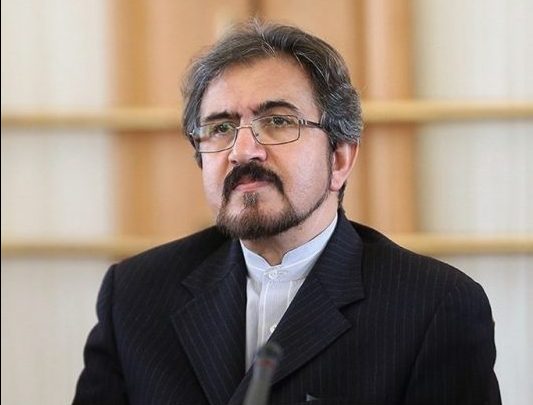
The denial came after media stories about coordination between Iranian Foreign Minister Mohammad Javad Zarif and US Secretary of State John Kerry on a ceasefire in Syria that took effect on Monday.

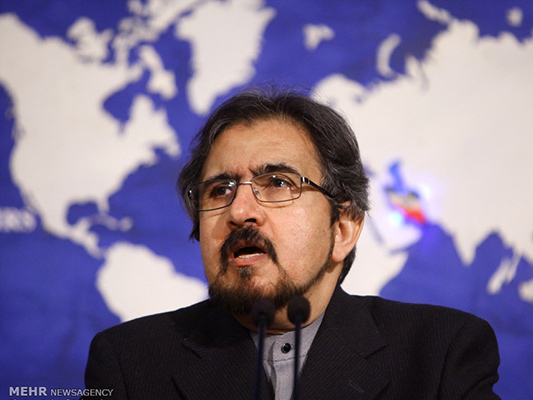
“The Islamic Republic of Iran and the United States of America have not basically had any contact, consultation or talks regarding the regional issues,” the spokesman said on Tuesday.

On Monday evening, a nationwide ceasefire brokered by the US and Russia came into effect in Syria.

The agreement’s initial aims include allowing humanitarian access and joint US-Russian targeting of extremist groups, which are not covered by the agreement.
Syria has been gripped by foreign-backed militancy since March 2011. UN officials estimates that over 400,000 people have been killed in the conflict, which has furthermore displaced over half of Syria’s pre-war population of about 23 million.

Iran’s FM Zarif: Let Us Rid the World of Wahhabism

Mohammad Javad Zarif

IRNA covered the op-ed by changing its original title into “Majority of Atrocities Committed in Islam’s Name Have Their Roots in Wahhabism”.

Here’s the full text of the original article:


Public relations firms with no qualms about taking tainted petrodollars are experiencing a bonanza. Their latest project has been to persuade us that the Nusra Front, Al Qaeda’s affiliate in Syria, is no more. As a Nusra spokesman told CNN, the rebranded rebel group, supposedly separated from its parent terrorist organization, has become “moderate.”

Thus is fanaticism from the Dark Ages sold as a bright vision for the 21st century. The problem for the P.R. firms’ wealthy, often Saudi, clients, who have lavishly funded Nusra, is that the evidence of their ruinous policies can’t be photoshopped out of existence. If anyone had any doubt, the recent video images of other “moderates” beheading a 12-year-old boy were a horrifying reality check.

Since the terrorist attacks of Sept. 11, 2001, militant Wahhabism has undergone a series of face-lifts, but underneath, the ideology remains the same — whether it’s the Taliban, the various incarnations of Al Qaeda or the so-called Islamic State, which is neither Islamic nor a state. But the millions of people faced with the Nusra Front’s tyranny are not buying the fiction of this disaffiliation. Past experience of such attempts at whitewashing points to the real aim: to enable the covert flow of petrodollars to extremist groups in Syria to become overt, and even to lure Western governments into supporting these “moderates.” The fact that Nusra still dominates the rebel alliance in Aleppo flouts the public relations message.

Saudi Arabia’s effort to persuade its Western patrons to back its short-sighted tactics is based on the false premise that plunging the Arab world into further chaos will somehow damage Iran. The fanciful notions that regional instability will help to “contain” Iran, and that supposed rivalries between Sunni and Shiite Muslims are fuelling conflicts, are contradicted by the reality that the worst bloodshed in the region is caused by Wahhabists fighting fellow Arabs and murdering fellow Sunnis.

While these extremists, with the backing of their wealthy sponsors, have targeted Christians, Jews, Yazidis, Shiites and other “heretics,” it is their fellow Sunni Arabs who have been most beleaguered by this exported doctrine of hate. Indeed, it is not the supposed ancient sectarian conflict between Sunnis and Shiites but the contest between Wahhabism and mainstream Islam that will have the most profound consequences for the region and beyond.

While the 2003 American-led invasion of Iraq set in motion the fighting we see today, the key driver of violence has been this extremist ideology promoted by Saudi Arabia — even if it was invisible to Western eyes until the tragedy of 9/11.

The princes in Riyadh, the Saudi capital, have been desperate to revive the regional status quo of the days of Saddam Hussein’s rule in Iraq, when a surrogate repressive despot, eliciting wealth and material support from fellow Arabs and a gullible West, countered the so-called Iranian threat. There is only one problem: Mr. Hussein is long dead, and the clock cannot be turned back.

The sooner Saudi Arabia’s rulers come to terms with this, the better for all. The new realities in our region can accommodate even Riyadh, should the Saudis choose to change their ways.

What would change mean? Over the past three decades, Riyadh has spent tens of billions of dollars exporting Wahhabism through thousands of mosques and madrasas across the world. From Asia to Africa, from Europe to the Americas, this theological perversion has wrought havoc. As one former extremist in Kosovo told The Times, “The Saudis completely changed Islam here with their money.”

Though it has attracted only a minute proportion of Muslims, Wahhabism has been devastating in its impact. Virtually every terrorist group abusing the name of Islam — from Al Qaeda and its offshoots in Syria to Boko Haram in Nigeria — has been inspired by this death cult.

So far, the Saudis have succeeded in inducing their allies to go along with their folly, whether in Syria or Yemen, by playing the “Iran card.” That will surely change, as the realization grows that Riyadh’s persistent sponsorship of extremism repudiates its claim to be a force for stability.

The world cannot afford to sit by and witness Wahhabists targeting not only Christians, Jews and Shiites but also Sunnis. With a large section of the Middle East in turmoil, there is a grave danger that the few remaining pockets of stability will be undermined by this clash of Wahhabism and mainstream Sunni Islam.

There needs to be coordinated action at the United Nations to cut off the funding for ideologies of hate and extremism, and a willingness from the international community to investigate the channels that supply the cash and the arms. In 2013, Iran’s president, Hassan Rouhani, proposed an initiative called World Against Violent Extremism, or WAVE. The United Nations should build on that framework to foster greater dialogue between religions and sects to counter this dangerous medieval fanaticism.

The attacks in Nice, Paris and Brussels should convince the West that the toxic threat of Wahhabism cannot be ignored. After a year of almost weekly tragic news, the international community needs to do more than express outrage, sorrow and condolences; concrete action against extremism is needed.

Though much of the violence committed in the name of Islam can be traced to Wahhabism, I by no means suggest that Saudi Arabia cannot be part of the solution. Quite the reverse: We invite Saudi rulers to put aside the rhetoric of blame and fear, and join hands with the rest of the community of nations to eliminate the scourge of terrorism and violence that threatens us all.

Iran’s Rahimi, Ranjbar Win Gold, Bronze at Individual Recurve

gholamreza-rahimi

Rahimi beat top-seeded teammate Ebrahim Ranjbar in a five-set semifinal then shot two perfect 30-point sets to claim recurve men’s open Paralympic gold ahead of Netsiri.

“The match was good, we’re going to do our best and be stronger. We are all good, powerful men and I like it,” said Rahimi.

“The first thing that was important for me is that my flag went up in the Paralympic arena. That was my goal.”

Rahimi, ranked fifth after the ranking round, was the only athlete to shoot more than one perfect set during the eliminations – and both came in the final against Netsiri.

Ranjbar defeated Luciano Rezende of Brazil 7-1 and won the bronze medal.