Wednesday, January 7, 2026
Home Blog Page 4315

Europe Not Sole Option for Trade: Iranian Minister

sigmar-gabriel

Speaking to reporters in the city of Semnan, 220 kilometers (136 miles) east of the capital Tehran, on Tuesday, Tayyebnia said he has reminded his German counterpart in a Monday meeting that “Iran has great potential in various economic arenas, and is not seeking Europe and European economy alone.”

He also underlined that Iran aims to boost exports and investment at all levels.

On Monday, Germany’s vice-chancellor and economy minister, Sigmar Gabriel, arrived in Tehran with a big economic delegation and signed a number of agreements with Iran.

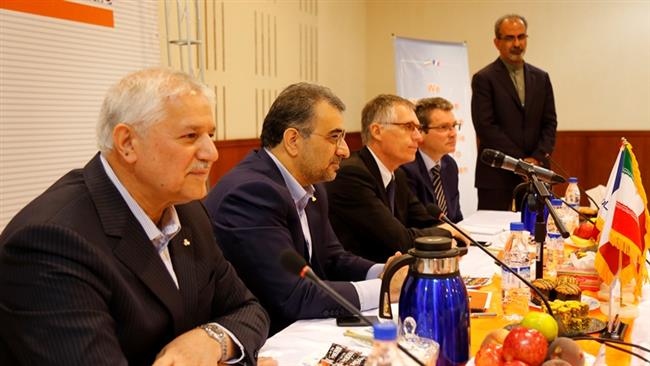
In an address to Iran-Germany joint trade meeting, Gabriel expressed Berlin’s readiness to make more commitments in its trade interaction with Tehran in order to assure Iran’s market that German businesses are not only after making profit.

Leader Urges Iran’s Police to Keep Pace with New Technologies

leader

In a meeting with high-ranking police commanders and officials in Tehran on Tuesday, Ayatollah Khamenei urged efforts to “enhance the readiness and update the capabilities” of police forces considering the rapid scientific and technological progress in the world.

The gathering was held on the occasion of Iranian Law Enforcement Force Day.

Imam Khamenei further hailed police forces as a pillar of security in the country, stressing that secuirty is the origin of personal peace of mind as well as public and social calmness.

Leader Urges Iran’s Police to Keep Pace with New Technologies


The Leader also called on the police staff to strengthen their resolve, faith, motive and morale in a constant manner.

Iran’s Police Force is in charge of ensuring security in the cities, on the roads and along the borders.

It has a broad range of responsibilities and includes several divisions, including cyber police, border guard police, traffic police, criminal investigation department, and a bureau for compulsory military service affairs.

Leader Urges Iran’s Police to Keep Pace with New Technologies

Thousands of Polish Women Stage ‘Black Monday’ Strikes to Protest Abortion Law

Polish Women

Thousands of Polish women dressed in black boycotted work and took to the streets in protest against a plan to ban abortions.

Without half their workforce, government offices, universities and schools in 60 cities across Poland closed their doors.

For the day of action, dubbed “Black Monday”, women donned dark-coloured clothes in a symbol of mourning for the loss of reproductive rights they fear.

Poland already has one of Europe’s most restrictive abortion laws and opinion surveys show very little support for an even stricter law, despite the nation’s deep Catholicism and conservative political direction.

Under the existing law, a hard-won compromise in force since 1993, abortion is banned except in cases where the woman’s life is in danger, the fetus is irreparably damaged or the pregnancy results from rape or incest.

The new proposal, now being examined by a parliamentary commission, would make all abortions illegal, even in cases of rape or when the woman’s life is at risk, with prison terms of up to five years for women seeking abortion and doctors who perform them, as reported by The Independent.

The proposal for the stricter law came from an anti-abortion citizens’ initiative that had gathered 450,000 signatures in this nation of 38 million, and is supported by the church. The conservative ruling party, Law and Justice (PiS), which has a majority in parliament, includes supporters of the proposal but it’s not clear if there are enough to push it through.

Thousands of Polish Women Stage 'Black Monday' Strikes to Protest Abortion Law

Critics say that the new rules would cast suspicion on those who suffer miscarriages. They also say doctors could be put off carrying out routine procedures on pregnant women for fear of being accused of facilitating an abortion.

One group of protesters on Monday blocked the entrance to the central government in Warsaw and chanted: “We want doctors, not missionaries!”

They held posters emblazoned with the message: “A government is not like a pregnancy – it can be terminated.”

Tehran’s Nature Bridge Receives Aga Khan Architecture Award

tabiat-bridge

Nature Bridge, a pink rubberised park by BIG, Zaha Hadid’s first building in Lebanon, a labyrinthine community centre and a perforated brick mosque, both in Bangladesh, and a library in a Beijing hutong are the winners of the triennial architecture award this year.

The architects of each project will receive a share of a $1 million (£700,000) fund, which makes the Aga Khan Award for Architecture one of the world’s most lucrative architecture prizes.

tabiat-bridgeThe six projects – located in Bangladesh, Denmark, China, Iran and Lebanon – were selected from a shortlist of 19 projects unveiled in May 2016.

They were chosen by a committee including architects Emre Arolat, David Adjaye and Dominique Perrault, and the Aga Khan himself.

Nature Bridge in Tehran was built by Diba Tensile Architecture, Leila Araghian and Alireza Behzadi.

The two-to-three level, 270-metre-long curved pedestrian bridge of varying width has a complex steel structure featuring a dynamic three-dimensional truss. Two continuous deck levels sits on three tree-shaped columns, with a third where the truss meets the column branches.

It was an imaginative leap beyond the basic competition brief of designing a bridge to connect two parks separated by a highway in northern Tehran, without blocking the view to the Alborz Mountains.

tabiat-bridge

The structural elements are based on a latent geometrical order rotated and repeated in three dimensions. The result is a spatial structure large enough to create an inhabitable architectural space, where people congregate, eat and rest rather than just pass through.

Multiple paths in each park were created that would lead people on to the bridge. Seating, green spaces and kiosks encourage people to linger on a site where greenery has been preserved by the minimal footprint of the bridge, whose curve offers a variety of viewing perspectives.

The Aga Khan Award for Architecture was set up by the Aga Khan in 1977 to acknowledge and encourage projects that address the needs of Muslims the world over.

A ceremony will be held for the winners of the 2016 award at the Al Jahili Fort – a World Heritage Site in Al Ain that itself received the Aga Khan Award for Architecture in 2007 following a significant renovation.

Nature Bridge in Tehran; the awarded structure of 2015


US Fears Iran Revolution’s Impact on World: Assad

bashar-assad

Washington is afraid that nations might follow the model of the Islamic Revolution, he told The Tehran Foreign Policy Studies Quarterly.

Ever since World War II, the US has only succeeded in creating challenges to the world and destroying countries, Assad said.

Epicenter of fight against terrorism

The Americans, he added, wanted for the Syrian government to be replaced with a vassal state, which would easily hand the country over to the West.

Had such a scenario materialized, the rights of the Syrian people would have been ignored and the way would have been paved for eventual Western dominance over the Middle East region, he said.

The Islamic Republic has been providing advisory support for Syria’s defense of itself against foreign-backed militancy, which began in 2011.

Referring to an apparent instance of submission to Western demands, Assad said that Saudi Arabia had been told by Western countries to act in line with ethnic divisions in the region.

Riyadh is widely believed to be providing financial and ideological support to the Takfiri terrorists who have been ravaging Syria and Iraq since 2014.

Many Delights and Surprises Await Western Travellers to Iran: New Zealand Academic

john-hearnshaw

John Hearnshaw is Emeritus Professor of Astronomy at the University of Canterbury. He has just returned from a lecture tour in Iran, and has shared his experiences in Stuff website.

Here are excerpts of his remarks, as covered by IRNA:


Many delights and surprises await the western traveller to Iran, the modern-day Persia. I returned from a two-week lecture tour in early September on a journey that took me from Tehran then south to Isfahan, the cultural jewel of Iran. From there I travelled to Saadat Shahr (a small town in the south) and finally to Shiraz and to the nearby ancient ruined city of Persepolis, built by King Darius from about 520 BC but ransacked by Alexander the Great some two centuries later.

History and culture are important in Iran, and an understanding of the various Persian empires stretching back over 2,500 years, including the Qajars throughout the 19th century and the Pahlavis (from 1921 to 1979) and the Islamic Revolution initiated by Ayatollah [Ruhollah] Khomeini in 1979 are important to appreciate this highly sophisticated society.

The first point to note is that Iran is a very safe country to visit; there are no terrorist attacks or muggings, and tourists, though relatively few in number, are everywhere welcomed with a genuine warmth and amazing hospitality.

Shiite Islam is of course the dominant religion in the country […]. All women in public must wear a hijab or scarf […].Travellers to Iran need to be comfortable with this reality before they set out on their travels.


john-hearnshaw


I found Iranians extremely hospitable and charming. They are part of a well-educated society and they are quick to tell you they are not Arabs, in spite of Arab neighbours. Indeed Iran is a surprisingly ethnically uniform country with a long history of Persian culture, in some ways a little like Japan. […]

Another aspect of Persian culture is their universal love of poetry, and with great poets like Hafez, Saadi and Ferdowsi dating back to the middle ages and writing poems about love and wine long before Shakespeare’s time, one can understand why these icons of Persian culture are so revered. I visited the tombs of Hafez and Saadi in Shiraz, and after a lecture at Shiraz University, I was presented with a copy of the Divan of Hafez (he lived 1325-89) containing his poems (fortunately for me with English translations).


john-hearnshaw


Not all aspects of Iran will necessarily delight the traveller. One is the need to take cash such as US dollars or euros. Thanks to Uncle Sam, western credit cards are not used at all. Another is the traffic in Tehran, where most tourists will enter the country. You are far more likely to be driven than drive yourself, but even that is a hair-raising experience. Road rules seem non-existent except for the principle that he who dares first has priority. It’s no wonder that the death rate on the roads is some three times higher per capita than in New Zealand. […]

I experienced many restaurants in Iran. The food was delicious but not very varied. […] No one will go hungry in a Tehran restaurant; typical dishes would be enough food for several people, and the food wastage was colossal. One discovery was a refreshing yoghurt drink called doogh, made from yoghurt, water, salt and mint. It was the best cold drink available […].

The landscape of central Iran which I visited from Tehran in the north to Shiraz in the south was dry, brown, mountainous, treeless and rather bleak. […] I believe it is the cities which fascinate westerners most, especially Isfahan, Shiraz and Yazd.


john-hearnshaw


I visited several universities in Iran and gave eight lectures to students and amateur astronomers. This was good fun, and their ability to understand English was impressive. After each lecture I was mobbed by young people who wanted to take a selfie with me, so that invariably took another hour after each talk. I happily obliged. Then there was the present giving. I came home with 40 kg of luggage, half of it being gifts showered on me at each venue, including books, a brass astrolabe, a decorative hand-painted plate, a woven tablecloth and a wool and silk floor rug. […]

Between a hectic schedule of lectures, interviews, restaurants and meeting young astronomers, one other activity I enjoyed was a day of hiking in the Alborz Mountains just north of Tehran. This was a scenic trail up a rugged rocky path high up Mt Daraband above Tehran. The track was popular for Tehranis at the weekend (a Thursday in Islamic Iran) and I enjoyed high mountain air and cooling off with feet in mountain streams, during a day of walking with a group of young Iranian students.

Envoy Explicates Iran’s Plans to Meet 2030 Agenda Goals

Addressing a general debate of the Second Committee of the 71st Session of the UN General Assembly, held in New York on Monday, Gholamali Khoshroo elaborated on the measures Iran’s government has taken to comply with the 2030 Agenda.

What follows is the full text of the Iranian diplomat’s speech:

In the Name of God, the Compassionate, the Merciful

Mr. Chairman,

At the beginning, I would like to congratulate you and other members of the Bureau for your well-deserved election. You may trust on our full support during your Chairmanship. I would also like to associate myself with the statement made by the Permanent Representative of Kingdom of Thailand on behalf of the Group of 77 and China.

Mr. Chairman,

The Islamic Republic of Iran attaches great importance to the effective implementation of the 2030 Agenda at all levels. We welcome the theme of the Seventy-first General Assembly “the Sustainable Development Goals: a universal push to transform our world”. In the first year of the implementation of the 2030 Agenda, several measures have been taken by the Government in advancing its goals. I would like to mention only a few of them:

The government of the Islamic Republic of Iran pursues a strategic approach towards sustainable development. The National Committee on Sustainable development has determined the responsibility of various ministries and organizations for the follow-up and reporting on SDGs and established the National Network for Sustainable Development for participation of all interested people. National priorities have been set for addressing such major issues as poverty eradication, sustainable management of water and sanitation, renewable energy resources, energy efficiency improvement, climate change, housing, combating desertification, deforestation and dust storm, ensuring health and disaster risk reduction, and management, in a way that nobody and no section of the society is left behind.

At the policy and institutional levels, there have been major actions for the implementation and follow-up of SDGs, adoption of two sets of overall policy guidelines for strengthening resilient national economy and protection of environment. The first Act improves economic growth and promotes social and environmental development. The second Act, enhances protection of environment with strong emphasis on promotion of green economy and low carbon industry; addressing climate change, desertification as well as sand and dust storms; protection of biodiversity and forests and many other issues.

Furthermore, the Sixth National Development Plan addresses implementation of the Agenda 2030 at the national level while the recently adopted country program documents with UN agencies for the period 2017-2021 are inspired by the Agenda.

As a step for the second year of implementation, we intend to submit our voluntary national report for the HLPF 2017. The Islamic Republic of Iran also plans to host an international conference on combating sand and dust storms in line with implementation of the 2030 Agenda.  It is also our intention to ratify the Paris Agreement in 2017.

Mr. Chairman,

Our world is now more complex than it ever was. Extreme poverty, global warming, terrorism and extremist violence, humanitarian crisis, and many other issues call for a more effective United Nations. No single country can meet these challenges on its own. Our aim is to find effective solutions through enhanced cooperation among UN Member States. We know that some progress has been made and we should be inspired by this success. But various grave challenges remain unsolved.

To implement the Agenda 2030, our region particularly confronts severe challenges. It is not only facing common ones such as poverty, land degradation, desertification, water scarcity, hotter climate conditions and continued extensive drought, but also grappling with the scourge of terrorism and extremist violence. Their outcome while exacerbates poverty and environmental destruction, forces governments to spend their limited national resources on fighting insecurity rather than development.

Mr. Chairman,

The implementation of the ambitious objectives of the Agenda should be facilitated by even more ambitious, fully inclusive and non-discriminatory measures. It requires more effective international support and solidarity and the full implementation of SDG 17 particularly through capacity building, technology transfer, trade facilitation and access to financial resources as well as refraining from any form of unilateral or coercive economic, financial or trade measures.

The sustainable development goals demand an integrated and coherent response from the UN system. It should play a critical, effective and coordinating role in strengthening the global partnership for sustainable development. The UN operational activities for development must be enhanced and strengthened to support Member States in their efforts to implement the 2030 Agenda.

Mr. Chairman,

I wish to conclude by expressing our sincere hope that the 2030 Agenda will be instrumental in bringing us together for furthering our collaboration and partnership towards achieving the SDGs. We are confident that, with the spirit of true partnership, cooperation and solidarity, we can transform our commitments into action.

I Thank You.

Iran’s oil exports hit pre-sanctions high

oil-exports

Reuters in a report on Monday quoted unnamed oil market sources as saying that Iran’s total crude oil and condensate sales likely reached around 2.8 million barrels per day (bpd) in September.

The figure nearly matches a 2011 peak in shipments before sanctions were imposed on the country.
The rise was mostly attributed to a rise in shipments of condensate – a type of ultra light oil often produced with natural gas.

Iran, Reuters added, sold 600,000 bpd of condensate for September, including about 100,000 bpd shipped from storage, to meet robust demand in Asia.

September crude exports increased slightly from the previous month to about 2.2 million bpd, the sources added.

Iran, along with Libya and Nigeria, is allowed to produce “at maximum levels that make sense” as part of any output limits in a surprise deal reached last week by the Organization of the Petroleum Exporting Countries (OPEC).

Still, it has surprised the market by ramping up its oil output faster than expected, to 3.63 million bpd in August, according to OPEC, up a quarter from end-2015 since sanctions were lifted in January, Reuters added.

Iran’s exports of oil stood at 2.35 million bpd before the sanctions were imposed against the country in 2011.  The sanctions restricted the country’s oil exports to around 1 million bpd among other economic bans – already described by analysts as the toughest the world has ever seen.  They were lifted in January after a deal that Iran reached with the P5+1 – the five permanent members of the Security Council plus Germany – over the Iranian nuclear energy program became effective.

Iran Says Higher Global Oil Prices Essential

In a telephone conversation with Venezuelan President Nicolás Maduro on Monday, Rouhani commended the stance adopted by Caracas at an extraordinary meeting of the Organization of the Petroleum Exporting Countries (OPEC) in Algeria in favor of maintaining Iran’s oil quota and raising its oil output to pre-sanctions levels.

“All must make efforts so that the committee of experts would take decisions to clear the way for increasing global oil price in the [OPEC] meeting in November,” the Iranian president said, adding that OPEC countries must hold “serious negotiations” with non-OPEC producers in order to increase and stabilize oil prices at international markets.

He also called for expert-level meetings to determine member countries’ oil export quotas.

OPEC members agreed during their extraordinary meeting in Algiers, Algeria, on Wednesday to limit production in an effort to raise the low crude prices. They decided to cut production by 750,000 barrels a day.

Iran Says Higher Global Oil Prices Essential

Iran, however, has been exempted from the decision because of its exceptional situation of having been under sanctions for a number of years.

Since the removal of nuclear-related sanctions targeting its oil industry in February, Iran – which is OPEC’s third largest producer after Saudi Arabia and Iraq – has been boosting production in order to reach previous levels and has rejected calls on the country to freeze production as unfair.

Iran, whose production has reached 3.6 million barrels per day, insists on its right to increase its crude output to around 4.1-4.2 million barrels per day.

OPEC is yet to decide on how much each country should produce during its next meeting in Vienna in November.

Non-OPEC producers including Russia will also be invited to join the deal.


Common Stance of Iran, Venezuela at OPEC

The Venezuelan president, for his part, said Tehran and Caracas have common and coordinated stances on regional and international developments, particularly on OPEC-related issues.

Maduro stressed the importance of increasing the oil prices and expressed hope that the outcome of the Algeria meeting would help stabilize the oil market.

He also called for the expansion of relations with Iran and implementation of new projects.

Iran, Germany Sign Deals to Boost Ties

iran-germany

The German Economy Ministry announced in a statement that several Mittelstand firms, the small-to-medium-sized companies that form the backbone of the economy, had signed the deals with their Iranian partners during a landmark visit to Tehran by Vice Chancellor and Economy Minister Sigmar Gabriel.

On the same front, Reuters reported that Mitsubishi Germany signed a contract to modernize a gas-fired plant, while plant constructor Keller HCW sealed an agreement to build a brickyard in Iran. Others that signed deals in Tehran included SMS group, a builder of steelmaking plants and INTRA industrial solutions, Reuters quoted the German Economy Ministry as announcing in its statement.

The central banks of Iran and Germany also agreed on technical co-operation, Reuters added. There was no detail on the size of the agreed deals.

Gabriel – who is heading a 160-strong business delegation to Tehran – had earlier emphasized that Germany wants to help Iran push ahead with reforms, and promised to remind the United States of its commitment to reduce sanctions against Iran.

This is Gabriel’s second visit to Iran since the country reached a deal in July last year to restrict certain aspects of its nuclear energy activities in return for the removal of some economic sanctions that had been imposed on it for several years.

Industrial giant Siemens AG and automaker Daimler AG are expected to be the first German firms to benefit from opportunities in Iran after the removal of the sanctions, Reuters said. Nevertheless, they are proceeding carefully and only after legal reviews.

The German banking sector has been reluctant to underwrite business deals for fear of falling foul of remaining US sanctions imposed on Iran.