Monday, December 22, 2025
Home Blog Page 4293

Iran Arrests Terrorists on Eastern, Western Borders, Police Chief Says

police

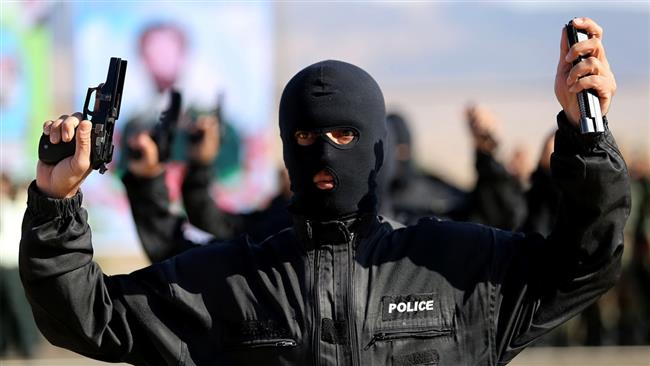
These terrorists were identified, arrested and finally handed over to judicial officials, Brigadier General Hossein Ashtari told reporters on Saturday.

He added that Iran has been boosting security at its borders by providing the country’s security forces with the necessary equipment to fight terrorists.

Ashtari further said Iranian forces had also thwarted plots by Takfiri and Salafi terrorists as well as other groups hostile to the Islamic Republic who sought to illegally cross the borders and stir insecurity in the country.

Iran Arrests Terrorists on Eastern, Western Borders, Police Chief Says

Iranian forces have recently engaged in clashes with terror groups, thwarting their terrorist activities on the border and within the country, arresting several of them and confiscating large amounts of explosives and bomb-making materials.

Iran’s security forces arrested members of an Iraqi-based terrorist group, comprised of two terrorists and their two accomplices, in a village near the Iranian city of Marivan in the western province of Kordestan on September 16 and 18 before they could find a chance to conduct any acts of terror.

The Iranian forces found a number of weapons and ammunition in their hideout.

On September 20, Iran’s Islamic Revolution Guards Corps (IRGC) forces arrested two terrorists of Pakistani nationality in the southeastern Iranian province of Sistan & Baluchestan.

According to a statement by the IRGC, the terrorists had been funded by Saudi Arabia and had received intelligence assistance from spy agencies of enemy states.

Earlier in September, the IRGC announced that it had dismantled a terrorist group, backed by Saudi Arabia and the United States, in the province of Sistan & Baluchestan

Iran’s Intelligence Ministry said in August that it had identified 102 members or supporters of a terrorist group in Kordestan province.

In a statement, the ministry said that the identified individuals belonged to the so-called Tawhid and Jihad Takfiri terrorist group.
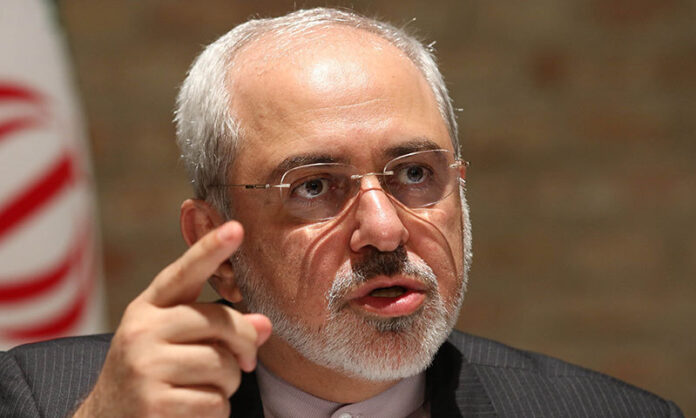

No Country Can Set Conditions for ‘Independent’ Iran: Zarif

Mohammad Javad Zarif

“No one can set conditions for Iran and Iran is an independent country,” Zarif told reporters on Saturday.

He made the remarks in response to an earlier demand by German Economy Minister and Vice Chancellor Sigmar Gabriel who told online weekly magazine Der Spiegel on Friday that Iran could have normal and friendly relations with Germany “only when it accepted Israel’s right to exist.”

Gabriel plans to visit Iran at the head of a large delegation of business executives to discuss possible business deals after last year’s historic nuclear agreement, known as the Joint Comprehensive Plan of Action (JCPOA), between Tehran and the P5+1 group of countries.

As part of the deal, Iran has agreed to limit certain aspects of its nuclear program in exchange for the removal of all nuclear-related sanctions against the Islamic Republic.

He added that Iran has been resisting foreign bullying over the past 37 years “while it is a peace-seeking country.”

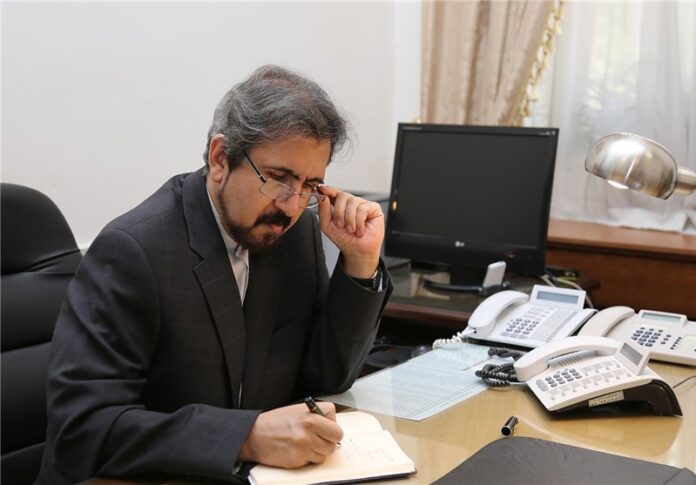
Iran’s Foreign Ministry spokesman Bahram Qassemi also on Saturday rejected Germany’s demand and emphasized that Tehran would never drop support for the Palestinians.

“Ties between the Islamic Republic of Iran and Germany are based on mutual respect and interests, and no precondition would be acceptable in this regard,” Qassemi said.

The Iranian spokesperson added, “The Islamic Republic considers defending the rights of the people of Palestine to be a fixed plank of its foreign policy and will never and under no circumstances forsake the Palestinian cause.”

Germany had been Iran’s biggest European trading partner for decades before a series of sanctions were tightened against the Islamic Republic under the pretext of its nuclear program.

Almost immediately after the conclusion of the deal, the German government sent Gabriel to Tehran at the head of a major delegation to discuss post-sanctions business opportunities in the Islamic Republic.

US Hands Internet Control to ICANN

world-wide-web

Capping a highly politicized debate, the US government on Saturday let go of its remaining grip on the internet, handing control of the net’s address book to a non-profit.

Saying free speech in the virtual realm was at stake, Republican Sen. Ted Cruz and others had tried to block the transfer. But a federal judge denied on Friday their request for an injunction and the scheduled handoff took place at midnight.

The transfer involved the internet’s domain name system, or DNS, which translates the Web addresses you type into your browser, like “cnet.com,” into the numerical language that net-connected computers use to communicate.

Under a plan that’s been in the works for years, the US Department of Commerce shuttled control of the DNS to a non-profit called the Internet Corporation for Assigned Names and Numbers (ICANN), whose multiple stakeholders include technical experts, as well as representatives of governments and businesses.

Cruz and other critics had argued the transfer could lead to authoritarian countries taking control of the internet and eventually censoring content throughout the world.

“Imagine an internet run like many Middle Eastern countries that punish what they deem to be blasphemy,” Cruz said at a congressional hearing on September 14. “Or imagine an internet run like China or Russia that punish and incarcerate those who engage in political dissent.”

“When ICANN escapes from [US] government authority,” Cruz said, “ICANN escapes from having to worry about the First Amendment, from having to worry about protecting your rights or my rights.”

But ICANN said such fears were uninformed, as reported by CNET and covered by Click.

“ICANN is a technical organization and does not have the remit or ability to regulate content on the internet,” the group said prior to the transfer. “That is true under the current contract with the US government and will remain true without the contract with the US government.”

Supporters of the handoff also argued that preventing the transfer could actually lessen US impact on the net.

Russia and China, among others, had backed the idea of empowering an obscure United Nations body called the ITU (International Telecommunications Union) with internet governance duties. That would have given governments control, but it also would have diminished the relative importance of tech powers like the States.

Iran’s Saffron Fuelling Growth of German Food Business

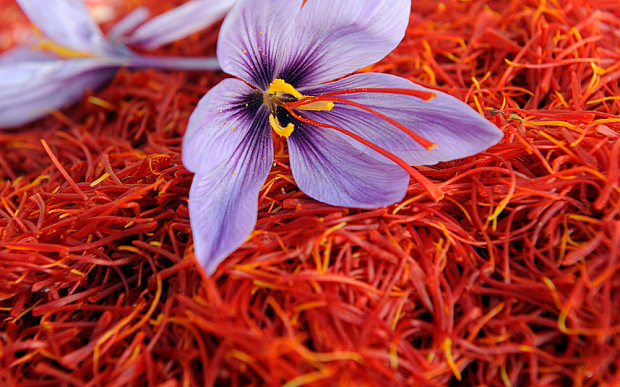
Once cultivated by Persian kings and believed to have healing powers, saffron is now fuelling the growth of a small German business that imports tons of the spice from Iran to make fine food products for sale in Europe and the Persian Gulf.

“We try to capture the soul of saffron and the magic it contains,” says Michael Sabet, an Iranian-German business executive who quit his banking job six years ago to found Miasa GmbH, which is now doubling its revenues every year.

Sabet is one of many German business leaders who see great business opportunities opening up in Iran after the end of sanctions. German Economy Minister Sigmar Gabriel heads to Iran next week with a plane full of executives keen to rebuild trade ties.

“Germany has always had a good relationship with Iran and I think it will continue to expand,” Sabet said. “I hope the end of sanctions will allow exports to rise and have a positive effect on the import business as well.”

Miasa delivers large quantities of high quality saffron to industrial users, but also produces 20 different products ranging from saffron-infused sea salt, honey, rice and even coffee that are sold via the company’s website or at luxury stores in Berlin.

It also produces a liquor infused with elderberry, lychees and saffron that sells for nearly 40 euros ($44.90) a bottle, and even comes in a non-alcoholic version for sale to Muslim countries, as reported by Reuters and covered by Fars.

Sabet says the business is growing fast given increasing demand for specialty “fine foods,” the rise of gourmet cooking shows and the increasing popularity of Middle Eastern cooking. Sweden is one of the biggest consumers of saffron because the spice plays a key role in Christmas baked goods, he said.

In the Persian Gulf, more consumers are also looking for packaged products such saffron rice, he said.

Initially Sabet tried to grow saffron – which comes from the flower of the crocus plant – in Germany’s Black Forest, but soon realised the yield per plant was far too low to produce the quantities needed for industrial-scale sales.

“It takes about 100 plants to produce one gram of saffron,” he said. “So you can imagine how big the fields have to be to produce one kilo.”

Iran produces about 90 percent of the world’s saffron. The idea for Miasa was born when Sabet’s Iranian father and German mother brought back a can of saffron from a trip to Iran.

“I was just fascinated,” said Sabet, who was born in Germany. “So I decided to jump into a new adventure.”

“This has opened up whole new horizons for me. I’m getting back into the language and learning so much,” he said.

Iran Eyes Cooperation with Europe in Train Car Production

train-car

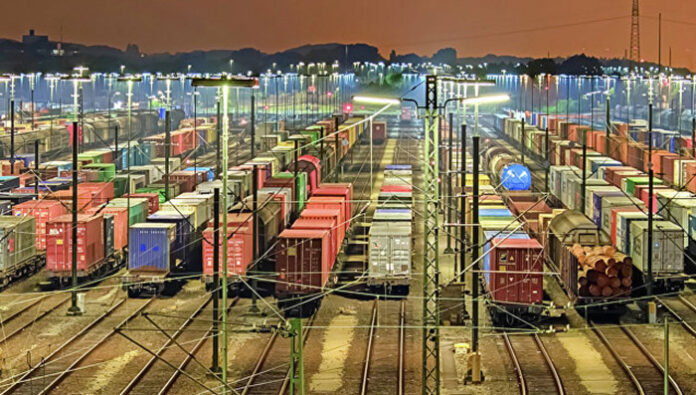
Iran has the capacity for local production of train cars, Deputy Industry Minister Mojtaba Khosrotaj told Tasnim on Saturday, when asked about the latest status of car imports from Russia.

There are grounds for domestic production of train cars in cooperation with European countries, the official added, saying Iran’s private sector companies have held business negotiations with Siemens in Austria to initiate such a plan.

Many foreign companies have shown enthusiasm for investment in Iran after coming into force of the Joint Comprehensive Plan of Action (JCPOA), a lasting nuclear deal between Tehran and the Group 5+1 (Russia, China, the US, Britain, France and Germany).

In July, Iranian Deputy Minister of Road and Urban Development Ali Nourzad and Ukraine’s Minister of Infrastructure Volodymyr Omelyan signed an MoU in Kiev as part of efforts to promote mutual cooperation in the railroad industry.

US Police Brutality Result of Israeli Training: Kevin Barrett

barrett

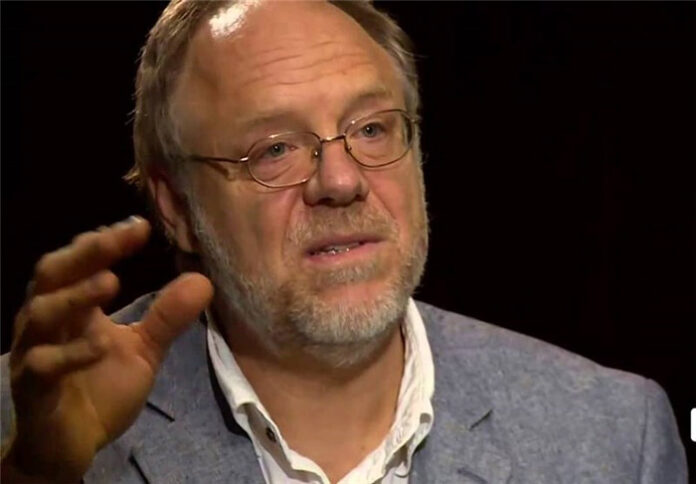
“About one third of the American population lives under virtual police occupation and regards the police as a dangerous, hostile army. This situation has gotten worse as more and more American police are trained in Israel, where they are taught to treat minorities the way the Israelis treat Palestinians,” Kevin Barret told the Tasnim news agency.

Following is the full text of the Barret’s interview.

Tasnim: A new wave of protests has gripped various states in the US after unarmed African American Keith Scott was shot dead by police on September 22, 2016, in Charlotte. As you know the United States has been a self-declared champion of human rights across the globe. However, the recent killings of African-Americans by the US police have raised questions about Washington’s own record. What is your take on the human rights situation in the US?

Barrett: The US has a mixed record at best on human rights. While it ranks highly on free speech – I can write and say anything I want in the alternative media – in other areas the US is a major human rights abuser. For example, the American police are more brutal and violent than their counterparts in other nations, and their brutality disproportionately targets minorities, especially African-Americans. About one third of the American population lives under virtual police occupation and regards the police as a dangerous, hostile army. This situation has gotten worse as more and more American police are trained in Israel, where they are taught to treat minorities the way the Israelis treat Palestinians.

Tasnim: African American communities in the US are increasingly falling victim to violence and discrimination. Why? Do you believe the white-dominant system has waged a war on the blacks?

Barrett: There is plenty of racial tension in the US. But I wouldn’t say the white population as a whole is “waging war” on the black population. Instead, it is a class war. The rich who run the US are crushing the poor and eliminating the middle class. This class war hits African-American communities hardest. The police occupations of black neighborhoods are the result of this class war on ordinary working Americans.

Tasnim: Back in June, the US Senate rejected a series of gun-control measures just days after the Orlando nightclub massacre shooting, including proposals to keep weapons out of the hands of people on terror watch lists. Every year, more than 30,000 people are shot and killed in the United States. What do you think about the Senate move?

Barrett: I will support disarming the American people as long as the military, the police, and private security firms disarm first. These uniformed psychopaths, and their bosses in the corporate boardrooms, are most dangerous criminals in America. Ordinary Americans will need more and better guns, as well as help from patriotic elements of the military, if they are ever to overthrow the corrupt political and financial establishments that have shredded the Constitution and put the US on a fast train to dystopia. So I view gun control, under current conditions in the US, as an impediment to a much-needed Second American Revolution.

Iran JCPOA Commitments Carried Out to the Letter: IAEA

iaea-chief-yukiya-amano

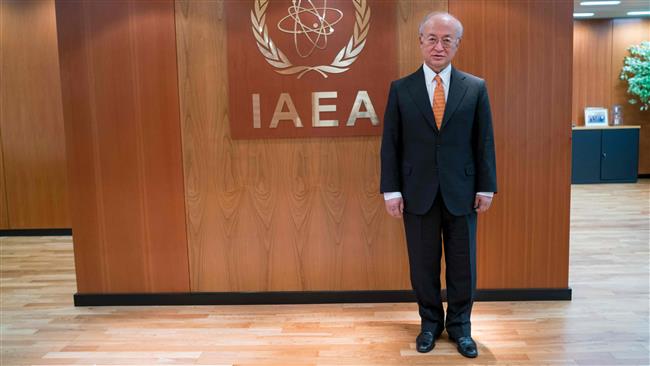
“I can certify that Tehran respects its commitments to the letter. The Iranians are doing what they promised the international community,” said IAEA Director-General Yukiya Amano during an interview with the French daily Le Monde on Saturday.

The July 2015 Joint Comprehensive Plan of Action (JCPOA), struck between Iran and Britain, China, France, Germany, Russia and the United States, envisaged Tehran scaling back its nuclear program in return for the lifting of all nuclear-related sanctions on the Islamic Republic.

“The deal is being implemented since January without any particular problem,” he noted. “There was a small incident in February: the stock of heavy water very slightly exceeded the limit set — 130 tones. But we immediately signaled that to Iran which took all the necessary measures.”

In September, the IAEA once again confirmed Iran’s commitment to the landmark nuclear agreement, with Amano at the time noting that the agency would continue evaluating the absence of undeclared nuclear material and activities in Iran.

In a quarterly report on Iran on September 8, Iran’s commitment to the nuclear agreement was confirmed by the IAEA which is tasked with overseeing the implementation of the JCPOA.

Since January, the IAEA has released regular reports confirming the peaceful nature of Iran’s nuclear activities and Tehran’s commitment to the agreement.

US Trying to Catch Up with Iran in Stealth, Bomber Drone Technology: Commander

IRGC Aerospace Force Commander

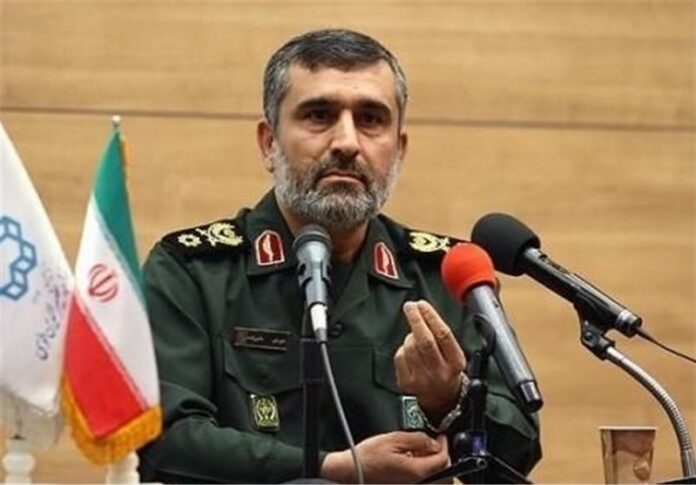
Iran has devised unique methods by combining its expertise in the drone industry with asymmetrical war tactics, IRGC Aerospace Force Commander Brigadier General Amir Ali Hajizadeh said on Saturday.

He made the comments on the sidelines of an exhibition of the IRGC’s advancements in the drone technology.

Highlighting Iran’s great capabilities, the general said even the US is trying to draw level with Iran in making stealth and bomber drones.

Among the products displayed at the exhibition was a new combat drone, dubbed Saeqeh (lightning), which can detonate four different targets with precision-guided bombs.

Saeqeh is the newest model of Simorgh-class UAVs, a homegrown sophisticated aircraft made by reverse engineering of American Lockheed Martin RQ-170 which Iran could capture in its airspace in December 2011.

Iran has now a broad range of UAVs which can be used for both civilian and military purposes.

Iran Comes Third at FIFA Futsal World Cup

iran-futsal-team

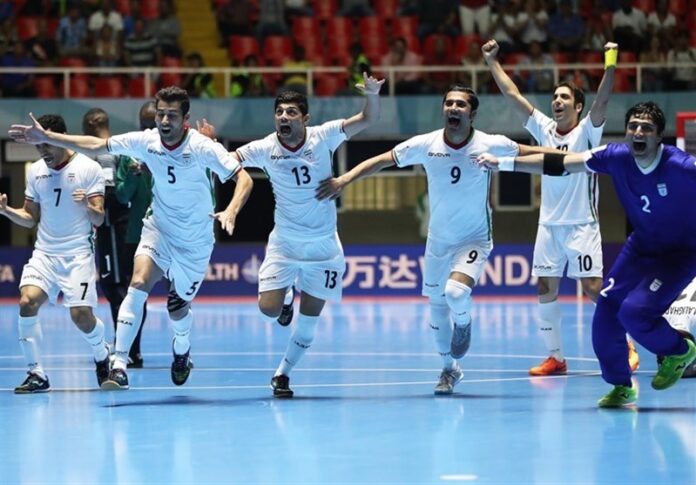
The Iranians came from two goals down to take the third-place match to a dramatic penalty shootout, where six rounds of spot kicks were needed to decide the contest.

Both sides created a good opportunity to open the scoring. Ahmad Esmaeilpour had Iran’s best chance, but his chip over Bebe also sailed over the crossbar. At the other end, Samimi did well to deny Cardinal at close range.

Cardinal scored a quick-fire brace within the first minute of the restart for Portugal.

It required six rounds of penalties to decide this encounter. Iran’s back-up goalkeeper Sepehr Mohammadi made a pair of big saves, but his team-mates twice hit the woodwork with their spot-kick efforts.

Then after Portugal’s Joao Matos hit the post with his sixth-round penalty, Mehdi Javid stepped up to convert his spot-kick and ensure Iran’s best-ever finish to a Futsal World Cup, surpassing its fourth-place accomplishment at Hong Kong 1992.

EU Urged to Stop Repeating Unusual Stances about Iran’s Judiciary

Iranian Foreign Ministry Spokesman Bahram Qassemi referred to a recent statement by the European Union’s External Action Spokesman on the prison sentence of an Iranian national, saying that the EU is required to gain a better understanding of judicial processes in Iran before repeating unusual comments.

He referred to the EU’s statement as an act of interference, and rejected the anti-Iran comments, as reported by Tasnim and translated by IFP.

“Since Iran and Europe are going to start their human rights talks in the near future, making such remarks is considered an unconstructive move,” Qassemi noted.

“Those who released the statement should know that the issue of human rights and its promotion cannot be realized through political statements, and it should not be used as a pretext for meddling in other countries’ internal affairs and making judgment about their actions.”

These affairs, he added, are entirely within the framework of the judiciary system’s responsibilities and authority.

“There is no doubt that any effort to force other communities – with different cultures, customs, and traditions – to accept the particular values of a country or region is an attempt to return to old paradigms in international relations,” Qassemi noted.

“Such claims, which are based on inaccurate assumptions and are made without awareness of the way the Judiciary deals with the issue, cannot be constructive.”

Qassemi urged the EU to gain a better understanding of Iran’s judicial procedures, and refrain from repeating unusual statements.

His remarks came after the European spokesperson announced in a statement that “the recent Court verdict confirming the prison sentence of Narges Mohammadi sends a worrying signal about the human rights situation in the country.”

“Freedom of expression and peaceful advocacy of human rights should be protected and not penalised. The EU reiterates its call on the Iranian authorities to respect its international human rights obligations,” the statement added.