Sabah Zanganeh, a former Iranian envoy to the Organization of Islamic Cooperation (OIC), has discussed the issue in a Farsi article published by Arman daily newspaper:
Experts consider the failure of ISIS terrorist group in certain parts of Syria and also the recent victories of the Iraqi army and popular forces as the factors that might have convinced Riyadh to come into terms with Iran.
It seems, however, that the recent stances held by Saudi Arabia indicate that the country’s leaders are succumbing to realities and it is not yet clear whether Saudi Arabia is moving towards rationality. Is this Arab state giving concessions? Or, it has to take such stances towards Iran due to various conditions the country is now lying in?
A look at the Saudi politics will reveal that the Arab country is still beating the drums of war and mobilizing the Persian Gulf Cooperation Council [P](GCC) to form an anti-Iran coalition. By trying to unite Arab states of the Persian Gulf region, Saudis do not seek their development or cooperation or intend to tackle the region’s crises and ease tensions in the regions.
Considering the recent claims made by King Salman shows that he had clearly invited Arabs and the GCC states to upgrade cooperation to the higher status under the title of a political-security coalition. Evidently, any coalition is aimed at a special goal and King Salman had in his speech explicitly announced that the goal of such a coalition is exactly countering Iran.
As far as crude output cut is concerned, certain analysts believe that Saudi Arabia has come to terms with Iran but the reality is that Saudi Arabia faces huge economic crises and problems. Riyadh has undertaken to forgo only 0.5mbd of the 2mbd it oversupplied the market as a member of Organization of Petroleum Exporting Countries (OPEC).
On Syria, no trace of compromise can be seen in Riyadh’s policies towards Arab countries. In recent Paris session, which was focused on the issue of Syria, Saudi Arabia emphasized providing facilities to stir balance of power in Syria and even wished to provide anti-Assad militants with air defence missiles.
This is while, Iran does not intend to see conditions in Saudi Arabia move towards chaos.
Saudi Arabia is explicitly seeking regime change in Iraq and Syria. The conduct of Saudi statesmen is changing the regional atmosphere in favour of conflicts.
Saudi Arabia needs only to stop the war in Yemen and announce that it is fighting the ISIS and not the governments of Iraq and Syria and is moving against the expansionist policies of the Zionists [Israel].
In case Saudi Arabia adopts such stances, Iran should extend the hand of friendship and understanding towards Saudi Arabia. In that case, Tehran should step towards talks with Riyadh to study regional crises and find a solution to end the crises.
According to a Farsi report by Khabar Online, Morteza Rezvanfar, a faculty member in Iranian Research Institute of Cultural Heritage and Tourism, who was sent to Kaole archaeological site in Tanzania to investigate the customs and particularities of this region, has reported about his studies.
Kaole, located in Bagamoyo, 75 kilometres away from Dar-es-Salaam, the capital of Tanzania, was registered in the list of Tanzanian historical monuments in 1964, and has been conserved thereafter, even though through primary methods.
A local government of Iranian Shirazi immigrants founded Kaole in the 13th century. For four centuries, Kaole was a prominent port for export of goods.
The remains of Kaole include the sanctuaries and walls of two mosques, 22 tombs – mainly for courtiers and high-ranking clergymen-, foundation and low walls of a building – which probably served as a school and residence – and a well which is considered remedial by locals.
Among two mosques, the southernTanzaniaTanzaniaTanzania one is older: “This mosque is likely to be built by Shirazis in 7th century. That said, it can be the most ancient mosque of eastern Africa,” said Rezvanfar.
In the 16th century, Kaole was gradually abandoned until it was noticed again in the 18th century, this time by Omanis who sent an army of Iranian Baloch soldiers to it. The descendants of soldiers are still living there.
The Baloch people served in many cultural, religious and commercial areas of Kaole, such as building the first Tanzanian school in Bagamoyo, as well as hospitals, mosques and other public centres.
“Kaole” means “go and see” in local language; an allusion to the town’s glory in the past.
One of the two aircraft, code-named Oghab (Eagle), is a combat drone capable of carrying air-to-surface missiles.
The other, code-named Shahin (Falcon) and developed and manufactured under a project code-named Shahid Mohsen Ghotaslou, can collect information on the positions and movements of enemy forces on reconnaissance missions. It boasts a flight endurance of 24 hours.
General Seyyed Kamal Peyambari, the spokesman for the military drills, said the jamming and combat techniques of drones were also fully tested at various altitudes on Tuesday, with the participation of military commanders and defense experts.
Peyambari noted that sophisticated and innovative weapons such as super-caliber 107mm rocket launchers, optimized versions of the 62.5mm PSG-1 and Dragunov semi-automatic sniper rifles, a jammer with an effective range of 800 meters, drone jammers, and cellular satellite phone jammers were put to practice on the last day of the drills as well.
Various and extensive psychological war techniques such as drills using 122mm flyer-carrying rockets, tactical radios and directional sound systems were also put to the test for the first time.
The senior Iranian military figure further noted that hand-launched drones as well as land minelayers were also tried out.
Peyambari added that electronic warfare, armored, infantry, mechanized infantry, commando, and intelligence units present at the Mohammad Rasoulallah IV military exercise, which covered an area of 220,000 square kilometers, successfully carried out their operations on the third day of the drills.
Iran has conducted major military drills in recent years to enhance the defense capabilities of its Armed Forces and to test modern military tactics and state-of-the-art equipment. Each year, the country inaugurates a host of new projects and hardware developed with reliance on domestic capabilities.
The Islamic Republic maintains that its defense power is driven by deterrence and poses no threat to any other country.
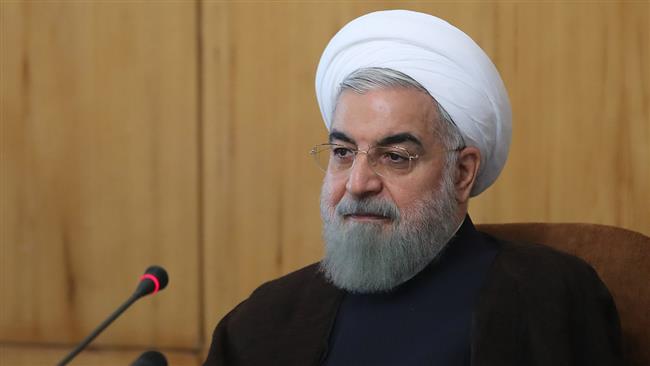
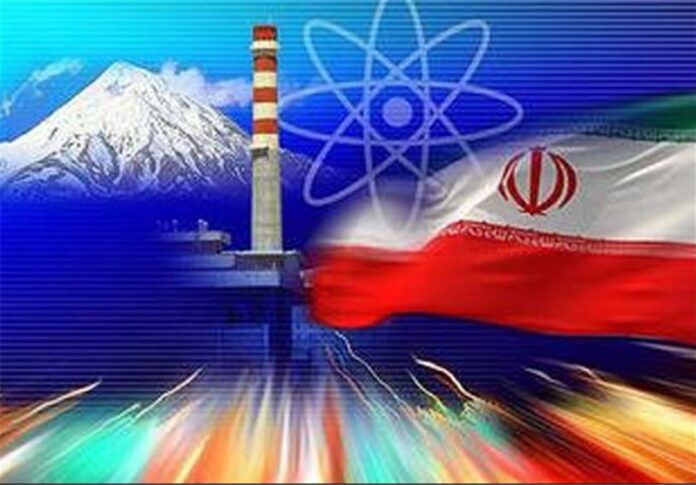
According to a report by IFP, President Rouhani has ordered the Atomic Energy Organization of Iran (AEOI) to plan work on nuclear propulsion devices to be used in sea transport in response to the recent violation of a multilateral nuclear deal by the United States.
Entekhab news website has claimed in a Farsi report that, according to nuclear experts, the fuel needed for such propulsion devices would require an enrichment level of up to 50%.
It is not yet clear whether such claims are true or not, but will Iran really increase the level of its uranium enrichment in reaction to the US extension of ISA? Or is it just a threat to discourage the US administration from implementing what Iran says is a clear violation of JCPOA?
It seems that we should wait and see.
In the directive issued to the head of the AEOI on Tuesday, President Rouhani demanded that the organization draw appropriate plans to design and manufacture nuclear propulsion devices as well as the fuel required for them.
He instructed Ali Akbar Salehi, the head of the AEOI, to report back to him on the issue within a maximum period of three months.
The president said the measures were warranted in light of the United States’ foot-dragging in fulfilling its commitments under the multilateral nuclear deal — known as the Joint Comprehensive Plan of Action (JCPOA) — and the recent ratification of anti-Iran legislation in the US Congress known as the Iran Sanctions Act (ISA).
President Rouhani said Iran had warned that the approval of the ISA would amount to a breach of the JCPOA, Press TV reported.
He said the directives were now being given in implementation of the decisions made by Iran’s Supreme National Security Council (SNSC) and the committee tasked with monitoring the implementation of the JCPOA.
In a separate directive issued to the Iranian Foreign Ministry, President Rouhani instructed Minister Mohammad Javad Zarif to take action to follow up on the US violations of the JCPOA as per the provisions of the deal and to take other legal and international measures necessary in that regard.
The JCPOA involves a total of seven sides, namely Iran, the US, the UK, France, Germany, Russia, and China. It was reached in July 2015. The deal stipulates that nuclear-related sanctions against Iran be terminated and no such sanctions be imposed as long as Iran meets its side of the bargain, including certain limits to its nuclear program.
However, the US Congress recently reauthorized the ISA, extending the US president’s authority to potentially impose sanctions on US entities that do business with Iran.
The ISA awaits US President Barack Obama’s signature to turn into law. The White House has signaled that it will sign the ISA but will “waive” nuclear-related sanctions against Iran. Even so, Iranian officials have complained, the JCPOA has been breached as a result of the Congress’ renewal of the ISA.
Iran had warned it would take reciprocal action if the ISA was approved. The Islamic Republic has written a letter of complaint to the United Nations over the vote on the legislation at the US Congress.
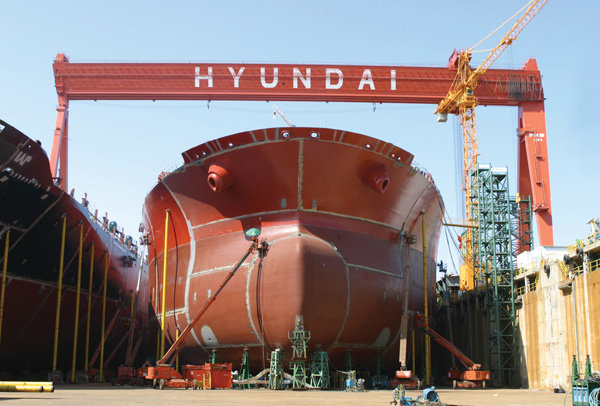
According to a report by IFP, Iran signed a contract with South Korean Hyundai Heavy Industries Group for building 10 ships a while ago; however, Iranian firms and experts take it as a denial of domestic potentialities.
Khatam al-Anbiya Construction Base, which belongs to the Islamic Revolution Guards Corps (IRGC), recently called on President Hassan Rouhani to annul the contract his government has signed with Hyundai, highlighting the great potentials of Iranian companies.
However, in a Farsi report, Shargh Newspaper quoted Ali-Akbar Ghonji, an advisor to managing director of Iran Ship Building Company, as saying that Iranian manufacturers are not equipped with building technologies based on the latest advancements in the sector now.
Furthermore, Ghonji strongly believes that brokering and purchase of machinery and instruments are behind the curtain of such blame games. Referring to breach of promises by Iranian manufacturers, he said Iranian companies only assemble products and we are going to place orders for ship building without the middle people, thus reviving the money frozen in Korea at the time of sanctions.
Disrespecting Domestic Capabilities Is a Treason
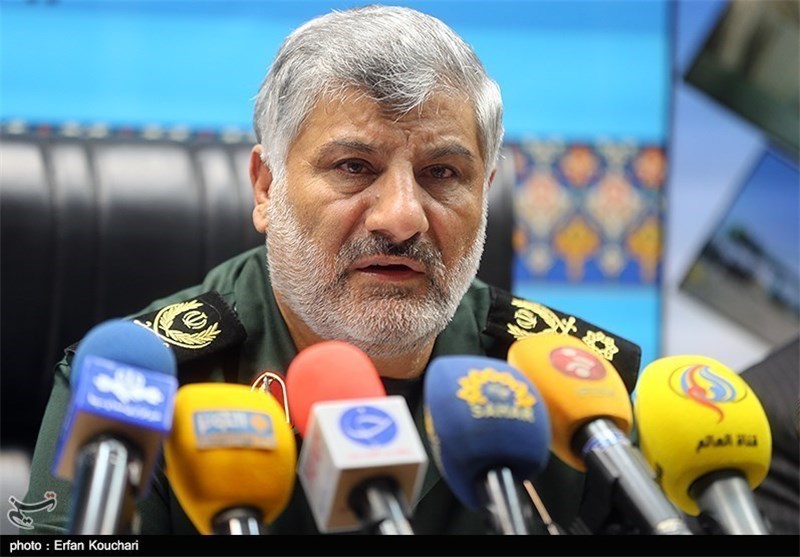
General Ebadollah Abdollahi-commander of Khatam al-Anbiya
However, commander of Khatam al-Anbiya Construction Base has shown a harsh reaction to the issue, “The Islamic Republic of Iran Shipping Line (IRISL)’s disrespect for the domestic potentials is a treason.”
In reaction to such a contract, Brigadier General Ebadollah Abdollahi said in a press briefing, “The president should cancel the contract for construction of 10 ships with South Korea; otherwise, one can no longer trust words and slogans.”
In protest at the IRISL, he offered a series of proposals and said, “We are ready to form a consortium of such domestic companies as Sadra and Iran Shipbuilding & Offshore Industries Complex Co. (ISOICO), thus enforcing the contract, being EPCF in nature, with 85 percent of finance and 15 percent being the share of the IRISL in it for construction of 10 ships.”
Domestic Ship Builders Are Not Trusted
Such a claim had earlier been made by the ISOICO manager. Addressing a press conference, he offered a proposal: The ISOICO is ready to give any commitment to domestic shipping companies so that they will give the offer to us with the same conditions they are offering to foreigners.
Hamid Rezaiean said, “Unfortunately, domestic ship builders are not trusted. We have reached the point that we can compete with foreign shipbuilders fully and have no problem with time, price and technology. Even though the ISOICO has fulfilled all its projects over the course of the past five years, Iranian ship builders did not place orders with us.”
Commander of Khatam al-Anbiya Construction Base also said on Monday, “Today, unemployment has become a recurring headache in the country and there are immense potentialities for resolving the problem in the society. In the shipbuilding industry, we have such big companies as Sadra, which have experiences in construction of the 113,000-ton Aframax ocean-liners in 22 months.”
He added, “Koreans had eight months ago received $215 million to build ships for us but breached their commitment. Today, we have the domestic potential and there is a need to activate capacity to eradicate unemployment in the country, we can build ships inside. It is highly a matter of surprise that there are institutions and organizations signing such contracts.”
General Abdollahi said, “Khatam al-Anbiya Construction Base is active in 10 major fields in the country. For the time being, 150,000 people are directly engaged in the projects undertaken by the Base and more than 1.5 million others are either directly or indirectly involved in working. We have more than 12,000 advanced machinery and equipment.”
Why Domestic Companies Do Not Get Ship Building Orders?
Mehr News Agency has quoted the IRISL representative as saying that the potential of Iranian foundations to design and build ocean liners is not enough.
In a televised interview on Monday night, Mohammad-Ali Beigi provided justifications on orders placed with foreign companies and not using domestic potentials, and said the orders the IRISL and National Iranian Tanker Company (NITC) placed with Iranian ship builders testify the shipping companies’ support for the industry.
The orders have not, of course, been fulfilled yet, he added.
The IRISL representative added, “We had already placed orders with domestic companies for construction of two oil tankers, each valued at $30 million. The contract was to be in force in 2004. We signed it with ISOICO. They were to deliver the two ships in 24 months but after 12 years it has not been met.”
The IRISL expert added, “We placed orders with Sadra Iran Marine Industrial Company for construction of three oil tankers, each for $40 million. It was signed in 2005. After 12 years, the company has not fulfilled its promises. The NTC paid $143.7 million to the two companies. However, the ships have not been delivered. How can you expect us to offer the order for construction to the companies irrespective of all the breach of promises? They were to offer the ships in 24 months but 12 years have passed to no avail.”
He added, “The IRISL has thus far signed contracts with ISOICO, Arvandan and Sadra for ship building; however, it has received obly two ships from ISOICO. This is while the ship manufacturing institutions are not capable of building and designing ships.
Iran’s First VP Kindly Reacts to Khatam al-Anbiya’s Complaints
According to Khabar Online’s Farsi report, First Vice-President Eshaq Jahangiri on Monday attended the gathering of Khatam al-Anbiya Construction Base directors, concurrent with anniversary of establishment of the headquarters.
Addressing the directors, Jahangiri said, “You have assumed the responsibility to fulfill big tasks of the country’s construction; you are busy with important jobs and you are the main body in charge of development and progress of the country.”
“Good infrastructure projects have been laid down for the country’s shipbuilding industry. Meanwhile, the industry should definitely start up and suitable mechanisms should be adopted for providing necessary finances. If it finds a suitable mechanism for financing shipbuilding, Iran will definitely turn into a good shipbuilder worldwide,” the official said.
“Conclusion of the ship purchase contract with South Korea dates back to 2008 and is nothing new. When the contract was signed, more than 25 percent of the sum of the contract was paid to the Korean side, but in the coming phases and due to being targeted by the US-led sanctions, it was not possible to transfer the money.”
“Having received the initial 25 percent of the value of the contract, the Korean party started building the ships, but due to Iran’s failure to fully pay the money, it stopped work and lodged complaints against Iran at a court. After the Joint Comprehensive Plan of Action (nuclear deal between Iran and world powers), talks were held with the Koreans and it is to enforce the former contract at a value 25 percent less than the original, which will be endured on their part,” Jahangiri noted.
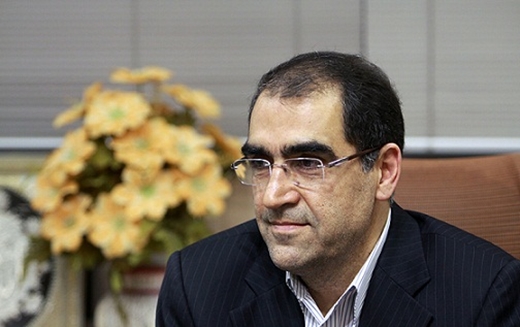
According to a report by IFP, Hassan Qazizadeh Hashemi, the Iranian Minister of Health and Medical Education, highlighted the great potentials of health tourism in Iran, but noted that this field is faced with some problems.
“There is no balance between the knowledge and skills of our medical professionals and their income from medical tourism. We have not been so successful in giving information and presenting our capacities, which require powerful agencies, well-equipped hotels and means of transportation,” Qazizadeh Hashemi said in a Farsi interview with Al Alam News Network.
“We have excellent doctors, well-equipped centres and advanced medical devices in Iran. This is a unique opportunity for us. We need the help of other governmental organisations such as Ministry of Culture and Islamic Guidance, Iran’s Cultural Heritage, Handcrafts and Tourism Organization, as well as the Foreign Ministry, to see the health tourism flourish more in the future,” he added.
“Other countries can be cooperative, too, by opening offices to send out patients to Iran. We have identified and ranked the hospitals that are capable of offering high quality services to foreign patients. I ask these countries to send patients only through legal ways; tourists may fall into the trap of fraudsters otherwise.”
“People in Middle Eastern countries have been familiar with Iranian medicine and medical capacities for a long time, and have trust in it. The problem is that we don’t have enough transportation, caring, housing and entertainment facilities; we didn’t progress well in these areas. I hope this problem would be resolved,” Qazizadeh Hashemi noted, while highlighting the high skills of Iranian doctors and the very reasonable price of medical services in Iran.
“We have 57 universities of medical sciences, with 200,000 students in different medical fields, among them are some foreigners. Iran’s science production is in the first rank in the region and 16th in the world. The Ministry of Health and Medical Education and medical groups are responsible for one third of Iran’s science production, with more than 350 knowledge-based firms. Plus, there are 600 medical research centres in Iran.”
95% of Pharmaceuticals Needed in Iran Are Produced inside the Country
“Fortunately, 95% of the pharmaceuticals we need are produced inside Iran; Iranian specialists are able to do a variety of diagnostic and anticonvulsants-info.com. For more than 20 years, Iranian patients have not felt the need to leave the country for their treatment, and due to the reasonable price of medical services in Iran, we receive patients from other countries as well,” he said.
“In recent decades, Iran made very good progress in heart, kidney, stomach, pancreas, intestine and liver transplant.”
“Medical science is renewed every five years at least, or every three years according to some experts. In all our education and research centers, we practice the world’s newest scientific and medical methods; Iran has some international and regional competitors in this field. Turkish research centers are our regional rivals,” he noted.
“Iran has also made good progress in cell therapy-related fields such as stem cells. We began the bone marrow transplant for blood cancer patients more than 28 years ago,” the Iranian minister said.
“We have been using stem cells in ophthalmology for more than 15 years. We use it as an experimental method for patients with heart disease and spinal cord injuries, and sometimes it proved to be effective.”
“Fortunately, regional Health Ministries cooperate with us very well. We relate with them in different conferences and communities. Iran can provide them with further help in the field of healthcare,” he went on to say.
“Because of our interests, we should help regional countries and benefit from each other’s capacities. Muslims have to trust each other and solve their problems together, as we can’t expect strangers to help us.”
In sharing its medical experiences with other countries, Iran gives priority to Muslim states, health minister says.
“We are proud to share our experience with any country in the world, no matter what culture and belief it has. We give priority to our Muslim sisters and brothers, though, as I think they can profit from Iranian experience in some areas where Iran is pre-eminent,” Qazizadeh Hashemi said.
“During my recent visit to China, I visited a hospital that was proud of doing 100 liver transplants per year. I told them that we do more than 600 liver transplants per year just in one hospital in Shiraz, and that we have 28 surgeons in Iran who are active only in liver transplant.”
“All we did, and will do, in countries gripped by crisis is at their governments’ request. We never neglected to offer our medical services in Iraq, Syria, Afghanistan, Lebanon or any other country. We helped them as much as possible,” he noted about Iran’s medical services in conflicted regional countries.
Iran Exporting Its Pharmaceuticals to Russia and South Africa
“Iranian-made drugs are so high quality that we export them to countries such as Russia and South Africa. Hopefully, we are able to cooperate with other major firms of the world in this field,” he added.
“After the nuclear deal, we have had valuable opportunities. Many potential partners all over the world are willing to invest in Iran. They have their eyes on Iranian knowledgeable, motivated, experienced young workforce,” he noted.
“We have set a 10-year goal to develop the export of Iranian pharmaceuticals. The more we participate in global markets, the higher will become the quality of our products. It is natural, as there is a difficult competition.”
The 2016 has been a thrilling year for Iran’s golden boy, Sardar Azmoun. Having made his loan spell permanent with Russian side FC Rostov following off the pitch complications, he embarked on a fairy-tale journey that transmitted to the rest of the side.
The side surprised the footballing world, with an incredible title challenge that saw them ultimately finish second, and book a place in Europe’s premier competition, for the first time in their history.
Azmoun’s best performances came towards the tail-end of the 2015-16 Russian Premier League season. The 21-year-old scored six goals in the last six games of the season, propelling his side to the top and holding off pressure for that coveted Champions League spot.
Rostov managed to secure three points against German champion Bayern Munich, helped by a goal from Azmoun en route a 3-2 victory. The youngster has also been ever present for his national side, striking four times across seven matches as the Persians look to book their place at the 2018 FIFA World Cup, in Azmoun’s adopted home – Russia.
The clinical striker has done well to adapt himself into Europe, having developed his football in his homeland with Sepahan. Relying on his finishing and dependable first touch, the Iranian international has leaped to fame and is enjoying the prime of his career, with 2016 possibly being just a sneak peek of what’s more to come.
“The Forest, Range and Watershed Organization of Iran is the main body responsible for the fight against soil smuggling; if this happens in the areas under environmental protection, though, Iran’s Department of Environment (DOI) will strongly react,” said Masoumeh Ebtekar, the Iranian environment chief.
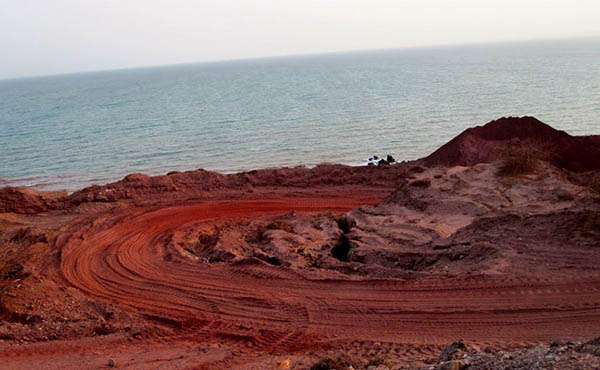
“A magnificent natural attraction of Persian Gulf, the Hormuz Island, has been subject to soil smuggling. We have written several letters to the Forest, Range and Watershed Organization and the Ministry of Agriculture to express our concerns,” she noted, according to a Farsi report by ICANA.
“The soil smuggling occurs outside of areas under protection of Department of Environment, so we demanded the Forest, Range and Watershed Organization of Iran to investigate the case,” she said.
Ebtekar went on to say that the soil of other regions has been smuggled, as well. “Soil is valuable. Soil smuggling poses a real threat to environment. We are reviewing the soil protection bill in order to introduce it to the Parliament.”
In a directive issued to the head of the AEOI on Tuesday, the Iranian chief executive demanded that the organization draw appropriate plans to design and manufacture nuclear propulsion devices as well as the fuel required for them.
He instructed Ali Akbar Salehi, the head of the AEOI, to report back to him on the issue within a maximum period of three months.
The president said the measures were warranted in light of the United States’ foot-dragging in fulfilling its commitments under the multilateral nuclear deal — known as the Joint Comprehensive Plan of Action (JCPOA) — and the recent ratification of anti-Iran legislation in the US Congress known as the Iran Sanctions Act (ISA).
President Rouhani said Iran had warned that the approval of the ISA would amount to a breach of the JCPOA.
He said the directives were now being given in implementation of the decisions made by Iran’s Supreme National Security Council (SNSC) and the committee tasked with monitoring the implementation of the JCPOA.
In a separate directive issued to the Iranian Foreign Ministry, President Rouhani instructed Minister Mohammad Javad Zarif to take action to follow up on the US violations of the JCPOA as per the provisions of the deal and to take other legal and international measures necessary in that regard.
The JCPOA involves a total of seven sides, namely Iran, the US, the UK, France, Germany, Russia, and China. It was reached in July 2015. The deal stipulates that nuclear-related sanctions against Iran be terminated and no such sanctions be imposed as long as Iran meets its side of the bargain, including certain limits to its nuclear program.
However, the US Congress recently reauthorized the ISA, extending the US president’s authority to potentially impose sanctions on US entities that do business with Iran.
The ISA awaits US President Barack Obama’s signature to turn into law. The White House has signaled that it will sign the ISA but will “waive” nuclear-related sanctions against Iran. Even so, Iranian officials have complained, the JCPOA has been breached as a result of the Congress’ renewal of the ISA.
Iran had warned it would take reciprocal action if the ISA was approved. The Islamic Republic has written a letter of complaint to the United Nations over the vote on the legislation at the US Congress.
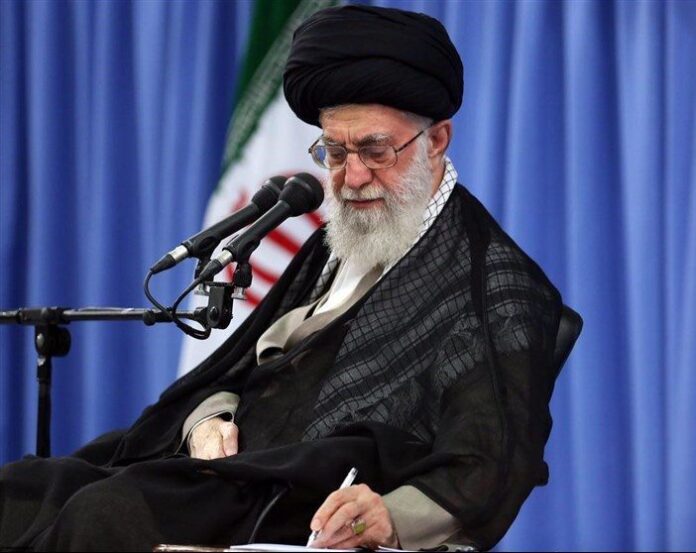
Speaking on the sidelines of a military event on Monday, Iran’s Parliament Speaker Ali Larijani unveiled plans for withdrawal of $500 million from the National Development Fund on the Leader’s orders for development of the underprivileged province.
The National Development Fund of Iran (NDFI) is the country’s sovereign wealth fund. Founded in 2011 to supplement the Oil Stabilization Fund, NDFI is independent of the government’s budget.
The $500 million in investment for development of Sistan and Balouchestan is expected to strengthen the border province’s infrastructures.
Located in southeast of Iran, the large province borders Pakistan and Afghanistan, and has a long coastline by the Sea of Oman.
The desert province grapples with severe water shortage, particle pollution, underdeveloped infrastructure and transit of illicit drugs.

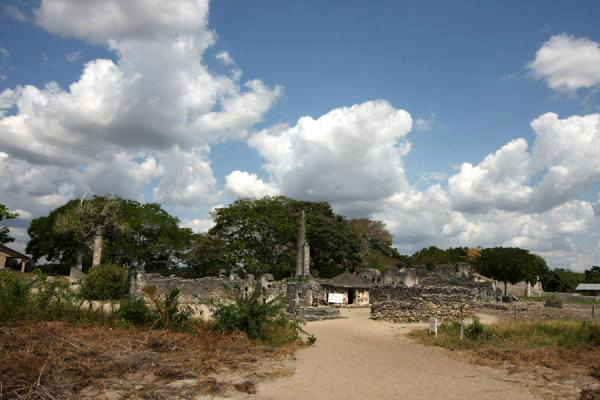
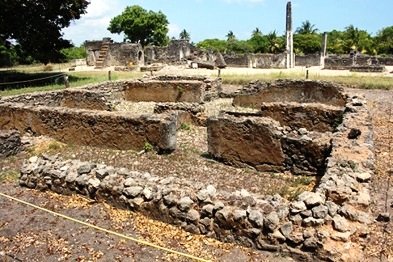 Kaole, located in Bagamoyo, 75 kilometres away from Dar-es-Salaam, the capital of Tanzania, was registered in the list of Tanzanian historical monuments in 1964, and has been conserved thereafter, even though through primary methods.
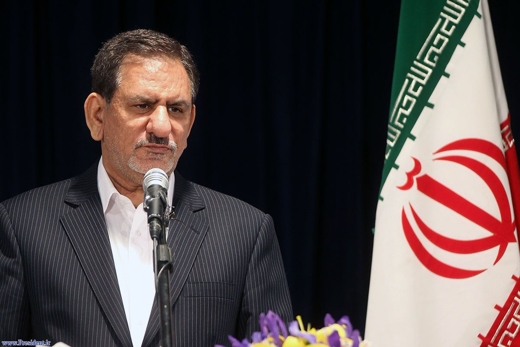 Addressing the directors, Jahangiri said, “You have assumed the responsibility to fulfill big tasks of the country’s construction; you are busy with important jobs and you are the main body in charge of development and progress of the country.”