Saturday, December 27, 2025
Home Blog Page 4209

US Not Interested in Defeating Terrorists in Iraq and Syria: Iran’s Leader

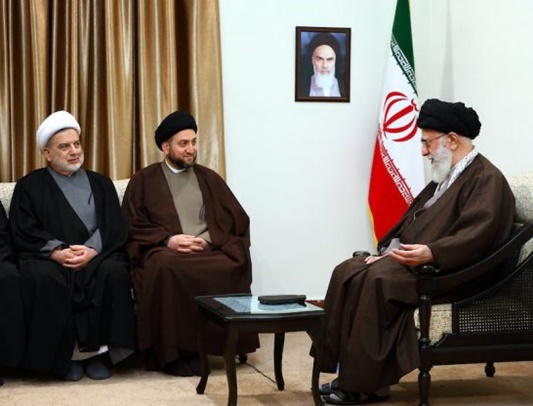
Iran Leader and Ammar Hakim

According to a report by IFP, Ayatollah Khamenei stressed on Sunday that the US never seeks to eradicate Takfiri terrorists, and is even trying to preserve some of them in the region to realize its future goals.

Speaking in a meeting with Chairman of the Islamic Supreme Council of Iraq (ISCI) Ammar Hakim and his entourage in Tehran, the Leader added, “Currently, Americans are not interested in the final defeat of Takfiri terrorists in Mosul and Syria.”

Ayatollah Khamenei referred to the ISIS terrorist group’s sale of Iraq’s oil, and said, “At that time, Americans just watched the movement of [ISIS’] oil tankers and refused to target them. Therefore, Americans should not be trusted.”

“Americans are always opposed to the power of Islamic countries, including Iraq, and one should never trust their smiles,” the Leader added.


Popular Forces Should Be Strengthened in Iraq

Ayatollah Khamenei further expressed his pleasure with the measures taken by Iraqi Prime Minister Haider al-Abadi, particularly his support for Popular Mobilisation Units (PMU), also known as Hashd al-Shaabi.

“Hashd al-Shaabi or popular forces are a great treasure and wealth for Iraq’s today and tomorrow, and should be strengthened and supported,” the Leader added, according to his official website

Members of the Iraqi parliament voted on November 26 to recognize Hashd al-Shaabi or Popular Mobilisation Forces as an official force with similar rights as the regular army.

Hashd al-Shaabi will come under full control of the armed forces, and will also enjoy the same rights and privileges as the army.

The parliamentary decree also stipulates that members of all of Iraq’s ethnic and religious groups will have the right the join Hashd al-Shaabi and they will be reorganized through the army after the Mosul liberation operation.

The Hashd al-Shaabi was formed upon a call by Iraq’s top cleric Grand Ayatollah Ali al-Sistani in the summer of 2014 when the ISIS terrorist group captured several Iraqi provinces and he urged civilians to take up arms and fight the radical group against further expansion.
Iranian Spokesman Condemns Twin Blasts in Turkey

Istanbul

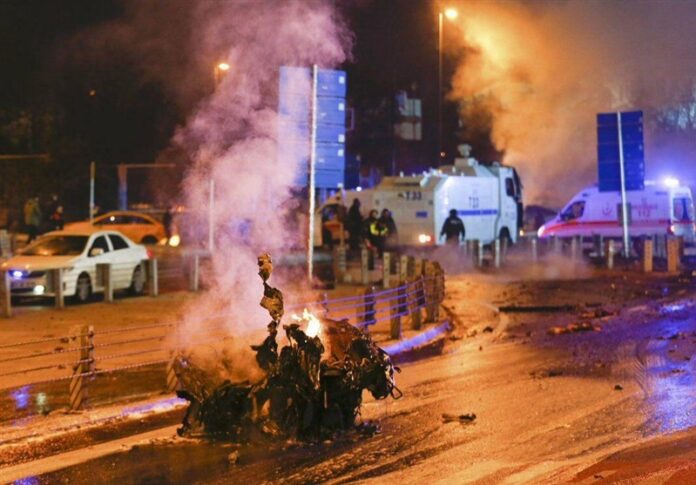
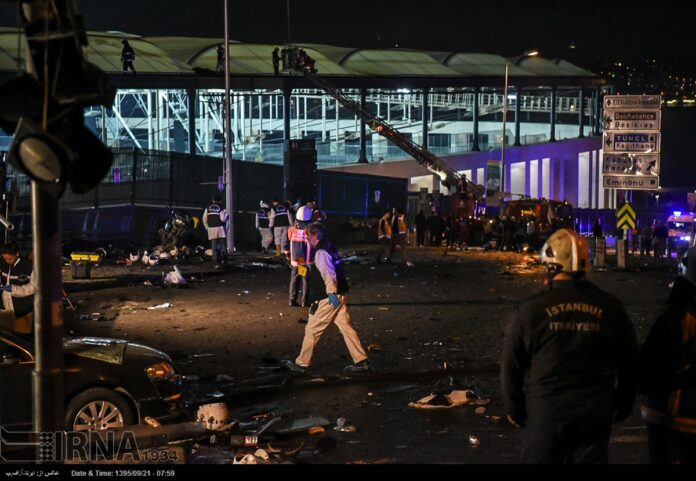
A car bomb followed by a suicide bombing less than a minute later killed 29 people and wounded 166 outside a football stadium in Istanbul on Saturday night.

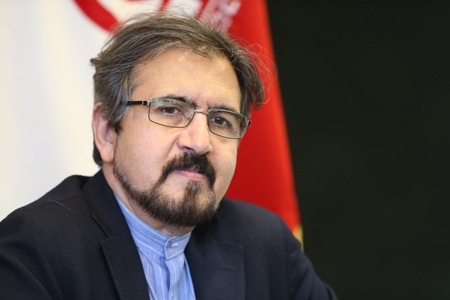
In a statement on Sunday, Bahram Qassemi condemned the deadly blasts and expressed sympathy with the Turkish nation, government, and the bereaved families of the victims.

The continuation of terrorist attacks in Turkey and the increased violence and insecurity in this “friendly and neighbouring country is a source of regret and deep concern, he noted, calling for a coordinated and strong reaction by all countries in the Middle East and the world to terrorists and extremists.

“Today, terrorism has turned to an inclusive threat against all countries, and the fight against this phenomenon has no solution but a global resolve and consensus,” the Iranian spokesman added.

“The Islamic Republic of Iran is always prepared to take required actions in cooperation with all countries in an all-out fight against terrorism and extremism,” he went on to say.

Iran’s President Offers Condolences to Indonesia over Deadly Earthquake

According to a report by IFP, in his message to Widodo on Saturday, President Rouhani expressed grief over the deadly quake in the Islamic country of Indonesia.

He went on to say that Iran is ready to render humanitarian aid to the Muslim people of Indonesia injured in the incident.

Rouhani also wished immediate recovery for the injured people and voiced Iran’s preparedness to take any necessary action to this end.

The 6.5-magnitude quake in Indonesia’s Pidie Jaya district damaged homes, shops and mosques on Wednesday, completely destroying hundreds of structures, Mehr reported.

At least 100 people were killed, including young children, and 136 seriously injured, according to Indonesia’s Disaster Management and Mitigation Agency.

Iran Hails Yemen Parliament’s Vote of Confidence to National Salvation Gov’t

According to a report by IFP, Iranian Foreign Ministry spokesman Bahram Qassemi in a Saturday statement welcomed the Yemeni Parliament’s vote of confidence to the country’s National Salvation Government.

He expressed hope that the new establishment, along with the country’s legislative chamber, will take effective steps to deal with the aftermath of the devastating Saudi war and improve services to violence-stricken citizens.

“The Islamic Republic hopes that the new cabinet would help restore peace and stability to Yemen and resolve differences among different groups,” he noted.

During a voting session on Saturday, Yemeni lawmakers overwhelmingly endorsed the new administration that was formed by the Houthi Ansarullah movement and its allies late last month to replace the Supreme Political Council.

The government, which was sworn in on November 29, is to replace the Supreme Political Council, and is tasked with the country’s domestic affairs and dealing with Saudi Arabia’s continued aggression against the Yemeni nation.

Led by the former governor of Aden, Abdul Aziz bin Habtoor, the new government has pledged to help UN efforts aimed at bringing back stability to Yemen.

In his statement, Qassemi also voiced regret over attempts by certain parties affiliated with the former Yemeni government to sabotage the political efforts aimed at ending the conflict in the Arabian Peninsula state.

Qassemi underlined the need for the resumption of intra-Yemeni dialogue, an end to Saudi assaults and swift aid delivery to people across the country, Press TV reported.

The last round of UN-backed peace talks was held between Yemen’s warring sides in Kuwait in August, but the negotiations had no tangible results and ended in deadlock.

Iranian Envoy Sympathizes with Turkey over Deaths in Istanbul Terror Attack

Istanbul

“Terrorism and extremism are two sides of the same coin and the recent blast in Istanbul highlights the necessity for the international community’s solidarity and closer cooperation in the fight against the sinister phenomenon,” Mohammad Ibrahim Taherian told reporters.

He further expressed condolences to the bereaved families of victims of the incident and wished rapid recovery of the injured.

At least 29 people, including 27 police officers, were killed in two separate bomb attacks in the Besiktas district of Istanbul, the country’s interior minister said early Sunday.

Two police chiefs were among the deceased and at least 166 people were injured, Suleyman Soylu told reporters in Istanbul.

Ten suspects have been detained as part of an ongoing probe, he added.

Health Minister Recep Akdag said 20 of the injured have been discharged from hospital while 17 are in surgery, and six are in intensive care units, three of them in critical condition.

Two blasts rocked the city, a car bomb followed within the minute by a suicide bomb, Deputy Prime Minister Numan Kurtulmus explained.

Turkish Prime Ministry said in a statement, a day of national mourning has been declared on Sunday.

President Recep Tayyip Erdogan said the attack targeted police and civilians alike, and sought to cause the most casualties.

Iran Air, Boeing Finalize Plane Purchase Deal

boeing

The agreement envisages the purchase of 50 twinjet narrow-body Boeing 737 planes and 30 long-range wide-body 777 aircraft at a total cost of $16.6 billion.

Iran Air Managing Director Farhad Parvaresh was quoted by local media as saying that the planes would to be handed over to Iran within 10 years, adding that the first deliveries are expected in 2018.

Fletcher Barkdull, Boeing’s regional sales director, told IRNA that the company was happy to return to Iran after a hiatus of multiple decades.

Barkdull emphasized that the finalization of the plane purchase agreement with Iran Air had been carried out by virtue of the direct approval from the administration of US President Barack Obama.

Iran signed a basic plane purchase agreement with Boeing earlier this year. However, the agreement hit a bumpy road last month after US lawmakers approved a bill that banned the export, or re-export, of commercial aircraft to Iran by American financial institutions.

The country has signed another agreement with France’s aviation giant Airbus to purchase scores of planes.

The deal is yet to be finalized but it has already received the go-ahead from the US Treasury Department.

The Department’s seal for Iran-Airbus agreement was necessary given that at least 10 percent of Airbus’ components are made in the US which has imposed a series of economic sanctions against Iran for years now.

The US Treasury Department has also given the green light to Boeing to sell planes to Iran.

Tehran Hosts Int’l Conference on Security in West Asia

cce61cb9-9024-4985-a0b5-7e26a11dc5c6

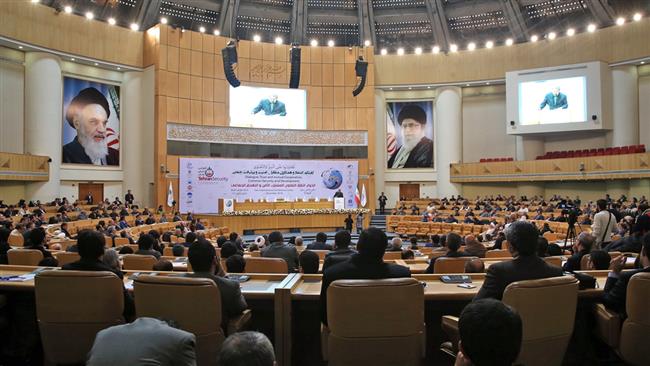
The International Conference on Regional Security Order in the West Africa kicked off in Tehran on Sunday morning with a speech by Iranian Parliament Speaker Ali Larijani.

Senior foreign experts in the area of regional security are also attending the one-day event.

The summit is aimed at providing a close analysis of the situation West Asia as well as discussing initiatives aimed at boosting decision-making and consensus-building on the future security order in the troubled Middle East region.

During his speech, Larijani highlighted the strategic significance of West Asia, saying it is the junction of three Asian, African and European continents as well as major waterways and access points to high seas.

“As a result, analysts have named the region the Heart of the Earth as it has witnessed multiple wars as well as tensions among international powers in different eras,” he said.

Larijani further said West Africa has, today, plunged into “severe chaos” amid ongoing “proxy wars” and the Israeli regime’s occupation of Palestinian lands.

He further went on to say that the regional chaos has also roots in a “strategic mistake” by major powers and regional players, which are using terrorism as a tool to pursue their agenda.

The top Iranian parliamentarian also criticized a lack of “political vigilance” in regional nations, particularly their young generations, as another factor fueling instability in the region.

The closing ceremony will be held in the evening, with Secretary of Iran’s Supreme National Security Council Ali Shamkhani as well as Brigadier General Hossein Dehqan, Abdolreza Rahmani Fazli and Mohammad Javad Zarif the defense, the interior and foreign ministers, in attendance.

Oddest Pseudo-Jobs in Iran

Pseudo-Jobs

According to a Farsi report by Mehr, a “pseudo-job” is an occupation that involves no real production or service; its exact activities or income sources are unclear, too. Plus, there is no regulation, and thus, no tax on pseudo-jobs.

There are plenty of pseudo-jobs in Iran; in this report, we introduce some of the oddest ones:

Shar-Khar

It is one of oldest pseudo-jobs in Iran. People hire shar-khars to force debtors with bounced checks to settle their debts. By beating and threatening, a Shar-khar forces the poor debtor to pay off his debts.

Shouter

They are called so because they must keep shouting all day long to attract potential clients to the stores. They have to acquire costumers for the shop owner to earn around $6 per day at best; otherwise they are fired.

Licence plate concealer

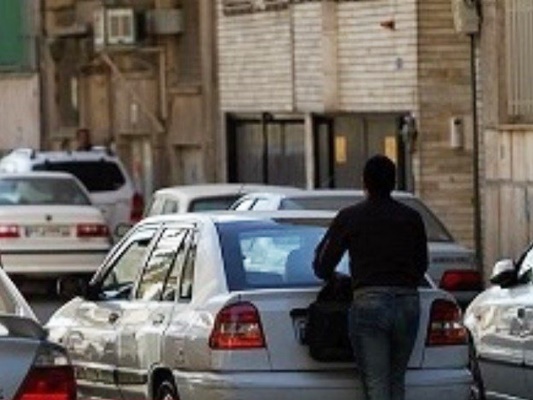
Their job is to stand near traffic control or odd-even traffic plan zones to find the drivers who need help to camouflage their cars’ licence plates and beat police cameras. Their task involves running behind vehicles’ licence plates to get paid by drivers a sum lesser than the fine of illegally going into traffic control zone!

Parking spot finder

Finding a place to park one’s car is a major problem in metropolitan areas; and some people abuse this need to make job opportunities for themselves! Therefore, you see individuals standing outside the shops, restaurants, etc., reserving parking spots to get paid.

Crier in funerals

Some people get paid for crying and mourning in others’ funerals.

Patient attendant

This pseudo-job has been recently seen in hospitals. In many hospitals, you see people who are introduced by nurses to patients who need attendants. The cost of an attendant is about $6 with food and about $3 without food in public hospitals; in private hospitals the cost is up to $12 per day. The patients who have no attendant, though, have to pay more to hire an attendant.

Turn-seller

With automatic queue management systems used in banks, people have a much easier time taking turns; however, this initiative can also create jobs: some people go to busy bank branches and receive the tickets consecutively, then sell them to customers who arrive late and are in a hurry.

Receipt-seller

In front of several offices and organisations, such as Company Registration Office, where the customers have to go to a bank to settle a small amount of money and then deliver its receipt, you see people with “anonymous paid bank receipts” who exempt the costumers from standing in long lines of banks by selling them the anonymous receipts for a price higher than the receipt sum.

Wedding party cheerer  

The title speaks for itself: The cheerers must do everything they can to cheer up the participants of the ceremony. The better they cheer up, the more they are paid.

Rented best man

In recent years, we hear the word “Saqdoosh (groomsman or best man)” a lot in Iran. Wedding ceremonies in western style require Iranians to adapt to their accessories; so it is necessary to hire best men to have a special wedding party.

Researchers Prove Radio Jamming Is Harmful

Radio Jamming-Satellite

According to a Farsi report by Khabar Online, a study carried out in Shiraz University of Medical Sciences proves that severe electro-magnetic waves increase the risk of infertility, immune deficiency and cancer.

Experts had earlier talked about the health risks caused by radio and satellite jamming; however, no proof was provided for it.

Marziyeh Vahid-Dastjerdi, the former Iranian Minister of Health and Medical Education, faced widespread criticism when she claimed that radio jamming carried no risk.

“Studies conducted on electro-magnetic waves much more powerful than the so-called satellite jamming show that these waves can lower the sperm count in men, weaken the short-term memory and cause headache and dizziness in laboratory animals,” said Alireza Mahdizadeh, a professor in Physics Department of Shiraz University of Medical Sciences.

“We all know that radio jamming is harmful to children and pregnant women; that infertility rate has increased and people have depression symptoms and headaches,” noted Bahram Parsaei, an Iranian Member of Parliament.

“The Ministry of Health and Medical Education, the Department of Environment, NGOs and other related organisations should form a workgroup to monitor the case,” he added.

Mohammad Haqnegar, a member of the City Council of Shiraz, believes that the use of satellite jamming in Iran must be stopped if its harmful effects on citizens’ health are proved.

Iran has been criticised for using radio jamming as a method to block people’s access to satellite channels.

The minister of communications recently admitted that satellite jamming has ‘serious effects’ and called for identification of jamming stations so they can put a stop to this practice.

Paris Climate Change Agreement Underlies New Anti-Iran Sanctions

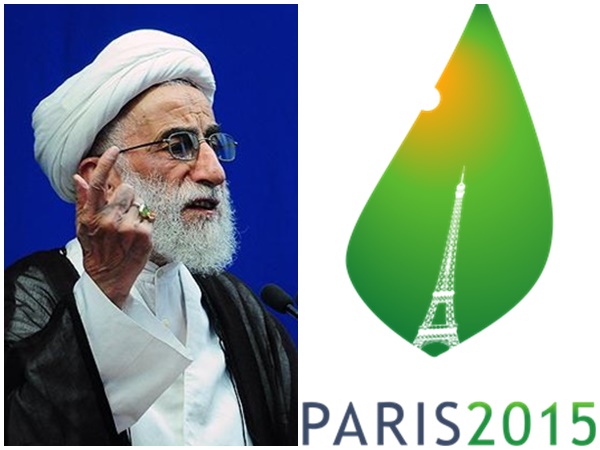
Paris Climate Change Agreement - Ahmad Jannati

According to a Farsi report by Fars News Agency, President Hassan Rouhani’s government recently signed the Paris Agreement on climate change and submitted it to the Parliament as a bill. After being approved by the Parliament, now it should be enacted in the Guardian Council of Iran.

Meanwhile, ‘Iran Think Tanks Network’ has written a letter to Ayatollah Ahmad Jannati, the secretory of Guardian Council, to discuss the possible “damages” caused by accepting this convention.

At first, the letter warns against the economic consequences of Paris Agreement. According to the letter, while developed countries have been historically the main consumers of fossil fuels, they are asking developing states to put limits on their fuel consumption. By accepting this, Iran allows Western countries to control its use of energy, and thus, to limit its progress in building important infrastructure.

Later in the letter, we read about the political-security effects of Paris Agreement. Apparently, no penalty is considered for the violation of this Agreement by this moment; however, it provides Western countries with a pretext for imposing new economic or political sanctions against Iran in the future.

The lack of scientific consensus on the effect of carbon dioxide on global warming is another reason to decline the Agreement. Nowadays, many scientists believe that global warming is not a result of high carbon dioxide emission. It seems odd that media, international organizations and western authorities emphasize so intensely the need for reducing carbon dioxide emission and fossil fuel consumption.

The experts of ‘Iran Think Tanks Network’ have announced their preparation for discussing the abovementioned harms in a meeting with members of the Guardian Council.