Saturday, December 27, 2025
Home Blog Page 4178

World Bank Says Iran’s Foreign Debts Have Decreased by 64%

world bank

A report by the World Bank titled “International Debt Statistics 2017” showed that Iran’s debts for 2015 stood at $6.32 billion. The figure was slightly higher than 2014 but was nonetheless around 64 percent lower than the debts in 2011 ($17.34 billion).

The biggest jump in Iran’s foreign debts took place between 2000 and 2005 when they hit an all-time high of $21.54 billion from $8.02 billion. The debts descended gradually over the next years but plunged the highest to a third of 2005 record in 2012 at $7.40 billion, according to the World Bank report. Figures show that Iran’s foreign debts in 2013 stood at almost the same level until they slid to the lowest level in over 14 years in 2014 at $5.44 billion.

The World Bank emphasized in its report that the flow of foreign direct investment (FDI) in Iran had declined for the third consecutive year in 2015 to $2 billion. Nevertheless, it added that the lifting of sanctions was expected to provide an impetus for a rebound.

Iran saw a series of US-led economic sanctions lifted in January last year after a nuclear deal it had reached with world powers came into effect, Press TV reported.

The deal that had been made with the five permanent members of the Security Council plus Germany – the so-called P5+1 – allowed the removal of sanctions against Iran in return for certain steps by the country to restrict some aspects of its nuclear energy activities.

The sanctions prevented Iran from exporting oil beyond a ceiling of around 1 million barrels per day, banned investments in its oil industry, and limited its overseas trade among other restrictions internationally described as the toughest ever imposed against a country.

Iran has over the past few years made significant efforts to boost its economy through different measures.

The country’s government spokesman Mohammad-Baqer Nobakht told reporters on Sunday that Iran had attracted around $11 billion in foreign investments since the removal of sanctions.

Iran Strongly Condemns Terrorist Attack in Baghdad

baghdad

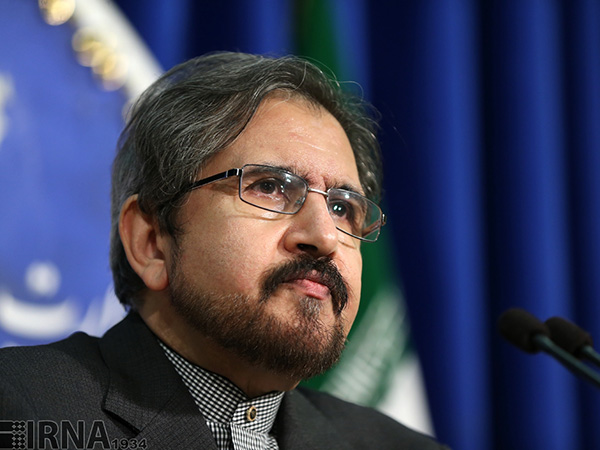
Bahram QassemiThe Iranian Foreign Ministry Spokesman Bahram Qassemi said on Monday the region, particularly Iraq, has been witnessing increasing terrorist attacks over recent days.

Such acts of terror are the reaction of Takfiri terrorists to their crushing defeats in the region in recent weeks, he said, adding that they are also the result of the lack of firm determination of those merely claiming to be fighting terrorism in the region and throughout the world.

The Iranian spokesperson expressed hope that political strategies in the New Year would reinforce unity among countries in a bid to eliminate terrorism.

Qassemi also offered condolences to the Iraqi government and nation as well as the bereaved families of the victims of the Monday terrorist attack.

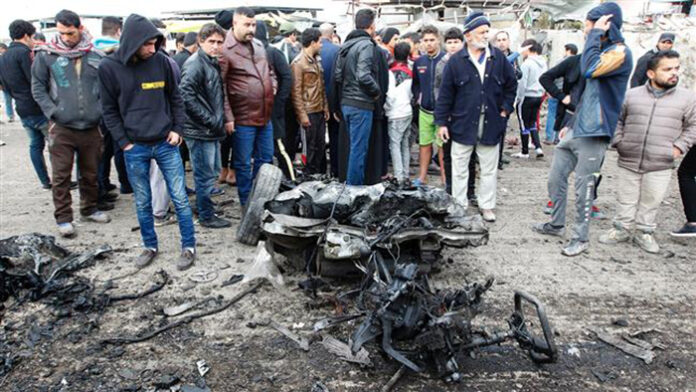
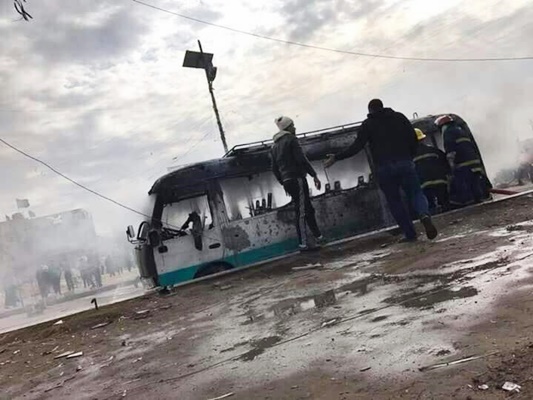
At least 39 people were killed and 57 more injured after a terrorist car bomb attack rocked a busy square in Sadr City, a Shia-populated suburban district of Baghdad.

Reports said that an explosive-laden truck was detonated in an outdoor market, hitting day laborers and a nearby police checkpoint.

Nine of the victims were passengers on board a minibus that was passing through the square at the time while three police officers were also among the victims.

ISIS terrorists claimed responsibility for the attack. They regularly conduct similar attacks targeting civilians in the conflict-ridden country.

Three bomb blasts killed 29 people across Baghdad on Saturday while an attack near the city of Najaf claimed the lives of seven policemen on Sunday. ISIS claimed responsibility for both assaults.

Gruesome violence has plagued parts of Iraq ever since ISIS terrorists mounted an offensive and took control of portions of the Iraqi territory more than two years ago.

Iraqi army soldiers and allied fighters are leading operations to win back militant-held regions.

Data from monthly reports issued by the United Nations Assistance Mission for Iraq (UNAMI) shows that acts of terrorism killed a total of 12,038 Iraqis and injured 14,411 others in 2016.

Tourist Destinations in Iran You Should Visit before You Die

All people like traveling to exciting places. This idea often make us think of costly journeys to exotic destinations like the heart of African forests; however there are many wonderful, less discovered tourist destinations in a country like Iran.

Here are some of these sites, as reported by ISNA in Farsi:

Valley of Genies in Tabas

There is an astonishing valley in South Khorasan Province, eastern Iran, which is believed to be the residence of genies because of its unusual look. There are tunnels and houses called “Khaneh-Gabrha” (house of Zoroastrians) in the walls of this valley which had been used as lodgments by Zoroastrian people in old times.  It is said that they date back to Sassanid Empire.

This tourist destination, which is located 30km away from the city of Tabas, can be dangerous to visit without guidance because of its long, steep walls. Local people, who call it “Kal Jenni” (the valley of genies), can be your guide during your journey.

Stony Garden of Sirjan

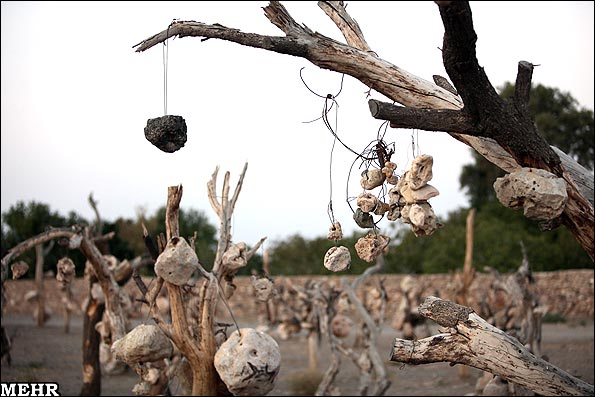
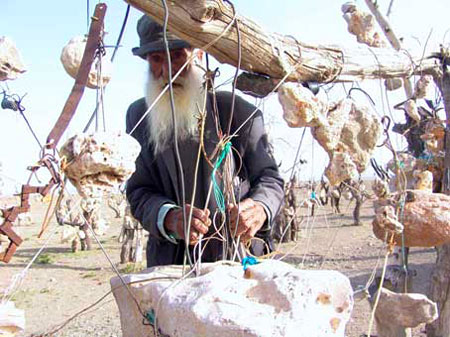
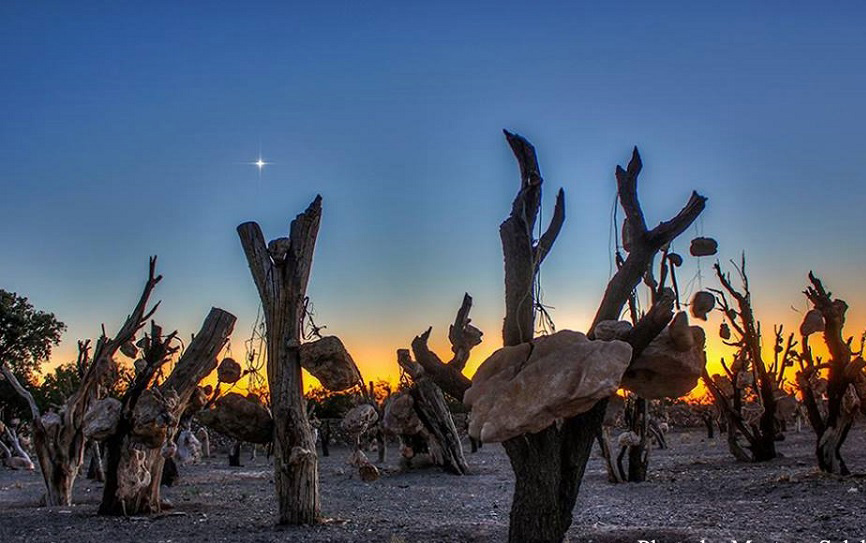
Bagh-e Sangi [Stony Garden] is a tourist attraction in Sirjan, Kerman Province, in southern Iran. “Darvish Khan Esfandiarpour, the owner of this garden located about 40km of Sirjan, was a deaf and mute man who lived there with his family and made a living out of gardening and shepherding.

After the Iranian land reform in 1963, he left gardening in protest at the loss of his lands until all trees in his garden (the parts remained after the distribution of lands) died. Then he hung stony fruits on the branches of fruit trees and used to take care of them like real fruits.

Esfandiarpour died in 2007 at the age of 90, and was buried in his garden. His stony garden is still alive, though; has become a well-known tourist destination and is visited by many people.

Mud Volcano of Chabahar

The mud volcano of Bandar-e Tang, 100km away from Chabahar, southeastern Iran, is surrounded by the mud that boils and comes out of it, and a homochromatic desert.  At the top of the mountain, there is a mud-covered hole less than one metre wide and about half a meter deep. Every 10 to 15 minutes, some mud comes out of the hole, sounding like the burst of a bubble, and scatters around. The formation of mountain has been probably due to the activity of mud volcano over the years.

The mud volcano is a natural phenomenon and tourist destination; in which mud and slurries come out of layers beneath the earth surface, boil in the shape of spring and form mounds.
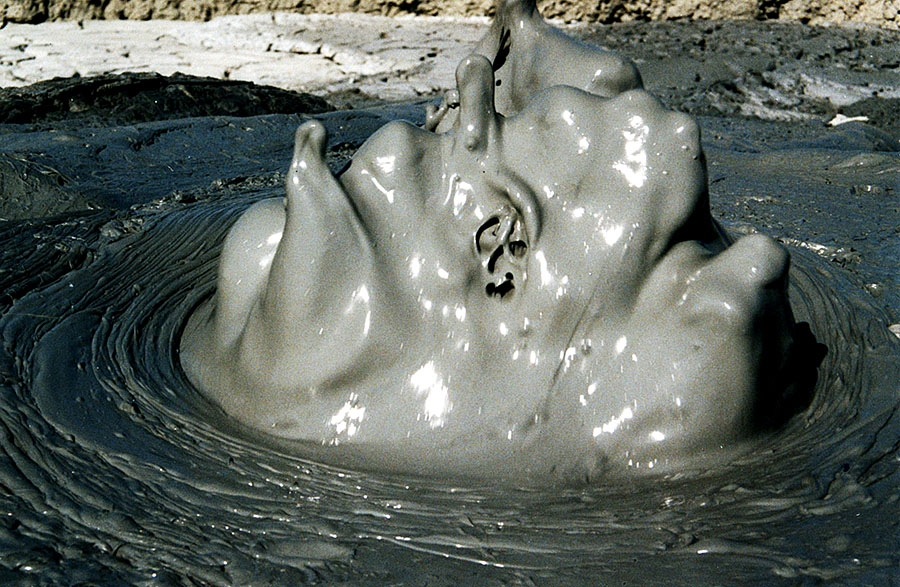
Mud Volcano of Chabahar; a Wonderful Tourist Destination in Iran

Time Spring of Lorestan 

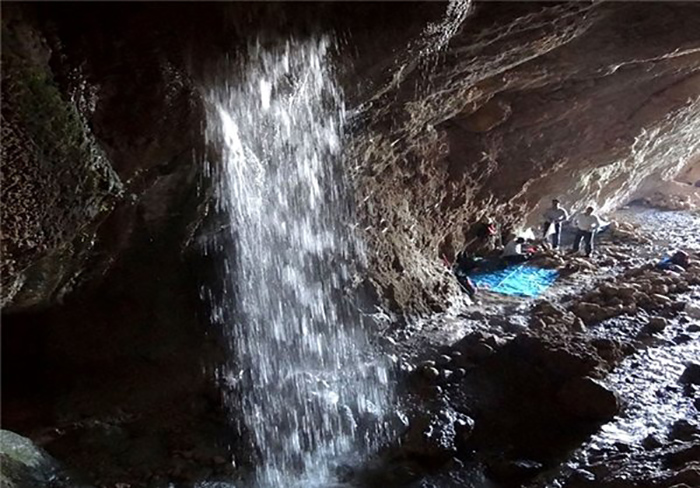
The spring of “Vaght-e Sa’at” (the time) in Doroud, Lorestan Province in Western Iran, is called so because its water flows and stops flowing naturally at certain intervals from 45 to 90 minutes. This continues throughout the year.

This spring is located in a cave that makes it more attractive. The water of this spring flows through the cave before reaching the skirts of Periz Mount and going downward.
 57407650

Valley of Ghosts in Dezful

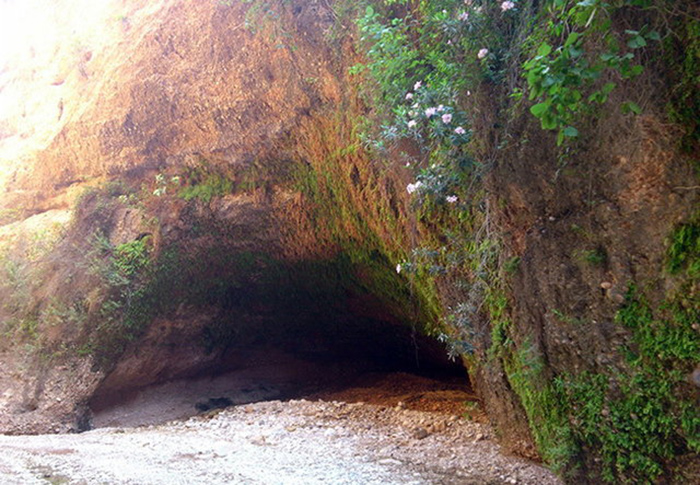
“Darreh-ye Arvah” (the valley of ghosts), also known as “Darreh Koul Khersan”, is located 40km away from Dezful, southwestern Iran. The entrance of valley is covered by beautiful, varied trees.

The valley of ghosts is a wonderful tourist destination because of its hot springs of walls, permanent water flow, waterfall, drip-water, woodland and different plants.

In some points, the canyon becomes so narrow that just one person is able to pass through it. Sometimes the valley’s walls meet at the top or just a narrow aperture remains. The valley ends in Dez River, where you can reach the land by swimming or boating.
57407653

Screaming Forest of Torqabeh

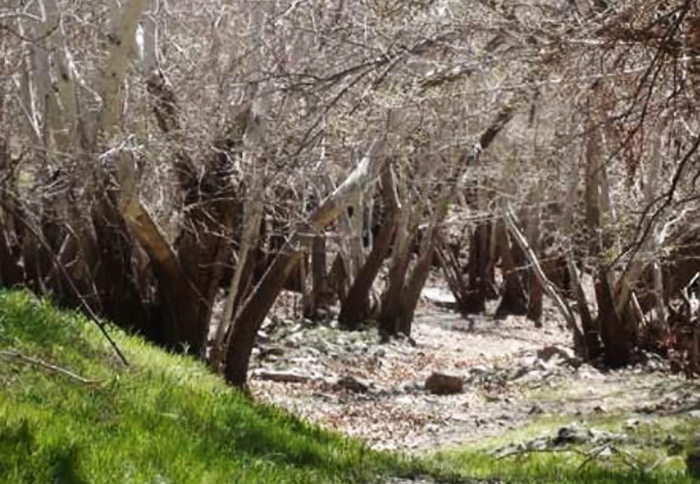
A forest near Sarborj village of Torqabeh, northeastern Iran, produces scary voices during the night. The source is still unknown; however, some locals link it to the swarm of locusts who attack the forest.
57407660

Stepped Springs of Badab-e Surt

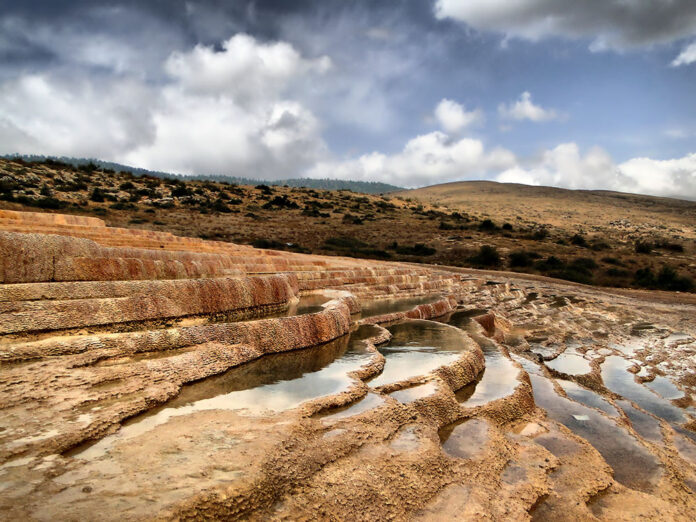
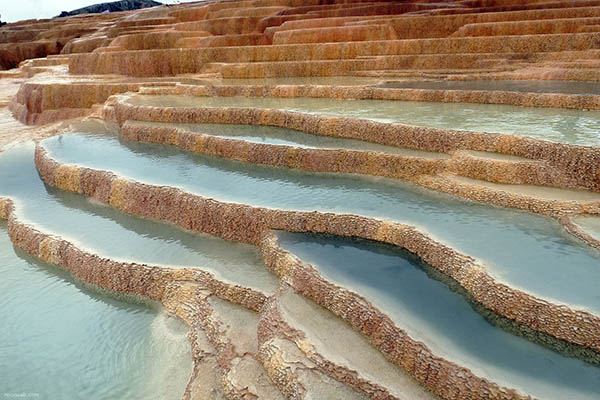
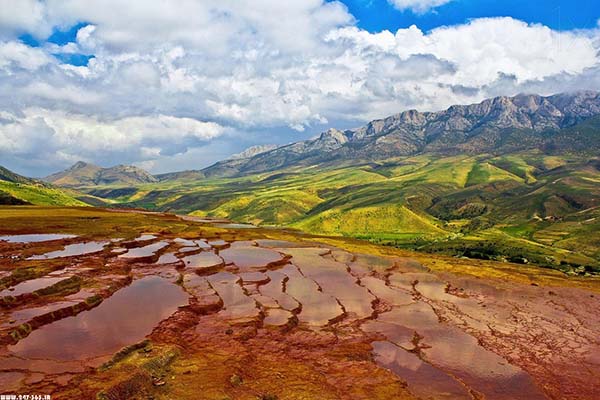
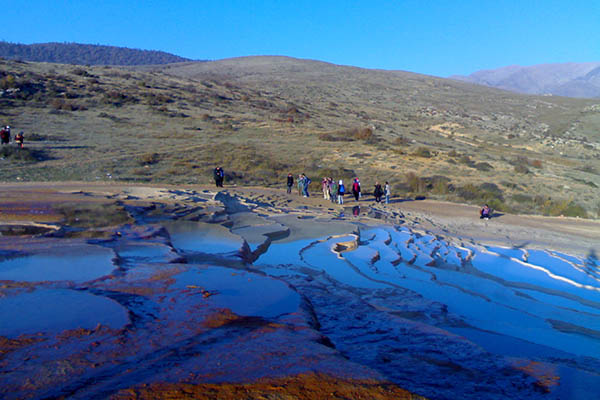
The stepped springs of Badab-e Surt in Sari, northern Iran, are unique. The place includes several springs with totally different waters regarding their colour, smell, taste and volume in this site.

In downstream slope of mountain, the flow of sedimentary and gassed water have formed hundreds of terraces and tens of beautiful orange, yellow and red pools in different sizes over the years. Badab-e surt is attractive mainly due to this unparalleled feature. The vision of terraces in mountain skirts surrounded by picturesque environs is stunning, especially at the sunset.

The first spring of this site contains very salty water in a deep, 15-metre wide pool. The second spring, in north-western upstream of the first, has sour red and orange water. A layer of Iron sediment is seen around it.

Medical Spring of Qorveh

18 kilometres northeast of Qorveh, northwestern Iran, there is a roaring spring which contains colourful water because of minerals, sulphur in particular. The water of this spring, named “Baba Gorgor” after an adjacent village, is often reddish but sometimes turns to lime.

Its mineral water is used as a remedy for skin diseases, indigestion and other gastrointestinal diseases, rickets and swelling.
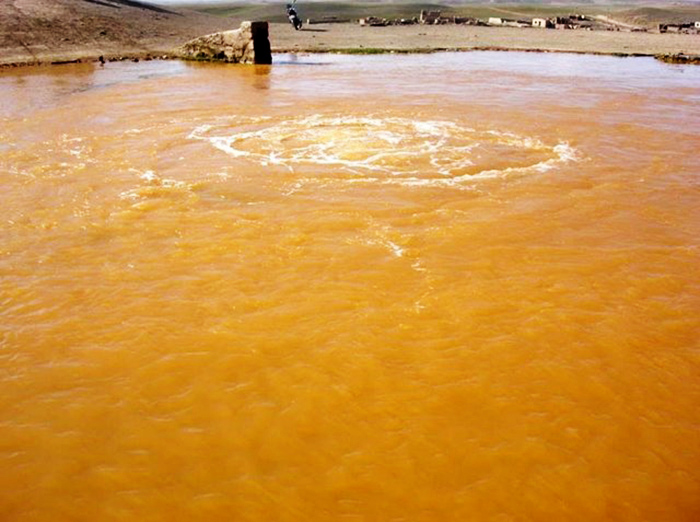

Medical Spring of Qorveh; a Wonderful Tourist Destination in Iran

Iran Detains 21 Foreign Fishermen for Fishing Rare Species in Persian Gulf (+Video)

Persian Gulf

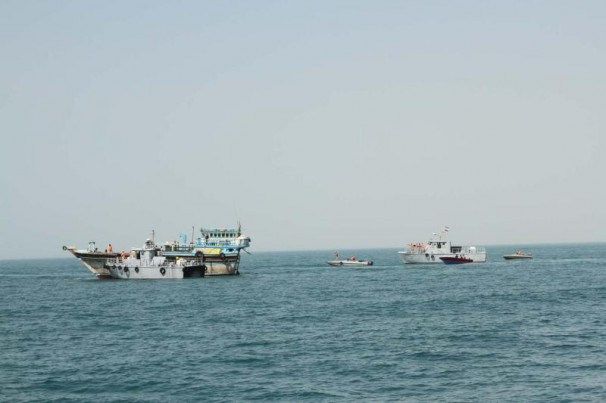
According to a Farsi report by IRIB News, Colonel Rahim Jahanbakhsh, the Commander of Kish Island’s Marine Police, announced that three fishing vessels belonging to Arab countries of Persian Gulf were captured and their crew members were detained for straying into Iran’s territorial waters and fishing rare species.

The traditional boats, known as dhows, had entered Iranian waters near the country’s Kish Island.

Jahanbakhsh noted they had fished rare species of sharks and fish in Iranian waters, while catching such rare species is illegal in Iran, and they should pay a fine of $7,000 to $10,000 for each white shark they fished.

He went on to say that in recent months, Iran has detained 12 dhows in its waters over similar offences.

Here is a Farsi video broadcasted by Iran’s state TV on the arrest of these fishermen:

New Advancements in Brain-Controlled Systems

According to a Farsi report by ISNA, Iranian researchers at the Science and Technology Park of Gilan, northern Iran, recently manufactured a home-grown brain-controlled wheelchair.

Babak Asheri, project manager, said that the wheelchair has been planned based on the use of brain signals. This is a method for hardware control.

“The user of this wheelchair doesn’t need to move it by his hands,” he noted. “When he wants to turn left, the wheelchair moves in this direction by brain signals it receives.”

“When someone has a reaction, thinks to something, sees it or speaks, his brain sends micro vault signals depending on its activated area. The signals are received by several kits, then reinforced by software,” he explained.

“The reinforced signals can control and move hardware such as wheelchair, so it turns where the user wants.”

He went on to say that after the completion of Event-Related Potentials (ERP), the wheelchair will be completed. ERP is schematic to distinguish fine similar movements such as the blinks of right and left eyes, which contributes to the elimination of additional noise.

Brain-Controlled Game for Hyperactive Children

Asheri also announced that the production of a brain-controlled game for hyperactive children is on the agenda of research team. The game is being planned to treat the attention deficit disorder in these children.

 “When you see by your left eye, your right-brain is activated and vice-versa; this means that your brain produces micro vault signals. When your eye sees a light bulb with a 15-Hertz frequency, it doesn’t recognize that the bulb turns on and off 15 times a second; your brain can realize it, though.”

He noted that when someone focuses on a subject, his brain produces signals in the forehead area. “By focusing, some part on the child’s brain produces signals to be received by electrodes inserted on his head.”

“Taking advantage of these characteristics, we produced a totally dark screen which turns on when the child focuses on it. Then he can start the game.”

Regarding other uses of brain controlled systems, Asheri said, “A variety of robots can be produced in this system, and controlled by the brain signals of the user instead of his hands.”

Turkmenistan to Be Fined for Cutting Gas Supply to Iran: Official

2152685_681

According to a Farsi report by Asr-e Iran, Majid Boujarzadeh, the spokesman for National Iranian Gas Company (NIGC), announced that Turkmenistan has to fulfil its commitments, otherwise it would be fined.

Referring to Ashgabat’s move to cut gas supplies to northern Iran, he noted that people’s access to gas in their homes is the Iranian government’s priority, and the gas supplies of power plants and industries might be temporarily cut to make up for it.

Iran Holds Talks with Italy for Financing Two Rail Projects

139510121737003149599804

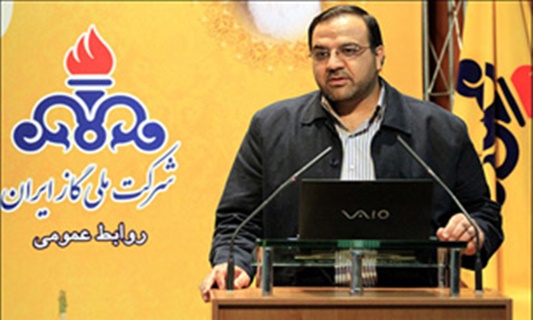
“We are in dialogue with Italian investors about Qom-Arak and Tehran-Hamedan high-speed railroad lines and the needed fleet (of trains),” Nazari told reporters in Tehran on Monday.

He said China has also announced its readiness to finance the Tehran-Mashhad and Tehran-Isfahan railroad projects.

The official added that 85 percent of the investment in the projects is planned to be provided through finance.

Nazari also said political talks on construction of a 2,000-kilometer railroad line connecting Iran and China have concluded.

Iran to Respect Outcome of Astana Talks on Syria

Iranian Foreign Ministry spokesman Bahram Qassemi made the remarks on Monday, addressing reporters at his biweekly press conference.

Late last month, the Syrian government and foreign-backed militant groups reached a nationwide ceasefire deal, brokered by Russia and Turkey. The two sides also agreed to attend intra-Syrian talks in Astana.

The deal followed an earlier truce agreement, mediated by Moscow and Ankara, in Aleppo, which paved the way for the evacuation of remaining civilians and armed men and put back the northwestern city under Damascus control after years of fighting.

The diplomatic achievements came after trilateral Syria meetings among Iran, Russia and Turkey in Moscow, in which the three sides stressed the need for an all-Syria truce and expressed “readiness to facilitate and become the guarantors” of the agreement, which was still under negotiations at the time.

Qassemi further said it is not yet clear when the Astana talks will take place, adding that Iran has “no preconditions” for attending the negotiations aimed at resolving more than five years of deadly violence in Syria.

Currently, the potential participation of other countries in the planned talks is not under discussion, the Iranian official added.

He emphasized that the Astana talks will be purely intra-Syrian, and that the Islamic Republic will not seek to impose its own will on any side during the planned negotiations.

Syria partition claims ‘hot air’

The Iranian official further rejected as “worthless” and “false” a recent Reuters report claiming that Tehran, Moscow and Ankara eye “dicing Syria into zones of influence.”

The report, published on December 28, 2016, said Syria would be divided into informal zones of regional power influence under an outline deal between Russia, Turkey and Iran, citing familiar sources.

“Iran’s position versus all regional countries is clear. We always have and always will defend Syria’s territorial integrity and national sovereignty,” he said, adding, “We will now allow Syria to turn into a place, where other countries, the least of which Iran, can exert their influence.”

He also pointed to a recent visit by Syrian Foreign Minister Walid al-Muallem to Tehran, saying Iran will keep up “constant consultations” with Damascus and other partners on the situation in Syria.

‘No Saudi invitation’

Last Friday, Saudi papers reported that the kingdom had invited Iran to discuss the resumption of Hajj pilgrimage for Iranians, a process that has been halted over a litany of Hajj-time disasters and moves by Riyadh impeding the performance of the Islamic ritual by Iranians.

The spokesman, however, denied Tehran had received any such invitation and said the Islamic Republic currently did not have any plans to send Iranians on the pilgrimage.

Energy dispute with Turkmenistan ‘not political’

Last week, it was reported that Iran and Turkmenistan had resolved a gas dispute brought about by Ashgabat’s claim that Tehran was $1.8 billion in arrears for gas deliveries from the Central Asian nation.

The resolution transpired on the back of an agreement over the differences between the two sides.

However, it was reported later that Turkmenistan had broken off gas flows to Iran as it had threatened prior to the conclusion of the deal.

Qassemi reminded that the bilateral cooperation in the energy sector goes back 20 years, half way through which Turkmenistan increased its prices, adding Iran agreed to the hike at the time under certain circumstances.

The official, however, said the dispute is not of a political nature, and only related to differences between the respective national gas companies, expressing hope that it will be resolved through mutual prudence.

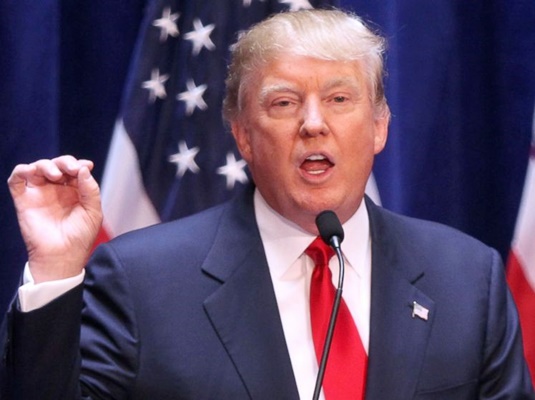
US Invasion of Iraq on False WMD Intelligence Was a Disaster: Trump

trump

According to a report by IFP, Trump noted on Saturday evening that the recent intelligence showing Russian interference in the US election might be false just like the information given to Bush for invasion of Iraq.

“I just want them to be sure because it’s a pretty serious charge,” Mr. Trump said of the intelligence agencies. “If you look at the weapons of mass destruction, that was a disaster, and they were wrong,” he added, referring to intelligence cited by the Bush administration to support its march to war in 2003. “So I want them to be sure,” the president-elect said. “I think it’s unfair if they don’t know.”

113 Killed and Wounded in ISIS’ Triple Attacks in Baghdad

photo_2017-01-02_15-12-02

According to a report by IFP, the first attack on Sadr City, a Shiite-majority suburb of Baghdad, took place shortly after the arrival of French President Francois Hollande, who was in Baghdad for meetings with Iraqi officials and would be visiting French troops in the north of the country.

Many of the victims were daily labourers waiting for jobs at an intersection in Sadr City, a sprawling majority Shiite neighbourhood in the northeast of the capital that has been repeatedly targeted.

Pictures posted on social media shortly after the explosion showed a huge plume of black smoke billowing into the sky and seriously injured people being evacuated.

Later in the day, an official from the Iraqi Interior Ministry confirmed to Rudaw that an explosion went off near Jawadir hospital, shortly after the first attack in the Sadr district, killing 11 others.

Another seven people were killed and wounded in a car bomb nearby Kendi hospital in central Baghdad, bringing the total number of the casualties to 113 in a single day.

The police source said the number of casualties is on the rise.

The ISIS terrorist group has claimed responsibility for these three attacks in Baghdad.

Over the past few days multiple bombings have ripped through Baghdad and Shiite Najaf city, killing another 35 civilians.

These attacks come as Iraqi forces have been engaged nearly three months  in a major military offensive to retake the city of Mosul from the extremist group ISIS.