Saturday, December 27, 2025
Home Blog Page 4177

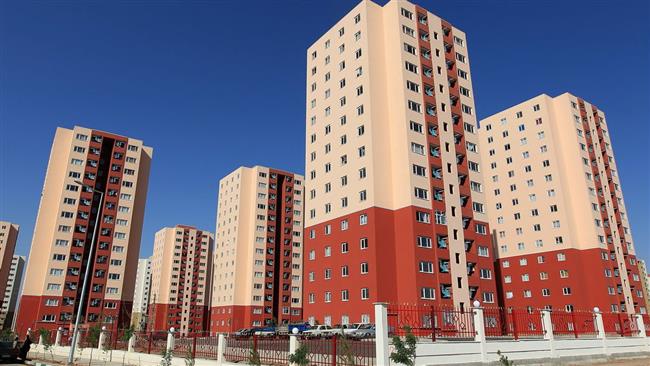
Iran’s Parliament Votes to End Ahmadinejad’s ‘Mehr’ Mass Housing Project

Mehr- housing project

The Parliamentarians in their debates over Iran’s Sixth Five-Year National Development Plan (2020-2025) voted to have Maskan Bank allocate the required funds for completing the remaining phases of ‘Mehr’ (kindness in Persian) housing project which was a main brainchild of former president Mahmoud Ahmadinejad (2005-2013).

No more new Mehr houses should be built, the MPs made it clear through an overwhelming approval. The move is already seen as significant for releasing huge amounts from the annual national development budgets that should have otherwise been spent on the scheme that had drawn serious criticisms by Rouhani’s government.

“Mehr Housing Now History,” wrote Arman Emrooz in an article on its front page.  “Goodbye Mehr Housing,” wrote another daily – Jam-e Jam. Sharq newspaper described Mehr housing as a “burden” for Iran’s economy.

“Finally, the fate of a heritage of the 10th government [of former president Mahmoud Ahmadinejad] was determined,” wrote Etemad newspaper. “The 11th government [of President Hassan Rouhani] had inherited lots of unfinished projects with huge debts that still needed to be settled. More importantly, this government had to respond to the shortcomings of its predecessor while it was not involved in anything related to them.”

Iran's Parliament Votes to End Ahmadinejad's 'Mehr' Mass Housing Project
“The End of Ahmadinejad’s Mehr,” wrote Sharq newspaper on its front page on Tuesday.
Iran's Parliament Votes to End Ahmadinejad's 'Mehr' Mass Housing Project
“Mehr Housing Becomes History,” wrote Arman Emrooz newspaper on its front page.
Iran's Parliament Votes to End Ahmadinejad's 'Mehr' Mass Housing Project
“Seal of Termination on Mehr Housing,” wrote Aftab-e Yazd newspaper in a front-page article.

The target of the project – which started in 2007 – was to erect 17 new cities and some 1.5 million housing units to poor families in face of rising land and apartment prices.

Accordingly, billions were withdrawn from the Central Bank of Iran (CBI) upon orders by the government to push the project forward.

The CBI was even ordered by the government to print money to fund the scheme, what eventually led to a rise in the monetary base and a runaway inflation, as reported by Ebtekar newspaper.

Estimates show that the banks had doled out loans totaling above $10.2 billion to applicants as of January 2011.

However, signs of the project’s failure emerged from early phases when the public failed to welcome it as desired.

This was due to the fact that the Mehr housing blocks had been mostly constructed with substandard designs and materials in remote areas with poor – or even non-existing –infrastructure facilities.

Other problems emerged later when developers found the project unprofitable as a result of skyrocketing inflation and began to leave many housing units half-complete.

Furthermore, inflation in the real estate market proved profitable for racketeers who bought off units using complicit applicants as intermediaries, then sold them at much higher prices, as reported by the media.

This eventually led to a nine-fold increase in prices of houses and pushed up inflation already deteriorated as a result of sanctions against the country.

Iran's Parliament Votes to End Ahmadinejad's 'Mehr' Mass Housing Project

The vote by the Parliamentarians was welcomed by the media for its anticipated effect on removing a huge financial burden on the government of President Hassan Rouhani.

Rouhani, himself, had emphasized soon after taking office that the Mehr housing scheme was one of the largest hurdles to Iran’s economic recovery. He told the nation in a televised address on the occasion of his first 100 days in office that the project was responsible for 40 percent of Iran’s liquidity.

The significant of the Parliament’s vote becomes further clear when considering that the amount that Ahmadinejad’s government had allocated for the project was higher than the collective development budgets for several past years of Rouhani’s tenure, wrote shafaf.ir news website.
Iran’s Leader Calls for Efforts to Ensure High Turnout in Upcoming Presidential Votes

leader

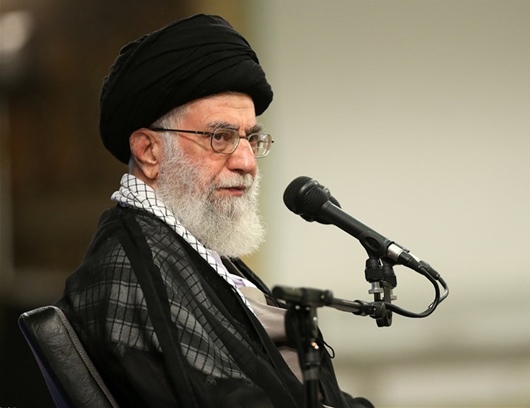
In a meeting with provincial governors in Tehran on Monday, Abdolreza Rahmani Fazli focused on the programs devised for the next presidential election, slated for May 19.

Referring to his recent meeting with Ayatollah Khamenei, the minister said the Leader has highlighted the need for efforts to hold the election in healthy and safe conditions, with full respect for the law and with a high turnout, as was the case in the previous elections.

In the last presidential election in 2013, more than 70 percent of 50 million eligible voters cast their ballots.

In October 2016, Ayatollah Khamenei outlined the general policies on elections in Iran, from the preliminary stages of qualifying the candidates to the announcement of the ultimate results.

In the document, the Leader had emphasized that all candidates should be entitled to equal advantages when it comes to using state-run facilities, such as the national broadcasting or other public media outlets.

Crisis in Liberated Iraq: Children with Birth Certificates Issued by ISIS!

According to a Farsi report by Jame Jam newspaper, to the children of Mosul, the damages of ISIS occupation aren’t limited to physical and mental harms: any child who is born in ISIS-controlled areas after June 2014 has ISIS-issued identification documents.

Aram Abolkarim, a legal expert on identity of newcomers, announced that ISIS established its administrative registration system just a month after the occupation of Mosul.

He went on to say that families should stay in camps until official Iraqi birth certificates are issued for their children – a process that may take several years.

As the polygamy is common among regional inhabitants, they have larger families, thus require more birth certificates. Furthermore, certain families have all their birth, marriage and death certificates issued by ISIS.

“The battle of Mosul liberation has prolonged too much. Even after the end of war, it will take several years to solve the problems. The problem is too complicated to be resolved by simply returning home,” said Lawak Ahmad, the governor of Qandil region, Iraq.

Saudi Ruler Will Be Ousted in 2017 in a ‘Palace Coup’

Saudi Arabia

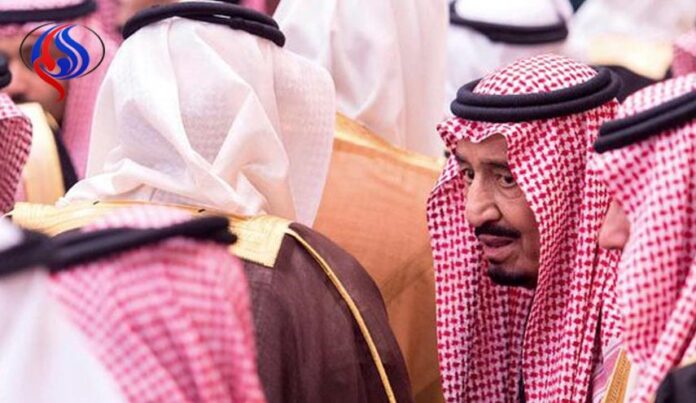
“Decades of repression, overspending and corruption will finally come back to haunt the Saudi royal family. There will be a palace coup against the country’s effective ruler Prince Salman and the regime he has led with his infamous ‘iron fist’,” Daily Mail’s commentator Peter Oborne said in his predictions for the New Christian Year.

“Paying the price for meddling in both the Syrian and the Yemeni civil wars, he is likely to be replaced by former security chief Mohammed bin Naif, who has long-standing links with Washington,” the report added.

37 Top American Scientists Urge Trump to Abide by Iran Nuclear Deal

trump

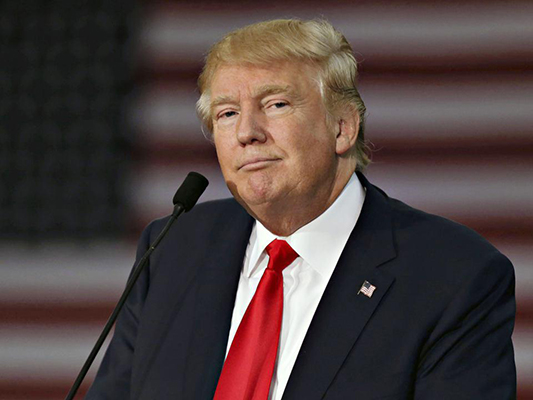
According to a report by IFP, 37 top American scientists have referred to Iran nuclear deal as “a critical US strategic asset” in their letter to Trump, and urged him to preserve it.

The 37 signatories included Nobel laureates, veteran makers of nuclear arms, former White House science advisers and the chief executive of the world’s largest general society of scientists.

The letter was organized by Richard L. Garwin, a physicist who helped design the world’s first hydrogen bomb and has long advised Washington on nuclear weapons and arms control. He is among the last living physicists who helped usher in the nuclear age, New York Times reported.

The letter to Trump says its objective is to “provide our assessment” of the Iran deal since it was put in effect nearly a year ago. On Jan. 16, 2016, the International Atomic Energy Agency, the technical body in Vienna that oversees the accord with teams of inspectors it has sent to Iran, gave its approval, saying Tehran had curbed its nuclear program enough to begin receiving relief from longstanding sanctions.

While the deal was opposed by all Republicans in the US House and Senate, it is not clear that Trump would move quickly to renege on it. Any effort by the United States to walk away from its terms, or to renegotiate it, would open the way for Iran to insist on changes as well.

Is Saudi Arabia in Retreat after 650 Days of War on Yemen?

yemen

According to a Farsi report by Kayhan, 22 months after the beginning of Saudi invasion of Yemen, on the eve of the anniversary of Saudi king’s coronation, which is called “Allegiance with Salman”, Adel Al-Jubeir, the Foreign Minister of Saudi Arabia, announced that his country prefers political solutions in Syria, Libya and Yemen!

He stated that due to previous experiences in dealing with security challenges, increasing terrorism, and foreign interventions in Saudi Arabia affairs to undermine its domestic security, King Salman of Saudi Arabia is trying to adopt a stable, moderate policy toward regional issues.

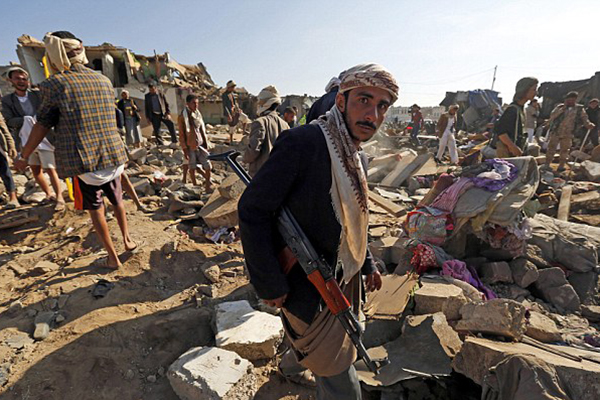
Yemen has been under military strikes by Saudi Arabia since March 26, 2015. The Saudi war was launched in a bid to undermine the Houthi Ansarullah movement and restore power to former president Abd Rabbuh Mansour Hadi, who has resigned as Yemen’s president but seeks to grab power.

Yemeni Mother Loses 5 Children in Saudi Airstrikes

Yemeni Mother

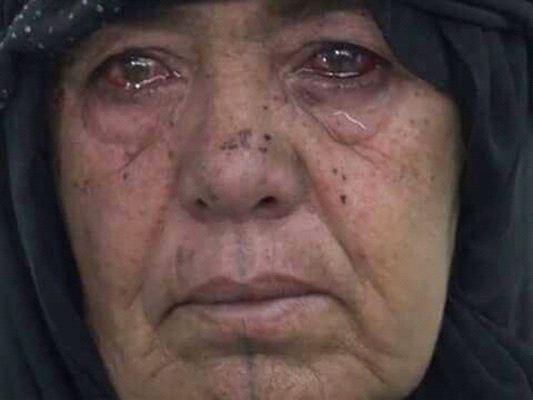
According to a Farsi report by Al-Alam, Yemeni media published a moving photo of an aging woman who lost her five children during the bombardment of Sirwah, Ma’rib, by the Saudi-led coalition’s aircraft on the first day of 2017.

Coming from a very poor family, her children made a living out of collecting firewood.

The photo shows how she is in distress after the loss of her husband and children.

Media reports have condemned Saudi Arabia for the slaughter of Yemeni people at the beginning of New Year.

Americans Don’t Dare to Ban Use of Gun: Iran’s Leader

Leader

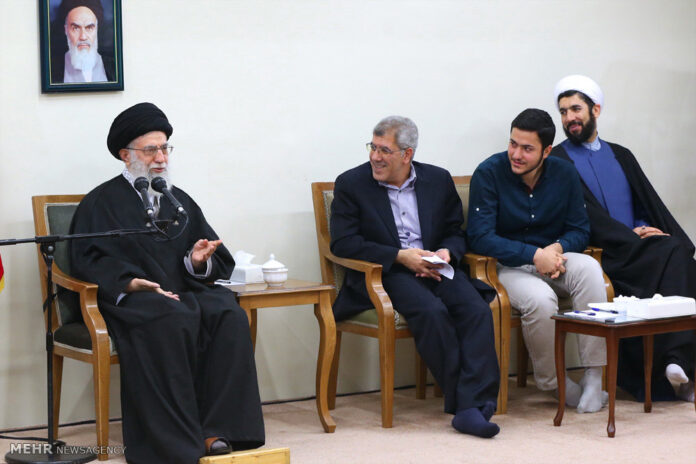
Addressing a meeting with a group of top Iranian students in Tehran on Monday, the Leader pointed to increasing violence and deadly shootings in the United States and stated that murder and the spread of arms use have turned into a “serious problem” in the country.

This problem can be solved through the prohibition of the use of firearms by the citizens of the country, the Leader said.

Ayatollah Khamenei added that American officials, however, do not dare outlaw the use of guns due to the high influence of firearms manufacturing companies inside the country.

The Leader further referred to the lack of spirituality and divine values as being behind the rifts, shortcomings and frailties of the Western civilization despite its great materialistic advances.

Ayatollah Khamenei cited moral, intellectual and practical deviations, the collapse of family institution, increasing violence, moral corruption, suicides in Western societies, particularly in the US, as results of the dearth of spirituality and divine values.

The Leader noted that some American scholars and intellectuals explicitly admit that these immoral acts and afflictions are rampant in their country, Press TV reported.

LeaderScientific Progress Should Be Accompanied by Ethics
Elsewhere in his remarks, Ayatollah Khamenei underscored the importance of commitment to religious values and the Islamic Revolution’s ideals alongside scientific efforts.

“Scientific progress alone will not bring about happiness for a nation and country, but when the scientific movement is accompanied by sublime spiritual and revolutionary values, it will pave the way for settlement of the country’s problems and make it a role model for the region, the Islamic world and the globe,” Ayatollah Khamenei said, as reported by Tasnim.

Ayatollah Khamenei further underscored that Iran’s scientific progress should not be hampered or stopped, but should be accelerated instead.

Iran’s natural resources and capacities are very extensive, diverse and even unknown, the Leader added, calling on the young generation to tap into such potential and ensure the country’s progress, in both material and spiritual dimensions.

Iran’s Judiciary Chief Lashes Out at Growing Islamophobia in Western Countries

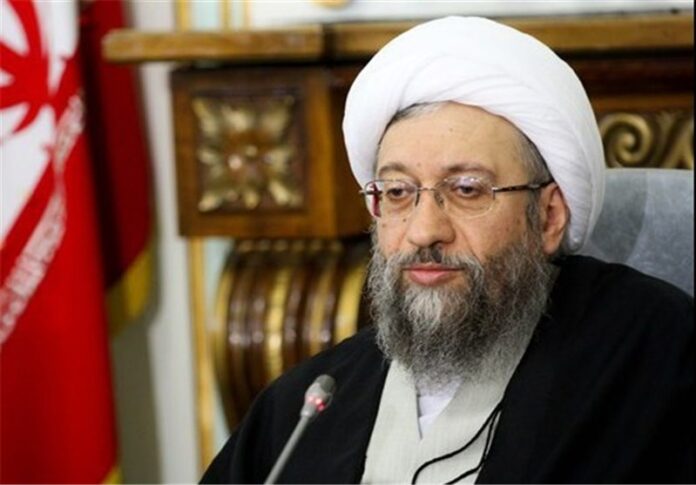
“In Western countries, which claim (to be advocates of) freedom and human rights, Islamophobia is constantly promoted and day after day attacks on Muslims and their religious sites intensify,” Ayatollah Amoli Larijani said in a meeting of senior Judiciary officials in Tehran on Monday.

Stressing that continuation of such anti-Muslim violence is absolutely unacceptable, the official said security of Muslims in Western countries must be ensured by the governments of those countries.

“Criminal acts committed by a few terrorists calling themselves Muslim have nothing to do with Islam,” the senior cleric underscored, adding that no Muslim should face insecurity in Western countries because of such acts of terrorism.

He said the Islamic Republic of Iran is proud to have provided and guaranteed security for followers of divine religions, including Christianity, Judaism, and Zoroastrianism, noting that followers of these faiths, like their Muslim fellow countrymen, live in peace and freedom in Iran and that Western countries should follow Iran’s example in this regard.

Ayatollah Amoli Larijani further referred to the West’s atrocities in regional countries such as Syria and Palestine and expressed the hope that in the new Gregorian calendar year of 2017, Western rulers, by truly following the teachings of Jesus Christ (AS), stop those crimes and take steps for the happiness of their own people and the rest of the world.

Iran Was Only Country that Helped Iraq in Fight against ISIS: Iraqi VP

Nouri al-Maliki

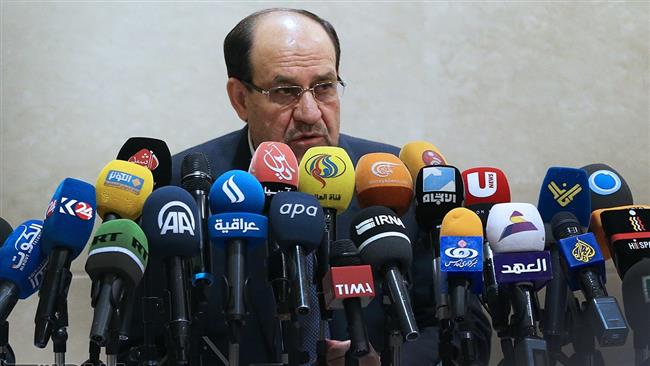
The Iraqi armed forces did not possess adequate weapons to fight the Daesh terrorist group but Iran equipped them with much-needed military hardware, Maliki said in a press conference in Tehran on Monday.

He added that Iran was the only country to assist Iraq in the battle against Daesh and other terrorist groups.

Maliki said several countries had declared their readiness to help Iraq in its war on terrorism but only Iran backed up its words with actions.

The former Iraqi prime minister also blasted Saudi Arabia’s policies in the Middle East and said Riyadh is the breeding ground for terrorism.

Maliki emphasized that Saudi Arabia has failed to achieve its objectives in the region and is currently paying the price for its wrong policy of supporting terrorists.

The Iraqi veep further said his current visit to Tehran is aimed at improving mutual relations, adding that the two countries have close and strategic ties.

Maliki arrived in Tehran on Saturday to hold talks with senior Iranian officials.

Iraqi Prime Minister Haider al-Abadi on August 10 hailed the presence of Iranian military advisors in the country’s battle against Daesh terrorists and said the Iranian advisors were present in Iraq on Baghdad’s request.