Thursday, December 25, 2025
Home Blog Page 4143

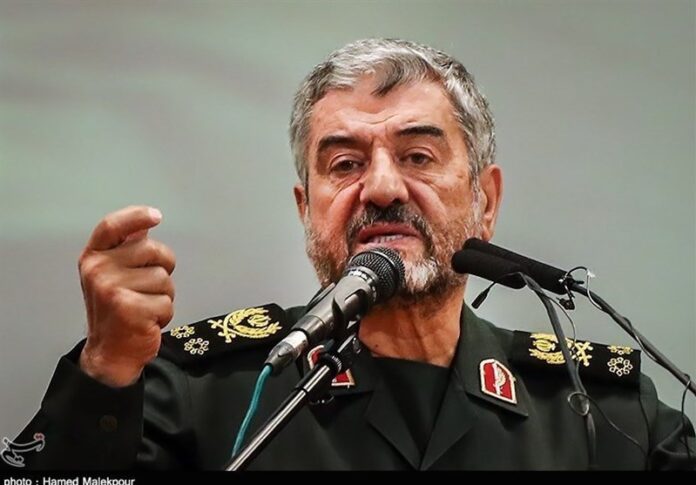
Iran’s General Soleimani, a Thorn in Side of Int’l Sponsors of Terror

IRGC Quds General Stresses Need for Aiding Palestinians Armed Resistance against Israeli Aggressors
IRGC-General Qassem Soleimani

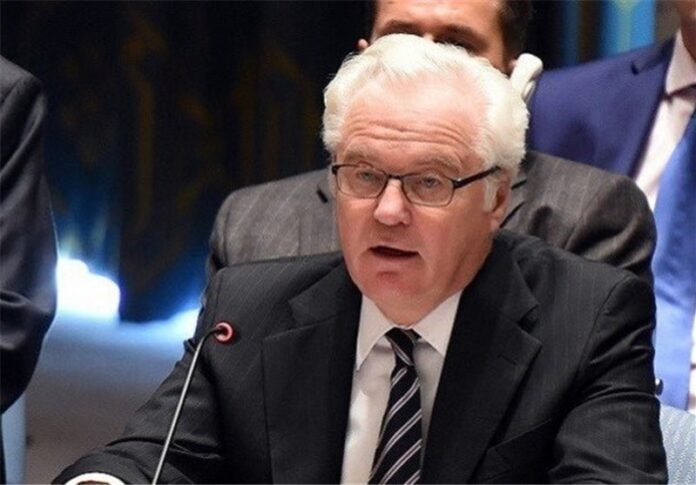
According to a Farsi report by ICANA, the United Nations Security Council has, in a meeting, reviewed the UNSC Resolution 2231 that would be a seal of approval for the nuclear deal Iran reached with six world powers.

In the meeting, the representatives of the US, Britain and France acknowledged that Iran has remained committed to the provisions of the nuclear agreement known as the Joint Comprehensive Plan of Action (JCPOA). However, they accused Iran of undermining stability in the region and carrying out destabilizing moves.

US Ambassador to the UN Samantha Power said at the meeting that the JCPOA should not deflect the UNSC’s attention from other issues pertaining to Iran.

Power claimed Iran is breaching the travel restrictions envisioned in UNSC resolutions despite respecting the JCPOA.

The British envoy also accused Iran of undermining stability in the region and sending arms to the Lebanese Hezbollah movement. The British representative claimed Iran’s actions in the Middle East show the country seeks to stoke, not stifle tensions.

The French envoy also alleged that Iran has not abided by the provisions of the JCPOA, rehashing claims made by the American and British ambassadors.

636175752625443644

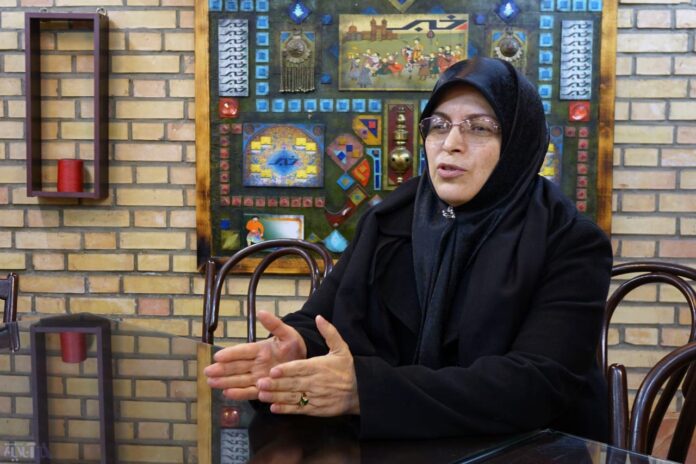
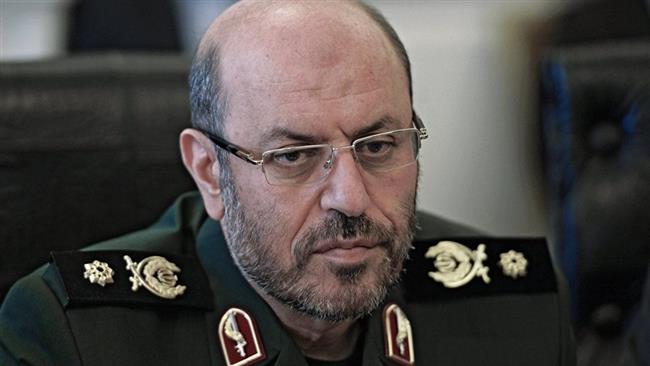
In the meantime, in reaction to the international propaganda against the advisory presence of Iranian Commander General Qassem Soleimani in Iraq and Syria, several Iranian MPs highlighted that Major General Soleimani and Iran’s military advisors play a pivotal role in combatting terrorist groups and maintaining the territorial integrity of regional countries.


General Soleimani is entitled to travel to all countries as a high-ranking Iranian official

636064223217205360In an interview with ICANA, lawmaker Ardeshir Nourian reacted to the Western countries’ propaganda against Iran at the UNSC meeting and accusing the country of breaching UNSC resolutions on travel restrictions.

He said the US and its allies seek to scale back Tehran’s movements in the Middle East as Iran has been one of the influential countries in the region in recent decades.

The MP went on to say that the Western states are witnessing that their strategies in the Middle East have all failed, and hence, they seek to justify their actions.

The US is trying to keep the Iranophobia fever running high both in the Middle East and on the international stage by launching propaganda campaigns, said the legislator.

The reason is that Washington and Tel Aviv had no excuse to attack Iran after the nuclear agreement was reached, so they are raising new issues, the lawmaker added.

By launching propaganda campaigns against Iran, the West mainly seeks to boost its military and arms relations with regional Arab states as weapons sales to Arab countries are a major source of income for the West, said Nourian.

He touched upon the stance adopted by authorities in the West on General Soleimani’s trips to regional countries, and said making such remarks is part of efforts to ratchet up the pressure on Iran.

He noted that General Soleimani is a top Iranian military and security official, and travels to Mideast countries as American and British military top brass do.

The difference between those trips, he said, is that Western officials come to the region to support terrorism while Iranian military authorities go on trips to offer advisory assistance to counter terror groups.

General Soleimani plays a key role in safeguarding territorial integrity of Mideast countries

IMG14230788Hassan Naghavi Hosseini, another Iranian MP, also reacted to the Western states’ mounting a propaganda campaign against Iran at the UNSC meeting.

Given that Iran has lived up to all its commitments under the JCOPA and the West, he told ICANA, the West is seeking pretexts to create the impression that Tehran has reneged on its obligations.

He said they raise such issues as Iran’s missile program, claims of rights violations and calls for travel restrictions.

General Soleimani has played a pivotal role in fighting terrorist groups and ensuring the territorial integrity of regional states, said the legislator.

Therefore, he added, the remarks made by certain Western countries in the UNSC meeting and their launching of a propaganda campaign against Iran only aim to ramp up the pressure on Tehran.

Washington’s policies on Syria, Iraq, Lebanon and Yemen have failed, something which cannot be tolerated by the White House, said the lawmaker.

Therefore, he added, the US seeks to make up for its failures by making certain statements and creating restrictions.

West seeks to strip Iran of economic and political opportunities

100948581659Heshmatollah Falahatpisheh was another lawmaker who reacted to the Western states’ anti-Iran propaganda at the UN Security Council.

Under the JCPOA, he told ICANA, all sanctions against Iran were to be lifted as soon as the implementation of the deal began. But that hasn’t materialized yet, he noted.

Iran has delivered on all its commitments under the JCPOA, and the only authority which should verify this is the International Atomic Energy Agency, said the MP.

Definitely the issues raised by the West are baseless, he added.

He went on to say that some Western states are playing blame games and raising a brouhaha about Iran in order to delay the removal of current sanctions and put in place new bans.

Iran has adopted a policy of international engagement, which keeps the West from cashing in on the trend of the implementation of the JCPOA, said the legislator.

He further referred to Western states’ claim that Iran has violated UNSC resolutions on travel restrictions.

Before the implementation of the nuclear deal, he said, Iran was a centre of diplomatic visits and strategic activities.

After the agreement came into force, the legislator added, Iran turned into a hub of new economic opportunities, so much so that other countries began doing trade with Tehran.

Given such developments, he said, the West seeks to keep Iran from seizing new economic and political opportunities.

27 Afghan Kids Die of Extreme Cold

03311ac3-19c9-447b-a554-5df415dbaa94

The children, all under the age of five, were killed in the remote district of Darzab in Jawzjan Province over the last two or three days, said District Governor Rahmatullah Hashar on Thursday, adding that roads in the district were blocked by a blanket of snow as thick as half a meter.

He further said that the blockade, in turn, had cut off access for villagers in the region to medical care as temperatures dropped to minus 10 degrees Celsius.

Hashar said the toll could further rise.

The provincial governor’s spokesman, Reza Ghafoori, also confirmed the toll on Thursday and said that aid relief would be given to the affected areas through emergency committees.

Back in 2015, some 300 people lost their lives after they were buried under avalanches across the Asian country, most of them in the eastern mountainous province of Panjshir, north of the capital, Kabul.

Each winter, heavy snowfall and avalanches claim the lives of many people in Afghanistan, where inadequate emergency equipment does no match the scope of its natural disasters.

Afghanistan has been plagued by instability and militancy for years. Although the US military invasion of Afghanistan ousted the Taliban regime in 2001, it deteriorated the security situation across the country, causing near-daily violence and a constant displacement of its people.

The United Nations (UN) estimates that at least 9.3 million Afghans — nearly a third of the population — will require humanitarian assistance in 2017, a 13-percent increase compared to last year, which comes amid growing violence, economic stagnation, and social upheaval in the country.

Obama Popular with Europeans, Despised by Middle Easterners: Analyst

2016-12-15-obama-interview-0090_edit
NPR's Steve Inskeep interviews President Obama in the Cabinet Room of the White House on Thursday.

79438In an interview with the Etemad daily, Nasser Hadian weighs in on Obama’s eight years of presidency.

He believes Obama was popular with Europeans and despised by Middle Easterners.

Here are highlights of his remarks in the interview:

Obama hoped to settle all issues with Iran

In dealing with Iran, Obama put several options on the table simultaneously. Instead of taking military action, he used the credible threat of military action. At the same time, he imposed tough sanctions on Iran, placing the country in a dilemma.

Obama set the stage for exerting pressure on Iran, something that his predecessor George W. Bush failed to do. Obama managed to build a consensus against us thanks to his international credibility.

Obama told Iran and Saudi Arabia that the Shiite-Sunni row as well as the wars in Yemen and Syria was Tehran and Riyadh’s own business, urging them to resolve the issues themselves without dragging the US into them.

Bush and Obama both consider Saudi Arabia a friend and Iran a foe. In the minds of American decision-makers, Iran has always been an enemy and will remain so. They believe Iran is a regional heavyweight, so they seek to strike a balance by making Saudi Arabia more powerful.

The US had adopted a policy of “containment and selective engagement” towards Iran. It means when they needed Iran’s help on Afghanistan during a certain period of time, they came forward and settled the issue. They also needed our assistance on the issue of Iraq, so they came forward again. Washington solves its problems one by one with our help, but our own problems linger on.

One of Obama’s hopes was to resolve all issues the US had with Iran. That would have been an accomplishment for Obama in the foreign policy domain, one as significant as his achievement in national health programs.

Our relations with Obama will not be normalized unless our issues with Israel are settled. However, we can have a more rational relationship with the United States. We can have a different relationship which I don’t call “normal,” but rather a working relationship which does not contradict our opposition to Tel Aviv.

Obama’s achievements will go down the drain

The new US President Donald Trump, with a high destruction capability, will wreck Obama’s achievements. Trump will follow Obama’s policy in Syria. The honeymoon between Trump and Obama will not last long.

I don’t consider Trump a rightist politician, but a populist. One can also find certain features of a leftist figure in him and similar individuals.

Democrats are highly likely to win the next congressional election, but the victory could be attributed to the weakness of their rivals (Republicans) rather than the Democrats’ strength.

Trump has adopted a much firmer position than Obama did, insisting that building democracies in other countries is none of Washington’s business.

Strategic importance of the Middle East is on the wane

Some think that the Middle East is the capital of the world, or that it is the most pressing issue for superpowers, particularly the United States. However, the Middle East is of little significance in their strategic calculations. From their standpoint, the Middle East is only a region gripped by problems which could be managed by the White House.

One viewpoint is that the emergence of such terrorist groups as ISIS and al-Qaeda in the Middle East was due to the United States’ presence in the region and central governments’ losing power. If governments are strong enough, para-military currents will not come into existence.

In the US political arena, it is China that is considered a growing power. China can turn into a threat to the US in 25 years. Another threat is Russia, which has certain potentialities, and which should be contained by Washington. In this political structure, the next important entity is Europe.

The Middle East used to be significant because of its oil, but now its importance has diminished. The major problems gripping the Middle East are insecurity and undemocratic countries, problems which should be tackled by the United States.

The cost of the US presence in the region is dwarfed by that of the Vietnam War. Some 60,000 people were killed in the Vietnam conflict while the total number of soldiers killed in the Middle East in recent years amounts to around 6,000. The budget allotted to the US presence in the Middle East is just a tiny portion of the country’s total spending. Still, even inside the US there are a lot of voices opposing Washington’s interference in the Middle East. Today, many in the United States raise this question: Why did you go to the Middle East and got us bogged down in the region?

Russia is using Syria as leverage

Obama capitalized on the crises in Syria and Iraq to tap into the region’s strategic potential.

Russia seeks to increase its soft power and considers Syria as a lever to use it as a bargaining chip and get Washington to lift its sanctions on the Kremlin.

Obama sought to keep a weakened Assad in power.

US allies in the region have outsourced maintenance of their security.

Washington challenges Russia’s active and permanent presence in Syria.

No one in the Middle East trusts Russia.

I have harsh criticism of Obama’s stance on Yemen. Obama could stop the Saudi aggression on Yemen.

The US considers NATO as a counterweight to Russia, and [Persian] Gulf Cooperation Council member states as a balancing power against Iran.

ISIS is a legacy of Bush.

Iranian Politician, Syrian President Discuss Regional Developments

According to a Farsi report by Fars News Agency, Amir Abdollahian and Assad discussed latest regional developments in their Thursday meeting.

Iranian MP Criticizes Import of Expensive Blood-Based Drugs

blood

“Based on the Article 44 of Iranian Constitution, the private sector has been tasked with launching blood refineries in Iran. It was to be opened soon, but it didn’t,” said Rasoul Khezri, an Iranian lawmaker.

“Unfortunately, a conflict between the Iranian Privatization Organization and the company which bought the refinery led to this.”

He went on to say that blood is a strategic commodity all over the world, according to a Farsi report by ICANA.

“Tens of medicinal products can be made of blood. They are expensive drugs.”

“As we import blood-based medicines from other countries, we lose a large amount of foreign exchange,” he added.

“If we manage to produce them in Iran, we will stop the waste of money, and invest in the export of blood-based medicines indeed.”

“The biologic drugs market has an annual turnover of $200m to $300m,” announced Khezri. “Why Iran is the target market of other countries while being able to use this technology?”

IRGC Construction Base Actively Involved in Plasco Building’s Rescue Operations

143306

According to a Farsi report by Al-Alam News Network, the Plasco building came down after fire engulfed the top floors of the 17-storey building on Thursday (January 19) morning, leaving at least 25 dead and over 200 wounded.

Noorollah Sadra, the deputy head of Karbala Expert Group at the Khatam-al Anbiya Construction Base, a conglomerate belonging to the Islamic Revolution Guards Corps (IRGC), said the teams were immediately sent to the location of the incident at the order of the Base’s commander, Brigadier General Ebadollah Abdollahi, on the first night.

He said currently, 48 people, equipped with metal cutting machines, in 12 groups are clearing away rubble and cutting iron girders blocking access to the basement.

The forces of the Base are working round-the-clock in three shifts, he stressed, adding, “Since Monday, we have been using heavy equipment to remove construction waste. Including the staff operating heavy machines, the number of the Base’s rescue forces at the venue of the incident amounts to 100. The machines include bulldozers, cranes and excavators. A number of forces are also on standby to be added to the rescue teams with lorries.”

Sadra said due to the sensitivity of the operations, using heavy equipment to recover bodies from the rubble or rescue entrapped people is subject to restrictions at the request of certain administrative agencies and organizations.

“We have also deployed a number of specialized machines at the venue of the incident, to be used under the exigent circumstances.”

Commenting on the Base’s potentials in terms of human workforce and equipment, Sadra said it has more than 45,000 expert forces who can come to the rescue in similar incidents.

The Base’s teams will continue their activities at the scene of the incident until the debris is removed completely, he assured, adding, “We are prepared to participate in future rescue operations at full capacity.”

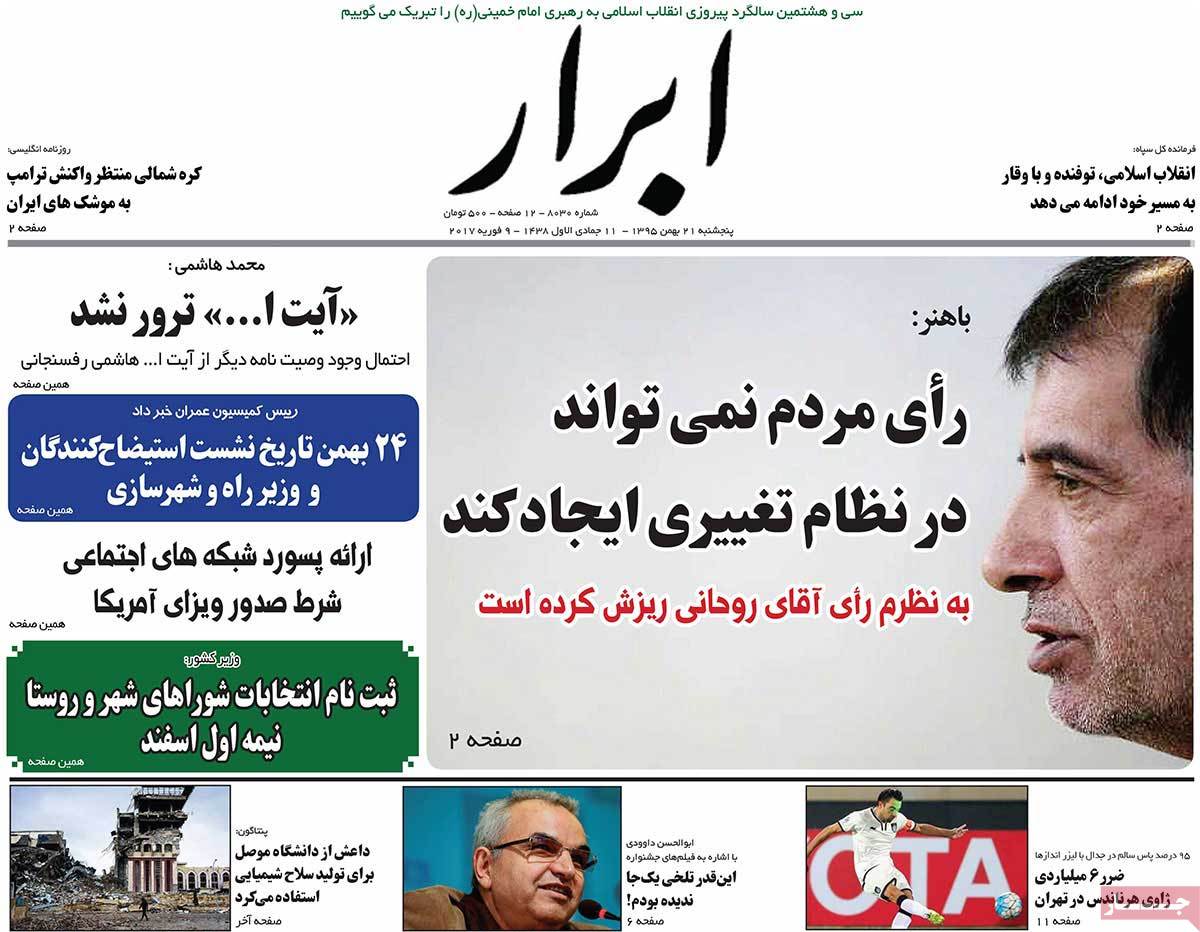
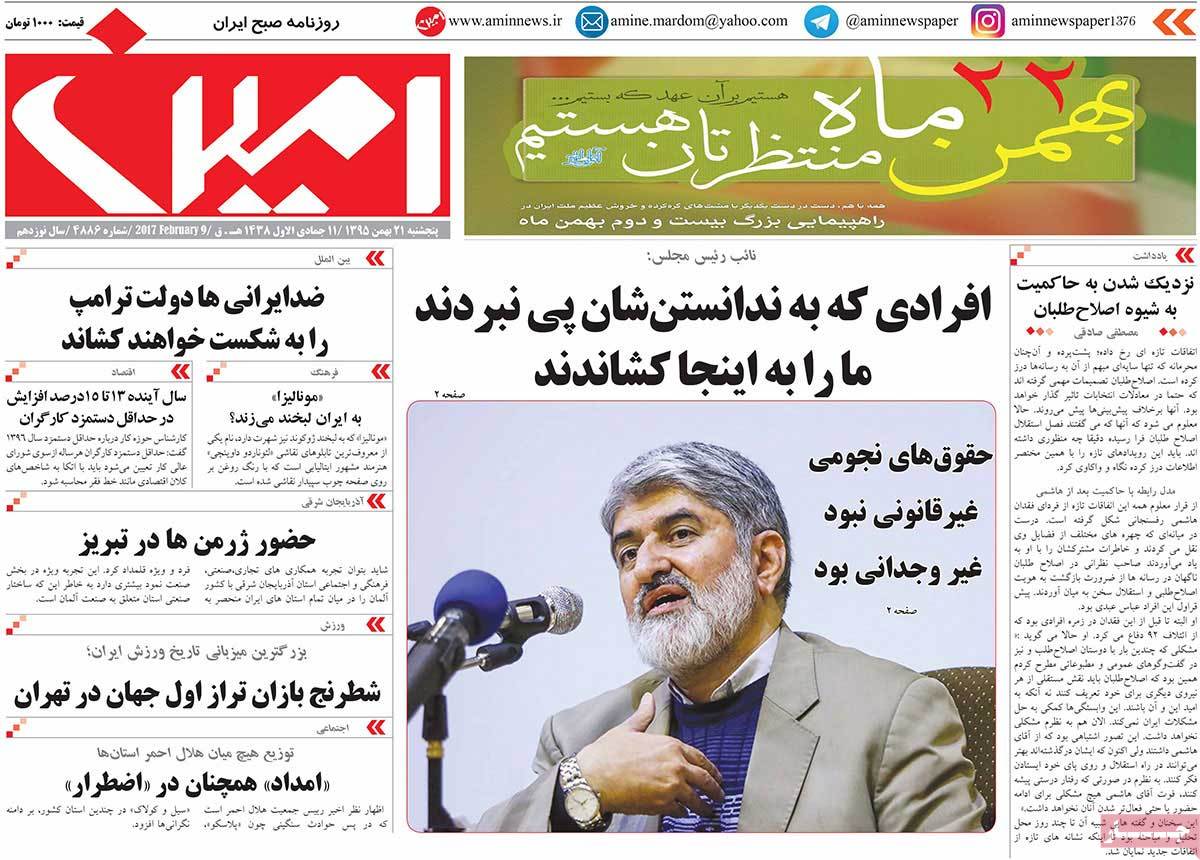
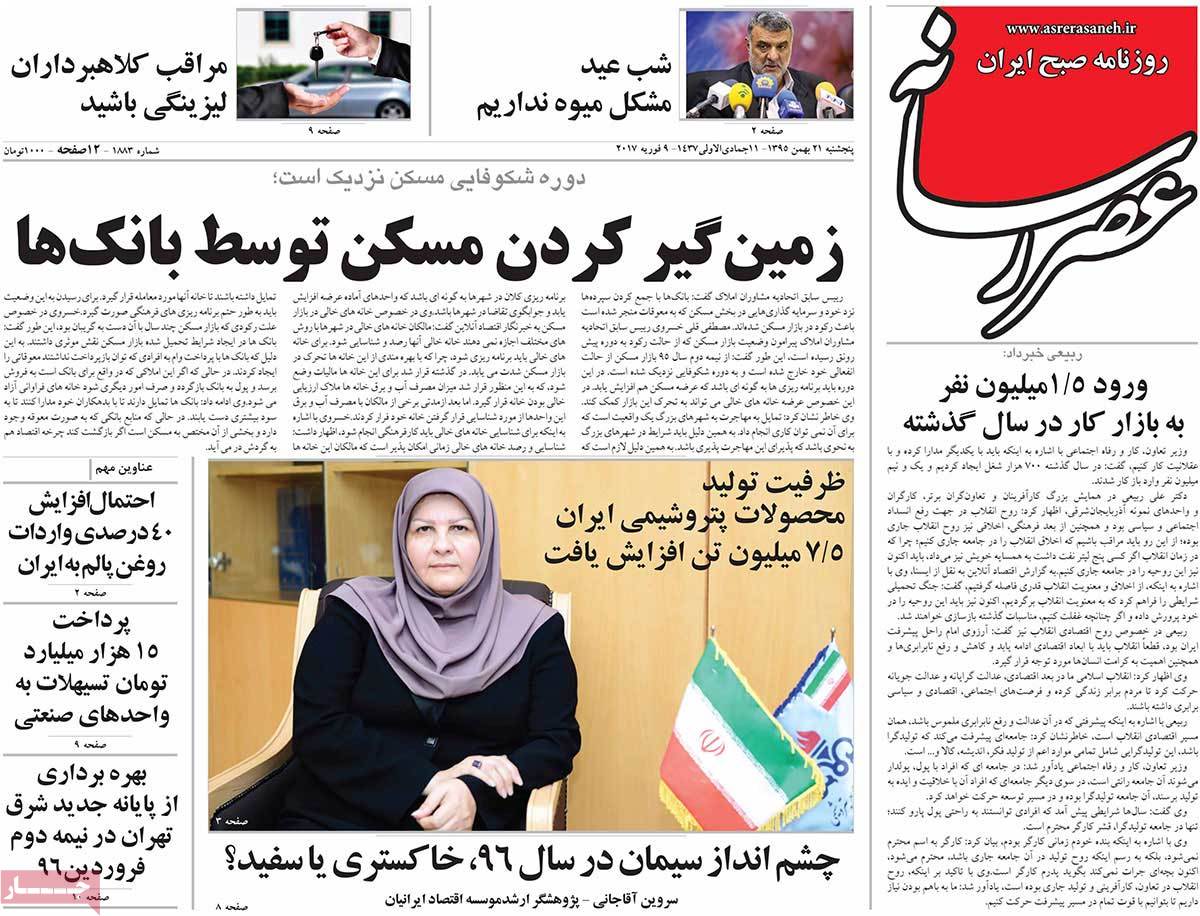
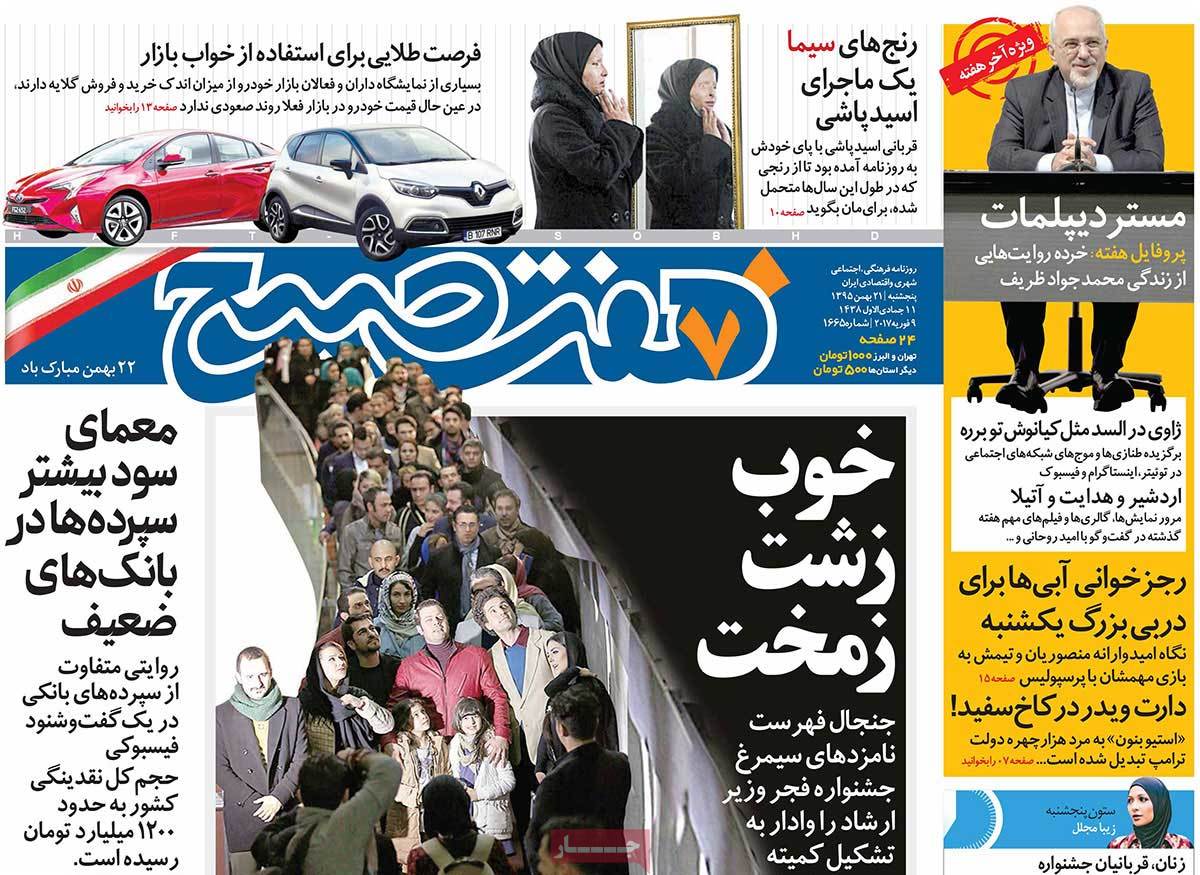
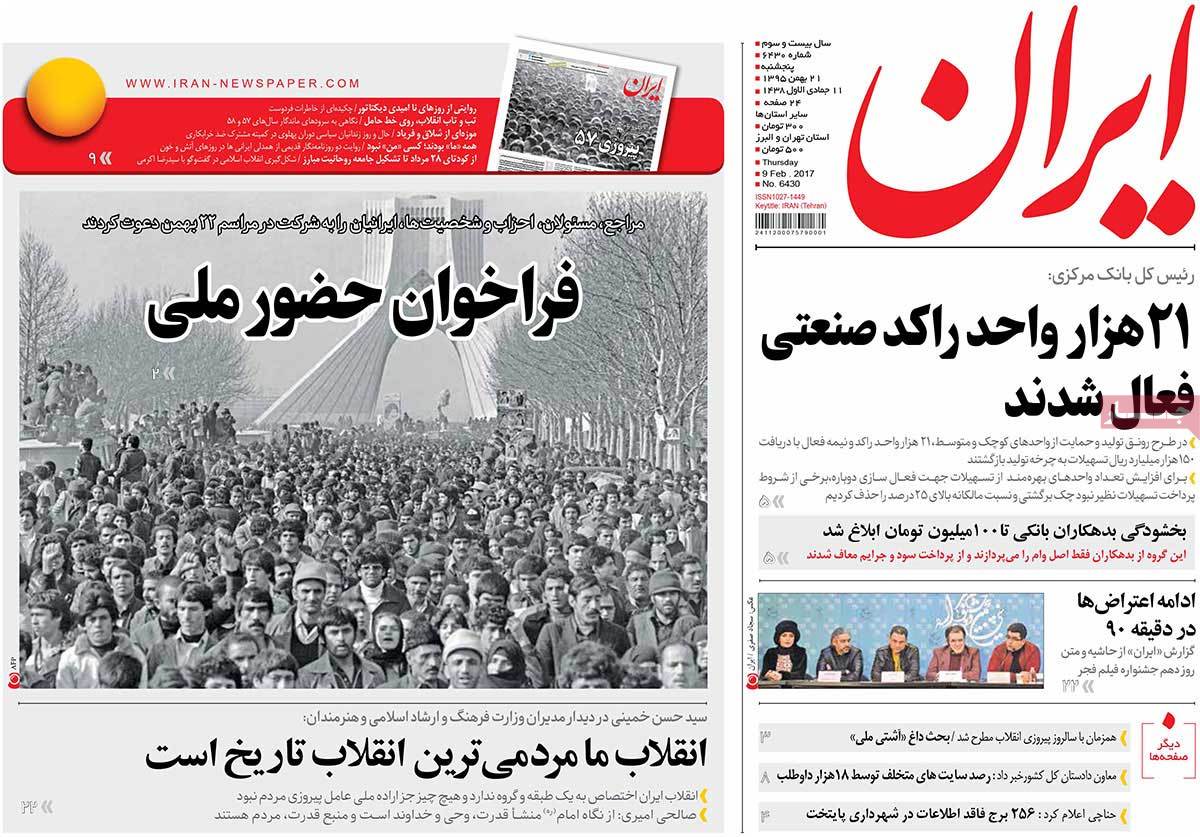
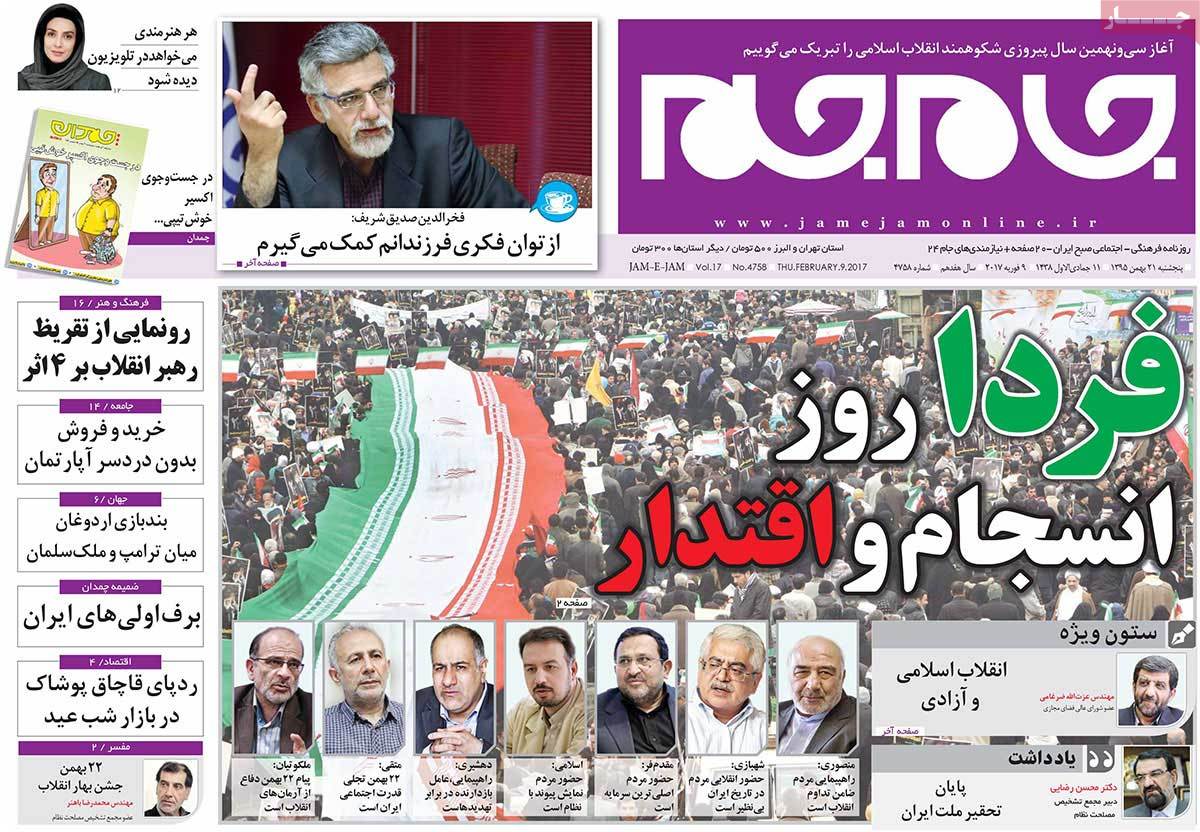
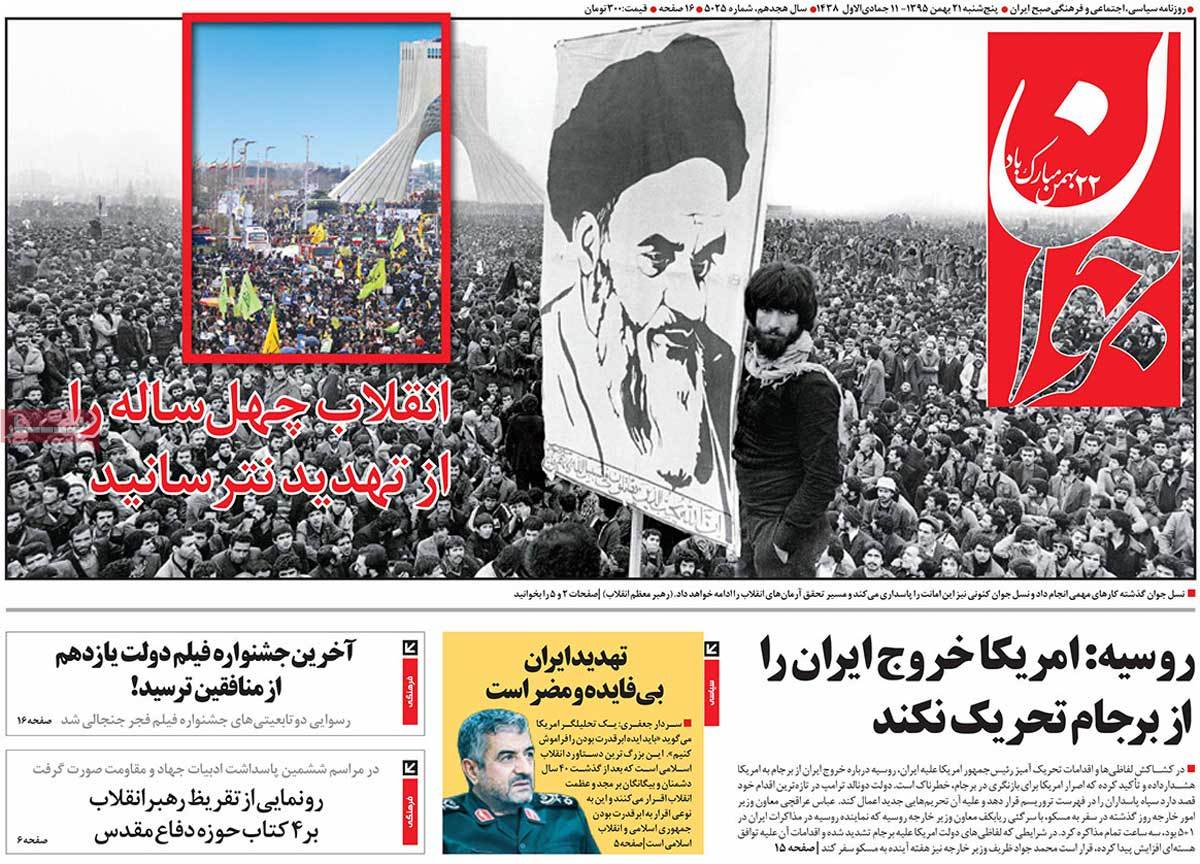
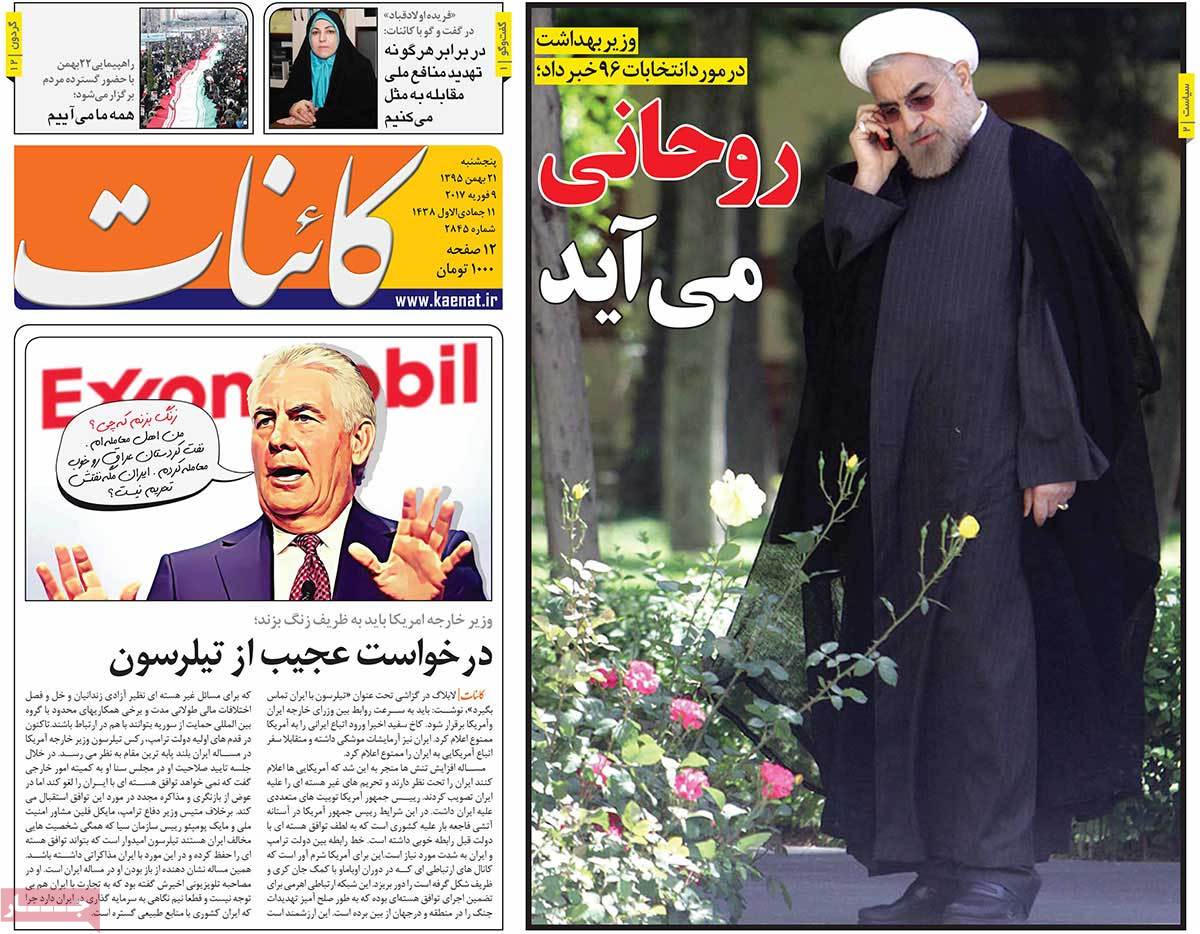
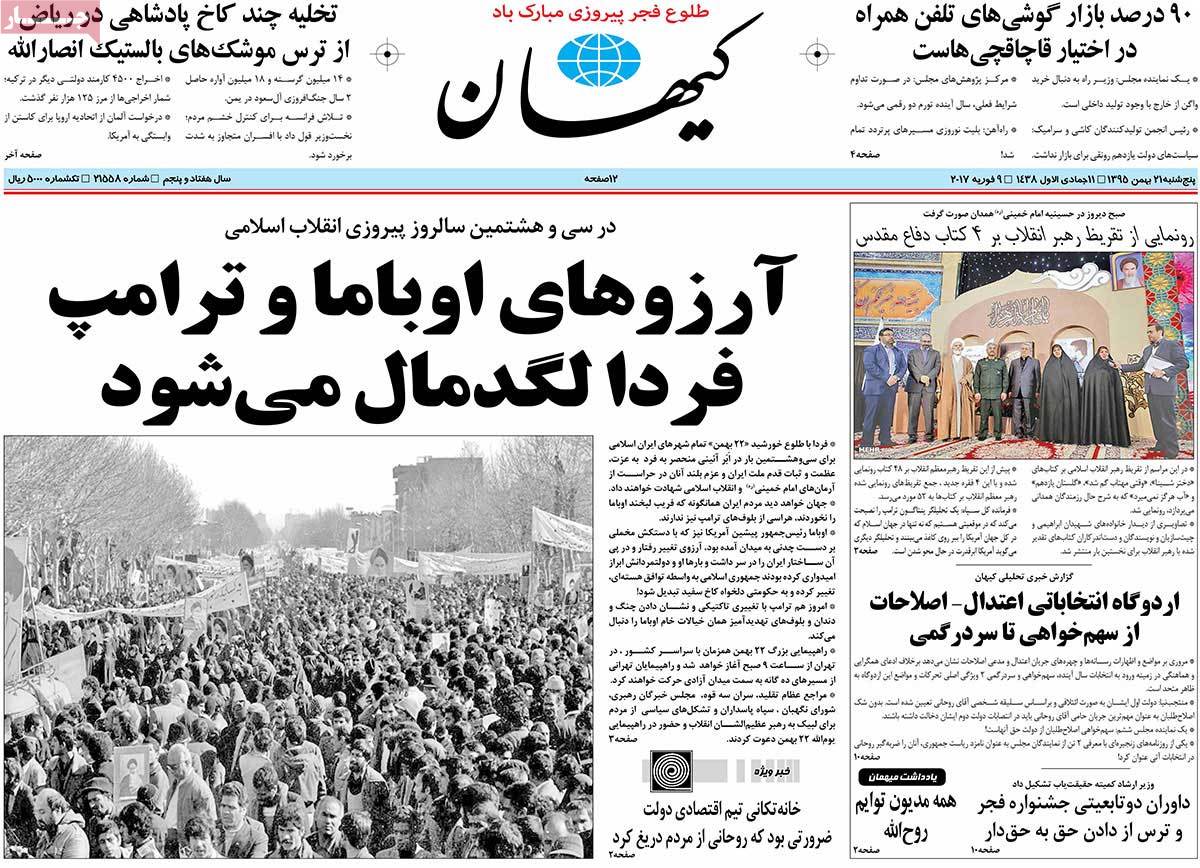
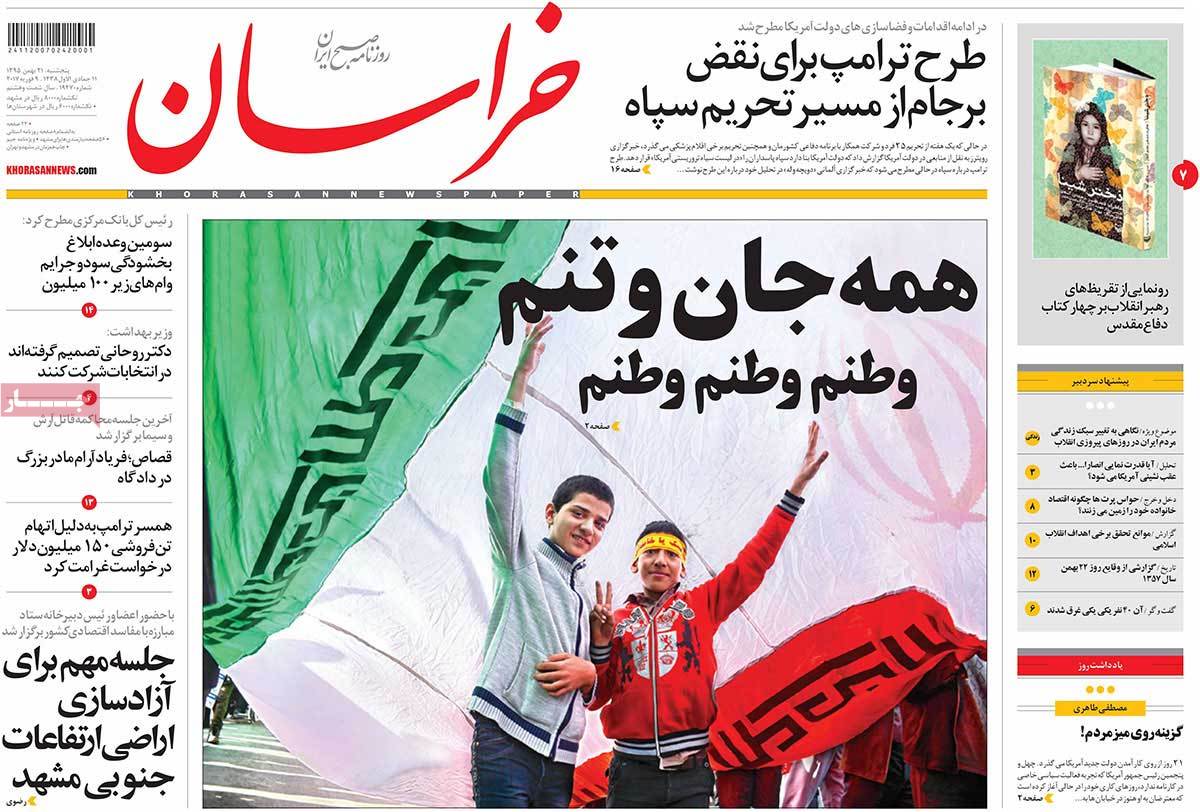
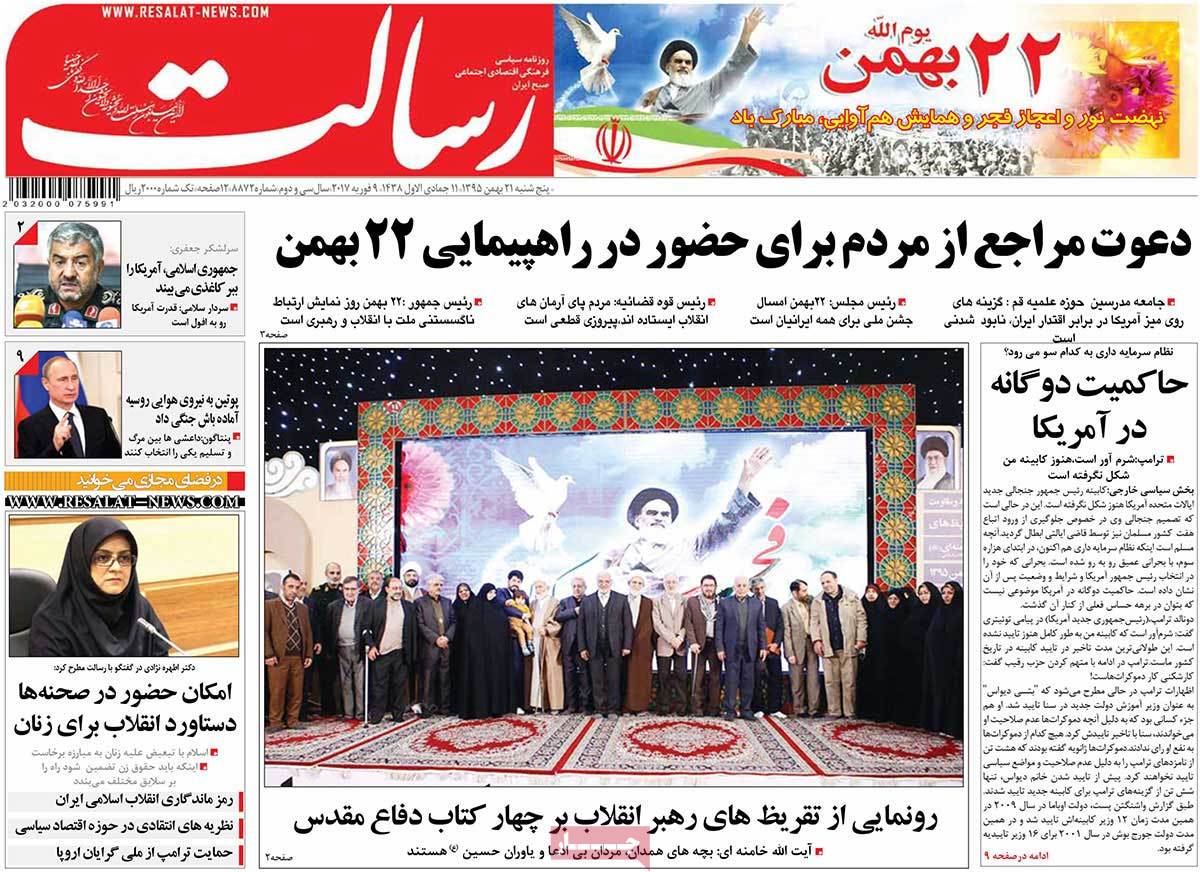
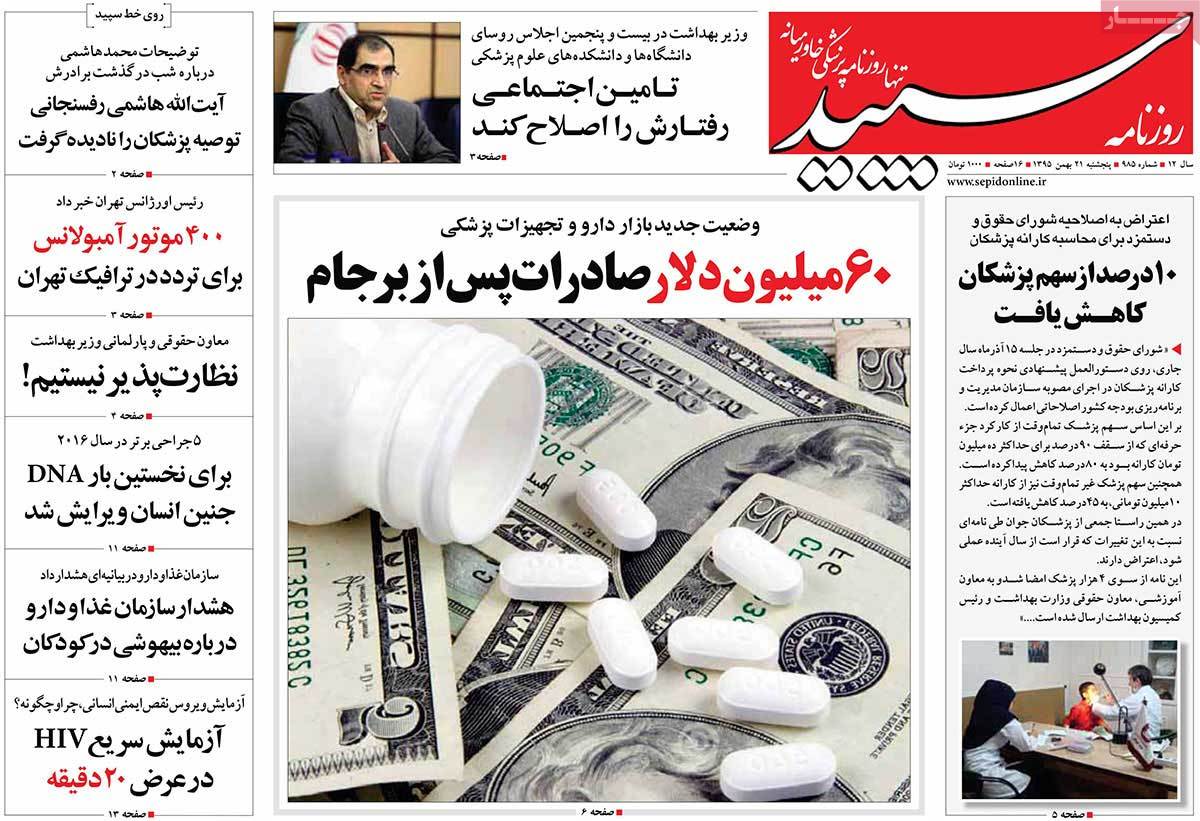
A Look at Iranian Newspaper Front Pages on January 26

A Look at Iranian Newspaper Front Pages on November 19

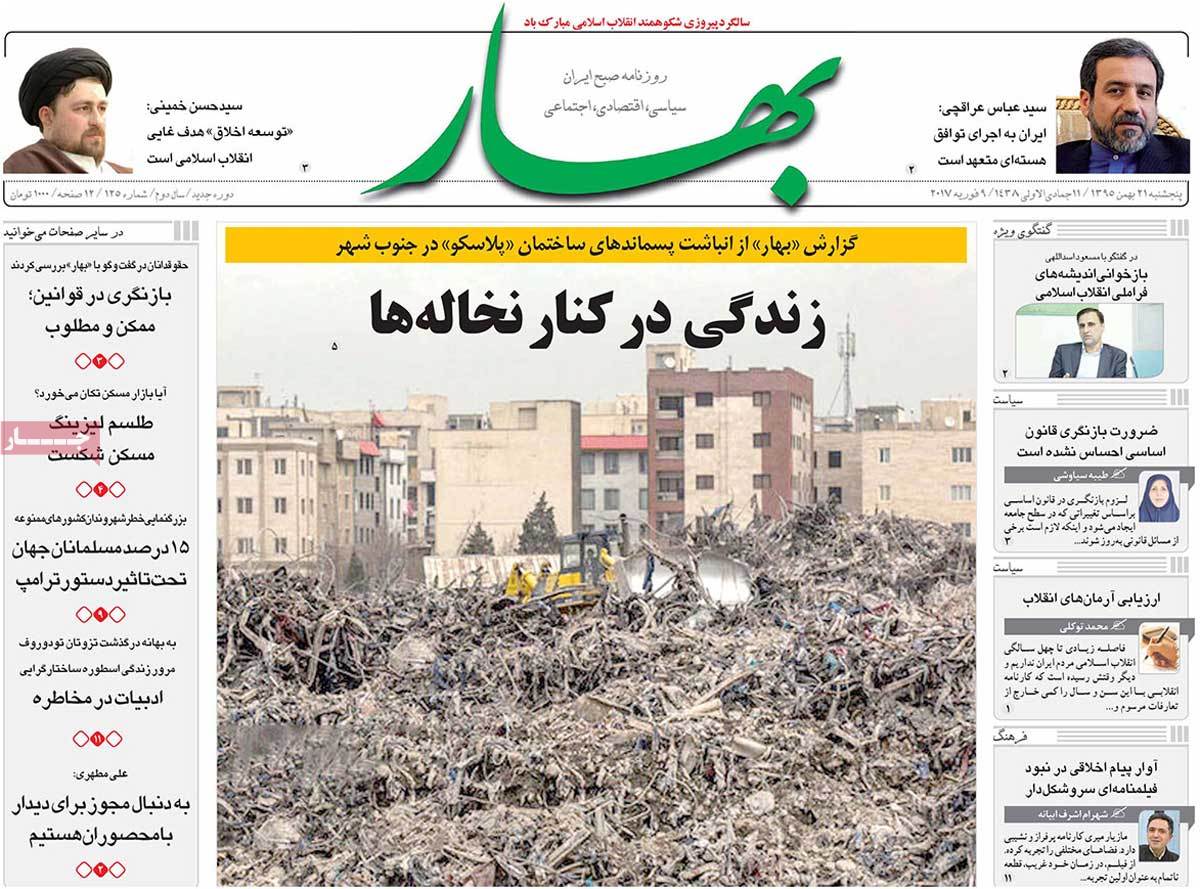
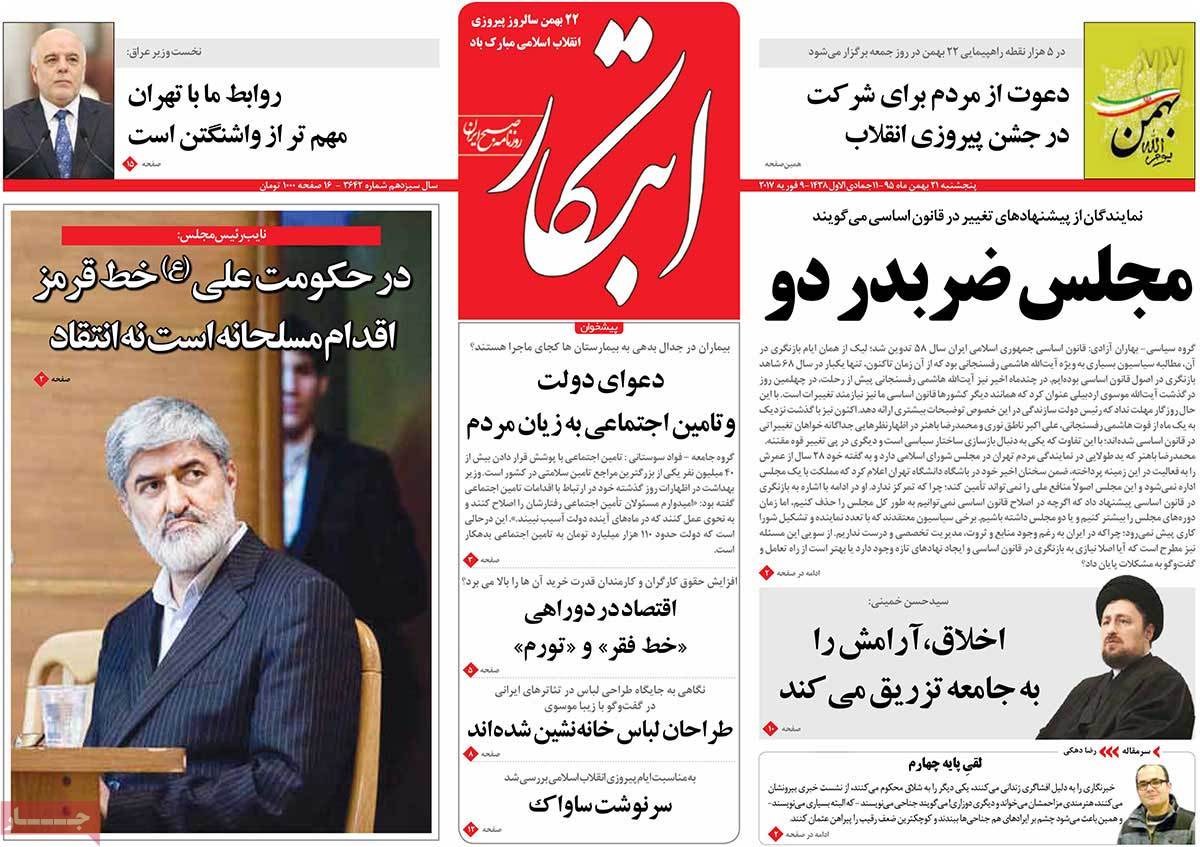
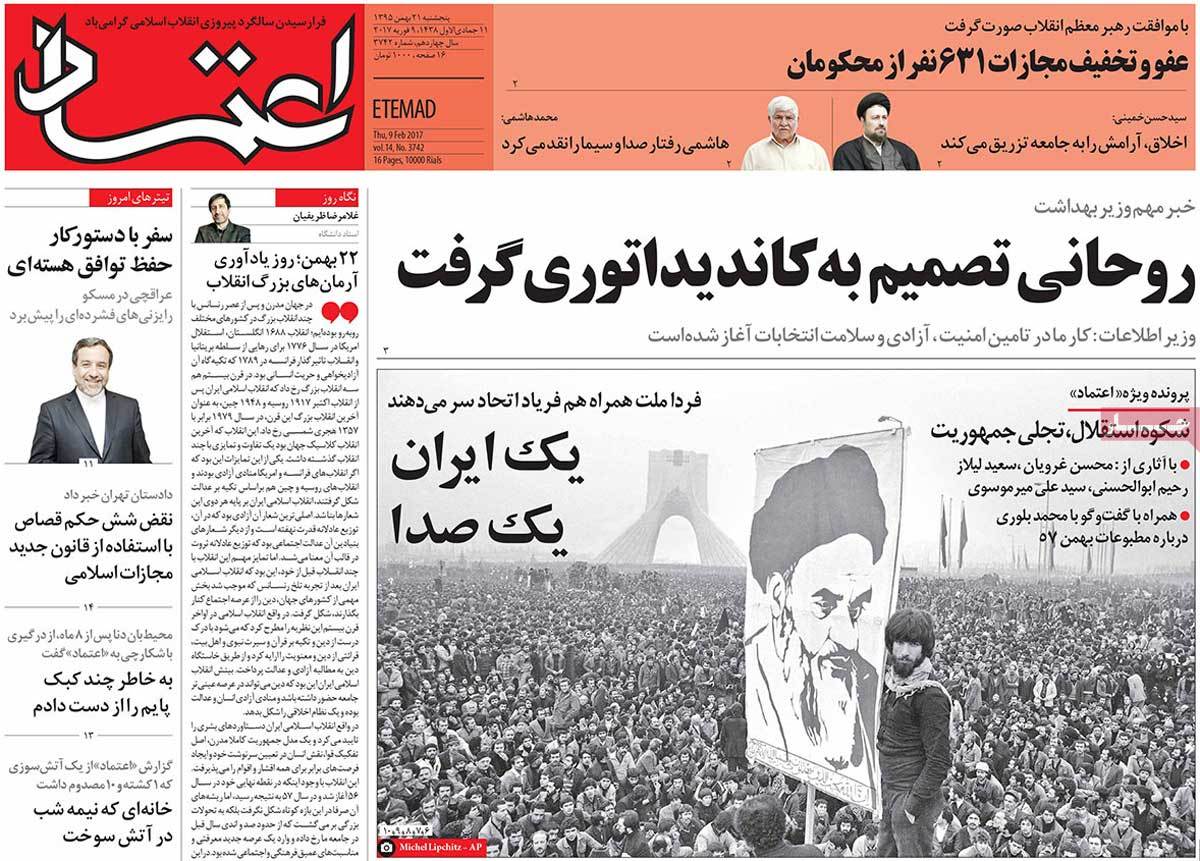
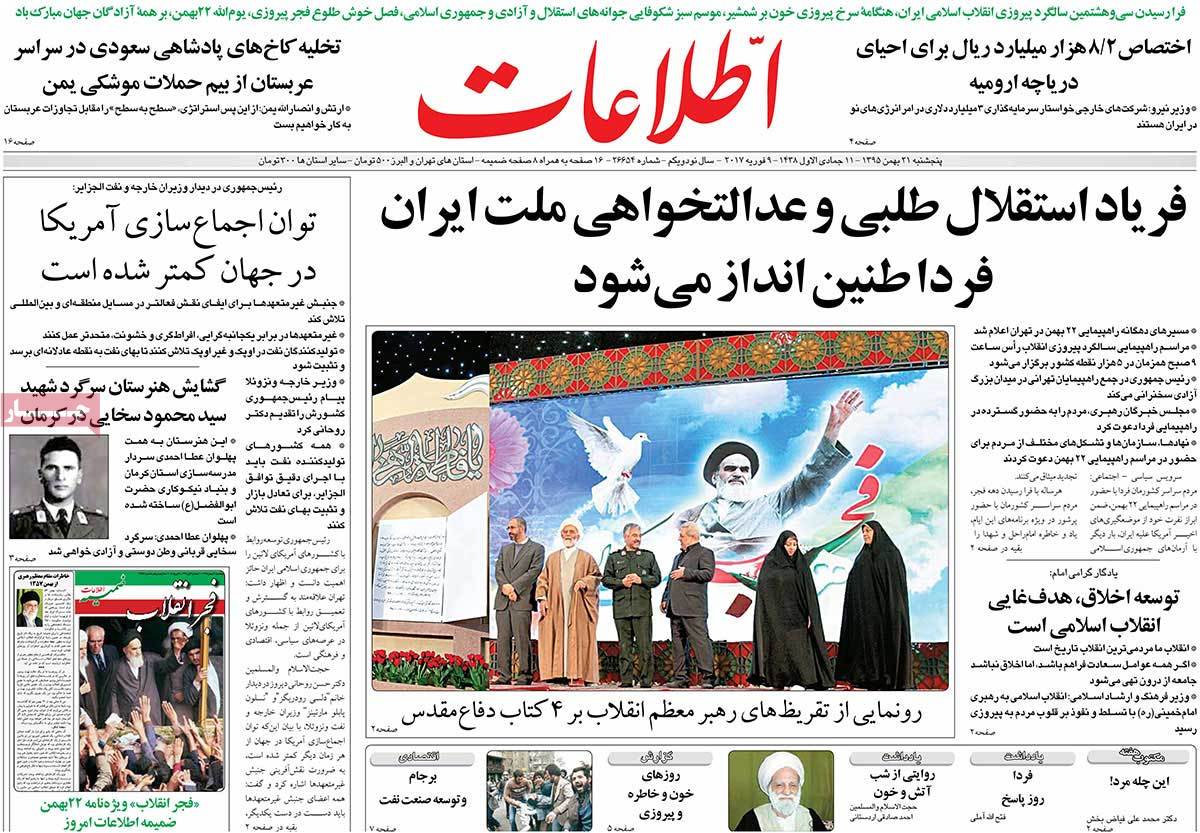
Newspapers today covered the Kuwaiti Foreign Minister’s meetings with Iranian President Hassan Rouhani and Foreign Minister Mohammad Javad Zarif. The Kuwaiti official delivered the message of his country’s Emir to President Rouhani during his one-day trip to Tehran.

The ongoing operation to recover the bodies of firefighters and other citizens from the rubble of collapsed Plasco Building also remained a top story today.

US President Donald Trump’s move to restrict issuance of US visa for Iranian citizens also received great coverage.

The above issues, as well as many more, are highlighted in the following headlines:


Abrar:

1- Municipality of Tehran and Fire Department Managers Should Answer: Where Are the Up-to-Date Firefighting Equipment You Were Taking about?

2- Iran’s Parliament to Probe into Previous Government’s Oil Faults

3- Iraqi PM Declares Full Liberation of East Mosul


A Look at Iranian Newspaper Front Pages on January 26


Abrar-e Eqtesadi:

1- Parliament to Investigate Ahmadinejad’s Oil Faults

2- Iranian Super Tankers to Dock at Rotterdam: 4 Million Barrels of Oil Sold to Shell per Day

3- Iran Breaks Record of Oil Sale to Europe: 10% Increase in Iran’s Oil Exports to Europe


A Look at Iranian Newspaper Front Pages on January 26


Aftab-e Yazd:

1- Plasco’s Endless Tragedy: Bodies of 8 Firefighters Recovered on Wednesday; Rescue Team Extremely Impressed


A Look at Iranian Newspaper Front Pages on January 26


Arman-e Emrooz:

1- Kuwaiti Emir’s Letter Delivered to Iran’s President: Saudi Arabia’s Mediator in Tehran

2- Rouhani: Dialogue Is Main Solution for Middle East

3- Kuwaiti FM: Misunderstandings Can Be Settled in a Calm Atmosphere

4- Zarif: Kuwait’s Role Is Admirable

5- A Few Days after Inauguration, Trump Restricts Issuance of Visa for Iranian Citizens Temporarily; US Senate’s New Motion to Impose Nuclear Sanctions on Iran

6- Politician: We Should Beware of Iran Establishment’s Plasco; Revolution’s Sapling Planted by Wounded Hands of Ayatollah Hashemi Rafsanjani


A Look at Iranian Newspaper Front Pages on January 26


Besharat-e Now:

1- A Report on Considerable Increase in Iran’s Nuclear Activities after JCPOA: Global Interest in Nuclear Cooperation with Iran; Sharp Growth in Iran’s Nuclear Activities One Year after Nuclear Deal and Increased Number of Documents of Nuclear Cooperation Signed with Different Countries

2- Iran and US Don’t Have Political Interaction, but after JCPOA, US Was First Purchaser of Iran’s Heavy Water

3- Deputy FM: JCPOA Revolutionized Iran’s International Standing

4- 7-Year-Old Syrian Girl Writes Letter to Trump

5- Prosecutor General’s Opposition to Stopping Death Penalty: Entire Law of Fight against Narcotics Should Be Revised


A Look at Iranian Newspaper Front Pages on January 26


Etemad:

1- Pains and Regrets: Lump in Iran’s Throat after Finding Bodies of a Number of Firefighters

2- Reformists Have Been the First to Call for National Reconciliation: Politicians


A Look at Iranian Newspaper Front Pages on January 26


Ettela’at:

1- President: Iran’s Power Safeguards Regional Security and Stability; Iran Has Proved Its Role as Most Important Barrier to Any Aggression and Terrorism in Middle East

2- Iran’s Cabinet Agrees to Form Working Group Tasked with Investigating Reasons for Plasco Building Collapse

3- EU Slams Israel for ‘Systematic Unlawful Killings’ in Gaza


A Look at Iranian Newspaper Front Pages on January 26


Iran:

1- Interior Minister: Perpetrators of Plasco Incident to Be Identified and Punished

2- Six Decisions by Rouhani’s Government to Help Plasco Shop Owners: Cabinet Approves Solutions to Compensate for Damages and Support Damaged Businesses and Workers


A Look at Iranian Newspaper Front Pages on January 26


Javan:

1- Economic Growth Minus Oil Is ‘Almost Nothing’; Central Bank’s Statistics Show Iran’s Economic Growth Has Been 0.9% from March to September Excluding Oil Income

2- Three-Fourth of Iranians: JCPOA Didn’t Make Our Lives Better; Maryland University’s Poll Shows Increase in Iranian People’s Doubts about Nuclear Deal


A Look at Iranian Newspaper Front Pages on January 26


Jomhouri Eslami:

1- President: Iran’s Policy Is to Enhance Friendly Relations with Muslim and Neighbouring States

2- New UN Secretary General: Israel’s Settlement Constructions a Barrier to Peace

3- Oil Minister: Iran’s Oil Output Exceeds 3.8 bpd

4- People Chant in Bahrain Demonstrations: “Executions Will Never Stop the Revolution”


A Look at Iranian Newspaper Front Pages on January 26


Kayhan:

1- Continued Hostility towards Iran, the Only Common Point between Trump and Obama

2- Unemployment in France at Disastrous Level: Le Point


A Look at Iranian Newspaper Front Pages on January 26


Resalat:

1- Foreign Ministry Spokesman: Britain Has a Dark Record in Observing Human Rights

2- Ayatollah Noori Hamedani: Being Hopeful about Reconciliation with Aliens Is a Treason against Iran’s Establishment; US Is Collapsed from Inside

3- Female MP: No Age Limit for Women’s Retirement


A Look at Iranian Newspaper Front Pages on January 26


Saheb Qalam:

1- Tour Guides from 45 Countries Visiting Iran

2- Iran Ready to Export Gas to Iraq


A Look at Iranian Newspaper Front Pages on January 26


Shargh:

1- Labour Minister Criticizes Ahmadinejad’s Government: Donation Was Not the Right Way to Fight Poverty

2- Somalian Pirates’ Go-Between: Problem of Iranian Captives Can Be Resolved with Money


A Look at Iranian Newspaper Front Pages on January 26

Those behind Plasco Building Fire to Be Punished: Minister

Abdolreza Rahmani Fazli

Talking to reporters, Rahmani Fazli said once all relevant institutes release their final reports on the fire in Plasco and its collapse, the culprits will be punished.

The incident is under investigation and all evidence indicate that electrical fault caused it, he added, as reported by IRNA.

The high-rise building caught fire earlier in Thursday, January 19, and came down as it was turned into rubble and the firefighters attempting to put out fire were all trapped inside. The operation to unearth their bodies are still underway.

Syrian People in Aleppo Ride First Train after 4 Years

photo_2017-01-26_13-09-20

Syrian Transport Minister Ali Hamoud said the resumption of train services between the two stations came after “the victory of the heroes of the Syrian army, returning safety and stability to the whole city.”

The train made its journey between Jibreen Station on the eastern outskirts and Aleppo’s main Baghdad railway station on Wednesday.

The official news agency SANA quoted Hamoud as saying that the line was reopened after less than 20 days of repairs.

photo_2017-01-26_13-08-59

He said 40 points of damage “from terrorism” were detected along the line.

The train services between Aleppo and other main cities, however, remain suspended.

The trip was the first since foreign-backed militants overran eastern Aleppo in the summer of 2012, dividing the city into a government-controlled west and the eastern part held by rebels.

Men, women and children were seen peering out the train’s windows as they rode across the eastern districts after government forces purged them of Takfiri militants in December.

During the one-hour round trip, the extent of the damage caused by the conflict left the passengers astonished and prompted them to use their mobile phones to take pictures of the rubble.

photo_2017-01-26_13-09-05

The full carriages were decorated with portraits of President Bashar al-Assad.

Even people on the ground in the eastern side gathered by the rail tracks, gazing at the first train they had seen since 2012 and seeing the region coming back to life, Press TV reported.

Aleppo’s liberation is seen as a crushing blow to militants and their foreign supporters, who have been actively working to topple the Damascus government since March 2011.

Moving US Embassy to Jerusalem Is a Declaration of War: Iraq’s al-Sadr

139302101547515392647374

“Transferring the US embassy to al-Quds would be a public and more-explicit-than-ever declaration of war against Islam,” he said in a statement.

In a break with previous administrations, new US President Donald Trump has pledged to recognize al-Quds as the Israeli regime’s capital and relocate the US embassy there from Tel Aviv.

Sadr, a powerful Iraqi cleric called for the “formation of a special division to liberate al-Quds were the decision to be implemented.”

Sadr said the Cairo-based Arab League as well as the Organization of Islamic Cooperation, the world’s main pan-Islamic body, should take a decisive stand on the issue or dissolve themselves, AFP reported.

The Najaf-based cleric also called “for the immediate closure of the US embassy in Iraq” should Washington go ahead with its promised embassy transfer in Israel.

The White House Sunday appeared to play down suggestions that a move was imminent, with press secretary Sean Spicer saying: “We are at the very beginning stages of even discussing this subject.”