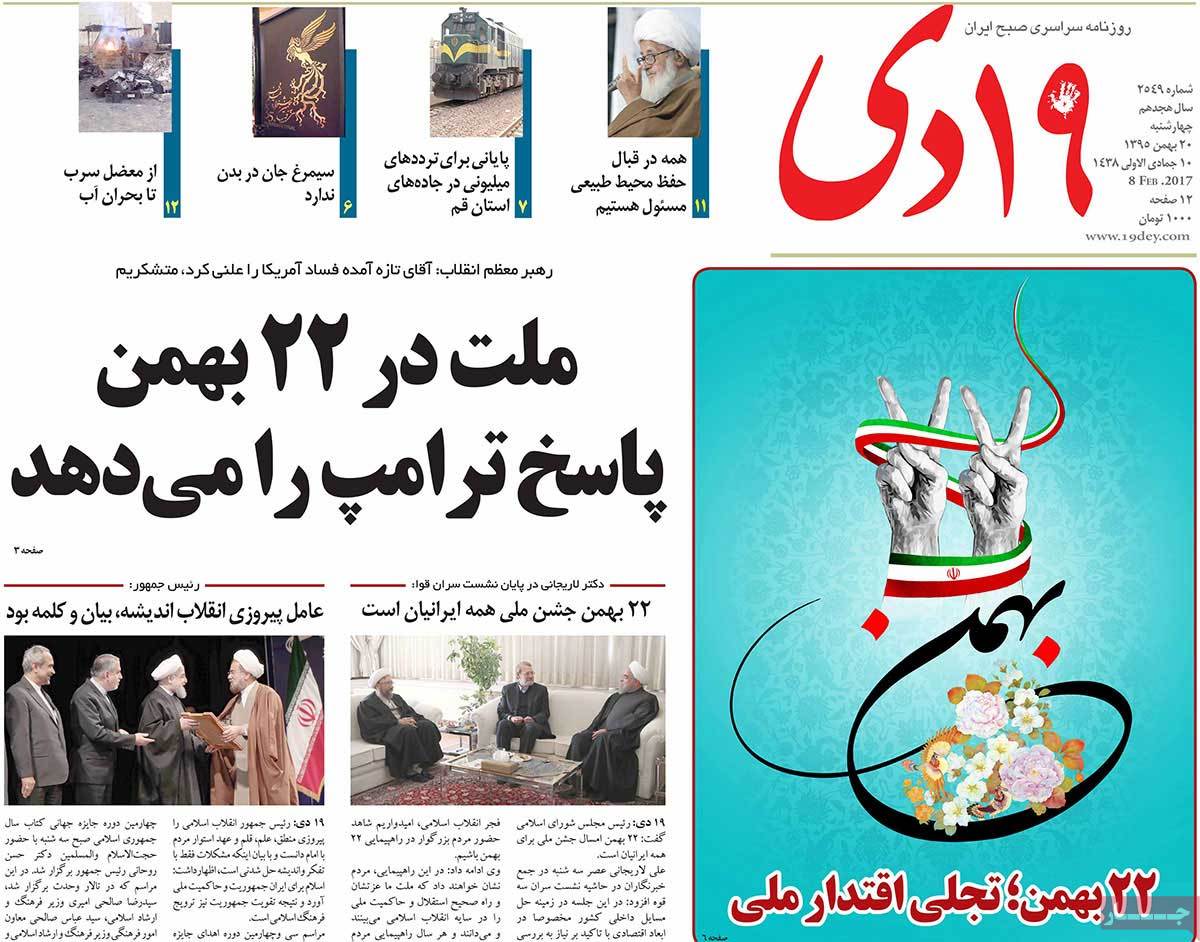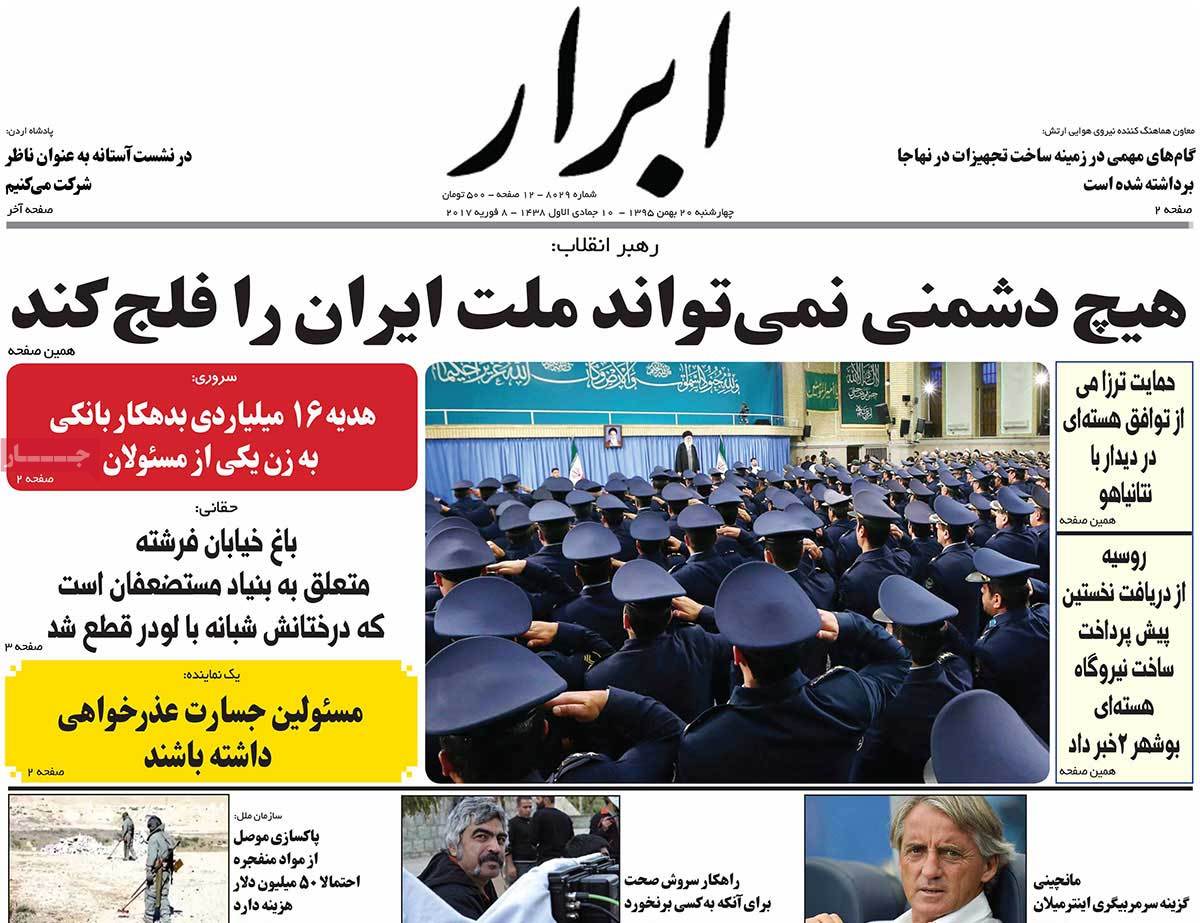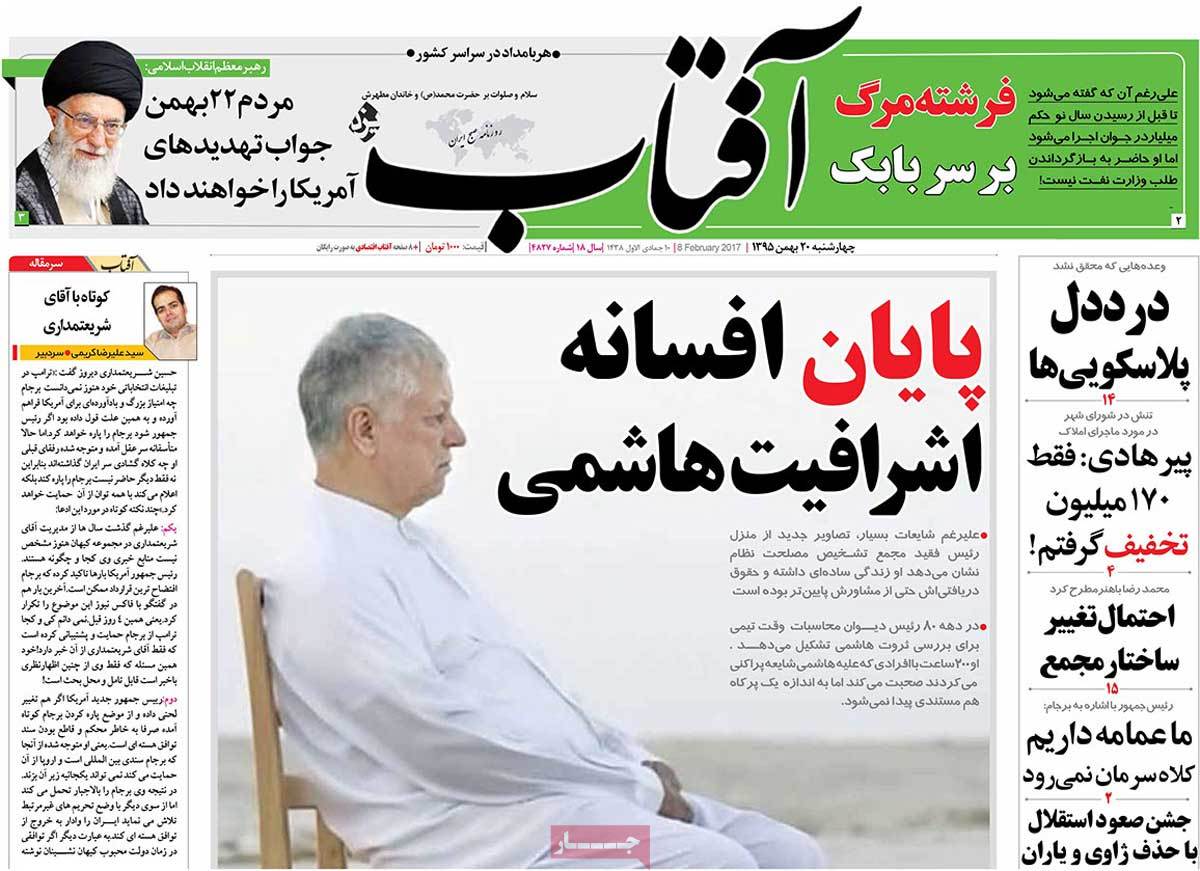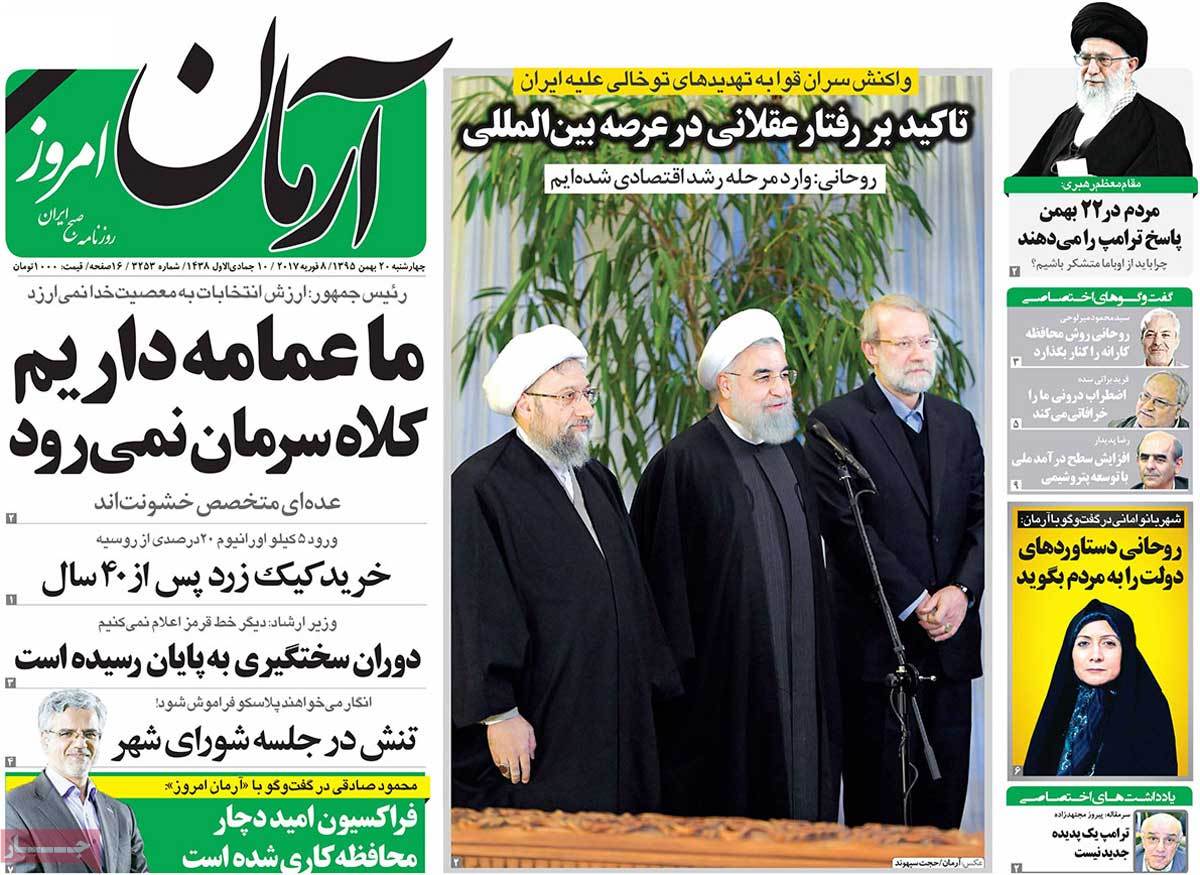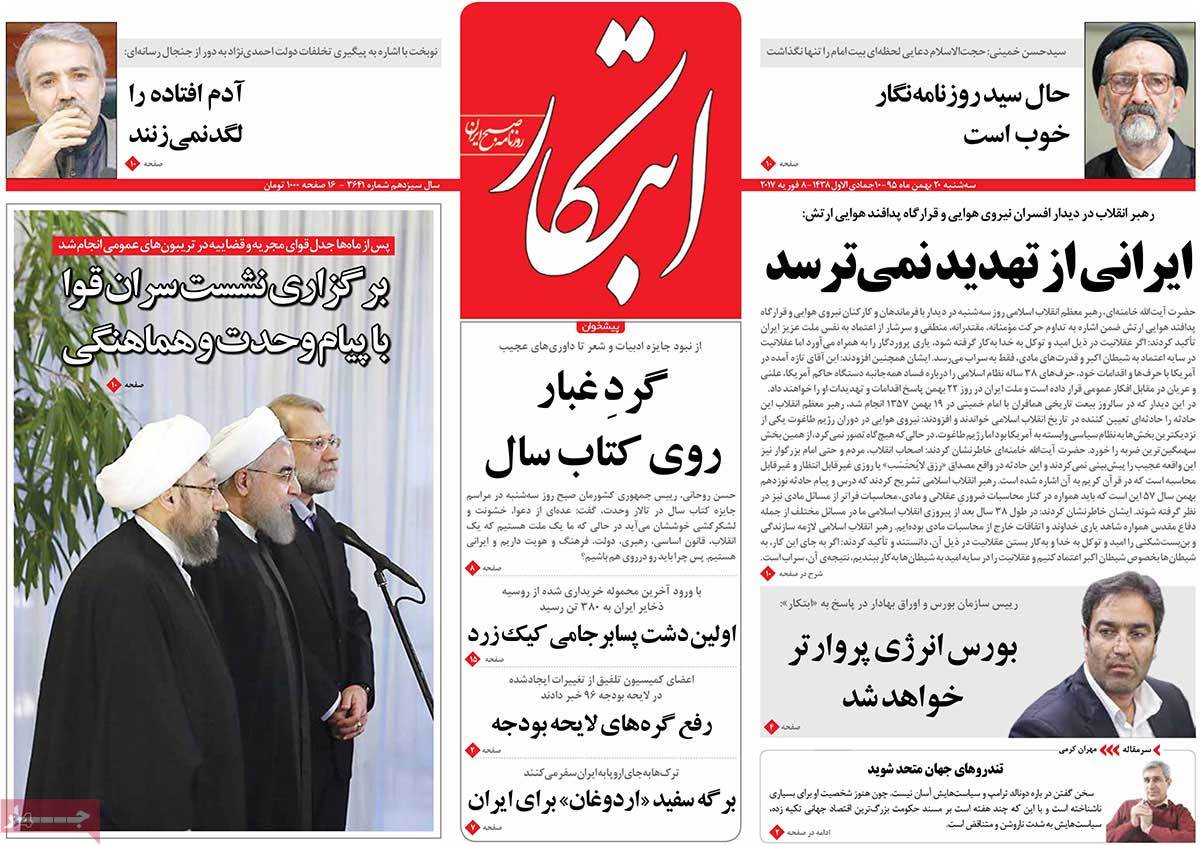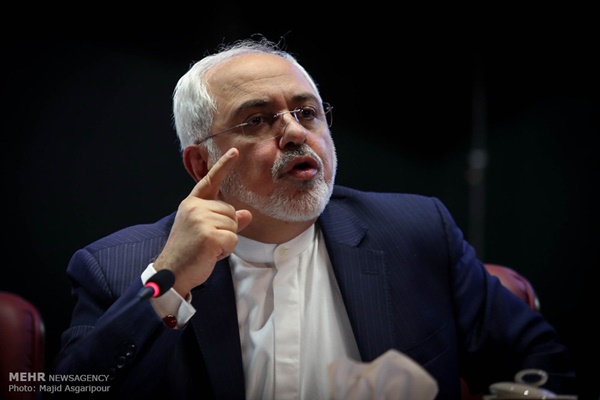
In an interview with Ettela’at daily newspaper on Tuesday, the Iranian Foreign Minister said getting involved in military confrontation without preamble does not seem to be in conformity with the other policies adopted and promises made by Donald Trump.
Here is the full text of the Farsi interview:
What’s your reading of the policies pursued by Donald Trump as new US president?
Mr. Trump is a phenomenon that, in addition to his personal characteristics, represents a nearly global reaction to the globalization trend. Mr. Trump was very distant form the US ruling establishment.
Trump’s victory was predictable. Of course there were a few far-fetched happenings during the course of his triumph. The most important one was that Trump was a person who managed to win the Electoral College vote despite his lack of a political base inside the country and his failure to secure popular vote. A more political figure, like Mrs. Clinton, was expected to be able to reverse the equation. Even for me myself, who has been closely watching US policies for nearly 40 years now, it is a little hard to understand how Mr. Trump could succeed.
Mr. Kissinger has also mentioned that foreign policy is different form a land purchase agreement. This is where many of Trump’s election pledges or others’ promises seem unattainable, given the complexities of, and variables in the international community.
After the first several weeks during which emotions run high, realities begin to set in. Trump has so far been able to impose himself on the system as a broker. The question is how far he will be able to walk along this path. I think at a certain point in time, the US domestic structure, the international relations structure, and international equations will somehow impose themselves on Trump.
Trump’s behaviours have surprised Washington’s European allies and sparked their reaction. What’s your analysis of the 45th US president?
At the same time that Trump entered America’s political arena as the country’s president, a development was unfolding in the UK, and that was Britain’s leaving the European Union known as the Brexit. Now Britain is seeking to find trade partners as well as political partners. Unfortunately, London’s behaviour represented by its unrealistic moves in our region can be seen. This behaviour may, to some extent, draw a line between the UK and other European countries. That could be seen through developments which unfolded some time ago, especially a trip to Washington by British Prime Minister Theresa Mary. Of course, the rest of Europe is leaning toward the right camp, and it remains to be seen what the result of future elections in different European countries, France in particular, will be.
I feel Europe is defying Trump in certain domains, and will agree with him in some other areas. As it could be seen during May’s trip, Trump began to get close to Europe on such issues as NATO. That means bridging differences does not always have to be initiated by Europe. If we want to explain international relations in simple terms, we should say people will either resist Mr. Trump or accept him.
Such broad sentences cannot explain the international situation. We have
been passing through a transition period in the world for more than 26 years now. Politics is passing through a transition period both in Europe and in the US. And the condition for transition is usually very dynamic. In a dynamic situation, everybody tries to exert the most influence. Currently, the Zionist regime [of Israel], and particularly the rightist lobbies in the US, are trying their utmost. Certain Arab states are also trying to do so, because in a dynamic situation nothing is where it should be, so everything is subject to change.
What matters to the French is the climate change summit and the agreement reached in Paris. British Prime Minister Theresa Mary’s most important achievement was that she could prompt Trump to say that NATO plays a key role. The important point for the Israeli regime is also to have an anti-Iran agenda. Given Trump’s inclinations, all these players will try to be as influential as possible. What seems to be a very determining issue here is the personal relationship that Trump seeks to establish with [his Russian counterpart Vladimir] Putin and begin interaction. But the structures and realities which exist regarding US-Russia rivalry can serve as an obstacle in certain cases.
Trump has told American generals to prepare themselves for a world war. Is this behaviour simply the continuation of his campaign moves, or could he really go for adventurism? Will Europe stand by Trump?
Trump made some promises during his election campaign, and had a tendency toward reviving America’s economic situation. He has even enumerated his priorities in that domain. So, as he puts it, he follows a two-pronged objective: improving the country’s economy and ensuring national security.
Another thing that Trump wants to do for the US economy is to promote employment and increase the ease of doing business. Trump’s order to build a wall along the US-Mexico border is in line with his plans to ameliorate the country’s economy. All these issues show Trump is unlikely to go for adventurism.
The same assumption existed regarding Mr. Bush and Mr. Cheney. Cheney became America’s vice-president as an oil tycoon, who was even present in Iran through the Halliburton Company. Nobody would have thought a person who was mostly involved in economic oil-related activities would take actions as such. But the September 11 incident turned Bush into a “war president.”
Bush called himself a “war president.” An incident may change the mood. Mr. Trump and those close to him are prone to such change. Trump has issued orders part of which is compatible with his mentality. But getting involved in military confrontation without preamble does not seem to be in conformity with the other policies he has adopted. Of course, the situation may be imposed on him, or some statesmen within the US ruling elite or even outside players like the Israeli regime may impose such a situation on Trump.
Americans are not used to settling for something less than their demands. They are used to putting forward their demands and hearing the other side accept. In the JCPOA, the US achieved almost none of its demands. Washington didn’t want Iran to have even one centrifuge. But Iran does have centrifuges. After the US accepted Iran with centrifuges, it didn’t want to accept our Research and Development (R&D) activities.
Given Trump’s policies, should we be concerned about the fate of the JCPOA?
The JCPOA is not only an agreement with the US. It is a multilateral deal. I think the JCPOA is a reality. Americans, whether during the Obama era or under Trump, are not interested to help. Things may get more difficult in the coming months. Europe and the rest of the world stress the need to implement the JCPOA. However, US authorities have made certain remarks on that and Trump said recently that the JCPOA is the worst of agreements. Americans are not used to settling for something less than their demands. They are used to putting forward their demands and hearing the other side accept. In the JCPOA, the US achieved almost none of its demands. Washington didn’t want Iran to have even one centrifuge. But Iran does have centrifuges. After the US accepted Iran with centrifuges, it didn’t want to accept our Research and Development (R&D) activities.
Trump may try to renegotiate the deal. It’s pretty obvious that neither Iran nor Europeans will accept a renegotiation of the agreement. The international community won’t accept it, either. So, we are having tough days ahead of us.
Trump may try to renegotiate the deal. It’s pretty obvious that neither Iran nor Europeans will accept a renegotiation of the agreement. The international community won’t accept it, either. So, we are having tough days ahead of us.
What’s your take on Kuwait’s assuming an intermediary role to help settle Iran’s differences with some regional countries, especially Saudi Arabia?
Regional security is part of Iran’s vital interests and we believe regional countries themselves should ensure their security. We have never sought to enter a conflict with regional states. After the nuclear negotiations, and despite unwise policies adopted by certain regional governments to sabotage the talks – and these efforts come to light more and more everyday – the first thing I did was to travel to Kuwait and Qatar at their own suggestion. Unfortunately, the Saudi government didn’t allow its own proposal to come through. Over the past months, we welcomed similar invitations by other countries. But unfortunately Riyadh was after tension rather than seek a solution.
If they change their viewpoint and come to realize that fuelling violence in Syria and Yemen is not in their interest, that stoking extremism won’t benefit them, then we will be ready for dialogue.
See, it’s been nearly two years that defenceless Yemeni people have been bombarded with the most advanced weapons on a daily basis. This will be a permanent stain on the United States, Britain and all countries that provide arms for killing defenceless people. Despite opposition from their own people, including intellectuals and policy-makers, these countries have continued this policy and abetted the crimes.
Whenever they come to understand that such actions will only do them harm, as was the case with the oil issue, then I think a way could open up to have a different kind of relationship in the region. For this to happen, they need to be realistic. Under the Constitution, we reject both “domination” and “submission to domination.” Iran’s policy is based on constructive interaction with all, especially neighbours.
We hope the message sent by the Kuwaiti Emir on behalf of himself and other member states of the Persian Gulf Cooperation Council, in which he expressed readiness [to mediate], is a sign of firm determination; if that is so, Iran will have the same firm determination, too.