Wednesday, December 24, 2025
Home Blog Page 4131

Iran’s Parliament Supports Domestic Video Games Production

Firefighters

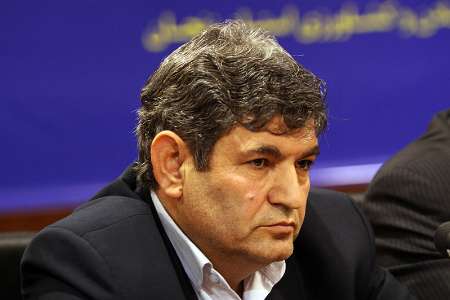
Nasrollah Pejmanfar, an Iranian lawmaker, announced that the Iranian Parliament is following up the confirmation of Imported Computer Games Taxation bill.

“By taxing the imported computer games based on a particular approach, we will contribute to the domestic games; as it is anticipated that the taxation will yield an estimated income of about $3.1bn in 2017, which is to be spent for Iranian producers and clients,” he said, according to a Farsi report by ICANA.

“Unfortunately as the government didn’t approve the bill, it wasn’t put to vote in the budget commission,” he added. “After undergoing some modifications, however, this proposal is to be discussed again in this commission and the Parliament’s open session.”

He referred to the low amount of provided funds, and the disturbance of financial discipline, as the Iranian government’s main reasons to refuse this proposal.

“Although the tax paid by video games importers doesn’t generate a high income, such a move will have great cultural effects on the society. It supports the domestic computer games producers as well,” he noted.

 “Unfortunately, the massive imports of video games not only economically damages Iranian manufacturers, but makes huge negative impacts on Iranian society because of cultural differences.”

Currently, video games importers are subject to general taxes which are not forceful enough to limit their trade, Pejmanfar went on to say, adding that more than 90% of computer games played in Iran are foreign-made.

“Economic management is necessary to upset this balance in favour of domestic games by varied plans and methods.”

“The credit provided by taxes would be allocated to computer games production organizations, affiliated with the Culture and Islamic Guidance Ministry, to support the domestic production and allocate subsidy for the clients of Iranian games,” he noted.

Increased Gas Consumption with Precipitation in 24 Iranian Provinces

gas

With the arrival of a new cold front in Iran, there are snow and rain in 24 Iranian provinces. The quite cold weather has led to an increased consumption of natural gas in households.

According to a Farsi report by Tasnim, Iranian households currently consume more than 490 million cubic meters (mcm) per day. It is anticipated that after a sharp drop in the temperature in February 2, the country’s gas consumption will exceed 500 mcm per day.

At the moment, liquid fuel is being used in Iranian power plants so as to allocate more natural gas to the household sector.

South Pars Gas Company transmits about 420 mcm, and other companies about 280 mcm of sweet gas per day to the consumption network. So the total amount of transmitted sweet gas reaches 700 mcm per day.

Iran’s President Urged to Respond in Kind to Trump’s Travel Ban

trump33

The conservative newspaper Javan has covered Iran’s reactions to the recent ban introduced by US President Trump on citizens of several Muslim states including Iran, calling on President Rouhani to respond to the travel ban in kind.

Here is the full text of the article:

Trump’s executive order to slap a 90-day visa ban on the nationals of countries that “harm US interests,” including Iran, and putting the Islamic Republic on the list of “state-sponsors of terrorism” and regarding it as a “threat” to Washington have drawn reaction from some senior officials in Tehran.

Iranian Parliament Speaker Ali Larijani said Trump’s move shows US statesmen’s unwise behaviour. Larijani also lauded the stance adopted by an Iranian artist vis-à-vis the travel ban [Iranian actress’s move to boycott Oscars ceremony.]

President Rouhani also criticized the move on his Twitter page.

“Today’s world is one in which cultures and civilizations should live side by side, not a world where a distance is created and walls are built between nations. We should not forget the Berlin Wall which came down years ago,” wrote the president.

Iranian Foreign Minister Mohammad Javad Zarif also tweeted, “While respecting American people and drawing a line between them and the US government’s hostile policies, we will reciprocate Trump’s move in order to support our nationals.”

Now the key question is what measure should be adopted to counter the new wave of anti-Iran moves by the new US administration, and whether the positions adopted by Iranian authorities on their Twitter pages have been effective and enough, or should a stance be adopted by the Iranian Parliament on the issue.

  1. During the 33 months of nuclear talks and the 13 months after the JCPOA implementation, the deal was violated by Washington at least once. During that period, the Iranian Parliament did not play a determining role at several key junctures. If the lawmakers had reciprocated many of the anti-Iran acts passed by the US Congress, approved prudent legislation and obliged the Iranian government to enforce it, definitely the path to adopting anti-Iran measures would not be as smooth as it is today.

So, the Parliament speaker and other legislators, who are people’s representatives, are expected to pass legislation called “Temporary Restrictions on US Nationals Travelling to Iran” and instruct the Rouhani administration to put it into force. The law would have several important benefits:

  1. The approval of such legislation can have a message for the new US administration, and that is Iran, unlike in the past 42 months, is determined to adopt retaliatory measures, which would serve as a major obstacle to putting of new anti-Iran laws on the US agenda.
  2. Taking reciprocal action can make it difficult to breach the JCPOA, and makes Washington realize that any violation of the nuclear deal in the future will be met by Iran’s effective action.
  3. Responding in kind can give the Iranian Parliament an edge over the US Congress and make up for its ineffective role in the past. Reciprocation will see Parliament action gain momentum to secure national interests as the implementation of the JCPOA continues on a path full of ups and downs.

The Parliament has not taken any effective action vis-à-vis repeated violations of the JCPOA in recent 13 months, while such action would complement efforts made by Rouhani’s administration. Therefore, Iran’s anti-Trump action would serve as a good opportunity for lawmakers to shift out of the defensive position.

  1. In parallel with “reciprocation” mentioned above, the Rouhani administration and Parliament should put on their agenda “taking punitive measures” as an accepted principle in international law.

In cases where it is not possible to respond in kind, or reciprocal action would not be as effective as the action taken by the US, then taking “punitive measures” should be put on the agenda.

Trump’s executive order which slaps a visa ban on Iranian travellers to the US is in contravention of two principles of the JCPOA. First, the order runs counter to the principle of goodwill stipulated in the preamble to the JCPOA and in some provisions of the deal such as Article 36. Moreover, Trump’s decision is not in conformity with the nature of the deal, which is an international document.

Under the nuclear agreement and international law, Iran and the P5+1 group of countries are obliged to deliver on their commitments with goodwill, but Trump’s decision is a blatant instance of “ill will.” It is stipulated in Article 26 of the JCPOA that “the United States will make best efforts in good faith to sustain this JCPOA and to prevent interference with the realization of the full benefit by Iran of the sanctions lifting specified in Annex II.”

In fact, one of the objectives pursued by Iran through the JCPOA was to get the sanctions lifted. One of the prerequisites to the lifting of sanctions would be to remove restrictions on tourists, businessmen and other travellers coming to Iran.

“The EU and its member States and the United States, consistent with their respective laws, will refrain from any policy specifically intended to directly and adversely affect the normalisation of trade and economic relations with Iran,” reads Article 29 of the JCPOA.

Therefore, based on Article 51 of the UN Charter, the Iranian government, as the party affected by the violation of the deal, can suspend the fulfilment of its commitments in response to Trump’s executive order and in line with adopting a proportionate and reciprocal measure, so that US calculations about Iran will be left in tatters in the coming months.

In the meantime, one should not ignore the role of Iran’s Foreign Ministry and missions overseas in issuing visas to American nationals. These institutions can directly respond in kind to Trump’s move.

Lukoil Looking for Opportunities in Middle East and Iran

lukoil-in-romania

The Moscow-based company plans to add output from the region to existing operations in Iraq and Egypt as long as it finds projects with production costs as low as those in Russia, Gati Al-Jebouri, Lukoil’s head of upstream for the Middle East, told reporters in Dubai.

“Iran is our target area at the moment,” Al-Jebouri said.

Lukoil is in talks with National Iranian Oil Co., the Persian Gulf country’s state producer, about the Ab Teymour and Mansouri oil fields in western Iran, he said. Al-Jebouri said he hoped the companies could agree on a common development program for the fields in the first half of the year before proceeding to commercial negotiations and a partnership.

Iran has outlined about 70 oil and natural gas fields that it said it will open to foreign investors as the country seeks funding and technology after international sanctions eased last year, Bloomberg reported.

In Iraq initial results of Lukoil’s exploration at the Block 10 area are “very positive” and the company plans to drill one or two more wells at the deposit in the country’s south this year, he said. Crude from the deposit will probably be similar in quality to that from the nearby West Qurna field, where Lukoil operates a production venture, Al-Jebouri said.

Elsewhere, Lukoil is exploring opportunities in Abu Dhabi and Kuwait, he said. The company is leaving a natural gas exploration venture with Saudi Arabian Oil Co. after the project in the kingdom’s Empty Quarter desert didn’t find commercially viable deposits of the fuel, he said. Lukoil returned four gas exploration wells to Saudi Aramco, as the state producer is known, at the end of last year and will shut joint the venture by the middle of 2017, he said.

Iran’s DM Confirms New Missile Test, Denies Breach of Nuclear Deal

General Hossein Dehghan

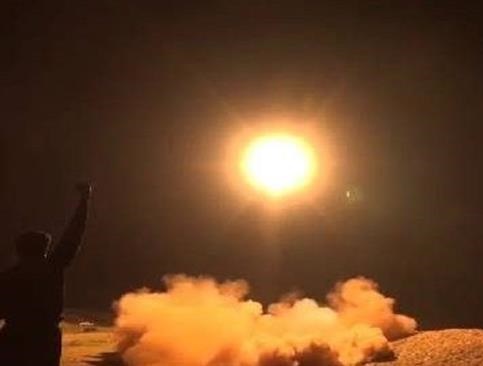
“The recent (missile) test was in line with our programs, and we will not allow any outsider to interfere in our defense affairs,” Dehqan told reporters in Tehran.

He underscored that Iran’s missile tests are by no means in contravention of the Joint Comprehensive Plan of Action (JCPOA) or the UNSC Resolution 2231.

The minister also made it clear that missile tests are part of Iran’s defence plans aimed at fulfilling its national interests, saying no one could affect the country’s plans and decisions.

His comments came after US officials criticized Iran on Tuesday for what they called “provocative” and “irresponsible” measure by conducting its first missile test since Donald Trump took office.

After achievement in July 2015 of the JCPOA, a nuclear agreement between Iran and the Group 5+1 (Russia, China, the US, Britain, France and Germany), the 15-memebr United Nations Security Council passed a resolution to endorse the accord.

Resolution 2231 calls upon Iran “not to undertake any activity related to ballistic missiles designed to be capable of delivering nuclear weapons.”

Iran, however, maintains that none of its missiles have been designed to be capable of carrying nuclear warheads, because nuclear weapons have basically no place in the Islamic Republic’s defence doctrine.

Attempts to Increase Iran-Russia Distance Can Harm Fight against Terror

trump

Seyed Hossein Mousavian, a former Iranian nuclear negotiator and a senior analyst, said in an article in Huffington Post that if US President Donald Trump destroys Iran-Russia-Turkey triangle, he would destroy the chance to solve Syria crisis.

He also suggested that Trump would not manage to defeat the ISIS terrorist group if insist on religious bans.

Here is the full text of his article, entitled “Trump Cannot Afford to Shut out Iran If He Wants to Defeat ISIS”:

Throughout his campaign, US President Donald Trump vowed that confronting terrorism and destroying the self-proclaimed Islamic State would be his highest foreign policy priority. Since assuming office, however, he has taken measure after measure that exacerbates, rather than alleviates, the threat of terrorism. His “secret” plan to confront ISIS has so far turned out to just be an order to the Pentagon to develop a plan to destroy the organization ― which, according to some reports, would not be a radical departure from the current anti-ISIS campaign. Other actions he has taken or seems poised to take ― on immigration, Iran and Russia ― will actively harm efforts to combat the terrorist group.

Trump’s current foreign policy approach is not only self-defeating, but also forgoes a golden opportunity to shape a coherent strategy that would allow him to usher in a political solution to the Syrian war, destroy ISIS and repair US ties with the Kremlin. Improved U.S-Russia relations will also open the door to Moscow serving as an interlocutor facilitating mutually beneficial US-Iran engagement.

Rather than pursue strategically wise diplomacy, however, Trump has started his presidency by signing a controversial executive order on immigration; banning temporarily immigrants and visitors and from seven Muslim-majority countries ― with an indefinite ban on Syrian refugees. Not only does this move defy legal precedent, it has also torn apart countless families and upended lives across the world. By failing to distinguish between extremists and the vast majority of peaceful Muslims, the racially inflammatory executive order also utterly fails in its aim of thwarting terrorism and in fact is a boon to terrorist groups like ISIS. It bars over 200 million people from entry in the United States, even as studies have shown that no individuals from these countries have committed terrorist attacks on US soil.

As Iranian Foreign Minister Javad Zarif has said, the ban is a “great gift to extremists” and “aids terrorist recruitment by deepening fault-lines exploited by extremist demagogues.” The Iranian Foreign Ministry also responded to Trump orders by stating it was “considering” taking a reciprocal action, but unlike the US ban, will not apply it to Americans who already have visas. Iran is one of the seven Muslim-majority countries targeted by Trump’s executive order.

Millions of people of Iranian background in America and across the world have been affected ― whether it be because they are on student or work visas, have green cards, or are dual-Iranian nationals with any other country. Iranian-Americans, for their part, have contributed immensely to US society and are among America’s most successful immigrant groups. This ban not only reinforces elements in Iran which have always argued that the US government cannot be trusted, but also signals to Iranians of every political stripe that Washington views them with discriminatory disdain.

Trump Poised to Pursue Self-Defeating Syria, ISIS Strategies

On top of the executive order, which promises to add fuel to the war in Syria by empowering groups like ISIS, unsubstantiated rumours are circulating that the Trump administration wishes to reach a solution in Syria at the expense of Iran. If so, this is a recipe for disaster and will guarantee the failure of diplomacy. Iran, long at the forefront of the fight against ISIS, has significant leverage on the ground in Syria and has participated in the Geneva process since 2015. It is eager to use its leverage to reduce the level of violence and bring about a lasting peace in Syria. But if the US tries to forcefully exclude it from negotiations and approach it in a zero-sum manner, it will have no choice but to use the many tools available to it to thwart such efforts.

Iran’s important role in Syria was demonstrated last week in two days of landmark negotiations over the Syrian war in Astana, Kazakhstan.

The talks marked the first time in nearly six years of war that representatives of the Syrian government and armed opposition negotiated directly. Brokered by Turkey, Iran and Russia ― the latter two the Syrian government’s main backers and the former a leading supporter of the rebels ― the negotiations ended with a signed agreement by the outside powers to uphold the fragile country-wide cease-fire and set up a trilateral body to monitor and enforce it.

By bringing the government and opposition together and solidifying support for the cease-fire, the three convening powers moved the warring parties one step closer to a political agreement. The joint statement they released at the end of the talks also affirmed their support for the underlying principles of the Geneva process, the peace talks led for years by the United Nations and the United States. While the Geneva process has long stalled and struggled to implement its agreed-to principles, the Iran-Russia-Turkey-led diplomatic initiative, as exemplified by Astana, has proven able to bring together the real stakeholders in the conflict, both inside and outside the country. If complemented with the Geneva framework as planned, a peaceful settlement to the Syria crisis ― and an end to the suffering of millions of innocents ― will be in reach.

2

Russia and Iran must be on board in diplomatic efforts

The fact that Iran joined Russia and Turkey in driving the Astana talks, which relegated US participation to observer status and saw no Saudi participation, is a testament to its importance in delivering a viable peace in Syria. At a recent conference in the Middle East, a senior Arab official divulged to me how the Saudi leadership feels overstretched in the region and entangled in Yemen, where they are increasingly dedicating the lion’s share of their capabilities and resources. At the same time, the official told me, the Saudis feel their efforts in Syria have resulted in blowback, given that their preferred groups have either been overtaken or outright co-opted by terrorist groups. As a result, Saudi Arabia did not go to the Astana talks, but the Syrian opposition High Negotiations Committee ― founded in Saudi Arabia in 2016 ―decided to lend its support to the anti-government military delegation going to Astana after debating the matter for two days in Riyadh.

Attempting to increase distance between Iran and Russia will not only be a moot effort, but will also harm regional cooperation and prospects necessary to end the Syrian war.

Having Iran on board is crucial if any peace talks are to be successful. Russia is currently serving as the bridge between Iran and Turkey ― which is de-facto representing Saudi and Gulf Cooperation Council interests ― and is attempting to increase areas of commonality between the two countries. As Trump pursues diplomacy with Russia, it is critical that he recognize the importance of the Russian-Iranian relationship both in combatting terrorism and facilitating a political solution in Syria and elsewhere in the region. Attempting to increase distance between Iran and Russia will not only be a moot effort, but will also harm regional cooperation and prospects for the inclusive diplomacy necessary to end the Syrian war.

3

It would be in the interests of the United States if Trump were to have a positive, win-win mentality in approaching Russia and Iran. While his current approach will almost certainly greatly worsen America’s quagmires in the Middle East and make the threat of terrorism all the more difficult to effectively address, the potential exists for him to choose another path and score major achievements. If Trump elected a more diplomatic and inclusive foreign policy, he could simultaneously achieve four accomplishments: Improve ties with Russia, facilitate a resolution to the Syrian crisis, eradicate ISIS, and through Russian mediation, work to mend US-Iran ties. If such a reality comes to pass, a truly effective coalition will emerge that can manage other regional crises as well.

On the other hand, if Trump tries to sabotage Russian-Turkish-Iranian dialogue, any hope he has in defeating ISIS and diminishing the terrorist threat in the Levant will be eliminated. Furthermore, Trump should know that Iran and Russia are neighbours, and that strong relations between them is a strategic imperative for both of them. Improving the US-Russia relationship should not be envisioned as coming at the cost of Iran-Russia relations. First and foremost, it will simply not work, as it is far beyond the imagination of Russian policy makers that they can count on the United States as a stable, long-term partner in the same way they can of Iran. Secondly, in the region currently, Russia and Iran are bearing a maximum level of burden for keeping regional states intact, while the United States is bearing a minimum amount, a reality which binds them to each other. The region is on the verge of total collapse, and Russia, the US and Iran should welcome collective cooperation to prevent all-encompassing chaos.

If Trump adopts an inclusive, diplomatic foreign policy, he can achieve four things: Improve ties with Russia, facilitate a resolution to the Syrian crisis, eradicate ISIS and work to mend US-Iran ties.

*Seyed Hossein Mousavian is a Middle East security and nuclear policy specialist at Woodrow Wilson School of Princeton University and author of “Iran and the United States: An Insider’s View on the Failed Past and the Road to Peace.”

Some Nations Affected by Trump’s Visa Ban May Stay on List after 90 Days

Trump

Under the order released on Friday, travellers from Iran, Iraq, Libya, Somalia, Sudan, Syria and Yemen may not enter the country for at least 90 days while Kelly and others determine whether there is enough information available to screen them.

“Some of those countries that are currently on the list may not be taken off the list anytime soon, if they are countries that are in various states of collapse, as an example,” Kelly told a press conference.

Kelly said others may be added if it is determined they “could tighten up their procedures” to ensure more secure vetting, Reuters reported.

Trump’s Actions Reminiscent of Hitler: Palme d’Or Winner

shahab hosseini

“It is unfortunate that the world is placed in a conflicting process of science and technology progress and regression of human culture. All around the world we see leaders are guiding the world into the darkness of ignorance instead of the light of consciousness,” Hosseini, a Palme d’Or winner, wrote on his Instagram.

“They advance discord, hatred, division and racism among human societies under any excuse. But nations, unlike their leaders, move toward freedom and unity,” he noted, as reported by ISNA.

Hosseini referred to the executive order recently signed by US President Donald Trump to prevent citizens of several Muslim countries from entering the US, saying that it reminds one of the black era in the late 1930s and 1940s and the rise of Adolf Hitler which had disastrous consequences that will not be erased from world’s memory.

“The fate of all tyrants and criminals of history is like a mirror in front of human beings, especially Trump and his supporters, through which they learn about the past. As an actor and director, I suggest that Hollywood filmmakers put the making of a movie about the king of Shinar Nimrod on their agenda. Nimrod was the king who claimed he is the Lord of the world but was killed by a mosquito,” Hosseini added.

Shahab Hosseini’s reaction came after Taraneh Alidousti, the other star of “The Salesman,” and Asghar Farhadi announced that they would boycott the Oscars ceremony in protest at Trump’s visa ban.

A Look at Iranian Newspaper Front Pages on February 1

Newspapers today covered the visit of Jean-Marc Ayrault, the Foreign Minister of France, to Tehran and his meetings with high-ranking Iranian officials. His remarks about Iran’s missile test were widely criticized by conservative papers today.

US President Donald Trump’s travel ban that prevents citizens of seven Muslim-majority countries including Iran also remained a top story on Wednesday.

The 38th anniversary of Iran’s 1979 Revolution and the beginning of the ten-day celebrations also received great coverage.

The above issues, as well as many more, are highlighted in the following headlines:


Afkar:

1- Iranian Embassies Receive Directives after Trump’s Travel Ban: Iranian Spokesman

2- Wargames in High Seas Should Be Based on Int’l Laws

3- Assad: War on Syria Not Limited to Military Aspect

A Look at Iranian Newspaper Front Pages on February 1


Aftab-e Yazd:

1- A Report about Lives of Porters Who Import Contraband Goods on Their Shoulders through Mountains: They Do It for $1.3 per Kilogram

2- Parts of Dead Bodies Found in Place Where Plasco Building’s Debris Was Unloaded

A Look at Iranian Newspaper Front Pages on February 1


Amin:

1- Zarif in Joint Press Conference with French Counterpart: We Won’t Wait for Others’ Permission in Defending Ourselves

2- Wheels of Iran’s Economy Are Turning

A Look at Iranian Newspaper Front Pages on February 1


Arman-e Emrooz:

1- Destroying People’s Hope Is a Treason

2- IRGC General: Ayatollah Hashemi Rafsanjani Was the One Who Provided Iran with Missiles

A Look at Iranian Newspaper Front Pages on February 1


Ebtekar:

1- Iran Trying to Decrease Corruption: The Country’s Corruption Perception Rank Unprecedented in Past 10 Years

2- Trump Threatens His Opponents

3- Two Officials Who Protested US President’s Order Were Dismissed

4- Rouhani: Government Kisses Hands of Those Who Raise Constructive Criticisms

A Look at Iranian Newspaper Front Pages on February 1


Etemad:

1- Shaky Skyscrapers of Tehran: A Report on Poor Safety of Tehran’s Towers; There Are 979 High-Rise Buildings in Tehran; 267 Towers Built in Past 5 Years

2- Political-Economic Defence of Nuclear Deal: French FM Adds to Knots in Tehran-Paris Ties

A Look at Iranian Newspaper Front Pages on February 1


Ettela’at:

1- Iranian and French FMs Stress Full Implementation of Nuclear Deal

2- Anniversary of Imam Khomeini’s 1979 Arrival in Iran Commemorated in Mehrabad Airport and Imam Khomeini’s Mausoleum

3- 6.2% Economic Growth Anticipated for Iran in Next Year: Deputy Economy Minister

A Look at Iranian Newspaper Front Pages on February 1


Ghanoon:

1- Sympathy against Racism Continues 4 Days after Trump’s Travel Ban in US

2- Security Meeting against Iran’s Missile Power: Zionists Coordinate UNSC against Tehran

A Look at Iranian Newspaper Front Pages on February 1


Haft-e Sobh:

1- Iranian Immigrants Wealthier than Americans: A Comparison between Income and Education of 500,000 Iranians Living in US and Other Minorities

2- Bring Back Niki: Students of US Top University of Technology Call for Return of Their Classmate

3- Trump Starts Making Excuses Using Iran’s Missile Tests

A Look at Iranian Newspaper Front Pages on February 1


Hemayat:

1- Russia in Reaction to US and Israel’s Claims: Iran’s Missile Test Is Not a Violation of Nuclear Deal

2- Fire of Division in US Flares Up Once Again

3- Middle East’s Biggest Grain Refinery Inaugurated in Karaj

A Look at Iranian Newspaper Front Pages on February 1


Iran:

1- Everyone Should Remain Loyal to JCPOA Commitments: President Rouhani

2- White House: Whoever Is Not Pleased with Trump’s Decisions Can Go

3- Death Is What Contraband Porters Earn

A Look at Iranian Newspaper Front Pages on February 1


Jame Jam:

1- US Iranophobia Project Now at Missile Stage

2- Trump’s Decisions Won’t Last Long: Iran’s Foreign Ministry Spokesman

3- Cinema Official Urges Politicians to Get Out of Art Industry

A Look at Iranian Newspaper Front Pages on February 1


Javan:

1- Zarif: We Won’t Postpone Our Missile Program until Others Give Us Permission

2- JCPOA Bad Cop’s FM: Missile Test Is against UNSC Resolution’s Goal!

3- Celebration of Iran’s Revolution

4- Visa Is a Secondary Issue: We’re Once Again Named Axis of Evil! Two Mistakes in Trump’s Visa Ban for Iranian People

A Look at Iranian Newspaper Front Pages on February 1


Jomhouri Eslami:

1- 6 Industrial and Infrastructure Projects Inaugurated by President Rouhani in Alborz Province in First Day of Ten-Day Celebrations of 1979 Islamic Revolution’s Anniversary

2- Imam Khomeini’s Photo in Alawi School of Tehran While Responding to People’s Emotions

3- Ceremony Held in Imam Khomeini’s Mausoleum to Commemorate 1979 Revolution’s Anniversary

4- All Astronomical Salaries Returned to Treasury: Official

A Look at Iranian Newspaper Front Pages on February 1


Ka’enat:

1- French FM: Count on France

A Look at Iranian Newspaper Front Pages on February 1


Kayhan:

1- Several Contracts Signed in Ayrault’s Visit to Tehran: Result of Diplomatic Inaction; French FM Rewarded for His Imprudence!

2- Yemen’s Ansarullah Drowns Seventh Vessel Belonging to Saudi Coalition

3- Trump’s Executive Order Leads to Infighting among American Diplomats

A Look at Iranian Newspaper Front Pages on February 1


Khorasan:

1- France Says No to Renegotiation of Nuclear Deal: French FM’s Reaction to US Approach to JCPOA

A Look at Iranian Newspaper Front Pages on February 1


Quds:

1- Accomplice of the Thief and Friend of the House Owner: Amid US, France, and Britain’s War Drills in Persian Gulf, French FM Visited Iran, Questioned Iran’s Missile Tests, and Welcomed Economic Cooperation with Tehran

A Look at Iranian Newspaper Front Pages on February 1


Roozegar-e Ma:

1- World Amazed by Populist President: A Review of Trump’s Radical Approach in Preventing Citizens of Certain Countries from Entering US

2- $3.7 Billion of Facilities Paid to Production Units: Government Spokesman

A Look at Iranian Newspaper Front Pages on February 1


Seda-ye Eslahat:

1- Trump an Opportunity for Conservatives!

A Look at Iranian Newspaper Front Pages on February 1


Siasat-e Rooz:

1- Theresa May Is Trump’s Partner in Racism: Thousands of Britons Protested against London’s Accompaniment with US

A Look at Iranian Newspaper Front Pages on February 1


Sobh-e Now:

1- Trump Opponents Become Defenders of Iran

A Look at Iranian Newspaper Front Pages on February 1

Iranian Family Launches Nationwide Campaign to Protect Asiatic Cheetah

cheetah

Members of an Iranian family are using their car, marked with “Asiatic [or Iranian] Cheetah” slogans, to promote the culture of environmental protection and prevent the extinction of wildlife species, this animal in particular, by travelling to different Iranian provinces in the form of a caravan.

According to a Farsi report by Mehr, the head of this caravan is Bahman Najafi, an Iranian ranger retired from the Environment Department who personally pays the costs of this journey to different Iranian regions alongside his family.

Their trip began seven years ago to inform people about the harms that put the lives of cheetahs in danger.

“We started our journey from Tabas, eastern Iran, and will go on toward the cities in southern Iranian, the desert habitat of cheetah,” he said.

This caravan has arrived in Shiraz, Fars province, in southern Iran after travelling across 16 provinces.


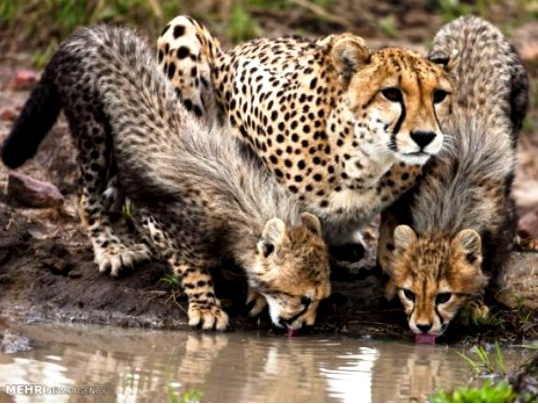
The Asiatic cheetah or Iranian cheetah is a critically endangered species now on the verge of extinction and an important part of Iran’s natural and cultural heritage.

One of the significant aims of the preservation efforts is to raise public awareness not to harm the world’s most graceful wild cats.

In the early 20th century, the population of the Asiatic cheetah was distributed across many countries, including India, Pakistan, the Middle East and Russia.

Currently, the only existing population lives in the northeastern Iranian scrublands, where only 50 to 70 individuals are estimated to survive in the wild.

The United Nations Development Program (UNDP) in Iran is directing a project in conjunction with Iran’s Department of the Environment dubbed the Conservation of Asiatic Cheetah Project (CACP).