Monday, December 22, 2025
Home Blog Page 41

Iranian editor criticizes President Pezeshkian over letter to Saudi crown prince; foreign ministry denies mediation claims

The letter, delivered two weeks ago by Iran’s Hajj and Pilgrimage Organization, officially conveyed Tehran’s appreciation for Saudi Arabia’s management of Iranian pilgrims during last year’s Hajj, the Iranian Foreign Ministry explained.

Shariatmadari questioned the timing and motives behind the correspondence, suggesting in an editorial that the proposal to send the letter may have come from political actors seeking to create “a two-sided game.”

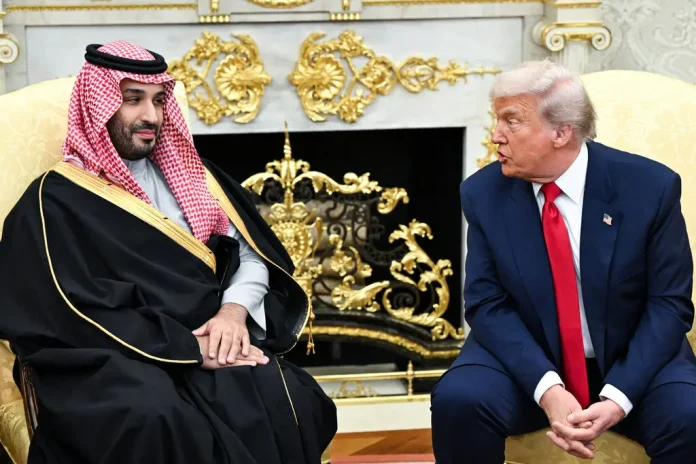
He implied that the move was suspicious because it coincided with bin Salman’s trip to the US to meet President Donald Trump. He also criticized the fact that the letter was sent months after the previous Hajj and months before the next, arguing that its timing lacked practical justification.

The editor accused unnamed political figures, some allegedly close to the president, of both encouraging the letter and later spreading false claims that President Pezeshkian had asked Riyadh to mediate between Tehran and Washington.

In response, Iran’s Foreign Ministry Spokesperson Esmail Baqaei reiterated that the letter contained “nothing beyond standard coordination on Hajj” and included no discussion of negotiations or mediation.

He expressed regret that some political actors continue to promote “baseless speculation,” urging all sides to prioritize national interests over partisan agendas.

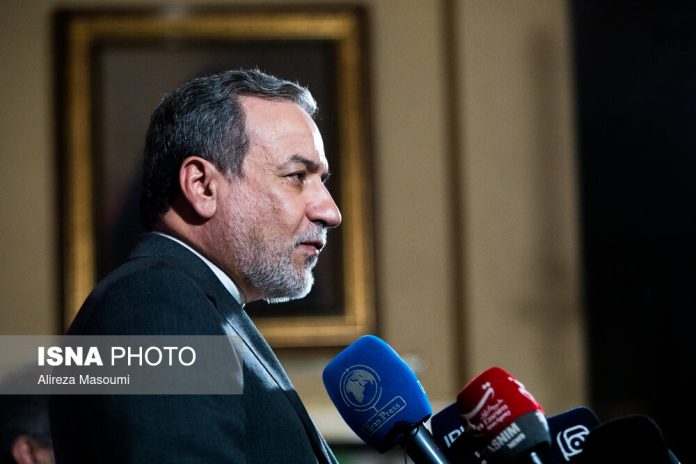
Iranian FM to visit France for talks on bilateral issues, regional crises, nuclear file

Abbas Araghchi

Iran’s Foreign Ministry Spokesperson Esmail Baqaei told reporters that the visit is taking place at the invitation of the French foreign minister.

He said the agenda will include bilateral matters, among them the case of detained Iranian citizen Mahdieh Esfandiari, as well as major regional and international developments.

Baqaei stressed that Iran’s approach to foreign relations remains rooted in “mutual respect” and the use of every diplomatic opportunity to articulate Tehran’s positions.

He noted the talks in Paris would allow Araghchi to clearly present Iran’s views on Israel’s ongoing crimes in Palestine and Lebanon, the state of the nuclear file, and other pressing international issues.

The spokesperson added that the visit would also be used to convey the “legitimate demands of the Iranian people” to the French side, underscoring that Iran intends to utilize the trip as a platform for outlining its political expectations and strategic priorities.

IRGC busts terror team in Iran’s Sistan and Baluchestan

IRGC

The IRGC Ground Force’s Quds Base said in a statement on Monday that the team was detected and dismantled amid the large-scale “Martyrs of Security” drills in the region.

The statement added that a number of terrorists were captured in the anti-terror operation, which also resulted in the recovery of two explosive vests.

Sistan and Baluchestan province, bordering Pakistan, has faced frequent terrorist attacks targeting both civilians and security forces in recent years.

Terrorist groups carrying out attacks on Iranian interests in the southeastern and southwestern parts of the country are thought to have ties to foreign intelligence agencies.

On October 26 last year, a terrorist attack in the Gohar Kuh district of Taftan County claimed the lives of 10 members of Iran’s law enforcement forces.

The so-called Jaish al-Adl terrorist group took responsibility for the attack, which is marked as one of the most deadly incidents in the province in recent months.

The group has conducted numerous terrorist attacks across Iran, primarily focusing on the Sistan and Baluchestan region. Its methods include abducting border guards and launching assaults on civilians and police stations, aiming to incite chaos and disruption.


More Iranian oil being shipped to China via Indonesia: Reuters

Iran Oil

The Monday report said Chinese buyers of Iranian crude have shifted to oil trans-shipped in waters off Indonesia rather than Malaysia, which was once the main hub for rebranding Iranian oil destined for China.

The report cited Chinese customs data showing that China’s crude imports from Indonesia surged from less than 100,000 metric tons (mt) in 2024 to 9.81 million mt, equivalent to 235,570 barrels per day (bpd), in the year to October.

By contrast, China’s oil imports from Malaysia have almost halved since July, dropping sharply from this year’s peak of 8.5 million mt recorded in March.

Reuters reiterated claims from its earlier reporting that much of the crude China imports from certain South Asian countries is actually of Iranian origin. It said shipments are being rerouted through Indonesia due to increased scrutiny from banks over cargoes labeled as Malaysian.

Iranian authorities have never confirmed such claims or other reports alleging that the country uses tactics such as ship-to-ship transfers in South Asian waters to deliver oil to Chinese clients.

However, Iranian oil exports have consistently increased in recent years, and experts believe much of the crude ends up at private refineries in China, a country that has officially reported no Iranian crude imports since 2022.

Recent data from Kpler, an energy analytics firm, indicates that China imported an average of 1.37 million bpd of Iranian crude during the first ten months of this year.


German arms industry investors in panic over Ukraine peace talks

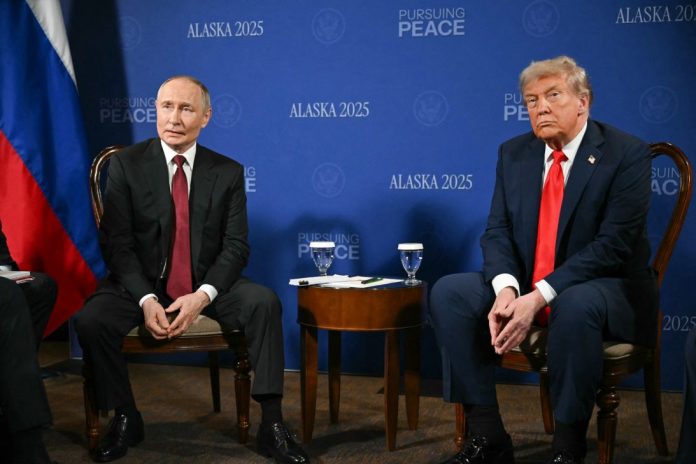
The US reportedly handed Kiev a 28-point peace proposal last week and gave it until Thursday to respond. The framework was discussed in Geneva on Sunday, with US President Donald Trump saying afterwards that “something good” may be happening.

The peace push immediately unnerved investors, triggering a fierce sell-off of shares in Rheinmetall, Germany’s largest arms manufacturer and a key supplier of military equipment to Kiev. Rheinmetall stock has fallen by over 14% over the past five days, with defense-electronics producer Hensoldt recording a similar drop.

“Investors fear that an end to hostilities could also mean the end of the “super-cycle” for defense stocks,” Boerse-Express wrote.

Germany has become Kiev’s second-largest arms provider after the US, and Rheinmetall, which produces tanks, artillery systems, and ammunition, recently reported surging profits for the first nine months of 2025, alongside a record order backlog driven by the conflict and rising EU military budgets. Company shares have climbed nearly 2,000% since fighting escalated almost four years ago.

During the previous US attempt to broker peace in February, Rheinmetall CEO Armin Papperger argued that even if the fighting were to end, it would be “wrong” for Europe to assume “a peaceful future.” In 2024, the company announced plans to build four manufacturing plants in Ukraine.

The broader European defense sector has been expanding at roughly three times its pre-2022 pace, Financial Times reported in August. Western leaders claim the accelerated buildup is needed to meet NATO readiness targets, maintain arms deliveries to Kiev, and deter what they describe as a potential Russian threat.

Moscow has called such claims “absurd” fearmongering aimed at justifying increased military spending and condemned what it calls the West’s “reckless militarization.”

US signals ‘progress’ in Ukraine peace push

Washington presented Kiev with the proposal last week, giving it until Thursday to respond. Ukrainian and US delegations then met with key European NATO backers in Geneva on Sunday, after which the White House said in a statement that an “updated and refined peace framework” had been drafted, with final decisions on it to be made by Trump and Ukraine’s President Volodymyr Zelensky.

”Is it really possible that big progress is being made in peace talks between Russia and Ukraine? Don’t believe it until you see it, but something good just may be happening,” Trump wrote on his Truth Social platform on Monday.

US Secretary of State Marco Rubio earlier stated that the US and Ukraine had made a “tremendous amount of progress” on the framework, while stressing that Russian agreement is essential for any deal to hold.

While the original 28-point plan has not been made public, multiple outlets have reported that it includes clauses which Kiev and its European sponsors previously rejected, such as de facto recognition of Russian control over Crimea and Donbass, Ukraine abandoning its ambitions to join NATO, and downsizing its military.

According to Reuters, Ukraine’s European backers submitted a modified version of the proposal that pushes back on limits to Kiev’s armed forces and on territorial concessions.

The Kremlin announced on Monday that Russia had not received any official information about the outcome of the Geneva talks or any revised proposal and declined to comment on media reports.

Moscow confirmed earlier that it had received Washington’s draft, with President Vladimir Putin noting on Friday that “it could form the basis of a final peace settlement.”

Macron poised to reintroduce voluntary military service in France: Le Figaro

The newspaper reported the plan is for a ten-month voluntary service option with compensation, without providing further details on how it would differ from current military service. France suspended conscription in 1997 under then President Jacques Chirac, opting for a fully professional, all-volunteer force.

“In a world of uncertainty and rising tensions… France must continue to be a strong nation with a strong army,” Macron said on Saturday on the sidelines of the G20 summit in South Africa.

Up to 50,000 people could eventually pass through the program each year, Le Figaro wrote, citing government sources.

France’s effort to expand its armed forces follows similar moves by other EU states since the escalation of the Ukraine conflict in 2022.

Poland has rolled out a paid voluntary basic military service. Germany has approved a new military-service model that could shift to selective conscription if volunteer numbers fall short. The Netherlands is engaged in a public debate over potential reintroduction of the draft. Other countries like Latvia and Croatia have reinstated compulsory military service, while Denmark has expanded the draft to include women.

General Fabien Mandon, chief of staff of the armed forces, recently argued that France should not ignore this broader European trend, noting that several of its neighbors are “in the process of reintroducing a national service.”

France has been among the strongest backers of Kiev since the conflict with Russia began, providing weapons, training, and political support.

Russia has condemned what it calls the EU’s “reckless militarization,” describing increased defense spending in the bloc as a distraction from internal woes.

Former IRGC chief calls on Hezbollah to reassess strategic patience amid regional tensions

Hezbollah

Rezaei stressed that while Iran does not command the resistance front and these forces act independently, the current level of patience requires reassessment.

Rezaei referred to the recent twelve-day conflict, saying despite the full efforts of the United States and Israel, their operations did not last more than twelve days, ultimately forcing them to request a ceasefire, which Iran accepted.

He underlined that without organized resistance, Iran could have once again faced the threats of occupation and famine, reminiscent of hardships experienced during the First and Second World Wars.

Rezaei described the Zionist regime’s attacks to kill resistance officials and commanders as a terrorist act, saying such moves in Iran, Lebanon, or Iraq will not force nations to submit.

He maintained that Hezbollah’s continued strategic patience is currently managing the battlefield effectively, but he urged the group to define a decisive endpoint, which must be determined by the resistance forces themselves.

Rezaei also said the unprecedented resistance in Gaza and Lebanon has created a historic shift in global power dynamics, rooted in the doctrine established by martyrs and sustained by the resilience and unity of regional forces.

His comments follows Israeli attacks on Lebanon that killed a senior commander of Hezbollah.

Zelensky hails ‘important steps’ in peace negotiations but stresses more work needed

Volodymyr Zelensky

Ukrainian, American and European officials met in Switzerland Sunday after a US proposal to end Russia’s almost four-year invasion was widely criticised as heeding to Moscow’s demands.

All sides claimed progress negotiations in Geneva, with a joint statement calling them “constructive.”

EU leaders are expected to hold emergency Ukraine talks on the sidelines of a summit in Angola later on Monday.

“In the steps we have coordinated with the side of the US, we’ve managed to keep extremely sensitive points,” Zelensky told a conference in Sweden, speaking via video link.

These included “the full release of all Ukrainian prisoners of war under the all-for-all formula and civilians, and the complete return of Ukrainian children abducted by Russia.”

Kyiv has throughout the war announced that Russia had illegally taken Ukrainian children from occupied territories into Russia, seeking their return.

“These are important steps, but to achieve real peace, more, more is needed,” Zelensky said.

He added Ukraine stands at a “critical moment” and vowed to look for “compromises that strengthen but not weaken us.”

A 28-point US proposal last week spooked Europe, as it provided Moscow to gain even more territory that it occupies, with many in Kyiv and the EU seeing it as effective capitulation to Moscow.

Russian President Vladimir “Putin wants legal recognition for what he has stolen,” Zelensky continued.

The Kremlin said Monday it was not informed on the results of the Geneva talks.

Spokesman Dmitry Peskov stated Moscow was aware that “adjustments” were made to the plan that was initially endorsed by Donald Trump and welcomed by Putin.


Israeli military chief dismisses senior officers over failures leading to Hamas attack

Israel Hostages

Officials widely view the events as Israel’s biggest intelligence and military failure, causing severe damage to the regime’s image and its army’s credibility.

According to the public broadcaster KAN, Zamir’s decisions included ending the reserve service of several retired generals, among them former Military Intelligence chief Aharon Haliva, former Southern Command chief Yaron Finkelman, and former Operations Directorate chief Oded Basyuk.

These officers had already been removed from their command posts earlier, but the new measures fully terminate their reservist status.

Zamir also dismissed Gaza Division reserve commander Avi Rosenfeld, while the division’s intelligence officer was expelled from the army altogether, KAN added.

Other senior officers, including Air Force commander Tomer Bar, current Military Intelligence chief Shlomi Binder, and Navy commander David Saar Salama, received “leadership remarks”, but were not dismissed.

The broadcaster said that Haliva and former Unit 8200 commander Yossi Sariel did not attend Sunday’s hearings “due to scheduling reasons” and will face review at a later stage before their reserve service is formally terminated.

The measures come roughly two weeks after Zamir received a comprehensive investigative report prepared by retired Gen. Sami Turgeman on the failures preceding the October 2023 events.

There was no comment from the officers affected by the decisions.

Several top Israeli commanders have already resigned over the events, including then–chief of staff Herzi Halevi.

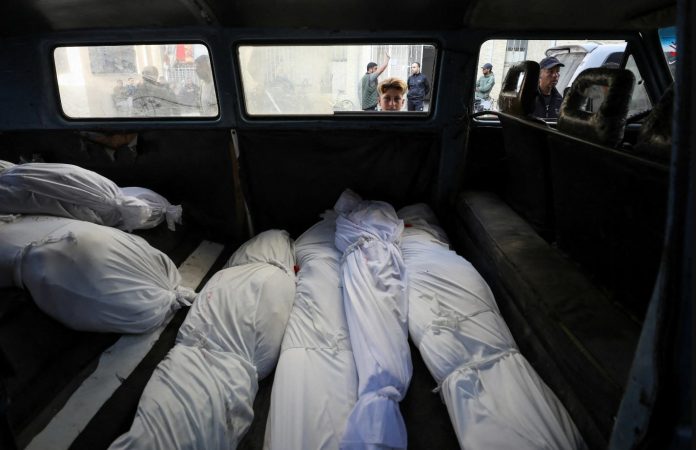
Since October 2023, the Israeli army has killed nearly 70,000 people in Gaza, primarily women and children, injured over 170,900, and reduced most of the enclave to rubble. The assault came to a nominal halt under a ceasefire deal that took effect on Oct. 10.