Sunday, December 21, 2025
Home Blog Page 4074

Trump’s First Positive Move towards Iran Deal Implementation

iran-us-flag

Latest reports reveal that the US Department of the Treasury has permitted the Americans residing in Iran to, in case needed, open accounts with Iranian banks, a move which could be indicative of the new US government’s willingness to fulfill its commitments on the implementation of the nuclear deal, also known as the Joint Comprehensive Plan of Action, signed between Iran and the P5+1.

According to a Farsi report by Donya-ye Eqtesad newspaper, this comes as, prior to the US Treasury’s recent interpretation of the sanction laws, the White House’s laws concerning the possibility of the US citizens opening bank accounts in Iran had been shelved.

Investigations show that the interpretation has been published on an American website affiliated to the country’s sanction experts who are responsible for interpreting the US sanction laws. The website resolves its visitors’ ambiguities about the US [sanctions] laws and regulations based on the country’s legal texts.

Earlier, the Central Bank of Iran (CBI) had also issued a directive authorising the Iranian banks to open rial accounts for foreign individuals and institutions. The directive also set the framework for opening time deposit accounts at Iranian banks by natural and legal persons.

The permit issued by the US Treasury based on its interpretation of the nuclear deal and sanction laws is the executive department’s first pragmatic decision since Donald Trump has come into power as the US president.

Apparently, the move is Trump’s first signal indicating his willingness to create a win-win situation by implementing the JCPOA.

Earlier, Hamid Qanbari, the deputy governor of CBI for supply of foreign currencies, told an expert seminar in Tehran that the US Treasury’s Office of Foreign Assets Control (OFAC) has recently clarified that Americans residing in Iran can have bank accounts in the country.

He added the interpretation was issued to enable the US nationals, who live in Iran and need to open bank accounts, make deposits at Iranian banks.

The new interpretation indicates that although those US nationals who are employed in Iran are still violating the US laws, they can reside in the country, if they wish to without being concerned that their moves to meet their basic needs might be perceived as a breach of the sanctions.

Prior to this move, the incumbent US government, who had adopted a hostile approach to the nuclear deal in its pre-election campaign remarks, had not adopted a clear stance towards the JCPOA. However, the recent interpretation of the sanction laws could be a practical example of the behaviour of the Trump administration’s middle managers towards the nuclear deal.

For the past decades, Iran has been subject to a series of primary sanctions imposed by the US that include tough restrictions on banking activities and the Islamic Republic’s access to the dollar.

Those restrictions were intensified as a series of bans were approved against Iran as a result of disputes over the country’s nuclear energy activities.  Those bans were lifted in early 2016 after the country reached the nuclear deal with the five permanent members of the Security Council plus Germany.  However, US primary sanctions are still in place.

70 Foreign Envoys Plant Trees near Tehran (+Photos)

Tree planting in Tehran

“Tehran, the Cosmopolitan City of Friendship” was the name of an international arboriculture festival, hosted by Shahram Gilabadi, the head of International Communication Centre of Tehran Municipality and Managing Director of Tehran Parks and Green Spaces Organization.

The festival was held on Monday, March 6, at the International Fairground Shahr-e Aftab (City of Sun) in southern Tehran.

According to Gilabadi, 150 saplings were due to be planted in the complex. “70 trees were planted by 70 diplomats, and 30 others are to be planted by members of Iran’s parliamentary groups of friendship with other countries.”

Welcoming the foreign diplomats who came to the Middle East’s largest cultural exhibition centre, Gilabadi also invited them to visit Tehran International Book Fair in Shahr-e Aftab in May.

“Tree planting in Tehran, invited by Mayor Ghalibaf. Here with Hungarian colleague János Kovacs,” wrote Helena Sangeland, Swedish ambassador to Iran on her Twitter, posting an image of her and the Hungarian ambassador planting trees.

Here you can see Tehran Picture Agency’s photos of the ceremony:


Saudi Arabia Should Drop Delusional Policies: Iranian FM

zarif-mohammad javad

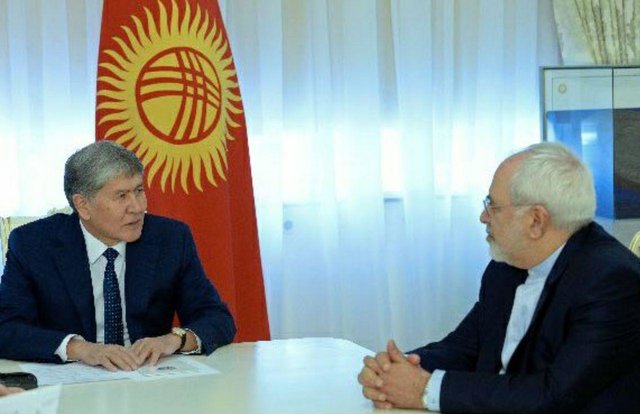
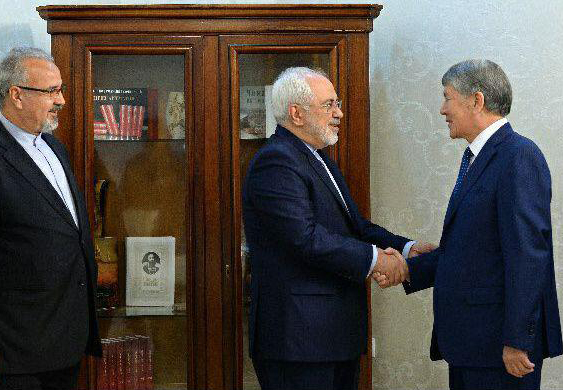
In a recent interview with ISNA, Iran’s FM Mohammad Javad Zarif said problems between Iran and Saudi Arabia will not be solved through mediation.

He said the problem is that Riyadh thinks it should create tension in order to advance its policies in the region.

However, said Zarif, Saudi Arabia should drop its delusional policies and efforts to fuel anti-Iran sentiment in the region.


Here are excerpts from his remarks in the Farsi interview:


At the 2017 security conference in Munich, Iran once again put forward the idea of forming a regional forum for dialogue. This is an appropriate policy that Iran is pursuing. Iran believes its interests will be ensured through cooperation, interaction and dialogue with neighbours.


Some Mideast Countries Playing Blame Game

Unfortunately, some neighbouring countries backed former Iraqi strongman Saddam Hussein during the eight-year war imposed on Iran in the 1980s, and are now supporting terrorists. Their influence in the region has dwindled and their status has been undermined due to their actions. These countries are playing a blame game over their problems and do not want to accept responsibility for their actions. But these moves will not make Iran deviate from its right policies. Engagement with neighbouring countries is a central plank of Tehran’s policy. We should have cooperation and hold dialogue with them, and we will continue this policy.


Neighbours Should Avoid Trying Wrong Paths Again

Iran recommends that its neighbours rethink their previous policies which have only brought about destruction and insecurity for them and for the whole region, and choose the right path. We diplomats say “Diplomats choose the right path after trying the wrong paths.” Some of our neighbours have tried wrong paths enough, and now it’s time they choose the right path.


No Positive Behaviour by Saudi Officials

The letter sent to the Iranian president by the Kuwaiti emir was written on behalf of all Persian Gulf littoral states. It shows Saudi authorities apparently agree with the content of the letter. But we do not see any positive approach and behaviour on the part of Saudi officials. Riyadh continues to stoke tension in the region through its policies rather than seeking to go for dialogue and interaction.

Saudi authorities had pinned their hopes on the negative atmosphere created against Iran before the conclusion of a nuclear agreement between Tehran and the P5+1 countries. That negative climate had been created as a result of anti-Iran resolutions by the UN Security Council. Of course, the anti-Iran propaganda at the time did not affect us because Iran’s growth, development, security and economy are based on local potentialities. So, we were not that much affected by international pressure. Of course those pressures created some problems for us, but failed to force us into submission. Unfortunately, certain regional countries had pinned their hopes on the anti-Iran propaganda at the time. When the pressure was removed after the signature of the JCPOA, they made every effort to restore anti-Iran propaganda.


Some Neighbours Have Illusions

Iran’s neighbours will soon realize that anti-Tehran policies are a nonstarter, and that the best way is to engage in dialogue with Iran. Iran has the region’s best interests at heart and would like to engage in cooperation and dialogue with regional countries. Of course, some other regional countries have illusions and think they can revive the kind of domination that gripped the region in the past. But in the modern era, the region brooks no domination. I am optimistic that regional countries will finally opt for engagement and dialogue with Iran. My optimism emanates from the regional and international realities. The common threat of extremism and terrorism in the region will come back to haunt those who have contributed to the formation and development of terrorist groups and offered them financial, political and arms support. I also believe regional countries will come to understand that the policy of Iranophobia is useless and they will have to go for interaction and cooperation.


Mediation No Solution to Iranian-Saudi Problems

The Saudi foreign minister recently said that Iraq, as a neutral country, can mediate between Iran and Saudi Arabia. I don’t think there is any need for mediation. Of course, we have not opposed countries which have expressed their willingness to play a positive role in establishing relations between Iran and Saudi Arabia. We have not rejected their proposal to act as intermediaries and we have looked at the idea positively. But the point here is not the issue of mediation. The problem is that Riyadh thinks it should create tension in order to advance its policies in the region. However, Saudi Arabia should drop its delusional policies and efforts to fuel anti-Iran sentiment in the region.


Riyadh’s Aggression against Yemen Fuelling Insecurity

Saudi policies which only stoke tension in the region have negative consequences. The Saudi attack on Yemen has only fuelled insecurity and strengthened terrorist groups. I think it is necessary that all regional countries prudently review their past policies and I hope they will realise that regional problems can be solved through dialogue, not by engaging foreign troops in the region. Then, problems can be solved, with or without mediation. Riyadh should drop the illusions based on which it seeks to fuel tension in the region and should go for dialogue and interaction.

Man United Describes Iranian Striker as Rostov’s Star Player

Sardar Azmoun

Manchester United will face FC Rostov in the Europa League Round of 16 on Thursday in Old Trafford.

According to the manutd.com, Azmoun hit a brace at the weekend and also scored against Bayern and Atletico in the UEFA Champions League group stages, as well as contributing to his side’s 4-0 home win over Sparta in the last round.

Dubbed the ‘Iranian Messi’ by fans after moving to Rostov on an initial loan from Rubin in 2015, he was linked with a move to Premier League rival Liverpool in January after helping himself to nine league goals last campaign.

Trump Needs to Shift Public Opinion on Iran Deal: MP

trump

Iranian lawmaker Jalil Rahimi Jahan-Abadi said the new US government has no other option but to pursue the implementation of the JCPOA, which has been devised by the former US administration and the other five world powers.

Nonetheless, he noted, Trump primarily needs to shift public opinion in favour of implementing the JCPOA to modify the poisonous atmosphere he had created around the nuclear deal during his election campaign.

According to a Farsi report by ICANA, he stressed that although Trump ascended to power by uttering threats to rip up the JCPOA, currently, he needs to both change public opinion and fulfil its commitments on implementing the deal.

“The public pressure on Trump is constantly mounting.”

The JCPOA was the outcome of the collective wisdom and efforts by the International Atomic Energy Agency, Iran and major world powers, he noted, highlighting the efforts made by the IAEA to defend the deal.

“The nuclear deal has prevented the aggravation of the crises in the world and Middle East and brought about relative peace in the region. By defending the nuclear deal, the IAEA will endeavour to promote this optimistic view across the world.”

Iranian MPs Call for Caution in Dealing with FATF

Foreign Ministry Condemns FATF’s Blacklisting of Iran

Two Iranian lawmakers, Ali Bakhtiar and Abolfazl Aboutorabi, have slammed a public statement by the Financial Action Task Force (FATF) urging Iran to fulfil its commitments to the body, calling on the state officials to take the necessary precautions in their cooperation with the organization to avoid any problems and losses.


Precautions Are Necessary

According to a Farsi report by ICANA, Bakhtiar said Iran’s increased transaction with the international community requires a number of moves by the country including joining a number of global conventions such as the FATF.

Commenting on a recent anti-Iran statement by the FATF, Bakhtiar noted that, “Iran’s agreement with the FATF has different dimensions. Nevertheless, the Islamic Republic has always honoured its commitments under the agreement and will behave the same in the future.”

He further referred to the concerns voiced by some experts about the implementation of the agreement, and noted that the Iranian officials are required to take security precautions to avoid any probable problems.

“To this end, it is necessary to install firewall systems and other security programs to eliminate any likely threats and prevent acts of sabotage through software applications, particularly, in banking and trade affairs.”

Bakhtiar said currently, the licences for banking software applications used in Iran are issued by European companies.

However, he added, Iran has obliged these firms to observe the security measures.

He stressed that so far, none of these companies have managed to pose any threat to Iran’s banking system.

“For increased interactions with the international community, Iran is required to make a number of moves such as joining global conventions; however, Iranian officials are required to take certain precautions to this end.”


Beware of Great Losses

Commenting on the cooperation between Iran and FATF, Aboutorabi, the other Iranian parliamentarian, said the Iranian Supreme National Security Council (SNSC) has not yet consented to Iran’s accession to the organization and implementation of the bilateral agreement.

He stressed that the FATF agreement is a highly sensitive one, adding Iran’s accession to the agreement will lead to a great loss for the country.

On the FATF’s public statement on Iran, he said accession to this organization and accepting its terms and conditions will entail great losses for Iran.

This will enable the body to exercise strict supervision over Iran’s banking system, has access to the country’s political and economic information and use them for intelligence purposes.

“According to the FATF agreement, the organization will use an American software to oversee Iran’s banking and economic systems. This software would have access to Iran’s trade, financial and economic information and processes and would be able to analyse them. This will enable Americans to create a chaos in the country, whenever they wish to, by fiddling with the accounts.”

“I see no plausible reason for Iran to join the FATF. The implementation of the agreement will definitely work to the detriment of Iran,” he added.


Visiting Iran’s Beauties Changes German Engineer’s Life

Visiting Iran’s Beauties Changes German Engineer’s Life

Vaghaye Ettefaghieh daily newspaper has narrated the story of a German engineer who lost his wife, but managed to ease his pain by visiting Iran.

Here is the full text of the Farsi article:

One foot in the coasts of Caspian Sea [in northern Iran], the other on Persian Gulf beaches [in the south]: Thomas, a German engineer, has chosen to live in this way. Such a romanticism definitely wasn’t predicted in the recruitment exam of Siemens, where he worked as the chief engineer. However, he could not continue working there due to his evolved spirit.

The chemical engineer, working in the energy department of Siemens – the huge company with more than 360,000 employees in 190 countries – finally achieved his dream in Iran, on the coasts of its indigo-coloured seas; a fate that steered him toward suicide, depression, intoxication and euphoria.

Why did he come to Iran? Indeed, it is better to ask why it took him so long to do so: “You know, this time we will go to Tehran, Iran; your home,” he said with a strong German accent to his Persian wife, struggling to say the hard-to-pronounce words of “Tehran” and “Iran”, vacation after vacation, losing opportunity after opportunity.

The days passed; the workaholic chief engineer involved himself more and more in his job. His world was reduced to his work office in Cologne, with no time for his own city and country, let alone the homeland of his wife.

desert
Kaluts near Kerman Iran


Life Hits Its Target

“Like a sharp knife, the life sometimes hits the target,” expressed Thomas. “Maryam died only a few months after being diagnosed with her disease. The incident hit me like a thunderbolt, a heavy strike. Everything ended before you could blink. All was over then.”

“Because of money, job security and so, I lost the days I could spend much more beautifully. Many times, we decided to visit Tehran, but failed to do so for unexpected happenings.”

Some incidents teach the man that a backpack could be enough for a living; the fear, however, doesn’t allow him to abandon everything and take a knapsack instead, leaving him immovable: it is when he is on the bottom of life flow to be forgotten with no further move.

The courage to take such a decision, though, changed Thomas’s life: “I should see Iran. I should know with whom I had lived so many years; why my life was so peaceful beside her.  I should know from where she had come; she who affected my life so deeply, and humbly.”

caspian sea
The beaches of the Caspian Sea


Iranian History Astonished Me

“I arrived in Tehran at night, dizzy and confused. I knew nothing about this country. Outside the airport’s passengers terminal, some people asked me ‘Where do you go, sir?’ with their thick Middle Eastern accents and oriental politeness. I had 10 days of vacation, and Iran was very big.”

He had to find some way to revolve his fate in Iran, from the south to the north. So he chose two Iranian coasts:

“I took my shoes off in the Qeshm Island coast [in the south]. On the sands, I gazed at the horizon to watch the sunset. I picked up a handful of sands. I did it again after watching the sunrise on the beaches of the Caspian Sea.”

“In the meantime, I saw the beauties of Shiraz: its special ice cream and Faloodeh, the tombs of Hafiz and Saadi, the Persepolis,” he added. “I was astonished by such a wonderful history.”

Visiting Iran’s Beauties Changes German Engineer’s Life
Tomb of Hafiz – Shiraz

He then visited the mosques, handicrafts and craftsmen of Isfahan. “I saw people with always warmly opened arms. I learned that as a sign of friendship, Iranian men shake warmly their hands, hug and kiss each other on the cheek for two or three times, and it is only them who know they are to kiss two or three times!”

He also referred to the culture of Taarof – the Iranian way of being polite – as an inseparable part of Iranian culture. “Everything is done with Taarof: eating, sitting, coming, leaving. Everything.”

“I became intoxicated with the foods and smells,” he expressed. “There was an incredible amount of cars in Tehran, a sky covered by the stars in the desert, and an unforgettable greenery in the north.”

“All of them led to a change in me, making me understand that I should compensate for the missed opportunities, trying to keep the sweet memories instead of mourning.”

Desert-Iran
Sky covered by the stars in the desert


Another Way of Living

Undoubtedly, the managing director of Siemens energy department was surprised to read Thomas’ straightforward email: “I would like to inform you that I am resigning from my position … Sincerely, Thomas.”

Thomas, however, was taken back to his childhood by his backpack, Iran and Iranians, and the mementos of the past he carried without having visited their origins; to the days when he wanted to see the entire world, like the fictional travellers.

With his backpack, two packs of sands taken from beaches of Persian Gulf and Caspian Sea, and a framed picture of his wife, Thomas is now visiting different parts of the Earth, extending his world as much as the entire planet.

Iran’s Leader Urges Gov’t to Stop Importing Fruits

leader - environmet

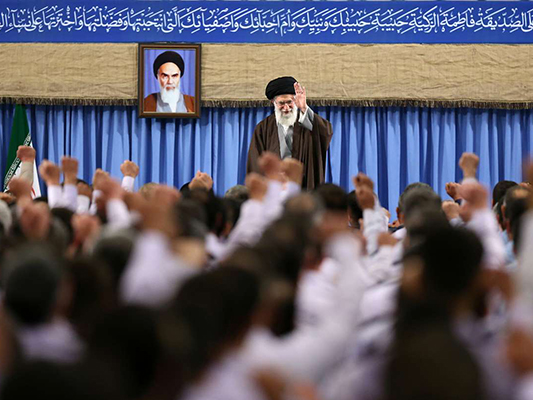
leader - environmetEvery year in March, Ayatollah Khamenei plants saplings as a symbolic gesture of respect for the Mother Nature, and highlights the need for collective efforts to safeguard the environment.

After planting a couple of seedlings on Wednesday to mark the Week of Natural Resources, the Leader praised the quality of Iranian fruits and criticized the “wrong move” to import fruits from other countries.

Ayatollah Khamenei called on the government to avoid importing fruits unless in very necessary cases, according to a Farsi report by the Leader’s official website.

The Leader then pointed to the country’s areas rich in green vegetation, including diverse medicinal plants or the thick forests in northern Iran, and bemoaned the fact that some smugglers are exploiting the country’s woodlands and natural resources without regarding the national interests.

“Those forests must be protected from exploitation,” Ayatollah Khamenei underscored, as reported by Tasnim.

The Leader then warned against the consequences of destruction of vegetation, such as dust and particle pollution, air pollution, and unhealthy air in the cities, stressing that protection of plants in Iran is of greater significance given the country’s climate and large desert areas.

Ayatollah Khamenei described the country’s forests, rangelands and croplands as “great national assets”, calling for action against the people damaging the environment for personal benefits.

“The officials in charge of the forests, rangelands and farmlands must attach great significance to their job and strive to protect such great national asset,” Ayatollah Khamenei said on Wednesday, after planting two fruit saplings to mark the national Week of Natural Resources.

IRGC Denies US Claims about Naval Incident in Persian Gulf

en-IRGC - Persian Gulf

Mehdi Hashemi, who commands the IRGC Navay’s Zolfaqar Flotilla, said the American ship was sailing as part of a naval fleet also comprising British vessels, the Fars new agency reported on Wednesday.

It steered out of the course approved for international naval transit in the Persian Gulf, coming within 550 meters (0.3 nautical miles) of IRGC vessels present there on duty, he added.

Hashemi made the remarks after Reuters cited a US official as saying on condition of anonymity on Monday that “a US Navy ship and three British Royal Navy boats were forced to change course when several Iranian fast-attack vessels approached them in the Strait of Hormuz on Saturday.”

The IRGC commander disputed the allegations leveled by the unnamed American official, saying he was “lying” about the incident.

Hashemi denounced the US navy ship’s move as “illegitimate,” adding that the presence of American and British vessels in the Persian Gulf “endangers the security of this strategic region, which provides a huge portion of the world’s energy.”

“Their unprofessional measures fan the flames of tension and insecurity and can lead to irreparable repercussions,” Hashemi asserted.

Security and lasting calm in the region would only come about if extra-regional powers, especially the US and Britain, end such presence in the waters, he concluded.

Iran has repeatedly warned that any act of transgression into Iran’s territorial waters would be met with an immediate and befitting response.

In January last year, Iran’s Navy arrested the crews of two US patrol boats that had trespassed on Iranian territorial waters. Iran released them after establishing that they had done so by mistake.

Secrets behind Saudi Arabia’s Plan to Expel 5m Immigrants

pakistan workers

While US President Donald Trump’s new travel ban is still provoking reactions worldwide, Saudi Arabia’s Al-Hayat — a leading daily pan-Arab newspaper — has announced that Riyadh is likely to pass an anti-immigrant law to expatriate 5 million foreign residents.
Trump signed an executive order on March 6 blocking citizens of six predominantly Muslim countries, including Iran, Somalia, Sudan, Yemen, Syria and Libya, from entering the US.
According to a report by IFP, the Consultative Assembly of Saudi Arabia, in its upcoming meeting, will discuss the plan to battle immigration [to Saudi Arabia] with the intention of acquiring illegal citizenship and the possibility of setting up a committee in the Interior Ministry to banish 5 million immigrants, who, as alleged by the Saudi officials, are residing illegally in the country.
Although the drafters of the bill say their anti-immigrant law seeks to prevent the entry of those immigrants to Saudi Arabia who intend to reside illegally and permanently in the country, some analysts hold that the move is made in response to the recent regional security and military developments and to address the crisis caused by Saudi Arabia’s military intervention in Yemen.
These experts maintain that the Saudi move is a strategy to force a major part of the immigrants [currently living in the country] to cooperate with Saudi Arabia in Yemen war and its other intra-regional interventions, vivid examples of which were witnessed during the US invasions of Iraq and Afghanistan in which the White House dispatched and deployed a large number of the immigrants [residing in the country] to and in the Iraqi and Afghan territories.
Among the other factors contributing to the Saudi government’s adoption of the policy is the increasing tensions between Saudi Arabia and Pakistan caused by the latter’s reluctance to aid Riyadh in its regional warmongering.
A while ago, Al Akhbar newspaper – a daily Arabic language newspaper published in a semi-tabloid format in Beirut – listed a number of the signs indicating that the relations between Saudi Arabia and Pakistan are worsening: First, the reluctance of the retired Pakistani army chief General, Raheel Sharif, to agree to Saudi Arabia’s request demanding him to be the supreme commander of the Saudi-led “Islamic military alliance”, also known as Muslim NATO, created by Riyadh in 2015, saying he will only accept the position on the condition of including Iran in the Islamic military alliance; Second, an 8.5-percent drop in the value of the monetary transactions conducted by Pakistani residents of the Saudi Arabia, and third, the arrest of 15 Pakistanis by Saudi Arabia on terrorism charges.
Thus, Riyadh’s threats of exiling the immigrants, a large number of which are Pakistanis, from the country can be perceived as the Saudi government’s response to Islamabad’s non-cooperation.