Monday, December 29, 2025
Home Blog Page 4071

Syria Peace Talks Kicks Off in Kazakh Capital

Astana

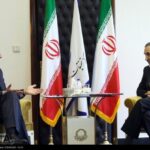
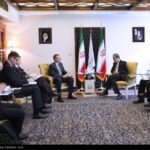
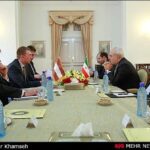
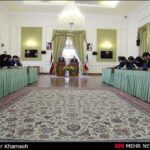
Representatives of the Syrian government and opposition groups sat at the same round table as Kazakh Foreign Minister Kairat Abdrakhmanov delivered an opening speech.

The face-to-face talks are the first time armed rebel groups have negotiated with President Bashar al-Assad’s government since the conflict erupted in 2011.

The talks have been welcomed by all parties in the war, but the two sides have arrived in Kazakhstan with apparently divergent ideas on their aim, and officials have cast doubt on whether they will in fact sit down at the same table.

Just before the talks were set to begin, opposition spokesman Yehya al-Aridi told AFP that the opposition will “participate in the talks but the first negotiating session will likely be in separate rooms.”

Kazakh deputy foreign minister Roman Vasilenko told reporters Monday morning that the format was still under discussion.

Astana

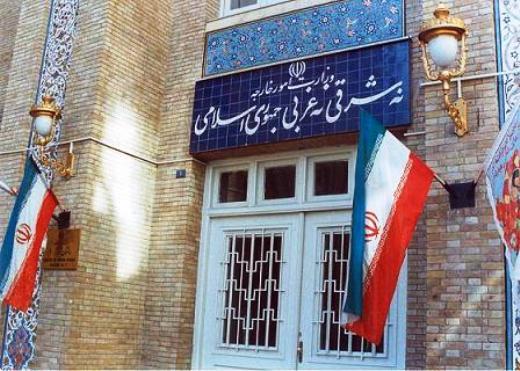
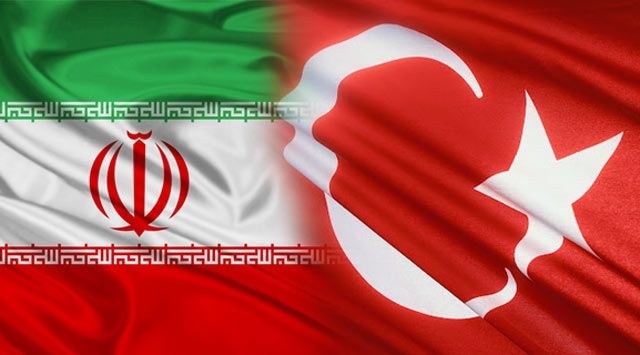
Iran’s Foreign Ministry Spokesman Bahram Qassemi said in a press conference on Monday that Astana meeting is a result of Iran, Russia, and Turkey’s efforts, and its first priority is to stabilize the nationwide ceasefire brokered last month.

“The three countries [Iran, Russia, and Turkey] started their efforts, and the UN envoy arrived in Astana on Sunday to chair the session. The three countries will guide the talks, and whenever needed, they will facilitate the negotiations,” Qassemi said, according to Farsi media reports.

The Iranian spokesman said it is unlikely that issues other than the ceasefire would be raised, and this can be a first step to facilitate humanitarian aid delivery.

It is reported from Astana that the Syrian delegation has refused to meet Turkish diplomats.

The head of Syria’s diplomatic delegation has also stressed that the talks have to be intra-Syrian.

AstanaEarlier, the United Nations representative in the new round of Syria peace negotiations in Astana said the trilateral group – comprised of Iran, Russia and Turkey – which has initiated the Astana talks is not going to replace the International Syria Support Group (ISSG).

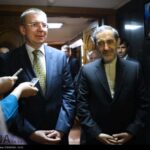
The trio of Iran, Russia and Turkey is not a replacement for ISSG, special envoy of the UN secretary-general for Syria, Staffan de Mistura, said at a meeting with head of Iran’s diplomatic delegation in the peace talks, Hossein Jaberi Ansari, on Sunday.

Meanwhile, Assad has insisted that rebels lay down their arms in exchange for an amnesty deal, and called for a “comprehensive” political solution to the foreign-sponsored conflict.

Organized by Turkey, Russia and Iran, the talks come a month after the government recaptured rebel areas of Aleppo, scoring its biggest victory since the war began.

A Look at Iranian Newspaper Front Pages on January 23

A Look at Iranian Newspaper Front Pages on November 19

The efforts to rescue or recover the bodies of firefighters entrapped after the Thursday collapse pf Plasco Building in central Tehran remained the top story in today’s newspapers.

Newspapers also released interviews with a number of firefighters and shop owners of Plasco Building regarding the tragic incident and the damages they have suffered.

A lawsuit filed by former president Mohammad Khatami against former Basij Commander Brigadier General Naqdi also received great coverage. Naqdi recently accused the reformist ex-president of receiving money from Saudis.

The above issues, as well as many more, are highlighted in the following headlines:


19 Dey:

1- Cancer Needs Some $2.6 Billion Each Year: Health Minister

2- Transport Minister: Renovation of Iran’s Old Ground, Sea, and Air Fleet to Begin Soon

A Look at Iranian Newspaper Front Pages on January 23


Abrar:

1- Plasco, City Council, and the People Who Vote for Singers and Athletes

2- Almost 1.5 Million Hectares of Forests in Northern Iran Destroyed over Past 50 Years

3- Erdogan: Turkish Nation Will Have the Final Say in Referendum

A Look at Iranian Newspaper Front Pages on January 23


Aftab-e Yazd:

1- Melania; A Light on Scary Face of Trump! A Report on the Ways Melania Trump Is Different from Previous US First Ladies

2- They Shouldn’t Have Confined Themselves to Warnings in Plasco Case

3- How Much Firefighters Receive in Other Countries?

4- Babak Zanjani Informed of His Sentence

A Look at Iranian Newspaper Front Pages on January 23


Arman-e Emrooz:

1- We’re All Firefighters: Thursday, the Day of Bidding Farwell to Firefighters

2- Increase in Number of Wounded People: Specialized Committee Formed in Iran’s Parliament to Probe into the Incident

3- Will Qalibaf [current mayor and a possible rival for Rouhani in Presidential votes] Leave Municipality?

4- Iranian Counterattack on Trump: Iran’s Nuclear Chief Says Any Threat Will Restore Iranian Nuclear Energy Program to Previous Status

A Look at Iranian Newspaper Front Pages on January 23


Ebtekar:

1- Four Days, Three Bodies

2- Will Astana Talks Lead to Syria’s Peace?

3- Our Position Is to Maintain JCPOA: French FM

A Look at Iranian Newspaper Front Pages on January 23


Etemad:

1- People Waiting to Hear of Firefighters: 100 Hours after Beginning of Debris Removal, No One Knows What Has Happened to Missing Ones in Plasco Building

2- Spokesman Says Judiciary Is Investigating Former Reformist President Khatami’s Lawsuit against Former Basij Commander Naqdi

3- Women’s Riot against Trump: Women’s March in Washington Marks First Crisis for US President

A Look at Iranian Newspaper Front Pages on January 23


Ettela’at:

1- Private Sector’s Presence Saves Iran’s Economy: First VP in a Ceremony to Appreciate Private Entrepreneurs

2- Existence of Dangerous Centres in Tehran Threatens People’s Lives: Civil Defence Organization Chief

3- 500 Ceremonies to Be Held in 60 Countries to Commemorate Iran’s Revolution

4- Tens of Thousands of Palestinians Hold Demonstration in Protest at Israeli Regime’s Crimes

A Look at Iranian Newspaper Front Pages on January 23


Farhikhtegan:

1- We Don’t Know What to Tell Our Mother: The Firefighter Who, Together with His Two Brothers, Is Looking for His Fourth Brother

A Look at Iranian Newspaper Front Pages on January 23


Haft-e Sobh:

1- Plasco Had Three Fathers: Municipality, Labour Ministry, and Mostazafan Foundation: Which One Is to Blame in Plasco Incident?

2- Symphony of Those Who Lost Their Money: Two Malls Considered as Temporary Alternatives

A Look at Iranian Newspaper Front Pages on January 23


Iran:

1- Reconstruction of Plasco; President Rouhani Orders Ministers to Immediately Bring Shop Owners Back to Work

2- US Ambassador’s Symbolic Presence in Astana Talks

A Look at Iranian Newspaper Front Pages on January 23


Javan:

1- First VP: We Were Not Successful in Post-JCPOA Finance

2- We’re All Firefighters

3- Iran’s Nuclear Chief Warns Trump

A Look at Iranian Newspaper Front Pages on January 23


Jomhouri Eslami:

1- Unprecedented Global Opposition to New US President Continues

2- Pope Warns against Beginning of New Era of Populism in US

A Look at Iranian Newspaper Front Pages on January 23


Kayhan:

1- Plasco’s Message Is to Focus on Action instead of Political Fight: Lessons to Be Taken from a Disaster

2- West Terrified that Trump May Become another Gorbachev

A Look at Iranian Newspaper Front Pages on January 23


Khorasan:

1- Will Plasco Turn into Iran’s Triangle?

2- 100,000 SWU Warning: Nuclear Chief Says Iran Ready to Reach 100,000 SWU in 1.5 Years

A Look at Iranian Newspaper Front Pages on January 23


Nasl-e Farda:

1- Hush! Murderers Don’t Talk! [Reaction to Netanyahu’s Comments about Friendship with Iranian People]

A Look at Iranian Newspaper Front Pages on January 23


Payam-e Zaman:

1- JCPOA Prepared the Grounds for Working with the World: First VP

2- Women Hold Rallies against Trump in Washington

3- Four Judges and Three Lawyers Arrested: Judiciary Spokesman

A Look at Iranian Newspaper Front Pages on January 23


Resalat:

1- Five Judges and Three Lawyers Prosecuted: Judiciary Spokesman

2- Political Quake in West: What Do Massive Protest Rallies against Trump Mean?

A Look at Iranian Newspaper Front Pages on January 23


Sayeh:

1- Guns that Do Not Fire Water: Child Soldiers in Bloody Phenomenon of War

A Look at Iranian Newspaper Front Pages on January 23


Shahrvand:

1- Removing an Incident’s Debris

  • We Die Soon: Firefighters Talk about How Difficult Their Job Is
  • Our Homes Are Totally Ruined: Workers and Employers of Plasco
  • Unknown Lost Ones: 10 Citizens Entrapped under Plasco Rubble

A Look at Iranian Newspaper Front Pages on January 23


Shargh:

1- Lawsuit Filed against Brigadier General Naqdi

2- Most European Visitors of Iran Are from France, Germany, and Italy: Official

A Look at Iranian Newspaper Front Pages on January 23


Siasat-e Rooz:

1- A Pretext Called Trump

A Look at Iranian Newspaper Front Pages on January 23


Tamashagaran:

1- White House Knight: Trump Rises! New Controversy: Trump’s Remarks Were Similar to Those of Batman’s Bad Man

A Look at Iranian Newspaper Front Pages on January 23

Iran Welcomes Gambia’s Peaceful Power Transfer

The Islamic Republic has always paid particular attention to the developments in the Gambia as an important Muslim country in West Africa, Foreign Ministry Spokesman Bahram Qassemi said on Sunday.

He commended the appropriate efforts by the West African countries and the role of regional organizations, including the Economic Community of West African States (ECOWAS), in the peaceful handover of office to the country’s elected president.

The Iranian spokesperson said such moves led to the promotion of democracy in the region and the establishment of peace and calm in the Gambia.

Jammeh left the Gambia on Sunday after finally conceding defeat in an election under increasing international pressure.

The former Gambian president lost the presidential election in December last year to Adama Barrow but said he would not relinquish power, claiming that there had been irregularities in the vote and pushing the country to the edge of war.

West African nations, which had been peacefully trying to convince him to leave, gradually turned to the idea of removing him militarily and put a regional force on standby as the official end of Jammeh’s mandate approached.

On Saturday, some two days after the expiration of his mandate, Jammeh finally announced a decision “to relinquish the mantle of leadership” and, now with his exit from the Gambia, the way was paved for Barrow to return home from Senegal, where he was inaugurated on January 19.

President Barrow has said he would return to the Gambia once a security sweep is complete.

On January 19, the United Nations Security Council voted on a draft resolution to ensure a transfer of power in the Gambia.

Jammeh, who took power in a 1994 coup, urged negotiators that he be given amnesty and safe passage out of the Gambia and that his political party be recognized. However, no deal on amnesty was finalized with the negotiators and Jammeh was forced to go into exile.

His family and aides were to depart on a separate plane.

The fate of his party was not immediately clear.

During Jammeh’s reign, his government was accused of harsh treatment of opponents.

Israeli Regime Makes Life Difficult for Palestinian Fishermen

Gaza

People in Gaza Strip have limited access to facilities, equipment and raw materials for construction, production, and farming on fields located on border areas.

They should also pay high import fees and can only catch fish in a restricted area, according to a Farsi report by ISNA.

In addition, Gaza has the world’s highest unemployment rate, particularly, among the youths that constitute 70 percent of its population.

GazaFour out of every five households in Gaza Strip do not have regular income, and this has created a great deal of problems for Palestinian families when coupled with the daily reduction in the quality of life in the region.

Due to the Gaza blockade, Palestinian fishermen are only permitted to catch fish within 6 miles from the coastal line.

GazaFishery constitutes an essential part of Gaza Strip’s economy. Nevertheless, restrictions imposed by the Israeli regime have weakened the sector over the past 10 years.

Prior to 2014, Palestinian fishermen were only allowed to sail for as far as 3 miles off the coast. However, following the signing of the long-term truce agreement between Israel and Palestinians in the Gaza Strip in the same year, they were authorized to propel their boats for as far as 6 miles.

GazaThis is while, catching fish in such a small area was neither of great assistance to the Palestinians fishermen’ families nor in favour of their environment. The limited area leaves no choice for fishermen but to catch fingerlings, which, per se, deprives the young fish of the opportunity to reach maturity and start reproduction. This leads to a decrease in the total number of fishes and, even, extinction of certain species.

Furthermore, due to the discharging of wastewater into the sea, those fish that feed on algae growing at the bottom of the sea may become polluted and, thus, endanger the health of those who eat them.

GazaExpanding this area by another 6 miles can, to a great extent, decrease these environmental risks and have a significant impact on the livelihood and life quality of about 4,000 Palestinian fishermen and their families.

Fishers have never had a convenient life in Gaza Strip.

A Fake Police Officer and a Thief Arrested in Plasco Building Collapse Site

plasco

A person has been reportedly arrested after trespassing on the building collapse site while wearing the police uniform, Tasnim said in a Farsi report.

Another report by ILNA indicated that the police has also arrested a thief who was trying to abuse the situation and rob the place.

A truck carrying the debris was also trying to transfer them to a place different from what the Police had told the driver, but it was finally forced to unload them where it was supposed to.

The 17-storey Plasco Building in downtown Tehran collapsed on Thursday after a huge blaze. At least 25, mostly firefighters, are feared dead following the tragic incident.

Trump’s Education Pick Mocked for Her Grammatical Mistakes

Betsy DeVos

In a tweet that was later deleted, DeVos wrote, “Honored to witness the historical inauguration and swearing-in ceremony for the 45th President of the United States.”

Other tweets quickly pointed out that “historical” is meant to refer to past events, while “historic” refers to important events, The Hill reported.

DeVos, like many of Trump’s cabinet members, has faced pushback from Democrats who are critical of her views. She was grilled during her three-and-a-half hour confirmation hearing over her past criticism of public schools and for saying she supported guns in school so children could protect themselves from grizzly bears.

Trump Returns Churchill Bust to Oval Office

trump

Churchill’s statue had been removed from the Oval Office by Barack Obama, who put it outside the Treaty Room in the private quarters of the White House.

A figure of Martin Luther King was put in its place in the Oval Office, The Independent reported.

Now, the first pictures of Trump in the Oval Office appear to show the Churchill bust restored to pride of place.

Trump Is a Would-Be Dictator: American Billionaire

George Soros

George Soros was quoted by Reuters as saying, “I personally have confidence that he’s going to fail.”

For Soros, Trump will have “a very far-reaching effect in Europe and other parts of the world.”

Considered as an actor behind the colour revolutions, Soros also predicted that Theresa May, the British Prime Minister, won’t last long in her post, as the English people will notice the effects of leaving the European Union.

Iran’s Oil Achievements in Post-Sanctions Era

Iran Oil

Iran’s achievements in its oil industry came as, prior to the lifting of the embargoes, the country’s oil exports amounted to less than 1 million bpd, according to a Farsi report by ISNA.

After the Joint Comprehensive Plan of Action (JCPOA), signed between Iran and P5+1, went into effect, the number of foreign customers of Iran’s oil has also witnessed a gradual rise.

At the time of sanctions, importers of Iranian oil constituted a very short list. Only a small number of Asian states were among the customers of Iran’s hydrocarbon resources. This is while, 15 European companies have joined the list in the post-JCPOA era, particularly, in the first month of 2017.

Iran’s European customers purchase a total of 700,000 barrels of Iranian oil per day.

They include France’s Total, Italian oil refiner Saras, Greece’s Hellenic Petroleum, Russia’s Lukoil, Spain’s CEPSA, Italy’s Eni and Turkey’s Tüpraş, which have signed long-term contracts with the National Iranian Oil Company.

In addition to these firms, a number of other large European companies have also imported single shipments of oil from Iran. They include Austria’s OMV Group, Poland’s Grupa Lotos and PKN Orlen, Britain’s Shell and BP Global, Vitol of Switzerland and Spain’s Repsol.

Currently, Iran’s monthly oil revenues stand at $3.3 billion. The figure was not more than $1 billion before the lifting of anti-Iran sanctions.

Dos and Don’ts of Iranian Parties after Ayatollah Rafsanjani’s Death

hashemi rafsanjani

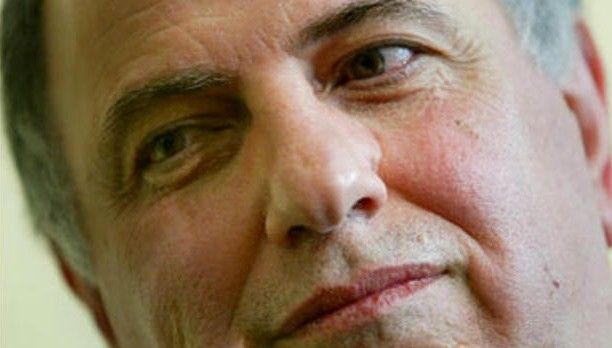
In the aftermath of Ayatollah Hashemi Rafsanjani’s death, what would happen to Iran’s political boundaries? What would be the short-term impact of the tragic incident on the country’s reformists? What changes would take place in Iranian conservatives’ political orientation? What would happen in the country’s upcoming presidential elections? And finally, from a conservative point of view, what measures are required to be taken, in the short-term and long-term, by the political party opposing reformism?

In a recent Farsi report, Alef news website has tried to answer some of these questions.

Apparently, reformists will face a number of serious problems in the absence of Ayatollah Hashemi Rafsanjani.

Connection with the Establishment

Following the demise of Ayatollah Rafsanjani, reformists have lost the most important channel that connected them to Iran’s Establishment. Clearly, from now on, for such a link, they will have to count on people with whom they do not have a close rapport including Iranian Parliament Speaker Ali Larijani and the member of the country’s Expediency Council Ali Akbar Nateq Noori. Reformists have lost their bargaining power in Iran’s ruling system.

A Trustee for Traditional Society

Iranian reformists have also lost the most important factor securing their votes in the traditional stratum and body of the society. Individuals such as Iran’s former president Mohammad Khatami do not possess such a trait. Such a role, formerly played by Ayatollah Rafsanjani, can hardly be taken on by anybody else.

A Prudent Mediator

Hashemi RafsanjaniAyatollah Rafsanjani was an effective factor in managing the reformist trend. Following what happened after 2009 presidential election in Iran, the reformist faction faced an internal chaos as well as threats to its identity. The presence of such individuals as Ayatollah Rafsanjani did not let the consequences of the chaos impact the society. His role gains increased importance in view of the fact that he was the main link between the countries’ political parties.

Given the abovementioned facts, Ayatollah Rafsanjani used to legitimize Iran’s reformist party, and, thus, reduced its political and social costs. The reformist camp’s legitimacy would now be subject to problems. In the absence of Ayatollah Rafsanjani, the reformist faction is expected to be less conformist, politically speaking, and become more straightforward.

What Would Reformists Do?

The reformists would, most probably, continue holding their political funeral ceremonies, commemorating Ayatollah Rafsanjani, up until Iran’s presidential elections in May to foster their solidarity.

What about Conservatives?

hashemi rafsanjaniApparently, the death of Ayatollah Rafsanjani will cost dearly for conservatives, for they have also lost a symbolic asset they could make use of in their interest in competitive debates, by merely showing their opposition with. Apart from his own performance, Ayatollah Rafsanjani was a symbolic asset for the liberal-patriotic circle in the country from political, economic, social and cultural points of view.

Thus, expressing opposition with Ayatollah Rafsanjani as a symbol, could guarantee the conservatives’ success in debates. However, they will most probably face social misunderstanding in their competitive debates in the absence of such a symbol.

No one would be able to replace Ayatollah Rafsanjani in this regard. President Hassan Rouhani is the only alternative with such a potential. Yet, he will not risk being extremely straightforward due to his position which requires taking political precautions.

Conservatives’ Do’s and Don’ts

In the short-term, it would be costly and unnecessary for conservatives to continue criticizing Ayatollah Rafsanjani in the way it was done in the past. Currently, voicing criticism against him would be, in fact, criticizing the conservatism.

In addition, any form of criticism used by the conservatives would help reformists be successful in the project of demonstrating their innocence and that of Ayatollah Rafsanjani and, thus, complete their electoral game.

At present, criticizing Ayatollah Rafsanjani needs to be aimed at reviewing the history, revealing historical facts about him and his political behaviour and learning lessons from the past, not passing on competition messages.

The conservatives currently need to focus more on the country’s main issues and let go of criticizing Ayatollah Hashemi. They should also break up Ayatollah Rafsanjani’s symbol into smaller and more meaningful units and distribute them among other available political symbols. Real symbols, such as aristocracy, Westernization, capitalism and Western culture, are required for a real competitive debate.

Rouhani’s administration, all over, is a collection of liberal dialogue symbols in the society.

Greater Unity

Mousavi-TabriziFollowing Ayatollah Rafsanjani’s death, Ayatollah Seyyed Hossein Mousavi-Tabrizi, the secretary-general of the Assembly of Qom Seminary Scholars and Researchers, said the gap would not widen between the members of Iran’s conservative and moderate parties.

He added they would even become more united.

Mousavi-Tabrizi said, “Ayatollah Rafsanjani’s burial ceremony had a common message for everybody, particularly radicals and those who intend to create chaos in the country. A certain group of people plan to gain monopoly over the Iranian society and control it. This is not going to work for them. Running a country requires incorporation of all different ways of thinking and styles and respecting them.”