Tuesday, December 23, 2025
Home Blog Page 4040

“Evil of Terror Will Come Back to Haunt its Sponsors”

The West is supporting terrorist groups similar to al-Qaeda such as ISIS today despite the fact that it has experienced the danger posed by al-Qaeda and seen how the terrorist group jeopardized Western countries’ interests in the region and in the whole world.

In a meeting with Iranian military top brass on April 9, 2017, Leader of Iran’s Islamic Revolution Ayatollah Seyyed Ali Khamenei touched upon the West’s wrong policy of backing terrorist groups in the Middle East region, and underlined the danger posed by such groups will come back to haunt the US in the future.

“Today, Europe is facing trouble for its wrong move to reinforce Takfiris. People have no security at home and in the streets, and the US is repeating the same wrong,” said the Leader.

It seems the Leader’s prudent prediction is a precise prophecy based on historical experience. Now the question is what historical documents Ayatollah Khamenei’s prediction is based on.In fact, to further expound on the Leader’s statements, one should say the active presence of terrorists in the region for more than three decades shows this evil has always been supported by foreigners, and that terrorists have needed their backing in order to survive. Moreover, terrorists have always acted in line with their demands. What is important is that the cooperation and alliance between foreigners and terrorists have been coupled with numerous fears and hopes.

In other words, although foreigners seek to play in the region with the card of terrorism, and there has been a close relationship between terrorists and them, terrorists did an about-face and came to strike the interests of their advocates, which, in turn, led their supporters to turn against them.

The case of Saddam Hussein, the former Iraqi strongman, is a testament to that. Western countries and reactionary Arab states in the region lent unflinching support to Saddam Hussein during the eight-year Iraqi imposed war on Iran in the 1980s. But when the war ended, Iraq invaded Kuwait, which was one of Saddam Hussein supporters. The Iraqi dictator forgot all the support that Kuwait had offered Baghdad. That prompted Saddam Hussein’s supporters, who had spared no effort to help him during the Iraqi war on Iran, to form a US-led coalition against him to force him out of Kuwait.

Al-Qaeda ringleader Osama bin Laden, who had returned to Saudi Arabia at the time, asked Saudi King Fahd to leave it to al-Qaeda to force Iraqis out of Kuwait. But King Fahd turned down bin Laden’s request and allied itself with the US instead. Accordingly, bin Laden called the US an occupier, termed the Al Saud regime a mercenary, and left Saudi Arabia. Bin Laden’s leaving Saudi Arabia and entering Sudan gave him the opportunity to launch a new operation against the US by calling in al-Qaeda agents and Afghan Arabs.

Among al-Qaeda’s operations against the US was the attack on an American warship in the Gulf of Aden. But at last, with Washington putting pressure on the Sudanese government, bin Laden returned from Sudan to Afghanistan. The arrival of bin Laden and his supporters and associates in Afghanistan against the backdrop of internal fighting between the Taliban and the government of BurhanuddinRabbani-Ahmad Shah Massoud in 1995 tipped the balance of power in favour of the Taliban. Finally, the Taliban backed by al-Qaeda captured Kabul in 1996. Then al-Qaeda carried out operations against US targets such as the bombing of US embassies in Kenya and Tanzania in 1997 and the attack on an American warship in Yemen in 1998. Then on the 11th of September, 2001, al-Qaeda struck the World Trade Center (Twin Towers) in the US (although there are still serious doubts about the motive behind the attack and who the perpetrators were). The incident was followed by an attack on Afghanistan by the US and its allies, which led to the overthrow of the Taliban rule. But the US-led attack on Afghanistan did not wipe out al-Qaeda.

What is interesting is that at the same time that these countries were supporting Saddam Hussein, the late leader of Iran’s Islamic Revolution Imam Khomeini, in a warning to Saddam’s advocates, compared Saddam Hussein to a wolf that, when done with his adventurism with Iran, would turn to them (his supporters). Saddam Hussein’s attack on Kuwait proved that Imam Khomeini’s prediction was true.

Al-Qaeda is regarded as an international terrorist group. After the former Soviet Union’s invasion of Afghanistan, al-Qaeda was formed with the support of Saudi Arabia, the US, etc. to force the Soviets out of Afghanistan. When the Soviet Union left Afghanistan, al-Qaeda took action against its supporters and formed a terrorist government in Afghanistan by forming a coalition with the Taliban, a government which was toppled after the US attacked Afghanistan.

All in all, the West is supporting al-Qaeda-like terrorist groups while ignoring the fact that these very groups are threatening Western countries’ interests both in the Middle East region and across the entire world. So, given the seemingly complex, but basically simple game that the US has started with terrorist groups in Iraq and Syria, Ayatollah Khamenei has recommended they regard past experience as an object lesson and not to get themselves drawn into the vortex of terrorism by supporting terrorists in the region.

Dialogue, Moderation Cure Many Ills of Modern World: Iran’s FM

Addressing the International Forum of Ancient Civilizations in the Greek capital of Athens, Zarif said that the world needs to recognize and respect such norms and principles as diversity, inclusion, tolerance, moderation, dialogue, justice, fairness, human rights, democracy, and good governance despite inevitable differences on applications and implementations.

“Our gathering here represents a genuine effort to synergize the cumulative contribution of all civilizations — which truly constitute the common heritage of humanity — to address the daunting challenges all of us face, individually in our respective environments and collectively on the global scale, in a complex world replete with crises of various kinds, and most certainly a future fraught with disquieting uncertainties of all sorts.”

Here is the full text of his Monday speech provided by the Foreign Ministry’s website:

In the name of God, the Compassionate, the Merciful

It is a great pleasure for me to represent Iran in the Ancient Civilizations Forum. The very idea of establishing a forum for ‘ancient civilizations’ is a valuable enterprise; it signifies the recognition of the enduring role of civilizations in our intimately interconnected modern world. Let me take this opportunity to thank our friend and colleague, Nikos Kotzias for his wise and timely initiative and for the excellent arrangements, bringing diplomats and academics to Athens to share ideas and plan ahead. I would also like to express my gratitude to the people and government of Greece for their warm and gracious hospitality.

Our gathering here represents a genuine effort to synergize the cumulative contribution of all civilizations — which truly constitute the common heritage of humanity — to address the daunting challenges all of us face, individually in our respective environments and collectively on the global scale, in a complex world replete with crises of various kinds, and most certainly a future fraught with disquieting uncertainties of all sorts.

It also signifies that science, technology, progress, and material well-being – whose fruits, much to our chagrin, are unevenly distributed – have all simply failed to solve our common problems, nor do they appear to herald a better future. Our claim of recourse to and reliance on civilizational contribution is, therefore and by definition, a huge task, and undertaking.    

My remarks today at this Forum are brief and targeted; they focus on what a forum of this kind, character, and composition means, first and foremost, for its participants, and in a general sense, for the bigger global community.

Let me underline that we are not here to engage in expansive, oratorical celebration of our respective civilizations and bask in glorifying them or describing their attributes, beauties, virtues, or accomplishments in the past – which we represent, of which we are proud, from which we inherit, and to which we owe.  The existing rich reservoir of accumulated knowledge of our ancient civilizations is fully known to the experts in the field in academia as elsewhere, and continue to inspire scholarly research.

In this collective endeavor, we need to reflect on the factors that have shaped our past civilizations and have sustained them, as dynamic, living entities. We need to be able to draw general lessons from the past and learn from their ebbs and flows along the historical continuum.

A retrospective look at the overall contours of the several-thousand year-old human civilization informs us that mutual exchange and interaction between and among human communities, each with their own particular attributes, have brought to bear, in varying forms and to differing degrees and at various historical intervals, on the formation of common human civilization. This continuing exchange and interaction between and among a rich diversity of human groupings, from the very early times of recorded human civilization up to our very days, is anchored in dialogue and understanding, through the mediums of intellectual reflection, literature and art.

To emphasize the valuable contribution of the literature of our ancient civilizations to human empathy and realization of our common destiny, let me provide one beautiful, transcendental example from Sa’adi, the renowned Iranian poet of the 13th century:

All human beings are members of one frame

Since all, at first, from the same essence came.

When time afflicts a limb with pain

The other limbs cannot at rest remain.

If thou feel not for other’s misery

A human being is no name for thee.”

These mediums continue to function as the means to rely on, cherish, and utilize with the ultimate objective of ensuring civilizational continuity. The difference, between our world today and the past, however, lies in the degree of complexity we encounter nowadays, whether in terms of the number and variety of actors, the kinds of challenge in various arenas of human life on the planet, or the quite complex and ever-complicating web of relations. Yet, the truth of the masterpiece by Sa’adi 800 years ago cannot be more apparent than in today’s globalized world, reminding us that humanity is not merely a “global village”, but a “single human body”, where no part can rest, let alone gain and prosper, when other parts are suffering.

Of course, there are formidable common challenges that the human community is currently facing; ranging from the elusive goals of sustainable development, protection of the environment, and eradication of poverty for the larger part of the international community to effective combating of such rather new twin phenomena of extremism and terrorism as universal plagues. The globalized, interconnected nature of the state of affairs across the planet makes it imperative that common problems need common solutions. And as we are witnessing a renewed tendency for the tested – and failed – unilateral approaches, I should underline the need to seek multilateral solutions.  

The objective reality on the ground has changed, so has the urgency of rising to the challenge and grandiosity of the needed common, collective response on the part of the global community. And it is right here that the special role of ancient civilizations comes into the picture. These civilizations have much more accumulated knowledge, intellectual depth, time-tested experience, and the hard-won historical discretion to draw on as compared with other much younger members of the human community.   

Given the enormity of the challenges and the very existence and activity of so many formal and not-so-formal entities engaged in addressing them and claiming to offer remedies and solutions, and considering the inescapable imperative of being objective with a finger on the pulse and a foot on the ground, the task before this Forum calls for a focused approach, a well-defined, modest agenda, and a practical format to ensure active and effective pursuit of our common objectives. We can neither afford to be oblivious to the actual constraints in the world, nor fall in the familiar easy trap of setting lofty inaccessible ideals.

What we need to establish at this initial, and yet critical, stage of the work of the Forum is to arrive at a general collective understanding of the overarching, fundamental concepts and principles that will shape and guide our work in the future. We need to recognize and respect such norms and principles as diversity, inclusion, tolerance, moderation, dialogue, justice, fairness, human rights, democracy, and good governance –despite inevitable differences on application and implementation.

As the inheritors of ancient civilizations, with the necessary depth of understanding and historical reflection to appreciate that triumphs as well as trials and tribulation are but short moments in the millennial historical retrospect, we need to challenge the prevalent paradigm of “might makes right”, the paradigm of exclusion, which in its various forms has invariably brought bloodshed and devastation to human society throughout history and has given rise to violence, underdevelopment and extremism. This paradigm has governed the relations among communities and nations for far too long, resulting in wars, atrocities, occupation, oppression, discrimination and displacement. The rampant terrorism and extremism currently faced by countries and regions across the globe, including in West Asia, the cradle of many ancient civilizations, are heinous products of this outdated paradigm.   

Human society today is in desperate need of embracing the enriching diversity within and between civilizations. The inheritors of ancient civilizations have a historic responsibility to be in the forefront of promoting dialogue and inclusion to usher in a new paradigm of global relations. In 1998, former Iranian President Khatami, in his capacity as Chairman of the Organization of Islamic Conference – now called Organization of Islamic Cooperation – bringing together the heritage of Iranian civilization and lofty Islamic values and teachings, presented the initiative of “Dialogue among Civilizations” which was overwhelmingly welcomed by the UN General Assembly, designating the year 2001 as the UN year of Dialogue among Civilizations. The envisaged dialogue originated from the assumption that sources of knowledge and wisdom are inherently diversified and that each civilization has much to offer and much to learn: making dialogue among civilizations mutually enriching and accumulating.

This signified a clear departure from “paradigm of exclusion” to “paradigm of dialogue and inclusion”.  And in September 2013, President Rouhani presented a similar initiative to the UN General Assembly, premised on the same imperative, calling for a World Against Violence and Extremism (WAVE), which was unanimously approved by the General Assembly.

Distinguished friends,

Let me conclude by emphasizing that as representatives of ancient civilizations, which have weathered many storms and seen many rise and demises of empires, we have the necessary historical depth to promote the twin remedies of many ills of our times: dialogue and moderation.

Iran’s Leader Pardons, Commutes Sentences of nearly 600 Convicts

On the anniversary of Eid al-Mab’ath, the day Prophet Muhammad (PBUH) was chosen as God’s messenger, Ayatollah Khamenei granted clemency or eased the sentences of 593 convicts sentenced by various Iranian courts.

Article 110 of the Constitution grants the country’s Leader the right to pardon or reduce the sentences of convicts upon a recommendation from the head of the Judiciary.

The clemency, however, does not apply to all types of convicts, including those who have been sentenced for their role in armed struggle against the country, armed or organized drug trafficking, rape, armed robbery, arms smuggling, abduction, bribery and embezzlement.

The Leader granted the pardon on Monday on the occasion of Eid al-Mab’ath, which is a public holiday in Iran. On this day, Muslims gather at holy cities and sites to mark the occasion, which falls on the 27th of the month of Rajab on the lunar calendar.

Prophet Muhammad (PBUH) often retreated to the Hira cave outside the holy city of Mecca, Saudi Arabia, to pray to God, to reflect on life.

He was nearly 40 on August 10, 610 CE when the angel Gabriel descended and asked him for three times to read the holy Quran revealed to him. Muhammad, who did not know how to read and write, was then able to read in full and began to teach others the holy words of God.

Armenians in Iran Hold Protest Rally to Mark 1915 Genocide

Iranian-Armenians on Monday gathered in St. Sarkis Cathedral and then outside the Turkish embassy to commemorate the Armenians who were murdered by the Ottoman Empire during World War I.

On the 102nd anniversary of the genocide, notable Armenians like well-known conductor Loris Tjeknavorian and top Armenian clergymen took part in the protest rallies to condemn the deadly incident.

A little girl in one of the photos is holding a placard that reads: “Turkey commits the crime, US supports it.”

Here are Tasnim’s photos of the gathering:


The Armenian Genocide, also known as the Armenian Holocaust, was the Ottoman government’s systematic extermination of 1.5 million Armenians, mostly Ottoman citizens within the Ottoman Empire and its successor state, the Republic of Turkey.

The starting date is conventionally held to be 24 April 1915, the day that Ottoman authorities rounded up, arrested, and deported 235 to 270 Armenian intellectuals and community leaders from Constantinople to the region of Ankara, the majority of whom were eventually murdered.

Turkey, the successor state of the Ottoman Empire, denies the word genocide as an accurate term for the mass killings of Armenians that began under Ottoman rule in 1915. It has in recent years been faced with repeated calls to recognize them as genocide.

To date, 29 countries including Iran have officially recognized the mass killings as genocide, as have most genocide scholars and historians.

Islamic Art at Christie’s: From Miniature to Qajar Paintings

According to a Farsi report by Honar Online, a number of Islamic artworks are to be sold at Christie’s auction house in King Street, London, on Thursday, April 27.

The traditional Islamic works of art from Middle-East, India and Northern Africa in different historical eras will go on sale in the form of carpets and rugs, illustrations of Shahnameh – Ferdowsi’s book of epic poems – Safavid and Qajar art, carbuncled ivory chest, metal and foundry works, ancient manuscripts, pottery and silver work.

Works from Iran, India, Turkey, Mongolia, Afghanistan, Spain and Morocco plus some other Central Asian and African countries will be put on auction in London. Iranian artworks include miniature and Qajar paintings, as well as works of calligraphy.

The prices ranges from £1,800, £3,000 and £6,000 to £40,000 for the most precious pieces.

Christie’s also plans to sell part of these Islamic pieces of art beside the Islamic themed textiles and fabrics on April 28 in the southern King Street.


Islamic World Mayors to Attend Summit in Iran’s Mashhad

Speaking to the Tasnim News Agency on Monday, Mehdi Razavikia said the summit will be held in the holy city on Tuesday and Wednesday.

He said mayors from 40 foreign countries in Asia, Europe and Africa are expected to participate in the conference.

Mayors of 19 Iranian metropolises will also be present in the international gathering, Razavikia said.

Mashhad has been named the capital of the Islamic culture in 2017 for the Asia region by the Islamic Educational, Scientific, and Cultural Organization (ISESCO).

It was officially awarded the title in a ceremony held in the city in late January, attended by a large number of high-ranking Iranian officials and representatives of 51 Islamic countries.

The ISESCO, which is associated with the Organization of Islamic Cooperation (OIC), launched the initiative for three cities to be named each year as the capitals of the Islamic culture in Asia, Arab, and African regions.

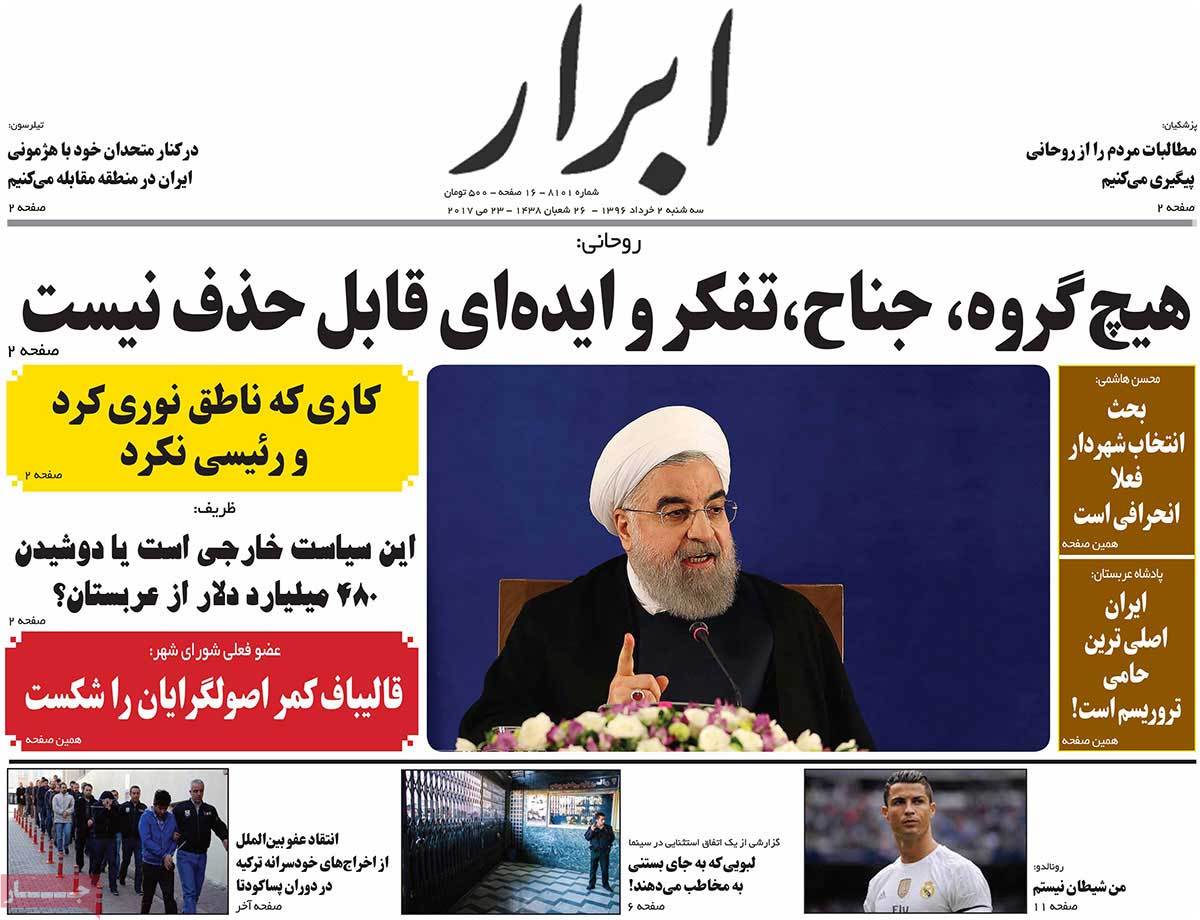
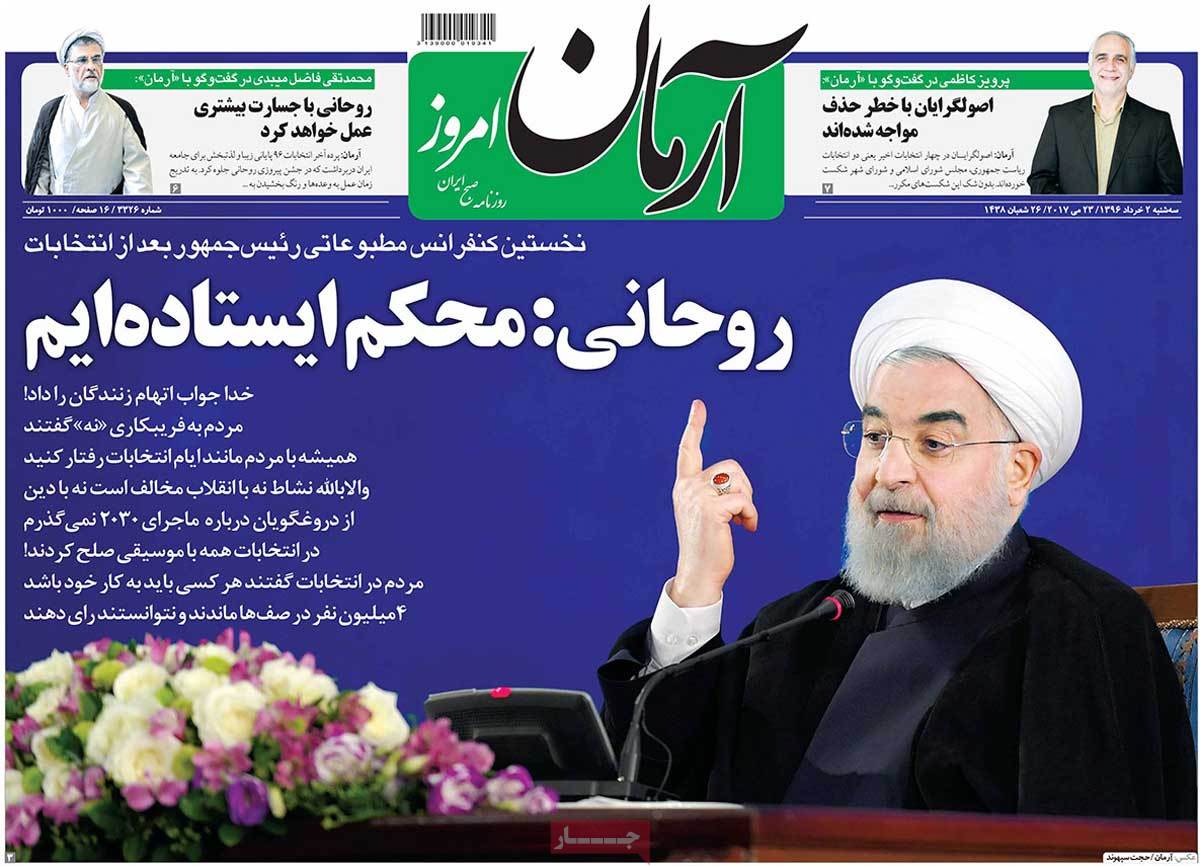
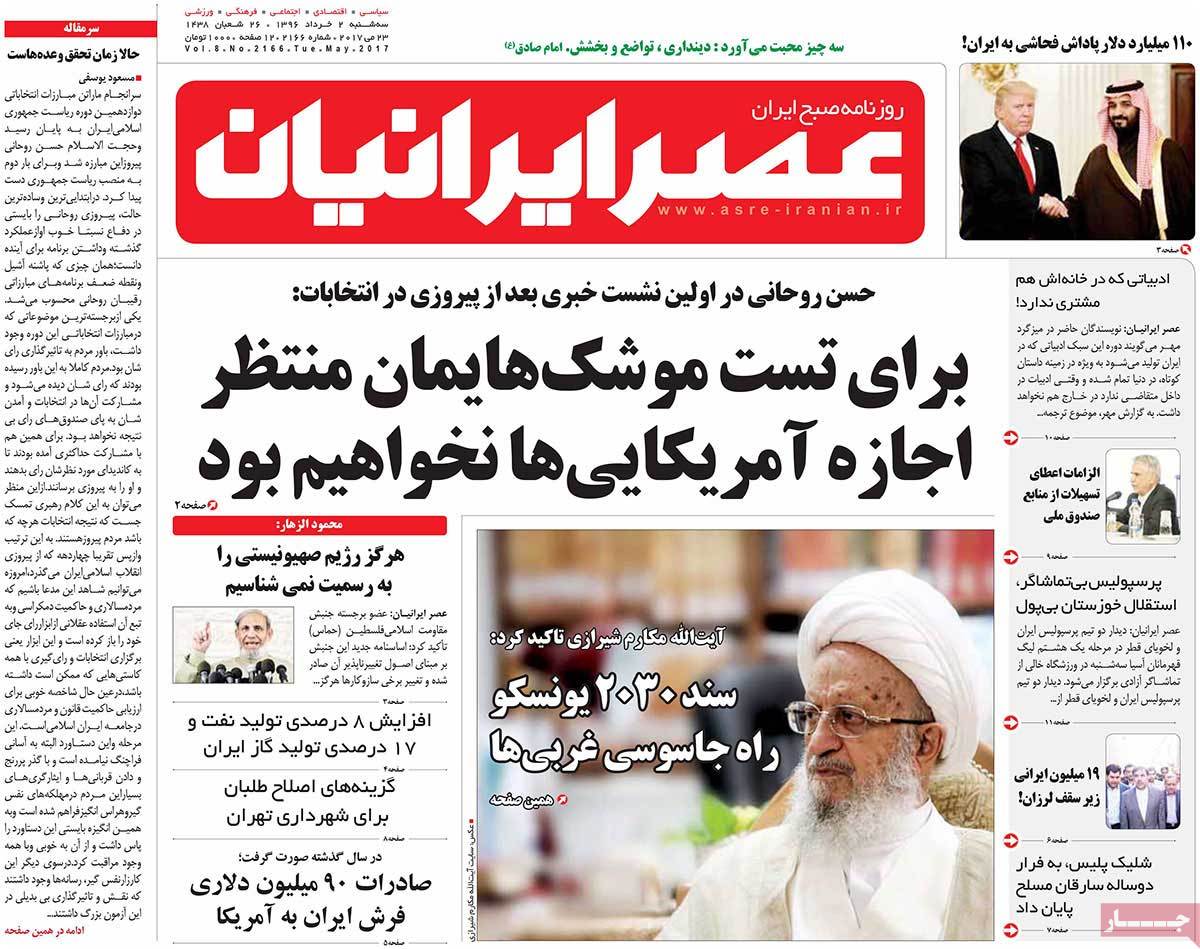
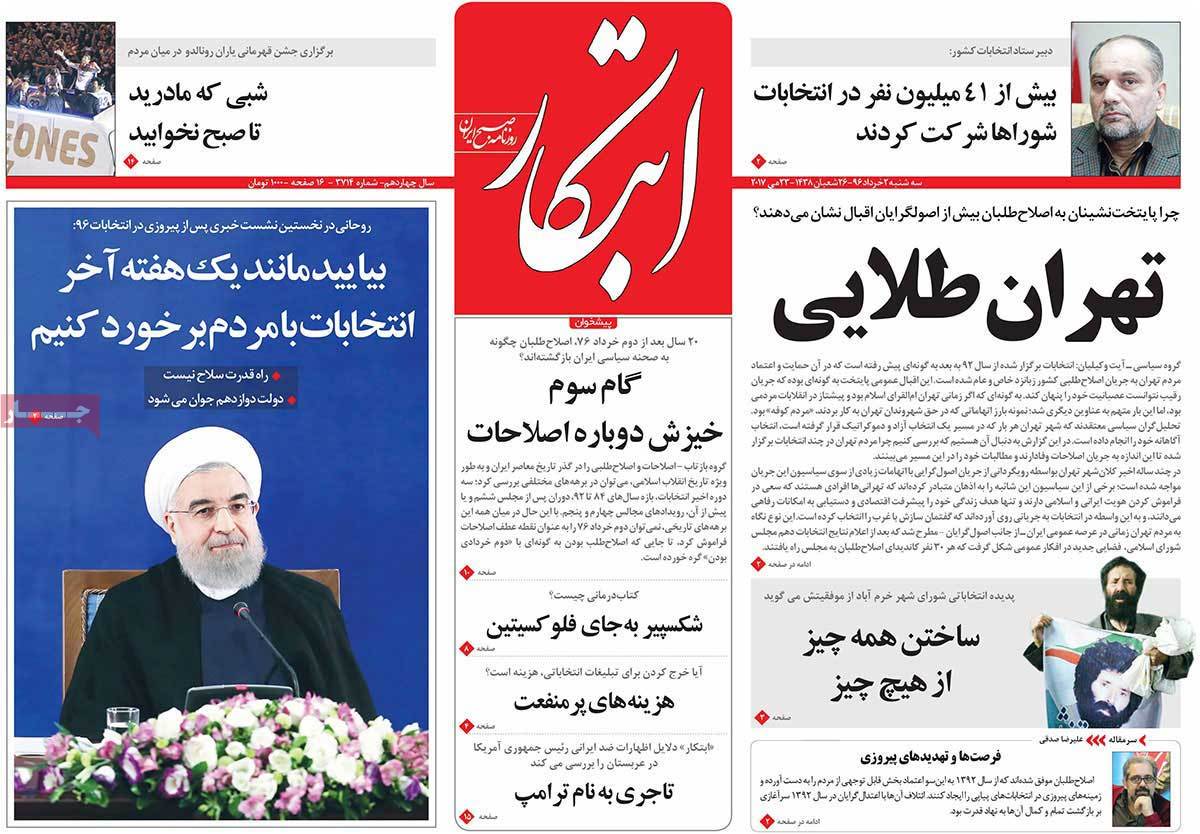
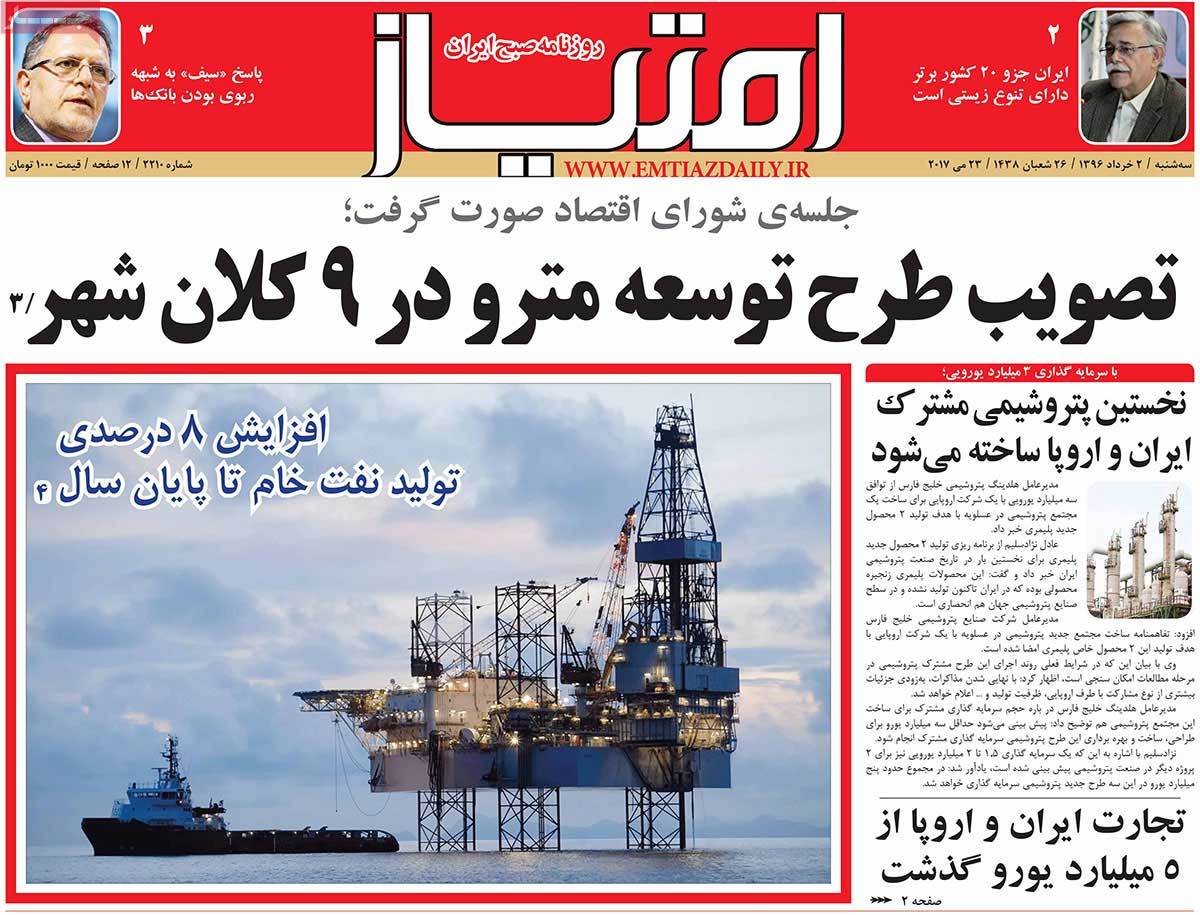
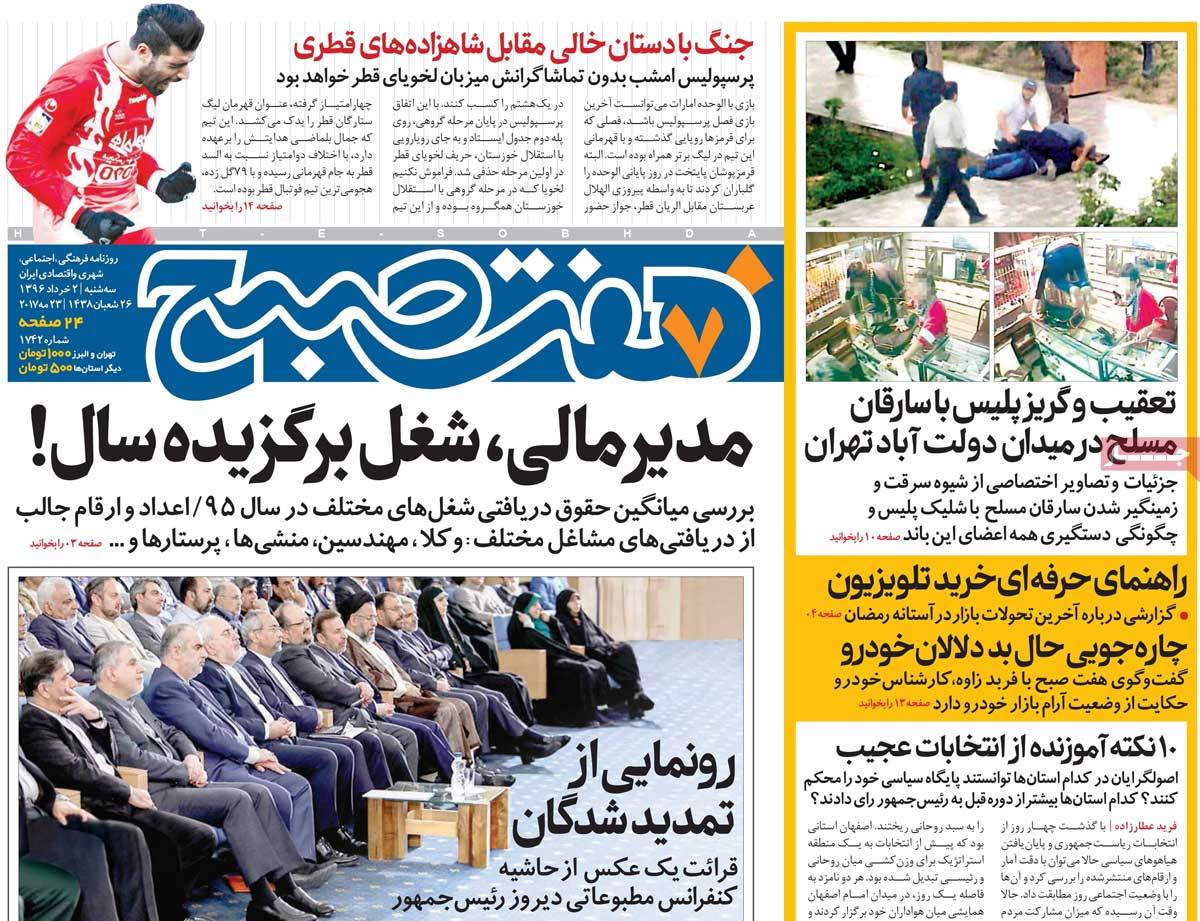
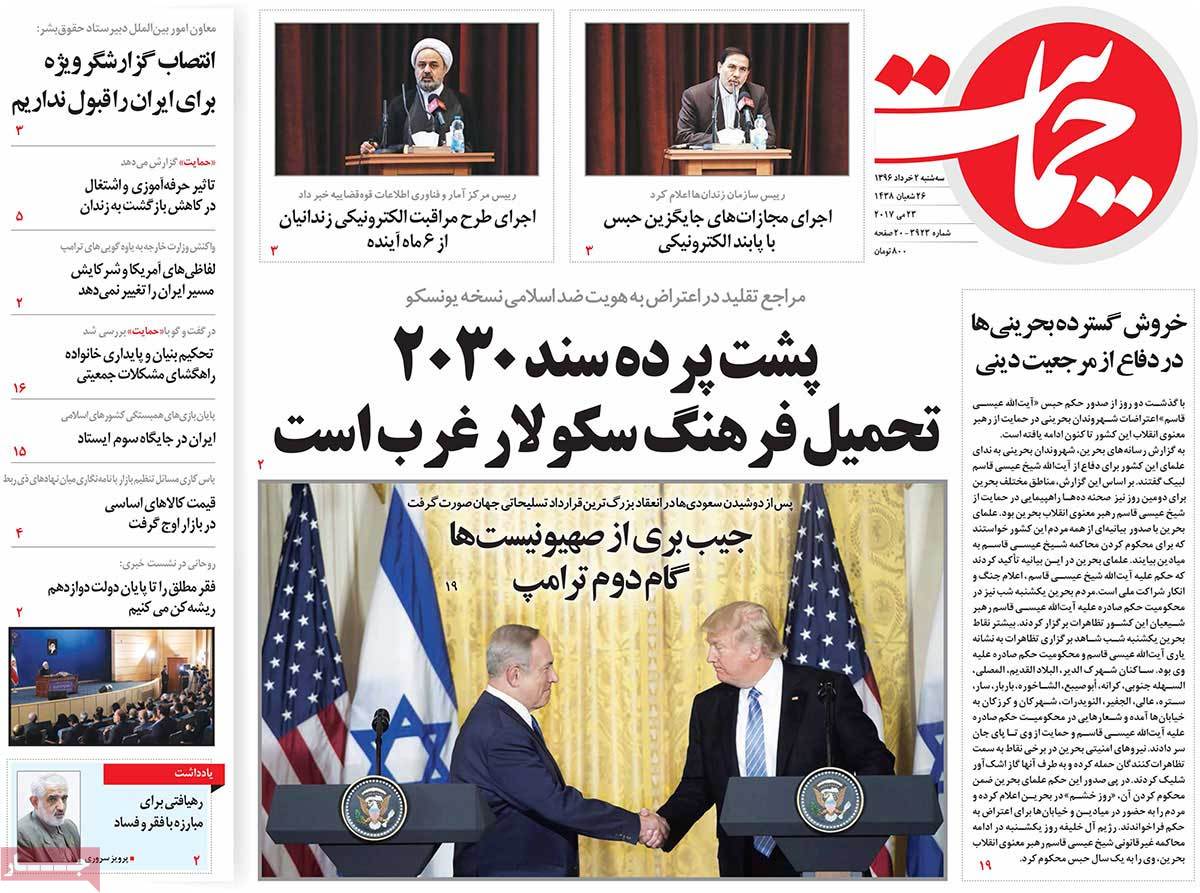
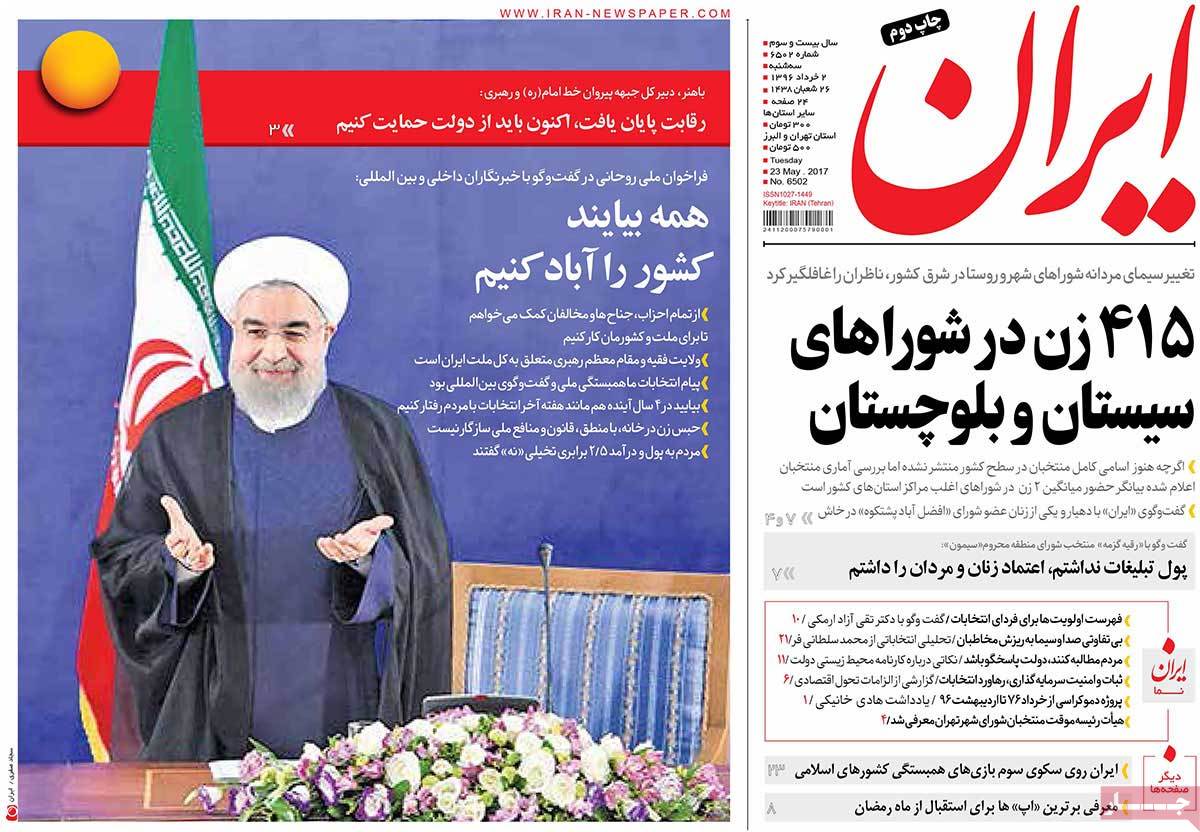
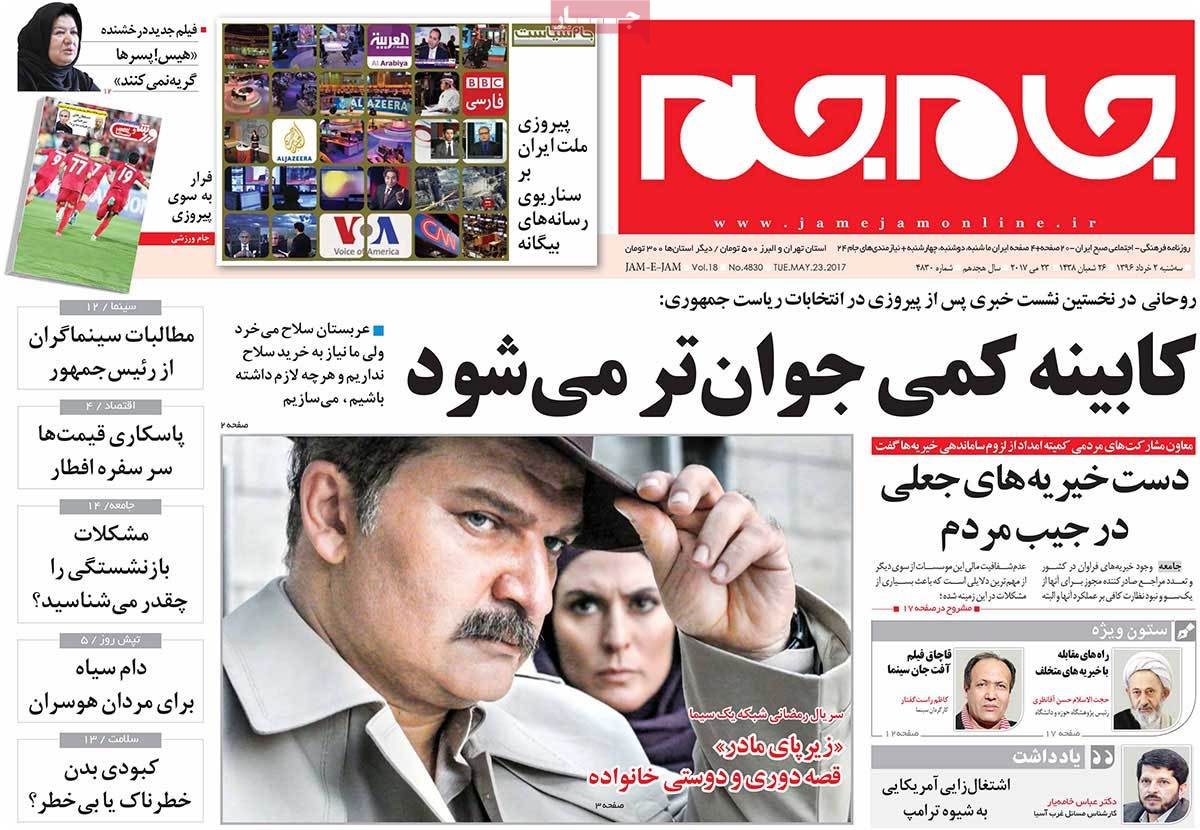
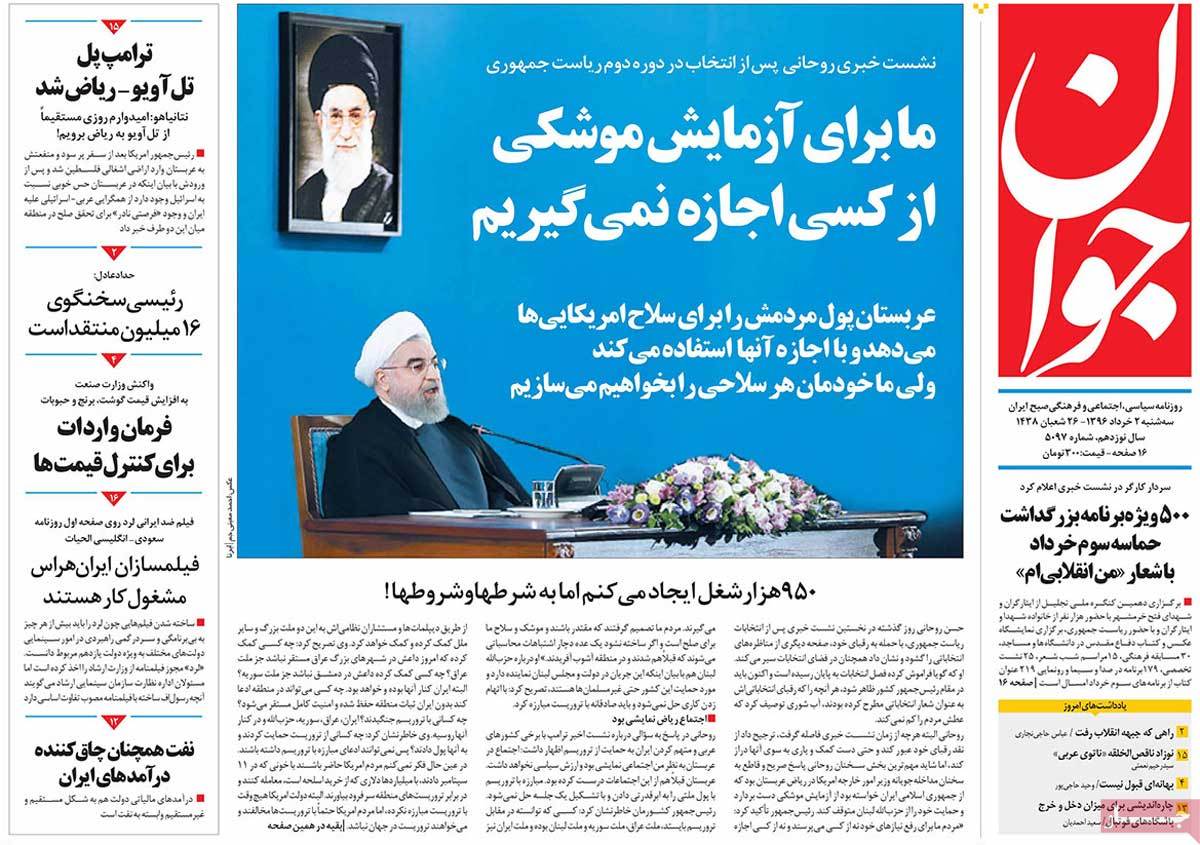
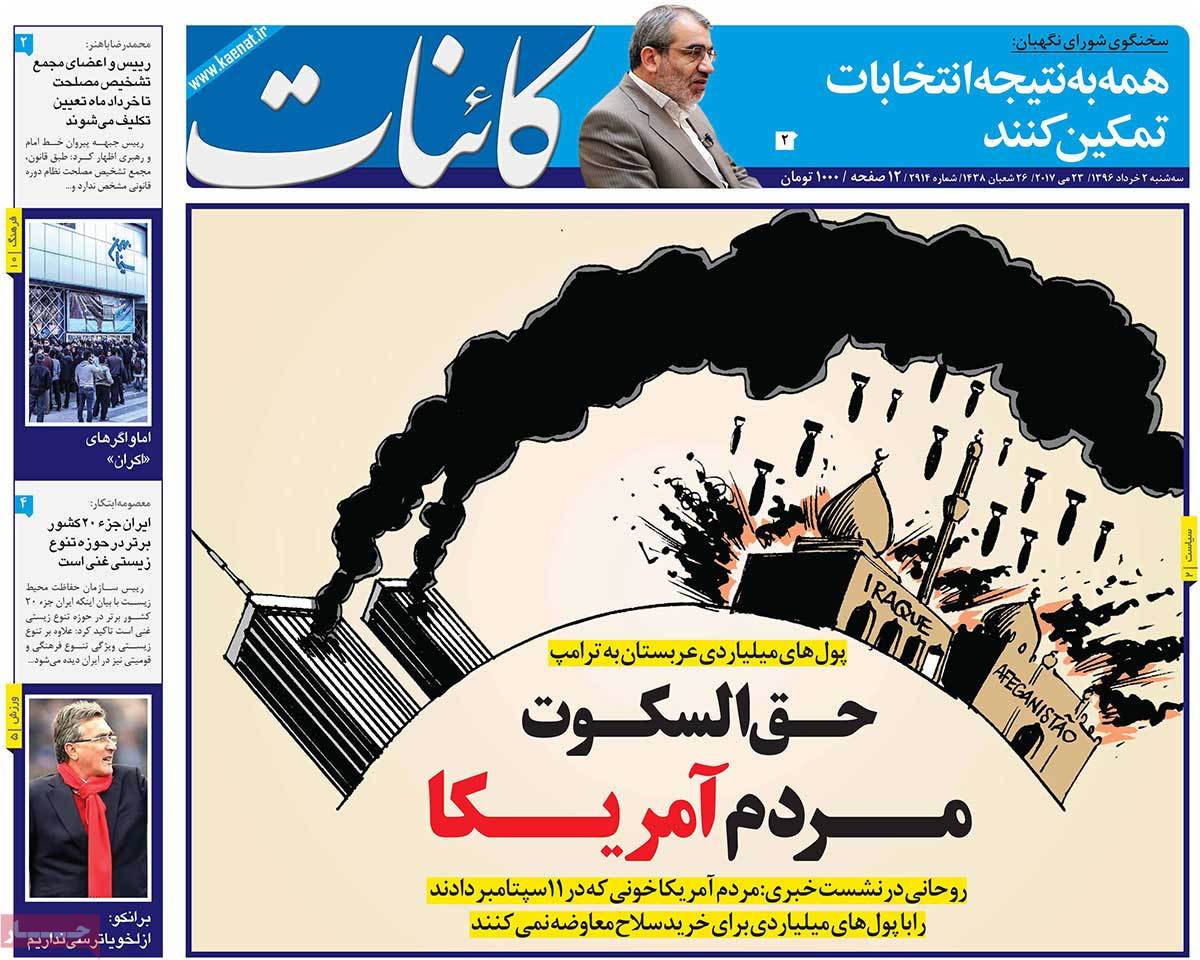
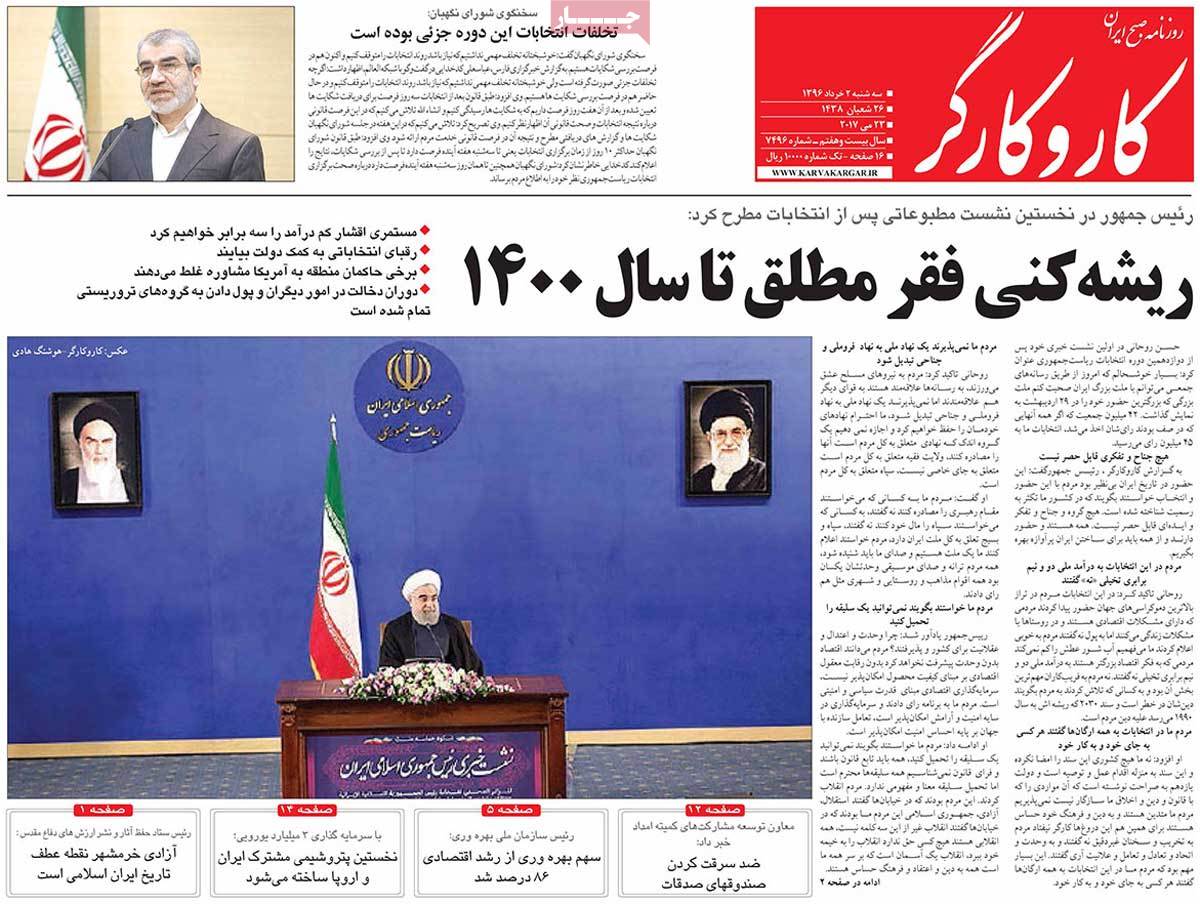
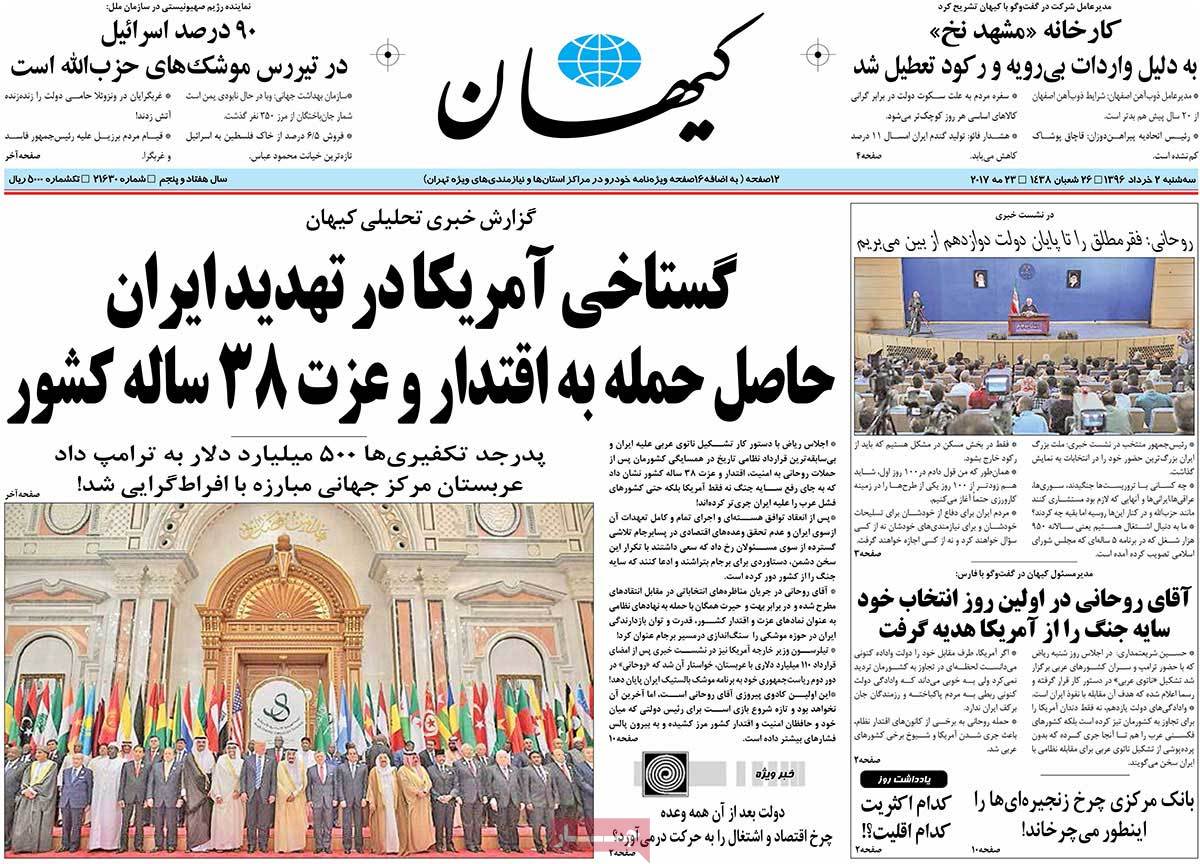
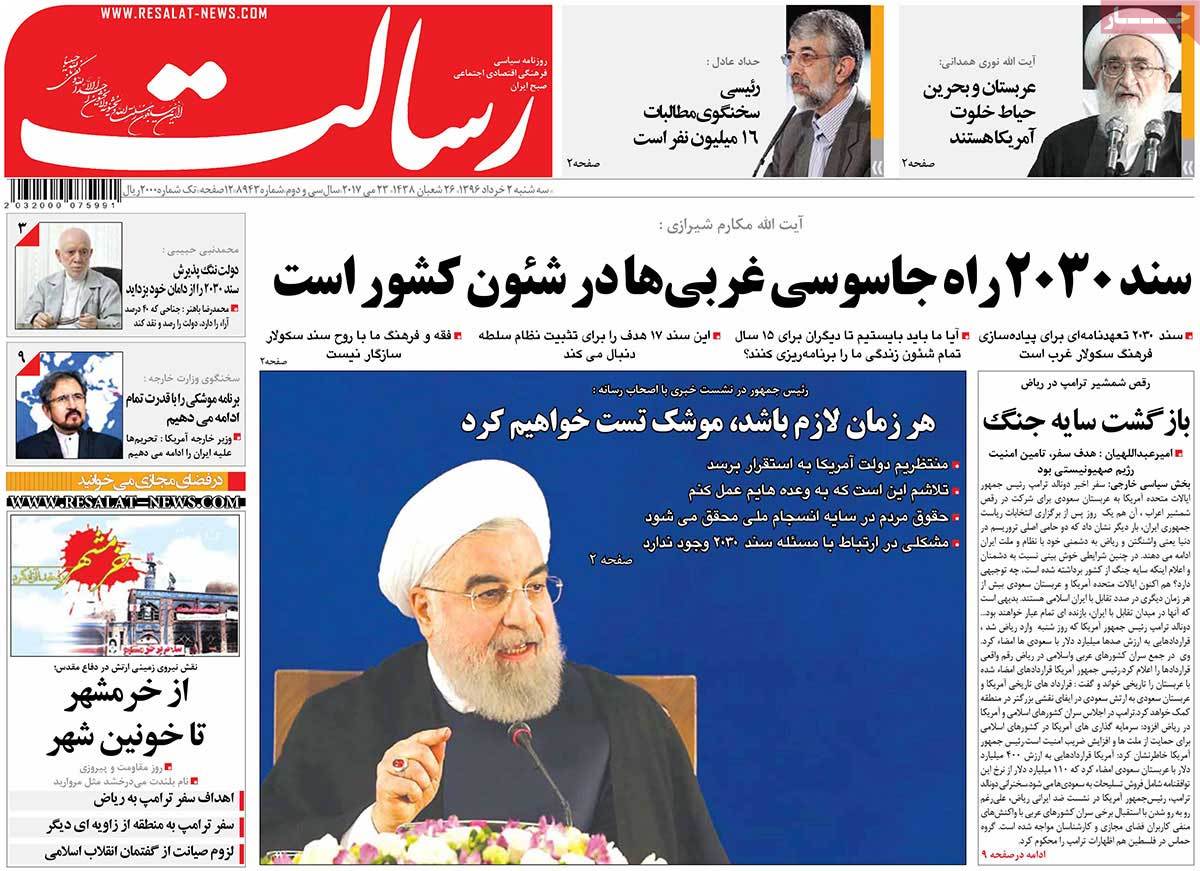
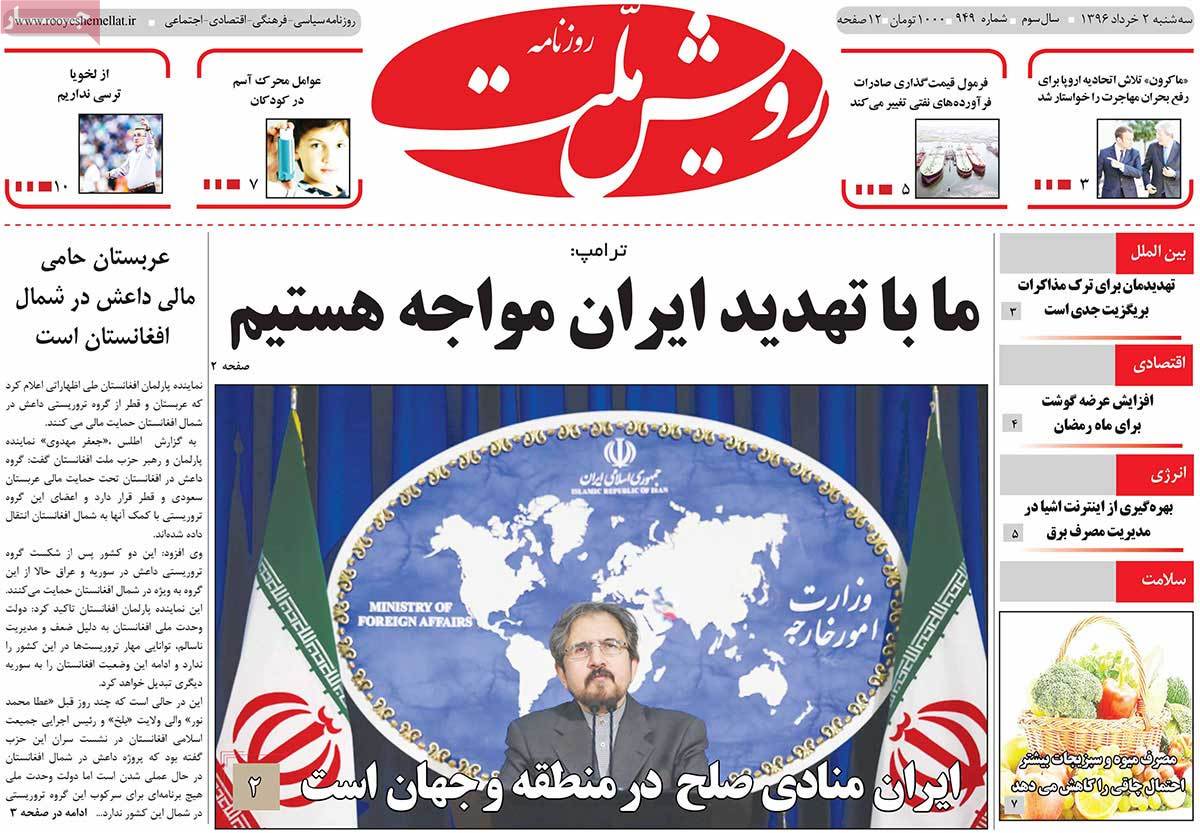
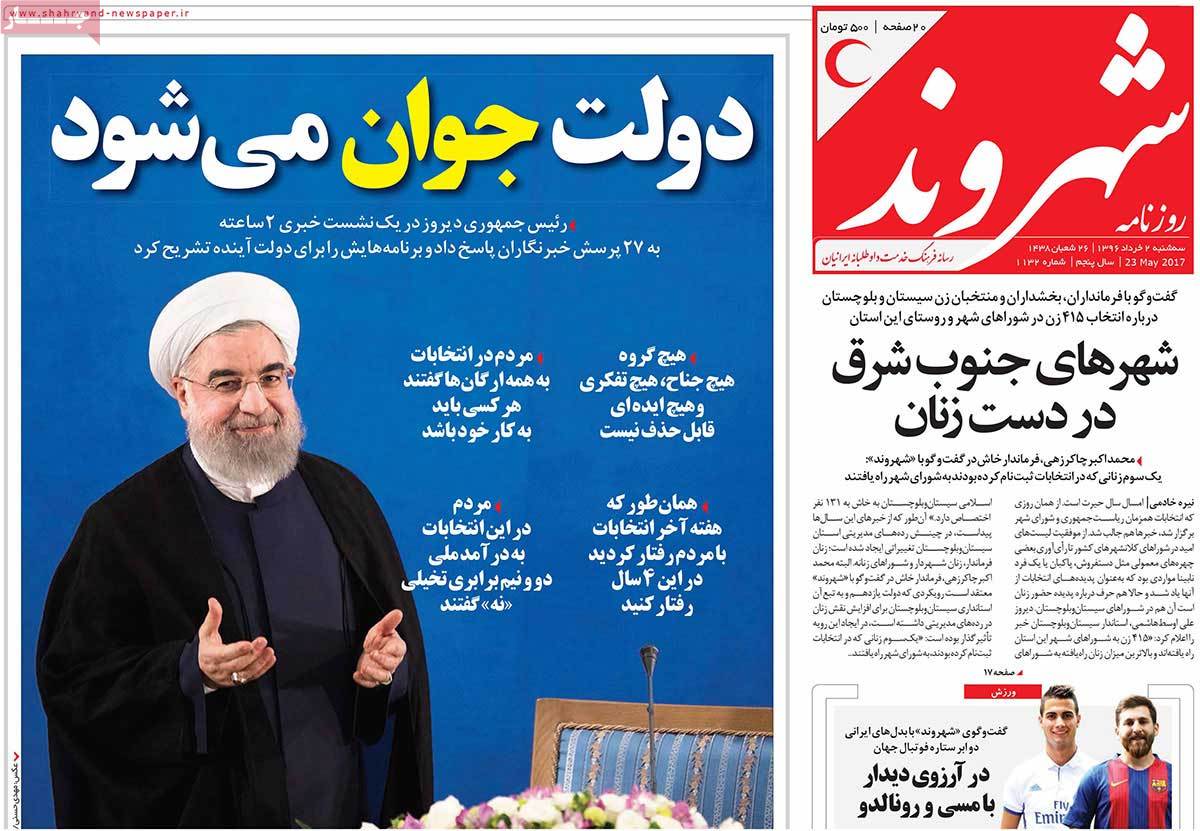
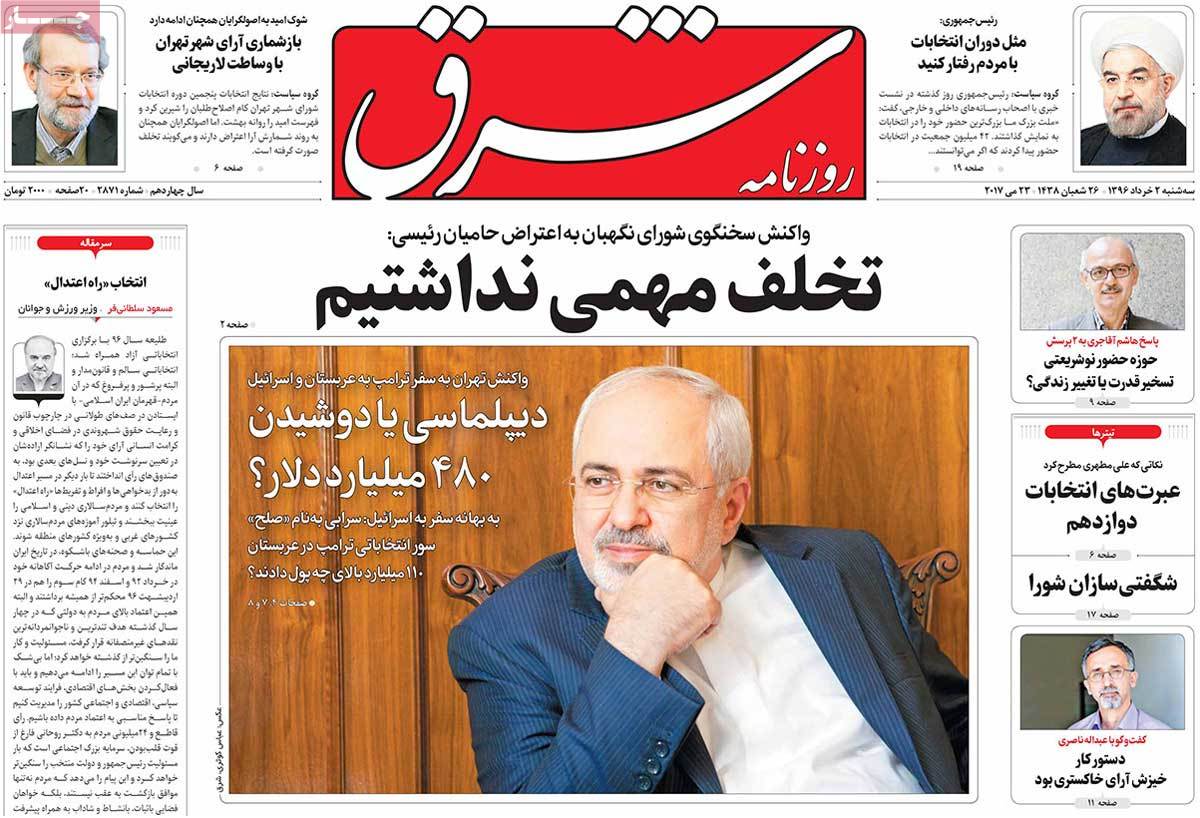
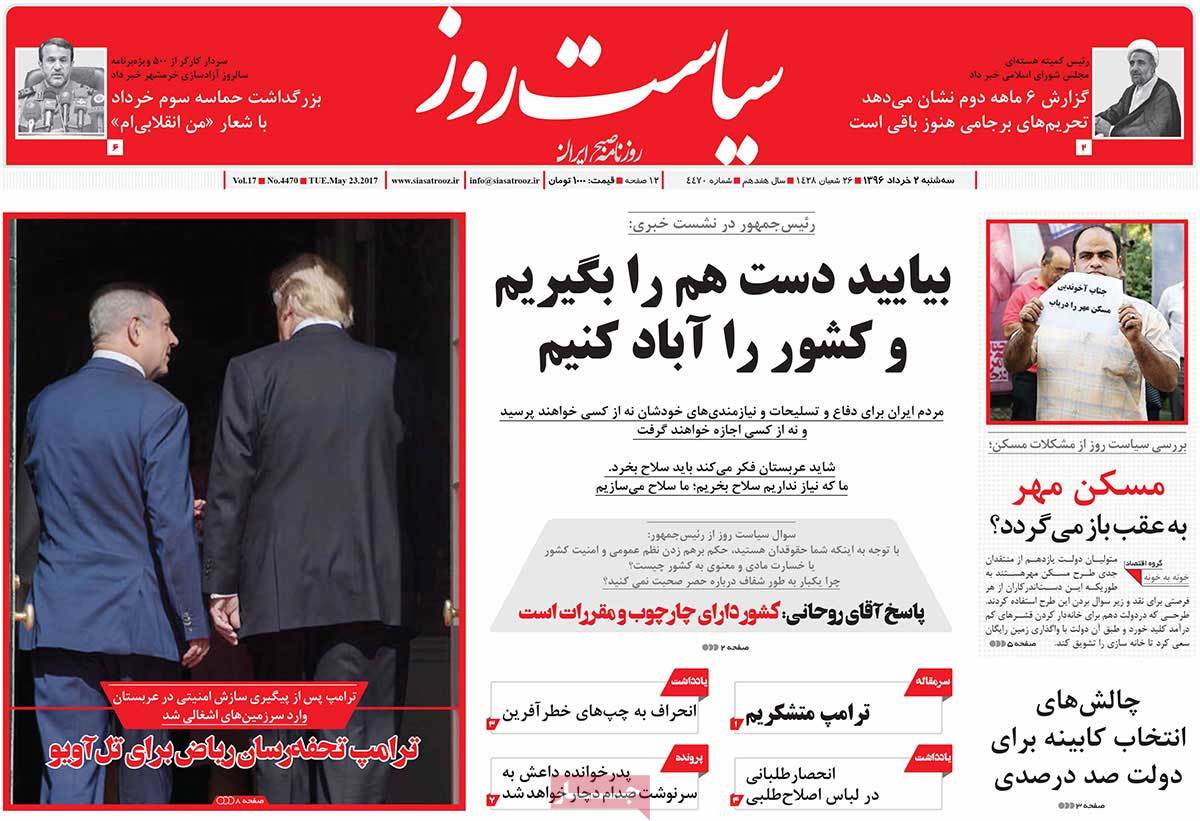
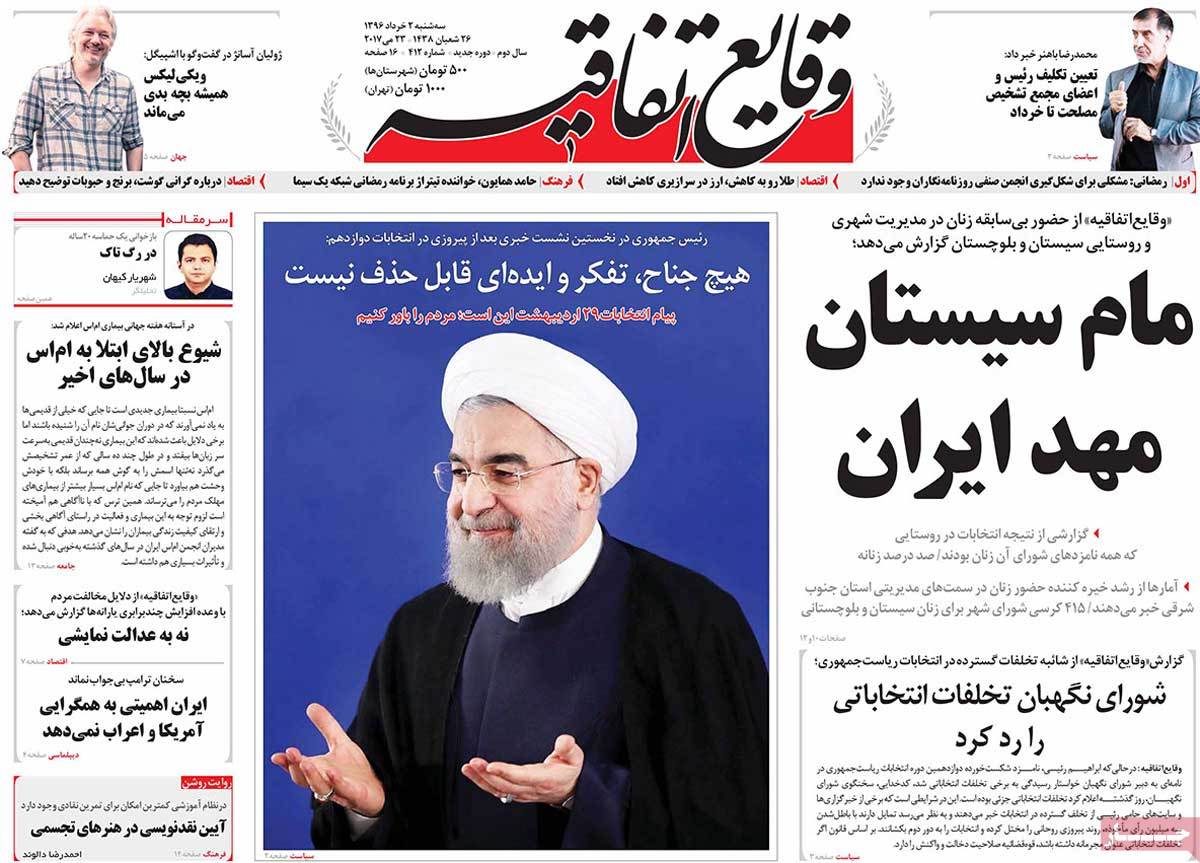
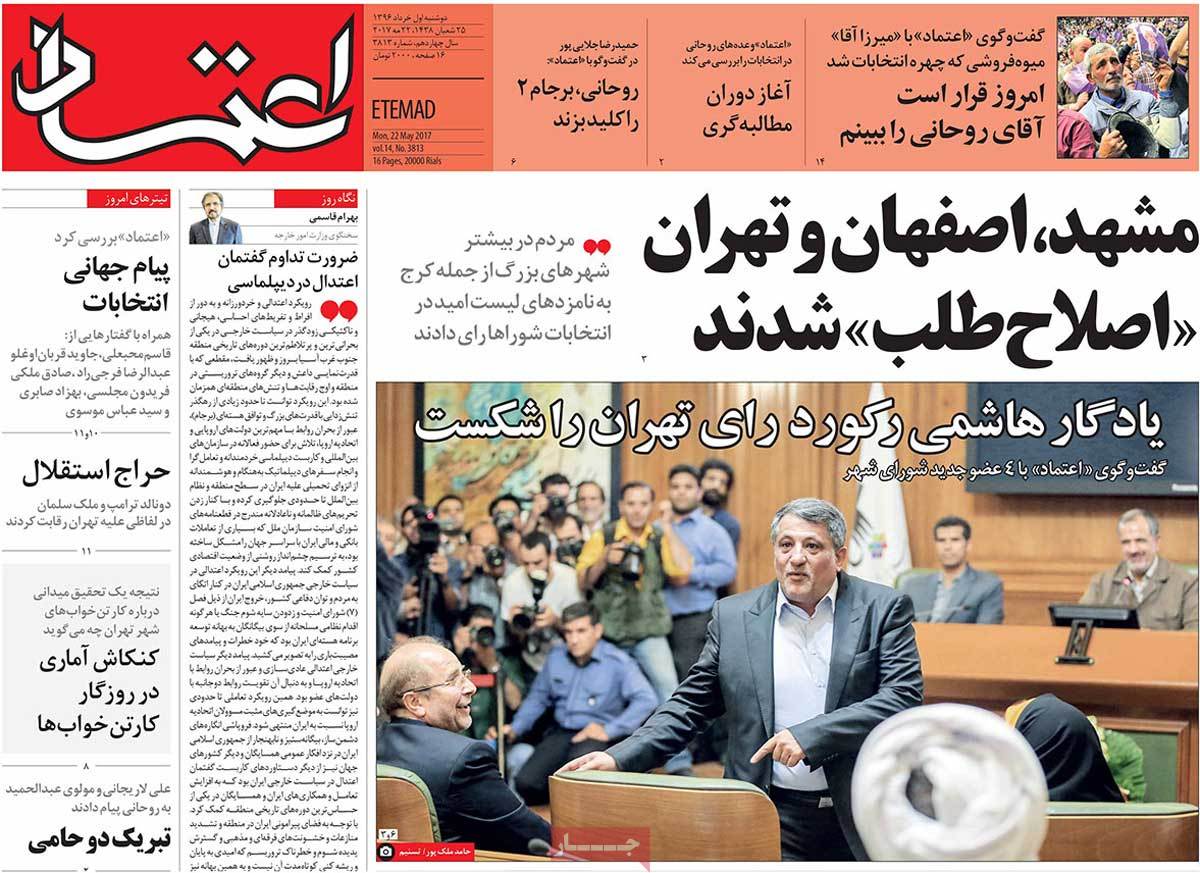
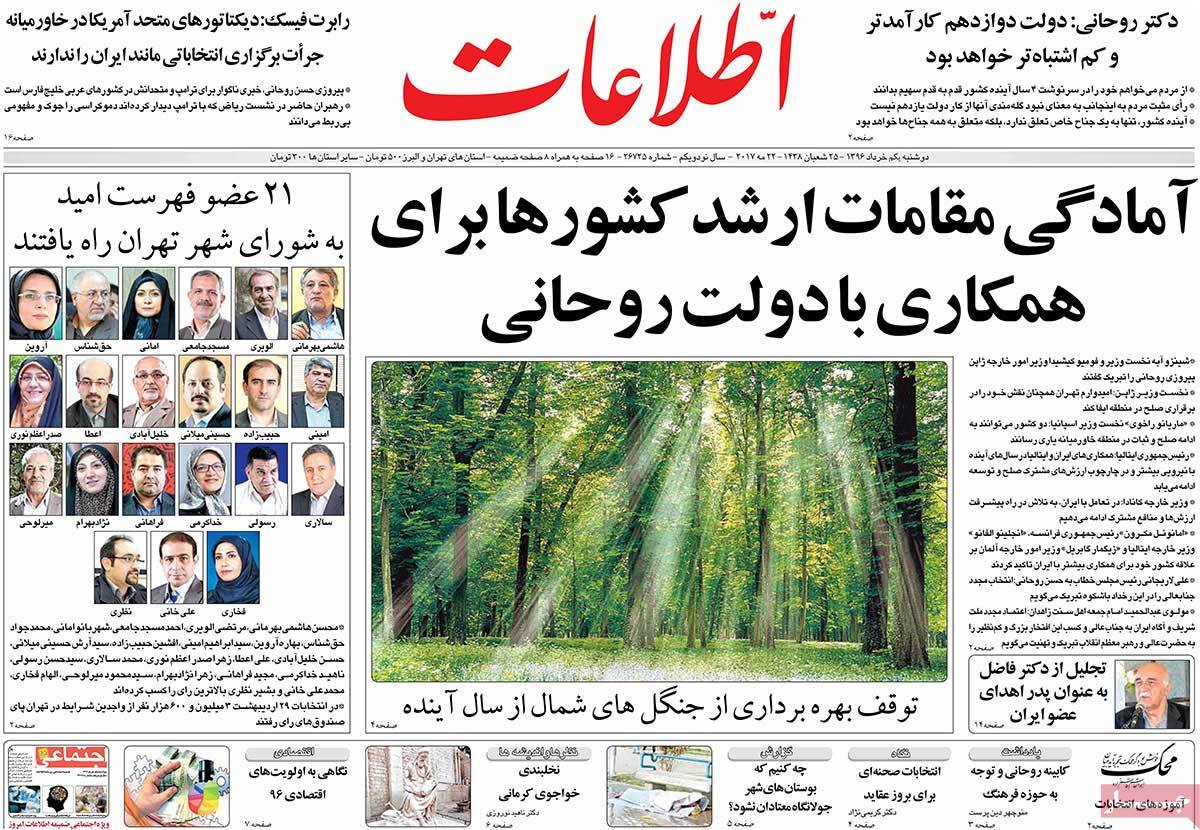
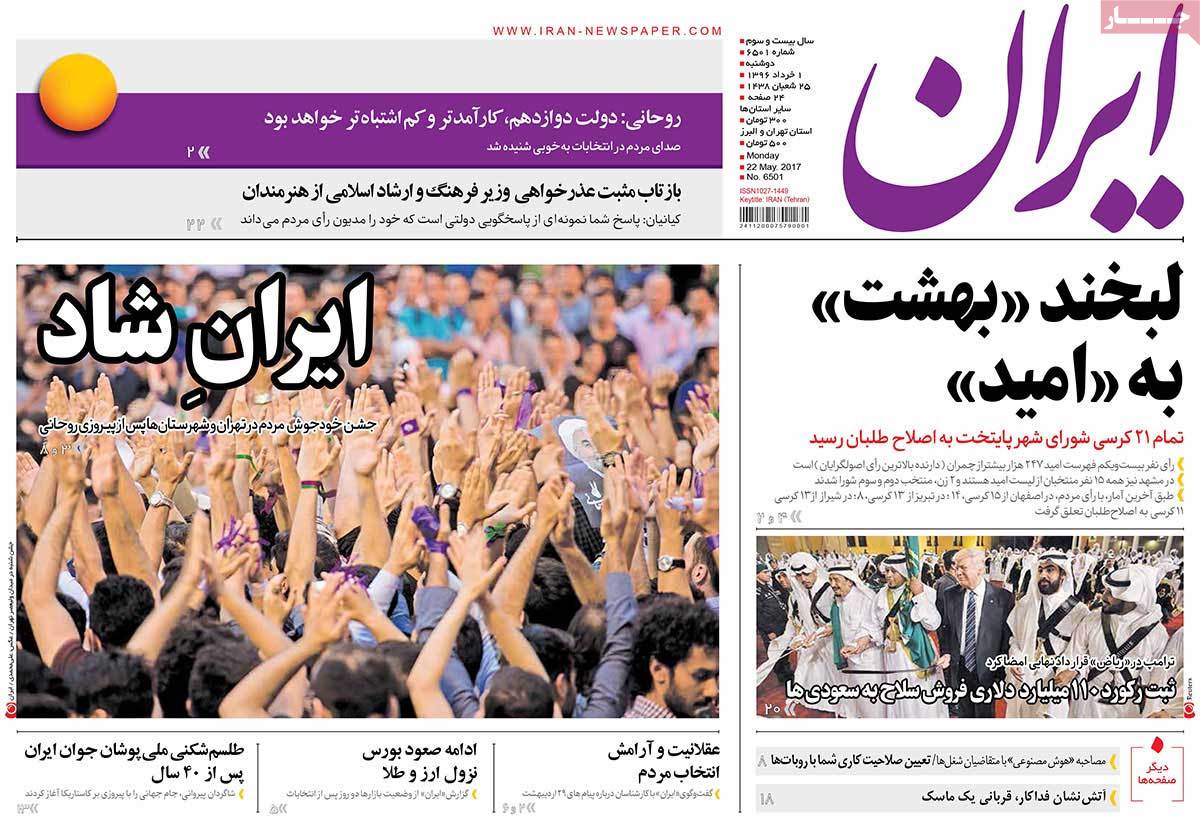
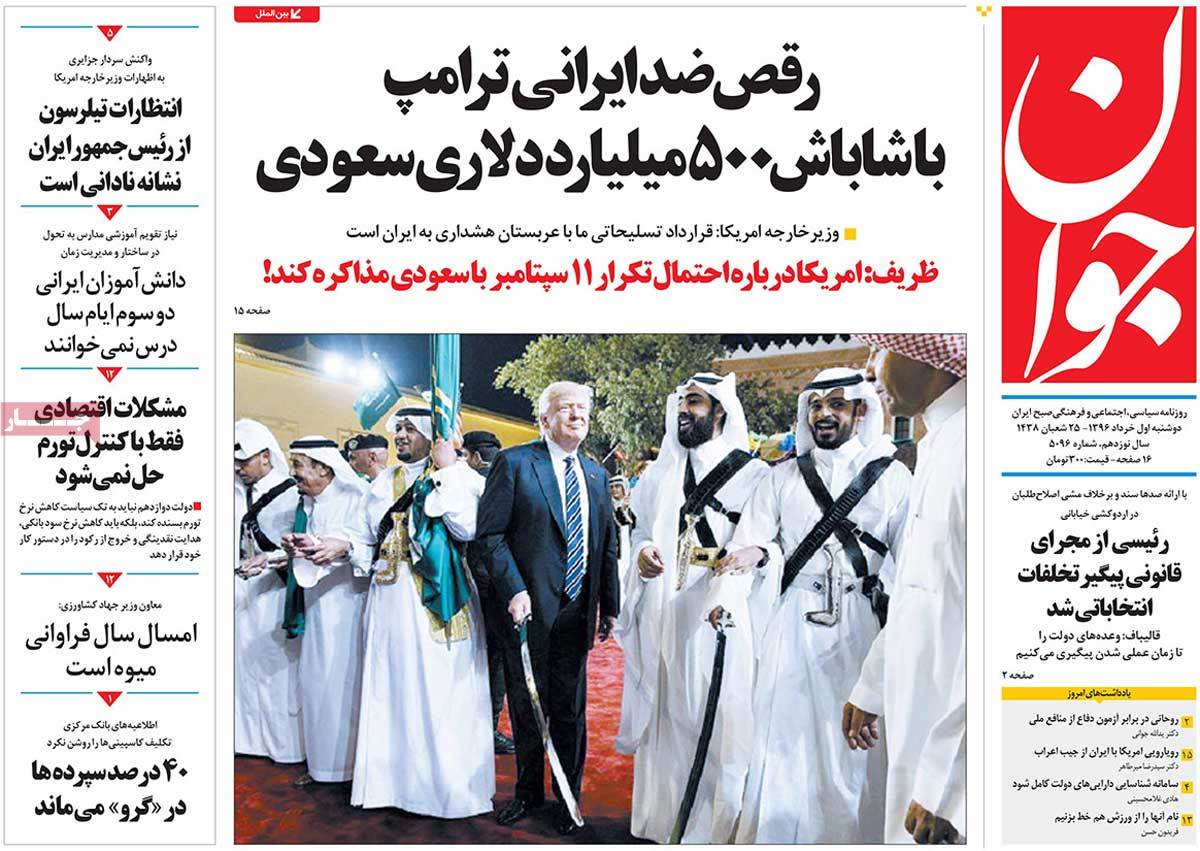
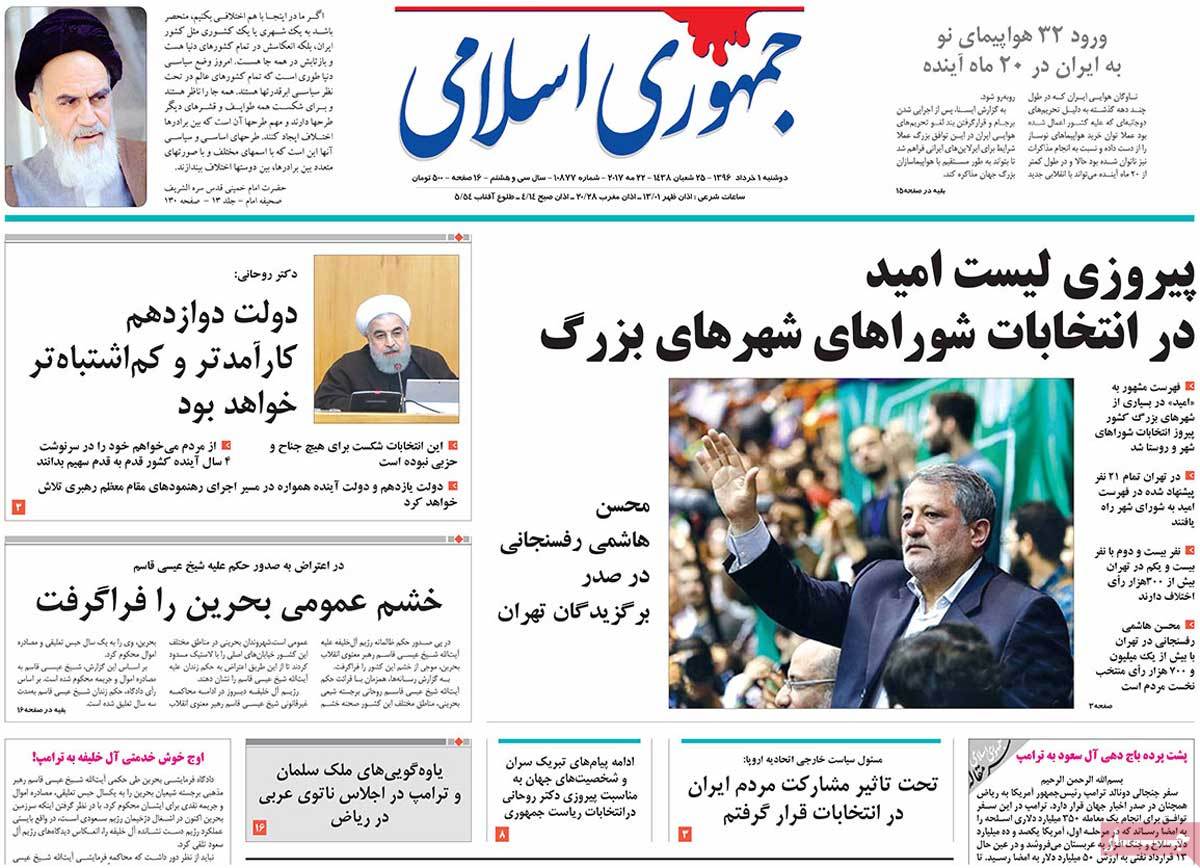
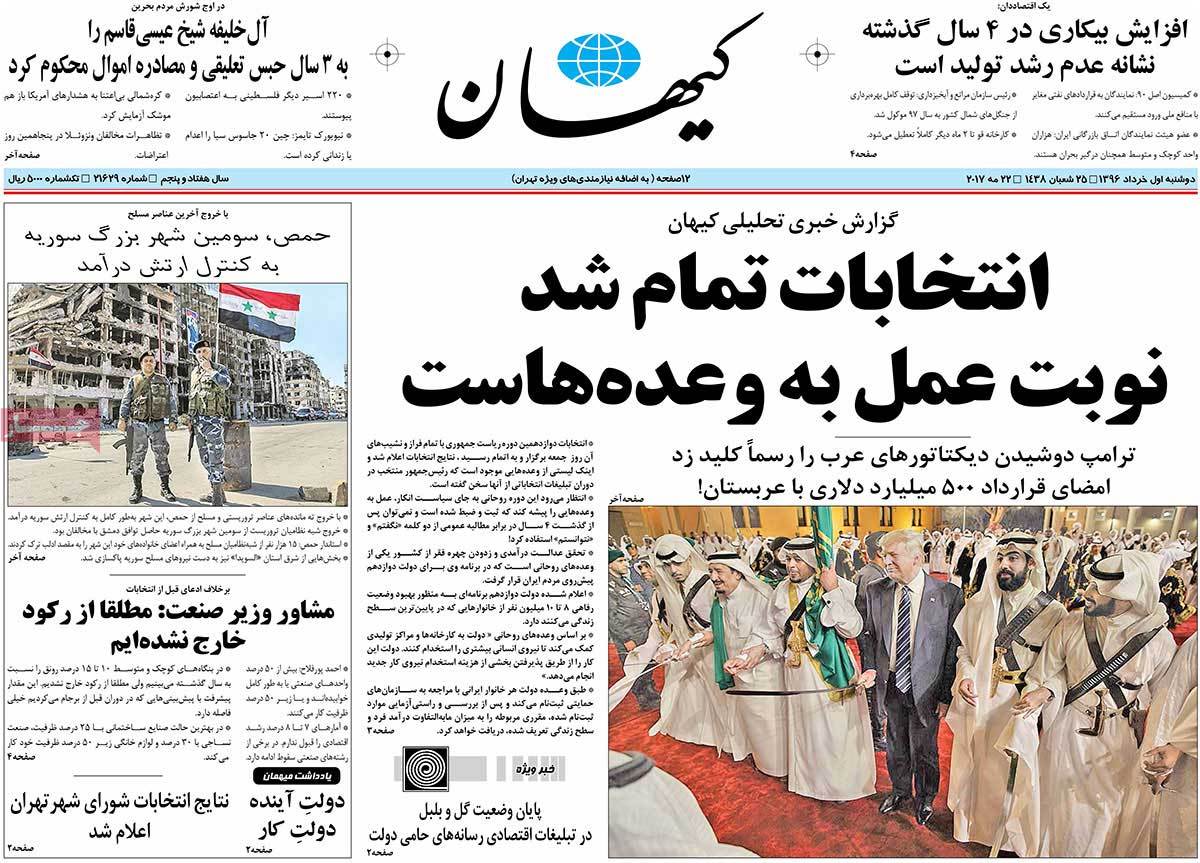
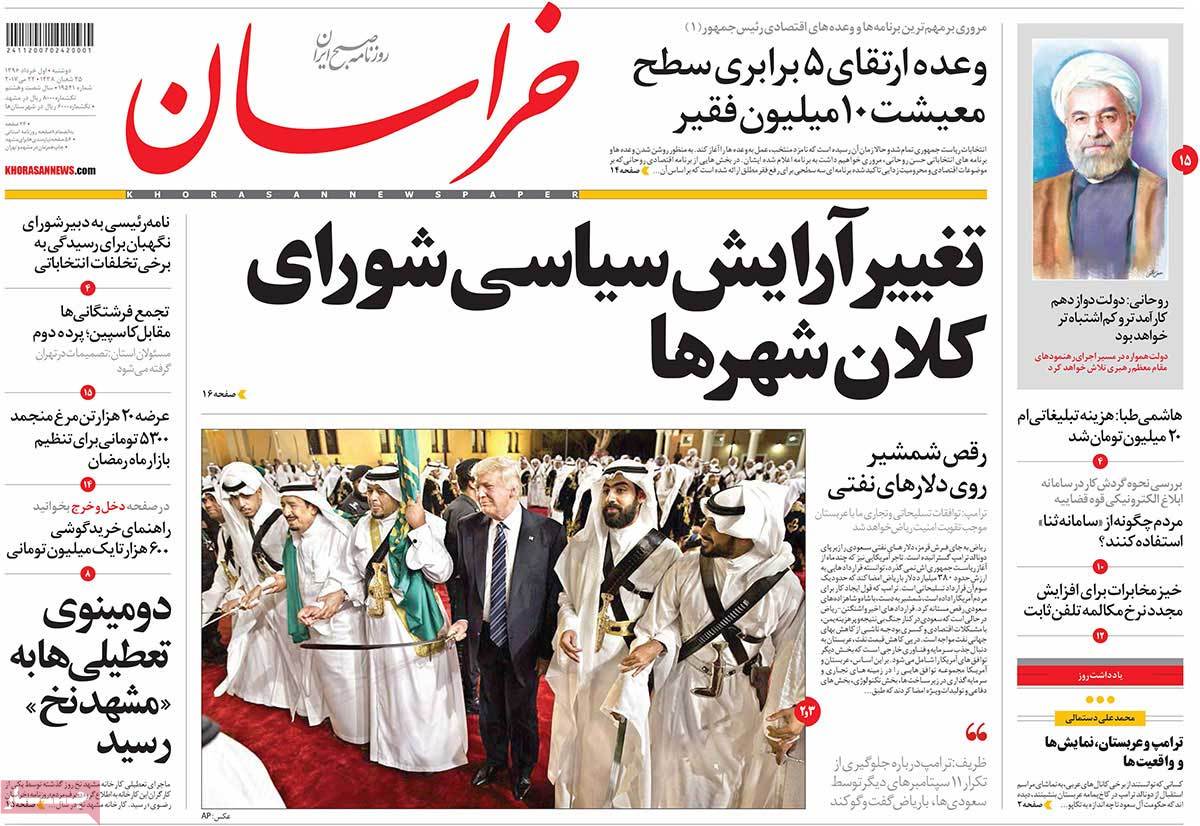
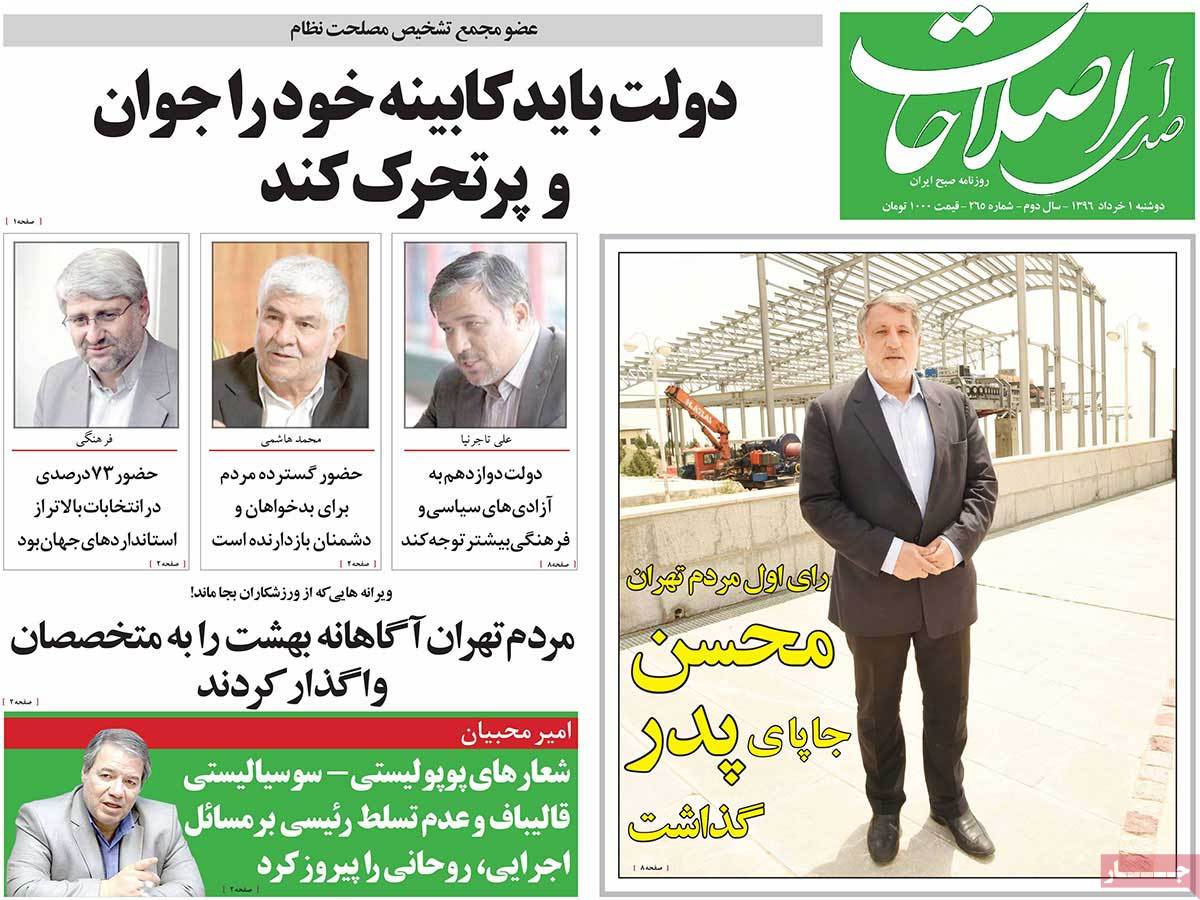
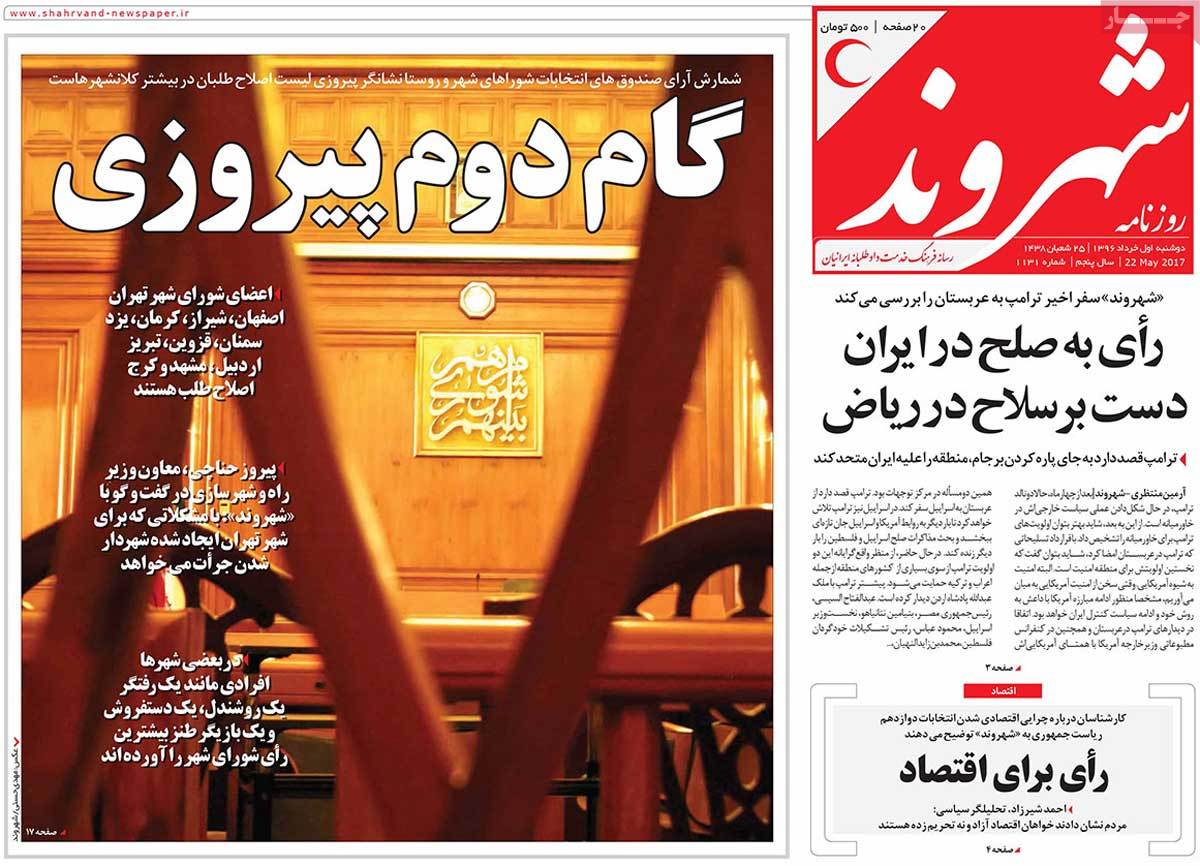
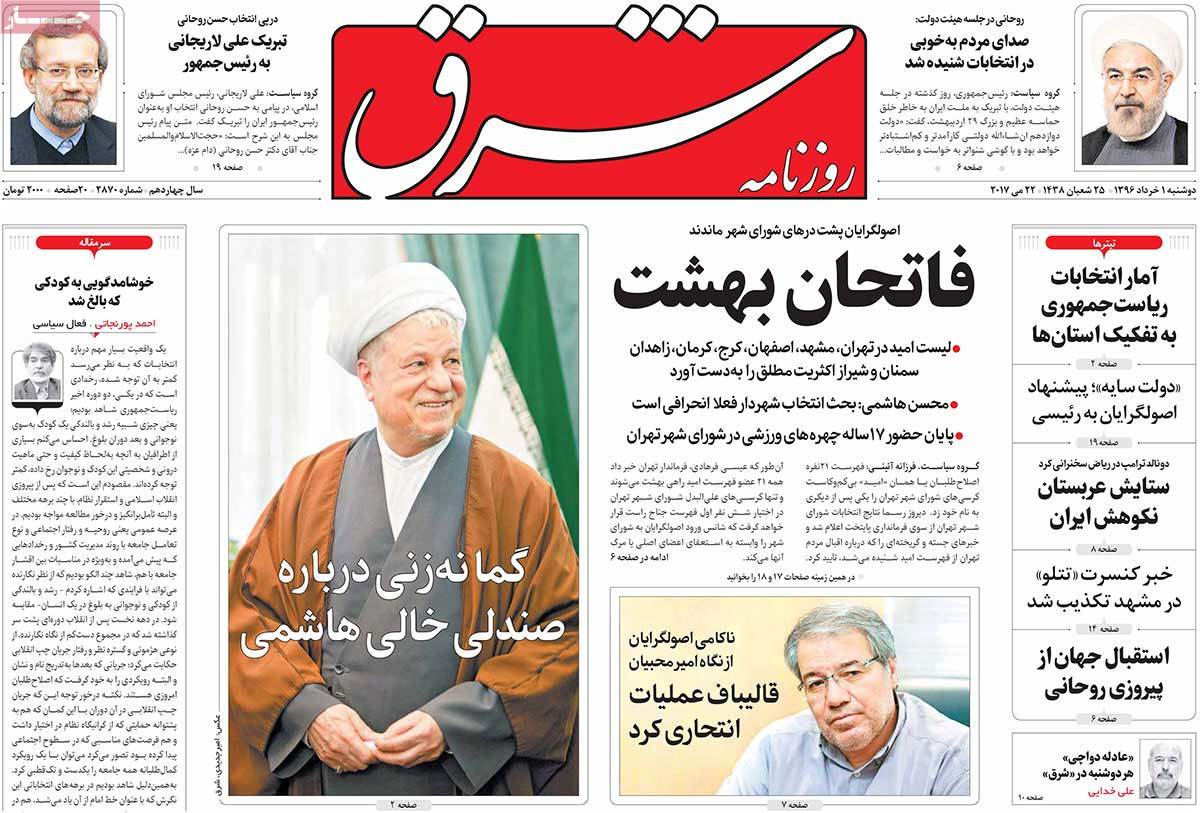
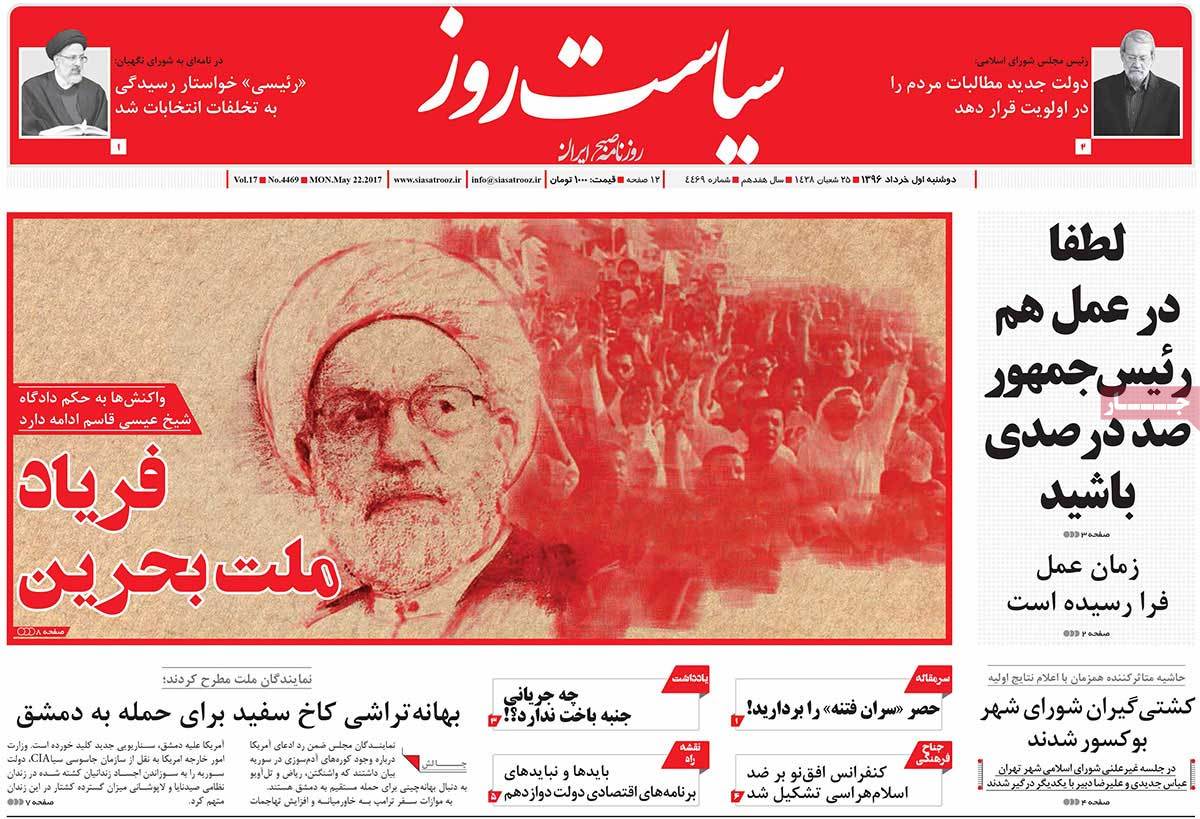
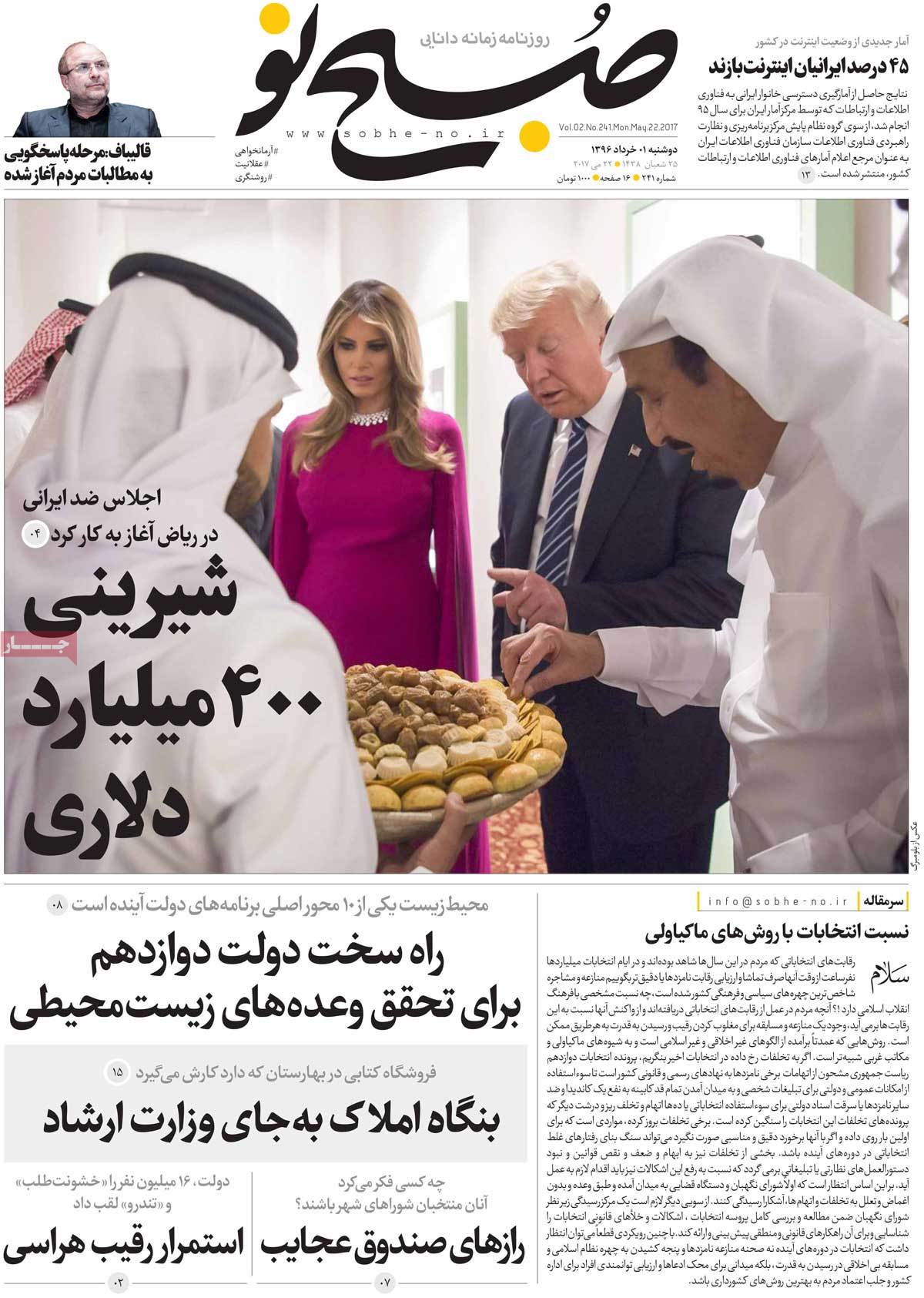
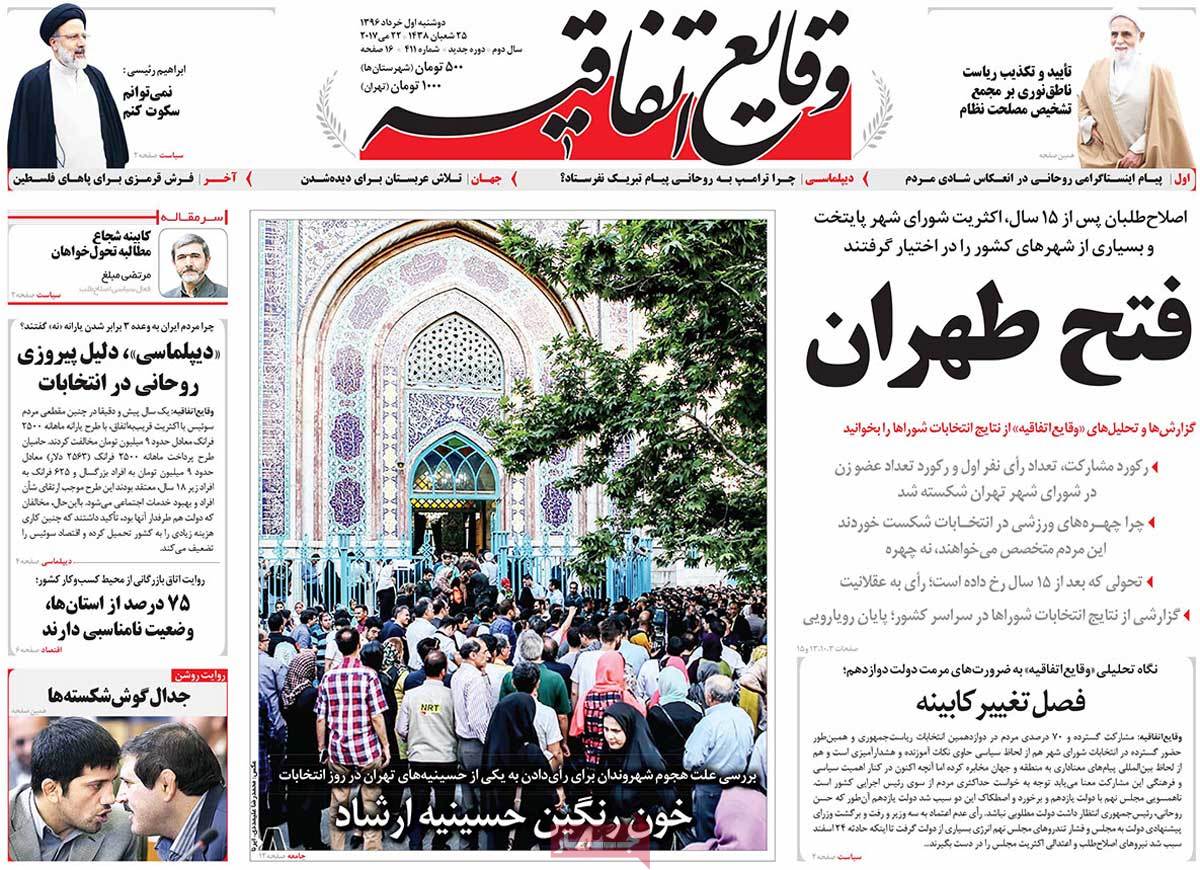
A Look at Iranian Newspaper Front Pages on April 24

A Look at Iranian Newspaper Front Pages on April 24

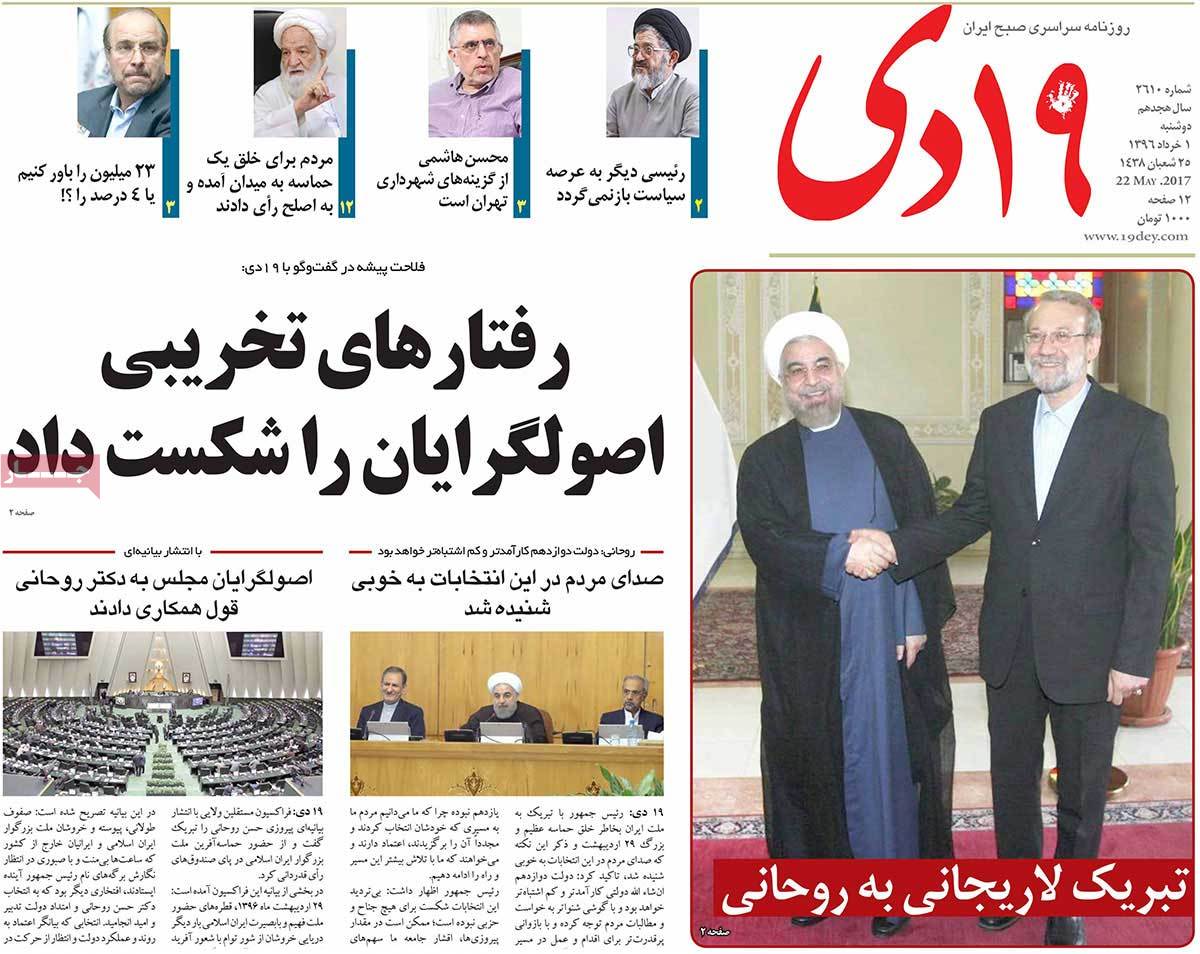
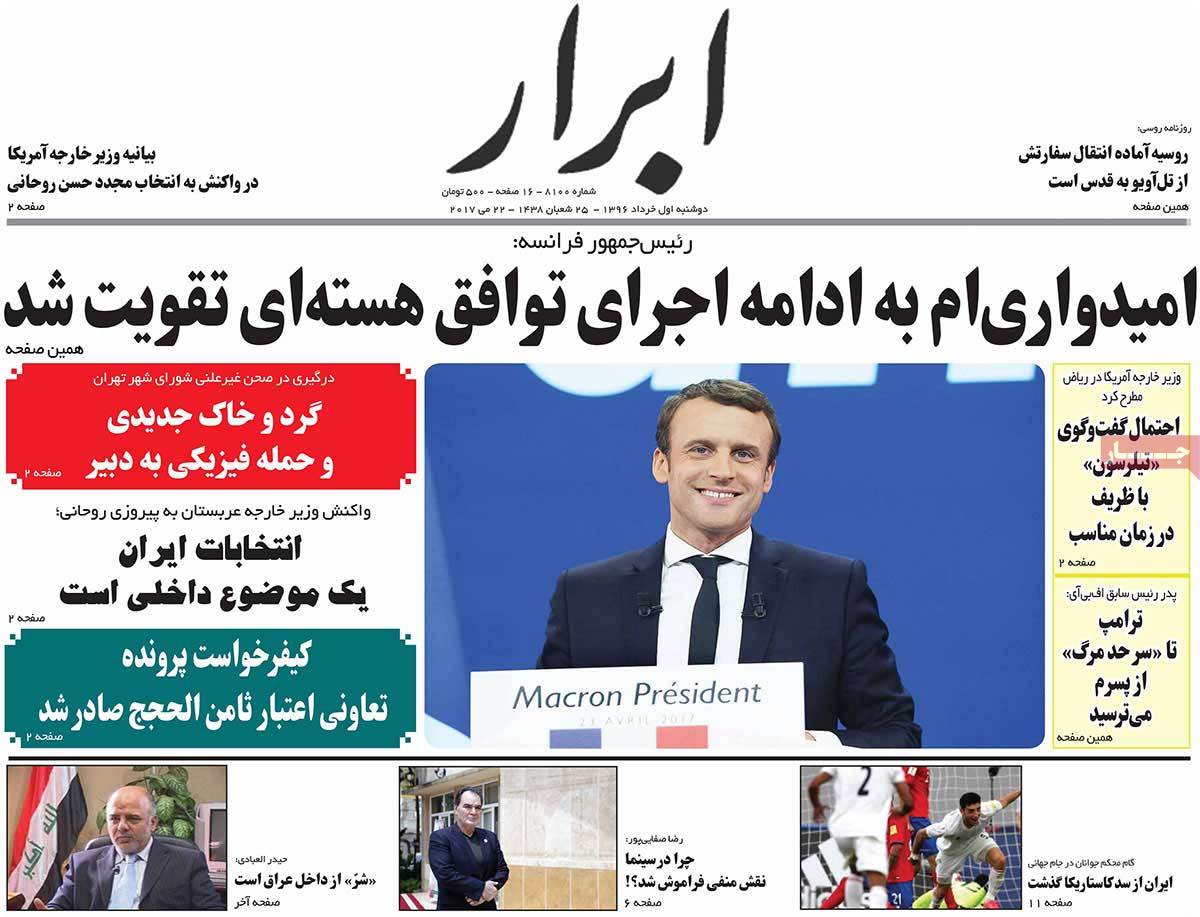
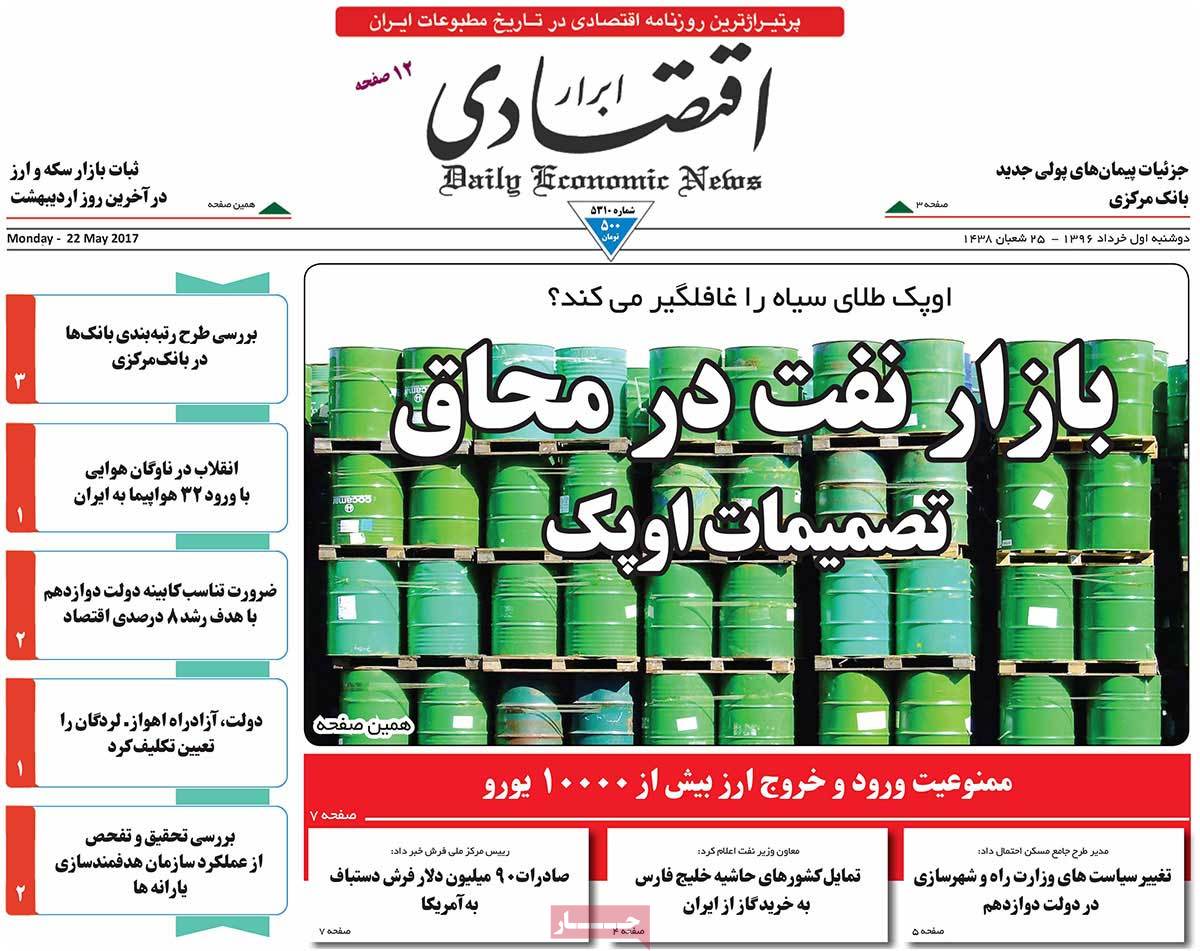
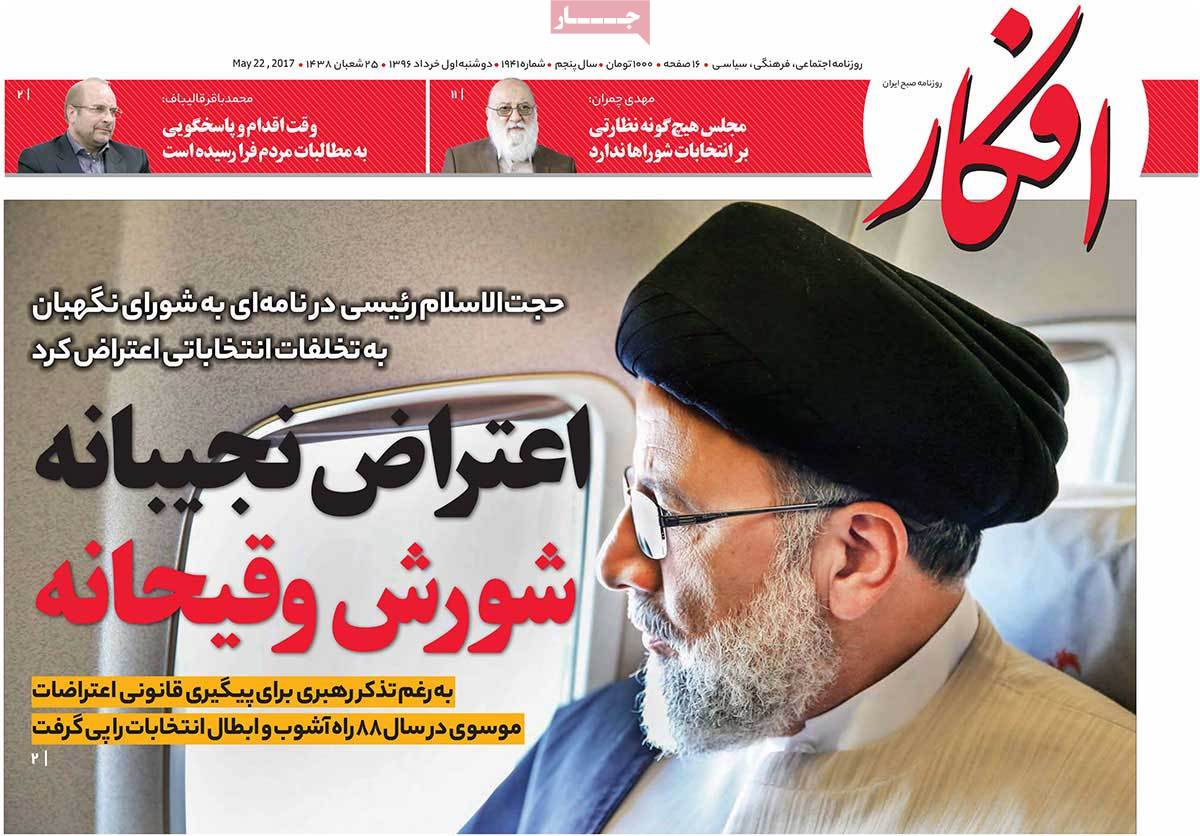
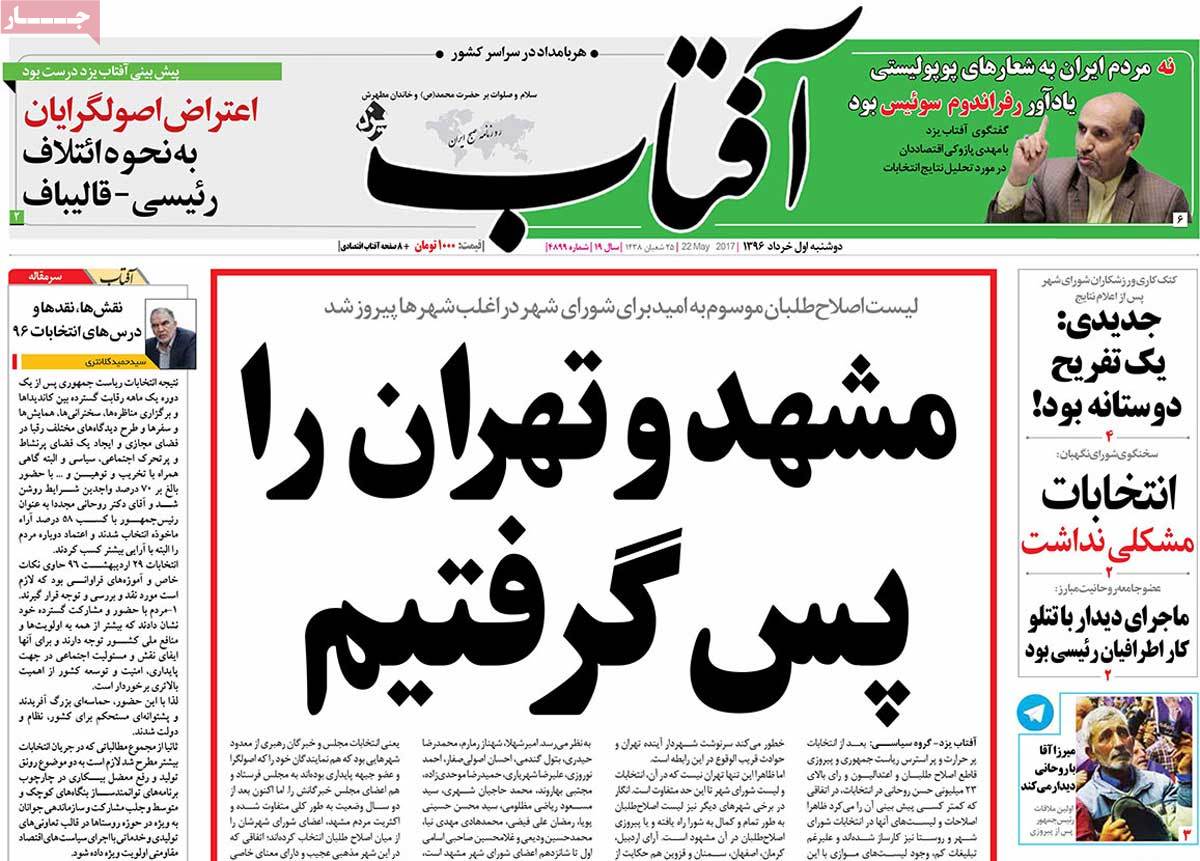
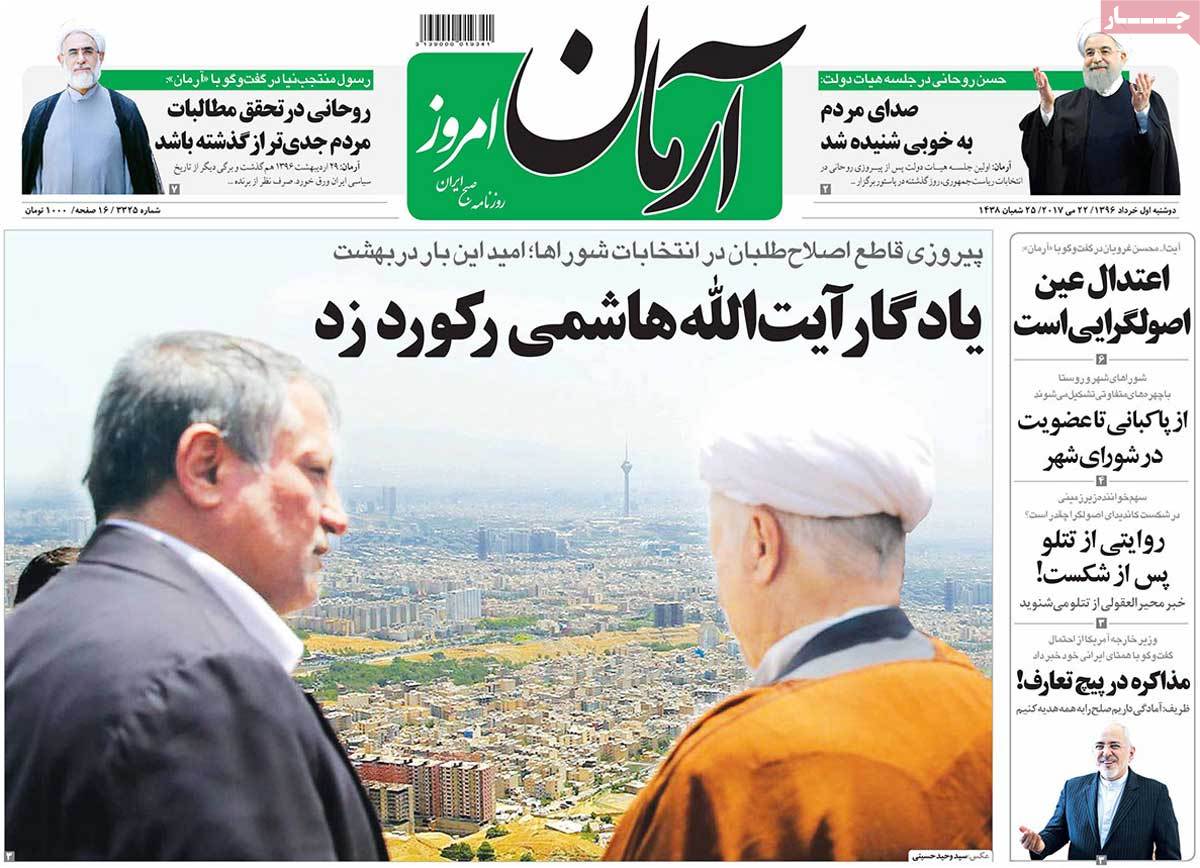
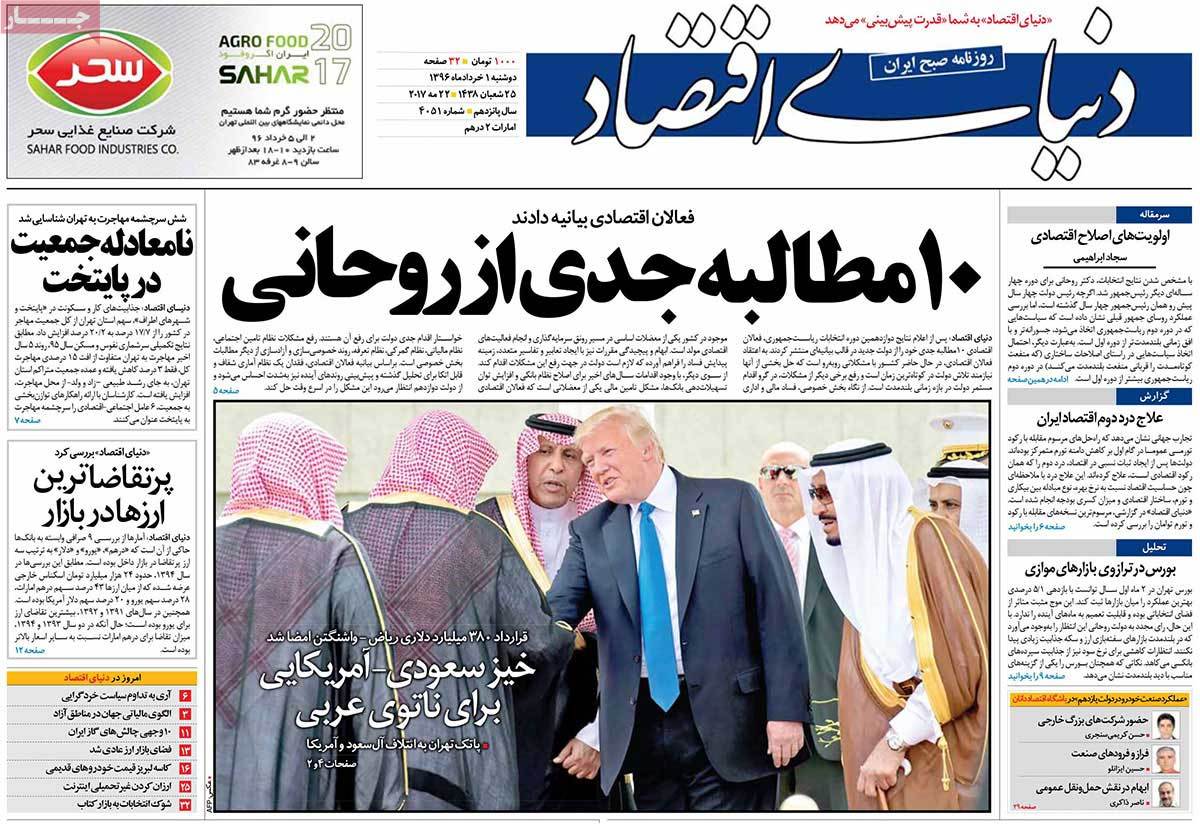
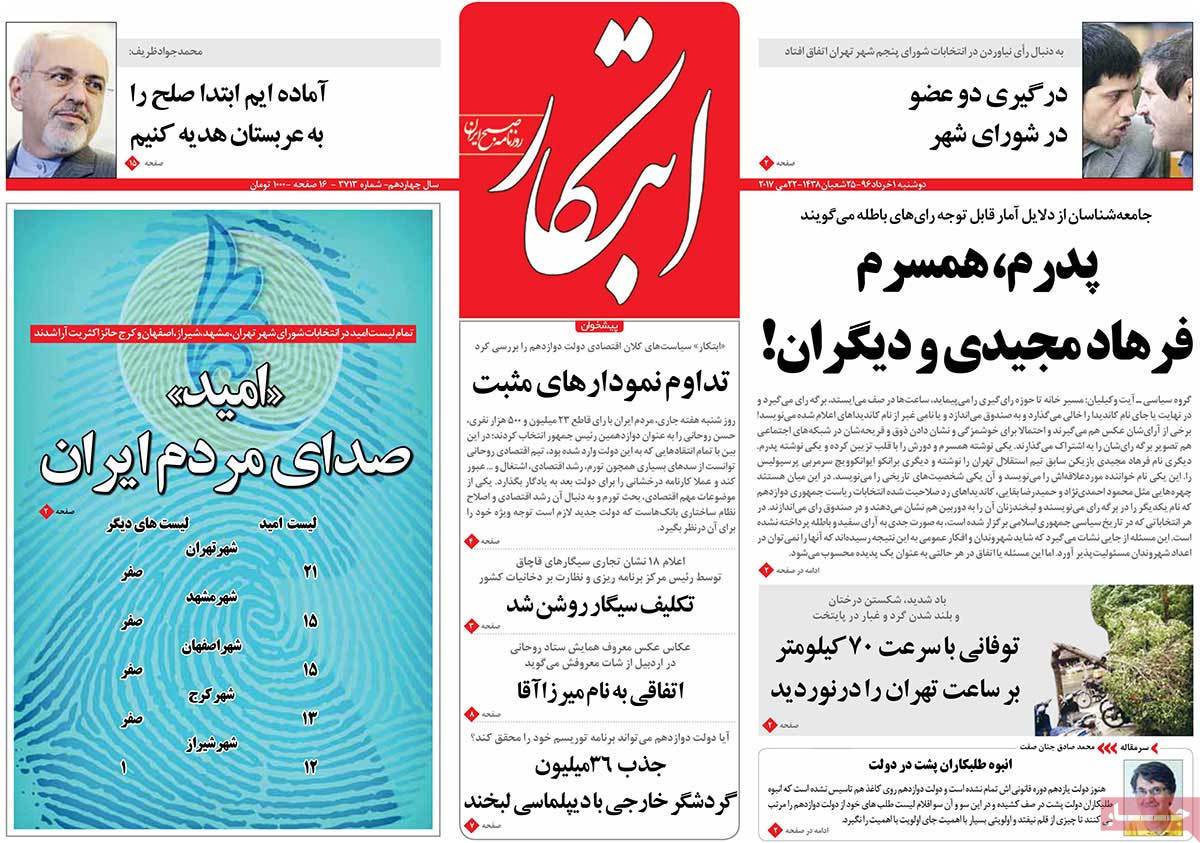
Iranian newspapers today covered the dates and times of presidential debates between the final six candidates, the first of which will be held on Friday.

The remarks made by President Hassan Rouhani against one of his rivals, Tehran Mayor Mohammad Baqer Qalibaf, also received great coverage.

Another top story was a decision by the Iranian Parliament to abolish capital punishment for producers and distributors of illicit drugs, which will sharply decrease the country’s executions.

The above issues, as well as many more, are highlighted in the following headlines and top stories:


Abrar:

1- Senior Cleric: Jamming Signals Cause Cancer, We Should Do Something about It

2- Pence: Trump Not Embarrassed to Say He’s Disappointed with Iran Deal

A Look at Iranian Newspaper Front Pages on April 24 - abrar


Aftab-e Yazd:

1- Rouhani: I’ll Share Untold Secrets with People in Coming Days

2- Prosecutor General: Telegram’s Voice Call against National Security

A Look at Iranian Newspaper Front Pages on April 24 - aftab


Amin:

1- Aref: House Arrest, Media Ban beneath Dignity of Iran’s Establishment

2- President: Worst Income for Municipalities Earned by Selling People’s Rights

A Look at Iranian Newspaper Front Pages on April 24 - amin


Arman-e Emrooz:

1- First Presidential Debate between 6 Candidates Due on Friday

 A Look at Iranian Newspaper Front Pages on April 24 - arman


Ettela’at:

1- Rouhani: We Should Make Maximum Use of Atmosphere Created

A Look at Iranian Newspaper Front Pages on April 24 - etelaat


Hemayat:

1- Judiciary Chief: Iran’s Security is Exemplary

2- MP: Illicit Drug Distributors, Sellers to Be Imprisoned for Life

A Look at Iranian Newspaper Front Pages on April 24 - hemayat


Iran:

1- Wave of Hope in Lake Urmia

  • Australian Professor: Iran’s Gov’t Has Done Great Things to Revive Lake Urmia

2- Iran Has Earned $32bn from 20m Foreign Tourists in 4 Years

A Look at Iranian Newspaper Front Pages on April 24 - iran


Javan:

1- Next President to Inherit 700,000 Billion Tomans [$186 Billion] of Debts

A Look at Iranian Newspaper Front Pages on April 24 - javan


Jomhouri Eslami:

1- Power Minister: 5,200 Villages Gained Access to Water in Incumbent Gov’t

2- Representatives of 35 European Banks, Financial Firms, Institutes to Visit Iran

A Look at Iranian Newspaper Front Pages on April 24 - jomhori


Kayhan:

1- IRGC’s Revolutionary Management Makes Iran Self-Sufficient in Petrol Production

2- Central Bank: Expenses in Rouhani’s Gov’t up by 73%

A Look at Iranian Newspaper Front Pages on April 24 - keyhan


Noavaran:

1- Special Courts to Be Opened for Resolution of Press Disputes: Official

2- Aref: JCPOA Should Not Be Spoiled Because of Campaign Clashes

A Look at Iranian Newspaper Front Pages on April 24 - noavaran


Resalat:

1- Aref: JCPOA Should Not Be Used as a Cure-All

2- Mirsalim: Rouhani’s Re-Election Harmful for Iran

A Look at Iranian Newspaper Front Pages on April 24 - resalat

Medicinal Herbs that Change Lives of Diabetics

So far, more than 1,200 types of medicinal herbs have proven to be effective in lowering blood sugar levels or alleviating the effects of the disease. Some of the most important herbs prescribed in Iranian traditional medicine are mentioned below:

Medicinal Herbs for Diabetics

  1. Every 30 seconds, a leg is amputated due to diabetes.
    It is sweet, but it isn’t worth it! Every 30 seconds, a leg is amputated due to diabetes.

    Onion and Garlic

Garlic is a vegetable with an ancient history. Man discovered the therapeutic properties of garlic in the 5th century BC. Garlic and onions increase insulin levels in the blood. The more the intake of garlic and onions is, the more blood sugar levels drop.

  1. Bitter Cucumber

It is basically green and turns yellowish orange when ripe. All parts of the fruit are very bitter. The bitter cucumber contains a substance similar to insulin. A daily intake of 60 grams of the plant’s resin can slightly decrease sugar blood levels.

  1. Fenugreek

The herb is native to Iran and grows in most parts of the country, including Azarbaijan, Isfahan, Fars, Khorasan, Semnan and Damghan. It is used as an edible vegetable.

  1. Blueberry

It grows in forests in northern Iran. Its leaves are used in traditional medicine to treat diabetes. The effect of one dose of the extract of blueberry leaves, which has properties similar to those of insulin, will remain in the body for several weeks. Moreover, it can be used in preventing the long-term effects of diabetes such as cardiovascular, nervous, renal and ocular effects.

  1. Milk Thistle

It is originally native to the Mediterranean. The medicinal herb increases cellular sensitivity to insulin and brings down blood sugar levels. It contains silymarin, which can be taken in 200-mg doses three times a day to decrease insulin-like growth factors (IGFs), HbA1c levels and different types of blood lipids.

  1. Colocynth

It is native to Iran and is found in southern parts of the country. The fruit of the plant is prescribed by practitioners of traditional medicine in many countries, including Iran, to bring down blood sugar levels. An intake of 100-mg doses three times a day can slightly bring down IGFs and HbA1c levels in patients suffering from diabetes type 2.

  1. Nettle Tea

The nettle is used in Iranian traditional medicine as a drug which decreases blood glucose levels. The extract of its leaves can prevent an increase in blood sugar levels and the destruction of pancreas cells.

Medicinal Herbs that Change Lives of Diabetics

Miraculous Healing Powers of Ginger

Miraculous Healing Powers of Ginger

It is replete with vitamins A, C and E, group B vitamins, magnesium, potassium, phosphorous, silicon, iron, sodium, calcium, zinc and beta-carotene.

Good for Digestive Disorders

Ginger: A Miracle in Treating Joint and Muscle PainGinger is one of the most efficient substances used to treat digestive disorders. It helps constrict the digestive system and reduce the feeling of heaviness in the abdomen. Ginger also helps nutrients to be absorbed into the blood better.

Used to Treat other Diseases

If you run the risk of getting seasick, ginger could be a real blessing for you. It is a completely safe treatment and more effective than common drugs used to treat vomiting. A pinch of ginger powder could remove all signs of seasickness such as vomiting, vertigo, cold sweating and nausea.

Reduces Pain, Inflammation

Ginger is widely known for its anti-inflammatory effects. Studies show the components of ginger are as effective as a painkiller. A cup of tea with a small piece of ginger root in it is an easy way to alleviate headache and help get you into a state of deep sleep. Adding a few drops of ginger oil to bathtub water before taking a bath is an effective way to soothe muscle pain.

Prevents Cancer

Ginger can slow the growth of cancer cells in the colon and can reduce the risk of contracting colon cancer. Ginger can also help prevent other kinds of cancer such as breast, lung, skin, pancreas and prostate cancer.

Miraculous Healing Powers of Ginger
Ginger: A Miracle in Treating Joint and Muscle Pain

Improves Immune System

Taking ginger on a daily basis can make you immune to cold and influenza in winter. Drinking ginger-lemon tea on a daily basis also keeps you healthy and fresh all year round.

Adds Flavour to Food

Ginger is a spice of all trade. It can be added to different types of dessert, main meals, hors d’oeuvres, and beverages.

Helps Lose Weight

Ginger is a must for losing weight because it is a low-calorie substance and produces heat. Moreover, it expedites metabolism and fat burning in the body.


Gingerol

What is Bedsore?

It is one of the complications faced by people with broken bones. The bedsore develops rapidly and is difficult to treat.

What is Bedsore?Signs of Bedsore

The bedsore develops in four stages. It is not severe in the first phase, but gets worse as the disease progresses.

Phase One

In the first stage, the skin is not damaged. The skin turns red in fair-skinned people, and its color does not change to white rapidly when pressed by a finger. The skin may become painful, stiff, softer than normal, or colder/hotter than normal.

Phase Two

The epidermis is damaged. A pink or red-colored wound, and sometimes an ulcer, is formed on the skin.

Phase Three

The fat under the skin becomes visible. The wound becomes deeper, with a yellow-colored tissue at its bottom. The damage may penetrate under the skin.

Phase Four

Muscles, tendons or bones become visible as the wound becomes deeper. The wound has a dried dead tissue at the bottom. The condition spreads under the ostensibly undamaged skin as well.

Places Where Bedsore Is Formed

What is Bedsore?
Iran Unveils New Medicine for Bedsore Treatment

In those who lie in bed in a supine position for a long time, the bedsore is mostly formed in the following locations:

– Behind the head

– Behind the scapular bone

– Behind the sacrum right between the two curves of the hip

– Behind the heel

Anyone who lies in bed for a long time or sits on a wheelchair and cannot change his/her position repeatedly, should regularly check the skin in above-mentioned locations for possible signs of bedsores. Once one sees the signs, he/she should see a doctor.


New Derm