Saturday, December 27, 2025
Home Blog Page 3991

Terrorist Group Smashed in Southeastern Iran

The IRGC Quds Base, operating in Iran’s southeastern regions, said an armed clash between the security forces and Takfiri terrorists began near Qasr-e Qand county at midday Thursday.

A number of terrorists were killed and wounded, while some others escaped, the IRGC added in a statement, saying forces from the Intelligence Ministry and the Police were also engaged in the operation.

According to the statement, the security forces have destroyed an explosive-laden device with 600 kilograms of explosives, and have confiscated five bombs improvised for suicide attacks, more than 700 kg of explosive materials, tens of thousands of cartridges, and a number of weapons.

A manhunt for the arrest of the fugitive terrorists is going on, it added.

In a separate operation in the same province on Wednesday, the security forces detained five members of a terrorist cell and killed two others in Chabahar, south of Sistan and Balouchestan.

The arrests were part of anti-terror operations across the country after terrorists launched simultaneous attacks on Iran’s parliament building in downtown Tehran and on the mausoleum of Imam Khomeini, south of the city, on June 7, in which 17 people were killed and more than 40 others were wounded.

ISIS Suicide Vehicles on Show in Iraq’s Mosul

Scores of the cars, mostly suburban utility vehicles (SUV), used by the ISIS terrorists for carrying out suicide attacks have been put on show in an exhibition launched in Hamam al-Qalil neighbourhood in the northern Iraqi city of Mosul.

After retaking the neighbourhood from the ISIS, Iraqi forces managed to capture the cars before the terrorists could use them for carrying out operations against them.

To conduct their suicide operations, the ISIS terrorists detached the coachwork of the SUVs and replaced it with thick bullet-proof iron sheets. After replacing the main outer structure of the cars with iron sheets, they used to stuff explosives into the automobiles and dispatch them, along with the suicide attackers, to their desired locations.

The ISIS’ use of such cars as Japanese Toyota Land Cruiser and Toyota Hilux as well as the SUVs manufactured by South Korea’s Kia Motor Corporation in its terrorist operations, has greatly worried Western countries’ officials, particularly those of the US, forcing them to launch investigations into how the ISIS managed to gain access to a large number of such automobiles.

Al Jazeera’s Closure among Riyadh’s Preconditions for Qatar

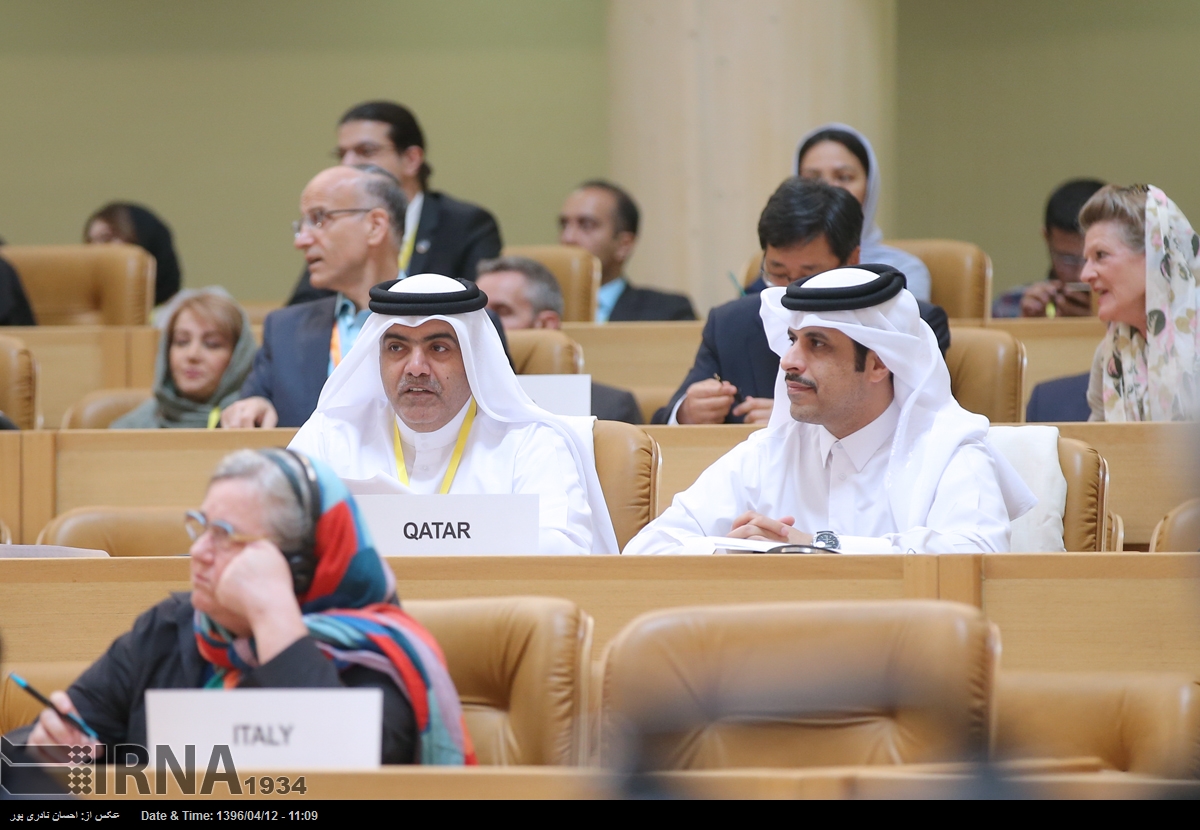
The influential retired Saudi army official, Lieutenant General Anwar Eshki, who is close to Saudi King Salman bin Abdulaziz Al Saud, has revealed Riyadh’s main preconditions for normalising ties with Qatar and overcoming the current crisis in the Persian Gulf.

Commenting on the Saudi regime’s policies to exert pressure on Qatar, he said the activities of the Doha-based state-funded broadcaster Al Jazeera is one of the biggest issues with which Saudi Arabia has always had problem.

“Qatar is required to completely terminate the activities of the broadcaster to help normalise ties between the two countries,” he said in an interview with Arabic daily Kuwaiti newspaper, al-Qabas,

Eshki accused Al Jazeera of pursuing hostile policies towards Saudi Arabia, and said the Qatari broadcaster has adopted a negative approach towards the Persian Gulf littoral Arab states by broadcasting hostile propaganda against them, a move which is supported by the Qatari government.

He said the Qatari government is providing Al Jazeera with extensive financial support, stressing that to restore cordial relations with Riyadh, Doha is required to fully suspend it.

He added that expulsion of all members of the Muslim Brotherhood and Palestinian resistance movement Hamas from Doha is the other condition of Saudi Arabia for the resumption of friendly relations with Qatar.

This comes as Qatari officials have clearly refused to acquiesce to any of the preconditions set by Saudis.

As of June 5, Saudi Arabia, the UAE, Bahrain, Yemen and Egypt cut diplomatic ties with Qatar, accusing it of destabilising the region with its support for terrorist groups.

In addition, Saudi Arabia, the UAE and Bahrain closed their airspace to Qatar, and asked Qatari diplomats to leave their territories within 48 hours.

Following these states, Mauritius, Mauritania, the Maldives and Libya’s eastern-based government also suspended diplomatic relations with Qatar.

Meanwhile, Turkish Foreign Minister Mevlüt Çavuşoğlu and Economy Minister Nihat Zeybekçi are scheduled to travel to Kuwait to hold talks with the country’s officials on mutual relations and resolving Qatar’s problem.

Iranians to Take Turkey to The Hague over Wetland Desiccation

Iranians to Take Turkey to The Hague over Wetland Desiccation

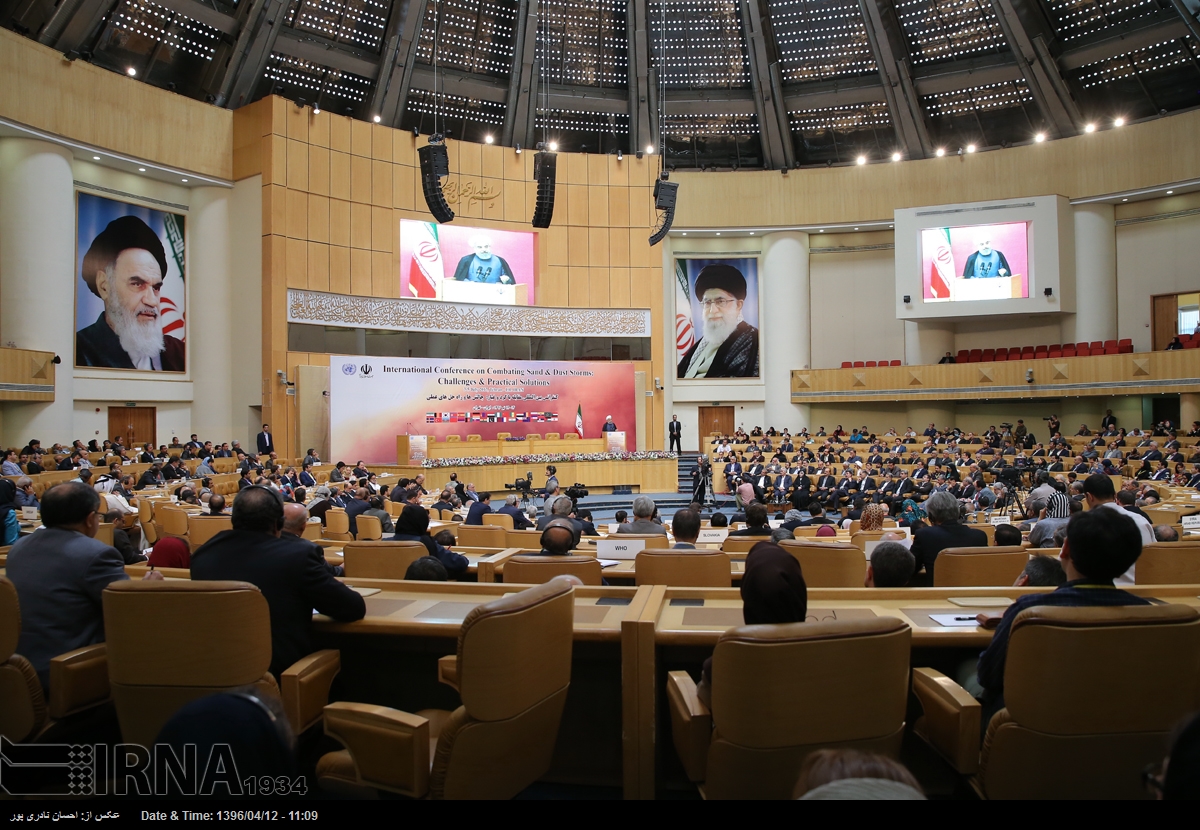
The campaign called “Support for Kind Zagros” is aimed at putting pressure on Turkey to stop the desiccation of Hoor al-Azim Wetland by building dams on Tigris River.

It also wants to attract the attention of environmentalists in Turkey, Iraq and Syria to Turkey’s destructive policies towards environment.

According to Mohammad Darvish, aIranian environment official, Turkey has almost completely restricted and violated the water right of other countries the Tigris and Euphrates rivers pass through, by building Atatürk Dam which is a part of a bigger Turkish project, called Southeastern Anatolia Project.

“We can take the issue symbolically to The Hague as genocide,” he said.

Last month, the Iranians signed a petition that was sent to the UN Secretary General Antonio Guterres, calling on Turkey to stop building dams on Tigris River in Iraq.

“Construction of these dams has not only influenced the hydrology system of these two important rivers — the Tigris and Euphrates —, but it has also destroyed several million hectares of Syrian and Iraqi agricultural lands, and created a serious crisis in its downstream Hoor al-Azim wetland. This crisis in turn has changed the Hoor al-Azim wetland — one of the most important marine ecosystems — to one of the biggest dust storm and crisis centres of wind erosion in the region,” the letter said.

Earlier this year, the head of Iran’s Department of Environment (DoE), Massoumeh Ebtekar, called for the formation of a fact-finding mission to look into the cause of the desiccation of Hoor al-Azim Wetland.

She made the statements after heavy dust and sand storms had wreaked havoc on the oil-rich Khuzestan Province in southwestern Iran. It also led to power and water outages in numerous cities and reduced field of vision to dangerously short distances.

Hoor al-Azim Wetland is said to be the largest source of dust storms in the province and one of the biggest ones in the country.

US Anti-Iran Sanctions Violate Nuclear Deal: Leader’s Aide

As a member of a special committee tasked with monitoring the implementation of the nuclear deal between Iran and P5+1 group of countries, Iranian Leader’s aide Ali Akbar Velayati said on Thursday the committee would examine the US Senate’s move and respond to it accordingly.

He went on saying that the new sanctions were part of a larger plan by the US to reverse some of its defeats in the Middle East. “The US is struggling to cover up the repeated defeats it has suffered at the hand of Iran in Iraq and Syria,” he noted.
Earlier on Thursday, the US Senate voted nearly unanimously to impose new sanctions against Iran and Russia. The 100-member Senate backed the measure by a margin of 98-2. Senators Rand Paul and Bernie Sanders were the only two “no” votes.

The bill includes new sanctions on Iran over its ballistic missile program and “continued support for terrorism.”

The sanctions come following two sets of sanctions imposed in February and May by the US Treasury Department over Iran’s missile program.


Iran Strongly Denounces Kabul Terrorist Attack

On Thursday night, an assailant detonated his explosives when he was prevented from entering the al-Zahra Mosque in western Kabul, prompting an exchange of fire between the police and other attackers. The Takfiri Daesh terrorist group claimed responsibility for the attack, which according to the police, also injured five others.

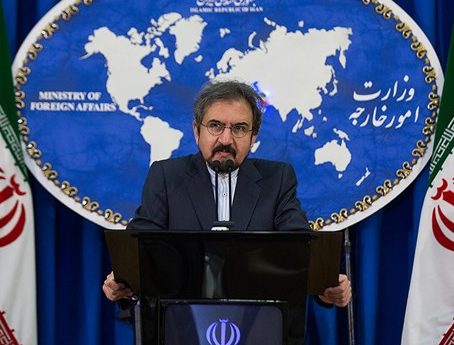
Iranian Foreign Ministry Spokesman Bahram Qassemi condoled on Friday with the Afghan government and people over the incident.

Iran Strongly Denounces Kabul Terrorist Attack

Qassemi said the attackers, which he called “mercenaries,” had shown how those who support and those who carry out acts of terror “infringe on all ideological and moral boundaries, and are thirsty for the blood of innocent human beings.”

Daesh, which is mainly active in Iraq and Syria, has been suffering heavy defeats at the hands of national armies and allied forces in the two Arab countries. It has recently gained a foothold in Afghanistan, mostly in Nangarhar Province. But it has managed to stage a handful of attacks beyond the eastern province.

On Thursday, Afghan officials said Daesh had occupied Afghanistan’s famous Tora Bora mountainous area, which is dotted with caves and tunnels, along the border with Pakistan.

Tehran Attacks Aimed at Shattering Iranians’ National Unity: Sunni Cleric

Mamousta Molla-Qader Qaderi, a senior Sunni cleric, called for preserving national unity of Iran and said, ”The ISIS is widely viewed as a Sunni group, but this does not mean that all Sunni Muslims are ISIS militants.”

“Although the terrorists who carried out Tehran terror attacks spoke Kurdish, this does not mean that all Kurds are ISIS members. Any a Kurd who joins ISIS is no longer a Kurd,” he noted.

The Friday Prayer Imam of Paveh also called ISIS the fruit of malicious policies of the global arrogance and urged Sunni Muslims to remain vigilant against them.

He also urged the families not to leave their children prone to extremist views to join the terrorist groups.

Iran’s National Unity Boosted by Football Wins: President

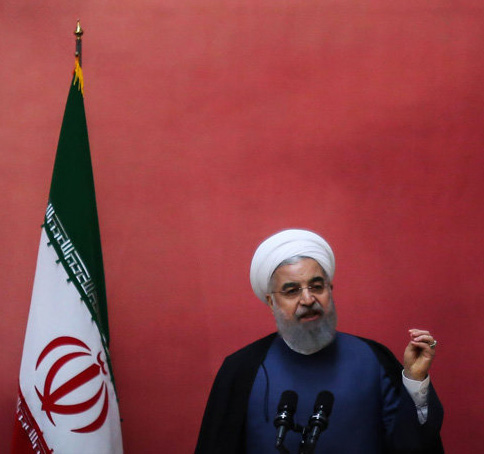
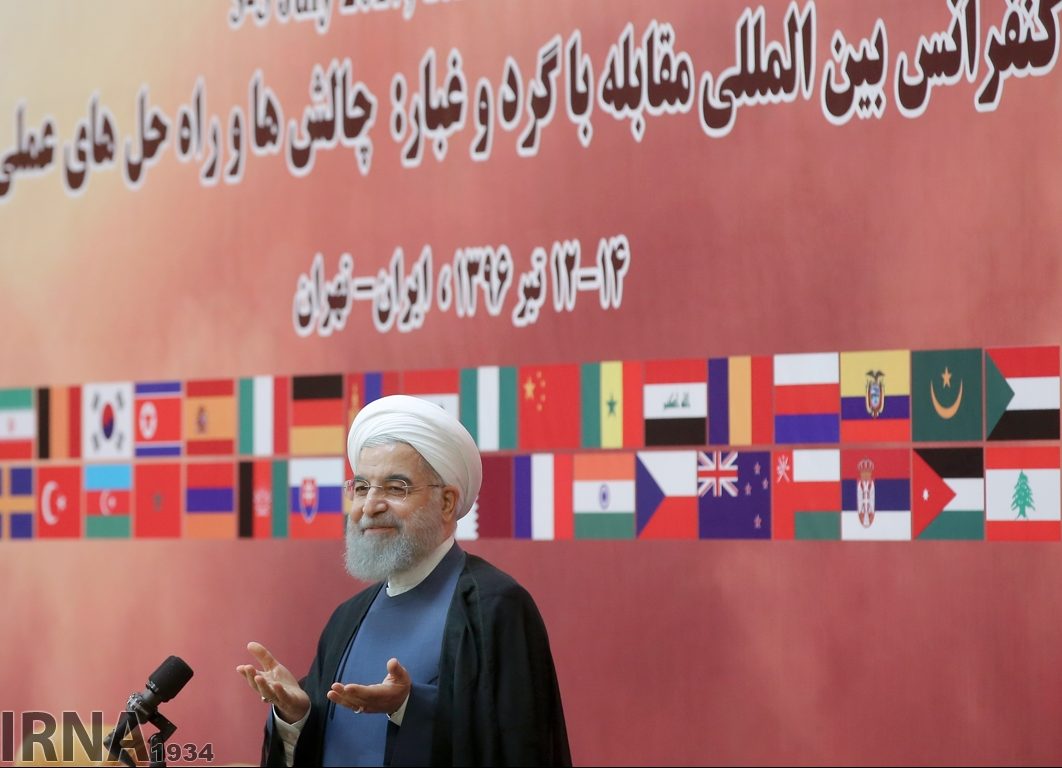
National unity is fully manifested at the time of victory in football matches when all groups and ethnicities in the country are united and people feel proud of being Iranian, President Rouhani said in a meeting with members of the men’s national football team, held in Tehran on Wednesday.

Reminding the football players of the major role they play in making people across the country happy and elated, the president said the great enthusiasm during football games indicates that spectators and viewers care about the players’ decisions and accurate moves.

Iran's National Unity Boosted by Football Wins: President

Iran's National Unity Boosted by Football Wins: President

President Rouhani also reminded the professional athletes of their “heavy moral responsibility” in the society besides their performance in the field.

“The national (football) team’s players and members in the World Cup games are ambassadors of Iran’s soft power,” the president underlined, saying a win accompanied by “Islamic and Iranian morals” would be more precious.

Iran's National Unity Boosted by Football Wins: President

Iran's National Unity Boosted by Football Wins: President

Highlighting the national team’s mighty progress from the Asia qualifying round by keeping a clean sheet in eight consecutive matches, President Rouhani said Iran could certainly advance from its group in the World Cup as well.

Advancing to the second round will be possible for Asia’s top team, he added.

On Monday, two goals from Sardar Azmoun and Mehdi Taremi earned Iran their place at the finals of the FIFA World Cup in Russia next year.

Carlos Queiroz’s team who downed Uzbekistan 2-0 at the Azadi Stadium kept an 11th consecutive clean sheet of the campaign.

Iran’s fifth appearance at the FIFA World Cup was secured by its position at the top of Group A with 20 points

US Should Worry about Saving Its Own Regime: Iran FM

Foreign Minister Mohammad Javad Zarif on Thursday lashed out at the anti-Iran statements made by US Secretary of State Rex Tillerson, and said, “Before reverting to unlawful and delusional regime-change policy towards Iran, the US Administration should study and learn from history.”

In a message on his Twitter account, Zarif said, “The 1953 coup debacle and the 1979 Revolution proved that Iranian people are impervious to outside attempts to decide their destiny.”

“After decades of failed regime change and sanctions, the US had to apologize for ’53 coup, and acknowledge diplomacy as the only option,” he added.

“For their own sake, the US officials should worry more about saving their own regime than changing Iran’s, where 75% of people just voted,” the Iranian foreign minister said.

Earlier, the US Secretary of State claimed that Iran continues activities and interventions that destabilize the Middle East.
He also accused Iran of providing support for the Assad government, funding militias and foreign fighters in Iraq and Yemen, and arming “terrorist” organizations like Hezbollah, which threaten Washington’s ally Israel.

“We and our allies must counter Iran’s aspirations of hegemony in the region,” Tillerson had noted in an address to the US House Foreign Affairs Committee on Wednesday.

Why Iran Should Back Qatar in Row with Saudis

Military Attack on Qatar for Regime Change Not Impossible

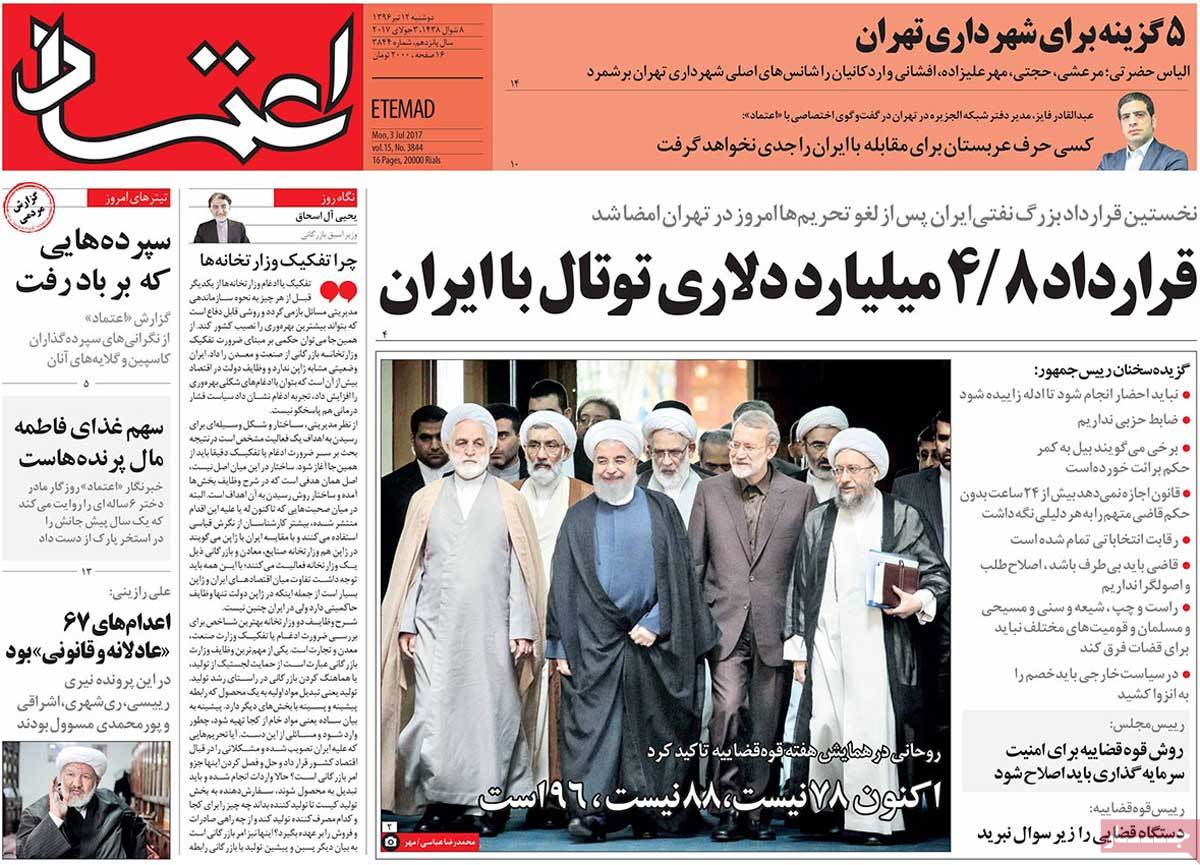
Abbas Abdi, a senior political analyst has, in an article published in the E’temad daily, weighed in on the recent row between Qatar and Saudi Arabia and put forward suggestions regarding what approach Iran should adopt vis-à-vis the issue. The highlights of his analytical piece follow:

Saudi Arabia is pulling no punches in dealing with Qatar, and that is why some analysts believe Iran should not get involved in this Arab conflict and should stand aside. Such a mentality seems to be against Iran’s national interests due to different reasons, and it is not clear on what basis these analysts are expressing such a viewpoint.

First of all, neither Iran nor any other country can accept the concept of an Arab community as a replacement for a country’s national identity. In fact, interference in the “Arab League’s” affairs wouldn’t mean meddling in the internal affairs of a country. Arab states themselves have already violated the principle of non-interference in other countries’ domestic affairs. It was Arab countries that supported the US-led invasion of Iraq. It was them that backed the attack on Libya. Arab governments have killed more Arab people than their enemies have. The only thing they have in common is their language, and to some extent, their religion.

The poorest countries in the world (Yemen, Somalia, etc.) and the richest ones (Qatar, the United Arab Emirates, etc.) are all Arab.

It was Arab countries that supported the US-led invasion of Iraq. It was them that backed the attack on Libya. Arab governments have killed more Arab people than their enemies have.

Of course, neither Iran nor any other country will seek to hinder cooperation among regional countries. On the other hand, regional cooperation should be supported as well. But Saudi Arabia’s desire for domination in the name of “Arab unity” and an “Arab country” is a hollow slogan. No other country, either, would accept measures which are based on this hollow idea if the scenario runs counter to its national interests.

The slogan once chanted by Gamal Abdel Nasser was later taken up by the Iraqi Ba’ath party and former Iraqi strongman Saddam Hussein that were banging the drum for “Arab unity.” Afterwards, Qaddafi claimed to be advocating it. All these so-called supporters of Arab unity not only triggered tension and hostility among Arabs, but they themselves fell victim to their expansionist policies. The concepts “Arab unity” and an “Arab community” are off and on used as a smokescreen by Arab countries for their expansionist policies: In the past Egypt, then Iraq and now Saudi Arabia.

From another perspective, the balance of power in the Middle East holds the key to regional stability. This balance of power emanates from written and unwritten regional and global instances of unity. If unity does not exist, small countries are soon devoured by major powers. When Saddam Hussein invaded Kuwait, there was no Arab unity. There were no hollow slogans and no Arab solidarity; rather, it was the US and its allies that went into action and forced Saddam Hussein’s troops out of Kuwait with humiliation.

If countries were to stand idly by because of the so-called Arab unity, Iraq would have devoured Kuwait, Qatar, Bahrain and the United Arab Emirates by now. Iraq could have even dealt a heavy blow to Saudi Arabia and Oman. Naturally, Iran would not have remained silent under such circumstances. Even if the US had not got involved in the Kuwait war, Iran would have had no option but to get involved in the conflict itself. A country would never allow the balance of power among its neighbours to be disrupted.

If similar incidents happen in West Africa or Latin America or Southeast Asia, they have nothing to do with us. But we cannot see balance of power disrupted in the Persian Gulf region and around Iran. And this is the most important reason for Iran’s presence in Syria. Turkey and Saudi Arabia were seeking to topple the Syrian government in order to tip the balance of power in their favour in Iraq and in the whole region. However, no independent country would allow such an action to take place against it. That country would prevent it even if it comes at a cost because its benefits are worth the costs.

Iran’s presence in Syria is because we cannot see balance of power disrupted in the Persian Gulf region and around Iran.

Therefore, Saud Arabia should come to realize that Iran will not remain passive in the face of pressure against Qatar, nor will Iran sit idly by if Kuwait, Bahrain, and the UAE, etc. come under pressure.

In our view, these are six countries with different interests. However, they have an equal legal identity, and any aggression against the territory of any of them should receive the appropriate response if the aggression leads to the disruption of the balance of power.

Otherwise, all small countries would face very difficult times and will have no choice but to obey bullying countries. This will jeopardize Iran’s national interests.