Saturday, December 27, 2025
Home Blog Page 3990

Asghar Farhadi’s Films Screened in Rome Open-Air Festival

An open-air festival, it started on June 1 and has so far shown Farhadi’s ‘About Elly’ and ‘A Separation’ and will screen ‘The Past’ on June 20, and his Oscar-winning film ‘The Salesman’ on June 30, Mehr News Agency reported.

There are also other retrospective sections dedicated to great cinema masters David Lynch, Michelangelo Antonioni and Stanley Kubrick. Films will be shown in their original language with Italian subtitles during 60 nights of free cinema under the stars.

The festival also includes movies from Italian comedies, Disney classics and Pixar masterpieces, as well as movies directed by renowned filmmakers Martin Scorsese, Wim Wenders, Ang Lee, Xavier Dolan, Richard Curtis and many others. Horror films will also be shown.

During the event, many movies will be presented by Italian directors and actors such as Roberto Benigni and Renzo Arbore, providing a great opportunity to meet the popular artists and discuss the movies as well.

This year the festival has doubled the outdoor seating to 400. It will conclude on August 1.


Iran to Discuss Visa Facilitation with China, Japan, S. Korea

Zahra Ahmadipour said delegates from the three countries will travel to Iran in the coming months to hold talks on the subject, adding that further discussions will be held with China on the sidelines of the 22nd UN World Tourism Organization General Assembly (Sept. 11-16) in the Chinese city of Chengdu, according to local media.

“Japan is a priority source market for countries looking to develop their travel industry, so they’re devising comprehensive plans,” she said. “However, our share of the Japanese outbound tourism market is insignificant … That needs to change.”

China is also a top target for Iran, ranking in the top five in Iran’s list of target markets. Chinese tourists are high-spenders and in 2016 splurged around $261 billion on foreign travel, setting a new record.

The East Asian nation is also the world’s largest outbound travel market with around 135 million Chinese tourists traveling abroad last year.

South Korea’s outbound travel market has also been growing rapidly since 2011, increasing by over 52% to 19.3 million in 2015. In 2015, South Koreans spent more than $21.2 billion on their foreign trips.

Iran has been pursuing visa-free travel and relaxed visa regulations with target countries for years. In 2015, Tehran mutually abolished the visa regime with Georgia and Armenia, and announced that it was offering visa on arrival at airports to citizens of more than 180 countries.

Talks are reportedly being held with Azerbaijan and India to agree on visa-free travel, while the visa regime with Russia is expected to be abolished by the end of 2017.

Decisions on visa regulations will ultimately require the approval of the Foreign Ministry, which has a strict policy of reciprocity when it comes to issuing visa waivers.

Some industry players say unilaterally abolishing the visa regime in certain cases may be more beneficial, but the ICHHTO does not agree.

“The ministry’s stance here is correct. Unilaterally abolishing visa procedures will not help improve the global standing of Iran’s passport,” Ali Baqer Nemati Zargaran, director of the Promotion and Marketing Office, said months ago.

A passport’s strength is calculated based on the freedom of travel it provides, i.e. the number of countries the passport holder can travel to without applying for a visa. Iran currently ranks 92, according to Passport Index.

Iran’s FM to Visit Algeria, Mauritania, Tunisia

Iran’s Foreign Minister in Beirut for Talks

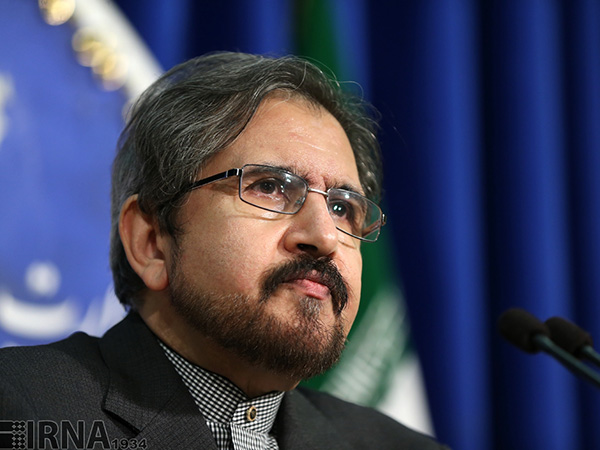
Foreign Ministry Spokesman Bahram Qassemi announced on Saturday that FM Mohammad Javad Zarif will leave Tehran on Sunday to visit Algeria, Mauritania, and Tunisia on a two-day tour.

The visits will be made at the official invitation of the three African states, Qassemi noted.

During the visits, which are aimed at deepening bilateral relations between Iran and the North African countries, Zarif is planned to meet his Algerian, Mauritanian, and Tunisian counterparts and the heads of these states.

According to Qassemi, conferring on latest regional developments, particularly the issue of Syria and Persian Gulf littoral states, is among the purposes of Zarif’s trips.

“Regional developments necessitate further solidarity among Muslim countries, and the Islamic Republic of Iran believes that Islamic states should be more united and convergent in countering ill-wishers and those who seek to cause rift [between Muslims],” he added.

Why New US Sanctions on Iran Violate JCPOA

A plan titled “Countering Iran’s Destabilising Activities Act of 2017” calls for the imposition of new sanctions on Iran under the pretext of Tehran having a missile program, sending arms to and supporting resistance groups (that Washington regards as terrorists).

Another reason for the proposed sanctions is baseless allegations of human rights violations, according to a Farsi report by Alef news website.

The US Senate approved the plan to slap sanctions on Iran and Russia on June 25, 2017. Countering Iran’s Destabilising Activities Act of 2017 received 98 yeas and two nays.

The act will also need to be approved by the House of Representatives before being signed into law by US President Donald Trump.

If the act receives final approval, the Trump administration will have to put in place new bans on individuals, companies and institutions involved in developing Iran’s missile programs.

If the act is given the go-ahead, it will be the first time that Iran’s Islamic Revolution Guards Corps (IRGC) is sanctioned by the US.

Earlier in 2007, the IRGC’s overseas division known as the Quds Force had been put under sanctions.

The lawmakers who have voted in favour of the act believe new sanctions are not in contravention of the provisions of a nuclear deal signed between Iran and six world powers over Tehran’s nuclear program. The deal is known as the Joint Comprehensive Plan of Action (JCPOA).

The Countering Iran’s Destabilising Activities Act of 2017 was drafted on 23 April 2017 by seven Democrat Senators and as many Republican ones.


Nature of New Sanctions Act

The Senators’ new act, which is being signed into law, will ratchet up non-nuclear sanctions against Iran. Generally speaking, the act revolves around three points:

  1. Sanctions related to ballistic missiles:

These bans target individuals involved in Iran’s ballistic missile program as well as those associated with them.

  1. Sanctions related to terrorism:

Bans associated with terror will be imposed on the IRGC, specifically targeting individuals which are currently under sanctions due to the unfounded allegation that Iran supports terrorism.

  1. Arms sanctions:

These bans will obligate the US president to seize the assets of people or institutions involved in special activities related to the procurement, sale or transfer of banned weapons and relevant materials to or from Iran.


IAEA’s Report, EU’s Opposition

The European Union has issued a statement at a meeting of the Board of Governors of the International Atomic Energy Agency (IAEA), expressing support for the JCPOA and confirming that Iran has lived up to its commitments under the deal. The union also called for more cooperation to reach an overarching result about Iran. The EU’s call for reaching a comprehensive outcome on Iran came as Iran’s envoy to the IAEA also stressed the need for efforts to arrive at a conclusion in the shortest time possible.

“As for measures to confirm that there are no undeclared [nuclear] facilities [in Iran,] the regulations of the protocol must be enforced, and we will try to shorten, as much as possible, the time required for the agency to reach a wide-ranging conclusion,” said Reza Najafi, Iran’s ambassador to the IAEA.

“Under the IAEA’s standards, the implementation of the safeguards agreement will enable the agency to corroborate that the declared facilities have remained peaceful. As for confirmation that there are no possible undeclared installations, the protocol’s regulations must be implemented, and this takes time,” Najfi added.

“As for other countries, even European countries, it took 10 years before they could get a wide-ranging result from the agency. It takes time. We hope we’ll be able to shorten this time as much as possible through efforts being made,” Najafi added.

The European Union has, time and again, underscored that all parties to the JCPOA have remained committed to their obligations under the agreement. EU Foreign Policy Chief Federica Mogherini also said in Oslo last Tuesday that she was confident the US would make good on its commitments under the JCPOA. She said Europe would implement the JCPOA, with or without the US.

Moreover, some sources in the member states of the P5+1 Group have confirmed that Mogherini, the coordinator for the Joint JCPOA Commission, has received a new letter from Iranian Foreign Minister Mohammad Javad Zarif, and revealed new details of the letter. According to informed sources, the letter mainly protests Washington’s blatant violation of the JCPOA, especially in recent months and after Trump took office as president. The letter also calls on all parties involved in the JCPOA, especially Mogherini, to make all signatories to the JCPOA to deliver on their obligations in order to preserve the agreement.

According to the same sources, parts of the letter refer to US measures, including its recent sanctions and some other actions on Washington’s agenda such the so-called S.722 bill (Countering Iran’s Destabilizing Activities Act of 2017) presented to the Senate. If the act is ratified and goes into effect, the letter highlights, the move will definitely be in gross violation of the terms of the JCPOA. Also in his letter, Zarif has voiced strong objection to Washington’s efforts to keep Iran from benefiting from the economic privileges of the JCPOA.

A new report by IAEA Chief Yukiya Amano was discussed at a seasonal session of the agency’s Board of Governors last Wednesday. Amano had already said in an address to the meeting that the IAEA is impartially continuing to verify and monitor Iran’s implementation of its nuclear-related commitments under the JCPOA and in accordance with safeguards standards.


New Iran Sanctions Act in Violation of JCPOA

It is stipulated in the JCPOA that the P5+1 group must not take any action which would run counter to the nuclear agreement. Some former US officials also admit the new act runs counter to the JCPOA. Former US Treasury Secretary Adam Szubin said in a letter to Congress that new anti-Iran sanctions being reviewed at the Senate Foreign Relations Committee will undermine the JCPOA and harm US relations with its allies. According to the ex-official, the sanctions will be regarded as contrary to the spirit of the JCPOA and trigger strong reactions inside Iran.

Seven other officials of the Obama administration, namely former Deputy Secretary of State Antony John Blinken and former National Security Advisor Avril Danica Haines, have already warned that the ratification of the act would authorise the president to take steps to undercut the nuclear deal, isolate the United States and jeopardise American forces.

Although senators have reformed two clauses of the S.722 bill that were in direct violation of the JCPOA, one of the clauses of the draft act is still in breach of the nuclear agreement.

Clause 5 of the act, which practically singles out the IRGC as a terrorist organization, would disrupt the trend of normalization of economic and trade ties with Iran. This would amount to violation of Washington’s obligations in clauses 26 and 29 of the JCPOA.

“The United States will make best efforts in good faith to sustain this JCPOA and to prevent interference with the realization of the full benefit by Iran of the sanctions lifting specified in Annex II. The US Administration, acting consistent with the respective roles of the President and the Congress, will refrain from re-introducing or re-imposing the sanctions specified in Annex II that it has ceased applying under this JCPOA, without prejudice to the dispute resolution process provided for under this JCPOA.”

Clause 29 of the JCPOA also stipulates that: “The EU and its Member States and the United States, consistent with their respective laws, will refrain from any policy specifically intended to directly and adversely affect the normalisation of trade and economic relations with Iran inconsistent with their commitments not to undermine the successful implementation of this JCPOA.”

Richard Nephew, the lead sanctions expert on the US team during the Iran nuclear negotiations, told Huffington Post some time ago that since the IRGC is involved in a great part of Iran’s financial transactions, the new sanctions would discourage foreign companies from doing business with Iran, which, in turn, would undermine the pledge of lifting sanctions as promised in the JCPOA.

The US not only wants to impose new sanctions on Iran, but seeks to impede Iran’s trade relations as well. US Treasury Secretary Steven Mnuchin made remarks on June 24, 2017 (just one day before the Senate Foreign Relations Committee’s approval of the plan to tighten sanctions on Iran) which run counter to the JCPOA. Speaking in a Q & A session of lawmakers, the official called on Congress to tighten sanctions on Iran and said the Treasury would rethink the issuance of permits to sell Airbus and Boeing passenger planes to Iran.

This comes as it is stipulated in Annex II of the JCPOA that the deal will “Allow for the sale of commercial passenger aircraft and related parts and services to Iran by licensing the (i) export, re-export, sale, lease or transfer to Iran of commercial passenger aircraft for exclusively civil aviation end-use, (ii) export, re-export, sale, lease or transfer to Iran of spare parts and components for commercial passenger aircraft, and (iii) provision of associated services, including warranty, maintenance, commercial passenger aviation and repair services and safety-related inspections, for all the foregoing, provided that licensed items and services are used exclusively for commercial passenger aviation.”

Iran’s Parliament to Discuss Retaliation of US Sanctions Bill

Speaking to Tasnim, vice chairman of the parliament’s National Security and Foreign Policy Commission said the Parliament’s Research Center has proposed a motion for retaliatory action against the US Senate’s passage of a new anti-Iran bill.

The motion is going to be discussed by the lawmakers on July 2, after the parliament’s recess, Kamal Dehqan added.

He also described the Senate’s bill as a brazen violation of the spirit of the Joint Comprehensive Plan of Action (JCPOA), a nuclear agreement between Iran and the Group 5+1 (Russia, China, the US, Britain, France and Germany).

Dehqan then called on the Iranian delegation monitoring the JCPOA, the country’s Supreme National Security Council, and the administration to begin implementing a parliamentary law to retaliate any breach of the JCPOA by the other parties to the deal.

Under a law, passed by the parliament in October 2015, the administration should take retaliatory measures immediately and report back to the legislature.

On Thursday, the US Senate overwhelmingly passed a bill that would step up sanctions against Iran and Russia. The measure, passed by a vote of 98 to 2, includes new sanctions on Iran over its ballistic missile program and alleged “continued support for terrorism.”

In order for the new Senate bill to become law, it must still pass the US House of Representatives and be signed by President Donald Trump.

Many experts have slammed the hostile move as a breach of both the text and the spirit of the JCPOA.

A Look at Iranian Newspaper Front Pages on June 17

Newspapers today covered the US Senate’s move to impose new sanctions against Iran and the reactions made by Iranian officials.

They also highlighted the release of documents that prove the CIA’s role in 1953 coup in Iran, and the remarks made by US Secretary of State Rex Tillerson about a regime change in Iran.

President Hassan Rouhani’s remarks in a meeting with journalists also received great coverage. Rouhani harshly attacked hard-line media for using foul language in criticizing his government.

The above issues, as well as many more, are highlighted in the following headlines and top stories:


Abrar:

1- ISIS; A Black Dot in Green Map

  • Terrorists Holding Only 1% of Mosul

A Look at Iranian Newspaper Front Pages on June 17 - abrar


Abrar-e Eqtesadi:

1- WIPO: Iran Ranks 75th in Global Innovation Index

2- Iranian Businessmen Poised to Enter Qatar’s Market

 A Look at Iranian Newspaper Front Pages on June 17 - abrar egtesadi


Aftab-e Yazd:

1- Nuclear Deal Still Breathing: A Report on US Senate’s New Bill

 A Look at Iranian Newspaper Front Pages on June 17 - aftab


Arman-e Emrooz:

1- Iran’s Press Law Criticized in Ceremony Attended by President

2- Growing Corruption in Iran Caused by Legal Poverty: Imam Khomeini’s Grandson

 A Look at Iranian Newspaper Front Pages on June 17 - arman


Ebtekar:

1- The Really-American Coup

  • Documents Revealed on US Direct Role in 1953 Coup

2- Senior Moderate Cleric: I’m Opposed to Harsh Measures on Hijab

3- Imam Khomeini Adopted Moderate Policies to Bring Revolution to Victory: Rouhani

4- Russia DM: Possibility of ISIS Leader’s Death in Syria Increased

A Look at Iranian Newspaper Front Pages on June 17 - ebtekar


Etemad:

1- Political Activists Issue Statement against US Secretary of State’s Remarks

2- Takfiri Terrorist Teams Smashed in Iranian Borders

A Look at Iranian Newspaper Front Pages on June 17 - etemad


Ettela’at:

1- Rouhani: There’s No Way but Moderation

2- Arab Leaders Write Letter to Netanyahu for Forming Anti-Iran Coalition

A Look at Iranian Newspaper Front Pages on June 17 -etelaat


Iran:

1- Documents Revealed on CIA’s Interference in 1953 Iran Coup

  • Documents Released after Tillerson’s Regime Change Claims1

2- Iranian Parliament to Retaliate against US Sanctions

 A Look at Iranian Newspaper Front Pages on June 17 - iran


Jahan-e San’at:

1- Pro-Democracy, Anti-Dictatorship Rallies in Turkey: From Ankara to Istanbul

A Look at Iranian Newspaper Front Pages on June 17 - sanaat


Javan:

1- New Sanctions with Rouhani!

  • 98 Senators Vote for Fresh Anti-Iran Sanctions

2- Qatar Gives $12bn Ransom Money to Trump

3- Tillerson: We Seek to Use Current Elements in Power to Change Iran Regime

  • Is there any link between release of documents on CIA role in 1953 coup and Tillerson’s comments?

 A Look at Iranian Newspaper Front Pages on June 17 - javan


Jomhouri Eslami:

1- Hundreds of Thousands of Palestinians Say Prayers in Aqsa Mosque

2- South Korea Finalises $13bn Loan to Iran

3- MP: Violation of JCPOA by One of Its Parties Won’t Make It Invalid

 A Look at Iranian Newspaper Front Pages on June 17 - jomhori


Kayhan:

1- Nuclear Deal’s Tree Bears Fruit!

  • US Imposes Unprecedented Sanctions against Iran

2- Al-Monitor: Iran’s Financial Market Disrupted by Financial Institutes’ Mushroom Growth

3- Iraqi, Syrian Military Commanders Discuss Formation of Joint Anti-ISIS Front

A Look at Iranian Newspaper Front Pages on June 17 - kayhan


Khorasan:

1- Real US in Four Frames:

  • Approving Bill on New Iran Sanctions
  • Declaring Strategy of Regime Change in Iran
  • Releasing Documents on CIA’s Role in 1953 Coup
  • Re-Imposing Sanctions on Cuba

2- Rouhani: Let’s Soften, Make Friendlier Our Tones

A Look at Iranian Newspaper Front Pages on June 17 - khorasan


Rooyesh-e Mellat:

1- Spokesman: New Anti-Iran Sanctions Continuation of US Hostilities against Iran

2- Leader’s Advisor: Senate’s Move to Re-Impose Iran Sanctions against JCPOA

3- Russia to Export Iran’s Gas to India

A Look at Iranian Newspaper Front Pages on June 17 - royesh mellat


Shahrvand:

1- Don’t Meddle in Iran’s Affairs: [Reformist] Senior Figures Write to US

A Look at Iranian Newspaper Front Pages on June 17 - shahrvand


Shargh:

1- Parliament’s Letter to IRGC: Warnings Issued Two Months before ISIS Attack

2- US Releases Documents on Role in 1953 Coup

3- Zarif Urges US Officials to Learn from History

4- Rouhani’s Frightful Position [Editorial about all the ups and downs Rouhani will face in coming 4 years]

Sobh-e Now:

1- Return of Relations to Bush Era: Report on Latest Anti-Iran Moves

A Look at Iranian Newspaper Front Pages on June 17 - shargh


Vaghaye Ettefaghieh

1- American Illusion: A Report on US Efforts to Interfere in Iran’s Affairs

2- Helmut Kohl Dies at Age of 87

3- Rouhani’s Cabinet on Wave of Change

A Look at Iranian Newspaper Front Pages on June 17 - vagaye

Zoroastrians Flock to Sacred Temple for Annual Pilgrimage

Zoroastrians Flock to Sacred Temple for Annual Pilgrimage

The village Chak Chak is part of Ardakan County in Yazd province, central Iran. A fire temple located in the village is the most sacred of the mountain shrines of Zoroastrianism.

Chak Chak serves as a pilgrimage point for pious Zoroastrians who annually flock to the site from Iran and all around the world.

Tradition has it that pilgrims are to stop riding the moment they catch sight of the temple and complete the last leg of their journey on foot.

In Zoroastrian belief, Chak Chak is where Nikbanou, second daughter of the last pre-Islamic Persian ruler, Yazdgerd III of the Sassanid Empire, was cornered by the invading Arab army in 640 CE. Fearing capture Nikbanou prayed to Ahura Mazda to protect her from her enemies. In response to Nikbanou’s pleadings, the mountain miraculously opened up and sheltered her from the invaders.

Notable features of Chak Chak include the ever-dripping spring located at the mountain. Legend has it that these drops are tears of grief that the mountain sheds in remembrance of Nikbanou. Growing beside the holy spring is an immense and ancient tree said to be Nikbanou’s cane. Legend also has it that a petrified colorful cloth from Nikbanou was also visible in the rocks, although pilgrims have since removed it.

Here are ISNA’s photos of the recent gathering of Zoroastrians in Pir-e Sabz:

Iran President Urges Hard-line Media to Avoid Foul Language

Iranian President Hassan Rouhani says some people do not know what language and tone they should use when talking to the government, to the region, and the whole world.

“How is it that some of us don’t correct our tone?” said the president during an evening fast-breaking meal with journalists.

“We will get nowhere by using harsh tones,” he noted, adding, “Swear to God, there is no other way but [to go for] moderation.”

He said the late founder of the Islamic Republic Imam Khomeini managed to make the 1979 Revolution emerge victorious through moderate policies.

“If Imam Khomeini had told people to go and stand against army troops, a bloodbath would have engulfed the country,” but he acted wisely, said the president.

Rouhani said even Imam Ali (PBUH), the first Shiite Imam, reacted when he saw some of his troops were swearing at the enemy.

“When Imam Ali saw that some of his forces in the Battle of Siffin [a war between Muslims and infidels in 657 CE] were swearing at enemy troops during the war, he reacted and said he didn’t want followers who swear at the enemy,” said president Rouhani.

“Now, why do some of us, who claim to be Shiite followers of Imam Ali, take pride in using swear words and regard using foul language as revolutionarism?” asked the president rhetorically.

The president then highlighted the key role of media, and said journalists have a holy profession.

He said media outlets are obliged to inform the public of realities in the society, and should seek to help realise national objectives.

“Media do not make news; rather, they reflect realities, which is a heavy responsibility,” said President Rouhani.

He then touched upon the key role of media during the recent elections in Iran marked by a huge voter turnout.

“The election days were very important days for the country,” he said, adding Iranians determined their future by casting their ballots.

“The huge voter turnout in the elections came at the most sensitive juncture in the region, in history, and in the world, i.e. at a time when the West was seeking to exert fresh pressure on Iran, and some in the region had got together to send a message or threat to Iran,” president Rouhani underlined.

“Terrorists had been ordered by their masters to trigger insecurity in Iran, but Iranian people turned out en masse and thwarted all these plots,” he added.

He said constructive criticism is very useful and necessary, but the realities should be covered by media as well.

“We thank all media outlets which discharged their responsibilities, and request the ones which we believe were not treading the right path to … help create a new atmosphere, and make tones friendlier,” he said.

Iran Eyes Larger Share of Qatar’s Market

A top Iranian trade official says under the agreements signed between Iran and Qatar, food, fruit and vegetables shipments have left the southern Iranian port city of Bushehr for Qatar.

“That will increase exports from Bushehr,” added the head of the Bushehr Industry, Mines and Trade Office, as quoted by Iran’s Chamber of Commerce.

So far, Iran has sent Qatar six planeloads of perishable foods such as fruit and vegetables, said a spokesperson for Iran’s national flag carrier Iran Air.

The consignments weigh 90 tonnes each, the spokesperson added.

“Four of the planes were Boeing 747 aircraft.”

The foodstuff was sent to Qatar via Tehran and Shiraz airports, the spokesperson noted in a recent interview.

A senior port official also said some 180 tonnes of fruit and vegetables were flown to Qatar, which was the first consignment sent from the Lengeh port in Hormozgan province.

“The shipment, including ten 40-foot fridge containers weighing 180 tonnes, was sent to Qatar from the Lengeh port by a landing craft,” said the director of the Ports and Shipping Department of Hormozgan province.

Another food consignment was also sent to Qatar from the southern city of Shiraz via air.

“100 tonnes of fruit and vegetables are exported to Qatar on a daily basis,” said the head of the Industry, Mines and Trade Office of Fars province.

A top Iranian official in charge of supplying cattle products also said live and slaughtered cattle have been shipped to Qatar.

“A shipment containing 1,700 carcasses of slaughtered sheep has been exported from Iran to Qatar,” said the official.

Another consignment containing 1,250 head of live sheep and one containing 2,700 carcasses of slaughtered sheep have also been sent to Qatar over the past two days, the official added.

Iran has been sending food shipments to Qatar as the country has been facing shortages of food supplies amid a row between Doha and regional Arab states.

Two weeks ago, several Arab countries, including Saudi Arabia, the United Arab Emirates, Bahrain, Egypt and Libya severed their diplomatic relations with Qatar, which could be an opportunity for Iran to capture Qatar’s market.

Iran Planning to Promote Citizens’ Use of Bicycle

While bicycle, as a cheap and environment-friendly means of transportation, is regaining its 19th-century status in most developed countries, particularly European states, Iranian metropolises still fail to see many cyclists in their streets despite their heavy traffic, high level of air pollution, and the growing number of their citizens suffering from diseases caused by the lack of adequate physical exercise.

The world’s first modern bicycle was invented by Baron Karl von Drais from Germany. He introduced his invention to the public in Mannheim in southwestern Germany in summer 1817. Although it is nowadays among the very first and most ordinary things almost every child learns to do, riding a bicycle has not always been as simple as it is now, particularly, in the early days following the introduction of the two-wheeled human-powered vehicle to the public. The first bicycle made by Drais weighed about 30 kilograms. This was while Drais’ invention at that time lacked certain necessary parts, such as seat, pedal as well as rear and front brakes, with which modern day bicycles are equipped.

Nevertheless, Drais’ “dandy horse” – what his newly invented vehicle that used only two wheels in tandem was called at the time – had the chance to inspire other inventors in the four corners of the earth to complete his invention step-by-step within the next 60 years. They added pedals, brakes and a number of other equipment to Drais’ bicycle, to make it take on its present-day form.

Bicycle, as a cheap means of transportation, is regaining its 19th-century status given the environmental challenges the world is currently facing, such as high air pollution level and global warming, which are two daily threats to all people’s life. While many people in big cities spend a large number of the precious hours of their lives being stuck in traffic jams, using bicycles, in addition to avoiding further destruction to the planet earth, is good for people’s physical and psychological health and help them spend less stressful angry hours in crowded streets.

A few while ago, to find out which cities provide cyclists with better services and amenities, a study was conducted at the order of a company located in the Danish capital of Copenhagen to rank the world’s metropolises in terms of their degree of commitment to developing and implementing bicycle-friendly policies. The results of the study showed that only three non-European cities have ranked among the world’s top 20 best metropolises for cyclists.

Disappointingly, none of the Iranian cities rank among the world’s top 20 – nay, top 75 cities in this regard.

The central Iranian province of Isfahan is the country’s cycling capital. Only bicycles are allowed to ply some of the city’s main thoroughfares during certain hours of the day. It is said that even Isfahan’s local politicians as well as the city councillors mostly use bicycle as a means of transportation.

In most Iranian cities, bicycles are still seen in front of the shops in the markets. In some of the Iranian towns’ old neighbourhoods, people still go back and forth in streets and alleys by bicycle. Nevertheless, bicycles are still mostly used by men in the country. Municipalities in the Iranian capital of Tehran and Mashhad have set up booths across the cities to lend people bicycles. However, people in charge of these booths refrain from lending bicycles to women. There have even been a number of instances in which cyclists have been treated harshly in Iranian cities. There are, nonetheless, still campaigns launched in Iran in the hope of fighting air pollution, tackling traffic congestion and preventing diseases caused by people’s insufficient physical movement – due to the lifestyle the modern life has imposed on them – by promoting the use of bicycles.

Since more than a year ago, environmental activists in the central Iranian province of Markazi – one of the most polluted areas in the country, have launched a campaign titled “car-free Tuesdays”. Thanks to efforts by Iran’s Department of Environment, the campaign has spread to other Iranian cities as well.

By reducing the number of the days, during a week, on which people use their private cars, this campaign seeks to minimise air pollution and remind people to pay more attention to their health. The growing popularity this campaign has achieved in Iran may help the country eventually has a number of representatives in the list of the world’s most bicycle-friendly cities.