Saturday, December 27, 2025
Home Blog Page 3989

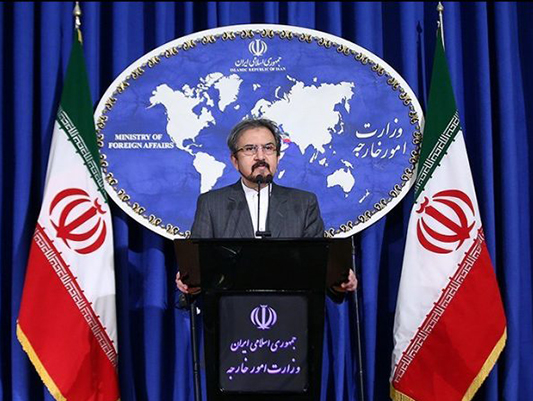
Tillerson’s Comments Example of Modern Savagery: Iran’s Shamkhani

Secretary of Iran’s Supreme National Security Council (SNSC) Ali Shamkhani lashed out at those who speak of stability and security in the region and the world while they themselves are the root and the fruit of expanding terrorism.

“Radicals in the US and the ISIS terrorists are two sides of the same coin. Having the same goal but using different tools, both of them are seeking to have a negative impact on the domestic situation of Iran so as to put the security of the Islamic Republic at stake,” he added.

Shamkhani seemed to be making the statements in reaction to US Secretary of State Rex Tillerson who recently accused Iran of destabilizing the Middle East and having aspirations of hegemony in the region, and declared that Washington is going to help elements inside Iran to effect a regime change in the country.

In his Sunday’s remarks, Shamkhani also stressed that the failed experience of imposing war or comprehensive sanctions against Iran and even carrying out extensive terrorist acts showed that the integrity of the Islamic Republic would not be jeopardized by such moves because it is formed based on legitimacy and popular support.

The representative of Iran’s Leader at SNSC also referred to the recent move by the US Senate to approve new sanctions against Iran, and underlined that the committee to supervise the implementation of the nuclear deal between Tehran and world powers, known as JCPOA, has recently studied the sanctions bill carefully and made necessary decisions on Iran’s countermeasures.

Elaborating on the measures taken by Iran’s Parliament to deal with the US Senate’s move, Shamkhani stressed that one of the most effective ways to mobilize the capacities of the country to deal with Washington’s hostile approach is to adopt binding legal measures, and in this regard, Iran’s Parliament will take necessary actions.

Shamkhani also called such moves “hostile and illegal”, saying that the continuation of non-constructive approach of the United States’ ex-government towards Iran shows that the US officials without paying attention to internationally-accepted norms are looking for excuses to increase tensions and instability in the region.

Back on Thursday, the US Senate overwhelmingly passed a bill that would step up sanctions against Iran and Russia. The measure, passed by a vote of 98 to 2, includes new sanctions on Iran over its ballistic missile program and alleged “continued support for terrorism”.

In order for the new Senate bill to become law, it must still pass the US House of Representatives and be signed by President Donald Trump.

Many experts have slammed the hostile move as a breach of both the text and the spirit of the JCPOA.

Source Denies Report on Relocation of Hamas Officials to Iran

A couple of days ago, the London-Based Al-Arab newspaper, which is said to be close to Saudi Arabia, claimed that the leaders of Hamas were to be relocated to Iran in a move to decrease pressure on Doha.

However, ISNA on Sunday quoted a source close to the Palestinian movement as saying that the report was false and its release was aimed at achieving certain objectives.

The source stressed that such claims are not true.

Expulsion of all members of Hamas from Qatar was earlier reported as one of the main preconditions set by Saudi Arabia and its Persian Gulf allies for restoring their normal ties with Doha.

They have also urged Qataris to freeze all bank accounts of Hamas members and refrain from any deal with them.

Iranian Calligraphers Awarded at Turkish Event

Khuran and Ramezanpur received the cash prizes and commendation plaques from Turkish President Recep Tayyip Erdogan, Honaronline reported.

The two artists were winners of the same awards in the previous round of the competition in 2012.

Iranian Calligraphers Awarded at Turkish EventOrganized by Istanbul’s Antik Sanat Gallery, the competition highlights the position of Islamic calligraphy in the world of art, particularly in Iran and Turkey.

Within the Islamic context, Hilya refers to the literary genre which elaborates on the features and merits of Prophet Muhammad (PBUH).

This year’s round was held in four calligraphy styles of Naskh, Nasta’liq, Thuluth and cursive Nasta’liq, and 10 Iranians won awards in different sections.

At the event, Iran’s calligraphy master Ali Shirazi, who was one of the jury members, said, “Calligraphy is the heritage of all Islamic countries; it is the link among all Islamic nations that should attempt to introduce its great potential to the world. Since Iran and Turkey are two special centers of calligraphy, a greater responsibility is on our shoulders.”

Islamic calligraphy is the artistic practice of handwriting and calligraphy, based upon the alphabet in the lands sharing a common Islamic cultural heritage, including Arab, Ottoman, and Persian.

Iranian Calligraphers Awarded at Turkish EventMajor Form of Artistic Expression

The development of Islamic calligraphy is strongly tied to the holy Qur’an. Chapters and excerpts from the Qur’an are a common and almost universal text upon which Islamic calligraphy is based. Deep religious association with the Qur’an, as well as suspicion of figurative art as idolatrous has led calligraphy to become one of the major forms of artistic expression in Islamic cultures.

“In the previous round, Iranian master calligrapher Gholam Hussein Amirkhani and I were on the jury together with three judges from Turkey; this year two Turkish judges and I evaluated the works. I suggest that in the future more judges from other countries also take part so that the event can expand further,” Shirazi added.

The cash prizes of other Iranian winners will be awarded at a ceremony in Tehran, similar to the second edition of the event in which the top 20 artists received their awards at the Iranian Artists Forum in Tehran in 2012.

Baghdad Not to Let US Use Iraqi Territory against Iran: PM

haider-al-abadi

Speaking on Saturday night, the Iraqi PM said Baghdad would not allow the country to turn into an appropriate ground for the US’ animosity towards the Islamic Republic.

“We will never allow our country to turn into a scene of clashes between the US and Iran. On the other hand, Iraq is not ready to bear animosity towards Iran even if we are given an absolute authority to rule over the world or offered a guarantee to have our country fully reconstructed free of charge,” he noted.

Elsewhere in his statements, Abadi said Baghdad would never get involved in the regional policies of other countries.

“In Syria, we only recognise the government of Bashar al-Assad. Meanwhile, we have never established any cooperation with other groups in the country,” he said.

The Iraqi prime minister also dismissed as unacceptable the latest remarks by Iraqi Vice-President Ayad Allawi against Iran and Qatar and added, “We are not allowed to take negative stance against any regional states on the part of Iraq.”

Touching on his upcoming regional tour which is set to take him to Saudi Arabia, Kuwait and Iran, he said the three-day tour would begin on Sunday.

He said the tour had been planned before the unfolding of the current diplomatic crisis between Saudi Arabia and Qatar.

In Saudi Arabia, he is expected to hold talks on different issues including war on terror.

Abadi is also set to have a number of other official visits after the end of the holy month of Ramadan.

Tehran Residents Use 38,000 Litres of Water per Second

This year Tehran’s weather has had a relatively stable condition in terms of raining with a 17% growth compared with the similar time previous year.

“Despite the growth in raining, Tehran’s residents used 900,000 cubic metres of water per second more than the same period of time past year,” a Farsi report by ISNA said.

Tehran Province Water and Wastewater Company is officially charged with the management of water resources. TPWWC’ facilities are capable of treating 29 cubic metres of water per second. The figure is set to increase with the operation of the new facilities.

This comes as public demands for water should be managed appropriately. This requires public participation of Tehran residents in a larger plan to protect water resources.  

75% of Tehran’s water is provided by the surface water that is the water released from clouds in the form of rain, freezing rain and snow

The Iranian government has already adopted some measures to tap into only 25% of ground resources for meeting the country’s water needs.

Home to about 1.1% population of the whole world, Iran has access to only 0.32% of renewable resources of the world. On the other hand, 85% of the country’s regions are dry or semi-dry.

Three years ago, Tehran Province Water and Wastewater Company was authorized to fine those subscribers who overused water resources. But today there is no longer any legal decree at hand for doing so. Observers say given the water shortage in Iran, the government has to adopt some appropriate measures to cope with the deteriorating crisis.

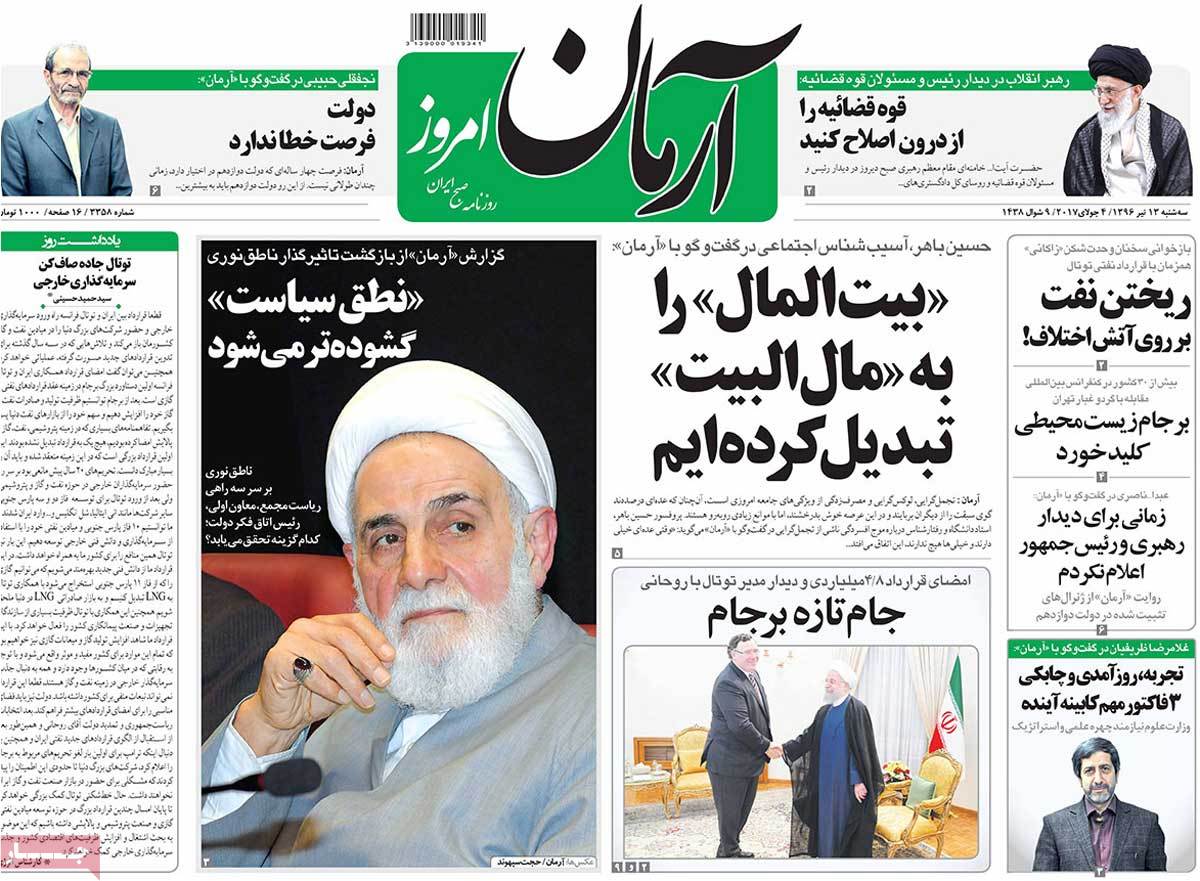
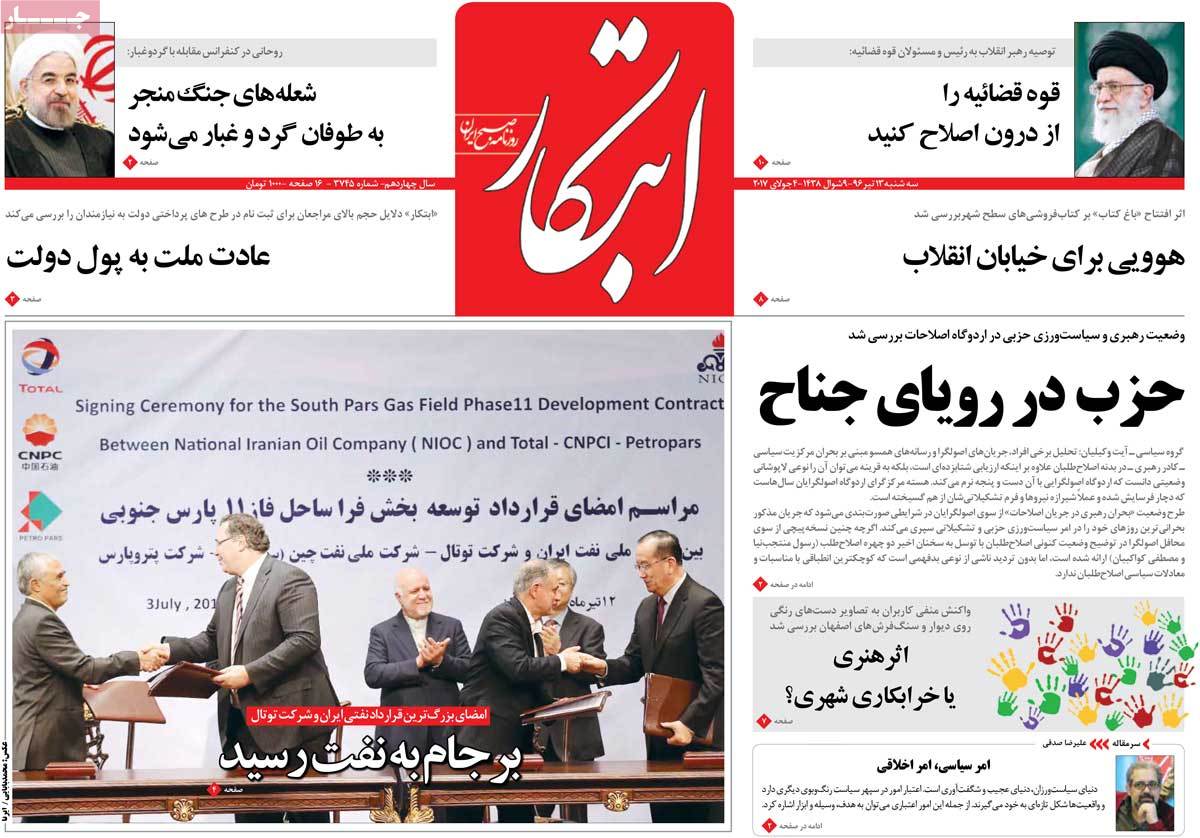
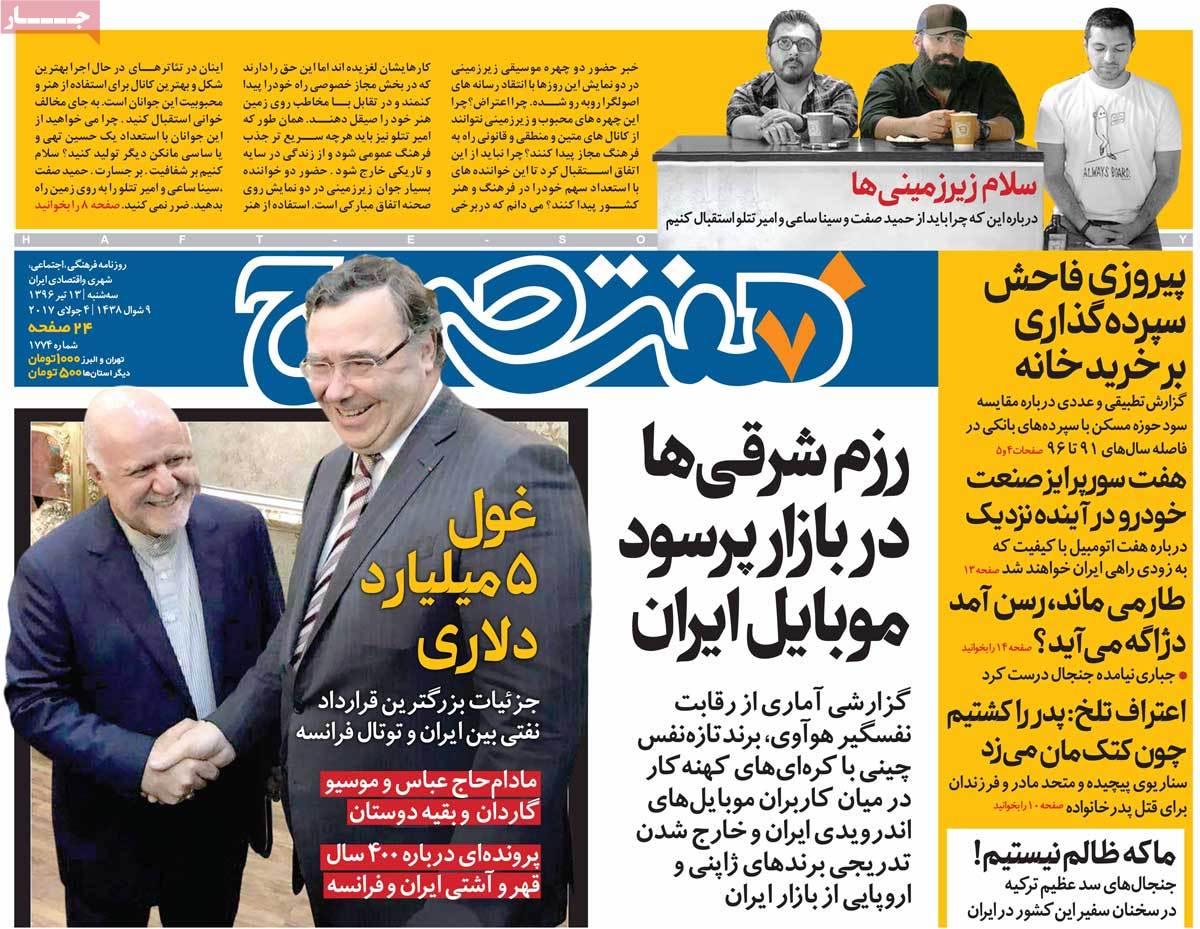
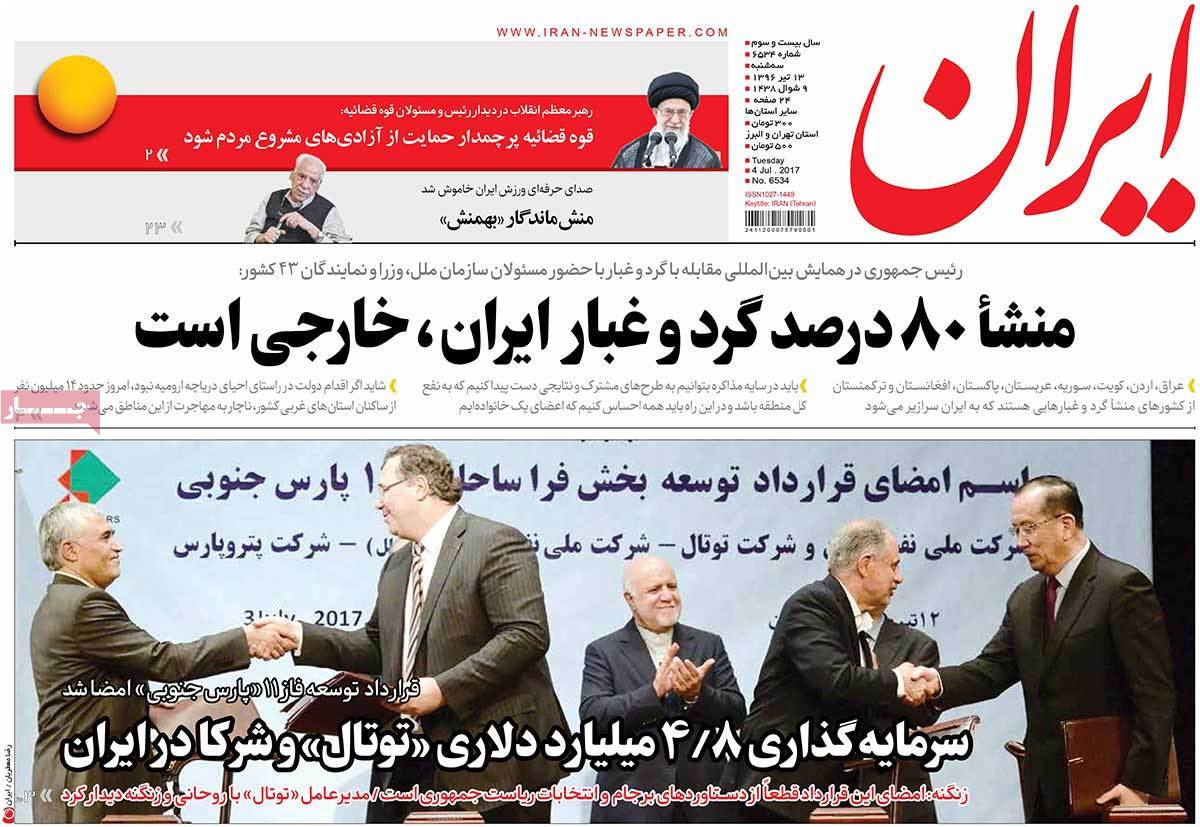
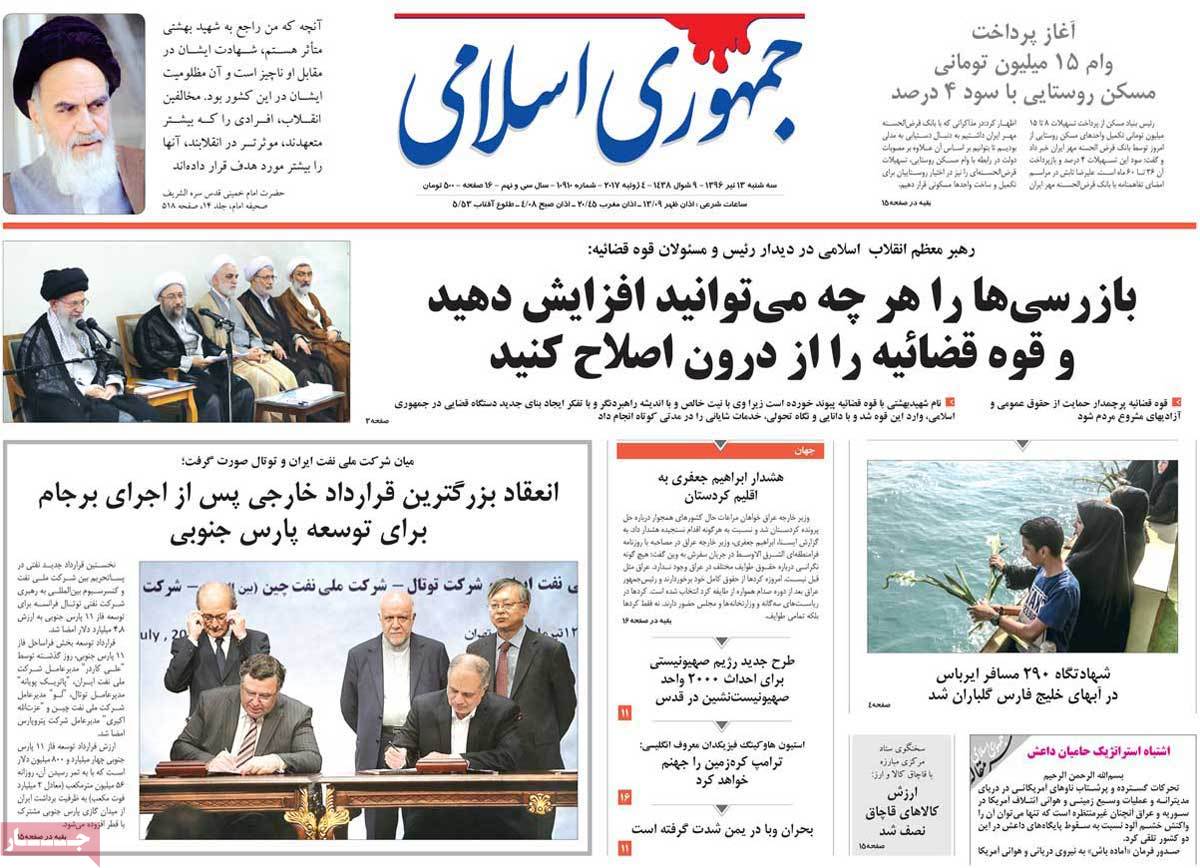
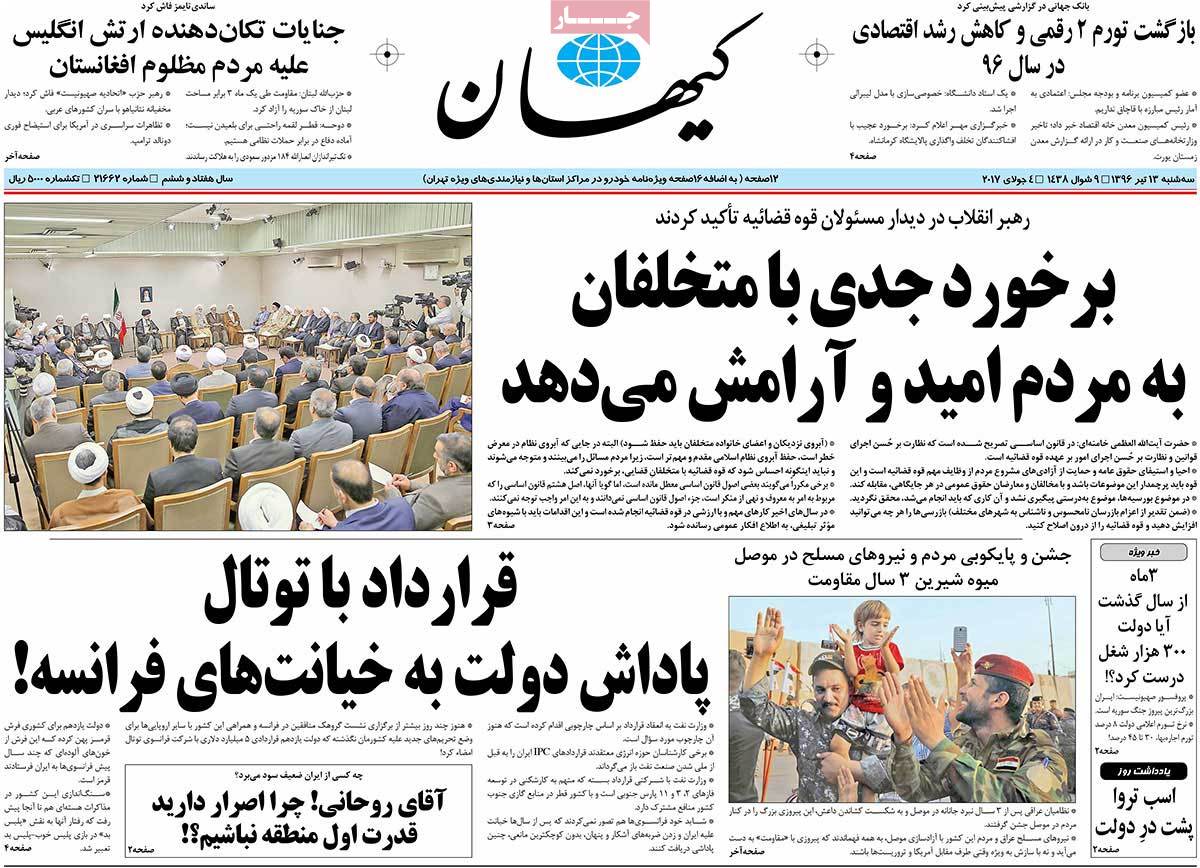
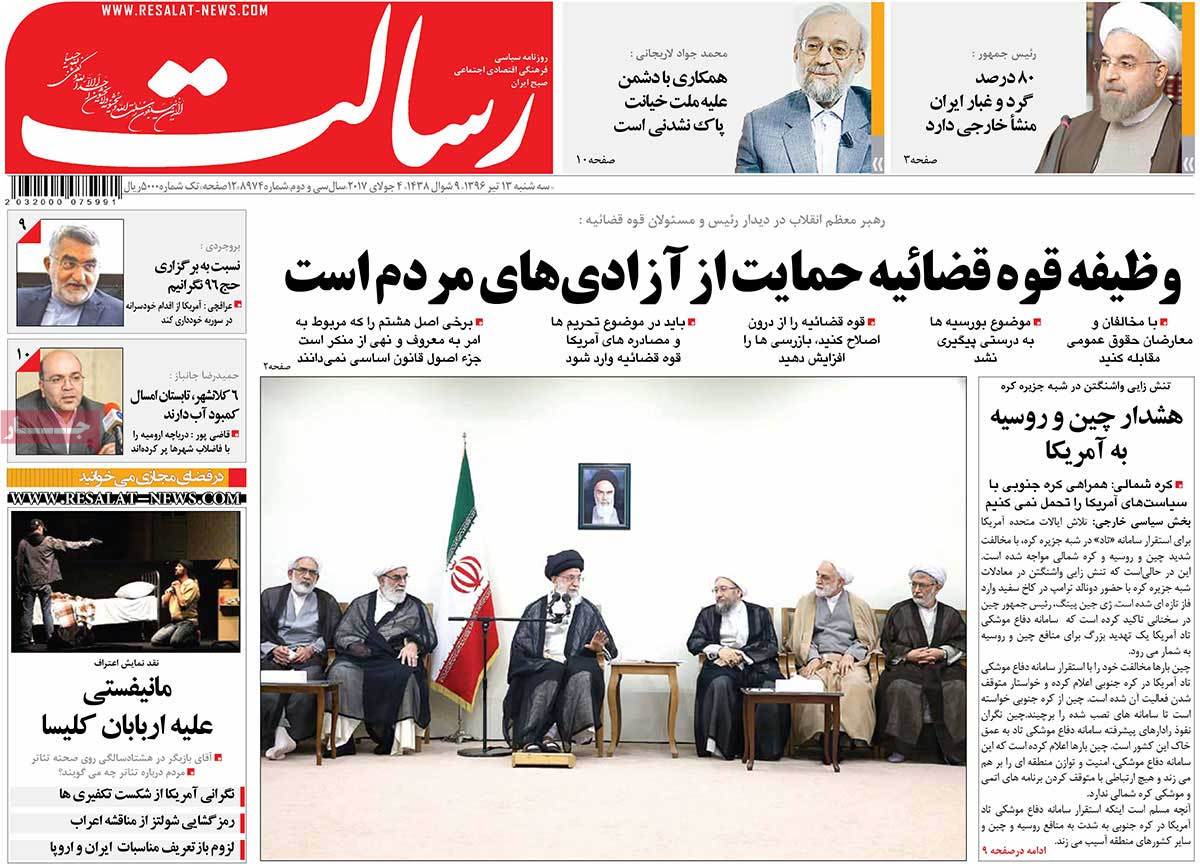
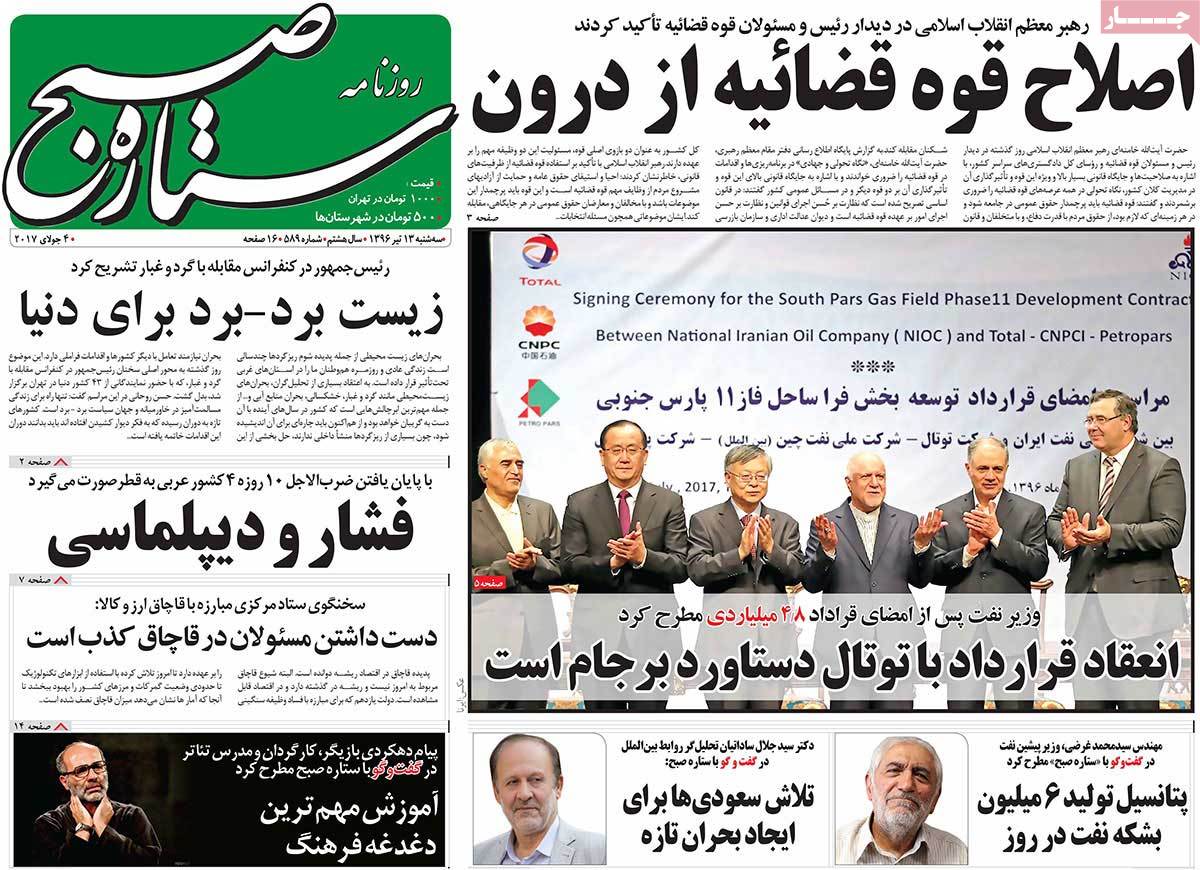
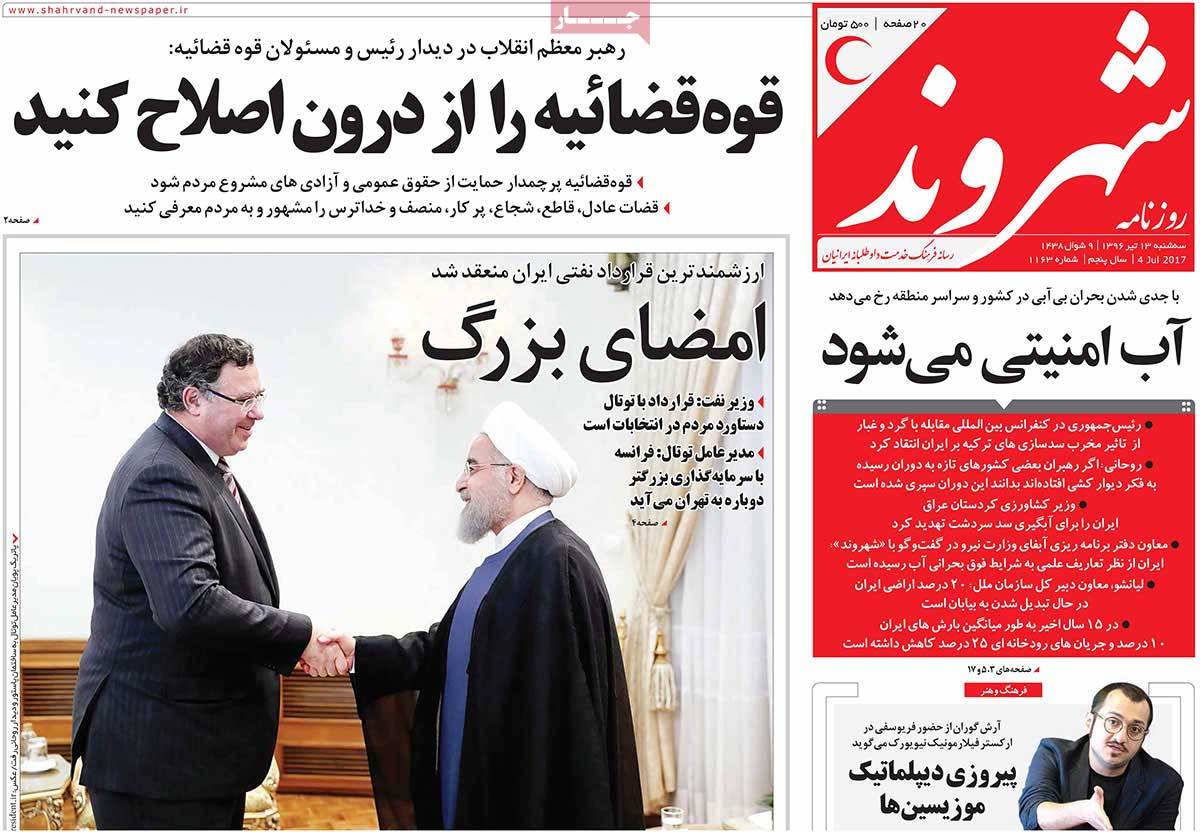
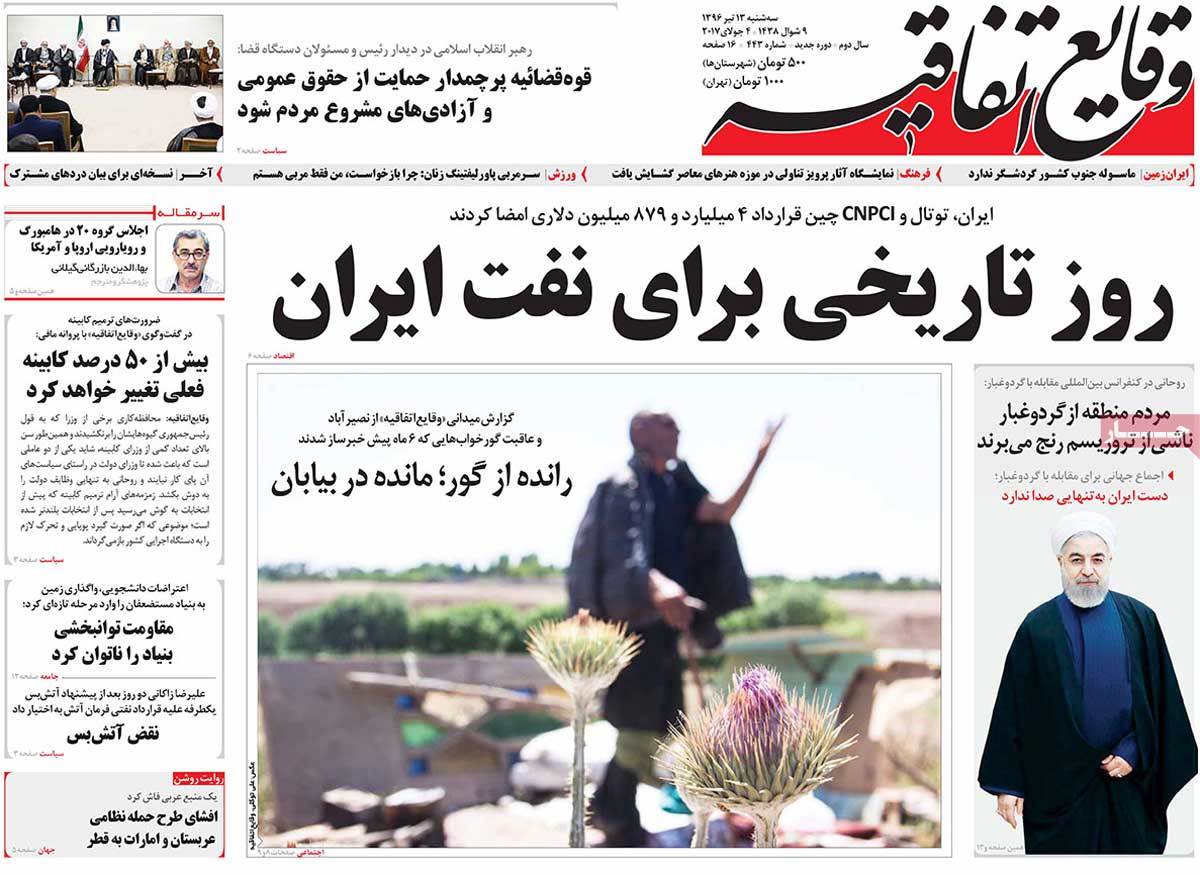
Iran Will Soon Sign South Pars Gas Deal with Total: Minister

Iran Will Soon Sign South Pars Gas Deal with Total

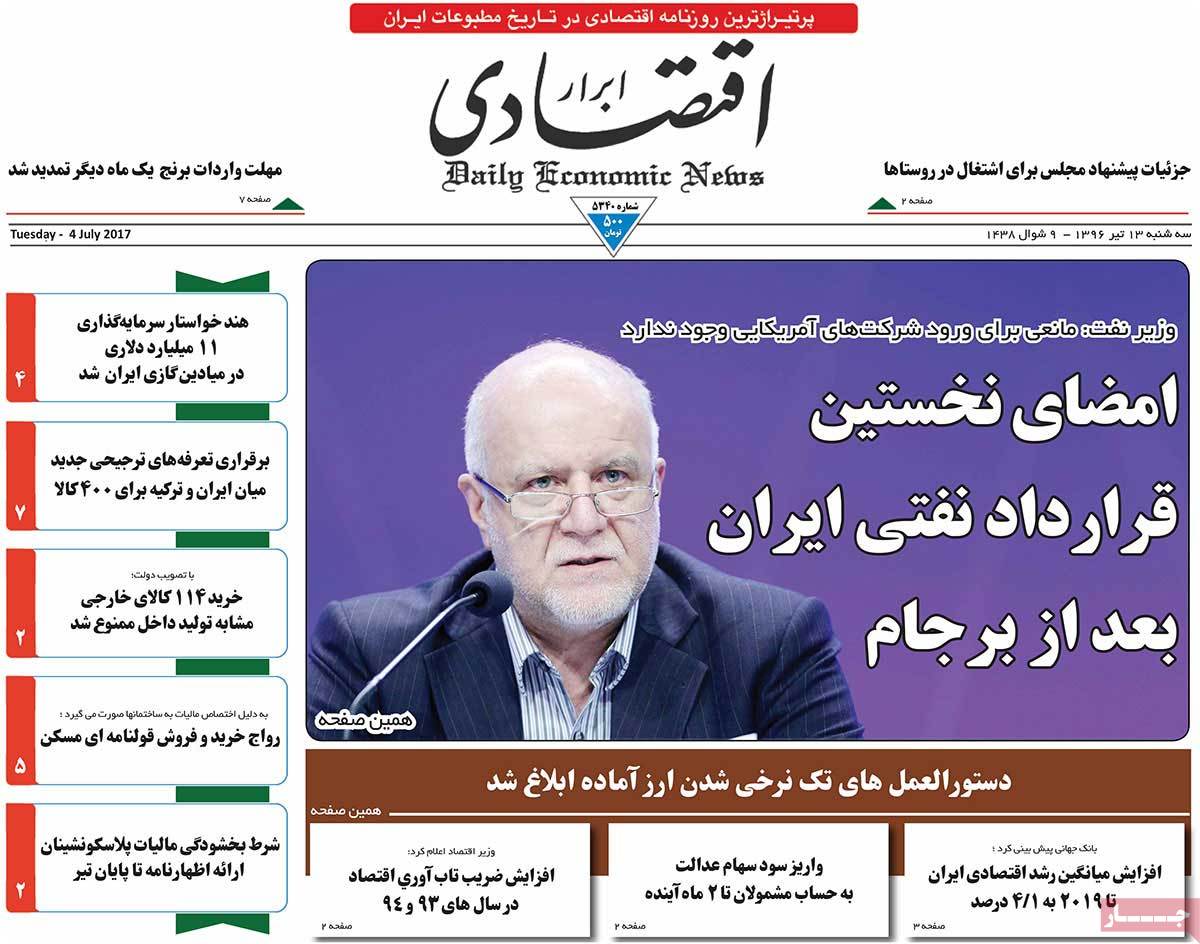
“Iran and Total are summing up the discussions on signing the contract for the development of phase 11 of South Pars, and this is almost in the final stages,” Zangeneh was quoted by Shana news agency as saying on Saturday.

“The contract … will be signed before the end of the (current) government (mid-summer),” he added.

On May 27, Total Chief Executive Patrick Pouyanne said the oil major would seal the agreement to develop phase 11 of the huge South Pars gas field in southern Iran before summer.

Total signed a heads of agreement with the National Iranian Oil Company (NIOC) in November 2016 but said earlier in February that a final decision on the deal hinged on the new US administration renewing sanctions waivers on Iran.

The South Pars 11 project will have a production capacity of 1.8 billion cubic feet per day, or 370 000 barrels of oil equivalent per day. The produced gas will be fed into Iran’s gas network.

Total will operate the project with a 50.1% interest alongside Petropars at 19.9% and the Chinese state-owned oil and gas company CNPC at 30%.

At Least 24 Killed in Saudi Airstrike on Yemen Market

At Least 24 Killed in Saudi Airstrike on Yemen Market

The aircraft hit the al-Moshnaq market in Sa’ada Province’s Shada’a District Saturday night as people gathered to buy staples for Eid al-Fitr, a festivity which marks the end of the holy fasting month of Ramadan.

The network said the casualty figure could rise because the aircraft kept bombing after relief teams arrived at the scene.

The report said some of the fatalities have already been identified as relief workers, who died trying to reach the marketplace amid continued bombing.

Saudi Arabia invaded Yemen in 2015 to restore former president Abd Rabbuh Mansur Hadi to power. Its airstrikes often target civilian population centers and the impoverished country’s infrastructure.

The civilian fatalities from the invasion has been put at more than 12,000 people so far.

The Saudi bombing of a funeral hall in the capital Sana’a back in February grabbed rare international attention, in which more than 140 people were killed while attending a wake.

At Least 24 Killed in Saudi Airstrike on Yemen Market

The invasion has enjoyed logistical and generous arms support, including cluster munitions, from the United States and the United Kingdom.

Iran’s President Sends Message to Qatar’s Emir

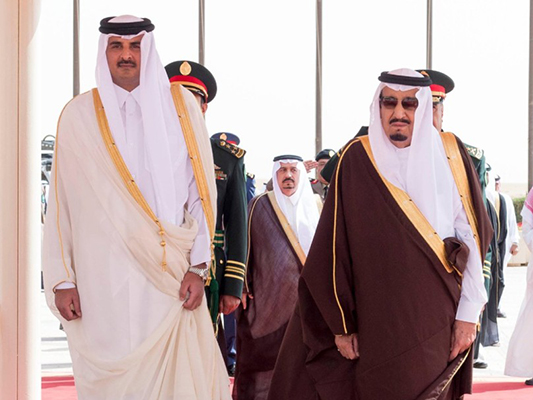
“The [Qatari] Emir Sheikh Tamim bin Hamad Al-Thani received Saturday a verbal message from President of Islamic Republic of Iran Dr. Hassan Rouhani,” Qatar’s foreign ministry said in a statement.

Iran’s President Sends Message to Qatar’s Emir“Iranian Deputy Foreign Minister for Arab and African Affairs Hossein Jaberi Ansari conveyed the message, during a meeting with the Foreign Minister Sheikh Mohammed bin Abdulrahman Al-Thani today,” the statement added.

The message was sent as the Arab country has been under a blockade by Saudi Arabia and several of its allies as a result of a row over regional politics.

Meanwhile, Iran was one of the first countries to help the Persian Gulf littoral state by sending several planeloads of food products amid fears of a serious food crisis in Qatar.

Officials in Tehran over the past week said at least five planeloads of food supplies each weighing 100 tonnes had been sent to Qatar.

Iran, China Start Joint Naval Drill in Strait of Hormuz

The joint naval drill involves Iranian warships and a Chinese flotilla that berthed at Iran’s southern port city of Bandar Abbas on Thursday.

The Chinese flotilla comprises the guided-missile destroyer Chang Chun (DDG-150), guided-missile frigate Jin Zhou (FFG-532) and Type 903 replenishment ship Chao Hu (890).

During the exercise at the strategic Strait of Hormuz, the Iranian and Chinese naval forces display their capabilities and share experiences.

The Chinese flotilla had been staying at Pakistan’s Karachi for a training program before deployment to Iran.

Iran’s Navy and the People’s Liberation Army Navy (Chinese Navy) have intensified cooperation in recent years.

In September 2014, a Chinese flotilla of warships docked in Bandar Abbas and held a joint naval exercise with Iran.

Later in October that year, Iran’s Navy Commander Rear Admiral Habibollah Sayyari visited China’s eastern port city of Qingdao with a high-ranking team and held talks with Chinese military officials.

In December 2015, members of a high-ranking naval delegation from China visited Iran for talks.

Iran Leader’s Book on Palestine to Be Unveiled in Moscow

The Russian translation of the book titled “Palestine: Selected Statements by Ayatollah Khamenei on Palestine”, already published by a Russian publishing house, is scheduled to be unveiled in the Russian capital of Moscow this Tuesday, a few days ahead of the International Quds Day (June 23).

The late founder of Iran’s 1979 Islamic Republic Imam Khomeini designated the last Friday of the month of Ramadan as the International Quds Day. On this day, people in Iran and other parts of the world hold rallies in condemnation of the Israeli regime’s occupation of the Palestinian lands and cruelties towards the innocent people in the besieged Gaza Strip.

A number of the Russian scientific and cultural figures as well as the Iranian and Palestinian ambassadors to Moscow, Mehdi Sanaei and Abdel Hafiz Nofal, respectively, are scheduled to attend the unveiling ceremony of the book which is to be held at the headquarters of the state-run Russian-language news agency, RIA Novosti, in Moscow.

The book was translated into Russian thanks to the efforts by Iran’s cultural office in Moscow. It was later published by a leading Russian publishing house.

The book comprises eight chapters and includes Ayatollah Khamenei’s statements about the Palestinian issue and his attitudes towards the subject. Topics such as the ambiguities about the issue of Palestine, the country’s future and solutions to resolving the Arab state’s problem are discussed from Ayatollah Khamenei’s point of view.

The prologue to the book is by Ali Akbar Velayati, the senior adviser to Ayatollah Khamenei on international affairs. It discusses the importance of Palestine as a Muslim state and the significant role and great status it has in building solidarity among the Muslim countries and fostering greater unity among Muslims.

The book had earlier been translated into Farsi, English and Arabic in Iran. The new edition of the book was unveiled during the 6th International Conference in Support of the Palestinian Intifada held in the Iranian capital of Tehran on February 21 and 22.