Saturday, December 27, 2025
Home Blog Page 3988

IRGC Uses Zolfaqar, Qiyam Missiles to Target ISIS: Report

IRGC Uses Zolfaqar, Qiyam Missiles (1)

According to a report by the Fars News Agency, the Islamic Revolution Guards Corps has used both Zolfaqar (solid fuel) and Qiyam (liquid fuel) missiles in its retaliatory attacks on ISIS positions in Deir ez-Zor.

The IRGC on Sunday night fired six missiles from its bases in Iran’s Kermanshah and Kordestan provinces, all of which exactly hit the desired targets in eastern Syria, according to Brigadier General Amir-Ali Hajizadeh, the Commander of IRGC Aerospace Force.

General Hajizadeh also noted that hitting a small building from a nearly 700-km distance sends a clear message and displays Iran’s real might.

“Enemies should know that Tehran is not London or Paris; this was just a minor attack, and if they do anything wrong, they will receive more crushing responses,” he added, referring to the recent terrorist attacks on Tehran, which were avenged by the missile attacks.

The IRGC monitored the way its missiles hit the desired targets in Syria through a number of drones flown from Damascus, General Hajizadeh added.

His remarks came as Head of the IRGC Public Relations Department General Ramezan Sharif also announced the missile attacks had been coordinated with Syria’s government.

Speaking to the Tasnim News Agency, General Sharif said that during the operation codenamed “Laylat al-Qadr” the IRGC fired six mid-range ballistic missiles at various targets, within a range of 650 to 700 kilometres.

The strong missiles successfully hit the targets with pinpoint accuracy, he said, adding that the headquarters, ammunition and logistic depots of the terrorists were among the targets in the operation.

“The firing of these missiles had previously been coordinated with Syria and the missiles entered the Syrian airspace through Iraq,” the commander noted.

Qiyam
Qiyam
Zolfaqar
Zolfaqar

Iran Condoles with Portugal over Deadly Blaze

Foreign Ministry Spokesman Bahram Qassemi in a Sunday statement expressed heartfelt condolences over the deadly fire in Portugal.

He condoled with the families of the victims and sympathised with Portuguese people over the tragedy.

At least 60 people were killed and dozens wounded in huge forest fires in central Portugal. Many of the victims died in their cars as they tried to flee the flames.

Portugal’s Prime Minister António Costa described the blaze as “the greatest tragedy we have seen in recent years in terms of forest fires,” and warned the death toll could rise.

Three days of national mourning were declared.

IRGC Targets Terrorists in Syria in Revenge for Tehran Attacks

IRGC Targets Terrorists in Syria in Revenge for Tehran Attacks

Early reports indicate that several terrorists have been killed and their equipment and weapons destroyed following the missile attacks launched by the IRGC from bases in Iran’s western provinces of Kermanshah and Kordestan.

According to a Sunday statement by the IRGC’s Public Relations Department, the mid-range missiles targeted the centres of Takfiri gatherings and their command bases in Deir ez-Zor.

The IRGC said in the statement that the ‘crushing’ blow was in retaliation for the recent ISIS terrorist attacks on Tehran, which claimed the lives of at least 17 people and wounded over 45.

The Islamic Revolution Guards Corps also warned all Takfiri terrorists as well as their regional and ultra-regional supporters that they would receive even more devastating responses if they repeat their ‘satanic’ moves against Iran.

US Efforts to Change Iran’s Ruling System Always Fail: Leader

US Efforts to Change Iran's Ruling System Always Fail-Leader

The Leader made the remarks in a meeting with families of martyrs of the Iranian Army, Islamic Revolution Guards Corps (IRGC) and police force on Sunday.

“This revolution and the [Islamic] establishment, which came about [in Iran], have been faced with serious hostilities since its inception,” Ayatollah Khamenei said, noting that the United States has always sought to bring about “regime change” in Iran, but has always failed in its efforts to do so.

Downplaying US claim of regime change in Iran, Ayatollah Khamenei said, “Do not look at the bluster of this guy who has just come [to office as president] in America. These [anti-Iran claims] are not new. These have been there since day one, but their language and tone has changed.”

Referring to recent remarks by American officials about changing the Iranian government, the Leader noted, “They say we want to change the Islamic Republic establishment. Well, when have you not wanted to do this? You always wanted and you always failed and your nose has been rubbed in the dirt; [and] it will be like that from now on.”

US Efforts to Change Iran's Ruling System Always Fail: Leader

Last Thursday, US Secretary of State Rex Tillerson said while a US House Committee on Foreign Affairs hearing that the Iranian government “continues activities and interventions that destabilize the Middle East.”

Asked whether the United States supported regime change in Iran, the American top diplomat said US policy was driven by relying on “elements inside of Iran” to bring about “peaceful transition of that government.”

“Our policy towards Iran is to push back on this hegemony, contain their ability to develop obviously nuclear weapons, and to work toward support of those elements inside of Iran that would lead to a peaceful transition of that government. Those elements are there, certainly as we know,” he said.

Elsewhere in his remarks, the Leader said the American rulers do not know the Iranian nation, adding that the new White House leaders are like nascent hooligans who scare people by brandishing their knives until somebody punches them in the mouth and puts them in their place

“You see that since the outset of the revolution, these people who wished elimination of the Islamic Republic are now in the abyss of Hell and have left this world without having achieved their goal,” the Leader added.

Ayatollah Khamenei said the Islamic Republic is standing against world powers with full strength and will continue to do that in the future.

“Everybody must know this; both the enemy must know this and devout friends, [and even] those friends who are sometimes overcome by doubt [must know this]. The Islamic Republic is standing fast and know that they [enemies] cannot slap us in the face, but we will slap them in the face.”

Iran, Algeria Ready to Expand Ties in Various Fields

Visiting Algeria on the first leg of his two-day North African tour, Iran’s Foreign Minister Mohammad Javad Zarif held talks with Algerian Prime Minister Abdelmadjid Tebboun on Sunday.

“Iran and Algeria have common grounds on many regional and international issues. The two sides have always been exchanging views on different issues. Meanwhile, there is no limit to our potential cooperation in various fields including banking, automotive industry and housing, Zarif noted.

The Islamic Republic of Iran is ready to remove any obstacles in the way of bilateral ties with Algiers, Iran’s top diplomat went on to say.

For his part, Algerian prime minister praised the close relations between Iran and Algeria and expressed the hope that the two sides could expand their economic ties in tandem with their political relations.

“We are ready to expand ties with the Islamic Republic of Iran in various fields, particularly in economy,” he said, adding there is an appropriate ground for further cooperation between the two sides.

Tebboun called for the immediate implementation of two sides’ earlier agreements and said Iran and Algeria enjoy huge commonalities.

He touched on the latest regional development in the Persian Gulf and said Algeria had always sought to establish good relations with the regional states.

“There are some backward and troublesome hubs in the Arab world which are seeking to spoil these ties,” he noted.

“Islam is a key factor strengthening unity among regional states. We all enjoy common interests in the region. So, we can overcome our differences through talks and moderation,” he concluded.

Iran’s Beauties in Photos: Tangi Sar Village

Over 2,000 people, in 500 families, live in Tangi Sar village, which makes it one of the most densely populous villages in Kordestan province.

Tangi Sar has been named as one of the top tourist destinations of the province thanks to its unique architecture.

Here are IRNA’s photos of the village:

No Direct Talks between Iran, Saudi Arabia: Official

Iran’s Deputy Foreign Minister Hossein Jaberi Ansari says there will be no direct contacts and talks between Tehran and Riyadh, and that diplomatic and indirect channels will be used in urgent cases.

In a Farsi interview with IRNA, Jaberi Ansari has weighed in on the latest developments concerning Qatar’s relations with Arab countries, Iran’s actions in that regard and the possibility of Iranian officials putting consultations and trips on their agenda to help settle the row.

“After what happened in Qatar, Iran adopted an active policy,” said Jaberi Ansari.

He noted that Iran’s Foreign Minister Mohammad Javad Zarif had numerous contacts with some of his counterparts at the regional and international level.

“The contacts were aimed at inviting parties involved to exercise calm and restraint, and handle the situation based on prudence, logic and rationality.”

He noted that Iran is not seeking momentary opportunities.

“We have a long-run approach. Trips have also been made or are underway between [officials of] Iran and regional countries,” he said.

“Not all measures adopted are necessarily announced as we believe in taking action in a low-profile manner,” the top diplomat underlined.

He said the region is in a sensitive situation, which sometimes makes it all the more necessary not to turn the spotlight on the measures adopted.

“Within this framework, moves are underway, and will continue to be underway later on,” the top official underlined.

“We view even negative developments with a positive look in a bid to create opportunities rather than cashing in on the situation, an approach which serves the interests of regional countries,” he said.

“Our moves are underway in this very path, and we hope the consequences of the recent developments will help establish a more positive atmosphere in order not only to solve this problem, but settle the chronic differences which have emerged in the region in recent years,” he underscored.


No direct talks are on the agenda of Iran and Saudi Arabia. The necessary cases will be handled through diplomatic channels.


Jaberi Ansari also touched upon a trip to Iran by a delegation from Riyadh to visit the Saudi embassy in Tehran as well as a visit to Saudi Arabia by an Iranian delegation to discuss the Hajj pilgrimage issue.

“Talks are underway on the Hajj pilgrimage, and the visit by an Iranian consular team during the Hajj season was aimed at following up on the rights of our nationals. The discussions were held between the Saudi Hajj Ministry and Iran’s Hajj and Pilgrimage Organisation,” said Jaberi Ansari.

“Details of that issue are being pursued through diplomatic channels,” he added.

“It’s natural that the two sides should reach full agreement on the details of this issue in order to handle the affairs pertaining to Iranian nationals during the Hajj season in a logical way,” the spokesman said.

He then said visits to Iranian and Saudi embassies are on the agenda of both sides.

“No final decision has been made on this issue yet. Any move would be reciprocal, on an equal footing and in conformity with a mutual agreement on details, and will be adopted only if the two countries reach agreement on details and in a completely reciprocal way.”

He quoted the Iranian Judiciary as saying that the legal case of the attack on Saudi Arabia’s embassy in Tehran is running its course.

Visits to Iranian and Saudi embassies are on the agenda, and will be announced if finalised, he added.

The deputy foreign minister said no direct talks are on the agenda between the delegations of both countries as well as the two countries’ foreign ministers.

He noted that necessary cases will be handled through diplomatic channels.

Foreign Interference Deteriorating Regional Crises: Iran FM

Speaking in a Sunday meeting with Algerian Foreign Minister Abdelkader Messahel in Algiers, Zarif cited terrorism as the main problem of the Middle East and said establishing democracy was the only way to overcome the problem.

“Each nation must establish its own democracy,” he said, adding the main priority of all regional states must be fighting extremism.

“We should avoid imposing solutions on other nations. We are not allowed to decide for other nations,” Zarif said.

The Iranian top diplomat also emphasised that no state is allowed to interfere in other nations’ internal affairs.

“We should only help other nations to find their own solutions. Foreign intervention is the main reason behind the prolonging of the regional crises,” he noted.

According to Zarif, the extremists and the Zionists are the two main groups that take advantage of the chaotic situation in the region.

“Iran will never become a tool in the hands of these enemies to press ahead their plots,” he added.

Elsewhere in his statements, Zarif also touched upon the recent diplomatic crisis between Saudi Arabia and Qatar and said Tehran is monitoring the current situation with deep concerns.

“We believe that negotiation is the best solution to the current problem. We are ready to do whatever we can to help the conflicting sides to get out of the crisis,” he said.

For his part, the Algerian foreign minister endorsed Zarif’s view on removing regional crises, saying negotiation is the only way to remove regional problems.

“Respecting other states’ sovereignty is among our top priorities. We have our own independent policies in various fields including in fight against terror. Algeria itself is a victim of terrorism. We lost over 200,000 of our citizens in terrorist violence over the past years. Algeria has considerable experience in fight against terror,” he said.

The Algerian top diplomat also said the Arab world has always been suffering from internal divisions, adding one of these divisions is conflicting views to the war in Syria.

“The division can be resolved if the Arab states respect each other’s sovereignty as well as their own people’s rights. In Libya, we saw how foreign meddling led to the current crisis in the country. The crises in Syria, Libya and Yemen can be resolved soon if there is no foreign interference. We hope the crises in the Arab world could come to an end through dialogue,” he said.

Iranian foreign minister arrived in Algeria on Sunday at the first leg of his regional tour which will later take him to Mauritania and Tunisia as well.

Earlier, Foreign Ministry Spokesperson Bahram Qassemi said the visits are aimed at boosting mutual relations and expanding the ties between Iran and the African countries, as well as discussing the developments of the region, including Syria and the Persian Gulf.

Iran to Eradicate Menace of ISIS Wild Dogs: Army Commander

Salehi

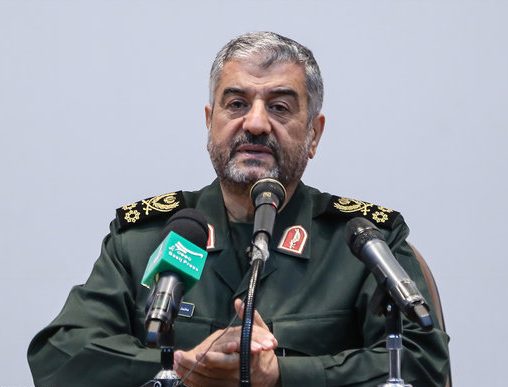
Speaking on the sidelines of a visit to Iran’s western borders, Army Commander Major General Ataollah Salehi said Tehran views ISIS militants as wild dogs that can be eradicated easily.

He went further describing the presence of the Iranian forces along the western borders with Iraq as strong and said the main aim of the troops’ deployment was not only defending the country but also hunting “the wild dogs” of ISIS.

The Iranian commander stressed that Tehran would also give a crushing response to the masters of ISIS terrorists.

Major General Salehi said nothing could threaten Iran’s western borders, adding, “The Army will eliminate any threat along the borders.”

He dismissed as baseless any reports on the presence of terrorist groups along the western borders of Iran, saying no terrorist dares to advance towards Iranian border as long as the army is present there.

Full Liberation of Mosul Imminent as Noose Tightened on ISIS

Full Liberation of Mosul Imminent as Noose Tightened on ISIS

The flashpoint city of Mosul is expected to be recaptured completely from the ISIS terrorists within the next few hours, given that the Iraqi armed forces have begun advancing towards the Old City in the western parts from three sides since the early hours of Sunday (June 18).

The commander of Nineveh Liberation Operation, General Abdul Amir Rashid Yarallah, in a short statement on Sunday, announced that the Iraqi armed forces have entered the Old City in Western Mosul – the ISIS terrorists’ last stronghold.

Following that, the Iraqi Ministry of Interior said in another statement that the battle in the Old City of Mosul would be the final push to defeat the ISIS elements in the northern city.


Full Liberation of Mosul Imminent as Noose Tightened on ISIS


According to the Interior Ministry’s statement, Iraqi police, army and anti-terrorism forces have jointly begun advancing towards the region from three sides.

Speaking to Iraqi media, Hossam al-Din al-Abbar, a member of Nineveh Provincial Council, has predicted that Mosul will be fully liberated within the next few hours.

The Iraqi army soldiers and allied popular forces have been leading a major operation to retake the city since October 2016. They took control of eastern Mosul in January and launched the battle in the west in February.